Posts from the ‘patient care’ category

BWH patient Katie Paquette poses for a photo underneath her portrait.

BWH patient Katie Paquette poses for a photo underneath her portrait.

Cheryl Sclar was sitting in a meeting when a coughing fit struck.

As someone living with primary ciliary dyskinesia – a genetic disorder that causes chronic, recurrent infections in the lungs and sinuses – Sclar dreads such moments. She tries her best to remain “invisible,” as she puts it, but it’s nearly impossible to keep the coughing at bay once it starts.

Sclar, who works at a local college, started composing a message to her pulmonologist, Bruce Levy, MD, chief of BWH’s Division of Pulmonary and Critical Care Medicine, while she sat in the meeting and struggled to suppress her coughs.

“Hi, Dr. Levy. I’m at an all-campus meeting with about 100 of my colleagues, who are painfully aware of my existence,” she wrote. Levy quickly responded with words of reassurance.

The interaction, although brief, illustrated the empathy and warmth patients regularly experience at BWH, Sclar said in recounting the story at a recent event honoring patients of BWH’s Lung Center.

“I want to thank you, Dr. Levy, for your compassion and kindness, for always rescuing me and for never minimizing how I feel,” said Sclar, addressing him from the podium before describing her experience living with a lung disease.

The event marked the debut of a photo exhibition, “Positive Exposure: Beyond Diagnosis to Innovation,” by New York-based fashion photographer Rick Guidotti. The exhibit, unveiled at the Lung Center event on Nov. 7, comprises portraits of about a dozen of the center’s patients.

More than 100 patients, families and BWH staffers attended the evening event in Cabot Atrium, and nearly 50 viewers tuned in to the live stream via webcast.

This slideshow requires JavaScript.

The Lung Center is a medical and surgical collaboration between the Division of Thoracic Surgery and the Division of Pulmonary and Critical Care Medicine, as well as other divisions and departments at BWH, including Anesthesiology, Perioperative and Pain Medicine and, at the Dana-Farber/Brigham and Women’s Cancer Center, Pathology, Radiation Oncology and Medical Oncology.

Raphael Bueno, MD, chief of the Division of Thoracic Surgery and surgical director of the Lung Center, welcomed attendees to “a celebration of life, patients, health care providers and the promise of a bright future for lung health.”

As the photos were unveiled, emotions swept over the crowd – tears of joy and sadness for those pictured. Ahmet Uluer, DO, director of the Adult Cystic Fibrosis Program and a pulmonary specialist at Boston Children’s Hospital, gave a tribute to two young patients included in the exhibit who had died shortly after being photographed: Antwaughn Moore, 28, and Jay Bernardini, 36.

The photo exhibit will remain in Cabot for several months and then move to the Lung Center’s clinic as its permanent home.

“Medicine is an art and a science,” Levy said. “Tonight, it’s about the art. Tonight, it’s about the humanism in medicine.”

StrategyIcon_WordpressBWHC’s Strategy in Action: Exceptional Experience
Learn more about our strategic priorities at BWHPikeNotes.org.

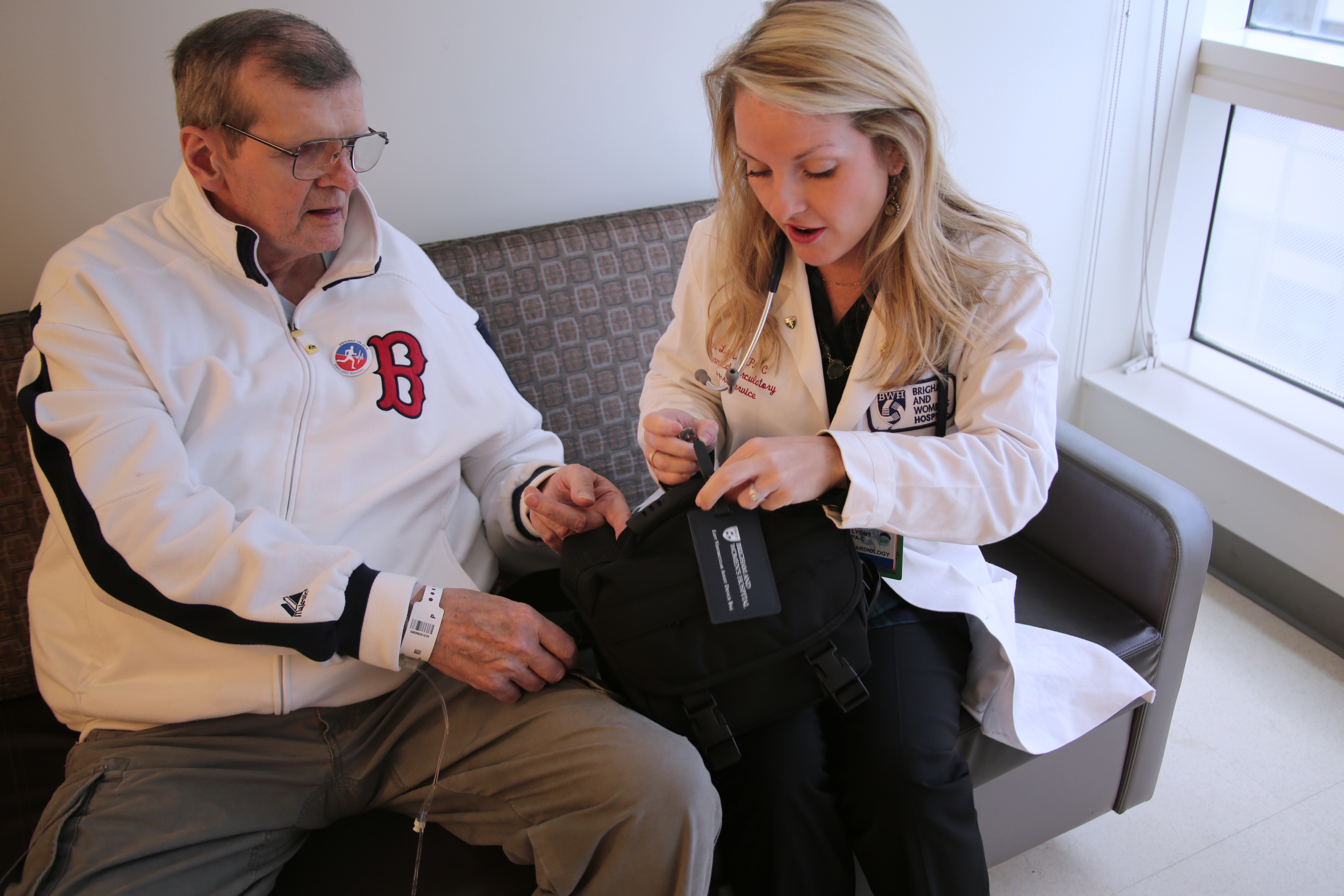
Erin Lyons puts a personalized identification tag on BWH patient Thomas Ledbetter’s “VAD bag,” which contains backup equipment for his LVAD.

Erin Lyons puts a personalized identification tag on BWH patient Thomas Ledbetter’s “VAD bag,” which contains backup equipment for his LVAD.

When Erin Lyons, PA-C, began working with patients who have a left ventricular assist device (LVAD) implanted as a result of heart failure, she was struck by their determination.

“Patients show so much resiliency and willpower to overcome the difficulties of living with LVADs,” she said. “They are truly remarkable.”

The device, a mechanical heart pump that supports heart function and blood flow in patients with heart failure, has both internal and external components. Straps positioned over the patient’s  shoulders and across the back attach to external batteries that sit on the hips or waist. The batteries connect to a controller unit, which is also situated at the waist. A type of cable known as a driveline connects the controller to the LVAD pump inside the body.

While already wearing a considerable amount of gear, LVAD patients also must carry a backup controller and batteries in a “VAD bag” at all times. In the event of a malfunction with the device, patients, caregivers or emergency medical service (EMS) personnel need to change out the parts on the spot.

“It certainly adds to the challenges of living with an LVAD,” said Lyons, of the Division of Cardiovascular Medicine. “The bags must always be with the patient, regardless of where they travel.”

Inspired by their resolve, Lyons raised money to help out her LVAD patients. This June, she ran the B.A.A. 10K Road Race in Boston and used the opportunity to collect donations for her team, the BWH LVAD Warriors. By race day, she had raised roughly $2,800, nearly triple her initial $1,000 goal. While excited for her success, Lyons faced a new challenge – figuring out how to use the money.

A nurse colleague, Maryclare Hickey, RN, approached Lyons and the rest of the LVAD team with an opportunity. About the size of a camera bag, the VAD bags provided by BWH lacked any form of identification about the patient or even what it contained.   

“Our patients are very in-tune with their own needs when it comes to treatment and care,” said Lyons. “They were including their own identification information with the bags because they knew that, should a medical emergency arise, EMS personnel would need to be aware of the VAD and its function.”

Spotting a gap they could fill, Lyons and her team created personalized luggage tags for the VAD bags. In addition to bearing the patient’s name, the tags also indicate which type of VAD the patient has and the emergency contact information for the VAD clinic at BWH. The tags can help EMS personnel provide appropriate care in a medical emergency, which is critical because lifesaving methods such as defibrillation need to be adapted for VAD patients.

The first recipient of the tags, Thomas Ledbetter, of Boston, said he deeply appreciated the VAD staff for their efforts.

“They’re such a phenomenal team,” he said. “These tags are so important. They may save my life one day.”

Ledbetter has known Lyons since his LVAD was implanted in November 2015. He spent five months recovering at BWH following his LVAD procedure due to complications, but the experience allowed Ledbetter to form a strong bond with Lyons and the rest of his care team.

“They’re like my family,” he said. “The support they give me is immeasurable. And I just hope I can give it back to them.”

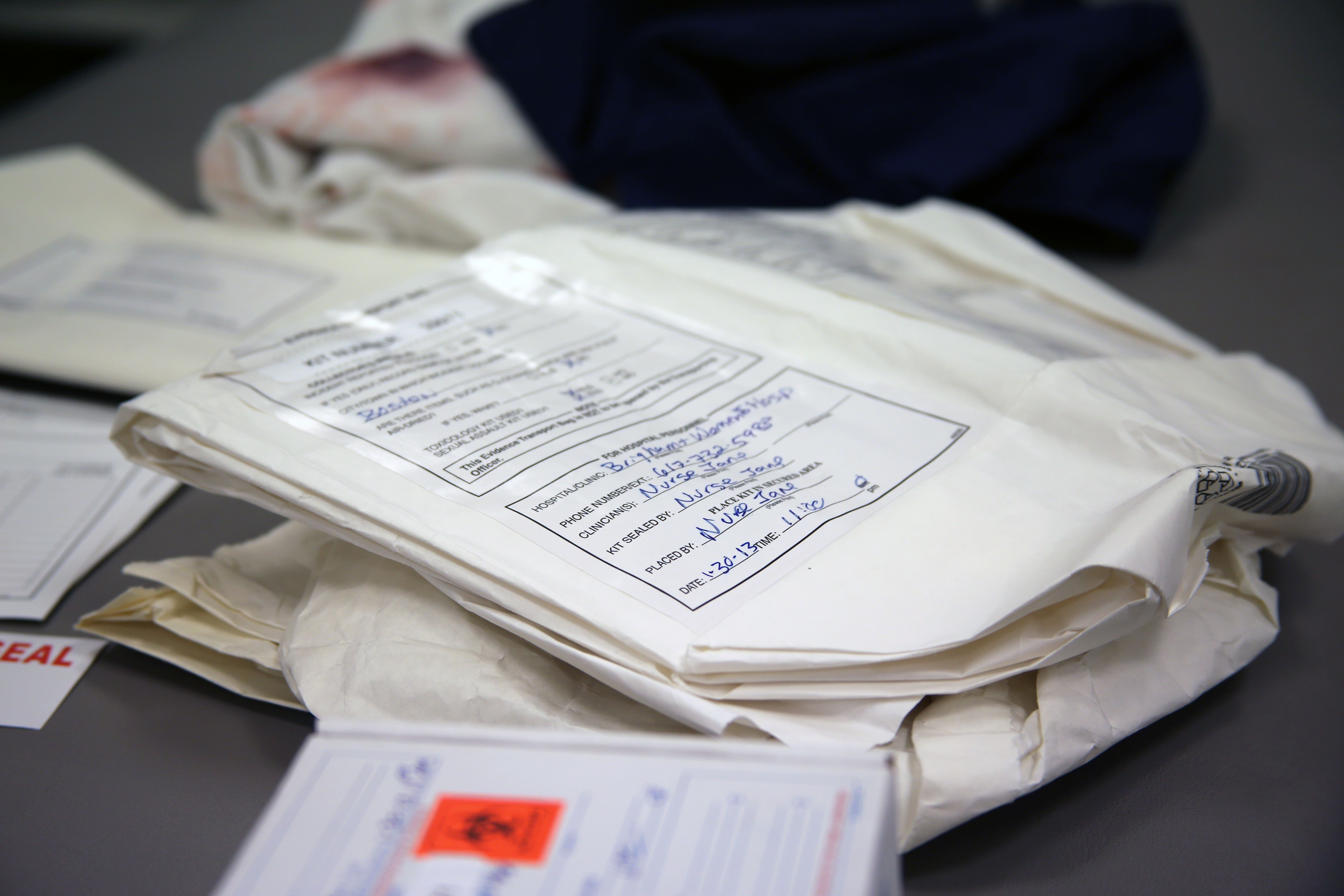
A sample evidence kit used in the Sexual Assault Simulation Course for Healthcare Providers (SASH) at the STRATUS Center

A sample evidence kit used in the Sexual Assault Simulation Course for Healthcare Providers (SASH) at the STRATUS Center

More than one-third of women and more than one-fourth of men in the U.S. experience rape, physical violence or stalking by an intimate partner during their lifetimes.

To help lessen the health consequences associated with violence, trauma and abuse, a group of BWHers developed a training program for care providers, the Sexual Assault Simulation Course for Healthcare Providers (SASH).

SASH, which is the first nurse-led simulation at BWH, allows providers to gain hands-on experience in a safe environment and understand their roles as members of an interprofessional sexual assault response team.

Meredith Scannell, RN, MPH, of the Department of Emergency Medicine and the Center for Clinical Investigation; Annie Lewis-O’Connor, PhD, NP-BC, MPH, FAAN, a nurse scientist and founder and director of the Coordinated Approach to Recovery and Empowerment (C.A.R.E.) Clinic at BWH; Amanda Berger, MSN, SANE-A, and Andrea MacDonald, BSN, both forensic liasons in Emergency Medicine; and Ashley Barash, a former medical simulation specialist at BWH, began offering the course at the Neil and Elise Wallace STRATUS Center for Medical Simulation in 2013.

Scannell identified a need to improve care for sexually assaulted patients who arrive in the Emergency Department (ED). Her first priority became developing an enhanced, comprehensive education for ED nurses. After seeking out the expertise of fellow forensic nurses and nurse scientists, Scannell and others ultimately developed SASH for nurses, physicians and physician assistants. The team received BWH’s Mary Fay Enrichment Award in 2012, which funded the course’s development.

The four-house course, offered to clinical teams working in the ED, focuses on the medical, psychological and forensic needs of patients who have been sexually assaulted. It is divided into four sections: didactic teaching, evidence-collection skills acquisition, simulation (with a standardized patient actor) and debriefing. Participants learn how to collect components of the sexual assault evidence collection kit, perform a forensic examination and provide effective care for patients who have experienced intentional violence.

The course uses a trauma-informed framework, which helps providers understand how a patient’s exposure to intentional violence and trauma may influence care.

“Historically, this patient population has experienced disproportionate gaps in the delivery of their care in emergency departments and once they leave,” Lewis-O’Connor said. “This kind of intentional violence – sexual assault, domestic violence or human trafficking – is a serious public health epidemic in the U.S. and worldwide.”

Scannell, Lewis-O’Connor and Barash published a paper on SASH in the Journal of Forensic Nursing, “Sexual Assault Simulation Course for Healthcare Providers: Enhancing Sexual Assault Education Using Simulation,” which received the journal’s Article of the Year award this fall and now serves as a blueprint for other institutions to follow.

“Our goal is for every ED nurse to go through SASH,” said Scannell. “Each year at BWH, we see about 60 to 70 patients treated for an acute sexual assault – meaning the assault occurred up to five days prior – in the Emergency Department. It’s critical at least one member of a care team, and hopefully more, is trained in a comprehensive, quality care approach for this particular patient population.”

In the future, Scannell and her colleagues hope to offer training to participants from other disciplines, such as social workers and pharmacists, who may interact with patients who have been sexually assaulted.

“I am so proud of the program we’ve created,” said Scannell, who credits the course’s success to the passionate support it received from clinical staff across the hospital. Those supporters include Dorothy Bradley RN, MSN, program director in BWH’s Center for Nursing Excellence; and Patti Dykes RN, PhD, MA, a senior nurse scientist in the Center for Nursing Excellence; Janet Gorman, RN, BWN, MM, nurse director for Emergency Medicine; Nancy Hickey, MS, RN, former associate chief nurse, who passed away last year; and Charles Pozner, MD, medical director at the STRATUS Center.

In addition to the gaps in care that SASH is addressing in the ED, Lewis-O’Connor’s C.A.R.E. Clinic provides post-ED support to men and women who have experienced intentional violence. Through a trauma-informed care model, the C.A.R.E. Clinic helps patients create an individualized plan of care that is based on their unique needs.

Lewis-O’Connor said she also appreciates the partnership between the C.A.R.E. Clinic and BWH clinicians such as Hanni Stoklosa, MD, MPH, an emergency physician in Emergency Medicine and an internationally recognized expert in human trafficking.

“Partnerships are so important to ensuring that patients who present with intentional violence in the ED receive the highest-quality and safest care possible, both while they are here and after they leave,” Lewis-O’Connor said. “My work is dependent on others. It’s all about collaboration and doing what’s best for the patient.”

StrategyIcon_WordpressBWHC’s Strategy in Action: Highest-Quality, Safe Care
Learn more about our strategic priorities at BWHPikeNotes.org.

From left: Rashaan Peters, Masika Gadson and David Crump

From left: Rashaan Peters, Masika Gadson and David Crump

In their role as violence recovery advocates at BWH, Masika Gadson and Rahsaan Peters work to support victims of community violence treated at BWH, even after discharge from the hospital.

The advocates are part of the Center for Community Health and Health Equity’s (CCHHE) Violence Recovery Program, which provides comprehensive resources to patients admitted to BWH after experiencing violence, as well as to referred members of the community at risk of becoming a victim of violence or who have previously experienced it. The program is a collaboration between the CCHHE and BWH’s Division of Trauma, Burn and Surgical Critical Care.

Gadson and Peters are paged if a victim of violence is admitted to the BWH Emergency Department. If a patient is willing to speak with the advocates, the advocates begin an ongoing conversation about the events that led the patient to be affected by violence and connect them with support they need at BWH and beyond.

The advocates set up safety plans to help keep patients safe as they transition back into the community after discharge. But their work doesn’t end there. They reach out to support groups and attend court hearings, housing appointments and job interviews with patients. They have even picked up groceries in the past. Individually, each of these acts may seem like small gestures, but they add up and equate to large improvements in the safety and quality of life of Boston residents and families.

“We are like a bridge,” said Gadson. “We want to make people feel welcome, even if they are denying the service we provide. We tell them, ‘If you change your mind, we are still going to be here.’”

Additionally, the advocates meet with residents of Boston’s neighborhoods who have not directly experienced violence but who might need support and advice.

“It helps to be recognized in the community as someone who provides many different kinds of support,” said Peters. “The rewarding thing about our job is that we have the opportunity to really help people.”

At the heart of Gadson and Peters’ work is relationship-building, which provides a better chance of follow-up after patients go home, says Mardi Chadwick, JD, director of Violence Intervention and Prevention Programs for the CCHHE. The duo’s extensive background assisting high-risk youth and families over the years has helped them make connections across the city and build trust with the people they serve, which totals 170 people this past year, a 60 percent increase from 2015.

“Having a program dedicated to recovery from trauma acknowledges violence as a public health issue,” said Chadwick. “It is essential for health care providers to understand the connection between violence and health and well-being.”

Violence Recovery Program manager David Crump, who started this work five years ago when the program first launched, credits close partnerships and collaboration with BWH clinicians and support from BWH leadership as keys to the program’s success.

“Staff’s awareness of what we do and their eagerness to connect with us to make sure their patients are being seen – that says a lot,” said Crump. “Everyone is on the same page. Additionally, I am extremely proud of Rahsaan and Masika’s ability to take this work to another level. They are not only achieving the program’s goals, but also exceeding them, and that right there blows me away.”

Members of BWH’s Spiritual Care Services Department

Members of BWH’s Spiritual Care Services Department at its 50th anniversary celebration

Clinicians, chaplains and other care providers gathered last week to commemorate the BWH Spiritual Care Services Department’s 50th anniversary of helping patients heal in body, mind and spirit.

More than 100 people attended an event capping a year of celebrations for the anniversary, a milestone reached in 2015, at the Building for Transformative Medicine on Oct. 20. Speakers reflected on the history of spiritual care at BWH and the path ahead for its practice.

“Guests of the event represented a rich diversity of many of the disciplines that Spiritual Care Services works with on a daily basis, including chaplains, social workers, nurses, physicians and administrators,” said Laurie Bittmann, MA, operations manager for Spiritual Care and the Department of Nutrition. “Over the history of Spiritual Care Services, chaplains have become an integral part of the patient care team, and it was an honor to have each of these disciplines together.”

Spiritual care began at the Brigham with William Leach, an Episcopal priest, who became the hospital’s first full-time chaplain in 1965 and has continued to “reflect the evolution of health care chaplaincy in the United States,” said Kathleen Gallivan, SNDdeN, PhD, BWH Spiritual Care Services director.

Over the last 50 years, Spiritual Care Services (formerly the Chaplaincy Services Department) has grown and expanded to meet the religious and spiritual needs of patients and families. The Pastoral Visitors Program was established in 1979 – and is still in place today – to provide the general public with an opportunity to provide spiritual support to patients and families.

In the 1990s, the department embraced a multifaith model and assigned chaplains to units of the hospital, rather than organizing them by religious affiliation. As medicine advanced over the years, chaplains were often called on to support patients in making difficult ethical decisions, such as life-prolonging care.

In the 2000s, BWH chaplains became more active participants in the delivery of care as members of a multidisciplinary team. Chaplains are now required members of palliative care teams at the hospital. The BWH Clinical Pastoral Education residency and internship programs were established during this time to educate the next generation of health care chaplains and professionals.

Rev. Trace Haythorn, PhD, executive director for the Association for Clinical Pastoral Education (ACPE), praised the Brigham’s spiritual care program as a model for hospitals around the world.

“Programs like the one at Brigham and Women’s Hospital set the bar for quality, diversity and compassion,” she said. “Kathy Gallivan’s leadership is exceptional, and the rich and important history of the Brigham serves as a beacon for our work as we look to the future.”

Watch the “Journeys of the Spirit” video below to learn more about BWH Spiritual Care Services.

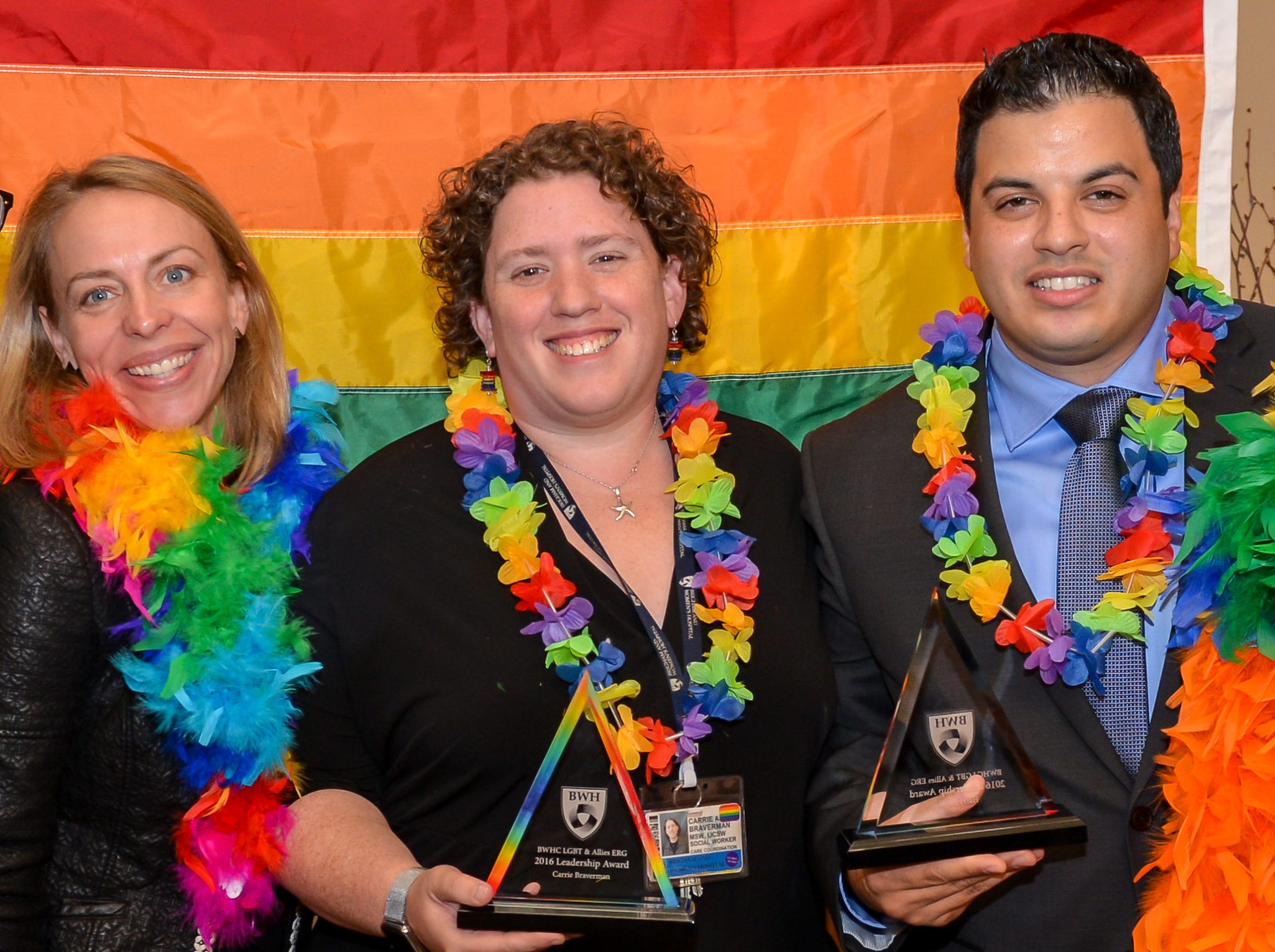
From left: Kerstin Palm, Carrie Braverman and Harry Reyes Nieva

From left: Kerstin Palm, Carrie Braverman and Harry Reyes Nieva

National Coming Out Day celebrations at BWH concluded with the presentation of the inaugural LGBT Leadership Awards, honoring three winners for their tireless efforts in advocating for LGBT patients and staff at BWHC.

The awards were presented by Brigham and Women’s Faulkner Hospital President Michael Gustafson, MD, MBA, a co-executive sponsor of the BWHC LGBT & Allies Employee Resource Group (ERG), who noted they were created to recognize staff who have championed causes and initiatives that support efforts to improve care for LGBT patients and families and to create a welcoming environment for all staff.

The first recipients of the awards were:

Carrie Braverman, MSW, LICSW: An HIV clinical social worker at the Brigham, Braverman is the founding chair of the BWHC LGBT & Allies ERG, formed in 2008. She remains active within the organization and is a passionate educator around LGBT issues in health care. Braverman was an active member of the working group focused on collecting sexual orientation and gender identity (SO/GI) demographics in Partners eCare.

Kerstin Palm, MA, OTR/L, CHT, CLT, and Harry Reyes Nieva: Palm, outpatient rehabilitation services manager at BWFH, and Reyes Nieva, a predoctoral research fellow and research manager in BWH’s Division of General Internal Medicine and Primary Care, served as co-chairs of the ERG from 2014 to 2016. They led efforts to develop a framework for collecting SO/GI data in Partners eCare. They also played a vital role in the development of a Gender Transition Policy for BWHC staff, and worked to ensure BWH and BWFH met the criteria for leadership status on the Human Rights Campaign’s Healthcare Equality Index over the last two years.

From left: Nathan McDonald, Lija Brigham McDonald, Merideth McDonald and BWH nurse Susanne Bloom

From left: Nathan McDonald, Lija Brigham McDonald, Merideth McDonald and BWH nurse Susanne Bloom

Nathan McDonald’s face lit up when he saw his wife, Merideth McDonald, rollerblade up the walkway of BWH’s Stoneman Centennial Park at 15 Francis St. last week. Merideth had just completed a 34-day, 1,420-mile skate from Florida to the Brigham—all to raise awareness of traumatic brain injury and to continue the family’s commitment to donating blood to help save lives.

“Today means so much to my family, friends and I,” said Nathan McDonald. “It was such a surreal moment to witness Merideth skate up the walkway at the hospital that saved my life.”

In 2009, Nathan, then 27, a U.S. Air Force reservist, was seriously injured in Tewksbury, Mass., when his motorcycle slammed into a garbage truck. Nathan arrived at BWH in critical condition. He suffered massive blood loss, a pelvic fracture, several orthopaedic injuries and a traumatic head injury. During his first night at the Brigham, Nathan received a total of 30 blood transfusions.

Since then, Merideth and Nathan have dedicated their lives to raising awareness about traumatic brain injury. In 2015, they launched a nonprofit called the Big Life Brain Injury Group. Big Life is a rehabilitative adventure club in New Smyrna Beach, Fla., for brain injury survivors and their caregivers.

To continue her family’s mission to raise awareness about brain injury and the Big Life Brain Injury Group, Merideth set out on a “Big Skate” adventure from New Smyrna Beach to Boston on Sept. 10. She wanted to end at BWH as a way to thank the hospital and her husband’s care team for all that they did to keep Nathan alive.

In addition, Merideth ended her skate at BWH to highlight the urgent need for blood donors. The Kraft Family Blood Donor Center hosted a blood drive at 15 Francis St. on Oct. 14 in Nathan’s honor.

In total, 42 blood donors, including Nathan, went aboard the Dana-Farber Cancer Institute/Brigham and Women’s Hospital Blood Mobile to donate blood that day.

William Savage, MD, PhD, associate medical director of the Blood Bank, was on hand during the celebration to greet the McDonald family and friends and to thank donors. Several of the McDonalds’ family members and friends also donated.

Savage spoke to news reporters covering the event about the importance of blood donation and the constant need for donors.

“The contribution that a donation can provide to someone is touching,” he said. “We always need red blood cells, platelets and plasma for our patients, but another part of blood donation that is significant is the invisible connection being made between donors and the patients who receive the blood.”

After her skate, Merideth was greeted with cheers and applause from family, friends and members of Nathan’s care team, all of whom stood outside the 15 Francis entrance awaiting her arrival. One special cheerleader also in the group was the McDonalds’ daughter, Lija, whose middle name is Brigham in honor of BWH.

“This is where our journey with brain injury began, which changed our entire family,” Merideth said. “Nothing has impacted our life like brain injury. Nathan was broken from head to toe, and his care team at the Brigham saved his life.”

From left: Saima Aftab, Raghu Seethala, Rita Patnode, Michael Prendergast, Karen Griswold, Robert Fine, Janet Gorman, Peter Stone and Claire McGowan

From left: Saima Aftab, Raghu Seethala, Rita Patnode, Michael Prendergast, Karen Griswold, Robert Fine, Janet Gorman, Peter Stone and Claire McGowan

A young child has an allergic reaction while visiting a grandparent who is a patient in the Shapiro building. A new mother in the Connors Center for Women and Newborns cries for help when she sees her baby has a blocked airway. These are some of the medical emergencies that would trigger a Code Blue and, until recently, prompt several different code teams made up of physicians, nurses and other staff to respond—not all of whom specialize in pediatrics or have experience working together.

Although BWH is not a pediatric hospital, some of its visitors and patients are children and infants. And none of them are immune to experiencing a medical emergency within the hospital’s walls.

Recognizing this, the Brigham launched two new code teams on Sept. 1: one dedicated to Code Blue emergencies involving newborns, with the other specializing in children under 15 who are visitors or receiving outpatient care on the Brigham’s main campus. These teams, available 24/7, join the existing Code Blue teams that respond to adult patients and the Code Blue Obstetrics team.

“Even though the likelihood of a pediatric emergency happening is very low, we want to be prepared because we care for everyone who walks through our doors—regardless of their age or whether they are a patient or visitor,” said Saima Aftab, MD, a neonatologist in BWH’s Neonatal Intensive Care Unit (NICU), who worked on the multidisciplinary task force that helped develop the new code teams.

Prior to this, several teams would respond when a Code Blue was called: the adult code teams, a specialized Code Blue Obstetrics team and an internal NICU code team for newborn emergencies in the Connors Center’s inpatient areas.

“We worked with these existing teams to establish tailored responses for younger patients and visitors that will enhance the safety of all of our patients, visitors and staff,” said Karen Griswold, RN, MBA, CPPS, lead program manager for Patient Safety.

Code Blue Pediatrics Response

The ED Code Team and the NICU Code Team are combining their expertise to respond to medical emergencies for children under the age of 15 who are visitors or receiving outpatient care at BWH. The two teams trained together in the BWH’s Neil and Elise Wallace STRATUS Center for Medical Simulation for several months to get comfortable with responding to emergency situations together before being called to a real-life emergency involving a child.

“The teams worked through multiple scenarios that were posed to them in the simulation center, and some great learning came out of it,” said Griswold. “Everyone is focused on doing the best thing for the patient, and that really shined through as they worked through the various scenarios.”

The STRATUS Center offered a safe but realistic environment that helped the two teams identify the best roles for various members of the code teams, said Raghu Seethala, MD, of Emergency Medicine, who was also part of the task force.

“These are two teams that function well, but didn’t have any prior experience functioning together, so we wanted to avoid  having ‘too many cooks in the kitchen’ and figure out the best way to integrate everyone,” Seethala said. “We have the infrastructure to care for every event here, but we had to get the right people in the room to formulate a plan to deal with these rare events.”

Calling a Code Blue: what’s Changing?

The only change to the process of calling a Code Blue will be a question from the operator about whether the patient is an adult, child or newborn so that the correct team is paged.  Call a Code Blue from anywhere on the main campus by dialing 617-732-6555.

Code Blue Newborn

When a mother requires care in the Shapiro Center or the Tower after delivery, her baby is usually brought to her unit to be with her.

If the baby had an emergency, staff on these units would previously call a Code Blue Obstetrics, bringing three code teams to the location: the NICU team, the Obstetrics team and the adult Medical code team.  “You may have 30 people show up, which sometimes made it difficult to coordinate,” Griswold said.

When a Code Blue Newborn is now called, only the six specialized members of that code team will respond. This ensures the other two code teams are available for emergencies elsewhere in the hospital and the right expertise is brought to care for the baby.

Although medical emergencies for children and infants are an uncommon occurrence in the Brigham—only a handful of events occur over a year—having a defined protocol will greatly reduce the risk of human error or logistical issues.

“We created this very highly specialized team that has a very clear-cut protocol,” Aftab said. “Instead of having to figure it out in an emergency situation, we now know exactly what to do.”

StrategyIcon_WordpressBWHC’s Strategy in Action: Highest-Quality, Safe Care
Learn more about our strategic priorities at BWHPikeNotes.org.

From left: Hari Mallidi cuts a cake celebrating a lung transplant milestone at BWH with Lung Center colleagues Bruce Levy and Raphael Bueno.

From left: Hari Mallidi cuts a cake celebrating a lung transplant milestone at BWH with Lung Center colleagues Bruce Levy and Raphael Bueno.

Cystic fibrosis may have limited Pamela Gauvin-Fernandes’ ability to enjoy swimming, a childhood passion of hers, but a double-lung transplant she received at the Brigham three years ago gave her new hope.

“As a mother of very active 13-year-old twins, Jack and Abby, receiving a lung transplant was the ultimate gift,” says Gauvin-Fernandes, a resident of Assonet, Mass.

Gauvin-Fernandes is one of many patients who have received life-changing lung transplants at BWH. Since last October, members of the Brigham’s Lung Center clinical team have performed a record 51 transplants, the most ever done in one year at BWH or in any one hospital in New England.

Established last year, the BWH Lung Center has transformed how patients with lung conditions are diagnosed and treated.

“The Lung Center is a collaboration of specialists who work together clinically to elevate care and drive innovation by providing multidisciplinary interactions and better patient experiences,” says Raphael Bueno, MD, chief of Thoracic Surgery at BWH, co-director of the Lung Center and co-chair of the Lung Research Center.

The Lung Center is working to advance the ways in which patients with lung conditions receive extraordinary care. By joining forces with the Lung Research Center, which also launched last year, the latest discoveries in lung health and disease can quickly be brought to the bedside.

Gauvin-Fernandes says she is living proof of that mission. Throughout childhood, she had a persistent cough that doctors attributed to bronchitis. It wasn’t until she was 19 that Gauvin-Fernandes was diagnosed with cystic fibrosis, a genetic disease that affects the respiratory, digestive and reproductive systems.

With the right diagnosis and treatment in hand, Gauvin-Fernandes remained fairly healthy throughout her 20s and most of her 30s. But over time, she became sicker and required oxygen nearly 24 hours a day.

In September 2012, she met eligibility criteria for a lung transplant. It was a critical development, as her condition had worsened.

“I didn’t even know if I would last through the winter,” she said. “I started writing notes to my kids and leaving the notes in places where they would discover them down the road.”

In February 2013, Gauvin-Fernandes got the call she and her family had been waiting for: A pair of donor lungs was available. Within a few hours, she was at the Brigham’s Emergency Department and being prepped for surgery. Philip C. Camp Jr., MD, physician director of Transplant Administration and program director of the Lung Transplant Program at BWH, along with a multidisciplinary care team, performed the double-lung transplant.

Today, Gauvin-Fernandes is back in the pool and breathing easier. But she’s not just enjoying a leisurely swim these days.

In June, she joined more than 6,000 organ, corneal and tissue transplant recipients, bone marrow recipients and living donors at the Transplant Games of America in Cleveland. She competed in five events, including the 50-meter freestyle and 100-meter backstroke, and won gold medals in all five.

At her next check-up, Gauvin-Fernandes gave Camp one of her medals to thank him. “My care team was just amazing,” she said.

2 Comments
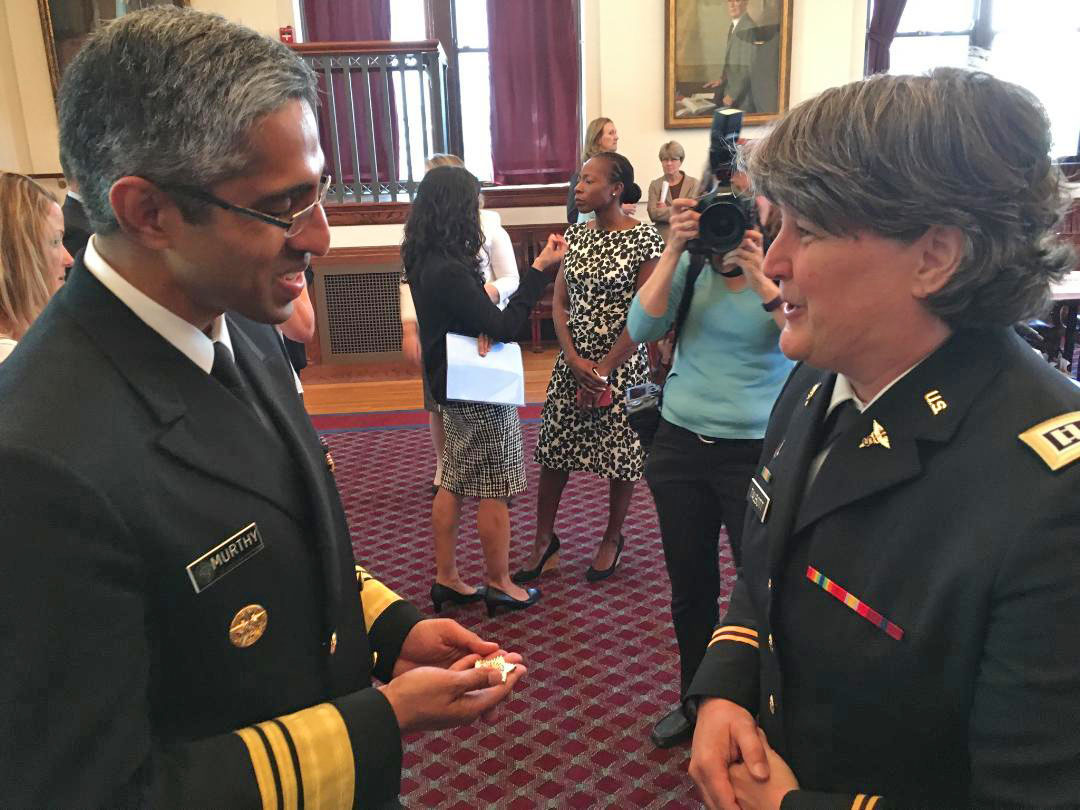
U.S. Surgeon General Vivek Murthy meets with Sheri Talbott.

U.S. Surgeon General Vivek Murthy meets with Sheri Talbott.

Physician Assistant Week is held Oct. 6–12 each year to honor physician assistants’ substantial role in improving health. PAs are involved in nearly every facet of the care at BWH.

Sheri Talbott, MS, PA-C, chief physician assistant for Renal and Pulmonary Transplant Medicine, says that learning medicine is akin to being handed a glass and asked to drink an entire lake.

“You’re never done drinking,” said the Army National Guard captain, who first joined BWH as an Emergency Department EMT in 1995 when she was a pre-med biology student at Tufts University. “There’s always more to learn, and I am really passionate about it and do it willingly.”

This passion for learning is clear in the variety of roles Talbott has taken on in service to patients at BWH and beyond, including her work at the state level to combat opioid addiction.

“Sheri embodies the very essence of what a PA represents in the health care community,” said Jessica Logsdon, MHS, MHA, PA-C, director of PA Services. “She has been a tremendous influence to the profession at the local, state and national levels.”

In February, Talbott was asked to join Massachusetts Gov. Charlie Baker’s task force on the opioid epidemic. As then-president of the Massachusetts Association of PAs, Talbott was charged with bringing together all PA program directors in the state to establish a set of core competencies for educating future PAs about recognizing, treating and preventing opioid addiction. Talbott says that the program directors and deans embraced this work from the beginning.

“How do you go after something so large?” she asked. “You start in lots of places, one of which is to teach clinicians who are going to be prescribing opiates how to do it thoughtfully and responsibly and how to talk to patients about it.”

The governor and other state leaders, including Health and Human Services Secretary Marylou Sudders and Department of Public Health Commissioner Monica Bharel, met again this August with Talbott and others to announce the finalized education program. The new curriculum will reach Massachusetts’ 900 enrolled PA students and 2,000 nurse practitioner students, according to State House News Service.

“I hope this work reduces the stigma associated with opioid addiction and brings it out of the shadows so it becomes something we’re able to look at in the light,” said Talbott. “Once we start having open conversations with patients about opioids, we can treat them more effectively. The more aware we are and the more we’re talking about it, the more successful we can be.”

domestic-violence-cheryl-clark

Everyone has a right to feel safe from violence, but the unfortunate reality is that many people do not—and often suffer in silence.

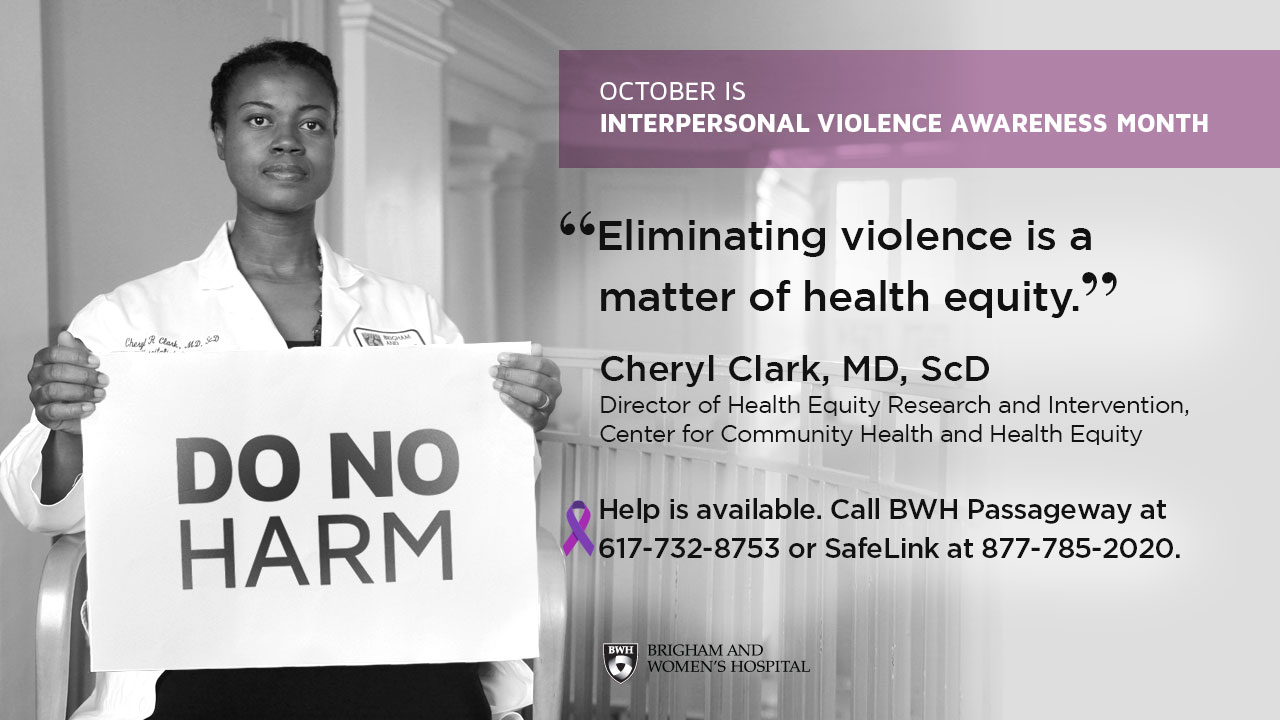
Each October, with the help of the BWH Center for Community Health and Health Equity (CCHHE), BWH takes part in national Domestic Violence Awareness Month. Last year, the Brigham broadened its efforts, recognizing the month as Interpersonal Violence Awareness Month to raise awareness of not only domestic violence, but all forms of violence that occur in communities, homes and workplaces.

“Exposure to interpersonal violence affects the health and wellness of our patients, our staff and our community,” said Mardi Chadwick, JD, director of Violence Intervention and Prevention Programs for the CCHHE. “As a health care institution, it’s critical that we acknowledge the experience of trauma and violence, while also working to understand and address their causes and impacts.”

Victims and survivors may face multiple forms of trauma, with differing experiences depending on race, gender identity, class, sexual identity and socioeconomic status. That’s why it’s vital to understand how the traumatic effects of racism, poverty, discrimination based on sexual or gender identity and other issues affect the health of those who experience violence, Chadwick added.

Several events will be held this month at BWH to generate awareness of interpersonal violence. The hospital’s “Do No Harm” campaign will also be visible on the TV screens across BWH, featuring personal messages of hope and support from Brigham staff. Photographer and author Kathy Shorr, who works with survivors of gun violence, will discuss her work on Friday, Oct. 14, 12–2 p.m., in Bornstein Amphitheater. A service on Tuesday, Oct. 25, 12–1 p.m., in the BWH Chapel, will honor all victims, survivors and community members affected by violence and trauma.

View the full calendar of events and the “Do No Harm” campaign. Join the social media campaign on Twitter and Facebook with the hashtag #DoNoHarm, and tag
@PassagewayBWH.

BWH patient Marcia Thorell and her husband, Bob, admire the lobby areas in the Building for Transformative Medicine.

BWH patient Marcia Thorell and her husband, Bob, admire the lobby areas in the Building for Transformative Medicine.

The new Building for Transformative Medicine at 60 Fenwood Road opened its doors to patients on Oct. 3.

Nearly 550 patients were seen in the new building on Monday, with the first patient arriving shortly before 8 a.m. Open that day were the Orthopaedic and Arthritis Center and Musculoskeletal Radiology, located on the second floor; Phlebotomy, on the ground level; and Imaging, located below ground on L2.

“Patients, staff and providers were all impressed with the modern, state-of-the-art facility and were thrilled to be part of opening day,” said Jeffrey Taylor, MPH, executive director of clinical operations at the Building for Transformative Medicine (BTM).

Day one went smoothly with the help of multiple teams from across BWH, Taylor said. Information Services, Partners eCare and Biomedical Engineering remained on site to provide support. Information Desk staff, Security officers and volunteers from the Office for Sponsored Staff and Volunteer Services helped patients find their way to appointments. Taylor also thanked Environmental Services and Materials Management for helping to get the building ready for patients, staff and visitors.

Additional clinics will open later this month. Tuesday, Oct. 11, will mark the opening of the Infusion Suite, the Multiple Sclerosis Center, the Center for Alzheimer’s Research and Treatment and the Brigham Behavioral Neurology Group. The main Neurology practice, Neurosurgery and Psychiatry open on Monday, Oct. 17.

Brigham patient Marcia Thorell was among those eager to catch a glimpse inside the new building, having watched the construction with interest over the past three years.

“We really feel the excitement, and I can’t wait to see my doctors here,” said Thorell, who walked through and admired the spacious, vibrant patient areas in the BTM with her husband, Bob, after an appointment with her neurosurgeon at 45 Francis St. on Monday. She looks forward returning to the new building for her next appointment with Rose Du, MD, in Neurosurgery, next month.

For Thorell, the BTM is an example of how the Brigham brings its resources together—with researchers and clinicians from related disciplines now under one roof—to improve patient care.

“The hospital has grown so much, and just like anything else, you have to start putting things in different places to make room for that growth,” she said. “But you work better as a team if you have all of the support you need around you. Even with the technology we have to communicate, it’s always better to put a face to an idea.”

screen-shot-2016-10-06-at-2-24-38-pm

1 Comment

While on a second tour of duty in Afghanistan in 2010, now-retired Marine Sgt. John Peck’s life changed in an instant when he stepped on an improvised explosive device (IED), triggering an explosion. He lost both of his legs and a large part of each arm. Later, he developed an infection, which required a further amputation of his left arm to save his life.

For two months after the blast, Peck remained at Walter Reed Army Medical Center in Washington, D.C. He has since undergone more than two dozen surgeries to address his injuries.

Ready to move forward, Peck, of Fredericksburg, Virginia, completed an evaluation at BWH in August 2014 to receive a double-arm transplant. Two years later, life was about to transform again—this time, for the better. He received a call this summer from Simon G. Talbot, MD, BWH director Upper Extremity Transplantation, with news that the bilateral arm transplant would take place at the Brigham.

“My life had been on a timeout for a while,” said Peck, now 31, a recipient of two Purple Hearts. “When I got the call, I broke down and cried. I quickly had to pull it together because I had to get to Boston. I was ready to face the challenges with patience and perseverance.”

At an Oct. 5 press conference in BWH’s Zinner Breakout Room, Peck joined Talbot and David Crandell, MD, medical director of the Amputee Program at Spaulding Rehabilitation Network, where Peck has been undergoing outpatient rehabilitation, to share his story with the world.

Peck recounted the moment he saw his new hands for the first time.

“It was pure love at first sight,” Peck said. “When I look down at my hands, they seem so natural. It was just a perfect match.”

In August, a multidisciplinary team—including 12 surgeons—worked nearly 14 hours to transplant the arms, one below the elbow and one above. Peck’s case was the fourth bilateral arm transplant performed at the Brigham.

Peck’s surgery went seamlessly, Talbot said. Although Peck experienced a brief episode of rejection about two weeks after surgery, which is common among transplant recipients, he’s now doing well and meeting all of his milestones, he added. Peck is expected to regain function and sensation in his new limbs over the next several months.

“While every patient is special to us, having the opportunity to care for a patient who has given so much in service to this country was especially meaningful to our team, particularly to those who have served,” Talbot said.

During the press conference, Alexandra Glazier, president and chief executive officer of the New England Organ Bank, thanked the donor family and talked about the life-changing benefits of organ donation.

“We are continually humbled and inspired by the willingness of donor families to give to others while they deal with the profound and sudden loss of a loved one,” Glazier said.

Peck is relearning how to perform basic tasks with his hands—picking things up, eating, brushing his teeth, getting in and out of a wheelchair and, perhaps most important to him, holding the hand of his fiancée, Jessica Paker.

His new arms serve another special purpose—he’s able to wear a memorial bracelet on his wrist that honors the memory of a friend killed in action.

“It means a lot to me that I can actually wear it now,” said Peck. “Military members wear these bracelets to celebrate the lives and successes of our fallen brothers. I’m just happy that I could finally put it on.”

Looking ahead, he would like to one day attend culinary school and audition to be a star on the Food Network channel—a dream of his since he was a child.

Peck commended his medical team for giving him a new chance at life.

“Their expertise is world class,” he said. “I am grateful to the entire team—including the surgeons, nurses, anesthesiologists, residents and specialists—who worked together to perform the surgery and provide my follow-up care.”

In addition, Peck gave special thanks to his anonymous donor and the donor’s family for making the transplant possible. Because of them, he’s been given a new chance at life.

“Every day when I look down at my new arms, I will drive on through the pain and I will never give up,” Peck said. “I will remember my donor’s selflessness and his gift until the day I die. I want the family to know that I appreciate their bravery and courage in making the decision to donate their loved one’s organs. I assure them that I will not let this gift go to waste.”

StrategyIcon_WordpressBWHC’s Strategy in Action: Advanced, Expert Care
Learn more about our strategic priorities at BWHPikeNotes.org.


BWH Vets Grateful to Give Back

Several members of retired U.S. Marine Sgt. John Peck’s surgical team are also military veterans. They shared their thoughts on caring for a brother-in-arms.

BRIGHAM AND WOMEN'S HOSPITAL PLASTIC SURGERY FOURTH DOUBLE HAND AND FOREARM TRANSPLANTArnold Alqueza, MD, Orthopaedic Surgery, U.S. Navy. “I completed my five years of active duty in the Navy as a submarine officer 17 years ago. It is an honor for me to be able to serve the veterans who laid it all on the line for our country every day when they served.  I hope John Peck finds joy and use from the gifts given to him by another gracious family.”

BRIGHAM AND WOMEN'S HOSPITAL PLASTIC SURGERY FOURTH DOUBLE HAND AND FOREARM TRANSPLANTPaul Burgart, CST, Operating Rooms, U.S. Army: “I was at Letterman General Hospital, Operating Room, Sixth U.S. Army, San Francisco, from 1971 to 1973, helping care for vets returning from Vietnam. Life feels full circle now, being able to be part of the team helping to take care of this next generation of vets, who have given so much in the service to their country. I feel honored to serve in this capacity.”

RELEASE DATE: 20160901, September 1, 2016, Boston, MA, USA; Brigham and Women's Hospital Plastic Surgery Transplantation Program, in coordination with the hospital's entire transplant team, and the New England Organ Bank, worked throughout an entire day to replace both forearms of USMC Sgt. John Peck (Ret.) in a bilateral mid-forearm transplant procedure, the fourth of it's kind for the Brigham and Women's Hospital in Boston MA. The hand and forearm transplant team, led by plastic surgeon Dr. Simon Talbot, MD, began the pair of surgical procedures shortly after 12 noon and the doubly transformed John Peck was transported to the tower ICU floor for recovery before 3 a.m. the following day. ( lightchaser photography © 2016 ) DATE EMBARGOED ARCHIVES OUT

George S.M. Dyer, MD, Orthopaedic Surgery, U.S. Air Force: “It was a particular honor to participate in the care of an injured Marine. Nearly 20 years ago, I finished seven years of active duty service to go to medical school. Then, after 9/11, I regretted that I was no longer on active duty to serve my country, but not yet fully trained as a surgeon. So I am especially grateful for this chance to use my new profession to give something back to a man like John Peck, who gave so much as part of his own service.”

From left: Sean Jackson, Clare Tempany, Angela Kanan and Alexandra Golby celebrate the AMIGO suite’s fifth anniversary.

From left: Sean Jackson, Clare Tempany, Angela Kanan and Alexandra Golby celebrate the AMIGO suite’s fifth anniversary.

In the five years since the Advanced Multimodality Image Guided Operating (AMIGO) suite opened at BWH, more than 1,200 procedures have been performed there—a figure Clare Tempany, MD, medical director of AMIGO, says wouldn’t have been possible without BWH’s commitment to expanding the boundaries of medicine.

“We’ve seen amazing results in many fields of medicine and surgery within AMIGO,” she said. “We’re honored so many people have supported the suite, and we hope they continue to do so for years to come.”

A joint endeavor between BWH and the National Institutes of Health, the AMIGO suite spans 5,700 square feet of operating and imaging technologies. Multidisciplinary teams of specialists—including radiologists, surgeons, anesthesiologists, nurses, technologists, engineers and researchers—use its equipment and novel design to efficiently and precisely guide treatment before, during and after a procedure, without the patient or clinical team having to leave the operating room.

It is the first operating suite in the world to house a complete array of advanced imaging equipment and interventional surgical systems, along with advanced navigational technologies for use during procedures, enabling less-invasive, more-effective therapies.

Clinicians have used the AMIGO suite to perform surgeries and procedures in several areas, including Neurosurgery, Interventional Radiology, Endocrine Surgery, Radiation Oncology and Surgical Oncology. Case volume in AMIGO has continued to rise, with about 296 cases performed in 2015 and 385 projected for 2016.

Neurosurgeon Alexandra Golby, MD, AMIGO co-director and director of Image-Guided Neurosurgery, recalls performing the first procedure in the suite in 2011. Looking back, she’s proud of how AMIGO’s scope has expanded.

“Even before AMIGO launched, we had a vision to make it a multispecialty and multi-organ suite,” Golby said. “In AMIGO, patients have access to state-of-the-art, first-in-human approaches, and everything we do is built on that as the guiding principle: Perform the best possible interventions for patients, which are really personalized to their needs.”

Golby said this includes patients who come to AMIGO with particularly complex cases that other treatments were unable to resolve.

During a recent event celebrating AMIGO’s five-year anniversary, Tina Kapur, PhD, co-director of AMIGO and executive director of Image-Guided Therapy in the Department of Radiology, who also provides research oversight in AMIGO, said she was happy that AMIGO continues to be a vibrant place for research. Over the last two years, several papers about research performed in the suite have been published in peer-reviewed journals.

“To know that we have performed more than 1,200 procedures has been amazing,” Kapur said. “We have been able to survive and thrive, and now our mission is to plan for the next 1,200 cases.”

AMIGO has played a pivotal role in pioneering discoveries, agreed Mehra Golshan, MD, distinguished chair in Surgical Oncology at BWH, who has tapped the center’s resources for a clinical trial studying women diagnosed with early-stage breast cancer.

“Groundbreaking research in AMIGO has translated to treatment-changing approaches for breast MRIs, which potentially affects tens of thousands of women who undergo breast-conserving therapy,” Golshan said. “In addition, AMIGO has been instrumental in BWH receiving its first grant from the Breast Cancer Research Foundation.”

Since AMIGO opened, about 900 interventional radiology cases have been performed there, including tumor ablations—minimally invasive destruction of cancer tissue—and MR-guided biopsies, which are performed when cancer is visible in MRI images but cannot be confirmed by traditional biopsies. More than 200 Neurosurgery procedures have been performed, including brain tumor resections and deep brain stimulations, which treat various disabling neurological symptoms.

Looking forward, Kapur hopes teams in AMIGO will be able to partner even more closely with technology companies to help develop and test new devices, software and imaging. “We’re a unique test bed to do that because we have an unusual mix, where researchers and clinicians work closely every day,” she said.

During the event, speakers acknowledged the late Ferenc A. Jolesz, MD, who was the driving force behind AMIGO.

“Ferenc was like a second father to me,” said Golby. “He was a true visionary. I hope we can do him proud as we take our work into the next five years of image-guided therapy.”

StrategyIcon_WordpressBWHC’s Strategy in Action: Expert Care
Learn more about our strategic priorities at BWHPikeNotes.org.

3 Comments
From left: Yaralia Kelleher, David Rosenthal and Courtney Atkinson

From left: Yaralia Kelleher, David Rosenthal and Courtney Atkinson

By the time David Rosenthal, PA-C, MHP, DFAAPA, is called in to see patients, their abdomens are often distended so dramatically that they look like they swallowed a basketball.

The culprit is a condition called malignant ascites, which causes recurrent, painful build-up of fluid inside the abdominal cavity. It may develop in patients with cancer who are approaching end of life. Eating, sleeping, moving and getting dressed all become debilitating tasks.

Historically, these patients had to make frequent trips to the hospital to have the fluid drained—an especially grueling task for someone suffering from cancer or another disease. But for the past decade, Rosenthal, chief PA in Interventional Radiology, has been part of a team of physician assistants championing a minimally invasive procedure that allows patients and caregivers to drain the fluid at home as needed.

“It’s a tremendous improvement in their quality of life and independence,” said Rosenthal, whose team recently surpassed performing 500 of these procedures. It is the highest number performed at a single hospital in New England, and possibly the country, he says.

In the past, tunneled catheters used in the procedure were prone to malfunctioning and causing infections. Today’s devices have dramatically reduced such risks, Rosenthal said. In addition, the BWH team says their technique for insertion and use of imaging have been carefully honed to ensure patient safety. Fewer than 1 percent of BWH patients who underwent the procedure have experienced a serious infection that required hospitalization or removal of the catheter, Rosenthal said. The technique was recently published in the Handbook of Interventional Radiology Procedures.

“We’ve really found over the years that these procedures have a lot more benefit than risk,” he said.

Physician assistant Yaralia Kelleher, PA-C, who trained under Rosenthal in Interventional Radiology, says their team’s combined experience and knowledge have significantly improved patients’ quality of life.

“We have been carrying out these procedures proficiently and efficiently, resulting in high-quality care for these patients,” Kelleher said.

Moreover, safety doesn’t start and end in the procedure room.

“Choosing the correct candidate for the procedure is a major consideration,” Kelleher said. “If someone is too sick to undergo it, we might recommend they don’t. Being able to identify those patients is a result of the expertise we’ve gained from doing these procedures.”

For those who are able to safely have the tunneled catheter inserted, the immediate relief it provides has been personally and professionally rewarding to see, said Courtney Atkinson, PA-C, a physician assistant who joined the Interventional Radiology team last year.

“It feels like we make a big different for patients and their families in a really critical time,” Atkinson said.

1 Comment
James Tulsky

James Tulsky

Last September, James Tulsky, MD, was appointed director of Palliative Care Services at BWHC and inaugural chief of the Division of Palliative Medicine in the Department of Medicine. He sat down with BWH Bulletin to discuss his first year in the roles.

What does palliative care entail?

Palliative care is specialized medical care for people living with a serious illness, and focuses on maximizing quality of life, managing symptoms, relieving stress and providing support for patients and families. We aim to be involved as early as necessary. It also includes end-of-life care and hospice, but that’s only one piece of the broader picture.

How do you measure success in palliative care?

It comes down to reduction of symptoms and improvement in overall quality of life for the patient and his or her family. But quality of life is a complex phenomenon that includes not only physical components, but also psychosocial and spiritual ones. We also measure success in palliative care by making sure patients get the care they desire and don’t get treatments that are not consistent with their goals. Patients should feel empowered to make decisions that align with their values.

For patients at end of life, we also measure success in terms of the quality of dying. This means dying where they want to and surrounded by the people they love. Success also includes well-managed symptoms and a family that feels supported, even after a death.

What has been your vision for the division?

On the clinical side, our goal is integrated, comprehensive palliative care across the hospital, its clinics and in patients’ homes. We are working to ensure that everyone who has a palliative care need will be able to get the right care at the right place at the right time. A lot of our clinical efforts involve strategizing where our palliative care clinicians need to provide care directly to patients, and where we should provide support for other specialists and primary care providers.

That dovetails into our education goals. While, of course, we train future palliative care specialists, part of our job is to be educators and coaches for clinicians from other specialties who want to be palliative care champions or to simply provide the best palliative care possible to their patients.

What about research?

This is a young field with incomplete literature, and there’s a huge research need because so much of what we do is, unfortunately, not evidence-based. I believe we have the ability here at the Brigham and Dana-Farber to be world leaders in the creation and dissemination of research about palliative care. We already have a number of investigators in our division, and we are supporting them as much as possible. In addition, we’re launching a two-year research fellowship in palliative care and psychosocial oncology in July 2017, with the goal of bringing in three research fellows each year to be the core of the next generation of palliative care scientists.

How did you get interested in this field?

When I became a physician, I had a really hard time seeing people suffer. I wanted to cure disease, but more than anything I wanted to alleviate suffering.

I’ve been particularly interested in how we, as medical professionals, talk to patients. I was overwhelmed by the enormous power of words and noticed very subtle differences in how we say things that can make a world of difference to our patients. When I was a third-year resident, I admitted a patient who had lung cancer and was dying at home, but that night he had become acutely short of breath. His wife panicked and called 911. He was admitted to the ED, intubated and put on a ventilator, and I was going to admit him to the ICU. I was trying to understand what had happened, and I learned that the attending physician had asked the patient’s wife if she wanted him to “do everything for her husband.” There’s only one answer to that question for a loving spouse. It was inadvertent on the attending’s part, but that was the wrong question.

I learned that night that the patient hadn’t wanted to die on a ventilator, so we spent the night taking him off of it and brought in his family so they could say goodbye. He died in the ICU, but that could have been avoided.

What keeps you motivated?

When you work with someone who has a serious illness, you see the best of what people are all about. You see resilience, hope, and families coming together. In a setting where people often think there isn’t anything to do because the underlying disease may be incurable, it’s tremendously gratifying to know that you can really help the person in ways that may not have seemed possible.

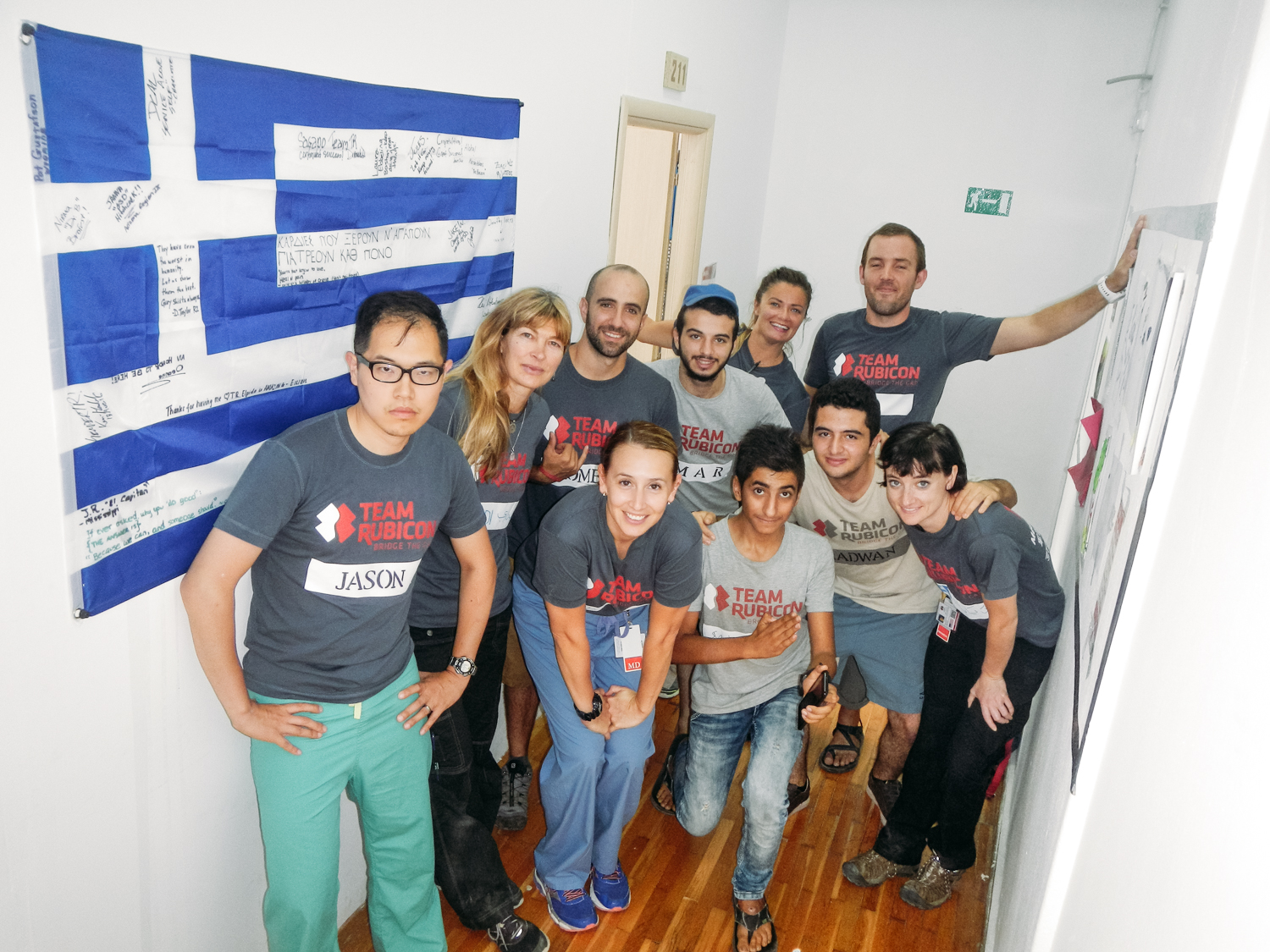
Front row, second from left: Nirma Bustamante with other volunteers at a refugee camp in northern Greece

Front row, second from left: Nirma Bustamante with other volunteers at a refugee camp in northern Greece

For BWH International Emergency Medicine fellow Nirma D. Bustamante, MD, having the opportunity to travel to Greece to care for refugees is an experience she will always cherish.

“I had the privilege of caring for, and most importantly, getting to know the most incredible human beings,” said Bustamante, of the Division International Emergency Medicine and Humanitarian Programs in the Department of Emergency Medicine at BWH, which prepares leaders in global health and humanitarian response.

Earlier this month, Bustamante spent more than two weeks at a refugee camp in northern Greece, along with volunteers from Team Rubicon, which recruits, trains and deploys U.S. military veterans and health professionals to aid in disaster-response operations around the world. Bustamante provided primary and urgent care to Syrian and Iraqi refugees, developed care plans and helped patients access specialty care in the local community.

She was one of two BWH physicians who traveled to Greece via the fellowship. Over the course of the two-year program, clinicians develop skills in humanitarian aid and disaster response, emergency care systems development, health program administration and funding, human rights and more. They also must complete one emergency deployment, where they care for people forced from their homes due to a disaster or conflict. Before deploying, fellows receive specialized training in humanitarian and disaster response.

Bustamante said that while the refugees had experienced unimaginable suffering, she was struck by their positive outlook.

“Although I will be a tiny speck on their path to a better life, I, along with countless other volunteers, work every day so that this moment in time is positive and reminds them that intrinsic good still exists,” Bustamante said.

Thousands of refugees have fled to Greece to escape war and poverty, due to its close proximity to areas in crisis. Currently, 200 Syrian refugees live at the medical camp where Bustamante volunteered. The camp is expected to grow to about 800 people by the end of this year.

A former fellow herself, Stephanie Kayden, MD, MPH, chief of the Division of International Emergency Medicine and Humanitarian Programs and director of the International Emergency Medicine Fellowship, said it’s inspiring to speak with fellows once they return.

“Our fellows learn a lot about how to practice humanitarian medicine properly, as well as what happens if the job is done poorly,” Kayden said. “When they go out, they think they are going to learn new skills and become better clinicians—and they do—but I think the thing that surprises our fellows the most is how much of the care given by volunteers who lack specialized training falls short of international standards.”

Harveen Bergquist, MD, a BWH fellow who also deployed to Greece, arrived on Sept. 20 to assist the refugee camp with medical care. Bergquist says she feels a personal obligation to help others.

“I feel fortunate to have the training and departmental support to do just that,” she said. “My goal is simply to do my best to provide the quality medical care that all people deserve, while also helping to restore dignity and normalcy to people who have suffered tremendously.”

From left: Gloria Oppen, NP, demonstrates the Peer-to-Peer flu vaccine program with her Occupational Health Services colleague, Dennisse Rivera.

From left: Gloria Oppen, NP, demonstrates the Peer-to-Peer flu vaccination program with her Occupational Health Services colleague, Dennisse Rivera.

Flu vaccination rates at the Brigham hit their highest levels ever last year, with 90 percent of BWHC staff receiving the vaccine. And as the hospital aims for an even higher rate for the 2016–2017 flu season to further improve patient safety, a task force of clinical and administrative leadership is trying to better understand what prevented the remaining 10 percent of staff from getting their flu shot.

Among those who declined to receive the vaccine for the 2015–2016 flu season, the most common reasons given during the attestation process were “don’t want/need, never get the flu” (37 percent) and that the “influenza vaccine can cause flu/made me sick in the past” (25 percent).

But both of these beliefs are common misconceptions, notes Deborah Yokoe, MD, an infectious disease expert, medical director of BWH Infection Prevention and Control, and member of the BWHC Flu Vaccination Task Force.

“A flu shot can’t give you the flu—it doesn’t contain any live viruses,” Yokoe said. “Even if you are generally super healthy, you can become miserably sick from the flu. In addition, even before you notice that you’re sick, you can pass the flu virus on to your co-workers, friends, family and our patients. Especially for people with chronic health conditions, influenza can be life-threatening. If for no other reason, you should be getting a flu shot every year so that you’re not spreading the flu unknowingly to others.”

This season’s flu vaccination policy remains the same as last year: Staff members who do not get a flu shot by Dec. 1 for any reason, including medical and religious reasons, must wear a surgical or procedure mask in patient areas for the duration of the flu season. Patient areas include not only clinical spaces, but also waiting rooms and family rooms.

‘The Flu Can Be Devastating’

Last season, physicians led with the highest rate of flu vaccination at 97 percent, followed closely by nurses at 94 percent. The research community came in below the overall average, with one in four—amounting to 740 BWHers—declining to receive a flu shot last year. But with the upcoming opening of the Brigham’s newest building at 60 Fenwood Road, research and clinical spaces will come into closer proximity, making it even more important for all members of the BWHC research community to get vaccinated.

Tanya Laidlaw, MD, director of Translational Research in the Division of Rheumatology, Immunology and Allergy, is both a researcher and clinician. As a pediatrician and immunologist, Laidlaw treats patients whose compromised immune systems leave them vulnerable to the flu, and she knows exactly how dangerous it can be if they come in contact with a person who has the virus.

“When a non-clinician pictures someone getting the flu, they might think of a bad head cold that can last for a day or two, but for some patients I see, the flu can be devastating,” said Laidlaw.

Elena Losina, PhD, MSC, co-director of BWH’s Orthopaedics and Arthritis Center for Outcomes Research (OrACORe) and her colleagues will move in the new building this fall. She says getting the flu shot is an annual routine, and that her group’s administrator also sends helpful reminders to the team about flu clinic dates and how to attest to receiving the flu shot.

“We’ll be working in the same building where patients are being seen and will be close to the flu clinics being held on campus—there really are no excuses,” said Losina.

For more details about this year’s flu vaccination policy, as well as dates of upcoming flu clinics, visit BWHPikeNotes.org.

StrategyIcon_WordpressBWHC’s Strategy in Action: Highest-quality, Safe Care
Learn more about our strategic priorities at BWHPikeNotes.org.

This year’s Stepping Strong Innovator Awards finalists are addressing complex challenges related to trauma research. Each of the three finalists hopes to receive the $100,000 Stepping Strong Innovator Awards, which will be announced online on Monday, Oct. 17. Read about their work below, and vote for your choice.


Jay Zampini, MD

Jay Zampini, MD

Detecting Early Neurological Decline to Prevent Paralysis – Jay Zampini, MD

What challenge does your project address?

Spinal cord injury represents one of the most devastating and long-reaching effects of trauma. Injuries can range from a subtle loss of sensation and muscle function to complete paralysis. More than 273,000 people in the U.S. are living with spinal cord injury, the ranks of which grow by over new 12,000 cases each year.

Typically, patients sustain a spinal cord injury due to a car accident, fall, sports injury or violence. They are transported to a trauma center, where spine surgeons provide treatment designed to optimize the restoration of neurologic function. In other instances, a hospital patient with normal neurologic function may experience a loss of sensation or muscle function for various reasons. Ideally, caregivers can identify these changes rapidly enough to initiate treatment to reverse the symptoms or prevent their progression. Today, a neurologic exam is the only method of detecting changes.

The most challenging group of patients to treat for neurologic decline are those whose mental status and ability to cooperate are compromised. They may be unconscious, confused, agitated or delirious. For these patients, a neurologic exam alone cannot rapidly detect a potentially devastating change in neurologic function.

We plan to develop a device that automatically detects changes in neurologic function, alerting clinicians to start life- or function-saving treatment.

What is a compelling aspect of your project?

Assessing active muscle function is the most critical aspect of a neurologic exam, requiring patients to move their hands, feet and muscles. Several methods of measuring muscle activity are available. For instance, electromyography uses needles and skin-surface electrodes to stimulate and monitor muscle activity in patients to assess nerve injury. Similar techniques are available for patients under anesthesia, and accelerometers in the iPhone, FitBit and other athletic monitors can differentiate between activities like running, golf, and elliptical training.

The device we propose will adapt available technology for an application that has never been considered before. Our device also takes a time-consuming task of a neurologic examination and automates it, allowing clinicians to better serve their patients.

How will your project benefit future patients who suffer from trauma-related injuries?

Our device has the potential to not only benefit patients who are injured and neurologically intact, but also those whose potential neurologic decline is difficult to detect. We hope it will become the standard of care for neurologic monitoring in hospitalized, at-risk patients.

CAST YOUR VOTE
or read more about the other Stepping Strong Innovator Awards finalists:

mikeweaver_ortho21st Century Tools to Measure
the Progress of Bone Healing
0000016-g-giastadisStimulating Muscles to
Accelerate Rehabilitation

This year’s Stepping Strong Innovator Awards finalists are addressing complex challenges related to trauma research. Each of the three finalists hopes to receive the $100,000 Stepping Strong Innovator Awards, which will be announced online on Monday, Oct. 17. Read about their work below, and vote for your choice.


mikeweaver_ortho

Michael J. Weaver, MD

21st Century Tools to Measure the Progress of Bone Healing – Michael J. Weaver, MD

What challenge does your project address?

Fractures are an extremely common result of trauma—whether they result from a car accident, an injury on the battlefield or a bad fall. While huge advances have been made in the surgical treatment of fractures, there are currently no medications available to help speed bone healing. The primary reason for this deficit is that, based on current technology, it is challenging to accurately measure bone healing, which makes drug trials exceedingly difficult to perform.

The goal of our project is to develop a reliable method of accurately measuring bone healing. This will enable us to collaborate with pharmaceutical companies to develop medications to improve and accelerate the often lengthy bone healing process.

What is a compelling aspect of your project?

Our project involves combining our understanding of bone healing with advances in CT scan technology that will allow us to measure microscopic changes in bone. We will develop a tool that allows us to measure how much motion occurs between the bone ends at a fracture site, such as a wrist fracture, during the healing process. The device will apply a small load, at a level that produces minimal discomfort, to the broken bone. A high-resolution CT scan will then be used to measure how much motion occurs. Knowing that fractures become stiffer as the healing process progresses, the device will measure the bone knitting together, with less motion over time.

This combination of technologies will allow us to more precisely measure bone healing than previously possible, as well as help to spur the development of medications that can expedite it.

How will your project benefit future patients who suffer from trauma-related injuries?

Over 7 million people break a bone every year. While there are numerous drugs to treat other common medical problems like high blood pressure or asthma, there are no medications to help heal broken bones. The goal of this project is to develop a tool to better measure bone healing, thus spurring drug development companies to discover medications that will both improve the speed of recovery and decrease the challenge of healing problems. Anyone who has had a broken bone, or knows someone who has, knows how difficult the recovery process is. Innovations such as the one we are proposing that speed the healing process will result in less pain, a quicker recovery and the hope that patients can quickly resume their everyday routines.

CAST YOUR VOTE
or read more about the other Stepping Strong Innovator Awards finalists:

jay-zampiniDetecting Early Neurological Decline
to Prevent Paralysis
0000016-g-giastadisStimulating Muscles to
Accelerate Rehabilitation

This year’s Stepping Strong Innovator Awards finalists are addressing complex challenges related to trauma research. Each of the three finalists hopes to receive the $100,000 Stepping Strong Innovator Awards, which will be announced online on Monday, Oct. 17. Read about their work below, and vote for your choice.


Giorgio Giatsidis, MD

Giorgio Giatsidis, MD

Stimulating Muscles to Accelerate Rehabilitation – Giorgio Giatsidis, MD

What challenge does your project address?

Injuries to the legs and arms often destroy muscle, reducing both mass and strength. Today, there are almost no approved therapies or strategies—for use in conjunction with standard physical therapy—to induce muscle regeneration or accelerate recovery following trauma. Unfortunately, current interventions remain rudimentary, and prolonged hospitalization incurs further tissue damage.

Once home, trauma patients face a steep path of rehabilitation. I call this “the trauma iceberg.” That is, what we see—and treat—is only the tip of what our patients actually experience. This project aims to break the trauma iceberg by developing novel therapies to initiate muscle recovery immediately following the trauma, prevent the onset of further inactivity-induced damage and accelerate the rehabilitation path toward a normal life.

What is a compelling aspect of your project?

Our cells regenerate in response to mechanical stimulation. For example, when we go to the gym, we stimulate muscles by stretching and contracting them, and this activity makes them grow. These principles can also be used to design novel, safe, non-invasive and patient-friendly therapies.

This project seeks to address the burden of prolonged trauma rehabilitation by passively stimulating injured muscles to regenerate and accelerate their recovery directly at the bedside. To realize our goals, our team will determine the exact conditions to effectively promote mechanically induced regeneration of injured muscle and, in collaboration with engineers, integrate these findings into the development of a portable device that can be easily applied to trauma patients inside the hospital and at home.

How will your project benefit future patients who suffer from trauma-related injuries?

Traumatic muscle injuries to legs and arms are a very common and dramatic occurrence. Trauma care for these patients does not end with the treatment of acute, life-threatening conditions and wounds. It continues through the long, challenging path of rehabilitation.

Our proposed therapy and device will help to facilitate muscle regeneration in a hospital setting, prevent the onset of further damage and accelerate the path of rehabilitation.

CAST YOUR VOTE
or read more about the other Stepping Strong Innovator Awards finalists:


mikeweaver_ortho21st Century Tools to Measure
the Progress of Bone Healing

jay-zampiniDetecting Early Neurological Decline
to Prevent Paralysis

This year’s BRIght Futures Prize finalists are pursuing forward-thinking and inventive research to improve patient care. Each of the three finalists hopes to receive the $100,000 BRIght Futures Prize, which will be awarded at Discover Brigham on Nov. 10. Read about their work below, and vote for your choice.


Giovanni Traverso, MD, PhD

Giovanni Traverso, MD, PhD

Ultrasound Device for Ulcerative Colitis – Giovanni Traverso, MD, PhD

What problem are you trying to solve and why?

Ulcerative colitis is a lifelong, debilitating disease that causes severe inflammation of the gastrointestinal tract—specifically, the colon. It affects almost 800,000 people in the U.S., with an additional 60,000 new cases diagnosed every year. Symptoms include abdominal pain, rectal bleeding and chronic diarrhea. More than 20 percent of patients eventually undergo surgery to remove part or all of the colon. The disease also carries a social stigma and can significantly diminish quality of life. Better treatment options are urgently needed.

Today, patients are often prescribed medicated enemas that require them to retain the medication overnight to maximize its absorption in the colon. It is an uncomfortable experience that a patient may have to endure nightly for weeks. While some drugs are highly effective at quelling the inflammation that causes UC’s symptoms, they are too large and delicate to be delivered directly into the colon. They must be injected, which has many drawbacks.

What is your solution?

We have developed a device that uses ultrasound to deliver therapies directly to the site of disease with a brief enema, stopping inflammation without the need for an injection or overnight enema. Patients can use this device themselves in their homes, enabling them to take back control and live happier, healthier lives.

By using ultrasound to gently propel medication into the tissue, significantly greater amounts of the drugs can be delivered. And it only takes one minute—as opposed to several hours—for this device to administer medication. We also anticipate that we will be able to use our method to deliver a wide variety of drugs and new treatments as they become available—not just for treating ulcerative colitis, but also for other diseases.

How will your research project benefit people?

This device will be easier and more convenient for patients to use, with better clinical outcomes for those who suffer from ulcerative colitis. Not only will our device reduce the burden of enema administration, but it will also enable patients to receive highly effective medications that currently may only be injected. This will reduce patients’ medical expenses, improve their outcomes and prevent the worsening of symptoms or the development of related diseases. Finally, the technology this device runs on has the potential to be used in treating a wide range of other diseases, and due to its simplicity, our device can be used continuously for days, like an IV infusion. Many apheresis treatments for hospitalized patients are staggered three times a week because of the staffing complexity and large blood volumes involved. With this device, patients won’t have to wait between treatments, and we can remove more disease-causing antibodies and blood cells than is currently feasible.

CAST YOUR VOTE
or read more about the other BRIght Futures finalists:

tracyyoungpearse_headshot2Predicting Alzheimer’s

davidlevine_headshot1Home Hospital

This year’s BRIght Futures Prize finalists are pursuing forward-thinking and inventive research to improve patient care. Each of the three finalists hopes to receive the $100,000 BRIght Futures Prize, which will be awarded at Discover Brigham on Nov. 10. Read about their work below, and vote for your choice.


Tracy Young-Pearse, PhD

Tracy Young-Pearse, PhD

Predicting Alzheimer’s – Tracy Young-Pearse, PhD

What problem are you trying to solve and why?

Alzheimer’s disease is devastating for patients and their families. Unfortunately, it’s also incredibly common: More than 5 million Americans are living with Alzheimer’s. One of the reasons why we have not been able to successfully treat it is that by the time patients enter the clinic and are diagnosed, many of their brain cells have already died. Many doctors and scientists agree that early intervention, prior to the onset of memory loss and cognitive decline, may be the key. But in order to intervene early, we must be able to predict who will develop the disease. Further complicating our efforts today is that Alzheimer’s disease can come in different forms, and some patients may respond to a given therapy while others may need a different kind of intervention. If we could predict who would respond to particular therapies, this could transform how we treat Alzheimer’s disease.

What is your solution?

We want to understand why some people develop Alzheimer’s disease when others don’t so that we can intervene early to prevent disease progression in those who are at risk. Our idea is to take blood cells from individual people, turn these into brain cells in a dish and use measurements from these cells to predict Alzheimer’s.

For this project, we first are making stem cells from blood samples from three groups of people: 1) those who lived to be in their 90s and 100s with excellent cognitive abilities and no signs of disease in their brain, 2) those with Alzheimer’s disease who had plaques or tangles in their brain and 3) those who had plaques and tangles in their brain but had excellent cognition.

Through a series of manipulations, we can efficiently turn these stem cells into brain cells in just a few weeks. From these living brain cells, we will acquire measurements of the proteins that accumulate and cause the disease, and develop predictive tools that will help us assess who is at risk of developing Alzheimer’s. In addition, we will examine which cells respond to a new therapy in clinical development.

How will your research project benefit people?

If successful, our project could transform how we test new therapies for Alzheimer’s disease, allowing us to treat the disease before brain cells die. Importantly, it could also help us identify which treatment will be the most effective for which patients, and if no treatment exists for a given patient, test for new interventions that would work for them. Together, this could potentially mean reducing the suffering of the millions of families affected by this devastating disease. 

CAST YOUR VOTE
or read more about the other BRIght Futures finalists:

giotraverso_headshot2Ultrasound Device for Ulcerative Colitis

davidlevine_headshot1Home Hospital

This year’s BRIght Futures Prize finalists are pursuing forward-thinking and inventive research to improve patient care. Each of the three finalists hopes to receive the $100,000 BRIght Futures Prize, which will be awarded at Discover Brigham on Nov. 10. Read about their work below, and vote for your choice.


The Home Hospital – David Levine, MD, MA

David Levine, MD, MA

David Levine, MD, MA

What problem are you trying to solve and why?

When an older adult has to be hospitalized, it can be uncomfortable. They may not sleep well, there can be a lack of privacy, they may not like the food and it can be hard for family to visit. And sometimes, it can be more than just uncomfortable. They may fall in the hospital, catch an infection, become confused or lose strength that is never regained, keeping them from returning home. Hospitalization can also be very expensive: Medical bills and time away from work put many Americans into debt.

We think there is a better option: “hospitalization” at home, where visits from doctors and nurses, treatment with medications, blood tests and monitoring all occur at home. For over a decade, the home hospital model has been practiced in Europe and Australia, where these patients have experienced the same level of safety and quality as traditional hospital stays, in addition to improved patient satisfaction and reduced costs. But this model has rarely been tried or rigorously tested in the U.S.

What is your solution?

We plan to bring the hospital to the home for patients in the United States. We will ask carefully selected patients to participate in a randomized, controlled study, which is the best way to evaluate this model. Patients will benefit from state-of-the-art technology in their own home, including a remote vital-sign monitoring device that enables their doctor and nurse to check their heart rate, among other metrics, with a skin patch. Another technology will monitor patient activity and sleep tracking, which will allow us to test our hypothesis that patients move and sleep more at home. Patients will be able to video conference with health care providers and, best of all, doctors and nurses will visit patients in their homes. They won’t need to come to a hospital setting to receive world-class care. Lastly, patients will be in the ideal setting to receive the education and coaching from community health workers so that they’ll be able to take care of themselves once the acute illness is over.

How will your research project benefit people?

We want to build a better model of care for ill adults in need of hospitalization. Some procedures will always need to be done in a hospital setting, but in certain cases, home may be the best place for a patient to receive care, monitoring and treatment. We believe receiving care at home puts the patient first, improves patient satisfaction, and reduces cost. Patients can sleep in their own bed, eat their own food and spend more time with friends and family. For many conditions, home hospital will transform our concept of safe, high-quality, cost-effective care.

CAST YOUR VOTE
or read more about the other BRIght Futures finalists:

giotraverso_headshot2Ultrasound Device for Ulcerative Colitis

tracyyoungpearse_headshot2Predicting Alzheimer’s

Tara Chagnon

Tara Chagnon

When life got tough, Tara Chagnon got tougher.

From a young age, she dealt with several serious health issues. By her late 20s, she was diagnosed with breast cancer. As the disease advanced, it resulted in unusual complications—causing her immune system to attack her heart and brain stem—landing her in the Neuroscience ICU at the Brigham in January 2015. Her care team here and at Dana-Farber Cancer Institute soon discovered the cancer had spread to her brain. The disease later progressed to her spine, leading to her death on July 18. She was 31 years old.

Throughout her illness, however, Chagnon refused to back down from her ambitions: completing dual master’s degrees in criminal justice and mental health counseling that she had been working toward at Suffolk University since 2012. She took night classes while also working full time as a certified information and referral specialist at Mass 2-1-1, a health care assistance program, and interning at Youth Opportunities Upheld, Inc., a child welfare and behavioral health organization.

Her declining health, however, eventually forced Chagnon to put those plans on hold and move to hospice care. As it became clear she would not live to attend Suffolk’s commencement ceremony this past spring, members of her Brigham care team reached out to the university to help make the student’s dream—and hard work—become reality. Suffolk leadership held a bedside graduation ceremony for her on July 14 at the Miriam Boyd Parlin Hospice in Wayland, bestowing dual honorary master’s degrees. Chagnon died four days later.

Several members of her BWH care team attended the emotional bedside ceremony.

“The minute I met Tara as a patient, I knew she was special,” said Amy Pollara, RN, a Neuroscience ICU nurse on Chagnon’s care team who became close with her and went to the graduation. “Tara was an amazingly strong, kind woman with a big heart. She always had a smile and a positive outlook on life no matter what she was faced with. I am so proud of her for getting her degree and never giving up.”

Seeing Chagnon’s care providers all show up to celebrate her achievement was deeply moving, said her father, Mike Chagnon.

“Each and every person on Tara’s care team is family to us,” her father said. “I still hear from them, asking how we’re doing. They are the most wonderful people in the world.”

That commitment to personal, compassionate care is what defines the Brigham, explained Mary Amatangelo, MS, RN, ACNP-BC, CCRN, CNRN, SCRN, a nurse practitioner in the Neuroscience ICU who also cared for Chagnon and attended the ceremony.

“We are fortunate to have nursing and physician leadership who afford us opportunities to go above and beyond to make all patient experiences exceptional,” she said.

BWH neurologist Henrikas Vaitkevicius, MD, who treated Chagnon and made one of the initial calls to Suffolk to request the graduation ceremony, said he and other BWHers who attended were humbled and gratified to find another, non-clinical way to support Chagnon at the end of her life. 

“I was always taught that the less you can do for the disease, the more you can do for the patient,” Vaitkevicius said. “We couldn’t cure her disease, so we had to focus on something else—her happiness.”

We asked BWHers to weigh in on what they’re looking forward to seeing and experiencing at 60 Fenwood Road.

chico

“The addition of 400 new parking spaces in the new building will have a huge impact on patient parking, which we are always striving to improve.”

– Robert Chicarello, director, Security & Parking

matzkin“I am most excited about the potential multidisciplinary collaborations that will occur on all levels—among basic scientists, clinical researchers and clinicians managing patients with state-of-the-art technology. Exposure and small interactions will hopefully lead to big discoveries.”

– Elizabeth Matzkin, MD, chief of Women’s Sports Medicine, Department of Orthopaedic Surgery

mvandervliet“As a research RN who is about to move into the building, I am excited about the integration of research and clinical care under one roof. Both divisions depend on each other to accomplish the ultimate goal: health!”

– Martha Vander Vliet, RN, CCRC, research nurse, Center for Alzheimer Research & Treatment

hernandez“It’s exciting to me because I’m working mostly in the building, and I love to be busy and interact with people.
I can’t wait to get my toolbox in there!”

– Rich Hernandez, mechanic, Engineering

angel“It is great that the researchers have space that is designed for collaboration. I am excited to be able to assist them with all of their audiovisual needs.”

– Angel Ayala, senior technician in BWH Office Services

shauntea“The rooftop garden is such a great feature and really exciting, as is the new conference room space on the third floor. Overall, it’s exciting to have a new building open up, and it’ll be especially interesting to see the interactions between the research labs and clinics.”

– Shauntéa Turner, program and training coordinator, Office for Sponsored Staff and Volunteer Services

orgill“The new building will bring physicians of different disciplines together to work on some of our most challenging medical problems.  Researchers will also be close by to apply the newest research techniques to develop innovative therapies.”

– Dennis Orgill, MD, PhD, vice chair for Quality Improvement, Division of Plastic Surgery

soto“It’s exciting to me to see a new ‘green’ research building that will allow us to expand into new areas and continue providing excellent patient care.”

– Luis Soto, director, Environmental Services & Central Transport Services

pennington“Our core values are healing and compassion, and I believe the new building will support this environment for our patients and families.”

– Mary Pennington, MS, RN, nurse director, Neuroscience Intermediate Care Unit

chris-fenton“I am excited for the grand opening of the new building. I am glad to see most of our researchers located back on the main campus. I look forward to supporting the many research efforts with behind-the-scenes tech support from our audiovisual team.”

– Christopher Fenton, technician in BWH Office Services

“I am happy to see how BWH is expanding. I started working here a decade ago, and when I take a look now, I see the difference. BWH has been creating more spaces and more buildings. Every single corner counts here.”

– Ferney Munera, coordinator, Interpreter Services

“I am lucky enough to be moving into the second floor of our new building from ASB-ll, level 1, which is below ground. I am most looking forward to daylight, the lunch room and a roof deck on the third floor!”

– Wendy Kelly, RN, nurse, Allergy Clinic


Environments that foster exceptional patient experiences, as depicted in this rendering of the new Infusion Suite, are a key element of the building.

Environments that foster exceptional patient experiences, as depicted in this rendering of the new Infusion Suite, are a key element of the building.

Jeff Taylor, MPH, has a big circle drawn around Oct. 3 on his calendar. The date marks when the first patients will be seen in the new building at 60 Fenwood Road, and Taylor says he can’t wait for them to experience the world-class facility and start benefitting from all it has to offer.

“From the lighting and layout of clinics to the artwork that hangs on the walls, every aspect of this building has been designed with the patient in mind,” said Taylor, executive director of Ambulatory Operations and Management for the building. “I’m very much looking forward to having these doors open to our Brigham community in just a few weeks.”

Taylor, who assumed his new role in July after serving as director of Operations and Network Development in Orthopaedics and the Brigham Orthopaedic and Arthritis Center, explained that the building was constructed to be a “one-stop shop.” Several amenities for patients, including underground parking, clinics, clinical trial exam rooms, state-of-the-art imaging technologies and even a new cafe will be available under one roof.

“We’ll have larger and more private check-in areas, which will improve patient flow,” Taylor said. “What’s also very exciting is that research will be conducted right in the building. The purpose is to get that research down into the clinics as soon as possible.”

One example of this one-stop-shop approach to care is how the BWH Neurosciences Center, which will be housed on the first floor of the new building, will provide patient care. Physicians from the center recently participated in a retreat organized by Angela O’Neal, MD, clinical director for the Neurosciences in the new building, to brainstorm ways they can improve communication, facilitate research and teaching, as well as make patient visits as convenient as possible. This may mean booking multiple related appointments for the same day—with, for instance, a neurosurgeon, neurologist and neuropsychiatrist—without long gaps of time in the waiting room.

“For many of our Neurosciences patients, they need input into a diagnosis or treatment from many sources,” said Rich Fernandez, MBA, senior vice president of Ambulatory Services. “The appointments will be scheduled in one central location so that the providers are coming to the patient versus the patient having to travel to different locations for these appointments.”

An Environment for Healing

This approach represents a big change, as it marks the first time the three core Neurosciences departments—Neurology, Neurosurgery and Psychiatry—are in the same building. Clinicians are currently scattered across BWH, sometimes making collaboration and communication difficult.

Karen Costenbader, MD, MPH, of Rheumatology, Immunology and Allergy and director of the Lupus Program, also anticipates patient satisfaction with the new setup will be very high.

By having Rheumatology, Immunology and Allergy research housed just a couple of floors up from the clinical space, Costenbader said there will be more opportunities for interaction and collaboration.

“We will have many more private areas for patient recruitment and enrollment in clinical trials, study visits, filling out questionnaires and more,” Costenbader said. “Study patients will no longer have to travel around to other parts of the hospital and research can be conducted much more seamlessly with clinical care.”

In addition, some departments moving into the new building will have more exam rooms to see patients, which translates into greater appointment availability and the opportunity to recruit new providers, Taylor said. Orthopaedics will have 24 exam rooms, compared to 15 now on the main campus. Rheumatology will have 21 exam rooms, up from 15. Musculoskeletal Radiology will have eight X-ray rooms in the new building, adding to the six X-ray rooms at the hospital currently shared by all of Ambulatory Radiology.

“Right now, Orthopaedics tells their patients to come an hour before an X-ray,” Taylor said. “But they will be reducing this time due to improved Radiology capacity so patients can arrive closer to their appointment time.”

Aida Faria, chief technologist in Radiology, says she’s excited to see the department’s imaging services expand and improve.

“Our MRI and CT scanners have the newest imaging technology,” she said. “We will also have ‘wide bore’ scanners, which allow more room and comfort inside the machine for patients.”

Another way the building will enhance the patient experience is the eventual implementation of a new technology that can monitor a patient’s activity in the building, using a small device that stores no identifying information. If a patient chooses to wear the device during a visit, it can monitor the times spent waiting for and seeing a provider. Operations teams can see real-time information about if and where patients are waiting and retrospectively analyze the aggregated data to identify areas for cycle time improvement.

Steve Dempsey, director of Planning and Construction, believes patients will also appreciate the new Infusion Suite on the building’s ground level.

Patients there will receive care in larger, more private rooms bathed in natural sunlight and with views of a garden right outside. The outdoor garden provides more than pleasing aesthetics; plantings are situated to provide privacy by obstructing pedestrians’ view into the suite.

The garden is one of many examples of the patient-first approach in the new building, said Dempsey. While giving a tour to a group of visitors recently, Dempsey said they were impressed by all of the deliberate touches that went into building a facility that will soon help clinicians and scientists change the future of medicine.

“We know that a lot of patients and families will be spending considerable time in our new building,” Dempsey said. “As the group made its way through several parts of the new space, they said the building was a joy to be in—they’ve never seen anything like it before. That’s the kind of reaction we are hoping for from the Brigham community.”


StrategyIcon_WordpressBWHC’s Strategy in Action: Exceptional Experience
Learn more about our strategic priorities at BWHPikeNotes.org.

Patients will begin receiving care in the new building on Oct. 3.

Patients will begin receiving care in the new building on Oct. 3.

When the Brigham’s newest building opens in October, it will be a hub for state-of-the-art labs, outpatient clinical space and advanced imaging facilities. It will also be home to researchers and clinicians from across many disciplines with a shared vision for collaboration, acceleration and translation of laboratory discoveries into novel treatments for patients. The facility, located at 60 Fenwood Road, will bring together leading clinicians and scientists to collaborate on and advance care for patients suffering from a range of diseases, including neurologic, orthopedic and rheumatologic conditions, such as Alzheimer’s disease, Parkinson’s disease and rheumatoid arthritis.

“Patients are at the center of everything we do, and this building embodies this cherished belief,” said BWHC President Betsy Nabel, MD. “As a hub of innovation and collaboration, the new building will bring profound scientific breakthroughs and discoveries from bench to bedside in a way that hasn’t been possible until now.”

This special edition of BWH Bulletin is your in-depth guide to the latest addition to the Brigham’s main campus—the newest building since the Carl J. and Ruth Shapiro Cardiovascular Center opened its doors in 2008. Get a behind-the-scenes look at the exceptional experience awaiting our patients, environmental features that save (and produce) energy, opportunities for collaboration among researchers and more.

The 383,250-square-foot facility includes three floors with outpatient clinics, eight floors dedicated to research, one administrative floor and an imaging floor. The building will house cutting-edge imaging equipment, specifically selected to best serve the needs of the patient populations that will be seen in the building, such as patients with multiple sclerosis and those with implanted devices. Within the next year, BWH will install five MRIs, including a Magnetom Terra 7.0 Tesla MRI—the newest and most powerful MRI machine available and the first to be installed in a clinical setting in North America.

Each research floor in the building will measure 30,000 square feet and will house approximately 30 principal investigators and 240 research staff. The Brigham Innovation Hub, which fosters collaboration among leading experts to further enable partnerships within the Brigham and with industry, will also relocate to the space.

Celebrate the upcoming opening at an ice cream social for staff on Thursday, Sept. 8, 2:30–5:30 p.m., on the ground level of the new building.

There’s no bad blood between staff members in the BWH Department of Obstetrics and Gynecology, even as they engage in a blood drive competition organized by the Kraft Family Blood Donor Center.

The drive, which began June 15 and ends Sept. 2, pits “Team OB” against “Team GYN,” with each side contending to see whose staff members can donate the most blood or platelets. This isn’t a winner-take-all scenario, though, as both teams can earn prizes.

All donated blood and platelets are used to treat patients at Brigham and Women’s/Dana-Farber Cancer Institute.

The Kraft Center works with teams to determine the appropriate goal and gift for each department. Prizes can range from b.good restaurant gift cards to a cupcake party featuring desserts from local bakery Georgetown Cupcakes.

The friendly competition will help to replenish the center’s blood supply and meet the continual demand, which is especially challenging during the summer months due to vacations, according to Justin Solle, blood donor recruiter with the KFBDC.

Even those who are unable to donate can still support their teams during the challenge, Solle says.

“People who may be afraid of needles, for example, can serve as motivators in their department,” he said. “Many people who have never donated blood say it’s because they have never been asked, so those who are not donating can still be of great help by simply asking their peers to participate.”

To schedule a time to donate for Team OB or Team GYN, or to schedule a competition for your department, email BloodDonor@partners.org or call 617-632-3026.

strokecamp2

From left: Henri Vaitkevicius, M. Ali Aziz-Sultan, Mary Amatangelo and Steven Feske at the second annual Retreat and Refresh Stroke Camp in Ashland, Mass.

Outdoor activities, music therapy sessions, educational lectures and a chance to reflect on personal experiences brought together more than 50 stroke survivors, caregivers and volunteers for the second annual Retreat and Refresh Stroke Camp at the Warren Conference Center in Ashland earlier this summer.

The three-day weekend retreat, which ran from June 24 to June 26, provides an outlet for relaxation and fun for stroke survivors and their caregivers and offers ample opportunities for participants to engage in various activities that suit their interests.

This year’s event was sponsored by BWH’s Neurosurgery and Neurology departments, Brigham and Women’s Faulkner Hospital, South Shore Hospital, Spaulding Rehabilitation Hospital and the medical technology company Medtronic. Representatives from each organization attended the camp.

“It’s a weekend away to help those who have experienced a stroke get a break from feeling like a ‘stroke patient,’” said Mary Amatangelo, MS, RN, ACNP-BC, CCRN, CNRN, SCRN, a nurse practitioner in the Neuroscience ICU, who leads the initiative.

In addition to Amatangelo, BWH attendees included M. Ali Aziz-Sultan, MD, of Neurosurgery; Steven Feske, MD, of Neurology; Pat Kelly, RN, of the Neuroscience ICU; Tim Lynch, executive director in Neurology; Simone Renault, clinical research coordinator in Neurology; Henri Vaitkevicius, MD, of Neurology; and Ling Zhang, LICSW, of the Neuroscience ICU.

Volunteers described the experience for their patients as an important step on their road to recovery.

“Even after medical therapies are complete, strokes continue to affect patients’ lives,” Amatangelo said. “We take care of critically ill patients on a regular basis, and to see patients through the entire continuum—including the recovery process—is an incredible opportunity for their care teams.”

Brigham patient and stroke survivor Ralph “Soupy” Campbell, of Rockland, went to the camp. Following a stroke on February 2014, Campbell felt he received proactive, expert care from the moment he arrived at BWH.

Describing the whole experience as “beautiful and emotional,” Campbell credits his girlfriend and caregiver, Nancy Daignault, as being supportive throughout the retreat.

“Support is an important part of the process, and she stayed right there with me through it all,” said Campbell.

Daignault, who attended the camp as well, said that she found the group meetings helpful in that she was able to share similar experiences with other caregivers. “Everyone involved with the camp treated us well,” she said.

Campbell recounted a special moment from the retreat when other stroke survivors who previously had limited mobility were able to dance with their spouses for the first time in a decade, thanks to the ongoing treatment and support they received.

“On a scale of one to 10, I rate the experience a 15. I would go again in a flash,” Campbell said.

From left: Triplets Paige, Christian and Emma reunite with the MedFlight Boston team (Jennifer Park, David Derosier and Andrew Gordon) who transported them from BWH’s NICU.

From left: Triplets Paige, Christian and Emma reunite with the MedFlight Boston team (Jennifer Park, David Derosier and Andrew Gordon) who transported them from BWH’s NICU.

When Katy and Kyle O’Connor realized they were having triplets, feelings of anxiety and excitement crossed their minds. Already having two other children—3 and 5 years old at the time—the prospect of triplets was overwhelming.

But any worries were soon replaced by joy after Katy gave birth last year at 34 weeks to Christian, Emma and Paige at BWH. Katy recounts receiving advanced, expert care at every step of her pregnancy from the physicians to the anesthesiologist and the lactation and NICU nurses. The entire care team provided her with superior care and a sense of security at a very uncertain time.

“I knew my babies would be given the best possible care at the Brigham, and that’s why I chose the Brigham to have not only my triplets, but my two singletons as well,” shared Katy.

After five days in the NICU, the triplets were transported via ambulance by Boston MedFlight to Emerson Hospital in Concord, Mass., so that they could be closer to home when ready for discharge. Katy recalls how nervous she and her husband were to have the babies transported while still in their isolettes to Emerson, where they spent 12 days before being discharged.

In June, the O’Connors reunited with the team that transported the babies from BWH to Emerson Hospital during MedFlight’s annual reunion. Boston MedFlight holds an annual reunion at the Hanscom Air Force Base that brings together former patients with their transport crews.

“We had a blast at the reunion, and it was great to be able to meet Jennifer, Dave and Andrew [our transport team] again and express our gratitude for carrying our most precious cargo,” said Kyle.

Now at 1 year of age, the babies are thriving.

“When they first went to their pediatrician around three- weeks old, they were in the second and third percentiles for height and weight,” Katy said. “Now in the 50th and 65th percentiles, the triplets are walking, talking and discovering new words every few days.”

Julian Robinson, MD, chief of Obstetrics in the Department of Obstetrics and Gynecology, says it was a joy to care for the O’Connor family.

“As prospective parents, Kyle and Katy faced the challenges of the triplet pregnancy with equanimity and common sense,” Robinson said. “It is great to know that Emma, Christian and Paige are continuing to thrive.”

Andrew Farkas, CRFN, EMT-P, chief operating officer at Boston MedFlight, says the reunion provides an opportunity for staff to talk about their experiences, as well as meet the families they have assisted.

“We were really lucky; we know that not all triplet pregnancies are as successful, and we are blessed that we have these three healthy babies,” added Katy.

A screen shot of the Aspirin Guide app

Low-dose aspirin is recommended by experts as a preventive measure for patients who have previously had a heart attack or stroke, but the risk of taking it to prevent or delay a first heart attack or stroke is less clear. BWH physician-researchers have developed a free mobile app that takes guesswork out of the equation.

The benefit for reducing the risk of cardiovascular disease (CVD) must be balanced with the increased risk of gastrointestinal or other bleeding. The iPhone and iPad app, “Aspirin Guide,” calculates both the CVD risk score and the bleeding risk score for the individual patient, and helps clinicians decide which patients are appropriate candidates for the use of low-dose aspirin (75 to 81 mg daily).

The app’s content and algorithms were developed by Samia Mora, MD, a cardiologist in the BWH divisions of Preventive Medicine and Cardiovascular, and JoAnn Manson, MD, DrPH, chief of the Division of Preventive Medicine, with technical assistance from software developer Jeffrey Ames. A web-based and Android version of the app will be released in a few weeks.

“We developed the Aspirin Guide app because we realized that weighing the risks and benefits of aspirin for individuals who have not had a heart attack or stroke is a complex process,” Mora said. “The new mobile app enables individualized benefit to risk assessment in a matter of seconds while the patient is with the physician.”

The app calculates a patient’s 10-year CVD risk score and a bleeding risk score, based on the individual risk factors. It uses evidence from the literature, together with the above scores, to guide the clinician on whether the patient is a good candidate for aspirin.

“Aspirin Guide is a user-friendly clinical decision support tool that will facilitate informed and personalized decision-making about the use of aspirin in primary prevention of CVD,” Manson said.

The new building at 60 Fenwood Road opens this fall.

The new building at 60 Fenwood Road opens this fall.

When the Brigham’s new building at 60 Fenwood Road opens this fall, it will be a hub for state-of-the-art labs, outpatient clinical space and advanced imaging facilities.

Researchers and clinicians moving into the building will help accelerate and translate laboratory discoveries into novel treatments for patients.

In addition to its three floors of clinical space, the building will also serve as an anchor for several key research areas, including the Neurosciences, Orthopaedics and Musculoskeletal, and Rheumatology, Immunology and Allergy. It will also be a place for innovation in regenerative medicine, imaging technology and clinical trials.

Departments, divisions and labs will move into the building gradually, starting with administrative spaces in September, clinics in October and research spaces through early 2017.

Here’s a brief look at what you’ll find in the new building:

Neurosciences. The Neurosciences Center will allow investigators from the nervous system disciplines to come together in a single space for the first time. Patients who are seen in the Neurosciences Clinical Center, on the building’s first floor, will be able to enroll in clinical trials. Neurology, Neurosurgery and Psychiatry investigators will pursue basic and translational research on the eighth, ninth and 10th floors of the building, which will include the Harvey Cushing Neuro-Oncology Laboratory (HCNL).

Orthopaedics and Musculoskeletal. The new building will be home to the Orthopaedics and Arthritis Center, which will be jointly led by the Department of Orthopaedics and the Division of Rheumatology, Immunology and Allergy. Through the center, molecular biologists, biomechanical engineers, rheumatologists and others will work in close proximity, sharing their perspectives and solutions with one another. Two centers in the new space, PIVOT and OrACORe, will focus on patient outcomes and the value of specific orthopedic procedures. The Stepping Strong Trauma Center, which aims to accelerate promising multidisciplinary trauma research and clinical care, will reside on the building’s fifth floor. Labs on floor five will focus on bone biology, stem cell biology, orthopedic material sciences and more.

Rheumatology, Immunology and Allergy. Clinical researchers from the Division of Rheumatology, Immunology and Allergy will conduct research on floors five and six of the building. They will also be able to conduct clinical trials in the new space. The division’s Aspirin-Exacerbated Respiratory Disease (AERD) Center will conduct research studies to test hypotheses about the underlying cause of this complex disease and try out new treatments.

Innovation. A new Brigham Innovation Hub space on the third floor will serve as a resource for first-time and experienced innovators. Meanwhile, the building’s lower level will be dedicated to advanced imaging technologies—including a CT scanner and five cutting-edge MRI machines—for research and clinical use. In addition, labs pursuing advances in regenerative medicine and nanotechnology, treatments for immunologic diseases and more will be found on the third and seventh floors of the building.

Jessica Logsdon

Jessica Logsdon

Jessica Logsdon, MHS, MHA, PA-C, was recently appointed as the director of Physician Assistant (PA) Services, effective immediately, following her position as interim director since 2015.

Logsdon joined BWH in 2005 as a physician assistant in the Department of Neurosurgery. She became chief physician assistant in 2011 after working on the inpatient floor and in the Neuroscience Intensive Care Unit. Logsdon previously served as associate director for Performance Improvement after completing several BWH-sponsored programs, including the Clinical Process Improvement Program, the Brigham Care Redesign Incubator and Startup Program (BCRISP) and the Brigham Leadership Program at Harvard Business School.

“Jessica has been a tireless advocate for both PA services and the BWH PAs,” said Chief Medical Officer Stanley Ashley, MD. “She has a deep commitment to the profession and to our patients. Through her efforts, patients have gained a better understanding of the critical role of a physician assistant in providing high quality, patient-centered care.”

Throughout her time at BWH, Ashley added, Logsdon has worked to increase transparency between leadership and BWH PAs; help individual departments restructure and/or enhance their own PA complements; streamline the PA student program; and create a foundation for maintaining compliance for all PAs across the organization.

In her new role, Logsdon will continue to focus her efforts on improving the recruitment and retention of highly skilled physician assistants at BWH by collaborating with others across the organization. She will also continue to help define the relative roles of PA Services and the individual departments in PA oversight. Logsdon will continue to see Neurosurgery patients.

She earned her master’s in health science physician assistant degree from Quinnipiac University and her master’s in health care administration from Simmons College.

From left: Andreas Gomoll and James Kang are among the first wave of physicians whose patient ratings are now available online.

From left: Andreas Gomoll and James Kang are among the first wave of physicians whose patient experience ratings are now available online.

Last month, BWH became the first hospital in Boston to join a number of leading institutions around the country in making ambulatory patient experience scores available to the public.

All departments that have providers seeing patients in an outpatient clinic at BWH will participate in this initiative once it’s fully implemented. The program’s goal is to help patients make informed decisions when seeking ambulatory care and to help BWH physicians continually improve their practice.

The scores, based on patient satisfaction surveys electronically administered by Press Ganey Associates, can be viewed in a provider’s entry in the physician directory at BrighamandWomens.org. They include ratings, based on a five-star system for various categories, as well as comments from patients.

In July, the first wave of departments—Neurology, Neurosurgery, Obstetrics and Gynecology, and Orthopaedic Surgery—went live with patient ratings and comments. All departments that see patients in ambulatory clinics will follow suit by the end of this year.

By sharing performance data about physicians—positive and negative—BWH is able to continue building trust with patients through transparency, said Chief Quality Officer Allen Kachalia, MD.

“We believe the Brigham is one of the best places for people to receive care, and we want to share our data so everyone can see that as well,” Kachalia said. “What I’ve been so impressed by is our leadership’s commitment to transparency hospital-wide—it has been steadfast.”

As momentum in transparency and public reporting grows across the health care industry, approximately 50 institutions around the country, including BWH, Cleveland Clinic and the University of Utah, are making patient experience scores publicly available, according to Thomas Lee, MD, chief medical officer at Press Ganey and a primary care physician in the Phyllis Jen Center at BWH.

For several years, BWH has surveyed patients following outpatient visits using a survey administered by Press Ganey, which tracks the hospital’s patient satisfaction data. Patient comments come from a portion of the survey that asks 10 questions about the care provided by the physician.

Before patient ratings and comments are posted publically, a clinician must have received ratings from at least 20 patients over the past 12 months. All comments are screened by staff from BWH’s Quality and Safety team to ensure that they do not contain offensive language, libelous material, protected health information or information that does not pertain to the clinician from that visit.

James Kang, MD, chair of Orthopaedic Surgery, stressed how important it is to have patient feedback shared publicly. Kang had a positive experience with the physician ratings system at the University of Pittsburgh Medical Center, where he practiced before joining BWH last September.

“There’s no better way to help a physician improve than to get feedback from the people who put their trust in our hands every day,” he said. “As a department chair, I want that exposure. It helps me to not only keep a pulse on what our physicians are doing, but it also gives me the opportunity to help make them even better caregivers.”

For Orthopaedic surgeon Andreas Gomoll, MD, giving his patients the ability to rate his performance is something he fully stands by. When physicians are forthcoming about their strengths and weaknesses, he explains, it empowers patients because they are helping to improve the quality of care.

“What’s more personal than health care?” Gomoll asked. “Picking your doctor is like picking someone out to be a part of your family. When I take care of patients, our relationships come with trust, and trust only comes with transparency.”

best-hospitals-honor-rollBWH again earned a spot on the U.S. News & World Report Honor Roll of America’s Best Hospitals for the 24th consecutive year, ranking 13th in 2016.

In addition to the Honor Roll, the publication ranks hospitals in 16 specialties each year. This year, 153 U.S. hospitals achieved a high-enough level of performance to be ranked in one or more specialties. BWH ranked in 12: Cancer (Dana-Farber/Brigham and Women’s Cancer Center), Cardiology and Heart Surgery, Gynecology, Nephrology, Pulmonary, Rheumatology, Diabetes and Endocrine Disorders, Geriatric Care, Neurology and Neurosurgery, Gastroenterology and GI Surgery, Urology, and Orthopaedics.

The Honor Roll recognizes 20 hospitals out of approximately 5,000 that have the most and highest rankings in the 16 specialties it evaluates. Honor Roll hospitals also have the greatest number of “high-performing” ratings in a select group of procedures and conditions. The Brigham ranked 6th on the list last year.

“I’m extremely proud of our continued presence on the Honor Roll of Best Hospitals, which is possible because of our staff’s steadfast commitment to carrying out our mission,” said BWHC President Betsy Nabel, MD. “But more important than any awards or accolades we receive is the way we work together to provide comfort to those entrusted to our care and offer hope for patients around the world.”

U.S. News noted “several significant changes” were made to its methodology this year, which Nabel says BWHC leadership is reviewing.

Several specialties at the Brigham—Cancer, Cardiology and Heart Surgery, Gynecology and Rheumatology—made the top 10 list in their respective areas of medicine.

Across Partners HealthCare, BWH’s sister institutions were also recognized with top honors, including Massachusetts General Hospital, which ranked third on the Honor Roll.

McLean Hospital ranked second in Psychiatry, Spaulding Rehabilitation Hospital placed fifth for Rehabilitation and North Shore Medical Center received regional distinction for excellence.

Some of the Brigham’s tiniest patients and their families settled into private, spacious and sunshine-filled rooms late last month, following the first phase of a historic transition into the newly expanded neonatal intensive care unit (NICU).

The first 25 patients were moved into the new unit around 9 a.m. on July 25. Several departments across BWH coordinated in a makeshift command center to ensure the process ran safely and smoothly.

Babies were moved one at a time, with teams of about six staffers transporting each crib or isolette slowly and carefully to the new unit, located across the hall on the sixth floor of the Connors Center for Women’s Health. Care teams communicated with the command center via two-way radios throughout each transport, with other clinical staff going through safety checklists before and after each move.

“It was an amazing, coordinated effort from nursing, physicians, respiratory therapy, IT, biomed, engineering and family support to move our smallest and sickest infants without any incident and with full celebration of the new surroundings by all,” said Terrie Inder, MD, MBChB, chair of Pediatric Newborn Medicine.

Jeff Lamoreaux, Adria Gottesman-Davis practice kangaroo care with their daughter, Rene, and relax on a recliner in their room in the new NICU.

Jeff Lamoreaux and Adria Gottesman-Davis practice kangaroo care with their daughter, Rene, and relax on a recliner in their room in the new NICU.

The move will be completed in two more phases, with the final group of babies being moved in by November 2017. For now, the remaining NICU patients will stay in the original space; those requiring more acute care were moved first.

Ultimately, the design will triple the size of the NICU, and each family in the new unit will receive a private room. The average room in the new space is 173 square feet and comes with multiple amenities to make families more comfortable during their babies’ stay. Each room has a pull-out sofa and a recliner, closet space to store clothing and other personal items, and an original piece of artwork.

Throughout the unit are also quiet common areas, an outdoor rooftop patio and a spacious lounge for families. Large windows throughout the unit, including those in many patient rooms, provide ample amounts of natural light; all windowed rooms are outfitted with blackout curtains, as well.

Jessica Bordes-Joyner, whose infant daughter, Kaia, was one of the BWH babies moved into the new NICU, says the new environment is an “amazing” change.

“It’s so calm and bright in here, and I think a lot of families are really going to appreciate that because you’re going to go through a lot of hard times in the NICU, but this uplifts it a little bit,” Bordes-Joyner said. “It takes off a little of the anxiety or whatever a family may be going through.”

This slideshow requires JavaScript.

Julie Cadogan, RN, a nurse in the NICU whose patients were part of the move, says the new space will help NICU babies grow and develop in a more peaceful environment.

“I think the new unit is going to be a great place for our patients and their families,” Cadogan said. “For the nurses, it’s going to be an adjustment—we’re used to group nursing—but, in the end, it will be beneficial for everybody.”

Regardless of their surroundings, Bordes-Joyner says, the most valuable part of her family’s stay here has been the high-quality, compassionate care they have received at the Brigham over the years.

After suffering a miscarriage late into her previous pregnancy, Bordes-Joyner and her family were devastated. When they came back to the Brigham for Kaia’s birth, they were overwhelmed by the level of support they received.

“You would think you’re just another patient, but they treated us more like family,” Bordes-Joyner said. “When we knew we were having Kaia, our care team was just as excited as we were. When I came into Delivery, the nurses on the fifth floor remembered me from two years ago. They were rooting for us and made Kaia’s birth so much more special.”

NICU Moves Over the Years

This is the third move for the Brigham NICU, according to Catherine Pate, the hospital’s archivist.

In 1981, 28 babies from the Special Care Nursery—as the NICU was known then—were moved from the Boston Lying-In Hospital at 221 Longwood Ave. to the lower level of the Tower, according to hospital records.

Following the 1994 opening of the Center for Women and Newborns—now known as the Connors Center— NICU babies were transported from the Tower to the sixth floor of the CWN building.

HeartofFuture3

David Torchiana, MD

From the treatment of patients with inoperable lung clots to innovations in minimally invasive cardiac procedures to hosting nearly 300 on-site clinical trials, Brigham and Women’s Heart & Vascular Center had a lot to commemorate this past year—and it was all made possible by teamwork among the center’s 1,800 employees.

“Our true north is to take care of our patients, innovate in extraordinary ways, educate the next generation of clinicians and take care of our community,” said David McCready, MBA, MHA, senior vice president of Surgical-Procedural Services and executive sponsor for the Heart and Vascular Center, speaking earlier this summer in Bornstein Amphitheater at the center’s third annual “Heart of the Future” event. “You perform remarkable work every day, and today we celebrate all of you and what you do.”

Partners President and CEO David Torchiana, MD, a cardiac surgeon, presented the 2016 Kenneth L. Baughman, MD, Master Clinician Lecture on cardiovascular innovations over the years, including novel techniques in enhancing the usefulness of transcatheter aortic valve replacement (TAVR) and coronary artery bypass grafting (CABG) surgery.

“My first experience seeing a beating heart has never lost its intensity,” said Torchiana. “It was a powerful moment for me.”

While the focus of the event was to reflect on cardiovascular advancements from the past—recent and distant—speakers also highlighted goals for the future. For instance, there is a delicate balance of investing in innovations and being fiscally responsible in today’s demanding health care landscape, explained Mandeep R. Mehra, MD, medical director of the Heart & Vascular Center. To meet this challenge, the center established a committee to evaluate new, innovative devices and their impact on patient outcomes.

“What you have accomplished over the past three years since the center launched is absolutely extraordinary, and I know this center will achieve so much more,” said BWHC President Betsy Nabel, MD. “You make us proud and provide the best care to our patients.”

When Angel Fetene, 7, skipped into the Department of Radiation Oncology’s pediatric waiting room at BWH before a recent appointment, she greeted Courtney Audet, a child life specialist there, with a big hug. Then, she popped the question: Could she watch another episode of her favorite Disney show, “Doc McStuffins,” during her radiation therapy treatment?

“Of course you can,” said Audet, watching her young patient twirl around in a silver dress, sparkly shoes and pink tiara. “Do you remember which episode you were watching last time?”

Angel Fetene says receiving radiation treatments at BWH was easier because she could watch her favorite TV show during appointments.

Angel Fetene says receiving radiation treatments at BWH was easier because she could watch her favorite TV show during appointments.

Questions like that weren’t part of Audet’s usual rapport with patients until this spring, after she researched ways to help children get through radiation appointments without having to be sedated. Audet came up with a possible solution: If pediatric cancer patients could watch videos during treatment, it might make them less anxious.

For radiation therapy to be effective, a person must lie on a treatment table under a large machine for 15 to 30 minutes a day—without moving—with treatment courses ranging from one to six weeks. Since staying still can be difficult for children, sedation is an option, but it’s not always preferable—patients cannot eat for eight hours before sedation, and it can lengthen a child’s visit by up to two hours.

Courtney Audet and Angel Ayala

Courtney Audet and Angel Ayala

Audet reached out to Angel Ayala, senior technician in BWH Office Services, to see if it would be possible to build a mobile video projector cart that would allow young patients to pass the time during treatment by watching videos projected on the ceiling.

Although the request was an unusual one for the Office Services team, Ayala was determined to fulfill it. He immediately reached out to a few departments at BWH for assistance, including Engineering, to help build the cart. Just a few days later, he wheeled the completed cart down to Radiation Oncology.

“It felt really good to be able to build something that’s now being used to make young patients smile,” Ayala said.

Before a radiation appointment, Audet sets up the computer and projector with the TV show, movie or online video clip that a patient wants to watch and then wheels the cart into the room. Offering this small amenity has helped to ease anxiety of parents and children in a big way, she says.

“It’s a goal for a child life specialist to get kids through radiation without sedation,” Audet said.

Did you know?
Dana-Farber/Brigham and Women’s Cancer Center Radiation Oncology collaborates with Children’s Hospital to provide pediatric patients with radiation therapy.

Audet and Ayala were recognized by BWHC President Betsy Nabel, MD, for their creative approach to compassionate care at a recent Brigham Way luncheon.

After receiving one of her last treatments on June 30, Angel walked back to the waiting room. Her family thanked everyone who had a part in creating the mobile video projector cart.

“It was a very emotional moment for me when I learned that Angel could watch a video during radiation and wouldn’t need to be sedated,” said her mother, Fifi Egigu, explaining that Angel needed to be sedated when she first started treatment. “I hope this helps lots of other parents and children as well. The projector has made a difficult situation a little easier for us.”

Before going home for the day, Angel read a letter to her mother and sister that she wrote about being able to watch her favorite show during her appointments at BWH.

“I like watching ‘Doc McStuffins’ during radiation because it makes it less scary and makes me feel like I’m not alone,” Angel said. “I feel like I have a friend nearby.”


Every staff member, position and department at BWH affects at least one aspect of our institutional strategy. Here are a few examples of how different roles contribute to BWH’s areas of strategic focus, helping to ensure our success well into the future.

Clinician

Advanced, Expert Care; Improve Health; Timely Access; Exceptional Experience; Highest-Quality, Safe Care: Provide patients and families with highly skilled, compassionate and patient-centered care. Follow best practices daily to improve quality (e.g., hand hygiene to reduce infection rates). Follow the principles of a Just Culture. Teach and mentor residents, fellows and other trainees.

Environmental Services Staff

Timely Access; Exceptional Experience; Highest-Quality, Safe Care: Keep patient rooms, hallways and public areas clean so that patients and their families are comfortable and safe from infection, falls and other issues and so that they receive care in a timely manner. Be timely in response to requests for action. Support each other and the care teams.

Researcher

Scalable Innovation; Improve Health: Perform ground-breaking research; accelerate findings that improve health; and facilitate collaboration across teams and disciplines.

Food Services Staff

Timely Access; Exceptional Experience; Highest-Quality, Safe Care: Ensure meals are cooked to highest standards, in terms of both quality and food safety, and delivered on time. Support each other and the care teams.

Security Officer

Exceptional Experience: Provide a safe and secure environment for all patients, visitors and staff. Be approachable to all patients, visitors and staff.

Lab Technician

Timely Access; Highest-Quality, Safe Care: Collect and process lab specimens carefully and without delay so that care teams can communicate lab results to patients promptly and help them make informed decisions about their care.

Front Desk Staff

Timely Access; Exceptional Experience: Greet patients warmly. Ensure a prompt check-in process and be transparent with the patient if there are delays. Support each other and the care teams.

Finance Professional

Scalable Innovation; Highest-Quality, Safe Care: Find fiscally responsible opportunities to reinforce or strengthen our financial foundation in order to ensure the continued growth of patient care initiatives, ground-breaking research and infrastructure investments. Work to ensure proper payments are collected for services rendered.

Community Outreach Worker

Timely Access; Improve Health; Highest-Quality, Safe Care: Share Brigham’s expertise and compassionate care model with our local and global community, such as participating in violence prevention efforts and other public health concerns in Boston or medical missions abroad.

All Staff

No matter what your role is, everyone in the hospital can contribute to the goal of Affordability: Lowest Cost Possible by finding ways to improve productivity, reduce waste, add efficiencies and identify cost-saving measures. Everyone also plays a part in providing patients, families and visitors with an Exceptional Experience. This can be something as simple as looking out for patients and visitors who appear lost and offering to assist them.

BWHC Strategic Priorities Slide 2016 v4

Strategic Priorities

We have prioritized these seven objectives to ensure that we are a high-performance health care organization that meets patient needs and remains competitive in the marketplace. The examples listed below are meant to illustrate one instance—not a comprehensive review—of how we meet these goals. For more examples of how we achieve these priorities, visit BWHPikeNotes.org. As our strategic priorities evolve in fiscal year 2017, read BWH Bulletin for the latest updates.

Scalable Innovation
LIGHTCHASER PHOTOGRAPHY -- BRIGHAM AND WOMEN'S HOSPITAL STAFF WORKINGS

The remarkable discoveries and innovations at BWHC improve our understanding, prevention and treatment of diseases.

BWH researchers were the first to study the long-term effects of multivitamins, discovering in 2012 that men over 50 who take a daily multivitamin reduce their risk of cancer, but not cardiovascular disease—a finding that affects millions.

Advanced, Expert Care
SOG_2401_13

Patients from around the world seek out the expertise of our highly specialized clinical and research staff, who pioneer medical breakthroughs and provide individualized care.

Launched  as an initiative of the Dana-Farber/Brigham and Women’s Cancer Center, PrecisionCancerMedicine.org serves as a hub for physicians and patients looking for resources, including clinical trials, to help pinpoint therapeutic agents designed to precisely target and treat an individual’s cancer.

Improve Health
Global healthcare

Healing and caring for patients locally and globally means not only treating disease, but also preventing it and improving a patient’s quality of life.

The Center for Community Health and Health Equity works with community partners to reduce health care inequities and increase access to care for vulnerable populations. Our primary care and specialty services enable us to help patients sustain good health and prevent disease.

Timely Access
Medical register

Our ongoing efforts to optimize operations, productivity and efficiency mean we can help more patients in need of BWHC’s expert care and in their preferred timeline.

Our Epic system helps make scheduling for appointments and procedures easier for patients and families. We also aim to assign patients to a room as quickly as possible and ensure we can rapidly accept direct transfers of patients who need our care.

Exceptional Experience
Environmental Services4

BWHC is committed to providing patients and families with the best possible care experience—from their first interaction with BWHC to follow-up care they receive after leaving the hospital.

This includes valet services when patients or family members arrive, a seamless registration process, clean inpatient rooms, high-quality meals, compassionate and highly skilled care, among many other elements.

Highest-Quality, Safe Care
Close up of nurse caring for a senior patient

Our patients and families deserve the best possible care, which means the right diagnosis and treatment, coordinated communication with care teams, transparency and prevention of harm.

We are improving patient safety by fostering a Just Culture, where staff feel comfortable reporting errors so that we can prevent them from reoccurring. Our Safety Matters initiative encourages transparency and sharing stories about mistakes we made, what we learned from them and the improvements we are making as a result.

Affordability
HiRes

The effective use of clinical, research and administrative resources and processes helps reduce the cost of care.

As part of a hospital-wide effort to reduce costs and improve efficiency, the BWH Audiovisual Service team began providing furniture moving assistance last year for internal events. The hospital had previously relied on an outside vendor. Using our in-house staff is expected to save the Brigham $60,000 this year.

Areas of Focus: Fiscal Year 2016

These areas of strategic focus position BWHC to achieve the seven objectives outlined above. Included with each description are examples of how we’re bringing these to life. For a full list of objectives, visit BWHPikeNotes.org.

Discovery & Innovation
8977_©Maglott_BWH_010509 copy

BWHC will continue to build on our rich legacy as pioneers in patient care and research.

FY ’16 goals: Brigham Building for the Future will be completed this fall on time and on budget. Increase our number of invention disclosures from 200 in 2015 to 210 this year to advance academic, clinical and financial progress.

Leading-Edge Care Redesign
BWH Buildings_100815_1991

We never stop looking for ways to improve patient care.

FY ’16 goal: Implementing an initiative called “Active Asset Management,” focused on improving the effective utilization of surgical, procedural and inpatient resources; improved transfer of patients; more efficient and supportive discharge processes; and improved referral management and ambulatory access.

Business Development
Stock market price display

Sustaining our mission requires an ongoing commitment to revenue growth and financial stability.

FY ’16 goals: Partnering with Bermuda Cancer and Health Centre to construct the island’s first radiation oncology facility. The business development team has also identified opportunities in China to lend Brigham expertise to new health systems there, greatly benefiting both organizations. Locally, we will meet our target of providing primary care for more than 200,000 patients in Greater Boston and Southeastern Massachusetts.

Our Foundation

People, Education, Skills and Capabilities
Longwood Primary Care

We seek to attract and retain the best staff, whose talents make our work possible.

FY ’16 goal: Strengthen the newly launched Brigham Education Institute—a central, cross-department organization launched earlier this year to coordinate medical education opportunities for our health care providers and trainees.

Financial Strength
stock graphy on screen

Without a solid financial foundation, our work in carrying out our mission and achieving our vision simply isn’t possible.

FY ’16 goal: Use our existing assets wisely to generate margin and operate within our budget so that we can continue to provide exceptional, leading-edge care, regardless of external challenges.


Betsy Nabel discusses BWHC’s institutional strategy with Medicine residents.

Betsy Nabel discusses BWHC’s institutional strategy with Medicine residents.

As health care institutions navigate an increasingly complex environment, it is imperative that we, as an organization, continue to differentiate ourselves through discovery, innovation and excellence in patient care. Having a clear strategy with specific goals will ensure our organizational strength for generations to come.

BWH Bulletin sat down with BWHC President Betsy Nabel, MD, to talk about our strategy and what it means for the BWH community.

Could you briefly summarize why having a strategy is important?

Our strategy articulates what we believe in as an organization, who we want to be in the future and what we need to accomplish today in order to realize our goals over the next five years.

Walk us through the framework image.

BWHC Strategic Priorities Slide 2016 v4

The image resembles the exterior of the historic Peter Bent Brigham entrance at 15 Francis St., emphasizing that our values are the same today as they were more than a century ago when our predecessor hospitals were established. You’ll see our vision at the top of the framework—that is who we aspire to be—and our mission is underneath, describing what we do and why we’re here.

The seven boxes below represent our strategic objectives—in other words, what we need to do to achieve our mission and vision. Three pillars underneath those boxes outline the priorities that we will focus on to meet our strategic objectives. Our people and our financial strength are at the foundation, as we cannot accomplish any of our goals or carry out our precious mission without continued development of our talented, dedicated staff and a strong financial foundation.

Why is it important for all employees to know our institutional strategy?

Our people have a deep-seated connection to our mission of patient care, research, teaching and community engagement. It’s equally important that they connect with our strategy. If all 18,000 of us understand the big picture and the goals, we’re better positioned to achieve them. Having conversations with each other about what the goals are and how we contribute to achieving them reaffirms our sense of engagement, unity and commitment.

Is having a strategy new for us?

We have always set strategic goals, but this framework gives us a way to make difficult choices based on where the Brigham should be in five years, not just this year or next. This builds on the strategic commitments we laid out in 2011. Once everyone understands the strategy and feels connected to it, we can all work together to ensure that we succeed.

Can every staff member have an impact?

Absolutely. Our clinicians are among the best in the world and can ensure every patient receives the advanced, expert care that sets us apart by working and communicating as a team to deliver truly patient-focused care. In addition, we all can have an impact on affordability, for example. You can be more efficient in your work, regardless of your role, and look for cost-savings ideas to share with your manager or submit to Bold Ideas, Big Savings at BoldIdeasBigSavings.org.

Exceptional experience is another goal where we all can contribute. Each one of us can be on the lookout for patients who are lost and offer to help them. Offering words of encouragement, empathy and kindness, providing support to patients and families, and going above and beyond what is expected—these are the things that profoundly affect how our patients feel about their care and their experience at the Brigham.

Not every role or department has a direct impact on every area of the strategy, but we can all affect some of these areas. I encourage everyone to use the worksheet in this issue to think through how you connect to our strategy and talk with your colleagues about it.

Will this change how we do things?

Yes, our strategy will guide us as we consider new initiatives and programs. We realize that we can’t do everything and, going forward, this approach will help us determine what new things we will take on and also what we will discontinue or decide not to do. These decisions, guided by our strategy, will also help us set priorities during our budgeting process.

Can you elaborate on how changes in the budgeting process will affect us?

We know every year that our expenses are higher than our revenue, so each year we begin with a gap that we need to close. We want to be more strategic and thoughtful as we consider what we should be doing more or less of in order to differentiate ourselves in the market, rather than just focusing on the numbers for one year. We need to think about the big picture so that we can be successful for years to come.

Where does the education component of our mission fit into the strategy?

Education is a vital part of our mission. The newly formed Brigham Education Institute is mapping out our strategy for education and training programs. As that matures, we will be able to set specific objectives in this critical area as well.

At Town Meeting, you discussed the strategic priorities that differentiate us. Can you elaborate on that?

As you look at the strategy framework, you’ll see that two of the seven boxes below the mission are shaded: “Scalable Innovation” and “Advanced, Expert Care.” In the other five boxes are goals we know we must achieve to be competitive, but they don’t necessarily distinguish us. All hospitals must ensure safe care, for example. But scalable innovation and advanced, expert care are what make us different from many other hospitals in the nation.

People come to the Brigham from all over the world because of the outstanding, highly specialized care they receive here—we take care of many patients whose cases are too complex for other hospitals. And our research community continually innovates and makes discoveries that we can rapidly translate to the bedside and the clinic to improve care for many patients at the Brigham and beyond—that’s scalable innovation.

We have always excelled in these two areas, and we know that they need to be a focus of our strategy going forward.

Does focusing more on these initiatives mean we’re focusing less on others?

Yes. As ideas or proposals for new initiatives and programs come to us, we will look to our strategy to guide us. That means there are some things we will discontinue or downsize and new projects we will implement.

How will we measure our success relating to strategy?

Strategy constantly evolves and adapts to the environment. As we set our strategic objectives, we are also committing to consistently measuring our progress in these vital areas and the performance of the hospital as a whole. That way, we will know if we have selected the right programs and priorities, and whether we are moving in the right direction. If we don’t see the progress we anticipated, we will course-correct.

How will these efforts benefit our patients?

Patients are at the center of everything we do, and articulating our strategy is no exception. Our strategy is designed to help us be successful for generations to come, which will ensure that we can continue to provide patients with care they simply can’t receive anywhere else. In addition, our focus on discovery and innovation will help accelerate the prevention, treatment and, ultimately, cures for many of the health concerns that those who depend on us face. The strategy not only positions the Brigham for success; in doing so, we believe that it will also improve the health of patients around the world for generations to come.

Eileen Molina_croppedBWH and the Department of Nursing and Hematology/Oncology & Palliative Care mourn the loss of Eileen Molina, MSM, RN, OCN, former nurse director of Tower 5AB, who passed away on June 26 after a brief illness. She was 61.
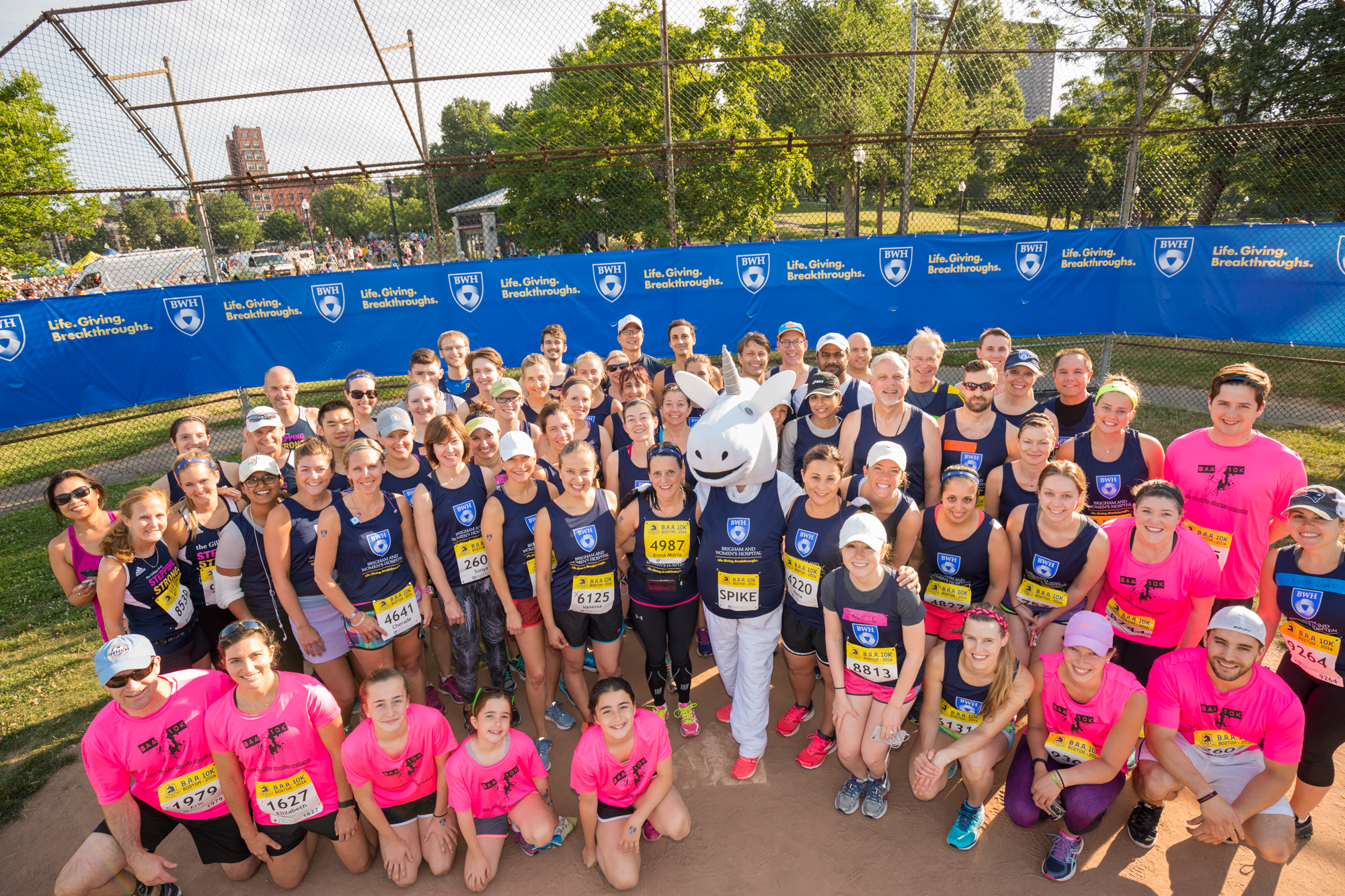
A cherished leader in the BWH and Dana-Farber Cancer Institute communities for 22 years, Mrs. Molina, of Raynham, Mass., stepped down from her role as nurse director in April.

A lifelong learner, Mrs. Molina earned three degrees through the years—an associate’s, bachelor’s and master’s—and was actively pursuing her fourth, a master of science in nursing, which she had planned to use to fulfill her dream of teaching.

Long devoted to the care of oncology patients, Mrs. Molina was a nurse leader whose passion and commitment to expert end-of-life and palliative care for patients led to her instrumental role in the opening of the Intensive Palliative Care Unit at BWH.

Her interest in palliative care took her to London and Texas in search of expert practitioners in the field.  Among the many best practices Mrs. Molina brought back from her travels and research included afternoon teas for patients and their families—for which she was recognized with a Partners in Excellence Award—and designated healing and renewal spaces for palliative care nurses and their fellow team members.

“Very often, it is the soft-spoken, unassuming people in our lives who make lasting impressions and have the greatest impact on us,” said Carolyn Hayes, PhD, RN, NEA-BC, associate chief nurse of Oncology, Medical and Integrative Nursing at BWH and DFCI. “This was certainly true of Eileen. Never one to seek the spotlight or center stage, Eileen quietly led her personal and professional lives with kindness, competence, compassion and grace. It is already clear from the outpouring of sympathy and condolences that Eileen brought as much comfort and consolation to her colleagues as she did to patients in her care.”

Colleague and friend Jennifer Kales, MS, APRN, BC, ACHPN, program director for Pain Management in the Center for Nursing Excellence, said Mrs. Molina had the remarkable ability to always see the good in people. She helped Kales through some of life’s biggest challenges and milestones, including pregnancy and losing her own mother.

“She helped me through those events in a way that I never expected and will never forget,” Kales said. “Eileen made me a better person.”

Mrs. Molina is survived by her husband of 37 years, Alberto; her son, Nick, and his wife, Sarah; her daughter, Julie, and her husband, Billy; her son, Tony; and her grandchildren, Maddie, Natalie, Billy and Caroline.

Havens headshot

Joaquim Havens

Seven surgical procedures account for about 80 percent of all admissions, deaths, complications and inpatient costs attributable to operative emergency general surgery (EGS) in the U.S., according to a recent study led by Brigham researchers.

The seven procedures are ranked in terms of their overall “burden,” which is defined by how frequently they occur, result in death and cause complications, as well as their costs. Lead investigator Joaquim Havens, MD, of the Center for Surgery and Public Health, and his team found that partial colectomies—removal of part of the colon—carried the biggest overall burden. Small-bowel resections, cholecystectomies (removal of gallbladder), operative management of peptic ulcer disease, removal of peritoneal (abdominal) adhesions, appendectomies and laparotomies (opening the abdomen) also topped the list.

“Given the high prevalence nationally and high proportion of burden with these seven procedures, this study could lead to better clinical decision-making, patient outcomes and cost savings,” said Havens.

Emergency general surgery encompasses the care of the most acutely ill, highest-risk and most costly general surgery patients. More than 3 million people are admitted to hospitals in the U.S. each year for EGS diagnoses. This population of surgery patients is at particularly high risk for postoperative death when compared to patients undergoing the same procedures under non-emergency circumstances.

Preventive measures, such as undergoing a routine colonoscopy or mentioning the onset of heartburn to a primary care provider, can lessen the likelihood of having to undergo these procedures in an emergency setting, Havens says.

“By reducing the number of people who need these surgeries and making it safer for those patients who do need them, we can make an important difference in people’s health,” Havens said.

Over the four-year study period, Havens and his team analyzed more than 420,000 adult patients who had been admitted with EGS diagnoses and undergone operative procedures within two days of admission. They, to their knowledge, are the first researchers to use a nationally representative sample to identify EGS procedures.

2016

Runners from BWH’s fundraising team for the B.A.A. 10K

Among the 9,000-plus runners racing through Back Bay in the Boston Athletic Association 10K—presented by Brigham and Women’s Hospital—were 200 members of the BWH fundraising team. They stayed in high spirits as they tackled the 6.2-mile course while representing and supporting the hospital on June 26.

The BWH team is projected to raise $110,000 to support life-giving breakthroughs for patients and families in Boston and around the globe.

Their reasons for running varied, but participants all shared one sentiment—a desire to give back to the hospital that provides extraordinary care to patients and families.

Megan Jordan, of Roslindale, ran in honor of her niece, Surina, who was born prematurely and spent more than three months in the Newborn Intensive Care Unit (NICU) at BWH.

“I wanted to do something to support the NICU,” she explained. “If you ever need to deliver a preterm infant, you want to be near the Brigham because the NICU is amazing. The nurses made scrapbooks. My sister would come in and they’d have new clothes for her. The care they provided made something very difficult more manageable. Surina is just the perfect little one.”

Sally Wang, MD, a hospitalist at BWH, ran in memory of Michael J. Davidson, MD, and to support the fellowship that bears his name.

“Dr. Davidson was a phenomenal physician, and I hope we can continue to honor his legacy to support new trainees in the field of cardiothoracic surgery,” Wang said.

Elizabeth Matzkin, MD, surgical director of Women’s Sports Medicine at BWH, formed the Bone to Run team to raise money for research in her field.

“I’ve been wanting to organize a race for our group for a long time, so when the Brigham paired up with the B.A.A., it was a great opportunity to put together a team,” she said. “We hope it will only grow in the years to come.”

Anders Ohman, a senior technical research assistant at BWH, chose to run to support the Gillian Reny Stepping Strong Fund, which was founded by a Boston Marathon bombing survivor to fuel trauma research and care.

“It’s inspiring to see a family turn tragedy into a personal way of giving back, and I love representing the Brigham. I’m really proud to work here,” Ohman said.

2 Comments
BBF Entrance HF

New imaging technologies will begin moving into the BBF on July 7.

When the Brigham Building for the Future opens this fall, clinicians and researchers will have access to state-of-the-art technologies that will enable them to push the boundaries of discovery in ways never before possible.

“The BBF will be a one-stop shop, with multidisciplinary experts within arm’s reach and top-of-the-line imaging technologies, interventional procedures and clinical evaluation,” said Stacy Smith, MD, chief of the Division of Musculoskeletal Imaging and Intervention in the Department of Radiology.

In addition to an extensive array of X-Ray, fluoroscopy and ultrasound technologies, a new impressive fleet of noninvasive medical imaging devices will streamline and improve patient care and support Brigham’s research mission to translate promising medical and scientific advances to the clinic. The equipment will be moved into the BBF over several days this month, starting July 7.

New imaging technologies will be housed in the Radiology Department on the Musculoskeletal floor and within Radiology on the lower level of the building. The imaging facility on the lower level will contain a CT scanner and five MRI machines, including a 7 Tesla (7.0T), one of the most powerful commercially available MRI machines in the world, due to arrive in summer 2017. BWH’s 7.0T will be the first installed in a clinical setting in North America. The model is still pending approval by the Food and Drug Administration for clinical use, so the 7.0T in the BBF will be used for research until that time.

Two of the other MRIs will be Siemens’ newest model, the Magnetom Prisma—the first at BWH and the most advanced clinical MRI scanner available. The Prisma has the capability to perform advanced imaging that was previously only available on research scanners.

A ‘Game-Changer’

When it arrives next year, the 7.0T will allow clinicians and researchers to see images that until now were not visible by MRI. It could be “a game-changer” in the diagnosis and treatment of neurodegenerative diseases such as multiple sclerosis (MS) and traumatic brain injury—two major areas of focus for the Ann Romney Center for Neurologic Diseases—said Srinivasan Mukundan, MD, PhD, of the Department of Radiology.

Even researchers who are not moving to the BBF stand to gain from the imaging facility’s offerings. One of those researchers is Alexander Lin, PhD, director of the Department of Radiology’s Center for Clinical Spectroscopy. He and his team are working to create noninvasive, diagnostic methods to better understand how to identify and treat brain cancer. He says that most spectroscopy is done using a standard MRI scanner, but the 7.0T will provide them with much more detailed images of metabolic pathways in the brain.

“We’ll be going from a 3.0T MRI to a 7.0T, which is more than double the strength,” said Lin. “The higher field strength means a better signal and higher-resolution images that will allow us to obtain more information than we can today.”

The imaging facility at the BBF will house equipment specifically selected to best serve the needs of the patients who will be seen in the new building, including those with MS and implanted devices, said Andrew Menard, JD, director of Business Development for the Department of Radiology. Many of the current Radiology spaces throughout the BWH campus that cater to the needs of patients receiving other kinds of treatments will remain where they are.

“Rather than consolidating Radiology spaces, we’ve adapted to the needs of patients,” said Menard. “We’ve selected the right technology for patients who will be seen in this building, and we’ve tried to make access as convenient as possible so that patients can receive imaging without ever having to leave the building where they are being treated.”

Learn more at BWHClinicalandResearchNews.org.

3

From left: Omari Young, Ravi Agarwal and Samsiya Ona enjoy an employee picnic in Stoneman Centennial Park.

At its core, a hospital is a place of healing—and that was truer than ever this week as the Brigham community began to recover from the recent strain of a narrowly avoided nursing strike.

Hospital leaders and bargaining committee members from BWH nurses represented by the Massachusetts Nurses Association announced a tentative agreement shortly after midnight on June 26.

Now the healing process begins, says Brigham President Betsy Nabel, MD.

“The past two weeks have been challenging for all of us, but we have come together in an extraordinary way,” Nabel said, speaking at a press conference in front of 15 Francis St. on Monday. “We will go forward together—caring for patients as one team.”

The hospital hosted picnics for employees working that afternoon and evening. From physicians to nurses to researchers to administrative and front-line staff, thousands of BWHers took a few moments Monday to enjoy food and music in Stoneman Centennial Park or to pick up a boxed meal in the lobby.

BWH swiftly returned to business as usual this week, following efforts to reduce capacity to 60 percent in anticipation of a strike, said Ron M. Walls, MD, BWHC’s chief operating officer and executive vice president. As of Thursday morning, the inpatient census had reached 561, up from about 360 patients on Monday, and 82 cases were booked for the operating rooms, up from 40 cases on Monday. The Brigham also accepted patients back who had been preemptively transferred last week and wished to return. Walls said he expected most parts of the hospital to return to full occupancy by the end of this week.

“We’re ramping up very quickly,” he said. “We’re very proud of the enormous work done by our care and administrative teams and the successful response that we achieved. We are also very grateful to all of the other hospitals and providers in the Partners HealthCare system and in the broader community who helped us through this difficult time.”

Boston Mayor Martin J. Walsh—who was instrumental in helping both sides reach an agreement on the contract—also spoke at the press conference, expressing his relief that hospital operations had not been disrupted by a work stoppage.

Walsh noted his special, personal connection to the Brigham. In addition to having family members treated here, Walsh received radiation treatments for Burkitt’s lymphoma as a child at the Peter Bent Brigham Hospital.

“We had some great days here and also some sad moments, and during those sad moments, the staff of this hospital hug you and treat you like family,” he said. “I want to thank this great hospital for continuing to do that.”

The mayor also underscored the need to process the difficult emotions of the past few weeks and focus on the road ahead.

“Dwelling on hard feelings isn’t going to resolve anything long term,” he said. “It’s difficult to move on the next day, but over the coming weeks and months, people will be able to and keep that dialogue going.”

The BWH community has endured challenging events in the past, but employees have repeatedly come together with a unity of purpose: keeping patients and their families at the forefront, Nabel said. She is confident that same resilience and shared support will resurface over the coming weeks.

“Each time we faced a hardship, we have come back as a community,” she said. “We have come back stronger, and I fully anticipate we will come back stronger again.”

View more photos from the picnic in this online gallery.

OLYMPUS DIGITAL CAMERALeo Buckley, Jr., and Ashley Buckley

Ashley Buckley, a supervisor in Patient Access Services, ran on BWH’s Life.Giving.Breakthroughs. Marathon Team in honor of her two grandfathers, both of whom received their care at BWH.

“That was a proud moment for me,” said her father, Leo Buckey, Jr., executive director of Business Operations for Patient Care Services.

That isn’t the only thing about Ashley that makes him proud. Leo, who has been at BWH for 20 years, says he is thrilled to see his daughter pursue a career in patient care and follow in his footsteps by working at the Brigham.

“Ashley is a caring professional,” Leo said. “I’ve seen her in action; I walk by the front desk and I can see how calm she is in her demeanor. That’s what patients and families need. She makes them feel welcomed and comforted in a very safe environment, which I think is critical.”

Ashley, who started volunteering in the NICU 12 years ago, has worked at the hospital for nine years. “As soon as I started, I knew I wanted to interact with patients and be the person who welcomes and comforts them,” she said. “I ultimately wanted to make a difference in their experience here.”

Ashley and her father often commute together. They also occasionally work closely together, particularly during snowstorms. “It’s a time when our paths cross and we’re here stepping up to the plate, helping patients and supporting staff when they really need it,” says Leo.


Luis Soto and Lynette Soto

Fathers Day callout

Luis Soto, director of Environmental and Central Transport Services, has been at BWH for 35 years. During his time here, nothing has made him happier than watching his daughter, Lynette Soto, a nurse in the Neuroscience ICU, work and grow at BWH herself.

“I’m very proud of Lynette. She always comes to me for advice, and most importantly, listens to me,” he joked. “My wife and I are very proud of her, especially with all she’s accomplished.”

Lynette says her father was a huge influence in helping her decide on her career path. Luis explained that, at first, his daughter was focused on pursuing a degree in computer science and could not picture herself as a nurse. But while she was in college, Lynette had a change of heart.

“My dad was right all along. I wanted to interact with people and help take care of patients,” she said. “He motivated and inspired me to become a nurse. He was right by my side as I worked to get my degree.”

To this day, Luis keeps a folder full of Lynette’s nursing report cards and still shows them to his coworkers to illustrate how proud he is of his daughter. “He brags about me more than I do!” she laughs.

Lynette, who works night shifts at BWH and teaches students at MCPHS University, is also pursuing her doctorate in nursing at Sacred Heart University. She says she still looks to her father for advice on building her résumé and working toward leadership roles in the future.

“My father’s guidance has been valuable to me as I continue to grow in my career. He knows the hospital, the system and the culture of the Brigham, and he helps keep me motivated toward my goals,” said Lynette.

 Francis Moore, Francis Moore, Jr., and Alessandra Moore

moore1

A young Alessandra Moore and her late grandfather, Francis Moore

When Alessandra Moore, MD, began her surgery residency at BWH in 2014, she represented the third generation of surgeons in her family. Alessandra, who goes by Alex, followed in the footsteps of both her now late grandfather, Francis Moore, MD, former chief of surgery at the Peter Bent Brigham, who died in 2001, and her father, Francis Moore, Jr., MD, the current chief of general surgery.

Under her grandfather’s leadership, a surgery team led by Joseph Murray, MD, performed the world’s first successful human organ transplant in 1954, among many other achievements. Alex’s father worked on a team that has been recognized for advancing surgical care both nationally and globally as well.

From years of seeing her father and grandfather in careers they loved, Alex says she had always wanted that type of job for herself. “I wanted to love what I did for a living, and I wanted to help people,” she said.

When interviewing for residency programs, Alex considered many options but ultimately knew the Brigham was the right choice.

“I loved all the residency programs I visited, but at the end of the day, BWH was where I fit best,” she said. “Being here is meaningful in a very personal way.”

Although she has big shoes to fill, Alex says her grandfather’s and father’s reputations at the Brigham are an inspiration to her. “They showed me what I’m capable of,” she said.

The Massachusetts Nurses Association, which represents about 3,300 nurses at BWH, announced this week its intention to hold a strike on Monday, June 27, prompting BWHC leadership to implement its tactical plan for ensuring the continuity and safety of patient care during the work stoppage.

Should the strike occur, the hospital would bring in approximately 700 temporary nurses for five days in order for BWH to ensure safe, effective care and to manage the contract with the agency in a financially responsible way. The work stoppage for MNA nurses would end Saturday, July 2, at 7 a.m.

BWH and the MNA have scheduled another negotiation session for Friday, June 17. If both parties mutually agree on a new contract then, or at any time before June 27, the strike would be called off.

Approximately 140 nurses at BWH are not represented by the union and will continue to report to work as usual. Additionally, nursing management, senior leadership and other health professionals will actively work to ensure that patients are well-cared for and safe. The hospital would operate at about 60 percent of its usual volume during those five days.

“We will be prepared to ensure safe operation of the hospital and deliver high-quality care during the work stoppage,” said Ron M. Walls, MD, BWHC executive vice president and chief operating officer. “At the end of the five-day period, we will ensure a smooth transition as our nurses return to their units and our patients.”

The strike announcement came after the MNA held a strike authorization vote June 13, following 19 unsuccessful bargaining sessions over the past nine months.

“Our goal is to reach an agreement, not to see a strike or disrupt the care of our patients. At the same time, we must plan as though the strike will occur so that our patients continue to receive safe, high-quality care,” Walls said. “During this difficult time for our entire hospital community, let us continue to show respect for each other and maintain our focus on the needs of our patients.”

For more information about negotiations, visit BWHGettheFacts.org, and for additional resources, visit BWHPikeNotes.org.

Conor Sullivan (center), with his father, Michael, and cardiologist Michael Givertz

Conor Sullivan (center), with his father, Michael, and cardiologist Michael Givertz

Conor Sullivan, 22, an airman first class in the U.S. Air Force, was on duty at his base in Arkansas a few months ago when he first noticed he wasn’t feeling well.

There was a cough he couldn’t shake, and he had difficulty catching his breath. Sullivan, an aircraft mechanic at the Little Rock Air Force Base, figured he was just coming down with a bug. After all, it was February—the height of flu season—and Sullivan had otherwise been in good health his whole life.

But soon, he couldn’t keep most of his food down. He left work one day to go to the emergency room at a local hospital in Little Rock—a decision that saved his life. There, physicians told him that he was suffering from severe heart failure.

“It was a shock,” said Sullivan, who grew up in Dorchester and Weymouth. “I thought, ‘Wow, I have to deal with this now.’”

Sullivan was transported by a med-flight aircraft on March 7 directly to the Brigham, where his care team determined he would need surgery to implant a left ventricular assist device (LVAD) while he awaits a heart transplant. Sullivan is participating in a clinical trial to test the next generation of LVADs, known commercially as HeartMate 3. More than 1,000 patients are expected to be enrolled across 59 study locations in the United States.

Michael Givertz, MD, medical director of BWH’s Heart Transplant and Mechanical Circulatory Support Program, remembers getting an urgent call from the Arkansas hospital that weekend about the young man with new onset heart failure and dilated cardiomyopathy: an enlarged, weakened heart. Sullivan arrived at the Brigham just as Givertz was coming on service that Monday night.

“He was clearly quite sick,” Givertz recalled. “He became very symptomatic with any movement or activity—he had no cardiac reserve.”

‘A Bridge to Transplant’

With young patients who don’t have a pre-existing heart condition, there is a greater chance that medication alone can lead to a full recovery, without the need for an LVAD implant or heart transplant, Givertz said. But certain aspects of Sullivan’s sickness made the team less optimistic this would be the case. The LVAD would likely be “a bridge to transplant instead of a bridge to recovery,” Givertz explained.

“His heart was already enlarged, and there was evidence of scarring on the heart biopsy, suggesting this process had been going on longer than we had been led to believe by the symptoms,” he said. “And as we tried to hold off on advanced therapies, Conor ended up getting sicker.”

Ten days after he arrived at the Shapiro Cardiovascular Center, Sullivan was wheeled into surgery to receive the LVAD. As part of the clinical study—currently in the pivotal trial phase—Sullivan was randomly chosen to receive the newest type of LVAD available in the United States while he waits for a donor heart.

Although the HeartMate II, the second-generation model, is considered safe and effective, it has some uncommon but serious complications, Givertz said. These include hemolysis—the destruction of red blood cells—and blood clots. The HeartMate 3 has been used in Europe since 2014, with initial data suggesting it is less likely to cause such issues, he explained.

It’s still unclear what caused Sullivan’s heart failure, Givertz says. After a number of diagnostic studies, the team was unable to pinpoint a cause. Givertz suspects it could have been caused by a viral illness, which, in rare cases, can unexpectedly lead to heart disease as the body fights off the initial illness.

Sullivan says the dedicated, expert care he has received from cardiologists, cardiac surgeons, anesthesiologists, nurses and other members of the team made him confident he was in good hands before, during and after his surgery. As Sullivan recovers with family in the area, he continues to have his progress monitored at BWH.

“I feel like my providers are definitely on my side,” Sullivan said. “When I was in the hospital, there wasn’t a day when I was wondering, ‘Am I going to see the team today?’”

1 Comment