Posts from the ‘Uncategorized’ category

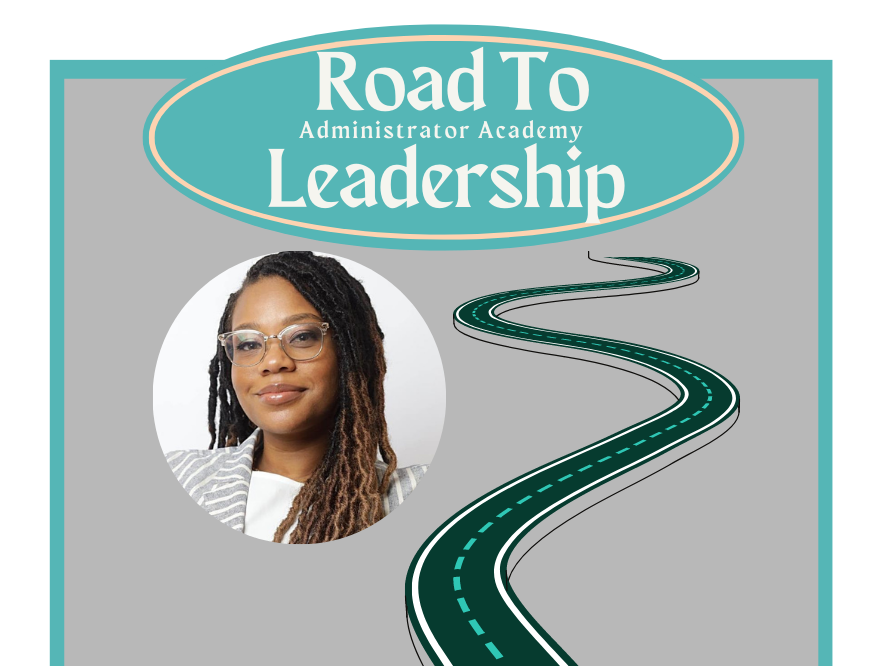
Jaye Hall, our beloved administrative manager in the Department of Emergency Medicine, is always looking for opportunities for her staff. She has been diligently sourcing areas for opportunity and improvement for the administrative staff within the department.

During 2022, she developed the Administrator Academy. The academy is a hybrid-modeled platform that focuses on bridging the gap for employees who may not be exposed to professional development opportunities that are offered to other role groups. With over 10 courses focusing on technical skills, leadership and community-building, the Administrator Academy has become a fun and very needed resource for the department! Open to all, the classes have ranged in size and number. With leaders from our department hosting courses on public speaking, CME and finding your leadership style, everyone walks out with more knowledge than they had before and maybe even with a new friend! Thank you, Jaye, for being a wealth of information and advancement for our staff!

Cassandra ‘Cass’ Georges
Program Manager, Office of IDEaS
Department of Emergency Medicine

Victims of violence are part of our patient population on Braunwald Tower 8. To better care and support our patients, we partner with the Brigham’s Violence Recovery Program (VRP). One of the key members of the VRP is Rahsaan Peters. Rahsaan introduced us to the Louis D. Brown Peace Institute (LDBPI), which was spearheaded by Clementina Chéry, who lost her teenage son to senseless gun violence. The Peace Institute supports members of the community who have been affected by gun violence and continue their work in spreading peace across the city. Part of that work is the annual Mother’s Day Walk for Peace.

In honor of Survivors of Homicide Victims Awareness Month, Nov. 20–Dec. 20, our Tower 8 Practice Councils recently partnered with the LDBPI to create seven wreaths with the seven principles of the Peace Institute: faith, hope, unity, forgiveness, love, courage and justice.

Diane Tsitos, DNP, RN
Nursing Director
Braunwald Tower 8 Burn/Trauma/Surgical

I will never forget bringing the American flag on the field at the BC Healthcare Heroes game in September.

Jason Salzsieder
Provider Enrollment, Brigham and Women’s Physicians Organization

I will always remember the feelings of joy and anticipation I felt upon learning that a new president had joined our BWH family. At the first town hall meeting, we had the opportunity to meet Dr. Higgins and ask him questions. I welcomed him, of course, and then told him, “Roll up your sleeves and let’s get to work.” His response felt genuine and comforting because I saw in him a leader of color, which makes me so very proud, and someone who is exceedingly qualified to lead this great institution!
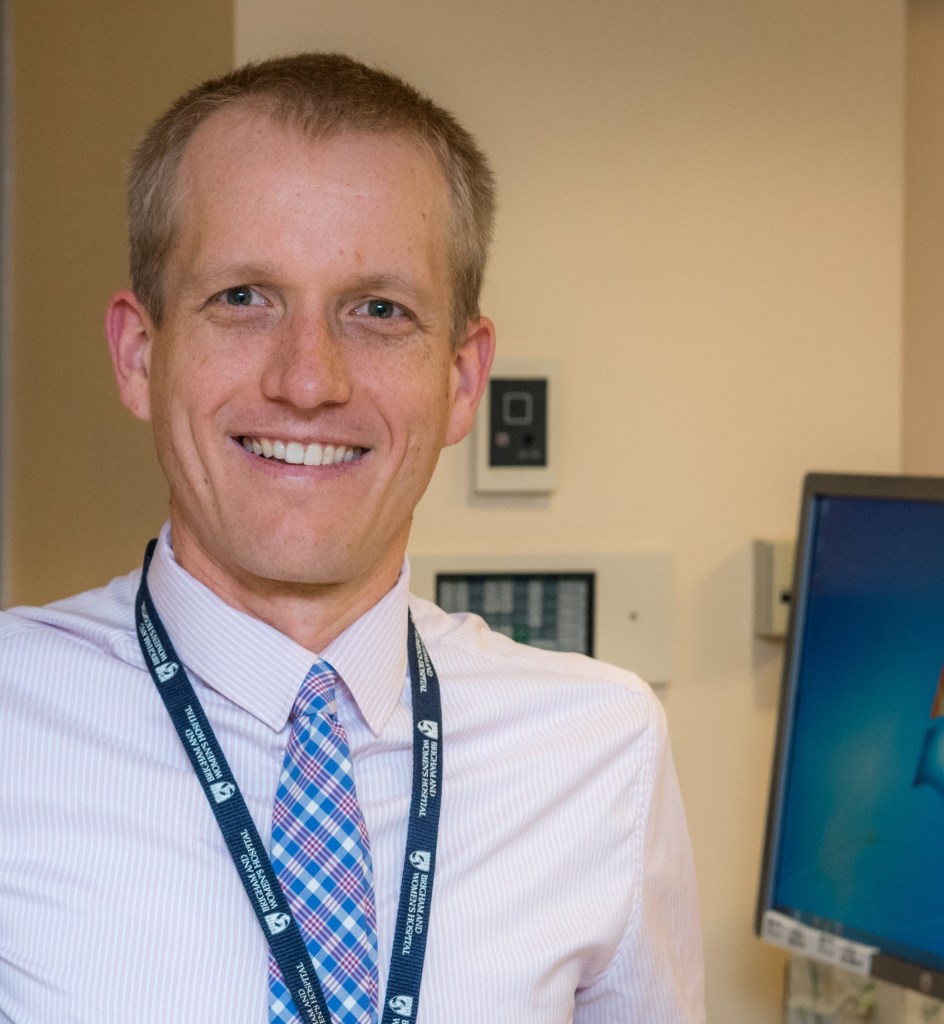
Jacqueline Rodriguez-Louis, MPH, MEd, CTTS
Programs Leader, PAC Community Outreach, Division of Pulmonary and Critical Care Medicine

Everything we do at the Brigham is centered around our patients. In inpatient areas, staff typically support patients for a brief window of time — sometimes the most difficult moments, days or weeks of their lives. These teams don’t always know how deep of an impression they have made on the lives of our patients and their loved ones after discharge.

That’s why this story out of Braunwald Tower 8 touched my heart.

This spring, John Bosse and his family returned to the unit to thank them for the care they provided when he was ill with COVID and intubated for 20 days. John and his family thanked the team for treating him “like family.”

During their visit, the family shared the “Starfish Story,” a parable about the difference one person can make in another’s life.

The family’s emotional reunion with staff is a powerful reminder of the impact of relationship-based care and the difference our teams make. This is one beautiful example among so many throughout the hospital — in inpatient, outpatient, emergency and procedural areas — that demonstrates how much the compassion of our staff means to patients and loved ones, long after they’ve left the hospital.

Maddy Pearson, DNP, RN, NEA-BC
Chief Nursing Officer and Senior Vice President, Patient Care Services

I loved serving as a mentor and internship coordinator for our first in-person Diversity in Pharmacoepidemiology undergraduate summer program. Mentorship is one of the most rewarding roles I’ve experienced.

Theresa Odoul
Research Assistant, Division of Pharmacoepidemiology and Pharmacoeconomics

Our beloved Radiation Oncology colleague Maureen Farrell retired this year after 41 straight years as a nurse at BWH. Maureen was a dedicated and steady presence in Radiation Oncology, always ready to assist wherever needed. She was known for her consistency and reliability, her caring nature and her willingness to go above and beyond on behalf of her patients and her co-workers.

A recent comment on a Press Ganey survey described Maureen to a tee: “Maureen Farrell was extremely caring, helpful, responsive, calm, and thorough. She’s a gem.” To give her a warm sendoff on her final day in the department, Rad Onc staff surprised Maureen by lining the hallway as she exited the clinic. The emotional walk brought tears to Maureen’s eyes and also to those of us who had worked with her over the years — many of us having gone through our medical training in the department and, in a sense, having “grown up” with Maureen as a wise and compassionate guide. Maureen’s walk down that hallway was a touching goodbye for all of us, honoring someone who had a profound impact on her patients and colleagues alike. We will miss her greatly!

Paul Nguyen, MD, MBA
Vice Chair, Clinical Research
Department of Radiation Oncology

2 Comments

A few weeks ago, I was covering our Radiation Oncology urgent patient service in our Boston clinic, and the number of simulation, or “sim,” appointments crept up to nearly 100 for the week. These are the radiation mapping appointments that precede every patient’s course of radiation treatment. Just a few years ago, seeing 100 sims in a week would have been unthinkable and unmanageable for us.

During the week I was covering, there was, appropriately, no big celebration for reaching this number. For me, however, it represented the culmination of lots of small steps that our department has taken over the years to live up to our commitment of being there for our patients. These include things like changing the sim scheduling model, increasing efficiency to allow shorter sim appointment slots, hiring staff to match demand and implementing a “doc-of-the-day” system to provide physician coverage. No heroics — just the result of purposeful, team-oriented projects that unlocked our potential.

I’ll remember that week for what it was (a celebration of sorts) and what it wasn’t (a disaster of scrambling and rescheduling). It made me proud of what we accomplished working together, and optimistic for the accomplishments we will see in the future.

Neil Martin, MD, MPH
Clinical Director, Department of Radiation Oncology

I’d like to give a shout-out to my colleagues and co-workers — including Dr. Robert Barbieri, Deborah Darveau, Aaron McDonald, Pamela Linzer, Lisa Maccioli and Sigfredo Salguero — for their unwavering support and incredible collaboration in Interpreter Services’ DirectResponse pilot and for their continual drive to roll it out to all Brigham on-call services outside business hours.

This program allows our limited-English proficiency patients and their families to receive equitable care and service without language barriers. The meetings, emails and tons of behind-the-scenes work paid off due to each one’s dedication, hard work and brilliant ideas. This is my brightest shining moment of 2022.

Yilu Ma, MS, MA, CMI
Director, Interpreter Services

The medicine nursing leadership team (12A, 14ABCD, 16AB) got a rare moment in November to participate in a team-building event at the Isabella Stewart Gardner Museum, led by the Center for Visual Arts in Healthcare team, which was co-created and led by Dr. Joel Katz and Brooke DiGiovanni Evans at BWH.

The group’s goals were aimed at training health care teams in visual arts methods to build essential skills in humanistic health care, including empathy, teamwork, respect, and curiosity; enhance critical thinking, diagnostic analysis, communication skills and cultural understanding; and improve the lives of health care workers through opportunities for self-care, reflection, social connections and creativity.

For example, one activity asked the team to observe the museum’s beautiful courtyard and create poems based on their five senses. It was a memorable activity for team bonding and a break from patient care activities.

Here are our team poems about the courtyard describing our visions and insights in a collaboratively constructed poem.

Protected Beauty
Virgin Beauty
Cold Vibes
In Vibrant Color
with Peaceful Vitality

—Pam Linzer, Kate Callahan and Linda Delaporta

***

Autumnal Peace
Sounds of waterfall renews your soul.
The brightly muted autumnal scene brings you calm and peace;
The watchful eyes of the statutes appear in awe of the surroundings like the guests;
The soothing tranquil light allows you to reflect, if just for one moment;

—Marie Swain Price, Jennifer Cartright and Maria Daveiga Etheart

***

Meditative Whispers
Meditative whispers, the calming sounds of the waterfall;
Bring peace together;
Falling into the wonderous tranquility of the golden hour.

—Ruth Jones, Daphnee Souvenir and Jill Osborne


Pamela Linzer, PhD, NEA-BC, RN
Associate Chief Nursing Officer, Medicine and the Center for Nursing Excellence

We are coming up on year TWO as the Office of Inclusion, Diversity, Equity & Social Justice (IDEaS) within the Department of Emergency Medicine! For the past two years, IDEaS has been creating spaces for growth, collaboration and healing — with a mission centered around creating a safe and respectful home for all employees — to advance racial, ethnic, gender and religious diversity, with a focus on those underrepresented in medicine (URiM).

To revamp our in-person activities, IDEaS hosted our first in-person moonlight dinner to welcome new URiM faculty and staff! A night full of great food, big laughs and shared experiences, it provided a much-needed space to continue fostering spaces of community and belonging!

Office of Inclusion, Diversity, Equity and Social Justice (Office of IDEaS)
Department of Emergency Medicine


I supported our Brigham Block Party event by giving out cookies to thank our employees. It was so wonderful to see so many people and to hear such appreciation for Brigham. I enjoyed hearing about everyone’s roles and the impact they make for our patients. Several patients had asked what we were doing, and they were thrilled that we were doing something to appreciate our people. Our teams are very hardworking, and it was great to be able to give something little back to thank them.

Patricia Hollinger, MBA
HR Specialist, Human Resources

We started off 2022 as just 14AB and our tight-knit community of nurses, PCAs and UCs, and we’re ending 2022 now as 12A/14AB/15A, with many new nurses joining our family. It was not always easy growing this much — between the staff orienting new grads and travelers, being short-staffed at times and the stress that comes with opening two units — but we all stuck together and lifted each other up during this difficult time. We’re looking forward to making new memories in 2023!

Leslie Hirshberg, BSN, RN
Staff Nurse, Braunwald Tower 12A/14AB/15A

I will always remember the Brigham Way lunch where Renata Morales, RN, was honored. She is our iCMP nurse and very deserving of the award.

Charlene Victorino-Griffiths
Practice Manager, Primary Care
Brigham Circle Medical Associates

1 Comment

The 2022 Connors Center Annual Research Symposium was held at Brigham and Women’s Hospital on Nov. 29 in conjunction with the Brigham/Harvard Reproductive Outcomes of Stress & Aging (ROSA) Center, a National Institutes of Health Specialized Center of Research Excellence on Sex Differences. Over 100 attendees from the Connors Center, BWH, MGB and external community gathered for the first in-person event hosted by the Connors Center since 2019. Speakers included investigators and trainees from the ROSA Center and recipients of Connors Center awards and fellowships.

Daniel Grossman, MD, delivered the keynote address, “All Hands on Deck: Strategies to Maintain Access to Reproductive Healthcare Post-Roe.” Dr. Grossman is currently the director of Advancing New Standards in Reproductive Health (ANSIRH), a research program in the Bixby Center for Global Reproductive Health and the Department of Obstetrics, Gynecology and Reproductive Sciences at University of California, San Francisco, where he is also professor. During the symposium, he shared insight into the current status of reproductive health care access after the repeal of Roe v. Wade, including its disproportionate effects on people of color and individuals in rural, anti-choice areas. Dr. Grossman discussed the consequences of reduced abortion access leading to an increased rate of self-managed abortions and criminalization of patients. He shared strategies to meet increased demand for reproductive care in states with protective policies in response to these changes. Alisa Goldberg, MD, MPH, program director, Family Planning Fellowship, and Lydia Pace, MD, MPH, director of Women’s Health Policy and Advocacy and director of the Global Women’s Health Fellowship, provided introductory remarks and facilitated the Q&A session with Dr. Grossman.

Connors Center members then presented their research in a series of presentations and Q&As.

Session 1:

  • “Sex differences in characteristics, outcomes and treatment response with dapagliflozin across the range of ejection fraction in patients with heart failure: Insights from DAPA-HF and DELIVER,” presented by Wendy Wang, MD, First.In.Women fellow
  • “Physiologic and social stressors and health during the menopausal transition,” presented by Emily Oken, MD, MPH, ROSA Center project 2 co-investigator
  • “The action of melanocortins on Kiss1 neurons in the control of fertility in the female mouse,” presented by Rajae Talbi, PhD, ROSA Center pilot awardee

The proceeding Q&A session was moderated by JoAnn Manson, MD, DrPH, MACP.

Session 2:

  • “Brain-based outcomes in postmenopausal women with MDD,” presented by Katherine Burdick, PhD, IGNITE awardee
  • “Novel approaches using machine learning to investigate and predict hypertensive disorders of pregnancy,” presented by Vesela Kovacheva, MD, PhD, IGNITE awardee
  • “Codifying the right to abortion: Impact of the Massachusetts ROE Act on out-of-state referrals,” presented by Steffanie Wright, MD, Family Planning fellow

The proceeding Q&A session was moderated by Cindy Liu, PhD, director of Psychosocial Stress, Diversity and Health.

The symposium concluded with brief remarks from Annie Lewis-O’Connor, PhD, NP-BC, MPH, FAAN, introducing a project funded by the Lisa L. Leiden Fund for Research in Women’s Health Excellence. The collaborative, multidisciplinary project will analyze the effects of trauma-informed care on providers and patients alike. The collaborative aims to integrate nursing leadership in research and transformative programing.

Thank you to all speakers, moderators and attendees for supporting and engaging with the important research funded by the Connors Center and making this event a success!

Patricia Gallegos, MPH
Project Manager, Mary Horrigan Connors Center for Women’s Health and Gender Biology

The fourth annual Emergency Medicine for Rural and Indigenous Communities Conference 2022 (EMRIC) took place in Flagstaff, Arizona, from Sept. 15 to Sept. 17. This year’s theme was “Innovation and Adaption.” It was the first time both planning committees from Boston and Arizona met, as the entirety of the conference planning was done virtually! It was a great weekend of many firsts, formal introductions and feel-good moments after a year of planning. It was an incredible time to see everyone come together and discuss emergency medicine within the context of rural and indigenous communities. From the procedural skills day to the two days of content, panels and discussions, it was truly a needed experience and one that none of us will ever forget!

Front-Line Indigenous Partnership staff
Department of Emergency Medicine

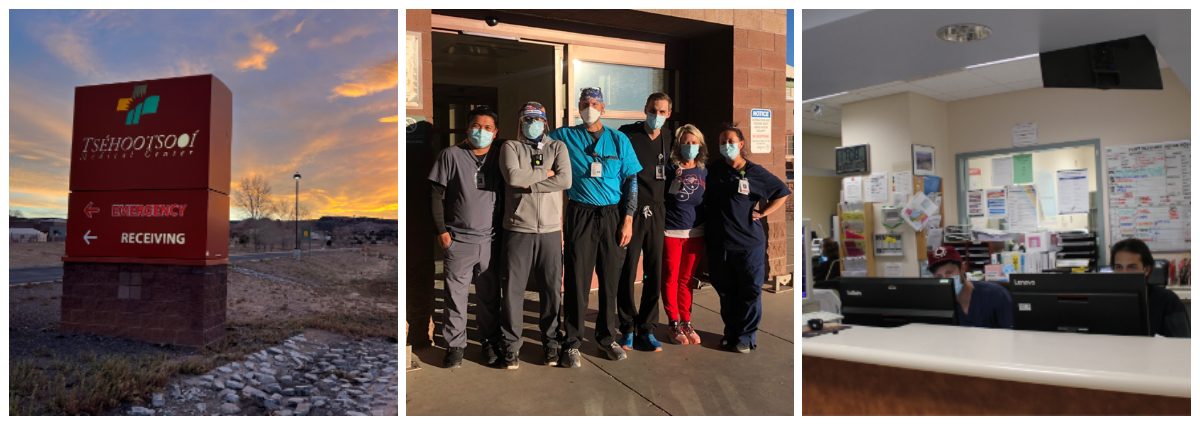
The Front-Line Indigenous Partnership program (FLIP), an initiative of the Department of Emergency Medicine, has successfully completed our first year in partnership with Tséhootsooí Medical Center (TMC). Our clinical exchange program is a concerted effort aimed at advancing medical, nursing and technical educational partnerships between Brigham and Women’s Hospital and tribal health care systems in the southwest. To date, over 12 providers from our Emergency Department have completed clinical rotations.

Capturing the heart of the clinical exchange program, TMC physician Dr. Jessica Salamon submitted this touching testimonial: “BWH has joined us at a time when physician staffing in the Emergency Department at TMC has been a challenge, and on multiple occasions, the BWH physicians have altered their schedules and agreed to extra hours to support our team. It has been a pleasure to share the unique challenges and rewards of working in rural medicine with the BWH group, and we have been glad to incorporate new perspectives into our day-to-day in the Emergency Department. It has been a true exchange of ideas and practices in the spirit of providing consistent, quality care to the Navajo population that our hospital serves, and we look forward to working together in the winter months ahead.”

Office of IDEaS and Front-Line Indigenous Partnership Program
Department of Emergency Medicine

One of the nice, yet bittersweet, moments in 2022 I will always remember is when my wonderful colleagues in OB-GYN surprised me and showed their appreciation and love for me and my work by getting me flowers, cards, cakes, desserts and gifts in February before I transferred to the International Patient Center. I really appreciated it, and I’m so grateful to the team. I worked with them for three years, which was the greatest work experience I ever had.

Mira Eissa, MBA, HCM
Senior Administrative Assistant, International Patient Center

There are many moments that I look back on this year, but my favorite was my very first day at Brigham and Women’s Hospital. I began my journey here this past January as a radiology tech aide — my very first job in a hospital. To say I had little experience under my belt would be an understatement. But soon enough, and with the help with my fellow CT techs, I caught on. My co-workers not only modeled how to do the job, but they also, most importantly, demonstrated empathy and compassion. I knew then that I was exactly where I was meant to be — here at BWH.

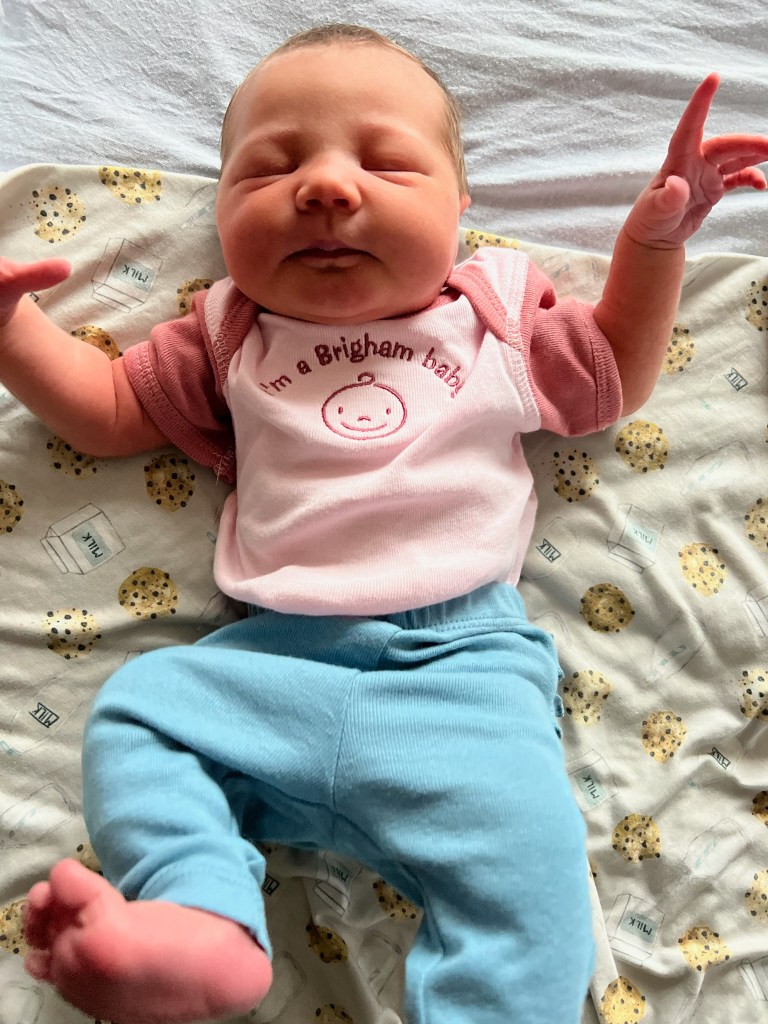
Brigham and Women’s Hospital has always been a huge part of my life. I am both a Brigham baby and the daughter of a former sonographer at Brigham: Karen Carten. My mother worked as an imaging technologist for 33 years. She started her career at 850 Boylston and then moved to the Foxborough campus as their lead sonographer. My mother loved her career and the role she played in patients’ lives, but what she didn’t know is how big of a role she would play in my own career. In May 2018, I lost my mother to a sudden illness. She had just turned 61 and was full of love and light. She was such a bright light not only for the Foxborough family but also for Brigham and Women’s Hospital as a whole. I feel so lucky and loved.

I’ll never forget my first time bringing a patient to their room. I do not drive in general, so driving stretchers was a whole new ballgame. I remember talking with a patient while bringing her through the Emergency Department, and she asked me what made me want to get into radiology. The answer was really so simple, yet it felt so hard to articulate. But in the moment with that patient — explaining my past and present — it felt so safe to tell my story. I felt a sense of comfort, happiness and love come over me. Most importantly, I felt my mother, and, in fact, I continue to feel her every time I walk into the entrance to 75 Francis St.

Each moment I am given with a patient is one that is easily time well spent. From my own experience, we never know when our last moment is our last, so be sure to make each one count. That patient interaction in the ED opened a new door in helping me become who I am meant to be here at BWH. It’s true what they say: If you love what you do, you’ll never work a day in your life.

Ellie Carten
Radiology Tech Aide, Department of Radiology

1 Comment

One of the highlights of this past year for me was being able to resume some of the in-person events and connections that we took for granted prior to the COVID pandemic. I had the privilege of celebrating with our physicians at the Physician Recognition Reception, honoring the Distinguished Clinician and Professionalism Awards recipients at the Annual Meeting of the Medical Staff, and getting to meet informally with many physician colleagues at our monthly BWPO President’s lunches. These opportunities underscored how honored and humbled I am to be part of this amazing Brigham family and I look forward to making more in-person connections in the new year.

Giles Boland, MD
President, Brigham and Women’s Physicians Organization
Executive Vice President, Mass General Brigham

One of the highlights from this past year was organizing a series of events with Diana Reusch, MD, a pediatric dermatology fellow at Boston Children’s Hospital, to expose 45 middle and high school students to medicine. These students were able to concentrate on perfecting their running stitch, identifying organs using an ultrasound, honing their laparoscopic surgical skills and learning the importance of personal protective equipment. This collaboration was with a summer youth program of the Phillips Brooks House Association (PBHA), a student-led community service organization at Harvard University with yearlong programming for local underserved youth in the Boston and Cambridge area. Over the summer, there are 11 neighborhood-based camps that offer quality programming and professional development to provide valuable work experiences and positive social connections in a safe, inclusive environment. We were able to work with teenage students involved in PBHA’s Junior Leaders in Communities (JLinc) and LEADERS Program. It was exciting to meet them, show them around the Longwood Medical Area and teach them about careers in medicine.

While I was completing my master’s thesis through the Divito Laboratory in the Department of Dermatology, I joined the Do Right, Stay Well (DRSW) Committee. Moving to Boston during the pandemic, I yearned to connect with the local community. Joining DRSW gave me that chance while also promoting skin health and awareness. Through Margaret Cavanaugh-Hussey, MD, MPH, a member of DRSW, I was so lucky to become connected with Dr. Reusch to plan these events with the PBHA.

This effort came together thanks to generous funding provided by the Department of Dermatology’s DRSW Committee, resources from the STRATUS Center for Medical Simulation and the kind efforts of so many people to help plan Longwood-area excursions for the teens. Other planners and volunteers included Harvard dermatology residents Dr. Balaji Jothishankar, Dr. Thet Su Win, Dr. Danna Moustafa, and Dr. Madeline Dewane; Harvard dermatology attendings Dr. Jennifer Huang and Dr. Arash Mostaghimi; medical students Lara Emerson (Tufts MS4), Nicole Trepanowski (BU MS4), Gustavo Velasquez (Harvard MS4), Maria Asdourian (Harvard MS4), Natalie Braun (Harvard MS2) and Julio Servin Flores (Harvard MS2); PBHA staff member Shaquanda Brown; medical scribe Morgan Schaefer; Department of Dermatology staff Mary Sbuttoni and Lily Vu; and STRATUS operations manager Persephone Giannarikas.

Being part of a group of people invested in inspiring youth has been empowering. Uniting with other members of the BWH community to host these events is something I will continue to cherish. It allowed me to spend time with these students and learn about their stories and passions. I hope to continue to give back and guide them towards their dreams in the same way my mentors have done for me.

Natalie Asemi
Laboratory technician, Department of Dermatology

There are many moments from 2022 that brought me joy, but these five hold a special place in my heart. From supporting colleagues, to working hard for our patients, to developing new and improved processes, to celebrating the accomplishments of our community, I am in awe of the incredible teamwork and talent represented in the above photos.

  • The Human Resources team supporting our employees at a Giving Gratitude event
  • Maddy Pearson, DNP, RN, NEA-BC, chief nursing officer and senior vice president, receiving her Distinguished Chair in Nursing (pictured with colleague Cori Loescher, BSN, MM, RN, NEA-BC)
  • Central Sterile team mapping out performance improvement
  • The International Patient Center team, who work together to bring patients to the Brigham who need our specialized services
  • The tireless efforts of team who staffs the Kraft Family Blood Donor Center’s blood mobile to receive lifesaving blood and platelet donations in support of our Blood Bank

Shelly Anderson, MPM
Executive Vice President and Chief Operating Officer

Did reading this year’s collection of Moments from Our Hearts inspire you to share your own? There’s still time to contribute! Simply use the comment box below to share a Brigham moment from the past year that you found touching, meaningful or made you feel proud to be part of the Brigham community.

Please note that comments on this page are moderated and will not immediately appear after clicking “Post Comment.” If you would like to submit a photo to accompany your submission, send it to bulletin@bwh.harvard.edu and a member of the Brigham Bulletin team will add it to your post.

Driven by a shared commitment to build equitable systems of care across the U.S., several Brigham leaders are working with the American Medical Association to guide a national network of health systems in embedding equity into their quality and safety operations — a program directly inspired by work the Brigham has done in this area to better serve our patients and families. Pictured above: Jarquis Jones cuddles with her baby, Cayson, in the NICU.

It started with a pitch.

Karthik Sivashanker, MD, MPH, was a fellow in the Department of Quality and Safety four years ago when he became convinced that health equity needed to be incorporated into the Brigham’s quality and safety work — a kernel of an idea sparked by his participation in the Institute for Healthcare Improvement’s (IHI) Pursuing Equity initiative.

He approached his colleague Karen Fiumara, PharmD, BCPS, CPPS, then the hospital’s executive director of Patient Safety, with a question.

“I basically walked into Karen’s office one day and said, ‘Don’t you think we should be looking at some of these factors — whether a person’s self-identified race, language or insurance type is having any impact on safety events?’” recalled Sivashanker, now vice president of Equitable Health Systems at the American Medical Association (AMA). “She said, ‘Yeah, I don’t know why we’re not doing that.’ She was an immediate ally.”

That informal conversation ignited a transformation, launched in partnership with the IHI in 2019, in how health inequities are identified and addressed at the Brigham. Since then, it has grown, expanded and, most recently, inspired a national collaboration to support other health systems on the same journey to improve health outcomes for historically marginalized populations.

A Systemic Solution

At hospitals around the country, equity was historically treated as a separate domain of health care, with assorted projects or initiatives often executed in isolation from one another and lacking broader, lasting engagement.

We pursue excellence logo

But systemic problems — including racism, sexism, ageism, ableism and other forms of prejudice — need systemic solutions. One way to do that, Fiumara and Sivashanker concluded, was to integrate equity into existing quality and safety structures. As a starting point, they led work to update the Brigham’s safety reporting tool so that staff filing a report could indicate if they believed bias or discrimination played a role in an event.

“This isn’t a problem we solve by devoting more resources to new initiatives or programs. These are foundational principles that must be embedded into our infrastructure,” said Fiumara, now vice president of Patient Safety. “Just as we design systems to provide safe care, we need to also make sure they are designed to deliver equitable care.”

From that first initiative, several more have blossomed in the areas of quality, safety, access and patient experience, with the goal of building systems that prevent harm by anticipating and correcting inequities in care.

Exchanging Knowledge and Ideas

To spread the impact even further, Brigham leaders have shared what they’ve learned with peers around the country over the past year as part of a nationwide collaboration.

Leaders from the Brigham partnered with colleagues at the AMA and The Joint Commission to establish the Advancing Equity through Quality and Safety Peer Network, a yearlong mentorship and networking program that has brought together participants from eight health systems who are learning how to apply an equity lens to all aspects of quality and safety practices.

“Quality is not the sole job of the chief quality officer. Similarly, managing and working on health care inequities is not the sole job of the chief diversity or equity officer,” Fiumara said. “It has to be seen as the responsibility of every person in the organization.”

The AMA-led program, which will soon conclude its first cohort, was co-designed with the Brigham. The quality, safety and equity framework that participants learn was designed and tested at the Brigham in collaboration with the IHI. Additionally, several Brigham leaders serve as faculty members for the Peer Network.

Peer Network faculty members, from left: Karen Fiumara, Esteban Gershanik, Nadia Huancahuari, Regan Marsh, Karthik Sivashanker and Normella Walker

“It has simply been a joy to join with others who are also dedicated to cultivating greater equity in health care,” said Normella Walker, MA, CDP, a faculty member for the Peer Network and the Brigham’s executive director of Employee Experience in Diversity, Equity and Inclusion and the Office of Mediation, Coaching, Ombuds and Support Services. “The platform provides a forum for sharing knowledge and deepening understanding and is advantageous on multiple fronts. It broadens our ability to influence change in this area, learn from others’ experiences and cultivate additional allies.”

Through monthly learning labs, peer-to-peer sessions, case reviews, individual coaching and other virtual activities, participants in the Peer Network learn practices and implementation strategies for systematically identifying and addressing root causes of inequities through an integrated approach to quality, safety, equity and operations.

“Our approach to collaborative case review and the ability to explore sensitive issues related to racism in a way that feels communal both facilitate learning and, most importantly, avoid blame,” Walker said. “We have shared our framework for discussing cases in a manner that provides safety and support as we engage in collective problem-solving using the equity-informed, high-reliability model.”

Collaborative Learning Along the Journey

Faculty member Regan Marsh, MD, MPH, an emergency physician and one of the Brigham’s three medical directors of Quality, Safety and Equity, recalled a recent presentation by a Peer Network participant who had identified an inequity in the personal care items patients in their hospital received. The hair and grooming products the hospital provided were not suitable for people with curly, coiled or kinky hair — a purchasing decision that disproportionately affected patients of color. As a result, they felt unseen and needed to buy and bring their own products.

The Peer Network participant shared that after learning about this concern, the hospital changed its purchasing practices to obtain personal care products suitable for more hair types — sourced from vendors led by people of color — and trained nurses and staff on providing patients these products if they wish to use them.

“As a faculty member, it’s been so interesting to see the different approaches people are taking, and it’s provoked ideas on our side, too. It’s very much about collaborative learning,” Marsh said. “This really is a space where the more people are at the table, the better.”

Hospitalist Esteban Gershanik, MD, MPH, MMSc, a Peer Network faculty member and Brigham medical director of Quality, Safety and Equity, agreed that it has been gratifying to support colleagues around the country as they design and implement more equitable systems of care.

“These traditionally aren’t easy conversations or easy spaces for people to be in, and it’s been great to see people support each other, be thoughtful and open, and normalize such conversations in these discussions about advancing their work toward racial justice and health equity,” he said. “We all face similar and different challenges depending on the communities we’re in, but we’re all trying to better understand our treatment of everyone who comes through and who does not come through our doors.”

Emergency physician Nadia Huancahuari, MD, FACEP, also a faculty member and Brigham medical director of Quality, Safety and Equity, said it has been energizing to see so many peers from across the country share an enthusiasm for engaging in this important work.

“While this work may be new for many of us — and that may make us uncomfortable at times — we are all fully committed to it for the sake of our patients,” Huancahuari said. “It’s a journey, not a destination. We have quickly realized that the more curious we become, the more we learn and uncover. For instance, one of our areas of focus is patient experience, where we continue to discover opportunities to address inequities to ensure all patients and families feel seen, cared for, safe and welcome. It’s inspiring to be part of a team that is leading the way in how we define, design and validate more equitable patient care and experiences.”

Brigham NICU graduate Cali Durant (pictured above) is one of more than 100 babies who have benefited from a new program that supports families of medically complex infants for several weeks following their discharge from the hospital.

About a month into her son’s stay in the Brigham’s Neonatal Intensive Care Unit (NICU), Yanai Dandridge was both excited and nervous when staff approached her with the opportunity to bring her baby, Cali, home sooner than expected. Since delivering him at 33 weeks for safety reasons — due to a rare, life-threatening pregnancy complication known as hemolysis, elevated liver enzymes and low platelets (HELLP) syndrome — Dandridge eagerly watched her son grow bigger and stronger in the NICU’s expert care.

Once Cali was medically stable, NICU staff said he was eligible for discharge through a new program for babies like him called Transition to Home (TTH). Launched in October 2021 in collaboration with several Mass General Brigham hospitals, the virtual care program delivers continued support to families with medically complex NICU graduates during their first weeks home.

“When you’re at home without the support of hospital staff, it feels a little different, so having this resource was so nice,” Dandridge shared. “It was very helpful, especially as a first-time parent. We were able to ask any questions we had. They alleviate my worries with real-life facts, tangible solutions and comfort. It’s immensely helpful.”

Many infants followed with the TTH program and discharged home with on-going medical needs and medical equipment, such as feeding tubes or oxygen. Before leaving the hospital, NICU nurses teach caregivers how to safely replace their baby’s nasogastric (NG) tube at home and how to enter their baby’s daily metrics — such as weight, milk or formula intake, output (number of diapers) and oxygen saturation — into their Mass General Brigham Patient Gateway portal. Metrics are monitored daily by pediatrician Mollie Warren, MD, director of the program, and her team.

Equipping families with the resources, information and confidence to safely care for their babies at home often saves them days, sometimes even weeks, of additional hospital stay, according to the TTH team.

“Leaving the NICU and the comprehensive support it provides can be stressful, especially during the first few weeks transitioning to the home environment,” said Warren. “Our goal is to provide assistance during this time, ensuring babies continue to do well while also championing for their caregivers in a family-centered way.”

Warren was inspired to begin this program in part from her own personal experience. “My daughter spent five months in the NICU after she was born,” she shared. “When my husband and I were finally able to bring her home, we were both nervous, even though we’re both doctors, so I can only imagine how families without medical knowledge feel.”

Since the program began, the team has cared for 100-plus infants and continues to grow.

“This program helps transition families from high-tech monitoring in the NICU to a seamless family unit at home,” said Debbie Giambanco, DNP, NNP-BC, PMHNP-BC. “Helping them manage feeding issues, poor sleep and very high anxiety is invaluable.”

Comprehensive Care

All patients in the Growth and Development Unit of the NICU are eligible for the program while other NICU babies are evaluated for eligibility, including those who go home with oxygen or require an NG tube for feeding to supplement nutrition while learning how to eat.

“We work closely with the family to help them understand their baby’s unique health needs and feel confident in going home,” said Mara Sceery, RNCC, care coordinator. “It’s customized to each baby based on their and their family’s needs.”

Families are followed virtually over the course of two to four weeks. During that time, Warren is available by pager and conducts weekly virtual visits to answer any questions and make sure the babies are growing appropriately. She also communicates with local pediatricians to provide information about the baby’s NICU stay and smooth the transition.

“We try to help parents feel empowered and advocate for themselves and their baby’s needs,” she said.

Given the amount of time NICU graduates typically need to learn to eat independently, the ability for families to replace NG tubes at home can provide a reduced length of stay.

“Oftentimes, babies spend the last few weeks in the hospital just trying to learn how to eat, whether by bottle-feeding or breastfeeding, before they can be discharged from the hospital,” explained Warren. “This is completely on the baby’s own timeline. You can’t just give them a bottle and expect them to be able to figure it out.”

Families in eligible zip codes who don’t have access to technology at home are supported through the Mass General Brigham United Against Racism Patient/Family Tablet Loan Program. “If a family doesn’t have a computer or access to Wi-Fi, we loan them the tools they need,” said Warren.

Additionally, the Transition to Home team makes referrals to Bridges to Moms, supported by Roseanna H. Means, MD, for families with housing insecurities. “If a family whose child is in the NICU doesn’t have housing or if they have any transportation challenges, they are automatically enrolled in our program, even if the baby does not have medically complex needs,” said Warren.

Collaboration Is Key

The Brigham NICU team collaborates with the outpatient feeding and nutrition teams at Mass Ear and Ear (MEEI), Massachusetts General Hospital (MGH) and Newton-Wellesley Hospital to provide ongoing, specialized care close to home.

“We help babies transition from the NG tubes, and we have a pulmonary and GI specialist and speech pathologist and dietitians to help us safely remove feeding tubes,” said Christopher Hartnick, MD, MS, director of the Division of Pediatric Otolaryngology and of the Pediatric Airway, Voice, and Swallowing Center at MEEI. “For those who don’t have an NG tube but have difficulties feeding and/or breathing, we help ensure they do so safely.”

Collaboration is vital in providing patients with a coordinated and seamless experience, he added. “We are all patient-focused, and we develop a team approach so that we can care for the children and their families together,” Hartnick said.

After babies graduate from the TTH program, they are referred to other Mass General Brigham programs to support their continued growth and development. These include the MGH Feeding and/or Aerodigestive Clinics for continued feeding support and the NICU Follow-Up Program in the Center for Child Development at the Brigham.

Additionally, if families enrolled in the program need hands-on support replacing their baby’s NG tube, they can receive direct access to care through the emergency department at MEEI, or the Special Care Nursery at Newton-Wellesley without the typical ED wait times.

Dandridge spoke highly of her experience with the program. “Everyone was so kind and genuine,” she commented. “I could feel that they genuinely cared about what I went through and what was to come for both my baby and me. I’m forever grateful.”

Providers with diverse clinical backgrounds, combining their respective expertise in critical care medicine and surgery, care for patients in the new Medical/Surgical ICU on Braunwald Tower 11C. From left: Amy Cotton, Reza Afrasiabi, Rachel Putman and Meaghan Gagnon review a case together on the unit.

A new intensive care unit (ICU) on Braunwald Tower 11C that cares for both medical and surgical patients is helping to address some of the Brigham’s ongoing capacity challenges by adding much-needed ICU beds and greater flexibility to how the hospital uses available resources.

Known as the Medical/Surgical ICU, or Med/Surg ICU for short, the unit opened in September with six ICU beds, and another four beds will open on the unit in winter 2023. It is the Brigham’s first unit to provide intensive care for both medical and surgical patients in the same setting.

“It makes the capacity of our ICUs a little more dynamic,” said Jennifer Beatty, MS, PT, PA-C, director of Clinical Operations and Surgical Physician Assistants. “We will have 10 flexible beds to safely care for critical care patients from either discipline, allowing us to adapt better to the needs of our patients any given day.”

The launch of the new ICU is one of several initiatives the Brigham has undertaken to address unprecedented demand for patient care. It also marks the culmination of a complex, multidisciplinary effort that was a year in the making — including work by several teams to reallocate the space on 11C, prepare the area for a new use, train the clinical teams staffing the unit and safely transport critical care patients between units.

“The high census that we continue to see has been challenging for our entire organization. This effort has been a great collaboration by many different teams that will give us more flexibility in our ICUs,” said Tom Walsh, vice president for Inpatient Operations and Analytics, Planning, Strategy and Improvement.

The unit is novel in its leadership structure, having both a medical director and surgical director in recognition of the value of interdisciplinary expertise.

“There is a huge benefit to having close-knit communication between medicine and surgery,” said Kristin Sonderman, MD, MPH, surgical director of the Med/Surg ICU. “As surgeons, if we call for a medicine consult, it’s because we want to hear from someone who has a different brain. When we’re working side by side, those discussions happen much more frequently. We can easily call over a medicine attending and say, ‘What am I missing?’ or ‘What are your thoughts?’ It’s a true multidisciplinary unit.”

The unit is unique in more ways, too. While other ICUs at the Brigham are staffed by teams that include residents and fellows, these trainees do not make up the Med/Surg ICU team. Instead, physician assistants (PAs), led by Chief PA Caitlin Springer, PA-C, work closely with attending physicians and nurses, led by Nursing Director Hasna Hakim, DNP, MSN, RN, CCRN, to care for patients in this setting.

Rachel Putman, MD, the unit’s medical director, added that combining medicine and surgery has also provided patients and families with greater continuity of care for patients who ultimately require both branches of intensive care.

“We’ve had some very sick medical ICU patients who needed to go to the operating room, and we were able to keep those patients on the same service with the same team,” she explained. “It’s really advancing the collaboration we started building during COVID, when we were all working across different teams and disciplines to care for the same patients.”

In designing the Med/Surg ICU, the planning team gave considerable thought to which patient populations would be most appropriate for the unit, Beatty said.

“There is a wide breadth of patients, including those from general surgery, surgical oncology, ENT, plastics and some emergency surgery,” she said. “We also recognized that there are certain populations, such as neuro or trauma patients, who should continue to go to specialized units for critical care.”

Making Moves

Opening a new unit is far more complex than moving people and equipment to a different floor. Because the hospital has a fixed amount of space for inpatient care, any changes to one area affects another.

In preparation for the Med/Surg ICU opening, the unit that previously occupied 11C, the Thoracic Surgery ICU, was relocated to Shapiro 6E in August. It now shares a floor with the Cardiac Surgery ICU, which occupies Shapiro 6W. Meanwhile, that move triggered another: The previous occupant of Shapiro 6E, the Cardiac Surgery Stepdown Unit, was moved to Shapiro 7W.

For six weeks, nursing leaders for the affected units met regularly to prepare for the safe transport of patients and to ensure staff were welcomed to a space that contained the equipment and supplies they needed.

“Moving any ICU patient is difficult, especially when they are on ECMO and multiple pressors. You need nursing, respiratory, transport and security just to move one patient,” explained Maureen Tapper, MSN, RN, PCCN, nursing director of the Thoracic Surgery ICU. “We met numerous times before the actual move to ensure it went as smoothly and professionally as possible. Everyone did a great job, and I think it’s improved the relationship between nurses on 6 East/West. We both care for some of the sickest patients at the Brigham, so it’s united us.”

Maria Bentain-Melanson, MSN, RN, nursing director of the Cardiac Surgery ICU, emphasized that it was essential to involve unit staff in the planning process, not only to keep them informed but also to solicit their feedback and ideas about how to make the moves successful. For example, nurses shared that they needed a dedicated workroom on the floor for completing nursing reports, which the planning team was able to accommodate.

“With any change, there’s always a fear of the unknown, but including staff in the planning and decision-making from the get-go makes it a more transparent process for everyone,” Bentain-Melanson said. “All of our planning was about how we could keep patients at the center.”

1 Comment

Magnet champions prepare to visit units to speak with staff about Magnet and go over questions appraisers may ask.

In May 2018, Brigham and Women’s Hospital received Magnet designation for the first time in recognition of nursing excellence and outstanding care provided by interprofessional teams. Now, the hospital is preparing for redesignation in advance of a virtual site visit Jan. 30–Feb. 2.

“Achieving Magnet reflects the work of an entire organization in support of the highest-quality patient care,” said Pamela Linzer, PhD, RN, NEA-BC, associate chief nursing officer for Medicine and the Center for Nursing Excellence. “Our site visit is an opportunity to show appraisers our processes and practices that support care teams in delivering patient care.”

During the site visit, appraisers will be validating the examples that were shared in the Department of Nursing’s 4,000-plus page application, which was submitted in July. Upon reviewing the application, the Magnet Program Office determined that the Brigham was ready to proceed with a site visit.

“This is a testament to the exceptional care we provide and the outstanding group of writers and leaders who left no stone unturned in demonstrating how we meet each Magnet standard in our application,” said Maddy Pearson, DNP, RN, NEA-BC, chief nursing officer and senior vice president of Patient Care Services.

More About Magnet

Magnet is a four-year designation awarded by the American Nurses Credentialing Center — a subsidiary of the American Nurses Association — in recognition of excellent care delivered by nurses and interprofessional teams.

To achieve Magnet, organizations must provide examples and evidence of how they meet Magnet standards of Transformational Leadership, Exemplary Professional Practice, Structural Empowerment and New Knowledge, Innovations and Improvements.

“Our documentation comprises a wide range of examples of nursing excellence in collaboration with other departments and roles for each source of evidence,” said Elaine Joyal, DNP, RN, NEA-BC, Magnet Program director.

Examples include nurses participating in voluntary community and global outreach efforts with organizational support; reducing hospital-acquired infections with nurse-led interventions; developing new innovations to support the patient experience; disseminating research findings; and collaborating with multidisciplinary teams to provide compassionate, culturally sensitive care, among many others.

Jennifer Riley, MSN, RN, IBCLC, of Lactation Services, said developing the application as part of the Magnet Writers group was an inspiring experience.

The Department of Nursing’s Professional Practice Model

“Through our writing, I either met or learned about the work of so many Brigham nurses,” she said. “I have tremendous gratitude for what everyone gives of themselves each day to improve patient care in their specialties.”

Pearson noted that the application illustrates the work that Brigham nurses and their colleagues do each day.

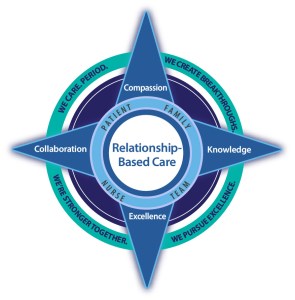
“Our commitment to excellence, knowledge, collaboration and compassion in support of relationship-based care is the foundation of nursing practice at the Brigham, and this is what makes us a Magnet organization,” she said.

Preparing for a Site Visit

During the four-day site visit, a team of Magnet appraisers will visit the Brigham virtually. A Brigham team will support the visit by placing computers with video technology on rolling carts that enable appraisers to see numerous areas and speak with staff about their practice and processes.

Sessions will also be held in conference rooms for both nursing staff and interprofessional colleagues, with appraisers participating via video. In preparation, Magnet champions — a group of staff nurses and nursing leaders — are holding Magnet rounds on units to review the types of questions that appraisers will ask.

“Our staff and leaders will know the answers to these questions because it really is about what they do each day, but it’s helpful to have a sense of what to expect as we approach the visit,” said Monica Tucker-Schwartz, DNP, RN, NE-BC, senior nurse director for Procedural Services and Magnet co-program director. “We want everyone to feel comfortable.”

Pearson says the site visit and the months leading up to it are a time to celebrate the contributions every role makes to the experience of patients and loved ones at the Brigham.

“Magnet is truly a celebration of what we do each day, and I hope that everyone feels a sense of pride in the outcomes that we continue to deliver, even amid so many challenges with the pandemic and capacity constraints,” she said.

Magnet Resources:

  • Review examples of how we meet Magnet standards in Heart & Science.
  • Test your knowledge of Magnet with trivia.
  • Visit PikeNotes to watch a video and brush up on the basics of Magnet designation.

Chris Nelson enjoys engaging with colleagues as he navigates every corner of the hospital with his equipment cart.

Chris Nelson, an inventory clerk in Biomedical Engineering, is quick to greet anyone he encounters as he travels about the Brigham’s main campus and Brigham and Women’s Faulkner Hospital to deliver packages and equipment and maintain his department’s stock of engineering parts and other materials.

“I love talking to people,” said Nelson, a member of the Brigham community for 20 years and a Pike celebrity, given the nature of his work. “I’m a very friendly person, so it just comes naturally to me to see someone and say, ‘Hey, how are you?’”

In addition to taking inventory and inspecting machinery, Nelson leads many special projects, including work to ensure that warm water runs through eyewash stations and that automated external defibrillator (AED) units are functioning each week.

“I especially take pride in making sure the AEDs are working correctly because that’s a lifesaving machine, so I know that machine is working and can hopefully save a person,” Nelson said.

That level of dedication is emblematic of the Biomedical Engineering team — known informally as Biomed — whose technicians, engineers and administrators work to maintain and implement clinical technology across the Brigham.

“I am fortunate to work with a very well-rounded team that is both technically sound and human,” said Michael Fraai, MS, CCE, executive director of Biomedical Engineering. “We take care of each other. Nobody lets each other fall.”

Stronger Together Brigham Values Logo

From scales to IV pumps and everything in between, the team is responsible for inspecting, testing, installing, maintaining, repairing and replacing approximately 32,000 devices used in patient care throughout the Brigham and its regional ambulatory locations.

Dylan Wright, who was recently promoted from technician to clinical engineer, also finds his work rewarding because he knows it is helping patients receive high-quality care. As an engineer, he now manages projects for updating technology used in patient care.

“I think the most rewarding part of the job is being able to walk around on the floor and see the new technology in use, knowing that a lot of effort and work went into getting the equipment on site and in the hands of the nursing and clinical staff,” Wright said.

Powered by Collaboration

The Biomed team also collaborates with colleagues in other departments to lend their expertise to larger-scale projects at the Brigham. In December 2019, for example, the team oversaw efforts to replace more than 800 mattresses in less than one week. While mattress conversion was seemingly outside the usual scope of Biomed’s work, the team’s vast experience and expertise in transporting, implementing and managing large volumes of equipment guided the project to success as they collaborated with more than 21 departments.

Kerrie-Ann Jack, senior business director of Biomedical Engineering, led the project and recalled navigating the logistical challenges of managing the timely shipment of mattresses from California while also ensuring they could be installed quickly upon arrival to minimize any disruptions to patient care.

Among the many collaborations that emerged during that project, Jack said, it was rewarding to work with colleagues in Interpreter Services to translate patient communications about the mattress conversion and with Shipping and Receiving to manage the delivery of the shipping containers.

“I think it’s fascinating for people to know the interaction we have with so many different departments,” said Jack. “They might not recognize how long our tentacles run. We manage a huge clinical technology footprint, but we also always end up working with a multidisciplinary group to roll out a project.”

Valuing Diversity, Elevating Opportunities

According to Fraai, the work of the Biomedical team is informed by its members’ varied expertise and diverse life experiences. Many cultures and identities are represented on the team, and even in the largely male-dominated discipline of engineering, women make up the majority of Brigham Biomed.

Women, including Kerrie-Ann Jack, pictured here, make up the majority of Brigham Biomed — a notable feat in a historically male-dominated field.

Within the department, staff are encouraged to become certified in their fields as technicians, engineers or administrators. In 2021, Jack passed an exam to become a certified Healthcare Technology Manager. The title certifies that she has studied the use of technology in clinical settings, and Jack participates in many engineering projects as an administrator.

The department also seeks to inspire future generations. Jack leads efforts to partner closely with the Brigham’s Student Success Jobs Program (SSJP), which matches high school students from under-resourced areas of Boston with paid internships at the Brigham. Some SSJP interns have returned to the Biomedical Engineering team as full-time staff.

In line with its goal to elevate opportunities for women in the field, the team has also partnered with Dana School for Girls through the school’s science, technology, engineering and math program to share the experiences of women engineers at the Brigham.

In addition to this work to engage with their local community, Biomedical Engineering staff lead international efforts to share retired Brigham equipment with medical facilities in other countries that have less access to medical funds and resources.

At the Brigham and beyond, the Biomedical team remains committed to improving and enhancing health care through technology, all while continuing to create pathways for professional growth.

“I get to learn a lot at the Brigham. There are always a lot of projects going on,” Wright said.

“Behind the Scenes at the Brigham” is a recurring series in Brigham Bulletin that provides a glimpse of the people whose everyday contributions help make the Brigham a world-class institution. Is there an individual or team you’d like to see featured? Send your ideas to bulletin@bwh.harvard.edu

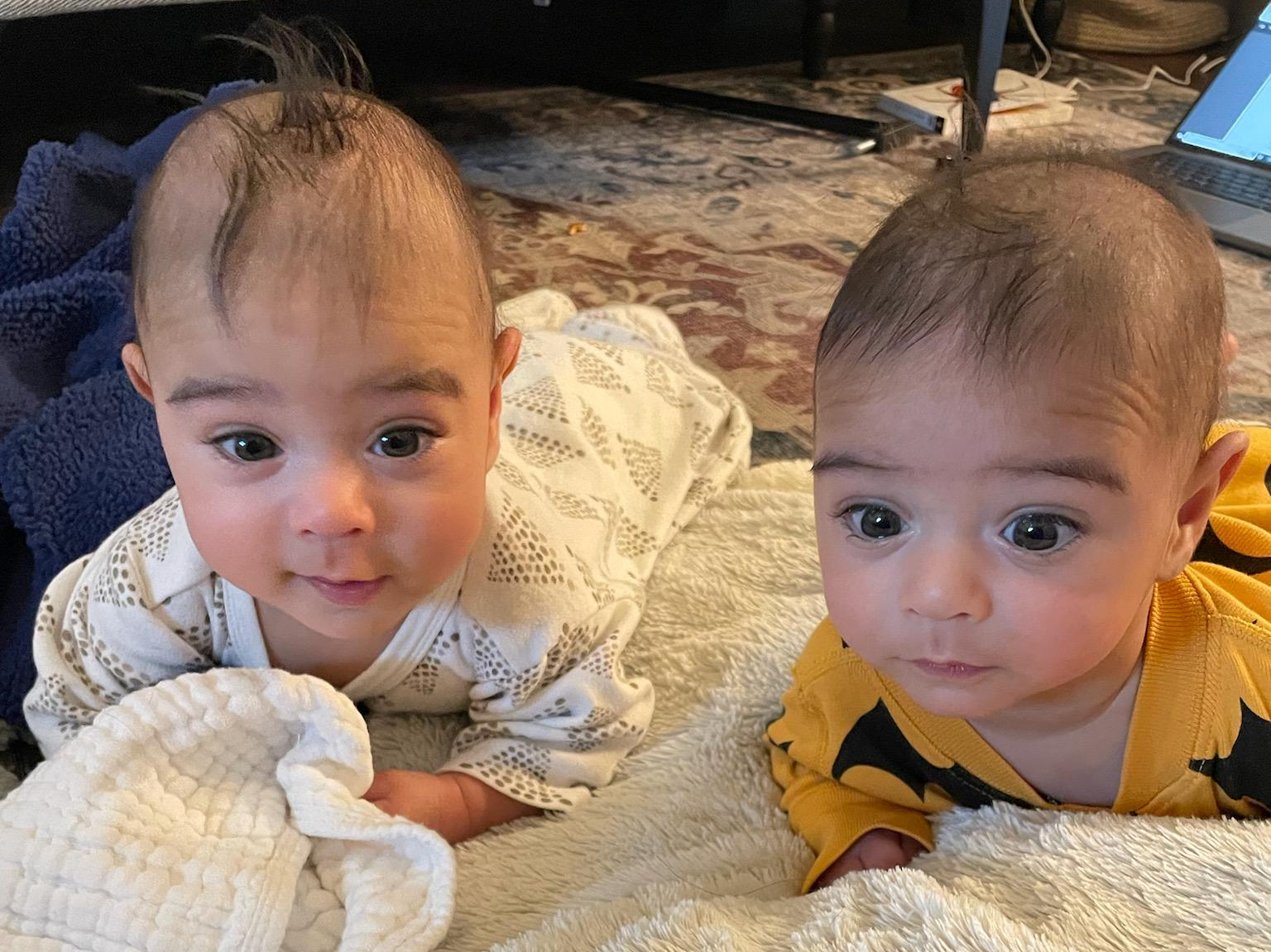
One week after welcoming their twins to the world, Sean LaPorta and Tejal Patel tested positive for COVID-19. The couple says their Brigham NICU team went to extraordinary lengths to help them bond with their boys, Rahm and Yogi LaPorta, pictured above at home in November, while they isolated at home.

Sean LaPorta and Tejal Patel couldn’t believe what they were hearing during what was supposed to be a routine prenatal visit: Their twins needed to be delivered — and soon.

Patel was 32 weeks pregnant.

Their boys were being monitored for a rare condition called twin anemia polycythemia syndrome, also known by the acronym TAPS. It occurs when blood flows unequally in the womb between twins, causing one baby to receive too much and one to receive too little. After scans that day in May revealed some concerning developments, doctors recommended Patel undergo a cesarean section as soon as possible to ensure the twins’ safe arrival.

Later that day, Rahm and Yogi were born — each weighing about 3 pounds. Given their fragile state, they were quickly transported to the Brigham’s Neonatal Intensive Care Unit (NICU) to receive lifesaving care.

But just when LaPorta and Patel were starting to get their bearings, life threw them another curveball: One week after welcoming their babies to the world, the couple tested positive for COVID-19.

We care. Period. logo

In the face of such an uncertain time for their family, the couple said their NICU team cared for their whole family with such extraordinary dedication and compassion — especially while LaPorta and Patel isolated at home, away from their boys, for two heart-wrenching weeks.

As Thanksgiving nears, the family says words cannot express the depth of gratitude they feel toward the Brigham staff who supported them during that time and through the rest of the boys’ stay in the NICU.

“I don’t usually get emotional, but when I talk about how much the team means to me, I get choked up,” LaPorta said. “It’s amazing anyone can have that much empathy. It’s not just that they take pride in their jobs, but they also have an ability to connect with people and understand exactly what they need.”

While LaPorta and Patel remained at home, NICU staff ensured the family could bond by setting up regular FaceTime sessions with the twins so their parents could read books and sing to them over a video call.

Although Rahm and Yogi avoided catching COVID-19, their possible exposure to their parents’ infection meant NICU staff needed to take additional precautions while caring for them. That included putting on and removing a full array of personal protective equipment each time they entered and exited the boys’ room during the isolation period.

“That extra mile was an extra marathon,” LaPorta said. “They would have to gown up and find coverage for their other patients every time they helped us set up a FaceTime call, then listened to us read a thousand books and moved the devices around so we could see both of our kids.”

“When I talk about how much the team means to me, I get choked up,” LaPorta says of the NICU staff who cared for their family.

Yelena Platsman, BSN, RN, one of the boys’ primary nurses in the NICU, said she never once considered those moments a burden. Just on the contrary, she added. She delighted in quietly listening to LaPorta and Patel lovingly read, and reread, stories such as Chicka Chicka Boom Boom and Steam Train, Dream Train to the babies.

“I imagined myself in their shoes and how difficult it must be to not only have my children in the NICU, but to also be separated from them,” she said. “I knew how much those FaceTime visits meant to Tejal and Sean. It was their only way of connecting with their boys.”

Family-centered care is an essential component to helping infants recover, grow and develop during their time in the NICU and beyond, Platsman added.

“The health of babies doesn’t just depend on the medical care they receive in the NICU. Their long-term health is dependent on the bond they form with their parents,” she explained. “Having parents involved as much as possible in taking care of their children promotes bonding, as well as parental confidence.”

Now 6 months old, the twins are thriving at home. Rahm, the more active of the two, seems to be close to crawling — an exciting milestone for any baby and even more thrilling for his parents after seeing him overcome the challenges of a premature birth. Yogi, who had been using a feeding tube to help meet his nutritional needs, is starting to explore the delights of solid foods and learning how to eat on his own.

“I’m most grateful right now for my kids,” LaPorta said. “It’s amazing to see them move forward and know that they’re happy and healthy.”

The couple says they couldn’t imagine where they would be without the support of their Brigham NICU team, said LaPorta, who is a twin and NICU graduate himself.

“They’re going to be part of our lives forever,” LaPorta said. “My parents still talk about their NICU staff and how amazing they were, and their stories don’t even come close to what our nurses did for us. They really need to know that we’re going to be forever grateful, and they’re always going to be part of the story for our kids.”

2 Comments

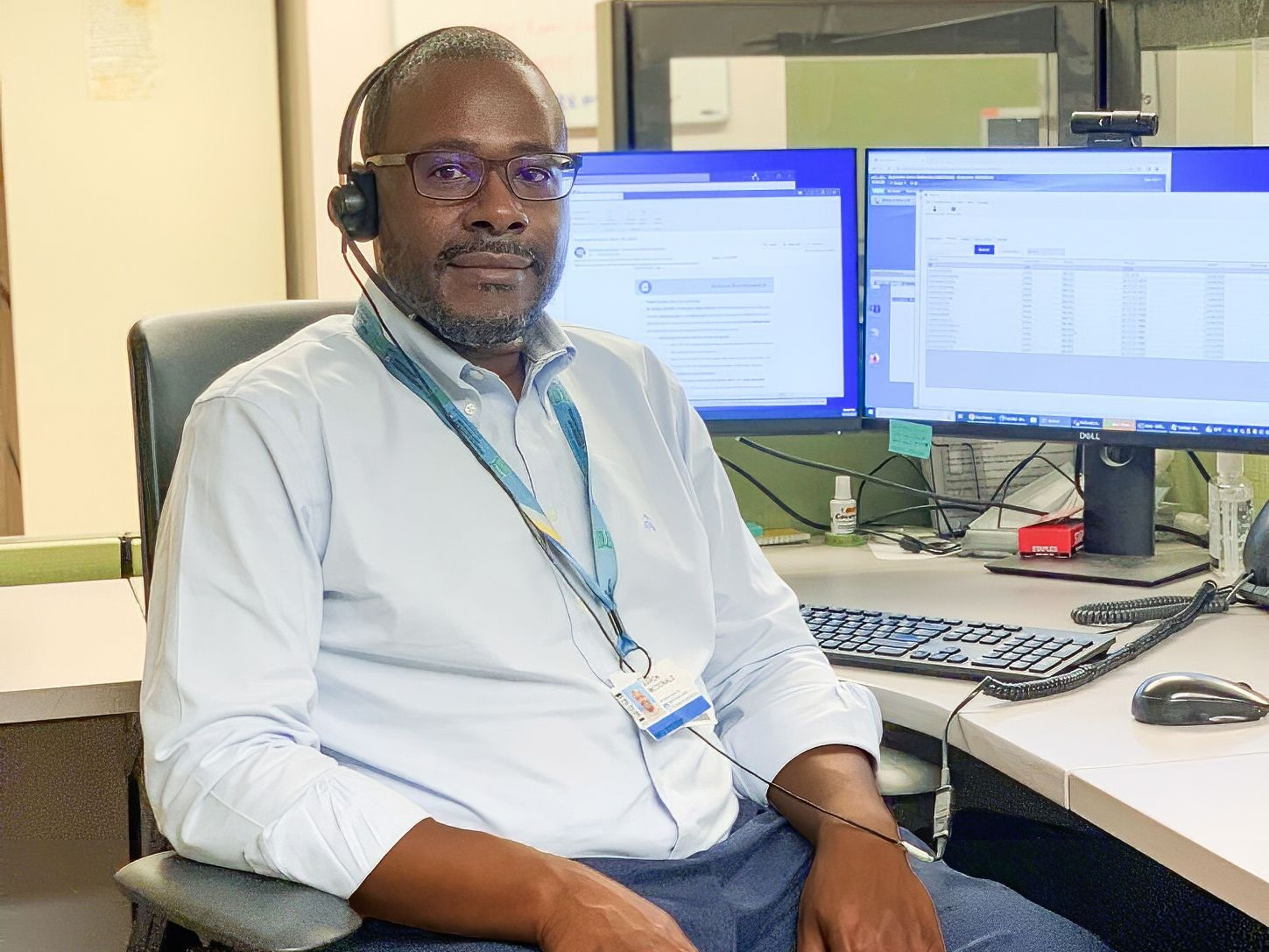
A new interpreter service to support patients calling outside normal business hours “has been an invaluable resource in providing customer service,” says Aaron McDonald, evening supervisor of Operator Services.

When patients call a clinic at night or on the weekend, they are connected with a phone operator who serves as a bridge between the patient and on-call provider. But most operators are not trained to assist a caller who speaks a language other than English. Reaching a member of the Brigham’s on-staff medical interpreters at night or over the weekend can take longer than during normal business hours, when most interpreters work.

To address this gap, teams from the Department of Quality and Safety and Interpreter Services collaborated with Telecommunications and OB-GYN/Midwifery to better support patients with limited English proficiency (LEP). Led by Yilu Ma, MS, MA, CMI, director of Interpreter Services, the group worked with a third-party vendor to design a program, called DirectResponse, that supports phone operators with non-emergency interpreter needs outside of normal business hours.

Prior to the program’s implementation, Brigham operators who received calls from patients speaking languages other than English during off-business hours often had difficulty obtaining information and relaying it accurately to on-call teams, according to Ma. The operator had to first identify the patient’s language and then put the patient on hold to contact an outside interpreter vendor to assist, which can involve extended wait times.

Now, LEP patients who need after-hours assistance from an on-call OB-GYN provider can more easily access those services. They can connect with an interpreter of their language within seconds. When patients call the program’s designated number from home during off-business hours, they are prompted to select their language by a pre-recorded instruction in that language. Since the patient and provider each contact the interpreter before connecting with each other, the interpreter is already on the line and ready to assist with translation.

“Our partnership with this vendor has decreased miscommunication and allowed patients’ voices to be heard,” said Nicole Sczekan, MSN, CNM, FACNM, director of Midwifery. “Prior to implementing this program, we had reports of patient calls not being appropriately transferred to us. That was distressing for the patient and family, as well as for clinicians. It’s imperative that patients call us with concerns and warning signs in order to provide safe care. Since the start of the program, these complaints have stopped and LEP patients now have peace of mind that they didn’t have beforehand.”

After a successful pilot in the Department of Obstetrics and Gynecology (OB-GYN), DirectResponse will be rolled out to all 28 Brigham clinical services that have on-call services. The program provides interpreter services in nine languages: Arabic, Cantonese, Cape Verdean, Haitian Creole, Mandarin, Portuguese, Russian, Spanish and Vietnamese.

“This is one of our inclusivity initiatives that allows our LEP community to communicate directly with their providers from their homes, independent of assistance from English-speaking family members or friends to translate on their behalf,” said Pamela Brown Linzer, PhD, RN, NEA-BC, associate chief nursing officer of Medicine and the Center for Nursing Excellence, who oversees Interpreter Services and Spiritual Care Services.

Robert Barbieri, MD, FACP, FACOG, interim chief of Obstetrics, agreed. “Interpreter services are so important in health care, so this program is really vital,” he said. “Rapidly accessible interpreter services are critical to providing equitable and high-quality clinical care to patients with limited English proficiency. This project is a testament to the Brigham’s work in continually improving our available interpreter services, and Yilu’s leadership was critical to the success of the program.”

Deborah Darveau, RN, senior patient safety specialist in the Department of Quality and Safety, described the program as an important step in improving the patient experience and advancing health equity.

“All patients deserve to be treated with the utmost respect and to be able to communicate with providers in their native languages,” she said.

“For our operators, particularly the after-hours team, the program has been an invaluable resource in providing customer service,” commented Aaron McDonald, evening supervisor of Operator Services. “The ability to so conveniently connect with another team that is dedicated to providing excellent service has proven itself to be nothing but a boon for accommodating callers in need of patient care.”

Drew Vild and Katie Shields snuggle their newborn daughter, Catalina Brigham.

Shortly into her pregnancy, it became clear to Katie Shields, RN, and her husband, Drew Vild, that one of their first big decisions as expectant parents ― what to name their daughter ― would require a level of diplomacy.

“I wanted something else for the first name, but Drew said, ‘What about Catalina?’” Shields recalled.

She sensed an opening in the negotiations and pounced on the opportunity.

“I’m such a middle name person, so I said, ‘Deal, as long as her middle name can be Brigham,” Shields said with a laugh.

That decision is no coincidence. Shields was a staff nurse in Labor and Delivery at the Brigham from 2016 to 2018, and she has continued to work on the unit regularly in recent years as a travel nurse while the couple has lived in San Diego, where Vild, a petty officer first class in the U.S. Navy, is currently stationed.

“We decided her middle name was going to be Brigham,” Shields says.

To the joy of her parents, their loved ones and Shields’ former co-workers on CWN 5, Baby Catalina Brigham made her debut at the hospital that bears her name on Oct. 31.

“We decided her middle name was going to be Brigham because she was going to be delivered there, and I’m obviously obsessed with the hospital,” said Shields, who describes herself as a Brigham and Women’s superfan due to the close bond she has forged with her colleagues and the immense respect she has for the extraordinary care they deliver.

Delivering her baby at the Brigham was no accident, either. Shields spent much of her pregnancy at home in San Diego but knew that, if possible, she wanted to travel cross-country to welcome Catalina to the world at the hospital that feels most like home.

“I wanted to be surrounded by all my friends, and I consider everyone here my second mom and my second best friend,” Shields said from her hospital room. “It really is a family. Everyone has each other’s backs.”

Originally from Andover, Shields was in town for her baby shower in October and expected to stay with loved ones until her due date in mid-November. But Baby Catalina was, evidently, just as excited as her mom was to see the Brigham and arrived two and a half weeks early. The timing also meant that Shields could share the moment with her family, including her own mother, whom she says has supported her every step of the way.

To celebrate Baby Catalina’s arrival, staff on CWN 5 lined the hallways and cheered “Congratulations!” and “Happy birthday, Catalina!” while Shields, Vild and their little one were transported to their Postpartum room.

Catalina Brigham received a joyous welcome to the world from Shields’ former co-workers on CWN 5.

Labor and Delivery nurse colleague Robyn Serody, RN, said she was overjoyed for Shields — and not at all surprised by her decision to name Baby Catalina after the Brigham or deliver her here.

“Katie loved working here, and everyone loved working with her! She was always positive and could make you smile. Every workplace needs a Katie,” Serody said. “The Labor floor is a family, and Katie will always be a part of our family!”

Speaking from her hospital bed, Shields said she couldn’t imagine starting her family at any other place.

“I’m a strong believer in ‘you get what you give,” Shields said. “It feels so right that we’re here.”

3 Comments

“This one right here — she is what keeps me going,” says Anameidy Roa Martinez (right) of her daughter, Mila (left), held by Donicely Zapata (center), a community health worker with the Brigham’s Bridges to Moms program, which has supported Roa Martinez as she has worked to overcome housing insecurity.

Anameidy Roa Martinez, 29, was seven months into her pregnancy when she developed pelvic pain so severe that it began to interfere with her job as a daycare teacher.

“I couldn’t walk, run or pick up the kids. I couldn’t do anything. It was painful to even take a walk outside,” she remembered. “I loved working with kids, but at the same time it was hurting me.”

She left her job and applied for unemployment benefits.

Roa Martinez was terrified. She lived alone and money was already tight. As she fell further behind on rent, and her due date got closer, she found herself in a situation she never imagined: on the verge of losing her housing.

“It’s the first time I’m dealing with something like this — not knowing how I’m going to pay the next month, what’s going to happen with the amount that I owe now, if I can get a job,” she said. “I have to have a roof over my head not only for myself but also my daughter. That’s the most stressful thing I’ve been going through.”

During one of her prenatal visits at the Brigham, she disclosed her situation to a social worker, who immediately referred her to a program called Bridges to Moms.

Founded in 2016 by Roseanna Means, MD, of the Division of Women’s Health, Bridges to Moms works to address gaps in five social determinants of health — housing, transportation, food security, personal safety and community resources — facing women who are pregnant and experiencing homelessness or at risk of homelessness.

“I volunteered as soon as I heard about this event,” says neonatologist Silvia Patrizi (right), pictured with Roseanna Means (left) at Bridges to Moms’ Career Day event.

The need has only grown as the state grapples with a worsening housing crisis and other economic factors such as inflation place mounting pressure on families, Means said.

“These women come to us at the lowest point in their lives. Meanwhile, they’re going to have a baby. They’re really scared. They don’t have any money. They’re isolated. They don’t have a moms group. They may not have a supportive partner, friends or their own mom in their lives,” Means said. “Yet these women are determined to make a better life for their kids. They are just amazing.”

Across the Continuum

Participants are paired with one of the program’s three bilingual community health workers — William Diaz, Edual Infante and Donicely Zapata — who serve as advocates and navigators to help patients access Mass General Brigham services and community-based resources, including assistance programs for daycare, food, clothing and housing.

More than 90 percent of participants are women of color, who are at disproportionate risk for pregnancy-related complications and death. To date, there have been no maternal deaths among women enrolled in Bridges to Moms.

“Helping people is my passion,” Infante said. “When you get to improve someone’s living condition, it’s a great satisfaction. I am also always learning more and more about the system as I work with our clients, and that knowledge is really important. Many of the cases are similar, so we can use our experience to help more people.”

Patients in the program receive support during the prenatal, peripartum and postpartum periods through the baby’s first birthday to monitor their health needs and address any systemic or institutional barriers that may affect the mother and her child.

For example, the program provides patients with transportation vouchers for all their medical appointments; similarly, mothers whose babies are hospitalized in the Neonatal Intensive Care Unit (NICU) receive free transportation to and from the Brigham each day until their infant is discharged so they can bond with their newborn.

From left: Lydia Marshall and Judah Soray volunteer at the Bridges to Moms Career Day event.

In addition, moms receive vouchers to enjoy a meal at the Garden Café whenever they’re here for an appointment or visit. “I can’t tell you the number of times they tell me this is the only meal they’ve had that day,” Means said.

A core philosophy of the program is to reduce stigma and focus on providing women the resources they and their children need to achieve optimal health. In addition to engaging women during appointments, Bridges to Moms staff visit women in the community to bring them food, diapers, baby clothes, gift cards and other much-needed items.

“We focus on saying here is where you are, here is where you want to go and here are all the ways we can help you,” Means said. “We always tell the women, ‘You are not doing this alone anymore.’”

Set up for Success

The program also places a strong emphasis on helping mothers regain their socioeconomic footing to set them up for future success. Last month, Bridges to Moms hosted a Career Day event in the Hale Building for Transformative Medicine in partnership with Williams James College and Cambridge Trust.

At one station, a Bridges to Moms staff member helped attendees write their resume. Representatives from Williams James College Workforce Development Program spoke with participants about a job training program to become a community health worker. Cambridge Trust volunteers helped mothers create budgets and savings goals.

The event also provided attendees with child care, food, giveaways of baby clothes and free entry into raffles for bigger-ticket baby items, including a pack-and-play portable crib and a bassinet. Translators were available at every station to ensure Spanish-speaking mothers in the program could fully participate.

Additionally, Brigham neonatologists and pediatricians also hosted tables where mothers could ask questions about caring for their baby and common health concerns for infants.

We care. Period. logo

“I volunteered as soon as I heard about this event,” said Silvia Patrizi, MD, a neonatologist in the Department of Pediatric Newborn Medicine and director of the department’s Diversity, Equity and Inclusion Taskforce. “I think the exceptionality of the program is, one, to follow these women and their babies from their pregnancy until the child is a year old and, two, that it is not charity. It’s really helping these women to grow out of poverty, regain dignity and become empowered by making sure they know their rights and have the tools to make a stable life for themselves and their family.”

Roa Martinez — who attended the event with her now 5-month-old daughter, Mila — says she doesn’t know where she would be without Bridges to Moms, which has helped her apply for rent payment assistance and housing lotteries, supplied her with baby clothes and provided access to community resources.

“When I met the Bridges to Moms staff at that first appointment, it was the most wonderful thing ever. Sometimes, you just need somebody to listen to you — and somebody who has had a similar situation as you,” she said. “I’m still so grateful to Bridges to Moms.”

Today, Roa Martinez said she is more determined than ever to give her daughter the best life she can. She is eager to start working again and set up a savings account, with dreams of one day buying a home and becoming a community health worker herself so that she can give back.

“This one right here — she is what keeps me going,” Roa Martinez said while cuddling her baby. “It’s not until you have your own child that you know what it means to keep going, even if you don’t have anything left in you. It’s OK to cry. It’s OK to complain sometimes. But as long as you don’t give up, that’s the only thing that matters. And I haven’t — and I won’t.”

For more information about the Bridges to Moms program or to learn how to support it, contact Roseanna Means, MD.

After sharing an elevator with thoracic surgeons discussing a new, experimental surgery that could treat her autoimmune disorder, Brigham nurse Stephanie Capello decided to inquire about becoming a candidate for the procedure.

After living with a chronic autoimmune disease for the past four years, Stephanie Capello, BSN, RN, CWOCN, a Wound and Ostomy nurse at the Brigham, was eager for relief.

She had developed myasthenia gravis (MG), a neuromuscular disorder that causes the immune system to mistakenly attack the skeletal muscles — leading to muscle weakness that affected her ability to breathe, talk, swallow, chew and more.

Capello recalled her alarm and confusion when her symptoms first emerged in 2018. “I was working Labor Day weekend, and I thought I was having a stroke because I couldn’t talk,” she said. “I couldn’t get my words out.”

She began taking immunosuppressive medicine for her condition and receiving monthly IV immunoglobulin infusions, which provide antibodies for those with antibody deficiencies. While the therapies partially alleviated her symptoms, they also had side effects.

There was another option: surgery to remove her thymus, a gland located under the breastbone and in front of the heart. Her neurologist, Christopher T. Doughty, MD, explained that undergoing a thymectomy would very likely reduce her need for medications. It might even put her disease into remission.

Still, it was major surgery, and Capello was concerned about the risks and recovery. She didn’t feel ready to consider surgery until one day at work when she was standing in a packed elevator, where she overheard Raphael Bueno, MD, chief of the Division of Thoracic and Cardiac Surgery at the Brigham, talking with a colleague about a new, less-invasive approach to performing this procedure.

This new approach, a single-port thymectomy, uses an experimental robot to remove the thymus through only one incision — hence the name “single port.”

“Listening to Dr. Bueno’s excitement and the way he was talking about how it would greatly benefit patients by being less painful, having a faster recovery and shorter stay in the hospital, I began to reconsider and realize it might not be as bad as I thought,” reflected Capello.

The new procedure stands in stark contrast to the traditional way of performing a thymectomy, which has long been an open-heart procedure. Even more modern robotic methods still require four incisions for four different ports to be inserted into the thoracic cavity.

That fateful elevator ride led Capello to recently become the first patient in the U.S. to undergo a single-port thymectomy, an experimental procedure performed by a multidisciplinary team led by Brigham thoracic surgeons Margaret Blair Marshall, MD, and Paula Antonia Ugalde Figueroa, MD. The Brigham is one of six sites in the U.S. enrolling patients in a clinical trial to evaluate the safety and efficacy of this procedure.

On the Cutting Edge

Myasthenia gravis led to dramatic changes in Capello’s once-active life. The condition worsens after periods of activity and improves after periods of rest.

“If I rest, I can get my words out much better,” she explained. “It’s so bizarre because I used to be a marathon runner, and I played college sports. Now, I can just run short distances because I get fatigued with shortness of breath.”

After becoming the unintended audience for a literal elevator pitch, Capello decided to ask Bueno about the single-port procedure. “We were the last three on the elevator, and as he was walking out, I decided to ask him about it,” she recalled. Bueno then immediately arranged a consultation for her with Marshall.

“Dr. Marshall is so professional, enthusiastic and passionate about what she does,” Capello said. “I think her innovation is really impressive, and I felt very comfortable with her.”

Marshall, an expert in robotic surgery, worked together with Ugalde, an expert in single-port operations, along with a multidisciplinary surgical team to perform Capello’s surgery in June. “I am so impressed with Stephanie’s bravery to be the first patient in the United States to undergo this procedure, especially because she knew she needed it but was avoiding it for a long time,” said Marshall. “She is the true pioneer here.”

If the clinical trial proves the procedure’s success, the surgical team hopes to eventually offer it in an outpatient setting, as well as extend this same approach to other surgeries, including lobectomies, which remove a lobe of the lungs.

Following her surgery, Capello was discharged from the hospital in just two days. After two weeks of rest, she was well enough to enjoy a family vacation on Martha’s Vineyard, where she continued to recover from the surgery. “I was amazed at how good I felt and how soon I felt good.”

After she returned to work, Capello saw Bueno in the hallway and let him know how well her surgery and recovery went. Bueno shared that she was the first person in the U.S. to undergo the procedure, which Capello hadn’t fully realized before.

Bueno commented, “The surgery should put her disease into complete remission. Right now, she’s on high-dose steroids with plasmapheresis, so this should be a dramatic improvement in her quality of life.”

It often takes one to three years before patients with myasthenia gravis begin seeing results from thymectomies. As it has only been a few months since her surgery, Capello hasn’t noticed any immediate MG-related improvements from the surgery just yet, but she is excited for her future.

“I always knew Brigham and Women’s was amazing because I’ve worked here my whole career, and I will forever speak highly of this hospital,” Capello said. “It’s also saved my mother’s life in the past, and I’m so grateful I can also say how amazing this hospital is from my own personal experience as a patient.”

3 Comments

Carlos Vazquez (second from right) was among three members of a Brigham neurosurgical team who traveled to Paraguay to care for patients in collaboration with local health care professionals, also pictured above.

Motivated by the desire to expand access to advanced health care, a Brigham neurosurgical team recently traveled to Paraguay to perform a lifesaving surgery for three young patients. Their trip also kickstarted a multi-year collaboration with a team at a hospital in Paraguay’s capital, Asunción, to train local providers on how to perform the same procedure, which treats a life-threatening condition known as arteriovenous malformation (AVM).

AVMs result from deformities in the brain’s blood vessels that occur at birth. The condition causes blood to flow too quickly from the artery to the vein, creating a buildup of pressure that can cause a vein to burst at any moment. Following a rupture, there is a 20 percent chance of death, and the risk of permanent injury to the brain is greater than 40 percent. While surgery can cure AVMs, the condition is rare, and the operation is performed only by a few specialists throughout the world.

This summer, José Kuzli, MD, a neurosurgeon in Asunción, invited Nirav Patel, MD, director of the Brigham’s AVM program in the Department of Neurosurgery, to travel to Asunción to perform AVM surgery for three patients — ages 8, 21 and 37 — and collaborate with Kuzli’s team to establish a training program for neurosurgery providers on the procedure, which is not currently available in Asunción. Patel, joined by Carlos Vazquez, a surgical technician in the Department of Neurosurgery, and Grace Kim, MD, an anesthesiologist in the Department of Anesthesiology, Perioperative and Pain Medicine, arrived in Asunción in late August to meet the three young patients and local neurosurgical team.

Patel, an international expert in repairing AVMs, aims to change the prognosis of patients with this life-threatening condition around the world.

We care. Period. logo

“I feel that helping people with this surgery is what I was put on this Earth to do,” Patel said.

Vazquez and Kim have shared Patel’s mission of making AVM surgery more accessible for years. Vazquez has assisted Patel in surgery for more than a decade, since before they joined the Brigham, and Kim has worked as an anesthesiologist on many complex AVM cases.

“When we work together, the dynamic is streamlined. We know each other so well,” Vazquez said. “I’m really happy we were able to contribute to these patients’ well-being in Paraguay.”

Repairing AVMs is a complex and slow process. Patel’s method is unique and particularly intricate, as he performs the surgery without preoperative embolization — a procedure commonly employed before AVM surgeries to seal arteries. Preoperative embolization uses a vast number of resources, making it especially challenging to incorporate in resource-poor areas of the world. Patel’s approach aims to reduce patient risk and make the procedure more widely accessible.

Patients in Paraguay face other barriers to health care beyond limited access to complex care. While the Brigham team traveled with some supplies that were donated by Boston-area businesses, patients in Paraguay are often required to provide medical supplies for their own procedures, including some medications and heart monitors, Patel explained. Family members of the three patients slept in a tent outside the hospital so they could help with bedside care and provide support as needed. The limited availability of resources in the Asunción hospital remains a long-term obstacle that Kuzli’s team is working to overcome. Patel’s team aims to support efforts to make AVM surgeries sustainably accessible.

Carlos Vazquez (far left), Grace Kim (fourth from left) and Nirav Patel (center left) share a moment with their Paraguayan colleagues, including Jose Kuzli (center right)

While in Paraguay, the Brigham team cared for patients with advanced conditions. One patient was diagnosed with a grade 4 AVM, which is often pronounced inoperable in the United States. Despite these challenges, Patel felt bolstered by his patients’ bravery and the compassionate care the team in Asunción demonstrated.

“There was so much commitment and support all around, including the nurses looking out for every last detail,” he said.

Kim hopes the relationships forged with the care providers and patients in Paraguay will be long-lasting.

“Through this trip, we hoped not only to provide medical care but also to create opportunities for learning and future collaboration,” she said.

Patel believes his collaboration with Kuzli will need outside support while they strive to determine a sustainable method for doctors to provide AVM surgery independently in Paraguay. The August trip was funded in part by Solidarity Bridge, an American nonprofit, and several Boston-area companies. Patel is seeking funds to support another visit within the next six months.

The team in Asunción continues to send Patel updates on their patients’ progress. Each patient is recovering well and has returned home.

Reflecting on his work with the team in Paraguay, Patel expressed gratitude for everyone’s commitment to the project.

“AVMs are something we can cure. It just fits that we should be training people to do this surgery and finding ways to make it sustainably available,” he said. “There aren’t huge numbers of patients affected by AVMs, but these patients are real people in need of medical care, which can cure them for life.”

Robert Higgins addresses staff in Bornstein Amphitheater and via webcast during State of the Brigham on Oct. 27.

Health care organizations around the country continue to grapple with pandemic-induced pressures, including high demand for patient care, staffing shortages and complex financial challenges. The Brigham faces these same headwinds, President Robert S.D. Higgins, MD, MSHA, acknowledged during the fall 2022 State of Brigham on Oct. 27.

But the Brigham community also has a proven track record of overcoming adversity — and that’s no accident, Higgins added. It’s the Brigham’s culture of collaboration, innovation and commitment to excellence that have contributed to our ability to persevere.

These qualities will also guide the Brigham in helping achieve Mass General Brigham’s five strategic priorities — expanding access, improving value, supporting research and innovation, advancing equity and increasing revenue — as the system continues its work to transform into an integrated health care system of the future.

“It’s clear that challenges won’t define us. They’ll just make us better,” Higgins said during the interactive forum, held live in Bornstein Amphitheater and via webcast. “This is not easy work, but it’s nothing the Brigham can’t handle or do. We’ve risen to every other challenge we’ve faced in the past, and we will do so with this one.”

Several factors are contributing to the financial pressures the organization faces, explained Daniel Morash, MBA, chief financial officer and senior vice president of Finance. Continued reliance on temporary labor and inflated supply costs — two trends affecting hospitals around the country — are driving up expenses. However, revenue is not keeping pace as patients come to the hospital sicker and stay longer, an issue exacerbated by a shortage of beds in skilled nursing facilities throughout the region.

Despite these challenges, there are bright spots in the financial forecast, Morash added. Revenue in some areas, including outpatient care and research, is trending positively. Additionally, the Brigham is working with colleagues across Mass General Brigham to identify systemwide efficiencies that could mitigate the impact of the current financial challenges.

“It’s a hard time, but I think we are as well-positioned as we could be,” Morash said.

Maintaining a strong financial foundation is vital to ensuring the Brigham has the resources to make the necessary investments in its people, services and facilities to deliver on the institution’s mission, both leaders said.

“My goal is to make the Brigham recognized as a workplace of choice in academic medicine,” Higgins said. “To do this, we have to invest in and retain our outstanding folks — people who contribute to our mission every day — and treat them as though they are partners and give them opportunities to continue to excel. As we work toward developing new revenue streams, we also have to find a way to continue to support our financial performance in order for us to do all of these things.”

Throughout the forum, Higgins and other leaders emphasized the importance of keeping patients at the center as the Brigham charts its path forward.

“We’ll maintain our focus on patients, be quality-based and driven by our mission, and that will define our direction for the future,” Higgins said.

Reflecting on his time as president since joining the Brigham community nearly a year ago, Higgins said he has witnessed and learned about countless examples of these attributes in action. One touching demonstration of this, he noted, involved a care team on Braunwald Tower 11C who planned a wedding for a patient with end-stage lung disease.

“This is just one example of the incredible compassion and dedication of our teams caring for the entire patient — not just their illness, not just their diagnosis, but their soul — and helping them heal,” Higgins said.

Higgins also expressed his pride in all the Brigham has achieved in research, education and community support, in addition to national recognitions such as the hospital’s position in U.S. News and World Report’s Best Hospitals rankings this year.

“No matter what your role here is at the Brigham, we believe you have an extraordinary opportunity to contribute,” he said.

Additional Updates

The State of the Brigham also featured updates from other hospital leaders about institutional areas of focus:

  • Allison Moriarty, MPH, senior vice president of Research Planning & Operations and Innovation, highlighted recent achievements from the Brigham research community, including the development of a highly sensitive test that can detect tiny volumes of COVID-19 in the body — a promising tool in the effort to help patients with long COVID.
  • Erik Alexander, MD, vice president of Education, reflected on the diverse talents and experiences this year’s new class of interns has brought to the Brigham, discussed opportunities for systemwide collaboration in training and emphasized that leaders are keenly focused on ensuring trainees have the appropriate balance of providing clinical care and time for learning.
  • Shelly Anderson, MPM, executive vice president and chief operating officer, explained how the Brigham is collaborating with colleagues across the system to address capacity challenges through initiatives such as enterprise asset management, which seeks to provide systemwide visibility into availability of beds, operating rooms and procedural rooms for the most effective resource management.
  • Maddy Pearson, DNP, RN, NEA-BC, senior vice president, chief nursing officer and the Beth V. Martignetti Distinguished Chair in Nursing, briefed staff on Magnet redesignation, which the Brigham is seeking next year as an affirmation and celebration of the outstanding care that takes place here every day.

View a recording of the event (access restricted to internal network and VPN users).

Brigham and Women’s Hospital mourns the loss of Edwin “Pete” Phoenix Jr., a lead aid on the Waste Management team in Environmental Services, who died Oct. 13 following a sudden illness. He was 66.

A member of the Brigham community for 44 years, Mr. Phoenix worked the day shift and was responsible for waste removal throughout the Brigham’s main campus.

Mr. Phoenix’s memorable smile and warmth brought joy to his colleagues, and several reflected on another one of his unforgettable characteristics: His cheerful whistling throughout the halls of the hospital, which was instantly recognizable.

“Pete always brightened my day with his smile, his jokes and his famous whistling,” said Adam Kayi, a manager in Environmental Services who worked with Mr. Phoenix for 22 years. “He was larger than life, and no challenge was too big for him. He always brought joy and positive energy to work. I miss him a lot.”

Labina Shrestha, MM, T-CHEST, operations manager in Environmental Services and Mr. Phoenix’s direct manager, shared similar remembrances.

“Besides being a great team member, Pete was a wonderful person. Pete always came to work with a positive attitude and a smile on his face,” Shrestha said. “Nothing was ever an impossible task for Pete. He always performed his task to the fullest and kept the area safe for everybody. He loved to whistle when he walked the long hallways and gave that positive vibe to the people around him. We miss him dearly.”

In addition to being the center of so many friendships, the Brigham also became the place where Mr. Phoenix met his wife, Denise, while working a weekend shift three decades ago. They married in 1988.

Jean Saint Paul, a waste handler in Environmental Services, said he was heartbroken to lose one of his closest friends.

“I have known Pete since 2006, and from the very first day, we became best friends. He would always help me with everything and taught me so many things in my life,” he said. “I am feeling like this is my personal loss, like a family member. I am emotional every day and pray that he is happy wherever he is now and still smiling. I miss you, my big brother.”

Henry Tapia, who worked with Mr. Phoenix for 18 years and was his direct supervisor, recalled how Mr. Phoenix always treated others with kindness and made even acquaintances feel like old friends.

“He always called people ‘young fellow.’ I still think about it and smile,” Tapia said. “He was a person of big heart.”

Mr. Phoenix was a friend and mentor to colleagues such as Carson Clark, a lead Environmental Services aid, who remembered how he brought both a lightness and dedication to his work.

“He always made you smile and laugh while performance your job,” Clark said.

Jimmy Caban, a supervisor in Environmental Services, said Mr. Phoenix was in a class all his own.

“Pete never had an unkind word,” Caban said. “He was the nicest person I’ve ever met, but first and foremost, he was always a gentleman.”

Mr. Phoenix is predeceased by his mother, Margaret Phoenix, his son Edwin Phoenix III and his brother, Edward Phoenix. He is survived by his wife, Denise Phoenix, his son Stephen Phoenix, two grandchildren, four sisters and many other loved ones.

1 Comment

Architectural features of the unearthed operating room (left) share considerable similarities to the scene depicted in Joel Babb’s painting (right) of the first successful human organ transplant, which took place at the Peter Bent Brigham Hospital in 1954. (Right image credit: Harvard Medical Library collection, Center for the History of Medicine in the Francis A. Countway Library, Harvard University)

During recent renovations to the Brigham’s Division of Plastic and Reconstructive Surgery clinic and administrative space, construction crews uncovered remnants of a historical operating room (OR) believed to have hosted the world’s first successful human organ transplant.

While removing walls, workers were surprised to find what appeared to be an old operating room with a balcony for watching surgical cases.

Current Brigham faculty members had heard over the years that old ORs from the Peter Bent Brigham Hospital — one of the Brigham’s predecessor institutions — were in the vicinity of this location, but they thought they were one floor below.

However, when compared to historical images in the hospital archives, architectural features of the room suggest it was likely the OR that Joseph Murray, MD, used when he transplanted a kidney from one identical twin to another in 1954. Murray would go on to receive the Nobel Prize in Physiology or Medicine in 1990 for this groundbreaking work and the subsequent development of immunosuppressive drugs.

The painting The First Successful Kidney Transplantation captures what Murray’s OR looked like before undergoing many renovations over the years for other uses. While the artist, Joel Babb, took some artistic liberties in recreating the scene on canvas, there are striking similarities between details in the painting and rediscovered room, such as the arches in the balcony, explained Catherine Pate, hospital archivist.

In this iconic 1954 photo, shot from the balcony above the operating theater, Joseph Murray (center) and his colleagues perform the first successful human organ transplant.

“The most requested picture of all the many thousands in the Brigham and Women’s Hospital Archives is the one we have of the kidney transplant between brothers Ronald and Richard Herrick on Dec. 23, 1954, in a Brigham operating room. From the evidence, it is likely this room,” Pate said. “The achievement of this — the first-ever successful human organ transplant — was comparable in the field of medicine to the first moon landing in the field of aerospace. The bravery of this step into the unknown, especially by the first donor, Ronald Herrick, and the physician/scientists of the Peter Bent Brigham transplantation team, takes your breath away when you stop to think about it. It happened here. What a legacy!”

The room itself was part of the original Peter Bent Brigham building at 15 Francis St., dating back to 1912. Through the ensuing decades, the space underwent numerous renovations. And while features of the room such as the balcony were retained in later reconfigurations, the original fixtures and furnishings were updated over the years and, subsequently, have been lost to history, explained Sonal Gandhi, vice president of Real Estate, Planning and Development.

“Although no original parts of the original operating room were found during this latest renovation, plans are underway to ensure this discovery is acknowledged and commemorated,” Gandhi said.

The historic OR also appears to be the operating room favored by legendary American surgeon Harvey Cushing, MD, known as the father of neurosurgery. From 1912 to 1932, Cushing was the Moseley Professor of Surgery at Harvard Medical School and founding surgeon-in-chief at Peter Bent Brigham Hospital. He was a pioneer in surgical technique, including electrocautery, and developed basic techniques and procedures still used in neurosurgery. He received many honors throughout his career, including the Pulitzer Prize for his biography of Sir William Osler.

The same OR was also used by Dwight E. Harken, MD, the chief of Thoracic Surgery at the Peter Bent Brigham Hospital from 1948 to 1970, to demonstrate early cardiac surgery. Harken is often considered one of the founding fathers of heart surgery and credited as the creator of intensive care units for critically ill patients.

3 Comments

Brigham and Women’s Hospital mourns the loss of Robin Powell, an administrative assistant in the Division of Pulmonary and Critical Care Medicine, who died Sept. 12. She was 62.

Ms. Powell joined the Brigham community in 2009, providing administrative support for Anthony Massaro, MD, director of the Medical ICU (MICU), and the division’s broader operations. With a diverse range of responsibilities, Ms. Powell assisted with scheduling appointments and meetings, organizing conferences and other events, helping submit grant proposals, maintaining MICU coverage schedules, and more.

Widely respected for her ability to solve any problem and beloved for her caring and kind spirit, Ms. Powell is remembered by her colleagues for her devotion to the division.

“Robin’s contributions to the division were vast, and she was a loyal friend to many,” shared Bruce Levy, MD, chief of Pulmonary and Critical Care Medicine, Hilary Goldberg, MD, clinical director, and KC Peoples, senior administrative director, in a joint message to the division. “She will be remembered as a dedicated and highly capable team member, someone who would move mountains to achieve positive results. We will miss Robin profoundly, but her impact on all of us will survive for many years.”

Colleagues spoke of Ms. Powell’s steadfast commitment to helping others and the heartfelt approach that defined her every interaction.

“Robin was a team player and problem solver who was always willing to help anyone,” said Jacqueline Rodriguez-Louis, MPH, M.Ed., program coordinator for the Partners Asthma Center. “She was somebody whom anyone could count on.”

Massaro agreed. “Robin was a remarkable and kind-hearted person. Her dedication and administrative skill provided expert support of MICU physician scheduling and education. She had an enormously positive impact on the MICU, our department and the hospital as a whole,” he said.

“In this life, we all have a choice to affect lives in different ways — Robin’s choice was always positive,” remembered Nancy Beattie, senior credentialing administrator for the division. “She had the ability to bring calm, humor and sensitivity to any situation, and she had an innate ability to know which of these fit and when to share. Robin paid attention and offered advice without being intrusive. If there was a job to be done, she did it, and she did it quietly without the expectation of accolades.”

Ms. Powell was more than a colleague and brought joy to all those around her.

Rodriguez-Louis remembered Ms. Powell as “an amazing co-worker and an even better friend” who had a profound impact on the Brigham community.

“Everyone knew Robin. People adored her. She was still in touch with colleagues who left the division years ago. Robin was a fantastic individual, and we will all miss her so much,” she said. “She was a happy-go-lucky person who took her light everywhere she went.”

Added Beattie: “Hearing of her passing broke my heart, and I will never forget her and the huge impact she’s had on my life, both professionally and personally. Robin was more than my officemate; she was my friend.”

1 Comment

Brigham and Women’s Hospital mourns the loss of Beryl Benacerraf, MD, a world-renowned radiologist, physician, researcher, fetal ultrasound expert, entrepreneur and educator. She died Oct. 1 from advanced cancer. She was 73.

A member of the Brigham community for over 40 years, Dr. Benacerraf had an international reputation as a leader in obstetrical and gynecological (OB-GYN) ultrasound. Her discoveries using ultrasound in prenatal diagnosis of congenital anomalies and gynecological disorders transformed care in these areas of medicine and benefited the lives of countless women.

Dr. Benacerraf had dyslexia, which although impaired her reading ability, also helped her decipher obscure images and view things in entirely unique ways. This helped lead her to groundbreaking insights, most notably that a larger nuchal fold on a second trimester sonogram was a potential indicator of the genetic disorder Trisomy 21, also known as Down syndrome.

Dr. Benacerraf’s research established a standard for pregnant women’s physicians to use nuchal fold measurements to help determine the risk of Down syndrome. Such a discovery launched the field of genetic sonography and dramatically improved prenatal diagnosis and the characterization of fetal syndromes. Among her many other accomplishments were observations on human fetal hearing and using ultrasound to monitor invasive procedures.

Colleagues reflected on her brilliant mind and intellectual generosity.

“Beryl was a true giant in the field of OB-GYN ultrasound who was known internationally as an expert in obstetrical imaging,” said Mary Frates, MD, division chief of Ultrasound. “We at BWH Radiology greatly benefited from her expertise for over 30 years. She taught dozens of staff radiologists, hundreds of Radiology and OB-GYN residents and fellows and trained hundreds of sonographers. Beryl elevated the level of scanning and interpretation whenever she was in the reading room, sharing her knowledge generously with all levels of learners. She was an inspiration to us all and impossible to replace.”

Carol Benson, MD, former chief of Ultrasound and co-director of High-Risk Obstetrical Ultrasound, described Dr. Benacerraf as a “pioneer and champion for obstetrical and gynecologic ultrasound” who reshaped women’s health.

“She spent her career advancing the practice of ultrasound through her clinical work, research and teaching,” Benson said. “She was a terrific mentor, and we all learned from her every day.”

Dr. Benacerraf’s foresight and expertise helped expand the Brigham’s Center for Fetal Medicine and Prenatal Genetics.

“In 1991, when departments of Radiology and OB-GYN at BWH and around the country were in the midst of turf wars over obstetrical ultrasound, Beryl had the wisdom to understand that a collaborative approach was far superior to a winner-take-all approach, as it would take advantage of the complementary areas of expertise of the two departments,” reflected radiologist Peter Doubilet, MD, PhD.

“Beryl approached me, saying that if she and I could agree on a workable arrangement, she was confident that the Brigham Departments of Radiology and OB-GYN would go along with it,” added Doubilet. “We quickly hammered out an agreement that led to the opening of the Brigham’s Antenatal Diagnostic Center, which has flourished for over 30 years as a site for high-quality patient care and research and is now the ultrasound component of the Center for Fetal Medicine and Prenatal Genetics.”

Dr. Benacerraf was a practicing physician who served more than 350,000 women over four decades, caring for patients with extraordinary skill and compassion. She cared for patients at the practice she founded in 1982, Diagnostic Ultrasound Associates, until the day before she could no longer stand unassisted.

Dr. Benacerraf received numerous honors throughout her career, including the Ian Donald Gold Medal from the International Society of Ultrasound in Obstetrics and Gynecology, the Marie Sklodowska-Curie Award from the American Association for Women Radiologists and the Lawrence A. Mack Lifetime Achievement Award from the Society of Radiologists in Ultrasound. Dr. Benacerraf was also recognized as a “Giant in Obstetrics and Gynecology” by the American Journal of Obstetrics and Gynecology.

In addition to her research and practice, Dr. Benacerraf held dual clinical professorships at Harvard Medical School and Brigham and Women’s Hospital in both Obstetrics, Gynecology and Reproductive Biology and in Radiology. She served as president of the American Institute of Ultrasound in Medicine and as editor-in-chief of the Journal of Ultrasound in Medicine.

Dr. Benacerraf was a pioneer not only for women’s health but also for women’s careers in medicine. She was the first married woman to serve as a BWH surgical intern (1976), and she served as a role model and counselor for many younger women striving to achieve clinical and academic prominence while maintaining balance with family life.
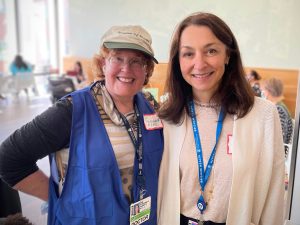
Her husband of 47 years, Peter Libby, MD, a cardiovascular specialist and former chief of Cardiovascular Medicine, stated that during their decades of clinical leadership, “Beryl hosted with me so many activities for the Cardiovascular Division with grace and the elegance of her French upbringing, no matter how busy she was with her own career. She somehow found time to do it all, including being a terrific mom and grandmother and my wonderful life partner.”

Beyond her brilliance and tremendous accomplishments, she is remembered for her kindness and warmth.

“She was more than a great colleague,” said Benson. “She was also a terrific friend, and she will be greatly missed.”

Dr. Benacerraf is survived by her husband, Dr. Libby, their two children, Brigitte and Oliver, and three grandchildren, Vivian, Lucie and Brady.

2 Comments

“I’m excited to learn and grow as a team that uses collaborative approaches and draws from everyone’s diverse backgrounds and experiences,” says Caitlin Springer (third from left), chief PA of the new Medical/Surgical Intensive Care Unit, pictured with her PA colleagues. From left to right: Rachel Harris, PA-C; Amy Cotton, PA-C, Caitlin Springer, Chief PA; Olivia Picking, PA-C; Megan O’Connor, PA-C; Meaghan Gagnon, PA-C.

On Sept. 7, the Brigham opened its new Medical/Surgical Intensive Care Unit (Med/Surg ICU) on Braunwald Tower 11C, becoming the hospital’s first unit to provide intensive care for both medical and surgical patients in the same setting. Also known as the Med/Surg ICU, the unit launched with six beds and will expand to a total of 10 beds early next year — an important milestone in the Brigham’s continued efforts to address ongoing capacity challenges.

While other ICUs at the Brigham are staffed by teams that include residents and fellows, these trainees do not make up the Med/Surg ICU team. Instead, physician assistants (PAs) work closely with attending physicians and nurses to care for patients in this setting. Caitlin Springer, PA-C, chief PA of the Med Surg ICU, recently spoke with Brigham Bulletin about how this new team came together.  

What’s your career path been like so far?

CS: I was a physical therapist (PT) first for eight years. I went to PT school at Northeastern, and it wasn’t until I was in one of my last years of school that I learned more about what a PA was and what they could do. It was fascinating to me. Throughout my career as a PT, I never stopped dreaming of becoming a PA. It took me a while to finally make the switch, but I’m so thankful I finally decided to go for it!

I ended up going to PA school at Duke and had a great experience. After graduating two years later, I landed a job in the Emergency Department at Mass General. The environment was fast-paced with a diverse patient population. I learned a lot there by consulting with specialized experts.

Through my time at MGH, I became involved with the ultrasound division. That blossomed into teaching opportunities and training our new hires, as well as teaching at conferences across the country and now world. Teaching ultrasound brings me joy — I find it so rewarding to teach people a new skill where they can gather additional information about a patient, as well as give them tools to enhance success with a variety of procedures. I love seeing when something clicks with a new learner.

Eventually, I got a per-diem position at the Brigham with Metabolic Support Service. It really was my dream per-diem job

Caitlin Springer

(and still is!). I love coming into every shift with that group. I always joked that it felt like Christmas morning on the days I was scheduled because that was how excited I was to come and work a shift with them! The team is amazing, and that experience allowed me the opportunity to expand my procedural skills and, later, per-diem opportunities in ICUs and other areas.

Can you tell us more about your latest role here?

CS: When the opportunity to help launch the new Med/Surg ICU as the chief PA presented itself, it felt like all of my worlds were coming together to create this new, PA-run unit. The goal is to accommodate both medical and surgical ICU patients to help offload the demands of our current units and meet the needs of our patient population, which are steadily increasing in both volume and acuity. We take patients from the Emergency Department, Operating Rooms, transfers from outside hospitals, as well as patients from our floors who have decompensated and require ICU-level care.

To accomplish this, we are led by our medical co-directors, Rachel Putman, MD, and Kristin Sonderman, MD, MPH, and an amazing attending group from whom we can learn directly from while caring for these patients. We’re staffed by critical care attendings from both the Medical ICU (MICU) and Surgical ICU (SICU), which include physicians trained in Pulmonary and Critical Care, Emergency Medicine, Surgery and Anesthesia. It’s so exciting to have such a diverse group of experts leading the PAs.

In preparation for opening the unit in September, our PA team rotated through several areas of the Brigham and Faulkner to ensure they received the training and support they needed to care for this patient population. I feel forever indebted to our colleagues in the many areas that accepted and trained our new PAs, specifically teams from the MICU, SICU, the Faulkner ICU team, the PACE Service, Cardiovascular Medicine, Oncology and the Bedside Procedure Service. Their willingness to help when we did not have a unit to train on was truly incredible.

In addition to everyone who helped train our PAs, the leadership of Jen Beatty, PA-C, Tony Massaro, MD, Ali Salim, MD, and Emily Hinchey, MBA, who helped assemble this whole unit, has been unparalleled.

What do you find most rewarding about being part of this team?

CS: I’m excited to learn and grow as a team that uses collaborative approaches and draws from everyone’s diverse backgrounds and experiences — from PAs who are new grads to others with experience in various specialties, including critical care at other institutions, emergency medicine, neurology, neurosurgery, metabolic support, oncology, pain medicine, thoracic surgery, vascular surgery and the Cath Lab. While we are on rounds, somebody will often be able to use their expertise from a prior role, which can ultimately help best manage a patient.

PAs are easily adaptable — we’re moldable. With this new unit, we get to learn directly from critical care attendings at an academic institution. I feel so lucky to have the opportunity to do this daily while caring for some extremely sick and complex patients. In addition, it’s great to be able to help decompress some of the other areas of the hospital and give them some breathing room and bandwidth.

We also benefit from the experience of many of our amazing nurses, whom I really enjoy working closely with and learning from. Nursing leaders — including Hasna Hakim, DNP, RN, MSN, MPH, CCRN-K, Warren Phillips, BSN, RN, and Kristen Hanlon, MSN, RN, CCRN — have done an outstanding job assembling and training our nurses. I am really excited that we get to build this unit truly as a team and put all of our heads together to constantly make things better. We get to set a whole new culture! It’s such a unique opportunity.

What do you enjoy most about being a PA?

CS: I love that you get to constantly learn from such a wide variety of experts and that you can explore a variety of specialties to gain a diverse experience. I love taking all of those experiences to best help my patients. You really can create your own journey based on your interests and opportunities that arise along the way. And I really love being part of a team. I always say it’s a good day if I learn something new, and with this amazing new team, there will never be a shortage of learning opportunities, so there are lots of good days ahead!

Special thanks to the entire MICU team; Lauren Jeffers, PA-C, and Meaghan Morris, PA-C, and the SICU team; Leanne Wines, PA-C, and Marissa Cauley, PA-C, and the PACE team; Deanna Wall, PA-C, and the Cardiology team; Eric Yenulevich, PA-C, and the oncology team; and Majid Shafiq, MD, MPH, and David Lee, MD, with the Bedside Procedure Service team. And KC Peoples and Alea Moscone for their continued contributions.

Physician Assistant Week is held annually Oct. 6–12 to honor physician assistants’ substantial role in improving health. In celebration of Brigham PAs and their involvement in nearly every facet of the care across the institution, Brigham Bulletin has highlighted one of the many exceptional physician assistants to cap off PA Week this year.

1 Comment

“I call them my family,” says Tony Orlina (center), whose life was saved by friends and colleagues Yaguang Pei (left) and Anand Somasundaram (right).

Tony Orlina, BS, (R)(T), CMD, was exhausted when he returned to his South End apartment on July 24.

He had just arrived home from Logan Airport after spending a week in Virginia with his siblings to care for their 83-year-old mother as she recovered from open-heart surgery. Although the procedure was successful, it was a stressful visit. Physically and emotionally, he was drained.

But it was Sunday afternoon, and tomorrow Orlina was due back to the Brigham, where he works as a treatment planning coordinator and medical dosimetrist in the Department of Radiation Oncology.

Orlina, 52, who lives alone, started to unpack and get ready for the week ahead when he was suddenly overcome by a blinding headache. Then, he vomited. “Hey, Ollie,” he said to his French bulldog, Oliver, “I’m just going to lie down.”

That was the last thing he remembers.

When Orlina opened his eyes again, he wasn’t in his apartment anymore. He looked around and saw someone in scrubs watching him carefully.

“Do you know where you are?” she asked.

“In the hospital,” he guessed.

“Yes,” she responded. “You had an aneurysm.”

By then, a whole day had passed. It was Monday night. Orlina was in the Neurosciences Intensive Care Unit (ICU) at the Brigham, recovering from emergency brain surgery.

We care. Period. logoHe would soon learn the only reason he was there — and alive — was because two fast-thinking colleagues and loyal friends trusted their instincts and decided to check on Orlina at home when he didn’t show up for work that morning.

“If your friends hadn’t found you, you probably wouldn’t be here,” his neurosurgeon, Mohammad Ali Aziz-Sultan, MD, MBA, chief of the Division of Vascular/Endovascular Neurosurgery, later told him.

***

Anand Somasundaram wasn’t supposed to come into work so early on Monday.

He was originally scheduled to arrive closer to lunchtime, but Somasundaram, also a medical dosimetrist in Radiation Oncology, had wanted to finish a few tasks before his upcoming time off.

When he stopped by Orlina’s desk to say hello around 8 a.m., he was surprised to find it empty.

That’s really strange, Somasundaram thought.

Of all people, he would know. In addition to being co-workers, he and Orlina are longtime friends and former roommates. When Somasundaram moved to Boston years ago, he didn’t know many people in the city, but that changed when he started working at the Brigham.

“Tony befriended me quickly, and we clicked really well,” Somasundaram said. “He made me feel at home.”

They became roommates when Orlina learned that Somasundaram was living in a 180-square-foot studio as he saved for an engagement ring.

“One Sunday, Tony called me up and asked, ‘Do you want to live together?’ I said, ‘I can’t afford where you live.’ He said, ‘You can pay me whatever,’” Somasundaram remembered. “I couldn’t believe it. I met this guy five months ago.”

But that’s just the kind of friend Orlina is, he explained.

“He’s the most caring person,” Somasundaram said. “We cooked together. We hung out. We went to fairs, festivals and breweries. We got really close. I think of him as family.”

In the time they lived together, Somasundaram learned that Orlina is a man of routines — meticulously organized, always on time and relentlessly reliable. So, when Orlina didn’t show up for work that morning, Somasundaram sensed something was wrong.

He tried texting Orlina. No response. He called him. No answer. He checked his social media accounts. He tried sending him a message on Facebook. He initiated a FaceTime call. Nothing.

“I decided to check the board. We have this whiteboard that shows who’s on call, and it said that Tony was on pager,” Somasundaram said. “I was like, one, Tony always comes to work, and two, if he’s on pager and can’t make it, he’d get someone to switch with him. At that point, it was a red flag.”

***

He reached out to their other close friend and colleague, Yaguang Pei, medical dosimetrist and treatment planning workflow manager.

From left: Somasundaram and Pei, along with their partners, and Orlina enjoy an outing to a New England orchard last fall.

Pei was on his way to the office when his phone buzzed.

“I got a text from Anand saying, ‘Have you seen Tony? He hasn’t shown up to work,’” Pei recalled. “Tony comes to work religiously every single day, and he always comes to work on time.”

Pei abandoned his commute and headed to Orlina’s apartment building. After entering the lobby, he approached the concierge and started to explain why he was there. The man interrupted him and pointed across the lobby.

“I looked over, and there was Tony sitting on the couch,” Pei remembered.

Right away, Pei realized something was wrong.

“Visibly, he looked fine, but he seemed off. It wasn’t the Tony I knew,” said Pei, who also formed a close friendship with Orlina when he moved to Boston several years ago and has come to think of him like family. “He said he was just tired, but he was confused. He didn’t realize he was in Boston. He thought he was still in Virginia.”

Pei knew he had to act. He took Orlina to the Brigham’s Emergency Department (ED) and let Somasundaram know they were on the way.

“There wasn’t a question in my mind about where we were going to take him,” Pei said. “We’re going to the Brigham.”

***

In the ED, staff performed a CT scan, which revealed a large amount of bleeding in the space surrounding Orlina’s brain, a life-threatening condition known as a subarachnoid hemorrhage.

“When you see this pattern of blood, it’s usually associated with an aneurysm,” explained Sultan.

A cerebral aneurysm occurs when a blood vessel in the brain develops a weak spot, causing it to balloon. When the bulge gets large enough, it can burst.

Half of people who experience a ruptured brain aneurysm die before they receive treatment, and only a third of those who do reach a hospital do well, Sultan explained.

Cerebral aneurysms occur when blood vessels in the brain develop weak spots, causing them to bulge and potentially burst, as seen in this 3D imaging of the blood vessels in Orlina’s brain prior to surgery.

“Tony had a massive rupture, and then the blood prevented the normal fluids around his brain from draining properly, exerting a lot of pressure,” Sultan said. “Either one of those things could have killed him.”

Orlina survived the event for two reasons: His friends ensured he received care quickly — before a more catastrophic second rupture occurred — and the Brigham’s highly experienced, multidisciplinary Endovascular Neurosurgery team worked in collaboration to deliver outstanding, personalized care, Sultan said.

“We’re on the forefront of diagnosis and treatment. We were one of the first in the country to bring together multidisciplinary teams and build hybrid operating rooms, and we’re on the leading edge of innovation, technology and research,” Sultan said. “It’s like having a toolbox with all these different tools, and we select the right ones to tailor treatments for each patient.”

After draining some of the excess fluid in his brain and performing an CT angiogram to confirm the location, shape and size of the aneurysm, Sultan and his team brought Orlina to Interventional Suite, where they conducted an endovascular coiling procedure. Using X-ray imaging to guide their path, the team snaked a small catheter through a blood vessel in Orlina’s leg all the way to his brain. Once there, the angiogram served as a roadmap to the ruptured aneurysm, which the surgical team repaired by depositing platinum coils into the ballooned area to plug it up.

The procedure was completed in about an hour. Orlina was cared for in the Neuro ICU for another two weeks before returning home to continue his recovery. Today, he’s left with very few side effects from the event; his once-boundless energy now has its limits, but he says life is otherwise back to normal.

His recovery has been nothing short of remarkable, Sultan said.

“Tony had one of the worst cases I’ve seen — and one of the best recoveries,” he said. “Even in the toughest moments, he was even-keeled, engaged and positive. He was inspirational.”

***

While Orlina was in the hospital and after his discharge, his colleagues in Radiation Oncology sprang into action to help him — including caring for his canine companion until he was well again.

Pei cared for Orlina’s beloved French bulldog, Oliver, while he was in the hospital.

“Tony is the glue that holds us together. He’s always the one who checks in on us,” said Pei, who took care of Oliver for three weeks. “People in the department really stepped up to support him, visited him multiple times a day in the hospital and contributed to a large UberEats gift card so that he would have food at home. Everyone pitched in to help.”

Daphne Haas-Kogan, MD, chair of Radiation Oncology, said she was not surprised by the team’s response. She sees that same compassion on display every day.

“Our department is like no other. It stands apart in my mind as a place where people just go to the ends of the Earth and back for each other, and that translates into not just to watching out for each other but also going the extra mile for our patients and families,” she said. “How inspiring it is to be part of a group that cares so deeply and is willing to do so much, big and small, for one another.”

That feeling resonates with Orlina, who is deeply grateful for the care teams who saved his life and all that his friends and colleagues have done to support him.

“It’s not just work,” Orlina said. “Yaguang and Anand — I call them my family.”

And true to form, Orlina returned to work as soon as he could. “Classic Tony,” Pei said with a laugh.

8 Comments

In 2015, Roshan Sethi, MD, of the Department of Radiation Oncology, joined film writer Hayley Schore in writing a screenplay inspired by the Jane Collective — a network established in Chicago during the late 1960s to help women access abortions at a time when the procedure was outlawed and stigmatized in much of the United States. At the time, industry insiders told them the film would never be produced by a major studio.
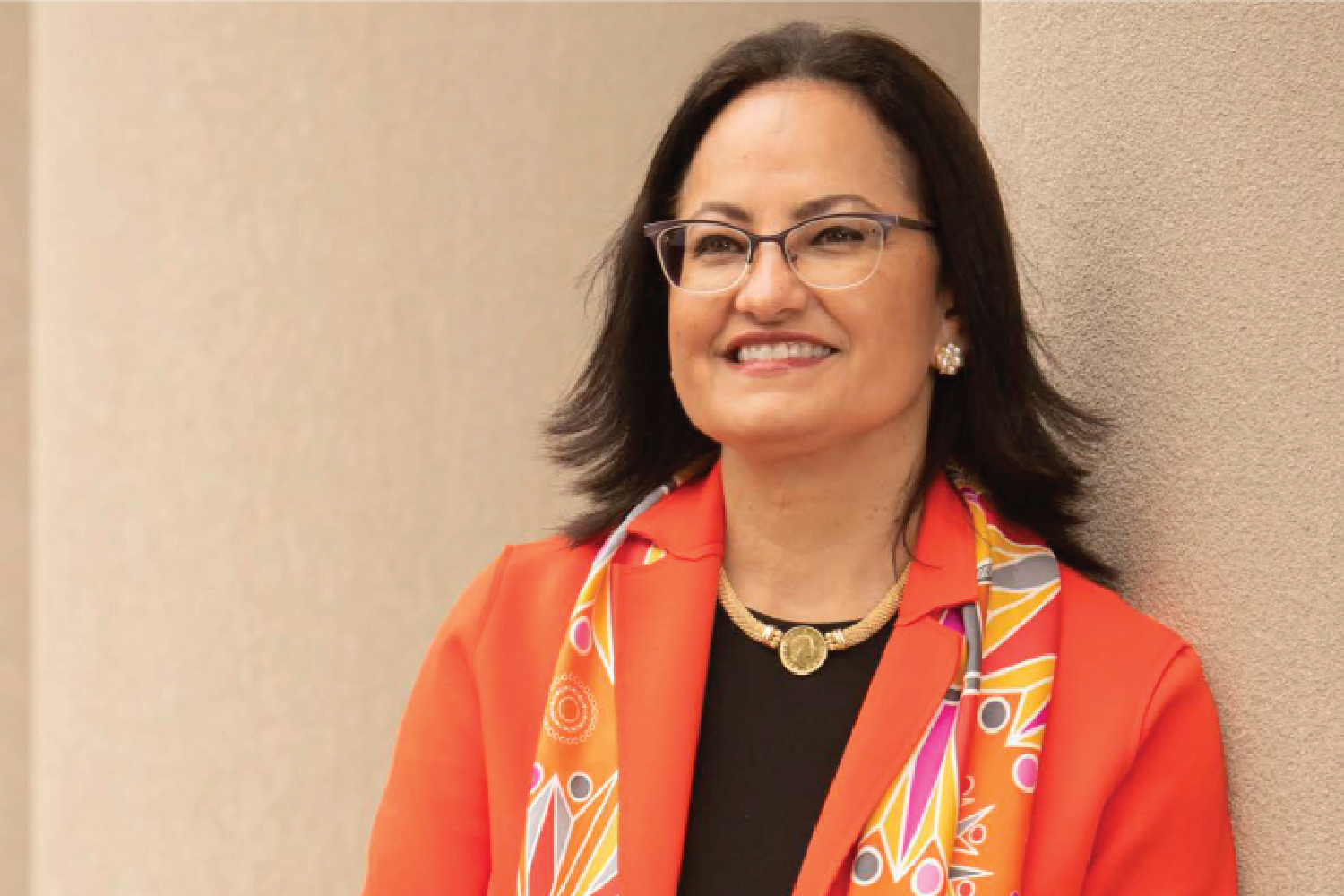
“Hollywood had an unofficial policy of not really mentioning abortion in movies and TV shows,” recalled Sethi, who divides his time between caring for patients at the Brigham and working in film and television.

Sethi and Schore still moved ahead, deciding to co-write the fictionalized story on spec, meaning it had no promise of funding. It was eventually picked up by Roadside Attractions, a popular independent film house.

Much has changed since then — most notably the Supreme Court’s ruling this June on Dobbs v. Jackson, which overturned decades of federally protected abortion rights made possible by the court’s landmark 1973 Roe v. Wade ruling and sparked worldwide discussions about abortion care.

After six years in the making, Call Jane releases in theaters Oct. 28, starring Elizabeth Banks, Sigourney Weaver and Wunmi Mosaku, and directed by Phyllis Nagy, Oscar-nominated writer and director.

“It sometimes feels like art can do nothing, and it sometimes feels like it matters intensely,” he said. “I think that this unspoken Hollywood policy, in some ways, has contributed to the situation we’re in now by cloaking the topic of abortion in secrecy and falsely portraying it as shameful.”

Sethi noted that a larger number of films and television shows openly discussing abortions have been made in Hollywood since 2016, a shift he hopes will yield positive social impacts.

Telling The Story

When he began working on Call Jane, Sethi did not anticipate that the Supreme Court would overturn Roe v. Wade. However, in an interview with Sethi and Schore, Judith Arcana, one of the original “Janes,” warned that the overturn of Roe v. Wade was imminent, having observed efforts to restrict abortion access over the years. People, particularly women of color, have continued to face barriers to abortion access since long before the Dobbs V. Jackson decision. The Janes are part of a storied history of community organizing to provide access to abortion and resist its regulation.

“I really wish the film weren’t so relevant to our time,” said Sethi.

Sethi felt inspired by Arcana and the other Janes. Their story gave him hope and drew him to work with Schore on the Call Jane project.

“It just felt like a really incredible story in that when the Janes were completely disempowered, they armed themselves with the tools of science and medicine and did what they could to save lives,” said Sethi.

A Career of Art & Science

Roshan Sethi (right) with his fraternal twin, Rosh. Both trained at the Brigham together and continue to practice here today.

Sethi’s love of storytelling calls him to write films and TV. He has always loved writing and originally wanted to be a novelist. His previous projects include the romantic comedy film 7 Days, co-written by Karan Soni, and the television drama The Resident, co-written by many writers, including Hayley Schore. The show told the story of doctors navigating a hospital residency program — an experience very familiar to Sethi.

In addition to his writing career, Sethi works as a radiation oncologist at the Brigham, inspired to work in oncology by a family experience with cancer. Sethi’s mother was also a doctor, whose medical work fascinated him and his twin brother from a young age. While Sethi has no experience in reproductive health or medicine, his medical background did help him when he and Schore conducted research for the Call Jane film, and some of the experts who were consulted during the writing are physicians at the Brigham.

Although his lives in medicine and writing are often worlds apart, Sethi says they share a common root.

“I do think they both require the practice of empathy,” he said. “When writing, you try to imagine yourself inside someone’s personality and character, and in medicine, you have to try to understand the people you care for in order to really help them.”

“Just as the river flows forward, you can’t go back,” says Nawal Nour, on living without regrets and accepting the winding journey her career has taken.

Nawal Nour, MD, MPH, sees her life reflected in rivers. Even through unexpected twists and turns, currents perpetually push the water forward. Her career has adopted a similar momentum — pressing ahead, branching out and flowing into new territories with continued purpose.

Nour, chair of the Brigham’s Department of Obstetrics and Gynecology, knows something about rivers.

As a young girl growing up in Sudan, she regularly played along the banks of the Nile River with her three siblings. The southern region of the Nile consists of two branches that meet in Khartoum, the capital of Sudan and Nour’s hometown. And it was in Khartoum where Nour would discover the first branch of her professional interests after reading The Hidden Face of Eve by Nawal El Saadawi, an Egyptian psychiatrist and feminist who wrote about and fiercely challenged the practice of female genital cutting.

“She became one of my role models,” said Nour, who has made it her life’s work to end female genital cutting and to care for women who have experienced it. “I loved her advocacy. I loved that she was outspoken. I loved how she was in the midst of a country where women were not supposed to speak up, and certainly not supposed to speak up about external genitalia — such a taboo subject — and that she had the guts and grit to do so.”

Nour reflected on the immense influence El Saadawi’s 1977 text had on her, among other experiences that shaped her career in women’s health and academic medicine, in the opening of her keynote address, “From the Nile to the Charles River,” during the 2022 Women in Medicine and Science Symposium.

The annual event, now in its 11th year, highlights the achievements of women faculty and trainees at Brigham and Women’s Hospital and Massachusetts General Hospital (MGH). This year, the event was a collaborative effort co-hosted by the Offices for Women’s Careers at the Brigham and MGH.

Throughout her remarks, Nour returned regularly to the metaphor of rivers as she traced the winding path of her career and what she has learned along the way — including the value of taking risks and embracing uncertainty.

“It’s about the journey. Just as the river flows forward, you can’t go back,” she said. “It’s not helpful to be regretful, but it is helpful to learn from your lessons.”

‘So Much More to Learn and Do’

As an undergraduate at Brown University, Nour discovered another passion: public health. She pursued an opportunity to work in a refugee camp, found a mentor in women’s rights, abandoned her pre-med track for a degree in development studies and international relations, and ultimately landed a job with the United Nations’ Division for Women in Development.

While the work was fulfilling, she eventually longed to go back to medicine. She was accepted into Harvard Medical School and made her home near a new river, the Charles.

“Be comfortable with uncertainty. It truly cultivates creativity,” she said. “Some people might say, ‘Oh, gosh, if you’d only stuck with being pre-med, you could have been in med school two years earlier.’ No. Those were really valuable times for me because they made me think, what’s next?”

Like the Nile, Nour said, the two branches in her life would converge in the work she did at the Brigham. In 1999, she founded the African Women’s Health Center, whose mission is to improve the health of refugee and immigrant women who have undergone female genital cutting. It provides access, understanding and community to women who have long-term complications from this tradition and who seek reproductive health care.

That same year, Nour also became the Brigham’s director of Ambulatory Obstetrics and Gynecology, a role she held for nearly two decades until she was named chief diversity and inclusion officer for Faculty, Trainees and Students in 2018.

Nour acknowledged she was initially reluctant to accept the role of chief diversity and inclusion officer, fearing it would take her away from her love of patient care. But she decided to follow her own advice and find an opportunity for growth amid uncharted waters.

“I honestly, transparently and genuinely had a lot to learn. I had spent my world in public health, global health and teaching residents how to do cervical exams, deliver a baby and perform C-sections and hysterectomies,” she said. “Diversity, equity and inclusion were not part of my education. It wasn’t my background, but I learned a lot.”

Her appointment as chair of Obstetrics and Gynecology in October 2020 — becoming the first Black department chair and the first woman to lead OB-GYN at the Brigham — marked another significant change.

“Some rivers have waterfalls. Some are very rapid, slow down in certain areas and then meander. But as you get closer and closer to the bigger body of water, whether it’s the Mediterranean Sea or the Boston Harbor, the water slows down and spreads out,” Nour said. “As our careers progress, our expertise expands. I feel that I’m in that expansive portion of my career, where it can be slower but there’s so much more to learn and do.”

In addition to pursuing passions and taking risks, Nour emphasized the importance for women in medicine and science to remain authentic and curious while forging relationships with mentors, sponsors and peers.

Turning back to the Nile, Nour also said the region holds another lesson — a contemporary one from the nearby Suez Canal. She recalled the 2021 incident involving the large container ship Ever Given, which ground international commerce to a halt when it became stuck in the Egyptian waterway.

After humans failed to extricate ship, nature prevailed. A full moon eventually raised the tides, dislodging Ever Given and enabling it to continue its journey.

“There are times in your career where high winds are going to shift you, and you’re going to get stuck. I’ve had that happen to me so many times, and I felt like I was not moving anywhere. I had to ask, what’s next for me? Is this what I really want to do? What else should I learn?” she said. “Just know for sure that you are going to be unstuck. If you can sit through that uncomfortable situation, know that the moon is going to rise, and the sun will come out again.”

“It was very clear something was going on,” says Peg Movelle (right), describing the events that led to her wife, Sue Morong (left), being diagnosed with early-onset Alzheimer’s disease.

After building a long and successful career in finance, Sue Morong never expected that numbers would one day become a source of confusion. But shortly after starting a new job a few years ago, she made a serious error at work.

“Sue dealt with spreadsheets all day, every day. She was a whiz at numbers. All of a sudden, they were almost foreign to her,” recalled Peg Movelle, Morong’s wife of 25 years. “It was very clear something was going on.”

In 2018, at age 58, Morong was diagnosed with early-onset Alzheimer’s disease, a rare form of the disorder affecting people under age 65.

While her episodes at work ultimately became a wakeup call for the Jamaica Plain couple, they later realized it was only one of many worrying signs that Morong’s memory and cognitive skills had begun to deteriorate. Activities requiring coordination and concentration, such as driving and cooking, had become difficult and even dangerous for her.

“You don’t really think of people in their 50s and early 60s as having significant memory issues,” Movelle said. “But there were all of these minor things that added up to major things over time.”

Advancing the Science

After visiting her primary care physician and a general neurologist, Morong was referred to the Brigham’s Seth Gale, MD, a cognitive-behavioral neurologist who specializes in caring for patients with Alzheimer’s and an investigator with the Center for Alzheimer Research and Treatment (CART), which conducts research related to the disease.

Through CART, many clinical trials enroll patients with mild impairment who have underlying Alzheimer’s disease but haven’t yet developed loss of independence in daily functioning abilities.

“Sue is someone with early Alzheimer’s who was quite high-functioning in day-to-day life,” said Gale, co-director of the Brain Health Program in the Division of Cognitive and Behavioral Neurology. “So, I knew she was a good candidate.”

Although there are FDA-approved treatments for Alzheimer’s disease, these only have the potential to lessen some symptoms to a modest degree. No drug has been proven to stop or reverse the disease’s progression, and the newest drug for Alzheimer’s that was approved in the U.S. in 2021 showed mixed results in its effectiveness. Thus, the decision to participate in clinical trials can be a delicate one for many families, adding to the uncertainties and emotional ups and downs that already accompany living with Alzheimer’s.

Even so, the choice to participate in clinical trials was a welcome one for the couple.

“We were thinking not so much that there would be some miraculous breakthrough, but that we might as well give back and help others through research, since there really wasn’t anything else we could do,” Movelle explained.

In addition to providing opportunities for patients and families to participate in cutting-edge trials, the CART team also engages with Alzheimer’s and dementia investigators around the world to share their findings — hoping to one day discover effective therapies for all patients.

“We try to do no harm, but can we actually help? That’s the big question,” Gale said. “The treatment of progressive brain diseases is an enormous, remaining challenge in medicine. There have been hundreds of medications over several decades studied for the treatment of just Alzheimer disease; six of these have been approved in the U.S., five remain on the market, and none of them definitively slow the disease in any way. While knowledge about Alzheimer’s and related dementias has exploded in recent years, there is still so much work to be done.”

Adapting to Change

Morong was eligible to participate in two trials. The first study tested a medication that hoped to disrupt the signaling pathways that cause the development of amyloid plaques — clumps of protein that form in the brain of someone with Alzheimer’s. She felt there was no benefit from the experimental drug.

She later enrolled in another trial of a monoclonal antibody treatment for early Alzheimer’s, but was unable to complete the study when an unrelated medical issue affected her ability to come in regularly for the IV infusions.

Outcomes like these are not uncommon, Gale explained, but he emphasized that they also aren’t the end.

“Patients and families are often told, ‘There’s nothing we can do,’ but that’s not correct,” Gale said. “I tell newly diagnosed patients that, of course, nothing can sugarcoat the news they’re hearing today, but there are positive and effective things that they and we can do, starting today. There is a lot of evidence that brain-healthy behaviors — like exercise, healthy eating and mental stimulation — can change the trajectory of decline to some extent, perhaps especially for individuals like Sue who have the early stages of mild cognitive impairment.”

Movelle has encouraged Morong to pursue these activities and believes they have helped slow her decline. However, as the years have passed, certain parts of everyday life have inevitably changed for them both.

Morong, who had done most of the cooking throughout their time together, has mostly hung up her apron and now leans on her wife as head chef for their household. Although once an avid bookworm who could devour a novel in an afternoon, she has shifted her daily reading to reciting the headlines for Movelle. And instead of driving or giving directions, Morong now relaxes in the passenger seat while her wife drives and Google Maps leads the way.

As a caregiver, Movelle regularly reminds herself to prioritize her own well-being, too, and to take it one day at a time. For those also caring for a loved one with Alzheimer’s, she shared three pieces of advice: “Enjoy the humor in it, allow your tears and cherish every moment.”

A new COVID-19 booster shot targeting the highly transmissible omicron strain of COVID-19 is now available for people aged 12 and older, following a recent authorization from the U.S. Food and Drug Administration.

Daniel Kuritzkes, MD, chief of the Division of Infectious Diseases, spoke with Brigham Bulletin to address common questions about the new booster and flu shots.

Let’s start with the basics. What is different about this updated booster?

Daniel Kuritzkes

DK: The new COVID boosters are what we call a bivalent booster. Instead of having just one of the COVID variants represented in the vaccine, it includes two variants. So, in addition to having the original strain — often referred to as the Wuhan strain — the booster also includes the BA.5 subvariant of omicron. That’s important because it’s the strain causing the most infections today.

The concept of having multiple strains, or variants, represented in an individual vaccine is not new. The flu vaccine is a great example of this. For years, we used to get a trivalent, inactivated flu vaccine. Now, it’s standard to use a quadrivalent vaccine, which means there are four different strains of flu represented in the vaccine. Similarly, the polio vaccine had been a trivalent vaccine and is now a multivalent vaccine.

What do we know about how effective this booster is against the newer strains of COVID-19?

DK: We know these vaccines are safe and will generate the desired antibody response, which is what we believe is protective. The bivalent vaccine induces better antibody levels against omicron, including BA.5, than the original vaccines — all of which are based on the ancestral strain, which is quite distantly related to omicron. While we don’t have clinical trials data demonstrating just how effective the vaccine is against preventing infection, that is not unusual. We typically rely on so-called surrogate markers, or laboratory markers, of protection to move forward from one type of vaccine to another. Similarly, the flu vaccine is updated annually, and, clearly, we’re not doing clinical trials every year to demonstrate the efficacy of each season’s flu vaccine.

If you recently had COVID, would you still benefit from a booster? If so, when should you get it?

DK: Yes. We know that people who received the original vaccine series, had COVID and then got a booster had very strong protection. Even though the original vaccine — which remains the vaccine approved for primary vaccination — is not as protective against infection or symptoms of the current strains in circulation, it is still extraordinarily protective against severe disease, hospitalization or potentially dying of COVID.

The hope with the bivalent booster is that we gain a bit of an edge and perhaps return to better prevention of symptomatic infection, although that remains unproven. We’ll know in a few months just how successful it is.

In terms of timing, it’s recommended that people wait to get boosted until about three months after recovering from an episode of COVID, and at least two months since receiving their last booster or completing their primary vaccination series.

Does your booster need to be from the same manufacturer as your original vaccine?

DK: No, it doesn’t matter which one you had originally. You can get boosted with the Moderna or the Pfizer vaccine — which are the only ones authorized as boosters — regardless of which vaccine you had initially. My advice would be to find the place most convenient for you to get boosted and whichever booster they’re offering, that’s the one I would take.

With flu season soon upon us, can you get your flu shot and COVID booster together? Are there any concerns with, or benefits to, getting both at the same time?

DK: There are no concerns, other than potentially having a sore arm from each vaccine. I think it’s probably far more convenient for most people to go once to get both vaccinations.

It’s extraordinarily important for people to get their flu vaccine this season. It’s been a couple of years since we’ve seen much flu activity, but we already have clues from Australia about what to expect this flu season because they’re currently coming out of their winter. Now that very few places require masking or emphasize social distancing, they saw a lot more flu activity this season than in recent years.

It’s expected that we, too, will see a significant flu season here in the Northern hemisphere. And because people haven’t seen flu in a few years, immunity may have waned if they weren’t regularly vaccinated, so it’s important for people to do that this season. If you have symptoms, you should also get tested for both, since you can’t really tell flu apart from COVID based on symptoms alone. And if you do have symptoms of either respiratory illness, stay home until you’re symptom-free, so you don’t spread it to your co-workers, friends and other people in public spaces.

Flu Vaccination Program: 3 Things to Know

All Mass General Brigham workforce members — including faculty, staff, trainees, volunteers, students and contractors — must receive their seasonal flu shot and document it with Occupational Health Services (OHS), unless approved for a medical or religious exemption.

Here are three things to know about this year’s program:

  • The deadline for submission of religious and medical exemption requests is Oct. 7. Flu shots must be received and documented by Nov. 14.
  • If you receive a flu shot from OHS or a Peer-to-Peer vaccinator, no further action is required. If you get a flu shot from another source, you must take additional steps to document it. Learn more.
  • OHS will host flu shot clinics at the Brigham starting Sept. 25. View the complete schedule.
5 Comments

From left: Surgery interns John Gaspich and Christian Cullen demonstrate a simple system used on Braunwald Tower 15 to indicate a patient is ready for discharge and should call their ride.

When Caprie Bell, MSN, RN, a charge nurse on Braunwald Tower 15, enters a patient room during her morning rounds, she does two things: First, she greets her patient with a warm and friendly smile. Next, she glances at a whiteboard on the wall to see if there’s a small magnet in the upper corner.

That magnet, which depicts either a green or yellow car, is used on the unit to indicate the patient’s readiness for discharge after recovering from surgery. If there’s a green car, that means the team of surgeons and physician assistants (PAs) who rounded earlier that morning determined the patient can be discharged as soon as their ride arrives. If there’s a yellow car magnet on the whiteboard, it means the team believes the patient is almost ready to go home but first needs to meet certain clinical benchmarks.

“When I see the green car on the board, I know that a conversation has taken place,” Bell said. “I can say to the patient, ‘Good morning. It looks like you’re going home today. Have you called your ride?’”

The intentionally low-tech system has bridged a communication gap that existed between clinical teams in Surgical Intermediate Care ― enabling clinically ready patients to avoid unnecessary delays at discharge while improving teamwork across the unit.

The multidisciplinary project began in response to capacity challenges in the flow of patients from the Operating Rooms (ORs) to the Post-Anesthesia Care Unit (PACU) to the surgical floors. An analysis in May 2019 found that 12 percent of surgical patients on Tower 15 were discharged by noon, even though a greater proportion of them were ready to safely discharge by that time.

“We sometimes know at 6 a.m. which patients are ready to go, yet it was taking six to eight hours for them to leave the hospital,” said Jennifer Beatty, MS, PT, PA-C, director of Clinical Operations and Surgical Physician Assistants. “That’s not a positive experience for anyone. It means that staff on the floor are slammed with both discharges and admissions in the afternoon, patients in the PACU are waiting for a bed, and the patients who are going home will be sitting in city traffic when they could have left much earlier. We knew there had to be a better system.”

As it turned out, there was.We pursue excellence logo

Since the car magnets were introduced in conjunction with a daily morning huddle between Beatty and Tower 15 charge nurses and nursing leaders, the percentage of patients on the unit who are discharged in the morning has more than doubled. As of June 2022, 30 percent of surgical patients on Tower 15 are discharged by noon.

“This project has been an amazing collaboration with shared ownership to improve the discharge process for our patients,” said Karen Reilly, DNP, RN, MBA, NEA-BC, associate chief nursing officer for Critical Care, Cardiovascular and Surgical Services. “The 15th floor has been able to develop a process that allows for timely discharge that not only impacts the patient going home but also improves patient throughput within the hospital.”

Malcolm Robinson, MD, vice chair of Clinical Operations in the Department of Surgery, agreed.

“We often focus on the high-tech ― and high-cost ― solutions when there are times that a low-tech, low-cost solution is actually the most effective,” Robinson said. “The car magnet project is an example of this, and the results speak for themselves.”

Resolving the ‘Information Lag’

So, what had been causing the discharge delay? In early 2019, clinical leaders enlisted the help of Process Improvement experts from Analytics, Planning, Strategy and Improvement (APSI) to find out.

After conducting observations on the unit and staff interviews, the Process Improvement team concluded that nurses weren’t receiving a reliable signal that the patient was ready for discharge in the morning.

Due to the unique needs of the OR schedules, surgeons and surgical PAs complete their rounds earlier than many other units ― usually between 6 a.m. and 7 a.m. ― and before their nurse colleagues’ shift change. In addition, like many rounding clinicians, surgeons and PAs typically entered all their orders later in the day.

That misalignment meant nurses often had to navigate conflicting information about a patient’s discharge readiness based on secondhand information from the patient versus what their electronic medical record indicated.

“There was an information lag of three to four hours,” explained Mark Galluzzo, MHA, lead process improvement consultant for APSI. “The rounding clinician knew that patient A had met all clinical milestones and would plan to put in a discharge order, but that information was just in their brain. Then the patient might tell their nurse, ‘The doctor said I’m going home,’ but when the nurse went into Epic, they didn’t see any record of that. Until the unit staff felt confident discharge was going to happen, they weren’t going to start to move on it.”

While the underlying challenges were complex, those involved in the project said it soon became clear that the solution was simple: “All we needed to do was tell each other what was happening,” said Jan McGrath, MHA, BSN, NE-BC, nursing director for Tower 15.

Beatty agreed: “By 7:30 a.m., we know a lot about what our patient movement will be for the day, but we recognized that didn’t play into how we prioritized our activities and communicated with nurses.”

Creating a Culture Shift

The APSI team came together with four PAs and four staff nurses on the unit to brainstorm ideas to bridge the gap. However, conventional approaches, such as adjusting schedules or having clinicians pause between rounds to enter orders, were not conducive to the way each role group worked.

The teams started thinking more creatively and realized they needed a visual cue ― what became the car magnet ― that nurses on the morning shift could trust to indicate discharge readiness. Additionally, rounding clinicians committed to making it a priority to submit any orders for “green car” and “yellow car” patients right after completing rounds. And finally, the teams implemented a multidisciplinary huddle at 8:45 a.m. to ensure everyone had the same information and to address any unresolved issues in real time.
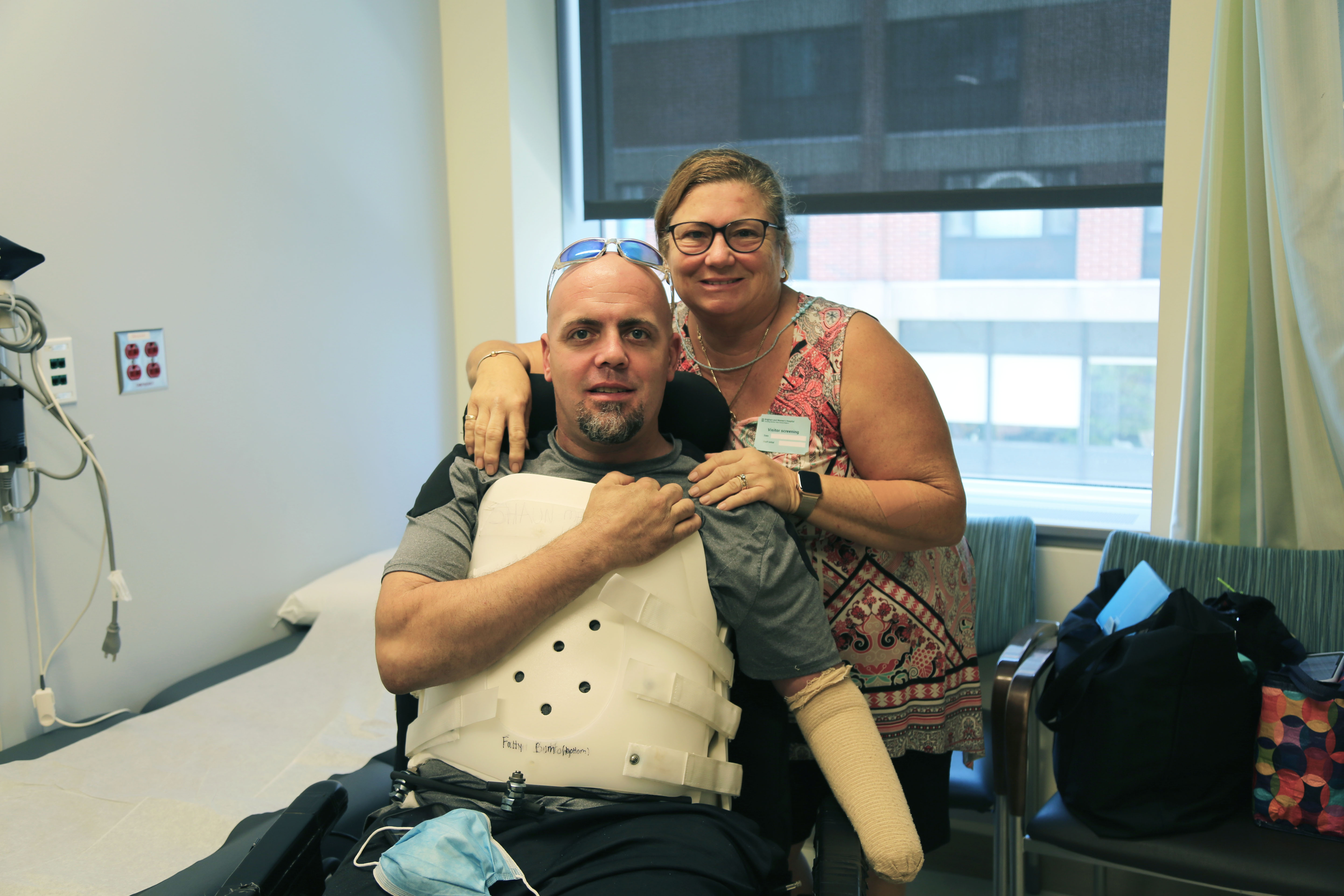
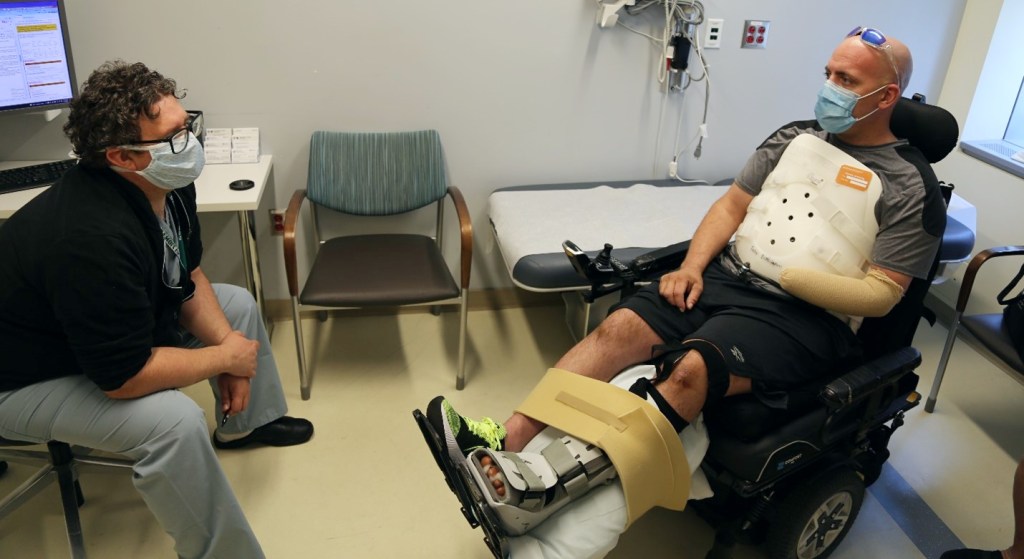
“The car magnets are low-tech, but I think that’s part of the reason why they work. It’s so simple ― you can’t mess it up,” said Joanna Cassidy, MSN, RN, CNL, assistant nurse director on Tower 15, who was part of the initial workgroup. “The daily huddle we have with Jen has also been a huge help because she’s able to answer a lot of our questions and follow up as needed. It has really improved communication across the unit.”

While the project has been a work in progress, its benefits continue to unfold.

“The metrics are impressive, but I think the bigger part of it has been the culture change on the floor,” Beatty said. “The mindset has changed.”

Kendra King, PA-C, a PA in General Surgery, said that using the magnets is now “second nature” for her and her colleagues during morning rounds.

“You know when you’re in the room that you have to move the car,” King said. “It took a lot of training to get that muscle memory down, but it’s truly saved two to four hours every day in eliminating all the back and forth we used to do. In the end, it’s better for everyone.”

For Bell, the car magnets have also improved her workflow as a charge nurse.

“I have a better understanding of those who are ready to go in the morning, and that knowledge trickles down to the rest of the team. For instance, I can inform the nursing assistants sooner that this patient is going to be discharged in the morning, so they know it’s a good time to help the patient gather their belongings or shower so that they’re ready when their ride arrives,” she said. “It’s all about how we can better care for the patients because they’re the No. 1 reason we’re here.”

Shaun Melendy with his mother, Joyce, during a recent follow-up visit at the Brigham.

When Shaun Melendy, 42, was kayaking down the river behind his West Bridgewater home one winter morning and realized a section of it had frozen over, there was, in his view, an obvious solution to this problem. It did not involve getting out of the water.

Instead, Melendy, a U.S. Coast Guard veteran and diehard outdoorsman, plunged a hunting knife into the ice and used it to pull himself along. As he inched his kayak down the river, he enjoyed the fruits of his labor: a peaceful paddle through a snow-covered forest.

On the surface, the story is a simple anecdote that amuses his loved ones. But it also speaks to something deeper — an adventuresome spirit and relentless optimism in the face of adversity.

Those qualities continue to guide Melendy through what has become the most difficult chapter of his life, which unfolded when he was struck on his motorcycle by a distracted driver who had drifted into oncoming traffic on May 5.

The crash left him with devastating injuries, including the traumatic amputation of his left hand at the scene.

First responders rushed Melendy to the Brigham, where he underwent emergency surgery for severe injuries he sustained throughout the rest of his body. In addition to suffering fractures to his skull, spine, hips, legs, ankles and feet, he needed an 8-inch skin graft to cover a wound on his left leg.

After waking from a medically induced coma, Melendy says one of his first memories was seeing a friendly face at the foot of his bed.

“He had his mask on, but he had a bright smile in his eyes,” Melendy remembered.

It was Matthew Carty, MD, of the Division of Plastic and Reconstructive Surgery, who had stopped by to speak with him about the opportunity to undergo an experimental surgery — part of a clinical trial in collaboration with MIT — that could make it easier for him to use a prosthetic limb. If successful, the procedure would preserve the normal signaling between his brain and muscles, a connection that ordinarily gets severed in an amputation.

“He said, ‘Shaun, I think you’re going to be a good candidate for this surgery. You seem like the type of guy who was active before, and I think I can help you stay active in the future. I don’t think any of the things you’ve done the past are going to end,’” Melendy recalled.

That was all he needed to hear.We pursue excellence logo

“I said, ‘Yes, absolutely,’” Melendy said. “I’m not one to sit still. I love being outdoors. I surf, swim and race kayaks. I cut firewood. I climb trees. I do sprint triathlons. Knowing I do all these things, I thought I would be more upset. But I just knew that I was going to be able to truck forward and figure out what the next step is. I can’t wait to use a prosthetic.”

Another key motivator for him was the ability to help other amputees, particularly fellow veterans, by participating in this clinical trial.

“I want to help people move forward from what they lost,” he said. “Veterans who come home from war should not have prosthetics that don’t work for them.”

‘Mind-Blowing’ Results

That bedside conversation would lead Melendy to become a pioneer — making him the first patient in the world to have lost an upper limb in a traumatic injury and undergo this novel procedure, known as an agonist-antagonist myoneural interface (AMI) amputation.

Traditional amputations, which have seen little innovation since the Civil War, cause amputees to lose the ability to finely control the muscles in their residual limb and, more importantly, the ability to perceive where it is in space without looking at it. This often leads to difficulties when using a prosthesis.

From left: Spine fellow James St. Clair listens as Melendy describes his experiences since his last spinal surgery.

In 2016, a clinical team at the Brigham led by Carty, in collaboration with Hugh Herr, PhD, of the Center for Extreme Bionics in the MIT Media Lab, invented a new method of amputation for lower limbs. It was called the Ewing amputation in honor of its first patient, Jim Ewing. The AMI procedure maintains natural linkages between muscles in an amputated limb, so amputees using a prosthesis feel as if they are controlling a physiological limb.

Importantly, this method can send movement commands from the central nervous system to a robotic prosthesis, so when an amputee intends to flex their ankle, for instance, the robotic limb responds appropriately. It also relays feedback describing movement of the joint back to the central nervous system, allowing an amputee to sense the speed, location and other attributes of the artificial limb.

In 2018, the team adapted the procedure for upper-limb amputations. Since then, four patients at the Brigham had undergone AMI amputations at the arm or wrist, but all were under elective conditions — typically after enduring chronic pain for years due to an old injury. Melendy became the first to have the experimental surgery following a traumatic amputation.

“We’ve always thought these techniques could be applied in the acute setting — something we believe will be especially useful for military personnel with combat injuries,” Carty said. “But in terms of testing that hypothesis, there are clear difficulties: Such events are rare, and obviously we cannot anticipate when the opportunity will arise. Shaun turned out to be a great candidate for surgery and continues to do very well, proving our assumption that upper-extremity AMI amputation can be done safely in the context of acute trauma.”

After receiving a temporary closure at the wound site and recovering from his other surgeries, Melendy prepared to undergo the five-hour AMI procedure.

“The fact that we were working from a traumatic injury made it a little bit harder because we had to use our knowledge of anatomy to reconnect the muscles in the correct manner. You can do that with relative reliability, but it’s much easier when the limb is still in place,” Carty explained. “It made it a little more difficult, but by no means impossible.”

During a post-operative visit six weeks after the surgery, Melendy said it was “mind-blowing” to see even the early results.

“Dr. Carty was checking my residual limb by putting his hands at the end and asked me to move my thumb,” he said. “You could see the muscle constructs moving under the skin, as the surgery was designed to do. Then he asked me to move all my fingers, and all my ‘fingers’ were moving. It’s amazing how those muscles and nerves can still talk to each other.”

Finding Strength

After his discharge from the Brigham, Melendy continued his recovery at Spaulding Rehabilitation Hospital for his other injuries, which amounted to about 20 broken bones and required 10 surgeries over three weeks. Throughout his time at both institutions, Melendy said the care he’s received has been exceptional.

Melendy receives a warm welcome home in July from his beloved dog, Blu, an 8-year-old Cane Corso.

“The coordination between the staff and doctors has been wonderful, and they all made me feel very comfortable,” he said. “They even told me I gave them inspiration. They would tell me, ‘Shaun, I was having a bad day, and since coming in and talking to you makes my day better, I came to see you first.’”

Among those he connected with was Brigham nurse Alex Poliansky, RN, of Braunwald Tower 8.

“He was so optimistic and upbeat. Any other person in his condition probably would have been depressed, but he was not giving up,” Poliansky said. “It was easy to go along with that. We were all hopeful for him.”

Melendy credits his positive outlook to an influential figure in his life: his Grandma Candy.

“My grandmother was paralyzed from polio from the time she was 2 years old until she passed away. She brought me inspiration throughout my whole life,” he said. “So, when I woke up and noticed my hand wasn’t there, I didn’t cry. I wasn’t sad. I just knew I would have her strength behind me to guide me through it.”

The support of his loved ones, including his parents and sister, as well as his local community, has also been incredibly uplifting, he said. And while he has remained relatively stoic throughout his experience, Melendy acknowledged he did have one emotional moment during his recovery: FaceTiming from his hospital bed with his dog, Blu.

“Losing my hand didn’t bother me as much as not being able to spend time with him,” he said. “The first time I FaceTimed with him, I started speaking to him in German, as I had taught him a lot of German commands, and to see him responding when I told him to bark — that made me cry.”

4 Comments

Published: Aug. 16, 2022

On Aug. 4, the Biden administration declared the monkeypox outbreak that started in May 2022 a national emergency. Hospital Epidemiologist Michael Klompas, MD, MPH, recently spoke with Brigham Bulletin about what we’ve learned so far.

More general information about monkeypox is available in this FAQ, compiled by infectious diseases experts across Mass General Brigham.

How significant is this outbreak?

Michael Klompas, MD, MPH

Michael Klompas

MK: We’re now in the midst of the largest outbreak of monkeypox ever. There’s large and growing number of cases both nationally and internationally — over 12,000 U.S. cases and over 30,000 cases worldwide in at least 81 countries. Historically, monkeypox was a disease that was concentrated in Western and Central Africa, but the vast majority of cases we see now are occurring in other parts of the world. The current hotspots are the United States, which has the most cases in the world, and various countries in Europe, particularly Spain, the United Kingdom and France.

This isn’t the first time we’ve seen monkeypox in the U.S. How is this outbreak different from the last one we saw in this country?

MK: In 2003, pet importers brought Gambian pouched rats from Central Africa to a pet distribution warehouse in the Midwest. While there, those rats infected some prairie dogs with monkeypox. Those prairie dogs were then sold as exotic pets to people around the United States and ended up passing on monkeypox to some of their pet owners — classically, through a bite or a scratch, sometimes through close cuddling or cage cleaning. It ended up causing about 70 cases across the country.

What was striking about those cases was that there was no secondary transmission, meaning there was transmission from prairie dog to pet owner, but no transmission on from that human to other people. This mirrors the traditional transmission pattern for monkeypox observed in Africa: The natural reservoir for this virus is rodents, with occasional spillover into human beings through a bite or a scratch, followed by very little onward transmission to other people.

There have been two additional cases in the U.S. since 2003 and before the current outbreak. Both were in travelers from Nigeria and both were diagnosed in 2021: one in Maryland and one in Texas. What is striking about these cases is that these travelers had hundreds of contacts — all the passengers in the airplane, household members, people they interacted with in the medical system — and there were no cases of transmission from those travelers to others. That’s worth keeping in mind because it gives us insight into the very limited risk of monkeypox transmission from casual or passing encounters.

Is monkeypox dangerous?

MK: The good news is that the prognosis is very good. Out of the 30,000-plus cases that have been reported outside of Africa in the current outbreak, there have only been nine deaths reported thus far. I don’t want to minimize those deaths — each one is a tragedy — but from a population-level point of view, the risk is very low.

The hospitalization rate appears to be about 3 percent. Most people who require hospitalization for monkeypox are admitted for pain control or because of bacterial superinfection at the site of the monkeypox lesions. Fortunately, we do have a good treatment — a medication called tecovirimat, also known by the brand name TPOXX. This medication has an interesting history because it was developed as a biodefense strategy against smallpox, which is in the same family as monkeypox. It turns out this treatment is effective against monkeypox as well.

Nonetheless, while the vast majority of people with monkeypox do not get sick enough to require hospitalization, it can still be a very unpleasant experience. Some of the lesions, especially those on the genitalia or rectum, can be very painful, and people can have systemic symptoms that leave them feeling pretty lousy. These can include fever, swollen glands, fatigue, muscle aches, headache and sore throat. These additional symptoms might not all be present, nor all at the same time, and which one appears first varies from person to person.

How is it spread?

MK: Most transmission appears to be through close skin-to-skin contact with infected lesions, such as through rubbing or a scratch. The monkeypox consists of fluid-filled bumps that are packed with virus. They evolve over time and ultimately scab, but throughout their evolution they contain a lot of virus. Direct contact with these lesions is believed to account for most transmissions. Once the virus enters the body of a contact, it can spread to other parts of the body.

Does that mean we should be worried about catching monkeypox by touching surfaces in places like the grocery store, the gym or on public transportation?

MK: The Centers for Disease Control and Prevention (CDC) just published a summary of the first 1,195 cases in the U.S., and there are several insights from this and similar case series from Europe that suggest that, no, the risk of transmission in these kinds of casual contexts is exceedingly low.

First, 99 percent of the people who have been diagnosed with monkeypox are men. To some degree, that might reflect bias in who is getting tested because anyone can get monkeypox, but we’re seeing the same pattern in Europe, which has been dealing with the current monkeypox outbreak for longer than us and where testing has been more broadly available in some jurisdictions. Additionally, the majority of cases have been seen in younger men, and 94 percent of the U.S. cases studied involved men who had sexual or close, intimate contact with another man in the three weeks before their illness began. The other big clue is that half or more of people diagnosed with monkeypox during the current outbreak note that their lesions first appeared on their genitalia or buttocks. Putting those factors together, we can intuit that most transmission is now taking place through sexual or intimate contact.

This fits with the general infectious disease principle that there’s a good correlation between quantity of virus and risk of transmission. We know from studies quantifying the amount of monkeypox virus in different parts of the body that the highest amount of virus is found in skin lesions (more so than in the throat, blood, urine, feces, etc.). Patients with monkeypox can shed virus into the environment, but typically the amount is small — below the level required to be able to infect cells. The rare exception to this is surfaces with heavy exposure to skin lesions, such as patients’ linens.

Finally, public health authorities do think that respiratory transmission is also possible but rare. Monkeypox spreads through the air much less efficiently than SARS-CoV-2. In fact, the CDC estimates that respiratory transmission requires more than three hours of sustained, close contact for transmission to occur.

What this all says to me is that your risk of getting monkeypox from a passing encounter or by touching a random surface in a store or restaurant is close to nothing. If this were a highly contagious disease that you could get by, say, sitting on a bus, going to a restaurant or shopping in a supermarket, we would expect to see many, many more cases in women and children. That said, if you live with someone who has known monkeypox, where there is more opportunity for close contact and for sustained and repeated virus shedding on high-touch surfaces, you should be cautious about washing your hands, cleaning surfaces, avoiding close contact and not sharing food, utensils, bed linens or towels. You should also wear a mask and try to optimize ventilation in shared spaces.

Are there unique risks for health care workers?

MK: Historically, there was only one documented case of a health care worker infected by a patient outside of Africa. It was in someone who changed the linens on a hospital bed occupied by someone with monkeypox. The speculation is that in the course of shaking out the bed linens, some of the virus got into the air and they inhaled it, leading to an infection.

During the current outbreak, two additional health care worker infections have been reported: one due to a needlestick injury and one in whom the mechanism of infection is still being investigated. Relative to the number of patient infections thus far and the number of providers they’ve interacted with, the number of health care worker infections thus far is extremely small.

Given the mechanisms of transmission of monkeypox, MGB is following CDC guidance and recommending that health care workers wear gloves, gown, N95 respirator and eye protection whenever they manage a patient with possible or confirmed monkeypox.

On Aug. 10, Governor Baker signed a bill into law that implements measures to address the mental health crisis in Massachusetts. Leaders at Mass General Brigham (MGB) and other organizations played a key role in championing one of these measures: to expand access to treatment for health professionals with substance use disorders (SUD).
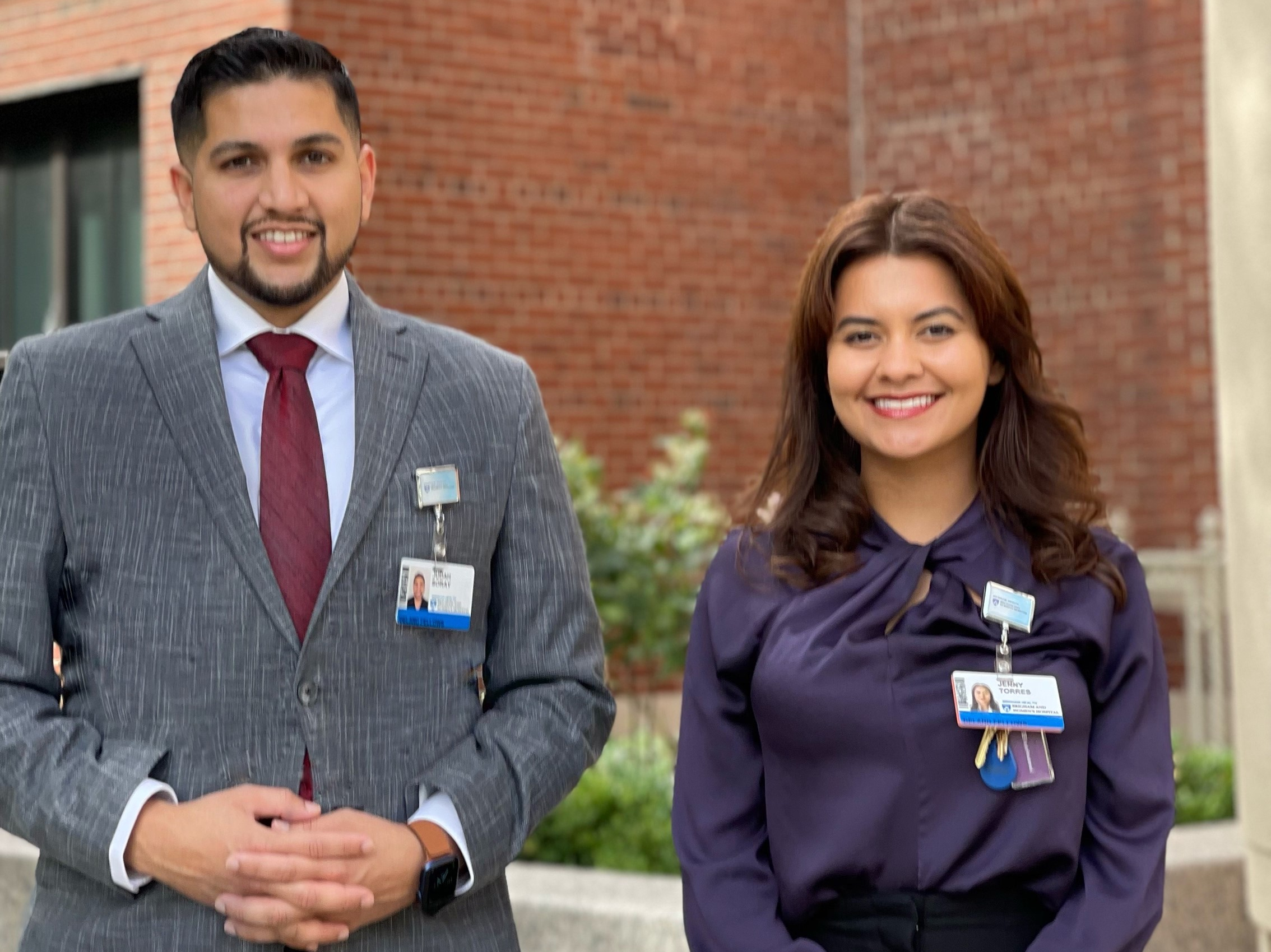
“It is deeply important that we remove the stigma surrounding SUD and work together to foster a supportive environment where nurses and other health care professionals can recover and safely work in their practice settings,” said Maddy Pearson, DNP, RN, NEA-BC, senior vice president of Patient Care Services and chief nursing officer at the Brigham. “Removing barriers to treatment for health care professionals is vital to their ability to seek support and ultimately deliver safe care to patients, which is our top priority.”

Pearson, who co-chairs the MGB Chief Nursing Officer Council, was among leaders of the system’s advocacy for this legislation in partnership with the Massachusetts Nurses Association, the Massachusetts Health and Hospital Association and the Organization of Nurse Leaders.

In addition to Pearson, MGB leaders involved included Chris Philbin and Kevin Sanginario of the Office of Government Affairs; Bernard Jones, vice president of Value-Based Care, Public Policy and Administrative Operations at the Brigham; Vanessa Gilbreth of the Office of General Counsel; and Regina Hagono, of Analytics, Planning, Strategy and Improvement at the Brigham.

“This was a collaborative effort among internal and external stakeholders, and we’re thankful to everyone involved for their efforts to secure the passage of this important bill that supports health care professionals,” said Philbin, vice president of Government Affairs.

Currently, nurses with suspected SUD are referred to the Substance Abuse Rehabilitation Program (SARP) through the Board of Registration in Nursing. The program has been underutilized, with 0.01 percent of the state’s nurses in enrolling in fiscal year 2018.

“The stringent eligibility criteria prevent nurses with a mental health history from applying, and wait times for the program are long,” said Pearson. “Additionally, if a nurse has a relapse, he or she must wait at least a year to request monitored re-entry into practice. We know relapse is a normal part of the recovery process, and it should be treated with the same understanding given to those who have relapses in treatment for other chronic illnesses.”

With the bill’s passage, the Department of Public Health (DPH) will establish a new, voluntary program for all licensed health care professionals who seek support for their mental health or substance use.  An advisory committee of external stakeholders will assist DPH in the development and implementation of the program with the goal of creating a best-in-class experience for participants.

“Our goals were to revamp the state’s program for nursing and to ensure that other health care professionals would also receive improved access to care and treatment,” said Gilbreth, senior legal counsel. “It’s critical that all health care professionals have the resources to receive care, recover and successfully return to their work.”

In addition to nursing, the bill also pertains to pharmacy, dentistry, nursing home administrators, physician assistants, perfusionists, genetic counselors, respiratory therapists, community health workers, naturopathy and emergency medical services. Physicians receive support through the Physician Health Services Program in Massachusetts.

“Other states have non-punitive programs that support nurses and health care professionals and provide the treatment they need to successfully return to practice,” said Pearson. “Massachusetts is renowned for the world-class health care we offer to patients and loved ones. We need to make sure we are also caring for our health care professionals and treating them with the same compassion they show each one of us when we find ourselves in their care.”

Jones noted the dedication of the individuals and organizations leading this effort.

“The passage of the bill is the culmination of nearly four years of work for those involved and is a perfect example of the important role our institutions can play in developing and, in this case, improving public policy,” he said. “This effort has included extensive research, the development of a white paper, and testimony at a public hearing, all to ensure that we have provided information and education around this issue in support of improved access to treatment and ultimately to change how the system works.”

From left: Deland Fellows Judah Soray and Jenny (Torres) Azzam

Each summer, the Brigham welcomes a new class of Deland Fellows in Health Care and Society. This one-year administrative experience prepares early-career professionals to lead health care institutions. Each fellow works closely with a member of the senior leadership team who serves as their mentor.

Jenny (Torres) Azzam, MBA

Hometown: Fontana, California

Executive mentor: Christina A. Lundquist, Senior Vice President of Clinical Services, Real Estate and Facility Operations

Previous roles: Clinical Operations Manager at Intelli-Heart Services and, most recently, Performance Excellence Administrative Intern at UCLA Health

What drew you to Brigham? I was initially drawn in by Brigham’s mission and vision of maintaining and restoring health and am particularly intrigued by our value proposition focused on scalable innovation. Brigham and Women’s Hospital is home to some of the most groundbreaking innovations, and as health care continues to evolve, I aim to be part of an institution with an embedded “change culture.” It is clear that the Brigham and Mass General Brigham continuously strive toward advancement for the well-being of our staff and patients as a system. Thus, the Deland Fellowship was the best opportunity to learn from all the brilliant leaders seeking change to build a healthier world.

What projects are you looking forward to working in during your fellowship? Improving access for patients is a driver for me. I am excited to get involved in performance improvement, operations and strategy work, allowing our patients to obtain timely, efficient and high-quality care while also focusing on improving their experience.

Fun fact about you: I am one of those strange individuals who enjoys running ultramarathons for fun!

Judah Soray, MHA, BPharm, CSSGB

Hometown: I’m originally from Trinidad and Tobago but have lived in Orlando, Florida, and Bristol, England, before moving to Boston for the fellowship.

Executive mentor: Sunny Eappen, MD, MBA, Chief Medical Officer and Senior Vice President of Medical Affairs

Previous role: I’m a trained pharmacist and worked in the retail setting before pursuing graduate school. Most recently, I interned at the Cleveland Clinic in International Operations.

What drew you to the Brigham? Health care is rapidly evolving, and there are many uncertainties about the future. I feel that the academic health care setting is most agile. With such a rich history of pioneering health care, the Brigham is ready to adapt and cater to future needs. Having met with the outstanding leadership team through the application process, I knew I wanted to join the Brigham and support its many dedicated, highly competent and skilled teams. Additionally, the opportunity to collaborate with senior leadership across the entire organization and tackle projects that fit both the organization’s mission and my goals were highly motivating.

What types of projects are you looking forward to working on during your fellowship? The collaborations currently underway across Mass General Brigham appeal to me, so I’m very much looking forward to working on areas that can expand access to more integrated care. My skillset plays well into the international services space, and I hope to help expand those efforts of providing care to patients most in need, both within New England and worldwide. I also hope to join our Patient Experience team in striving to improve the care continuum for every single patient, from admission to discharge and beyond. Another aspect of the Brigham I’m very interested in is our approach to climate and sustainability initiatives— mitigating health care’s impact on our environment, reducing our carbon footprint and helping shape a more environmentally conscious health care industry.

Fun fact about you: I hold nationality in three different countries: Trinidad and Tobago, the United Kingdom and the United States​

To learn more about the Deland Fellowship, visit brighamandwomens.org or attend an upcoming information session on Aug. 15, noon–1 p.m., or Sept. 12, 2–3 p.m.