Posts from the ‘Uncategorized’ category

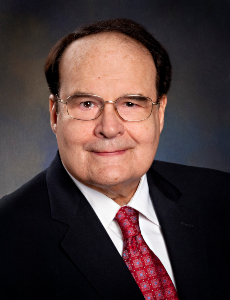
Brigham and Women’s Hospital mourns the loss of Martin C. Mihm Jr., MD, a physician, researcher and educator in the Department of Dermatology whose groundbreaking discoveries have saved lives and whose lifelong commitment to mentorship influenced generations of clinicians in the fields of dermatology, dermatopathology and pathology. He died on July 19, 2022 of a sudden illness at age 88.

An international expert on malignant melanoma, Dr. Mihm helped shape the way skin cancers are identified and diagnosed, and his discoveries and insights influenced the way these tumors are ultimately treated. Notably, he established the importance of tumor-infiltrating lymphocytes — a type of cell that can recognize and destroy cancer cells — in contributing to the prognosis of patients with primary and metastatic melanoma. He also collaborated with the late melanoma expert Wallace Clark, MD, to create the current clinical categories for melanoma: superficial spreading, nodular, acral lentiginous and lentigo maligna.

“This is a man who has saved countless lives, and I am forever grateful for the degree to which he has enhanced my own life as a mentor and friend,” said Dermatology research colleague Tobias Schatton, PharmD, PhD, who recently partnered with Dr. Mihm on a melanoma study. “Martin set the prime example of how to live with integrity and purpose.”

In addition to his tremendous contributions to science and medicine, Dr. Mihm had an equally profound impact on others with his joyful spirit.

“Beyond his credentials, accomplishments, publications and degrees, Marty was a warm, funny, kind and generous man,” said Thomas Kupper, MD, chair of Dermatology. “His enthusiasm was palpable and infectious. He could make a microscope slide image come alive with subtle insights that, once pointed out, were obvious. He was also considerate, taking time to know the names of all the residents and students in the program and to learn about people around him. He truly was one of a kind — the sort of character who comes along rarely, like a comet leaving light and brilliance in his wake.”

Colleague and friend Jennifer Lin, MD, director of the Melanoma Risk and Prevention Clinic, reflected that Dr. Mihm was always ready to share his experiences and words of encouragement with those around him.

“He had a kind word for everybody,” Lin said. “His enthusiasm and positivity were contagious — and made coming to work so wonderful.”

Dr. Mihm’s passions for life and medicine often intertwined. Lin recalled that Dr. Mihm and Dr. Clark named the “superficial spreading” category of melanoma after sharing the morphological pattern of this lesion with students from the Boston’s Museum of Fine Arts and learning of a painting with similar morphology.

“That he could share his gifts and brilliance with us was a truly wonderful experience, and we are all better for it,” said Kupper.

Dr. Mihm was dedicated to promoting education and mentorship throughout his career. Beginning in 1974, he served as chief of the Massachusetts General Hospital Dermatopathology Unit, where he founded one of the first five dermatopathology training programs in the United States. In 1993, he joined the faculty of Albany Medical Center to establish a new dermatology and dermatopathology training program there.

“Through his mentorship and training for generations of residents, fellows and faculty, Martin’s impact will continue to grow exponentially,” Schatton said.

Beginning in 2010, Dr. Mihm served as director of the Melanoma Program in Dermatology and the Dana-Farber Brigham Cancer Center. He was also the founding director of the Mihm Consultative Service in Dermatopathology.

Over the course of his career, Dr. Mihm’s commitment to patient care inspired his work to make health care, particularly cancer treatment and prevention, more widely accessible. He was a co-founder of the Rare Tumor Institute of the World Health Organization in Milan, Italy, before acting as its external coordinator for five years, and he also helped establish clinics in Albania, India, Italy, Russia and Vietnam. Most recently, he served as co-director of the European Organisation for Research and Treatment of Cancer’s Melanoma Pathology Program.

Adriano Piris, MD, co-director of the Mihm Cutaneous Pathology Consultative Service, met Dr. Mihm after coming to Massachusetts General Hospital for his first dermatopathology rotation. Dr. Mihm soon became an important force in his life, as an inspiring mentor and a dear friend. Piris was honored to eventually work with Dr. Mihm as co-director of the Consultative Service.

“Words cannot express the meaningful impact Dr. Mihm had on my career. Over the years, he became a close friend and a family member. He embodied the concept of true mentorship and friendship for life,” Piris said.

Colleagues and friends noted that Dr. Mihm always remained committed to helping others and acting as a positive influence in people’s lives.

“Up until the final days of his life, he was committed to helping others through his unparalleled kindness, knowledge and compassion,” Schatton said. “Martin’s warmth to everyone around him, without exception, made him a very rare individual, and his absence will be felt by many.”

Dr. Mihm is survived by his cousins, godchildren and loving friends.
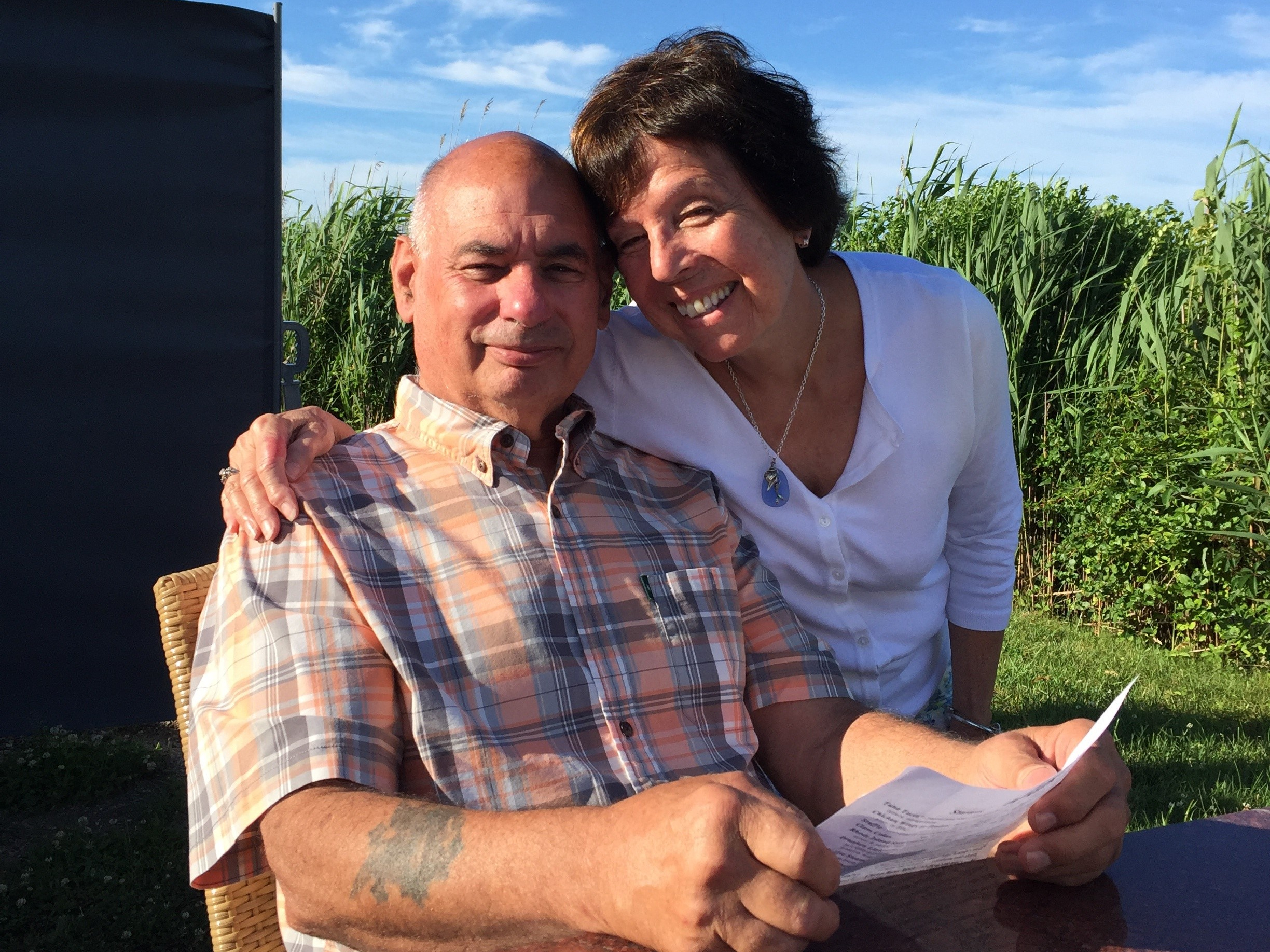
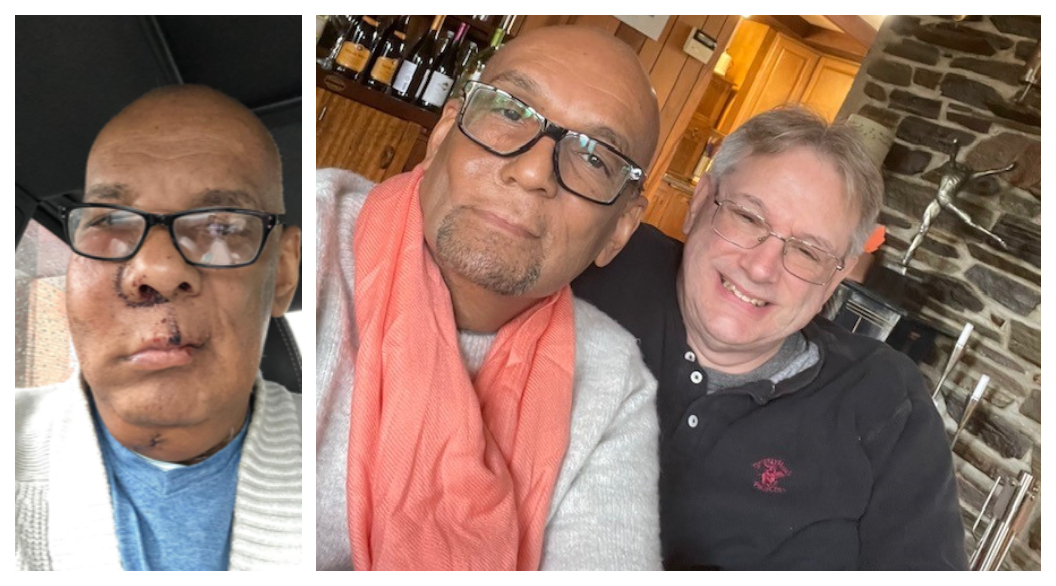
Laurie Mott with her husband, Ron, prior to her injury.

Laurie Mott was preparing a big family dinner one day in April when she experienced a terrifying emergency. “I had the table set and everything ready,” she recalled. “I reached over the boiling potatoes to grab the onion powder for the gravy, and that’s when my shirt caught fire.”

Despite the shocking turn of events, Mott — who was one of the first women to volunteer as a Boston firefighter and is also married to a retired firefighter — acted on instinct as she extinguished the flames and called 9-1-1. She was transported to the Brigham’s Burn Center, where she remained for 16 days to recover from the injuries she sustained.

During her time at the Brigham, Mott was eager to understand her condition. She asked her care providers to explain the possible treatments for the burns that extended over her upper body and learned from the nurses on her team how to dress and clean her burns, working hard to participate in her treatment plan.

“She was so sweet and very interested in learning about her condition and her own role in her healing,” said Mary O’Neill, RN, one of the members of Mott’s care team.

We care. Period. logo

Providers informed Mott that a skin graft operation could significantly reduce her chance of infection, decrease her recovery time and improve her overall health care outcomes.

At first, Mott had reservations about the surgery. Not only did she hope to return home as soon as possible, but due to burns under her arms, the operation, which would involve a transplant of healthy skin from other areas of her body to the skin affected by burns, would require one of her arms to remain extended for five days following the operation. Mott worried about discomfort and limitation to her mobility.

Anupama Mehta, MD, medical director of the Burn Center and Mott’s physician, listened, explained all treatment options and then encouraged and empowered Mott to pursue what she felt was the right treatment for her. “Understanding a patient’s lifestyle and where they’re coming from is important when creating individualized, relevant treatment plans,” Mehta said.

Delivering Patient-Centered Care

Being considered an essential member of her own care team made Mott feel more comfortable with the idea of undergoing surgery, she explained. She felt particularly comforted by O’Neill, who supported Mott as she adjusted to caring for her burns and helped answer her questions. When she first saw her burns and worried about what her treatment plan might be, Mott recalls tears coming to her eyes, but she felt reassured by O’Neill, who said, “This is your body. You’re involved in taking care of it.”

After discussing all options with her care team, conducting her own research on the operation and witnessing the collaboration and mutual respect among the members of the Burn Center, Mott elected for the skin graft.

She recalled feeling reassured by the high regard that care providers showed to one another at the Brigham. “Everyone respected each other and played such a wonderful role in my experience,” Mott said. “After I decided to proceed with the procedure, I felt relieved because I was sure it was the right thing to do,” she said.

In thinking back on her time at the Brigham, Mott fondly remembers the kindness her providers showed her. Lauren Pozerski, RN, would bring Mott cups of tea from the nurses’ station after noticing her love for the beverage. When her hands were bandaged, the patient care associates helped her eat. “The little things really made a difference,” said Mott. “They treated me so well. I can’t say enough about them.” Mott was moved to write letters to her physicians and nurses before leaving the hospital, thanking them for their care.

This summer, Mott celebrated her 70th birthday at home, surrounded by her family. While Mott faces obstacles as she continues to recover, she is glad to be home with the support of her loved ones. For now, she is enjoying her husband’s cooking — and looks forward to preparing and sharing a meal with her children when she’s ready to return to the kitchen.

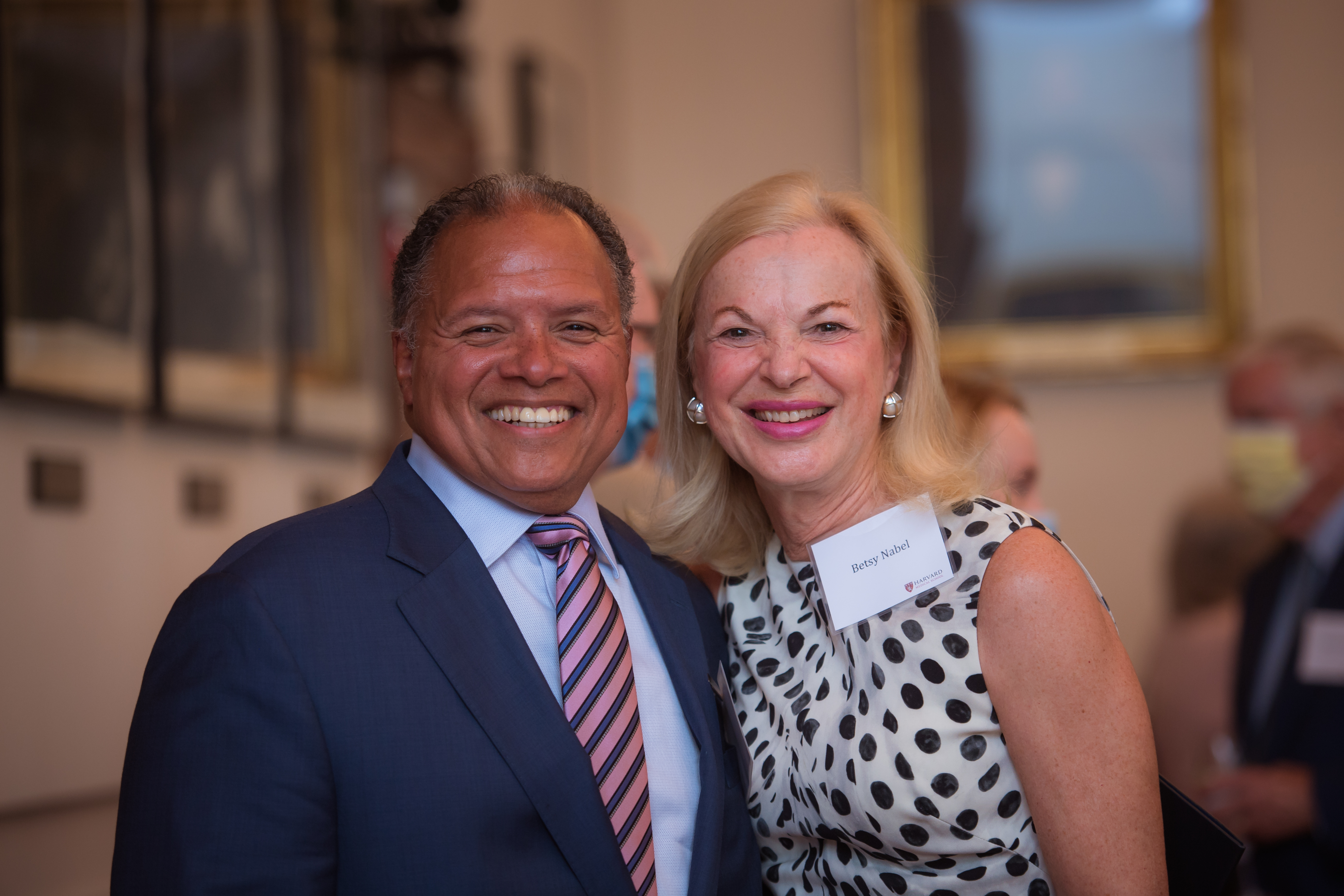
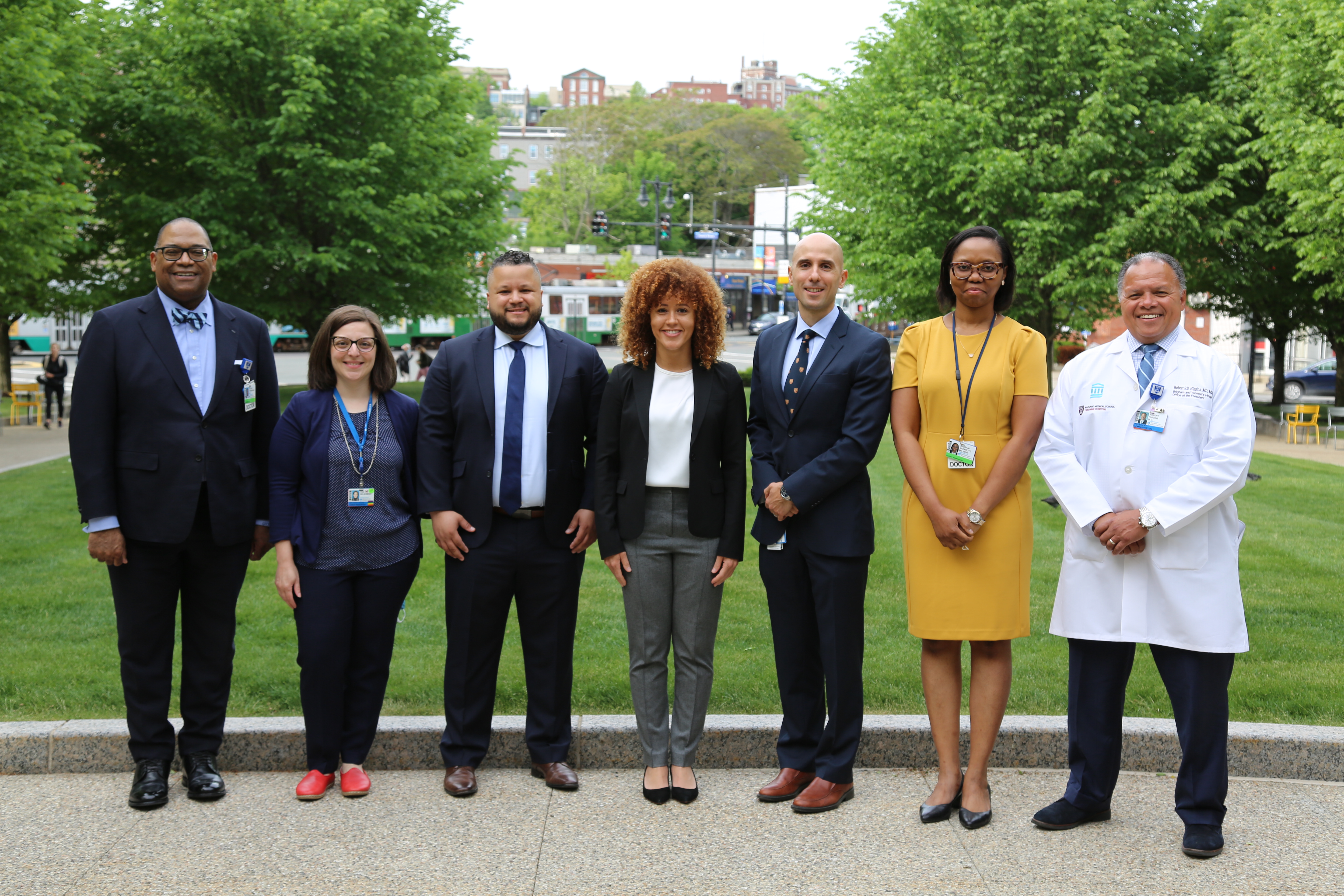
“No doubt, Dr. Higgins will make a far-reaching impact and nurture the Brigham’s strengths into the future,” says former Brigham President Betsy Nabel (right) of her successor, Robert S.D. Higgins (left), who was honored at a July 25 event.

On July 25, more than 100 guests gathered to celebrate The Elizabeth G. and Gary J. Nabel Family Professorship in Surgery at Harvard Medical School (HMS) and its inaugural incumbent, Brigham President Robert S.D. Higgins, MD, MSHA.

This endowed professorship, which is the highest honor HMS can bestow on a faculty member at one of the school’s affiliated institutions, will stand in perpetuity and be held by the president of Brigham and Women’s Hospital. The professorship is named for former Brigham President Betsy Nabel, MD, and her husband, Gary Nabel, MD, PhD, who made a $1 million gift to support its creation and were joined in their generosity by several Brigham Board of Trustees members.

Higgins — who was lauded for his exemplary leadership, pioneering contributions to surgery and research, and tremendous dedication to mentorship and service — described the appointment as “the honor of a lifetime.”

“It’s a privilege to build and expand on the great work of my predecessor, Dr. Betsy Nabel, whose leadership elevated the Brigham to new heights as a premier academic medical center during her impressive tenure,” Higgins said. “Betsy left an indelible mark on the Brigham, and as the steward of this generous gift, I hope to ensure these resources advance our clinical and research enterprise.”

Nabel said she looks forward to seeing Higgins lead the Brigham into its next great chapter.

“By creating this professorship honoring the Brigham president in perpetuity, it’s our collective hope the institution continues to grow better every day,” she said. “No doubt, Dr. Higgins will make a far-reaching impact and nurture the Brigham’s strengths into the future.”

Attendees of the July 25 celebration included hospital leaders, invited speakers, and the Nabel and Higgins families and loved ones. Throughout the evening, guests were treated to warm remarks and stories that highlighted Higgins and the Nabels as leaders, innovators and mentors — and also showcased the collective strength of the Brigham community.

HMS Dean George Q. Daley, MD, PhD, kicked off the celebration, which included remarks by Board of Trustees Chair John Fish, who presented Higgins with a proclamation celebrating and recognizing Higgins’ many achievements.

In addition to the evening’s three guests of honor, other speakers included Gerard M. Doherty, MD, chair of the Brigham’s Department of Surgery and surgeon-in-chief, and Jeffrey Leiden, MD, PhD, executive chairman of Vertex Pharmaceuticals and an alumnus of the Brigham’s residency and fellowship training programs. Daley also read heartfelt remarks from TIMI Study Group Chairman Eugene Braunwald, MD, in his absence, and Brigham primary care physician Thomas H. Lee Jr. MD, and William A. Baumgartner, MD, one of Higgins’ mentors, shared words of praise and congratulations.

Reflecting on his first several months as president, Higgins said the inspiring and welcoming community he found here has exceeded his expectations in every way.

“Throughout my career, I’ve always known the Brigham to be a special place — a place of innovation and inquiry, compassion and caring, and academic rigor and unparalleled mentorship,” Higgins said. “Now that I’ve had the opportunity to experience this community firsthand, I am impressed by the talent, ingenuity, dedication and expertise that exist throughout every corner.”

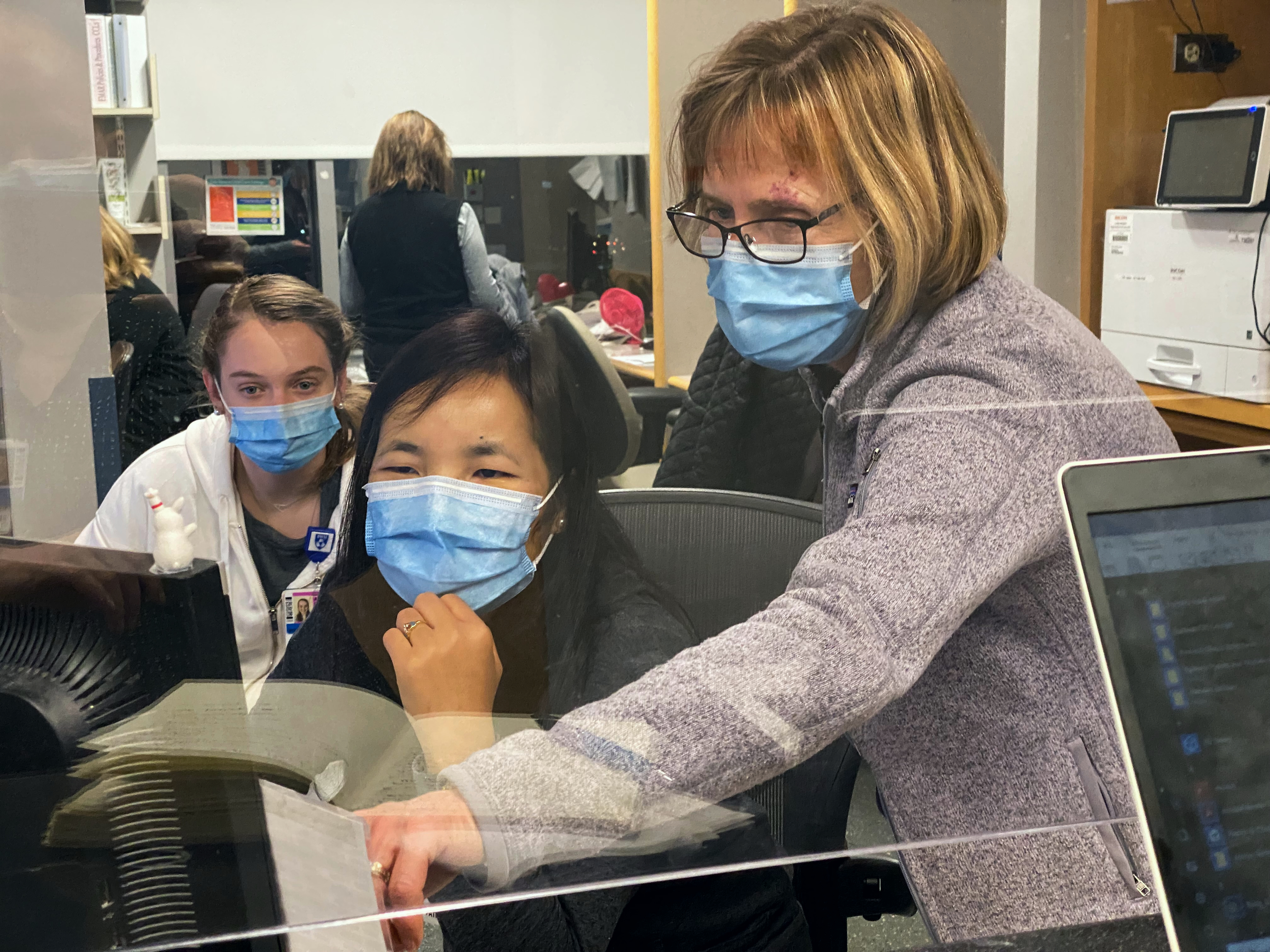
From left: Unit coordinators Allison Mulhern and Dhanani Gurung with Anne Bane during the Voalte implementation in the Connors Center for Women and Newborns in 2021

When Barbara Lakatos, DNP, PMHCNS-BC, APRN, and Christine Murphy, PMHCNS-BC, CARN-AP, are providing psychiatric nursing consultations on inpatient units, they often need to page a staff member and wait for a return call before they can move to their next patient on another unit.

We pursue excellence logoThat’s no longer the case, thanks to the rollout of Voalte, a communication tool that enables HIPAA-compliant texting and voice calls among staff. Launched previously in limited areas of the hospital, Voalte was recently implemented throughout inpatient areas and roles to connect staff in a unified directory. The implementation was made possible thanks to funding from the Caregivers Fund, which provides critical resources to support Brigham employees’ well-being and address emerging needs.

“Voalte has improved our ability to communicate with team members as we move between units,” said Lakatos, who serves as program director of the Psychiatric Nursing Resource Service with Murphy. “We can call, text and page from the app, which streamlines communication and decreases redundancy.”

Christine Wang, MD, a resident in the Department of Medicine, also noted the increased efficiency and positive impact on patient care.

“It’s so easy to check in and close the loop with nurses and other providers on the clinical team, and it decreases any waiting time because Voalte is at our fingertips,” she said. “It also improves quality of care for patients because we’re able to work through issues together as a team in real time.”

A Convenient Way to Connect

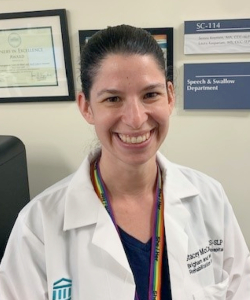
Speech language pathologist Stacey McCauley says Voalte has made daily communication more convenient for staff.

Following the most recent rollouts of Voalte in July, 3,800 staff are now experiencing the benefits of the mobile technology.

After signing into Voalte, staff can look up patient names, medical record numbers and bed/room numbers. Staff can see the care team members for each patient, initiate a call or text and confirm when the recipient has received and read a message. Voalte also indicates if a care team member is offline.

Additionally, the app includes quick references — such as paging, drug administration guidelines and Ellucid policy links — to facilitate workflow.

As of July 22, staff have sent an average of 10,077 texts and placed approximately 580 calls per day with Voalte, with about 860 active users per day.

“It’s very convenient to be able to send a message via Voalte without having to log into a computer,” said Stacey McCauley, MS CCC-SLP, speech language pathologist in Rehabilitation Services.

The Speech Language Pathology team began using Voalte earlier this spring and created a daily group message to stay in touch about new consults and other timely information. “We’ve been looking forward to more staff joining so we can easily communicate with other members of the interdisciplinary team,” McCauley said.

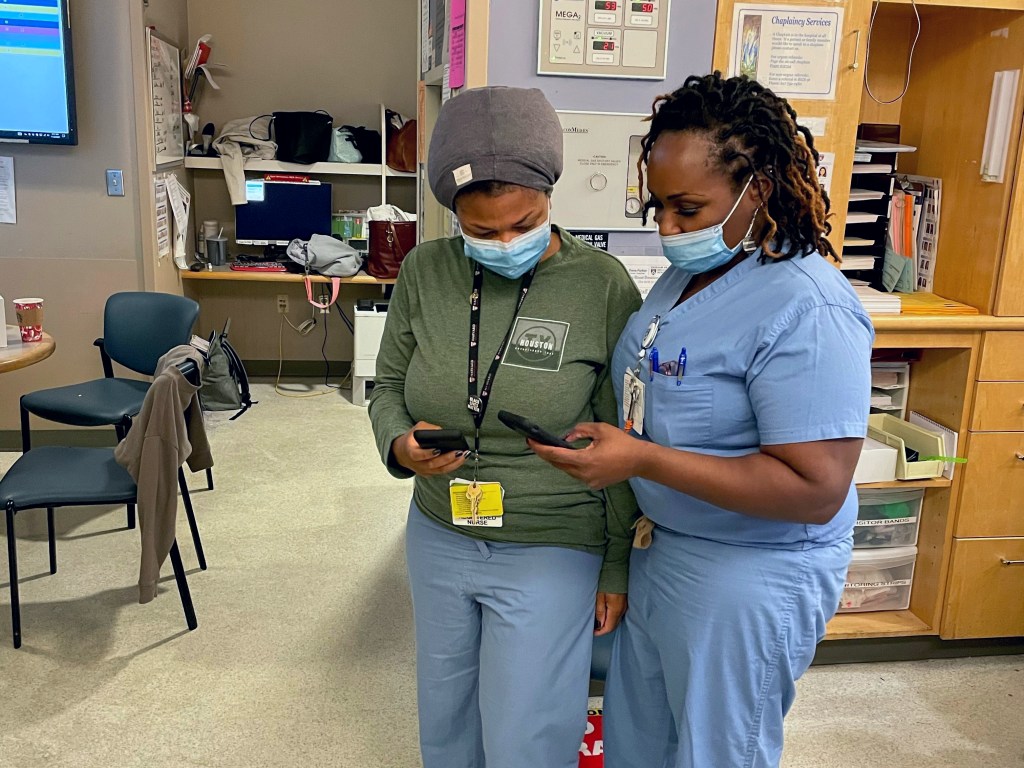
“The conversations are happening in real time,” says nurse Jessica Ruxton.

Staff in Pharmacy Services had a similar experience.

“Voalte has been particularly well-received by pharmacists, as it has allowed for easier and more efficient communication with other members of the health care team, as well as with colleagues within the Pharmacy,” said Jeremy Degrado, PharmD, BCCCP, BCPS, clinical pharmacy manager.

Maddy Pearson, DNP, RN, NEA-BC, senior vice president of Patient Care Services and chief nursing officer, noted Voalte’s positive impact on the ways staff communicate and collaborate. “Our goal was to improve the experience of staff and providers and streamline the way we communicate with colleagues and across different teams,” she said. “It’s wonderful to hear from our teams that they are already noticing a difference in workflow. We’re also grateful for constructive feedback that will help us refine our processes as we move forward.”

Recent Rollouts

Over the past two weeks, the implementation team launched the tool in numerous inpatient units and departments in two large waves.

Jessica Ruxton, BSN, RN, and Rachel Colby, BSN, RN, shared that the rollout on Shapiro 9/10 went smoothly and that they are already experiencing the benefits of Voalte.

“The feedback has been nothing but positive,” says nurse Rachel Colby.

“Voalte allows for closed-loop communication with the whole multidisciplinary team,” said Ruxton. “The conversations are happening in real time, allowing non-urgent concerns to be addressed sooner with prompt response time, putting our patients’ minds at ease.”

Colby agreed. “Voalte is fabulous,” she said. “So far, the feedback has been nothing but positive. Everyone is loving the easy use and quick way of communication.”

During the July implementation, staff received support from the Voalte team, Nursing Informatics, nursing leadership and a group of “go-live” volunteers.

“The rollouts have gone very well, thanks to everyone’s efforts,” said Anne Bane, MSN, RN, director of Nursing Informatics and Medication Safety. “We heard overwhelmingly positive feedback from staff.”

Bane and Jenni Theriault, director of Strategic Initiatives for Brigham Digital, co-led the implementation in collaboration with Mallika Mendu, MD, MBA, associate chief medical officer, Charles Morris, MD, MPH, deputy chief medical officer and vice president of Medical Affairs, Mike Clyne, manager of mobile technology for BH Digital, and Catherine Schroeder, deputy chief information officer.

“I want to thank Anne, Cath, Jenni, Chuck, Mike and Mallika for leading this effort, as well as all staff for embracing the technology and sharing their feedback to help us continually improve,” said Adam Landman, MD, chief information officer and senior vice president of Digital for Mass General Brigham. “For a project this size, the rollout has gone very smoothly, and we’re excited to already be hearing from staff about how it is benefiting their workflow, improving communication and, ultimately, enhancing the delivery of care.”

Building on Success in the Connors Center

From left: Labor and Delivery nurses Catrina Pitts and Chanel Daly try out Voalte during the CWN rollout last year.

Some areas previously implemented Voalte, including the Neonatal Intensive Care Unit about five years ago and mother and baby units throughout the Mary Horrigan Connors Center for Women and Newborns (CWN) last fall.

Renee Zaya, BSN, RN, said that the tool has made an immense difference in the day-to-day experience of nurses. “Voalte has been one of the biggest positive changes for communication on postpartum units in years,” she said.

Previously, with the paging system, nurses would spend a lot of time waiting for return calls from physicians and other staff not based on the postpartum units. “It’s almost like texting from your phone,” Zaya said. “These messages can save so much time in your day as a nurse that you can be spending with your patients instead of waiting at the phone for a call back.”

For example, when a patient is experiencing increased pain and requires a new medication order, nurses can message the physician, communicate back and forth, have the orders placed during the process and receive pharmacy approval quickly — all via Voalte.

“In the old system, we would have to page the doctor, wait for the call back, let the doctor know what we need and then wait for the orders,” said Zaya. “The result with Voalte is that the patient receives the medication more quickly, which is the most important thing — providing safe, quality patient care.”

For more information on Voalte, visit this page.

Kris Gagnon, pictured over the years with New Kids On The Block (NKOTB) singer Donnie Wahlberg, chronicles her 300-pound weight loss over 2015, 2017, 2019 and 2022. Gagnon is a huge fan of NKOTB.

After years of living with obesity and feeling uncomfortable in her own skin, Kris Gagnon visited the Brigham’s Center for Weight Management and Wellness in 2016 to learn more about her options. She was screened by the center’s surgeons, psychologist and dietitians, who agreed that bariatric surgery could help improve her health over the long term.

Six months later, Gagnon underwent the surgery and lost more than 300 pounds over the next six years.

“I’ve lost more weight than most people weigh themselves,” Gagnon said. “I’m living my best life because the Brigham gave me a second chance.”

The skills and resources Gagnon received at the Center for Weight Management and Wellness provided the support she needed for her successful weight-loss journey.

By focusing on the physical, mental and emotional aspects tied to successful weight loss, the Center for Weight Management and Wellness takes a comprehensive approach to weight management. Unlike many institutions, the Brigham has a three-pronged program — combining bariatric surgery, endoscopic bariatric approaches and obesity medicine — with each component led by world-class experts.

We care. Period. logo“The center is the reason for my success,” Gagnon said. “No hospital compares to the care we get here. These doctors truly have a dedication and passion for helping patients live healthy lives. This is one of the few programs that follows us for life, and I can access them and their resources for as long as I want. I see my surgeon twice a year, a psychologist anytime I need to and a dietitian every week.”

Endoscopic dietitian Catherine Page, MEd, RD, CDE, recalled how committed Gagnon was to making lasting changes to meet her weight-loss goals.

“Kris is probably one of the most motivated and driven patients I’ve ever worked with,” Page said. “I was always incredibly impressed with how dedicated she is to her health. Anytime I gave her a suggestion, or when we came up with an idea together, she would take it and run with it.”

Dietitians help patients stay on track before surgery and after their recovery. Page explained their team’s dietitians typically first meet with patients monthly for the six months before their surgery, helping them establish healthy habits and a different approach to food, as well as an understanding of meal planning, balanced meals and food shopping. They continue to meet with patients in the immediate post-operative period and over the long term to establish a sustainable plan for maintaining their progress.

Bariatric surgery aids in weight loss in more ways than one. “Because of the changes to the stomach, bariatric surgery not only makes the stomach smaller, but also affects the hormones that control satiety — your sense of fullness and hunger — and how we process and digest food,” added Page.

“Bariatric surgery is also one of the top treatments for cardiac and orthopaedic issues,” added Scott Shikora, MD, FACS, director of the Center for Weight Management and Wellness. “It can put diabetes or high blood pressure in remission or get rid of them altogether. These are very low-risk procedures with the lowest complication rates of all abdominal surgeries. The benefits of the operation dramatically outweigh the risks.”

Since her surgery, Gagnon appreciates the benefits on a daily basis. “Standing in the elevator used to make me winded,” she said. “Now, I walk up five flights of stairs instead of using the elevator.”

Determination and Dedication

In addition to having a supportive care team, Gagnon has shown what one can accomplish with determination. “Once you’re declared a candidate for bariatric surgery, you have to prove you will change your lifestyle for six months before surgery,” Gagnon explained. “You have to change your life and relationship with food. It’s challenging, but you can do it.”

After Gagnon suffered a serious hemorrhagic stroke in 2011, she gained 300 pounds rapidly. “Rapid weight gain is common after serious illnesses or accidents,” explained Page. “A lot of it has to do with stress on the body, which can cause a lot of inflammation and lead to weight gain. In Kris’ case, she also wasn’t able to exercise to the manner she was before she had the stroke. On top of that, she had dietary changes because the stroke created some chewing and swallowing issues that had to be addressed. Certain medications that decrease infection risk can also cause weight gain, as well.”

Gagnon’s first bariatric surgery was a laparoscopic sleeve gastrectomy, which was later converted to a gastric bypass to help alleviate her chronic case of gastritis and acid reflux, the latter of which she still manages. “It was not an easy road for her, but she fought and accomplished what I would have never predicted,” said Shikora. “Despite her challenges, she would always come into the clinic smiling and happy. She’s a real fighter.”

Gagnon hopes her success inspires others who are interested in bariatric surgery. “If I can do it, anyone can. You will have hard days, but every struggle will be worth it,” she said. “It’s the most rewarding thing you will ever do for yourself.”

From left: Bill Martin-Doyle and Holli Murray co-teach a session on alcohol withdrawal in 2019.

As she began her residency at the Brigham, Marina Zambrotta, MD, MEd, often thought of the advice her mother, a nurse, had given Zambrotta while she was in medical school: Listen to the nurses.

She carried those words with her daily — and nightly, as it turned out.

“I remember being on nights in the ICU as an intern at the Brigham and learning just as much, if not more, from my ICU nurse colleagues as I did from my attendings, fellows and co-residents,” said Zambrotta, now an internist with the Indian Health Service in Shiprock, N.M., and an affiliate physician for the Brigham.

So, when Zambrotta was awarded a medical education fellowship in her second year of residency and tasked with conceptualizing and designing a new medical education program, she didn’t have to think twice about her proposal: Invite nurses to share their expertise with residents in a more structured way.

That kernel of an idea turned into the Nurse-Doctor Co-Teaching Program, which pairs staff nurses with attending physicians to co-lead educational sessions on various clinical topics for residents and other interested staff. First launched as a pilot in the General Medicine Service (GMS) in 2019, the program has since expanded to Medical Oncology and the Emergency Department.

“There’s a historic hierarchy in medicine, and it’s something doctors get exposed to starting in medical school. We need to prioritize breaking down that hierarchy by listening to all of the valuable experience and knowledge that nurses have to share,” Zambrotta said. “It’s really important to emphasize this as early as possible in medical training so that interns who are told and expected to listen to their attendings also listen to and equally value nurses’ input.”

Marly Diallo, BSN, RN, a staff nurse in GMS on Braunwald Tower 14CD who has co-taught several sessions, said participating in the program provided an opportunity to expand her own skills while also strengthening interdisciplinary relationships on the unit.

“I enjoy teaching, and it’s something I do almost every day precepting new nurses, so I thought this was a good opportunity to do more of that and improve the way that we communicate as doctors and nurses,” she said. “As we get new interns and residents throughout the year, that mutual respect is something we always want to reinforce so that we continue to have a culture where we approach each other in the same way.”

Hospitalist Bill Martin-Doyle, MD, who co-teaches sessions on caring for patients exhibiting symptoms of alcohol withdrawal, agreed that the program has been a shining example of enhanced multidisciplinary collaboration.

“It was immediately apparent to me, right from the start, what a great idea this was and the kind of thing that makes you think, how come this hasn’t been happening the whole time?” he said. “There are so many clinical topics where we might have different viewpoints and understandings of the nitty-gritty details, and it’s been fantastic to get everybody in the same room and speaking the same language.” 

In the process of preparing for and conducting the sessions with her physician co-instructors, Diallo said she felt it was an informative experience for both clinicians — and one that can ultimately enhance care in the long run. For instance, in co-teaching a session on arterial blood gas tests, Diallo said she received a greater understanding about the thought process behind a physician ordering the test and interpreting the results.

“For me, it wasn’t just about teaching residents. It’s a learning opportunity for all of us. Let’s say I’m back on the unit and another nurse or nursing student has a question about arterial blood gases, I feel like I can provide a more informed answer,” Diallo said. “It always comes back to the patients, too. The more I know, the better I can communicate with my patients about their care.”

‘We Insisted on Equality’

While the content of the sessions is rigorously evidence-based, the program seeks to cultivate a relaxed atmosphere and create a fun learning environment that bucks convention, explained Helen Shields, MD, a faculty member of the Division of Medical Communications and the Division of Gastroenterology, Hepatology and Endoscopy, as well as the program’s course director.

In place of dry PowerPoint presentations, attendees participate in interactive activities, including Family Feud-style competitions to test their knowledge and contests to redesign catheters. The sessions are also intentionally kept brief — 30 minutes, as opposed to the typical hour-plus format of an academic lecture — to keep everyone engaged.

Marly Diallo (upper right) and David Rubins (upper left) co-teach a virtual session on arterial blood gases in 2020.

But behind the breezy exterior is a serious commitment to achieving the program’s original vision of presenting nurses’ and physicians’ unique viewpoints, Shields said.  

“The big value was showing the equality of the knowledge and skillsets, but we had to tease out what were the expert areas of the nurse versus the doctor, then unify them and link them — not just the nurse lectures here and the doctor lectures here. They go back and forth in a complementary manner,” she said. “We insisted on equality from the get-go, and the nurse’s name always comes first in the list of presenters as a sign of that respect.”

Madelyn Pearson, DNP, RN, NEA-BC, senior vice president of Patient Care Services, chief nursing officer and the Beth V. Martignetti Distinguished Chair in Nursing, said this kind of interdisciplinary exchange is invaluable to all members of a care team. 

“Nurse-doctor co-teaching teams are one important way we can bring disciplines together, learn from one another’s perspectives and ultimately enhance the care we deliver,” Pearson said. “This kind of collaboration is more important than ever, given the intense challenges that we continue to face in health care.”

Holli Murray, MSN, RN, PCCN, a staff nurse on 14CD who co-taught the session on alcohol withdrawal with Martin-Doyle, said the program has helped improve collegiality between the two disciplines. While physicians and nurses may work on the same unit, differing shifts and rotations can mean that they don’t have much time to get to know one another. Coming together for these sessions provides an important opportunity to mingle in a more casual setting, Murray said.

“Anytime I can, I try to interact more with the doctors to build those relationships so that later I’m more comfortable speaking up about something,” she said. “I also don’t necessarily feel like I’m instructing the doctors, but I think it’s helpful for them to understand that, as a nurse, I might have different concerns around the patient’s safety and comfort.”

For Zambrotta, it has been exceptionally rewarding to see her original vision come to life. In addition to its expansion to units beyond GMS, the program has also been spun off into a Harvard Medical School course, “Nurse-Doctor Co-Teaching,” to train future medical educators in developing nurse-doctor co-teaching programs. (The next course will be held virtually on Sept. 23.) Zambrotta also hopes to expand the Brigham program to include additional allied health professionals as co-instructors.

“What I was hoping with the initial pilot study on GMS was that interns and residents would feel more comfortable seeking out knowledge and teaching from the nurses on the floor and, vice versa, that the nurses would feel comfortable going up to the interns and saying, ‘Hey, I have a question about this order,’” she said. “Rather than coming from a place of ‘one more page I have to respond to,’ it opens up a more friendly line of communication.”

Once again, Brigham and Women’s Hospital has been recognized as a top hospital in the 2022 U.S. News & World Report’s annual ranking of the best U.S. hospitals. The Brigham was ranked 14th by the publication, while its Obstetrics & Gynecology specialty was named the best in the country — a noteworthy affirmation at a time when access to reproductive health services is being challenged across the U.S. In all, four specialties earned a spot in the top 10 and three specialties made the top five.
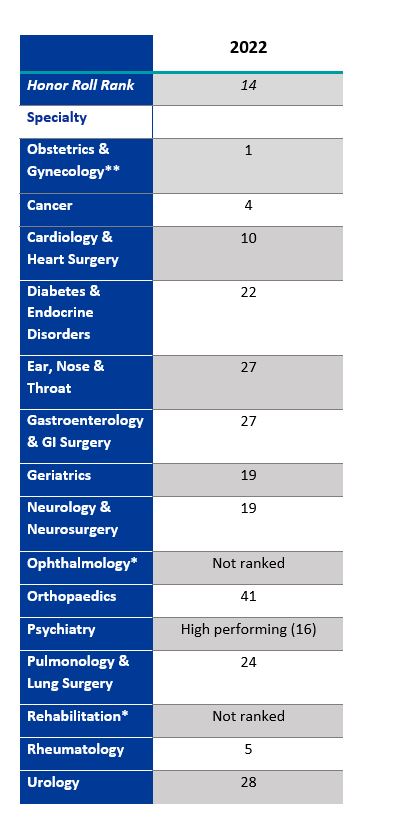

The Brigham was also ranked in 12 of the 13 specialties it is eligible to be ranked in, out of a total of 15 specialties rated by U.S. News. In addition to the top ranking for OB-GYN, the Dana-Farber Brigham Cancer Center ranked fourth in cancer, Rheumatology was fifth and Cardiology & Heart Surgery was 10th. Additionally, the Brigham earned the publication’s highest distinction in 18 of the 20 most serious and complicated medical conditions and procedures.

“These rankings are a reflection of the tremendous talent here at the Brigham, as well as our employees’ incredible commitment to our patients and their families,” said Robert S.D. Higgins, MD, MSHA, president of the Brigham and executive vice president at Mass General Brigham. “Through innovative research, comprehensive care and collaboration across our many specialties and disciplines, these rankings are a testament of our dedication to our mission and commitment to provide compassionate and high-quality health care for every patient.”

Nawal Nour, MD, MPH, chair of the Department of Obstetrics and Gynecology, said it was an honor for the department to receive such a prestigious recognition.

“There is a deep commitment and long legacy of support for women’s health care at the Brigham, and we are thrilled to be recognized as the top OB-GYN specialty in the country,” Nour said. “Our specialty is dedicated to ensuring high-quality, comprehensive and equitable patient-focused care to all of our patients, while recognizing each of their individual, and often very personal, needs.”

The annual ratings were developed to help consumers determine which hospitals provide the best care for challenging or complicated health conditions and for common elective procedures. They are based on a point system derived from a comprehensive nationwide evaluation of nearly 5,000 medical centers in 15 adult specialties and 20 procedures and conditions.

Several other Mass General Brigham hospitals were also honored by U.S. News & World Report. Massachusetts General Hospital once again earned a spot on the Honor Roll among the top hospitals in the country. Three Mass General Brigham specialty hospitals — McLean Hospital, Spaulding Rehabilitation, and Mass Eye and Ear — were recognized for national excellence. McLean Hospital was ranked No. 1 in the nation in psychiatry. Spaulding Rehabilitation is No. 1 in rehabilitation in New England and ranked No. 3 in rehabilitation in the nation. Mass Eye and Ear is No. 1 for otolaryngology (ear, nose, and throat care) and ophthalmology in New England and ranked No. 4 for both otolaryngology and ophthalmology in the nation.

Additional details about the U.S. News & World Report ranking system can be found here. The complete listing of America’s Best Hospitals can be found here.

By the Numbers: Rankings by Specialty

*Brigham is not eligible to be ranked in Ophthalmology or Rehabilitation. Mass Eye and Ear, which is tied to MGH for Honor Roll Purposes, ranked No. 4 for Ophthalmology. Spaulding, which is tied to MGH for Honor Roll purposes, ranked No. 3 for Rehabilitation.

** 2021 ranking is based on Gynecology only. 2022 includes both Obstetrics and Gynecology.

Brigham and Women’s Hospital mourns the loss of Robert Osteen, MD, a cancer surgeon and educator whose contributions to the field of surgical oncology influenced generations of surgeons. He died July 14 from complications following a recent injury. He was 81.

With a remarkable tenure spanning almost 50 years at the Brigham, Dr. Osteen established himself as a leading expert in surgery for tumors of the pancreas, liver, stomach, esophagus, colon, breast and other organs. Throughout his career, he served as an influential and beloved surgeon, teacher and mentor. Gifted with a sharp mind, colleagues frequently consulted Dr. Osteen for clinical guidance. Although he retired from clinical practice in 2006, he remained engaged in the instruction and mentorship of students and trainees.

“Bob Osteen had a huge presence at the Brigham and beyond,” shared David Brooks, MD, former director of Minimally Invasive Surgery and program director of the Advanced Minimally Invasive Fellowship. “Despite having long since stopped operating, he was at our Wednesday morning Morbidity and Mortality conference nearly every week, adding sage advice, challenging the residents and staff and generally providing wonderful gravitas to the meetings. His surgical wisdom was always valued. He will be greatly missed by all who knew him.”

Gerard M. Doherty, MD, surgeon-in-chief and Crowley Family Distinguished Chair of Surgery, reflected on the countless lives that Dr. Osteen touched over the course of his illustrious career.

“Few of us can hope to have the impact on those around us — co-workers, trainees, patients and others — that Dr. Robert Osteen had,” Doherty said.

Colleagues remembered Dr. Osteen not only as a great surgeon but also a great teacher — one who inspired others both personally and professionally with his guidance and wisdom. In recognition of his lasting influence on surgical education, the Department of Surgery established a Junior Faculty Fellowship Award in his honor in 2006.

“Dr. Osteen was one of our most respected and active teachers,” added Doherty. “After retiring from clinical practice a decade and a half ago, he patiently devoted himself to the work of teaching Harvard Medical students how to think through challenges in clinical surgery. Dr. Osteen brought his wry smile and gentle guidance to hundreds of students, always grounding them in basic principles and allowing them to work their way through the analyses. At his core, he cared about people and their lives — patients, students, trainees and colleagues — and he made us all better by his friendship and his mentorship.”

Monica Bertagnolli, MD, chief of the Division of Surgical Oncology, remembered Dr. Osteen as a generous mentor, teacher and friend.

“Bob Osteen was an extraordinary role model in every way,” Bertagnolli said. “He had a deep knowledge of the science of oncology. In the operating room, his command of technique was such that no motion was ever wasted. As a junior faculty member, I remember visiting him almost weekly carrying a pile of X-ray films, and he would patiently coach me through the management of my more challenging patients. Every one of his trainees hoped to achieve his level of excellence as a surgeon. It is devastating to hear of his passing. I am so very fortunate to count myself among his many trainees and colleagues.”

Brigham colleague Atul Gawande, MD, MPH, who trained under Dr. Osteen during his residency and is currently serving with the Biden-Harris administration to lead global health at United States Agency for International Development, reflected on the many ways Dr. Osteen touched his own life and career over several decades.

“Losing Bob Osteen is a devastating blow,” Gawande said. “Across almost three decades, I saw him in many roles — as the residency program director who welcomed my internship class, as a teacher in the OR and countless Friday pizza conferences, then as a wise colleague and reliable friend. He was the soul of Brigham surgery for an entire generation of trainees and faculty. He came to occupy a place inside each of us, shaping our ideas about what it means to be a master surgeon, a master teacher and, if you got to know him, a joyful human being.” Gawande also described his time with Dr. Osteen in this 2011 New Yorker article.

Dr. Osteen led a full life that extended far beyond the Brigham’s doors. “He knew how to live well — his keen wit, enthusiasm for life and joy in family and friends were readily apparent,” Bertagnolli remarked.

“He never forgot what is vital and special about the role surgeons have in people’s lives — nor how to leave room for a full and enthusiastic life beyond the hospital,” added Gawande.

In addition to his work with the Brigham, Dr. Osteen published a collection of poems, Zero to Five Knots and a Book (2021), and a history book, Festina Lente: Charting the Mediterranean 1814–1824 (2016). An avid reader, Dr. Osteen researched a range of topics from surgery in the World War II to King Philip’s War. He was also a devoted sailor, navigator and collector of antique maps.

“Outside the hospital, he was charm itself,” Brooks reflected. “A raconteur, singer, actor, poet, historian, sailor of considerable renown — he was a renaissance man who embodied so many things we all admire and aspire to be.”

Dr. Osteen is survived by his wife of 58 years, Carolyn McCue Osteen; two daughters, Carolyn (Morey) Osteen Ward and Sarah Lloyd Osteen; and four grandchildren.

5 Comments

Brigham and Women’s Hospital mourns the loss of Sunni Reis, BSN, RN, a nurse in the Emergency Department (ED), who passed away June 7. She was 37.

Ms. Reis joined the ED team in 2019, working mostly on nights. She is remembered by her colleagues for her kindness and dedication to her patients.

Jenna Collentro, BSN, RN, who served as Ms. Reis’ preceptor, spoke of her ability to remain calm during challenging situations.

“Sunni was a gift to this department, and I knew when I met her that she would do incredible work at the Brigham,” Collentro said. “She caught on fast, always kept her cool, provided excellent care and connected with people.”

Collentro described Ms. Reis as “bright, intellectually and spiritually — a real empath,” adding that “her energy was contagious, her laugh infectious and her light always visible.”

Jeanine Coggswell, BSN, RN, an experienced nurse, recalled the support that Ms. Reis provided to her when she transferred to the ED. “I was feeling overwhelmed and doubted my ability to be successful,” Coggswell said.

But when she began working alongside Ms. Reis, something shifted for Coggswell. “Sunni’s genuine character, her infectious smile, her unpretentious no-nonsense attitude, her humor, her commitment to her patients, her overwhelming pride and fierce love for her children created an energy about her that somehow put me at ease and fueled my flickering confidence,” Coggswell said. “For the first time, I started to actually feel like I was going to be OK and successful in the ED.”

Other colleagues described similar experiences in working with Ms. Reis. “Sunni became one of my first and closest friends when I started in the ED in 2020,” said Stephanie Santos, BSN, RN. “We realized that we lived a few minutes from each other, started carpooling together and quickly connected on a level that made us feel as if we knew each other for a lifetime. We wouldn’t have a second of silence during our hour or more drive to and from work, talking about anything and everything under the sun.”

Santos shared that she counted on Ms. Reis for advice, both inside and outside of work. “She always made the time to ask how you’re doing and did so in a genuine and caring way,” Santos said.

Ms. Reis was a devoted mother to her son and daughter, speaking of them often and with great pride. “She loved her babies and was so proud of her son and devoted to her sweetheart, ‘mini me,’ beautiful daughter,” said Collentro.

Santos agreed. “I often told Sunni that she was a ‘super mom’ after her numerous displays of dedication and love for them,” she said. “She will be sorely missed, and her smile and laugh will always remain with us.”

Ms. Reis earned her bachelor’s in nursing from Bristol Community College in 2010 and worked in emergency departments at several other hospitals before joining the Brigham ED.

Ms. Reis is survived by her son, Sonny D. Pierre; her daughter, Evvie B. Best; her father, Paul J. Reis; her mother, Staci A. Andrews; her stepmother, Jamie B. Brunache; her brothers and sisters, Brianna C. Fernandes, Raynna M. Rezendes, Julian P. Reis, Talia M. Reis and Jhaden P. Reis; her grandmother, Patricia J. Silveira; and many aunts, uncles, nephews, nieces, cousins and friends.

1 Comment

Brigham and Women’s Hospital mourns the loss of Donald Jocelyn, an equipment transporter in Central Transport and Equipment Services, who died of a sudden illness on July 1. He was 60.

A member of the Brigham community for approximately 20 years, Mr. Jocelyn was responsible for maintaining the supply of wheelchairs available in the hospital’s three main lobbies and for discharges on CWN 9 and 10.

Colleagues remembered Mr. Jocelyn for his steadfast commitment to ensuring patients always had access to the equipment they needed to safely and comfortably navigate the hospital.

“Donald was a fixture here at BWH, and although not everyone knew his name, they knew he was the man ‘behind the wheelchairs.’ You often saw him on the Pike pushing about five wheelchairs at once and knew he was on a mission to get them to where they were needed,” said Claire Zaya, nursing director for Postpartum and the OB Float Pool. “I would jokingly tell people that if they saw him on the Pike with wheelchairs to make sure they let him pass, since he was probably on his way to CWN and we needed them for discharge.”

Natasha Jimenez, a patient escort in Central Transport Services, said Mr. Jocelyn took great pride in his work and approached it with a strong sense of purpose.

“He was such a happy person and felt good knowing he was making a difference,” she said. “When a transporter couldn’t find a certain type of wheelchair, all I had to do was call Donald. He was one of a kind and will be truly missed.”

Germaine Dorfeuille, a Central Transport supervisor and longtime friend and colleague of Mr. Jocelyn, remembered the joy he brought to so many people.

“Donald was always making everybody laugh. If you knew Donald, you were never sad,” she said. “He loved the Brigham and being around people here. He used to say he didn’t need a vacation because he liked to come to his job.”

When his help was needed, Mr. Jocelyn was an unstoppable force, colleagues said.

“He was a ball of caffeine. He had a tremendous work ethic,” said Erlande Jean-Louis, senior manager of Central Equipment Services. “You could not miss him — he’d have four wheelchairs lined up in front of him on his way to replenish the lobbies. He was not a tall person, but his energy made him seem bigger than he was.”

Staff on CWN 9 and 10 were grateful to have such an enthusiastic and dedicated colleague supporting them, Zaya added.

“CWN has special discharge carts and they always seem hard to find, especially on the days we have a lot of discharges. Donald was always so responsive with locating them and getting them up to the units,” Zaya said. “Staff knew the days he was not here because we would not have as many available. Donald always had a smile on his face and was humble with accepting our appreciation. His presence will be missed.”

Although his main duties involved equipment, Mr. Jocelyn occasionally assisted with patient transports as needed. In those moments, his characteristic kindness and charm provided comfort to whoever was in his care, Jean-Louis added.

“He treated patients as if they were his own family members,” she said. “He cared. He didn’t forget he worked at a hospital and carried a sense of urgency for what he did.”

Mr. Jocelyn is survived by his niece, Tatiana Roc, and many friends and loved ones.

2 Comments

Kristen (Rousseau) Larochelle hits the ski slopes in her home state of Maine, a favorite hobby she can enjoy again after a lung transplant cured her of cystic fibrosis.

This past winter, Kristen (Rousseau) Larochelle felt the cold air tingle in her lungs as she inhaled deeply on a ski mountain in Maine for the first time in eight years. It felt good.

From birth, Larochelle had lived with cystic fibrosis, a genetic disorder that causes a person’s airways and lungs to become clogged with thick, sticky mucus. This constant buildup makes it difficult to breathe, and the gluey mucus easily traps bacteria, often resulting in regular lung infections. These complications can be life-threatening.

While some people with cystic fibrosis experience milder symptoms, Larochelle developed a severe form of the disease, including a complication that frequently caused her to cough up large amounts of blood.

By the time she reached her mid-20s, her health began to deteriorate. Although once a CrossFit enthusiast, she soon found herself requiring the use of supplemental oxygen for basic activities like grocery shopping. Cold air made it harder to breathe, which also meant giving up her beloved hobby of skiing. Even talking for an extended amount of time would leave her winded. She became reluctant to travel by plane, fearing she might die if her lungs started bleeding uncontrollably mid-flight.

“I was stuck at home pretty much all the time,” Larochelle recalled. “A lot of people I met didn’t even know what I like to do because they knew me as the person who likes to read books and all these things that involve just sitting there, and that’s not really me at all.”

That all changed for Larochelle in late 2018 when a dramatic series of events led to her hospitalization at the Brigham, where she received advanced care in the Thoracic Intensive Care Unit (ICU) to help manage her worsening symptoms until a set of donor lungs became available for transplant.

A Bridge to Transplant

Although Larochelle had been active on the national transplant waiting list since March 2018, it wasn’t until one morning that October that it became clear how urgently she would need a double lung transplant.

Larochelle enjoys a day at the beach with one of her dogs, Khloe.

“I woke up to my lungs bleeding. Within minutes, my bedroom looked like a murder scene,” she remembered.

She called 9-1-1 and was rushed to her local hospital in Maine. There, she learned that cystic fibrosis had severely damaged her lungs — to the point that there were now abnormal and dangerous connections between the blood vessels and airways. Recognizing that she required more advanced care, Larochelle’s providers arranged an ICU-to-ICU transfer to the Brigham.

Shortly after her arrival, Larochelle was placed on a ventilator through a tracheostomy. During one especially intense bleeding episode, her breathing tube became clogged with life-threatening blood clots.

Her body needed oxygen-rich blood. She would benefit from ECMO, a machine used to oxygenate the blood when a patient’s lungs are too sick to perform that function themselves. But there was a serious complicating factor: ECMO can’t be used when there is active bleeding in the lungs. That’s because a large dose of a blood thinner, heparin, is necessary when a patient is connected to an ECMO machine. Heparin increases the risk of bleeding.

After weighing the potential risks and benefits, her care team determined it was Larochelle’s only chance of survival. After injecting her with heparin, they successfully started ECMO, which Larochelle remained on for more than 40 days.

“What was special about Kristen’s case was she was one of the early examples of us using ECMO as a tool to bridge patients to transplant,” said Anthony Coppolino, MD, director of Ex Vivo Lung Perfusion in the Division of Thoracic Surgery. “She was basically on the highest-risk side of transplant that you could really consider.”

‘A Fighting Spirit’

In addition to the physical toll her illness took on her body, being in the hospital for so long became emotionally draining, too, Larochelle said. Most of all, she missed her beloved dogs. To lift her spirits, members of her care team decorated her room with photos of her dogs. One nurse gave her a stuffed animal that resembled one of her pups.

“I would take him for walks around the floor. We’d put him on my walker and say, ‘Let’s take Austin for a walk,’” Larochelle remembered.We care. Period. logo

During that harrowing time, the warmth and compassion of her Brigham care team made all the difference.

“They became like family,” Larochelle said. “There were so many of them, each so special.”

Taylor Risotti, BSN, RN, one of her Thoracic ICU nurses, said Larochelle’s strength of will at 28 years old was humbling to witness.

“Seeing someone my age go through that — I look up to her,” Risotti said. “She was such a trooper. She did anything and everything to stay strong and get to the point of transplant.”

Finally, in November, Coppolino entered her hospital room with the news that there was a donor. While Larochelle and her family had been anxious to hear those words for more than a month, she also knew the weight they carried.

“It was what I’d been waiting for, but I just kept thinking someone lost their family member,” Larochelle said.

As she was being wheeled to the Operating Room, Larochelle said she was comforted by familiar faces from her Brigham team, including anesthesiologist Alissa Sodickson, MD, who did a FaceTime call with Larochelle from home right she before went under anesthesia.

From her initial admission to her local hospital in Maine, her transport to the Brigham and eventually her transfer to Spaulding Rehabilitation Hospital, Larochelle was hospitalized for a total of 113 days.

In January 2019, after a challenging recovery, Larochelle was finally able to go home. A year later, she sent a letter to her donor’s family to thank them for their lifesaving gift. They now talk regularly, and Larochelle visits when she can.

“They’re my heroes,” she said. “They made sure their son’s wishes were honored to donate life.”

Three years out, Kristen is back to skiing, traveling and walking her dogs — living the life she loves and not taking any moment for granted.

“Kristen had a fighting spirit from the moment I met her,” Coppolino said. “To see her persevere through that difficult course and to have the opportunity to help her get there is very gratifying. It makes what we do worth it.”

2 Comments

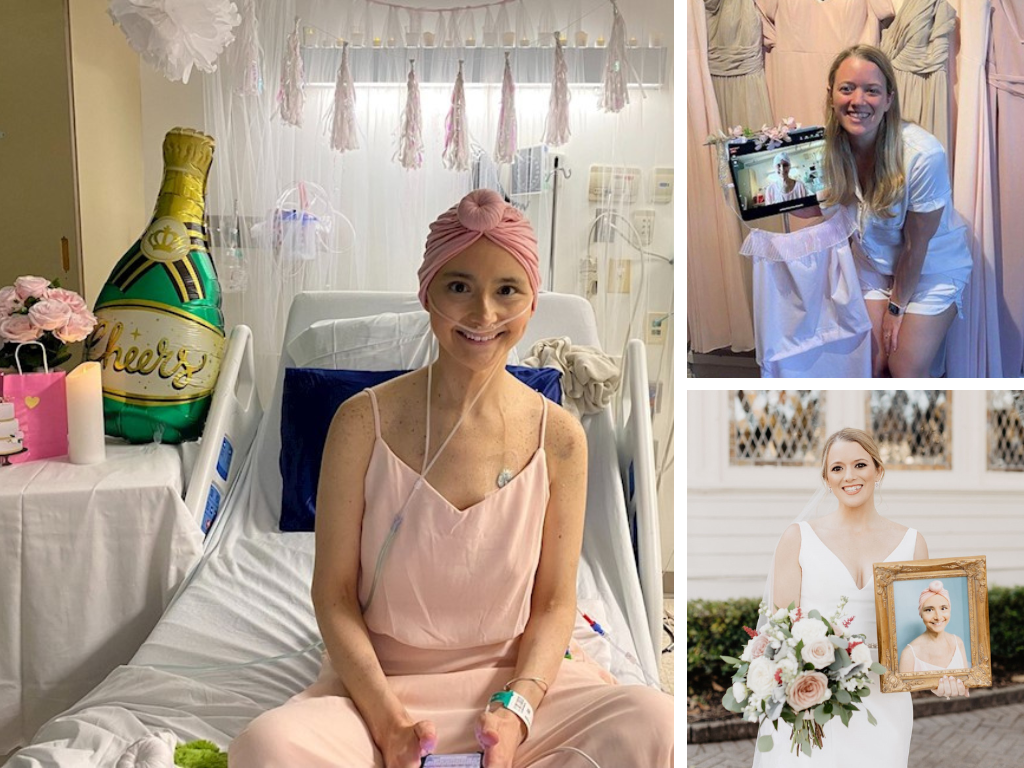
Caitie Donohue was able to virtually attend her best friend’s wedding in style with help from her Brigham care team.

On Nov. 7, 2021, Caitie Donohue watched her best friend, Ashley, walk down the aisle, recite her vows and marry the love of her life. Dressed in a light pink bridesmaid gown with a view from the front row, Donohue watched every part of the wedding — from the ceremony to the couple’s first dance — via video on an iPad.

That’s because Donohue participated from a hospital bed at the Brigham, where she was receiving treatment due to complications from her acute myeloid leukemia (AML). Donohue had been suffering from this cancer of the blood and bone marrow since January 2021.

When it became clear Donohue wouldn’t be able to attend Ashley’s wedding in person, her friends and family sprang into action. They transformed her hospital room into a wedding-ready space and helped Donohue dress up for the day. Brigham staff worked closely with Donohue to make sure she could participate — monitoring her health, managing the foot traffic in and out of her room and making sure she didn’t get too overwhelmed.

Prior to her death in June, Donohue expressed her gratitude for the members of her care team who helped make this special moment possible, including one of her nurses on Braunwald Tower 6, Meghan White, MSN, BSN.

“She’s the most amazing nurse, one of the best that I’ve had, and I’ve had a lot of nurses,” Donohue said. “She coordinated everything that day, making sure all my medications lined up so that it wouldn’t interrupt the ceremony. She had signs made for my door to make sure no one came in and interrupted. She just went above and beyond to make sure that I had the best experience that I could have had.”

White, a nurse at the Brigham for 19 years, said she was honored to help lift her young patient’s spirits.

“Caitie kept telling me how much she wanted to be there,” White said. “I said, ‘I’ll make sure no one disrupts you. If anyone tries to come into that room, they’ll have to go through me.’”

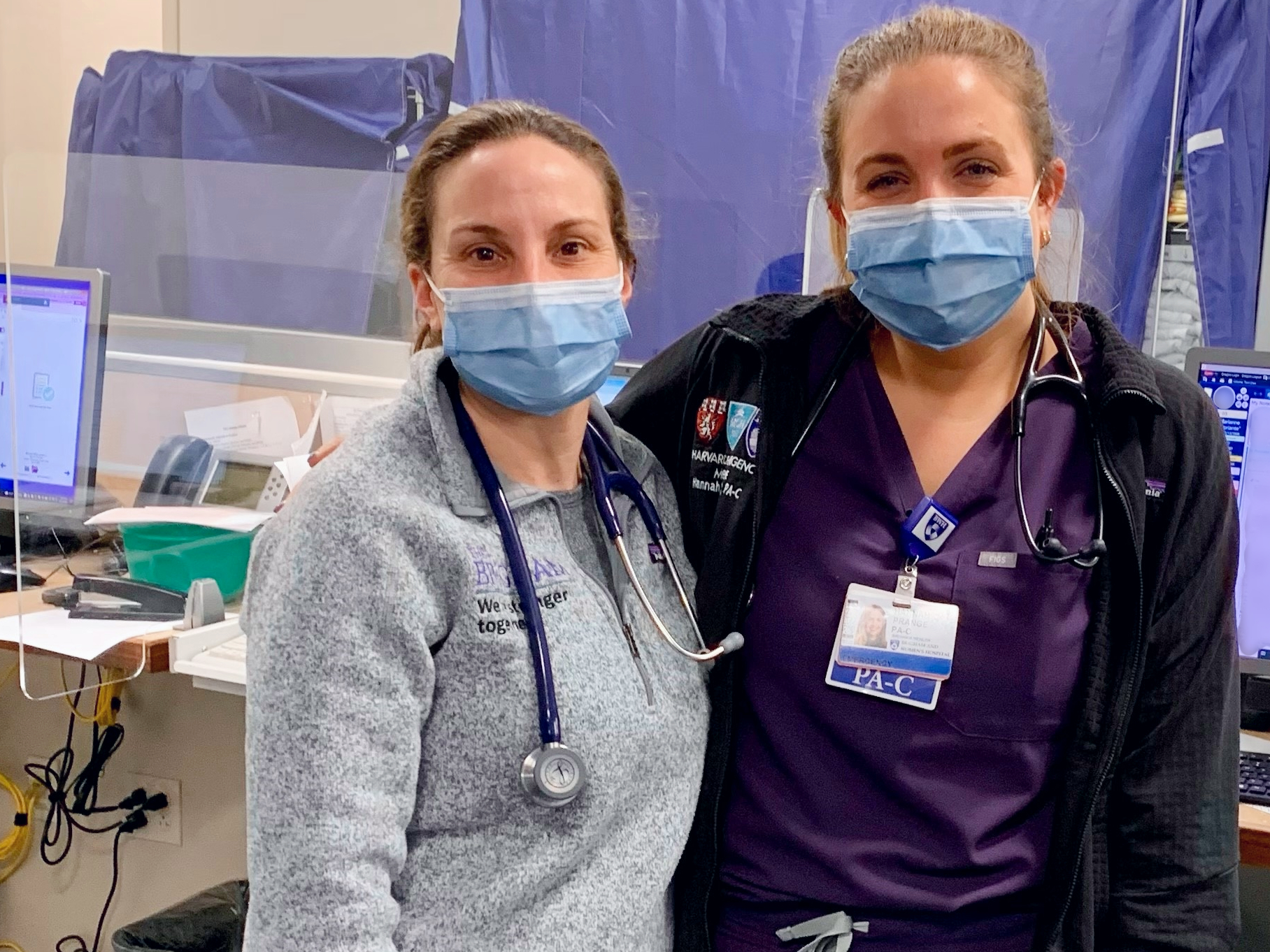
Hannah Prange (right) says she was thrilled to work alongside her longtime mentor, Donna Collins (left), during her first shift as a physician assistant at the Urgent Care Center in Foxborough, where Prange began her Brigham career as a medical scribe four years ago.

When Hannah Prange, MS, PA-C, was 2 years old, she carried a toy stethoscope and wore scrubs four sizes too big.

“I was one of those people who always knew what they wanted to do,” Prange said. As a child, one of her biggest role models was Heidi Handman, DO, her mother’s best friend and a neonatologist who, known to Prange as “Dr. Heidi,” inspired her to dream of pursuing a career in the medical field.

Those dreams would eventually lead her to the Brigham, where, after a chance encounter, she seized an opportunity to learn and grow with the support of colleagues and mentors.

Four years after she joined Brigham and Women’s Urgent Care Center in Foxborough as a medical scribe helping providers document information during patient visits, Prange recently began caring for her own patients as a physician assistant (PA) — in the very same clinic.

“There were times before and during PA school that were challenging for me, but I look back on my experiences, and I was really motivated and determined. Now I’m here full circle, and I feel like I have my dream job,” she said. “My colleagues really helped me get there.”

After graduating from PA school in 2019, Prange returned to the Brigham the following year as a PA in the Emergency Department (ED). As she gained experience, she expanded her rotation to other sites. Today, Prange works as a PA in both the Brigham and BWFH EDs, as well as the Foxborough Urgent Care Center where she started her career.

Prange’s colleagues said it has been inspiring to witness her professional growth over the years.

“There is nothing more rewarding than watching our employees grow and supporting them as they strive for the goals they have set for themselves,” said Julia Raymond, regional director of Ambulatory Operations, who previously served as Prange’s supervisor in her prior roles. “Hannah worked so hard to gain the right experience, learn from our providers and establish mentors who would help her along the way.”

Making Connections

As Prange became more focused on a health care career while she attended college, it was after graduation that she discovered her desire to become a PA. She met practicing PAs and was impressed by the care they provided and their ability to explore various fields of medicine. She also shadowed PAs at Dana-Farber Cancer Institute, and she later felt the personal significance of the care that a PA provided her mother following her cancer diagnosis.

Around that time, she happened to meet a Brigham doctor at the Patriot Place’s Dunkin’ Donuts. Prange gathered the courage to introduce herself and ask about medical scribe positions, and the doctor suggested she look at job openings at the Foxborough Urgent Care Center. A few months after becoming a scribe there, she sought more direct experience in patient care as a medical assistant, and her colleagues helped her train for the role.

According to Prange, the community she discovered at the Brigham inspired her to return as a PA.

“Working in health care can be difficult, but my co-workers and colleagues — the people — were supportive of my career path and have been a big part of why I’m happy at the Brigham,” she said.

Prange faced setbacks as she prepared for PA school, including rejection letters during her first round of applications, but she remained resolved. When she ultimately graduated from PA school, Prange was overjoyed at the accomplishment, though also nervous.

Donna Collins, PA-C, assistant medical director of the Foxborough Urgent Care Center, who mentored Prange through the process, says she never doubted that Prange would succeed.

“It has been a pleasure watching Hannah start as a young, eager scribe and then get hands-on experience as a medical assistant,” Collins said. “She is a quick study and hardworking.”

When Prange began her first shift as a PA at Foxborough Urgent Care, she was relieved to see a familiar face: Collins was working alongside her. “The fact that I still work with Donna is so special,” she reflected.

Moments like that helped her gain confidence and feel bolstered by a sense of community.

“Truly, I could not have done it without the other PAs who were training me,” Prange said.

Beginning Work as a PA

Between the lingering pandemic and continued high demand for health care services across the region, Prange acknowledged it has been a challenging time to begin her PA career. Yet, it has also been a learning opportunity and a humbling privilege to help so many patients, she added.

“My job is the most challenging thing in my life, but I love that challenge because I feel like every day I’m learning,” she said. “Even though some days are really hard, you go to work to save lives.”

Looking ahead, Prange hopes to continue expanding her skill set as a PA and to possibly explore other medical specialties — including obstetrics and gynecology, as she has long been interested in that field and recalls her passion for medicine started with Dr. Heidi.

“I’ve always just wanted to help people, and I’ve finally found my calling,” Prange said.

4 Comments

Claire-Cecile Pierre (center) delivers an uplifting keynote address to SSJP’s graduating seniors and other attendees of the program’s virtual graduation ceremony on June 15.

For as long as he can remember, Devin O’Loughlin has been intrigued by his grandmother’s stories about nursing during World War II and the polio epidemic. Now, he looks forward to following in her footsteps as he graduates from Boston Latin Academy and prepares to enter nursing school — a milestone made possible in part by his participation in the Brigham’s Student Success Jobs Program (SSJP).

SSJP matches high school students, primarily from underserved Boston neighborhoods, with year-round paid internships in over 60 departments across the Brigham.

O’Loughlin, one of 26 seniors graduating from the program this year, was awarded a scholarship to study nursing at Wagner College. His experience working alongside and learning from Brigham nurses in the Department of Obstetrics and Gynecology inspired him to pursue his own career in the field.

From left: Robert Higgins celebrates with Devin O’Loughlin at an event for SSJP graduates on June 27.

“Nurses are always in touch with their patients, and they’re caring,” O’Loughlin said. “That’s the kind of medical professional I want to be.”

O’Loughlin described OB-GYN as a welcoming place, one where he felt respected as a team member and empowered to grow.

“Everyone knew me, and I knew everyone,” he said. “The work environment just felt really healthy.”

Supporting Students

SSJP students are paired with supervisors who serve as mentors, and the program further supports students by providing access to academic resources, including tutoring and college scholarships, as well as wellness services, such as mental health support.

By creating job opportunities for students from underserved backgrounds, SSJP seeks to foster and support a diverse workforce in health care. In 2021, 89 percent of SSJP students identified as people of color, 85 percent of SSJP students attended an economically disadvantaged high school, and 74 percent of SSJP students identified as women.

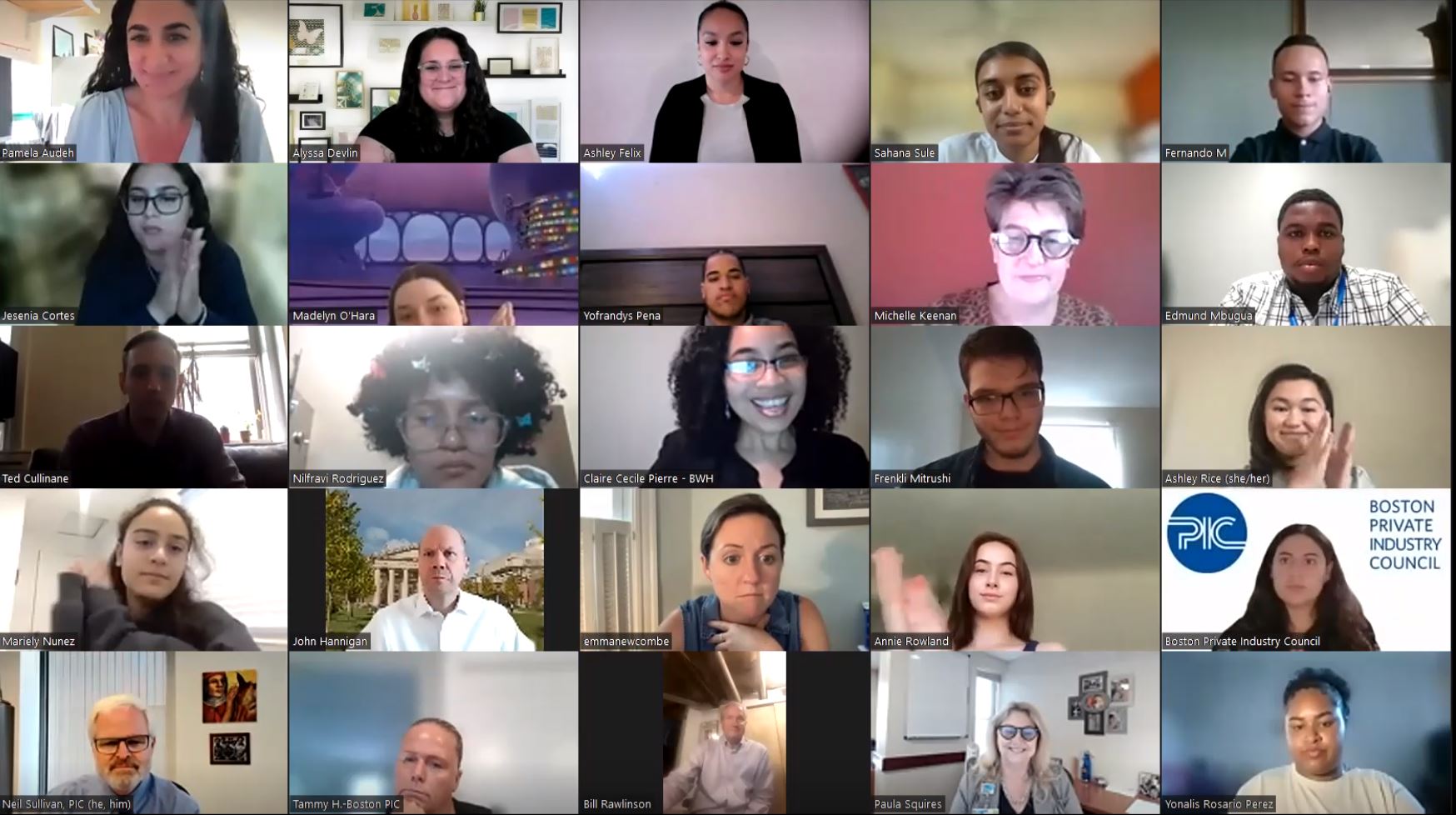
“The program represents a long-term investment in improving patient care, as well as advancing the economic mobility of neighborhoods, families and communities,” said Pamela Audeh, program director of Youth Development and Economic Advancement in the Brigham’s Center for Community Health and Health Equity, which oversees SSJP.

“I had access to resources I didn’t think I would ever have,” said Frenkli Mitrushi, a graduating SSJP senior who interned with the Department of Pathology.

To celebrate students’ achievements, the program hosted a virtual graduation ceremony for seniors on June 15, featuring speeches from student leaders, such as Mitrushi, who, along with O’Loughlin, is a member of the SSJP Student Council. During the ceremony, graduates were reminded that support from their SSJP and BWH communities will continue beyond high school. Through the SSJP, students will have continued access to offer scholarships, internships, academic and mental health resources and support for entering the workforce and obtaining advanced degrees.

Mitrushi joined SSJP as a high school sophomore passionate about the sciences. In addition to the hands-on experience his internship has provided, he has enjoyed the opportunity to interact with SSJP peers and his Pathology colleagues, whether in an informal chat in the Garden Cafe or while learning more technical skills in the lab. His experience at the Brigham has inspired him to pursue the pre-med track at University of Massachusetts Boston, where he plans to study biology, with a goal of addressing health inequities.

Mitrushi’s interest in health care began when he and his family immigrated to the United States from Albania. He realized that despite the vast medical resources in the United States, health care remained inaccessible to many people, particularly in low-income communities. As a leader of the student council, he has facilitated many discussions on health equity, and he plans to be a leader in addressing health inequity throughout his future career.

From left: Robert Higgins congratulates Frenkli Mitrushi.

“I joined the student council to see if leadership was for me, and what I found was that it is,” he said.

‘Crucial Contributions’

The COVID-19 pandemic directly affected SSJP students, their families and their communities in many ways. Even while navigating their own personal challenges and traumas, many students felt inspired to contribute to the Brigham’s pandemic response and chose to work extra hours at testing sites, vaccine clinics and food-distribution sites — often aiding their own communities in the fight against COVID-19.

For Mitrushi and O’Loughlin, the pandemic brought the significance of patient care and equity into sharp focus. Mitrushi helped to facilitate student discussions on equity and the disproportionate effects of the pandemic on Black and brown communities in the United States. When internships returned after a hiatus in 2020, O’Loughlin supported the OB-GYN department, and Mitrushi assisted Pathology as the pandemic continued.

“I really took pride in my work,” Mitrushi said.

All SSJP students make crucial contributions to the hospital. “It’s really amazing to see. Our students are vital members of the Brigham community,” said Audeh.

For Mitrushi and O’Laughlin, what makes the program unique is its support for students and its community of peers.

“It’s great for making friends as well as networking, and it has so many opportunities for truly impacting your life,” said Mitrushi.

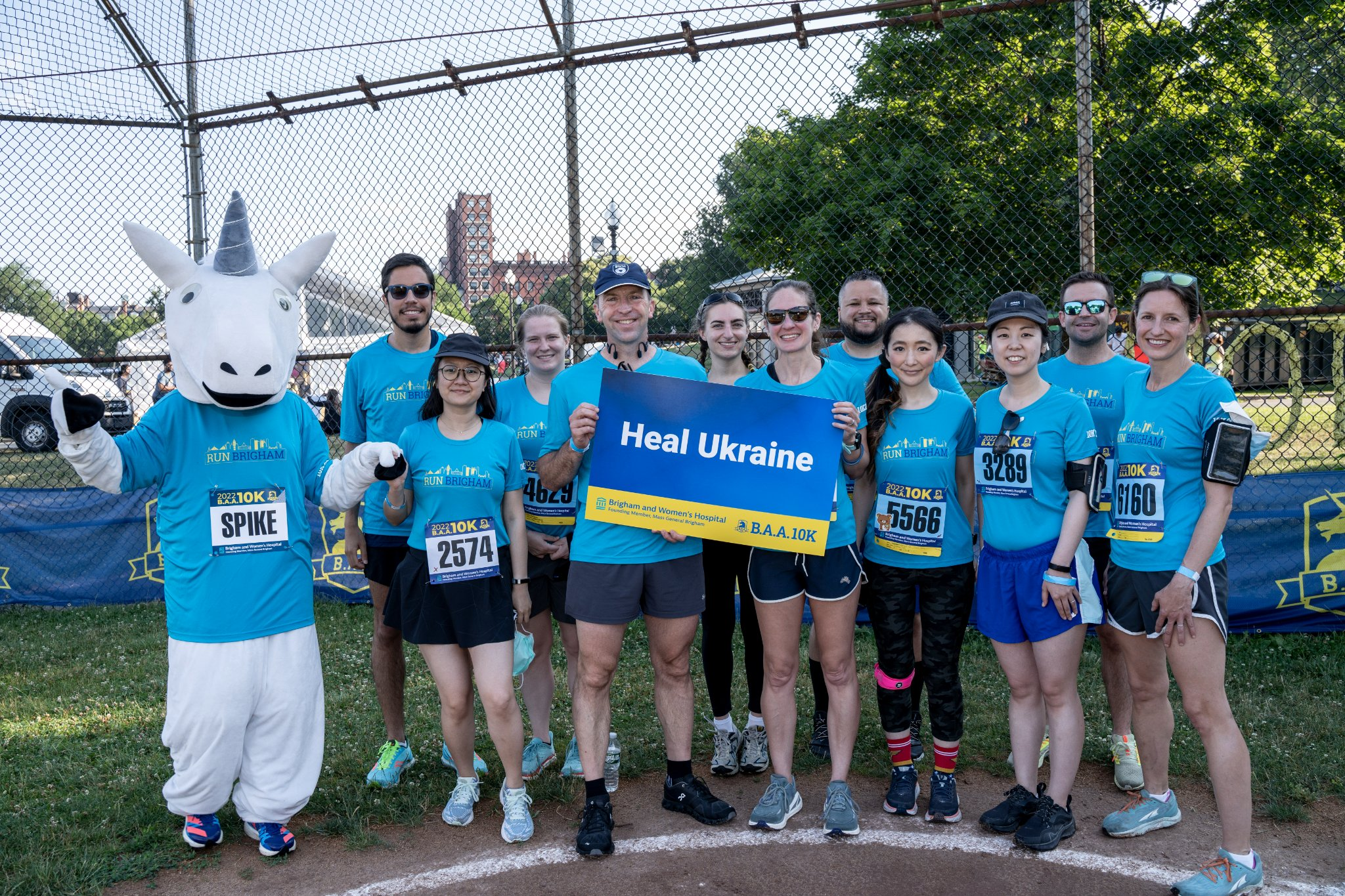
Heal Ukraine was one of 50 teams of Brigham staff members, patients, and supporters who participated in the B.A.A. 10K to raise funds for Brigham and Women’s Hospital.

More than 6,100 runners made a long-awaited return to the streets of Boston on Sunday, June 26, for the annual Boston Athletic Association (B.A.A.) 10K, presented by Brigham and Women’s Hospital, the race’s exclusive fundraising partner.

Runners braved hot, humid conditions to compete in the eagerly anticipated race, which marked its return from a three-year hiatus due to the pandemic. The event kicked off with a performance of the national anthem by Charlene C. Hollins, MSN, APRN, FNP-C, a nurse practitioner for Mass General Brigham Urgent Care and former nurse in the Brigham’s Emergency Department, and concluded with post-race stretching led by Brigham physical therapist Karen Lovely, PT, DPT, OCS.

This year, the Brigham welcomed 444 runners and 50 teams — including 266 Brigham employees — who participated either in person or virtually. Together they raised over $200,000 to fuel work at the Brigham that holds special meaning for them, and each had their own story of what brought them over the finish line.

Brigham neurologists Robert Mallery, MD, and Sashank Prasad, MD, co-captains of the newly formed Brainiacs team, ran to raise funds for the Ann Romney Center for Neurologic Diseases. They were inspired to support the work of their colleagues, who are researching treatments for Alzheimer’s, Parkinson’s and other serious neurologic diseases.

“We are excited to have a diverse team of physicians, nurses and trainees, and have been awed by the generosity of those who have made donations on our behalf,” Mallery said.

Charlene Hollins sings the national anthem at the B.A.A. 10K. Check out more race photos here.

“Most of all, we are inspired by our patients and honored to participate in this event for them,” Prasad added.

The ongoing crisis in Ukraine inspired members of the Center for Surgery and Public Health (CSPH) to form the Heal Ukraine team. The team’s goal of supporting cancer and trauma care in Ukraine reflects the mission of the center, which, more broadly, seeks to advance the science of surgery through research that informs policy and program development for safe, high-quality and equitable, patient-centered care in the U.S. and around the world. Among the ways CSPH is supporting Ukraine is by offering consultations to the country’s physicians during this time.

Team co-captains Amanda Reich, PhD, MPH, and Robert Riviello, MD, MPH, participated in past races with colleagues, and both have a longtime love of running.

“Fundraising with the Brigham through the B.A.A. 10K offers the opportunity to combine our personal and professional interests,” Reich said.

“This year, we raised money to support work focused on translating physician- and patient-education resources into Ukrainian and facilitating peer-to-peer consultations for physicians in Ukraine, led by our colleague Dr. Nelya Melnitchouk,” Riviello added. “We were excited to run, work and fundraise together with our friends from CSPH on these shared goals.”

Interested in starting a team, joining an existing one or getting more involved in next year’s race? Sign up for email reminders here.

On Friday, June 24, 2022, the U.S. Supreme Court delivered a decision in Dobbs v. Jackson that overturned decades of federally protected abortion rights made possible by the court’s landmark 1973 Roe v. Wade ruling. As a result of this decision, federal protection of abortion rights is effectively eliminated. This ruling leaves it to the states to decide whether abortion should be permitted, and to what extent.

In Massachusetts, state law secures a patient’s right to an abortion for any reason through 24 weeks of pregnancy. The Supreme Court’s decision does not alter this protection in Massachusetts, nor the Brigham’s longstanding commitment to providing high-quality care to pregnant patients, which dates to 1832 with the opening of the Boston Lying-In Hospital.

One of the nation’s first maternity hospitals designed to care for women unable to afford in-home medical care, the Boston Lying-In Hospital merged with the Free Hospital for Women in 1966, forming the Boston Hospital for Women. In 1980, the Boston Hospital for Women, the Peter Bent Brigham Hospital and the Robert Breck Brigham Hospital merged to become Brigham and Women’s Hospital.

In response to this historic change in women’s health, Brigham Bulletin spoke with four Brigham OB-GYNs and abortion care experts about the various outcomes they foresee as a result of the Supreme Court’s decision.

Nawal Nour, MD, MPH
Chair, Department of Obstetrics and Gynecology

What’s your reaction to this ruling?

“I am deeply disappointed in the Supreme Court’s decision in Dobbs v. Jackson that has now eliminated federally protected abortion rights; however, I am not surprised. We’ve seen state legislatures propose over 500 laws in 2022 alone that would restrict abortion access. Those of us in the Obstetrics-Gynecology community have been bracing for this day ever since oral arguments were heard in December 2021, and now it has arrived.

This decision goes against reproductive justice, one of the basic principles that leads equitable gynecologic and obstetric care, and it also goes against our mission here at Brigham and Women’s Hospital, which is to maintain and restore health through leadership in compassionate care, scientific discovery and education. There is nothing compassionate about denying a pregnant person’s fundamental right to bodily autonomy, which includes choosing to have an abortion.

While we are fortunate that our Massachusetts Legislature passed the ROE Act, which explicitly makes abortion rights a state law and expands those rights to people ages 16 and 17, there are at least 20 states where abortion will be severely restricted if not outright banned because of the Supreme Court’s decision. No one should have to leave their home state in order to access care, and this decision will place an increased burden on people of color, LGBTQIA and low-income persons.”

Deborah Bartz, MD, MPH
Director of Education, the Mary Horrigan Connors Center in Women’s Health and Gender Biology

Associate Director, Family Planning

As a medical educator in abortion care, how do you expect this decision will shape the training landscape for the next generation of providers, both here at the Brigham and beyond?

“As a medical student, I chose to specialize in OB-GYN very deliberately so I could provide abortion care to patients who needed those services.  When I was a student in the 1990s, the average age of abortion providers was in the mid-60s; most U.S. abortion doctors at that time had lived and worked in the pre-Roe era, and they saw the morbid realities of unsafe, illegal, desperate abortion. My desire to pick up the torch and contribute to training the next generation of abortion providers was actualized with the help of the Ryan Residency Training Program in Family Planning and the Fellowship in Complex Family Planning. Situated in nearly 100 academic medical centers throughout the country, these two training programs have trained thousands of OB-GYN residents and fellows over the last three decades — stabilizing the abortion workforce and providing greater geographical reach for patients.

In Massachusetts, we are fortunate to have abortion protections, and abortion services will remain available in our state. We have created robust curricula that has improved abortion understanding and sympathy among all medical students, not just those going into OB-GYN. Residents are trained in and support both first- and second-trimester abortion care. Moreover, our student, resident and fellow training programs will continue to provide education in full-scope abortion care. In addition to serving Massachusetts residents, we anticipate that some patients will travel to BWH from abortion-hostile states, which may increase our clinical volume and capacity for training.

However, many academic hospitals are facing a different, harsh reality.  Of the 286 accredited OB-GYN residencies, a 2022 study found that 44.8 percent are located in states that are certain or likely to ban abortions without the federal protection of Roe. Abortion training is a required component of OB-GYN residency training for accreditation, and thus students, residents and fellows will have to follow the same migration patterns of patients and seek out-of-state training opportunities. This will be costly and burdensome. This may also be completely unfeasible as abortion services in the remaining 24 abortion-providing states become profoundly overburdened and may not have the bandwidth to train additional residents and fellows. Thus, I fear that we will return to the situation of the 1970s, ’80s, and ’90s, with a small number of trained providers shouldering the provision of safe abortion care for generations to come.”

Amaka Onwuzurike, MD, MPH
Medical Director, Ambulatory Gynecology Clinic

What consequences can we expect this ruling to have on other aspects of women’s health care in states where abortions become severely restricted or wholly unavailable?

“Severely restricted access to abortion care is likely to contribute to an increase in maternal mortality in the United States through an increase in unsafe abortion and continuation of unwanted pregnancies, particularly in populations already at highest risk of experiencing severe maternal morbidity and mortality in the U.S. Approximately 5 percent to 15 percent of maternal deaths worldwide are due to unsafe abortion. While in recent years this has not been a leading cause of maternal death in the U.S, it might begin to rise as it has in countries where abortion is illegal.

The alternative of continuing a pregnancy is not without potentially serious risks. We know that the U.S., unfortunately, has the highest maternal mortality ratio as compared to other high-income countries. We also know there are significant inequities in maternal death in the U.S. because of racism, geography and many other factors. For example, Black and Indigenous women and women residing in rural communities are much more likely to die during pregnancy, childbirth or the postpartum period. These are the same communities that are likely to be disproportionately affected by restrictive abortion laws. In addition to the potential physical harms of continuing an unwanted pregnancy, so too are there mental and emotional harms, and an impact on the social and economic well-being of the pregnant person and their family for years to come.

Restrictive abortion laws are also likely to go hand in hand with other laws that restrict access to critical components of sexual and reproductive health care, creating an environment in this country that is dismissive of, or even hostile toward, the health care needs of women and pregnant people. Closures of clinics that provide abortion services will simultaneously reduce these communities’ access to other sexual and reproductive health services previously provided (e.g., contraception care, sexually transmitted illness testing and treatment, etc.). In this way, severely restricting abortion access may also indirectly contribute to maternal mortality by creating a culture and environment that further de-centers and diminishes the needs of women and pregnant people.”

Alisa B. Goldberg, MD, MPH
Director, Division of Family Planning and Complex Family Planning Fellowship

How will the reversal of Roe v. Wade become a health equity issue?

“Abortion is already a health equity issue, but the reversal of Roe v. Wade will dramatically exacerbate existing inequities. Black, Indigenous and people of color (BIPOC) as well as poor and low-income individuals have higher rates of unintended pregnancy than their white and wealthier counterparts and are similarly overrepresented among people seeking abortion.

Abortion is an exceedingly safe procedure and carries a lower risk of death than dental procedures and colonoscopies. However, we know from the era in the U.S. before Roe and from countries where abortion is illegal that the criminalization of abortion makes it less safe. In settings where abortion is illegal or highly restricted and inaccessible, people seeking abortion who have money and resources will travel to obtain a safe, legal abortion. Those who are without resources and unable to travel — disproportionately BIPOC, low-income and young — will be forced to either self-source an abortion or carry their pregnancies to term. Some people self-sourcing an abortion will be able to obtain a safe but illegal abortion with pills, while others will try less-safe or less-effective methods.

Research shows that those forced to carry undesired pregnancies to term are at least 14 times more likely to die due to childbirth complications than had they received early abortion care. A 2021 study found that if all abortions in the United States were to stop, 21 percent more people would die from pregnancy complications, and 33 percent more non-Hispanic Black people would die.

Beyond exacerbating the existing inequities in maternal morbidity and mortality, the reversal of Roe and inability to access abortion will also worsen socioeconomic inequities and other social determinants of health. One large study that followed more than 1,000 women for five years after being denied an abortion found that those denied were more likely to fall below the federal poverty level, struggle to make ends meet and be evicted from their home.

Women’s health and lives will be universally harmed by the reversal of Roe, and a disproportionate share of the harm will be shouldered by those who are already marginalized.”

2 Comments

From left: Nurse Sarah Veader embraces Shannon Wilding during an emotional reunion with the team who cared for Wilding’s father, John Bosse (center), while he was hospitalized for COVID-19. Members of the family, including Bosse’s wife, Nancy (second from right), and son, Brad (far right), returned to express their gratitude for the outstanding care he received.

In celebration of Father’s Day, Brigham Bulletin is highlighting the touching story of a Brigham care team that rallied to support a Maine father and grandfather, along with his family, while saving his life from severe complications of COVID-19.

Are they brushing his teeth? Even though she had a hundred other things to worry about while her father was hospitalized for COVID-19 at the Brigham last fall, Shannon Wilding couldn’t get the question out of her mind.

Compared to everything else that her father, John Bosse, 65, had endured since getting sick, Wilding knew that her dad’s teeth were probably the least of his care team’s worries.

Shortly after his COVID-19 diagnosis last September, Bosse’s health sharply declined. His wife of 45 years, Nancy, brought him to the emergency room three times at two different hospitals near their home in Lewiston, Maine, when breathing became especially difficult for him. While receiving monoclonal antibody treatment during one visit at a local hospital, Bosse’s blood oxygen levels plummeted. He was admitted to the intensive care unit (ICU).

Bosse was sedated and intubated, and his health continued to deteriorate. His care team in Maine gently suggested the family prepare for the worst and say their goodbyes.

We care. Period. logo

As doctors investigated transferring him to another medical center with greater resources, a family friend urged them to advocate for a hospital in Boston where more advanced care was available. Three days after his ICU admission, Bosse was transported by a Life Flight air ambulance to the Brigham, where he remained intubated under sedation for another 20 days in October and November.

During that time, Bosse’s family visited frequently and stayed in regular contact with his ICU care team on Braunwald Tower 8 — checking in daily, sometimes multiple times a day, to see how he was doing. Wilding, her brother, Brad, and their mother were anxious to learn the latest updates to his condition. How were his blood gases today? When might he be extubated?

But even with so many big concerns, Wilding found that the question about whether someone was brushing her dad’s teeth gnawed at her mind. In the end, it wasn’t only about preserving his dental hygiene — but also his dignity as a person, not just as a patient.

She spoke with one of his nurses, Sarah Veader, BSN, RN. Yes, of course they were brushing his teeth, Veader assured her.

“Dad was still intubated, with so many tubes coming out of his mouth. With no hesitation, Sarah brushed his teeth with confidence and ease,” Wilding remembered. “Rarely, I’m at a loss for words, but I was speechless. At that point, I had only known Sarah for a very short time, but in that moment I knew Dad was in the very best hands.”

Wilding held back tears as she reflected on that memory when she, her father and their family recently returned to the Brigham to thank members of their Tower 8 care team for their lifesaving care and outstanding compassion.

“Everything you guys did — it was like he was your dad, and that was overwhelming,” Wilding told staff during the emotional reunion in the Bretholtz Center for Patients and Families. “You treated us like he was your family.”

Bosse, his loved ones and several representatives from his Tower 8 care team celebrate his recovery.

Bosse was eventually discharged to an inpatient rehabilitation facility in Maine before returning home a few days before Christmas. Although he remembers almost nothing from his time in the hospital, Bosse said he and his family will never forget the extraordinary difference the Brigham made in their lives.

“It was not just the care I received. It was also the way the staff treated my family. They tear up every time they talk about it,” Bosse said. “I know there was a large team, and my family spoke highly about them all. They made this tough time more tolerable for them.”

‘You Do Make a Difference’

The severity of his illness was never lost on Bosse and his family.

“Whenever he sees the news about people in our own town who passed away, he says, ‘That could have been me,’” his wife said.

Bosse reveals a T-shirt his family made for him with the phrase “This Pep Beat COVID.” Pep is short for pépère, a French-Canadian term for grandfather that became Bosse’s nickname years ago. During his illness, “Pep Strong” became his family and community’s rallying cry.

Following his discharge from the Brigham, Bosse embarked on three weeks of inpatient physical, occupational and speech therapy at New England Rehabilitation Hospital in Portland to rebuild his strength. He transitioned to outpatient therapy, and earlier this year was walking with the help of leg braces, a walker or cane.

When he returned to the Brigham in April with his family to thank staff, he walked into the 75 Francis St. entrance with the help of just ankle and foot orthotics. Bosse shared with staff that he’s already back to doing what he loves, including golfing. In August, he plans to participate in a local 10K with his 10-year-old grandson, Conor. By September, he hopes to be back on ice skates to rejoin his hockey league.

“This is such a gift,” said Diane Tsitos, MSN, RN, nursing director for Tower 8, upon hearing all the progress Bosse has made since his discharge. “It really warms our hearts. This is why we do what we do.”

During their visit, the family showed their appreciation by distributing treats to staff and small cards with “The Starfish Story,” a parable about a man who picks up starfish stranded on the beach and returns them to the ocean — a tale to illustrate the influence one person can have on another.

“I am so grateful,” Bosse told the Tower 8 staff gathered in the Bretholtz Center. “Don’t give up on what you do. You do make a difference. It certainly has in our lives. We’re never going to forget.”

Attending intensivist Sarah Rae Easter, MD, emphasized the important role families play in caring for patients and thanked Bosse’s loved ones for their support as well.

“We know him as a patient. We know his labs. We know the physiology. We know the medicine. But that doesn’t mean that we know him,” Easter said. “You know him as a person. You know his passions, his quirks, his pet peeves and his values.  We can’t make decisions about him as a patient without your insights about him as a person. While you were so grateful to us, it was your advocacy for his care that got us to his outcome.”

1 Comment

Galen Henderson and Tina Gelsomino (first and second from left) and Robert Higgins (far right) celebrate with awardees (center, from left) Gezzer Ortega, Shaina A. Lipa, L. Nicolas Gonzalez Castro and Ayobami Akenroye. Not pictured: Ivy Franco

Five rising stars in academic medicine and research were recently named the winners of the 2022 Minority Faculty Career Development Awards (MFCDAs), which seek to support and retain underrepresented in medicine (UIM) trainees and junior faculty at the Brigham.

This year marks the program’s largest-ever number of awardees — a milestone made possible through the support of the Office of the President.

“It is not enough to simply say that we are committed to advancing diversity, equity and inclusion. We must take action to demonstrate that commitment, especially when it comes to creating a culture and environment where the next generation of UIM physicians and scientists can thrive,” said Robert S.D. Higgins, MD, MHSA, president of the Brigham and executive vice president at Mass General Brigham. “It’s our honor to support these emerging leaders in science and medicine through this year’s expansion of our Minority Faculty Career Development Awards program.”

This year’s winners are Ayobami Akenroye, MBChB, MPH, of the Division of Allergy andStronger Together Brigham Values Logo Clinical Immunology; Idalid (Ivy) Franco, MD, MPH, of the Department of Radiation Oncology; L. Nicolas Gonzalez Castro, MD, PhD, of the Brigham’s Department of Neurology and the Center for Neuro-oncology at Dana-Farber Brigham Cancer

Center; Shaina A. Lipa, MD, MPH, of the Department of Orthopaedic Surgery; and Gezzer Ortega, MD, MPH, of the Center for Surgery and Public Health in the Department of Surgery.

Established in 1996 thanks to the efforts of Marshall Wolf, MD, Howard Hiatt, MD, and Robert Handin, MD, the MFCDA program was created to increase the representation of UIM physicians and scientists in fellowship programs and faculty positions at the Brigham. It provides $100,000 awards to recipients over five years — with a quarter of the funds reserved for clinical/research-related and career development purposes — and is administered by the Brigham’s Center for Diversity and Inclusion.

According to the American Association of Medical Colleges, “underrepresented in medicine means those racial and ethnic populations that are underrepresented in the medical profession relative to their numbers in the general population.” At Brigham, those identities include African American/Black, Alaskan/Hawaiian Native, Hispanic/Latinx and Native American.

“On behalf of the Center for Diversity and Inclusion, we are thrilled to offer five Minority Faculty Career Development Awards to these outstanding faculty members,” said Galen Henderson, MD, chief diversity and inclusion officer for Faculty, Trainees and Students. “This type of award is crucial for faculty early in their careers so they can dedicate time to the advancement of scientific research, clinical care and their own professional development. These awardees are the future leaders of our organization and in academic medicine.”

Learn more about this year’s winners and what the award means to them:

Ayobami Akenroye, MBChB, MPH
Division of Allergy and Clinical Immunology

“My long-term goal is to be an outstanding physician-scientist, conducting translational epidemiologic research in the area of heterogeneity of treatment effect of monoclonal antibodies in the treatment of asthma. Ultimately, I want to improve the care of everyone with asthma — regardless of age, gender, body mass index, or race or ethnicity. I intend to use the period of this award to develop preliminary data, which will inform my first and potentially subsequent R01 applications. My prior training, additional training during the period of this award and excellent mentorship will position me to be one of the rising leaders in my chosen area of research.”


Idalid (Ivy) Franco, MD, MPH
Department of Radiation Oncology

“Through the support of the MFCDA, I will be able to effectively acquire the tools needed to address cancer health disparities, focusing on efforts in health equity, access and inclusion — leading to improved workforce diversity and patient outcomes within Radiation Oncology. I aspire to have my work improve patient outcomes for our most vulnerable communities and inspire younger generations to continue to apply a health equity lens to their work.”


Nicolas Gonzalez Castro, MD, PhD
Department of Neurology, Brigham and Women’s Hospital
Center for Neuro-oncology, Dana-Farber Brigham Cancer Center

“The support of the MFCDA will help advance my current research in glioblastoma genomics and epigenomics, increasing our biological understanding of this aggressive and invariably fatal brain tumor and uncovering new therapeutic targets. Support at this stage of my career will also help me generate preliminary data to apply for additional funding mechanisms as I continue developing as a physician-scientist in neuro-oncology.”


Shaina A. Lipa, MD, MPH
Department of Orthopaedic Surgery

“My main goal over these early years is to build my clinical practice in order to deliver quality and equitable spine care to my patients, which is and has always been my primary motivator. One of the byproducts of this goal is that this will allow me to become a respected faculty member of the spine surgery community and greater orthopaedic community at large. Secondly, this will inform my research, which is focused on the delivery and quality of orthopaedic care in the ever-changing climate of health policy. Receiving the MFCDA would provide the financial support to pursue coursework to gain new skills in the area of quality and safety, which is an area of interest for me, given its relation to primary goal of delivering quality and equitable care to patients.”

Gezzer Ortega, MD, MPH
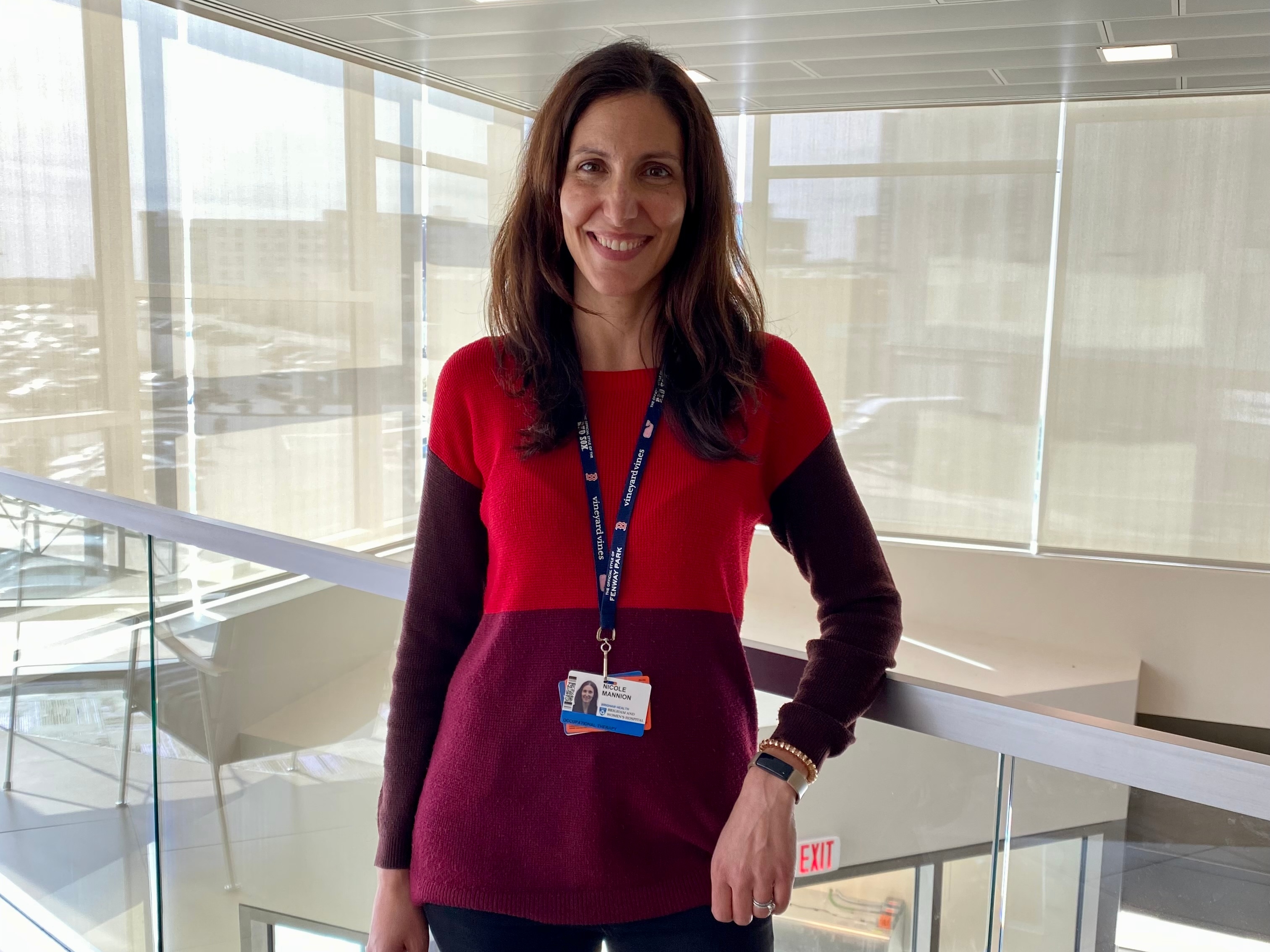
Center for Surgery and Public Health, Department of Surgery
Patient Reported Outcomes, Value & Experience (PROVE) Center

“The MFCDA will accelerate my overall career goal of becoming an independently funded physician-scientist focused on identifying and addressing inequities in surgical care. I have been highly productive in the early stages of my career, but there are critical knowledge and skills gaps that this MFCDA will resolve so that I can become a nationally regarded expert in improving outcomes for surgical patients with limited English proficiency and advancing language-concordant care.”

Quoc-Dien Trinh explains how the Prostate Cancer Outreach Clinic has adopted a proactive approach to ensure Black men have equitable access to prostate cancer care.

Asking difficult questions, facing hard truths and challenging long-held norms — while at times uncomfortable, these actions are essential to addressing health equity and eliminating racism in health care settings, noted presenters at the Brigham’s Diversity, Equity and Inclusion (DE&I) Town Hall on May 26.

One important conduit for this work is the systemwide United Against Racism (UAR) initiative, explained Brigham President Robert S.D. Higgins, MD, MHSA, during his opening remarks for the event. Composed of three focus areas — health equity, community health and workforce equity — UAR seeks to identify and eliminate racist barriers, systems and actions inside and outside of Mass General Brigham.

Additionally, the Brigham recently established a new multidisciplinary team, the Communication Resource Committee, to advise the Office of the President and Office of Strategic Communication on responding to external events, including those involving issues of racial justice and health equity.

“To really move the needle in dismantling racist systems, we need to address these issues on a number of fronts,” Higgins said. “Real change also requires that we engage the highest levels of our organization while also supporting local efforts and projects.”

A Catalyst for Change in Prostate Cancer Care

The DE&I Town Hall spotlighted two projects at the Brigham — both supported with UAR grants — that are working to address health inequities and structural racism in clinical settings.

Quoc-Dien Trinh, MD, FACS, of the Division of Urological Surgery, discussed the Mass General Brigham Prostate Cancer Outreach Clinic (PCOC), a joint program between the Brigham and Massachusetts General Hospital (MGH) that seeks to make high-quality, affordable prostate cancer care accessible to more men of color.

The clinic, which Trinh co-founded with MGH colleague Adam Feldman, MD, MPH, was created to address the disproportionate burden of prostate cancer among Black men, who are 22 percent less likely to receive treatment for the disease compared to white men.

“Even in Massachusetts, despite the access to insurance, there’s a disparity in access to care,” said Trinh, who also serves as director of Ambulatory Clinical Operations for Urological Surgery, co-director of the Prostate Cancer Program for Dana-Farber Brigham Cancer Center and a core faculty member of the Center for Surgery and Public Health.

In designing the program, Trinh and Feldman met with Black men across Massachusetts to better understand the current barriers to care. Inconvenient services, high costs and mistrust of large health care systems ranked high among the reasons the men interviewed said they avoided care at academic medical centers like the Brigham and MGH.

Rather than relying on a conventional approach of waiting for patients to seek care, PCOC was founded on the principle that providers must be more proactive with outreach and education to connect patients with the care they need, Trinh explained.

Stronger Together Brigham Values LogoA community health worker helps patients navigate appointments, a collaboration with the Department of Quality and Safety proactively identifies at-risk patients who lack referrals, and partnerships with third-party organizations are helping to build trust with local communities.

“The vision is to use PCOC as a catalyst to bring our communities compassionate prostate cancer care,” Trinh said.

Identifying ‘Blind Spots’ in Behavioral Health

Meanwhile, a UAR grant-funded multidisciplinary training program developed in collaboration with faculty from the Brigham, Brigham and Women’s Faulkner Hospital (BWFH) and MGH Emergency Departments (EDs) is addressing how to reduce racial bias and provide trauma-informed care when managing agitated patients.

Dana Im, MD, MPP, MPhil, director of Quality and Safety and director of Behavioral Health for Brigham Emergency Medicine, explained that the project was inspired by a study led by Emergency Medicine resident Jossie Carreras Tartak, MD, MBA, and senior author Wendy Macias Konstantopoulos, MD, MPH, MBA, vice chair for Diversity, Health Equity and Inclusion for MGH Emergency Medicine, in close collaboration with Tom Sequist, MD, MPH, Mass General Brigham chief medical officer, and his team. The multi-institutional research team looked at the use of restraints for patients under an involuntary hold during an emergency psychiatric evaluation. After examining data from 11 EDs across Mass General Brigham, they found that Black and Hispanic patients experienced higher rates of physical restraint in the ED.

Following that 2021 publication, the Brigham’s ED team launched its Emergency Medicine Antiracism and Trauma-informed (ART) Interdisciplinary De-escalation Training Program, which approximately 120 ED staff — including physicians, nurses, support staff, security officers and psychiatrists — have completed to date.

“We felt that, in order to address the disparities in the ED that were highlighted in the study, we couldn’t just present the numbers to our staff and ask them to provide unbiased care,” Im said. “We really had to equip and empower them to provide equitable care.”

Initially launched as a pilot to reduce racial bias during de-escalation, the program, led by Emergency Medicine fellow Farah Dadabhoy, MD, has been expanded to include trauma-informed and antiracism principles. It will be used to train all ED staff at Brigham and BWFH. A similar training program has been implemented in MGH ED as part of the UAR collaboration.

An important component of the training is standardizing the way agitation is assessed and addressed, Im explained. When designing the program, Im and her colleagues learned from their interviews with ED staff that while one clinician might perceive a patient as violent and in need of restraint, another clinician might see the same patient as upset.

In addition to developing a consistent description of agitation, the team developed a team-based algorithmic approach to deescalating ED patients in an agitated state to ensure equitable care.

“We tell our trainees to think of a patient who comes to mind when EMS calls and says there’s a 55-year-old intoxicated male picked up at Forest Hills station. Then juxtapose that image with the patient you picture when EMS calls in with two intoxicated males picked up at a Boston College party,” Im said. “This exercise gives us space, time and opportunity to think through our blind spots and how bias really seeps into our clinical care.”

Taking a Trauma-Informed Lens

Annie Lewis-O’Connor, PhD, NP-BC, MPH, FAAN, co-chair of the Mass General Brigham Trauma-Informed Initiative, explained how understanding the trauma a patient has experienced, including individual and systemic racism, can influence the way they experience health care settings.

“Trauma is intersectional — individual, interpersonal, collective and structural. It’s an event, series of events or set of circumstances that’s experienced by an individual as either physically or emotionally harmful, and the key to it is that it has long-lasting effects,” said Lewis-O’Connor, who also serves as founder and director of the C.A.R.E. (Caring Approach to Resiliency & Empowerment) Clinic.

Trauma-informed care (TIC) is a set of principles that providers can incorporate into their practice to improve the quality of care by building trust, create safe spaces and empowering patients and staff, while also strengthening peer support and interdisciplinary collaboration.

“In fact, TIC does not require you to do more work; rather, it suggests a way to reframe how we work,” Lewis-O’Connor said. “It’s a strength-based framework. It’s about not asking ‘What’s wrong?’ but rather ‘What’s happened?’ and ‘How has that impacted you?’”

View a recording of the event.

Among the many additions to the expanded and renovated ED are two state-of-the-art trauma rooms that make up the Ron M. Walls, MD, Trauma Suite, which is pictured above and was named in recognition of a generous gift from Jane C. and Brian L. Crowley.

After seven years of planning, approvals and a building process that included continued construction during a worldwide pandemic, the Brigham’s Emergency Department (ED) expansion project celebrated the end of its final phase of construction this month.

In addition to doubling the ED’s total square footage and creating another 30 beds, the expanded space boasts a new trauma suite, a dedicated area for behavioral health patients and additional emergency imaging capabilities.

“We’re excited to formally open our new Emergency Department, which will allow us to continue to support our patients who need emergency medical care,” said Robert S.D. Higgins, MD, MSHA, president of the Brigham and executive vice president at Mass General Brigham. “This new, state-of-the-art space is part of our ongoing commitment to meet the needs of our community and improve our patients’ experience.”

The expansion will improve efficiency for ED staff, support a reduction in wait times and provide a more comfortable, healing environment for patients and families, explained Michael J. VanRooyen, MD, MPH, chair of the Brigham’s Department of Emergency Medicine and enterprise chief of Emergency Services at Mass General Brigham.

“We focused on designing a space to both provide the best health care experience possible to our patients and to support our staff,” VanRooyen said. “It’s not just about creating more space but also prioritizing the workflow and the patient journey to make sure we’re leading the way and being an example for other emergency departments in the future.”We pursue excellence logo

The COVID-19 pandemic disrupted numerous facets of hospital operations throughout the year, and the ED was no exception. However, through the work of hospital and ED leadership, Brigham Infection Control experts, construction teams and local regulatory agencies, the construction project continued through this difficult stretch of time.

“We maintained the highest safety standards despite the unique challenges posed by the COVID-19 pandemic,” said Sonal V. Gandhi, vice president of Real Estate, Planning and Construction. “It is a testament to the innovative and dedicated team of professionals who work tirelessly to meet the critical need for increased capacity while providing the best health care experience for our patients, families, surrounding community and staff.”

The three-phase construction project broke ground in 2019 and has resulted in a 26,000-square-foot expansion of the ED’s footprint. The renovation included the creation of an additional 32 exam rooms, an increase from 49 to 81 beds, two state-of-the-art trauma rooms, two advanced X-ray rooms, an additional CT scanner and a second ultrasound room.

The project also included a new entrance, security and check-in desk, waiting room, care initiation and triage rooms, as well as an eight-bed behavioral health observation unit. Care initiation and triage rooms make it possible to quickly advance patient care during longer wait times and for low-acuity patients who can be seen and discharged by medical staff without waiting longer for care elsewhere in the department. A specialized oncology unit catering to the unique needs of patients with cancer emergencies will open at a later date.

These resources could not become available at a more important time, as emergency departments across the city, including the Brigham’s, continue to face high censuses and inpatient boarding challenges, said Christopher Baugh, MD, MBA, vice chair of Clinical Affairs for Emergency Medicine.

“Through this expansion, our team looks forward to better serving patients and families,” Baugh said. “This expansion is also an important part of our mission to ensure that we are supporting our surrounding community — especially as it pertains to serving those patients for whom it could be lifechanging or lifesaving to have access to the highly complex and specialized care that we provide here at the Brigham.”

Specialized Care for Behavioral Health Patients

The behavioral health observation unit has been environmentally tailored to suit the needs of this patient population by providing safe and private space, with softer lighting and reduced noise.

“Improving patient privacy and making sure we provide our behavioral health population with the most respectful space, tailored to their needs, was a top priority for the ED’s nurses, who have been involved in every aspect of the new space,” said Janet Gorman, MM, BSN, RN, associate chief nursing officer of the ED.

“We really wanted to create a space that was internal to the ED but separate from all the other activity so that we can provide dedicated care to our behavioral health patients,” says Dana Im (picture in foreground) about the ED’s new behavioral health unit.

Equipped with its own nursing station, medication room and a dedicated team of providers, the unit was designed to ensure behavioral health patients receive personalized care, explained Dana Im, MD, MPP, MPhil, director of Quality and Safety and director of Behavioral Health for Emergency Medicine.

Patients in the unit also receive a “comfort menu,” which invites them to access a variety of items and services to support a comfortable stay — including earplugs, books and magazines, crossword puzzles, snacks, personal hygiene items and sleep aids. The handout also provides relaxation tips, such as breathing exercises, as well as information about safety and privacy guidelines. Patients are also given an opportunity to contribute to their care plan by sharing their preferred calming strategies and which conditions trigger emotional discomfort.

“Our old ED environment was not conducive to behavioral health care, and we also felt our staff was being pulled in so many directions. It’s really hard to care for an escalating patient while EMS stretchers are passing by every five minutes and trauma teams are activated right next door,” Im said. “We really wanted to create a space that was internal to the ED but separate from all the other activity so that we can provide dedicated care to our behavioral health patients.”

One notable aspect of the Brigham’s behavioral health unit is it is staffed by a multidisciplinary team of ED clinicians, who work closely with social workers, psychiatrists and, most recently, a psychiatric occupational therapist, Im explained. The multidisciplinary team focuses on acute stabilization, treatment and reassessment of both medical and psychiatric illnesses.

Additionally, in anticipation of the unit’s opening, Im and her colleagues implemented interdisciplinary rounds in the ED for behavioral health patients. Rounding in the traditional sense is uncommon in EDs, but the team recognized a need to bring together clinical and nonclinical staff to optimize care for this patient population.

“It’s really a great opportunity for us to come together as a team for patients. Centralizing the care in the new unit will now make it even easier for us to do so,” Im said. “We see a lot of medically complex psychiatric patients, and we’re now uniquely equipped to provide a higher quality of care to our behavioral health patients.”
Sidebar

ED Renames Pods to Honor Boston Marathon Route

Included in the project is a new naming convention for the six areas (pods) that make up the ED. Those pods are now named after the Boston streets that are connected to the final stretch of the Boston Marathon: Arlington, Berkeley, Clarendon, Dartmouth, Exeter and Fairfield.

The naming convention pays homage to the victims of the 2013 Boston Marathon bombing and honors the caregivers, including those in the Brigham’s ED, who played a critical role in responding to the tragic event and caring for the wounded.

1 Comment

Featured speakers from the 2022 Women’s Health Luncheon included (from left) Annie Lamont, Hadine Joffe, Robert Higgins and Anita Hill. Not pictured: Bruce Levy

In 2007, a small group of women’s health researchers gathered around a conference room at the Brigham to share insights about their latest discoveries and, distressingly, the tremendous gaps remaining in science’s understanding of how a person’s sex influences disease.

That once-intimate gathering has since grown into a dynamic annual fundraising event supporting and showcasing the groundbreaking work of the Mary Horrigan Connors Center for Women’s Health and Gender Biology before an audience of hundreds of philanthropists, business leaders and women’s health advocates.

This year’s event, held May 6 at the Omni Boston Hotel at the Seaport, marked not only its 15th anniversary but also the luncheon’s first in-person format since 2019. Aptly themed “Finding Our Voice,” the luncheon also coincided with a time when women’s health, specifically reproductive health, is the subject of contentious national debate.

“It is clear that our mission to protect and advance the health and lives of women is more important than ever,” said Hadine Joffe, MD, MSc, executive director of the Connors Center.

Brigham President Robert S.D. Higgins, MD, MSHA, underscored the institution’s unwavering commitment to supporting and advancing all facets of women’s health.

“At the Brigham, we continue to uphold our longstanding mission to provide safe, accessible and high-quality care to all patients who seek it. We deliver care with compassion and without judgment,” said Higgins, who also serves as executive vice president at Mass General Brigham. “We remain patient-centered and focused on achieving the best outcomes. Our commitment to providing high-quality care is importantly inclusive of all women — particularly those from historically disadvantaged backgrounds.”

Uncovering Gaps, Asking Questions

More broadly, speakers noted, women’s health research has made significant strides in recent years — but also still has a long way to go. Throughout that time, the Connors Center has been at the forefront of advocating for meaningful change in the field, Joffe said.

“Fifteen years ago, scientists doing preclinical research were not required to consider sex when they studied animals, tissues or cells. What this means is that research at its most fundamental level and its starting point did not account for the most basic biological differences that exist between females and males,” she explained. “This left us without a clear understanding of how sex influences health and disease, but it left us with medications, medical treatments and guidelines that were not calibrated for women’s specific biology or life experience.”

Several years ago, Connors Center scientists were among those who testified before Congress about this gap. That advocacy contributed to the National Institutes of Health’s 2016 policy requiring scientists to include females and sex-specific information in data they report out, Joffe said.

One compelling and timely example of the need to better understand how sex influences disease can be seen in the condition that has come to be known as “long COVID,” or post-acute sequelae of COVID-19, in which a person who has recovered from the initial COVID-19 infection continues to experience lingering symptoms like fatigue, muscle pain, migraines and cognitive struggles.

Scientists are learning that women are three times more likely to experience long COVID than men, yet the reason for that disparity remains unclear, said Bruce Levy, MD, chief of the Division of Pulmonary and Critical Care Medicine and one of the luncheon’s three featured speakers.

Levy noted that Brigham clinicians and researchers are leading the way nationally in efforts to deliver personalized care to long COVID patients through the COVID Recovery Center and better understand the condition through the Greater Boston COVID Recovery Cohort.

“There are still many long COVID patients we don’t have answers for,” Levy said. “More research is desperately needed, but there are many patients with long COVID who benefit from the care provided at specialized centers like ours.”

The event also featured remarks from Anita Hill, JD, university professor of Social Policy, Law and Women’s, Gender and Sexuality Studies at Brandeis University, and Annie Lamont, first lady of Connecticut and co-founder and managing partner of Oak HC/FT, a venture capitalist firm whose focus includes health care startups.

Reflecting on what it takes to transform women’s health and address inequities, Hill emphasized that research and advocacy must go hand in hand.

“I know we can be, already are and will continue to be the catalyst for the solutions that we are waiting for,” she said. “Find your voice, use it and make change happen.”

The luncheon raised more than $700,000 to fund women’s health research — $150,000 of which was pledged during the event to fund new IGNITE Awards, which provide direct support to Connors Center scientists who are conducting groundbreaking research in women’s health.

“They are the most important thing in my life,” Nicole Haight (second from right) says about her four children.

In celebration of Mother’s Day, Brigham Bulletin is highlighting how one mother’s unwavering devotion to her family set her on an extraordinary path to healing with the support of her Brigham care team.

The pulsing sound in Nicole Haight’s ears just kept getting louder. Whoosh. Whoosh. Whoosh. It was disorienting as she worked as a building painter, trying to maintain her balance on lifts and ladders. At home, the pulsing was eventually so loud that it nearly drowned out the sound of her youngest son’s cries.

Then came the crippling migraines. Haight, 29, had never experienced anything like them in her life. She saw a doctor near her home in Stockton, Ill. They thought it was a severe ear infection. It turned out to be something much worse.

After undergoing an MRI last June, Haight learned she had an arteriovenous malformation (AVM) in her brain. It’s a condition that causes capillaries — tiny blood vessels that connect veins and arteries — in the brain to form incorrectly.

Haight at work prior to her diagnosis

“One of the best descriptions somebody gave me was that it’s like a bunch of Christmas lights tangled up,” Haight said.

In a healthy person, brain capillaries are like speed bumps on a busy road, preventing blood from flowing too quickly across these connections. In someone with an AVM, blood rushes from the artery into the vein — the source of that loud pulsing sound Haight was experiencing — and causes the vein to blow up like a balloon. At any time, the pressure buildup can cause the vein to burst without warning. If that happens, there is a 20 percent chance of death. Among those who survive, the risk of permanent injury to the brain is greater than 40 percent.

AVMs are rare, affecting one in 100,000 people, and congenital, meaning they are present from birth. They are the leading cause of hemorrhagic stroke in young people.

Haight, a single mother of four, says she wrestled with what this diagnosis meant for her and her family.

“I was so scared,” she said. “I even started a notebook and wrote notes to all my kids, just in case I wasn’t here.”

Determined to Find a Solution

Shortly after her diagnosis, Haight drove two and a half hours for consult with a neurosurgeon in Wisconsin. They told her that her AVM was inoperable and offered to treat it with radiation therapy — an approach that would offer a low likelihood of success and take six years to complete, a period during which her AVM could rupture at any time.

So, she saw another neurosurgeon. And another. And another. In all, she met with seven surgeons across the Midwest. They each told her the same thing: Surgery was just too risky due to the size and location of the AVM, which was in the area of her brain that controls speech. One hospital in Chicago agreed to perform an embolization, a treatment that stops blood flow in a targeted area. The procedure was unable to completely resolve her condition.

An image of Haight’s AVM, captured on a diagnostic angiogram, shows an artery going directly to a vein without intervening capillary.

It started to feel like her life was being taken over by researching doctors, scheduling appointments and traveling across states for consults — all while managing her worsening symptoms. But Haight says none of that compared to the heartbreak she experienced as she watched her children process what was happening.

“It was hard on my kids because I don’t think they fully understood why I was always so sick. That was the worst part,” she said. “My dad had passed a few years prior, and they asked if I was going to end up with their grandpa.”

Haight was determined not to let that happen — and thanks to a chance encounter, she became connected with the Brigham Neurosurgery team who refused to give up on her, too.

Defusing a ‘Ticking Time Bomb’

While at a house-painting job outside Chicago last year, Haight, her mother and her uncle — who all work together as part of a family business — got to chatting with their client and learned that his son was a Neurosurgery resident at the Brigham. After they shared her story, he offered to make an introduction.

That was how Haight met Nirav Patel, MD, director of the Brigham’s AVM Program and a global expert in treating complex AVMs. They scheduled a virtual visit, and Patel reviewed the scans from Haight’s latest MRIs.

Removing an AVM is a painstakingly slow, careful process. The entire surgery is performed under a microscope as Patel and his multidisciplinary team work to untangle and remove the malformed blood vessels, millimeter by millimeter — a process that takes up to 12 hours.

“We often see patients with high-grade AVMs who have been bounced around and told it is a ticking time bomb — that nothing can be done. But that isn’t always true. If we catch it and surgically remove it, it’s gone forever,” Patel explained. “For so much in neurosurgery, we don’t get a cure, no matter how good of a job we do. But this is one of those diseases where, with a great team and a lot of effort, we can cure these patients for life.”

We pursue excellence logo

Among hospitals in Boston, the Brigham stands out for performing the highest volume of AVM removals and taking on the most complex cases, Patel said. Over the course of his career, he has completed more than 100 of these surgeries and is passionate about ensuring patients worldwide have access to this lifesaving procedure.

For Patel, there was no question in his mind that he and his team could help Haight.

That was all Haight needed to hear. This February, she and her mother got into their pickup truck and made the 16-hour drive to Boston. She couldn’t fly, as the cabin pressure in a plane might have caused her AVM to rupture.

But before they could see Patel in his clinic, Haight was struck with severe migraines and went to the Brigham’s Emergency Department. Her care team there paged Patel, who met with Haight and her mother. The team prepped her for surgery.

“‘I’m glad you’re here. We’re going to take care of you,’” Patel remembered telling them.

‘I Feel So Free’

After half a day in surgery, Haight was placed in a medically induced coma for seven days to help her body rest and heal. When she woke up, she only remembered one fact about her life: her four children.

“I’m grateful for every little thing,” Haight says of life after her surgery.

“They are the most important thing in my life,” Haight said.

While it took some time to recover her speech and other fine-motor skills, Haight said all the symptoms of her AVM had vanished. Within a few days, she was eager to return home to her family and received the go-ahead from her care team to rejoin her mother in their pickup truck and head back home. Today, almost fully recovered, Haight is back at work and enjoying every moment with her loved ones. Her AVM is gone — permanently.

“I feel so free now,” she said. “I’m grateful for every little thing.”

Among the recipients of her gratitude are her Brigham care team, she added.

“I’ve never met staff who are so caring,” she said. “Dr. Patel is so different from any other doctor I’ve met. He smiles whenever he sees me. He genuinely cares. At one point, he said to me, ‘I will treat you as a whole person. I know you’re a mother. I know you have kids.’ I felt like to all the other doctors, I was just a case.”

Patel said he was not surprised to see Haight recover so quickly.

“She’s an unstoppable force,” he said. “Mothers always bounce back the best because they have that motivation. They are willing to do whatever it takes to be there for their kids.”

3 Comments

Left photo: Ira Santos, shortly after his surgery in April 2020; Right photo: Santos, now fully healed and in remission, enjoys a moment recently with his husband, Barry Macero.

When Ira Santos started to find it difficult to breathe through his nose, he assumed allergies were to blame. But when his symptoms worsened and his face became swollen and painful, he knew something else was wrong.

Even so, nothing prepared Santos and his husband, Barry Macero, for the shocking revelation they received after Santos underwent a CT scan: It was cancer.

They learned Santos had developed squamous cell carcinoma — an aggressive form of skin cancer — in an uncommon location, including his sinuses, palate and the bottom of his eye socket. After consulting with a surgeon near their home in Peabody, Santos and Macero received another bombshell.

“They immediately told him he needed surgery, and they were going to remove his eye,” Macero recalled. “When we asked about alternative therapies and chemotherapy, they said it wouldn’t work.”

The prospect of losing an eye would be difficult for almost anyone to accept. But as a hairdresser, it would have been especially devastating for Santos, who relies so heavily on his vision to do his job well.

“I said to Ira, ‘How are you going to cut hair with one eye?’” Macero said. We pursue excellence logo

They sought a second opinion at Dana-Farber Brigham Cancer Center. That decision saved Santos’ life — and his eye.

“We called and got an appointment right away, and when we came in, we were assigned a team of doctors,” Macero said. “The first thing they said was, ‘Before we do surgery, let’s see if we can reduce the size of the tumor with chemotherapy.’”

Several rounds of chemotherapy were somewhat effective in reducing the tumor size, but ultimately not enough to avoid surgery. However, the care team’s willingness to try a less-invasive treatment strategy — and their understanding of how important it was to preserve Santos’ eye, if possible — made the couple feel like they were in the best hands, they said.

“I can’t tell you how wonderful they were,” Macero said. “They made us feel included in all the decisions.”

‘It Was a Miracle’

Eleni Rettig, MD, of the Division of Otolaryngology-Head and Neck Surgery, who led the team that performed Santos’ surgery two years ago, said a multidisciplinary, patient- and family-centered approach is essential to achieving the best outcome for patients like Santos.

To develop a treatment plan for Santos, Rettig worked closely with colleagues Glenn Hanna, MD, of Medical Oncology, and Danielle Margalit, MD, of Radiation Oncology.

“Head and neck cancer in general is not very common, and because the treatment can have such an impact on your function, it’s ideal to be treated in a high-volume center that has experience with these tumors and the reconstruction,” Rettig said. “We treat patients as a team. We’re able to see them together in our clinic, which is unique and provides patients some comfort in knowing we collaborate so closely.”

In Santos’ case, because imaging showed the tumor had invaded the bottom of his eye socket, the team was uncertain whether the cancer had spread to the area directly around his eye, Rettig explained. They wouldn’t know for sure until he was in the Operating Room (OR) and Rettig had an opportunity to take a tissue sample from his periorbita — a fibrous capsule surrounding the eyeball — to see if cancer cells were present.

In addition, the surgery itself would be challenging, Rettig said. After removing the tumor, Rettig would need to reconstruct his cheekbone and eye socket using segments of bone from Santos’ leg, as well as skin from his leg to recreate his palate. The team used computer modeling in advance of the surgery to plan the reconstruction. Once in the OR, they transferred the bone and tissue and, finally, sewed the blood vessels together under a microscope.

“It’s one of the most complex surgeries we do,” Rettig said.

When a Pathology team reported back that the periorbita was cancer-free, Rettig said she breathed a sigh of relief. There was no need to remove Santos’ eye. After more than 12 hours in the OR, she called Macero to share the good news.

“She said, ‘I saved his eye and got 100 percent of the cancer,’” Macero remembered. “I started crying. I said, ‘Oh, my God. Thank you so much.’ It was a miracle that she saved his eye.”

Santos’ surgery took place in April 2020, just as the pandemic prompted the Brigham to implement restrictions on visitors. Despite all the uncertainty of that time, Santos and Macero said that staff who cared for him postoperatively made them feel cared for and connected to his loved ones.

“Ira used to rave about the nurses when he was there,” Macero said. “They encouraged him to call me as much as he wanted.”

After being discharged home, Santos underwent six weeks of radiation therapy with more chemotherapy to ensure all the cancer was eliminated. Today, Santos maintains a clean bill of health, and says he feels great and that his eyesight is just as good as it was before surgery.

“The recovery was very nice,” Santos said. “The doctor said that maybe I could go back to work in 10 months or one year, and I got back in three months.”

Macero said they are both incredibly grateful for the care they received.

“I can’t tell you how thankful I am for Dana-Farber and Brigham and Women’s,” Macero said. “They are amazing.”

1 Comment

From left: Claire-Cecile Pierre, Sunil Eappen and Allison Moriarty listen as Robert Higgins delivers his opening remarks during State of the Brigham.

In his first five months leading the hospital, Brigham President Robert S.D. Higgins, MD, MSHA, has found one thing abundantly clear: Even in the face of so many challenges, members of the Brigham community demonstrate a level of dedication and compassion that is unmatched, Higgins told staff during his opening remarks at the first State of the Brigham forum on April 14.

Speaking to a live audience in Bornstein Amphitheater and viewers watching the webcast virtually, Higgins acknowledged the past year has been physically, mentally and emotionally taxing. From the ongoing pandemic to capacity issues affecting hospitals nationwide earlier this year, the hardships that health care workers have faced often felt relentless, he remarked.

Even so, Brigham staff have remained unwavering in their support of patients, families and each other, Higgins said.

“I’m proud to say we’ve seen the Brigham community remain rooted in our commitment to high-quality patient care and driven by our mission,” he said.

To illustrate this, Higgins highlighted several examples of how staff bring the Brigham’s values to life. Among these was the recent launch of a groundbreaking clinical trial to test nasal vaccines for Alzheimer’s disease. Reflecting how the Brigham creates breakthroughs, the trial will study how well the vaccine prevents the onset of Alzheimer’s in younger, high-risk patients as well as if it halts the progression of symptoms in patients with active forms of the disease.

“This trial represents the culmination of nearly 20 years of research at the Brigham led by Dr. Howard Weiner,” Higgins said. “For two decades, his team has accumulated preclinical evidence supporting the potential of this nasal vaccine for Alzheimer’s — an amazing testament to the value of investing in this type of research.”

Higgins also underscored the importance of continuing to collaborate across Mass General Brigham and fulfill the promise of truly integrated system of patient care.

Additionally, he cautioned that there are still headwinds on the horizon, particularly as the financial impact of the pandemic continues to reverberate.

“As we have in the past several years, we have to see that our expenses are controlled as we consider how to balance our current budget,” Higgins said. “I’m proud to say that, like everything else, the Brigham will lead the way. As my mom said, pressure makes diamonds, and we want to continue to be the jewel in the crown of the American health care system.”

Additional Updates

The State of the Brigham also featured updates from other hospital leaders about priority areas, including research, quality and safety, and community outreach.

Allison Moriarty, MPH, senior vice president of Research Planning & Operations and Innovation, highlighted the many ways the Brigham research community is pursuing scientific breakthroughs and translating lab discoveries into clinical innovations. Among these are efforts around cell and gene therapy. In alignment with research colleagues across the system, Brigham researchers are expanding their studies of these cutting-edge therapies from cancer to other disease areas.

“All of us have been touched by human diseases and conditions,” Moriarty said. “You can be assured that whatever is ailing you or others across the country, we have somebody who’s working on it.”

Sunil Eappen, MD, MBA, senior vice president of Medical Affairs and chief medical officer, reviewed the results of the Brigham’s recent Joint Commission reaccreditation survey — describing the experience as “the most positive I’ve ever seen” because staff and surveyors genuinely sought to learn from one another, he explained.

Eappen noted that the survey resulted in 58 findings, many of which relate to issues that all staff can, and should, remain vigilant and proactive about addressing.

“If you’re a clinician, don’t use abbreviations. If you see oxygen tanks that are sitting without a container, do something about it — tell somebody. If you see ceiling tiles that are damaged, call to have them repaired,” Eappen said. “These are things that we expect someone else to take care of, but it’s really our responsibility to do that together. And this is not something you should be doing just in the last week before The Joint Commission comes. We should be doing this all year long.”

Another important area surveyors review is an organization’s safety culture, and reporting safety concerns is a vital part of that, said Eappen. He urged staff to report systems, processes and behaviors that could, or do, compromise care quality and safety.

“We want you to feel confident about reporting because we are working to move towards being a high-reliability organization,” he said. “The goal is to get to a point where we are incredibly proactive in thinking about ‘this could be a risk’ and fixing it, so we never have that safety event occur. This is the way the nuclear power and aviation industries work.”

Claire-Cecile Pierre, MD, associate chief medical officer and vice president of Community Health, provided an update on the Brigham’s latest community health needs assessment, a process the hospital is required to complete every three years.

Pierre explained that during the last assessment in 2019, several Boston-area hospitals recognized the opportunity to coordinate in a way that better served local communities and collaborated in conducting surveys, analyzing data and deciding how to allocate resources. The Brigham will build on the success of this strategy for 2022 by continuing to collaborate with other city hospitals and colleagues across Mass General Brigham, she added.

Lastly, the forum provided an opportunity for staff to ask questions, leading to discussions around issues such as staffing, compensation and diversity and inclusion.

From left: Cheryl Lang, Alexandra Chéry Dorrelus, Lawrence Stevenson, Rahsaan Peters and RonAsia Rouse demonstrate the use of a sand therapy toolkit, which the Louis D. Brown Peace Institute uses as part of its Peace Play in Urban Settings program. Funds raised by the Brigham and other hospitals for this year’s Mother’s Day Walk for Peace will support the distribution of these toolkits to community members.

While patients have their most acute care needs met in the hospital, long-term healing often happens closer to home — underscoring the importance of partnerships with community-based organizations. One example of this is the partnership between the Louis D. Brown Peace Institute (LDBPI) and the Brigham’s Violence Intervention and Prevention Programs, whose staff collaboratively deliver compassionate, comprehensive care to patients and families admitted to the Brigham after experiencing community violence.

“In one’s darkest moments — in the midst of the pain of loss and trauma — light often comes from those who rally around us,” said Claire-Cecile Pierre, MD, associate chief medical officer and vice president of Community Health at the Brigham. “It is when partnerships transform into a community of support that we — the Brigham, LDBPI and others — can together provide critical guidance through the complex aftermath of community violence. We are incredibly fortunate to have LDBPI’s leadership and partnership in this work.”

In collaboration with the multidisciplinary teams who care for survivors of violence, Brigham staff in the hospital’s Center for Community Health and Health Equity work with patients and their loved ones through the center’s Violence Recovery Program (VRP) and the Jamaica Plain Neighborhood Trauma Team (JPNTT) to begin the process of physical, emotional and spiritual healing in the aftermath of violence.

Aiming to assist with long-term recovery and prevent readmission, VRP and JPNTT advocates Dana Jackson, Rahsaan Peters, Sade Smith and Lily Stern support patients through crisis intervention and trauma response; communication with family and connection to resources; safety planning and after-care plans; advocacy within the legal, employment and education system; and warm referrals to organizations such as LDBPI.

Determined to honor and carry on their son’s legacy, Joseph and Clementina Chéry established LDBPI in 1994 after their 15-year-old son, Louis, was killed in a crossfire shootout in Dorchester on his way to a Teens Against Gang Violence meeting. Leaving the hospital with no resources or roadmap, his parents sought to transform support for survivors of homicide victims in Boston.We care. Period. logo

“People need to know what comes next,” said Alexandra Chéry Dorrelus, LDBPI’s co-executive director and Louis’ sister. “They need to have somebody guiding them all the way through, and they need to know that something happened that was totally outside of their control and that the control is in their hands now moving forward — and that there is a path forward.”

Building Trust

LDBPI worked with the City of Boston to develop best practices for supporting those who have lost a loved one to homicide. In addition to implementing this model locally with partners such as the Brigham, LDBPI staff have trained other community organizations across the country on these practices.

Within 24 to 72 hours after a family experiences homicide, VRP introduces the family to LDBPI staff and support starts immediately. From helping families bury their loved one and ensuring they know essential, acute information such as their detective, police liaison and court advocate, to engaging them in various longer-term supports, LDBPI guides families with care, expertise, respect and transparency.

Critical to their work is building trust, explained Lawrence Stevenson, LDBPI’s survivor support coordinator.

“A family’s ability to trust is broken at the same time they are being asked to trust all these systems, so we have to go above and beyond to develop that trust, keep our commitments and be transparent,” Stevenson said. “Knowing that this is because families have been victimized and have such a loss of control, it’s important that we’re always putting the control back in our family’s hands. In this field, we have adopted this idea of making sure we’re trauma-informed — and that’s important — but you also have to be survivor-centered as well.”

‘A Guardian Angel’

Describing LDBPI as “a guardian angel,” Rahsaan Peters, the Brigham’s VRP coordinator, works closely with the organization to support patients and its work.

“They’re No. 1 when it comes to homicide support,” said Peters, explaining it is critical to “support LDBPI, whether that’s following its lead, bringing a referral, volunteering there or whatever it may be to make sure I show support to them and to the family.”

Similarly, LDBPI staff emphasized the value of their partnership with VRP and the Brigham.

“We are absolutely shifting culture together,” Chéry Dorrelus said. “Rahsaan has been a part of our providers network from the very beginning and is one of the few people who can walk around and tell the full history of homicide response in Boston.”

VRP’s partnership with LDBPI has extended beyond supporting patients and has benefitted the larger Brigham community as well. For example, by connecting Brigham’s Stepping Strong Injury Prevention Program with LDBPI, Peters helped facilitate a recent “Lunch and Learn” event, where Brigham staff heard from LDBPI and other local leaders about their work and ways in which the hospital can support those who have experienced community violence.

LDBPI’s advocacy at the state level has also resulted more equitable victims’ compensation and the establishment of a Survivors of Homicide Victims Awareness Month, observed Nov. 20–Dec. 20, in Massachusetts.

“After the Lunch and Learn, multiple Brigham employees expressed how much they learned and valued the event,” said Molly Jarman, PhD, MPH, program director of the Stepping Strong Injury Prevention Program. “The Lunch and Learn has served as a jumping-off point for further collaboration with LDBPI, including supporting the Mother’s Day Walk for Peace and Homicide Awareness Month. We look forward to continuing to build on this work.”

VRP, JPNTT, Stepping Strong and LDBPI see this type of education, advocacy work and collaboration as key to bringing more people into the conversation to achieve long-term change.

“The Mother’s Day Walk for Peace is a fantastic way for the Brigham community to support the Louis D. Brown Peace Institute and visibly affirm our commitment to community safety,” said Bernard Jones, EdM, vice president of Value-Based Care, Public Policy and Administrative Operations at the Brigham. “All of us hope for a day when violence prevention and response is no longer necessary. Until that day comes, though, our patients and our neighbors need these important partnerships.”

To join the Brigham’s Mother’s Day Walk for Peace Team, click here.

From left: Emilie Schlitt; Paul Kent (center) with Audrey Epstein Reny and Steve Reny; and Vanessa Welten

In celebration of the 126th Boston Marathon, Brigham Bulletin is highlighting the stories of three members of the Brigham’s Stepping Strong Marathon Team. Comprising 138 runners, the Stepping Strong team will follow the historic Boston Marathon route on April 18 — all in support of The Gillian Reny Stepping Strong Center for Trauma Innovation at the Brigham.

About Stepping Strong

Established in the aftermath of the Boston Marathon bombings, The Gillian Reny Stepping Strong Center for Trauma Innovation has evolved from one family’s bold response to a personal tragedy to a thriving, multi-institutional, multidisciplinary hub tackling the continuum of trauma care — from prevention to treatment to rehabilitation. Its mission is to catalyze multidisciplinary collaborations that inspire groundbreaking innovation, effective prevention and compassionate intervention to transform care for civilians and military heroes who endure traumatic injuries and events.

You can advance this critical work by supporting the Stepping Strong Marathon Team. Click here to meet members of the team or make a gift.

Emilie Schlitt, BSN, RN, PCCN, CWOCN

It was a spring day in 2013 when Brigham nurse Emilie Schlitt, BSN, RN, PCCN, CWOCN, wheeled her patient, Gillian Reny, then 18 years old, out of the 45 Francis St. entrance. It was Reny’s first time outside since she had been rushed to the Brigham after suffering devastating injuries in the Boston Marathon bombings.

Sunshine warmed their faces, and Reny relaxed into a smile.

“I couldn’t think of a better team to run for or support,” says Schlitt.

Schlitt still gets choked up thinking about that moment, even after all these years.

“I remember that day like it was yesterday. Just to see that smile on her face was everything. It makes your day as a nurse,” said Schlitt, who was among the team that cared for Reny and other marathon bombing survivors on the Plastic Surgery Stepdown Unit in 2013. “She hadn’t been outside since the bombing, and that was her biggest challenge for the day at that point. Seeing her smile was amazing. It was almost like being a parent — you’re so proud.”

That strength and resilience continue to inspire Schlitt, who will run this year’s Boston Marathon to support trauma survivors like Reny on behalf of the Stepping Strong Marathon Team.

“A lot of what I teach my patients is what the Stepping Strong Center also values: getting patients back to doing what they love,” said Schlitt, who is now a Wound and Ostomy nurse. “Stepping Strong and the Renys have turned something so tragic into something positive, and it’s been incredible to see Gillian flourish into the lovely young woman she is today after going through everything she did. I couldn’t think of a better team to run for or support.”

Although Schlitt is a longtime runner, this will be her first marathon. Even after a few setbacks in her training, she says her momentum and motivation grow stronger each day.

“Marathon training is not easy, but when I think of what Gillian and so many of my patients have gone through, it helps push you through everything,” she said. “Gillian woke up every single day, ready to conquer a new day and a new challenge. There is no reason that I cannot get one foot in front of the other and continue training, no matter what.”

It’s a dedication she also brings to her nursing practice.

“When you are with a patient, they are the only one in that moment,” Schlitt said. “You take a deep breath, push aside whatever else is going on and ensure your patient feels like they are the only person you are caring for that entire day.”

Paul “PK” Kent

Paul Kent, 58, had both of his legs amputated below the knee, but don’t ever tell him he’s suffered limb loss. Quite the contrary, he insists. Becoming a bilateral Ewing amputee gave him everything — most importantly, his life.

Kent stands on a surfboard with his new prosthetics for the first time at York Beach in Maine.

Kent, who goes by PK, developed a genetic peripheral neuropathy in his 30s that, by his late 40s, led to near-constant wounds on his feet. Although he felt no pain, the condition led to life-threatening infections that required frequent hospitalization.

Once an endurance athlete and avid swimmer, Kent found himself struggling to do basic tasks. His health concerns became so grave that the single father of two stopped planning family vacations, unable to even think a few months ahead.

“Every day, I lived with a fear of death because a wound could turn into sepsis. The day of my surgery, Dec. 1, 2020, my life changed for the better — immediately,” Kent said. “I probably wouldn’t be alive today without the Ewing amputation.”

In 2016, a clinical team led by the Brigham’s Matthew J. Carty, MD, a surgeon in the Division of Plastic and Reconstructive Surgery and director of Strategy and Innovation at the Stepping Strong Center, in collaboration with Hugh Herr, PhD, of the Center for Extreme Bionics in the MIT Media Lab, invented a new type of lower-limb amputation procedure, known as the Ewing amputation.

Named after the experimental procedure’s first patient, Jim Ewing, the Ewing amputation preserves normal signaling between the muscles and the brain. Compared to a standard amputation, the Ewing procedure maintains natural linkages between muscles in an amputated leg, so amputees feel as if they are controlling their physiological limb, even though it’s been replaced by a prosthesis.

Once he healed from surgery, Kent was eager to put his new prosthetic limbs to good use.

“When I stood up on a surfboard for the first time this past summer, it told me there are no limits on what I can do,” he said.

Next on his list: running the Boston Marathon, which he will do this year for the first time as a member of both the Brigham’s Stepping Strong team and Spaulding Rehabilitation Hospital’s Race for Rehab team.

The Stepping Strong Center’s bold vision for trauma innovation makes it a powerful incubator for ideas that can transform the lives of amputees, Kent said. In particular, he is impressed with the center’s support of early-career investigators and novel projects that may not necessarily garner traditional research funding.

“I like what’s going on at Stepping Strong and the progressiveness of the program,” Kent said. “It incentivizes out-of-the box thinking.”

Kent is also on his own mission to improve the lives of fellow members of the disabled community, having recently launched (dis)ABLED Life Alliance, a public benefit corporation whose first initiative is focused on increasing access to prosthetic devices.

Although he knows the marathon is an ambitious challenge, Kent says nothing can stop his momentum.

“I’ve been held back for so long,” he said. “As Dr. Chris Carter over at Spaulding said to me, ‘Your victory is showing up at the starting line.’”

Vanessa Welten, MD, MPH

From left: Vanessa Welten is joined by her father, Harry, during a road race; Harry Welten achieves his career best at the 1994 Boston Marathon; a young Harry Welten with baby Vanessa.

Vanessa Welten, MD, MPH, was navigating the usual stressors and challenges of her first year of surgical residency in February 2019 when tragedy struck: Her father, Hendrikus “Harry” Welten, was killed when he was struck by a vehicle while out on a run after work near their family’s home in Ottawa, Canada.

Welten felt like her world came crumbling down.

“It was devastating,” she said. “I needed to find a way to channel my grief.”

Her path to recovery started with taking up the sport her father loved: running. An elite marathoner, Harry Welten had been competing in marathons since his late 20s. On April 18, 1994, he achieved his personal career record of 2 hours, 21 minutes and 45 seconds in the Boston Marathon, finishing as the first Canadian and 52nd overall.

Exactly 28 years later, Welten will follow in his footsteps — literally — and honor his memory by running this year’s Boston Marathon with the Stepping Strong team.

“I learned about Stepping Strong through my work experience, and their mission really resonated with me — the idea of turning tragedy into hope,” said Welten, now a fourth-year resident in General Surgery at the Brigham. “I decided I’m going to do this for my dad, for me and for this bigger cause.”

Training for the race has helped Welten process some of her grief. While running, she listens to music that reminds her of her father: Bruce Springsteen, The Who and Bryan Adams.

“I feel closer to him, but it’s a mix of emotions,” she said.

While Harry Welten had plenty of his own boast-worthy accomplishments, his greatest pride and joy — and what he bragged about the most — were his daughters.

“He would tell everyone every single detail of our lives, regardless of whether they wanted to hear about it. He was so proud of us,” Welten said. “But our accomplishments are in large part a reflection of what he did for us. He wanted us to excel and pushed us because he saw our potential. He encouraged and supported us, and never put a limit on anything we wanted to accomplish. He was our family’s cheerleader and the type of person who made you feel like you mattered.”

Her own family’s experiences have also underscored why a patient- and family-centered approach is essential to surgery.

“I wasn’t the trauma victim, but I very much feel tied to the trauma that happened to my dad,” she said. “When I see patients who have experienced devastating trauma or injuries, I’m also always trying to clue in on those support people in their lives who might be struggling. Taking care of a patient is so much more than taking care of the ailments that you see. It’s a much bigger picture and requires a much bigger team, and that goes back to Stepping Strong. They emphasize a holistic approach to healing because they consider all the different ways trauma can impact someone.”

From left: Fraternal twins Rosh and Roshan Sethi trained at the Brigham together and continue to practice here today.

In celebration of National Siblings Day on April 10, Brigham Bulletin is highlighting an unlikely pair: twin brothers Rosh Sethi, MD, MPH, of the Division of OtolaryngologyHead and Neck Surgery, and Roshan Sethi, MD, of the Department of Radiation Oncology.

When patients entered the primary care clinic of Asha Sethi, MD, in Calgary, Alberta, they could expect two precocious and enthusiastic individuals to assist them at the front desk: her 10-year-old twin boys, Rosh and Roshan, who often shared a single chair as they checked in patients and retrieved their paper charts.

Quite literally underfoot in their mother’s clinic as children, the Sethi twins say this early exposure to patient care put them on the path — nearly the same one, in fact — to their own medical careers. Both trained at the Brigham and continue to practice here today.

“We just lived in that clinic. We had our entire childhood there,” recalled Roshan, who splits his time between caring for cancer patients as a radiation oncologist and writing and directing film and TV in Hollywood.

“Being of service was something we were taught from a very young age, mainly by our mother,” he added. “Medicine can be a noble, selfless profession, and that was very much the way our mom did it. She would arrive early and stay late. She took care of thousands of patients in the northeast of Calgary, which was an area heavily populated by immigrants where primary care options were limited.”

With encouragement from their mother, the brothers began volunteering as young teens at Tom Baker Cancer Centre, serving high tea to patients. The experience further inspired them, as both gravitated toward areas of medicine involving cancer in their adulthood.

Rosh, a surgeon specializing in complex head and neck tumors and microvascular reconstruction, also studies innovations in treating such cancers as a researcher with the Center for Surgery and Public Health. His areas of focus include oncologic care health outcomes and cost-reduction measures for patients undergoing treatment for head and neck cancer.

“We had an early exposure to medicine, but for some reason I was hooked on surgery at a very young age,” Rosh said. “I would read Grey’s Anatomy at the school library, and later I would watch YouTube videos of surgeries. I loved anatomy and that focus on patient care.”

“I think it comes down to our parents, especially our mom, who always felt strongly that we should be together,” says Rosh Sethi.

Rosh and Roshan, who are fraternal twins, went on to attend Yale University together as undergraduates, lived together as roommates and enrolled in most of the same classes. They both attended Harvard Medical School as well before embarking on residency together at the Brigham. And when it came time to decide where to continue their careers, the Sethi brothers say there was no question about where they wanted to be.

“We always felt a natural inclination toward the Brigham because of the people we worked with and the environment here,” Roshan said.

And while so much of their lives have overlapped, the brothers are the first to acknowledge the differences in — or rather, complementary nature of — their personalities. They are each other’s biggest fan.

It was no surprise to his brother that Rosh — patient, precise and a gifted visual artist — went into surgery. Meanwhile, Roshan is the more animated, free-thinking twin, with a creative mind, photographic memory and talent for storytelling that has allowed him to flourish in two careers, his brother said.

Even for twins, who are often close-knit by nature, the pair share an exceptionally tight bond.

“I think it comes down to our parents, especially our mom, who always felt strongly that we should be together,” Rosh said. “She wanted us to stay together, learn from each other and remember that we’re always the best of friends.”

“We’ve been side by side since the womb,” Roshan added. “Family is really important in Indian culture, and there’s an expectation of staying close. Although that filtered down to us in the way that we were raised, I also just feel like it was meant to be.”

2 Comments

Occupational therapist Nicole Mannion, MA, OTR/L, recently joined a multidisciplinary team in Foxborough to provide outpatient neurological rehabilitation for patients. 

Making a pot of coffee, getting dressed, changing a baby’s diaper — these are everyday tasks that many people don’t give a second thought. But seemingly ordinary activities can quickly become difficult and demoralizing for patients with a neurological condition that impairs their fine motor skills, such as Parkinson’s disease, or those who are recovering from a stroke or brain injury.

Helping these patients regain function and independence is occupational therapist Nicole Mannion, MA, OTR/L, whose newly established role is bringing more complex, specialized care to the Greater Boston area.

Part of a multidisciplinary team delivering outpatient neurological rehabilitation in Foxborough, Mannion said patients with neurological conditions often have multiple concerns that become closely intertwined with their rehabilitation work.

We pursue excellence logo

“It’s atypical that you’re only treating motor issues from a stroke,” she explained. “As you start to care for a patient, you realize they have problems with their vision, executive functioning or ability to problem-solve, or they may have post-stroke depression. Then you add challenges with transportation and navigating the health care system, which can be especially difficult for someone with a cognitive impairment. Those are some of the things that make treatment more complex.”

Part of Rehabilitation Services, the Brigham’s Occupational Therapy team consists of 15 inpatient occupational therapists (OTs) and eight outpatient OTs who support clinics at the main campus, 850 Boylston St. and Foxborough. Mannion is the first and only neuro-focused outpatient OT.

Helping patients find alternative ways to comfortably perform everyday activities and tasks, OTs assist patients in adapting to challenges with their movement and coordination due to an illness, injury or disability. For the patient population Mannion cares for, this can include helping someone recovering from a stroke to use the bathroom by themselves. Recently, she cared for a young mother who was struggling to change her baby’s diaper after a brain injury caused uncontrollable movements in her hands.

A large part of her job is helping patients feel comfortable discussing their goals and limitations, Mannion explained.

“You get down to talking about things that are very personal, and that can sometimes be hard for patients,” she said. “In addition to building rapport with patients, I try to validate their experiences. These patients are living with major issues, and well-meaning family members often say things like, ‘You’re going to be fine,’ but sometimes that’s not what people need to hear. They want validation that this is extremely hard and life-changing.”

Celebrating the progress that her patients make is the best part of her day, Mannion said.

“When they say, ‘Oh, my gosh! I can do this now,’ it’s a really good feeling,” she said. “Being part of these bigger, life-changing events has always been of interest to me. I feel better when I can do things to help.”

Multidisciplinary Care in a Community Setting

In addition to Mannion, the specialized Neuro Rehab team at the Brigham and Women’s/Mass General Health Care Center in Foxborough includes physical therapists (PTs) and speech language pathologist. Adding an OT to the team has enhanced the quality of care across the spectrum of rehabilitation services, explained Beth Regan, MS, CCC-SLP, the team’s senior speech language pathologist.

“We tend to share patients within our caseloads and frequently engage in discussion about goals we are working on, as well as the patient’s strengths and areas for improvement,” Regan said. “This can really be helpful in treatment planning, especially with more challenging neurological diagnoses.”

Mannion noted that making this kind of specialized OT care available in an outpatient, community-based setting is not only about convenience. For patients with neurological conditions, it can make a difference in whether they access care at all.

“For patients who live outside of the city, it’s easier to get here. While that’s important for everyone, it’s especially important for these patients because they often rely on someone else for transportation,” she explained. “And because this site has a comprehensive program, patients can come here and see Speech Therapy, PT and me all in the same place. It makes the care so much more fluid, and for neurologic issues it’s pretty rare to find a clinic that has all three specialties.”

Nancy Kelly, MS, OTR/L, clinical supervisor of Occupational Therapy, described Mannion as “the perfect person to lead the way” in elevating care, especially where the need is so great.

“Expanding our outpatient expertise to include intervention for people who have neurological conditions has been a long-term goal of mine,” Kelly said. “Nicole brings excellence and enthusiasm to her role, and her patients receive outstanding care.”

Occupational Therapy Month is held every April to honor occupational therapists’ substantial role in improving patients’ health and quality of life. In celebration of Brigham OTs, Brigham Bulletin is highlighting one of the many exceptional OTs who play a critical role in our delivery of high-quality, patient-centered care.

Yasmin Kamal (left photo, pictured with her brother, Nabi Akram) and Sam Doernberg (right photo) are among the 75 aspiring physicians who learned of their acceptance the Brigham’s Internal Medicine Residency Program on Match Day.

Growing up, Yasmin Kamal, PhD, and her sisters received a chilling message: Educating girls is dangerous.

Want proof? Just look at Aunt Bibi, they were told by relatives from their small village in rural Pakistan. Aunt Bibi was the only girl in the family who had been allowed to attain a middle school education — and she was the only one who behaved erratically, sometimes with hostility. From the family’s perspective, the link was undeniable.

“They always said Bibi went insane,” recalled Kamal, who learned years later that her grand aunt had been married off at a young age, thrust into city life without any support, suffered a traumatic miscarriage and then experienced the onset of what was likely untreated schizophrenia.

Despite the convictions many in the family held, Kamal’s father, a taxi driver in Washington, D.C., continued to value his children’s education, even in the face of financial barriers during the 2008 recession, in the hope that it would give them a better life — something not afforded to Bibi.

“As I grew older, I learned more about Bibi’s life, what happened to her and the stigma of women getting educated. That stigma percolated a lot in my life because I was the most bookish kid of my six siblings. My family was always worried that if I read too much that I would ‘go insane’ like Bibi did,” said Kamal, who, driven by scientific curiosity and a will to help others, devoted herself to challenging and defying those expectations.

Kamal celebrates her Brigham match during a Match Day ceremony at Dartmouth.

Now, she stands on the cusp of graduating from the Geisel School of Medicine at Dartmouth, and will embark on a career in medicine when she begins her residency training at the Brigham this summer.

“I was so surprised, shocked, grateful and thankful to God it worked out the way it did. The Brigham was my first choice. It’s the perfect place for me to grow and learn as a physician, scientist and person,” said Kamal, who was one of 75 medical students to learn of their acceptance into the Brigham’s Internal Medicine Residency Program on March 18.

Across all Brigham residency programs participating in Match Day — when thousands of medical school students across the country discover where they will continue their medical training — 231 aspiring physicians matched at the hospital this year.

“Match Day was a resounding success with these talented, diverse and altruistic physicians choosing to continue the next stage of their training at the Brigham,” said Joel T. Katz, MD, director of Internal Medicine Residency Program. “They are also a particularly resilient group, having completed much of their medical school training under the strains of the COVID pandemic and helping fight it on many fronts — making contributions to direct patient care of vulnerable populations, innovative educational models, clinical trials and basic science.”

A Motivating Force

For Kamal, the moment of opening the envelope to reveal her match felt like the culmination of so many threads in her life. In addition to her aunt’s story, Kamal witnessed how inadequate access to health care caused other medical conditions in her family to go undiagnosed, sometimes with devastating consequences. She was also inspired by one of her sisters, who has Down’s syndrome and whose experiences ignited in Kamal a desire to understand the links between genetics, disease and disability.

While attending a science and technology high school, she obtained a summer internship at the National Institutes of Health, where she had an opportunity to work alongside physicians and researchers helping patients identify rare, undiagnosed diseases.

“Seeing the impact those physicians made on patients and families really hit close to home for me because it showed that when you’re caring for a patient, you’re taking care of their family at the same time — and the care you give them makes a huge difference,” said Kamal, who aspires to become a physician-scientist specializing in gastrointestinal diseases. “It’s going to be a lot of responsibility, so I’m hoping I can meet the moment.”

Family history also inspired fellow newly matched intern Sam Doernberg, who will graduate from Harvard Medical School this spring and is currently on a rotation in the Brigham’s Emergency Department.

Sam Doernberg celebrates Match Day with his parents at HMS.

In the early 1940s, at age 17, Doernberg’s grandfather sought medical care after seeing blood in his urine. Doctors suspected it was caused by a large kidney stone and advised that he have it surgically removed. During the operation, the surgeon realized that the cause was renal tuberculosis, a version of tuberculosis that spreads to the kidney. In his efforts to remove the kidney, however, the surgeon injured the bladder and ureter. Rather than disclose the error, the surgeon attempted to cover up the mistake.

Those injuries led to multiple complications and infections that left Doernberg’s grandfather chronically ill and bedridden for several years.

It wasn’t until he was examined by another physician that Doernberg’s grandfather learned about the medical error, as well as an opportunity to remedy some of the harm that had been done to him. His grandfather was eventually enrolled in one of the world’s first clinical trials for the antibiotic streptomycin, which ultimately saved his life.

“My grandfather didn’t hold the error against doctors after that. He felt he had been wronged, but he believed there were also good doctors out there trying to do what was best for people,” Doernberg said. “In hearing how physicians both hurt and healed him, I saw that medicine was a career that carried a great deal of responsibility for people’s lives — but it also really meant something to patients when you got it right.”

That nuanced perspective left a lasting impression.

“Having this medical error in my family is what spurred me to become interested in medical ethics,” said Doernberg, who teaches and conducts research in bioethics. “Some people might avoid medicine after that, and there are people who understandably have deep mistrust of physicians because of the ways that medical institutions have experimented on them or wronged them based on their race, status or class. I felt motivated to try to prevent these errors from happening in the future.”

Now, as he readies to take the next steps in his medical career, Doernberg said there is no place he’d rather be than the Brigham’s residency program.

“It’s a collection of incredibly kind, smart people who want to be the best clinicians they can be, improve medicine for everybody and do so in a residency cohort that is supportive, fun, kind to each other, thoughtful about medical education and places a real emphasis on two things: the wellness of residents and a focus on having a career that allows you to do clinical medicine plus something else in health care,” he said. “When I opened the match letter, I was elated — and I’ve been on cloud nine ever since.”

Brigham Alums Continue Legacy of Excellence in Biden Administration

Alumni of the Brigham’s residency programs have gone on to make a profound difference in the field of medicine and beyond. Among them, several former Brigham residents have been honored with appointments in President Joe Biden’s administration.

The latest addition is former medicine resident Shereef Elnahal, MD, MBA, now president and CEO of University Hospital in Newark, N.J., who was nominated by the President to be under secretary for health at the U.S. Veterans Health Administration on March 10.

Biden nominees and appointees with Brigham ties include:

  • Shereef Elnahal, MD, MBA
    Under Secretary for Health, U.S. Veterans Health Administration (nominated)
    Brigham medicine intern, 2012–2013
  • Atul Gawande, MD, MPH
    Assistant Administrator for Global Health, U.S. Agency for International Development
    Brigham surgery resident, 1995–2003
  • Dora Hughes, MD, MPH
    Chief Medical Officer, CMS Innovation Center at the Centers for Medicare and Medicaid Services
    Brigham medicine resident, 1996–1999
  • Peter Marks, MD, PhD
    Director, Center for Biologics Evaluation and Research at the Food and Drug Administration
    Brigham medicine resident, 1991–1993, Hematology/Oncology Fellow, 1993–1996
  • Vivek Murthy, MD, MBA
    19th and 21st U.S. Surgeon General
    Brigham medicine resident, 2003–2006
  • Marcella Nunez-Smith, MD, MHS
    Chair, U.S. COVID-19 Health Equity Task Force
    Brigham medicine resident, 2001–2004

Ryan and Ann Elise Louër with their daughter, Annie

After Ryan Louër, MD, an Anesthesiology resident, and Ann Elise Louër, PA-C, a physician assistant in the Chronic and Cancer Pain Management inpatient service, received such a warm welcome upon joining the Brigham family about three years ago, they knew there was only one place they wanted to be when it came time for the couple to grow their own family.

That all culminated with the recent birth of their daughter, Annie, at the Brigham in late December.

“We wouldn’t have chosen anywhere else to have her,” Ann Elise said.

The first-time parents say they are enjoying every moment with their baby girl, who, now at 12 weeks, is charming them with gummy smiles and adorable cooing.

“I’ve always wanted to be a mom,” Ann Elise said. “I just love being able to show her new things. Not that she will remember, but when we had the blizzard recently, I got to be like, ‘This is snow.’ Those moments are really special. You realize the little things in life are beautiful, and showing them to a new life is really fun.”

“I just love being able to show her new things,” Ann Elise Louër says.

Ryan agreed, saying that even amid the sleepless nights and seemingly endless diaper changes, there is so much joy in everyday activities, such as giving his daughter a bath.

“It’s the little moments,” he said. “Everything that seems routine is all very new, so it’s a lot of fun to navigate that.”

Ryan — whose clinical interests include pediatric anesthesia, critical care and palliative care — also noted that his early experiences as a parent have given him a fresh perspective when caring for patients and their families.

“I have a new light on how I speak with families. By seeing what life is like through the eyes of a tired parent, I can iterate what’s most important and better understand what they might be worried about.” As they traded their scrubs and employee ID badges for a hospital gown and visitor pass, the Louërs said their family’s experience as patients at the Brigham was exceptional. In addition, the support they received from colleagues in the Department of Anesthesiology, Perioperative and Pain Medicine since Annie’s birth has been deeply touching, both said.

“I talked to my supervising physician the other day, and he emphasized that family comes first. I don’t think a lot of work cultures are like that, so that’s been really nice,” Ann Elise said.

Ryan, who recently returned to work from paternity leave, said his colleagues have been similarly supportive of his transition to becoming a working parent, offering to swap on-call shifts if needed.

“The people I work with would give you the shirt off their back,” he said. “They’re great, great people. We’re very lucky.”

1 Comment

“Restoring health care that’s been interrupted is going to be one of the biggest tasks going forward,” says Global Emergency Medicine fellow Morgan Broccoli, MD, MPH, who shared the above photo from her recent travels to Poland, where she aided the humanitarian response for refugees fleeing Ukraine.

When emergency physician and Global Emergency Medicine fellow Morgan Broccoli, MD, MPH, landed in Poland earlier this month as part of a team assisting with the humanitarian response in Ukraine, she quickly saw how difficult it would be for responders to help those who needed it most.

“By far, the biggest challenges are safety and access. Those two things go hand in hand,” Broccoli said. “It’s very different than a natural disaster. With an earthquake, sometimes you get worried about aftershocks, but generally you can get into the place where people are the most injured and the need is greatest. But in an active conflict — in a war — it’s not safe to go to the spots where people have the most need. We’ve seen verified attacks on health care personnel and hospitals getting bombed.”

Broccoli, who returned to the U.S. this week, traveled to Poland with Team Rubicon, an international nonprofit that deploys military veterans and first responders to provide immediate relief in areas affected by natural disasters and humanitarian crises.

Working in collaboration with colleagues from the Polish Red Cross, the Polish government, the United Nations, the World Health Organization and other global responders, Broccoli and her team were tasked with evaluating medical needs both at the border and in Ukraine, with the goal of developing a coordinated crisis response.

“We got there pretty soon after the start of the war, and we were trying to figure out where the needs were prior to sending a full team of medical providers,” said Broccoli, who has previously deployed to Haiti with Team Rubicon.

Brigham colleague and emergency physician Erica Nelson, MD, MPhil, MS, who serves as deputy medical director of Team Rubicon, arrived in Ukraine this week to continue that work and assist as needed with the emergency medical response.

Unsurprisingly, Broccoli noted, the greatest need for acute medical aid is in areas of active conflict — primarily eastern Ukraine and, more recently, in the capital, Kyiv, where bombing has intensified in recent days. Yet those conditions are precisely what makes it so difficult, and dangerous, to deliver help.

“People are trapped and unable to get food or water, but it’s not safe to go there, so we decided to set up operations in Lviv, a city in western Ukraine, which has been a stopover point for internally displaced persons,” she said.

At the border with Poland, where an estimated 1.8 million Ukrainian refugees have come through since Russia launched its invasion on Feb. 20, Broccoli said the needs are different. People with chronic conditions, such as diabetes and high blood pressure, fled their homes without their medication — leaving the Polish government and aid organizations challenged with figuring out how to identify and support this vulnerable population.

Restoring health care that’s been interrupted is going to be one of the biggest tasks going forward,” she said. “A lot of organizations are trying to figure that out and assess the burden. For instance, how many diabetics can we expect and how much insulin are we going to need? I don’t know that anyone has the answer to that right now.”

Reflecting on her experience at the border, Broccoli said she witnessed moments of humanity and heartbreak.

“I worry about the Ukrainian people. I wish that we were able to better help people in the cities that are under attack,” she said. “I think the most meaningful part of my time was seeing how welcoming and supportive the Polish people were. It’s challenging to have so many refugees pour into a country, and more are coming each day. But every person in Poland welcomed the refugees with open arms.”

Although this was her first time responding to a warzone, Broccoli said her training as an emergency physician — at the Brigham and beyond — prepared her for such an uncertain setting.

“I think that’s why a lot of emergency physicians are drawn to disaster and humanitarian response — we feel comfortable with the unknown,” she said. “Prior to coming to Brigham, I did not have much training or background in humanitarian response. The Brigham’s Global Emergency Medicine division and Harvard Humanitarian Institute are both leaders in these areas, so I have been able to learn about everything that goes into responding to a crisis of this size from leaders in the field.”

Nearly 30 teams were honored during the virtual celebration for this year’s Pillars of Excellence Awards.

Throughout the pandemic, it hasn’t been unusual for Brigham staff to take on additional responsibilities when resources were stretched thin. But even by those standards, colleagues of Rebecca Brooke, MHA, operations manager for Primary Care, say her seemingly superhuman ability to support anyone, anywhere and at any time is nothing short of remarkable.

“Rebecca does more for us than any one person ever could,” wrote one of 10 colleagues to nominate Brooke for a Pillars of Excellence Award, which recognizes individuals and teams for their outstanding contributions to Mass General Brigham’s mission. “She is the pillar who keeps us all going. She cares for patients, providers and staff. She is the backbone of Primary Care Central. Without her, we would be lost.”

Another nominator recalled the day that Brooke, who served in two interim roles last year in addition to her regular duties, helped check in patients at the front desk of the Fish Center for Women’s Health so practice assistants could go to lunch.

“I could not help thinking how lucky we are to have a regional administrative leader such as Becca. Her steady leadership is truly transformational,” the nominator wrote. “She energizes our team to perform beyond expectations in creating a culture of ownership in reaching our region’s vision.”

Brooke was among those honored during the 26th annual Pillars of Excellence Awards virtual ceremony on March 11. This year, awards were presented to 77 individuals and 29 teams throughout the Brigham, Brigham and Women’s Physicians Organization and Dana-Farber Brigham Cancer Center.

“The Pillars of Excellence Awards ceremony is a special event because it highlights and recognizes the work of the talented and committed individuals and teams who make the Brigham one of the best places to work and receive care,” said Robert S.D. Higgins, MD, MSHA, president of Brigham and Women’s Hospital and executive vice president at Mass General Brigham. “What is even more impressive is that this year’s honorees — like so many in our Brigham community — have managed to be bright stars amid another extremely challenging year, as we all continue to face this global pandemic and extremely high demand from our patients.”

Also honored this year was Eric Lindquist, HVAC supervisor for Engineering, who played a key role in creating additional capacity to care for COVID-19 patients by establishing more negative-pressure rooms. And when a car fire broke out in the Hale parking garage in 2021, Lindquist aided the response by using his expertise of HVAC systems to help filter smoke out of the garage.

Robert Higgins congratulates honorees during the virtual celebration.

“Eric has been our go-to for anything HVAC-related,” his nominator wrote.

Marie Innocent Norbrun, a patient care associate in the Neuroscience Intermediate Care Unit on Braunwald Tower 10, was recognized by her colleagues as an “unsung hero” on the unit due to her unwavering dedication and compassion.

“When Marie is in a room working with a patient, her focus and undivided attention is on them,” her nominator wrote. “Marie practices authentic presence and equanimity, providing patients with the calming presence they need while in the hospital. I can tell when Marie has left a room because the patient is clean, comfortable and relaxed. Marie sets the bar high for the standard of patient care.”

In their nomination for Radiation Oncology nurse Pete Meagher, RN, OCN, colleagues noted his calming presence when caring for adult and pediatric patients.

“This is important to Pete, as he understands the tremendous stress that the family is experiencing and wants to ensure that the trust in the medical team is provided,” they wrote. “The children look forward to coming to see him, play a game and have treatment. His ability to adjust to the developmental stages of each age group is unflappable.”

Among the team honorees this year were members of the Brookside Community Health Worker COVID-19 Vaccine Outreach Team, who fanned out into the local community to speak with residents about vaccination and bring resources to underserved areas.

“The team went door to door in the heat of summer to local businesses and restaurants in Egleston Square and Dorchester with flyers and started open conversations with community members about the COVID vaccine,” their nominator wrote. “Our team showed them where and how to get it, explained the facts about the vaccine, dispelled myths, answered questions and addressed fears. Meeting people where they are at, in their native language, was really helpful in building trust. They also gave a presentation about facts and myths of the COVID vaccine to an adult education organization for a largely Spanish-speaking immigrant population. This team is responsible for many of our patients and community members getting vaccinated.”

The Health Promotion Center Food Justice Team at Southern Jamaica Plain Health Center was honored for championing health equity and combatting structural racism in Boston — before and during the pandemic. The team partners with local organizations to support hundreds of families each week with healthy food options.

“The team has found every way possible to get people food by staying late, driving food to people’s homes and mailing gift cards when necessary,” their nominator wrote. “The Food Justice team knows this work is not charity or accommodation. It is about collaboration — the recognition that our community members are not here to be fixed. It is the systems that are doing them harm. With that approach, they have changed the way a food distribution system looks and feels at the health center, even during the hardest of times.”

View a recording of the Pillars of Excellence Awards virtual celebration.

Jocelyn Kelly, PhD, is a research scientist in the Brigham’s Department of Emergency Medicine and director of the Harvard Humanitarian Initiative’s Gender, Rights and Resilience program, where she conducts qualitative and quantitative research to understand and prevent gender-based violence, especially in the context of complex crises.

In celebration of International Women’s Day, Brigham Bulletin spoke with Kelly about her research and how she and her colleagues are working to improve the lives of women in vulnerable communities worldwide.

Why is it so important to address gender, peace and security in fragile states, especially for women?

JK: The pressing issues of our time — addressing climate change, ensuring effective pandemic control measures, creating just and equitable societies — all of these goals are intrinsically linked to women’s rights. Advancing women’s rights helps us understand, anticipate, de-escalate and recover from conflict. Research has shown that the security of women and the security of nations are closely linked. For instance, women’s security is a better indicator of state stability than the level of democracy or per capita GDP. Conversely, violence and inequality undermine the very sources of resilience we need to effectively respond to the threat of conflict, climate change and pandemics.

International Women’s Day marks a call to action for accelerating women’s equality. How does the work you do help in reaching this goal?

JK: My research spans three areas: understanding the links between gender, climate change and conservation; improving equity in the humanitarian system; and addressing root causes of violence. More and more, we are understanding that global issues are deeply interconnected. In my work, I use evidence to reveal previously hidden dynamics and surface these interlinkages. For instance, I authored a paper on the links between fragile states, gender-based violence and the COVID pandemic for the United States Institute of Peace. Another part of my work explores how conflict casts a long “shadow” on societies, creating hidden dynamics that disadvantage women. Years after formal peace is declared, women continue to experience extremely high levels of violence after conflict, both in their homes and communities. Research can help us reveal both barriers and opportunities. It is important to highlight the dynamics — positive and negative — between these large global questions so we can more effectively address them.

What led you to work in humanitarian response? 

JK: One of my first jobs in disaster response was working in Hurricane Katrina. I was in New Orleans while search and rescue efforts were still underway. During that time, I was struck by the fact that the same disaster, illness or threat can affect people in totally different ways, depending on their vulnerabilities and opportunities. As disaster responders, we didn’t always understand those nuances at the time and didn’t consult with people in the community to help us do better.

I wanted to contribute to evidence-based practice in humanitarian response. Currently, my work uses both qualitative and quantitative research to ensure that the experiences, expertise and needs of people affected by disaster inform our responses. They are the experts in their own experiences, and the more we listen and learn, the better we will be at disaster response and prevention.

Is there a woman who inspired you to join this field or mentored you along the way?

JK: This is a tough question because I have so many amazing colleagues! I do want to give special thanks to my colleague, Annie Mwange. She is a women’s rights activist in eastern Democratic Republic of the Congo (DRC). Annie created a grassroots organization in her community for women and children affected by the decades-long conflict in the region. Using her own money, courage and perseverance, she built a non-governmental organization with other women to fight for access lifesaving services for the most vulnerable. Since then, her organization has grown leaps and bounds, and Annie is the head of a national women’s association in DRC. We were just launching a project together when the COVID pandemic hit. Our project used teaching images created by a Congolese artist (a woman!) to conduct evidence-based training on human rights law, occupational safety and climate change. Instead of giving up on this effort during the pandemic, we pivoted to also include information about the pandemic and public health measures to control its spread. We just finished the project and saw remarkable impact in the participating communities — everything from improving pay for women to more women taking leadership roles in their communities.

When efforts to advance women’s rights seem stalled, or seem to be moving too slowly, it’s important to remember that there are millions of women like Annie fighting every day for gender equality and human rights.

David Louis, MD, assumed the role of chair of the Department of Pathology at Brigham and Women’s Hospital on March 1.

In addition to serving as chair of the department at the Brigham, Louis will assume the role of chief of Enterprise Pathology at Mass General Brigham, overseeing the new Mass General Brigham Enterprise Laboratory Service (MGBELS). He will also continue in his role as chief at Mass General Hospital (MGH).

In his new role, Louis will work alongside clinical and administrative leadership across Mass General Brigham to coordinate and integrate pathology practice and clinical laboratory services.  

“David is a generous and committed leader that has dedicated his career to advancing and modernizing the pathology field. Under his leadership, we will improve our patients’ experiences by ensuring the highest quality interpretation of laboratory results; standardizing reporting and establishing a seamless connection to the electronic medical record and an enriched Patient Gateway experience; and facilitating the interchangeability of results across all our sites that deliver care,” wrote Brigham President and Mass General Brigham Executive Vice President Robert Higgins, MD, MSHA, and Brigham and Women’s Physicians Organization (BWPO) President Giles Boland, MD, in a message to all staff announcing the appointment. 

As a physician and researcher, Louis is a renowned leader in neuropathology and molecular diagnostic pathology. He earned his medical degree from Stony Brook University and, after training in internal medicine at Albany Medical Center, completed his residency, pathology fellowship and post-doctoral training at MGH.  

As the current pathologist-in-chief at MGH, he is a pioneer in the field of computational pathology and led the department to become a national leader in molecular diagnostics and pathology informatics. Louis is the Benjamin Castleman Professor of Pathology at Harvard Medical School and his research, which focuses on applying molecular diagnostics to brain tumor classification, contributed to a worldwide adoption of molecular testing and management for patients with gliomas. Through this work, he’s spearheaded multiple international efforts to modernize and standardize brain tumor classification, including those of the World Health Organization for the past 15 years. 

I am excited to chair this storied department of Pathology, building on its remarkable strengths to carry it to the next phase in its history, now as part of an entire pathology and laboratory medicine enterprise that will surely be the very best in the country,” said Louis, reflecting on his new role. 

Louis succeeds Jon Aster, MD, PhD, who served as interim chair of the Department of Pathology over the past year, providing critical leadership and support during this transitional time. Aster has been appointed deputy chair at Brigham and Women’s Hospital, and A. John Iafrate, MD, PhD, has been appointed to the role at Massachusetts General Hospital.  

“Dr. Louis is uniquely well-suited to lead the integration of pathology operations across Mass General Brigham, having worked collaboratively with pathology leadership at the Brigham and Mass General Brigham community hospitals for many years,” said Aster. 

Together, the expertise and passion of Louis, Aster and Iafrate will help support, guide and advance the MGBELS as they work toward becoming the most effective and innovative clinical laboratory system in the country. 

Over the past few years, numerous departments across the Brigham have stepped up to continuously meet arising challenges in our community, and the Police, Security and Commuter Services department has been no exception.

The pandemic has created additional security needs throughout the hospital and despite this, the team has worked tirelessly to address every emerging challenge. Recently, the Police, Security and Commuter Services played a critical role in the Brigham’s response to coinciding events: protests of the COVID-19 vaccine requirement for solid organ transplant patients, and the presence of a neo-Nazi group that targeted researchers leading work to ensure every patient receives equitable care.

Word of this complex situation quickly spread throughout the Boston area and beyond. As a result, departments across the hospital received threatening phone and electronic messages from the public. While there were no credible threats to the safety and security of the organization, the team added seven posts to their standard staffing areas, screened all hospital entrances, identified the most vulnerable areas and then placed extra patrols in those spots to enhance protection.

“We worked with the Emergency Preparedness and Patient Quality and Safety teams to evaluate any risks,” said Kevin Slattery, director of Policy, Security and Commuter Services. “The teams audited every call made to the hospital and shared their findings with Security.”

Soon after the first protest occurred, the team learned that a second, larger protest was planned for the following week.

In addition to ramping up security measures, informing the Brigham community of what was happening and mitigating the spread of false information became one of the team’s top priorities. They worked with the Office of Strategic Communication to ensure the workforce received accurate, real-time information regarding all current events.

“We also rounded so we could speak directly with employees about their concerns and staff our patrols accordingly,” said Slattery.

Additionally, the team collaborated with Human Resources and the Employee Assistance Program to make sure employees had all of the resources they needed. Beyond that, they offered additional services to staff who are concerned about their safety.

“We provide safety planning, so if an employee feels threatened or unsafe, they can sit down with our community service officers and design personalized safety plans,” noted Slattery.
Increasing security initiatives across the hospital was not an easy feat, and it required staff to work overtime, often planning into the night and picking up extra shifts.

“I’m proud that our officers, supervisors and lieutenants worked around the clock to protect our community,” stated Slattery. “Many of them came in on their own time to ensure the hospital was safe.”

While playing a critical role in the Brigham’s crisis response efforts, the Police, Security and Commuter Services team did not act alone. Their colleagues at Mass General Brigham supported them in emergency preparedness planning. Together, the teams went through various exercises to proactively troubleshoot potential problems, and generated response plans for all stakeholders.

“The Mass General Brigham Security Council provided crucial support throughout this process,” said Slattery. “They have a Special Response Team and that extra help was invaluable.”

In reflecting on the past few weeks’ events, Slattery recognizes that team efforts go a long way in times of crisis.

“Moving forward, no incident will be completely the same. But this experience has shown us that we can all count on each other,” said Slattery. “Our team is honored to support the Brigham and the great care our staff provides every day.”

1 Comment

All are welcome to share condolences and memories of Dr. Farmer in the comments section below the story.

Click here to view the full gallery dedicated to Paul Farmer, MD, PhD

Brigham and Women’s Hospital mourns the loss of Paul Farmer, MD, PhD, chief of the Division of Global Health Equity, and a pioneer in the field of global health. A world-renowned global health physician and advocate, infectious disease specialist, medical anthropologist, humanitarian and mentor, Dr. Farmer was a champion of improving health care and preventing and treating diseases in under-resourced countries and communities. He died unexpectedly on Feb. 21 at the age of 62.

“Paul was a true giant among us, establishing the field of global health equity. He tirelessly worked his entire career to effect change for better health for all members of society,” shared Department of Medicine Chair Joseph Loscalzo, MD, PhD. “His work benefited in unmeasurable but extraordinary ways the lives of many individuals throughout the world previously without access to modern healthcare. His impact on social justice in global health will be long-lasting as his many trainees continue his extraordinary work internationally.”

Dr. Farmer was co-founder and chief strategist of Partners In Health (PIH) and the Kolokotrones University Professor and chair of the Department of Global Health and Social Medicine at Harvard Medical School. He served as the United Nations Special Adviser to the Secretary-General on Community-based Medicine and Lessons from Haiti.

Born in North Adams, Massachusetts, Dr. Farmer was raised in Florida with his parents and five siblings. He received his bachelor’s degree from Duke University and his MD and PhD from Harvard University.

In 1983, Dr. Farmer traveled to Haiti as an undergraduate volunteer. That’s where Nadia Raymond, PhD(c), MSN/MHA, RN, nursing director of Southern Jamaica Plain Health Center, first met “Polo,” as she called him. Dr. Farmer lived with her family in Haiti at the time. Raymond recalled watching as he “quickly found his true passion in serving others.”

In Haiti, Dr. Farmer served for 10 years as medical director of L’Hôpital Bon Sauveur Cange, a non-profit hospital that provides treatment for people who have little to no resources, including health insurance. In 1987, Dr. Farmer co-founded PIH, which began in Haiti’s rural Central Plateau and now serves millions of patients in need across 12 countries. The organization, in Dr. Farmer’s words, aims to do three things: “directly serve those shut out of modern medicine, train others to do so, and generate new knowledge about how to do it better.”

Dr. Farmer came to the Brigham as an internal medicine resident in 1991.

“From the day I met him, we could all tell that Paul was sui generis—a one-of-a-kind man who, through his wisdom, vision, kindness and courage, had a singularly profound influence on his students, colleagues, patients and the field of global health equity,” said Joel Thorp Katz, MD, director of the Internal Medicine Residency Program, vice chair for education, Marshall A. Wolf Distinguished Chair in Medical Education. “He set and lived up to exceptionally high standards even during exhausting periods of training, in dire work circumstances and beyond, with boundless energy and a reassuring smile at the ready.”

Katz recalled Dr. Farmer’s dedication to his patients and colleagues. “Paul’s genuine curiosity made me—and everyone else, especially his patients—feel special, heard and attended to,” Katz said. “He had an encyclopedic memory for details of people’s lives regardless of their role, circumstances or station in life, and he would turn over every proverbial rock to ensure that his patients and colleagues received the absolute best care and sincerest attention and support possible. While heartbroken, I am so grateful for the lessons he taught me about being a doctor and friend.”

After his residency, Dr. Farmer completed a fellowship in the Combined Longwood Infectious Disease Program in 1996 and later became chief of the Division of Global Health Equity in 2009. He helped found the country’s first residency in medicine and global health equity at the Brigham, enabling the next generations of physicians to train in the clinical, social and administrative factors that affect health care in poor settings

Under his leadership, PIH has delivered care to people in underprivileged countries all over the world, responded to the devastating earthquake in Haiti in 2010 and built hospitals in countries including Haiti and Sierra Leone.

“I had the privilege to be in Rwanda with him about a week ago, and it was so great to see him doing the things he loved: teaching medical students on the wards and caring for patients,” said Joe Rhatigan, MD, associate chief of the Division of Global Health Equity. “Words are inadequate to describe this loss.”

Upon the announcement of Dr. Farmer’s death, social media was flooded with tributes from those he cared for, taught, worked alongside and inspired.

“We were all so fortunate to have had Paul in our lives, although far too short,” wrote Regan Marsh, MD, MPH, attending physician in the Department of Emergency Medicine. “He inspired so many with his vision for a more just and equitable world for all.”

“Paul was our compass, on a dual mission to promote health and equity,” shared Rebecca Weintraub, MD, associate physician in the Division of Global Health Equity. “Paul created proximity to listen and heal. I miss his warmth and friendship. May we all do justice to his memory.”

Authoring more than 200 scientific papers and multiple books, Dr. Farmer wrote extensively about health, human rights and the consequences of social inequality. He received numerous honors throughout his career, including the Bronislaw Malinowski Award, the Margaret Mead Award from the American Anthropological Association, the Outstanding International Physician (Nathan Davis) Award from the American Medical Association, a John D. and Catherine T. MacArthur Foundation Fellowship, and, with his PIH colleagues, the Hilton Humanitarian Prize. Dr. Farmer was also a member of the American Academy of Arts and Sciences and the Institute of Medicine of the National Academy of Sciences, from which he was the recipient of the 2018 Public Welfare Medal.

In addition to his tremendous accomplishments, he is remembered for his optimism, warmth, sense of humor, authenticity and tenacity.

“Despite incredible odds against the poor and periods of challenge as the world caught up with his vision, Paul did not tolerate pessimism. He had a gift to see the good in everyone and the possibilities for societal responses to seemingly intractable dilemmas, such as multidrug-resistant tuberculosis devastating resource-poor communities,” said Katz.

Raymond added, “Polo remained authentic and remembered everyone’s name; his patients adored him. Polo’s legacy lives on in all of us; it is carried forth every time we declare that health is a human right.”

Dr. Farmer is survived by his wife, Didi Bertrand Farmer, and their three children, Sebastian, Elizabeth and Catherine.

Information about a Brigham memorial service is forthcoming.

1 Comment

All are welcome to share condolences and memories of Dr. Welch in the comments section below the story.

The Brigham community mourns the loss of William R. Welch, MD, a surgical pathologist in the Department of Pathology, who died on Feb. 15. He was 79-years-old.

A member of the Brigham community for 42 years, Dr. Welch served as a staff surgical pathologist, practicing gynecologic and genitourinary Pathology. He was also a consultant staff pathologist at the Dana-Farber Cancer Institute and an associate professor of Pathology at Harvard Medical School.

“Bill was known around the world for his expertise in pathology,” said Fred Bieber, PhD, of the Department of Pathology. “He had an attention to detail for even the smallest lesions that could impact patient care and a large following of pathologists outside of the hospital who would regularly send him their cases.”

Ever passionate about pathology, Dr. Welch was an outstanding physician, scientist and mentor to many. Known for his patience as an educator and commitment to setting a high professional standard, he worked with a multitude of pathology residents and left an ongoing legacy.

“Bill was a trusted and skilled teacher, often letting medical students listen to his own abnormal lungs to teach respiratory physiology. He was also a consummate jokester and an incredible role model to everyone at the Brigham. He was humble, sincere, generous and caring,” said Joel Katz, MD, director of the Internal Medicine Residency Program and a physician in the Department of Medicine. Katz also cared for Dr. Welch throughout his illness.

While a dedicated leader, Dr. Welch is remembered by his colleagues for reasons far beyond his work ethic. Close friends recall his humor, his passion for operating his ham radio and his ability to connect with people across the globe.

“He had a tremendous sense of humor; he was always full of jokes,” said Bieber. “If you wanted a joke, you’d go to Bill. You’d be sitting with him at the microscope, and he’d get a phone call. It’d be someone calling from Australia or San Diego telling him a joke.”

Dr. Welch’s impact spread far and wide. He was a close friend to many and he consistently went out of his way to help anyone that needed it.

“Bill was timeless. He was older than many of us by a few decades and yet could be a colleague and a friend. He expected excellence in your work, but then on the side he treated everyone the same,” explained Michelle Hirsch, MD, PhD, associate pathologist in the Department of Pathology. “There was not a person who came through the Pathology Department that was not impacted by Bill. Everybody walked away saying, ‘It was great to work with Bill Welch.’”

Across the Department of Pathology, Dr. Welch is widely remembered for his positivity and unwavering curiosity. Colleagues recall that he even approached his own illness with intellectual interest, optimism and good spirits. Bill had a unique ability to engage with everyone in the medical community.

“I referred to Bill as the ‘Mayor of the Brigham’ because he characteristically struck up hallway conversations with staff of every stripe and flavor, going out of his way to assist patients in need along the way,” said Katz.

Dr. Welch also brought great pride to his work, often inviting family and friends to his lab to explain the complex medical problems he was aiming to solve. While those close to him admit they understood little of what he explained, they’ll never forget the passion Dr. Welch brought to his work.

“Bill was a dear friend to so many of our staff, including me, and his antics and genuine kindness will be missed,” said Katz

Exceeding his attention to his work was that to his wife, Laurel Welch, RN, a nurse he met at the Brigham in 1984. They married in 1995 and maintained a loving relationship.

Dr. Welch is survived by his wife, Laurel Welch; his stepdaughter, Jennifer F. Tanis; his brothers, Lieutenant Colonel (LTC), Ret. Frederick R. Welch and Kevin L. Welch, MD; and his sister Valerie M. Welch, JD, as well as many extended family members, friends and loved ones.

4 Comments

All are welcome to share condolences and memories of Mr. Radhakrishna in the comments section below the story.

The Brigham community mourns the loss of Ramesh Radhakrishna, a Medical Laboratory Scientist in the Clinical Chemistry Laboratory, who died on Feb. 7. He was 67-years-old.

A member of the Brigham community for 21 years, Mr. Radhakrishna was known for his dedication, attention to detail and compassion for others. As a crucial member of the Brigham’s Clinical Chemistry Laboratory, Mr. Radhakrishna brought his utmost commitment to his work and the patients he served. He was always dedicated to producing accurate results, and truly cared about every step of every lab test he ran.

Mr. Radhakrishna’s colleagues recall the pride he brought to his work, and his focus on generating results that enhanced patient care. Many recall him saying, “There is a patient at the end of this tube!”

Over the course of 21 years, Mr. Radhakrishna established himself as a reliable and dedicated asset to the Lab. He always took care to carefully calibrate laboratory equipment and meticulously report the results. When the lab got busy, Mr. Radhakrishna never complained about extra work, and instead reached out to colleagues, always asking how he could help.

Mr. Radhakrishna always provided his utmost support to his colleagues. If someone needed help with an issue on an instrument, he would take over the troubleshooting rather than expressing frustration. He would work at it until he was able to fix it himself, or he would call someone else who could. As a result, he developed excellent working relationships with service technicians as well.

Notably, Mr. Radhakrishna’s compassion translated well beyond his lab skills. He deeply cared for the wellbeing of his colleagues and was known as the one who said, “Good morning,” to everyone he passed. His greetings were always sincere and when he asked, “How are you today?” he genuinely wanted to know how you were doing and always took time to listen to your response.

Outside of work, Mr. Radhakrishna was a dedicated family man, who was incredibly proud of his son. He loved the sport of Cricket, and once dreamed of becoming a professional Cricket player.

“Mr. Radhakrishna was one of the hardest working and most compassionate technologists to come through the Lab at the Brigham,” said Gail Kinchla, technical director of the Clinical Chemistry Laboratory. “His dedication, loyalty to his profession, unwavering work ethic and contagious, cheerful spirit will be greatly missed.”

Mr. Radhakrishna is survived by his wife, Radha Radhakrishna, an accounting manager at Mass General Brigham, his son, as well as many extended family members, friends and loved ones.

5 Comments

Surveyors from The Joint Commission (TJC) are expected to visit the Brigham unannounced to conduct BWH’s triennial, hospital-wide accreditation survey any day now. Our goal during the five-day visit is to demonstrate the unwavering commitment we have to our staff, patients and their families, our dedication to upholding the highest standards of quality and safety and our work to ensure that our practices are consistent with the 2022 National Patient Safety Goals.

During the visit, a team of surveyors, made up of physicians, nurses, hospital administrators, a hospital safety engineer and other health care professionals, will be escorted by Brigham staff and visit nearly all parts of the Brigham, including inpatient units, select ambulatory care practices and distributed campus locations.

The Joint Commission uses a patient tracer methodology to follow a patient’s care at the Brigham and to observe how we provide care to our patients. Here are five things that every employee should know about their pending visit:

  1. All staff should be prepared to interact with surveyors and answer their questions. Staff should remain positive, welcoming and professional when surveyors visit an area and be prepared to discuss both direct or indirect roles in supporting safe patient care and in quality assurance and performance improvement in the department. Please consult your supervisor or manager if you do not know the answer to a surveyor’s question.
  2. Always wear your hospital ID badge properly, either pinned or clipped to an outer garment, picture side out, right side up, above the waist on the front side of the body. For additional details, please visit PikeNotes.
  3. Understand your role in emergency preparedness and responding to any type of emergency.
  4. Ensure that there is no clutter in hallways, elevator lobbies, connecting corridors and storage rooms, and that any food and drink is in an appropriate location. Please make sure that access to emergency equipment (such as fire doors, fire pull stations, fire extinguishers, medical gas shut offs, sprinklers and eye wash stations) is never blocked.
  5. For patient interactions that involve treatments or procedures, administration of a medication or blood, collecting a specimen or transferring or transporting, remember to always identify using two patient identifiers: name and date of birth or name and medical record number. See more information in the Patient Identification Policy. Remember to always practice hand hygiene before and after every patient interaction.

For many months now, staff from Clinical Compliance, as well as several other teams, have worked to lay the foundation for a successful survey. It is critical that staff continue to do their part to prepare as well because we all play a role in keeping patients safe. For additional details about how we are continually prepare to be ready for every patient, please visit the Continual Readiness page on PikeNotes.

Twenty-six percent of gay men and 54 percent of transgender individuals will experience domestic partner violence at some point in their lifetimes. While healthcare professionals have strategies to identify victims of violence in the medical setting, violence impacting minority populations often goes unnoticed. This may be due to existing stigmas suggesting that intimate partner violence (IPV) predominately impacts women, making it more difficult for male-identifying and non-binary individuals to ask for help.

V-Day is a globally-organized response against violence towards all women. Each year on V-Day, events take place worldwide to raise awareness about marginalized communities experiencing IPV. This year, the Brigham Medicine Grand Rounds examined IPV experienced by people of all gender identities and sexual orientations. Survivors and advocates were invited to share their stories and discuss how healthcare professionals can better identify and care for victims of IPV in medical settings.
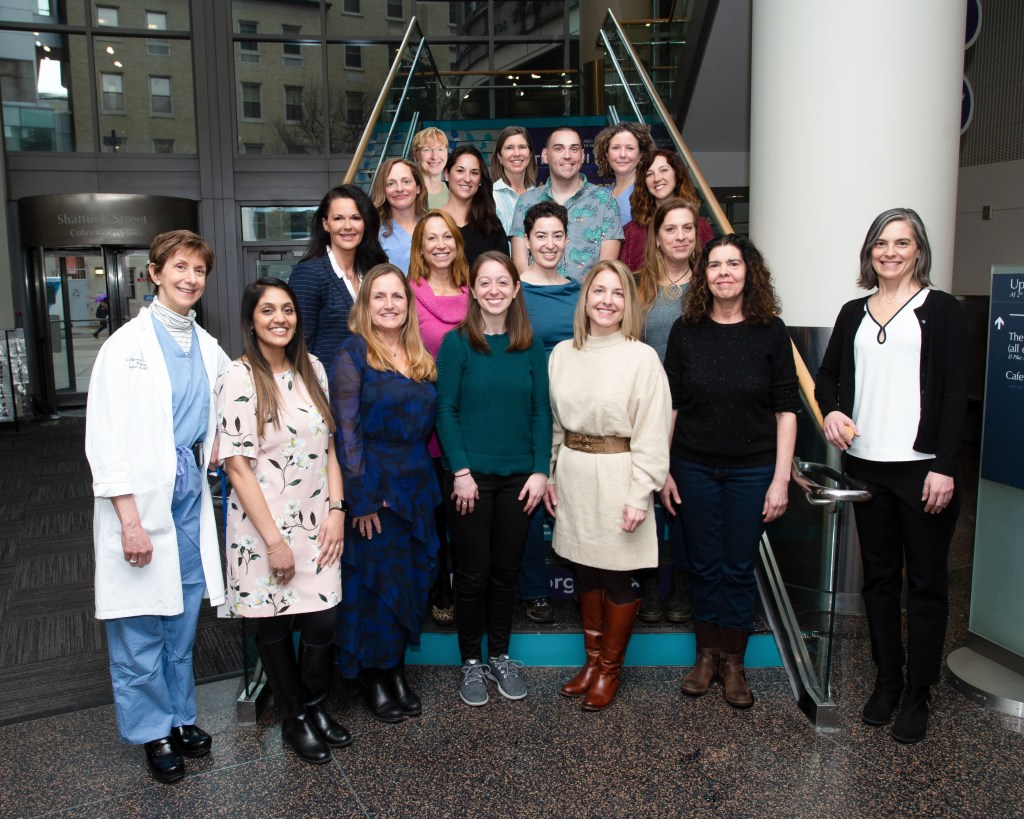
Christopher AhnAllen, PhD, the director of the Gender Diversity Clinic in the Department of Psychiatry, shared that providers must be attentive to increased rates of violence in LGBTQ+ communities to proactively identify those experiencing IPV in a clinic or hospital.

Trever Boylston, Racial Equity Action Committee chair of Fenway Health, founder of the Grafton MA LGBTQ+ community organization and a transgender man, shared his experiences to educate medical providers on how to better protect and advocate for LGBTQ+ patients impacted by IPV.

Spreading Awareness Across the Care Team

Boylston grew up in Salem, MA with his grandparents. As a child, he didn’t always have the language or resources to talk about his sexual orientation and gender identity. Before his transition, he was the victim of an emotionally and physically abusive relationship. His trauma and early struggles with his gender identity made him vulnerable and took a toll on his self-esteem.

“What I was trying to do was find a community that fit, to find a home and something outside that would make me feel whole inside,” explained Boylston.

After transitioning, Boylston shared that health care professionals didn’t always take his experiences with IPV seriously. These challenges motivated him to advocate for other LGBTQ+ survivors of IPV. Boylston now works with various community organizations, helping individuals effectively tell their personal stories to create positive change.

At this event, he addressed Brigham medical providers on how to advocate for individuals who’ve experienced IPV.

“It starts with building trusting relationships with your patients,” said Boylston. “They need to feel comfortable enough around you to disclose abuse.”

Providers often ask patients about their relationships and their experiences with intimate partner violence. Boylston, however, emphasizes that it’s not only what they say, but how they say it.

“It’s important that providers have the right vocabulary when working with LGBTQ+ patients. If we come in, and we don’t hear providers using correct pronouns or language, we’re probably not going to come back for follow-up care,” said Boylston. “Language is critical to creating a safe environment.”

Finally, this work can’t happen in isolation.

We must support continuous efforts to spread knowledge and resources regarding IPV in the medical community and ensure that these efforts are collaborative across medical disciplines. This includes hospital administrative staff.

“It starts with the first time the patient walks into the office—at the reception desk, with the nurses and medical assistants. So many patients will spend more time in a clinic’s waiting room than they will speaking with their physician,” said Boylston. “The entire care team must have that level of sensitivity and awareness.”

In February of 2020, the Brigham Midwifery Group posed for a group photo.

Among the health care professionals that make up a care team, midwives play an essential role in many patients’ pregnancies. In fact, Certified Nurse Midwives (CNMs) attended 17 percent of Massachusetts births in 2021. Midwives are trained medical professionals who support pregnancy, labor, delivery and post-partum processes. They practice independently, see their own patients and collaborate and consult with physicians as needed.

According to a report from the 2022 Massachusetts Health Policy Commission, hospitals with higher rates of midwifery care had better care outcomes, shorter inpatient stays, lower rates of cesarian sections (c-sections) and less spending on maternity care.

As part of the oldest midwifery program in Massachusetts, the Brigham midwives provide inclusive care to ten clinics across the Boston area.

The team is well regarded by the diverse patient populations they serve, including individuals of color and immigrants, who may have a history of experiencing racial disparities in the medical system.

In addition to physical health, the Brigham midwifery team connects their patients to resources that help address issues like unstable housing situations, poverty, substance abuse and domestic violence.

Many providers have also sought specialized training to meet the diverse needs of the populations they serve. Glynnis Gracia, MS, CNM, a midwife at the Southern Jamaica Plain Health Center, is currently taking classes to create trauma-informed care plans for her patients. Most staff on the team also speak Spanish to communicate with their patients in their native language.

“Informing our patients on how to access resources in their own language adds an extra level of comfort to them and improves the care they receive,” said Margot Stone-Condry, CNM, a midwife in the Department of Obstetrics and Gynecology.

A Commitment to Care

Matt Medina, MSN, CNM, C-EFM, holds Maddie Sullivan, the daughter of Lindsay Sullivan, RN, a Labor and Delivery nurse at the Brigham, shortly after assisting with her birth.

Mari Ramirez is far more familiar to the Brigham than most patients, having worked here for several years in clinical research after finishing her undergraduate degree in Clinical Psychology and Neuroscience.

As a clinical research professional, Ramirez has been following the topic of maternal care and racial disparities in perinatal health for nearly fifteen years. When she learned that she was expecting her marriage’s first child, Ramirez knew she preferred midwifery care. Midwifery and holistic health are a normal part of her culture and were a natural part of her upbringing.

“I have family from the Americas, Africa and the Middle East, where midwifery and holistic health are very common, in my experience,” said Ramirez. “Their holistic focus was very important to me.”

When it came time to deliver her firstborn child, she knew that the Brigham would be a good fit for her, especially because of the work that former Brigham clinician Audra Meadows, MD, published and the well-regarded midwifery team.

“Because of all my years working here, the Brigham is like a second home to me,” said Ramirez.

While generally healthy, Ramirez had an experience with a suspected but unconfirmed deep vein thrombosis (DVT) decades ago, a condition that results in the formation of blood clots, pain and swelling in the legs. Given her background in clinical research and familiarity with this topic, she reviewed the literature and turned to the Brigham’s obstetrics team for guidance.

After reading Meadows’s paper on racial disparities in maternal care, Ramirez sought her out as her obstetrician at the Brigham to explore potential pregnancy risks. Working with a hematologist, Dr. Meadows cleared Ramirez for care with the Brigham’s midwives. She then met the midwifery team, including Matt Medina, MSN, CNM, C-EFM, and Julie Patel, CNM, midwives in the Department of Obstetrics and Gynecology, who developed a care plan.

Ramirez continued to meet with her care team throughout her pregnancy. They consistently addressed physical needs and any other factors affecting her health, referring her to physical therapy, pregnancy-safe yoga and other supportive assistance.

“The entire care team at the Brigham cared for me as a whole individual, which led to better health outcomes,” said Ramirez.

‘They Advocated For Every Aspect of My Health’

After going into labor and arriving at the Brigham, her labor progress stalled. Sensing Ramirez’s stress, Medina cleared the room of individuals who were not playing a supportive role in the labor process. Shortly after, Ramirez’s labor began to proceed again.

“The Midwifery team may have saved my life, especially Matt, as he was such a capable and caring provider,” explained Ramirez. “Their respect and continuous guidance for me as their patient were invaluable.”

During the birthing process, the medical team suggested Ramirez consider a c-section due to the baby’s positioning. However, Medina knew that Ramirez preferred a vaginal birth if possible and took another route. He worked with Ramirez’s care team to first determine the baby’s location, then used his skillset to alter her baby’s positioning, which ultimately allowed Ramirez to avoid a c-section.

“My health outcomes were far more favorable for me having a vaginal birth than a c-section,” explained Ramirez. “The entire midwifery team was attentive to that and ultimately allowed me to have a natural birth.”

After a long labor, Ramirez gave birth to a healthy baby girl, who is now nearly two years old. As she reflects on her pregnancy, she attributes much of her success to her midwifery team at the Brigham.

“Matt and the midwifery team were instrumental in supporting the birth of my daughter. They supported me through a challenging time in my life and advocated for every aspect of my health,” said Ramirez. “They were truly dedicated to ensuring I had as successful of a birthing process as possible.”

Click here to find out more about the Brigham Midwifery Group or to schedule an appointment.

1 Comment

This Valentine’s Day, Brigham Bulletin is featuring two couples whose affection has brought them from medical school to Brigham residency programs.

“We met in the library, actually,” said Sarah Abou Alaiwi, MD, laughing as she reflected on meeting her now-husband, Amin Nassar, MD.

Abou Alaiwi and Nassar are not only husband and wife, but they’re also both Brigham residents in the Department of Medicine. Abou Alaiwi is in her second year and Nassar is in his third. While they’re currently in the same program, the pair didn’t actually meet at the Brigham. Rather, they met thousands of miles away as medical students in Lebanon.

“We met when Sarah was studying for her United States Medical Licensing Exam (USMLE),” explained Nassar. “I had already done mine, and she asked me questions about it. So, I started helping her study, and we went on a few dates.”

While dating, Nassar received a research fellowship in Boston. Throughout the fellowship year, the couple traveled back and forth to visit each other.

In one of Nassar’s most memorable trips to Lebanon, he proposed to Abou Alaiwi. The couple married in July of 2018.

After his fellowship, Nassar began his residency at the Brigham, and Abou Alaiwi started applying for National Residency Match Program, also known as “The Match,” and the system that fourth-year medical students use to apply for residencies around the country.

“We both applied to the Brigham for residency because we knew the program was like a family,” said Abou Alaiwi. “We also knew how supportive they were of couples, making sure we were in the same city, could work similar hours and had the support we needed to maintain our relationship.”

For medical students, the Match process can be stressful. However, international medical students face added challenges, having fewer connections with United States medical schools. While Nassar had already matched at the Brigham, Abou Alaiwi wasn’t sure where she would end up.

“When Sarah was applying for the Match, she met with the director of the Internal Medicine Residency Program, Joel Katz, MD, and he called several people in Boston to ensure she would stay here even if it didn’t work out at the Brigham,” explained Nassar. “Even though she did match at the Brigham in the end, I think that speaks to how much they respect families here.”

Although Nassar and Abou Alaiwi are in the same residency program, they infrequently care for the same patients at the same time, but “it’s always fun when we bump into each other,” said Abou Alaiwi.

“Recently, I was a night float, and a patient who was on my list was very sick,” said Nassar. “The patient went into cardiac arrest, and I immediately ran to his bedside. The first person I saw was my wife, right by the patient’s side, running the code. It’s such an incredible experience to work as a team, clinically.

Abou Alaiwi and Nassar aspire to be physician-scientists and share a passion for medical research. They worked together in the same lab studying the genetic and environmental underpinnings of urologic cancers before starting residency, and were even considering starting a lab together. While their clinical interests diverged during residency with Nassar focusing on bladder and kidney cancer, while Abou Alaiwi shifted interests towards cardiomyopathies, or diseases of the heart muscle, they often still collaborate on projects.

Thanks to the Brigham, the young couple has never doubted their ability to stay together. Nassar sets off to complete a fellowship at Yale University next year and Katz is already working with Abou Alaiwi to figure out how to best accommodate the couple’s schedules.

“The Brigham has allowed us to stick together at every point in our careers,” said Nassar.

‘We Knew We’d be Supported Here’

For Margaret Hayden, MD, and Sanjay Kishore, MD, working exceptionally long hours as medical residents is far easier when together.

That’s because their residency program at the Brigham purposefully helps them coordinate their schedules so that the couple can maximize the time they spend with one another when they’re not at work.

Hayden and Kishore first met at Harvard Medical School. When applying for residencies, they knew they wanted to stay close to one another and heard from many that the Brigham strongly supported families.

They admitted that going through the Match process was nerve-racking at times, knowing they could end up in vastly different places. However, after interviewing for several programs, they firmly believed they belonged at the Brigham.

“We had no doubt that the Brigham was our first choice, said Hayden. “The Brigham is family to so many, and we knew we’d be supported here.”

On Match Day in 2019, they got the news. Both Hayden and Kishore matched in the Brigham’s Division of General Internal Medicine Primary Care Residency Program. They were ecstatic.

“We chose the Brigham because of their willingness to work with couples, said Kishore. “They’ve always had our backs and even try to align our schedules, so we can optimize the time we can spend together.”

The Brigham has not only afforded the couple to enjoy quality time off and take vacations, but it’s allowed them to grow as a medical team. As current third-year residents, they reflect on the joys and challenges of taking on this journey together.

“It has been a real privilege to be able to lean on my partner during these past two and a half years—perhaps some of the most difficult years of our lives,” said Hayden. “Being on the frontlines together during both the good and bad times has cemented the foundation of our relationship.”

For many high school students, navigating future career options can feel daunting. But for Musarat Tasmin, the Brigham’s Student Success Jobs Program (SSJP) has illuminated research careers she never knew existed and provided her the mentorship needed to seek those opportunities.

Tasmin is one of many students enrolled in SSJP, a year-round, paid internship program of the Center for Community Health and Health Equity at the Brigham that places students in more than 60 departments across the hospital. Through SSJP, students gain hands-on work experience in labs, clinical units, patient transport and various administrative services. The program also pairs interns with Brigham mentors and provides assistance with college and career preparations. At the end of the program, every graduating senior can apply for a four-year college scholarship.

SSJP has recruited students from Boston Public Schools for over two decades and aims to increase underrepresented populations in health, science and medical careers. Pamela Audeh, program director of SSJP, reports that 89% of interns identify as people of color, 65% speak a first language other than English and most are first-generation college students. In autumn of 2021, 94% of alumni entered college immediately after high school and 86% of all alumni in college majored in a health care, STEM or social science field.

Students can apply for SSJP in tenth grade and remain in the program until they graduate high school. Some will stay in the same department for all three years, while others will work in multiple areas to explore different types of healthcare professions.

Even after graduating from SSJP, many students stay in close contact with their mentors. A survey assessing the program’s success found that 82% of SSJP alumni rated these relationships as very useful. Program staff also remain in contact with alumni in college and beyond, working with HR to provide career guidance and other employment support.

Broadening Students’ Perspectives

Tasmin works directly with Monik Jiménez, ScD, an epidemiologist in the Department of Medicine, who studies the impact of incarceration on health and the intersection of sex, race, ethnicity and health equity in stroke patients.

“I’m thinking about going into the medical field and am also considering studying psychology in college,” said Tasmin. “Working in a hospital and seeing what Monik does as a researcher gives me an idea of the types of careers I’m interested in pursuing.”

SSJP not only helps students narrow down professional paths that suit their interests, but also broadens their perspectives on the many types of jobs available in science and healthcare.

“I didn’t learn what an epidemiologist was until I was in college,” said Jiménez. “SSJP allows students to gain exposure to so many healthcare fields at an early age, and that impacts their future aspirations.”

Jiménez strives to teach Tasmin concrete skills, like entering data into Excel and conducting literature reviews. She also wants to help Tasmin identify what she’s passionate about and help her build her resume in ways that will allow her to succeed down the road.

Jiménez also recognizes Tasmin’s potential and speaks to the ambition and talent SSJP students hold.

“I’m always so impressed by the way that Musarat takes on any challenge,” said Jiménez. “Students in this program can do so many things, and it’s important not to limit their thinking. They’re all brilliant young people and can take on advanced tasks that would traditionally go to college or graduate students.”

Mentorship Paves a Pathway Forward

For Yilu Ma, MS, MA, CMI, director of Interpreter Services, SSJP is not just about teaching students the skills they need to succeed in the workforce, but also helping them identify how to pursue their ambitions.

“To me, mentorship is about what pathways I can show my students to get to wherever they aspire to go in their careers,” said Ma.

Ma’s mentee, Yofrandys Pena, is a third-year student in SSJP and an intern in Interpreter Services. He’s also the current president of the SSJP student committee. Pena’s knowledge of multiple languages is invaluable for the work he is doing in Interpreter Services, which includes assisting patients and families in overcoming language barriers to communicate with their providers.

Throughout Pena’s time in the program, he’s worked in departments across the hospital, allowing him to explore different healthcare sectors. Through Interpreter Services, he’s discovered his passion for international relations.

“During my time with SSJP, I’ve done mechanical and inventory work with the Division of Engineering in Medicine, analyzed brain activity in the Department of Psychiatry and now am working with Interpreter Services,” said Pena. “Yilu Ma, Jean Baptiste Neptune, Sigfredo Salguero and Marta Solis have been more than just supervisors for me and have truly fulfilled their roles as mentors. When I first started with Interpreter Services, I didn’t know what I wanted to study in college. My mentors’ guidance helped me discover my passion for international relations and allowed me to understand that I can help members of my community within healthcare, without having to become a nurse or a doctor.”

Before joining the Brigham, Ma studied international relations at Tufts University in the Fletcher School of Law and Diplomacy, and connects with Pena over their shared interests.

Pena and Ma also share experiences of having families that immigrated to the United States.

“Helping students navigate many of the unique challenges that come with being an immigrant or having parents that immigrated to the United States is extremely rewarding to me,” said Ma. “I hope that by sharing my experiences, I can help them find their place in the workforce.”

Programs like SSJP not only provide Boston youth with hands-on work experience and mentorship, but also provide a pipeline for underrepresented groups to enter and lead professions in healthcare and medicine.

“When underrepresented students in medicine connect with mentors of similar backgrounds, they can begin to see pathways for themselves in healthcare,” said Robert Higgins, MD, MSHA, president of the Brigham and executive vice president of Mass General Brigham. “Mentorship programs like SSJP are hugely impactful to our youth and ultimately promote a more equitable multicultural workforce.”

Interested in becoming a mentor? Contact Pam Audeh at paudeh@bwh.harvard.edu to find out how to get involved with SSJP.

4 Comments

Laura Smith, MD, and Marissa Cauley, PA-C, lead a training session with a group of neurosurgery, neurology, orthopedics and obstetrics and gynecology providers.

Each wave of the COVID-19 pandemic has brought a diverse set of challenges to health care systems everywhere, and this third wave has been no exception. With the rapid spread of the Omicron variant across Massachusetts, the Brigham has faced enormous staffing challenges.

However, this surge has differed from previous ones because most non-COVID-related care continued at pre-surge levels. In addition, due to its highly contagious nature and widespread community infection rates, Omicron has affected more staff than previous variants. In tandem with staffing shortages, an increase in patients with complex medical needs has put additional stress on hospital providers working tirelessly to provide high-quality care around-the-clock.

“In this third wave, we saw a rapid and significant increase in our COVID-19 census, and it became beyond what the Department of Medicine could manage alone due to staffing challenges,” said Mallika Mendu, MD, MBA, executive medical director of Clinical Operations. “But unlike previous surges, where we could leverage staff from other departments to help virtually, with documentation or even stand up additional COVID-19 specific teams, very little was shut down. We’ve been constantly pivoting and developing alternative strategies to support our frontline teams.”

Seeing this predicament, Mendu and the inpatient operations team had an idea. They approached departments outside of the Department of Medicine to discuss whether they could care for COVID-19 patients on their existing teams.

Since the pandemic’s beginning, the Department of Medicine has cared for all primary COVID-19 patients. Primary COVID-19 patients are those admitted to the hospital due to health issues directly caused by COVID-19. Many departments care for secondary COVID-19 patients, who are admitted to the hospital for a reason other than COVID-19, but who test positive for the virus. With this initiative, Mendu and the inpatient operations team identified teams willing to take on primary COVID-19 patients onto their existing teams.

Many departments across the hospital, including the Department of Surgery, Neurology, Neurosurgery, Orthopaedic Surgery and Obstetrics and Gynecology, were more than willing to help.

While eager to assist their colleagues, these health care providers required training and assistance to care for COVID-19 patients outside their typical caseload. Laura Smith, MD, medical director of inpatient operations and a hospitalist in the Division of General Internal Medicine & Primary Care, led educational initiatives for this effort.

“We created structured guidelines that determined which patients were appropriate for which teams and when patients might need to go back to the Department of Medicine should their condition necessitate more advanced medical care,” said Smith. “We also compiled training resources for teams to access virtually, and held training sessions to introduce clinicians to the new process.”

To create space for providers to receive clinical guidance, the Department of Medicine also initiated an enhanced medicine consultation service to support departments caring for primary COVID-19 patients.

Rising to the Occasion

After training and holding numerous meetings with the departments involved to establish workflow, the new process was implemented. By the height of surge, eighteen patients were managed across five departments that had capacity to receive patients. Mendu emphasized that while this number may appear small, other areas supporting this care was immensely helpful to the Department of Medicine when they were at capacity.

This effort did not come without challenges. Many providers were working with primary COVID-19 patients for the first time. Thanks to the help of the consultation team, however, staff adapted quickly to their new line of work.

Jamie Maguire, MD, a physician in the Division of Infectious Disease, acted as a consultant to the orthopaedic surgery team, providing COVID-19 expertise as needed.

“This team stepped into a new role and rose to the occasion with eagerness and enthusiasm,” said Maguire. “And I think that speaks to how bright, hardworking and highly motivated these physicians are.”

Moving Out of the Comfort Zone

Care teams met twice a day to review patient plans and connect with consultation services throughout this process. Internal medicine consultants fielded clinical questions and reviewed cases for these providers, ensuring that all patients received the best care possible.

Several providers on the frontlines of these efforts reflected on their colleagues’ enthusiasm to participate in this difficult yet impactful endeavor.

“Everyone was so willing to move out of their comfort zone to help our colleagues in internal medicine, which was amazing to see,” said Matthew O’Connor, a physician assistant in the Department of Neurosurgery. “Considering that we’re from surgical services and are not used to treating primary COVID patients, I was impressed by everyone’s wiliness to dive in, learn and do all they could to help.”

James Kang, MD, chair of the Department of Orthopaedic Surgery, spoke to how proud he was of his team for stepping up to this challenge.

“This was a valuable learning experience for all of us,” said Kang. “I’m proud of my team’s efforts to support one another and our patients.”

Several residents also expressed how beneficial this experience was to their medical training.

“It was a privilege to be asked to work alongside the medicine teams in caring for the COVID-19 patients during this surge,” said Harry Lightsey, MD; Brendan Striano, MD; and Michael Gustin, MD. “We could not be more thankful for the support of our talented team, including our orthopaedic attendings, the medicine liaison staff and, in particular, Dr. Jamie Maguire. “This collaborative effort instilled the confidence in us to safely and effectively take care of these patients.”

While the Brigham has since discontinued this effort due to a decline in COVID-19 cases, Mendu and her colleagues recognize this initiative’s positive impact on the Brigham community and the care Brigham patients received.

“I want to thank everyone for their flexibility, trust and support for each other and the hospital,” said Mendu. “This effort exemplifies the very best of who we are at the Brigham and that we truly are stronger together.”

Small acts of kindness can make a tremendous difference in our workplace, especially during challenging times. Research has shown that these gestures foster a culture of generosity, collaboration and innovation, and they even help increase productivity, efficiency and workplace satisfaction. Acts of kindness, no matter how small, can be truly meaningful and inspire us to pay it forward to others, reverberating for interactions to come.

Sharing Handmade Kindness With Cards

This winter, Mardi Chadwick Balcom, JD, senior director of community health intervention and prevention programs, discovered a way to use her love of crafting to spread joy across the Brigham.

Chadwick Balcom has worked at the Brigham for nearly 13 years and is an avid card maker. She rekindled this hobby during the pandemic when she was inspired by card maker Jennifer McGuire’s initiative, “Sharing Handmade Kindness.”

“I’m a lawyer by training,” Chadwick Balcom explained, “so I just never thought of myself as an artist. The pandemic helped bring out my creative side that I hadn’t tapped into before. I discovered a whole world of paper crafters and card makers, and even transformed my office into a card-making shop.”

Chadwick Balcom began her card-making endeavors by sending cards to family, friends and colleagues. She spread the word through her Facebook network, a dedicated card-making Instagram account (heart2handmadecards) and a Google form that anyone can complete to request a card for any occasion. Chadwick Balcom even includes a removable message inside each card, allowing recipients to easily pass it on to others—enabling an eco-friendly way to pay it forward. “This is my way of giving back and radiating it out into the community,” Chadwick Balcom remarked, “and I think we need that a lot right now.”

Chadwick Balcom hopes to inspire others to spread kindness, too. “We can spread kindness in any way,” she says. “Think about what brings you joy, whatever your hobby or passion is. When you share that, kindness is just a natural expression.”

A Small Act With a Big Impact

Kayla Pedersen, BSN, RN, a nurse on Braunwald Tower 8CD, understands very well the impact of kindness and compassion. While caring for a patient transitioning to comfort measures only, she handed him a piece of paper and asked him what he would like to say to his wife. He wrote, “I love you forever.” Pedersen matted and framed the handwritten message, placing it on his bedside table. His words of eternal love were the first thing his wife saw upon arriving the next day during such a heart-wrenching time.

“I wanted to ensure the patient’s family had closure and something to treasure forever,” commented Pedersen. “These are the small things that I would do for any of my patients, and I know any of my fellow staff members would do for theirs, too. We all inspire each other.”

Both Chadwick Balcom and Pedersen’s stories remind us of the power of kindness. Everyone is going through something, whether big or small, and thoughtful gestures can transform someone’s day for the better. Amidst the many challenges Brigham staff currently face, these connections and acts of humanity remind us all that we are in this together.

Have you caught a fellow Brigham employee being kind? We’d love to hear about it! Share your story at bulletin@bwh.harvard.edu.

With cold temperatures and frost settling in, there’s no mistaking that winter is here. For many, staying warm this season means staying inside. And coming off the holiday months — a time often spent with loved ones, indulging in sweet treats and generations-old recipes — individuals can find it challenging to maintain regular wellness routines.
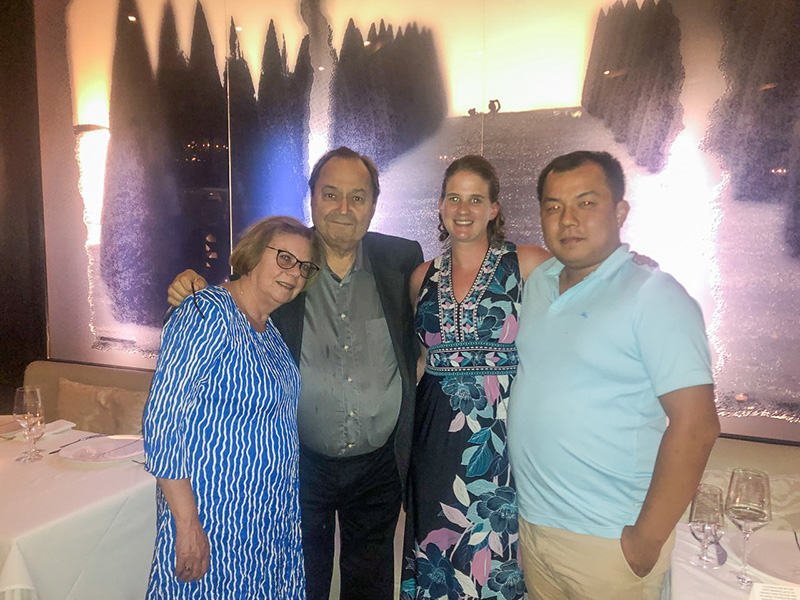
We spoke with Marion Eckl, MS, RDN, LDN, a senior nutritionist in the Department of Nutrition, to discuss the best ways to manage stress and maintain healthy eating habits over the winter months.

Eckl works with a broad range of patients and clients, including those with cardiovascular disease, gestational diabetes and individuals looking to improve their everyday eating habits.

What are some of the wellness challenges people generally face this time of year, and what strategies do you recommend to combat them?

ME: For many, one of the biggest challenges following the holiday months is that everyday routines get shifted. This shift is usually a good thing because it probably means you got to see friends and family you hadn’t seen in a while and enjoyed delicious holiday foods and warm drinks.

As dieticians, it’s our job to think about food and determine how to fit healthy eating into your schedule. But I think it’s also important to give yourself grace during the holidays and accept that your routine will fluctuate. It’s also essential to recognize that it’s okay to enjoy certain foods outside of your typical diet this time of year.

It’s January, and many people are starting their New Year’s resolutions. How should one go about balancing indulging in holiday foods and taking time to rest with developing those new routines and setting goals?

ME: I think a big issue with New Year’s resolutions is that many people want to make big changes all at once. Often, people try to make these 180-degree changes to their diet or exercise routine or both. And I think that’s where the trouble comes in. We put pressure on ourselves to fit an ideal image, but making changes to one’s lifestyle looks different for everyone. For some people, it might mean eating more fruits and vegetables each week, and for others, it might be something as simple as taking a walk every other day. You also don’t have to wait until January each year to initiate these habits. There are always ways to make small, meaningful lifestyle changes that positively impact your health.

It’s pretty cold in Boston this time of year, which causes people to spend a lot more time inside. Do you have any strategies for people looking to exercise over the winter months and support their mental health?

ME: It is vital to find ways to work movement into your day, particularly during the winter months in New England where the days are shorter and colder. Maybe that’s a short walk with your family after a meal to help with digestion, or perhaps that’s doing your own at-home yoga practice. Any way you can find to move your body and get outside is really beneficial for your physical and mental health.

How can our diets help boost our immune systems?

ME: It’s essential to ensure that you’re maintaining as healthy of a diet as you can. Fruits and vegetables have great vitamins and minerals, especially vitamin C, that boost your immune system. It’s also important to make sure that you’re eating adequately in terms of calories and protein. Then consider all the other things that tie into health like exercising, sleeping and reducing stress. All of these strategies keep immune function as optimal as possible.

What are some diet and wellness resources that the Brigham offers that people can use to help implement these strategies?

ME: We have the outpatient clinic here at the Nutrition and Wellness Service and we see patients and clients from many different realms. This includes those with cardiovascular disease and type two diabetes, but also individuals who simply want to talk to us about healthy eating. Some people see us just to learn more about meal planning or general wellness.

Is there anything else that’s important for all of us to remember to stay well this winter?

ME: One thing that the pandemic has helped us all to remember is to slow down. Take mealtime slowly. Instead of rushing to eat as fast as possible or cramming lunch into ten minutes, sit down and enjoy your food. This not only helps with digestion, but gives people a chance to enjoy one another’s company and mentally reset.

The Nutrition and Wellness Service is available in Outpatient Services in the Department of Nutrition. The Employee Assistance Program (EAP) also offers a wide variety of wellness resources available to all Mass General Brigham employees, professional staff, immediate family members and IHP students.

Florina Haimovici, MD, director of the Brigham’s Reproductive Endocrinology and Infertility Psychiatric Clinic and a psychiatrist with Brigham and Women’s Faulkner Hospital’s Consultation Liaison Service, smiled, wiping a tear from her eye as she reflected on how much the Brigham community meant to her and her family.
It was the summer of 2020, and Haimovici’s husband, Doru Iancovici, MD, a primary care physician (PCP) on the North Shore, began experiencing kidney failure. Following some testing, Haimovici sent her husband’s lab results to Adina Voiculescu, MD, a Brigham nephrologist, who saw him immediately. By August of 2020, Iancovici was placed on the kidney transplant list.

In December, Iancovici’s health took a turn for the worst and he started peritoneal dialysis, a treatment that removes waste from the blood when the kidneys can no longer do it themselves.

Serving generations of families, Iancovici had worked as a PCP on the North Shore for more than thirty years. Despite the rapid deterioration of his health, he still went to work every day to see patients, receiving dialysis during breaks in his schedule.

After weeks passed without a donor, a social worker advised Haimovici to spread the word about her husband’s need for a kidney. Haimovici sent a few emails to potential donors.

During this time, one of Iancovici’s nurses offered to donate her kidney, but she, unfortunately, was not a good match. Later, a patient of Iancovici also volunteered to donate her kidney, telling him that because he cared for her for twenty-five years, she’d like to ensure that he can continue to provide for her and future patients. Despite these tremendous efforts, she was also not the right fit either.

One day, Haimovici’s now former office manager, Diane Touhy, wrote an email to staff explaining what Haimovici’s family was going through a and sharing a link to the Brigham’s kidney donor site for anyone interested in learning more.

Haimovici soon received an outpouring of emails from across the Brigham.

“I can’t tell you how much support I received from my staff and colleagues during this process,” said Haimovici. “Although we were closing our offices due to the pandemic, my colleagues continued to check on me every single day.”

A  Donor Identified

In May, Haimovici’s husband received a phone call from the Brigham’s kidney donor practice manager, letting him know that they had identified a donor. The donor was a perfect match and the practice manager asked Haimovici and Iancovici if they would like to know the donor.
“Of course we wanted to know,” said Haimovici.

A few days later, Touhy invited Haimovici to her office at Brigham and Women’s Faulkner Hospital (BWFH). When Haimovici arrived, her office assistant, Nichole Rouse, and Touhy were waiting for her with a camera in hand.

“I had no idea what was going to happen next,” said Haimovici.

Rouse handed Haimovici a small box decorated with hearts and flowers. The box read, “God bless you, a new beginning.” In a card attached to the box, Rouse revealed that she was the donor.

Rouse expressed that she was impressed by the passion, tender love and care Haimovici and her husband devoted to their relationships with patients and staff.

“Coming from a family in medicine, I learned early on what exceptional care looks like,” said Rouse. “From the way her patients talked about her, it’s always been clear to me that Dr. Haimovici treats everyone like family. I got the impression that her husband practices that same compassion.”

Rouse is twenty-eight years old and a mother to a three-year-old daughter. Haimovici later found out that she tried to donate a kidney a couple years ago to a young patient in North Carolina but wasn’t a match. This time around, Rouse asked to be anonymous initially to avoid potentially disappointing Haimovici.

“Nichole is an exceptional person,” said Haimovici. “We began working together during the lockdown and she would come into the office a few days a week. She always asked me questions about my family and I’d show her pictures of my grandchildren. She showed me pictures of her daughter and, as a result, we built a really meaningful relationship.”

The transplant took place one day before Haimovici’s birthday. The next day she woke up early, making breakfast for her husband and Rouse, then spent the morning with Rouse as she recovered from the operation.

“That morning was very healing for both of us; I got the chance to know her so much better,” said Haimovici.

Haimovici returned home that afternoon, planning on coming back to the hospital at night to check on her husband when Rouse’s boyfriend texted asking if she’d join them for dinner and to visit Rouse.

Upon arrival, Rouse’s boyfriend greeted Haimovici with a meal and a birthday present.

“They thought that it wasn’t fair that I’d have to eat dinner alone on my birthday,” said Haimovici. “I was so touched. Because of moments like these, we are now a family.”

‘The Brigham is My Family’

Haimovici spoke of the unconditional support she received from her colleagues throughout this journey. She said she could not have made it through this process without the backing of her department.

Colleagues like David Silbersweig, MD, chair of the Department of Psychiatry; David Gitlin, MD, vice-chair for clinical programs in the Department of Psychiatry; John Fromson, MD, chief of the Department of Psychiatry at BWFH; Sejal Shah, chief of the Division of Medical Psychiatry; and Naomi Schmeltzer, director of the Division of Medical Psychiatry at BWFH, along with her staff and trainees, provided her with continuous comfort throughout the transplant process.

“They were there for Nichole and me every single day,” said Haimovici. “Nichole’s managers, Vanessa Pugh and Diane Touhy, and her colleagues were so understanding, always letting her leave work to go to appointments.”

The day before the transplant, the president of BWFH, David McCready, and Fromson came into the office and gave Rouse a hug. Gitlin also visited Iancovici every day while admitted to the hospital.

“I cannot thank the transplant team enough,” said Hamiovici. “Dr. Stefan Tullius and his team provided my husband with exceptional care, compassion and dedication and so many doctors gave me their personal cell phone to call at any time.”

After the transplant, Haimovici and her family stayed in close contact with Rouse and her partner, and the four remain close friends today.

“I have been working at Brigham and Women’s Hospital for thirty-five years,” said Haimovici. “I am moved by the collegiality, humanity and support I received when I needed help. The Brigham is my family.”

1 Comment

It was an absolute pleasure to care for Howard. Serendipitously, our two academic paths converged. Mr. London researches the career paths of first-generation and community college students. I began my journey as a community college student, went to UCLA for some undergraduate work, was admitted to UCLA’s MD/PhD program and am now a physician in the Brigham’s Department of Neurosurgery. Our connection helped Howard to get through a challenging time during his recovery, personifying the lesson that even in our very technical endeavor, the human connection is what’s most important.

Genaro Villa, MD, MPH
Research Resident, Department of Neurosurgery

Behind the bustling clinical operations on the frontlines of hospital management is a small yet integral support team the Brigham depends on to run every day. That’s the Linen Department.
“You just can’t run a hospital without linens, said Peter Linck, an area manager in Materials Management. “It’s the bread and butter of clinical support, and so much of it happens behind the scenes.”

Every fresh pillowcase, bedsheet and thermal blanket that patients receive when they’re admitted to the hospital finds its way to them thanks to the Linen team.

Not only is this group imperative to patient care, but it’s also working strategically to save money and increase efficiency by reducing waste.

Like many hospitals across the country, the Brigham rents linens, items like bedsheets, pillowcases, hospital gowns, scrubs and towels, from an outside vendor.

Each day, the vendor delivers trailers of fresh linens to the hospital. The team unloads those trailers and distributes carts to departments throughout the Longwood campus. At the end of a shift, all old linens are returned to be laundered.

Last Spring, the Brigham changed its linen vendor from Angelica to Unitex, requiring the department to alter decades-old practices. With Angelica, the Brigham was credited for all returned unused items. With Unitex, however, everything sent from laundry can only be returned as soiled.

This image has an empty alt attribute; its file name is thumbnail_image9-1024x616.jpg

With these new practices, the team began investigating innovative ways to cut costs. They built a “clean pantry” of covered fresh linens that they could redistribute to parts of the hospital in need. They soon realized that certain departments required significantly more linens than others. Instead of paying delivery fees for unnecessary carts, the team started bringing excess linens from one department to other areas experiencing shortages.

Eliminating exchange carts cuts both delivery fees and the total number of trailers sent to the Brigham, promoting the hospital’s green environmental goals and reducing traffic in the Longwood area.

“With our new vendor, we have a very clear idea of the pounds, quantity and types of linens that we are being billed for, said Linck. “That allows us to track usage, measure our availability of clean, covered linens and pinpoint areas where we can work more efficiently. Every week we’re making new changes and tweaks, and it’s really driven up engagement with our employees.”

Recently, the team reached an ambitious twenty percent savings goal, a benchmark they set about six months ago. To celebrate this accomplishment, everyone received gift cards to the Brigham cafeteria.

These savings strategies benefit the Brigham, but have also motivated the team to create more professional development from within, like new leadership roles and opportunities for promotion. Staff can also take initiative on new projects and get creative about how they do their work.

This image has an empty alt attribute; its file name is thumbnail_image1-1024x768.jpg


“We’re always looking for ways we can save money, but also make our jobs easier, said Linck. “If we can make our day-to-day tasks more meaningful, our staff are happier and more dedicated to their work.”

While they’ve already made great strides, the team continues to set more ambitious savings goals, aiming to cut future spending by an additional ten percent.

Elaine Weiswasser, linen manager in Materials Management, emphasized that even before these recent achievements, the Linen team has always worked tirelessly to maintain hospital operations.

“Everyone on the Linen team is truly dedicated to making sure that our patients have everything they need to make their stay here as comfortable as possible,” said Weiswasser. “Their goal has always been to do their jobs to the best of their abilities.”


2021 presented us with a myriad of challenges. While difficult at times, this year brought us monumental medical breakthroughs, community outreach, the launching of world-class healthcare initiatives, and as always, outstanding patient care. Through a year of both celebration and heartbreak, the Brigham community exhibited the utmost compassion towards one another and our patients.