
Posts from the ‘Uncategorized’ category

Ben Coiner

When Ben Coiner isn’t working in the Department of Psychiatry, chances are he’s spending his free time volunteering with several organizations close to his heart, including BWH’s Post-Anesthesia Care Unit. In the early-morning hours before his day job, Coiner welcomes patients preparing for surgery and assists with nonclinical duties.

Outside of BWH, he’s a volunteer coach with the Association of Blind Citizens Boston Renegades, a local team of blind and visually impaired athletes who play an adaptive form of baseball called beep baseball. The “beep” refers to the different types of sounds played on the field to communicate the location of the ball; buzzing sounds alert players to run to various bases.

Despite his busy routine from BWH to the baseball field, Coiner says he wouldn’t change anything about it.

“Volunteering always brightens my day,” said Coiner, a technical research assistant who works at 221 Longwood Ave. “Whether I’m working or volunteering, I love helping others and doing what I can to bring joy into their lives.”

Rob Weissman, the head coach of the Boston Renegades and a BWH patient, describes Coiner as an “unbelievable asset” to the team, which will host the largest beep baseball tournament on the East Coast, July 8.

“Ben pours his heart and soul into everything he does, and that speaks a tremendous amount about his character,” Weissman said.

BWH Bulletin recently interviewed Coiner about his volunteer experiences.

When did you begin volunteering?

BC: Throughout college, I participated in a few volunteer events in local communities through involvement with the varsity baseball team, student council and existing service partnerships at the University of Chicago. These experiences introduced me to the value of volunteering, and when I moved to Boston for work, I knew I wanted to continue.

What do you love most about volunteering?

BC: I love the personal interactions and being able to help others. I am able to see how my contributions directly help others, and I have the opportunity to meet and work with diverse groups of people.

Why would you tell others to explore volunteer opportunities?

BC: Helping others brings with it so many unexpected benefits, both for oneself and those we are helping. Until I experienced it myself, I didn’t realize how much it would impact me. I would tell anyone interested in volunteering to take something they are passionate about and find a way to help others using that passion, just as I did with baseball.

How do you incorporate your volunteer work with the Boston Renegades into your work at BWH?

BC: I’ve learned to become a better communicator in my daily life. When I’m on the field coaching, I know I have to be very specific with my words and directions since I can’t visually show the players how to swing a bat, for example. Because of my work with the Boston Renegades, I am now very aware of how I explain different things to patients and my colleagues.

1 Comment

Medical Library Closes, July 7
On Friday, July, 7, at 5 p.m., the Medical Library’s physical space will close. All library services will continue to be fully accessible online through the Brigham Educational Institution and the BWH Medical Library websites. As part of this change, the library’s physical location will be converted into the BEI Knowledge Center, with an anticipated opening date of early November 2017. Learn more.

Free Skin Cancer Screenings
The Brigham is teaming up with Dana-Farber Cancer Institute and its Blum Van to visit beaches across the state to provide free skin cancer education and screenings to the public. A Brigham dermatologist will be on board to provide free full-body examinations and address any skin-cancer related concerns. No insurance is needed. Upcoming screenings include Friday, July 14, 11 a.m.-3 p.m., at Revere Beach; Monday, July 17, 10 a.m.-2 p.m., at Nahant Beach; and Friday, July 28, 11 a.m.-3 p.m., at Nantasket Beach in Hull. View the complete schedule.

Track Partners HealthCare Shuttles live
You can now follow Partners shuttles live from your desktop computer, tablet or mobile device with new GPS tracking. With the system, patients, visitors and employees can track their bus or van in real time, get arrival-time predictions and view service alerts. Visit partners.org/shuttles or download the “Partners HealthCare” app from the Apple App Store or Google Play.

Office 365 ProPlus Upgrade
All standard workstations and laptops will be upgraded to Microsoft Office 365 ProPlus this summer and early fall. Office ProPlus replaces the current 2007 version. Microsoft will discontinue supporting Office 2007 in October 2017. Office 365 ProPlus will help us stay current with regularly scheduled updates, and you will also receive features and tools that enhance collaboration with colleagues. Learn more.

BWH nurse Laura Dwyer runs in the B.A.A. 10K.

Supporting causes near and dear to their hearts, hundreds of runners representing BWH and BWFH raced through Back Bay during the Boston Athletic Association (B.A.A.) 10K on June 25.

The run, presented by Brigham Health, is a 6.2-mile course that starts and ends at the Public Garden. BWHers who participated raised funds for their choice of discipline, disease area or department.

Many chose to support the broader advancement of expert care and groundbreaking research in their own department, division or service, including the BWH Burn Trauma Team, BWH Neurosurgery Team and Brigham Innovation Hub and Friends Team. Others zeroed in on specific initiatives within their units, such as the Department of Anesthesiology, Perioperative and Pain Medicine’s International Resident Education Fund Team, which raised $6,100 to support its residents who participate in international electives.

Darlin Liriano, RN, a nurse at Brookside Community Health Center, was one of 10 staff members who ran with the Brookside Braves. The team raised more than $3,600 to support community health services and programming at Brookside.

“The race meant so much to me. I remember walking down the road to start the race and my heart felt like it was going to break through my chest because it was filled with pride, happiness and empowerment,” she said. “I knew at the start that we would all finish. I knew that we would accomplish this together. I am so proud of my team for their incredible drive, team work, solidarity and commitment to each other and our patients.”

James Gosnell makes his 137th blood donation at BWH with the help of Blood Bank nurse Cristina Loftin.

About every 56 days, James Gosnell, RN, a clinical research nurse in the Department of Anesthesiology, Perioperative and Pain Medicine, spends his lunch break in the Kraft Family Blood Donor Center. Since he began working at the Brigham in 1987, Gosnell has donated a total of 137 times – the equivalent of more than 16 gallons of blood.

“My goal is to get to 20 gallons,” said Gosnell during his most recent appointment on June 14, World Blood Donor Day. “I look forward to coming to the Kraft Center every couple of months because I know that by donating, I’m helping others who are in need of blood.”

Gosnell is among the top active donors in the Kraft Center and is the highest active whole blood donor, says Justin Solle, donor recruiter.

According to Richard Kaufman, MD, director of the BWH Blood Bank, less than 5 percent of people who are eligible to donate blood actually do so. All donations made at the Kraft Center serve patients at the Brigham and Dana-Farber Cancer Institute. Both institutions rely heavily on donors to play a vital role in life-saving care.

“Any donation has the potential to save one or more lives,” Kaufman said. “It’s a very nice thing to be able to do for people.”

Gosnell is also rare among donors because he has Type O-negative blood, which is found in less than 7 percent of the U.S. population, according to the AABB (formerly the American Association of Blood Banks). Type O-negative is known as the universal blood type because it can be transfused to almost any patient in need, making it invaluable for blood banks to have in supply.

Each time Gosnell enters the Kraft Center, he is greeted with smiles and hugs from the center’s employees. Known at the center as the “every-56-days family member,” Gosnell encourages his colleagues and others to donate if they’re able. He credits the center’s staff for always making the donation process fast, painless and fun.

“Donating blood is a good habit to have,” Gosnell said. “I love knowing that I am doing something to give back.”

Volunteer Retirement Opportunity Info Sessions
BWH will hold information sessions for employees eligible for the volunteer retirement opportunity (VRO) to review details, the application process and to answer questions. All sessions will be held in the Bornstein Amphitheater and run for approximately one hour on the following dates: June 19, noon; June 20, noon; June 22, 7:30 a.m.; June 26, 5 p.m.; June 29, 7:30 a.m.; and July 6, 2 p.m. Learn more at BWHPikeNotes.org.

Unconscious Bias Training
This two-hour program explores how our unconscious mind works to create bias and what we can do to “get conscious” about the decisions we make. The course is recommended for employees at all levels. Register via PeopleSoft (Course Code: BWHUB) or email fdiaz2@partners.org.

Discover Brigham, Call for Abstracts
An interactive poster session at Discover Brigham enables researchers to showcase their innovative work. The call for abstracts is currently open online. The submission deadline is Tuesday, Sept. 12, at 5 p.m. Visit discoverbrigham.org/call-for-abstracts to learn more and apply. This year’s Discover Brigham will be held on Thursday, Nov. 9.

Video Premiere: Hospital Security Risks
What is one of the most common risks to hospital security nationwide? Find out and how you can help prevent it at a video premiere and Q&A session in Bornstein Amphitheater during one of the following times: Friday, June 23: 7-7:30 a.m. or every half hour between 10 a.m. and 2:30 p.m., with the last screening beginning at 2 p.m. Tuesday, June 27: 11 a.m.-2 p.m., every half hour, with the last screening at 1:30 p.m.

Kronos Timekeeping System Update
The Kronos timekeeping system will be updated, resulting in a more user-friendly and efficient tool for tracking work time at all Partners organizations. To complete this upgrade, there will be a downtime for terminals and Kronos Self Service (KSS) beginning Sunday morning, June 18. Learn more. Read a message from Sabrina Williams, MBA, interim vice president of Human Resources, about the update.

In honor of Father’s Day on Sunday, June 18, we asked BWHers to share their favorite piece of paternal wisdom. We invite all readers to share their own in the comments section of this story.


“Although an Episcopal chaplain and a counselor, my father was not really an advice-giver. He ‘taught’ by example: keeping confidences, challenging assumptions and addressing injustice. Most importantly, he never acted as if the world owed him anything, despite having suffered from polio, which caused a lifelong disability. Those were all powerful examples.”
Mark MacMillan, grants administrator,
Center for Excellence in Vascular Biology


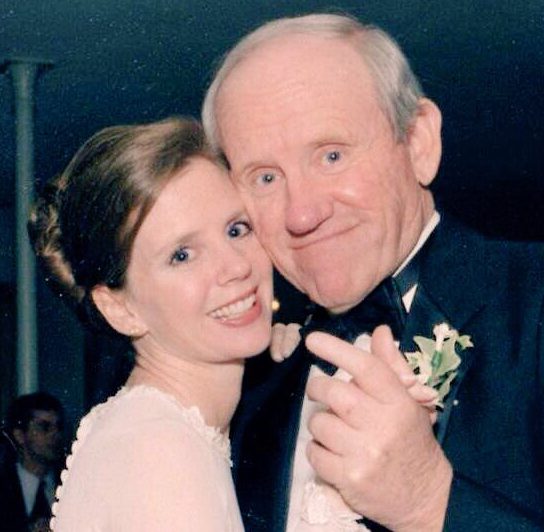
“My dad was my hero. He gave me so much great advice over the years. One of the things he always said was, “It’s nice to be important, but it’s more important to be nice.’ While some people remember him as being ‘important,’ when he passed away there was an outpouring of stories about how kind, thoughtful and nice he was. It meant the world to me to hear those stories.”

Erin McDonough, MBA, senior vice president and chief communication officer, with her father, Will McDonough


“My dad took pride in my most minor accomplishments, which instilled confidence. I watched him valiantly overcome adversity, helping me get up when I was down. Most memorably, and everlasting, he taught me to celebrate, embrace and learn from our differences. He taught me not to fear the unknown. He taught me compassion.”

Tracey Martin, Fellowship Program, Emergency Radiology


“My dad always told me to help someone every day and you will have a good day. I have passed his same advice on to my children.”

Leo Buckley Jr., executive director, Business Operations and Patient Care Services


“My dad, who died six years ago at the age of 88, encouraged me to be observant and pay attention to the world around me. Those simple words, ‘be observant,’ inform the way I approach my writing today, for writing is ultimately an act of paying close attention, using words to convey truth, meaning and clarity.”

Jessica Keener, associate director of Proposal Management, Development, with her father, Melvin H. Brilliant

Emergency Medicine resident Jonny Kim begins astronaut training in Houston this summer.

When NASA announced its newest class of astronaut recruits this month, listed among them was U.S. Navy Lt. Jonny Kim, MD, a first-year resident in the MGH-BWH Harvard Affiliated Emergency Medicine Residency program. He is one of 12 candidates chosen from more than 18,000 applicants.

Kim – a Navy SEAL who has served as a combat medic, sniper, navigator and point man on more than 100 combat operations spanning two deployments – reports for duty in Houston in August. After two years of training as an astronaut candidate, the Los Angeles native will be assigned technical duties in NASA’s Astronaut Office while awaiting a flight assignment.

“We are immensely proud of Jonny’s selection as a member of the next class of NASA astronauts. As a young physician, he has impressed us with his calm determination and compassionate care. He will be a tremendous asset to the NASA team,” said Michael VanRooyen, MD, chair of the Department of Emergency Medicine. “The entire Harvard Affiliated Emergency Medicine Residency program congratulates him and looks forward to following his next stages as an astronaut.”

Kim recently spoke with BWH Bulletin about his selection.

What does it mean to you to be chosen as a candidate?

JK: It makes me so appreciative, humbled and honored to be an American. This is really the land of the free, where people make their dreams come true, and it kind of comes full circle for me on a personal level because this opportunity is my biggest dream of all.

I had a modest upbringing. My parents were immigrants from South Korea, and they came to this country for a better future for their children. I had big dreams like a lot of kids, but I didn’t have a lot of confidence. Joining the Navy was the best decision I made because it really defined my identity and helped me build that confidence. I wish my younger self could see where he was heading, but I hope now I can show kids that anything in life is possible. I want to inspire them to dream about tomorrow and imagine a better world. I can’t think of a better opportunity than to do that with NASA.

What made you want to become an astronaut?

JK: Many kids grow up dreaming of becoming an astronaut, but that wasn’t the case for me. I joined the Navy at 18 and, based on my experiences in the military, was inspired to pursue a career in medicine, which I’m still very passionate about.

Later, I had the opportunity to meet astronaut Scott Parazynski. I fell in love with the idea of exploring the space frontier, going into the unknown, developing new technologies to tackle the impossible and bringing those discoveries back to Earth to enrich everyone’s lives. But the most alluring aspect is the prospect of emboldening our children to dream and achieve the impossible.

“I want to inspire kids to dream about tomorrow and imagine a better world.”

-Jonny Kim, MD

Does this mean you’re leaving medicine?

JK: Although there are no concrete plans in place, I am hopeful I will have an opportunity to finish my training in emergency medicine. As an astronaut, those skills are crucial if there’s a medical emergency during a mission.

How did you find out you were selected?

JK: I was grocery shopping with my wife when I got the call. I was trying not to lose my cool in public, but my wife and I started jumping and cheering. It was an amazing moment.

As applicants, we were told that we would receive notice of “yes” or “no” by a certain date, but the days leading up to that were so nerve-wracking. It was like Match Day but more intense because this is the greatest dream I’ve ever had.

How might residency training help you with life in space?

JK: Surprisingly, there are several parallels. As an intern in emergency medicine, I work on small teams, oftentimes with people I’ve never met. We try to function as a cohesive unit with a singular mission: caring for very sick patients. In that environment, you’re also working with limited information. You don’t have all the facts, the data is coming in piecemeal, and you have to use what you know to make the best, evidence-based medical decision.

A lot of that overlaps with being in space. You work in small teams in an environment that we don’t fully understand, and you’re making decisions that could impact people’s lives in a profound way. A lot of the skills I practiced here will help prepare me to become an astronaut. 

2 Comments

Staff from the PACU/Pre-Op/Day Surgery Unit celebrate their professional milestones at the Employee Service Awards ceremony.

Fifty years ago, colleagues Arlene Cronin and Cheryl McDonald-Spriggs were just beginning their careers at the Brigham. Reuniting at last week’s Employee Service Awards ceremony to celebrate a half-century of dedication each, they agreed that the BWH community has become an extension of their families.

“I’ve made amazing friendships that will last a lifetime,” said Cronin, a technologist in the Hematology Laboratory. “Whenever I come to work, it feels like I’m back at home. I love that feeling.”

Before the ceremony began, Cronin and McDonald-Spriggs, executive assistant to the executive director of Radiology, hugged and reminisced about some of their favorite memories, such as participating in a hospital bowling league together.

On June 7, Cronin and McDonald-Spriggs were among the hundreds of BWHers honored during the 37th annual Employee Service Awards ceremony. Attendees packed the auditorium in the Joseph B. Martin Conference Center at Harvard Medical School to celebrate the dedication and achievements of those who have worked at BWH in increments of five years, from five to 50 years.

Hospital leaders kicked off the awards presentations by taking the audience on a trip down memory lane and recounting milestones and events that occurred at each five-year interval.

The upbeat presentation by eight leaders had the audience dancing in their seats and shaking noisemakers, especially when Executive Vice President and Chief Operating Officer Ron M. Walls, MD, and Chief Development Officer Sue Rapple swung umbrellas in the air and danced to Rihanna’s “Umbrella,” which was released when 10-year employees began at BWH in 2007.

The audience erupted in laughter when Julia Sinclair, MBA, senior vice president of Clinical Services, and Charles Morris, MD, associate chief medical officer, held up posters of singer Beyoncé and actor George Clooney while dancing to “I’m Too Sexy” by Right Said Fred, which was released 25 years ago in 1992.

BWHers with 20 years of service or more shared heartwarming, fun or little-known facts about themselves. Several honorees met their future spouse at the Brigham. Others shared hobbies, ranging from running to community theater to coaching sports. One nurse, Debra Cotto, RN, of the Department of Obstetrics and Gynecology, who is celebrating 35 years, began at BWH as a candy striper when she was 16 years old.

Brigham Health President Betsy Nabel, MD, congratulated this year’s recipients: “Your commitment, compassion and dedication are what make the Brigham one of the best hospitals in the world.”

Dorlan Kimbrough and Carolina Bibbo

This year’s Minority Faculty Career Development Award (MFCDA) winners were recognized before a special Medical Grand Rounds (see related story) on May 26: Carolina Bibbo, MD, an associate obstetrician in the Division of Maternal Fetal Medicine, and Dorlan Kimbrough, MD, an associate neurologist in the Multiple Sclerosis Center in the Department of Neurology.

Since its establishment in 1996, the MFCDA has been given to 33 faculty members by the Office of Multicultural Careers within the Center of Faculty Development and Diversity. It recognizes exceptional early-career physicians and scientists whose racial or ethnic identity is underrepresented in the medical profession.

Bibbo was recognized for her clinical expertise and leadership in women’s health, including her work to improve care for expectant mothers of twins and to develop novel techniques for treating high-risk pregnancies. Kimbrough was honored for his efforts to identify salient risk factors for multiple sclerosis and similar neurological disorders, with the goal of discovering interventions to prevent and mitigate such diseases.

Learn and Teach About Asthma, June 17
Presented by Christopher Fanta, MD, and Jacqueline Rodriguez-Louis, MPH, MEd. For more information and to register, call 617-732-7464. Saturday, June 17, 8:30 a.m.-1:15 p.m., at the Reggie Lewis Track and Athletic Center, 1350 Tremont St., Roxbury. Click here for more information.

Let’s Get Cooking Class Begins June 19
This five-week program will help support eating at home through cooking demonstrations, recipe tasting and nutrition education. Classes will be held on Mondays, June 19-July 24, with no class July 3. The $25 enrollment fee covers the full series. Classes will be held in the Garden Cafe. To register, email BWHNutrition@partners.org. Presented by Food Services and the Department of Nutrition.

Partners Diversity Dialogue, June 22
During Pride Month, the Partners HealthCare Diversity and Inclusion Office invites you to attend a diversity dialogue focused on a variety of gender identity/expression concepts and resources. Thursday, June 22, noon-1:30 p.m., at Assembly Row, first-floor Assembly Rooms, 399 Revolution Drive, Somerville. Register here.

Password Reset Information
All employees will receive password reset notifications over the next few weeks and will be required to change their Partners password. This is an additional security measure to help protect our community from cyber threats, and it applies to everyone, except those who have changed their password within the last two weeks. Contact the IS Service Desk at 617-732-5927 with questions.

Abraham Verghese

Renowned physician, author and educator Abraham Verghese, MD, MACP, often reminds his medical students at the Stanford University School of Medicine that there’s always a story to be told when a patient comes to the hospital.

“In medicine, we are sometimes unaware of how much storytelling operates in our patients’ lives. When they come to see you, there may be a feeling of tension because many patients will learn that their lives will be shortened or changed drastically by a medical diagnosis,” he said.

Verghese, vice chair for Theory and Practice of Medicine and the Linda R. Meier and Joan F. Lane Provostial professor in Stanford’s Department of Medicine, shared his thoughts on narrative in medicine as the 13th Gretchen and Edward Fish Visiting Scholar in Medical Education during Medical Grand Rounds on May 19.

Speaking before a packed audience in Bornstein Amphitheater, Verghese discussed how clinicians can improve their practice by borrowing a few concepts from the writer’s toolbox. Reflecting on the concept of character, for example, can help providers ensure that they see their patients not as cases but individuals.

Listening to a patient’s story, he noted, can produce an epiphany. For Verghese, such a moment came when he was treating patients during the AIDS crisis. He realized that even when there wasn’t a medical cure available, he could help patients and families heal emotionally by fostering a personal connection.

“What I hope to do today is convince you that we are always engaged in storytelling,” he said. “Stories are embedded in our discipline; they are instructions for living.”

By listening intently and practicing empathy, Verghese concluded, clinicians will be able to see a side of their patient that they might have otherwise missed.

“Our patients may be nobody to anybody, but will always be somebody to us,” Verghese said.

Thomas Sequist discusses barriers to care in American Indian communities.

To underscore the public health challenges facing American Indians, Thomas Sequist, MD, MPH, shows a colorful photo of the desert landscape in the Four Corners region of the Southwest. What makes the view so beautiful – the vast remoteness it depicts – also reflects much of what drives the immense barriers to care faced by the Native Americans who live on nearby reservations.

Hundreds of miles of open space in every direction mean that it can take several hours for patients to drive to their primary care physician for a simple checkup. Rural roads that flood easily or snake through the Rocky Mountains make such trips even more challenging.

Social determinants like these have important implications for health care delivery in American Indian communities, Sequist said during a Medical Grand Rounds lecture held in conjunction with the Minority Faculty Career Development Awards (MFCDA) ceremony on May 26. The 2017 MFCDA winners were also announced during the event (see related story).

“Geographic isolation is one of the most important determinants in providing high-quality care,” said Sequist, a primary care physician in the Phyllis Jen Center for Primary Care, chief quality and safety officer at Partners HealthCare and previous MFCDA recipient.

Narrowing the Gap

During his presentation, “Our Urgent Need to Address American Indian Health Equity,” Sequist highlighted ways in which American Indians experience disproportionately poor health outcomes and how BWH is working to reduce some of the gaps around access to advanced care.

Overall, American Indians are at higher risk for chronic diseases such as diabetes and heart disease. And while life expectancy has gradually increased among white American men, it has remained flat among Native American men, Sequist noted.

Meanwhile, care options are limited. The U.S. Indian Health Services (IHS) provides health care for American Indians living on or near their native homeland, but there are profound deficiencies, Sequist said. Many facilities lack tertiary and quaternary care, and they are chronically understaffed. Access to specialists is extremely limited in rural areas.

The Brigham is helping American Indian communities overcome these challenges on several fronts, Sequist said. The Four Directions Summer Research Program provides an opportunity for Native American undergraduates to explore career opportunities in medicine and receive mentorship from BWH and Harvard Medical School staff.

Additionally, the Brigham and Women’s Outreach Program sends BWH faculty volunteers to IHS hospitals serving the Navajo Nation in New Mexico and Arizona. There, volunteers support patient care and provide training for local medical staff. A telemedicine-based initiative enables BWH providers to offer remote consultations and training opportunities for IHS clinicians by phone or video conferencing.

In a recent interview with The New England Journal of Medicine, Heather Kovich, MD, chief of staff at Northern Navajo Medical Center in Shiprock, N.M., explained how valuable the partnership with BWH has been for IHS providers.

“We train in academic centers where we have constant interactions with other professionals, and it can be a real shock and feel very isolating to move to a rural environment,” she told NEJM. “Programs where you build real relationships with experts at academic centers can go a long way to making us feel more supported and respected in the medical community. More importantly, they help our patients.”


LGBT Pride Week Events, June 3-10

The Brigham Health LGBT & Allies Employee Resource Group is hosting several events in advance of and during the 2017 Boston Pride Parade, which takes place June 10, beginning at noon in Copley Square. Help decorate the Brigham’s parade float on June 3. Enjoy free appetizers and mingle with colleagues from BWH and other Partners institutions at a social at Fleming’s Steakhouse in Boston on June 7, 5:30-8 p.m. To sign up for these events or march with BWH in the parade, go to surveymonkey.com/r/bostonpride or email bwhclgbt@partners.org.

Coffee With Sabrina Williams, June 20

BWH Young Professionals is hosting an informal discussion with Sabrina Williams, MBA, interim vice president of Human Resources at Brigham Health. Ask questions and learn about her role at BWH, as well as her career path and advice for young professionals. Registration is required. Click here to sign up.

Employee Service Awards, June 7

The BWH community is invited to attend the 37th annual Employee Service Awards ceremony on Wednesday, June 7, 2 p.m., in the Joseph B. Martin Conference Center at Harvard Medical School. Join colleagues, friends and family members, along with BWH leadership, in celebrating employees with five years of service through 50 years with music, festivities and a reception following the ceremony. Click here to find out if you or a colleague is receiving a Service Award this year.

Office 365 ProPlus Upgrade begins

Beginning this month, IS will begin migrating standard workstations and laptops across Brigham Health to Office 365 ProPlus, which includes the Office 2016 application suite. This migration, which will continue through October, is necessary because the current version will no longer be supported. Departments will be notified before their rollout begins. For information about Office 365 ProPlus and what is involved in migrating, click here.

BWH and the Department of Nursing mourn the loss of Kara Burge, who passed away on April 27 after fighting a courageous battle against gastric cancer. She was 38.

Known for her strength, compassion, work ethic and desire to help others, Ms. Burge worked most recently as a nurse on Tower 15CD, the Intermediate Medical/Surgery Unit, for eight years. She joined the Brigham in 1997 as a unit coordinator in the Connors Center for Women and Newborns’ antenatal and postpartum unit.

As a single mother who wanted to provide the best life for her son, she continually sought ways to advance her career. Ms. Burge obtained her associate’s degree from Roxbury Community College and, shortly after, became a patient care assistant (PCA) in the Center for Labor and Birth. She then set her sights on a nursing degree and enrolled at Curry College. She graduated with a bachelor’s of science in nursing in 2007. The following year, she joined Tower 15CD and remained a clinical nurse there until she became ill last year.

Sherry Adams, operations manager for the antenatal and postpartum unit, hired Ms. Burge for her first position at BWH and fondly remembered celebrating her educational and professional achievements. “I was so proud when Kara hugged me and said ‘Sherry, I did it. I am a nurse,’” said Adams.

Joyce Johnson, MS, RN, nurse director on Tower 15CD, recalled Ms. Burge’s genuine willingness to help others: “Kara was always there for her patients and colleagues in their time of need. Our 15CD team was there for Kara throughout her illness, and it was a beautiful thing.”

Ms. Burge was extremely proud of her work with Operation Walk Boston, a medical mission bringing volunteers from the Brigham to the Dominican Republic to perform hip- and knee-joint replacement surgeries and provide rehabilitation to patients who cannot afford medical care. She volunteered with the group on three mission trips.

“Kara was a great role model for what nursing teamwork really means,” said Sarah Thompson, MSN, RN, CCNS, CWON, nurse educator on Tower 15CD.

Ms. Burge will be remembered among her colleagues for her warmth and affection: “She had a smile that could light up any room,” said Vicki Ferreira, RN, clinical nurse on Tower 15CD. “She was more than a co-worker and friend; Kara felt like family.”

Ms. Burge’s greatest pride and joy came from being a mother to Tyrese L. White, who will graduate from high school next month.

In addition to her son, Ms. Burge is survived by her parents, Jimmie Lee Burge Jr. and Karen Faye Burge; her siblings, Jimmie Lee Burge III and K’yette H. Burge; and many cousins, nieces, nephews and friends.

5 Comments

Lydia Pace

Lydia Pace, MD, MPH, of the divisions of Women’s Health as well as General Internal Medicine and Primary Care, was named as faculty director of the Women’s Health Policy and Advocacy Program in the Connors Center for Women’s Health earlier this year.

The program strives to influence policy at the institutional, local and national level to promote the highest standard of health and health care for all women.

Five Facts About Pace

  1. She is the first faculty member to serve as director of the program.
  2. She fosters the expansion and effectiveness of policy activities, builds partnerships in the field and
    raises awareness about critical women’s health policy issues among health care system stakeholders
    and policymakers.
  3. She helped found a women’s cancer clinic at Butaro Hospital in Rwanda, where she continues to train doctors, nurses and community health workers in early detection of breast cancer.
  4. A primary care physician in the Phyllis Jen Center for Primary Care, Pace leads a clinic within the practice that makes long-acting reversible birth control, such as intrauterine devices or contraceptive implants, easily accessible to patients.
  5. She has an identical twin sister, Christine Pace, MD, MSc, who is a primary care physician and addiction medicine specialist at Boston Medical Center. They both trained at BWH.

Abdi Hassan, of Musculoskeletal Radiology, speaks with Betsy Nabel after Town Meeting.

Brigham Health President Betsy Nabel, MD, highlighted the importance of a strong financial foundation in achieving our mission during Town Meeting on May 25. Like many hospitals across the country, the Brigham faces financial challenges such as flat reimbursement rates from government payers, but Nabel assured BWHers that this difficult period is temporary and the hospital will come out much stronger on the other side.

“We are focused on improving our financial health, and we need to do that so we can carry out our strategy,” Nabel said to those gathered in Bornstein Amphitheater and more than 450 employees who watched via webcast.

To improve our financial health, there are three key areas that Brigham Health needs to focus on, Nabel explained: growth, revenue enhancement and reducing expenses.

Nabel walked employees through the timeline of the Voluntary Retirement Opportunity (VRO) and explained how it will help to reduce expenses. Approximately 1,500 employees are eligible, and, in line with industry trends, about 30 percent are expected to accept the offer.

Many positions made vacant by BWHers who accept the offer will be backfilled, Nabel said, which will provide opportunities for internal advancement and promotion.

Simultaneously, Brigham Health is also looking at workflow redesign to maximize efficiency, with particular focus on administrative areas and functions.

Once both initiatives have completed, Brigham leadership will determine the extent of a further reduction in force, said Nabel. This will occur in the fall.

“All of this is being done in a thoughtful, coordinated manner to ensure that our patients remain at the center of all that we do and that the high-quality care that we deliver will never be compromised,” Nabel said.

Inclusion Remains a Top Priority

Nabel and Sabrina Williams, MBA, interim vice president of Human Resources at Brigham Health, shared details about inclusion initiatives in the pipeline.

Nabel emphasized the Brigham is deeply committed to providing the best possible care for all patients and their families, which means embracing differences and having a workforce that reflects the populations we care for.

Williams noted that BWH is working on an inclusion strategy, which will focus on recruitment, retention and cultural competency.

Advocating Care for All

During the open forum, Jennifer Goldsmith, MS, MEd, director of Administration for the Division of Global Health Equity, asked if Brigham Health would take a stand on the proposed health care bill passed by U.S. House Republicans, which the bipartisan Congressional Budget Office recently reported would leave 23 million people without health insurance coverage by 2026.

Nabel confirmed that the Brigham is taking a stand against the bill through a variety of mechanisms, primarily by working with the Massachusetts delegation in Washington, D.C.

“There is absolutely no way this country can allow more than 20 million individuals to lose health insurance,” Nabel said. “We will continue to fight to ensure it doesn’t happen.”

If you missed Town Meeting, watch the webcast here (must be on the Partners network to view).

Opioid Grand Rounds, May 25
Expert medical toxicologist and emergency physician Ed Boyer, MD, PhD, director of Academic Development for Emergency Medicine, will speak about the mechanisms behind the development of addiction during Opioid Grand Rounds: “How Much Oxycodone Does a Patient Actually Need?” Thursday, May 25, 8-9 a.m., in Carrie Hall. Hosted by the Brigham Comprehensive Opioid Response and Education (B-CORE) Program. Register here.

Town Meeting, May 25
Join Brigham Health President Betsy Nabel, MD, for the next Town Meeting: An Open Forum for BWHers on Thursday, May 25, 12-1 p.m., in Bornstein Amphitheater. The event will be webcast for those who cannot attend in person, and there will be an opportunity for webcast viewers to ask questions during the event.

Hearing Screening, May 26
The Division of Otolaryngology is offering a free hearing screening for BWH employees on Friday, May 26, 9 a.m.-1 p.m., in the ENT clinic, located in the 45 Francis St. lobby. No appointment is necessary. Call 617-525-6509 if you have any questions.

Falmouth Road Race, Aug. 20
The 45th annual race is a 7-mile route along the shore from Woods Hole to Falmouth Heights. Register by Wednesday, May 24, to receive a guaranteed race entry bib and a reduced fundraising commitment of $750. The minimum will increase to $1,000 on Thursday, May 25. Runners are responsible for the Falmouth Road Race registration fee of $175 per runner. Members of the team run to raise funds for BWH, BWFH or The Gillian Reny Stepping Strong Center for Trauma Innovation. Register for the race.

BWHers celebrate their Brigham milestones at last year’s Employee Service Awards.

The BWH community is invited to attend the 37th annual Employee Service Awards ceremony on Wednesday, June 7, 2 p.m., in the Joseph B. Martin Conference Center at Harvard Medical School. Each year, the ceremony honors employees who have worked at the hospital in increments of five years.

Join colleagues, friends and family members, along with BWH leadership, in celebrating employees with five years of service through 50 years with music, festivities and a reception after the ceremony. Those who have worked at BWH in increments of five, 10, and 15 years will be recognized collectively. BWHers who’ve worked at the hospital for 20 through 50 years will be honored individually. Find out if you or a colleague is receiving a Service Award this year.

From left: Someth Em, Cheryl Riley, Kathlyne Woodbury, Richard Tonachel, Anne Tonachel, Diane Grushkin, Justin Solle and Cris Loftin

What’s happening in your corner of the Brigham? Share your photos of BWH celebrations, events, presentations and more with The Week in Photos.

Email your submission to BWHBulletin@partners.org. Note: Any photos with patients must have proper consent. Be mindful of private information that could inadvertently appear in the background of your photo.

In this photo submitted by staff from the Kraft Family Blood Donor Center, Richard Tonachel and his wife, Anne, join Kraft Center staff in celebrating his 100th platelet donation. Platelet transfusions like Tonachel’s help critically ill patients whose blood does not clot properly, putting them at serious risk. To schedule a blood or platelet donation at the Kraft Center, call 617-632-3206 or email blooddonor@partners.org.

David Reed and Panther Mayen

Panther Mayen, a personal care assistant (PCA) in the Dana-Farber/Brigham and Women’s Cancer Center, never imagined that one of his patients would end up helping him recover from the trauma of his childhood.

Thirty years ago, at the age of 6, Mayen was one of 20,000 children forced to run for his life during Sudan’s civil war. These children became known as the “Lost Boys of Sudan.”

By the age of 7, Mayen had already endured so much tragedy and heartache. In addition to leaving behind his family and home, he had to bury a childhood friend.

“For four years, I was running to escape the violence and sadness,” Mayen said. “I dodged bullets and bombs and saw things that no child should ever have to see. I spent a good part of my life without food and water. Every day I would cry because I missed my family.”

When Brigham patient David Reed heard Mayen’s story, the retiree from Concord, Mass., encouraged Mayen to share it. Together, they composed Mayen’s autobiography, Escaping Nightmares, Living Dreams: A True Story of One of The Lost Boys of Sudan, which was published on April 7.

In 1992, after walking more than 900 miles barefoot, Mayen made it to one of the world’s largest refugee camps in Kenya. He would remain there for nine agonizing years, until he was selected for resettlement in Boston in June 2001.

As a refugee in Kenya, Mayen worked as a medical assistant helping doctors and nurses in the camp. He received his PCA certification after coming to the U.S. and was hired by BWH in 2002.

Mayen says he’s thankful for all of the opportunities he’s been given in the U.S. While it has been difficult trying to move past what he describes as “the nightmares of his childhood,” Mayen feels blessed to be in a better place today.

A Story That ‘Needed to be Told’

It was early last year when Reed, who was at the Brigham for a week following a stem cell transplant, met Mayen. The transplant helped Reed restore healthy bone marrow after receiving treatment for leukemia.

Mayen, who works the night shift, watched over Reed each evening. He would check Reed’s vitals and take him on short walks around the unit.

During their walks, the two men would make small talk. At one point, Reed asked Mayen if he was comfortable sharing more about his life. Reed started out by asking Mayen where he was from.

“He said he was from Sudan,” Reed said. “In the maybe 30 minutes in total that I spent with him throughout that week, I heard bits and pieces of Panther’s story and was totally overwhelmed. I suggested to him that his story needed to be told and published.”

Reed remembers not being able to sleep the night he heard Mayen’s story: “I felt as if I had this big weight on my chest. My heart was racing. I knew I had to help Panther tell his story.”

At first, Mayen was hesitant to proceed with a book based on journals he kept since childhood. He worried Reed wouldn’t be able to read his handwriting and understand what he was trying to say, as English isn’t his first language. But after thinking more about it, Mayen realized that sharing his story would help him heal.

With Mayen’s permission, Reed and his wife, Florence, went through Mayen’s journals and worked to transcribe his memories and stories into a 165-page book.

“David and Florence, whom I call ‘Mom’ and ‘Dad,’ motivated and encouraged me to share my story,” Mayen said. “It wasn’t always easy reliving my past throughout this process, but I thank them for dedicating their time to helping me make this book a reality.”

‘My Heart Is Healing, Piece by Piece’

Holding the published book in his hand for the first time earlier this year was a gratifying feeling, Mayen said. The process helped him heal and recover from the trauma he endured for so many years. He hopes the book will help educate people around the world about the Lost Boys of Sudan.

Mayen has already sent several copies of the book to his village in South Sudan. He is hoping to go back soon to talk with schoolchildren there about his experiences.

Recently, Reed helped Mayan to create an audio recording of his autobiography in his native language, Dinka, to share with his family and schoolchildren in South Sudan.

“I’m so glad I did this,” Mayen said. “I was able to let my raw emotions out and give readers a real look into what I, and so many other children, experienced during the war. Because of this book, my heart is healing, piece by piece.”

Proceeds from the book, available on Amazon.com, go to schoolchildren in South Sudan.


11 Comments

BWH Town Meeting: What Would You Like to Hear About?
Join Brigham Health President Betsy Nabel, MD, on Thursday, May 25, at noon in Bornstein Amphitheater for the next BWH Town Meeting. To submit a question or topic in advance, click here.

Digital Health and the Transformation of Care, May 17
Join Brigham Digital Innovation Hub for “Digital Health and the Transformation of Care.” This half-day symposium will cover digital technology being used in research and clinical care. Brigham Health President Betsy Nabel, MD, will present the keynote address on the future of health care. Wednesday, May 17, 1-5 p.m., in the Building for Transformative Medicine. Visit bwhihub.org to register and learn more.

Our Community and the Opioid Crisis, may 17
Tune into a live webcast with BWH experts and others about opioid use disorder. Wednesday, May 17, 7-8:30 p.m., at fcatv.org/live. Viewers will be able to submit questions online during the broadcast. The recording will also be available on-demand later at fcatv.org. Learn more.

Walk to Cure Arthritis, June 10
The Brigham Orthopaedic and Arthritis Center is sponsoring this year’s annual Walk to Cure Arthritis, hosted by the Arthritis Foundation. James Kang, MD, chair of the Department of Orthopaedic Surgery, will serve as the event’s Medical Honoree. The walk begins at Canal Park in Cambridge on Saturday, June 10, at 9 a.m., and features a one-mile and three-mile course. Visit BWHPikeNotes.org to learn how to participate or donate.

Brigham in Brief, formerly known as This Week @ BWH, launched on May 9. The email, sent to all staff each Tuesday and Thursday, includes important announcements and events held in and around BWH.

The new format, organized in six sections, enables readers to quickly find out what’s happening at the Brigham:

  • Spotlight: Stories you don’t want to miss in our publications and in the news media, as well as  upcoming events.
  • Snapshot: Photographs from The Week in Photos album, as well as other pictures of Brigham happenings.
  • Announcements: Important notices and timely information.
  • Media Highlights: A quick look at BWH in the news.
  • Events: A chronological listing of upcoming events taking place in and around the Brigham.
  • In Case You Missed It: Reminders about events and announcements featured in a previous edition of Brigham in Brief.

Email BrighaminBrief@bwh.harvard.edu with questions, comments or to submit an item for promotion. Learn more about submission guidelines.

Howard Weiner (center) reviews lines with actress Casey McDougal (center left) for a scene with (foreground, from left) actors Ann Marie Shea, Martin Landau and Paul Sorvino (far right).

As a neurologist and a scientist, Howard Weiner, MD, co-director of the Ann Romney Center for Neurologic Diseases, has spent his career asking questions. Typically, they are related to his investigations to uncover new therapies for multiple sclerosis (MS), Alzheimer’s disease and Lou Gehrig’s disease (ALS).

Weiner has recognized, however, that the answers to some of life’s biggest questions cannot be found in a clinic or laboratory. As a result, he turns to art – writing novels and scripts, even producing a documentary in 2011 – to explore the meaning of life, the complexity of our emotions and questions about human nature.

He recently set out again to examine the human condition through art, this time as the screenwriter and director of “The Last Poker Game.” The film, co-starring Martin Landau and Paul Sorvino, premiered at the Tribeca Film Festival in New York last month.

“I went into medicine and research because I want to understand things,” said Weiner, who is also director and founder of the Partners MS Center. “I view filmmaking as an extension of my laboratory, and inherent in both are adventure and taking risks – something I really like and that makes me feel alive.”

‘It’s Never Too Late for Life’ 

The movie explores what it means to grow old and continue finding purpose in life, even as its end grows near, Weiner explained. Aging physician Dr. Abe Mandelbaum (Landau) moves into a nursing home with his ailing wife, who has Alzheimer’s, played by Ann Marie Shea. There, Mandelbaum forms “an improbable relationship with gambler and womanizer” Phil Nicoletti (Sorvino), according to the film’s description.

The film tackles a subject that Weiner said isn’t very visible in media today: a nuanced, sensitive portrayal of aging.

“Most films look at old people from below, by putting them on a pedestal, or from above, by looking at them as children. I want the audience to look at old people straight on and think of them as people,” Weiner said. “I’d like the audience’s takeaway to be the tagline of the film: ‘It’s never too late for life.’”

In a recent interview with Deadline Hollywood, both lead actors noted that they were eager to join the project as soon as they read the script, praising its creativity and authenticity. They bonded with the Brigham filmmaker instantly.

“Howard Weiner is a good guy, and I sensed that immediately. I didn’t feel we were going to have any trouble, and we didn’t. And that’s kind of wonderful,” Landau told Deadline Hollywood.

Before filming each day, Weiner would often meet individually with Landau or Sorvino to work on scenes and ensure all parties felt their feedback was heard and supported.

“As a doctor, I always try to make people feel comfortable and safe, and I try to understand who they are. This is also very important to actors,” Weiner said. “They felt very safe with me.”

Bringing an Idea to the Big Screen

The story and characters were inspired by several of Weiner’s personal and professional experiences, but among the most profound were two involving his family: visiting his grandmother at a retirement home and when his mother developed Alzheimer’s.

After adapting the script from an unpublished novel, Weiner discussed the idea to turn it into a film with his son, Ron, a television writer who has worked on “30 Rock” and “Silicon Valley.” His son encouraged him to shoot some test scenes, which Weiner did in Los Angeles a few years ago. Afterward, Weiner tapped into his personal network to find producers and get the project moving.

The film marked Weiner’s first time on a professional movie set. The experience was thrilling, challenging and rewarding, he said.

“It has given me enormous satisfaction to succeed against the large odds I faced in making the film. In fact, succeeding with ‘The Last Poker Game’ has given me more energy in the laboratory, where I face even greater odds in trying to find treatments for diseases such as MS, Alzheimer’s and ALS,” Weiner said.

Most of the scenes were shot over five weeks in Newburyport, although the Brigham does have two small cameos. An exterior shot of the hospital appears in the beginning of movie and, far more subtle, the stethoscope that Landau uses during clinical scenes is Weiner’s own. Weiner himself also has a cameo as a doctor.

Weiner is already working on a script for another film project – a trilogy “exploring life’s questions” – but insisted that the bright lights of Hollywood could not lure him away from his commitment to caring for patients with neurologic diseases and seeking out discoveries that he hopes one day can help cure them.

“My heart is in both medicine and film, but I’ll never leave medicine,” Weiner said.

“The Last Poker Game” will be screened next at Israel’s Haifa International Film Festival in October. A theatrical release date will be determined in the coming months. 

From left: Nurses Sasha DuBois, Allison Webster and Nadia Raymond celebrate their peers and profession at BWH’s annual nursing dinner.

Each May, BWH recognizes the profession of nursing and the 3,300 nurses who make a difference in the lives of Brigham patients and their families, colleagues and communities. Here are just a few ways BWH nurses have been celebrated this month.

Essence of Nursing and Nurse Recognition Dinner

More than 400 Brigham nurses – along with hospital leadership, Department of Nursing benefactors, physician colleagues, family and friends – gathered on May 4 to pay tribute to BWH nurses and the nursing profession.

“Authentic caring through loving kindness for self and others creates the human connection that is at the very heart of nursing practice,” said Lisa Morrissey, DNP, MBA, RN, NEA-BC, interim chief nursing officer and senior vice president of Patient Care Services. “And it’s these connections that strengthen us as individuals and as a community of caregivers.”

In addition, five exemplary nurses were recognized as this year’s Essence of Nursing recipient and honorees:

Andrew Bober, BSN, RN, of the Intensive Care Unit (ICU) Float Pool, is the 2017 recipient of the Essence of Nursing Award, the highest honor given to clinical nurses at BWH. Bober was praised for his authentic leadership, compassion, devotion to relationship-based care and ability to connect with patients.

Four nurses were named Essence of Nursing honorees: Susan Gabriel, BSN, RN, CCRN, clinical nurse, Cardiac Surgery ICU, Shapiro 6W; Siobhan Raftery, BSN, RN, CNRN, clinical nurse, Intermediate Neurosciences, Tower 10CD/12B; Josette Renda, BSN, RN, clinical nurse, Post-anesthesia Care Unit; and Tracey Slaven, BSN, RN, clinical nurse, Oncology/Stem Cell Transplant, Tower 7D.

The five honorees are also recognized as part of a display in the 75 Francis St. lobby. Learn more about these nurses in this week’s edition of BWH Heart & Science.

Department of Nursing publishes annual report 

The Department of Nursing 2016 Annual Report highlights the department’s collective achievements from the past year and illustrates the Brigham’s commitment to quality, nursing excellence, interprofessional collaboration and innovation.

This year’s report includes stories about BWH’s path to Magnet designation, the Connors Center for Women and Newborns’ annual Service of Remembrance, nursing research featured at Discover Brigham and more.

BWH Nurses Honored in Boston Globe’s Salute to Nurses

Each year, The Boston Globe invites patients, families, health care staff and the public to honor nurses who have made a difference by nominating them for the publication’s annual Salute to Nurses. Nine BWH nurses and two nursing teams were among those honored this year:

ICU and Stepdown nurses, Shapiro Cardiovascular Center

Pat Aylward, MSN, RN, CCRN, nurse director, Tower 14CD,
and Tower 14CD nurses

Laura Calderone, BSN, clinical nurse, NICU

Michelle Clancy, BSN, clinical nurse, Shapiro 9/10

Stewart Fenniman, RN, clinical nurse, Cardiac ICU

Rita Ferris, RN, clinical nurse, Watkins Cardiovascular Clinic

Janet Shea, BSN, clinical nurse, Surgical ICU, Tower 9D

Victoria Sherry, BSN, RN, clinical nurse, Post-anesthesia Care Unit (retired January 2017)

Sue Webb, LPN, nurse practitioner, Brigham and Women’s Faulkner Community Physicians at Hyde Park

Joanna Woodman, BSN, RN, CWOCN, clinical nurse, Wound Care Center

BWH Town Meeting: What would you like to hear about?
Join Brigham Health President Betsy Nabel, MD, on Thursday, May 25, in Bornstein Amphitheater for the next BWH Town Meeting. Click here to let us know which topic you’d like to learn more about during the event or submit a question in advance.

Melanoma/Skin Cancer Screenings
BWH is teaming up with Dana-Farber Cancer Institute’s Blum Van – a mobile van that offers sun safety resources, skin cancer-related information and screenings to the public. A BWH dermatologist will be on board to provide free full-body exams and address skin cancer-related concerns. No appointment is necessary. Screenings will be provided Saturday, May 13, 10 a.m.-1 p.m., at the Foxborough Healthy Kids Fair, 2 Patriot Place in Foxborough, and Saturday, May 20, 10:30 a.m.-2:30 p.m., at the Mission Hill Health and Wellness Fair at the Mission Hill Park/Playground on Tremont Street in Roxbury.

Falmouth Road Race, Aug. 20
Run the Falmouth Road Race on Sunday, Aug. 20. Runners who register by Wednesday, May 24, will receive a guaranteed race entry bib and a reduced fundraising commitment of $750. This minimum will increase to $1,000 on Thursday, May 25. Runners are responsible for the Falmouth Road Race registration fee of $175 per runner. Members of the team run to raise funds for BWH, BWFH or The Gillian Reny Stepping Strong Center for Trauma Innovation. Learn more.

Celebration of life in honor of Darryl Powell, MD, May 12
All staff are invited to a memorial service celebrating the life and legacy of Darryl Powell, MD, chief resident in the Harvard Brigham and Women’s/Boston Children’s Hospital Combined Internal Medicine-Pediatrics Residency Training Program, on Friday, May 12, in the Joseph Martin Conference Center amphitheater at 77 Avenue Louis Pasteur. Refreshments will be served 5-5:30 p.m., and the ceremony will be held 5:30-7 p.m. The service is being planned by BWH, Boston Children’s Hospital and Boston Medical Center, in coordination with the Bethel African Methodist Episcopal Church in Jamaica Plain.

Industry experts discussed the role of digital health in the pharmaceutical industry today and their predictions for the future during “Beyond the Pill,” a discussion hosted by the Brigham Digital Innovation Hub as part of its monthly Speaker Series on April 25, held in the Building for Transformative Medicine.

From left: Naomi Fried, PhD, CEO of Health Innovation Strategies; Luba Greenwood, JD, vice president of Global Mergers & Acquisitions and Business Development at Roche; Aman Bhandari, PhD, MPH, executive director of Data Sciences and Partnerships at Merck; Matt Schumacher, Patient Mission lead at UCB; and Rachel Sha, MBA, vice president of Central Transactions and Digital Business Development at Sanofi

Raj Panjabi shares his TED Prize wish during the TED2017 conference in Vancouver (photo courtesy of Bret Hartman/TED).

Four days had passed since Match Day in 2008 by the time Raj Panjabi, MD, MPH, found a free moment to check his email. He sat in a tent in his home country, Liberia, borrowing a medical relief agency’s internet access to learn he had matched at Massachusetts General Hospital (MGH). He fired off a few celebratory emails before quickly turning his attention back to his efforts to improve the gravely under-resourced health care system in Liberia.

Nearly a decade later, Panjabi is still at work in Liberia, continually striving to improve health care access, quality and affordability as both a physician in BWH’s Division of Global Health Equity and co-founder and CEO of the nonprofit Last Mile Health.

His tireless work around health equity was recognized last year with the $1 million TED Prize. On April 25, Panjabi revealed he would use the award to fund a program to train, empower and connect community health workers across the world – an expansion of work he had been doing locally in Liberia over the past several years.

Panjabi recently spoke with BWH Bulletin about his work as a physician, educator and health equity champion.

What role can community health workers play in providing care in underserved areas?

RP: So much of what impacts patient care has to do with access, quality and cost. Community health workers can help us improve all three.

In terms of access, they can provide free blood-pressure screenings in rural areas. To improve quality of care, they can distribute information about colorectal cancer screenings to minority populations. Regarding cost, a significant chunk of health care costs come from a small subset of patients using the emergency room to receive care for unmanaged conditions like congestive heart failure. Community health workers could help these patients monitor their blood pressure, pulse and weight – all key contributors to re-admittance – at home and prevent them from needing expensive emergency care.

Innovations like these are being scaled and expanded in a big way in places like Rwanda, Sierra Leone and Haiti. In Liberia, we’re now working with the government to scale a program of 4,000 paid community health workers who will be supervised by nurses and other health care professionals to provide care for a variety of chronic diseases and acute illnesses, such as malaria and pneumonia in children under 5. We are bringing health care closer to the doorstep.

Why do you see a need for more formalized education?

RP: Doctors and nurses complete certificate and degree programs that lead to a higher level of care – why can’t the same principles be applied to community health workers? One of our aspirations is to train community health workers to diagnose children with malaria using lab kits. There’s a lot that can be learned from how Brigham, MGH and Partners structure medical education that we can apply here.

How would you describe your approach as a clinical educator?

RP: I think the most profound experience comes from being at the bedside, so that’s one of the things I emphasize with trainees, fellows and even with our nonclinical staff, from technical analysts to the executive leadership. I know that sounds like a very basic point and probably obvious. But what’s ironic is that as you become more and more engaged in global health work, you are often put in roles that take you away from the bedside, which is where you have to be to understand what’s needed. It’s those very insights into patient care that guide research and advocacy.

Amy Montero, a nurse in Obstetrics and Gynecology, adds her signature to the Stand Against Racism pledge.

On April 27, more than 200 members of the BWH community took a pledge against racism during a three-hour Stand Against Racism event in the 15 Francis St. lobby.

Bryana Berry, a program manager in the Center for Faculty Development and Diversity (CFDD), who organized the event, said it was amazing to see many colleagues from all over the hospital stop by and take the pledge. Within the first hour, the large pledge board was almost completely filled with signatures.

Even in the days following the event, Berry said, colleagues who couldn’t attend have approached her requesting to sign the poster.

“Seeing so many signatures was a powerful reminder that the people in this community are committed to racial justice and embracing diversity. They were excited to see so many others join them in taking a stand and lending their voices to the campaign,” Berry said. “We are an institution that is continually working toward inclusion and equity.”

Hosted by the CFDD, the Center for Community Health and Health Equity (CCHHE) and the Association of Multicultural Members of Partners (AMMP), the Stand Against Racism event at BWH was part of the nationwide movement by YWCA USA to raise awareness about racism and empower efforts to eliminate it.

During the event, BWHers from the three organizations spoke with colleagues about the national campaign and work being done at the Brigham to maintain an inclusive environment where everyone is valued.

Allen Smith, MD, MS, president of the Brigham and Women’s Physicians Organization, was among the many people who took the pledge.

From left: Center for Clinical Investigation staff members Joyce Clark, Emily Nelson and Zoulfath Osseni

“I am proud to stand with my colleagues today to sign this pledge,” Smith said. “The Brigham community represents different cultures, religions and races, and today is an excellent reminder that we need to work together every day to address intolerance.”
Shirma Pierre, administrative director of the CCHHE and chair of the BWH chapter of AMMP, enjoyed engaging fellow BWHers about diversity and inclusion at the Brigham.

“It’s hard to put into words how much this event meant to me,” Pierre said. “It’s gratifying to know that there are like-minded people at the Brigham who are actively working to promote racial equity. I already can’t wait for next year’s event.”

Reflecting on the signatures on the board, Pierre said each individual on there represents an ambassador for racial equity and inclusion at BWH.

“Each and every one of these signatures represents a potential agent of change,” Pierre said. “I hope we take the momentum we gained last week and continue to find ways to unite against hate and stand against racism in all its forms.”

Voluntary Retirement Offering

Employees this week received information about a voluntary retirement opportunity that Brigham Health is offering to those who meet the criteria at BWH and BWFH. This generous benefit honors those whose careers are winding down and helps the institution manage labor costs through workflow redesign. More information, including an FAQ, is available at BWHPikeNotes.org.

Annual TB Screening Clinic, May 1-7

Occupational Health Services will offer a tuberculosis (TB) screening clinic for all BWH employees, starting Monday, May 1, through Sunday, May 7. TB tests will be available 6:30 a.m.-4 p.m. each day on the second-floor mezzanine at 75 Francis St., near the Shapiro bridge. Contact OHS at 617-732-6034 with questions.

Boston Pride Design Contests

BWH’s and Massachusetts General Hospital’s LGBT employee resource groups, along with McLean Hospital and Partners HealthCare, welcome all staff to submit  designs for a T-shirt and parade float to represent the four institutions in the 2017 Boston Pride Parade, held Saturday, June 10. The winner of each contest will receive a $50 gift card to his or her hospital/organization’s cafeteria. The deadline for submissions is Sunday, May 7. For more information, visit BWHPikeNotes.org or email lgbtmgh@mgh.harvard.edu.

Flu Season and Mask Policy Still in Effect

Flu season is still underway. BWH employees who have not received a flu shot for any reason must continue to wear a mask in patient areas until flu season has concluded. The end of flu season will be determined by state and local epidemiology and ongoing flu cases. Contact Occupational Health Services at 617-732-6034 with questions.

Values are principles that guide behaviors and decisions. At the Brigham, four institutional values – integrity, collaboration, professionalism and empathy – were recently articulated as part of Brigham Health’s strategy to reflect how all staff members should interact with everyone who comes through our doors.

“These values are the same today as they were more than a century ago when the Peter Bent Brigham Hospital opened,” said Brigham Health President Betsy Nabel, MD. “These are values by which everyone within Brigham Health conducts themselves, no matter the role, to ensure that we provide the best possible experience to our patients, their family members and our colleagues.”

These four values were carefully selected by the senior leadership team, with guidance from several multidisciplinary focus groups involving staff from all levels of the organization.

Beginning in this issue, BWH Bulletin will identify stories in each edition that show our institutional values in action. Learn more about our values, including recent examples of how BWHers demonstrate them, on PikeNotes.

Integrity: Being honest and having strong moral principles. Integrity means doing the right thing, whether or not anyone knows that you did it, both as an individual and as an organization.

Collaboration: An effort by more than one person to accomplish a goal. It’s about teamwork and looking beyond personal goals and interests to support your colleagues in achieving something.

Professionalism: How you behave while you are at work, which includes demonstrating competence in your profession or not letting the challenges we face change the way we treat others.

Empathy: The ability to place yourself in another person’s position. You respond thoughtfully to how someone is feeling and express understanding of what they are going through.

Family Liaison Relocating During Renovations
The Family Liaison (Surgical Waiting Area), located inside the Bretholtz Center for Patients & Families, will be closed for renovations, beginning Friday, April 28, at 10:30 p.m. It will temporarily relocate to the atrium area of Nesson 1 – NA 100 and 200, located on the Lower Pike near 45 Francis St., starting Monday, May 1, at 7 a.m. The waiting area will remain there until renovations of the permanent space are complete. Learn more.

World Medical Innovation Forum, May 1-3
Partners HealthCare is offering a discounted registration fee of $399 for Partners employees attending the 2017 World Medical Innovation Forum. The forum will feature the newest technologies to diagnose, treat and manage cardiovascular and cardiometabolic disease. Hosted by Partners HealthCare. Register for the event. May 1-3, at the Westin Copley Place Boston Hotel.

Digital Health and the Transformation of Care, may 17
Join Brigham Digital Innovation Hub for “Digital Health and the Transformation of Care.” This half-day symposium will cover digital technology being used in research and clinical care. Brigham Health President Betsy Nabel, MD, will speak about the future of health care. Wednesday, May 17, 1-6 p.m., in the Building for Transformative Medicine. Visit BWHiHub.org/news-events to register.

Hearing Screening, May 26
The Division of Otolaryngology is offering a free hearing screening for BWH employees on Friday, May 26, 8:30 a.m.-12:30 p.m., in the ENT clinic in the 45 Francis St. lobby. Bring your ID badge. No appointment is necessary. Call 617-525-6509 with questions.

Darryl Powell Jr.

Brigham Health mourns the loss of Darryl Powell Jr., MD, chief resident in the Harvard Brigham and Women’s Hospital/Boston Children’s Hospital Combined Internal Medicine-Pediatrics Residency Training Program, who passed away suddenly over the weekend after a brief illness. He was 30.

He was known for his joyful spirit, the exceptional care he provided to patients, the relationships he formed with his colleagues and his devotion to improving care for underserved populations. A sentiment shared by Colleen Monaghan, MD, associate program director of the Med-Peds residency program, was echoed by many who knew him: “Anyone who had an encounter with Darryl left feeling better.”

This was certainly the case for his patients. Dr. Powell put them at ease with his warmth and clinical acumen, especially when they were under tremendous stress. And the special way he had about him was equally cherished by the residents and students who looked up to him as a leader, mentor and friend.

“Darryl would be the first person to reach out to you when there was something going on in your life that was getting you down, and he would universally make things better, both immediately and later, behind the scenes,” said Charles “Nick” Cuneo, MD, a second-year resident in the Med-Peds program. “He took his job as chief resident seriously and extended it well beyond what the role required; we formed a very tight community because of his leadership.”

Dr. Powell was selected as chief by leaders in Internal Medicine and Pediatrics because of his clinical expertise, leadership skills and how much he cared for his fellow residents. He was a beloved mentor, not only for trainees at the Brigham and Children’s, but also for medical students and residents nationwide as part of the Student National Medical Association.

He set a powerful example for those he trained about what it means to be an excellent physician.  “He had this way about him where he always instilled confidence in the clinical plan, responded to patient needs and was warm and accessible to patients and families,” said Cuneo.

Dr. Powell chose medicine-pediatrics because he wanted to pursue a career that would allow him to focus on improving the transition from pediatric to adult care for patients with chronic diseases that appear during childhood, such as sickle cell disease.

“Sometimes bad outcomes happen for these patients when the transition isn’t smooth,” said Niraj Sharma, MD, MPH, program director for Med-Peds Residency. “Darryl wanted to dedicate his career to improving care for these patients.”

Sickle cell disease is most common among those of African descent, and there are disparities in the care of patients with the disease. Dr. Powell was intensely focused on addressing inequities related to race and ensuring that these issues were discussed openly and honestly among residents and faculty.

“He led a lot of teaching sessions for us and coordinated a monthly series with a focus on social justice,” said Monaghan. “He helped us think about how we can be better physicians, address inequities and increase recruitment and retention of minority students, residents and faculty members.”

Evan Shannon, MD, MPH, a second-year resident, co-chaired the residency program’s Diversity and Inclusion Committee with Dr. Powell. Shannon remembered his friend and mentor for his unwavering commitment to health equity – in Boston, his native Philadelphia and beyond – and to increasing recruitment and retention of people of color in the health care field.

“He inspired me to learn more about those issues, discuss them and ensure the program, department and hospital leadership realized their importance,” Shannon said. “It’s such a loss not only for us, but also for all the lives he hadn’t yet had the opportunity to touch.”

Everyone who knew Dr. Powell spoke about his passion for work and life. “Darryl had an effusive personality and exuded joy in the world,” said Sharma. “He was uplifting of the people around him. He’s a man who sang in church and for the annual Medicine and the Muse celebration at the Brigham. In an email chain that medicine residents send around, he would write uplifting commentary to his fellow residents.”

Brian Hasseslfeld, MD, second-year resident in the Med-Peds program, also spoke about Dr. Powell’s passion for his life, profession, faith and family. “His vibrancy will live on in all of us whom he touched, and I hope we can pass that on to our patients in the same way.”

Dr. Powell attended the University of Pennsylvania, where he earned his bachelor’s degree in Biological Basis of Behavior, and his medical degree from the Perelman School of Medicine. He came to the Brigham in 2013 for residency and saw patients at BWH, BWFH, Boston Children’s Hospital and Boston Medical Center.

Dr. Powell was about six weeks away from completing his final year in residency. He had plans to do a fellowship in pediatric hematology/oncology at Children’s Hospital of Philadelphia, where his family lives.

Dr. Powell is survived by his parents, Darryl Powell Sr. and Zimbeana Powell, and his sister, Derelisha Powell. A joint memorial service is being planned with Boston Children’s Hospital and Boston Medical Center.

May 12 Memorial Service for Darryl Powell, MD
All staff are invited to attend a service for Dr. Powell on Friday, May 12, at the Joseph Martin Conference Center amphitheater at 77 Avenue Louis Pasteur. Refreshments will be served 5-5:30 p.m. The ceremony will begin at 5:30 p.m. and conclude at 7 p.m. The service is being planned by BWH, Boston Children’s Hospital and Boston Medical Center, in coordination with the Bethel African Methodist Episcopal Church in Jamaica Plain.


The Powell family has set up a fund for donations to be made in Dr. Powell’s memory in support of sickle cell disease at BWHgiving.org/powell.

14 Comments

BWH faculty, trainees and staff take part in a writing workshop.

“There is tremendous power in stories, both for the storyteller and the listener,” said Annie Brewster, MD, keynote presenter at the annual Narrative Medicine Symposium, held at One Brigham Circle on April 7.

This theme – the healing power of stories – was present throughout workshop sessions on creative writing, poetry, cultural exploration, literature and narrative analysis that followed Brewster’s keynote. Co-hosted by the BWH Center for Faculty Development & Diversity and Boston College Medical Humanities, the symposium aims to highlight the significance of storytelling as a way for care providers, researchers and hospital staff at the Brigham to connect more deeply with patients, colleagues and their community.

Brewster, an internist at Massachusetts General Hospital, shared her own experience as a patient. Diagnosed with multiple sclerosis in 2001 while she was a medical resident, she struggled to accept her disease and didn’t want multiple sclerosis to become her identity. She yearned for stories about other people who had accepted and overcome their health challenges.
“Integrating an illness into our lives takes time, patience and self-love,” Brewster said.

Recalling a moment years later when she had to deliver a diagnosis of multiple sclerosis to one of her patients, Brewster felt compelled to share her own story. The patient, a young woman, was in tears after hearing the diagnosis; her dreams now seemed unattainable. When Brewster revealed that she had the same disease and was a mother of four, a practicing physician and lived an active life, she eased the patient’s fears and restored hope.

“That makes me feel so much better,” said the patient. The experience opened Brewster’s eyes to the healing power of stories for both the teller and receiver. In 2013, she founded Health Story Collaborative, a nonprofit dedicated to helping patients and their loved ones navigate illness and make sense of their experiences through stories.

Research has shown that certain narrative themes have a positive effect on mental health. Some examples include the themes of agency, which refers to the narrator feeling in control of his or her life, and redemption, which shows how a narrator’s life improves.

Brewster explained that how a story is received is just as important as how it is told.

“Receivers have a lot of power to help shape a person’s story, by being present and by the questions they ask,” said Brewster.

Stephen Teague celebrates completing his second Boston Marathon.

Stephen Teague’s life changed forever in 1993 when his right arm got caught in a piece of machinery at work. The accident caused a traumatic injury that resulted in the loss of several fingers, as well as significant nerve, tendon and muscle damage.

He was brought to the Brigham, where he underwent multiple surgeries over the course of two months, setting him on the path to recovery. When he made the decision to run the 2016 Boston Marathon – and again this year – he knew there was no better fit than BWH’s Stepping Strong Marathon Team. Funds raised for the team support the advancement of trauma research and care.

“When they called and said they wanted me on the team, I knew it was meant to be,” said Teague, 44, a public works employee for the Town of Canton, speaking after he completed his second Boston Marathon on April 17. “I had thought, ‘This is a no brainer.’”

This year, 132 runners participated in the 121st Boston Marathon on behalf of the Brigham – driven by their desire to help others and in recognition of BWH caregivers, researchers and other staff who make life better for patients and families. While most ran with Stepping Strong, others did so in support of the Michael J. Davidson, MD, Endovascular Fellowship, the A.J. Trustey Epilepsy Research Fund, the NICU, global health and more.

Teague, who was honored earlier this month by the Boston Celtics through its Heroes Among Us program, said he felt privileged to “pay it forward” for the compassionate, expert care he received as a BWH patient years ago and the kindness he still experiences here today.

When Teague attended an event earlier this year celebrating The Gillian Reny Stepping Strong Center for Trauma Innovation, he recognized a familiar face in the crowd. It was his doctor, Dennis Orgill, MD, PhD, medical director of BWH’s Wound Care Center and a Stepping Strong Research Scholar, who remembered Teague from 24 years ago. The brief interaction nearly moved Teague to tears, he said, and further strengthened his resolve to support Stepping Strong’s mission and work.

“Each one of our team members brings a deep-seated commitment to training for the marathon and helping those in need, and we want to express our heartfelt gratitude for their efforts,” said Brigham Health President Betsy Nabel, MD. “Together, they’re fueling our mission by raising more than $1 million – a truly outstanding achievement.”

This slideshow requires JavaScript.

‘The Essence of Boston Strong’

Rachel Bliss, 21, a Cambridge native and student at Colgate University, ran with Stepping Strong this year. Throughout the race, Bliss reflected on BWH patients who had shared their stories during a pasta dinner held for the team on Sunday night. Those speakers included Gillian Reny, who was injured during the 2013 Boston Marathon bombings, and Will Lautzenheiser, who received a double-arm transplant in 2014 after a bacterial infection resulted in the loss of all four of his limbs.

“It was tough to see Gillian get hurt, but it was amazing to see her recovery and what the Renys did with a tragic incident,” said Bliss, who went to high school with Reny. “What really speaks to me is their motto, ‘turning tragedy into hope,’ and I think that really captures the essence of Boston Strong.”

Fellow Stepping Strong teammate Amy Michaud, 39, of Walpole, N.H., also felt a personal connection to the group’s mission.
“I’ve been in a situation where I couldn’t run before, so today I ran for everybody who can’t,” Michaud said. “It was an honor to fundraise for a cause that will help people hopefully get back on their feet again and step strong.”

Despite the challenges of the 26.2-mile route on a warm spring day, BWH runners said energizing crowds and solidarity with their teammates kept their spirits high from Hopkinton to Copley Square.

“It was really special to catch up to other Stepping Strong runners and have that time to run together and share that experience,” said Barlow Keener, 60, an attorney from Brookline. “It’s an extremely emotional time, I just cried and cried coming through the tunnel. I think we all had that feeling that we were running as one.”

Rally and March for Science, April 22
A Rally for Science begins at the Harvard Medical School Quad at 11 a.m. on Saturday, April 22. George Q. Daley, MD, PhD, dean of the Faculty of Medicine at HMS, will serve as the keynote speaker. The rally will be followed by a march to Boston Common. In addition, a sign-making event will be held Thursday, April 19, 5 p.m., on the third floor of Dana-Farber Cancer Institute’s Yawkey building. Learn more.

World Medical Innovation Forum, May 1-3
Partners HealthCare is offering a discounted registration fee of $399 for Partners employees attending the 2017 World Medical Innovation Forum. The forum, held at the Westin Copley Place Boston Hotel, will feature the newest technologies to diagnose, treat and manage cardiovascular and cardiometabolic disease, such as diabetes or stroke. Hosted by Partners HealthCare. Click here for more information and to register.

Run the B.A.A. 10K With BWH
BWH team members run to raise funds in support of life-giving breakthroughs across any fund, discipline, disease area or department. Each runner may choose the area they wish to support. Learn more and register at crowdrise.com/baa10k.

Brigham Health Migrating to Office 365 ProPlus
In early May, Brigham Health users will begin to be migrated from Microsoft Office 2007 to Office 365 ProPlus, also referred to as Office 2016. This migration, which will continue through October, is necessary because the 2007 version will no longer be supported. Learn more.

Ruma Rajbhandari (center) and Michelle Morse (right) listen to fellow panelist Nir Eyal.

Are some lives too expensive to save?

Global health experts from BWH and a Harvard ethicist debated that question after a screening of “The Life Equation,” a documentary that explores the intersection of big data and global health, at the Harvard T.H. Chan School of Public Health on April 3.

The film, directed by Rob Tinworth, shows how technology has enabled experts to develop algorithms that determine how donor funding can be allocated to treatments that serve the largest number of patients. For instance, the same amount of money needed to cover radiation therapy for one cancer patient could purchase enough mosquito nets to prevent malaria for a thousand people.

Yet when clinicians come face to face with someone suffering – and in need of costly treatments that may briefly extend life, but not save it – academic solutions ring hollow, according to some speakers in the film and panelists who discussed it after the screening.

In the documentary, Tinworth follows the stories of Crecencia Buch, a Guatemalan woman living in poverty and unable to afford treatment for cervical cancer, and Shree Ram Tiwari, MD, a surgeon at a rural Nepalese clinic with scarce resources. Woven between the narratives, experts debate how global health dollars can do the most good.

Among those featured in the film is Peter Rohloff, MD, PhD, an associate physician in the Division of Global Health Equity and co-founder of Wuqu’ Kawoq | Maya Health Alliance, which provides integrated chronic disease management to rural, indigenous Maya populations in Guatemala. The nonprofit helped secure the funds needed for Buch’s medical expenses, which surpassed $8,000.

During an interview in the documentary, Rohloff asserts that the goal of global health is “not just about keeping the largest number of people possible alive.”

“It’s about changing the condition of life so that life can be worth living,” he said. “Giving a mother more years with her children is precisely about living – not just about ‘not dying.’”

Other experts in the film counter there aren’t enough resources to save everyone, so algorithms can allocate those dollars to efforts with the lowest cost and broadest benefit.

Ruma Rajbhandari, MD, MPH, an associate scientist in the Division of Global Health Equity, was one of four panelists who shared their perspectives after the film. Metrics like disability-adjusted life years (DALY) can provide broad generalizations about disease burden, she said. But Rajbhandari added that she rejected the idea that DALYs alone should guide decisions about health care in developing countries.

“There are just too many variables that come into play, such as the mother who wants to go home three hours after delivering a baby because she’s got four or five other children at home, along with goats and cows to take care of, and refuses to stay in the hospital longer than she has to,” Rajbhandari said. “There are so many variables that I cannot imagine any equation that sums it up.”

Other BWH panelists included Michelle Morse, MD, MPH, associate physician in the Division of Global Health Equity and assistant program director for the Internal Medicine Residency Program, and Kirsten Austad, MD, a Global Women’s Health fellow in the Connors Center for Women’s Health and Gender Biology.

Learn more at LifeEquationFilm.com.

Research Rumble, April 20

Researchers from BWH and Massachusetts General Hospital will come together to celebrate innovative science and promote the breadth and depth of research during the first Research Rumble. Six contestants will have four minutes each to present their work to a team of judges. The person who does the best overall job of presenting will be crowned the Research Rumble champion. Thursday, April 20, 5-6:30 p.m., at the Cambridge Public Library, 499 Broadway, Cambridge. Visit researchrumble.org to learn more.

BWH Artwork and Facilities Reminder

BWH and the Museum of Fine Arts have been working on a long-term collaboration to beautify all BWH buildings. If you have concerns about the care or placement of any artwork, contact Steve Dempsey, executive director of Planning and Construction, at smdempsey@bwh.harvard.edu. Concerns and inquiries about BWH facility repairs and damages should be sent to George Player, vice president for Facilities and Operations, at gplayer@bwh.harvard.edu.

Zostavax Vaccine Walk-In Clinic

As of April, the Zoster Vaccine Live vaccination (also known as the shingles vaccine) is offered at the BWH Outpatient Pharmacy, Monday-Friday, 9 a.m.-4:30 p.m. Patients must bring a prescription, along with the Zostavax screening form. Email achabria@bwh.harvard.edu with questions.

Women’s Health Forum: “Hormones: Do They Define Us?” April 21

The Massachusetts Medical Society and its Committee on Women in Medicine, in collaboration with BWH’s Connors Center for Women’s Health and Gender Biology, present the Women’s Health Forum. Sessions will cover transgender health, how hormones affect autoimmune diseases, the evolution of breast surgery and more. The course will be co-directed by JoAnn Manson, MD, DrPH, interim executive director of the Connors Center. Friday, April 21, 8 a.m., at the Waltham Conference Center in Waltham. Learn more.


From left: Meghan Doherty, Bryana Berry, Emily Wilson and Juan Herrera-Escobar

Bryana Berry is proud to be a millennial.

A program manager in the Center for Faculty Development and Diversity, she feels fortunate to be a part of the millennial generation and work among colleagues in the same demographic.

“Millennials are innovative, energetic, ambitious, entrepreneurial and filled with great ideas,” Berry said. “We sincerely value being part of an organization’s larger mission and working toward it. For me, I want to lead a fulfilled life as a millennial, both at work and outside of my job.”

On March 30, Berry was among four BWHers who offered their perspectives on living and working as a millennial – a person born between 1980 and 1996. The panel discussion, “Millennials in the Workplace: A Conversation with BWH’s Young Professionals,” was hosted by Human Resources, in partnership with the BWH Young Professionals, one of BWH’s three employee resource groups. The Young Professionals group provides professional development, networking opportunities and support for early-career staff.

Inside a packed room at One Brigham Circle, Berry was joined by fellow panelists Meghan Doherty, LICSW, an Inpatient Psychiatry social worker at BWFH; Emily Wilson, a project manager in the Center for Surgery and Public Health (CSPH); and Juan Herrera-Escobar, MD, a trauma surgery research fellow at CSPH.

Berry, Doherty and Wilson represented BWH’s employee resource groups – respectively, the Association of Multicultural Members of Partners, LGBT & Allies and Young Professionals – and Herrera-Escobar provided an early-career clinician’s perspective. The conversation was moderated by Amy Zydanowicz, career coach in Human Resources.

According to the Bureau of Labor Statistics, roughly 73 million people were born between 1980 and 1996, and they’re estimated to comprise nearly 75 percent of the workforce by 2030. The panelists explained while the term “millennial” often tends to carry a negative connotation, they agreed millennials bring fresh perspectives, the ability to multitask and the desire to work hard.

“Millennials are making use of every moment we get. There’s a lot to learn from our generation by just watching us move through the world,” Berry said.

When discussing how their generation will influence the health care industry, specifically at the Brigham, the speakers discussed several attributes and values common among millennials – such as their familiarity with technology and sensitivity to issues around diversity and inclusion – that can improve patient care.

In addition, millennials often want to feel as though they are participating actively in the larger system, Doherty said.

“We want to do more than what is required of us each day in our jobs,” she said. “We want to bring thoughts to the table about making structural differences and identifying gaps in the ways things can be improved and changed upon for generations to come.”

View the webcast.

Mark Bonner (center), with his children, Ryder and Ella, after a race in Newburyport in 2016

This is the fourth installment in a weekly series profiling runners participating in this year’s Boston Marathon on behalf of BWH.

Whether Mark Bonner is pounding the pavement, hitting the trails or logging miles on the treadmill, the feeling he gets when running is one that affirms he can accomplish great things in life.

Later this month, Bonner, of Rowley, Mass., will participate in his first Boston Marathon with BWH’s Stepping Strong Marathon Team. He’ll be running in honor of his late father, Gary, who was treated at the Brigham in 2011, as well as Gillian Reny, a 2013 Boston Marathon bombing survivor who received lifesaving care at BWH after the bombings. Last year, she and her family established The Gillian Reny Stepping Strong Center for Trauma Innovation at the Brigham to advance trauma care.

“Running motivates me to be the best person I can be,” said Bonner. “While I’ve run several marathons in the past, running the Boston Marathon has been a long-time dream of mine.”

In 2011, Bonner’s father passed away at the age of 62 from mesenteric ischemia, a rare disease that causes inadequate blood flow to the small intestine. He spent several weeks in intensive care at the Brigham. While losing his father was one of the toughest things he’s ever had to face, Bonner said the people at BWH truly helped him and his family get though the painful experience.

“From my dad’s care team to staff working in the gift shop and cafe, it was the Brigham community that helped my family and I get through this difficult time,” Bonner said. “They were not only professional in every aspect of their jobs, but extremely kind, compassionate, understanding and caring. I promised that if I was ever given an opportunity to pay it forward to BWH, I would take it. This is my time.”

An avid runner for the past seven years, Bonner has completed marathons in Philadelphia and Hartford, as well as many 5K and 10K races and several half-marathons. He said being a part of the Brigham team and hearing the stories of other members inspire him.
Bonner hopes to make running the Boston Marathon with the Brigham an annual tradition.

“After learning about Gillian’s story and having close, personal ties to BWH, I knew this was the charity I wanted to support,” Bonner said. “What a thrilling experience to be part of a team with a common goal to turn tragedy into hope for people who have been impacted by the devastation of traumatic injuries and events.”

To learn more about the BWH marathon program, visit crowdrise.com/steppingstrongboston2017.

Shapiro Center First-Floor Construction

Beginning Saturday, April 1, the hallway area in front of the former Great Living Cafe in the Shapiro Cardiovascular Center will be closed off for construction. The entrance at the corner of Binney and Francis streets, closest to the Servicenter Garage, will remain closed except for employees with badge access in Shapiro. All other pedestrians will be directed to use the main entrance of Shapiro, by the corner of Francis and Vining streets. Signage will be posted.

2017 Narrative Medicine Symposium

Enhance your narrative communication skills as a framework for care to engage more empathically and collaboratively with patients, colleagues and the broader medical community. This symposium will emphasize the personal and professional significance of storytelling for clinicians, researchers and hospital staff. Friday, April 7, 9 a.m.-2 p.m., at One Brigham Circle.

Send Your Pictures to ‘The Week in Photos’

What’s happening in your corner of the Brigham? Share your photos of BWH celebrations, events, presentations and more with The Week in Photos. Email your submission to BWHBulletin@partners.org. Note: Any photos with patients must have proper consent. Be mindful of private information that could inadvertently appear in the background of your photo.

Nominate a Colleague for the Brigham Way

The Brigham Way is about going above and beyond what is required of you to make BWH a better place for all who come through our doors. Tell us about how you or one of your colleagues go above and beyond, and your nomination could be featured on PikeNotes and TV screens across the distributed campus. Email your nomination to TheBrighamWay@partners.org.

David Kelly speaks to BWHers about overcoming opioid use disorder, which he developed on the job as a nurse.

Boston-area nurse David Kelly, RN, spoke candidly with BWHers recently about overcoming opioid use disorder, hoping to encourage other health care professionals experiencing addiction to come forward and seek help before it puts their lives and careers in jeopardy.

On March 23, Kelly, who previously worked in an emergency department at another Boston hospital, spoke during BWH’s second Opioid Grand Rounds in Carrie Hall. The bimonthly speaker series, sponsored by the Brigham Comprehensive Opioid Response and Education (B-CORE) program, features discussions about the prevention and treatment of opioid use disorder.

Before introducing Kelly, Scott Weiner, MD, MPH, of the Department of Emergency Medicine and director of B-CORE, spoke about the importance of having a forum to talk about opioid use disorder.

“It’s time to start thinking about opioids the same way we think about high blood pressure and diabetes,” Weiner said. “David’s experience with opioid use disorder is extremely telling. We’re trying to reduce the stigma surrounding this disease, because if it can happen to David, it can happen to anyone.”

Kelly began using opioids in 2007 as an occasional coping mechanism for dealing with stress at home and work. He obtained them from the emergency department where he worked, first by simply not discarding leftover “waste” narcotics. When the leftover narcotics weren’t enough, he obtained another nurse’s password and would sign out medications using the nurse’s computer credentials.

At first, Kelly used opioids infrequently. He’d inject morphine into his leg once every few days, for example, which would relax him and get him through a long day. But soon he became dependent.

“I’d use first thing each morning, and then I’d use again in the middle of my shift,” Kelly said. “At the height of addiction, I was getting medications however I could. This was the new norm for me.”

After being questioned by supervisors for his actions in 2010, Kelly confessed. He was terminated from his position soon after and entered the Substance Abuse Rehabilitation Program (SARP), a five-year program for nurses run by the state Board of Registration in Nursing.

Every day, Kelly regrets letting down his colleagues and patients: “I betrayed everyone’s trust.”

Bringing Hope to Others

Completing SARP allowed Kelly to maintain his nursing license while getting the assistance he needed. The program is a voluntary alternative to disciplinary action by the state licensing board for nurses, meaning that upon completion of the program, Kelly could have chosen to return to the health care field as a nurse without restrictions. However, he now devotes his time to sharing his story in hopes that it makes a difference.

While Kelly appreciated the opportunity to get help, he says he’d like to see more services, such as career support and options for paid or unpaid leave, to help nurses feel confident about seeking help sooner.

“We have great recovery programs in this state, but our outreach needs to improve,” he said.

Kelly encouraged colleagues to educate themselves about substance abuse and signs of drug diversion. He recommended health care professionals who are suffering, or know someone else who might be, seek out assistance from their employers.

At the Brigham, the Partners Employee Assistance Program provides free, confidential support for several work/life issues, including substance abuse and other addictions. In addition, the Center for Faculty Development and Diversity provides programs and resources that support the wellness of BWH faculty and trainees.

“If the attitude toward those with substance use disorders is more proactive, through education and support, rather than reactionary, more people may get the help they need to overcome their addiction before losing their job,” Kelly said. “If you’re struggling, please know there is hope. You’re not alone.”

The next Opioid Grand Rounds is Thursday, May 23, 8-9 a.m., in Carrie Hall. Opioid researcher and medical toxicologist Edward Boyer, MD, PhD, of BWH’s Division of Medical Toxicology, will discuss how opioid dependency develops.

A recording of the webcast is available here (must be on BWH network to access).

3 Comments

Yolonda Colson

Balloons and butterfly decorations filled the atrium of the Building for Transformative Medicine on March 18 as patients, staff, families and friends of BWH’s Women’s Lung Cancer Forum gathered in celebration of survivorship and community.

“Each of the balloons was purchased in the name of a patient, and the recipients were just stunned by how much people care for and support them,” said Yolonda Colson, MD, PhD, director of the Women’s Lung Cancer Program. “It was a wonderful event and a true celebration of this important community we’ve created to support women with lung cancer from diagnosis to survivorship.”

The Balloon-a-thon raised more than $25,000 for lung cancer research and education, advocacy, and patient support programming provided by the Women’s Lung Cancer Forum. Donations in support of patients came in from more than 130 individuals and from as far away as Bermuda.

The Women’s Lung Cancer Forum is a group of patients, providers, advocates and staff dedicated to raising awareness about and alleviating the burden of lung cancer in women through educational and advocacy initiatives.

During the event, Colson and others spoke about what the forum has offered over the past 11 years. “It’s important to know that you’re not alone in going through this disease, and learning more about the disease can be extremely empowering,” she said.

All of the balloons were either taken home by survivors, given to young supporters in the audience or delivered to Tower 11 and presented to lung cancer patients as a symbol of hope.

For more information about the Women’s Lung Cancer Forum, visit womenslungcancer.org.

Kevin and Jeannie Sullivan

This is the third installment in a weekly series profiling runners participating in this year’s Boston Marathon on behalf of BWH.

Jeannie Sullivan was scrolling through her Facebook newsfeed last year when she saw a message from an old high school classmate. The woman was responding to a post Jeannie had written about epilepsy, the neurological disorder that contributed to the death of her 22-year-old nephew, A.J. Trustey, in 2014.

Jeannie, who had lost touch with the classmate, was surprised to learn how the disorder devastated her family: One daughter had died as an infant from epilepsy, while the other was also afflicted with it and experiencing a poor quality of life.

“That was the moment that made me realize this is truly bigger than A.J.,” said Jeannie, who will run the Boston Marathon on April 17 with her husband, Kevin, in support of the A.J. Trustey Epilepsy Research Fund at BWH, where A.J. received care.

The BWH fund was established by A.J.’s parents, Joe and Kris Trustey, and their three surviving children, Caroline, Anna and Claire. The family suffered another devastating tragedy the year after A.J.’s death when Jeannie’s brother Joe, 53, and Anna, 18, were killed in a plane crash while en route to Wisconsin to visit a college. The two were in a single-engine plane flown by Joe, described by peers as an extremely careful pilot, when an accident occurred during landing at a Milwaukee airport.

“At A.J.’s funeral, my brother said he was going to commit himself to a life of raising money and awareness for epilepsy,” Jeannie said. “So when I heard from this woman through Facebook, I thought, ‘This is what my brother had in mind, and this is what it means to carry on his legacy.’”

Jeannie and Kevin say they were inspired by how A.J.’s parents and siblings channeled their grief into helping others and giving back to the hospital that helped A.J. so much. It was an easy decision to continue that work. As part of that commitment, Kevin will run the Boston Marathon route three times over three days – Saturday, Sunday and Monday – in memory of their three loved ones: Joe, A.J. and Anna.

That Saturday, April 15, friends and family members are expected to run part of the route with Kevin, an accomplished long-distance runner, in support. He anticipates that his run on Easter Sunday, April 16, will likely be solo – offering moments of reflection that he looks forward to as much as he does the exhilarating crowds on Marathon Monday.

“It will be very introspective to be on my own on Easter Sunday and powering through the route, thinking about Joe, A.J. and Anna,” Kevin said. “I really think they’ll be with me during that run, so it will be very special.”

Paying Tribute to Love and Laughter

While this year’s marathon will be an emotional one for Kevin and Jeannie, they have also committed to making it one that celebrates the love, light and, especially, the laughter that Joe, A.J. and Anna brought to their lives.

Joe was famous for his sense of humor and epic pranks, family members say. At the financial firm where he worked, Joe organized friendly competitions between colleagues who were alumni of Boston College and Notre Dame, two college football rivals. Whenever the Eagles played the Fighting Irish, alumni from the losing team’s school had to proclaim their defeat by wearing silly costumes or shaving their heads – or whatever funny, unexpected requirement that Joe, a Notre Dame alum, cooked up, Kevin said.

In honor of fun memories like this, Kevin agreed to run in a purple tutu – the color representing epilepsy awareness – on Marathon Monday if he met his fundraising goal.

Friends and family quickly ensured that happened.

To learn more about the BWH marathon program, visit crowdrise.com/BWHBoston2017.

Mandeep Mehra

BWH investigators have found that heart failure patients who received a novel circulatory heart pump had lower rates of pump-related blood clots and stroke after two years compared to patients who had received a commercially available model. Mandeep R. Mehra, MD, executive director of the Center for Advanced Heart Disease and medical director of the Heart & Vascular Center, presented findings from the clinical trial known as MOMENTUM 3 at this year’s American College of Cardiology meeting in Orlando, Fla. Results were simultaneously published in The New England Journal of Medicine.

“This is a pivotal study in the field of advanced heart failure,” said Mehra. “Left ventricular assist devices have been in development for 40 years, and while there have been improvements in their technology, several challenges exist, including problems of blood clots forming in these devices, requiring device replacement. The field has been trying to engineer devices that could make these devices more compatible with blood, and we’re reporting on some important advances.”

The trial, sponsored by the HeartMate’s manufacturer, Abbott Inc., evaluated the performance of the HeartMate 3 left ventricular assist system versus its predecessor, the HeartMate II. The HeartMate 3, which includes several technological adaptations intended to reduce risk of complications, consists of a fully magnetically levitated, continuous centrifugal-flow circulatory pump. This means the device runs like a bullet train – its rotor contains no mechanical bearings, pushes blood using only magnetism and is thus frictionless. It is designed to reduce a form of mechanical strain on blood elements known as shear stress, which is thought to cause blood clots to form in pumps.

By comparison, the HeartMate II uses an axial-flow pump, which uses a rotor that spins on a central ruby bearing to pump blood from the heart throughout the body.

The trial evaluated how many participants had not suffered a disabling stroke or had an operation to replace or remove a malfunctioning device after two years. Researchers reported that about 78 percent of patients who received the HeartMate 3 did not experience a disabling stroke or need a reoperation compared to approximately 56 percent of those on the HeartMate II.

Only three people who received the newer pump needed a reoperation – and none of those due to blood clots – compared to 30 with the commercially available implant.

Improving Access to Novel Therapies

MOMENTUM 3 launched in 2014 and was designed to dramatically reduce the overall timeline for clinical trials. All patients with refractory heart failure who needed a cardiac pump were eligible for the trial, regardless of whether the pump was intended as bridge to transplantation or the primary therapy.

“Traditional trials must first complete safety testing, followed by testing in populations of healthier transplant eligible patients, and it can be more than a decade before the broader advanced heart failure population has access to such therapies,” said Mehra. “Removing restrictions based on transplant status resulted in a unique study that has been extremely successful in its enrollment and highly expeditious in delivering results.”

In its next phase, MOMENTUM 3 will evaluate 1,028 patients at the two-year mark to further validate the current findings. Results of the full cohort are expected in 2019.

Brigham Health’s Strategy in Action: Discovery and Innovation
Learn more about our strategic priorities at BWHPikeNotes.org.

Young Professionals Conversation: Millennials in the Workplace

The goal of this panel is to open up the conversation between senior leaders, mid-level managers and young professionals on the topic of millennials in the workplace. A panel of BWHers born between 1980 and 1996 will offer their perspectives. Lunch will be provided. Thursday, March 30, noon-1:30 p.m., at One Brigham Circle, in the Ledge Room, 4-002B. This event is hosted by BWH Human Resources, in partnership with the BWH Young Professionals. The event will be webcast. Register here. A live webcast will also be available.

Submit Your 2016 FSA Claims by March 31

If you have a balance remaining in your 2016 Health Care or Dependent Care Flexible Spending Account (FSA), make sure to submit your expenses to our FSA administrator, Benefit Strategies, by Friday, March 31. Otherwise, you will forfeit any money left in your account. Learn more.

Rape Aggression Defense Classes

Learn self-defense tactics – including hands-on defense training, risk reduction and risk avoidance – during a free, four-class program for women affiliated with Longwood-area member institutions, including BWH. Class dates are Tuesdays, April 11, 18 and 25 and May 2, 6-9 p.m., at Boston Children’s Hospital, 1 Autumn St. For more information and to register, email peacemakertraining@outlook.com.

Bike Parking at the Building for Transformative Medicine

A new, secure bike cage has been installed at the BTM for employees. In addition to covered bike racks in a locked enclosure, the facility offers showers and locker rooms. Access to this area can only be gained with your BWH ID. To enroll, complete this form and return it to the Neville House, Room 106.

Mark Zhang demonstrates how to use the Cake app.

End-of-life planning is a task many people find uncomfortable, but a BWHer behind an app called Cake is looking to change that view.

Developed by Mark Zhang, DO, a Clinical Informatics fellow, the browser-based interface presents users with a series of questions in simple language about their preferences and goals. It divides end-of-life planning into four major categories: financial, health care, funeral and legacy. Users answer yes or no to various prompts, ranging from big-picture topics like caring for dependents to more detail-oriented ones, including, “I want to choose the music at my funeral or memorial event.”

“When I was working in internal medicine, I would see patients admitted to the hospital who had never thought about any kind of advanced care planning,” said Zhang, who is also a Palliative Care consultant at Dana-Farber Cancer Institute. “They may have just received a tough diagnosis or they were really sick, and that’s the first time they’ve had the conversation. A lot of people don’t think about this until the acute diagnosis, and they get taken completely off guard. These conversations should get started much earlier.”

The name Cake has a few different meanings, but primarily it reflects the different “slices,” or categories, of information that users provide through the app, Zhang said. It is also meant to remind users that affirming their goals and preferences is a celebration of life – a practice typically associated with cake. Listen to Zhang describe the thought behind the name:


Zhang developed Cake outside of the Brigham, and it hasn’t been used in patient care here. In 2015, he teamed up with Suelin Chen, the founder of an end-of-life planning site called My Exit Strategy. The two had previously met at an event at the Massachusetts Institute of Technology and realized they shared similar interests. They began developing Cake with a common goal: to lower the barriers to advanced care planning by making it accessible and easy for anyone with a smartphone or tablet.

Since Cake’s release in late 2015, it has received positive feedback and gained popularity among users of all ages. But one particular finding stood out to Zhang early on: “People actually wanted to share these details, which was another signal that this was something worthwhile to move forward with.”

Zhang says that user interaction and feedback are playing big roles in future development. A newer version of Cake, slated for an April release, will allow users to generate a health care proxy document, along with the ability to print out a copy of health care preferences to discuss with loved ones and doctors.

Still in a beta release, Cake has been tested by more than 2,000 users. For now, the app is not marketed directly to the public, although anyone can access it. Zhang and his team recently contracted with Blue Cross Blue Shield of Massachusetts and Harvard Pilgrim Health Care to offer Cake to their employees.

“Five to 10 years from now, my hope is that Cake is what comes to mind when you think about advanced care planning. I want ‘Cake’ to become a verb like ‘Google’ and ‘Facebook’ have,” Zhang said.

Boston Marathon 2017
This is the second installment in a weekly series profiling runners participating in this year’s Boston Marathon on behalf of BWH.

Richard Baum

Growing up in Newton, just minutes away from the Boston Marathon route, Richard Baum, MD, always enjoyed cheering on the thousands of participants who would run by him each Patriots Day. In just a few weeks, he’ll be hearing those cheers once again, but this time they’ll be for him and the thousands of other runners participating in this year’s Boston Marathon.

“I’m very inspired by all of the runners who support causes that are important to them,” said Baum, medical director of the Division of Angiography and Interventional Radiology. “On race day, I’m looking forward to drawing that inspiration from other runners around me.”

Baum, who has worked at the Brigham for 15 years, is participating in his first marathon with BWH’s Stepping Strong Marathon Team on April 17. He has been inspired by Gillian Reny and her family, who established The Gillian Reny Stepping Strong Center for Trauma Innovation at BWH. Reny, a 2013 Boston Marathon bombing survivor, received lifesaving care at BWH after the bombings and established the center with her family to fuel research and clinical programs to advance trauma healing.

“Gillian and her family have turned tragedy into hope,” Baum said. “Their optimism and passion to help others who face obstacles in life have really resonated with me.”

In addition to supporting the Stepping Strong Center’s mission, Baum says he is running as a way to express his gratitude for everything his Interventional Radiology colleagues do to care for patients.

“I am fortunate to work with a wonderful group of skilled health care professionals at the Brigham,” he said. “I am motivated each day by the hard work and dedication of the entire Interventional Radiology team. We are intimately involved in advancing trauma care and were also part of the response team after the Boston Marathon bombings.”

Baum has enjoyed getting to know other members of this year’s Brigham team. Except for a few bitterly cold and snowy days, training this winter hasn’t been too challenging, he said. In fact, he added, getting through the more difficult runs makes Marathon Monday all the more exciting and special.

“The training during the Boston winter helps you develop mental toughness,” Baum said. “You forget about the weather and all of the other external factors when you join your teammates each weekend for training runs. I’ve met some incredible people throughout this journey whom I know I’ll be friends with long after the marathon is finished.”

He praised the Brigham team’s coach, John Furey, and many others who have helped Baum become a more confident runner who is ready to tackle the 26.2-mile route.

“I can’t wait to cross the finish line,” Baum said. “I couldn’t imagine running for any other team.”

To learn more about the BWH marathon program, visit crowdrise.com/steppingstrongboston2017.

Boston Marathon 2017
This is the second installment in a weekly series profiling runners participating in this year’s Boston Marathon on behalf of BWH.

Nirma Bustamante

If you happen to see BWH International Emergency Medicine fellow Nirma Bustamante, MD, walking around the Brigham between now and April 17, she’ll likely be sporting her official 2017 Boston Marathon Celebration Jacket.

“Every time I put it on, I instantly picture myself lacing up my sneakers and gathering with teammates at the starting line in Hopkinton,” Bustamante said. “I am counting down the days until that image becomes reality.”

Bustamante, a 2016 graduate of the Brigham and Women’s Hospital/Massachusetts General Hospital Harvard Affiliated Emergency Medicine Residency (HAEMR), will participate in her first Boston Marathon this year with BWH. She’s raising money to benefit the Michael J. Davidson, MD, Fellowship Fund.

Bustamante said she was inspired to run the Boston Marathon after learning more about Dr. Davidson’s life and legacy. Last year, she was also moved by the fact that Dr. Davidson’s widow, Terri Halperin, MD, ran the 2016 marathon in his honor. Bustamante told herself that, one day, she hoped to run the marathon as well.

“I wanted to run, not only to honor Dr. Davidson, but to honor him with an event that celebrates life,” she said.

Bustamante began running two years ago with the encouragement of her mother, who became a runner at the age of 50. Bustamante ran her first half-marathon in Boston in 2015 with her mother. Since that time, she has developed a love for running.

Aside from suffering a minor leg injury, Bustamante said training has been going well. She’s enjoyed the opportunity to train for the marathon in different parts of the world, including Haiti and Madagascar, while traveling as part of BWH’s International Emergency Medicine Fellowship program.

One of her favorite training memories was from her time in Madagascar. Bustamante woke up early every morning to run. After a couple of days of doing this, children living in the village started running with her.

“The kids motivated me to keep going,” Bustamante said. “I’ll be thinking of them and Dr. Davidson on Marathon Monday.”

To learn more about the BWH marathon program, visit crowdrise.com/steppingstrongboston2017.

1 Comment

Kevin Hart

Earlier this month, Kevin Hart, MBA, joined the Department of Surgery as senior director of Operations.

Strategic business planning, multidisciplinary and departmental program planning, quality and performance improvement, project management and data analysis, and compliance will be among Hart’s responsibilities.

“I am ecstatic to join Brigham Health, and I look forward to partnering with our world-class team to advance health care delivery to our immediate community and beyond,” Hart said.

Prior to his role at the Brigham, Hart spent the last 15 years of his career at Beth Israel Deaconess Medical Center in roles of increasing responsibility, most recently serving as administrative director for the divisions of Ophthalmology, Otolaryngology and Surgical Oncology. He received his master’s in business administration from Suffolk University.

“Kevin’s passion, focus and energy will greatly benefit the department,” said Philip Roberts, executive administrator for Surgery. “We are confident that he will be a real asset to the department in many ways.”


Opioid Grand Rounds: ‘Overcoming Addiction: A Nurse’s Story’

David Kelly, RN, a Boston-area nurse, will share his experience with opioid use disorder, his road to recovery and resources for clinicians in need of support. Thursday, March 23, 8-9 a.m., in Carrie Hall. Presented by the Brigham Comprehensive Opioid Response and Education Program (B-CORE). Visit BWHPikeNotes.org to learn more.

Young Professionals Conversation: Millennials in the Workplace

The goal of this panel is to open up the conversation between senior leaders, mid-level managers and young professionals on the topic of millennials in the workplace. A panel of BWHers, born between 1980 and 1996, will offer their perspectives. Lunch will be provided. Thursday, March 30, noon-1:30 p.m., at One Brigham Circle, in the Ledge Room, 4-002B. Hosted by BWH Human Resources, in partnership with the BWH Young Professionals.

Volunteers Needed for Stepping Strong Event With the Boston Celtics

The Shamrock Foundation and the Reny family are hosting a 50/50 raffle to benefit BWH’s Gillian Reny Stepping Strong Center for Trauma Innovation during a Boston Celtics game on Wednesday, April 5. Energetic volunteers are needed to help sell raffle tickets. Friends and family are welcome to volunteer. To sign up, or for more information, email aross10@partners.org or call 617-424-4318.

BWH Safety Matters Relaunches

As BWH seeks to further engage patients in efforts around quality and safety, the BWH Safety Matters blog has been repurposed to share what we have learned with a broader audience – patients and the general public, as well as our staff and clinicians everywhere. BWH Chief Quality Officer Allen Kachalia, MD, JD, and Karen Fiumara, PharmD, BCPS, will share regular updates about patient safety and health care quality, as well as how we are making care safer. Learn more at BWHSafetyMatters.org.
