Posts from the ‘institutional values’ category

When a major flood caused by a burst pipe forced the closure of the labor and delivery and neonatal intensive care units at Boston Medical Center (BMC) temporarily last year, the Brigham and several other hospitals stepped up to ensure patient care remained the priority.

During a Quality Rounds presentation in Bornstein Amphitheater last month, BMC clinicians spoke about the flood and reflected on the disaster response and lessons learned. 

A critical piece to the emergency plan for BMC was the safe and timely transfer of patients out of the affected units to area hospitals, including the Brigham, for care. At the end of Quality Rounds, the Brigham was presented with an award from BMC in recognition of the assistance staff provided during the flood incident. 

Karen Fiumara, PharmD, BCPS, executive director of Patient Safety at Brigham Health, said the Brigham teams that responded to this challenging situation were “nothing short of remarkable.” 

“While continuing to safely care for their existing patients, they welcomed this group of BMC patients and their loved ones to the Brigham with open arms and provided them with exceptional care,” Fiumara said. “This was one of those amazing stories that makes you proud to be part of the Brigham community.” 

Katherine Gregory, PhD, RN, associate chief nursing officer for the Mary Horrigan Connors Center for Women and Newborns, echoed Fiumara’s thoughts.

“The Brigham comes together in a crisis like no other, and we care—not only about our patients but also those across the city and region,” she said. “It was our privilege to care for the women and newborns who were affected by the BMC flood last year, and we stand ready to serve if called upon by our obstetric and newborn colleagues again in the future.”
Leave a comment
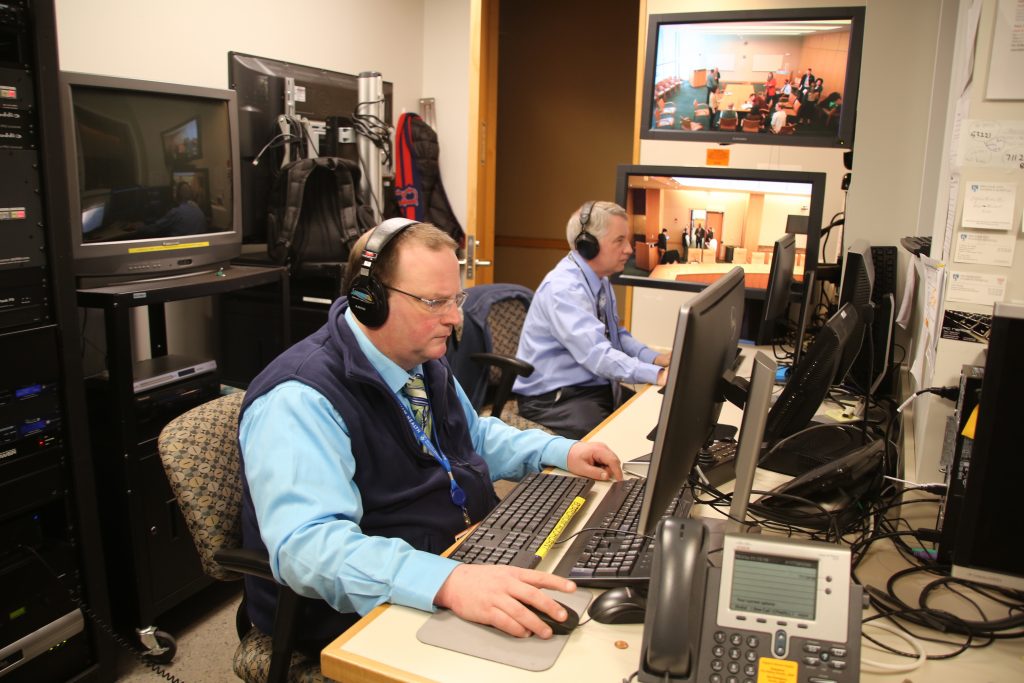
From left: Christopher Fenton and James Crowley manage audio and video broadcasts in the Zinner Breakout Room and Zinner Boardroom.

From left: Christopher Fenton and James Crowley manage audio and video broadcasts in the Zinner Breakout Room and Zinner Boardroom.

High-definition video of face-transplant surgery. Aerial footage of the helipad. Livestreamed events with hundreds of webcast viewers. These are just a few examples of the highly creative work produced by the Brigham’s Audiovisual Services (A/V) team in Office Services, which comprises several talented videographers, photographers, technicians and administrators who support every major service line and department.

“Our work is really fulfilling and fun,” said Peter Linck, manager of Office Services, which is part of Materials Management. “We get to work with so many people, and we also have a lot of creative freedom; when someone dreams up an audiovisual idea, we can help make it happen.”

And they do just that. Often spotted behind a camera or soundboard, the team supports dozens of events and multimedia projects in any given week. One moment, they could be broadcasting a hospital-wide event like Town Meeting or a tribute to the Rev. Dr. Martin Luther King Jr. from the A/V booth in Bornstein Amphitheater. The next, they could be filming neurosurgery cases in the Operating Rooms.

In addition to providing audio and video services, the team also assists the Brigham community with room reservations and event bookings. To make it easier for staff to determine the right venue for their event, the A/V team has made interactive, 360-degree online “tours” of many common meeting spaces, including the Zinner Conference Center and the Hale Building for Transformative Medicine.

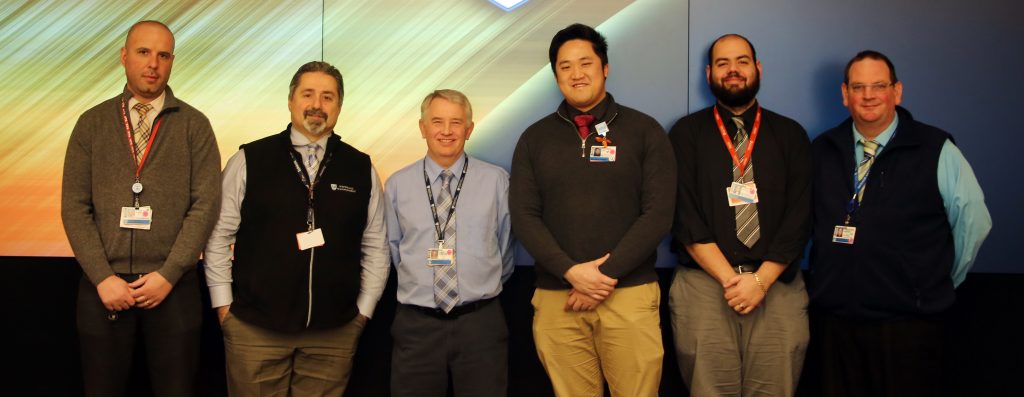
From left: Elton Toska, Steven Kyriakidis, James Crowley, Benjamin Lee, Angel Ayala and Christopher Fenton (not pictured: John Bourque)

From left: Elton Toska, Steven Kyriakidis, James Crowley, Benjamin Lee, Angel Ayala and Christopher Fenton (not pictured: John Bourque)

When all-hands requests arise, Linck enlists the help of their colleagues in the Mailroom, which also sits under the Office Services umbrella, to assist with coverage needs. He noted that everyone on the team works to expand their skillset and is eager to lend a hand—including being willing, at a moment’s notice, to support press conferences and large events, such as the Magnet celebration and Discover Brigham.

Many A/V staffers began their careers in the Brigham’s Mailroom and have diverse professional and freelance backgrounds spanning television, photography and graphic design. Also noteworthy is the team’s retention rate. Many have been part of A/V for over a decade, with the longest-tenured member, John Bourque, coordinator in Office Services, celebrating 39 years at the Brigham.

Angel Ayala, senior technician in Office Services, credits Linck with reinforcing the Brigham’s culture of innovation, collaboration, excellence and treating setbacks as opportunities to grow together—fostering an environment that Ayala says inspires the team to do their best every day.

“We have a really great, understanding manager who supports our growth,” he said, adding that whatever technology and skills are needed for the job—such as video adapters, GoPros, software tools and HTML programming classes—Ayala and his teammates are given what they need to produce high-quality content and provide exceptional service to the Brigham community.

“Behind the Scenes at the Brigham” is a monthly photo series in Brigham Bulletin that provides a glimpse of the people whose everyday contributions help make the Brigham a world-class institution. Is there an individual or team you’d like to see featured? Send your ideas to BWHBulletin@partners.org.

Leave a comment

bwh values logoLast summer, faculty and staff were invited to share their impressions of the Brigham’s organizational culture through the Brigham Experience: Culture, Diversity & Inclusion Assessment survey, focus groups, interviews and more. The message was clear: Our foundation and our people are strong, and we have opportunity to do even better, together.
The assessment revealed that Brigham Health has numerous strengths and areas of opportunity that will help grow the current culture to become even more transparent, diverse, inclusive and innovative.

Our strengths include our status as a leading academic medical system; our history and reputation; our shared passion for patient care; our progress in restoring financial health; and our ability to come together in a crisis.

Our areas of opportunity include the need for a more unifying vision and inspiring purpose statement that connects with all members of our workforce; the elimination of competition where there should be collaboration; more transparent and forthright communication; more diversity in leadership positions; a culture of respect and inclusion in every part of the organization; and a shift from a top-down structure to an empowered, shared decision-making approach.

Another takeaway from this effort was that the Brigham Health values as previously defined—collaboration, empathy, inclusion, integrity and professionalism—did not fully resonate with all faculty and staff. Building off feedback from across the Brigham, hospital leaders sought to redefine the institution’s values so that they better reflect who we are as a community.

The result is four newly articulated values:

We care. Period. We embrace a culture of shared humanity and dignity, where our diverse community of patients, families and employees all feel welcome, cared for and valued.

We create breakthroughs. It’s in our DNA. Since our founding, we’ve been discovering ways to make tomorrow better—for the health of people, here and around the world.

We’re stronger together. We all play a role. We take pride in teamwork, partnership and community. We value everyone’s contributions. We find inspiration in each other.

We pursue excellence. Because our patients deserve our best. We share a passion for learning and continuous improvement.

These four values also represent the theme of Brigham Bulletin’s 2019 calendar (published on the reverse side of this issue).

Looking ahead, hospital leaders are creating a “culture squad” to address the opportunities identified in the assessment and will then articulate behaviors that represent our aspirational culture.

Visit BWHPikeNotes.org and stay tuned for more information about our culture work.

Leave a comment

Register for the 2019 B.A.A. 5K

Registration for the 2019 Boston Athletic Association (B.A.A.) 5K race opens Wednesday, Jan. 16, at 10 a.m. All runners and walkers are invited to take part in the excitement of Boston Marathon weekend while supporting trauma research and care at The Gillian Reny Stepping Strong Center. Click here to register for the race and become part of the Stepping Strong 5K team.

Brigham Health Opens Hingham Clinic

Brigham and Women’s Harbor Medical Associates opened a Brigham Health adult primary care clinic in Hingham on Jan. 2. The office, which is accepting new patients, contains 14 clinical rooms in a 9,000-square-foot space. Located at 6 Shipyard Drive in Suite 2A at the Hingham Shipyard, the clinic offers primary care services and a phlebotomy lab. To make an appointment, call 781-952-1303.

Reminder: Severe Weather Policy

With winter weather approaching, all faculty and staff are encouraged to review the Severe Weather, Emergency Policy or Significant Event policy (HR-406). All Brigham Health faculty and staff are expected to report to work as scheduled in severe weather, and decisions for individual sites, practices, departments, programs and units to remain open or to close are determined by Brigham Health leadership.

Coming Soon: Windows 10 Upgrade

Beginning in January and throughout 2019, Brigham Health will roll out the Windows 10 operating system to every eligible Partners standard desktop and laptop. Windows 10 offers a faster startup speed, improved layout, customizable user experience and improved security features. To learn more about new features and functionality with Windows 10, visit the Partners HealthCare Windows 10 Resource Center. For information specific to the Windows 10 roll out at Brigham Health, visit the Brigham Health IS Portal. Additional details and communications will be shared in the coming weeks. If you have questions or feedback, contact bhwindows10support@partners.org.

Leave a comment

PCAs preparing to go to nursing schoolMany of you have already heard about the four amazing Brigham patient care assistants (PCAs) who received the inaugural Neskey Educational Opportunity Fund Scholarships, which provide full-tuition support to University of Massachusetts (UMass) Boston for PCAs who aspire to have a career in nursing. David and Sharon Neskey established the fund to honor the extraordinary care they received from a PCA here. As it turns out, the day we announced those four recipients was just one piece of what would become my One Shining Moment this year.
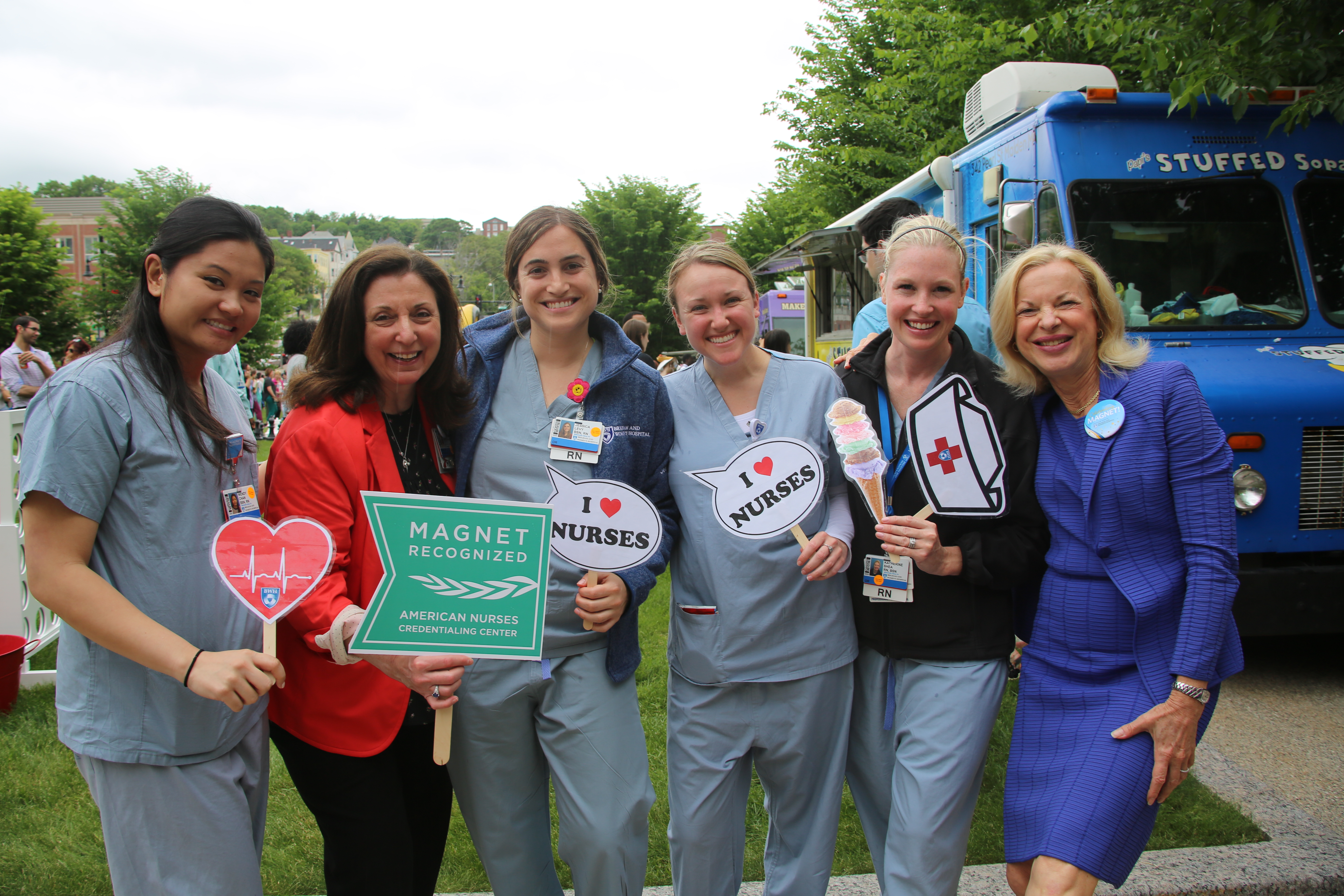
Weeks earlier, I had the pleasure of attending an information session about the scholarship. Considering that this was a new program, I set my expectations accordingly, thinking six to eight attendees would have been a good showing for our first year. Little did I know how incredible the response would really be. About 40 PCAs came to the session, brimming with enthusiasm about the next potential step in their careers. I was also amazed that attendees were at all stages of thinking about their future as nurses—some had completed all the academic prerequisites and were ready to start at UMass, while others who had never taken any formal steps for continued education viewed this potential scholarship as the push they needed.

Linda S. Thompson, DrPH, MPH, RN, FAAN, dean of UMass Boston’s College of Nursing and Health Sciences, was so inspired by the program that she attended the information session and spoke of how her own professional beginnings looked very similar to those in the room. The most moving part of the event, though, was that when I looked at that group of PCAs, I saw the future nurses of the Brigham, who will one day inspire the next generation that follows them. I can’t wait to see the amazing things they will do in the years to come.

Ron M. Walls, MD
Executive Vice President and Chief Operating Officer, Brigham Health

Leave a comment
La’Lena Etheart BSN, RN, PCCN and staff

From left: Nina Jordan, La’Lena Etheart, Michelle Lafferty and Reba Dookie

I recently went back to school for my master’s degree in Nursing Administration. I had to design a brochure as part of an assignment, and I decided to make a brochure about hand hygiene and preventing the spread of infection. I thought of the idea to have real nursing staff in my visuals, and my amazing coworkers on Shapiro 9/10 were more than willing to help! This picture is the cover photo of my brochure, which was titled “The Power Is in YOUR Hands!”

La’Lena Etheart BSN, RN, PCCN
Nurse in Charge, Shapiro Cardiovascular Center 9/10

Leave a comment

Maddy Pearson and nursing staffMy One Shining Moment for 2018 represents the culmination of many shining moments for the Department of Nursing and our entire Brigham community. After a journey led by our clinical nurses that inspired pride about the exceptional care we provide, our patient outcomes and our interprofessional collaboration, we officially received the news that Brigham and Women’s Hospital achieved Magnet designation.
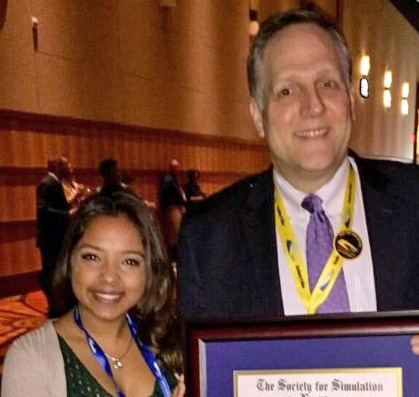
That announcement, which we heard via a phone call broadcast live in Bornstein Amphitheater, moved me to tears. I’ll never forget the joy and pride I saw on the faces of our Magnet champions and leaders as we learned that we had earned this prestigious designation, which represents the gold standard of nursing excellence and honors high-quality care delivered by multidisciplinary professionals.

We were recognized again in October at the Magnet conference in Denver in front of an audience of nearly 11,000 nurses from around the world. I will always cherish sharing that moment with the 130 Brigham staff who attended the conference.

Maddy Pearson, DNP, RN, NEA-BC
Chief Nursing Officer and Senior Vice President, Patient Care Services

Leave a comment
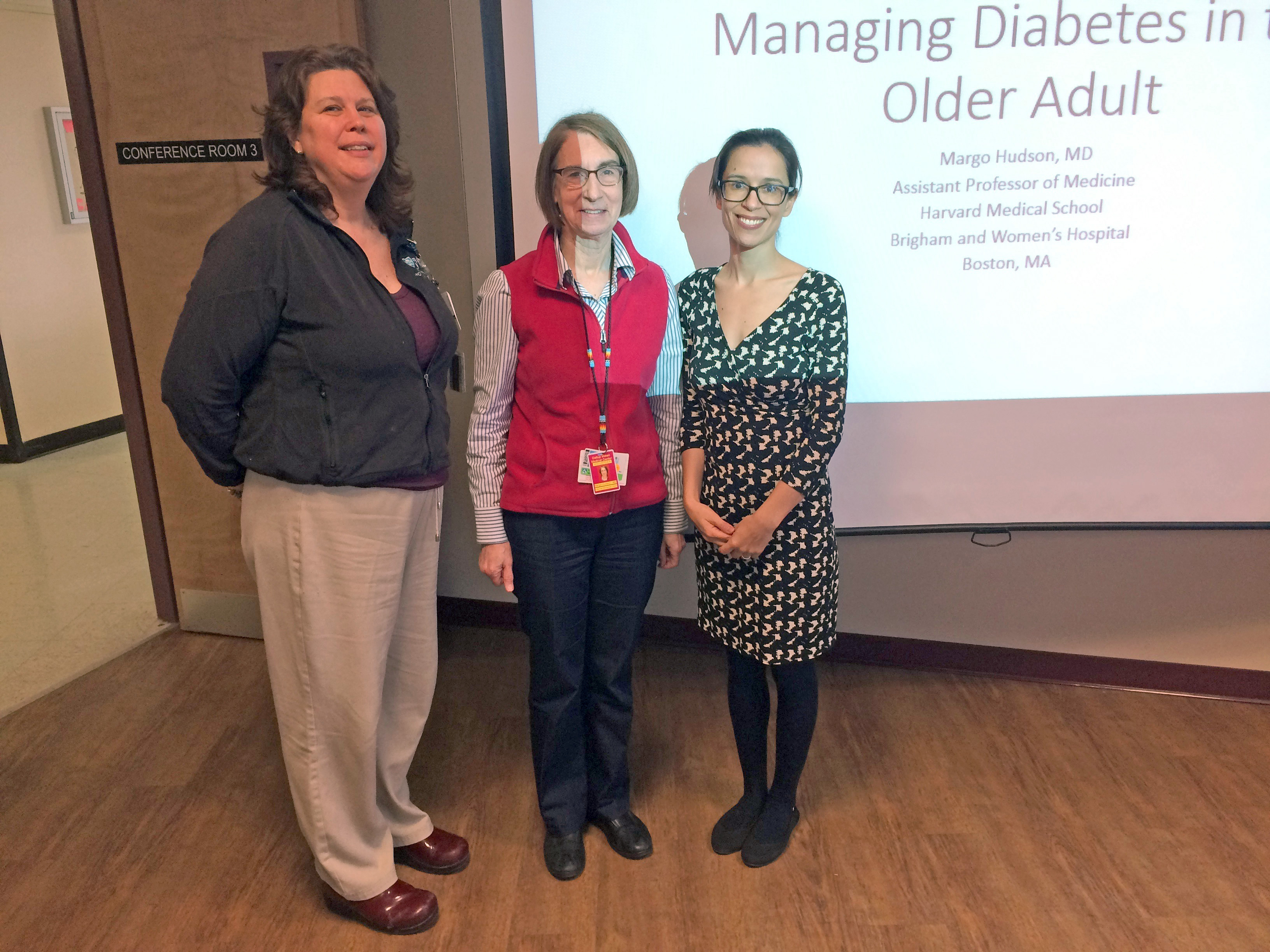
Hudson and colleages

From left: Lauren Godsoe, Margo Hudson and Maricruz Merino

I have been going annually to New Mexico with the Outreach Program with Indian Health Service since 2009, and each year gets better. I have primarily been involved with the diabetes program at Gallup Indian Medical Center in Gallup, N.M.

A former Brigham internal medicine resident, Maricruz Merino, MD, is now their chief of Medicine, and we have been working together closely over the years developing inpatient and outpatient glucose-management protocols. We are both close friends as well as colleagues, and we have shared the joys of the birth of children and grandchildren with each other in addition to seeing the growth of the diabetes program.

This past March, I had the pleasure of traveling with Brigham Health nurse practitioner Laura Godsoe, NP, for a week of lecturing and consulting on patients. I am so proud of the work we have done and thankful to Outreach Program for continuing to support this opportunity.

Margo Hudson, MD
Division of Endocrinology, Diabetes and Hypertension

Leave a comment
Jason Frangos and team

From left: Zachary Holcomb, John Mohs, Jason Frangos, Margaret Cavanaugh-Hussey, Toby Crooks and Diana Woody

I made my second trip to Shiprock, N.M., in November 2018 as part of the Brigham and Women’s Outreach Program. Working alongside the dedicated doctors and staff at the Indian Health Service hospital in Shiprock has truly inspired and motivated me in my life and work. Contributing much-needed clinical care to the Navajo community has re-energized me with a sense of meaning and purpose as a physician. Volunteering at Shiprock has been my antidote to burnout and has revitalized my spirit.

Jason Frangos, MD
Director, Program for Infectious Diseases of the Skin
Department of Dermatology

Leave a comment
Sumaira Ahmed

From left: Sumaira Ahmed and Chuck Pozner

I’m fortunate to work with a person like Chuck Pozner, MD, Emergency Medicine physician and executive director of the STRATUS Center, who has been not only a phenomenal mentor but also someone who constantly inspires me to be better and help others.

Most notably, Chuck did something earlier this year that I thought was heroic and spoke volumes about his character and the kind of physician he is. He was walking to the hospital from Neville House when he noticed activity surrounding a woman giving birth in the valet bay of 75 Francis St.

He immediately saw that the newborn was turning blue from the bitter February cold, so he quickly took off his new STRATUS sweater and scooped the baby up in it to keep her warm. Ultimately, the sweater didn’t make it, but the mother and child were escorted inside to safety and warmth. Chuck’s quick response and selflessness was truly a shining moment!

Sumaira Ahmed
Marketing and Business Development,
Neil and Elise Wallace STRATUS Center for Medical Simulation

Leave a comment

By far, my shining moment this year was the day I reconnected with my primary nurse, Vivian Kelley, RN, after 39 years! Vivian helped save my life back in 1979, when I came to the Peter Bent Brigham Hospital for a bone marrow transplant. I had aplastic anemia (a rare and life-threatening blood disease) and spent two and a half months in an isolation room. Vivian was there at every turn—when I got my chemo and during the hundreds of hours that followed as I waited for my new immune system to mature. The photo in which I’m wearing a mask marks the day I went home. The other picture was taken when we reconnected this summer in Boston. Vivian moved to the West Coast a year after my transplant and continued practicing nursing until she retired. I credit Vivian’s intelligence, nursing skills and her calm, positive attitude for getting me through a terrifying time in my life. I’m so grateful we found each other again.
Jessica Keener
Associate Director, Proposal Management, Development Office

Leave a comment

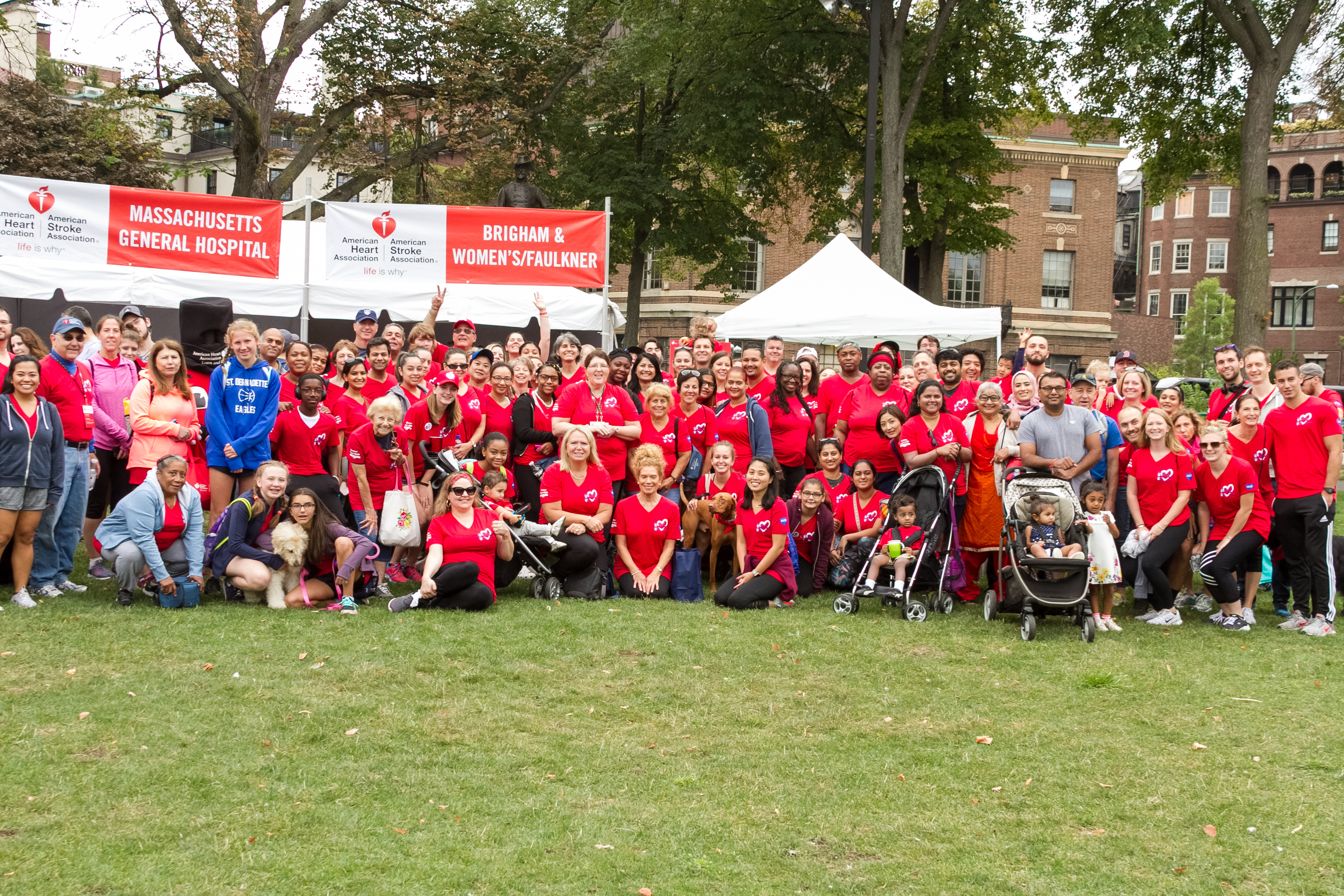
Fundraising walkEvery year, Brigham and Women’s Hospital and Brigham and Women’s Faulkner Hospital participate as a team in the Boston Heart Walk and fundraise to support cardiovascular research and education, advocate for health and save lives. This walk is important to me because a few of my family members have experienced coronary artery disease, stroke and valve disease. By supporting the walk, I am doing my part to help fund current research that will make a difference for my family members and friends.
The 2018 Boston Heart Walk was very special to me. Not only was it the fifth time that I’ve organized and led the team, but it was also the year the Brigham and Faulkner team won the “Top Hospital Challenge” from the American Heart Association. I can’t begin to explain how exciting it was to stand on the Hatch Shell stage and be presented a trophy for our efforts. The team that raises the most money and has the most walkers during each year’s Heart Walk is crowned the “Top Hospital.” I also love meeting all the people who join our team each year. To be able to walk alongside patients who’ve undergone surgery and other procedures at the Brigham and elsewhere, lifts my heart with every step I make.

Merilyn Holmes
Senior Administrative Assistant, Division of Cardiovascular Medicine

Leave a comment
Fareed Al Haddad headshot

Fareed Al Haddad

Recently I listened to our president, Dr. Nabel, speak at Town Meeting. I admired her words about the Brigham Experience and her actions to drive the Brigham to excellence; following that, I sent her an email with a few comments, not expecting anything. But she replied to me—that exact moment when I saw her name in my inbox made me feel so proud, as I realized our leadership believes in the values for the Brigham. We care, and we are stronger together.

I am lucky and proud to be at Brigham and Women’s Hospital!

Fareed Al Haddad
Administrative Assistant II
Division of Rheumatology, Immunology and Allergy

Leave a comment
Carlson with Shiprock members

Alissa Umana (far left), Sally Carlson (second from left), Loren Day Lewis (second from right) and Kyle Dale Walters (far right)

In November, I had the privilege of traveling with three of my team members to the Northern New Mexico Navajo Medical Center in Shiprock, N.M., as part of the Brigham and Women’s Outreach Program with Indian Health Service. This is the second year that we have been able to travel with the Outreach Program to provide training in customer service and communications for clinical and administrative staff throughout the hospital. It is an incredibly rewarding experience to deliver our training to such an eager and enthusiastic audience—and to know that, in some small way, we are helping them improve the quality of care delivered to the Navajo population on the reservation.

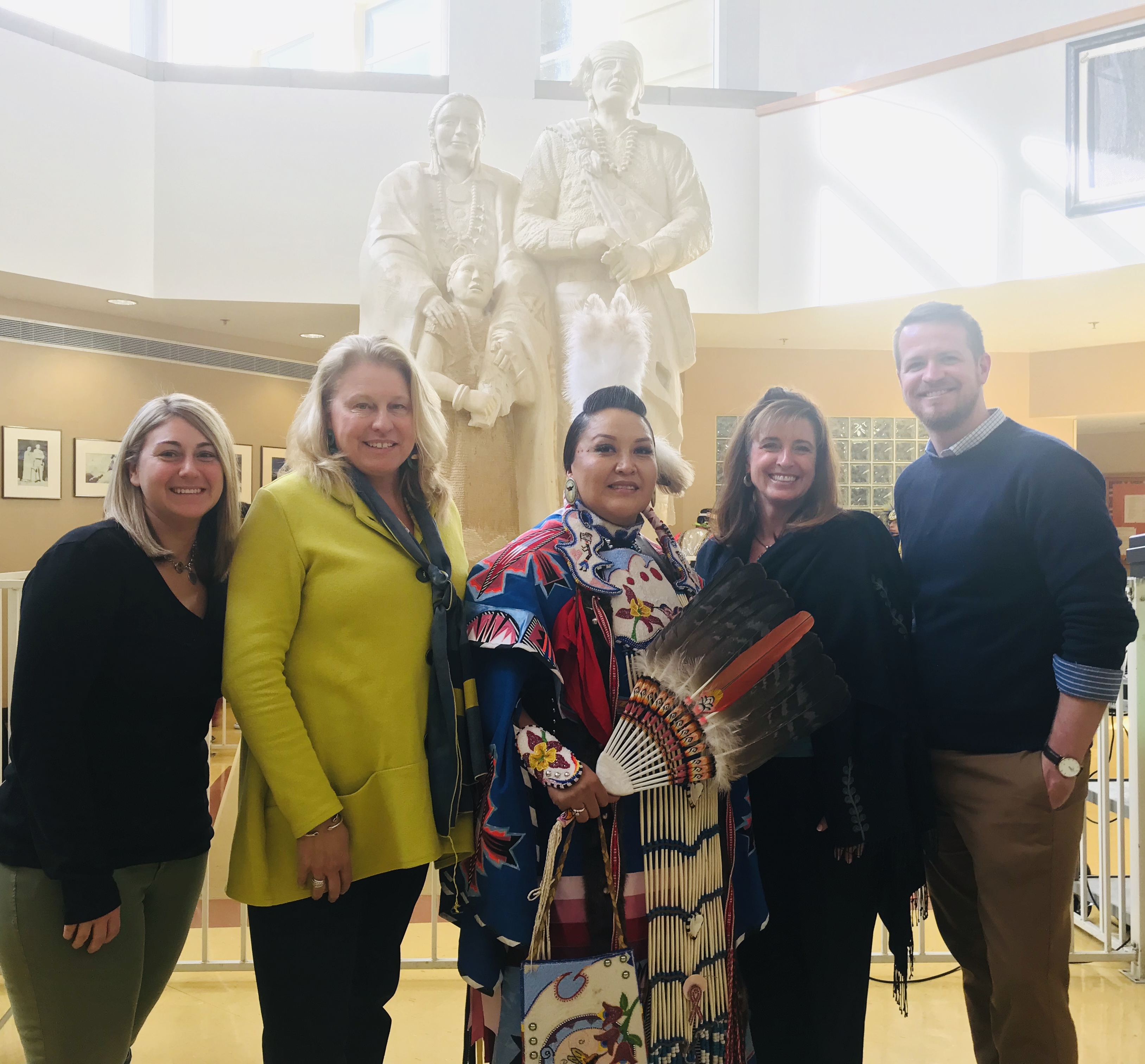
This year, our trip happened to coincide with Native American Heritage Month, and as part of the celebration, Navajo dancers of all ages performed for staff and patients. Wearing intricately detailed costumes and accompanied by traditional music, the dancers offered moving performances of ceremonial dances to a crowd gathered in the hospital atrium. After the performance, we had the honor of being photographed with one of the dancers, who is also a supervisor at the hospital. It is a wonderful memento from the trip and a reminder of our friends in Shiprock.

Sally Carlson
Senior Manager, Training and Communications, BHIS

Leave a comment

Winter Food Drive Concludes Dec. 20
The Center for Community Health and Health Equity is hosting a winter food drive to benefit the Parker Hill/ABCD Emergency Food Pantry in Mission Hill, now–Dec. 20. Beans, rice, cereal, pasta, soups, peanut butter, jelly and canned goods are most needed. Donations can be placed in the food drive bins outside the Garden Cafe on Tower 2. For questions, or to make a cash or check donation, call 617-264-8750 or email cchhe@partners.org.

OHS Episodic Care Clinic for Employees
Occupational Health Services (OHS) offers conveniently located care for upper respiratory infections, sore throats, conjunctivitis, urinary tract infections and back pain. Staff who have a Brigham primary care provider and receive medical insurance through Partners HealthCare can visit the clinic Monday–Friday, 7 a.m.–3:30 p.m. Employees will not be charged a co-pay for their visit; labs, radiology exams and prescription medications are billed to insurance. The clinic is hosted at OHS’ mid-campus clinic on the Lower Pike. To schedule an appointment, call 617-732-8501.

Professional Development Series
The Professional Development Series (PDS) is available to help Brigham staff and teams gain new skills through self-led resources and classroom learning. PDS has a spring and fall semester, with spring courses beginning in February and fall courses starting in September. Class offerings include: Behavioral Interviewing; Communication Skills; Delegation; Presentation Skills; Time Management; Running Effective Meetings; Role of the Manager and more. To learn more, visit BWHPikeNotes.org.

BEI Yoga: Winter Series
The Brigham Education Institute (BEI) will host its winter series of 60-minute vinyasa yoga classes in the BEI Knowledge Center (located in the Thorn building, first floor, room 127D). The class is designed for all levels of experience, from beginners to more advanced yogis. Attendees should wear appropriate workout attire and bring their own yoga mat. Upcoming classes will be held 5:30-6:30 p.m. on Wednesday, Jan. 9, and Wednesday, Jan. 16. View a full schedule and register. 

Leave a comment

Gift-Wrapping Fundraiser to Support the NICU

The Brigham Young Professionals group is hosting a gift-wrapping fundraiser outside of the Shop on the Pike throughout December. Bring your unwrapped holiday presents and a volunteer will wrap them for you. Donations will benefit the NICU Friends of BWH, a group that support the families of the Neonatal Intensive Care Unit (NICU). Hours of operation will be Tuesday, Dec. 11–Friday, Dec. 14 and Tuesday, Dec. 18–Thursday, Dec. 20, 11 a.m.–1 p.m.

Shop on the Pike Holiday Sale, Dec. 13-14

The Shop on the Pike will celebrate its 10th birthday by offering 20 percent off most items, including select Brigham apparel, during a holiday sale on Thursday, Dec. 13, and Friday, Dec. 14. The discount does not apply to flowers/plants, balloons, candy, food, magazines, greeting cards, website orders, phone cards, gift cards or paperback books. Call 617-732-7878 for more details.

‘Flooded: Lessons Learned from a Major Hospital Flood,’ Dec. 13

The Department of Quality and Safety hosts “Flooded: Lessons Learned from a Major Hospital Flood” as part of the Quality Rounds. Ronald Iverson Jr., MD, MPH, of Boston Medical Center will present. Attendees will learn about planning and practice for a large-scale flood, as well as the use of outside resources during a response to such an event. Thursday, Dec. 13, noon-1 p.m., in Bornstein Amphitheater. Learn more.

Holiday Reminder: Personal Package Policy

With the holidays fast approaching, the Receiving & Distribution and Office Services teams remind employees that personal package deliveries cannot be accommodated. The priority of these departments is delivering items directly related to patient care and hospital business. Due to the large volume of these deliveries alone, the added responsibility of processing personal packages delays the turnaround time on products that may directly affect patient care. Please make alternate arrangements for the delivery of personal packages. For questions, contact Jonathan Santiago at jmsantiago@bwh.harvard.edu.

Leave a comment
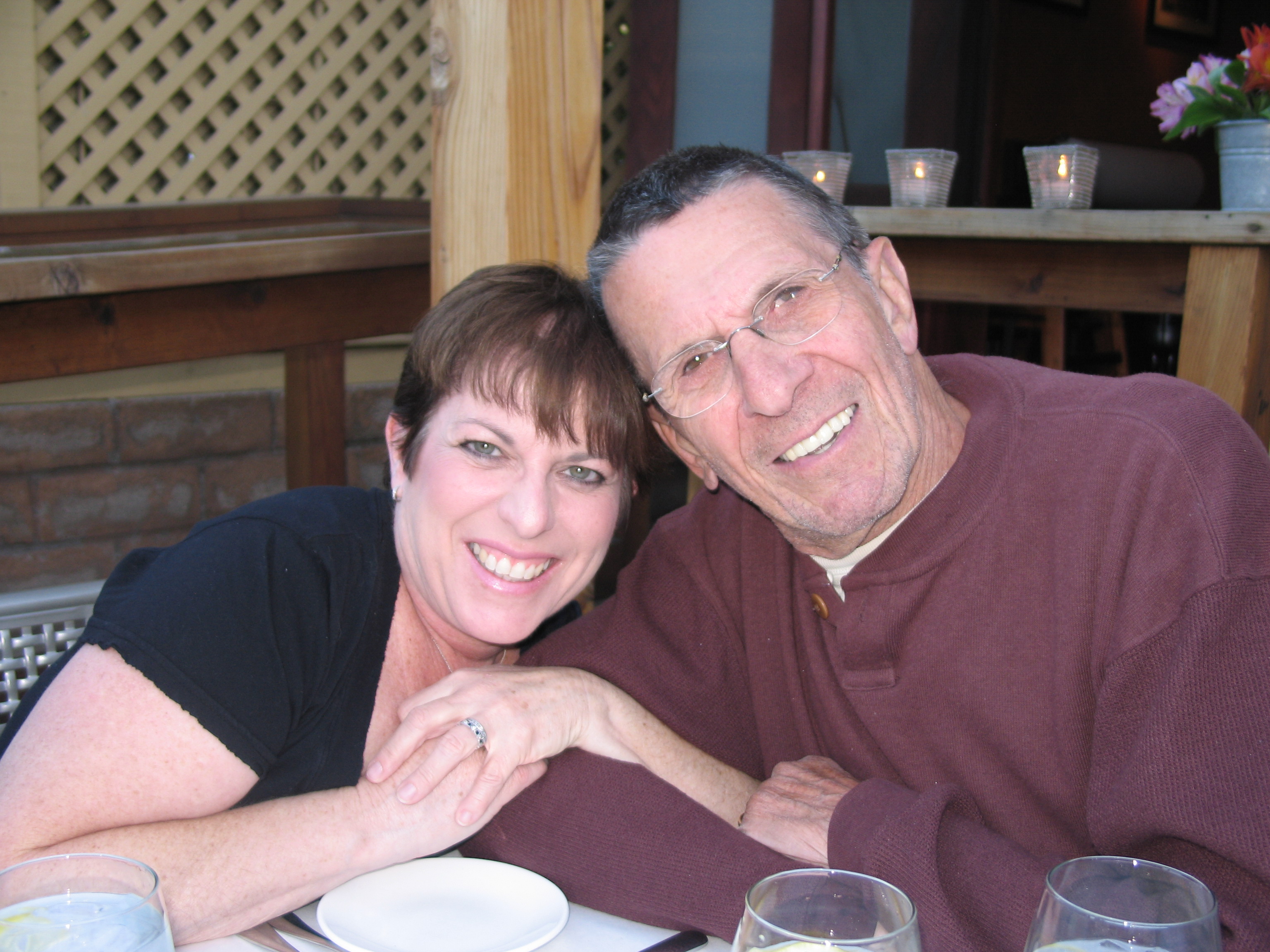
Julie Nimoy with her father, Leonard Nimoy

From left: Julie Nimoy with her father, Leonard Nimoy

When actor, director and artist Leonard Nimoy was diagnosed with chronic obstructive pulmonary disease (COPD) in 2013, the beloved Star Trek icon dedicated his time to raising awareness about this devastating, progressive lung disease until it took his life two years later. Through a documentary directed and produced by his daughter, Julie, and son-in-law, David Knight, Nimoy’s mission continues to live long and prosper.

In honor of COPD Awareness Month in November, the Brigham Health Lung Center partnered with Julie and David to screen the 2017 film, Remembering Leonard Nimoy: His Life, Legacy and Battle with COPD, on Nov. 29. The screening, held at the Joseph B. Martin Conference Center at Harvard Medical School, was followed by a panel discussion and question-and-answer session with Brigham clinical and research experts specializing in pulmonary care and thoracic surgery.

Ranking as the fourth-leading cause of death in the U.S., COPD is a family of chronic lung diseases that permanently damage the airways and, over time, make it increasingly difficult to breathe. In patients for whom the disease is in the most advanced stages, everyday activities like walking across a room can become extremely taxing. COPD is most commonly caused by smoking but also appears in nonsmokers, suggesting environmental and genetic links.

While preventable and treatable, especially in the earlier stages, there is no cure for COPD.

The Need for Early Detection

Told through interviews with Nimoy and his family members, the hour-long documentary features stories from the actor’s childhood in Boston, early career in Hollywood and breakout role as Spock in Star Trek. It also provides a candid look at his experiences living with COPD, his passionate support for smoking cessation and the toll the disease took on his family.

One poignant message the film underscored was that COPD is believed to take root at a young age, but patients often mistake its early signs—when treatment would be most effective—as the normal effects of aging or an inconvenient consequence of smoking. The takeaway resonated with Brigham experts who participated in the panel discussion.

“This is a disease that is difficult to diagnose early, and yet it’s medically important to do so,” said Bruce Levy, MD, chief of the Division of Pulmonary and Critical Care Medicine and co-director of The Lung Center. “It destroys the lung tissue, so the more that occurs as time goes on, the less responsive it is to medical therapies.”

Speakers highlighted the Brigham’s innovative research in the field and the comprehensive, multidisciplinary services offered through The Lung Center for patients with COPD—including medical therapies, such as pulmonary rehabilitation, and procedural interventions, such as lung transplant.

Internationally renowned COPD expert Bartolome Celli, MD, a physician-investigator in Pulmonary and Critical Care Medicine, said it is imperative that COPD screening become part of routine preventive care. The test for it, known as spirometry, should be as common as mammograms and colonoscopies to maximize the likelihood of early detection and long-term survival, he noted.

“It is our duty to go out and preach that this disease is treatable and preventable,” Celli said.

‘This Is Always New’

Nimoy’s granddaughter, Morgan Pearson, who attended the event, recalled how eye-opening it was to see her grandfather’s rapid decline between his diagnosis and his death at age 83.

“Even to those of us who knew him very intimately, he was larger than life and didn’t seem destructible,” she said. “I can’t say that, as a family, we were really prepared for that.”

Hilary Goldberg, MD, clinical director of Pulmonary and Critical Care Medicine, said the film reinforced the powerful role empathy plays in caring for COPD patients and their families.

“Initiating something like oxygen therapy or new medication seems fairly routine to us, but it is very, very life-altering to patients,” Goldberg said.

“The film really highlighted that it’s important to remember that this is always new to each patient that you see.”

Among the other Brigham panelists who participated in the discussion were Raphael Bueno, MD, chief of the Division of Thoracic Surgery and co-director of The Lung Center; Dawn DeMeo, MD, MPH, a physician in Pulmonary and Critical Care Medicine and a senior respiratory genetics researcher in the Channing Division of Network Medicine; Craig Hersh, MD, a physician-investigator in the Channing Division; and Scott Swanson, MD, director of Minimally Invasive Thoracic Surgery at the Brigham and associate chief of Surgery at Dana-Farber/Brigham and Women’s Cancer Center. Filmmaker Ron Frank also offered remarks.

Learn more about the documentary at rememberingleonardfilm.com.

2 Comments
Morteza Mahmoudi

Morteza Mahmoudi displays the latest prototype of a novel skin patch designed to heal chronic wounds.

Morteza Mahmoudi, PhD, vividly remembers the fear and heartache he felt as a child growing up in Iran during the Iran-Iraq War in the 1980s. The armed conflict played out in the streets of his hometown of Tehran, where he says it wasn’t unusual to encounter a friend, neighbor or loved one suffering from traumatic injuries following a missile attack.

But just as clearly, Mahmoudi recalls what the voice inside him often said those days: Help people. Help heal their pain.

Now a biomedical investigator at the Center for Nanomedicine and the Department of Anesthesiology, Perioperative and Pain Medicine, Mahmoudi has spent the last three decades following that calling. It has propelled him to fulfill his life mission to ease suffering, no matter the obstacle.

“The war was a very hard period, but when I think about those days, I realize that kind of experience puts fuel in your motivational tank for the rest of your life,” he said. “From the time I entered university, I made the decision to use my past as a driving force for the future.”

As the winner of the seventh annual BRIght Futures Prize, Mahmoudi is especially hopeful about what tomorrow holds for patients around the world. The competition’s $100,000 award will support his project, “Time to Heal Chronic Wounds.”

Sponsored by the Brigham Research Institute, the BRIght Futures competition invites the Brigham community and the public to vote for one of three finalists whose innovative research is poised to transform medicine. This year’s competition garnered its largest-ever number of votes: 16,530. Mahmoudi was announced as this year’s winner during an awards ceremony at Discover Brigham on Nov. 7.

For the past 10 years, Mahmoudi has been working to develop a skin patch to heal chronic wounds that the body is unable to repair on its own, such as bedsores and diabetic wounds. There is no effective treatment for these types of wounds, which can easily become infected and sometimes lead to amputation or even death.

Mahmoudi’s patch is made from multifunctional nanofibers – fibers that are 1,000th the diameter of a single human hair – that mimic most of the skin’s characteristics. They are engineered to deliver a cocktail of healing biomolecules and immunotherapeutic nanoparticles to a wound site. These unique properties can help cells reach the site of a wound and create new blood vessels. Meanwhile, the nanoparticles detect and help fight infections while also lessening inflammation. The BRIght Futures Prize funding will help advance the project from the lab bench to clinical trials so that it can be rigorously tested in humans.

A Long Road

Once he got the idea for the patch, Mahmoudi soon realized how ambitious an endeavor creating it would be. It demanded expertise in four highly complex, distinct scientific fields: materials science and engineering, biomedical engineering, nanomedicine and cell biology. Undeterred, Mahmoudi earned a degree in each one (a bachelor’s, master’s, doctorate and post-doctorate, respectively).

“The time in which I was working on bachelor’s and master’s was extremely hard, as in addition to my university courses and research, I had to work over 70 hours per week as a high school teacher to support my family at the time,” Mahmoudi recalled. “The motivational fuel and my old friend – my internal monologue – gave me the stamina to make it through those days and continue my scientific activities while also taking care of my immediate family.”

He kicked off his research career at universities in Ireland, Switzerland and the U.S., advancing his understanding of science and medicine as he chipped away at the project’s protocols and prototypes.

“I was like a scientific nomad,” he said. “Ten years ago, the crosstalk between different experts was not great – not like today – so that’s why I had to train in different medical and engineering fields.”

Each part of the patch – its precise structure and physical, chemical and mechanical properties – took years to perfect.

“I would say that this was one of the hardest projects I’ve ever done because it took a lot of time, and I could have easily given up many times, but I kept going,” he said. “My long-term collaborators and I made a huge number of prototypes. We haven’t yet published anything on this topic, as I believe that the scientific community and patients would benefit from the A-to-Z story, rather than progressive reports. We needed to make sure our final prototype was error-free, and we are now at that stage.”

Being part of the Brigham’s highly collaborative clinical and research community has been a tremendous gift in advancing this work, Mahmoudi said.

Today, he is excited to see the project move one step closer to changing outcomes for patients with chronic wounds, thanks to the BRIght Futures Prize.

“If I can reduce the pain of one patient, even for one minute, I have done my share. But if these patches can help many lives, that would be my ultimate dream,” Mahmoudi said. “This prize opens the way to that.”

Brigham Health’s Strategy in Action: Scalable Innovation
Learn more about our strategic priorities at BWHPikeNotes.org.

3 Comments
Bprep

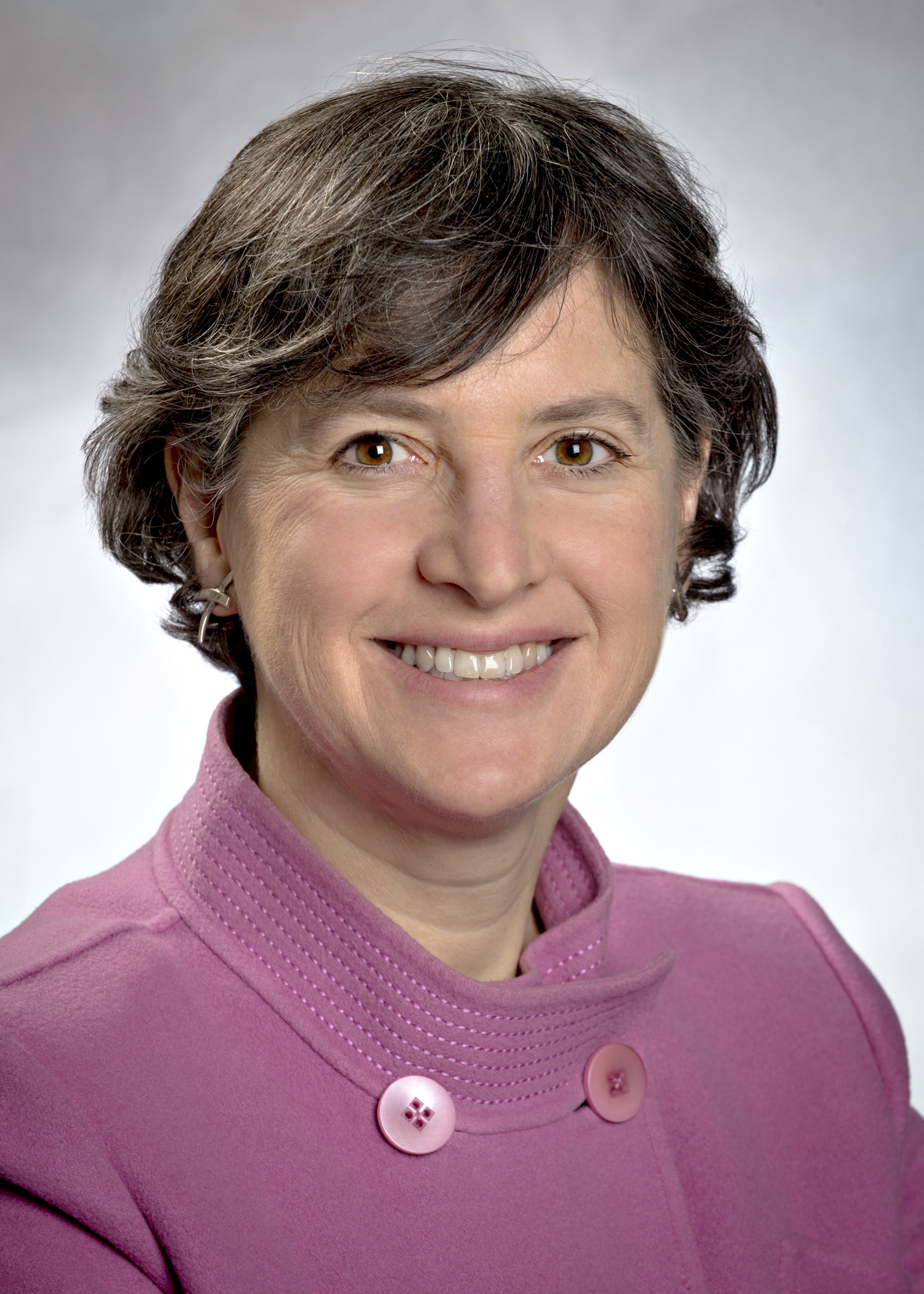
From left: Mil Pierce reviews information about a clinical trial with Shivam Dua at the Comprehensive Breast Health Center.

As far as she can tell, Mil Pierce, 55, of Belmont has done everything right in terms of leading a healthy lifestyle. She never smoked. She goes to the gym twice a week and walks her dog nearly every day. She doesn’t drink alcohol in excess. And she’s eliminated red meat from her diet.

Pierce has made these choices with the knowledge that she has a strong family history of breast cancer. The disease has affected her mother, maternal grandmother and a maternal great aunt, among many other relatives.

Yet after Pierce underwent genetic testing to see if she had an inherited mutation in the BRCA1 or BRCA2 genes – an alteration that greatly increases a woman’s risk of breast cancer – the lab results showed she didn’t have the harmful mutation.

That’s why Pierce was stunned to learn two years ago, following a biopsy, that there were precancerous cells in her breast tissue. If left untreated, the abnormal cells could develop into breast cancer.

“When I got that diagnosis, it hit me like a brick. I thought, wow, there’s something else going on,” she said. “Genetically speaking, there’s no explanation for it.”
Today, Pierce is hopeful not only for her own continued health but also that of her two teenage daughters, thanks to the care, resources and guidance she’s receiving through the Breast Cancer Personalized Risk Assessment, Education and Prevention (B-PREP) Program at Dana-Farber/Brigham and Women’s Cancer Center (DF/BWCC).

Launched about two years ago and led by Tari King, MD, chief of Breast Surgery at DF/BWCC, the B-PREP Program develops a comprehensive, customized risk profile for every patient and a personalized plan aimed at reducing the likelihood of developing breast cancer. Upon entering the program, patients complete a survey that asks not only about their medical history but also a wide range of lifestyle factors that experts believe can contribute to breast cancer risk, including diet, physical activity, sleep, weight changes, whether they work a night shift and more.

“Assessing individual risk for breast cancer is complicated,” King said. “Breast cancer is not just one disease; it is a family of diseases, and the risk factors that can lead to the development of different types of breast cancer also vary.”

King emphasized that the program is open to all patients, including – and perhaps especially – those who don’t know their breast cancer risk.

“Many women think that if breast cancer is not in their family that they don’t have to worry about it, and that is not true. In fact, most women who come in with their first diagnosis of breast cancer don’t have a family history,” King said. “Our doors are open to anyone who wants to learn about their risk.”

Novel Trials

Another big misconception the B-PREP Program is working to dispel is that people at increased risk are at the mercy of their biology, King said. Based on what B-PREP’s multidisciplinary team learns from an assessment, each patient receives personalized recommendations and is connected to relevant resources, such as a referral to the Brigham’s Program for Weight Management or information about clinical trials currently enrolling patients.

One such novel trial is looking at how exercise affects breast cancer risk in women who have dense breast tissue and do not currently engage in regular exercise. Led by Jennifer Ligibel, MD, a medical oncologist specializing in breast cancer at DF/BWCC, the study pairs participants with a personal trainer for 12 weeks. Researchers will collect a breast tissue sample from participants before and after they complete the exercise program.

“We know that women who exercise more have a lower risk of developing breast cancer, but we don’t know why. We also know that denser breast tissue – that is, tissue containing more glandular elements to it and less fatty tissue – is linked to a higher risk, and, again, we don’t know why,” Ligibel said. “In a previous study we conducted looking at women who already had breast cancer, we saw that exercise actually changed the immune system within the cancer. Now, we’re looking at whether those same types of changes from exercise can be seen before a tumor has even emerged.”

Pierce learned about her eligibility for the study from her B-PREP providers and became one of the first patients to enroll. She appreciates how comprehensive the B-PREP Program is, including the opportunities to participate in clinical trials that explore wellness-based approaches to prevention.

“This breast density and exercise study was music to my ears,” she said. “I’m really excited about being on the cutting edge of research, especially since there’s a mystery here.”

Brigham Health’s Strategy in Action: Advanced, Expert Care
Learn more about our strategic priorities at BWHPikeNotes.org.

1 Comment

Elizabeth Klerman

There’s more at stake than puffy eyes and fatigue for teens skimping on shuteye, according to a recent study by Brigham investigators.

Adolescents require eight to 10 hours of sleep at night for optimal health, according to experts, including the National Sleep Foundation and the U.S. Centers for Disease Control and Prevention (CDC); yet more than 70 percent of high school students sleep less than that. 

While previous studies have shown that insufficient sleep in youth can result in learning difficulties, impaired judgment and risk of adverse health behaviors, new research from the Brigham’s Division of Sleep and Circadian Disorders found a negative association between sleep duration and personal safety risk-taking among high school students nationwide.

Compared to students in the eight-year study who reported sleeping eight hours at night, those who slept less than six hours were twice as likely to self-report using alcohol, tobacco, marijuana or other drugs, and driving after drinking alcohol. They were also nearly twice as likely to report carrying a weapon or being in a fight. 

Researchers found the strongest associations were related to mood and self-harm. Those who slept less than six hours were more than three times as likely to consider or attempt suicide, and they were four times as likely to report an attempted suicide that resulted in treatment. Only 30 percent of the students in the study reported averaging more than eight hours of sleep on school nights.
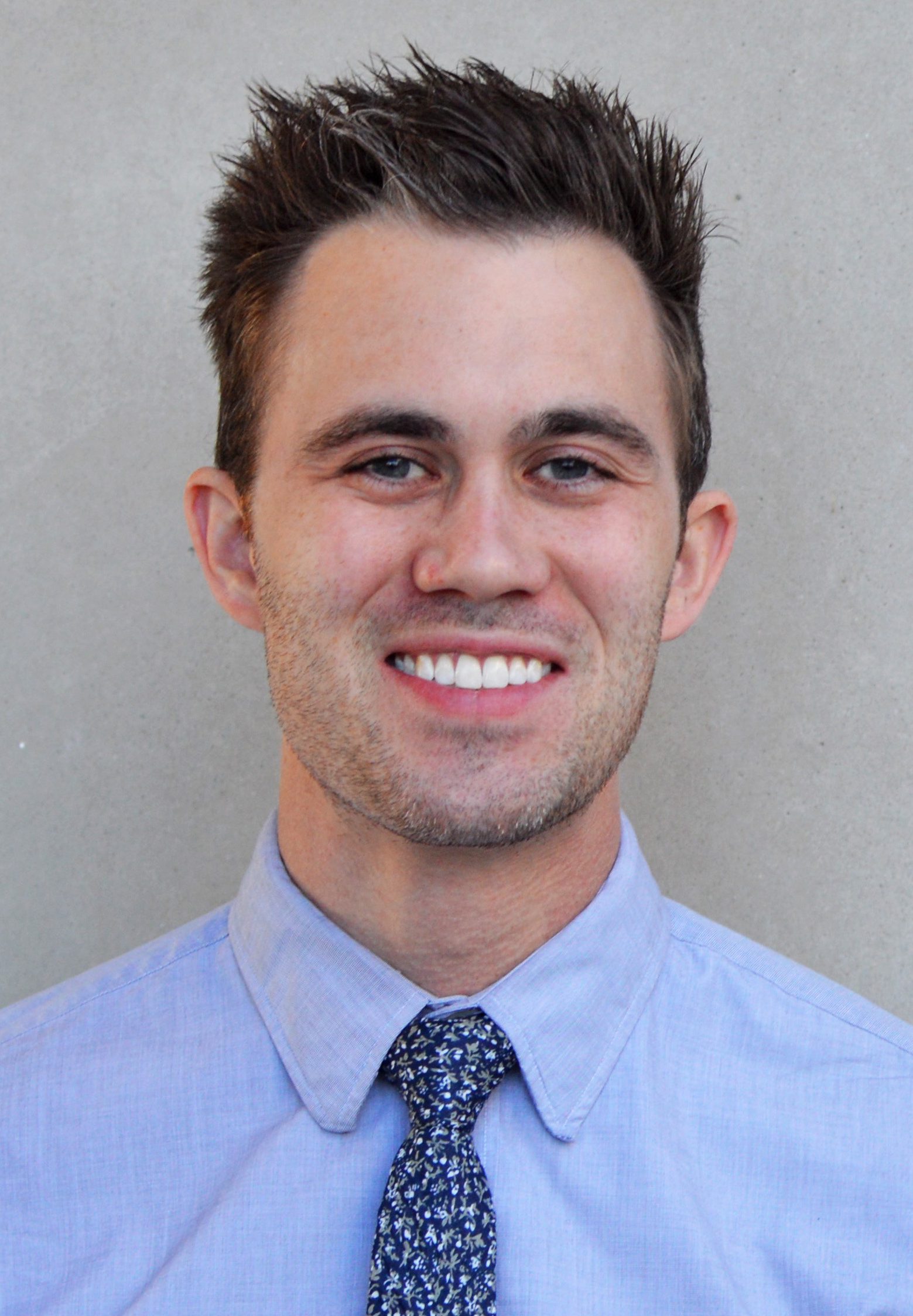
“We found the odds of unsafe behavior by high school students increased significantly with fewer hours of sleep,” said lead author Matthew Weaver, PhD, an associate epidemiologist in the division. “Personal risk-taking behaviors are common precursors to accidents and suicides, which are the leading causes of death among teens. These findings may have important implications for the health and safety of high school students nationally.”

Matt Weaver

The CDC administers biannual Youth Risk Behavior Surveys at public and private schools across the country. Brigham researchers used data from more than 67,000 high school students collected between 2007 and 2015, examining personal safety risk-taking behaviors individually and as composite categories. All analyses were weighted to account for the complex survey design and controlled for age, sex, race and year of survey in mathematical models to test the association between sleep duration and each outcome of interest. The results were published in a JAMA Pediatrics research letter in October.

“Insufficient sleep in youth raises multiple public health concerns, including mental health, substance abuse and motor vehicle accidents,” said senior author Elizabeth Klerman, MD, PhD, director of the Analytic Modeling Unit in Sleep and Circadian Disorders. “More research is needed to determine the specific relationships between sleep and personal safety risk-taking behaviors. We should support efforts to promote healthy sleep habits and decrease barriers to sufficient sleep in this vulnerable population.”

Leave a comment

This slideshow requires JavaScript.

Ever since the first physician assistant (PA) was hired at the Brigham in the early 1980s, PAs have played an important role on care teams here. Today, the Brigham is the fifth-largest employer of PAs in the country, with more than 400 PAs throughout 37 departments. On Oct. 11, PAs from across Brigham Health and Dana-Farber/Brigham and Women’s Cancer Center (DF/BWCC) were recognized for their many contributions during the annual Physician Assistant Services Week event and awards ceremony.

To kick off the event, Sunil “Sunny” Eappen, MD, MBA, chief medical officer and senior vice president for Medical Affairs of Brigham Health, highlighted the vital role of PAs in care delivery. Physician assistants conduct patient exams, diagnose conditions, prescribe medications, assist in surgery and more.

Eappen noted PAs’ recent achievements, including advocating for rebranding our “Find a Doctor” directory as “Find a Provider” to include PAs and nurse practitioners. In addition, he applauded PA Services’ new peer-to-peer program, which connects new physician assistants with experienced PAs from other departments.

“These efforts have begun to pay dividends and have been very well-received,” said Eappen, adding that PA Services has earned two Partners in Excellence Awards, a Brigham Education Institute Inaugural Education Grant and the Employer of Excellence Award from the Academy of Physician Assistants’ Center for HealthCare Leadership and Management.

Jessica Logsdon, MHS, MHA, PA-C, senior director of PA Services, thanked physician assistants for their tremendous contributions to not only the Brigham but also their profession. “I am so grateful for the opportunity to work alongside you to care for our patients,” she said. “I would also like to thank our colleagues across the organization, both administrative and clinical, for the continued support you have provided as we continue to find our place within the health care system.”

Brigham Health President Betsy Nabel, MD, reaffirmed the crucial role of PAs in multidisciplinary, team-based care: “Tonight, we celebrate our extraordinary PAs, who deliver personalized, passionate care with warmth, dignity and respect. Thanks to all of you, the Brigham continues to be a beacon of hope for people everywhere.”

Recognizing Excellence

During the event, several BWHers were honored for their commitment to excellence in patient care.

Kaitilin Mahoney, PA-C, and Ian Dunn, MD, of the Department of Neurosurgery, received the PA/MD Team Award for their exceptional interprofessional education and practice. In a letter of support, neurosurgeon Linda Bi, MD, PhD, wrote, “Their passion for clinical care constantly reignites their peers to refocus on the beauty of medicine that captured us.”

William Hung, PA-C, of the Division of Thoracic Surgery, received the Preceptor Award for exemplifying the attributes of a master educator and for being an outstanding model for PA students. In a nomination letter praising Hung’s extensive clinical knowledge and professionalism, Thoracic Surgery colleagues Jon Wee, MD, Namrata Patil, MD, MPH, and Evan Hall, PA-C, highlighted his passion for teaching and mentorship.

Adriana Penicaud, PA-C, of DF/BWCC, received the Distinguished PA Award, which recognizes a PA for excellence in patient care; dedication to the institutional mission, vision and core values; continued professional development; demonstrated leadership; and/or service in the community or profession.

1 Comment

From left: Wanda Ramos and Lauren Mazzone review readiness tips for the upcoming Joint Commission survey.

For a moment during the Joint Commission Staff Readiness Fair last week, Lauren Mazzone, MBA, paused and looked around Cabot Atrium, admiring her peers as they educated each other about the work they do each day to improve patient care and safety at the Brigham.

“It was great to see staff from various roles and areas across the hospital stopping by the readiness fair,” said Mazzone, program manager in Clinical Compliance. “In many instances, folks shared something new they had learned from visiting the different departments’ tables, which is fantastic. The feedback we received about the fair during and after the event reiterated to us that we’re all in it together.”

Between now and January 2019, The Joint Commission (TJC) surveyors are expected to arrive at BWH to conduct a hospital-wide accreditation survey. TJC, which accredits the Brigham every three years, is recognized nationwide as a symbol of quality that reflects an organization’s commitment to meeting certain performance standards. The survey is conducted through the tracer methodology, a means of evaluation in which surveyors select a patient and use that individual’s record as a roadmap to assess an organization’s compliance with certain standards and its systems of care and services. The visit to the Brigham will include observation, medical record review and interviews with staff. In addition, an engineer from TJC will examine the environment of care and fire safety standards.

In preparation for the visit, BWH’s Clinical Compliance team held a staff readiness fair in Cabot Atrium on Sept. 13, enabling champions from various departments to educate staff about their work and offer TJC preparedness tips. Among the many departments with information tables at the event were Ambulatory Services, Biomedical Engineering, the Bretholtz Center for Patients and Families, Environmental Affairs, Engineering, Food Services, Health Information Services, Patient Safety, Privacy, and Police, Security and Commuter Services.

Kelly Doorley, MS, RN, director of Clinical Compliance, said she was thrilled with the strong turnout at the fair. She added that the Brigham’s upcoming TJC survey is an opportunity to demonstrate the institution’s commitment to delivering safe, high-quality care every day.

Doorley emphasized that all staff play a role in keeping patients safe. To prepare for the TJC visit, she suggested that BWHers remain focused on the basics, including always wearing your ID badge; knowing where emergency equipment is located; understanding your role during any emergency code or drill; and practicing hand hygiene before and after every patient interaction.

‘Readiness Is Our Responsibility’

Beth Baldwin, MSN, MHA, RN, program director in Nursing Informatics, said she decided to attend the fair to better understand how she can prepare for the survey. In addition to overarching tips, she appreciated the opportunity to learn more about proper responses to specific situations, such as how to access a locked bathroom in the event of a patient emergency.

“This, and the other tips and tricks the teams reviewed at the readiness fair, help me feel more prepared to talk with surveyors when they are on site. It’s our responsibility to patients, their families and each other to be compliant every day.”

Jon Boyer, ScD, CIH, director of Environmental Affairs, said his team is committed to working with BWH staff to develop creative solutions to the Brigham’s complex safety, health and environmental compliance requirements.

Now through Sept. 28, Environmental Affairs is hosting a “Safety Selfie Challenge” in which staff are encouraged to take a selfie in three safe situations and submit them for a chance to win a prize. Any photos with patients must have proper consent, and staff must be mindful of private information that could inadvertently appear in the background.

“When we work together, safety can be fun,” Boyer said. “It’s everyone’s job to help keep our clinical, research, support and administrative spaces safe and compliant for patients, their families, visitors and staff at all times.”

Stephanie Peña, a service coordinator in the Center for Patients and Families, enjoyed the opportunity to ask questions and educate herself about the work of many other departments.

“It was a great chance to meet with people you speak with regularly by phone,” Peña said. “The readiness fair helped facilitate communication, which in turn will benefit all of us as we work to continuously improve patient safety and care at the Brigham.”

For more information about TJC readiness, visit BWHPikeNotes.org.

Leave a comment

Ursel Hughes (center) poses with family members beside her portrait, featured in photo exhibit about the opioid crisis.

When Ursel Hughes took her first uncertain steps toward recovery nine years ago, she never imagined her story could one day inspire others. But as she recently reflected on her experiences overcoming substance use disorder, Hughes said she feels humbled and privileged to be where she is today.

One of several speakers featured at an event kicking off the Brigham’s celebration of National Recovery Month in September, Hughes underscored how important it was to be shown compassion and dignity in her greatest hour of need.

“What I give today is hope. I didn’t have any of that when I went into recovery,” she said. “I was grateful to find people who treated me like a human being.”

Held Sept. 5 on the Tower 2 mezzanine, the event brought together BWHers and Harvard Medical School (HMS) students to celebrate those in recovery and raise awareness about the services available across Brigham Health for those in need.

The event also marked the debut of “RESILIENT: Narratives of Hope from Boston’s Opioid Crisis,” a photojournalism exhibit by HMS students that features portraits of and quotes from health care professionals – including several BWHers – as well as advocates, educators, law enforcement officers, people in recovery and policymakers. The 35-foot installation will be on display in the second-floor corridor near the Amory (M) elevators until the end of October, at which point it will be moved to HMS.

Directed and curated by second-year HMS students Mimi Yen Li and Joyce Zhou, with guidance from fourth-year student Galina Gheihman, the exhibit aspires to empower, educate and engage viewers about advocacy, community and compassionate care in the context of the opioid epidemic.

“Stories of the opioid crisis are all around us,” Yen Li said. “Often these stories are bleak, but every now and then we catch a glimpse into what could be on the other side of addiction. RESILIENT is an effort to capture these narratives of hope.”

Hughes, whose photo is featured in the exhibit, is now a recovery coach with the Police-Assisted Addiction and Recovery Initiative, a Gloucester-based nonprofit partnering with police departments nationwide to provide non-arrest pathways to treatment and recovery. She urged attendees to extend the same respect and compassion she was once shown to other people with substance use disorder.

“There are many paths to recovery, but if we don’t treat a person like a human being, they’re never going to find one,” she said. “I challenge you to support others, whether they are sick and suffering coming off the street or whether they are uneducated around the disease model of thinking about addiction.”

A Supportive Environment for Recovery

Attendees were also invited to join a statewide campaign, State Without StigMA, and pledge their commitment to reducing the stigma around addiction by being compassionate and thoughtful in how they think, talk about and treat people with substance use disorder.

Scott Weiner, MD, MPH, an emergency physician and director of the Brigham Comprehensive Opioid Response and Education (B-CORE) Program, said clinicians can play a significant role in reinforcing the fact that addiction is a chronic medical condition, not a choice or moral failing, by avoiding stigmatizing language in conversation with patients, families and colleagues. Stigma often prevents patients from seeking treatment and receiving high-quality care, he noted.

“The words we use matter,” Weiner said, citing examples such as identifying a patient as a person with substance use disorder, not an addict, or describing toxicology test results as positive or negative, rather than clean or dirty.

Additionally, the event highlighted some of the recent strides the Brigham has made in its response to the opioid crisis, including the launch of the Brigham Health Bridge to Recovery – also known as the Bridge Clinic – earlier this year. The clinic provides timely access to pharmacotherapy, counseling, case management and peer support until access to a long-term recovery program can be secured.

One of the biggest goals of the Bridge Clinic was to promote a “no-wrong-door” approach to care, said Joji Suzuki, MD, director of BWH’s Division of Addiction Psychiatry. That’s because, until recently, health care organizations around the country often turned away patients with substance use disorder, simply saying they did not treat the condition there, he explained.

“We would never allow that for any other fatal or severe illness, yet that’s been done for substance use disorders for a very long time,” Suzuki said. “I am so proud to be at the Brigham and Harvard because when a patient calls, we can confidently say, ‘You’ve come to the right place.’”

Leave a comment

A few of the many BWHers who helped care for multiple complex patients during an unusually busy shift, from left: David Beadles, Andrea Oulton, Mandy Belfort, Nichole Young and Tammy Hyre

In her 22 years as a Brigham NICU nurse, Debby Schlehuber, RN, has seen her share of busy shifts. But few compare to the night she and her colleagues recently experienced when they helped deliver and care for extremely premature twins and triplets – in addition to arranging emergency transfers for two other patients – all in the span of just three hours overnight.

Despite the challenges of managing so many complex cases in rapid succession, BWHers involved said the remarkable outcome is all thanks to a large multidisciplinary team from the NICU and Labor & Delivery whose expert care, collaboration and communication ensured everything fell into place.

Staff across the Mary Horrigan Connors Center for Women and Newborns (CWN) said they were grateful to be part of such a collaborative interprofessional team, which included administrative staff, anesthesiologists, Environmental Services staff, midwives, nurses, physicians, respiratory therapists, trainees, unit coordinators and many more. In addition to staff from the overnight and day shifts, the team was supported by several BWHers who offered to assist before or after their shift.

“After that night, I was never prouder to be a Brigham nurse. Everybody came together, and we all knew we needed to work as a team,” said Schlehuber, who was the NICU nurse-in-charge that evening. “I didn’t for one second think, ‘How are we going to do this?’ We always find a way – because it’s all about our patients.”

Nichole Young, BSN, RNC-OB, the Labor & Delivery nurse-in-charge that night, added that while she too had never experienced such an exceptionally busy shift in her 15-plus years as a Brigham nurse, she was not surprised by the professionalism, dedication and skill demonstrated by all.

Like her colleague, Young emphasized that the extraordinary teamwork across many disciplines was pivotal to their success.

“It was a picture-perfect example of what we do when we’re at our best,” Young said. “It made me feel really proud and honored to work among such amazing colleagues.”

Mandy Brown Belfort, MD, MPH, of the Department of Pediatric Newborn Medicine and the attending neonatologist that night, remembered getting the call from Labor & Delivery that triplets were on the way moments after getting the critically ill newborn twins settled in the NICU.

“The whole team kicked into action,” Brown Belfort said. “Nobody got flustered. We are a very team-oriented specialty – this is what we do.”

Keith Hirst, MS, RRT-ACCS, RRT-NPS, AE-C, neonatal respiratory manager, agreed that the series of events highlighted remarkable collaboration among multiple disciplines, noting he was especially proud of the contributions made by respiratory therapists.

“It was an incredible night, and each of the respiratory therapists helped make it success,” Hirst said. “It was a team effort to make it as successful and as smooth as possible while continuing to deliver outstanding patient care.”

4 Comments

Members of the “Do Right, Stay Well” Committee

If a colorful, inspirational message catches your eye while walking around the Longwood Medical Area, you may have the Department of Dermatology’s “Do Right, Stay Well” Committee to thank.

Members of the BWH volunteer group – which organizes events and activities for Dermatology staff to support wellness both in the local community and among their colleagues – recently participated in the worldwide “Kindness Rocks Project.” The initiative encourages people to spread kindness and compassion by painting positive messages on small rocks and placing them around public areas to spread positivity and joy.

It is just one of many projects the “Do Right, Stay Well” Committee has undertaken over the years that embodies what the group strives to do each day – bring people together to help others – said committee co-chair Margaret Cavanaugh-Hussey, MD, MPH, director of Public Health and Community Outreach Programs in BWH Dermatology.

“Our committee is composed of people who are passionate about and devoted to improving the community,” said Cavanaugh-Hussey. “It’s incredible to witness the goodwill of so many and how profoundly that spirit spreads out into the world.”

Founded in 2012, the “Do Right, Stay Well” Committee has a multipronged mission. Its members strive to demonstrate a commitment to service through volunteerism, philanthropy and community outreach while also supporting the department’s work to promote skin health in the local community. The group also aspires to inspire goodwill and wellness among Dermatology staff.

“Being a part of the committee has been one of the best things I’ve been able to do during my time at the Brigham,” said Marie Thistle, project manager in Dermatology and a founding member of the committee. “I’ve gained so much, both personally and professionally, from participating in the committee, and I’m grateful for the opportunities I have to give back to others.”

Since the group’s inception, it has organized dozens of events at the Brigham and beyond. Its members, totaling nearly 20 BWHers, include Dermatology administrators, clinical staff, physicians and researchers.

One of the largest ongoing projects the committee manages year-round is scheduling and hosting free skin screenings in the local community in collaboration with Dana-Farber Cancer Institute (DFCI). Brigham dermatologists, along with BWH and DFCI staff, will visit locations and events around Greater Boston – including beaches and health fairs – to educate people about skin cancer awareness and sun safety. Over the past three years, the teams have performed more than 2,800 skin cancer screenings at various events across the Boston area.

In addition to its dermatology-driven work, members of the committee volunteer at the American Cancer Society AstraZeneca Hope Lodge Center in Boston, which provides free lodging for cancer patients and their caregivers traveling from afar for outpatient care. BWH Dermatology staff come together to cook a meal for families staying at the lodge.

The committee hosts several other annual events, including a winter clothing drive and volunteer days at area nonprofits, such as Cradles to Crayons and Boston Health Care for the Homeless.

Supporting Staff Wellness

Throughout the year, the committee also brings the team together with staff lunches with an interactive component, such as creating the kindness rocks. Other luncheons have featured a healthy-choice potluck and even a lighthearted Star Wars-themed lunch on May 4, also known as Star Wars Day (which commemorates a pun on the series’ iconic catchphrase of “May the Force be with you” as “May the Fourth be with you”).

The committee’s co-chairs emphasized that the team has continued to thrive thanks to the strong support it receives from department leaders and their commitment to staff wellness. Heather Wilder, an administrator in Dermatology and committee co-chair, said that support has been incredibly meaningful.

“It’s wonderful to see how much our colleagues value the committee and everything it does to benefit the community and each other,” she said. “I’ve always had a passion for community service and philanthropy, and doing this work for the Brigham has been very rewarding.”

Anne O’Malley, an administrative supervisor in Dermatology and member of the committee, said she enjoys how the group’s work brings together staff from across the department.

“I love coming to work every day knowing that my colleagues and I are here with two common goals: to help others and to support each other,” she said. “We are all in this together – that means everything to me.”

Leave a comment

From left: Linda Johnson, Yvonne Chekaluk, Cynthia Morton, Anne Giersch and Jun Shen display buttons promoting SEQaBOO.

As part of routine universal newborn screening, every baby has a hearing test before leaving the hospital. From the moment an infant is diagnosed with partial hearing loss or deafness, a clock starts ticking.

The speech and language center of the brain rapidly develops early in life, and anything that interrupts this process can have lifelong consequences. Because of this, babies with hearing loss or deafness experience the greatest benefits when interventions – such as sign language, hearing aids or cochlear implants – are begun as soon as possible.

It can be difficult, however, for clinicians and families to anticipate which intervention will be most effective. That’s because there are multiple types and causes of hearing loss, many with genetic origins. While standard newborn screening techniques are effective at detecting the absence of hearing, they don’t account for each baby’s unique genetic makeup, which may affect how well a therapy or strategy works for them.

Hoping to chart a new frontier in personalized medicine, a team of BWH researchers recently launched a first-of-its-kind study to perform whole-genome sequencing in newborns who do not pass the newborn hearing screen. The project, called SEQuencing a Baby for an Optimal Outcome, or SEQaBOO, aims to enroll annually about 100 otherwise healthy babies, including those born at BWH as well as babies born elsewhere and referred from Boston Children’s Hospital (BCH) after not passing their confirmatory hearing test.

“Infancy is a critical window in development of speech and language, and we want to ensure babies are optimally habilitated,” said medical geneticist and SEQaBOO principal investigator Cynthia Morton, PhD, of the departments of Obstetrics and Gynecology and of Pathology. “To do this, we need the most information about the underlying etiology, or causes, of the baby’s deafness right from the start. We hope that implementing genomic sequencing into newborn screening for hearing loss will reduce the timeframe for determining how to best manage care.”

More than 150 genes can contribute to hearing loss, and as many as 800 genes could ultimately play a role in hearing, Morton explained. Researchers expect that identifying such variants early in life will help clinicians refine care and avoid unnecessary testing.

For instance, while a common variation in a gene known as GJB2 is tied to deafness at birth, it doesn’t cause abnormalities in the inner ear’s structure. If an otolaryngologist (an ear, nose and throat specialist) is aware a baby has this genetic variant, they may not choose to order a CT scan, Morton said.

In other cases, knowing the genetic variant up front may reduce the incidence of hearing loss, said Yvonne Chekaluk, MSc, MB(ASCP), project manager for the study. Certain antibiotics in conjunction with specific genetic variants can cause hearing loss, and understanding which newborns might be vulnerable is important, she explained.

Collaboration at the Core

Due to its many facets, SEQaBOO has generated several multidisciplinary collaborations at the Brigham and beyond. The team includes medical geneticists Anne Giersch, PhD, and Jun Shen, PhD, and Richard Kaufman, MD, medical director of the Adult Transfusion Service, as well as members of Pathology’s Crimson Core.

They are also partnering with staff in the Audiology Program, including Lauren McGrath, AuD, CCC-A, and with those in the Department of Pediatric Newborn Medicine, including Katherine Gregory, PhD, RN. Researchers also work closely with nurses in the Mary Horrigan Connors Center for Women and Newborns for their vital role in patient education and interactions, Morton said.

Beyond the Brigham, the team works with otolaryngologists at Massachusetts Eye and Ear, where newborns enrolled in the study receive confirmatory testing and follow-up care. Whole-genome sequencing for the study is performed at the Broad Institute. In addition to the clinical component of SEQaBOO, researchers are also surveying parents about their opinions on genetic testing in collaboration with Harvard University. (Click here to learn more about SEQaBOO’s collaborators.)

The team hopes that their findings from both the clinical and survey components of the study will help chart the path for making genomics a standard part of newborn screening nationwide.

“As a scientist, it’s very important to me to make a difference,” Chekaluk said. “I love that this project has given me the opportunity to open up new doors and collaborate with so many different departments. It’s exciting and wonderful to be a pioneer in the future of personalized medicine.”

Morton added: “We look forward to Massachusetts leading the nation in this work. It’s a big project with contributions from many individuals, and BWH is an optimal setting for this endeavor.”

To learn more about SEQaBOO, visit seqaboo.bwh.harvard.edu.

Leave a comment

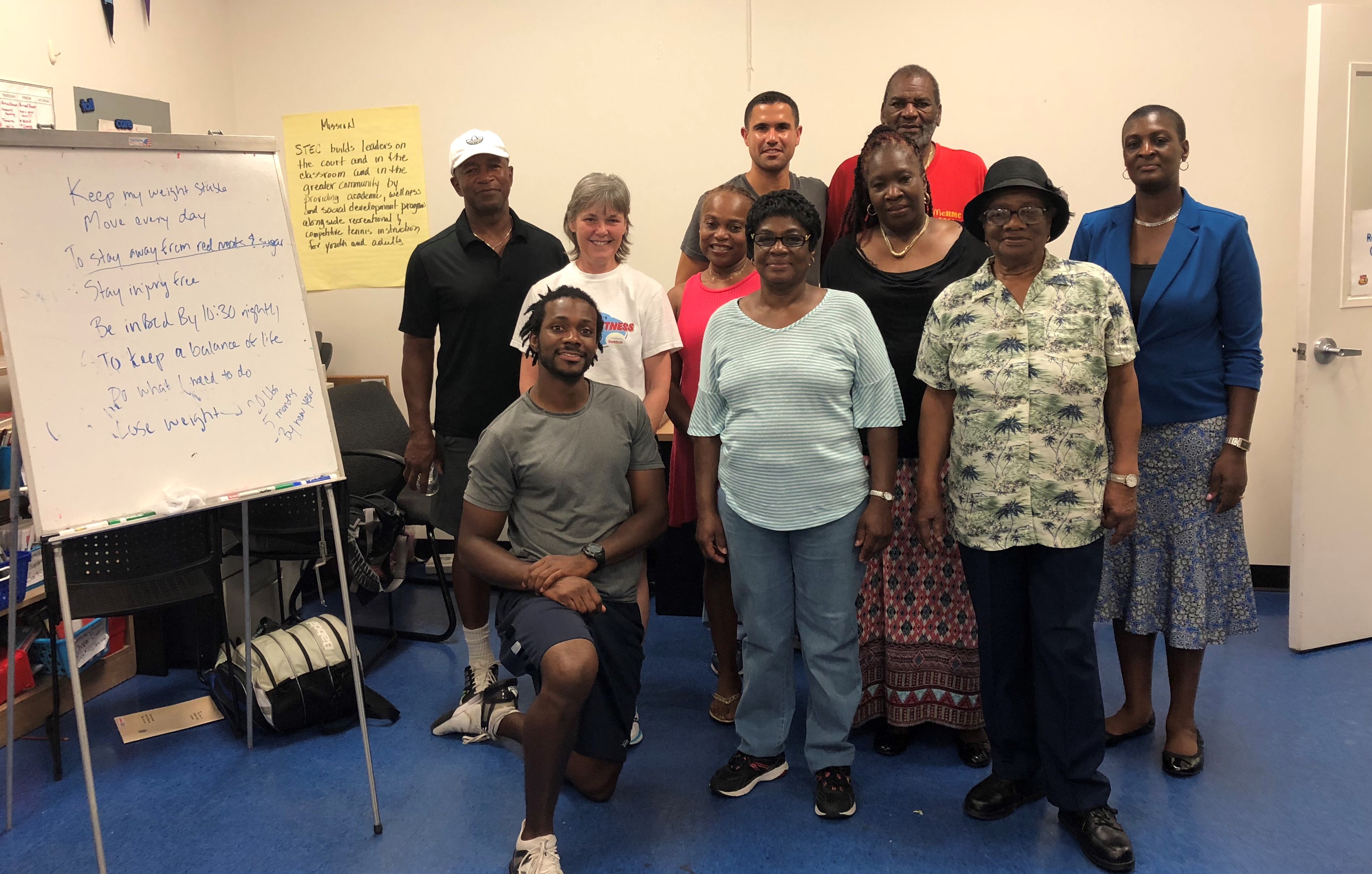
Rich Joseph leads a class about creating a personalized health plan at Brigham and Women’s Center for Community Wellness.

When Christina Meade, MD, was invited by a fellow resident to give a talk about kidney health – one of her clinical interests – to people in the local community, she jumped at the opportunity.

“I love medicine, specifically preventive medicine, and to educate people in our local communities about their health and wellness is what makes my job so wonderful and exciting,” said Meade, a second-year resident in the Department of Medicine. “After I participated in the talk, my passion for primary care was rejuvenated.”

Last year, Rich Joseph, MD, MBA, a third-year resident in Primary Care and Population Medicine, approached Paul Ridker, MD, MPH, director of the Center for Cardiovascular Disease Prevention, about possibly launching an ongoing health and wellness series led by residents at Sportsmen’s Tennis and Enrichment Center in Dorchester. Ridker, who at the time was the board chair of Sportsmen’s, said he instantly loved the idea, knowing the series could benefit both Brigham residents and community members.

Ongoing since September 2017, the “Wednesday Wellness” series takes place twice a month at the Brigham and Women’s Center for Community Wellness, Dorchester, located within Sportsmen’s. Each course focuses on a different health- and wellness-related topic, with more than 20 sessions held to date. Courses have covered diabetes and hypertension, dementia and arthritis, among other topics.

Opened in 2015, the goal of the Brigham and Women’s Center for Community Wellness Center at Sportsmen’s is to advance health and chronic disease prevention in underserved communities of Dorchester, Mattapan and Roxbury. The facility includes both classroom space for educational activities and a full gym, free to anyone living in the area.

For Ridker, the center has been a “terrific way for the Brigham to have a positive impact on preventive health in underserved neighborhoods where so many of our patients live and work.”

Wanda McClain, MPA, vice president of Community Health and Health Equity, agreed, adding the “Wednesday Wellness” program shows the power of collaboration. “Bringing together health care providers, community residents and Sportsmen’s is a perfect trifecta for improving community health,” she said.

Toni Wiley, Sportsmen’s executive director, has seen firsthand how valuable the courses have been for attendees.

Attendees of a recent “Wednesday Wellness” course gather for a photo with Brigham resident Rich Joseph (back row, center).

“I’ve heard many success stories from our members who’ve attended the ‘Wednesday Wellness’ sessions,” Wiley said. “Some have lost a few pounds, and others have come to understand how their medications truly work. It has been truly gratifying to hear people talk about how attending these sessions has been life-changing for them.”

The series has a loyal following. William Mitchell, of Mattapan, has attended nearly every “Wednesday Wellness” session, even inviting friends to join him. A retired firefighter, Mitchell said he appreciates the residents’ thoughtful, insightful presentations.

“To me, it’s a great thing to bring health and wellness education into the local community,” he said. “I’m grateful that the Brigham and Sportsmen’s came together to bring this goodness to our community, which is helping many of us live a better life.”

The series has also benefited Brigham trainees by providing opportunities to “get outside one’s comfort zone” and talk about health and wellness in a setting other than the hospital, Joseph explained.

Since the series launched, Joseph has heard from many resident colleagues who are interested in getting involved.

“It feels good knowing our work is helping others,” said Joseph, noting the series is a collective effort and would not be possible without the support of his resident colleagues.

BWH Emergency Medicine residents and Boston Children’s Hospital pediatric residents are among those involved in the series. Since Sportsmen’s offers programs for all ages, Joseph said it has been valuable to have residents from different specialties share their expertise.

Joseph, along with a handful of other Brigham residents, including Joshua Lang, MD, MS, a third-year resident in Internal Medicine, are also teaming up with Sportsmen’s to launch related programs, including community health fairs and an educational series for children attending summer camp at Sportsmen’s. Lang said it has been wonderful to participate in this work. “I feel pretty lucky to have found out about it,” he said.

Joseph added: “Partnering with Sportsmen’s has been one of the best decisions I’ve made as a resident. For me, this is the type of work that keeps me going – it’s very motivating. I love showing people the process of discovering their own health and taking care of themselves.”

Brigham Health’s Strategy in Action: Improve Health
Learn more about our strategic priorities at BWHPikeNotes.org.

Leave a comment
Cyprian Odeke

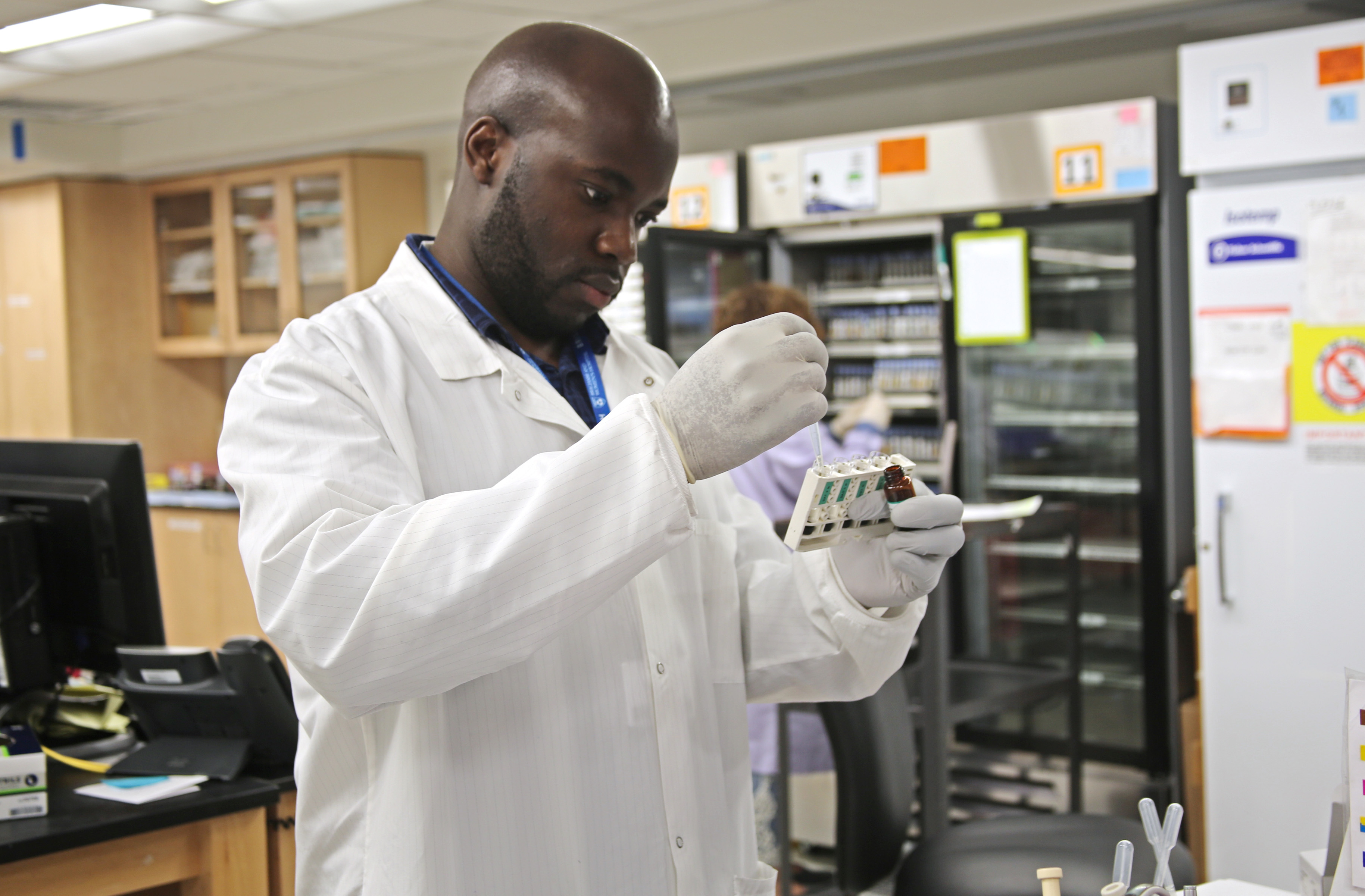
Cyprian Odeke runs quality control for the COBAS 8000 in the Chemistry Laboratory.

The Department of Pathology laboratories were recognized by surveyors from two accrediting bodies – The Joint Commission (TJC) and the American Society for Histocompatibility and Immunogenetics (ASHI) – for their extraordinary performance in quality and safety following two surveys in May.

The survey results are the latest in a long tradition of excellent marks from both entities. Particularly significant was the flawless report from the ASHI, which surveyed the Tissue Typing Histocompatibility Lab and concluded there were no findings to address – a rare outcome for an organization as large as BWH.

“Our staff’s commitment to service excellence, professionalism and team spirit came through loud and clear to the surveyors,” said Milenko Tanasijevic, MD, MBA, vice chair for Clinical Pathology and Quality. “They go above and beyond for every specimen and demonstrate their dedication to our patients every single day, regardless of whether a survey is occurring.”
During the four-day, unannounced TJC visit, which takes place every two years, surveyors evaluated compliance with laboratory standards in the labs, patient care areas, select on-site ambulatory practices and select off-site locations across BWH.

“The surveyors were so complimentary the whole time they were here. They commented on how incredibly professional and knowledgeable our staff are,” said Denise Fountain, MS, MT(ASCP)SBB, CQA(ASQ), director of Quality Assurance and Regulatory Compliance in Pathology.

Sara White

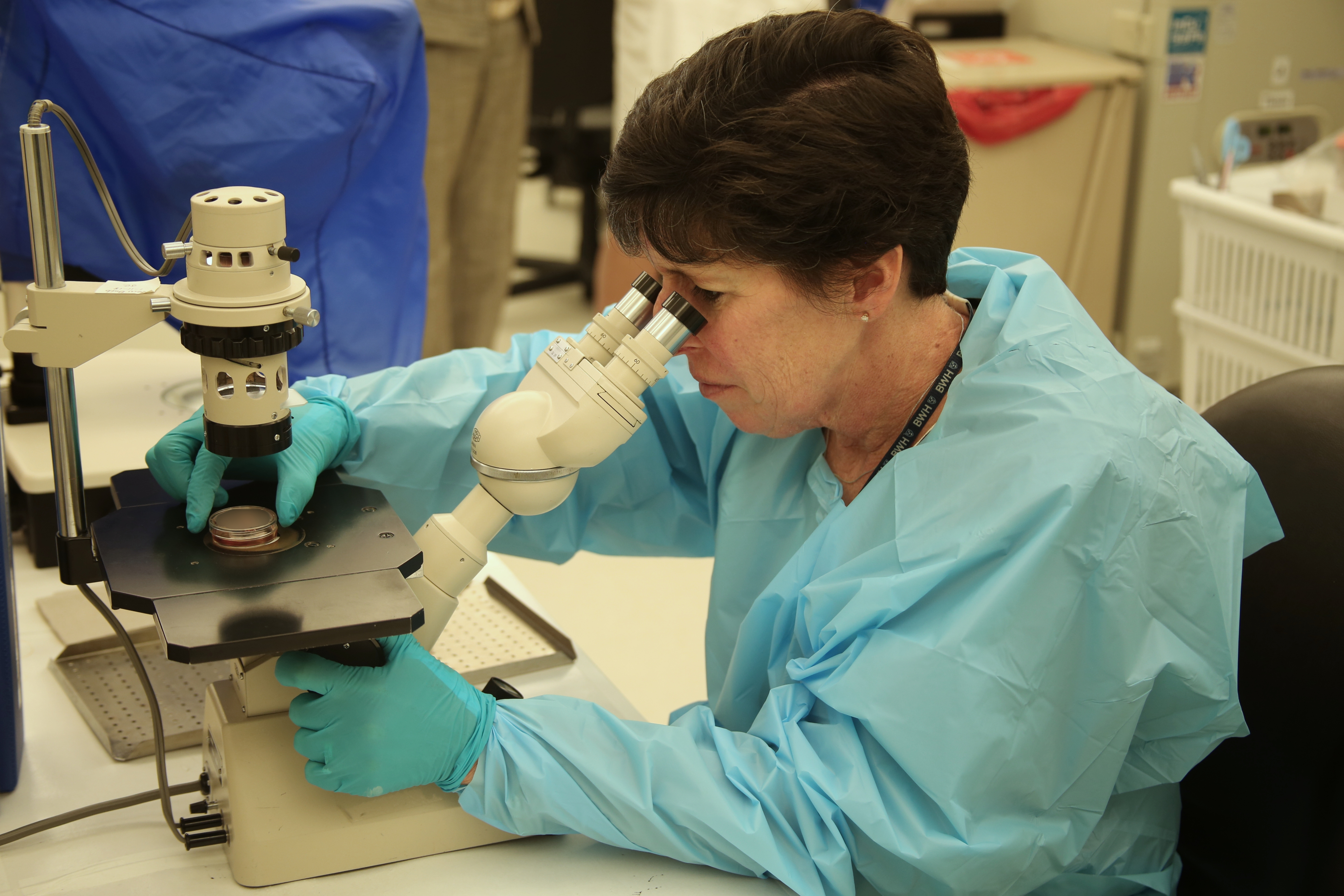
Sara White checks cell growth in a tissue culture on an inverted microscope in the Cytogenetics Tissue Culture Laboratory.

For the first time, TJC surveyors evaluated the labs using a new scoring methodology, The SAFER Matrix, which weighs instances of noncompliance by risk and magnitude. Surveyors identified a small number of findings to be addressed – fewer than most hospitals the size of BWH – and praised the staff for their professionalism, commitment and attention to detail. Since the completion of the survey, the BWH labs have addressed all findings from the report.

The ASHI survey, which also takes place every two years, praised the cutting-edge testing and highly advanced, specialized services provided by the Tissue Typing Histocompatibility Lab, Tanasijevic said.

“These successes are especially impressive given the pace of innovation in the field, and every BWHer should take pride in the outcomes of both surveys,” said Jeffrey Golden, MD, chair of Pathology.

“For example, five years ago, we rarely sequenced tumors. Now we look at the genome of most tumors to help inform how each patient should be treated,” Golden added. “When you factor in the regulatory changes that come with adoption of these new technologies, these surveys can be extremely challenging. But the remarkable commitment of our staff, no matter what challenges they face, ensure that we continue to be a high-quality, safe laboratory that provides the very best care for our patients.”

Brigham Health’s Strategy in Action: Highest-Quality, Safe Care
Learn more about our strategic priorities at BWHPikeNotes.org.

Leave a comment

On June 14, BWH Real Estate and Facilities staff began preparing portraits of former clinical department chairs, previously displayed in Bornstein Amphitheater, for relocation to their respective departments in new places of honor. The effort, part of ongoing work to strengthen diversity and inclusion across Brigham Health, aims to make the hospital’s physical environment better reflect the BWH community’s rich diversity and many role groups.

“Through the years, the people we employ and the people we care for have become increasingly diverse. As our Brigham community evolves, our environment and culture must also evolve so that everyone who comes through our doors feels a sense of inclusion and belonging,” said Brigham Health President Betsy Nabel, MD, in a message to all staff.

BWHers took to social media to express their appreciation for the Brigham’s commitment to diversity and inclusion:

Leave a comment

The Curhan family, from left: Talia, Alexa, Justin, Joshua, Sharon and Gary

In honor of Father’s Day on Sunday, June 17, BWH Bulletin is recognizing a heartwarming crossroads between fatherhood and research for one BWH dad and his family.

Soon after BWH physician-investigators Gary Curhan, MD, ScD, and Sharon Curhan, MD, MSc, first met as students at Brown University, they came up with a simple but powerful dream: to work side by side as researchers and make a meaningful contribution to health care.

Now married for 35 years and with four children, little did they know at the time how close to home that shared goal would take them.

In 1987, their oldest son, Joshua, was born three months premature. His high-risk birth and complex medical needs resulted in a two-month stay in the Brigham’s Neonatal Intensive Care Unit (NICU), and newborn screening revealed a diagnosis of hearing loss – a condition he continues to live with today.

Their family’s experiences have inspired Gary and Sharon – both epidemiologists studying chronic conditions with the Channing Division of Network Medicine – to dedicate much of their research over the past decade to uncovering lesser-known causes of hearing loss, how to diagnose it earlier and ways to slow or prevent its progression.

In 2011, they co-founded the Conservation of Hearing Study (CHEARS) and have since co-authored over 20 papers highlighting environmental and lifestyle risk factors for hearing loss and tinnitus, a condition that causes chronic “ringing” in the ears when no noise is present. Their work has found that hearing health is influenced by pain reliever use; overall dietary patterns, such as the Mediterranean and DASH diets, as well as intake of fish, caffeine and certain vitamins; hormone use; heavy metals exposure; physical activity; waist circumference and more.

“If you ask the average person what causes hearing loss, they would likely say loud noises and rock concerts. We’re not saying those aren’t important, but there are several other modifiable risk factors that have been underappreciated,” Gary said. “Hearing loss has been part of our life since we had Joshua. We’re thrilled we’re able to give back and hopefully prevent hearing loss in both children and adults.”

Finding Their Mission

Sharon said their journey as a family has given them a deep appreciation for the importance of healthy hearing and the challenges people with hearing loss encounter in their daily lives and over the long term.

“When the opportunity arose to channel our passion for improving efforts toward prevention, earlier detection and management of hearing loss – in a way that combines our research training in medicine, neuroscience and epidemiology – with our firsthand experience as parents of a child with hearing loss, we knew we had found our mission,” Sharon said.

Joshua, now 31 and an elementary school teacher in Lexington, said he is touched by his parents’ commitment.

“I am truly humbled to see that my parents view my hearing loss as inspiration for their research, rather than something to hide,” Joshua said. “To me, it validates the significance of hearing loss and the effects it can have, and I believe the work they are doing toward identifying risk factors and strategies to prevent hearing loss is critical.”

While the Curhans’ devotion to hearing health is a family affair, Sharon and Joshua recently reflected on what they treasured most about Gary as a husband, father, physician and researcher in honor of Father’s Day.

“I am so lucky to have Gary as my partner in every aspect of life – whether it’s family, work, community involvement, traveling or riding our tandem bike,” Sharon said. “His devotion, integrity, insight, intellect, generosity and heartfelt commitment to the people he loves, the patients he cares for, and improving science and health are unparalleled.”

Joshua described his father as one of the kindest, most caring and driven people he has ever known.

“Upon discovering my hearing loss after birth, he and my mom strived to support me as much as possible – from investing in hearing aids to advocating for the best educational settings to spending hours upon hours working with me to improve my speech,” Joshua said. “His demeanor was always upbeat, his words encouraging and his outlook steadfastly positive. I truly would not be where I am without the endless love and dedication of my dad.”

Leave a comment

Can a baby be stressed? While a baby doesn’t have responsibilities to worry about, the environment of a newborn – particularly an infant born preterm – can be full of stressors, including medical procedures and long-term separation from parents. Simple interventions, such as parent contact, music and breastmilk, are thought to ease stress levels, but how do you measure a newborn’s anxiety?

Terrie Inder visits with a young patient in the NICU.

Stress in the womb and in a baby’s environment is one of many aspects of newborn health that may affect health in adulthood. Adverse experiences early in development are thought to have a profound influence on one’s risk for chronic diseases later in life, but relatively little research has quantified these risk factors and their repercussions.

Researchers from the Department of Pediatric Newborn Medicine, led by its chair, Terrie Inder, MBChB, are hoping better understand how the first nine months can shape someone’s health for the rest of their life through the Healthy Start to Life project, supported by the Brigham Research Institute (BRI) Director’s Transformative Award. The $250,000 award funds groundbreaking, interdepartmental and interdisciplinary projects that will accelerate discoveries to improve human health.

Inder and her Pediatric Newborn Medicine colleagues, including Lianne Woodward, PhD, Mandy Brown Belfort, MD, and Katherine Gregory, PhD, RN, plan to develop the LifeCodes cohort to include new neonatal and childhood data and an expanded population of high-risk infants.

A Growing Resource for Newborn Research

The LifeCodes cohort, established by Thomas McElrath, MD, PhD, and David Cantonwine, PhD, of the Department of Obstetrics and Gynecology, is one of the nation’s largest pregnancy cohort studies. More than 5,000 are women enrolled, and the cohort grows at a rate of eight new women per week.

An extensive bank of biospecimens, including blood, urine and placenta samples, has been collected from study participants at 10 weeks, 26 weeks, and 35 weeks of pregnancy and at delivery.

To date, there has been limited neonatal and childhood data collected on the babies born to women enrolled in LifeCodes. Through the Healthy Start to Life project, Inder and her colleagues plan to recruit prospective LifeCodes mothers to participate in the expanded project and to collect neonatal and childhood data and biospecimens from their future children. The team will recruit women who come to BWH to give birth. Inder says that this aspect of the project has helped foster a new research partnership with Obstetrics and Gynecology.

“Even though we would see our colleagues from Obstetrics every day in the clinic delivering babies, we have never collaborated with them on cutting-edge research before,” she said.

A Special Focus on Preterm Newborns

The Healthy Start to Life team is also focusing on a smaller, targeted population to ask a more directed question: How does preterm birth affect health later in life?

In addition to studying blood samples, stool specimens and body composition in preterm and full-term infants, the team hopes to use a novel device, developed at Massachusetts Institute of Technology and based on lie-detector equipment, to measure skin conductivity and heart rate to quantify newborn stress.

Additionally, through a partnership with the Department of Radiology, Inder and her colleagues plan to use the neuroimaging facilities in the Hale Building for Transformative Medicine, along with a custom-built pediatric neonatal head piece, to take high-resolution images of newborns’ brains in the preterm birth study. This will allow the researchers to investigate not just the structure of the newborn brains but also the functional connectivity. The team hopes these images will help illustrate how preterm birth affects brain development.

Leave a comment

Newly licensed nurses at BWH celebrate with peers and colleagues at a reception after their pinning ceremony.

One morning following a long night shift at the Brigham, Becky LaMay, RN, then a patient care assistant in Palliative Care, stayed late to comfort a patient who had a difficult day. Before she left, LaMay asked the patient’s nurse if there was anything else she could do to assist him. He replied, “Yes, go to nursing school.” The brief interaction would become a defining point in her career.

“It was one of those seemingly inconsequential moments that he probably doesn’t remember, but I will never forget,” said LaMay.

Shortly after that day, LaMay had to unexpectedly leave her job at the Brigham to deal with her own health concerns. She urgently needed two spinal surgeries, which led to a monthlong hospital stay. Reflecting on her transition from caregiver to patient, LaMay remembered the nurses who were always there for her: “They fiercely advocated for me, treated me like a human and a friend and cheered me on, especially when I wasn’t cheering for myself. They assured me that I would be able to return to the medical field, and they were right.”

After a few detours in her career path, LaMay enrolled in nursing school – hoping that she would one day return to the Brigham for her first nursing job.

“And here we are,” said LaMay, now a newly licensed nurse (NLN) on Tower 11ABD, the Thoracic Intermediate Surgical Unit, and one of many new BWH nurses honored at the Department of Nursing’s Newly Licensed Nurse Pinning Ceremony on May 7. The event also celebrated the naming of the Newly Licensed Nurse Program in memory of Nora McDonough, a nurse who provided home care for the late Yousef Karsh, a BWH patient and world-renowned photographer. McDonough was also a special friend to Mr. Karsh’s wife, Estrellita Karsh, a supporter of the program.

Now known as the Nora McDonough Newly Licensed Nurse Program, the yearlong program provides new nurses with the foundation for a successful professional career and personal growth through a variety of orientations, classes, bedside simulations and case studies.

During the event, which kicked off the Brigham’s celebration of National Nurses Week, LaMay spoke about her experience in the Newly Licensed Nurse Program at BWH and how it has helped her navigate the first year of nursing practice.

“Between the NLN classes and orientation, BWH offers the most comprehensive NLN education that I know of,” said LaMay. Praising the nurses who lead the NLN classes, she added, “It is with their guidance that I have become comfortable in my new role and continue to grow during each shift. They are my teachers and have helped me learn to celebrate every victory and cope with each sorrow.”

A Special Connection

Underscoring the important contributions of BWH nurses, Brigham Health President Betsy Nabel, MD, congratulated the nurse honorees and reaffirmed the hospital’s commitment to providing a robust support system for new nurses that will set them on a path for success for years to come.

Gina Valeri is presented with a pin celebrating her recent graduation from nursing school.

“I hope you are all enjoying your journey,” Nabel said. “You have my gratitude for choosing to work at the Brigham.”

Emphasizing that nurses receive continued support from their colleagues and hospital leaders, Ron M. Walls, MD, Brigham Health executive vice president and chief operating officer, encouraged NLNs to take advantage of every opportunity to learn from their peers.

“We are proud of how nursing is practiced at the Brigham, and we are proud of you as newcomers,” he said. “You are going to learn from some of the very best nurses in the world.”

Maddy Pearson, DNP, RN, NEA-BC, chief nursing officer and senior vice president of Patient Care Services, spoke about the importance of having a comprehensive NLN program at the Brigham and noted the special connection she feels with new nurses as she soon marks the completion of her first year at the hospital.

“I felt like a member of the Brigham family immediately, and I want every nurse to feel the same. I’m so proud of you, and look forward to watching you grow, becoming experts in your practice and, most of all, making a difference for our patients and their loved ones,” Pearson said.

Stephanie Ahmed, DNP, FNP-DC, executive director of Clinical Effectiveness, echoed these thoughts, asking the new nurses to think about what it truly means to be a nurse.

“It’s when the science, the skills and the heart are combined that the art of nursing is practiced and the essence will be encountered,” Ahmed said. “To me, that’s what it means to be a Brigham nurse. And today, with this pinning, it’s my hope that’s what you’ll aspire to and what you will become.”

Leave a comment

From left: Indranil Sinha and Su-Ryon Shin

When a person suffers a traumatic muscle injury – whether from a motorcycle crash, for instance, or an explosive device – there is no way to regenerate the muscle that has been lost as a result. When the injury heals, instead of new muscle, scar tissue forms. Indranil Sinha, MD, of the Division of Plastic and Reconstructive Surgery, had an idea for how to help these patients. 

He thought that by injecting skeletal muscle stem cells at sites of injury, he could help patients regrow lost or damaged muscle. In 2014, Sinha received a Stepping Strong Innovator Award to test his idea in the lab, but the stem cells wouldn’t grow and muscle wouldn’t heal. Sinha investigated further and found that growth factors critical for regeneration weren’t present where they needed to be, and muscles couldn’t grow back without them. 

But just as Sinha’s promising idea began to fizzle, something else rekindled it.

The following year, Sinha joined a panel to judge the 2015 finalists for the Stepping Strong Innovator Awards competition. That’s where he heard BWH bioengineer Su-Ryon Shin, PhD, present her work with 3-D bioprinting. Sinha sought her out immediately after the presentation, and the two started talking about how they could help one another – and, ultimately, patients who had sustained muscle trauma injuries. Their conversation has continued ever since. In 2017, they received an additional Stepping Strong grant of $100,000 to join forces to continue their work together.

Failure Is the Mother of Success

On a recent afternoon, Shin arrived in Sinha’s office with happy news to share: One of her grant submissions had been scored. Sinha beamed and congratulated his collaborator, and told her he had good news, too: His had received a high score as well. They shared a moment of relief and elation – one that stood out because it was hard fought. For two years, Shin and Sinha have experienced an essential and often unspoken part of science: failure.

“Nothing in the first half of my Stepping Strong grant worked. Even when I saw Su-Ryon’s presentation, there was never a guarantee that bringing our ideas together would work either,” said Sinha. “But the Stepping Strong grant gave us the ability to try something no one had ever done before. It was a safe space in which to fail, and then try something new again. Together, we’ve been able to accomplish what neither of us could have done alone.”

Sinha speaks passionately about the needs of his patients. Unlike other diseases or injury where treatment exists but may be limited, there are currently no treatments for muscle trauma. This means that investigators like Sinha and Shin cannot follow in the footsteps of others to build on their work; instead, they need to create entirely new approaches.

Shin is a trained bioengineer whose laboratory in Cambridge includes state-of-the-art equipment, including a 3-D printer, to create new materials that can be used in the body to promote healing. These “scaffolds” can mimic the architectural structure of skeletal muscle and be loaded with slow-release treatments.

Shin and her colleagues have designed many types of hydrogels – flexible, gel-like materials – over the years for medical applications. Based on discussions with Sinha, Shin has created a hydrogel loaded with substances they hoped would encourage muscle regrowth. At first, the hydrogel’s texture was like Jello, making it difficult for Sinha to suture it to a wound. Based on this feedback, Shin redesigned it to be more like fabric.

Sinha and Shin visit one another’s laboratories often, and their teams have virtual meetings to share new insights across the lab and clinic. Other collaborations have sprung up across their teams, too. Sinha is also working on a project with one of Shin’s colleagues on bone regrowth.

“We want to decrease that gap between clinicians and engineers,” said Shin. “The conversations I’ve had with the people I’ve met through the Stepping Strong network are so useful for me and have led to new funding and new collaborations.”

Leave a comment

From left: Susan Rapple, Steven Thompson, Alexi Wright and Yiannis Koullias

On April 24, LGBT leaders at BWH participated in a discussion, “Out at Brigham: LGBT+ Careers Panel,” where they shared personal reflections, practical advice and warm encouragement to early-career staff who identify as LGBT+ (an inclusive term to represent the spectrum of sexual orientation and gender identities). 

The four panelists spoke candidly about a wide range of topics, including how they handle moments when they need to disclose their sexuality to others, both in personal and professional settings, and the importance of advocating for LGBT+ equality in the workplace.

“One of the great things about the Brigham is its commitment to diversity and inclusion,” said Jonah Tanguay-Colucci, a patient care assistant and member of the Brigham Health LGBT & Allies Employee Resource Group (ERG), before introducing the panelists. “This is best exemplified by members of the LGBT+ community who are on staff here at all levels across Brigham Health.”

Hosted by the LGBT & Allies ERG, the event also celebrated BWH and BWFH being named Leaders in LGBTQ HealthCare Equality by the Human Rights Campaign Foundation for 10 years.

Throughout the discussion, speakers noted that while there is more work to be done, they were proud to work at an institution at the forefront of inclusion. 

“While we have this panel discussion, I wonder if anyone is having a similar panel discussion across Boston,” said panelist Susan Rapple, EdM, senior vice president and chief development officer, who credited her colleagues for their unwavering dedication to cultivating a welcoming environment at the Brigham for all patients, families and staff. 

‘It’s a Part of Who We Are’

As panelists reflected on moments when they needed to disclose their sexuality, Alexi Wright, MD, MPH, a medical gynecologic oncologist at Dana-Farber Cancer Institute, who also cares for patients at BWH, discussed the challenges of navigating such conversations. She looked back on how she and her wife, Ingrid Katz, MD, MHS, of the Division of Women’s Health, handled interviews for residency programs when they applied as a couple in 2003.

“Everywhere we interviewed, except at BWH and the University of California, San Francisco, people asked, ‘What does your husband do for work?’ I had to repeatedly come out as gay on the interview trail,” Wright said. “One of the nice things about matching as a couple at the Brigham was that everyone knew we were together, and it was just a part of who we were and are today.”

When caring for her patients, Wright said sometimes it can be difficult to determine how much personal information she’s comfortable disclosing when asked.

“Patients sometimes ask me what my husband does, and I have to make a conscious decision in the room about whether I want to talk about my wife,” she said. “I feel this double tension a lot of the time because a patient’s visit with me is about them and their health, and I want my patients to be as comfortable as possible. But, at the same time, I don’t want to be inauthentic to myself or my relationship.”

Coming out as gay hasn’t always been an easy task for Internal Medicine resident Yiannis Koullias, MD, explaining that he’s experienced harassment and discrimination related to his sexuality. But he added that it hasn’t stopped him from expressing who he is as a person and physician. Koullias also underscored the importance of having people at all levels, including hospital leadership, be vocal advocates of inclusivity and diversity and denounce discrimination.

In addition to personal experiences, panelists shared ideas for strengthening LGBT+ inclusion at BWH. In one example, Wright proposed a mentorship program for senior staff mentors and LGBT+ trainees. 

Steven Thompson, MBA, senior vice president and chief business development officer, also said he hopes to advocate more for LGBT+ equality in the workplace. As an openly gay member of the senior leadership team, he feels a personal responsibility to inspire his colleagues to learn more about the great work of the LGBT ERG. “Coming out still matters,” he said.

Leave a comment

Patient Paul Bauer (center right), with the BWH clinical and research teams collaborating on a novel study in which he is participating.

When Paul Bauer, 74, became winded after climbing two or three flights of stairs, he didn’t initially give it much thought. No longer as active as he once was, he assumed lifestyle changes were to blame. Still, just to be safe, Bauer mentioned it to his primary care physician during a routine visit last year.

His offhand observation triggered a series of events that would result in Bauer learning he had cardiac amyloidosis, a disorder that causes an abnormal protein to build up in the heart tissue. These deposits can accumulate over time and result in serious complications, including heart failure. Treatment options are limited, and most focus on slowing the progression of the disease.

A patient in the Brigham’s Cardiac Amyloidosis Program, Bauer is the first North American patient to enroll in a clinical trial testing a novel therapy that BWH investigators hope will prove effective in dissolving this abnormal protein buildup. If successful, it could undo decades of damage to the heart in these patients. BWH is one of three sites worldwide participating in the study, led at the Brigham by Rodney Falk, MD, director of the Cardiac Amyloidosis Program, in partnership with BWH colleagues across several departments and disciplines, including Cardiovascular Medicine, Dermatology, Nursing, Pharmacy and Radiology.

“It’s still in the early days, but we do know that this drug works well in animal models and in humans with amyloid in other organs, particularly the liver. If we find that this is effective in the heart, it would be a huge breakthrough for the tens of thousands of patients affected nationwide,” Falk said.

Bauer, who is in the early stages of the disease, is cautiously optimistic about what results he may see. A semiretired aeronautics engineer at Massachusetts Institute of Technology, the Lexington resident says his primary motivation for enrolling was to help advance science and medicine.

“I’ve been a researcher all my life, and I spend most of my time working with students in the laboratory. When Dr. Falk asked if I would consider being the first patient in this study, I was happy to contribute to medical research,” Bauer said.

Nursing Partnership Forms

But the science underlying the trial isn’t the only thing that makes it distinctive. It has also led to a special collaboration between BWH clinical and research nurses due to how the study is conducted.

Trial participants receive the therapy monthly over a six-month course. However, they must remain hospitalized for two weeks each month for treatment and observation in the Shapiro Cardiovascular Center. Bauer, who recently completed his second round of hospitalization for the study, said his wonderful experiences with BWH staff have mitigated any inconveniences the time commitment has caused.

“The staff here is outstanding – offering to do anything that would make my stay as pleasant as possible,” Bauer said. “What makes it not only tolerable but also enjoyable are all the people I’ve met.”

While it’s not unusual for clinical trial participants to be hospitalized during a study, they typically are admitted to Tower 9AB, the Center for Clinical Investigation (CCI) inpatient unit, under the care of research nurses who specialize in collecting data and samples in accordance with research protocols.

Because the therapy for this study carries a potential risk of cardiac arrhythmia, Falk and the outpatient CCI staff partnered with Shapiro nurses to enlist their specialized expertise and ensure the safest-possible care for patients in the trial. The result: a close collaboration between two nursing teams who wouldn’t otherwise practice side by side.

“If a patient is participating in a study, there are many data collection points – investigational drug administration, blood and urine samples, EKGs – that must be timed very precisely to maintain the integrity of the protocol. It would be extremely difficult for a clinical nurse to collect all of that while performing the normal responsibilities of caring for not only this patient but their other patients as well,” explained Lauren Donahue, BSN, RN, an outpatient research nurse in the CCI working on the cardiac amyloidosis trial. “But because of the potential risks involved with this therapy, these patients needed to be in Shapiro. We thought, ‘Why don’t we bring our specialty to your specialty?’”

Participants are admitted to Shapiro 8 and receive day-to-day care from clinical nurses in the unit. When the research work is being conducted, the CCI team arrives on the floor to fulfill the study requirements.

“We didn’t want, in any way, to impinge on the duties of the clinical nurses. They were flexible and very enthusiastic partners,” Falk said. “There’s plenty of research going on in Shapiro, but those patients are there because they are very ill. This collaboration is unusual because our participants are in Shapiro as a precautionary measure, and the Shapiro nurses excel in managing potential cardiac issues.”

Karen Hanrahan, BSN, RN, a clinical nurse on Shapiro 8, said it has been gratifying to work with research nurses in this new, integrated way in support of the study.

“It’s a great collaboration,” she said. “It’s been so interesting to understand how the research nurses conduct clinical trials, and we’ve enjoyed being able to continue their work during off hours, when the research nurses are not available, by maintaining the precise timing of treatments and medications that the study requires.”

Jeanne Praetsch, MS, RN, CCRN, a professional development manager for Shapiro 8, said that early and ongoing communication between all the teams involved has been invaluable for clinical nurses.

“We met as a team to identify and address workflow and any possible barriers,” she said. “Education for the nursing staff and interprofessional collaboration resulted in a smooth process and satisfying experience for the patient and all members of the care team.”

Celebrity Golf Classic Supports BWH Cardiac Amyloidosis Research

ESPN’s Sean McDonough will host a two-day celebrity golf tournament to support cardiac amyloidosis research at BWH. McDonough’s father, legendary Boston Globe columnist Will McDonough, died suddenly from the disease in 2003. The event will be held Aug. 6-7 at The Ritz-Carlton Boston and Boston Golf Club. Learn more at SeanMcDonoughGolfClassic.org.

Leave a comment

Ron M. Walls discusses the importance of personal accountability in everyday actions.

In a Just Culture, staff are encouraged to report mistakes and near misses so that system-based issues can be corrected, resulting in improved quality and safety. But this system of shared accountability does not absolve us of personal responsibility as health care professionals, said Ron M. Walls, MD, executive vice president and chief operating officer at Brigham Health.

When we promise unerring safety to our patients, it must be a personal commitment, said Walls, who spoke about the topic at Quality Rounds on March 22. Most importantly, that means taking ownership of decisions and outcomes, he added.

“Just Culture is an important part of our safety and quality culture, but it has, to a degree, sidetracked us from the notion of personal responsibility,” Walls said.

To illustrate his point, Walls shared examples of how this has unfolded. He noted that one area where there is a greater need for personal accountability at the Brigham is hand hygiene compliance, specifically when working with patients at risk for clostridium difficile (C. diff) infection, a bacterium that causes diarrhea and can be fatal. When caring for patients who are at high risk for developing C. diff, health care workers can unintentionally spread the bacteria by not properly following the compliance measures of wearing a gown and gloves and washing their hands with soap and water before entering the patient’s room.

Following a four-month observation period, the hospital found that staff practiced those compliance measures 58 percent of the time when caring for patients at high risk for C. diff.

“Acquiring an infection in the hospital where you came to get well is a terrible outcome,” Walls said.

Hand hygiene is one of many areas where greater personal accountability will lead to tangible improvements in care quality and safety.

An individual’s failure to follow safety protocols properly aren’t malicious, Walls explained. Often, staff attribute noncompliance to external factors, such as time constraints or inconvenience. But Walls contended that this is where the need for greater personal accountability comes into play.

When patient safety is on the line, “I don’t have time to walk to the sink” is not an acceptable reason to sidestep hand hygiene, he said. Instead, he suggested staff adopt a solution-oriented outlook: “I have to find a sink” or, “It’s my responsibility to ensure that my patient leaves the hospital having received appropriate care.”

Promoting Secondary Responsibility

In addition to personal responsibility, Walls noted another area for improvement at the Brigham is strengthening our commitment to secondary responsibility – holding not only ourselves accountable but also our colleagues. In the coming months, BWH plans to unveil a new policy that will articulate expectations and processes for upholding this.

Returning to the hand hygiene example, Walls explored how secondary accountability could be practiced if a BWHer notices his or her colleague does not wash their hands before entering a patient’s room. If the noncompliant colleague – after being confronted and reminded about the importance of hand hygiene – deflects or becomes angry, the BWHer who approached their colleague would be personally responsible for filing a safety report about the incident.

Walls said this change in policy is needed because hospital leadership and the Quality and Safety team have tried everything they can to get people to exercise responsibility when an error, mistake or adverse event occurs.

“Had you walked into this hospital at any point over the past 10 years, our hand hygiene compliance rate would have probably been close to the same as today,” he said. “But I assure you that you’re not going to walk in next year and see that our rate is still that low.”

View the Quality Rounds webcast here (accessible only on the Partners network).

Leave a comment

This is the second article in a weekly series in BWH Bulletin profiling runners participating in this year’s Boston Marathon with BWH’s Stepping Strong Marathon Team on Monday, April 16.

Juan Herrera-Escobar completes a marathon in Chicago in 2015.

As a medical student completing a rotation at a hospital in Cali, Colombia – once considered one of the most violent cities in the world – Juan Herrera-Escobar, MD, was deeply affected by the staggering number of patients with traumatic injuries he saw in the emergency department.

Upon graduation, he was dispatched to a hospital in Cali to complete one year of public service as a general practitioner – a federal requirement for medical graduates in Colombia. Serving patients brought in from areas rife with confrontations between guerilla fighters and military, Herrera-Escobar treated many victims of traumatic injuries caused by grenades, landmines and gun violence.

“One of the things that really moved me while I was completing my training was the realization of how young these patients were. I could be one of them. It drove home that trauma is killing young people,” said Herrera-Escobar. “That really touched me. I knew this was something we need to fix – and it can be fixed. I got really interested in seeing how we can prevent traumatic injuries and respond better when they do occur.”

Now a trauma researcher in the Center for Surgery and Public Health (CSPH), Herrera-Escobar is trying to make a difference in advancing trauma care on multiple fronts. In addition to his work at the Brigham, he is running in this year’s Boston Marathon with the BWH Stepping Strong Marathon Team. With a mission to turn tragedy into hope, funds raised by the team support trauma research and care.
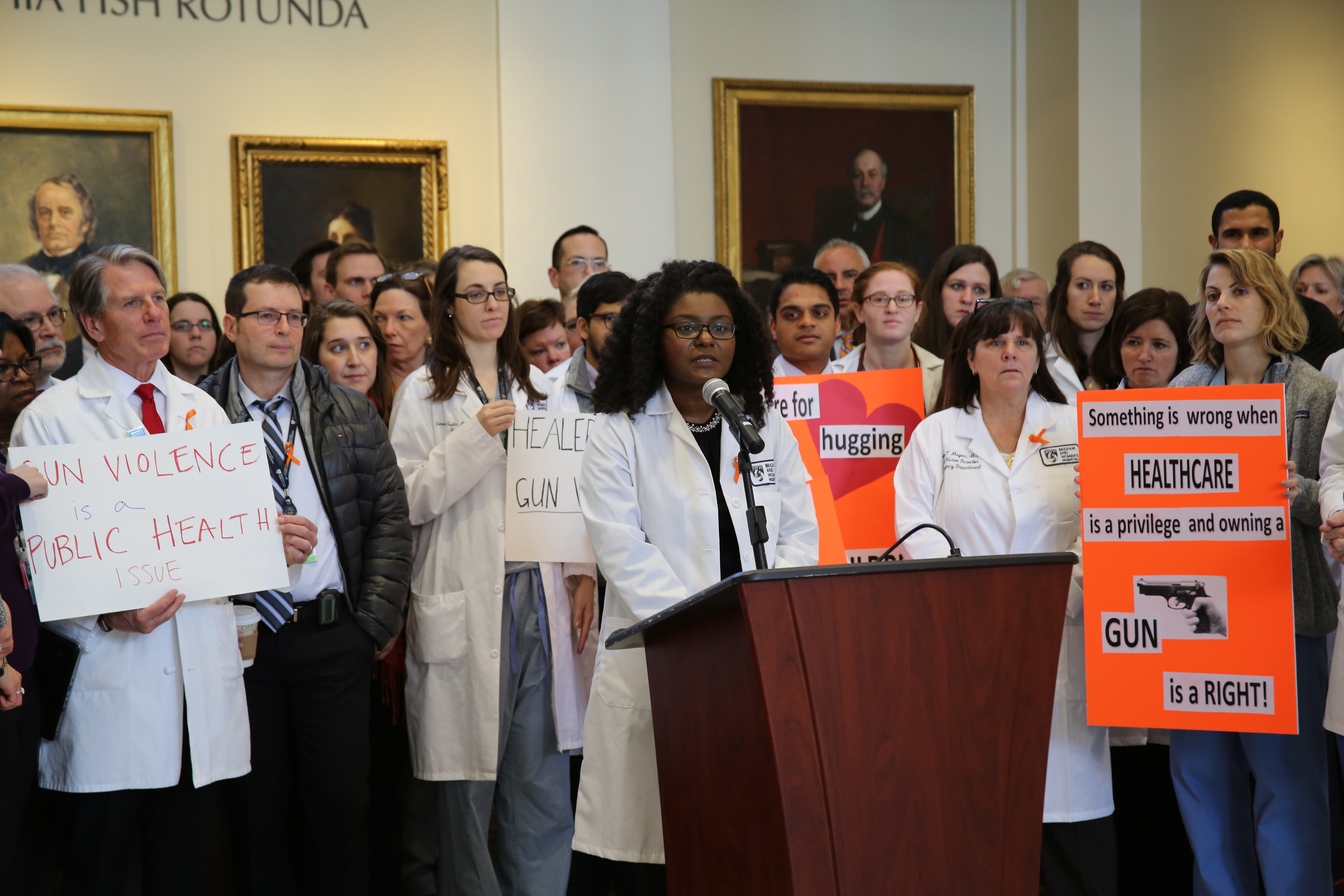
“When I was in Colombia, I knew that research funding was very limited for all areas of disease and conditions. I never would have imagined how huge the gap was in the U.S. between trauma research and other areas, such as cancer or heart disease,” Herrera-Escobar said. “Trauma is killing a lot of people, and we need to do something. Stepping Strong is sending a powerful message about this, and I am so excited to support them.”

In his research at CSPH, Herrera-Escobar works with Adil Haider, MD, of the Division of Trauma, Burns and Surgical Critical Care, to study long-term effects on quality of life for those who have suffered traumatic injuries. After learning that no registry existed to sufficiently support research in this area – at least not with robust data about patients post discharge – the team launched the Functional Outcomes Recovery and Trauma Emergencies (FORTE) Project. In collaboration with Massachusetts General Hospital and Boston Medical Center, they are working to build a registry that could be used to better track long-term health concerns and identify interventions.

Looking ahead to the marathon, Herrera-Escobar said it will be special to participate on behalf of an organization to which he has so many personal and professional connections.

“These past few months have been an incredible experience. I’m so excited for the race, especially because it really ties into what I’m doing every day,” he said. “It’s been really meaningful.”

Visit Herrera-Escobar’s Boston Marathon fundraising page.

About Stepping Strong

The Gillian Reny Stepping Strong Center for Trauma Innovation was established by the Reny family to honor the BWH caregivers who saved their daughter Gillian’s life and legs in the aftermath of the 2013 Boston Marathon bombings. Five years after the tragedy, the center has raised more than $13 million to transform trauma research and care for civilians and members of the military who experience traumatic injuries and events. Funds raised by members of the 2018 Stepping Strong Marathon Team support the center’s work. To meet other members of the team or make a gift, click here. Learn more about the center at BWHSteppingStrong.org.

Leave a comment

At podium: Lachelle Weeks, joined by colleagues from across BWH, discusses the public health implications of gun violence.

When the news broke last month that there was yet another school shooting, Internal Medicine resident Lachelle Weeks, MD, PhD, chair of the Resident Social Justice Committee, said BWH residents shared in the profound sadness and frustration that has been displayed across the U.S. They were upset that once again firearms took the lives of schoolchildren and that these events are happening with growing frequency.

“Gun violence is a uniquely American public health crisis,” said Weeks, also a member of the Brigham Health Social Justice and Health Equity Task Force. “As clinicians, we are first responders – we treat the physical damage caused by guns. We nurse patients back to health. We comfort families and loved ones and counsel patients who are traumatized from being shot or shot at. It is our privilege to serve in this way, but it is our responsibility to ensure the incidents of preventable deaths, trauma and injury are reduced whenever possible.”

On March 14 at 10 a.m., exactly one month following the shooting at Marjory Stoneman Douglas High School in Parkland, Fla., health care professionals around the country, including those at BWH, came together to take a stand against gun violence.

At the Brigham, BWHers gathered in the Fish Rotunda at 15 Francis St. for a brief event, “Healers Stand Against Gun Violence,” hosted by the BWH Resident Social Justice Committee. Weeks and Charles Morris, MD, MPH, associate chief medical officer, offered reflections on gun violence as a public health issue. Chaplain Elizabeth (Elli) Goeke of Spiritual Care Services provided a moment of reflection in honor of all those affected by gun violence.

The event was one of many taking place nationwide that morning, with students across the country conducting walkout protests in solidarity with students in Parkland and to honor the 17 victims of the Feb. 14 shooting.

While gun violence is an ongoing concern for many people, it is often a single event or statistic that compels them to speak out, Morris said.

“We are all moved by numbers. Perhaps yours is 17, the number of children and adults who died in Parkland, Fla., on Feb. 14. Or maybe it’s three, the number of psychotherapists killed this past Friday in California. Or 30,000, the annual deaths in this country due to firearms,” he said. “Or maybe it’s one: the friend, fellow physician and college classmate you lost to firearm violence.”

‘At the Forefront of Health and Change’

Charles Morris encourages attendees to channel their grief into action and advocacy for treating gun violence as a public health concern.

Morris, who recently co-authored an article in The New England Journal of Medicine about gun violence as a threat to public health, underscored the important role that health care professionals can play as advocates for patients and families.

“This hospital ID badge isn’t a participation medal. It’s a symbol of our commitment to safeguard our patients’ health and to push relentlessly as part of a larger force to be at the forefront of health and change,” Morris said.

Weeks added that clinicians at the Brigham and beyond can help make a difference by contributing to the discussion on various fronts. She advocated for research, legislation and funding focused on treating gun violence as a nationwide health concern, in addition to continued support at the local level, including programs and committees at the Brigham.

“We stand together to remember the men, women and children who have lost their lives and had their lives forever changed because of a gun. We honor their memory by calling attention to this public health issue with our presence, our voice and our action,” Weeks said. “We stand asserting that deaths and injuries from gun violence are not political, but instead are preventable tragedies.”

Morris explained that while it’s important to reflect on and grieve for those affected by these tragedies, our collective responsibility doesn’t end there.

“Don’t let these events push you to a standstill. Be moved not just to emotion but to motion. And should you need it, this room is filled with people who can help you,” Morris said. “So I ask: what is your number? How does it move you? How will you move?”

1 Comment

Michaelle Dieuveuil prepares sterile epidural cassettes for patients in the Pharmacy Sterile Products Room.

Last year’s devastating hurricanes destroyed several key medical manufacturing plants in Puerto Rico, worsening existing shortages of critical medical supplies at hospitals across the country, including BWH and other Partners HealthCare institutions. At the same time, the Brigham is also among the thousands of health care organizations nationwide facing multiple medication shortages as U.S. drug manufacturers struggle to keep up with market demand.

The Brigham is currently facing a shortage of intravenous fluids (IV) and bags, as well as several frequently used injectable opioid medications. The Emergency Preparedness team, along with key unit leaders at BWH, have been meeting on a weekly basis for several months to actively monitor the situation and develop strategies for maintaining high-quality, safe care.

Charles Morris, MD, MPH, associate chief medical officer, has worked with the Emergency Preparedness team to address the shortages and described the crisis response as a “striking example of remarkable teamwork in action.”

“We’ve seen countless demonstrations of this collaboration. Materials Management pitches in to assist Pharmacy staff. The Information Services team provides real-time data about current supplies, allowing us to pinpoint areas of high utilization. Nursing staff works on implementing oral hydration strategies developed by Emergency Medicine faculty,” Morris said. “These efforts, along with so many others, have been truly collaborative.”

Mike Cotugno, RPh, director of Pharmacy Patient Care Services, has been involved in the many communications updating staff about the shortages and recommended solutions. Regularly partnering with care teams to work through any challenges, Cotugno said he is impressed every day by BWHers’ unrelenting support and patience.

“I’ve received dozens of emails from colleagues asking if there’s anything they can do to help,” Cotugno said. “They know how hard this has been for not only the Pharmacy team but also the entire hospital. There’s a lot of understanding, and everyone is supporting each other. It takes a team to get through difficult situations such as these shortages.”

Eric Goralnick, MD, MS, medical director of Emergency Preparedness, said it has been wonderful to observe various departments, professions and disciplines team up on a response to this longitudinal event. For example, pharmacists, responding clinicians and IS staff worked together to identify patients receiving IV fluids and an oral diet daily and explore opportunities to reduce IV usage.

“When events are prolonged, it is challenging to stay focused and maintain unity of effort,” Goralnick said. “We have so many committed professionals who are approaching these shortages by trialing new ideas, measuring their impact and changing practice in a new, improved way. We have also teamed up with Brigham and Women’s Faulkner Hospital and other Partners institutions on shared solutions. This is the model of how we need to combat similar events that require a multidisciplinary response.”

Each week, Katie Fillipon, MS, RN, OCN, FNP, associate chief nurse for Oncology and Medicine, has participated in calls with other members of the Emergency Preparedness team about the shortages. She agreed that shared decision-making within the working group has supported proactive changes that minimize any impact on patient care.

“Delivering high-quality, safe care is our collective priority, and being able to work alongside our Faulkner colleagues on these efforts has strengthened our commitment to supporting each other in achieving this, no matter what challenges we face,” Fillipon said. “There has also been a strong commitment to our communication strategy and a desire to ensure we provide information and decision support to our providers.”

Leave a comment

From left: PIE Award winner Sholonda Alexander celebrates with Valerie Moals-Phillips, who nominated her for the honor.

When the Urgent Care Center waiting room at Brigham and Women’s/Mass General Health Care Center in Foxborough was at capacity one day, Eva Wood, a practice coordinator, wanted to do something to comfort patients as they waited to be seen.

She offered drinks and snacks and provided regular updates about expected wait times. These thoughtful gestures helped to ease patients’ minds amid the stress of an injury or illness.

Wood was among several individuals and teams honored with 2017 Partners in Excellence Awards (PIE) during the Feb. 20 ceremony. This year, awards were presented to a total of 65 individuals from BWH, the Brigham and Women’s Physicians Organization and the Dana-Farber/Brigham and Women’s Cancer Center, as well as 374 members of 33 project teams. The annual awards recognize employees for their outstanding contributions to Partners HealthCare’s mission.

Another PIE Award recipient was Johann Brown, a dosimetrist (radiation planning expert) in the Department of Radiation Oncology. Brown was nominated for his tireless efforts to ensure patients receive timely care.

“Johann epitomizes the phrase ‘going over and above one’s duties.’ Johann has worked weekends, evenings and early mornings to be sure all treatment plans are done on time and patient treatments are never delayed,” colleagues wrote in his nomination. “He is unreservedly committed to his team and patients.”

Among the teams honored with a PIE Award was Spiritual Care Services. The department was nominated for its work in training more than 100 medical students in the basics of Spiritual Care since 2016, as well as collaborating with Psychiatry and presenting at joint Psychiatry and Spiritual Care rounds to enhance collaboration, learning and continuity of care between the two departments.

Brigham Health President Betsy Nabel, MD, shared words of pride and gratitude with recipients for their work and dedication to patients, their families and each other.

“The commitment and loyalty you demonstrate to the Brigham is truly exceptional,” she said. “You inspire me every day. I thank you from the bottom of my heart.”

Paula Squires, MBA, SHRM-SCP, SPHR, senior vice president of Human Resources, served as the ceremony’s emcee and reflected on the extraordinary efforts of this year’s recipients.

“Because of all of you, we are and will remain one of the finest hospitals in the world,” said Squires. “Every day, your passion, purpose, skill and innovative spirit touch the lives of those in our BWH community. For that, we are all deeply grateful and proud. I’m thrilled we can celebrate the spirit of excellence today.”

View a recording of the webcast.

Leave a comment

At the Brigham, nurses play a pivotal role in care coordination, especially for patients who will require post-acute care services or rehabilitation placement. Daily care coordination rounds, also known as interprofessional huddles, are one of several strategic initiatives launched in recent years to improve collaboration, enhance quality of care and ensure coordinated and efficient discharge preparation for patients.

During the rounds, which take place every day on several inpatient floors at the Brigham, members of a patient’s care team – including the charge nurse, resident, care coordinator, physical therapist, social worker and unit coordinator – gather to review and facilitate patient progression. This proactive planning enables the team to operate more cohesively and to collectively track completion of key activities or documents.

One example of how these rounds led to improved care involved a patient with a serious brain injury who spent one year at the Brigham as an inpatient.

Following the daily huddle, each member of the patient’s care team was responsible for following up on specific action items that came out each huddle, such as collaborating with Financial Services and care coordination nurses to explore discharge options. While the planned discharge date for the patient was pushed back on several occasions, per the family’s request, the interprofessional team continued to work with the family toward the shared goal of discharging the patient to his home with hospice care.

The patient’s wife later contacted the care team to inform them of her husband’s passing and express her gratitude for the services arranged by clinical nurse care coordinators, which enabled the patient to be at home with his family before he died.

Daily care coordination rounds ensure all members of an interdisciplinary team are brought up to speed on a patient’s care plan and goals, said Jane Grana, RN, of Care Coordination.

“We often each know something a little different, or see it from a different point of view, so it’s important that we collaborate,” Grana said.

Farah Abellard, MSN, RN, a nurse on Tower 10AB, agreed that improved multidisciplinary collaboration results in higher-quality, safer care: “Everyone plays a vital role in providing family-centered care.”

Visit BWHPikeNotes.org/magnet to learn more about the Brigham’s journey to Magnet designation and view instructions for accessing the body of evidence BWH submitted in its Magnet application; the interdisciplinary huddles are featured in the Exemplary Professional Practice (EP) 5 section of the submission.

Leave a comment

From left: Kyle Herman and Robude Petit-Frere are among several BWH Security officers trained to administer naloxone.

To help staff prepare for the Magnet site visit occurring March 26-29, each week BWH Bulletin will feature an example of a hospital initiative that demonstrates how the Brigham exemplifies the hallmarks of a Magnet institution. 

When BWH Security Officer Robude Petit-Frere responded to a recent Code Blue, he encountered a frightening scene: A patient in a wheelchair was unresponsive and not breathing. Bystanders cried out for help and indicated the person had suffered an opioid overdose. The code team was on the way, but the patient’s condition was deteriorating quickly.

Every second counts during an opioid overdose. Rapid administration of the drug naloxone – a fast-acting medication that can reverse an overdose – can mean the difference between life and death.

Thanks to training he had received as part of an institutional protocol developed by an interdisciplinary team at the Brigham, Petit-Frere successfully assessed the situation and administered naloxone to the patient. The individual immediately resumed breathing and was soon treated by medical personnel.

Through this initiative, Security officers like Petit-Frere, who are often the first responders to emergencies around campus, and code team nurses are now trained to carry and administer this lifesaving medication at the earliest opportunity.

“I acted quickly. If it had been a few seconds longer, that patient may not have made it,” Petit-Frere said. “At that moment, I recognized how important this training is.”

The interdisciplinary nature of this work has been key to its progress, said Karen Griswold, MBA, BSN, RN, CPPS, a program manager in the Department of Quality and Safety and co-chair of the Emergency Response Committee. Code team nurses and nursing leaders have been important and supportive partners in this work, she added.

“By bringing everyone’s skills, experience and perspective to the table, we were able to create a much more robust program to deliver the best care to patients,” Griswold said.

Bringing Everyone to the Table

Massachusetts has been one of the states hit hardest by the nation’s opioid crisis, with the rate of opioid-related deaths seeing a fourfold increase between 2000 and 2015 across the state. In the span of just one year, 2013 to 2014, opioid-related deaths occurred in two-thirds of cities and towns in Massachusetts, according to the state Department of Public Health.

Recognizing that first responders like police officers and firefighters are often the first on the scene during an opioid overdose – and could be trained to safely administer intranasal naloxone – the state passed a law permitting nonclinicians to treat someone experiencing an opioid overdose with this fast-acting medication.

This paved the way for the initiative at the Brigham, explained Griswold. Officers are now trained at the Neil and Elise Wallace STRATUS Center for Medical Simulation, where they learn how to identify the signs of an overdose and use simulation manikins to practice administering of intranasal naloxone and performing other basic life support techniques.

Prior to this effort, there had been a handful of incidents involving an opioid overdose in public areas of the hospital between 2015 and 2016. In each case, Security officers had been the first on scene.

Although such events are rare, an interdisciplinary team recognized an opportunity to intervene sooner. Representatives from Emergency Medicine, Nursing, Pharmacy, Quality and Safety, and Security convened a task force to design and implement the naloxone protocol. It has already saved lives, and based on its success on the main campus, the program has since expanded to several locations across distributed campus.

“Depending on where they are in the hospital, it can take a code team six to eight minutes to arrive on scene,” Griswold said. “We know that Security officers are frequently on site much sooner, often being the ones to radio dispatch to report the code. This protocol empowers them, in the event of an overdose, to assess the situation, take action as soon as possible and give a patient the best chance for survival.”

Visit BWHPikeNotes.org/magnet to learn more about the Brigham’s journey to Magnet designation. Resources include informational videos, frequently asked questions, a countdown to the site visit and instructions for accessing the body of evidence BWH submitted to the American Nurses Credentialing Center. The naloxone protocol is highlighted in Structural Empowerment (SE) 1EO section of the submission.

Leave a comment

Stephanie and Larry Harmon receive a red hat for baby Stella as part of the Little Hats, Big Hearts program.

When Labor and Delivery nurse Denise Giller, RN, asked her BWH colleagues to help knit and crochet hundreds of tiny red hats for babies born at the Brigham – in honor of American Heart Month in February – she wasn’t sure what to expect.

She set an ambitious goal of 450 hats, correlating to the approximate number of infants delivered at BWH each month. But soon enough, the collection box in the staff lounge on CWN 5 began to fill up. One NICU nurse dropped off 106 homemade hats. A nurse working the night shift texted Giller a photo of her and her colleague crocheting hats during their break. Giller also enlisted help from friends and family; many BWHers shared the message with their own loved ones, as well.

“I didn’t think we were going to have enough hats, but then they poured in,” said Giller, who ultimately collected 550 hats, which are being distributed to infants in the Connors Center for Women and Newborns throughout February. “I am so grateful for every single hat that was made and for the people who helped spread the word. This would not be possible without everyone’s help.”
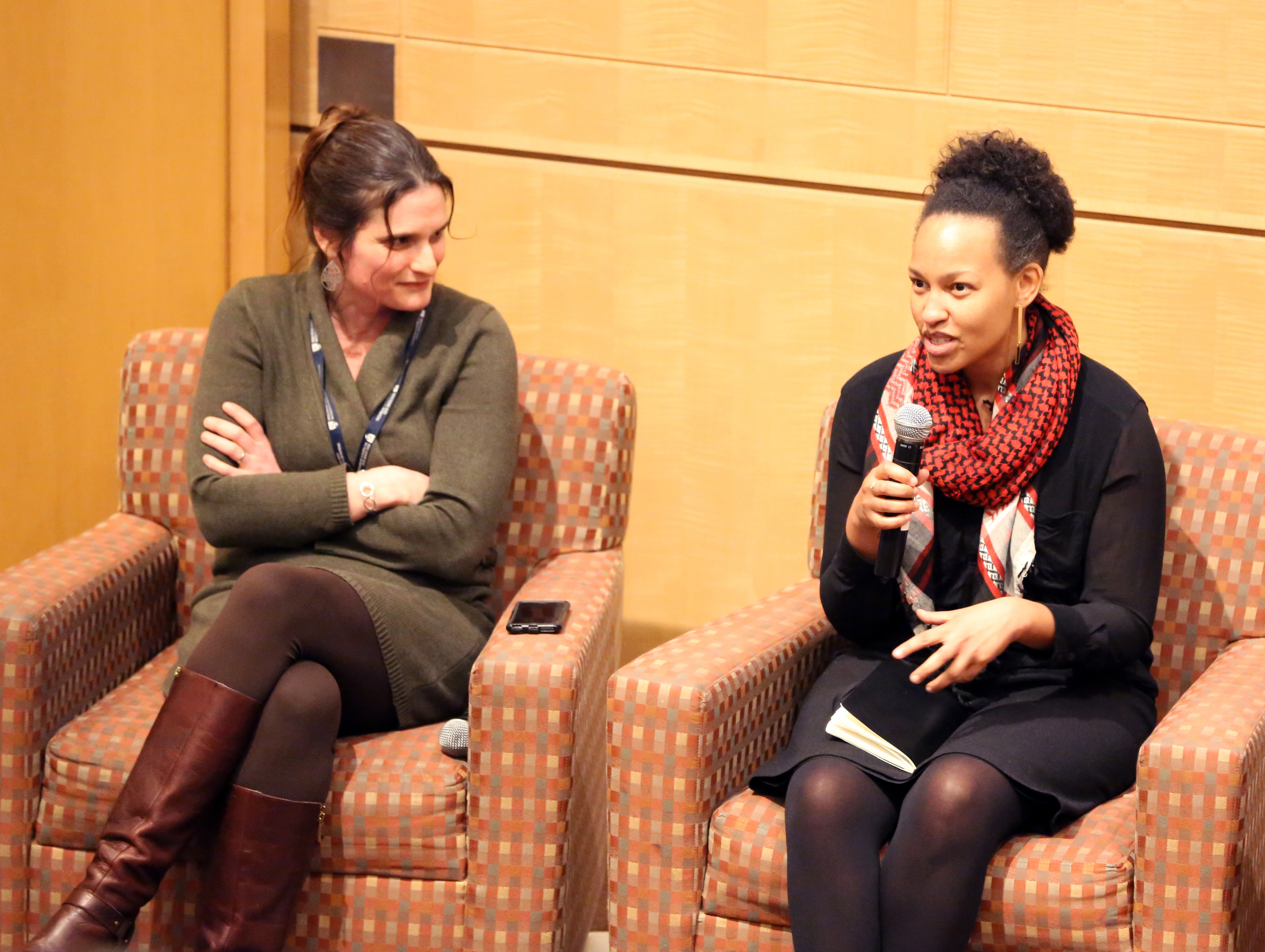
The project is part of Little Hats, Big Hearts, a nationwide program sponsored by the American Heart Association (AHA) and The Children’s Heart Foundation to raise awareness about heart disease and congenital heart defects. Volunteers knit and crochet red hats for babies born in February; once cleaned, the hats are packaged by the AHA and delivered to participating hospitals for distribution to patients and families.

This was the first year BWH participated in the initiative, which Giller spearheaded after learning about it last fall and contacting the AHA to implement it at the Brigham. While the AHA typically receives hats from the general public, BWH was the first participating Massachusetts hospital whose contributions largely came from the institution’s staff.

Stephanie and Larry Harmon, who recently celebrated the birth of their second daughter, Stella, were the first family to receive one of the signature red hats. The Stoughton couple said they were deeply touched by the thoughtfulness of BWH staff.

From left: Matthew Carrow and Anna Ballard with their son, Leland, and Denise Giller. Baby Leland was the second infant to receive a red hat.

“To hear that Brigham employees themselves knit these 550 hats blew my mind,” Stephanie said. “They work around the clock here to provide incredible care, and then to know they carved out time at home to make these hats really made it clear to us how much they care for patients and families.”

That warmth and commitment to patients are what make the Brigham stand out, she added.

“We wanted to deliver at the Brigham because we knew it was going to be best care all around,” Stephanie said. “Everyone here truly cares about you and your baby. You don’t necessarily get that experience everywhere. At the Brigham, I knew we would.”

Giller agreed, adding that she was proud to work with so many dedicated professionals.

“What we accomplished speaks volumes to the dedication of our staff, who care about our patients far beyond their shifts,” Giller said. “As a Labor and Delivery nurse, I love being part of patients’ lives during the miracle of birth. When you get to deliver something else – in this case, a warm hat and additional patient education – it makes what we do even more rewarding.”

2 Comments

From left: Abigail Ortiz and Michelle Morse

As part of an event honoring the life and legacy of Rev. Dr. Martin Luther King Jr., a panel of BWHers and community activists reflected on progress made and gaps that remain in health equity as well as racial and economic justice.

The Jan. 16 event, held in Bornstein Amphitheater, was moderated by Sabrina Williams, MBA, SPHR, Brigham Health chief diversity and inclusion officer. Williams opened the discussion by reading a quote from Dr. King: “Our lives begin to end the day we become silent about things that matter.” Although several decades have passed since he spoke those words, they continue to be relevant for society at large and within the Brigham, she said.

“Inclusion is one of our institutional values. There is a real opportunity for us to advance Dr. King’s legacy as individuals and collectively,” Williams said. “This organization has not been silent about inequity and injustice, and I look forward to amplifying our work even further.”

Dr. King’s pioneering leadership in Civil Rights included enduring messages and lessons about health equity, speakers noted. Ron M. Walls, MD, Brigham Health executive vice president and chief operating officer, shared part of a speech Dr. King delivered at the second Medical Committee for Human Rights in 1966: “Of all forms of inequity, injustice in health is the most shocking and the most inhuman.”

The message is still a poignant reminder of the duty health care institutions such as the Brigham have in propelling health equity and inclusion, Walls said.
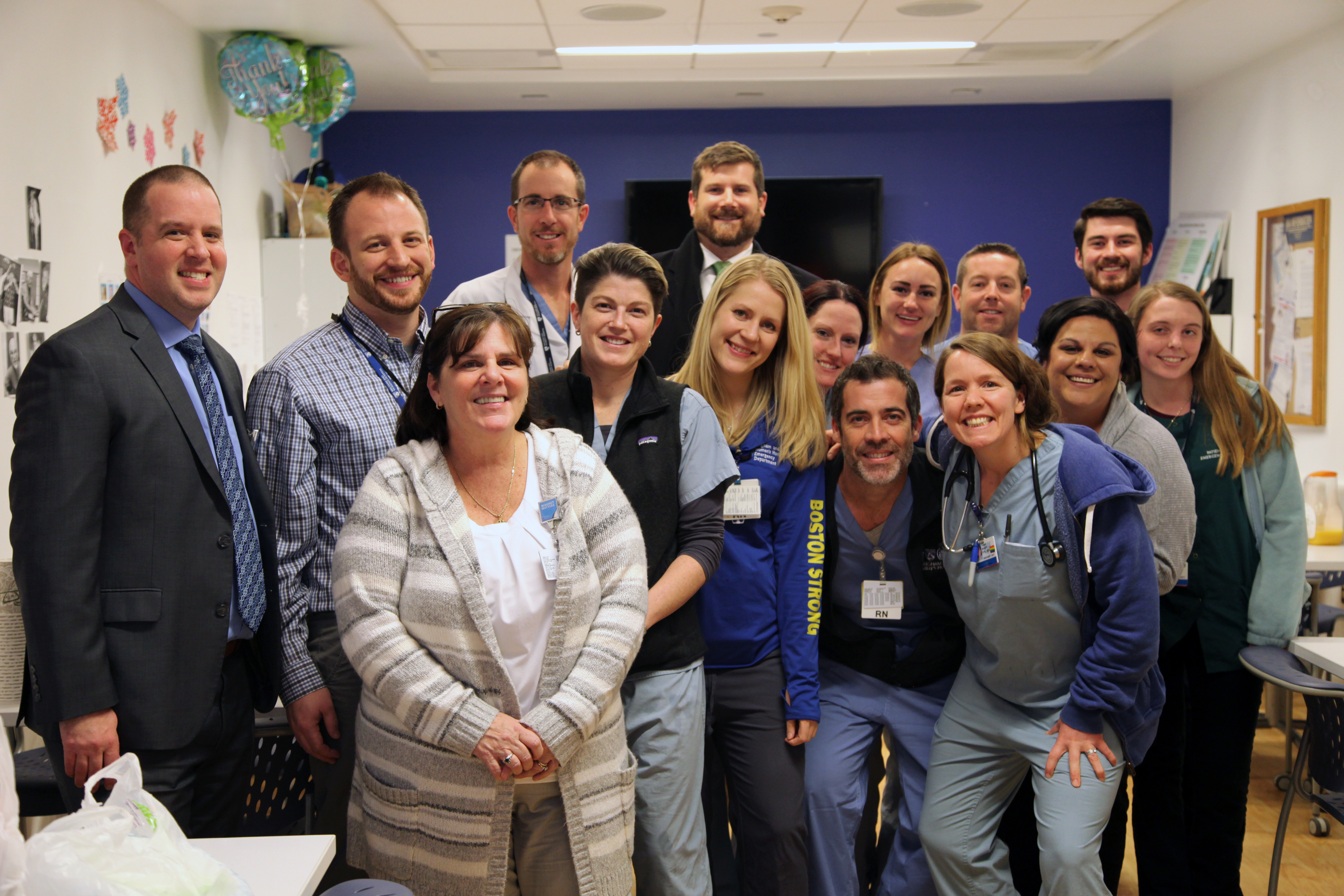
“We should never forget that powerful and sobering perspective from Dr. King,” he said. “As an organization, we sit at the front lines in advocating for and advancing health care as an engine for equality and good.”

Achieving these goals requires everyone to actively participate in racial justice and equity work, said Abigail Ortiz, MSW, MPH, director of Community Health Programs at Southern Jamaica Plain Health Center. Equally important is ensuring there is a shared framework to guide our process and projects, she added.

“Instead of talking about race in health, we should talk about racism in health. It’s not race causing the inequities, but racism,” Ortiz said. “One thing we might need now is a definition of racism that all of us share so that we can talk about it in a way that critiques, at a structural level, how and where the health care system fails to deliver racial equity.”

Reflecting on how she honors Dr. King’s legacy, Michelle Morse, MD, MPH, of the Division of Global Health Equity, added that it’s important to consider these issues in a broader context.

“Dr. King never hesitated to speak about the corrupt regime in South Africa and how apartheid was just as important as Jim Crow and the unbelievable Civil Rights abuses happening in the U.S,” Morse said. “Dr. King showed that these movements are all connected, and we can’t make sufficient progress unless we recognize that.”

Fellow panelists Tanisha Sullivan, president of the Boston National Association for the Advancement of Colored People (NAACP), and former state Sen. Dianne Wilkerson underscored the link between health equity and broader issues of racial and economic justice.

Sullivan and Wilkerson noted that, as employers, health care institutions can create space for self-empowerment in local communities of color through professional opportunities – key areas of focus for the Brigham’s efforts to elevate diversity and inclusion.

“There’s a continuum – recruitment, retention and development. Being intentional about that is so very important,” Sullivan said.

Leave a comment

Emergency Department staff gather to celebrate a year of a sustained reduction in walkout rates.

A cornerstone of any emergency department (ED) is to see the sickest patients first – a practice that has saved countless lives. But it has the unintended side effect of leaving patients with less-acute symptoms waiting to be seen by a physician when the department is at capacity.

“Previously, some patients waited several hours to be seen for an issue that takes five or 10 minutes to address, such as a medication refill or wound evaluation that doesn’t need an intervention,” said Christopher Baugh, MD, MBA, medical director of the ED in the Department of Emergency Medicine.

When the ED is at capacity, some patients leave after being seen by a triage nurse, but before being seen by a physician. When a “walkout” occurs – often due to long wait times – it not only leads to a poor patient experience, but it is also a safety concern, as nearly 30 percent of patients who receive care in the Brigham’s ED are sick enough to be admitted.

Over the past year, a multidisciplinary team has piloted a care delivery model that reduced door-to-physician time and sustained lower ED walkout rates. The intervention centered on turning two sections of the ED known as surge areas – nonclinical spaces that were temporarily used to see patients during high-volume periods – into regularly staffed areas where patients could be seen by a physician within about 20 minutes of arrival. In addition, ED Radiology partnered with the team to flag certain imaging orders to expedite a patient’s evaluation.

Now operational and staffed every weekday during peak times, the surge spaces consist of the “front end” – a curtained-off section of the waiting room – and one hallway inside the ED, where eight stretchers are separated by opaque dividers.

Faster Access to Care

Prior to the intervention, a patient who checked into the ED would be seen by a triage nurse and have their vital signs checked. If the patient wasn’t identified as critically ill and there was not an available treatment space, further care – such as lab testing, imaging or pain medication – was delayed until a room was available.

Lower-acuity patients, such as those who come in with a sore throat or sprained ankle, are now often able to be seen in the front end shortly after arrival. When in use, the area is staffed with a physician, nurse, nursing assistant and medical scribe. The area can accommodate four to five patients at a time. Most patients seen in the front end can be treated and safely discharged from there.

“It’s definitely a different way of doing things, and it’s much quicker,” said Sue Botsch, RN, an ED nurse who staffs the front end. “You’re not waiting for things to happen because the team is right here. I like that it’s a real-time application of care, and patients appreciate going home in an hour.”

Staff Support Drives Success

Prior to the intervention, ED walkout rates ranged from about 2.5 to 4 percent, with some individual days reaching as high as 8 or 9 percent. Since implementing the new model in December 2016, the walkout rate has consistently remained under 2 percent since January 2017, with one month as low as 0.7 percent.

“As soon as we opened this surge capacity as a regular practice every weekday, we saw the walkout rate drop dramatically and immediately,” said Jonny McCabe, BSN, RN, operations director in Emergency Medicine.

Pivotal to the initiative’s success has been a cultural change among ED staff, said Janet Gorman, MM, BSN, RN, executive director of the ED.

“We owe it to our community to be available for them, and if there’s no access, we’re doing them a disservice,” Gorman said. “I’m so proud of our staff, who truly took ownership of this work to improve how we care for our patients.”

Anna Meyer, DNP, RN, interim ED nursing director, said the pilot’s success reflects the team’s commitment to multidisciplinary collaboration.

“We definitely stepped outside our comfort zones, but everyone’s continued hard work has paid off for our patients,” Meyer said. “The sustained success shows how well we work together.”

Looking Ahead

Still, the team sees room for improvement. In monthly Press Ganey surveys, some ED patients report concerns regarding privacy and comfort – feedback the team takes to heart, Baugh noted.

“There is certainly a tradeoff,” he said. “Hallway and surge-area care are short-term interventions that improve patient safety by lowering our waiting room census and walkout rate. We track these metrics and share them with hospital leadership because we need everyone to understand how hospital crowding affects ED care.”

Although the upcoming ED expansion will add 30 beds and alleviate some of the current challenges, Baugh underscored the importance of taking what the team has learned from the pilot and incorporating those efficiencies into the new design.

“We have to change the way we engage with our patients – not just add more treatment rooms,” he said. “We think we can borrow from this process and continue to refine it to get even better use out of our new space.”

Brigham Health’s Strategy in Action: Timely Access
Learn more about our strategic priorities at BWHPikeNotes.org.

Leave a comment

Mohamed El-Dib

Umbilical cords are, literally, the lifeline for babies in the womb. One BWH physician-scientist is hopeful that they also contain blood cells that can be given back a baby to reverse – not just stop – some forms of brain injury occurring at birth.

When infants’ brains don’t receive enough oxygen and/or blood, a condition known as hypoxic ischemic encephalopathy, it can lead to developmental issues that might not present until later in life. The current standard of care is to use cooling blankets, which safely lower the baby’s body temperature to 33.5 degrees Celsius (92.3 degrees Fahrenheit). While effective at preventing further brain injury, the therapy cannot undo damage that has already been done.

Mohamed El-Dib, MD, director of Neonatal Critical Care in the Department of Pediatric Newborn Medicine, is the principal investigator at BWH for a multi-institutional clinical trial looking at whether infusing babies with their own umbilical cord blood can indeed reverse tissue damage in the brain.

Known as the BABYBAC II Study, the randomized trial builds on a smaller-scale 2014 study that demonstrated infusing infants with their own umbilical cord blood was safe and possibly effective. BWH is one of 10 enrollment centers around the U.S. participating in the current study, led by Duke University.

Babies enrolled in the study will receive the current standard of care in addition to an infusion of their own cord blood cells.

“We believe these cells are not just protecting the brain – they’re actually helping the brain repair and recover,” El-Dib said. “If this is shown to be effective, it means each baby is born with his or her own treatment to repair damaged brain tissue.”

Discovery Depends on Teamwork

A special characteristic of the Brigham’s participation is the importance of multidisciplinary collaboration, El-Dib said. He noted that clinical teams in Labor and Delivery and the NICU play essential roles in enrollment and collection. He also partners closely with staff from the Cord Blood Donation Program, jointly operated by BWH and Dana-Farber Cancer Institute (DFCI). Launched in 2009, the program has several dedicated cord blood collection specialists.

“Without having this level of teamwork and dedication, this trial would’ve been almost impossible to start up,” El-Dib said.

Babies in the study will be randomly assigned to receive an infusion with a concentrated or diluted amount of the specific cells, known as mononuclear cells, believed to be responsible for tissue repair. El-Dib noted that one challenge is the limited time window in which cord blood can be collected; it must happen minutes after birth.

Researchers will follow the babies’ health for one year, with the hope of seeing improved outcomes related to cognitive- and motor-skill development.

“Exactly how this therapy works is not fully understood, but earlier studies have found that umbilical cord cells decrease inflammation, decrease delayed cell death, help the neurons repair mechanisms and help develop new vessels in the brain,” El-Dib said.

Leave a comment

Steven and Rochelle Seltzer, with his chair portrait

Steven Seltzer, MD, FACR, chair emeritus of the Department of Radiology, has spent decades studying images of the body. But when he reflects on his 40-year career at the Brigham, it’s not the body that comes to mind but a feeling: love.

“Love is the secret sauce that makes everything possible, and I have been so fortunate and grateful to have received love in spades – from my family, from Radiology, from colleagues and leaders at BWH,” said Seltzer, also the Philip H. Cook Distinguished Professor of Radiology at Harvard Medical School. “All of this love has inspired me to be the best I can be.”

Seltzer expressed his appreciation during a ceremony celebrating the unveiling of his portrait in Bornstein Amphitheater on Nov. 17. The portrait honors his contributions in medicine, science and education as the fourth chair of the Department of Radiology, a position he held from 1997 to 2016.

Brigham Health President Betsy Nabel, MD, praised Seltzer for his exceptional leadership in Radiology by expanding the department’s clinical services and research while also serving as a beloved mentor.

“It is often said that one needs to be a triple threat, demonstrating excellence in clinical care, research and teaching. But in today’s world, you must be a quadruple threat because you also have to be good at the business of academic medicine. Steven has shined in all four of those areas in an extraordinary way,” Nabel said.

Addressing Seltzer directly, Nabel thanked him for his many years of service and devotion to the Brigham. “We are thrilled to honor you today, and we will continue to honor you for many decades to come with your portrait here in Bornstein,” she said.

Seltzer joined the Peter Bent Brigham Hospital in 1976 as a Radiology resident. Reflecting on his memories of orientation day, also held in Bornstein, he recalled how intimidated and even star-struck he felt back then.

“I own the books published by just about everyone whose portraits are on the walls and know of their enormous impact on our medicine,” he said. “I’m sure that not in my wildest dreams did I consider for a microsecond that I might spend my entire professional career at this institution and one day have my portrait take its place in this pantheon.”

During his time as chair, Seltzer expanded Radiology services throughout Brigham Health. Under his tenure, the department established the Center for Evidence-Based Imaging and the first-of-its-kind Advanced Multimodality Image Guided Operating (AMIGO) suite.

In addition to his role in the department, Seltzer also served as chair of the Board of Trustees in the Brigham and Women’s Physicians Organization. Outside of BWH, he serves as a visiting scholar in Economic Studies at the Center for Health Policy at the Brookings Institution, and has served in leadership roles in numerous radiological organizations.

“Throughout it all, I’ve admired Steven’s tremendous dedication,” said his wife, Rochelle. “I’ve seen how much he’s loved every dimension of his work, and I’ve been inspired by the many times he created a big vision for moving things forward and patiently, deftly worked until those great visions were realized.”

Caring and Dedication, at Work and Home

Just as impressive as Seltzer’s professional achievements are his warmth, humility and gentleness as a clinician, colleague and friend, said Martin Samuels, MD, DSc(hon), FAAN, MACP, FRCP, FANA, chair of the Department of Neurology and director of the Program in Interdisciplinary Neuroscience.

To illustrate how Seltzer embodies these qualities, Samuels shared a story about confiding in his longtime friend and colleague during a health scare. Following some routine bloodwork, Samuels feared the results suggested he might have pancreatic cancer. “’Let’s settle it right this minute,’” Samuels recalled Seltzer saying with tenderness and compassion.

“He took me by the hand, literally, to the CT machine, put the IV in and performed the scan,” recalled Samuels. “As soon as those films came out, he gave me the thumbs up and said there was nothing wrong. It was an incredibly important therapeutic interaction by a great doctor.”

Addressing his father directly, Seltzer’s son Daniel spoke of how he always put family first despite his many obligations.

“No matter how busy you got – no matter how many clinical cases, emails or management headaches awaited you back at the office – you skillfully shut off your work life every time you came home,” Daniel said. “Now as a father myself, I draw inspiration from my memories of how you balanced your personal and professional life, Dad. I strive to be every bit as devoted to my family you have been to me.”

Leave a comment

From left: NICU nurses Jessica Marchetti and Anna Huzar review procedures for central line insertion.

The Brigham’s Neonatal Intensive Care Unit (NICU) recently marked 365 days without a central line-associated bloodstream infection (CLABSI) – a milestone Christina Meehan, MSN, RN, a clinical nurse educator in the NICU, said was made possible thanks to the hard work and collaboration among a large multidisciplinary team.

“From nurses and physicians to staff in Environmental Services, everyone who works in the NICU played an integral role in ensuring we do everything we can to prevent CLABSI cases,” Meehan said.

CLABSI is a serious bloodstream infection that occurs when germs enter the bloodstream through a central line, also known as a central venous catheter. The catheter is often used to draw blood or deliver fluids and medications to patients. Newborns are most susceptible to CLABSI due to their developmentally immature immune systems, putting them at significant risk for infection, said Meehan.

In 2015, Nneka Nzegwu, DO, a neonatologist in Pediatric Newborn Medicine, observed an increase in the number of babies in the NICU with central lines who were developing infections. Following that, an interdisciplinary team was created to better understand – and then eliminate – the factors contributing to the increase in these infections.

Following many collaborative discussions and town hall-style meetings for NICU staff, team members developed a strategic plan and recommendations based on staff feedback and evidence-based best practices.

Nzegwu co-led the Getting to Zero! CLABSI Prevention team with Meehan. With support from departmental and hospital leadership, the group implemented several changes that contributed to the elimination of central line infections in the NICU. Among these changes was the creation of a stop-sign image that is placed outside of a patient’s room whenever staff place or change central lines. The sign informs staff, families and visitors that a sterile procedure is in progress and to wait until the procedure is completed before entering.

The team also began reinforcing the importance of following proper hand hygiene before, during and after patient care. Signage has been posted throughout the unit to remind staff, families and visitors to wash their hands according to those guidelines. 

NICU staff also attended multidisciplinary workshops last fall hosted by the team, which incorporated training videos for staff that depicted various clinical scenarios, including how to properly perform hand hygiene and sterile tubing line changes. They also demonstrated collegial ways to approach someone who had not performed hand hygiene and was attempting to touch a patient.

The NICU held a celebration for staff this month to thank them for reaching the recent milestone and for their continued efforts. “We are all in this together,” Nzegwu said. “We are committed to a culture of safety, for the protection and care of our tiniest and most vulnerable patients. To be CLABSI-free for one year is the result of dedication, hard work and a sustained commitment to following evidence-based best practices.”

Fellow team member Adriana Cecchini, MSN, RN, of Infection Control, worked closely with NICU staff on CLABSI education initiatives. She said the work that has been accomplished in the NICU is a model for other areas of the hospital and health care institutions around the country to follow.

Suzanne Fernandes, MSN, RN, nurse director of the Special Care Nursery in the NICU, commended the team for its dedication and commitment to keeping infants safe.

“This accomplishment is so much more than just a number,” Fernandes said. “The work completed to date speaks to the level of professionalism of the whole team. Everyone had a critical role to play in our success.”

Leave a comment

Otolaryngologist Eduardo Corrales examines a patient during a multidisciplinary clinic held weekly in the Neurosciences Center.

The doctors – yes, both of them – will see you now.

Several hundred patients with pituitary or skull base tumors have benefited from a new collaboration between the Department of Neurosurgery and the Division of Otolaryngology that brings specialists from both areas to the bedside and clinic. 

In addition to combining their expertise and experience, they have become physically closer as well. Over the past several months, the Neurosurgery team restructured its clinical space in the Building for Transformative Medicine (BTM) to better serve this group of patients. This includes installing equipment used by otolaryngologists, also known as ear, nose and throat (ENT) specialists, in a few of the Neurosciences Center’s exam rooms.

On Mondays, neurosurgeons see patients in the Neurosurgery clinic while surgeons from Otolaryngology, which part of the Department of Surgery, hold their clinics in adjoining suites. This format enables joint visits – scheduled or spontaneous – with both specialists in the same location at the same time. The setup provides a better overall experience for patients, said neurosurgeon Ian Dunn, MD.

“A patient may come to the Neurosurgery clinic for an appointment, and, after reviewing a case, we realize having one of our ENT specialists join us would be ideal,” Dunn said. “That can happen in real time rather than after scheduling a visit in another two weeks. It can be difficult for patients to return for multiple appointments, so we’re trying to deliver everything on site at once.”
The two teams are in the process of formalizing their collaboration to establish the Center for Pituitary and Skull Base Surgery in the BTM, said Dunn, who will direct the new center.

“Working alongside each other rather than independently – and combining our collective experience from literally thousands of surgeries – results in better care for our patients,” Dunn said.

Overlapping Anatomy and Expertise

The joint team focuses on removing tumors located at the interface of the brain and the head/neck region, such as those in the pituitary gland, mid-face, deep ear canals, eye sockets or cheek bones. Examples of these include pituitary adenomas. which grow in the pituitary gland, and acoustic neuromas, which affect nerves in the inner ear that control balance and hearing.

“The anatomic intersection of neurosurgical disease and ENT-based pathologies is a natural fit for this type of collaboration,” said Ravindra Uppaluri, MD, PhD, chief of the Division of Otolaryngology.

From left: Otolaryngologist Eduardo Corrales and neurosurgeon Edward Laws in the Neurosciences Center clinic

“If there is a part of the procedure that involves a neurosurgical component, having neurosurgeons participate is critical,” he added. “Likewise, if neurosurgeons are working in an area outside of the brain, ENT expertise is as valuable. It’s a brilliant collaborative approach.”

The collaboration also includes radiation and medical oncologists and ophthalmologists, since some patients may have unique ophthalmic or auditory complications, or may need radiation or chemotherapy.

A major component of the joint surgical effort includes an emphasis on minimally invasive approaches, including transnasal endoscopic surgery, where surgeons take advantage of the anatomy of the sinuses and use image guidance to remove tumors through the nose.

“This endoscopic technique has come to be the major approach to some of these difficult tumors, and we now do almost all of these surgeries in conjunction with our ENT colleagues,” said Edward Laws, MD, director of the Pituitary and Neuroendocrine Program in Neurosurgery.

Leave a comment

Peter Chai places a service-request button in an Emergency Department restroom.

Amazon’s Dash Buttons have made it easier than ever for its customers to instantly order items that need frequent replenishment, all with the push of a button. A pilot project at the Brigham has adapted the same technology to deliver that convenience and innovation in a health care environment, starting in an unexpected place: the hospital’s public restrooms.

Installed so far in 10 bathrooms throughout the main campus, the wireless devices contain a single button that anyone can press to notify Environmental Services that the restroom should be cleaned. About the size of a pack of gum, the buttons are mounted on a sign that provides brief instructions for use in English and Spanish.

One press sends a text message and email notification to the Environmental Services manager in that area. Once the restroom has been serviced, a quick double-tap enables the responding Environmental Services staff member to notify managers that the area has been cleaned. A long press indicates a manager has inspected the area.

Just a few weeks into the pilot, the technology is being tested in bathrooms in several high-traffic areas: the 75 Francis St. lobby, the Emergency Department, the Shapiro Cardiovascular Center, Tower 6 and the Center for Women and Newborns.

If successful, the buttons are expected to be installed in more restrooms across BWH and considered for other types of recurring requests, such as cleaning a patient room or refilling a hand sanitizer dispenser. The project is supported by the Brigham Digital Innovation Hub (iHub) as part of the digital transformation of the hospital.

“There are a lot of simple, repetitive tasks that occur in a hospital that rely on human intervention,” said Peter Chai, MD, an emergency physician in the Division of Medical Toxicology and one of several collaborators on the project. “When you can just push a button that sets into a motion a series of events, it becomes much easier and faster to accomplish them, leading to a better experience for patients and employees.”

Making Services More Accessible

The project is a collaboration between Chai, whose research focuses on technology in health care, and staff from iHub and Environmental Services. While iHub provided logistical and technical support to get the pilot started, Environmental Services weighed in on what workflows would best meet their needs.

An earlier project, Restroom Alert, required someone to take out their smartphone and text a five-digit number with a unique code identifying which bathroom needed attention. The user also had to include the exact nature of the request in the text message. While the system achieves the same outcome as the button, the newer approach demands far fewer actions from the user, said Mark Zhang, DO, MMSc, medical director of Digital Health Implementation.

“Technology should always be about making our lives easier and lowering the barriers to get access,” Zhang said. “These buttons offer the lowest barrier for sending an alert. Users can effect change quickly, and it helps us build a better experience at the Brigham.”

In addition, the team hopes that data from the buttons can help identify trends – such as which restrooms have more frequent requests – that will help Environmental Services operate more efficiently.

“We strive to provide the best service, and this new technology prompts us to provide quick service and keep areas clean all the time,” said Labina Shrestha, an education specialist in Environmental Services who trained staff on the new process. “The response time to clean the common bathrooms is now just a push button away.”

Leave a comment