Posts from the ‘Uncategorized’ category

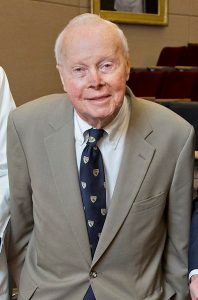
Mannick headshotBrigham and Women’s Hospital and the Department of Surgery mourn the loss of John Mannick, MD, chair emeritus and former surgeon-in-chief in the Department of Surgery, who passed away Oct. 13, following a brief illness. He was 91.

Dr. Mannick, an international pioneer in vascular surgery, a visionary surgical researcher and a dedicated educator, served as surgeon-in-chief at the Brigham and Moseley Professor of Surgery at Harvard Medical School (HMS) from 1976 to 1994. Since then, he remained actively involved in education and research efforts at both institutions.

Throughout his career, Dr. Mannick contributed many successful techniques to the practice of vascular surgery. He provided seminal contributions in transplantation immunology and in understanding the role of the immune system in burns and other forms of acute injury.

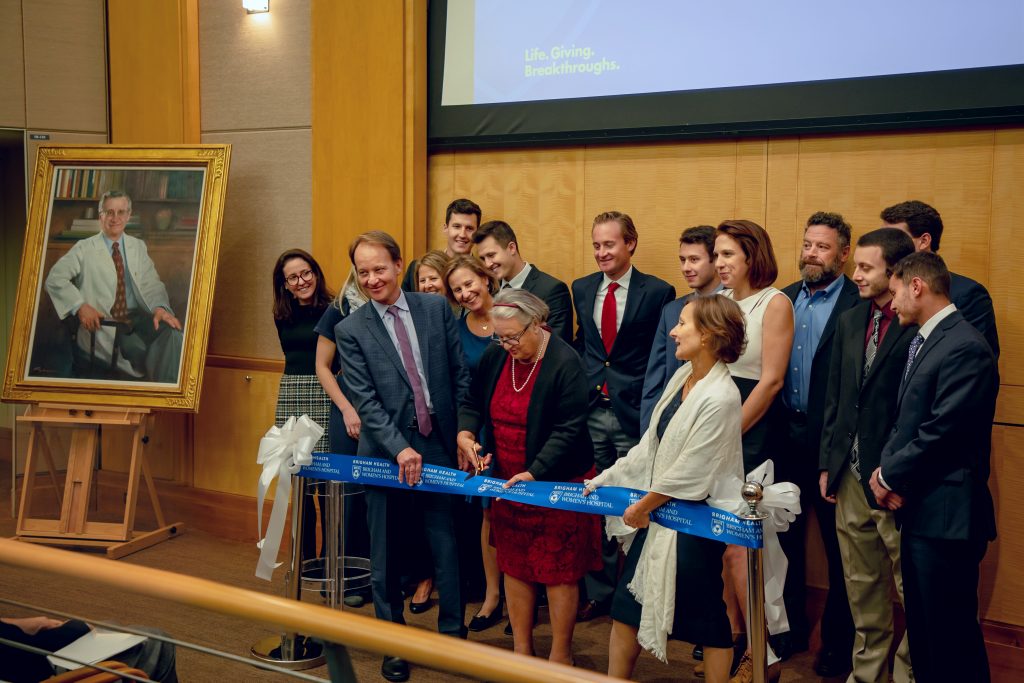
For many years, the Department of Surgery has hosted an annual John A. Mannick Research Awards ceremony in his honor. These awards recognize Surgery residents and research fellows for their work in basic science, clinical or outcomes research.

Francis “Chip” Moore Jr., MD, vice chair of Surgery, described Dr. Mannick as a consummate surgeon and chief. Moore began at the Peter Bent Brigham Hospital as a surgical intern in 1976, close to the same day at Dr. Mannick joined the institution. Dr. Mannick was Moore’s teacher for the next 43 years.

“His knowledge of all of surgery was comprehensive and current, even though he was a long-time specialist,” Moore said. “He led by example and with a knowing smile. His sense of humor was hugely appreciated in a group engaged in very serious matters. He also took tremendous pride in his colleagues’ accomplishments, most memorably with the initial heart transplant in Boston and with the development of a robust thoracic surgery service. He was highly organized and cleared his desk every day, never going home with anything more than a seemingly empty briefcase.”

Gerard Doherty, MD, chair of the Department of Surgery and surgeon-in-chief at Brigham Health and Dana-Farber Cancer Institute, described Dr. Mannick as an internationally renowned surgeon and scientist who was widely admired for his leadership and expertise at the Brigham and, prior to his appointment here, Boston University.

“He mentored scores of surgeons from around the country as they built their laboratories and departments. I personally benefited from his insightful comments through the Surgical Biology Club for many years, until our paths finally converged here on Francis Street,” Doherty said. “We will sorely miss both his wit and his grace.”

James Lederer, PhD, associate professor and research immunologist in the Department of Surgery, described Dr. Mannick as a great friend and mentor. “I am sad and will miss him every day I walk into the research lab that I shared with him for many years,” he said.

Dr. Mannick graduated from Harvard College and HMS. After medical school, he served in the Korean War as a U.S. Air Force flight surgeon. He completed his general surgery residency at Massachusetts General Hospital. Among his many accolades was the field’s highest honor: election as president of the American Surgical Association.

Dr. Mannick is survived by his daughters, Catherine, Elizabeth and Joan; and seven grandchildren. He was predeceased by his wife, Virginia.
 

Home | John Mannick Award

OHS Flu Shot Clinics, Oct. 27–Nov. 2

Per hospital policy, all Brigham personnel must receive a seasonal flu shot by Friday, Nov. 15, unless previously approved for an exemption based on a medical contraindication, sincerely held religious beliefs or working remotely 100 percent of the time. Occupational Health Services (OHS) will provide free flu shots for Brigham personnel Sunday, Oct. 27, through Saturday, Nov. 2, 6:30 a.m.–4 p.m., on the Braunwald Tower 2 mezzanine (across from the Shop on the Pike). Learn more.

N95 Respirator Fit Testing, Oct. 27–Nov. 2

Environmental Affairs is offering N95 respirator fit testing — an annual Occupational Safety and Health Administration (OSHA) requirement for many faculty and staff — at the same times as (and only a few steps away from) the main campus flu-shot lobby clinics. The next round of fit testing will take place from Sunday, Oct. 27, through Saturday, Nov. 2, 6:30 a.m.–4 p.m., adjacent to the flu shot tables on the Braunwald Tower 2 mezzanine. Please be aware that fit testing and flu shots are performed at separate stations.

United Way Campaign, Oct. 30–Nov. 22

The Brigham’s 2019 United Way campaign will run from Wednesday, Oct. 30, through Friday, Nov. 22. Beginning the week of Oct. 28 and continuing throughout the campaign, faculty and staff will receive emails with a link to their personalized giving page. Donors will have the opportunity to win prizes, including a mountain bike, TV, retail and restaurant gift cards and more. Visit an information table on Wednesday, Oct. 30, and Wednesday, Nov. 13, to learn more. Both events take place 6–8 a.m.; noon–1 p.m.; and 2–3 p.m., near the Shapiro bridge. Learn more.

Open Enrollment Begins Oct. 28

Open enrollment for 2020 employee benefits will take place Monday, Oct. 28, through Wednesday, Nov. 13. Open Enrollment is the one time per year when you can enroll or change your elections for medical, dental, vision, flexible spending accounts and life insurance, unless you have a qualified change in status. During the open enrollment period, employees can make their 2020 benefit elections through PeopleSoft. Visit
www.AskMyHRPortal.com/OE2020 to learn more.


Home

Contan dedication

Kerstin Cotran (center), widow of Ramzi Cotran, leads a ribbon-cutting during a dedication ceremony in Bornstein Amphitheater.

To acknowledge and celebrate the legendary contributions that the late Ramzi S. Cotran, MD, former chair of the Department of Pathology, made to the Brigham and medicine more broadly, the Brigham community came together earlier this week to dedicate the building at 75 Francis St. (formerly the Amory Building) in his honor.

During a symposium and dedication ceremony, held in Bornstein Amphitheater on Oct. 10, family, friends and guests gathered to pay tribute to Dr. Cotran’s legacy.

Brigham Health President Betsy Nabel, MD, described Dr. Cotran as a visionary pathologist, exemplary leader and cherished member of the Brigham community who served as chair of Pathology for 26 years. Dr. Cotran died in 2000 at the age of 67.

“He was a dynamic force in the growth of the hospital, building a world-class research laboratory and transforming the department from a small clinical service to a distinguished academic department known as one of the best pathology training programs in the country,” said Nabel, who had first met Dr. Cotran when she was a trainee at the Brigham. “Dr. Cotran was a world-renowned leader who shaped an era of contemporary pathology. Widely acknowledged as the foremost academic pathologist in the United States, Dr. Cotran could have taken his career anywhere — and we are so very fortunate that he chose the Brigham.”

Born in Haifa, Palestine, Dr. Cotran completed his medical training at the American University of Beirut. He pursued his postgraduate training in pathology at Memorial Sloan-Kettering Cancer Center in New York City and Boston City Hospital’s Mallory Institute as a Harvard Medical School (HMS) faculty member. In 1974, Dr. Cotran was appointed chair of the Department of  Pathology at the Brigham, known then as the Peter Bent Brigham Hospital.

He was also the Frank B. Mallory Professor of Pathology at HMS and served as chair of the Department of Pathology at Boston Children’s Hospital.

Inspiring Generations of Pathologists

One of Dr. Cotran’s most important contributions to medicine was his teaching. He mentored and served as a role model to many pathologists who are now serving in leadership roles around the world. In recognition of his teaching legacy and impact on the next generation of pathologists, Dr. Cotran received the HMS Lifetime Achievement Award in Mentoring.

He was also the primary author of Robbins Pathologic Basis of Disease, one of the most widely read textbooks in medicine. Dr. Cotran authored more than 180 research papers and served as the president or chair of many national and international professional organizations in pathology and nephrology. A distinguished leader, he was elected as a member of the Institute of Medicine of the National Academy of Sciences and the American Academy of Arts and Sciences.

Attendees also heard remarks from Jeffrey Golden, MD, chair of Brigham Pathology and the Ramzi S. Cotran Professor of Pathology at HMS, who said Dr. Cotran inspired him as a clinician and educator.

“He shaped an era of contemporary pathology with his energetic and unfailing devotion to advancing the field as a premier discipline that ties basic science knowledge to clinical practice,” Golden said. “Respected and admired by clinicians and researchers alike, Cotran provided leadership and mentorship to legions of trainees and colleagues, including me.”

Nabel said the Ramzi Cotran Building — which houses a mix of clinical and administrative space, including many Pathology laboratories and offices and the Endoscopy Center — will stand in Dr. Cotran’s honor as a tribute to his work and extraordinary gifts.

“From this day forward, the Ramzi Cotran Building will be a visible and lasting reminder of Dr. Cotran’s outstanding leadership, legendary mentoring and unsurpassed legacy of caring,” Nabel said.

Home | PikeNotes

John Ryan (second from left) and his wife, Geri (second from right), celebrate their donation milestone with Kraft Center staff.

John Ryan (second from left) and his wife, Geri (second from right), celebrate their milestone with Kraft Center staff.

Geri Ryan and her husband, John, knew they wanted to make a difference in the lives of cancer patients after listening to a Jimmy Fund radio telethon and reflecting on how lucky they felt to have two healthy children. So, in August 2005, Geri booked an appointment at the Kraft Family Blood Donor Center, which supplies lifesaving blood and platelets to patients at the Brigham and Dana-Farber Cancer Institute, to donate her platelets to those in need.

Almost 15 years later, the Ryans have jointly fulfilled that commitment hundreds of times over. Earlier this month, Geri and John each celebrated their 300th platelet donation together at the Kraft Center — their efforts collectively amounting to 600 donations.

Platelets act as the body’s bandages, allowing blood to clot and wounds to heal. Cancer patients and other critically ill patients often require transfusions of healthy platelets because their blood does not clot properly. Platelets have a shelf life of just five days, which is why the need for donors is so great. Volunteer donors help ensure there is a sufficient supply for patients in need.

John, who acknowledged he’s somewhat squeamish at the sight of blood, was initially nervous about participating but soon joined his wife in donating platelets. It soon became part of a regular routine for the couple, Geri said. The Ryans return to the Kraft Center every two weeks to donate. Adults can safely donate platelets 24 times over a 365-day period, with at least seven days between each donation.

“This experience has taught us to never sweat the small stuff, and interacting with patients at the Kraft Center reminds us every day why we come back,” Geri said. “We are just blessed and thankful we can help in any way possible.”

To schedule an appointment at the Kraft Family Blood Donor Center (open seven days a week), email BloodDonor@partners.org or call 617-632-3206.


Home | Kraft Family Blood Donor Center

The Thompson family shares a joyful reunion in the NICU.

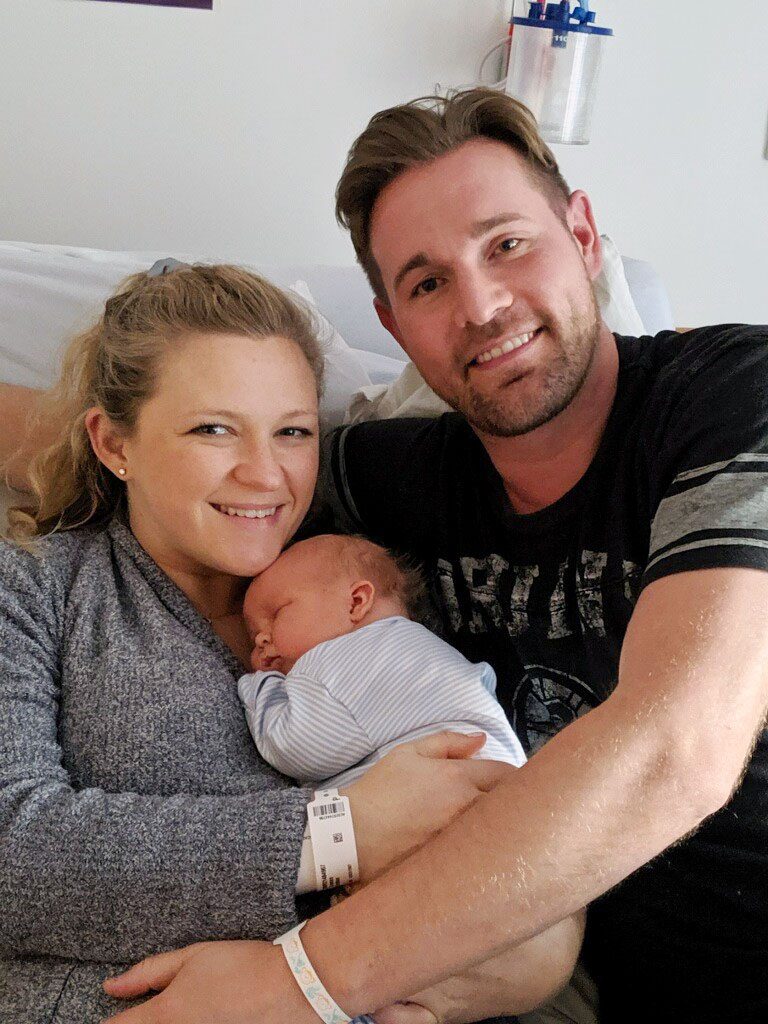
Baby Bentley was born at 29 weeks this summer and was transported by MedFlight to the Brigham. His mother, Lisa Thompson, followed by ambulance. Her husband, Airman 1st Class Craig Johnson, had called the ambulance for her all the way from Texas, where he was stationed with the Air Force Reserves.

Because Craig was on six-month active duty at the time of his son’s birth, he did not meet Bentley until almost seven weeks later. On Aug. 22, he flew to Logan Airport and was met by family, including Bentley’s big brother, Dylan. Together, they went directly to the Brigham’s Neonatal Intensive Care Unit, where father and son met for the first time. Baby Bentley is now home and doing well.


Home | NICU

Denine Spurill enjoys a visit with Oliver, one of the Brigham’s certified therapy dogs, in her hospital room on CWN 7.

As Caroline Alexander recently walked her 8-year-old Golden Retriever, Oliver, a certified therapy dog at the Brigham, to his next visit with patients, it was like a celebrity had arrived on the Pike. Dozens of people stopped in their tracks to greet one of the Brigham’s most recognizable four-legged friends.

“It’s the best feeling knowing Oliver’s presence is making someone’s day every time we visit the hospital,” said Caroline, 17, a Brigham volunteer and high school senior who serves as Oliver’s primary handler.

That special moment on the Pike last month was one of countless that Caroline has witnessed over the past six years in bringing Oliver for regular pet therapy sessions with patients and their families, as well as faculty, staff and trainees. First introduced as an ad hoc arrangement with just Oliver, the Brigham’s pet therapy program has since grown to include three dogs, and a fourth will soon join their ranks. Formally relaunched in partnership with the Office for Sponsored Staff and Volunteer Services (OSSVS) and several other departments, the program is now called Brigham Buddies.

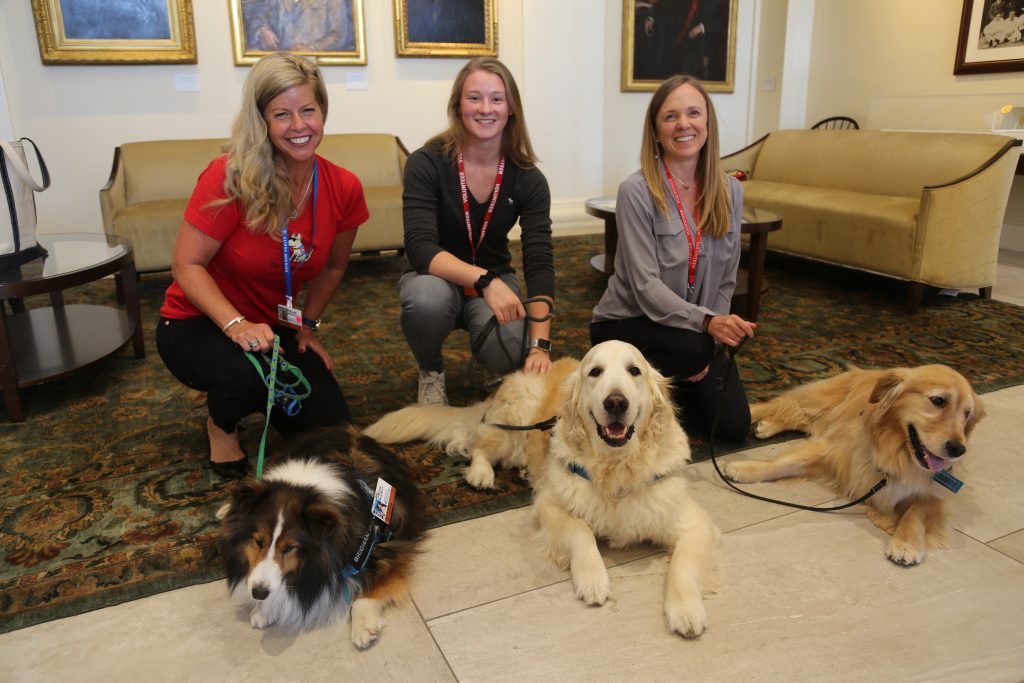
During a ceremony to celebrate Brigham Buddies’ official kickoff, Oliver and his pals — fellow certified therapy dogs Jameson, 2, a Shetland Sheepdog, and Emily, 6, a Golden Retriever, along with their handlers — came together in the Fish Rotunda before making their rounds throughout the hospital on Sept. 26.

The three dogs received new vests — designed by Caroline, who is also a driving force behind the program’s overall creation — that include a Brigham Buddies patch and a Pets and People Foundation patch. The latter is a nonprofit, volunteer organization that provides pet therapy services in eastern Massachusetts and southern New Hampshire. The Brigham’s therapy dogs and their handlers work with Pets and People to become certified as therapy animals, and their handlers undergo volunteer training and onboarding through OSSVS. Caroline designed the vests, which are a bright blue color, to be easily recognizable at the Brigham. She wanted to make sure that people who see the dogs wearing these vests know that they can come up and say hello to the dogs. 

During the celebration, Caroline thanked everyone who helped her bring the Brigham Buddies to fruition. She’s excited to continue expanding the program to include more dogs and pet therapy offerings for the Brigham community.

“It’s so meaningful to make the program official,” Caroline said. “We were able to create the vests for our dogs that, together with their Brigham ID badges, will make them easily identifiable at the Brigham.”

Loving Companions in Healing

The Brigham’s therapy dogs visit the hospital each week and are always accompanied by their handlers. The dogs must be on a short leash and follow special protocols to ensure that patients and the dogs have an enjoyable and safe experience. In addition to visiting patients, the dogs frequent the Brigham Education Institute’s Knowledge Center, which holds monthly pet therapy and wellness sessions for faculty, staff and trainees.

dogs with their handlers

Brigham Buddies handlers and dogs, from left: Julianne McKinley, with Jameson; Caroline Alexander, with Oliver; and Nicole Mann, with Emily

After the recent celebration, Oliver and Caroline visited the Orthopaedics and Trauma unit in the Connors Center for Women and Newborns (CWN) to see patients and staff who wanted to interact with Oliver. Among them was Denine Spurill, a patient recuperating on CWN 7, who enjoyed her visit with Oliver. Despite having previously been fearful of dogs, Spurill said Oliver’s gentle nature immediately put her at ease and she welcomed his visit.

“Oliver made me feel a lot better,” Spurill said. “I loved being able to pet him and spend time with him. He’s so friendly. I wish he could have stayed longer.”

MaryKate Hegarty, MSN, RN, nurse director of CWN 7, Orthopaedics and Trauma, and CWN 8 North, Gynecology Surgical Oncology, said it’s gratifying to see so many smiles when the Brigham Buddies arrive.

“Pets definitely have healing qualities with their upbeat and comforting nature,” Hegarty said. “They provide our patients, many of whom have been here for weeks, with a connection to the outside world and a distraction from the stress of being in a hospital.”

Observing Caroline and Oliver visiting patients, Caroline’s mother, Karine, said how proud she is of her daughter for creating the program.

“I am so happy for Caroline and the Brigham Buddies team,” she said. “Each time they are here, they are able to add positive energy to the hospital and help others heal.”

To learn more about participating in Brigham Buddies, contact Kelsey Craig at 617-732-6584 or kcraig5@bwh.harvard.edu.

This slideshow requires JavaScript.

Home

Southern Jamaica Plain Health Center staff show their support for the Brigham’s “Hope Lives Here” campaign.

Everyone has the right to feel safe from violence, but the unfortunate reality is that many people do not — and often suffer in silence.

October is honored nationally as Domestic Violence Awareness Month. With the help of the Center for Community Health and Health Equity, the Brigham recognizes this month as Interpersonal Violence Awareness Month to raise the visibility of not only domestic violence but also all forms of violence and trauma that occur in communities, homes and workplaces.

Join us in taking a stand against interpersonal violence and highlighting the resources available to those in need. Throughout October, all faculty and staff are invited to participate in our “Hope Lives Here” campaign and show their support.

To contribute, visit download and print a “Hope Lives Here” flyer in English or Spanish, and share a photo of you and/or your colleagues holding it up. Email your submission to bulletin@bwh.harvard.edu. A gallery will be shared on PikeNotes and on the Brigham’s social media pages.

Do not take pictures of patients or visitors, and be mindful of sensitive information that can be inadvertently captured in your photo.


Home | PikeNotes

Meet the BRIght Futures Finalists, Oct. 21

During the next Research Connection LIVE Lunch, hosted by the Brigham Research Institute, the three BRIght Futures finalists will pitch their research presentations. The BRIght Futures Prize competition invites the Brigham community and the public to determine which of three investigators will be awarded $100,000 to support a groundbreaking research project designed to translate scientific discovery into clinical therapies. This year’s BRIght Futures Prize winner will be announced at Discover Brigham on Thursday, Nov. 7. Cast your vote at brightfuturesprize.org. The LIVE lunch is Monday, Oct. 21, noon–1 p.m., in Carrie Hall.

Annual Service of Remembrance, Oct. 27

Hosted by the Connors Center for Women and Newborns, this service supports families, faculty and staff who have experienced the loss of a baby during or after pregnancy and honors the babies who have passed away. Sunday, Oct. 27, in Cabot Atrium, 45 Francis St., with registration from 1:30 to 2 p.m., and the service beginning at 2 p.m. Reception with light refreshments to follow. Free parking is available at 45 Francis St. Email lmorette@bwh.harvard.edu with questions.

Update: Windows 10 Upgrade

Beginning Monday, Oct. 14, the IS upgrade team will visit clinical areas and install Windows 10 on each of the approximately 5,000 clinical workstations throughout Brigham Health over the next four months. Department leaders will be notified in advance about their anticipated upgrade date. Faculty and staff will receive a tip sheet on using Windows 10. Learn more.

Don’t Delay: Get Your Flu Shot Today

All Brigham personnel must obtain a seasonal influenza vaccination by Friday, Nov. 15, unless approved for an exemption for medical or religious reasons, or for working remotely 100 percent of the time. The deadline for all exemption requests is Tuesday, Oct. 15. Starting Saturday, Nov. 16, exempted personnel must wear a surgical or procedural mask in patient areas for the duration of flu season. Occupational Health Services (OHS) continues to offer flu shot clinics. Learn more.


Home. | PikeNotes

Women’s Brain Initiative 2019 Symposium, Oct. 30

The Women’s Brain Initiative (WBI) Annual Symposium will be held on Wednesday, Oct. 30, 1:30–5 p.m., in the Hale Building for Transformative Medicine (third-floor conference center) with reception to follow. Speakers include Tracy Bale, PhD, Daniel Weinberger, MD, Naomi Rance, MD, PhD, David Rubinow, MD, and Rhonda Voskuhl, MD. Registration is recommended. The WBI aims to increase our understanding of sex differences in many neurologic and psychiatric conditions as well as female-specific transitions that alter brain health.To register and learn more, visit bwhneurosciences.org.

Healthstream Assignments Due Dec. 31

The Brigham is committed to providing a safe work environment and preparing employees to be compliant with hospital policy, Joint Commission requirements, and federal and state regulations. To support this, all employees must complete annual education courses via HealthStream. Fiscal year 2020 HealthStream assignments must be completed by Dec. 31. Failure to complete these courses by the deadline may result in corrective action. Learn more.

Send Us Your Photos: Take a Stand Against Interpersonal Violence

October is honored nationally as Domestic Violence Awareness Month. With the help of the Center for Community Health and Health Equity (CCHHE), the Brigham recognizes this month as Interpersonal Violence Awareness Month to raise the visibility of not only domestic violence but also all forms of violence and trauma that occur in communities, homes and workplaces. Join us in taking a stand against interpersonal violence and highlighting resources for those in need. Throughout October, all faculty and staff are invited to participate in our “Hope Lives Here” campaign and show their support. Learn more.

PIE Awards: Nominate Your Colleagues

The Partners in Excellence awards program recognizes our star performers – those whose efforts have gone above and beyond over the past year. Individual and team nominations are being accepted. The deadline for submitting nominations is Thursday, Oct. 31. Learn more.

Home | PikeNotes

This year’s BRIght Futures Prize finalists are pursuing forward-thinking and inventive research to improve patient care. Each of the three finalists hopes to receive the $100,000 BRIght Futures Prize, which will be awarded at Discover Brigham on Thursday, Nov. 7. Read about their work below, and vote for your choice.


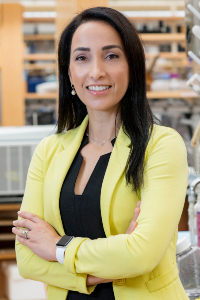
Mahmoud L. Nasr, PhD, RPh

Principal Investigator, Division of Renal Medicine and Division of Engineering in Medicine

What problem are you trying to solve?

Influenza, commonly known as the flu, is a serious public health problem that affects up to one-third of the global population annually and causes hundreds of thousands of deaths every year. There are thousands of strains of the flu virus. Every year, scientists predict three to four strains that may be the most common in the upcoming season and reformulate the influenza vaccine (or flu shot) accordingly. As one can imagine, mismatches can occur between vaccine predictions and actual circulating strains. This mismatch can cause a decreased effectiveness of the vaccine and lead to patients getting infected with the flu even after having received a flu shot. Therefore, there is a pressing need to develop an effective and broadly reactive, or “universal,” influenza vaccine against both seasonal and newly emerging strains.

What is your solution, and how would the BRIght Futures Prize allow you to pursue this?

The flu virus contains a protein on its surface called hemagglutinin (HA), which enables the flu virus to enter a human cell. HA is made up of a head and a stem. The seasonal flu vaccines target mainly the HA head, which varies from season to season. The HA stem, on the other hand, is highly conserved — meaning that it remains relatively unchanged. We propose developing a universal influenza vaccine that displays part of the HA stem, sandwiched between two nanodiscs.

Nanodiscs are tiny structures that mimic the membranes that hold all cells together. We engineered nanodiscs that can form a “sandwich” structure so that when someone receives this flu shot, the immune system gets trained to recognize the HA stem on the surface of the influenza virus.

The BRIght Futures Prize will allow me to pursue this idea through funding, visibility and promoting collaboration.

How will your research project benefit people?

Imagine having to receive a flu shot only once or a few times in your life. This would eliminate the need for millions of primary care and pharmacy visits for influenza vaccine administration. This would prevent hospitals and nursing homes from needing to administer shots to all their patients and staff every year. According to the Centers for Disease Control, in the 2017–2018 flu season in the U.S., there were over 900,000 patients hospitalized with the flu and there were over 79,000 deaths. The increased effectiveness of this vaccine could decrease flu-related hospitalizations and deaths.

Collaborators and Affiliations:

Gerhard Wagner, PhD, Harvard Medical School


CAST YOUR VOTE
or read more about the other BRIght Futures finalists:


Leonardo RiellaHome Test for Kidney Transplant Recipients

Natalie ArtziFighting Childhood Brain Cancer

Home | BRIght Futures Prize

14 Comments

This year’s BRIght Futures Prize finalists are pursuing forward-thinking and inventive research to improve patient care. Each of the three finalists hopes to receive the $100,000 BRIght Futures Prize, which will be awarded at Discover Brigham on Thursday, Nov. 7. Read about their work below, and vote for your choice.

Leonardo Riella headshot

Leonardo Riella, MD, PhD

Associate Medical Director, Kidney/Pancreas Transplant Program, Division of Renal Medicine

What problem are you trying to solve?

Despite major advances over the years, the survival of transplanted organs is significantly shortened by delays in diagnosing rejection and opportunistic infections.

Currently, more than 50 percent of transplanted organs fail by 12 years after transplant. Expensive and invasive tests such as biopsies are needed to detect problems with the transplanted organ, while blood tests are, unfortunately, slow to detect organ damage and less frequently performed after the first year of transplant. In addition, many countries around the world lack the resources to perform routine blood tests to monitor for opportunistic infections.

What is your solution, and how would the BRIght Futures Prize allow you to pursue this?

We are developing a novel, inexpensive and sensitive urine test to detect early signs of rejection and opportunistic infections after transplantation, allowing patients who have received a kidney transplant to test their urine at home with results in less than one hour. The three main advantages of this test are:

  • No laboratory equipment required
  • Low cost
  • High sensitivity to detect earlier organ injury

To achieve these goals, we will adapt enzymes known as CRISPR/Cas13 to identify both virus and rejection markers, providing the results in a detection test similar to a pregnancy test. We will use the BRIght Futures Prize to optimize the speed and ease of use of this test and check its accuracy using urine samples from patients who have received kidney transplants.

How will your research project benefit people?

If we can better monitor transplanted organs, we will be able to identify potential threats earlier and treat patients before irreversible damage has occurred, prolonging the survival of transplant organs. Since more than 100,000 Americans are awaiting a kidney transplant on dialysis and only around 20,000 kidneys are available annually, prolonging the survival of kidney transplants will improve the lives of patients with kidney disease, help reduce the organ shortage and eliminate the need for recurrent transplant surgeries. Furthermore, it will help lower the expenses of dialysis, which currently costs over $35 billion annually in the U.S. alone.

Collaborators and Affiliations:

This project involves a diverse team, including Jim Collins, PhD, Massachusetts Institute of Technology (MIT), Isadora Lape, BS, Brigham Division of Renal Medicine, and Michael Kaminski, MD, MIT

Other collaborators and researchers involved: Francisco Marty, MD (infectious disease expert); Jamil Azzi, MD (transplant expert); physician assistants Michelle Kopp, PA-C, Jillian Lynch, PA-C, Kaitlyn McGowa, PA-C, Jonathan Andrade, PA-C, and Keri Foley, PA-C; renal fellows John Choi, MD, and Naoka Murakami, MD, PhD; medical students Bruno Aoyama and Mauricio Lima Filho; and postdocs Hazim Allos, PhD, Siawosh Eskandari, PhD, and Rania El Fekih, PhD.


CAST YOUR VOTE
or read more about the other BRIght Futures finalists:

Natalie ArtziFighting Childhood Brain Cancer

Mahmoud L. NasrAn Effective Universal Flu Vaccine

Home | BRIght Futures Prize

This year’s BRIght Futures Prize finalists are pursuing forward-thinking and inventive research to improve patient care. Each of the three finalists hopes to receive the $100,000 BRIght Futures Prize, which will be awarded at Discover Brigham on Thursday, Nov. 7. Read about their work below, and vote for your choice.


Natalie Artzi

Natalie Artzi, PhD

Bioengineer, Division of Engineering in Medicine

What problem are you trying to solve?

Brain tumors are the most lethal childhood cancer, with a median survival rate of only nine to 15 months — a measure that has not changed for 20 years. Despite extensive efforts to develop better therapies, there is currently no treatment that can cure brain cancer. Brain cancer cells are able to escape detection and destruction by the immune system. Since a highly selective membrane protects the brain, the blood-brain barrier (BBB), whose role is to prevent most molecules from penetrating into the brain, it makes it even more challenging for drugs to reach a brain tumor. This means that even higher — and more toxic — doses of a drug may not be very effective for patients with brain cancer.

What is your solution, and how would the BRIght Futures Prize allow you to pursue this?

Our solution is to deliver an adhesive patch that can reveal and kill cancer cells by (1) activating the immune system by using molecules that act as “danger” signals, and (2) delivering these molecules efficiently to the brain by using a material called an adhesive hydrogel, which can be sprayed onto and stick to the brain after surgery. This material allows us to locally release a cocktail of molecules that will activate the immune system while circumventing the BBB.

We plan to harness nanotechnology to form particles at a size of 1,000th the diameter of a single human hair. These nanoparticles specialize in penetrating cancer cells and may be programmed to deliver drugs at a predetermined rate. This technology will ensure that the immune system remains active and that the tumor will not come back.

The BRIght Futures Prize will allow us to take the first steps in making this therapy a reality. We will be able to make the hydrogels and test their safety and effectiveness in a preclinical model of brain cancer. This will allow us to attract the next round of funding to further perfect this technology before we reach patients.

How will your research project benefit people?

Based on our preliminary results, we are optimistic that our approach can increase the survival rate and minimize the side effects for children suffering from brain cancer. This would benefit individuals with brain cancer, their loved ones and their care teams. We would also like to provide the scientific community with a technology to treat other other solid tumors (for example, breast and lung cancer) and other diseases that can benefit from the local delivery of drugs.

Collaborators and Affiliations:

Robert Langer, ScD, Massachusetts Institute of Technology

Henry Brem, MD, Johns Hopkins University


CAST YOUR VOTE
or read more about the other BRIght Futures finalists:


Leonardo RiellaHome Test for Kidney Transplant Recipients

Mahmoud L. NasrAn Effective Universal Flu Vaccine

Home | BRIght Futures Prize

27 Comments
Kristen and Craig Shames with their son, Harrison

Kristen and Craig Shames with their son, Harrison

Kristen and Craig Shames of Boston always knew the day they welcomed their son to the world would be unforgettable — and some unusual timing made it even more special.

Baby Harrison arrived on Sept. 19, 2019 (or 9/19/19), at 9:19 a.m., weighing 9 pounds, 13 ounces. The date and time of his birth are a palindrome, meaning their digits can be read the same way forward and backward.

His timing isn’t entirely coincidental. Kristen knew she would need a planned Cesarean section in mid-September. When her Brigham obstetrician, Jim Greenberg, MD, lightheartedly asked if she wanted to schedule it for a palindrome day, she and Craig were on board.

“It became this fun thing, and I thought for sure that I would go into labor beforehand,” Kristen said. “Much to my surprise, he wound up being right on time.”

While the story has given them an adorable anecdote, Kristen said the most memorable part of her family’s time at the Brigham was the outstanding care they experienced.

“The care we received at the Brigham was, in a word, exceptional. We were in awe of the kindness and care shown to us by nearly every staff member we interacted with,” she said. “We are overflowing with gratitude for the doctors and nurses at the Brigham who helped us safely bring our little one into the world.”

Home

1 Comment
Zeyad Tuffaha

Zeyad Tuffaha

Each summer, Brigham Health welcomes a new class of Deland Fellows in Health Care and Society. This one-year administrative experience prepares early-career professionals to be leaders of health care institutions. Fellows work closely with a member of the senior leadership team who serves as their mentor.

This is the last in a three-part Brigham Bulletin series introducing this year’s Deland Fellows.

Name: Zeyad Tuffaha, MHA, LEED AP, EDAC

Hometown: Amman, Jordan

Executive mentor: Julia Sinclair, MBA, Senior Vice President, Inpatient and Clinical Services

Previous role:  Hospital designer

What drew you to the Brigham?

I heard about the Brigham while I was doing my master’s and the name kept popping up in our class discussions of case studies and innovative hospitals. The size and significance of research and the innovative technologies being used here excited me, and I wanted to be a part of it. I was also attracted to Boston; it’s a beautiful and walkable city with a lot of history, and the opportunity to live here seemed like a great prospect.

What are you looking forward to working on?

International strategy. The Brigham and Partners HealthCare are big enough to expand globally, and I’m interested to learn about how we strategize on an international level. My background is in consulting and designing hospitals in the Middle East and North Africa region, so it’ll be interesting to learn the process with a different perspective from a provider’s side.

Your dream job

I would like to manage my own team within a consulting capacity. I love working with people, and I enjoy being specialized in an area of expertise. If I can have the opportunity to build my own team and work on multiple challenging and innovative projects across the world, that’ll be a job that motivates and inspires me.

Fun fact about you

I enjoy video games and grew up playing one called Theme Hospital, where you build a hospital and manage patients with comical conditions. What’s interesting is that I grew up to build hospitals on a professional level.


Home | Deland Fellowship

Discover Brigham is an annual celebration of the groundbreaking research taking place across the institution.

Discover Brigham is an annual celebration of the groundbreaking research taking place across the institution.

Each year, Discover Brigham offers an exciting opportunity to learn about pioneering research, interact with cutting-edge innovation and meet the expert investigators who make it all possible. Hosted by the Brigham Research Institute on Thursday, Nov. 7, the half-day event is free and open to faculty, staff and the public.

Discover Brigham is a celebration of researchers’ relentless pursuit to transform ideas conceived at the bench into realities carried out at the bedside. This year’s event will bring together thought leaders from across the Brigham in the constantly evolving fields of engineering, pain, genomics and more.

Keynote speaker Kyu Rhee, MD, MPP, vice president and chief health officer of IBM Corporation, will kick off the event with a talk on health equity and its interaction with technology at 10 a.m. in Bornstein Amphitheater.

In addition to a poster session and live demonstrations throughout the hospital, the day will feature a series of afternoon sessions and panel discussions exploring a wide range of research topics, including: How has the Brigham joined the fight against the opioid epidemic? Is it true that an existing plant species has more than seven times the hemoglobin levels found in humans? How is preventive genomics transforming medicine?

Meanwhile, “How to Handle a Medical Emergency on a Deep Space Mission” and “Meditation and Yoga: The Science, Research and Simple Practice” are just two of six demonstrations that will take place across the main campus.

During the live demos, visitors will also be able to engage with the All of Us Research Program, a national endeavor to gather data from 1 million or more people — including Brigham faculty and staff. Stop by to learn about how to participate, benefit from and share ideas for improving the research program.

Discover Brigham will culminate with an emphasis on more aspirational projects that have the potential to solve vexing medical problems. At 5 p.m., the eighth annual BRIght Futures Prize winner of $100,000 — determined by a public vote — will be announced during a closing awards ceremony.

For the full agenda and to register, visit discoverbrigham.org.


Home

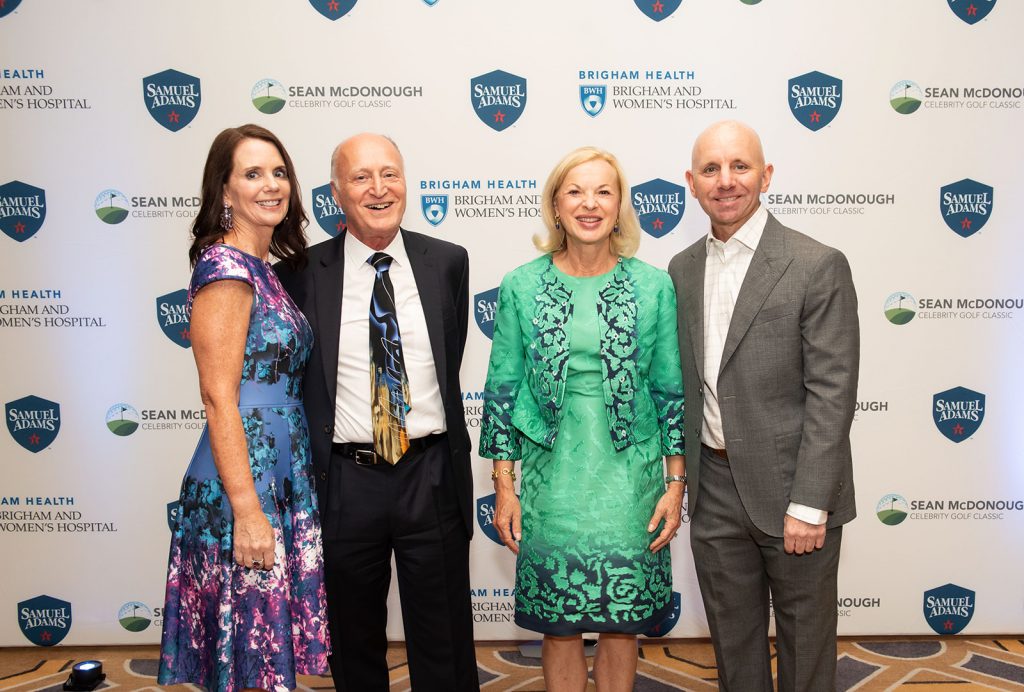
From left: Erin McDonough, Rodney Falk, Betsy Nabel and Sean McDonough

From left: Erin McDonough, Rodney Falk, Betsy Nabel and Sean McDonough

Earlier this month, celebrities and guests joined the Brigham’s Erin McDonough, MBA, senior vice president and chief communication officer, and her brother, ESPN’s Sean McDonough, for the annual Sean McDonough Celebrity Golf Classic to support cardiac amyloidosis research at the Brigham. Their father, legendary Boston Globe columnist Will McDonough, died suddenly of the heart condition in 2003. Cardiac amyloidosis is a disorder that causes an abnormal protein to build up in the heart tissue. These deposits can accumulate over time and result in serious complications, including heart failure.

The two-day event kicked off with a celebrity draw party, where guests learned the name of the celebrity they’d be golfing with in the tournament. Celebrity players included sports analyst and retired basketball player Charles Barkley, Boston Celtics head coach Brad Stevens and former Boston Red Sox pitcher Tim Wakefield. The tournament was held at Boston Golf Club in Hingham.


Home

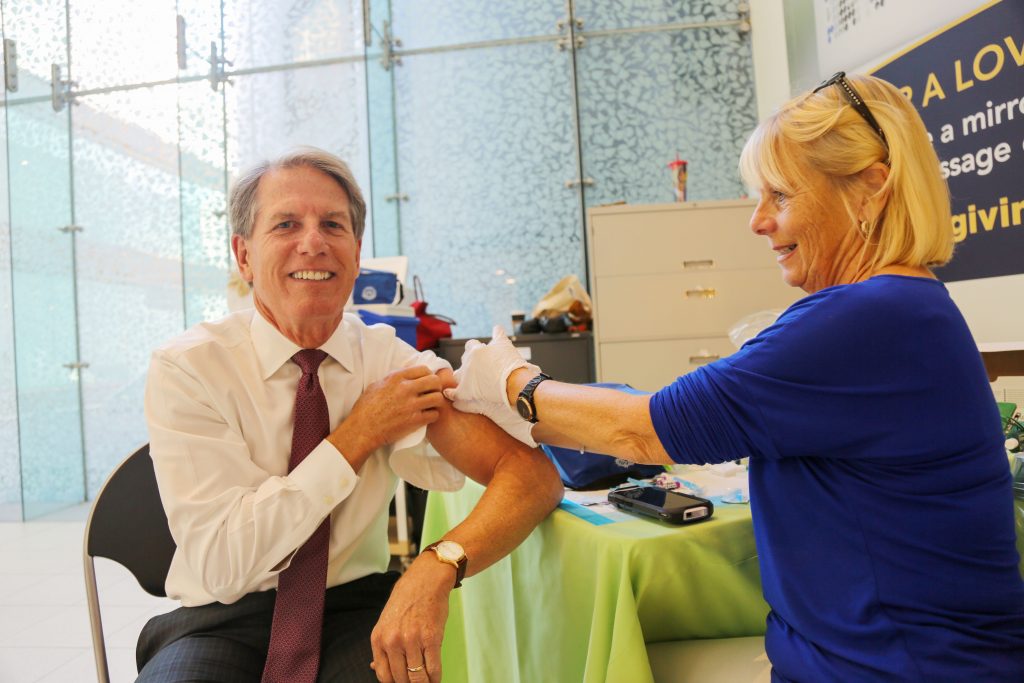
Ron Walls getting a flu shot

Ron Walls receives a flu shot from Deb Rillahan during a recent clinic hosted by Occupational Health Services.

Have you received your flu shot yet? All Brigham personnel must obtain a seasonal influenza vaccination by Friday, Nov. 15, unless approved for an exemption for medical or religious reasons, or for working remotely 100 percent of the time.

The deadline for all exemption requests is Tuesday, Oct. 15. Starting Saturday, Nov. 16, exempted personnel must wear a surgical or procedural mask in patient areas for the duration of flu season.

Occupational Health Services (OHS) continues to offer flu shot clinics. Upcoming clinics on the main campus include:

Monday, Sept. 30–Friday, Oct. 4 | 7:30 a.m.–4 p.m.
Neville House lobby, 10 Vining St.

Monday, Oct. 7–Friday, Oct. 11 | 7:30 a.m.–4 p.m.
Neville House, 10 Vining St.

For more a complete schedule and more information, visit BWHPikeNotes.org.


Home

Kraft Center Blood Drive, Oct. 4

The Kraft Family Blood Donor Center will host a blood drive at 15 Francis St. on Friday, Oct. 4, 8 a.m.–3 p.m. All donations benefit patients at the Brigham and Dana-Farber Cancer Institute. As a thank you, donors will receive a Kraft Family Blood Donor Center mini-lantern. To schedule an appointment, visit tinyurl.com/15FranO2019. For eligibility questions, email blooddonor@partners.org or call 617-632-3206.

Become a Pen Pal for Local Students

The Center for Community Health and Health Equity’s Pen Pals Program matches local second- and third-grade students with Brigham employees to exchange letters during the school year to promote literacy, provide students with an adult mentor, increase students’ awareness of the Brigham in their community and provide an avenue for elementary school students to practice their writing skills. Brigham Pen Pals exchange about six letters over the academic year and visit their student Pen Pal’s classroom at the Tobin School or Mission Grammar School twice over the same period. Learn more at BWHPikeNotes.org or email tcullinane@partners.org.

Hand Hygiene Celebration, Oct. 17

In appreciation of the tremendous progress the Brigham has made with our hand hygiene compliance rates, and to pledge our commitment to keep patients safe by keeping our hands clean, all faculty and staff are invited to a hand hygiene celebration on Thursday, Oct. 17, 6 a.m.–4 p.m., on the Braunwald Tower 2 mezzanine (across from the Shop on the Pike). Present your Brigham ID badge for giveaways and to enter a raffle for prizes.

Nominate a Colleague for the Brigham Way

Every day, Brigham faculty, staff and trainees go above and beyond to make the hospital a better place for all who come through our doors. There are hundreds of ways, both big and small, that employees care for our patients, visitors and each other. Tell us about how you or one of your colleagues goes the extra mile and your nomination could be featured on PikeNotes and TV screens across the distributed campus. Email your nominations to brighamway@bwh.harvard.edu, or learn more on PikeNotes.

Home | PikeNotes

More than 25 years ago, Massachusetts General Hospital and Brigham and Women’s Hospital joined to form a new health care system in Boston: Partners HealthCare. The selection of the name Partners — and the associated four-part mission of patient care, research, teaching and community — symbolized our shared collaboration and commitment to all aspects of care delivery.

The commitment that served as the foundation for this name is still true today, as Partners has added other superb hospitals, expanded the range of ways we care for patients and increased the variety and type of systemwide collaboration. Still, one question often arises: Does the Partners name best reflect what the system is now and, just as importantly, what it will be tomorrow?

As part of the Partners 2.0 task force work, a systemwide team comprising hospital leadership and board members investigated this question and recommended that Partners develop a new name and brand for our health care system. After reviewing the work of the task force, Partners board members voted unanimously to change the Partners brand to one that will more closely represent a continued focus on collaboration, building on the strength of the academic medical center brands.

Work has already begun to develop new naming options and to craft a plan that will introduce a new brand to our patients. This work includes efforts to gather opinions from patients, consumers and the 75,000 employees across the Partners system.

Bringing a new brand into the marketplace is a lengthy process that requires a tremendous amount of careful planning and collaboration, which will occur over the coming months. Learn more on PikeNotes, and stay tuned for future updates.
Home | Partners HealthCare

1 Comment
Kei Ouchi headshot

Kei Ouchi

Three-quarters of older adults with a serious illness visit an emergency department during the last six months of their lives. Many will be admitted to the hospital. Some will never leave. But only a minority of patients have a conversation with their physician about preferences for end-of-life care before it is too late in their disease course for their wishes to be expressed.

Identifying patients at greatest risk of near-term death early enough to engage in these conversations could both improve patients’ experiences and drive down health care costs. Brigham investigators have analyzed whether the following question can help emergency clinicians identify older patients at greatest risk of death: “Would you be surprised if this patient died in the next month?” 

Researchers found a strong correlation among the emergency clinicians participating in the study at Maine Medical Center — if a physician or physician assistant answered that they would not be surprised, the patient was twice as likely to die in the next month. But they also found low sensitivity, meaning that clinicians underestimated how many patients would actually die in the next month by only capturing a small proportion using the “would you be surprised” question. Despite its low sensitivity, the question may be a valuable tool for helping identify at-risk patients and prompting end-of-life conversations. The findings are published in JAMA Network Open.

“In order to best help our patients nearing the end of life, we need ways to identify patients who should be offered a palliative care consultation or have serious illness conversations as soon as they are admitted,” said corresponding author Kei Ouchi, MD, MPH, a physician in Emergency Medicine at the Brigham. “One of the advantages to the ‘surprise’ question is that it can provoke a conversation about palliative care. If a physician answers, ‘No, it would not surprise me if my patient died,’ the next thought naturally is, ‘What am I going to do about that?’”

Ouchi and colleagues analyzed data from a prospective cohort of nearly 11,000 older adults. Their data included answers from more than 16,000 visits (some patients were seen more than once). Patients were 65 years or older, received care in the Emergency Department and were subsequently admitted to Maine Medical Center from Jan. 1, 2014 to Dec. 31, 2015. Of these patients, 8 percent died in the next month. 

Emergency clinicians stated that they “would not be surprised” if the patient died in the next month for 20 percent of the patients. Controlling for age, sex, race, diagnosis and other variables, these patients were 2.4 times as likely to die as those for whom clinicians had said that they would be surprised.

Overall, clinicians were 78 percent accurate in their predictions. 

The authors note that their data are from a single, urban academic medical center with a largely white patient population, which may limit the generalizability of the findings. They also note that the study included physicians and physician assistants, and that looking more broadly to include other members of the clinical team, such as nurses, may help to improve the reliability and scalability of the surprise question. 

“We need to shift our thinking about end-of-life care,” said Ouchi. “Having earlier conversations with our patients has the potential to change downstream care. Patients who have serious illness conversations experience a 36 percent reduction in the cost of end-of-life care, with an average cost savings of $1,041 in the last week of life. Having tools at our disposal to identify patients at greater risk could allow us to have these conversations sooner and change what end-of-life care looks like in this country.”


Home | PikeNotes

Sherry H. Yu, MD

Sherry H. Yu

Each summer, Brigham Health welcomes a new class of Deland Fellows in Health Care and Society. This one-year administrative experience prepares early-career professionals to be leaders of health care institutions. Fellows work closely with a member of the senior leadership team who serves as their mentor.

This is the second in a three-part Brigham Bulletin series introducing this year’s Deland Fellows.

Name: Sherry H. Yu, MD

Hometown: Naperville, Illinois

Executive mentor: Adam Landman, MD, MS, MIS, MHS

Previous role: Dermatology resident in the Harvard Combined Dermatology Residency Training Program

What drew you to the Brigham?

The multipronged focus on providing exceptional medical care, research and education is unique and compelling. I was impressed that the enterprise supports novel ideas and individuals who pursue their passions.

What are you looking forward to working on?

The Deland Fellowship’s flexible, project-based structure across multiple sites and departments within Brigham Health provides an unparalleled opportunity for interdisciplinary collaboration. I am particularly excited to be involved in telehealth/telemedicine, digital innovation, clinician/trainee wellness and strategic planning. I am also looking forward to a broader understanding of how world-class hospital organizations function and prioritize endeavors.

Your dream job

I aspire to have a role that allows me to bridge clinical work with hospital leadership to provide a unique perspective on the intersection of business, medicine and science.

Fun fact about you

One of my dreams is to retire in the Irish countryside and open a small dermatology clinic.


Home | Deland Fellowship

Sleep Health and Wellness Program Launches

Most of us deprive ourselves of the sleep that our brains and bodies desperately need. The Sleep Matters Initiative’sSleep Health and Wellness Program is a nationally recognized sleep education program that builds on 15 years of Brigham-led sleep research. Starting this fall, it is open to Brigham Health faculty and staff at no cost. This one-hour wellness program covers sleep health, the dangers of fatigue and strategies for improving sleep and ending exhaustion. Sessions will be held on Oct. 8, Oct. 17, Oct. 21, Oct. 29 and Nov. 8; all begin at noon, and lunch will be provided. For more information, including how to register, visit BWHPikeNotes.org or email sleepmatters@partners.org.

Buprenorphine C-Waiver Training, September 27

Hosted by Joji Suzuki, MD, director of the Division of Addiction Psychiatry, this training is required for practitioners to legally be able to prescribe or dispense buprenorphine. Buprenorphine is widely considered one the most effective medications available to treat opioid use disorder. Friday, Sept. 27, 2:30–6:30 p.m., in the Hale Building for Transformative Medicine’s Reich Conference Room. To register for the course, visit BWHPikeNotes.org.

Hand Hygiene Celebration, October 17

In appreciation of the tremendous progress the Brigham has made with our hand hygiene compliance rates, and to pledge our commitment to keep patients safe by keeping our hands clean, all faculty and staff are invited to a hand hygiene celebration on Thursday, Oct. 17, 6 a.m.–4 p.m., on the Braunwald Tower 2 mezzanine (across from the Shop on the Pike). Present your Brigham ID badge for giveaways and to enter a raffle for prizes.

FY2020 Compliance Education Update

Brigham Health is committed to providing a safe work environment and preparing all faculty and staff to comply with hospital policy, Joint Commission requirements and other state and federal regulations. Each year all employees are assigned a series of online courses through HealthStream. This year’s compliance education rolls out on Tuesday, Oct. 1. Employees will have 90 days to complete all assigned courses, with a final due date of Dec. 31. To learn more about compliance education, visit BWHPikeNotes.org.


Home | PikeNotes

A celebration for our faculty, staff, trainees and volunteers in appreciation of everything they do for our patients, their loved ones and each other.

* All food, beverages and giveaways are free for Brigham personnel — no vouchers or tickets required, but your hospital ID badge must be visible.

Submit your photos from Brigham Block Party to Bulletin@bwh.harvard.edu. A selection of photos will be shared in Brigham Bulletin, PikeNotes and on the Brigham’s social media pages. No photography expertise is required – even smartphone photos can be shared. Please do not take pictures of patients or visitors, and be mindful of sensitive information that can be inadvertently captured in your photos.

Click image to enlarge


Distributed Campus Celebrations

Wednesday, Sept. 18
Brookside Community Health Center
noon–2 p.m.
Featuring Naco Taco food truck

Thursday, Sept. 19
Brigham and Women’s/Mass General Health Care Center (Foxborough)
11:30 a.m.–1:30 p.m. 
Featuring Red Robin Catering

Friday, Sept. 20
Brigham and Women’s Health Care Center, Westwood
11:15 a.m.–1:15 p.m.
Featuring catering from Maggiano’s Little Italy

Brigham and Women’s Health Care Center, Chestnut Hill (850 Boylston St.)
11:30 a.m.–2 p.m.
Featuring Redbones food truck

Southern Jamaica Plain Health Center
noon–1:30 p.m.
Featuring catering from Maggiano’s Little Italy


Home | brighamandwomens.org

The Brigham is committed to protecting the health and well-being of our patients, their loved ones and Brigham personnel by minimizing the risk of hospital-acquired infections, such as the flu. Even if you do not visit the hospital and clinical sites, you may expose others who do — and thus transmit the flu to patients. The single best way to avoid getting sick with seasonal flu and spreading the virus to others is to get the annual influenza vaccine. 

Per hospital policy, all Brigham personnel must receive a seasonal flu shot, unless they are approved for an exemption based on a medical contraindication, sincerely held religious beliefs or working remotely 100 percent of the time.

Here are five things to know about our 2019–2020 flu vaccination program:

  • Flu shots are due by Friday, Nov. 15. If you receive flu shot from Occupational Health Services (OHS) or a Peer-to-Peer vaccinator, your flu shot will be automatically documented in PeopleSoft. If you’re immunized anywhere else, additional steps are required to document your flu shot. Learn more.
  • Exemption requests are due by Tuesday, Oct. 15. If you were approved for an exemption last year, you must reapply for this flu season by the Oct. 15 deadline.
  • OHS will provide free flu shots for personnel at the main campus and at select sites across the distributed campus. Main campus clinics will be held Sept. 21–28, 6:30 a.m. to 4 p.m., and Sept. 29, 6:30 a.m. to noon, on the Braunwald Tower 2 mezzanine (across from the Shop on the Pike). View the complete schedule of flu shot clinics.
  • For your convenience, Environmental Affairs will offer N95 respirator fit testing in Miller Atrium in the Shapiro Center on the same dates as the main campus’ flu-shot lobby clinics.
  • Those who are not compliant with the mandatory flu vaccination policy by Nov. 15 will be placed on unpaid administrative leave and lose both badge and IS access. Between Nov. 15 and Nov. 30, the Brigham will make every effort to work with noncompliant individuals to obtain missing documentation or exemptions. Personnel who remain noncompliant on Monday, Dec. 2 will be unable to continue employment at the Brigham.


Home | PikeNotes

Sussanna Rudel

Susannah Rudel

Each summer, Brigham Health welcomes a new class of Deland Fellows in Health Care and Society. This one-year administrative experience prepares early-career professionals to be leaders of health care institutions. Fellows work closely with a member of the senior leadership team who serves as their mentor.

This is the first in a three-part Brigham Bulletin series introducing this year’s Deland Fellows.

Name: Susannah Rudel, MBA, MPH

Hometown: Chappaqua, N.Y.

Executive mentor: Bill Johnston, MPA, Chief Operating Officer, Brigham and Women’s Physicians Organization, and Senior Vice President, Ambulatory Services

Previous role

I spent the last two years as a full-time MBA/MPH student at Boston University. I completed my internship in the Ambulatory Practice Management department at Dana-Farber Cancer Institute, and prior to graduate school worked in medical publishing at UpToDate and in health IT at athenahealth.

What drew you to the Brigham?

I was initially drawn to the Brigham by the organization’s reputation for clinical excellence and innovative research. More importantly, while interviewing and getting to know the organization, I was blown away by the collaborative culture and commitment to patient care, as well as the passionate and welcoming leadership team here.

What are you looking forward to working on?

I am excited to expand my knowledge and experience to the world of inpatient care and different service lines while having the opportunity to explore a range of functional areas. I am probably most excited to contribute to projects related to clinical operations while also getting to know, work with and learn from people across the organization.

Your dream job

I aspire to be part of a hospital leadership team that works to improve quality, access and patient experience. I hope my experience as a Deland Fellow will help me determine exactly what this role might look like.

Fun fact about you

Just before starting at the Brigham in July, I spent a week hiking in Utah national parks with my sister. We visited five parks; Bryce Canyon was our favorite, but they were all amazingly beautiful!


Home | Deland Fellowship

Brigham Health Pembroke facility

The exterior of Brigham and Women’s Health Care Center, Pembroke

Brigham and Women’s Health Care Center, Pembroke — a multilevel facility providing comprehensive primary and specialty care medical services to South Shore residents in one convenient setting — opened its doors on Sept. 3. Two existing Brigham and Women’s Physicians Organization (BWPO) practices, Brigham and Women’s/Harbor Medical Associates in Pembroke and Hanover, have joined forces toward this effort.

“After having served the communities of Pembroke and Hanover for decades, our providers at our new Pembroke site are excited to be able to join forces with other specialties in one site,” William Johnston, MBA, chief operating officer of the BWPO and senior vice president of Clinical Services at Brigham Health.

Located at 15 Corporate Park Drive, the 30,000-square-foot office is accepting new patients. Services include primary care and family medicine, obstetrics and gynecology, as well as a multispecialty clinic offering cardiology, endocrinology, gastroenterology, general surgery, neurology, neurosurgery, and orthopaedics. The center will also offer minor imaging services and phlebotomy.

“Brigham Health is delighted to provide a community of care under one roof — primary care/family medicine as well as medical and surgical specialties — to better serve our patients on the South Shore,” said Allen Smith, MD, MS, president of the BWPO.

The center is open Mondays–Thursdays, 7:30 a.m.–7 p.m.; Fridays, 7:30 a.m.–5 p.m.; and Saturdays, 8:30 a.m.–noon (primary care only).

Cindy Peterson, MBA, vice president of Regional Ambulatory Operations and Business Development at Brigham Health, applauded the teamwork that went into bringing the Pembroke opening to fruition.

“This exciting project simply would not be possible without the hard work and dedication of Director of Operations Kris McCue and her excellent team for their preparation and execution in moving two practices into one beautiful, new building,”


Home | Pembroke Health Care Center

spiritual care

From left: Chaplain James Ojo speaks with patient Denis Obert in his room on Braunwald Tower 12C.

Healing sometimes requires more than medication or sutures. Among those who best understand this are members of Spiritual Care Services, who help deliver holistic care that soothes the mind, body and soul of patients and their loved ones. Working closely with nurses, pharmacists, physicians, social workers and other multidisciplinary providers, Spiritual Care staff are essential members of care teams at the Brigham.

Led by Kathleen Gallivan, PhD, director of Spiritual Care, the department includes more than a dozen full-time and per-diem chaplains. In addition, it has a residency program to educate and train the next generation of spiritual care providers. A member of the team is available 24/7 to support patients, their loved ones and Brigham faculty and staff.

Whether that means joining family meetings to provide perspective on clinical decisions or facilitating wedding ceremonies at the bedside, Brigham chaplains work with inpatient units and clinics across the hospital. In addition, the team services outpatient facilities upon request.

Serving the Spectrum of Faith

While individual chaplains at the Brigham may specialize in a specific faith — including Buddhism, Catholicism, Christianity, Humanism, Islam, Judaism, Pentecostalism, Russian Orthodox and Unitarian Universalism — they all approach spiritual care as a spectrum. This spectrum includes even those who may not identify as religious. Gallivan noted that there has been a nationwide “rise of the nones” — that is, a growth of people who identify as spiritual but whose beliefs don’t align with an organized faith tradition.

“It’s not always about religion,” she said. “It’s often about how people make meaning in their life and what’s important in your life. Our chaplains are trained to support others in that journey.”

This commitment to serving all backgrounds is exemplified by the Brigham’s chapel, which has transformed under Gallivan’s leadership, said Leo F. Buckley Jr., executive director of Business Operations in Patient Care Services and Nursing. The once simple, white chapel is now a welcoming sanctuary with stained glass windows and artwork representing a wide variety of faiths.

“We worked really hard to make it a sacred space and a place where all staff, patients, families and visitors can go to reflect,” Buckley said. 

The chapel, located on Braunwald Tower 1, hosts a daily multifaith service at noon led by a rotating group of chaplains. Visitors can share prayer requests on yellow sticky notes that are posted on a whiteboard and read at the daily service.

“We’re bringing the intentions of patients and families into the moment and in praying for them and for the staff,” Gallivan said.

Care and Collaboration

Over the years, the integration of Spiritual Care staff in day-to-day care has grown exponentially. Buckley recalled how when he started at the Brigham in 1996, spiritual care was often viewed as an ancillary service. Now, however, members of the department have become a critical part of the patient care team. Spiritual Care Services has always been highly valued, he said, but their role has shifted over time. Chaplains are now are called in proactively to join a patient’s care experience from start to finish.

In their work at the Brigham, chaplains don’t just offer care to patients, but they also extend that care to their colleagues across the institution.

One example of this is the program “Tea for the Soul.” At these events, chaplains serve tea and treats and provide faculty and staff a moment of pause in their often fast-paced work day. These gatherings are designed to encourage reflection and provide care to faculty and staff who spend all day caring for others.

For Fr. James Ojo, MA, BCC, staff chaplain and Catholic priest, the nature of the chaplaincy is one of collaboration.

“The cohesion between the chaplains of different faith has enriched my own spiritual journey and vice versa,” Ojo said. “We take that to the patient, too. It’s a very wonderful experience that as different faith communities we can walk together and build a more cohesive, united society.”


Home | Spiritual Care Services

Malnutrition Awareness Day Event, Sept. 24

Recognized nationally Sept. 23–27, Malnutrition Awareness Week aims to highlight the consequences of malnutrition on patient outcomes, including higher infection rates, poor wound healing, longer lengths of stay, higher frequency of readmission and increased health care costs. Stop by an information table on Tuesday, Sept. 24, 11:30 a.m.–1:30 p.m., in Miller Atrium, Shapiro Cardiovascular Center (second floor), to learn more. Sponsored by the Brigham Nutrition Committee.

Upcoming Stop the Bleed Training Sessions

The Brigham will host a series of training sessions to teach bystanders how to respond to someone experiencing uncontrolled bleeding. Monday, Sept. 30, 3–4 p.m., in the Zinner Breakout Room, and Wednesday, Oct. 30, 2–3 p.m. in the Hale Building for Transformative Medicine (room 02006B). Registration is required. Open to faculty, staff and the public. For questions or to register, email stopthebleed@bwh.harvard.edu. For more information about the Stop the Bleed campaign, visit www.BleedingControl.org.

Student Success Jobs Program Seeks Mentors

The Student Success Jobs Program (SSJP) exposes Boston high school students to health care careers while providing academic and professional growth opportunities. SSJP students are matched with Brigham mentors who offer authentic work experiences, exposure to career paths and an understanding of how their profession contributes to our mission. You can be a part of this program as a mentor by accepting a student to work in your department for seven to 10 hours each week during the school year. Students are paid and supported through the Center for Community Health and Health Equity. Contact Ted Cullinane at tcullinane@partners.org to learn more.

Apply to Run the Boston Marathon with Stepping Strong

Run the 2020 Boston Marathon with the Brigham Stepping Strong Marathon Team and become part of an inspired community dedicated to transforming outcomes for civilian and military trauma patients in Boston and around the world. Funds raised benefit The Gillian Reny Stepping Strong Center for Trauma Innovation at the Brigham. To learn more and apply, visit BWHmarathonteam.org or email BWHmarathonteam@partners.org.


Home | PikeNotes

Learn About Sepsis Prevention and Detection, Sept. 18

Sepsis is a life-threatening condition caused by the body’s response to an infection. Learn more about preventing and detecting sepsis by visiting an information table on the Tower 2 mezzanine (75 Francis St., across from the Shop on the Pike) on Wednesday, Sept. 18, 11 a.m.–3 p.m. Held in conjunction with Sepsis Awareness Day, the event will offer educational materials, games and prizes. Sponsored by the Brigham Health Sepsis Task Force. For more information, contact Kelly Peters at kpeters7@bwh.harvard.edu.

Platelet Donations Needed

All blood and platelets donated at the Kraft Family Blood Donor Center benefit patients at the Brigham and Dana-Farber Cancer Institute. Walk-ins are welcome, but you can also schedule an appointment by calling 617-632-3206 or emailing blooddonor@partners.org. The center is located at 35 Binney St.

Save the Dates: Brigham Block Party

Join your colleagues for three days of festivities — featuring multicultural food, live entertainment, giveaways and more — in appreciation for and celebration of everything our faculty, staff and trainees do for our patients, their families and each other. The main campus event is Thursday, Sept. 19, 11–4 p.m., at Stoneman Centennial Park, with an indoor evening event taking place 11 p.m.–2 a.m. in Cabot Atrium, 45 Francis St. Visit BWHPikeNotes.org to learn more and view a calendar of events for the distributed campus.

Activate Your Lab Archives Account by Oct. 1

All principal investigators (PIs) must have their LabArchives account activated and in use by Tuesday, Oct. 1. Use your Partners username and password to activate your account. PIs will be required to use LabArchives to document research data and other record keeping activities for active research projects. Learn more.


Home | PikeNotes

Baseball Tavern Group Photo

From left: Amanda Lustig, Kelly Peters, Sarah Distefano, Brian Doucet and Ellie Quenzer enjoy a BWHYP event at Baseball Tavern in Fenway.

When Juan Diego Paredes joined the Brigham and Women’s Hospital Young Professionals (BWHYP) Board more than two years ago, he had no idea the influence it would have on his career.

A volunteer-based employee resource group (ERG), the board hosts professional development opportunities, networking events and social gatherings for early-career Brigham staff. From community service outings to career workshops to trivia nights, the ERG offers employees a chance to explore areas of interest and pursue professional and personal growth. There is no age limit for membership.

“Two years ago, I would not have been able to lead events, speak in front of crowds or be a project coordinator,” said Paredes, a project coordinator in Ambulatory Services who now volunteers as professional development coordinator of the BWHYP Board. “I am so far removed from how reserved I used to be. It’s amazing to look back and see that if I had not taken this chance with the Young Professionals, things may not have turned out like this.”

One way Paredes was able to build connections was through a series the group hosts called “Coffee With.” Held every two months, the event offers a relaxed setting to meet one-on-one with Brigham leaders who share their own career paths, how they overcame professional barriers and their advice for those starting out.

Stronger Together Brigham Values Logo

Hearing from Timothy Ewing, PhD, vice president of Employee Diversity, Inclusion and Experience, during his “Coffee With” event inspired Paredes to explore opportunities that seem out of reach. With that advice in mind, Paredes recently pursued his current role in Ambulatory Services, which he discovered after networking with his new supervisor, a former BWHYP committee member.

To Paredes, the group is not only important to him as a young professional but also as a member of the Latino community.

“Oftentimes, minorities are fighting against the grain in terms of professional opportunities,” he said. “For me, the Young Professionals is a valuable resource for building connections and harnessing my skills in new ways.”

In addition to the co-chairs, the board consists of five committees: Professional Development, Networking, Sports and Special Interest, Communications and Engagement, and Community Service.

Kelly Peters, a senior program manager in the Department of Quality and Safety and co-chair of BWHYP, said community service events provide a chance to meet other young professionals and network while also giving back.

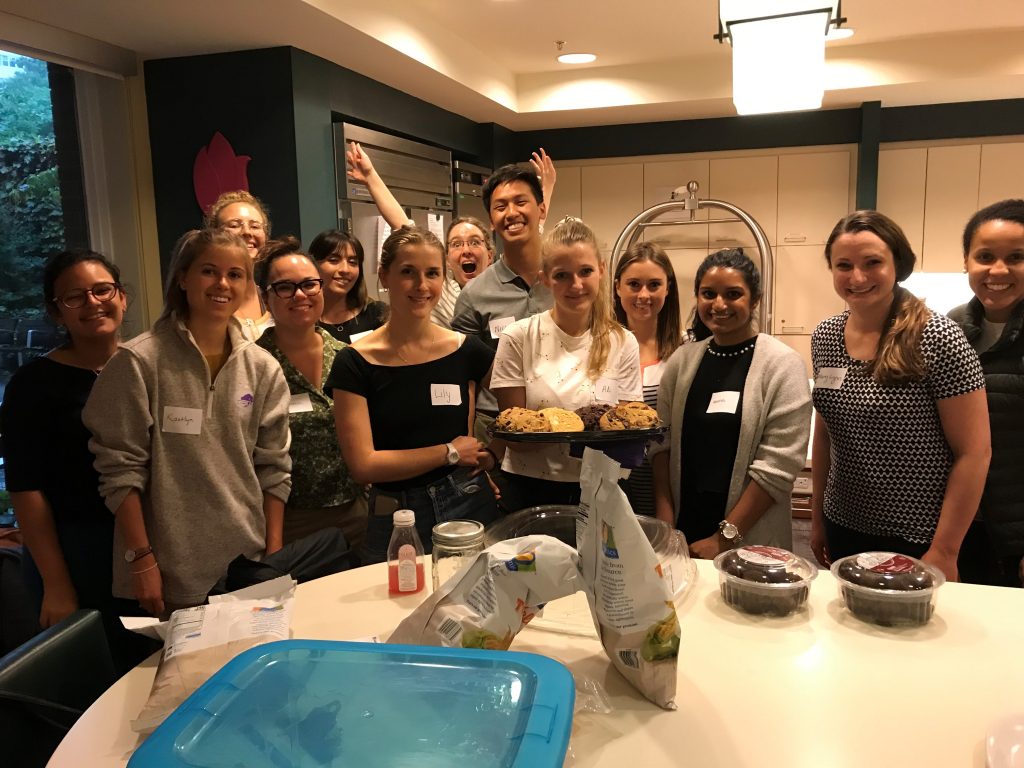
BWHYP members volunteer at the American Cancer Society's AstraZeneca Hope Lodge Center in Jamaica Plain.

BWHYP members volunteer at the American Cancer Society’s AstraZeneca Hope Lodge Center in Jamaica Plain.

“Participating in community service events routinely can be valuable to young professionals trying to find where they fit into both the Brigham community and the community we serve,” she said. “It’s an opportunity to work with new people and identify your niche.”

The different committees play a role in building personal relationships by connecting members with social activities, such as intramural sports and Brigham-themed trivia nights.

“Starting a career can be overwhelming, and surrounding yourself with people with a similar passion can be valuable to finding your own community,” said Hannah Senftleber, a population health coordinator and BWHYP co-chair.

Paredes said the group continues to look for opportunities to reach new members. This November, the Professional Development committee will host a panel discussion about clinical careers, covering topics such as how to apply for medical school, the day-to-day life as a clinician and the clinical research field.

Looking ahead, Paredes hopes to create an even more inclusive environment within Young Professionals so that more early-career Brigham staff can experience the same opportunities he had in the group.

“Seeing my own skills grow and recognizing the opportunities I have been able to create through this group is incredible,” he said.

Sign up for Young Professionals newsletter. To learn more or join the BWHYP board or ERG, email bwhyp@partners.org.


Home | PikeNotes | Brigham Values | BWHYP LinkedIn Group

John H. McArthurBrigham and Women’s Hospital mourns the loss of John H. McArthur, MBA, DBA, former chair of the Brigham’s Board of Trustees and founding co-chair of Partners HealthCare, who passed away Aug. 20. He was 85.

Mr. McArthur served as a Brigham board member for 35 years, from 1981 to 2016, and as chair of the board for seven years, from 1987 to 1994. Remembered as a visionary, he worked with the Brigham’s first president, the late H. Richard (Dick) Nesson, MD, and Eugene Braunwald, MD, then-chair of the Department of Medicine, to orchestrate the creation of Partners in 1994. His leadership in bringing together the Brigham and Massachusetts General Hospital to anchor a new, integrated system signaled a landmark change in the landscape of health care in Massachusetts.

“John was, and has remained, one of a very small group of individuals whose personal commitment and courageous, visionary leadership truly shaped the Brigham we all cherish today,” wrote Brigham Health President Betsy Nabel, MD, and Executive Vice President and Chief Operating Officer Ron M. Walls, MD, in a message to hospital faculty and staff. “His belief that the two organizations would be stronger together allowed for the creation of a system that instantly was positioned at the forefront of expert clinical care, pioneering research and superior education — distinctions that continue to characterize us to this day.”

Mr. McArthur, who also served as dean at Harvard Business School (HBS) from 1980 to 1995, was steadfast in his commitment to ensuring that future leaders were ethically motivated and exemplary corporate citizens. He collaborated with hospital leaders to establish a first-of-its kind model with the John McArthur Program for Medicine Leadership, which enables Brigham internal medicine residents to earn their master’s in business administration at HBS during residency training. Fourteen residents have completed the program.

Mr. McArthur is survived by his wife, Natty; his daughters, Susan and Jocelyn; and many other family members, friends and loved ones.


Home | PikeNotes

2019 YMCA Achievers Award: Nominations Due Aug. 29

Do you know a multicultural Brigham or BWFH colleague who has made an outstanding contribution to their organization and is willing to make a difference in the lives of youth in the Greater Boston area? If so, nominate them for the 2019 YMCA Achievers Award. Nominations must be submitted by Thursday, Aug. 29, by 5 p.m. Visit BWHPikeNotes.org to download the nomination form and learn more. For questions and to submit a nomination, contact Shelita Bailey at sbailey3@bwh.harvard.edu or 617-732-5697.

Celebrating National Recovery Month

In honor of National Recovery Month in September, the Brigham will host a monthlong event series that raises awareness about substance use disorder, celebrates recovery and educates our community on the Brigham Health services available to those in need. Events at the main campus include an addiction recovery information table on Monday, Sept. 9, 11:30 a.m.–2:30 p.m., on the Braunwald Tower 2 mezzanine, and a presentation, “Opioid Epidemic Solutions Panel,” on Thursday, Sept. 12, noon–1 p.m., in Bornstein Amphitheater. View a full list of events.

B-PREP Patient Forum, Sept. 28

The Breast Cancer Personalized Risk Assessment, Education and Prevention (B-PREP) patient forum is for women who are interested in learning more about the genetic and lifestyle factors that contribute to the risk of developing breast cancer. Led by breast cancer specialists from Dana-Farber/Brigham and Women’s Cancer Center, this free educational event will help attendees gain a better understanding of their breast cancer risk and provide options and strategies to reduce risk. Saturday, Sept. 28, 8:30 a.m.–1:30 p.m., at the Yawkey Conference Center (Rooms 306-308), 450 Brookline Ave. To register, visit bprep2019.eventbrite.com or call 617-632-2174.

Network Access Control Transition

Brigham Health is implementing network access control (NAC) to strengthen visibility and security of data and devices connected to the Partners network. Partners uses ForeScout SecureConnector as its NAC solution. Beginning Friday, Nov. 1, all computers will be required to have SecureConnector and antivirus software installed to connect to the Partners network. Learn more at nac.bwh.harvard.edu.


Home | PikeNotes

Brigham and Women’s Hospital mourns the loss of Dorcas Johnson, BSN, RN, of the Neurosciences Intermediate Care Unit on Braunwald Tower 10CD/12B, who died of cancer in July. She was 38.
Ms. Johnson is remembered for her calm and caring nature, devotion to her patients and colleagues, and her radiant smile. 

“DJ was a caring, loving, kind, quiet and remarkable woman,” said Nina Johnson, BSN, RN. “She dedicated her life to helping others in need. She was loved by many and will be remembered for her friendly, contagious smile, her love and thoughtfulness.”

Longtime colleague Melissa Coughlin, BSN, RN, noted Ms. Johnson’s strong work ethic, reliability and commitment to doing the right thing. 

“She was a quiet, hard worker with the biggest, brightest smile you could ever imagine,” said Coughlin. “Life gave DJ her fair share of obstacles, but she always showed up, stood her ground and did what she thought was right. We need more DJs in this world.”

Ms. Johnson, who joined the Neurosciences Intermediate Care Unit in 2008, was passionate about learning and always eager to attend neurosciences conferences to advance her practice. Outside of the hospital, she enjoyed spending time with loved ones, including her two sons, ages 10 and 3, and spoke often of them to her colleagues.

“I don’t know if she realized how much joy she brought to others when she was telling a delightful story about her boys,” said Monica Aurilio, BSN, RN, nurse-in-charge. “She had a soft, heartfelt laugh and an amazing sense of humor.”

Ms. Johnson’s colleagues cared so deeply for her that they went to great lengths to make her comfortable while she was at home toward the end of her illness. 

Nurses and patient care assistants (PCAs) on the unit would visit Ms. Johnson to bathe her twice a day, cook for her family, sing to her and take her to church when she was well enough. They also established a GoFundMe page on her behalf and stayed with her while her family took Ms. Johnson’s sons on a weekend away. 

“Such sacred care was given to one of our own,” said Siobhan Raftery, BSN, RN, CNRN, assistant nursing director. “These nurses and PCAs went diligently every day to make sure our beloved DJ was clean, comfortable and not alone. They are part of a culture on 10CD/12B that knows no bounds on how to care for one another. ‘We Care’ is the Brigham way, and this is clearly their way.”

Ms. Johnson is survived by her husband, Eric Lindsey; sons, Nathaniel and Daniel Lindsey; and other loved ones and friends. 


Home | PikeNotes

From left: Latoya Lewis, Ruth Sieck, Caitlyn DeCastro and Karen Bruynell

From left: Latoya Lewis, Ruth Sieck (receiving a chair massage), Caitlyn DeCastro and Karen Bruynell

This month, the Brigham Education Institute (BEI) hosted its inaugural Wellness Week in the Knowledge Center. Each day featured a different event to highlight ways people can tend to their well-being and health. 

Activities included a kickboxing class, an ice cream social, chair massages, yoga and a visit from Oliver the therapy dog. All the events take place regularly at the Knowledge Center year-round, and are free and open to all faculty, staff and trainees.   

“Wellness Week was very useful and well worth it, as it forced me to take a quick break to get up from my desk, walk down to the BEI and allow myself the liberty to take a few minutes to take care of myself,” said Ruth Sieck, fellowship program manager in the Department of Pathology, who attended the ice cream social and chair massages. “I enjoyed visiting with the wonderful, warm and friendly staff there. They really care for people, and they are passionate and enthusiastic about what they do to help others.”

Erik Alexander, MD, BEI executive director, said the weeklong series underscored the fact that self-care isn’t a one-size-fits-all endeavor. 

“BEI’s Wellness Week purposefully aligned a diverse set of wellness opportunities, allowing each Brigham employee or trainee to choose what speaks to them,” he said.

Karen Bruynell, MM, C-TAGME, administrative director of the BEI, enjoyed witnessing colleagues unwind together and encouraged members of the Brigham community to take regular advantage of all the educational and wellness programs the BEI offers.

“Many attendees I spoke with said they found the events to be refreshing and positive,” Bruynell said. “Wellness Week gave them the opportunity to take a pause and enjoy a minute to themselves.”

Learn more and view upcoming events at bei.brighamandwomens.org.


Home | PikeNotes

Robert Green performs a clinical exam during a recent appointment at the Preventive Genomics Clinic.

Robert Green performs a clinical exam during a recent appointment at the Preventive Genomics Clinic.

Building on two decades of cutting-edge research, Brigham geneticists and genetic counselors have launched the Preventive Genomics Clinic, the nation’s first academically affiliated clinical service to provide comprehensive DNA sequencing, interpretation and reporting of disease-associated genes for healthy adults and their children who seek to understand and mitigate their risk of future disease.

“Preventive genomics is not yet recommended as standard of care,” said Robert C. Green, MD, MPH, a medical geneticist in the Division of Genetics and director of the new clinic. “But for over two decades, our federally funded, randomized trials in translational genomics have generated consistent evidence that there are more potential medical benefits and fewer risks than previously considered. It is time for this technology to be offered in a clinical context, under the care of genetics experts, to individuals who wish to be proactive about their health.”

The Preventive Genomics Clinic differs from consumer-facing laboratory offerings in several respects. Patients are evaluated in person by genetics specialists before testing is ordered, and the team helps patients select from a menu of the most appropriate laboratories for their medical needs. All medical and laboratory reports are placed in the patient’s medical record, shared with the patient and communicated to their other providers to integrate any relevant findings into their care. 

Personalized Approach

During a patient’s first appointment at the clinic, a board-certified medical geneticist and genetic counselor will collect a personal and family history and conduct a detailed physical examination to evaluate the individual for specific genetic risks that should be pursued with diagnostic genetic tests. Patients are educated about the limitations of preventive genomics as well as the potential for privacy breaches and discrimination. 

From there, patients select from a menu of gene panels offered from several different academic and consumer-facing commercial laboratories, with tests ranging from a few hundred genes to a few thousand genes. The most comprehensive of these choices will enable patients to have high-quality, whole-genome sequencing at the Broad Institute, with interpretation and reporting of approximately 3,700 disease-associated genes through the Laboratory for Molecular Medicine in the Partners Personalized Medicine Program. 

Patients who have questions about their genetic responses to specific medications can be seen in the Pharmacogenomics Clinic — a new companion clinic at Brigham directed by Joel Krier, MD, Roseann Gammal, PharmD, and Elizabeth Fieg, MS, CGC — that will provide expert consultation for individuals with positive findings. 

After receiving their clinical findings, patients obtain referrals to specialists as needed. All are offered the opportunity to enroll in a follow-up study in which Brigham researchers will track key medical, behavioral and economic outcomes of learning genomic information.

The clinic’s genetic testing services are not typically covered by health insurance, but Green and his team are negotiating with lab vendors and raising philanthropic funds to provide free or lower-cost services where needed, particularly for racial- and ethnic-minority patients who have historically been underrepresented in genomics. 

Early offerings within the clinic will focus upon disease risks for single gene disorders, particularly hereditary cancers and hereditary heart problems, reproductive risks for those planning to have children, and genetic markers to help avoid medication side effects. The clinic will soon add polygenic risk scores to help identify people at high risk for common conditions, such as heart disease, diabetes and atrial fibrillation.   

Building on Research Leadership

The Brigham’s recent leadership in genetics and genomics includes the first federally funded trials to rigorously measure the medical, behavioral and economic impact of comprehensive genome sequencing in adults (the MedSeq Project), newborn infants (the BabySeq Project) and active-duty military personnel (the MilSeq Project). 

Green, who leads or co-leads all three projects, and his research team have published over 300 peer-reviewed research papers, many of which specifically detail the methods and outcomes associated with providing genome sequencing to apparently healthy volunteers.  

“Dr. Green’s team has helped establish a foundation of scientific evidence for genomic medicine, and the Preventive Genomics Clinic builds upon that robust work,” said Richard Maas, MD, PhD, chief of the Division of Genetics. “The Brigham has a long legacy of providing exceptional care driven by cutting-edge research, and this clinic will accelerate the integration of DNA sequencing into day-to-day medical care. Our hope is that we will increasingly be able to not simply treat diseases, but also to anticipate and prevent them.” 


To learn more about the Preventive Genomics Clinic or make an appointment, contact Bethany Zettler, MS, CGC, at 617-264-5884 or email preventivegenomics@bwh.harvard.edu.


Home

1 Comment
Alexander Turchin headshot

Alexander Turchin

Exercise. Improve your diet. Lose weight. For primary care physicians caring for patients with type 2 diabetes, these are familiar topics of conversation in the exam room. Because patients with diabetes are at increased risk of having a heart attack, stroke or other cardiovascular event, physicians counsel them on how to make lifestyle changes like these to help them regain control of their blood sugar levels and diminish risk.

But does this counseling help? Should physicians continue advising patients repeatedly? A new Brigham-led study in Diabetes Care suggests that patients who received lifestyle counseling at least once a month were at decreased risk of cardiovascular events — such as heart attacks, strokes and hospitalization for chest pain — as well as death from any cause, compared to those who received counseling less frequently.

“Our study provides real-life evidence that lifestyle counseling can prevent strokes, heart attacks, disabilities and even death. The message here for physicians is that it’s important to continue having these conversations with patients about the lifestyle changes they can make to lower their risk and to have patients come back in to continue the conversation until their blood glucose levels are under control,” said corresponding author Alexander Turchin, MD, MS, of the Division of Endocrinology, Diabetes and Hypertension. “And the message for patients is to bring up questions about what you can do to prevent heart attacks and strokes when you see your doctor. Patients can solicit these conversations too and take control of their disease.”

Turchin and colleagues conducted a retrospective analysis of more than 19,000 patients with uncontrolled blood glucose levels who were seen at primary care clinics affiliated with the Brigham and Massachusetts General Hospital between 2000 and 2014. To determine how frequently the patients received lifestyle counseling, the team used a form of artificial intelligence called natural language processing to comb through physicians’ notes recorded in electronic medical records, looking for keywords like “watch his/her diet” or “healthier eating habits.”

The team found that 83 percent of patients received lifestyle counseling less than monthly. Patients who received at least monthly counseling had a greater decrease in their blood glucose levels (1.8 percent vs. 0.7 percent) and had fewer cardiovascular events and death over the next two years (33 percent vs. 38 percent), compared to the group that received less frequent counseling.

Unlike a randomized, controlled clinical trial, the current study analyzed data retrospectively from clinics. A previously published randomized clinical trial, known as Look AHEAD, found that a lifestyle intervention did not reduce the incidence of cardiovascular events in patients with diabetes. Turchin’s study looked at data from nearly four times as many patients and extends previous work indicating that frequent lifestyle counseling can help reduce blood glucose levels.

“As a physician, it’s encouraging to see that these conversations can change outcomes that matter to our patients,” said Turchin. “We’re not talking about just changing blood glucose numbers; we’re talking about preventing strokes, heart attacks, disability and death.”


Home

It’s Time to Get ‘Outside’ and Enjoy the LMA

Listen to live music, play a quick game of ping-pong with co-workers, savor treats from local food trucks, enjoy a free yoga class or relax with a visiting animal. Everyone deserves to take a break, socialize and play outside. The “Outside” program, which takes place across the Longwood Medical Area, will run through the last week of September. Events near the Brigham are hosted outside the Hale Building for Transformative Medicine, Countway Courtyard (behind Shattuck Street) and Stoneman Centennial Park. View the schedule of events and locations.

Linens: Refresh Often, Change as Needed

The Brigham is currently experiencing a linen shortage. Materials Management asks that staff utilize the hospital’s linen-refresh process for bed makeup. Your assistance with conscientious linen utilization is appreciated. Visit BWHPikeNotes.org for more information, including guidance on when to complete bed changes.

Celebrate Wellness Week with the BEI

From Monday, Aug. 12, through Friday, Aug. 16, stop by the Brigham Education Institute’s Knowledge Center on the Lower Pike and experience five fun, wellness-inspired events, including a kickboxing class on Aug. 12, pet therapy on Aug. 14 and 15-minute massages on Aug. 16. For more information and to view the calendar, visit bei.brighamandwomens.org/bei-calendar.

Boston Heart Walk: Join Team Brigham

Join Brigham Health for the American Heart Association’s 2019 Boston Heart Walk. To join a team or to donate, email Merilyn Holmes at meholmes@bwh.harvard.edu or call 857-307-1990. The walk is Saturday, Sept. 7, at the Hatch Shell on the Boston Esplanade. Learn more.


Home

Three days of festivities — featuring multicultural food, live entertainment, giveaways and more — in appreciation for and celebration of everything you do for our patients, their families and each other.

Thank you for advancing our mission, imagining a better tomorrow and creating an environment where all feel welcome. We Care. We Create Breakthroughs. We Pursue Excellence. We’re Stronger Together.

More details about the event lineup will be communicated in September. Stay tuned to your Brigham email and PikeNotes.

Main Campus

Thursday, Sept. 19

11 a.m. – 4 p.m.
Stoneman Centennial Park, plus indoor events

11 p.m. – 2 a.m.
Brigham Block Party @night, Cabot Atrium, 45 Francis St.


Distributed Campus

Wednesday, Sept. 18

Noon – 2 p.m.
Brookside Community Health Center

Thursday, Sept. 19

11:30 a.m. – 1:30 p.m.
Brigham and Women’s/Mass General Health Care Center (Foxborough)

Friday, Sept. 20

11:15 a.m. – 1:15 p.m.
Brigham and Women’s Healthcare Center, Westwood

11:30 a.m. – 2 p.m.
Brigham and Women’s Healthcare Center, Chestnut Hill, 850 Boylston St.

Noon – 1:30 p.m.
Southern Jamaica Plain Health Center


HomePikeNotes

Xi the Robot

From left: Mark McSweeney of Intuitive, the system’s manufacturer, demonstrates the Xi for thoracic surgeon Moshe Lapidot.

On July 24, Division of Thoracic Surgery faculty and trainees got an early, hands-on experience with a new robotic surgical system known as the da Vinci Xi (pronounced “ex eye”), whose technology will enable surgical teams to perform complex procedures in the chest and abdomen through small incisions. While teams can use Xi in a variety of cases, the recent simulation session in the Shapiro Cardiovascular Center’s first-floor lounge focused on use in thoracic surgery. Jon Wee, MD, and Daniel Wiener, MD, both of Thoracic Surgery, developed and coordinated this novel educational experience.


Home | Division of Thoracic Surgery

Christopher Doughty (center) demonstrates an electromyography test for Nichole Bluemle (right).

Christopher Doughty (center) demonstrates an electromyography as Nichole Bluemle (right) observes.

As a physical therapist at Northern Navajo Medical Center in Shiprock, N.M., Nichole Bluemle, PT, DPT, MS, OCS, CSCS, saw a need for improved diagnostic testing for her patients experiencing neuromuscular disorders, such as carpal tunnel syndrome or unexplained tingling in the limbs.

The specialized tests she had in mind, including nerve conduction studies and electromyography (EMG), are typically performed by a neurologist or physiatrist. But with only one neurologist on staff at her rural, limited-resource hospital — operated by the Indian Health Service (IHS), which provides health care for Native Americans living on or near their native homeland — Bluemle knew that colleague was already stretched exceedingly thin.

After learning that physical therapists in many states could become specialty certified and safely perform nerve conduction studies and EMGs, Bluemle dove into the literature herself. She pursued training opportunities through Rocky Mountain University of Health Professions, and she was mentored by a board-certified physical therapist during her schooling. Soon enough, she became qualified to begin offering the tests, and today she remains the only provider at Northern Navajo Medical Center able to perform them.

But without anyone in house to call upon for advice and limited time to practice the procedure within her regular physical therapy schedule, Bluemle felt she would benefit from shadowing someone more experienced with these tests, which use very thin needles to detect electrical activity in the muscle.

Last month, that opportunity came to fruition through the Brigham and Women’s Outreach Program, a clinical collaboration between Brigham Health faculty volunteers and IHS clinicians that aims to address health disparities and improve access to high-quality care in underserved Navajo Nation communities in Arizona and New Mexico.

‘Not a One-Way Street’

Through the program, Bluemle was introduced to Christopher Doughty, MD, a Brigham neurologist who specializes in neuromuscular diseases and an expert in nerve conduction studies and EMGs. After connecting with Doughty via email last year, the two arranged for Bluemle to visit the Brigham in mid-June, during which time she shadowed Doughty and his colleagues for five days in the EMG Laboratory in the Hale Building for Transformative Medicine.

The visit was profoundly rewarding and informative, Bluemle said.

“I can read case studies and textbooks, but watching the actual exam in person and going over the report with the staff is much more realistic,” she said. “I provide this test only one day a week and in a small population. Some conditions I might see once a year at Northern Navajo Medical Center I saw three times in the week I was at the Brigham.”

Launched in 2009, the Brigham and Women’s Outreach Program supports volunteer opportunities for Brigham physicians interested in providing training, shadowing or consults for IHS clinicians or participating in medical missions at IHS facilities in Arizona and New Mexico.

“The clinicians and their patients in the Indian Health Service face many challenges, including the systematic lack of access to specialty services, such as nerve conduction studies,” said Thomas Sequist, MD, MPH, medical director of the Outreach Program, a primary care physician in the Phyllis Jen Center for Primary Care, and chief quality and safety officer at Partners HealthCare. “Our collaboration with the Indian Health Service is helping to address this gap by providing access to our wonderful network of specialists at Brigham Health.”

Reaching Out

Doughty said he was delighted to share his knowledge and help Bluemle advance her practice, noting it was equally beneficial for him to see another professional’s approach to performing the exams.

“The learning experience was not a one-way street,” Doughty said. “Nichole’s been doing this for a while now, so she’s developed her own style, tips and tricks. Anytime you get to work with somebody doing the same thing as you, you’ll both learn from each other. It was informative to see how she’s tailored her practice for a very different setting from ours and with fewer resources.”

Coming from different disciplines enriched the learning, he added.

“Her perspective as a physical therapist brought a lot to the table. As a neurologist, I don’t have as much experience working up and treating musculoskeletal conditions, such as arthritis, which can often be confused for neuromuscular conditions,” he said. “On the other hand, what was probably the most valuable for Nichole and fun for me was teaching her more about the anatomy of the nervous system and diseases more traditionally in the realm of neurology.”

Bluemle said she hopes the visit marks the beginning of an ongoing collaboration.

“Because no one else at my hospital does these studies, I don’t have anyone in house to bounce questions off or provide a case review,” she said. “This will be a great opportunity to benefit from the expertise at the Brigham and ensure my technique remains evidence-based and adheres to the highest degree of quality and safety.”


Home

Arash Mostaghimi

Arash Mostaghimi

For patients whose severe acne has not responded to other drugs, isotretinoin (also known by its former brand name Accutane or Roaccutane) can be an extremely effective option. But if a pregnant woman takes this medication, even for a short period of time, the risk of severe birth defects is high.

In 2006, the U.S. Federal Drug Administration (FDA) imposed a special restricted-distribution program known as iPLEDGE, which has stringent, recurring requirements for patients, prescribers and dispensing pharmacists. Despite this rigor, the extent to which the program has reduced pregnancy and other unwanted effects has been unknown

In a new study, Brigham investigators evaluated the frequency of reported pregnancies and pregnancy-related adverse events among women taking isotretinoin. In a paper published in JAMA Dermatology, the team reported that although the number of pregnancies has decreased, pregnancies among women taking isotretinoin have continued to persist even after the implementation of iPLEDGE.

Pregnancy-Related Adverse Events

“While the number of pregnancies among patients taking isotretinoin is low, even 200 pregnancies is too high,” said corresponding author Arash Mostaghimi, MD, MPA, MPH, director of Dermatology Inpatient Service and co-director of the Complex Medical Dermatology Fellowship Program. “We need to think about regulations that can reduce that number without being overly burdensome for patients and physicians.”

iPLEDGE requires that women of childbearing age have a negative pregnancy test and attest to using two forms of birth control or abstinence before they can begin taking isotretinoin. They then must repeat a pregnancy test and attestation every month they continue taking the drug. Each month, physicians prescribing the drug must enter the test results and the pharmacist must obtain iPLEDGE authorization.

In their study, investigators analyzed FDA reports of pregnancy-related adverse events associated with isotretinoin from Jan. 1, 1997, to Dec. 31, 2017. Reported pregnancies peaked in 2006 (768 pregnancies) before settling into a range of 218–310 annually after 2011.

Pregnancies, abortions and fetal defects all decreased after iPLEDGE was implemented in 2006 but continued to occur. Several factors beyond iPLEDGE may be contributing to the downward trend, including a national decrease in teen pregnancy and increased usage of long-term birth control and emergency contraception.

Paving a Testing Ground

Earlier this month, Mostaghimi and his team used the same FDA database to look at a different constellation of side effects: those related to mental health. In that study, they found that a large proportion of patients taking isotretinoin experienced mental health issues, including anxiety, depression and suicidality.

“With mandated, monthly visits for iPLEDGE, we have an opportunity to improve screening for other side effects, such as those related to mental health, in addition to identifying more effective ways to lower pregnancy rates,” said Mostaghimi. “iPLEDGE springs from the desire to protect newborns and women, but we should think of it as a testing ground for identifying the best system to reduce isotretinoin-related complications while maintaining access to an important drug.”


Home

LabArchives User Group, July 31
Register to attend this in-person LabArchives User Group focusing on the use of LabArchives in various research environments (bench, clinical research, population studies and more). Meet fellow LabArchives users and share ideas on best practices, tips and ways to integrate LabArchives into your research workflow. Wednesday, July 31, 8:30 a.m.–4 p.m., Partners HealthCare Assembly Row campus. Learn more and register.

Blood Drive Donors Needed, Aug. 7
The Kraft Family Blood Donor Center will host a blood drive outside 15 Francis St. on Wednesday, Aug. 7, 8 a.m.–3 p.m. Donate blood aboard the Dana-Farber Cancer Institute/Brigham and Women’s Hospital Blood Mobile. All donations benefit patients at the Brigham and Dana-Farber Cancer Institute. Donors will receive a Kraft Center Training Camp T-shirt. To schedule an appointment, visit tinyurl.com/15FranAug2019. For eligibility or other questions, email blooddonor@partners.org or call 617-632-3206.

BCRISP Proposals Due Aug. 9
The Brigham Care Redesign Incubator and Startup Program (BCRISP) is looking for pilot program proposals designed to innovate and improve care at the Brigham. Proposals should address Brigham areas of strategic focus and BCRISP’s FY20 priority areas. Finalists will receive up to $50,000 in funding as well as strategic guidance and implementation support. The application deadline is Friday, Aug. 9. Learn more.

Opting Out of Paper Open Enrollment Materials
During fall benefits Open Enrollment, employees can opt out of receiving printed materials. To sign up for electronic-only 2020 Open Enrollment materials via PeopleSoft Employee Self-Service, log on to PeopleSoft and click “MyBenefits,” then “Paperless HR.” Those who opt out will receive electronic copies of open enrollment materials delivered to their preferred email address listed in PeopleSoft. Materials will also be available on the Ask myHR portal.


Home

Angel Ayala displays one of the new media carts.

Angel Ayala displays one of the new media carts.

When a Brigham patient realized being hospitalized meant she wouldn’t be able to watch the Game of Thrones series finale in May, she was disappointed. But thanks to the compassion and creativity of the Brigham’s Audiovisual Services team, she was able to see who ended up ruling the fictional world of Westeros, after all.

Angel Ayala, a senior Office Services technician, provided the patient with a custom-made media cart — equipped with a 32-inch smart TV, Wi-Fi capability, a Blu-ray player, USB ports and a retro Super Nintendo game console — that he had recently designed and assembled. Patients can borrow one of the four carts upon request during their stay.

We care. Period. logo

Ayala created the carts to provide an entertainment option that offers some of the digital comforts of home, such as streaming video services. The inspiration to create the media carts came from Ayala’s observations as a member of the Audiovisual Services team and from his personal experience as a patient at the Brigham. While there are TVs installed in patient rooms at the hospital, they have limited capabilities.

“The carts help to bring a little joy to patients while they are staying at the Brigham and makes their time here a little easier,” Ayala said. “Whether they’re having a bad day, recently received some difficult news or just need some time to unwind, patients can use the cart to watch a favorite show or view something on YouTube, for example.”

Collaborative Spirit

Following the initial idea, Ayala began researching parts and devices for the carts that could work within the space limitations of patient rooms and be easily maneuvered so as not to block medical equipment. He contacted other departments, including Patient and Family Relations, to share his idea and see how they could help deliver the carts to patient rooms.

The first media cart was ready for patient use just a few weeks after Ayala started working on the project in April.

Peter Linck, manager of Office Services, praised Ayala for turning the idea into reality.

“Angel shows great collaborative spirit, always wanting to work together to make things better and to approach challenges and drive creative solutions,” Linck said. “He truly leads by example.”

Requesting to use one of the media carts is easy. Patients and their families, as well as faculty and staff, can contact Patient and Family Relations or the Audiovisual team directly. Ayala or one of his team members will deliver the cart and walk the patient or family member through its components.

Ayala also worked with the Department of Biomedical Engineering and Central Transport to equip the carts with tracking devices so that Ayala and his team can monitor their real-time location and coordinate pickup and return. The team also collaborates with Infection Control to ensure the carts are sanitized before and after each use.

“Most departments under Materials Management don’t usually have direct interactions with patients, so the AV team taking this opportunity to build the media carts is such a great gesture — helping our patients and their family members feel more comfortable during their stay here at the Brigham,” said Jonathan Santiago, director of Materials Management.

A fifth media cart is in the works thanks to a donation from Red Thread, a vendor that works with the Brigham to design and equip workspaces.

Lisa Lauritzen, RN, noticed firsthand how the media carts made a difference for one of her patients.

“It was an opportunity for my patient to keep his mind active and enjoy a fun activity,” said Lauritzen, a nurse in the Orthopaedic Surgery unit on CWN 7. “It made me feel like, for that one brief moment in time, I made a difference in this patient’s day.”

While Ayala had originally envisioned his project as a tool to help patients pass the time in a hospital bed, he quickly realized that the carts had other uses, too. One of the first requests for the media carts came from a patient approaching end of life who wanted to use the screen to display family photos and videos. Using USB ports installed on the cart, family members were able to connect their phones and enjoy the heartwarming images during an otherwise difficult time.

“It felt nice knowing that the media cart was helping them share memories with each other,” he said.

Ayala is also considering adding some other updates to the carts, such as a mini-computer and a streaming media device — all aimed at continuing to improve the patient experience.

“This is exactly the kind of work that Angel is best at: developing ideas, inspiring others to join in the work and building on the interest and feedback generated from such exciting projects, all of which, in turn, lead to future ideas,” Linck said.

For more information about the media carts and how to reserve them, contact Patient and Family Relations at 617-732-6636 or Audiovisual Services at bwhaudiovisual@partners.org or 617-732-8627.


Home

From left: Renee Salas, Peter Wayne and Bill Ravanesi

From left: Renee Salas, Peter Wayne and Bill Ravanesi

Is global warming making us sick? On July 2, experts featured at the Osher Center Integrative Medicine Grand Rounds discussed how climate change is affecting health and explored how patients, clinicians and the health care industry can address these issues.

Worldwide, climate change is leading to more extreme weather events, such as heat waves; air pollution that results in about 7 million deaths per year; water contamination; and lower nutritional content in some crops, said Renee Salas, MD, MPH, MS, of Massachusetts General Hospital and the Harvard Global Health Institute.

Clinicians are already seeing some of the consequences firsthand among their patients, she added. For example, allergy sufferers are increasingly bearing the burden of global warming, as rising temperatures cause plants to produce pollen earlier in the year and in greater quantities. Meanwhile, more destructive weather events, such as intense hurricanes, have disrupted health care supply chains and patients’ ability to access care.

Health care providers have a responsibility to play a central role in addressing these concerns, Salas said, pointing to a recent study showing that Americans consider primary care physicians their most trusted source for information around climate change and health.

“Primary care physicians need to unify and educate the community around environmental issues,” said Salas.

Peter Wayne, PhD, research director of the Osher Center for Integrative Medicine, explained how lifestyle and integrative practices like healthy eating, exercise, mindfulness meditation and tai chi can help improve the health of both individuals and the planet.

Wayne highlighted some direct links between lifestyle choices and environmental impact. He referenced research on the Mediterranean diet — which emphasizes plant-based foods, fish and poultry and minimizes red meat — that suggests it may be more environmentally sustainable while also benefiting cardiovascular health. He also described how substituting short car trips with bike rides lessens carbon emissions while improving an individual’s health and fitness.

“Mindfulness meditation may make us kinder people and more considerate of others. Altruism for one another might carry over into care for the environment and for other species,” said Wayne, citing studies supporting these findings.

Bill Ravanesi, MA, MPH, senior director of the Green Building & Energy Program at Health Care Without Harm — which partners with health care organizations worldwide to reduce their environmental footprint — underscored the role that health care systems can play in mitigating climate issues through actions as simple as serving more meatless meals.

“If the U.S. health care system were a country, we would be the 13th largest in the world for greenhouse gas emissions,” said Ravanesi. “The footprint of health care is colossal. We have a moral obligation to get ahold of this and move forward.”

Partners HealthCare and its institutions are already at the forefront of decarbonization and energy efficiency, he added, pointing to the system’s proactive approach to developing resilience studies and upgrading its facilities to combat rising sea levels and other climate-related concerns.

Wayne reaffirmed how small steps can play a key role in facing the global threat of climate change. “We need to think globally and act extremely locally — that is, prevention and self-care,” he said. “This is my prescription for both integrative medicine providers and patients.”

View a video recording of the presentations


Home

 Paul Anderson (center) prepares to remove a Jenga piece from a large- scale version of the game, one of several festivities at the event.

Paul Anderson (center) prepares to remove a Jenga piece from a large- scale version of the game, one of several festivities at the event.

On a late Wednesday afternoon, Brigham researchers put aside their data and microscopes to pick up refreshments and bingo cards during the 2019 Research Appreciation Celebration — an event dedicated to recognizing the extraordinary contributions of the Brigham’s research community.

As faculty and staff gathered, research assistants mingled with principal investigators, and adventurers tried their hand at a giant Jenga game. When Ursula Kaiser, MD, co-director of the Brigham Research Institute (BRI) and Laura Fredenburgh, MD, faculty director of the Office for Research Careers, took the stage, the crowd joined them in applauding all members of the community who help advance discovery and research careers at the Brigham.

“We want to dedicate this gathering to you, Brigham researchers and research staff, who work to find solutions to complex problems and generate a culture of innovation,” said Kaiser.

Brigham Health President Betsy Nabel, MD, announced the recipients of the inaugural President’s Scholars Awards, annual prizes that will honor assistant or associate professors who have made noteworthy contributions in their field of research and who have exceptional potential. Each scholar will receive $100,000 per year for three years.

“I am so pleased to announce our Scholars, who are truly an outstanding group of individuals,” said Nabel, who added that an extra award was given out this year due to the strength of the nominee pool.

Nabel personally congratulated winners Ana Anderson, PhD, of the Department of Neurology; Georg Gerber, MD, PhD, MPH, of the Department of Pathology; Jessica Lasky-Su, ScD, of the Department of Medicine; and Tracy Young-Pearse, PhD, of the Department of Neurology. (Learn more about the winners.)

In addition to the President’s Scholars, several faculty review committee volunteers, recipients of Partners in Excellence Awards and Office of Research Careers awardees were lauded. Richard (Rick) Blumberg, MD, chief of the Division of Gastroenterology, Hepatology and Endoscopy, received the BRI Director Service Award for serving on the BRI executive committee from 2013 to 2018.

Paul Anderson, MD, PhD, chief academic officer and senior vice president of Research and Education, announced a new sundry-fund program to benefit junior and mid-career faculty who rely on grant funding for their research activities.

“This program is a way of saying ‘thank you’ for your tremendous efforts,” said Anderson. “It will serve as one more pillar in the strong institutional support structure we have here. I am very proud of the research done at the Brigham and grateful for your collective dedication.”


Home

Resilience in the Workplace Workshop, July 22

The Brigham Education Institute (BEI) will offer a lunch workshop entitled “Strategies for Building Resilience in the Workplace: Nurturing a Positive You.” The session will include small-group breakouts and discussions about approaching stressful situations and mastering conflict resolution. Monday, July 22, noon–1 p.m., at the BEI Knowledge Center. Register and learn more.

Protecting All the Lives We Touch

Faculty and staff must always facilitate hand hygiene best practices and help educate their teams to respectfully give and receive feedback. Clinical teams are encouraged to take the HealthStream course and download the Speedy Audit mobile app via Partners Applications > Utilities > BWH Speedy Audit (in Windows 10, the file path is Partners Utilities > BWH Speedy Audit). Visit BWHPikeNotes.org to view the hand hygiene page, which includes our MythBusters video series, a campaign gallery and other helpful resources to keep our patients, visitors and each other healthy and safe.

Nominate a Colleague for the Brigham Way

Every day, Brigham faculty and staff go above and beyond to make the hospital a better place for all who come through our doors. There are hundreds of ways, both big and small, that we care for our patients, visitors and each other. Tell us how you or one of your colleagues goes the extra mile and your nomination could be featured on PikeNotes and TV screens across the distributed campus. Email nominations to BrighamWay@bwh.harvard.edu. Learn more at BWHPikeNotes.org.

Bike Cages and Racks Available

Bicycle cages and racks are available for faculty and staff. Cages are located at the 5 Francis St. parking garage, 221 Longwood Ave. and the Hale Building for Transformative Medicine garage at 60 Fenwood Road. Bike racks are available outside of 70 Francis St., 60 Fenwood Road and 15 Francis St. For the best protection when using bike racks, U-locks are recommended. In addition, there is a bike-repair station in the 5 Francis St. garage. For more information and to sign up to use one of the bike cages, stop by the Police, Security and Parking office, located on the Lower Pike, or call 617-732-5877.


Home

James Muller

James Muller

As a teenager growing up in Indiana, James Muller, MD, was impressed by the Soviet Union’s 1957 launch of Sputnik, the world’s first artificial satellite. The event inspired him to study the Russian language and subsequently spend six months in the Soviet Union during medical school — decisions that would shape his career as a cardiologist and advocate for reduction of the risk of nuclear war.

As the Cold War intensified, so did Muller’s awareness of the threat of nuclear war. He went to work with the U.S. Public Health Service, where he helped draft agreements between President Richard Nixon and Leonid Brezhnev, leader of the Soviet Union, that increased cooperation between the two countries on heart disease, cancer and other medical problems. In 1973, Muller left the Public Health Service to work for Eugene Braunwald, MD, then-chair of the Brigham’s Department of Medicine.

U.S.-Soviet health cooperation led Bernard Lown, MD, a renowned Brigham cardiologist, and Muller to the concept that Russian and American physicians could jointly and publicly oppose the nuclear arms race. In 1980, this idea spurred their co-founding of the International Physicians for the Prevention of Nuclear War (IPPNW) with Herbert Abrams, MD, then-chair of the Brigham’s Department of Radiology, and Eric Chivian, MD, of the Massachusetts Institute of Technology. The organization is a nonpartisan federation of doctors, medical students, other health care professionals and concerned citizens who share the common goal of a world free from the nuclear threat. The group was awarded the Nobel Peace Prize in 1985.

In this Q&A, originally published in Brigham Clinical and Research News, learn more about why Muller sees nuclear war as humanity’s greatest health threat, how it intersects with cardiology and how he hopes to help the next generation of activists.

Q: How did you become invested in this issue?

JM: The turning point for me occurred in medical school, prior to going to Russia during a lecture by Dr. Jerome Frank. He said that human aggression plus nuclear weapons could lead to annihilation of all of us. Later in Moscow, I saw nukes paraded through Red Square that I knew were aimed at the U.S. I also knew that about a hundred American nuclear weapons were aimed in my direction. I decided to devote part of my life to trying to build bridges with Russia to decrease the threat of nuclear war.

After the award of the Nobel Peace Prize to IPPNW, the Nuclear Freeze movement and the fall of the Soviet Union, nukes decreased from over 60,000 to about 15,000 today which is an improvement. However, the weapons have spread to nine countries and terrorism has increased. The computer systems that control them are very complex, and the weapons are on high alert. President Trump can launch over 300 nuclear weapons in 10 minutes without consulting anyone. Kim Jong-un has threatened to hit California and Washington.

The devastating effects of nuclear war are not talked about because they are difficult to imagine. But you cannot prevent something you cannot imagine. Part of the medical work is to help people conceptualize the effect of a nuclear bomb on a city: millions killed and injured in an instant.

Q: Why should the nuclear threat be regarded as a health concern?

JM: It’s a permanent obligation of the medical profession to inform the public of threats to life and health. We frequently work against health threats like cigarette smoking that have hidden, devastating consequences. If you take that up a great scale, you have nuclear war. It’s the ultimate medical issue. The continuation of civilization on Earth depends upon solving the nuclear problem.

Q: You recently published a paper in Circulation about why cardiologists are well-positioned to speak out on this issue. Can you talk more about that?

JM: Cardiologists are particularly well-suited to work on the nuclear threat because we spend our days working to prevent cardiac events that are infrequent but catastrophic. Nuclear war is the extreme of that. Fortunately, it’s a low-probability event, but it’s not zero probability and therefore is almost certain to occur if the risk is prolonged.

Q: Can you talk more about the Brigham’s connection to this work?

From left: IPPNW leaders John Pastore, James Muller, David Greer, Eugene Chazov, Bernard Lown, Eric Chivian and Herbert Abrams in Oslo, Norway, 1985, at the Nobel Prize award ceremony. (Click to enlarge.)

JM: The Brigham is a place that fosters a certain boldness about attacking big problems in medicine and even extending boundaries of medicine. That Brigham spirit helped us do what we did. The work was strongly supported by my mentor, Dr. Eugene Braunwald, for whom the Braunwald Tower is named, and three of the four American co-founders of the IPPNW came from the Brigham.I think it’s our obligation to pass on what we learned about dealing with the nuclear threat to the next generation, and there are some young people working on this topic at the Brigham.

Dr. Joe Hodgkin, a resident, is very active with Back from the Brink, e-step program to reduce the nuclear threat. Noy Kaufmann, a research trainee in Cardiology, and I are working on writing an intergenerational dialogue about the nuclear threat; she grew up in Israel during the Israeli-Lebanese war, which has led her to work to prevent the ultimate war.

Q: Do you see the nuclear threat ever going away?

JM:  We had the Russian-American arms race in the ’50s, the Cuban Missile Crisis in ’62 and the Cold War in the ’80s. Now we have the North Korean-U.S. crisis. The problem keeps resurfacing. Unfortunately, the real difficulty is it will continue to return because human aggression and the knowledge of how to produce nuclear weapons are permanent. Every new generation will have to learn how to manage the threat of nuclear war.

Nuclear war is a terrible and frightening prospect. But that leads to me to this question: How frightened do we have to be to take the massive steps necessary for survival? Will we be able to come to the brink of disaster, as we did with the Cuban Missile Crisis, and back off? Or will we come close to disaster and then the computer systems controlling these weapons will leave no room for human judgement to prevail? It takes a bit of looking into the darkness in order to see the light.

A Televised Plea for Peace

In 1982, Brigham cardiologists Bernard Lown, MD, and James Muller, MD, participated in a Soviet television broadcast with their Russian colleagues from the International Physicians for the Prevention of Nuclear War. The U.S. and Russian physicians described the great humanitarian disaster that would result from a nuclear attack on either country. It was a highly unusual time for Americans to be on Soviet TV, as it was an especially tense period in geopolitics, but their plea reached millions worldwide. Muller, who delivers an address in Russian toward the end of the taping, says he considers it the most important talk he’s ever given. View a recording of the PBS rebroadcast here.

Home

Anne Klibanski

Anne Klibanski

Anne Klibanski, MD, former chief academic officer of Partners HealthCare, was appointed president and CEO of Partners on June 25. Klibanski, who had served as interim president and CEO since February, is the first female chief executive of Partners.

“Dr. Klibanski has been a wonderful colleague and friend to many at the Brigham over the years, and has distinguished herself as a strong, passionate and effective leader during her tenure as interim president and CEO,” said Brigham Health President Betsy Nabel, MD. “I look forward to working closely with her as we continue to build a fully integrated academic medical system to better serve our patients and their loved ones.”

As interim president and CEO, Klibanski oversaw several major initiatives, including Partners 2.0 and several high-level board task forces aimed at examining a range of crucial strategic and operational issues at Partners. The goal of this work is to ensure Partners is primed to deliver on its mission in an efficient, integrated manner. In recent months under Klibanski’s leadership, those task forces have completed their work, and implementation of their recommendations will begin in the coming weeks and months.

“Over the past several months, it has become increasingly clear to each member of the board that Anne is the ideal leader for Partners as we move forward together as a truly integrated system,” said Scott Sperling, chair of the Partners Board of Directors. “Anne has done an outstanding job of managing this large and complex system as we continuously work to provide care of exceptional quality at the lowest-possible cost. Her long and extraordinary experience and leadership in research and teaching is so important to a system that is the global leader in life sciences research and the educator of the next generation of doctors and health system leaders. Her commitment to serving the unmet need of our local communities is crucial.”

In her prior role as chief academic officer, Klibanski led multiple systemwide efforts aimed at clinical and educational collaboration and oversaw the Partners research enterprise of more than $1.8 billion annually. She also previously served as the chief of Neuroendocrine at Massachusetts General Hospital and is recognized internationally for her high-impact research in neuroendocrine disorders and pituitary tumors.

Klibanski received her bachelor’s degree, magna cum laude with honors, in literature from Barnard College and her medical degree from New York University Medical Center.


Home | Partners HealthCare

Annual TB Screening Requirement Changes

Based on new recommendations from the Centers for Disease Control and Prevention, the Brigham will no longer require annual tuberculosis (TB) testing for all personnel, effective immediately. A very small group of providers will still need annual screening, which Occupational Health Services (OHS) will coordinate with their managers. OHS will continue to screen new hires for TB, and it will also continue to require TB screening for any personnel with known exposure to a person with active TB disease. If you have any questions, please contact Carin Bennett-Rizzo in OHS at 617-732-6131. Learn more.

Photography/Filming Policy Updated

The Brigham has updated Administrative Policy 2.1.5, “Photography, Audio, Video Recording and Interviewing of Patients for Non-Clinical and Non-Research Purposes.” All personnel must review this policy, available on Ellucid, and complete a related HealthStream training module. To view the policy and learn more, visit BWHPikeNotes.org. For questions or to report a concern, contact the Privacy Office at 617-582-5201 or BWHCHIPAA@partners.org.

New Bloodborne Pathogen Poster Available

Occupational Health Services has updated its bloodborne pathogen poster, which provides employees with information about the immediate steps to take if they are exposed to a bloodborne pathogen. This poster should be visible in all areas or departments where employees have the risk of exposure to a bloodborne pathogen. Risks may include splashes and sharp injuries. Click here to view and print an updated poster from your computer or to learn how to order a copy from The Print House.

Try the Updated Wayfinding Tool

Complete with a new, sleek, responsive design, the Brigham’s web-based wayfinding tool has been updated with a more user-friendly menu system, real-time suggested search results, Google Maps integration and more. If you’ve ever tried to give someone directions at Brigham only to realize you weren’t entirely sure how to guide them, the Brigham wayfinding tool is for you. Using any desktop or mobile browser, visit maps.brighamandwomens.org and select or type in your starting point and destination to receive turn-by-turn directions.


Home

2019 Brigham Health B.A.A. 10K team members get together with the B.A.A.’s mascot, Spike the Unicorn, prior to the race.

2019 Brigham Health B.A.A. 10K team members get together with the B.A.A.’s mascot, Spike the Unicorn, prior to the race.

Ten thousand runners took to the streets of Boston on June 23 to participate in the annual Boston Athletic Association (B.A.A.) 10K, presented by Brigham Health, the exclusive fundraising partner of the race.

Brigham Health’s fundraising team comprised 550 runners, including 315 Brigham Health employees and 48 sub-teams. Together, the team raised an impressive $250,000 to support the Brigham’s work in areas most meaningful to them — with runners bringing stories of gratitude and inspiration as their personal fuel for the 6.2-mile race.

Mary Curran, a member of the Brigham’s Development Office, ran to raise funds and awareness for postural orthostatic tachycardia syndrome (POTS), a rare condition in which a change from lying to standing causes an abnormal increase in heart rate. After being diagnosed 10 years ago and informed she would never complete a marathon or climb a mountain, Curran ran triumphantly with the hope of helping others.

“The only thing harder than getting sick was not knowing what was going on with me, and that was a really long and scary journey,” Curran said. “I’m hoping to spread awareness so I can shorten that path for anyone else who is suffering from POTS or doesn’t know it yet.”

After being critically injured in combat, U.S. Army veteran Brandon Korona underwent the Ewing amputation, an innovative surgery pioneered at the Brigham that enables amputees to interact with a robotic prosthetic as they would with a natural limb. Korona ran to support The Gillian Reny Stepping Strong Center for Trauma Innovation — and to prepare for the 2020 Boston Marathon.

“With a new chance to do things like this, I am absolutely taking it to show myself that I can be even better now than I was when I had two working legs,” Korona said.

And Lisa Knoppe-Reed, who donated one of her kidneys to a friend in 2015, raced to support the Brigham and Women’s Kidney Transplant Living Donor Center.

“Giving is such an important and rewarding deed that the short-term discomfort was worth it,” she said. “I ran the B.A.A. 10K to give back again to the place that allowed me to give so much.”


Home