Posts from the ‘Uncategorized’ category

This flu season has gotten off to an early, severe start. Practicing proper hand hygiene is essential to preventing the transmission of the flu and cold viruses.

As a reminder, if you feel sick, it is imperative that you to stay home and recover. This is both for your benefit and for our patients, since passing the flu to patients can have grave consequences.

If you develop flu-like symptoms (i.e., a fever greater than 100.4°F with a sore throat and/or cough), notify Occupational Health Services at 617-732-6034 and stay out of work until cleared to return by OHS.

Home

Mehra Golshan

Some patients planning to undergo surgery to treat breast cancer face an important choice: Remove just the visible tumor to conserve as much breast tissue as possible, also known as a lumpectomy, or remove the breast entirely to hopefully eliminate all possible traces of the disease, a procedure known as  a mastectomy.

A recent study led by Brigham investigators found that, all other factors being equal, the surgical option patients chose varied considerably based on their geography.

Treatments such as chemotherapy or immunotherapy can shrink breast tumors prior to surgery and in some cases allow patients who would otherwise require a mastectomy to safely undergo a lumpectomy. Yet about 55 percent of U.S. patients with triple-negative breast cancer who become eligible for a lumpectomy select that surgical option, compared to 80 percent of patients in Europe and Asia, the new JAMA Surgery study showed.

The team found that patients treated in European or Asian countries were 2.6 times as likely to choose a lumpectomy over a mastectomy compared to those treated in the U.S. when adjusted for clinically significant factors.

For corresponding author Mehra Golshan, MD, MBA, the Dr. Abdul Mohsen and Sultana Al-Tuwaijri Distinguished Chair in Surgical Oncology at the Brigham and director of the Breast Surgical Oncology Fellowship, this is a profound difference.

“Our goal here is not to say whether women should have had a lumpectomy instead. The decision isn’t wrong — I’ve been through cancer treatment myself, and it’s a very personal process in decision making,” Golshan said. “However, it’s important to recognize that based on the same medical information, patients in different countries are making very different decisions. The next question to ask is why.”

Digging Deeper

Previous studies have found that lumpectomy with clear margins — that is, when no cancer cells are found in surrounding tissue — followed by radiation therapy is as effective as mastectomy, with no difference in survival. Mastectomies require more extensive surgery and post-surgical recovery. However, women who have undergone a lumpectomy have a slightly higher risk of developing local recurrence of breast cancer.

Golshan and colleagues conducted their analysis as part of BrighTNess, a randomized controlled trial that enrolled 600 women from around the world with the same type of breast cancer, diagnosed at stage II or III. Study participants were selected at random to receive one of three different chemotherapy treatment regimens for 12 weeks prior to surgery. By the end of chemotherapy, nearly 90 percent of women were considered eligible for a lumpectomy.

Yet many women in that latter group — including about a quarter of those who tested negative for a genetic mutation for breast cancer — decided to have a mastectomy. Globally, 68 percent of women who were eligible for a lumpectomy opted for one. But this rate varied significantly based on the country in which the patient received treatment.

The authors suggested that the higher out-of-pocket costs of mastectomies for patients in Europe and Asia may contribute to their findings. In Europe and Asia, removal of the unaffected breast and breast reconstruction are often not covered by health insurance systems unless the patient has a genetic mutation that puts them at risk. In the U.S., such procedures are more frequently covered. The study team was unable to ask patients whether insurance coverage influenced their surgical decision.

“Today, the vast majority of breast cancer patients have options,” said Golshan. “We need to better understand how patients and surgeons perceive the risk of disease and how this may factor into the surgical decision-making process.”

Home

1 Comment

Boston’s first baby of 2020 was delivered at exactly midnight on Jan. 1 at the Brigham. Baby Dominick arrived weighing 6 pounds and 6 ounces and measuring 19.5 inches. Dominick’s 2-year-old sister was also born at the Brigham.

Each year, the communication teams at Brigham and Women’s Hospital, Massachusetts General Hospital, Beth Israel Deaconess Medical Center, Boston Medical Center, Tufts Medical Center and St. Elizabeth’s Medical Center stay in touch as the city rings in the New Year to determine which Boston hospital earns the honor of welcoming the first baby.


Home

What’s happening in your corner of the Brigham? Share your photos of work-related celebrations, events, presentations and more with The Week in Photos gallery on PikeNotes. Email your submission to bulletin@bwh.harvard.edu.

Note: Any photos with patients must have proper consent. Be mindful of private information that could inadvertently appear in the background.

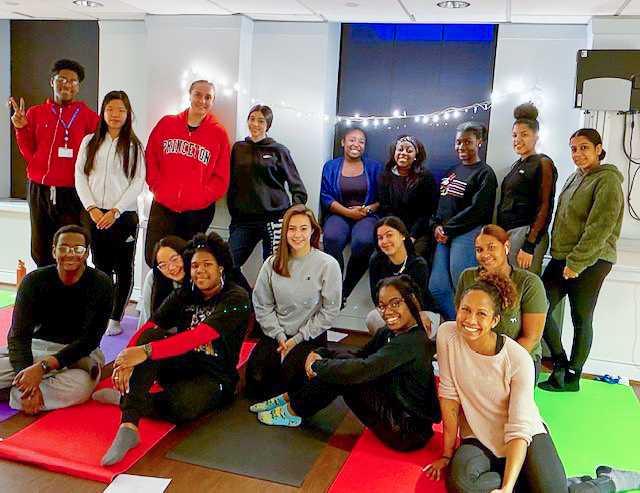
Right: Student Success Jobs Program (SSJP) student employees participated in
a “Stress Less” workshop in the Bayles Conference Room on Jan. 7. Aliese Lash (front row, far right), LCSW, Youth Programs social worker, shared wellness and stress management tips with the 17 SSJP participants. Nadine Channaoui (not pictured), MS, CGC, a genetic counselor in the Heart and Vascular Genetics Program, served as a volunteer yoga instructor for the students. Photo submitted by Pamela Audeh.

Home | This Week in Photos

A rendering of the renovated fourth floor of One Brigham Circle

Eight departments are settling into new work areas at One Brigham Circle (OBC), following the first phase of a transition to move the previously dispersed teams to a central location near the Brigham’s main campus. Expected to be completed later this year, the relocation supports the institution’s ongoing efforts to maximize use of available clinical and administrative spaces and achieve cost savings by consolidating leases.   

Human Resources and Compliance were the first groups to move into the renovated, 39,200-square-foot space on the building’s fourth floor last month. In total, nearly 300 employees will come together at OBC, which is located at the intersection of Huntington Avenue, Tremont Street and Francis Street. 

The remaining teams slated for relocation are Analytics, Planning, and Strategy Implementation; Department of Quality and Safety; Center for Nursing Excellence; and eCare Training. The space will also house an expansion for the Brigham Digital Innovation Hub and a new, small IT Depot to support the workplace staff. The relocated teams will be moving from several different locations, mainly buildings where leases are ending, including the Crosstown Building.

The new space provides a range of workplace settings that are designed to accommodate different work styles and activities.

In addition to dedicated workstations, the space includes “flex seats” for staff who do not work 100 percent of the time from a desk. The fourth floor also features a “quiet car” space meant for work that doesn’t involve chatter or phone use, as well as an open collaboration area, meeting room, a focus pod, phone rooms, a community work table and a kitchen hub. 

“I’m very pleased with the outcome of the design and just as pleased to see the smiling faces there as people get used to their new environment with a very positive attitude,” said Steve Dempsey, executive director of Real Estate and Facilities/Planning and Construction. “That’s how I always hoped that this would turn out. We envision this as just the beginning of an exciting time where there are more opportunities to transform workspaces that have the potential to improve the way we all work together.”

Andrew Shinn, a senior planner in Real Estate and Facilities, has been managing this project closely for nearly two years. To address the questions and concerns of all of those involved in the move, Shinn said a working group was created several months ago, with assistance from Human Resources, to ensure all staff had an opportunity to contribute feedback about the layout and design. The group also provides a forum for discussing potential new cultural norms in the workplace.

“We envision this workgroup will continue through the rest of the construction, and potentially afterwards, too,” Shinn said.


Home

OMCOSS Now Open

The Office of Mediation, Coaching, Ombuds and Support Services (OMCOSS) opened on Jan. 6 and provides services, education and resources to the Brigham Health workforce in support of building and sustaining trusting, respectful relationships. All services are voluntary for faculty, staff and trainees — each person is free to participate or decline without consequence. To learn more about OMCOSS, including location and drop-in details, visit BWHPikeNotes.org.

Register for the 2020 B.A.A. 5K

Registration for the 2020 Boston Athletic Association (B.A.A.) 5K race opens Wednesday, Jan. 15, at 10 a.m. All runners and walkers are invited to take part in the excitement of Boston Marathon weekend while supporting trauma research and care by participating with the Stepping Strong 5K Team. The B.A.A. 5K will take place on Saturday, April 18. Learn more.

Cast Your Vote: Help Name a New iHub Program

The Brigham Digital Innovation Hub (iHub) invites you to participate in a one-question survey to help name a new program it is launching. This hospital-wide initiative aims to eliminate operational and administrative inefficiencies by crowdsourcing employee ideas to reduce staff burden through innovative digital solutions. Ideas with the most potential to improve the Brigham Experience will be implemented in partnership with the iHub. To cast your vote, visit surveymonkey.com/r/5J3NHQ3.

Celebration of Life Honoring Bishop Enos Gardiner

A celebration of life for Bishop Enos Gardiner, MA, BCC, will be held in Bornstein Amphitheater on Tuesday, Jan. 14, at 3:30 p.m. A reception will follow in Cabot Atrium at 4:30 p.m. Bishop Gardiner, who was a staff chaplain at the Brigham, passed away on Dec. 6. For questions regarding the service, contact Kevin Long in Spiritual Care Services at kplong@bwh.harvard.edu.


Home | PikeNotes


Did reading this year’s collection of One Shining Moment submissions in Brigham Bulletin inspire you to share your own? There’s still time to contribute! Simply use the comment box below to share a Brigham moment from the past year that you found touching, meaningful or made you feel proud to be part of the Brigham community.

Please note that comments on this page are moderated and will not immediately appear after clicking “Post Comment.” If you would like to submit a photo to accompany your submission, send it to bulletin@bwh.harvard.edu and a member of the Bulletin team will add it to your post.

Home

2 Comments

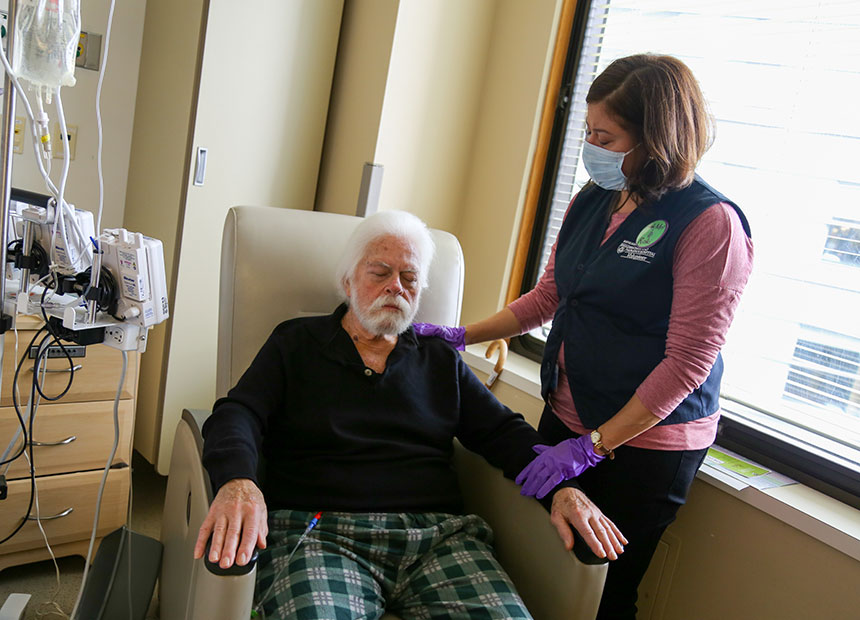
It was a special and very unique day that both my daughter and I cared for the same patient. I work as a nurse on Shapiro 8 — I just reached 38 years at the Brigham — and my daughter works in the Oncology Float Pool. I was assigned the patient on my floor and she needed chemotherapy, and it just so happened that my daughter, Emily Lutes, BSN, was the resource nurse for Oncology that day and came to administer the chemo.
A colleague took a picture of this special moment. Emily is a fourth-generation nurse, as my mother and grandmother were also nurses.

Kathleen Mandigo, BSN, RN-BC
Nurse, Cardiovascular Unit, Shapiro 8

Home


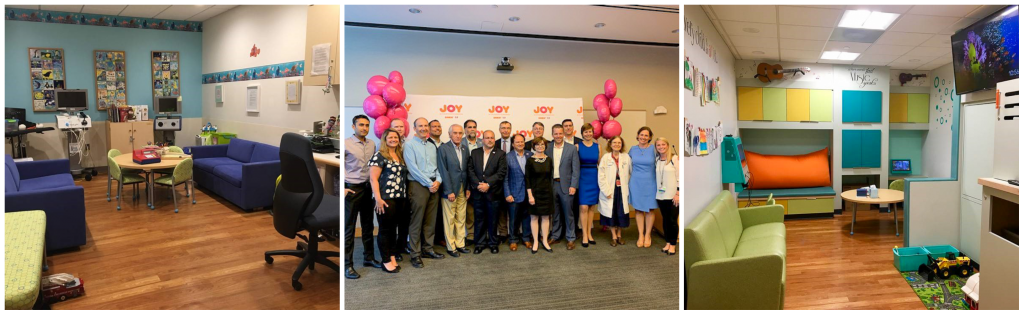
We had many shining moments in 2019, but one of our favorites was the unveiling of our new pediatric playroom area in Radiation Oncology. We have a special place to let kids be kids and normalize the hospital environment.

Daphne Haas-Kogan, MD
Chair, Department of Radiation Oncology

Home

Brigham Health Pembroke facility

My shining moment is the first day in our beautiful new building at the Brigham and Women’s Health Care Center in Pembroke. To see everyone’s hard work come to fruition was amazing. What a team! New people, surroundings and equipment, all working together with one goal: taking exceptional care of our patients. It was truly a sight to behold. I feel extremely fortunate to work for such a prestigious organization.

Sue Balboni
Patient Assistant, Brigham and Women’s Health Care Center, Pembroke

Home

I am so inspired by the philanthropy of one young Brigham family that had three healthy, beautiful babies delivered at the hospital. Both the mom and dad are eternally grateful for all the staff members who cared for them during their stay. They are also very passionate about the research of one such clinician, and they have chosen to honor this doctor through The Helix, a colorful display on the Braunwald Tower 2 mezzanine featuring messages of appreciation from patients, families and friends of the Brigham. Three vibrant DNA double-helix strands tower above rows of mirrors reflecting back into the space. In time, each mirror will hold a story of someone in our Brigham community. We don’t always know what inspires people’s generosity, but The Helix gives us a glimpse into that through the inscriptions on the mirrors.

The patient stories people share with my colleagues and me vary in specifics, but all share a common theme — gratitude. Each story reminds us of the incredible colleagues we have across the hospital and our mission-based work. We hope to capture a lifetime of stories through The Helix inscriptions and that everyone has a chance to stop by and read how our hospital has touched the lives of many.

Leigh Janczak
Assistant Vice President, Development Office

Home

We’re excited to be part of Brigham and Women’s Hospital’s efforts to reduce hospital-acquired infections and believe that hand hygiene forms the foundation of this work. And we couldn’t be prouder of the enthusiasm demonstrated by hospital staff during the hand hygiene celebration in October, which engaged over 4,000 employees and resulted in more than 3,000 completed surveys. These efforts will help guide and sustain hand hygiene into 2020 and beyond!

Katherine Gregory, PhD, RN, FAAN
Associate Chief Nursing Officer, Women’s and Newborn Health

Joshua C. Vacanti, MD
Medical Director, Perioperative Services

Brian E. Yorko, RN, BSN, MBA, EMT-P
Executive Director, Inpatient and Clinical Services

Home

From discovering the most effective ways to combat cancer to unraveling the mysteries of the gut microbiome, our research community tenaciously pursues scientific breakthroughs to improve health for people everywhere. Tasked with solving some of the most vexing problems in medicine, our investigators and their extraordinary contributions deserve to be celebrated. That’s why it was my honor and privilege this spring — and a shining moment of my year — to select the inaugural recipients of the President’s Scholars Awards.

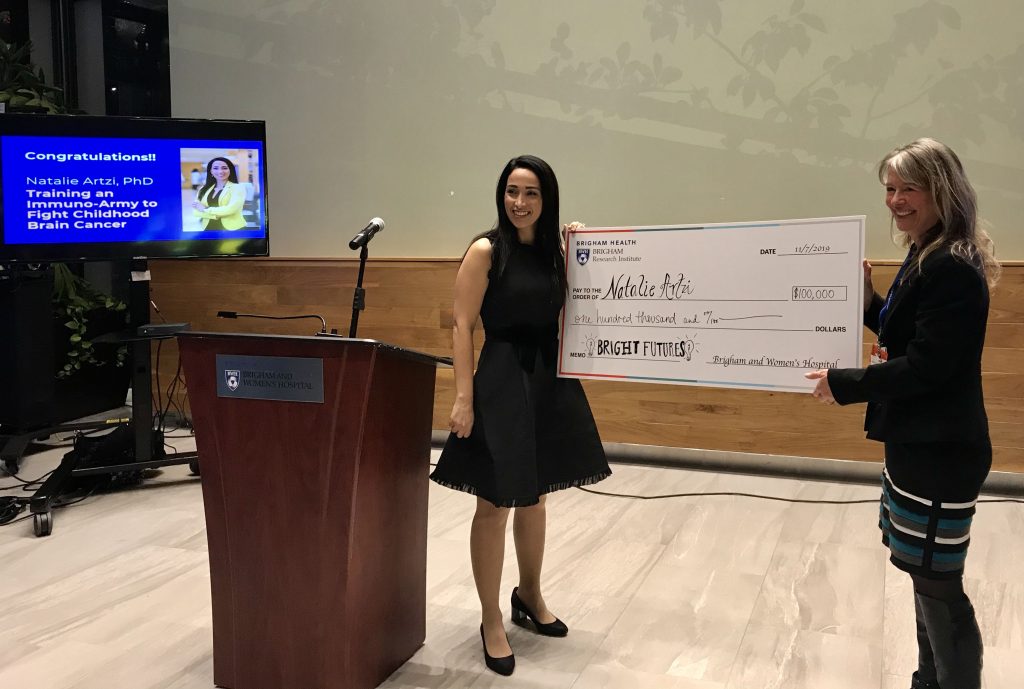
Our first awardees — Ana Anderson, PhD; Georg Gerber, MD, PhD, MPH; Jessica Lasky-Su, ScD; and Tracy Young-Pearse, PhD — are among the brightest rising stars of our research community. Each of these early-career investigators received an unrestricted prize of $100,000 per year for three years to support their exceptional potential and promising research careers.

While it was an absolute joy to announce these awards and celebrate this news with our entire Brigham family, having the opportunity to learn more about our Scholars’ incredible work has been just as rewarding. Fueled by creativity, collaboration and a courageous pursuit to solve the unknown, these four gifted scientists represent why the Brigham inspires hope here and around the world.

Betsy Nabel, MD
President

Home

From left: Kela Roberts (Broad Institute), Xianjun Dong (BWH), Yang Wang (Dana-Farber Cancer Institute) and Walid Abdelmoula (BWH)

I knew it would be a shining moment when an idea began to formulate my mind back in September. I was reading Yuval Harari’s new book about how artificial intelligence (AI) will fundamentally change our life, shepherding in the fourth industrial revolution. Instead of worrying about being ill-equipped for this radical transformation, why not prepare for the change via hands-on workshops? This fall, the Brigham’s Bioinformatics Club did exactly that in hosting our first AI Camp.

We invited 26 expert speakers in AI and machine learning to help researchers, innovators, clinicians and trainees practice writing AI code using Keras and TensorFlow; get hands-on experience with applications of AI in genomics, pathology, radiology and clinical data; and, lastly, participate in an open discussion of the challenges and upcoming opportunities of AI in medicine.

I know AI is popular, but I never expected it so popular. All 860 tickets to our AI Camp sold out in one day. While 73 percent of participants were from Brigham, we also saw graduate students, research fellows, postdocs and doctors from other local institutions. We received lots of praise about how helpful the event was, and people were eager to attend another round next year.

The camp’s events took place over two months. Looking back, I think all the hard work paid off. All the late nights I spent contacting speakers and designing the T-shirts, posters, website, etc., was worthwhile.

I launched the Bioinformatics Club in 2017 initially just for my group, but it has since expanded to the whole Longwood area, now boasting over 300 members. Over the last two years, we have provided 70 bioinformatics talks and served over 2,000 participants in the Brigham community. The AI Camp represented the culmination of this work, and I believe we will continue to grow and improve in 2020.

I would like to thank three co-organizers of this event (Kela Roberts, Yang Wang and Walid Abdelmoula, pictured above), the sponsors of Bioinformatics Club (Brigham Research Institute and the Precision Neurology Program), all speakers and participants, and many staff who helped us, including Audiovisual Services, administrative assistants and more. Without your support, we would not be here. Thank you, and see you next year!

Xianjun Dong, PhD
Director, Computational Neuroscience, Precision Neurology Program
Founder, Bioinformatics Club (bioinformatics.bwh.harvard.edu)

Home

As a nurse, I know how important it is to practice self-care — and also how easy it is for us health care professionals to neglect our own well-being. It’s been my privilege and honor to support my hardworking colleagues by hosting monthly staff Wellness Days as well as reiki training sessions. Witnessing them reap the benefits of these programs was truly a shining moment of my year!

Kristen Reed, BSN, RN
Neurosciences Intermediate Care Unit, Braunwald Tower 10CD

Home

This year, a patient in acute respiratory distress was brought to the Emergency Department. The decision was made to consult for extracorporeal membrane oxygenation (ECMO). At this point, there were five ED nurses in the room starting drips and giving blood products, four emergency services assistants running to the Blood Bank gathering supplies and equipment to bring to the room and our entire Charlie pod physician team. Respiratory was ready to manage ECMO if the decision was made.

The team determined that ECMO was the patient’s only chance at survival. We received assistance from our Operating Room colleagues, who ran back and forth for specialized equipment. We continued resuscitation while trying to communicate with the patient’s family over the phone.

What I witnessed was nothing short of a miracle. Watching this team in a small room in Charlie cannulate and start ECMO in the ED was amazing. We often try to put into words what the Brigham Way means. I would say it is teamwork, collaboration and having the best of the best come together to save a life.

Anna Meyer, DNP, RN
Nurse Director, Emergency Department

Home

The room was a little bit smaller and the confetti cannons were replaced by a massive balloon drop, but the feeling was definitely the same — a heady blend of pride and elation. David McCready, MBA, MHA, president of Brigham and Women’s Faulkner Hospital (BWFH), and I were flanked by Maddy Pearson, DNP, RN, NEA-BC, Brigham Health’s chief nursing officer and senior vice president of Clinical Services, and Cori Loescher, BSN, MM, RN, NEA-BC, chief nursing office and vice president of Patient Care Services at BWFH, near the front of a room filled with enthusiastic nurses, physicians and other staff. There was an electrifying sense of anticipation as we waited for the Magnet leadership to relay the outcome of BWFH’s Magnet application. Upon hearing the words “I am pleased and honored to be the one to congratulate you all,” the room erupted with elation, relief and a deep sense of accomplishment.

As was the case for our Magnet process at BWH, we knew all along that BWFH was a Magnet-worthy institution. Our patients, their families and our employees tell us this every day. But also like the Magnet process at BWH, this moment was not simply about the outcome, but rather the journey of working together to identify, lift up and celebrate the amazing care we provide each and every day. There were very few dry eyes in the room at that moment of such great accomplishment and pride in our nurses and the entire BWFH team, and mine were certainly not among them.

Ron M. Walls, MD
Executive Vice President and Chief Operating Officer

Home

In May, we held the inaugural Karsh Nursing Scholars Day to share nurse-driven innovation, research and improvement initiatives with the entire Brigham community. The event was an opportunity to illuminate the breadth and depth of this work, engage in invigorating discussions with colleagues and inspire those who wish to begin a project of their own.

For me, Karsh Scholars Day underscored nurses’ unwavering devotion to our patients and families. Every single project was sparked by a nurse asking how he or she could make something— an aspect of care or an experience at the hospital —better for patients and their loved ones.

I have no doubt the innovative efforts and research of our nurses will benefit patients at the Brigham and beyond for years to come.

Maddy Pearson, DNP, RN, NEA-BC
Chief Nursing Officer and Senior Vice President, Clinical Services

Home

Holiday Reminder: Personal Package Policy

The Receiving & Distribution and Office Services teams remind employees that personal package deliveries to the Brigham cannot be accommodated. The priority of these departments is delivering items directly related to patient care and hospital business. Due to the large volume of these deliveries alone, processing personal packages as well delays the turnaround time of products that may directly affect patient care. For questions, contact Jonathan Santiago at jmsantiago@bwh.harvard.edu.

Longwood Chorus Winter Concert, Dec. 18

The Longwood Chorus, the vocal ensemble of Boston’s health care and science community, will host a winter concert on Wednesday, Dec. 18, at 12:30 p.m. in Cabot Atrium, 45 Francis St. Enjoy a medley of a capella songs, including “Shenandoah” and “Ubi Caritas,” alongside classic holiday favorites performed by colleagues from the Brigham and other Longwood-area institutions.

Navigate the Brigham with the BWH Maps App

Getting around Brigham’s main campus is now easier than ever with BWH Maps, a mobile app that can pinpoint your exact location inside the hospital, provide real-time tracking as you move and deliver turn-by-turn walking directions to your chosen destination. With over 300 destinations programmed in the app’s database, finding your way around the Brigham takes just a few taps. Search for BWH Maps in the Apple App Store and Google Play Store. For questions, email ihub@partners.org.

Shop on the Pike Holiday Sale, Dec. 19-20

The Brigham’s Shop on the Pike is celebrating the holiday season by offering 20 percent off most items, including select Brigham apparel, during a holiday sale on Thursday, Dec. 19, and Friday, Dec. 20. The discount excludes flowers/plants, balloons, candy, food, magazines, greeting cards, website orders, phone cards, gift cards and paperback books. Visit the Shop on the Pike or call 617-732-7878 for more details.


Home

Bishop Enos Gardiner

Photo credit: Mainframe Photographics

The Brigham community and Spiritual Care Services mourn the loss of Bishop Enos Gardiner, MA, BCC, who passed away on Dec. 6 following an illness. He was 65.

For the past 14 years, Bishop Gardiner was a staff chaplain in Spiritual Care Services. While Bishop Gardiner served the entire hospital, he was the dedicated chaplain for Braunwald Tower 15ABCD, a Surgical Intermediate Care Unit, and 3BC, the Medical Intensive Care Unit (MICU).

Bishop Gardiner began his career at the Brigham as a chaplain resident from 2004 to 2005. After completing his training, he was hired as a staff chaplain and remained at the Brigham. Over that time, he supported countless individuals during the most difficult times in their lives. He was also part of joyful moments, such as patient weddings.

Kathleen Gallivan, PhD, director of Spiritual Care, said she will miss her colleague’s presence and willingness to always go the extra mile.

“Bishop Gardiner was such an integral part of our department and the Brigham,” Gallivan said. “He often would bring in a perspective that was missing and would see things from a different angle, which I very much admired about him. He is greatly loved and missed, and he will forever be a part of our Brigham family.”

A native of the Turks and Caicos Islands, Bishop Gardiner grew up in the Bahamas. He became an ordained minister in 1974 and a bishop in 1984. In addition to his role at the Brigham, he served as a pastor at the Church of God of Prophecy, Inc. in Roxbury, since 1990.

Bishop Gardiner loved teaching and mentoring, Gallivan said, and always looked forward to spending time with patients and their families.

“He had the biggest heart and the kindest soul,” Gallivan said. “He would do anything for anyone. I could always count on him, and I know so many of his colleagues and patients felt the same way.”

Leo F. Buckley Jr., executive director of Business Operations for Patient Care Services and Nursing, described Bishop Gardiner as a kind, compassionate and spiritual colleague.

“Enos had a contagious smile that comforted staff at all levels of the Brigham community, leaving lasting impressions and friendships,” Buckley said. “He touched so many lives during his time at the Brigham, and we’ll be forever grateful for all of his contributions.”

As the chaplain for Braunwald Tower 15ABCD, Bishop Gardiner would visit the floor twice a day to meet with patients, their families and the unit’s staff. Jennefer Trowers-Smith, RN, a nurse on Braunwald Tower 15CD, worked alongside Bishop Gardiner for a decade. She said it has been hard not seeing her cherished colleague and friend come around the corner each day to greet patients and staff.

“He had this amazing smile, and when you saw it you couldn’t help but smile too,” she said. “There is such a big void in my heart without him here. He was warm, friendly, understanding, patient and kind.”

Hasna Hakim, DNP, MSN, RN, CCRN, MICU nurse director, always looked forward to Bishop Gardiner’s visits.

“He was a wonderful, supportive colleague who understood the importance of teamwork,” she said.

Bishop Gardiner graduated from Mississippi Baptist Seminary in 1984. In 2000, he graduated from the Urban Fellows Program at Harvard University’s School of Divinity. He held a master’s degree in urban ministry from Gordon-Conwell Theological Seminary in Boston and an associate certification with the Association of Professional Chaplains.

He is survived by his wife, Evelyn, also an ordained minister; daughter, Cecile Wilson, and son-in-law, Marlon; and two grandsons, Naeem and Amari.

Bishop Gardiner’s funeral will take place on Jan. 4 in the Bahamas. The Brigham will hold a memorial service for him in January.

Home

A closer look at the unfolded drug-delivery system (left) and capsule containing it (right), shown next to a penny for scale

Daily birth control pills allow women to manage their fertility, but this method of contraception relies on a user remembering to take her pill at the same time every day. A team led by investigators from the Brigham and Massachusetts Institute of Technology (MIT) is designing a new type of capsule that could deliver an oral contraceptive that only needs to be taken once a month, helping improve adherence and reducing the risk of unplanned pregnancy.

Building on previous research to develop slow-release pills that can reside in the stomach for days or weeks, the team reported in Science Translational Medicine that, for the first time, it has achieved month-long delivery in preclinical models.

If safe and successful in humans, the capsule could help remove some of the challenges associated with a daily birth control pill. In a multinational survey, about half of women taking an oral contraceptive reported missing at least one dose over a three-month period. Among women using oral contraceptive pills, the chance of pregnancy is about 9 percent every year.

“Our capsule represents a major advancement toward providing women with a once-a-month contraceptive. For many, this may be hard to believe. But our preclinical data is encouraging us along that road,” said co-corresponding author Giovanni Traverso, MB, BChir, PhD, a gastroenterologist and physician-researcher at the Brigham and MIT. “We began our work on extended-drug release by working with treatments for malaria, tuberculosis and HIV. But early on, we were having conversations about the potential impact that this approach could have for family planning. We wanted to help empower women with respect to fertility control and are pleased to report our progress toward that goal.”

We create breakthroughs. It's in our DNA logo.The team designed a drug-delivery vehicle that consists of six arms joined by an elastic-coated core. The arms were loaded with the oral contraceptive drug levonorgestrel and folded up into a capsule that can be swallowed. Once in the stomach, the arms unfold and have a span that is larger than the opening between the stomach and small intestine. This allows the system to stay in the stomach, where it can release the drug in controlled doses over time. After a month, the unfolded capsule is broken down by the stomach and safely passes through the gastrointestinal tract.
The research team tested the concentration of oral contraceptive over time in a porcine model and measured the presence of the drug in the bloodstream for the extended-release form versus an immediate-release tablet. For the tablet, dosage tapered off after six hours. For the extended-release capsule, the team observed concentrations of the drug for up to 29 days.

Work is now underway to bring the extended-release pill closer to human trials. Next steps will include scaling up manufacturing processes and safety evaluations.

Home

Betsy Nabel addresses the Brigham community during Town Meeting.

In addition to introducing five guiding principles to advance the Brigham’s cultural transformation (see related story), the fall 2019 Town Meeting with Brigham Health President Betsy Nabel, MD, featured a wide swath of news from across the institution. Here are a few key takeaways from the Dec. 10 event:

  • Strategy refresh. Nabel unveiled the newly redesigned “strategy house,” an illustration depicting the Brigham’s mission, vision, values and strategic areas of focus. Among the updates were a refreshed vision statement, “A Healthier Community, a Healthier World,” to underscore the Brigham’s commitment to improving health locally and globally. Nabel also announced the institution’s 12 goals for fiscal year 2020, which include advancing innovation and enhancing community engagement, among others. Learn more.
  • Campus updates. Cindy Peterson, MBA, vice president of Regional Ambulatory Operations and Business Development, and George Player, CPE, FMA, vice president of Facilities and Operations, highlighted recent and upcoming capital projects. These include an update on the newly expanded Foxborough site, the future expansion of the Westwood facility, a tentative completion date for the first phase of the Emergency Department expansion (October 2020–January 2021) and plans for a new, 78-bed inpatient building at BWFH.
  • Diversity and inclusion. Tim Ewing, PhD, vice president of Employee Diversity, Inclusion and Experience, shared results from a study the Brigham conducted with a third-party consultant to better understand the current state of diversity and inclusion and improve the Brigham Experience. The assessment examined promotion, turnover and representation rates by age, gender, race, ethnicity and more over three years. Ewing noted the study identified opportunities to advance equity in hiring, retention and promotions, especially among employees of color.
  • Addressing climate change. In response to an audience question, Player and Bernard Jones, EdM, vice president of Public Policy, shared examples of how the Brigham is supporting environmental sustainability. Jones noted that more than 80 percent of electricity across Mass General Brigham comes from renewable sources, and the system is exploring additional, innovative ways to support its goal of becoming “carbon net positive” by 2025. Player highlighted the new Eco-Green team at the Brigham and ongoing efforts for the institution to become carbon neutral, improve recycling and reduce plastic waste.
  • Strategic initiatives and partnerships. The Brigham’s world-renowned advanced, personalized and expert care attracts patients from around the world, which helps strengthen the institution’s financial foundation, said Shelly Anderson, MPM, senior vice president and chief strategy officer. Anderson discussed efforts to nurture new and existing partnerships with health systems in Bermuda, China and the Middle East.

Visit BWHPikeNotes.org to access a recording of the event.

Home

reiki therapy

Mathews Carvalho Jr. receives reiki therapy from Nina Averbuck in his hospital room on Braunwald Tower 7A.

Relief washed over a man’s face as he watched his wife doze off in her hospital bed after receiving reiki therapy.

“She hasn’t slept in days,” he whispered to a Brigham volunteer, a certified reiki practitioner who had provided the therapy.

The scene is a familiar one for Sharon Dickinson, MDiv, coordinator of the hospital’s Reiki Program, who recounted it recently as an example of how certified reiki practitioners help care for patients by relaxing their body and mind.

Stemming from the Japanese words for “universal life energy,” reiki is a healing and meditation practice that promotes wellness and resiliency. At the Brigham, volunteers deliver reiki therapy as a hands-on relaxation technique that helps promote the body’s natural immune response. It is not affiliated with any religion.

Volunteers start a session by turning on soothing music or eliminating distracting noises, dimming the lights and then placing their hands in standard reiki positions on the head, shoulders, arms, hands, lower legs and feet. After the 15- to 25-minute session, the volunteer quietly slips out of the room to leave the patient in their state of deep rest.

Reiki is not an alternative to medicine, but rather an integrative way of healing when practiced in conjunction with traditional medical care, Dickinson explained.

“Our bodies come equipped with an immune system that ordinarily works very well, and it works best when we’re in a relaxed state,” she said.

Powered by Volunteers

Aside from Dickinson, the Reiki Program is entirely volunteer-staffed. Now celebrating its 10th year, the program has 73 volunteers, who range in age from 21 to 85 and come from a variety of backgrounds. Retired nurses, students, stay-at-home parents and working professionals all make time to come to the Brigham for two hours a week and practice reiki.

We care. Period. logo

“A volunteer walks in and they carry with them a contemplative calmness,” Dickinson said. “They’re open-hearted, they’re kind and they’re so dedicated.”

Nina Averbuck, who has volunteered with the program for a year, said being able to provide reiki to patients and staff is the best part of her day.

“It’s the greatest gift when someone tells you that you’ve helped them relax and focus on feeling better,” Averbuck said. “Reiki is so powerful, and I’m so glad that I can share my passion for it with others every day.”

On average, volunteers collectively administer about 30 sessions a day. When not serving patients, they also provide reiki to faculty, staff and trainees. On the second Wednesday of each month, they set up “Reiki Shares” on Braunwald Tower 2 mezzanine from 11:30 a.m. to 1:30 p.m. to administer reiki to anyone who would like it.

Like a Comforting Hug

Dickinson, who is a certified reiki practitioner, recalled an experience when a patient she was working with asked her to stop the therapy about five minutes in so they could take their pain medication. The next day, the patient told Dickinson that in the short period between when the session ended and when the nurse arrived with the medication, their pain went away.

Patients who shared their reactions to the therapy have stated that they felt refreshed and calm after receiving reiki. Following one session, a patient said it was like receiving a comforting hug, Dickinson said.

“Everyone at the Brigham is devoted to patient care and healing,” Dickinson said. “Some accomplish this through conducting groundbreaking research, others through administering innovative medical practices. Reiki volunteers care for patients through relaxing their body and mind.”

For more information about volunteering with the Reiki Program, email sdickinson1@bwh.harvard.edu. Patients and families interested in receiving reiki therapy can speak with their nurse to request a session.

“Behind the Scenes at the Brigham” is a monthly series that provides a glimpse of the people whose everyday contributions help make the Brigham a world-class institution. Is there a team you’d like to see featured? Send your ideas to bulletin@bwh.harvard.edu.

Home | Reiki Program

United. Courageous. Inclusive. Honest. Curious. These five qualities — unveiled this month as the institution’s newly articulated guiding principles — represent behaviors that are expected across the entire Brigham community, senior leaders announced during Town Meeting on Dec. 10.

guiding principles infographic

(Click image to enlarge.)

Building on earlier and ongoing work to enhance the Brigham Experience — which is the integration of the patient and employee experience — the guiding principles were inspired by areas of opportunity identified in the Brigham Experience: Culture, Diversity & Inclusion Assessment conducted in 2018.

When the guiding principles become a part of every interaction across all levels of the organization, the Brigham will have a culture that is even more transparent, diverse, inclusive, collaborative and innovative, explained Tim Ewing, PhD, vice president of Employee Diversity, Inclusion and Experience.

“Our guiding principles really speak to the fact that wherever we go, wherever we are, we can expect these behaviors from every single person at Brigham Health,” Ewing said. “To truly achieve a transformative, real culture change, we need to embrace these new guiding principles and enable these behaviors in each other.”

During Town Meeting (see related story), Ewing offered examples of how the guiding principles translate into real-world behaviors and the benefits of incorporating them into everyday interactions.

Consider the principle, “We are courageous. We respectfully offer and invite ideas.” A culture that supports this would enable someone to feel comfortable offering a different opinion in a team meeting.

“We realize that when we do speak up, that creates opportunities for new ways of thinking,” Ewing said.

Supporting Infrastructure

Ewing noted that faculty, staff and trainees’ participation in last year’s culture assessment was vital to understanding where there are opportunities for improvement. These include eliminating competition where there should be collaboration; being more transparent and forthright in communication; fostering a culture of respect and inclusion; and shifting from a hierarchical structure to an empowered, cross-functional, shared decision-making approach.

In addition to serving as a blueprint for closing these gaps, the new guiding principles and competencies associated with them will be incorporated into Human Resources’ systems and processes, such as candidate selection and annual employee performance reviews.

Senior leaders and directors will also undergo training to ensure they have the necessary skills and tools to lead and develop the Brigham’s workforce according to the guiding principles.

Stronger Together Brigham Values Logo

In addition, the Office of Mediation, Coaching, Ombuds and Support Services (OMCOSS) will offer resources to support building and sustaining trusting, respectful relationships in the workplace. Launching Jan. 6, the office’s services will be available to all faculty, staff and trainees.

To help shape the next stage of culture transformation, all members of the Brigham community will be invited to participate in an Employee Engagement survey in March.

“We’ve been on a journey for the past two years, and we’re continuing to build,” Ewing said.

Visit BWHPikeNotes.org to learn more about the Brigham Experience and to view a brief, animated video highlighting the new guiding principles.

Home

In a Nov. 27 message to employees, Partners HealthCare President and CEO Anne Klibanski, MD, announced plans for rebranding the health care system as Mass General Brigham.

“Our patients are at the center of all we do. The overall aim of our strategy and new name is to create the premier integrated health care system of the future, built on the strong reputations of our academic medical centers,” Klibanski said. “We will increasingly work as a single health care system that delivers excellence across the full spectrum of health care and is enabled by the strength of research, innovation, new technologies, our valued employees and work we do in communities — work that will impact health worldwide.”

Mass General Brigham will begin the work to transition to the system’s new name.

The initial rebranding efforts began a year ago with a goal to strengthen regional, national and international recognition for the ongoing work of the health care system. On Nov. 26, after careful consideration, the system’s board of trustees voted unanimously to approve changing the name to one that more closely aligns with the system’s world-renowned academic medical centers: Massachusetts General Hospital and Brigham and Women’s Hospital, two of the strongest and most trusted health care brands.

“The Partners HealthCare name has served our organization well for 25 years and has helped us to become the strong system that we are today, but we are moving forward to rebrand to better articulate what we offer patients and more closely reflect the vision for our system,” Klibanski said. “Introducing our new name and implementing our strategy will require careful planning and collaboration. Our next step is to actively engage in a thoughtful process for how we best invest our dollars, always keeping patients and clinical care as our top priorities.”

Home | Re-branding information

4 Comments

Reminder: Severe Weather Policy

With winter weather upon us, all faculty and staff are encouraged to review the Severe Weather, Emergency Policy or Significant Event policy (HR-406). All Brigham Health faculty and staff are expected to report to work as scheduled in severe weather, and decisions for individual sites, practices, departments, programs and units to remain open or to close are determined by Brigham Health leadership. Learn more at BWHPikeNotes.org.

Town Meeting, Dec. 10

Join Brigham Health President Betsy Nabel, MD, for the next Town Meeting on Tuesday, Dec. 10, noon–1 p.m., in Bornstein Amphitheater. All members of the Brigham community are encouraged to attend in person or by webcast. For more information and to access the webcast link, visit BWHPikeNotes.org.

Share Your ‘One Shining Moment’ of 2019

Each year, faculty, staff and trainees are invited to share their “One Shining Moment” for inclusion in a special year-end edition of Brigham Bulletin. Do you have a Brigham moment or memory from 2019 that makes you proud to be a part of our community? Send your “One Shining Moment” submission and a related photo to bulletin@bwh.harvard.edu by Friday, Dec. 13. A shining moment can be inspired by something big or small, as long as it is meaningful to you. To view last year’s collection of “One Shining Moment” submissions, click here.

Remembering the 2010 Haiti Earthquake and Recovery, Jan. 10

Join colleagues on Friday, Jan. 10, 3–4 p.m., in Bornstein Amphitheater, for “Many Hands Make the Burden Light — Remembering the 2010 Haiti Earthquake and Recovery,” to honor the lives and memory of those affected by the devastating quake and hear from individuals who were part of the recovery. Learn more.


Home

OMCOSS logo

Launching on Monday, Jan. 6, the Office of Mediation, Coaching, Ombuds and Support Services (OMCOSS) will provide education, services and resources to the Brigham Health workforce in support of building and sustaining trusting, respectful relationships. All services are voluntary for faculty, staff and trainees — each person is free to participate or decline without consequence.

This is the last of a four-part Brigham Bulletin series exploring the services that OMCOSS will provide. This week’s edition highlights Support Services.

What are OMCOSS Support Services?

Working with the Partners Employee Assistance Program, OMCOSS will connect workforce members to short-term counseling and other resources for all types of work/life, family or personal concerns. OMCOSS Support Services also include Peer Support and Crisis Response Support — programs that offer emotional support to clinical staff members following any challenging patient-related event.

When are Support Services helpful?

Support Services can be helpful when working through any difficult emotional issue, such as a family conflict, financial worries or challenges associated with caring for disabled or aging loved ones. Peer Support and Crisis Response Support can assist providers after a particularly difficult clinical case with an undesired or unexpected outcome.

To access OMCOSS services, call 617-525-9797 or email bwhomcoss@partners.org.

Home | About OMCOSS

Joia Mukherjee and Fernet Léandre, chief program officer of PIH, lead a discussion after the film.

In honor of World AIDS Day, the Division of Global Health Equity and Partners In Health Engage co-hosted a free screening of the critically acclaimed documentary Bending the Arc in Bornstein Amphitheater on Dec. 2. The film highlights a team of people — Paul Farmer, MD, PhD, Jim Yong Kim, MD, PhD, and Ophelia Dahl — whose charitable medical work 30 years ago ignited a global health movement in co-founding Partners In Health (PIH).

The film was followed by a discussion with Joia Mukherjee, MD, MPH, a faculty member in the division and chief medical officer of PIH, and other PIH speakers about how the health care community can support global health initiatives.

Home | Partners in Health

David Kenney enjoys a recent bike ride.

Arlington resident David Kenney, 54, commutes on his bike eight miles to his office in Back Bay year-round. His first morning ride in July was like any other except for one important detail: That day, he was biking with a new heart.

Kenney is undeniably athletic — and tenacious. He ran cross-country in high school and college. In his 20s, weary of running, he took up cycling. In his 40s, he became a competitive rower, despite a sudden, serious heart condition.

“In my late 20s, I started having arrhythmias, and my arrhythmia actually turned into ventricular tachycardia,” which causes a rapid heartbeat, Kenney said. “I’d basically go into a high heart rate and have to be hospitalized.”

For nearly two decades, Kenney’s heart condition was kept in check. There were setbacks and comebacks, including a shocking diagnosis in 2008.

“I was getting my annual physical,” he recalled. “The echocardiogram showed my ejection fraction (percentage of blood pumped out of the ventricles) was greatly diminished, and that really alarmed the doctor. He said, ‘You have heart failure.’ I couldn’t believe it.”

Although Kenney was slowing down, he kept moving. His doctor called him “an outlier.” And he was — for a while.

“I was very fortunate through cycling and rowing to maintain my wellness,” he said. “I even competed in the Head of the Charles in 2012 and again in 2015, but then I actually started feeling the effects of the heart failure.”

A Bridge to Transplant

Kenney’s job as an international forester and director of acquisitions for the Hancock Timber Resource Group brought him and his family to Boston from Jacksonville, Fla., in 2016. He settled into a rhythm, a routine that included frequent travel all over the world. His heart, however, continued to worsen.

This March, Kenney was referred to the Brigham’s Heart & Vascular Center for its expertise with advanced heart failure and complex cardiac conditions. He was immediately admitted with cardiac failure. His heart was so enlarged it could no longer pump effectively. His only option was a heart transplant.

“He was supposed to see me in the office as a new consult,” recalled Michael Givertz, MD, medical director of the Heart Transplant and Mechanical Circulatory Support Program. “He became so sick that we had to urgently admit him to our service for heart failure management and transplant evaluation.”

We pursue excellence logoThe evaluation process to become a heart-transplant candidate shifted into overdrive. Kenney was approved and placed on the transplant waiting list before the end of the month.

“I knew my old heart was gone,” he said. “I had to do this. Without it, I was going to die.”

To stabilize Kenney until his donor heart arrived, he had two surgeries to install an intra-aortic balloon pump (IABP) — first in his leg and then a few days later it was moved to his upper chest. “I started immediately feeling better,” he said.

The pump bolstered his circulation and allowed him to get up out of his bed and walk the hospital floor.

“The IABP provided enough circulatory support for Mr. Kenney to walk around the coronary care unit multiple times a day while waiting for a donor heart,” Givertz said. “His strength improved as did his nutrition and overall organ function.”

In April, in typical tenacious fashion, Kenney was not wheeled but walked into the transplant operation room to receive his new heart. Eighteen days later, he returned home. Now, more than six months post-transplant, he feels great and has resumed his active lifestyle.

 “I’m a forester. That’s my competency. And at the Brigham, theirs is taking care of hearts. That’s what they do. That’s what they did for me,” he said. “I am so grateful.”


Home | Heart & Vascular Center

1 Comment

Program participant Thomas McElrath uses an iPad to complete a questionnaire that screens for common sleep disorders after attending a recent session in the Zinner Board Room.

As a night nurse for 23 years, Monica Aurilio, BSN, RN, nurse-in-charge on Braunwald Tower 10CD and 12B, has become well-acquainted with how sleep and fatigue affect wellness.

So, when Aurilio heard about the Sleep Health and Wellness (SHAW) Program, a free educational and screening program geared to employees at the Brigham, she was excited to enroll.

“Being a night nurse for my entire career, I have a particular interest in sleep deprivation and fatigue issues,” she said. “It was wonderful to see a program that covers sleep health and strategies for improving sleep.”

Originally launched 15 years ago as a nationwide study of first responders, the SHAW Program comes home to the Brigham this year as a free service for faculty, staff and trainees. Building on a strong research foundation laid out by Brigham investigators, the program seeks to change the culture of sleep and improve health, safety, performance and well-being for employees at the Brigham and beyond.

The program is among the cornerstones of the Sleep Matters Initiative, a clinical and research program of the Division of Sleep and Circadian Disorders. Established more than two decades ago by a Brigham team of sleep experts — led by Charles Czeisler, MD, PhD, FRCP, division chief — Sleep Matters has provided sleep health education and/or sleep disorders screening to more than 30,000 people. It has served physicians, nurses and other health care workers, police officers, firefighters, federal air marshals and even astronauts.

“Sleep deficiency is a serious public health issue, and it is rampant among many employee populations,” Czeisler said. “Promoting healthy sleep is a win-win for both employers and employees, enhancing quality of life and longevity for workers while improving productivity and reducing health care costs for employers.”

Helping Those Who Help Others

The SHAW Program includes a one-hour, expert-led session in a small-group setting. After learning how sleep affects our health and ways to improve sleep hygiene, attendees are invited to complete a questionnaire on an iPad to screen for common sleep disorders. About one in three people have a sleep or circadian disorder, and 90 percent are undiagnosed and untreated. Those who screen positive through the SHAW Program can immediately schedule a follow-up diagnostic evaluation and, if needed, treatment.

After attending the in-person session, enrollees receive sleep tips and personal challenges via email for six months to help maintain momentum on healthy sleep practices.

About half of physicians and nurses nationwide report symptoms of burnout, including emotional exhaustion, depersonalization and perceived lack of accomplishment. Stuart Quan, MD, clinical chief and medical director of the Brigham’s Sleep Disorders Service, points out that the symptoms of burnout and sleep issues are similar.

“Sleep and burnout are so closely related,” said Quan. “There are a lot of studies looking at how to make wellness improvements, such as offering benefits to help employees stop smoking or lose weight. We’re looking to demonstrate that a sleep intervention program delivers a return on investment. If we can improve the sleep health of health care professionals, we may be able to help improve the sleep health of society in general.”

Aurilio, who has a longstanding interest in self-care for health care providers, was so impressed with the SHAW Program that she wants to help increase awareness of it among her nurse colleagues.

“I believe that many employees at the Brigham work long hours and could benefit from such a program,” she said. “I would like to expose them to those strategies for self-care.”

Measuring the Impact

Last year, the Sleep Matters team received a Partners HealthCare Innovation grant to study the impact of fatigue in the workplace. In an interim analysis of nearly 1,000 Brigham employees, the team found that 94 percent of people who screened positive for a sleep disorder were previously undiagnosed or untreated, and that positive sleep disorder screening was associated with nearly four-fold increased odds of burnout.

While a limited follow-up analysis has not yet shown a change in the prevalence of burnout, early results are promising. Six months after participating in the SHAW Program, 86 percent of participants reported going to bed earlier; 53 percent reported prioritizing sleep; and 43 percent made sleep clinic appointments. And 90 percent of participants considered the program important and helpful and said they would recommend it to others.

“When you change the culture of sleep, it can make an extraordinary difference in people’s lives,” said Czeisler.

SHAW Program sessions are ongoing. To sign up, visit brighamandwomens.org/calendar.For questions, email sleepmatters@partners.org or call 617-525-2617. For more information about the services provided by Sleep Matters Initiative, visit brighamandwomens.org/sleepmatters.


Home

Lucy and Charlie Perrins bring their son, Toby, to the new outpatient lactation clinic.

Among the many questions Sue Bryant, MSN, RN, fields as a lactation consultant caring for patients in the Connors Center for Women and Newborns, there is one she has become especially accustomed to hearing: “Can you come home with me?”

Although perhaps asked half-jokingly, the question represents something bigger for Bryant and her colleagues: an unmet need.

Patients who have their baby at the Brigham can meet with nurse lactation consultants during their hospital stay to discuss how to fulfill their infant’s nutritional needs, whether that means breastfeeding, formula feeding, donor milk use or a combination of these sources.

When patients have expressed interest in continued assistance with breastfeeding after discharge, they were often disappointed to learn the Brigham had no such service in an outpatient setting, Bryant said.

We care. Period. logo

Bryant and her colleagues are changing that with a new pilot program focused on delivering timely, expert lactation support in an outpatient clinic.

“Most of our moms leave the hospital having initiated breastfeeding, but depending on the type of birth they had, they might only be in the hospital for two or three days,” Bryant said. “This clinic is going to really enhance the Brigham experience by giving patients who choose to breastfeed a new option for continuity of care.”

Launched in October, the clinic serves postpartum patients in the Center for Child Development at 221 Longwood Ave. A typical appointment lasts 60 to 90 minutes, as a key part of the visit entails an observation of the infant breastfeeding. This leaves ample time to accommodate a baby who may not be awake or hungry at first.

The real-time evaluation enables Bryant, who is currently the pilot program’s sole lactation consultant, to identify and help mothers address any potential issues as they occur. Babies are weighed and assessed during each visit to monitor their progress.

Charlie and Lucy Perrins prepare their son, Toby, to be weighed during a recent appointment.

Lucy Perrins, who visited the clinic with her husband, Charlie, and their son, Toby, said she was relieved to learn about the outpatient lactation service as the family readied for discharge from the hospital.

“As a new mother, you want reassurance that you’re doing an OK job,” Perrins said. “It was nice to leave the hospital and know we were going to see someone in just a few days. Then going back each week and seeing how much weight he’d gained or how far we’d come since the first visit assured us he was doing all right.”

Trusted Care

An essential component of the outpatient program is ensuring timely access, Bryant said. Patients can book an appointment for as soon as a few days after discharge.

“Strong evidence shows that the most critical time to provide follow-up breastfeeding support is the first week after discharge,” she explained. “In many cases, the mom’s confidence level is still developing, yet the baby’s needs are very high, so you have very vulnerable mothers and babies at that point.”

Prior to the pilot program, patients interested in continued breastfeeding support after discharge would typically receive a resource list of community-based programs and a recommendation to follow up with their pediatrician or obstetrician. While lactation consultants continue to encourage patients to access care wherever is most convenient, Bryant said the team is delighted to provide a Brigham-based alternative.

“People come to the Brigham because they trust our hospital and the care that we give,” she said. “We’re extremely excited to offer this service as an option for our families.”

To learn more about the outpatient lactation clinic, call 617-525-4120.

Home | Connors Center

one shining moment

Each year, faculty, staff and trainees are invited to share their “One Shining Moment” for inclusion in a special year-end edition of Brigham Bulletin.

Do you have a Brigham moment or memory from 2019 that makes you proud to be a part of our community? Send your “One Shining Moment” submission and a related photo to bulletin@bwh.harvard.edu by Friday, Dec. 13.

A shining moment can be inspired by something big or small, as long as it is meaningful to you. To view last year’s collection of “One Shining Moment” submissions, click here.

Home | PikeNotes

milestone maker Jamil Brittingham

Jamil Brittingham

Jamil Brittingham, a unit coordinator on Braunwald Tower 11D, was recently recognized for completing the Brigham’s 200,000th hand hygiene observation since June 2018 as part of  For All the Lives We Touch, the institution’s public awareness campaign around hand hygiene.

Hand hygiene is a critical part of preventing hospital-acquired infections, and all faculty, staff and trainees are accountable for ensuring hand hygiene compliance. Using a mobile app called SpeedyAudit, volunteer auditors such as Brittingham observe whether their colleagues perform proper hand hygiene — either by rubbing their hands with sanitizer or washing their hands with soap and water — upon entering or exiting a patient’s room. The auditor then gives feedback to acknowledge the performance of or lack of compliance with the protocol.

Brittingham was honored on Nov. 15 during the hospital’s Daily Safety Huddle, where he was presented with a gift basket of hand sanitizers and campaign giveaways.


Home | For all the Lives We Touch

Katherine Burdick

Levels of inflammation in a person’s body may be the key to predicting cognitive outcomes for people with bipolar disorder, a new Brigham-led study suggests.  

Treatment of bipolar disorder largely focuses on controlling episodes of depression or mania. Even when these symptoms are well managed, however, some patients will experience cognitive deficits while others will show cognitive resilience. Understanding why people with the same clinical diagnosis have such different symptoms and outcomes could lead the way to better treatments. Investigators from the Brigham have conducted the largest study to date that examined whether inflammation may play a central role in patient outcomes among people with bipolar disorder. The team reported that levels of a biomarker of inflammation were significantly higher among patients with poor cognitive performance, pointing to a potentially modifiable risk factor for cognitive deficits. Their findings are published in Molecular Psychiatry.

“We know that one person with bipolar disorder may be very different from another, and these findings support this,” said corresponding author Katherine Burdick, PhD, associate vice chair for Research in the Department of Psychiatry and director of the Mood and Psychosis Research Program. “Hundreds of things can contribute to cognitive decline, from poor sleep to lack of exercise to poor diet. There’s mounting evidence that inflammation may be an important driver, too.”

Investigating Inflammation 

To conduct their study, Burdick, lead author Caitlin Millett, PhD, a postdoctoral research fellow in the Mood and Psychosis Research Program, and their colleagues recruited patients with bipolar disorder whose mood was clinically stable at the time of assessment. The study included 222 participants with bipolar disorder and compared their results to 52 healthy individuals. Participants underwent a battery of cognitive tests, and the team measured levels of C-reactive protein (CRP), a marker of systemic inflammation and risk of inflammatory disease.

The team found that levels of this protein were tied to cognitive function. High levels of CRP significantly predicted cognitive decline among participants with bipolar disorder, even after controlling for factors such as age, education and more. 

Previous studies by other Brigham investigators built the case that high levels of CRP are both a marker of inflammation and a predictor of heart attack risk. Inflammation and CRP are now tied to risk of many diseases — some of them unexpected — including colon cancer, obstructive sleep apnea, rheumatoid arthritis and more. 

Burdick, Millett and colleagues note that because CRP is such a global marker of inflammation, further study of patients with bipolar disorder is needed. The team has plans to conduct a more in-depth study of the participants to measure how CRP levels and other more specific immune markers may change over time. This will provide a clearer picture of whether inflammation causes cognitive decline.

“Cognitive impairment is a core component of bipolar disorder. Because of its significant role in predicting a person’s level of functioning in their everyday lives, this needs to be considered a treatment target,” said Burdick. “The message here is an optimistic one: This is a marker of something we can actively change, which opens the door for hope.”


Home

Mike Benning, who lost his left forearm at age 14 due to cancer, is one of several amputees featured in the exhibit.

A new exhibit at the Brigham showcases the past, present and future of prosthetics and how design plays a critical role in humanizing technology for amputees.

On display on the Braunwald Tower 2 mezzanine now through January, “Bespoke Bodies: The Design and Craft of Prosthetics,” is a traveling multimedia exhibition created by Design Museum Boston that highlights people at the intersection of health care, style and technology in prosthetic design. The curated collection specifically features Boston-area athletes, advocates and innovators in prosthetic design, including people from the Brigham.  

Audrey Epstein Reny, co-founder of The Gillian Reny Stepping Strong Center for Trauma Innovation at Brigham Health, said the exhibit aligns with Stepping Strong’s mission to catalyze multidisciplinary collaborations to transform care — through groundbreaking innovation, effective prevention and compassionate intervention — for civilians and military personnel who experience traumatic injuries and events. The Stepping Strong Center is serving as the presenting sponsor of the exhibit.

“This is a great opportunity to expand awareness for the need to fund innovation in the trauma space, and this very dynamic, interactive exhibit showcases the type of work that the Stepping Strong Center is focused on,” Reny said. 

Exhibit visitors can learn about the evolution and design process behind a range of prostheses through visual stories, historical surveys, videos and interactive models. The exhibit features over 40 stories of amputees and explores the collaborative design process of prostheses between amputees, clinicians and innovators.

A Humbling Experience

One of the people featured as part of the exhibit is Brigham patient Jim Ewing. In 2014, Ewing fell nearly 50 feet from a cliff while rock climbing. The injuries he sustained left him with severe damage to the bones and nerves in his left leg. Two years later, he became the first patient to undergo a novel surgical amputation at BWFH, with support from the Stepping Strong Center. 

Named in his honor, the Ewing amputation is an experimental procedure that redefines the way a traditional amputation is done. A traditional amputation disrupts the sophisticated, highly coordinated relationship between the muscles and nervous system. The Ewing amputation is designed to preserve some of these connections and allow patients’ brains to interact with a robotic prosthetic. Developed in collaboration with the Massachusetts Institute of Technology (MIT), the device enables patients to perform complex actions and feel sensation.  

The revolutionary approach was developed by a clinical team led by Matthew Carty, MD, of the Division of Plastic and Reconstructive Surgery, in collaboration with Hugh Herr, PhD, and his Biomechatronics research group at the MIT Media Lab Center for Extreme Bionics. Carty, who also serves as the Stepping Strong Center’s director of Strategy and Innovation, and his team have performed the Ewing amputation on more than 20 patients to date. The team is also in the process of developing versions of the procedure for patients who require upper-extremity amputation, as well as those who have already undergone traditional amputation in the past. 

Ewing, who is featured in the exhibit, hopes that projects such as “Bespoke Bodies” will begin to change the way in which amputation is viewed — from a last resort to a chance to be whole again.

“Following my accident, all I wanted was to heal and return to my life of activity and adventure,” Ewing said. “When I reached out to Prof. Herr and Dr. Carty regarding their new approach to amputation, I honestly had no idea how profoundly groundbreaking it would become. To know that I have, in a very small way, helped pave the way for this revolution in amputation and prosthetics care has been oddly satisfying but also quite humbling.”

Showcasing Innovation

Amanda Hawkins, exhibitions manager at the Design Museum Foundation, said working with Ewing and Carty to highlight recent surgical innovation at the Brigham exemplifies the core message of “Bespoke Bodies.”

“Advancements in surgical intervention and prosthetic design are happening every day but require collaboration between many industries and people,” Hawkins said. “We hope that anyone who sees this show can better understand the importance of collaborative, empathetic and human-centered design in any field.” 

Given the Brigham’s leadership in limb and extremity reconstruction in trauma care, Carty said the hospital is a natural place to host the exhibit.

“The Design Museum’s exhibit celebrates the beauty of the adapted body,” Carty said. “It does so by highlighting the stories of individuals who have experienced limb loss and subsequent limb restoration through the marriage of biology and technology.”


Trauma Innovators Honored

On Nov. 13, the Stepping Strong Center honored five researchers with this year’s Stepping Strong Innovator Awards. Each honoree receives $100,000 to support a groundbreaking project that aims to transform trauma outcomes. Two Brigham investigators were among the awardees:

Basic Science
Shailesh Agarwal, MD, Division of Plastic and Reconstructive Surgery
“Using Biologic Agents to Regenerate Muscles After Traumatic Injury”

Injury Prevention
Bharti Khurana, MD, Department of Radiology
“Making the Invisible Visible: Bringing Intimate Partner Violence into Focus”

For a full list of recipients, visit steppingstrong.bwh.harvard.edu.

Home

OMCOSS logoLaunching on Monday, Jan. 6, the Office of Mediation, Coaching, Ombuds and Support Services (OMCOSS) will provide education, resources and services to the Brigham Health workforce in support of building and sustaining trusting, respectful relationships. All services are voluntary for faculty, staff and trainees — each person is free to participate or decline without consequence.

This is the third in a four-part Brigham Bulletin series exploring the services that OMCOSS will provide. This week’s edition highlights ombuds services.

What is an ombudsperson?

The ombudsperson serves as a highly confidential, informal and psychologically safe sounding board to help our workforce members clarify workplace concerns, identify goals and consider options in managing or resolving concerns. The ombudsperson reports back to the organization regarding broad trends, but he or she does not report on specific concerns or specific individuals. This reporting structure adds a level of confidentiality to the ombudsperson, making that office an ideal place to explore options, gain clarity and find potential pathways forward.

When is an ombudsperson helpful?

Any issue may be brought to the ombudsperson. This might include concerns related to the work/learning environment, job performance, retaliation or professional misconduct. The ombudsperson’s role is to listen and to help identify issues, goals and options. As with all OMCOSS services, the person seeking services will make their own decisions regarding next steps.

To access OMCOSS services, call 617-525-9797 or email bwhomcoss@partners.org. 


Home | OMCOSS

Flu Mask Policy Now in Effect

Personnel who have not received a flu shot due to a medical or religious exemption are required to wear a surgical or procedural mask in patient areas across the main and distributed campuses for the duration of flu season. The end of flu season will be determined by Infection Control, based on state and local epidemiology and ongoing flu cases. Personnel will be notified when masks are no longer required. Contact your manager if you have any questions about our flu vaccination policy. Learn more.

Sock Donation Drive

The Clinical Documentation Program and the Department of Quality and Safety are hosting a sock donation event, now through Wednesday, Dec. 18, to benefit the Friends of Boston’s Homeless. Socks for adult men and women are needed. Collection boxes are located outside the Garden Café at 75 Francis St., the second floor of the Shapiro Cardiovascular Center (near the bridge) and at 221 Longwood Ave.

Film Screening: ‘Bending the Arc,’ Dec. 2

In commemoration of World AIDS Day, join Partners In Health Engage and the Brigham Division of Global Health Equity for a free screening of the documentary film Bending the Arc, followed by a discussion with Joia Mukherjee, MD, MPH, chief medical officer of Partners In Health and associate professor in the Division of Global Health Equity, along with other PIH speakers. Monday, Dec. 2, 5–7 p.m., in Bornstein Amphitheater. Learn more.

Healthstream Assignments Due Dec. 31

The Brigham is committed to providing a safe work environment and preparing employees to be compliant with hospital policy, Joint Commission requirements, and federal and state regulations. To support this, all employees must complete annual education courses via HealthStream. Fiscal year 2020 HealthStream assignments must be completed by Tuesday, Dec. 31. Failure to complete these courses by the deadline may result in corrective action. Learn more.

Home

Bone Marrow Registry Drive, Nov. 21

The Brigham Hematology/Oncology/Float Pool Nursing Practice Council is hosting a bone marrow registry drive on Thursday, Nov. 21, 11 a.m.–3 p.m. on the Braunwald Tower 2 mezzanine. With a simple cheek swab, you will join the National Bone Marrow Registry, which helps patients with blood diseases like leukemia, lymphoma, sickle cell anemia and others find a match. For more information, contact Elizabeth Toomey at etoomey2@bwh.harvard.edu.

Sleep Health and Wellness Program Upcoming Sessions

The Sleep Matters Initiative’s Sleep Health and Wellness Program is offering a one-hour course on sleep health, the dangers of fatigue, and strategies for improving sleep and ending exhaustion. Free for Brigham faculty, staff and trainees. Sessions will be held on Nov. 21, Nov. 27, Dec. 4, Dec. 9 and Dec. 20 in various locations; all begin at noon. For questions and to register, email sleepmatters@partners.org or call 617-525-2617.

Holiday Food Drive, Nov. 18-Dec. 5

The Center for Community Health and Health Equity is hosting a holiday food drive to benefit the Parker Hill/Fenway ABCD Emergency Food Pantry in Mission Hill, Monday, Nov. 18, through Thursday, Dec. 5. Beans, rice, cereal, pasta, soups, peanut butter, jelly and canned goods are most needed. Donations can be placed in the food drive bins in the lobbies of 75 Francis St. and 221 Longwood Ave. For questions, or to make a cash or check donation, call 617-264-8750 or email ncokerkallon@bwh.harvard.edu.

Town Meeting, Dec. 10

Join Brigham Health President Betsy Nabel, MD, for the next Town Meeting on Tuesday, Dec. 10, noon–1 p.m., in Bornstein Amphitheater. All members of the Brigham community are encouraged to attend in person or by webcast. To submit questions or suggest topics in advance, visit BWHPikeNotes.org.

Home

Suppose a patient had been demanding pain medication despite being told on several occasions that it was no longer needed. The patient threatens that if it doesn’t get refilled soon, someone will get hurt. What happens next?

Previously, there was no unified system in place at Brigham Health for reporting workplace safety incidents and threats of violence like this one. But now there is.

On Nov. 1, Brigham Health implemented a new Workplace Safety and Violence Prevention Policy, which provides all personnel with tools and resources, including an incident response checklist, to help guide them through immediate steps that must be taken if safety is threatened and violent events occur. The policy covers any physical assault, threatening behavior or verbal abuse that occurs in the work setting.

“We have a duty to protect our personnel from all instances of workplace violence,” said Dave Corbin, MS, CPP, CHPA, director of Police, Security and Parking at the Brigham, who co-chairs the Brigham Health Workplace Safety Committee. “In health care institutions across the country, workplace violence is a serious issue. Our team has completed a thoughtful revision of the Workplace Safety and Violence Prevention Policy and constructed it in a way so that it can be used widely at all of our Brigham Health locations.”

The policy applies to all personnel, including employees, volunteers, trainees and volunteers. It was established through the multidisciplinary Workplace Safety Committee, which includes members from the Brigham, BWFH and Brigham Health ambulatory sites. The Committee is responsible for evaluation of the policies, strategies and programs implemented by the Brigham Health Workplace Safety Committee and the efforts implemented by the Brigham Health Patients at Risk Committee.

Christi Clark Barney, MSN, RN, executive director of Patient Safety, Quality, Risk Management, Infection Control, CDI and Clinical Compliance at BWFH, stressed the importance of reporting incidents of workplace violence. The committee will use reporting data to improve safety and ensure access to needed support.

“A sense of personal respect and safety is foundational to our ability to effectively care for patients,” Barney said.

What All Employees Need to Know

An incident response checklist provides a clear timeline for action steps, clarifies incident response roles, and includes links to resources.

A “Safety/Security” reporting icon accessible via Partners Applications enables employees to directly report safety and security events related to patient care. The Workplace Safety Committee will collect data from these reports to track patterns, identify gaps in process and quantify progress in improving workplace safety.

Any employee who feels unsafe or faces an immediate security threat should call Security at 617-732-6555.

For more information and to view the policy, visit BWHPikeNotes.org.

Ambulatory S.A.F.E. Approach

Brigham Health recently launched an ambulatory S.A.F.E. (Spot a threat, Assess the risk, Formulate a safe clinical response and Evaluate the outcome) approach to care in the outpatient setting. The ambulatory S.A.F.E. approach, a complement to the inpatient version that was implemented in 2014, provides a virtual framework for all ambulatory staff to use in response to a situation with a patient or visitor that leads to a perceived and/or actual threat to personal safety. The program offers training through a series of HealthStream vignettes and activates a virtual huddle by page of key services and individuals to support the development of a plan for each S.A.F.E. response. Practice leadership and nursing leadership have been trained to activate the S.A.F.E. response in the outpatient setting to best support any staff who feel a potential threat.

For more information about ambulatory S.A.F.E., visit BWHPikeNotes.org.

Home

Launching on Monday, Jan. 6, the Office of Mediation, Coaching, Ombuds and Support Services (OMCOSS) will provide education, resources and services to the Brigham Health workforce in support of building and sustaining trusting, respectful relationships. All services are voluntary for faculty, staff and trainees — each person is free to participate or decline without consequences.

This is the second in a four-part Brigham Bulletin series exploring the services that OMCOSS will provide. This week’s edition highlights coaching. Read last week’s story on mediation.

What is coaching?

Coaching is an informal, confidential and voluntary process designed to help Brigham Health faculty, staff and trainees identify, reflect on and achieve their professional and personal goals. The coach and coachee collaborate in a relationship-centered, results-oriented partnership. They co-create an action plan focused on the needs of the individual. Coaching nurtures the enhancement of self-directed learning and the personal and professional growth of the coachee.

Participation in the OMCOSS coaching process is not connected to an employee’s human resource file or employment record.

When is coaching helpful?

Coaching can help people gain new perspective on what is possible in their professional or personal lives. Perhaps someone feels frustrated within certain relationships, is struggling to achieve a goal or is just feeling stuck. Coaching can help provide the structure, personal accountability and support needed to gain forward movement and effectiveness.

Learn more about OMCOSS on PikeNotesAccess OMCOSS services by calling 617-525-9797 or email bwhomcoss@partners.org.

Home

woman looking into exhibit display glass

Anna De Cristofaro of the Brigham Education Institute peers into a case containing historical artifacts from the nursing exhibit.

The rich, varied history of Brigham nurses throughout the 20th century is now on display at an exhibit at the Brigham Education Institute’s Knowledge Center. Through artifacts, photos, letters and other historical treasures, the collection highlights nurses’ evolving role and contributions everywhere from the front lines of patient care to the European front during two world wars.

“It’s always good to know the roots of your profession and the legacy of service you’ve inherited as a Brigham nurse,” said Catherine Pate, hospital archivist and the exhibit’s curator. “But more broadly, everyone should understand that Carrie Hall is more than just the name of a conference room here. She revolutionized nursing and was a legendary war hero.”

Hall, who founded the Peter Bent Brigham Hospital School of Nursing in 1912, is one of several historical nursing figures featured in the collection for her military service, which included serving in World War I as the chief nurse of the American Red Cross and with Base Hospital No. 5, the “Harvard Unit,” on the front lines in France. The exhibit also highlights Brigham nurse Bernice Sinclair, who served as chief nurse for the Third U.S. Army in World War II and was the only woman on General George Patton’s staff. Other military memorabilia include a series of photographs taken by famed Brigham neurosurgeon Harvey Cushing, MD, depicting nurses and physicians from the “Harvard Unit” field hospital during World War I.

Fascinating Artifacts

The collection includes nursing student Marie Antoinette Kendall’s handwritten course notebook from 1917-1918, in which she recorded notes from medical lectures and clinics at the Peter Bent Brigham Hospital School of Nursing that cover many subjects, including dietetics, patient care, medicine, disease, birth and delivery, and mental illness.

An intricately patterned teacup and saucer is an example of what Brigham nurses would use in the 1950s and 1960s at regular tea ceremonies. Those were conducted, according to the remembrances of an alumna nurse, “to teach us to be ladies.”

Perhaps the most eye-catching part of the collection is a mannequin dressed in the standard nursing uniform of the 1940s to 1960s — a crisp, starched white cap and dress, with a gray wool cape draped around the shoulders.

Over the past century, the nursing profession has evolved dramatically — moving from an apprenticeship model to a highly specialized field that increasingly calls for advanced degrees and certification. But throughout the decades, Pate noted, one thing has remained the same: nurses being at the forefront of patient-centered care. A portion of the exhibit, “The Timeless Heart of Nursing,” depicts this through photos from different eras showing Brigham nurses’ dedication to their patients.

“The core identity of Brigham nurses has invariably been compassionate care,” Pate said, “and that part has never changed.”

The nursing archives exhibit will remain on display through mid-2020. To view the collection, stop by the Knowledge Center, located on the Lower Pike in Thorn 127D, Monday through Friday, 8 a.m.–5:30 p.m.

Home

7 Comments

Natalie Artzi, PhD, a bioengineer in the Division of Engineering in Medicine, was awarded this year’s $100,000 BRIght Futures Prize to advance her work to use nanotechnology to increase survival rates and minimize the side effects of treatment among children with brain cancer.

Capping off Discover Brigham on Nov. 7, Artzi’s win marked a banner year for the competition in terms of voter participation. Attracting a total of 40,000 votes from around the world, this year’s BRIght Futures Prize competition achieved its highest-ever number of ballots.

Now in its eighth year, the BRIght Futures Prize competition invites the Brigham community and the public to vote for one of three investigators to support a groundbreaking research project designed to translate scientific discovery into clinical therapies. Awarded annually by the Brigham Research Institute (BRI), the BRIght Futures Prize supports Brigham investigators as they work to answer provocative questions or solve vexing problems in medicine.


Home

Town Meeting is Dec. 10

Join Brigham Health President Betsy Nabel, MD, for the next Town Meeting on Tuesday, Dec. 10, noon–1 p.m., in Bornstein Amphitheater. All members of the Brigham community are encouraged to attend in person or by webcast. For additional information, visit BWHPikeNotes.org.

Open Enrollment Deadline Is Nov. 13

Open enrollment for employee benefits runs through Wednesday, Nov. 13, with changes taking effect Wednesday, Jan. 1, 2020. Open Enrollment is the one time per year when you can enroll or change your elections for medical, dental, vision, flexible spending accounts and life insurance, unless you have a qualified change in status. During the open enrollment period, employees can make their 2020 benefit elections through PeopleSoft. Visit www.AskMyHRPortal.com/OE2020 to learn more.

Flu Shot Deadline Is Nov. 15

All Brigham personnel must obtain a seasonal influenza vaccination by Friday, Nov. 15, unless approved for an exemption. Personnel who are not compliant with the policy by Nov. 15 will be placed on unpaid administrative leave and will lose all IT network access and badge access. Those who remain noncompliant on Monday, Dec. 2, will be unable to continue employment at the Brigham. For more information, visit BWHPikeNotes.org.

Schwartz Rounds, Nov. 19

The next Schwartz Rounds, “Workplace Safety and the Bystander Phenomenon,” will take place on Tuesday, Nov. 19, noon-1 p.m., in the Anesthesia Conference Room. Schwartz Rounds sessions offer providers a multidisciplinary forum to openly and honestly discuss the social and emotional issues they face in caring for patients and families. For more information, contact Mary Greenwald at mgreenwald@bwh.harvard.edu.

Home

Launching on Monday, Jan. 6, the Office of Mediation, Coaching, Ombuds and Support Services (OMCOSS) will provide education, resources and services to the Brigham Health workforce in support of building and sustaining trusting, respectful relationships. All services are voluntary for faculty, staff and trainees — each person is free to participate or decline without any consequence.

This is the first in a four-part Brigham Bulletin series exploring the services that OMCOSS will provide. This week’s edition highlights mediation.

What is mediation?

Mediation is an informal, confidential and voluntary process in which participants are supported by impartial professionals to move toward collaboration and connection. OMCOSS mediators offer a welcoming environment for participants to explore and potentially transform conflict and/or difficulties that may be causing uncertainty, stress or disruption. Participants are given the opportunity to build agreements that work for them, as those voluntary agreements come from their collective experience during mediation.

Mediation is not blaming, shaming, infantilizing or imposing solutions. Instead, mediators work with participants to explore the underlying concerns, interests and needs that are contributing to conflict and stress. Mediation may lay the groundwork for people to build or rebuild their relationships.

Participation in the mediation process is not connected to an employee’s human resource file or employment record.

When is mediation helpful?

Mediation can help participants who are experiencing conflict achieve a deeper understanding of each other and find positive ways to move forward. For example, mediation can assist when a relationship with a co-worker has become strained or when colleagues who had a prior disagreement find their relationship has been tense ever since.

Learn more about OMCOSS on PikeNotes. Access OMCOSS services by calling 617-525-9797 or email bwhomcoss@partners.org


Home

November 6, 2019 - Mayor Martin Walsh offers remarks during the Brigham and Womans Quality and Safety Conferance in Boston. (Mayor's Office Photo by Jeremiah Robinson)
Boston Mayor Martin J. Walsh addressed the 2019 Healthcare Quality and Safety Conference at the Wyndham Boston Beacon Hill on Nov. 6. The annual educational event brings together quality, safety, health care, regulatory and policy professionals to learn about the latest strategies for quality, safety and process improvement from experts at the Brigham and Harvard Medical School. The course featured faculty from across the Brigham, who highlighted initiatives related to improving hand hygiene, building an ambulatory safety program, improving the patient experience in radiology and more.


Home

Brigham Health senior leaders and staff celebrate the opening with a ribbon-cutting ceremony.

On Nov. 4, Brigham Health | Health Care Center, an expansion of Brigham and Women’s/Mass General Health Care Center at Patriot Place in Foxborough, opened its doors to the public. The new facility provides patients with enhanced access to specialty services and expands much-needed access to community-based primary care.

Located at 22 Patriot Place, the new building is across the street from the existing health care center at 20 Patriot Place. For patients’ convenience, the buildings are connected by a pedestrian bridge at the third level.

The new facility expands Brigham Health’s ability to offer personalized and patient-focused primary and specialty care services in many areas, including cardiology, dermatology, endocrinology, gastroenterology, neurology and obstetrics/gynecology. These services are located on the same campus as imaging, phlebotomy and urgent care.

“The health care needs of the greater Foxborough area continue to grow. We are thrilled that this new, modern health center will enable us to deliver the Brigham’s superior care to more patients and families in our community,” said Bill Johnston, MPA, chief operating officer of the Brigham and Women’s Physicians Organization and senior vice president of Ambulatory Services.

Cindy Peterson, MBA, vice president of Regional Ambulatory Operations and Business Development, acknowledged the hard work of the team that brought this project to fruition.

“Thank you to the providers, staff and leadership at Foxborough for their energy, enthusiasm and teamwork,” Peterson said. “Julia Raymond, our director of Operations, and the team put in countless hours of preparation, which resulted in a seamless move and an exceptional experience in our expanded site from the moment our first patients walked through the doors.”

To schedule an appointment, call 1-866-378-9164. For more information, visit brighamandwomens.org/Foxborough.


Home

Patients, families and staff in the Neonatal Intensive Care Unit (NICU) celebrated Halloween in style, thanks to a sweet treat: the generous donation of more than 40 costumes for babies in the unit. Costumes were donated by the Southern New England chapter of the nonprofit Project Sweet Peas and Tiny Treats, a local organization headed up by two families of Brigham NICU graduates. Families had the opportunity to dress their infants in fun costumes. From left: Baby Natalie as an astronaut; Twin Brother Daymon as a Teenage Mutant Ninja Turtle and Twin Sister Dallelys as a princess; and Baby Charlotte as a pumpkin. Other donated costumes included a construction worker, superheroes, a knight in shining armor and Disney princesses.


Home

Andrew Resnick

Andrew Resnick, MD, MBA, joined Brigham Health as senior vice president and chief quality and safety officer on Oct. 28. In this role, he will oversee the planning, administration and monitoring of all quality and safety management and regulatory requirements, as well as direct all quality improvement initiatives.

Additionally, he will coordinate the Brigham’s compliance with all regulatory, state, federal and Joint Commission requirements, and initiate the development of a comprehensive quality/performance improvement program in collaboration with hospital leadership, staff, clinical leaders and members of the Board of Trustees.

“After conducting a national search that yielded a deep and diverse slate of candidates, it was clear that Andrew’s devotion to quality, safety and exceptional patient care, combined with his extensive physician leadership experience and operational expertise, make him an excellent fit for this vitally important role,” said Ron M. Walls, MD, executive vice president and chief operating officer of Brigham Health.

Resnick’s most recent role was chief medical officer of Froedtert Hospital in Wisconsin, where he also served as associate dean of Clinical Affairs Adult Practice and associate professor of General Surgery at the Medical College of Wisconsin. In these roles, Resnick helped drive improvements in quality, efficiency, cost, access, staff engagement and patient experience across a 614-bed acute care hospital and multispecialty group comprising more than 1,300 physicians, 500 advanced practice providers and other practitioners.

Prior to that, he worked at Penn State Milton S. Hershey Medical Center as chief quality officer. While there, he led the development of interprofessional, unit-based quality teams to empower frontline staff, as well as clinical and operational leaders, to improve patient care quality and safety at the local level.

He began his career at the University of Pennsylvania, where he oversaw many quality improvement activities across the organization.

Resnick graduated from Dartmouth College and Yale University School of Medicine. He completed a surgical residency at the Hospital of the University of Pennsylvania and earned a master’s degree in business administration from UPenn’s Wharton School.

Resnick said his entry into the administrative side of medicine has been greatly informed by his experiences as a physician. As a surgical intern at the Hospital of the University of Pennsylvania, he quickly noticed many opportunities for improvement across the work he was doing each day. He joined a committee there that focused on making care delivery more efficient, igniting his interest in quality-related work.

“My top priority is making sure patients receive the best care possible,” Resnick said. “To accomplish this, I recognize it is critical to involve, and learn from, frontline staff when redesigning our systems and optimizing the quality and safety of care delivered to patients. I look forward to engaging with the diverse Brigham Health community to learn more about the opportunities for improvement and how we can work together to accomplish system-wide change.”

Home

Discover Brigham, Nov. 7

Discover Brigham is a celebration of researchers’ relentless pursuit to transform ideas conceived at the bench into realities carried out at the bedside. This year’s event will bring together thought leaders from across the Brigham in the fields of engineering, pain, genomics and more. The event will feature panel discussions, a poster session, live demos and the presentation of the 2019 BRIght Futures Prize. Discover Brigham is free and open to the public. Thursday, Nov. 7, 10 a.m.–6 p.m., at various locations throughout the main campus. Learn more and register at discoverbrigham.org.

Celebrate National Donor Sabbath, Nov. 7

Organized by Donate Life America, National Donor Sabbath is an interfaith celebration of the lifesaving gifts provided by organ and tissue transplantation. Traditionally observed before Thanksgiving, the event aims to educate the public about the critical shortage of donor organs and tissue. Spiritual Care Services and New England Donor Services will co-host a National Donor Sabbath celebration on Thursday, Nov. 7, noon–12:45 p.m., in the Chapel on Braunwald Tower 1.

Stepping Strong Trauma and Innovation Symposium, Nov. 13

Don’t miss the second annual Stepping Strong Trauma and Innovation Symposium. This year’s event will include three panel discussions, featuring trauma innovators from the Brigham and beyond; a keynote address by Lt. Colonel Benjamin Kyle Potter, MD, director of Musculoskeletal Oncology at Walter Reed Military Medical Center; the announcement of this year’s Stepping Strong Innovator Award winners; and a reception at the Bespoke Bodies exhibit. Wednesday, Nov. 13, 2-7:30 p.m., Hale Building for Transformative Medicine, third floor. To register, email steppingstrong@bwh.harvard.edu by Tuesday, Nov. 5.

Vascular Day, Nov. 14

The Department of Vascular Surgery and the Shapiro 8 Vascular Nursing Committee will host its annual Vascular Disease Awareness Day on Thursday, Nov. 14, 8 a.m.–5 p.m., in Miller Atrium, Shapiro Cardiovascular Center (second-floor mezzanine). The event is designed to educate staff, patients and visitors about vascular disease, prevention and treatment with hands-on demonstrations of various products and devices used in the care of vascular patients. A nutritionist will provide tips on healthy eating and a cooking demonstration at 1 p.m. In addition, physical therapists, vascular nurses and vascular ultrasound technicians will be available to talk with attendees. Reiki, blood pressure checks and raffles will also be offered.

Home

Doug CarneyDouglas Carney, AIA, MBA, joined Brigham Health as senior vice president of Real Estate, Facilities and Operations on Oct. 15.

As senior vice president, Carney is responsible for overseeing all facility development, real estate operations, facilities planning and design, space utilization, facilities operations and engineering, and major construction projects across Brigham Health.

“Doug’s extensive leadership experience and track record of overseeing major capital projects and complex facilities initiatives at significant scale within a premiere academic medical system made him both the clear choice among the diverse set of candidates and the perfect fit for our institution,” said Ron M. Walls, MD, executive vice president and chief operating officer of Brigham Health. “We’re thrilled for him to join our team and excited for the outstanding experience, vision and creativity he will bring to this important role.”

Carney previously served as senior vice president for Facilities, Real Estate and Capital Program at Children’s Hospital of Philadelphia (CHoP). While at CHoP, he collaborated with senior leadership and the board in successfully planning and leading an extensive expansion of the hospital’s main campus and its network. He also served as a non-voting member of the Finance and Capital Program Committee and Buildings and Grounds Sub-committee of the CHoP Board of Trustees.

An architect for over 35 years, Carney has worked in both private practice and as a partner at Sustainable Program Management, a firm focused on real estate, design and construction for the public sector. For more than three decades, he has gained extensive experience with contract management, site analysis, master planning, feasibility and zoning studies, space needs, program development, code analysis and compliance studies, and project scheduling.

Earlier in his career, Carney served in facilities and real estate leadership roles in the Jefferson Health System and at the University of Pennsylvania. He graduated from Carnegie Mellon University and earned a master’s in business administration from Eastern University.

Carney emphasized how moved he was during the interview process by the Brigham’s mission to deliver world-class medical care, particularly to patients from underserved communities. He looks forward to helping the Brigham and Partners HealthCare conceptualize the two organizations’ strategic planning and future growth while enhancing the Brigham’s day-to-day operations.

“It is a privilege and an honor to be invited to join the Brigham and Partners HealthCare in support of our mission of excellent care, cutting-edge research, exceptional medical education and community outreach,” Carney said. “Coming from a leading academic medical center, I am proud to join Brigham Health, a world leader, especially at this pivotal time in our institution’s history.”


Home | PikeNotes