Posts from the ‘strategic priorities’ category

After playing an online game about diabetes self-management, patients in the study had lower blood glucose levels.

Researchers from BWH and the Veterans Affairs (VA) Boston Healthcare System have discovered that an online, team-based game designed to teach patients about diabetes self-management had a sustained and meaningful effect on a key measure of diabetes control.

Published in Diabetes Care last month, the study found that patients – in this case, veterans – who were randomly assigned to play the game had significantly greater reductions in hemoglobin A1c (HbA1c), a common measure of long-term blood glucose control, than their counterparts in the control group. Researchers saw the largest reduction in HbA1c among patients with severe diabetes.

Diabetes is a growing public health issue among veterans – about one in four have the disease, according to the VA – as well as within the general population.

The online game requires a relatively minor time commitment for patients, and it potentially yields a big benefit for their health, noted corresponding author B. Price Kerfoot, MD, EdM, of the Department of Surgery at BWH and a faculty member at the VA Boston Healthcare System.

“We’ve developed an easily scalable intervention that was well-accepted among patients and led to sustained improvements in their diabetes control,” Kerfoot said.

A Winning Strategy

In total, 456 VA patients from the eastern U.S. were enrolled in the six-month study. Researchers recruited participants with diabetes who had inadequate glucose control while taking oral diabetes medications. Half the patients were randomly assigned to the diabetes education game. The other half – the control group – were assigned to a civics education game.

The diabetes self-management education (DSME) game presented players with multiple-choice questions related to glucose management, exercise, long-term diabetes complications, medication adherence and nutrition. Participants were sent two questions twice a week by email or a mobile app. After answering the question, they were immediately presented with the correct answer and an explanation. The same question would be sent again around four weeks later to reinforce the concept.

Participants earned “points” for correctly answering questions and were assigned to teams based on their geographic location.

HbA1c levels were tested at enrollment, at the six-month mark and 12 months after the launch of the game. Overall, diabetes game participants had significant reductions in HbA1c levels (a drop of 0.74 percent compared to 0.44 percent for the control group). Patients who had the highest HbA1c levels before playing the game experienced the most dramatic drops in HbA1c over 12 months.

Among a subgroup of patients with uncontrolled diabetes, Kerfoot said researchers saw a reduction in HbA1c levels that you would expect to see when a patient starts a new diabetes medication.

“Although their blood glucose levels were still above the target range, this was a strong step in the right direction, and resulted in a sustained and meaningful improvement in blood glucose control,” he said.

Senior author and endocrinologist Paul Conlin, MD, vice chair of the Department of Medicine at BWH and chief of the Medical Service at VA Boston Healthcare System, said about 90 percent of participants requested to participate in future programs using this game. He added this approach could be an effective and scalable method to improving health outcomes for other chronic conditions as well.

Researchers noted that the study was not designed to assess which aspect of the educational game led to improved outcomes. The content of the game focused on exercise, nutrition and glucose management, but the community- or competition-based nature of the game may have also played a role. Kerfoot and his colleagues hope to investigate this further.

Brigham Health’s Strategy in Action: Scalable Innovation
Learn more about our strategic priorities at BWHPikeNotes.org.

Quality care often hinges on effective communication with patients and loved ones engaged in their care. But in a high-stress environment such as the intensive care unit (ICU), it can be a difficult and daunting task for some patients to articulate their needs and assume an active, collaborative role in their care plans.

Patricia Dykes, PhD, RN, a senior nurse scientist in the Center for Patient Safety, Research and Practice and the Center for Nursing Excellence, is lead author on a paper published in the August issue of Critical Care Medicine that describes how to improve communication in the ICU through the use of web-based tools.

Using an approach called PROSPECT (Promoting Respect and Ongoing Safety through Patient Engagement Communication and Technology), Dykes and her team implemented a safety checklist with real-time data from patients’ electronic health records (EHRs) that providers review during patient rounds. In addition to the checklist, there is also a messaging platform for patient and care team communication, as well as an online portal where patients can input feedback on their care plan. Patients who could give informed consent (or their proxy) were given access to the portal through a hospital-issued iPad by their bedside, encouraging them to engage in development of their care plan.

Clinicians involved with the intervention in two ICUs were trained in patient-centered care and engagement and learned how to use the web-based tools. The researchers compared patients’ experience and outcomes before and after the intervention. The team studied both patients and their “care partners” – family and friends involved in the patient’s care.

The results were encouraging – adverse events fell by 29 percent, driven primarily by a drop in catheter-associated urinary tract infections and pressure ulcers. Additionally, the researchers observed improvements in both patient and care partner satisfaction scores. Surveys measured each party’s overall satisfaction with care provided before and after the intervention, as well as specific elements of care, such as staff responsiveness and decision-making processes.

Participants in the study praised the initiative for empowering patients and their families with better tools for communicating with care teams and accessing information about quality and safety.

Although researchers were unable to determine which specific tools accounted for the improvements, they believe daily use of the electronic checklists (instead of paper safety checklists) played an important role.

“Using web-based technology to enhance tools such as the ICU safety checklists has a meaningful impact on improving care quality,” said Dykes. “With updated, patient-specific information pulled from patient EHRs, clinicians can make more informed decisions. As the checklists are reviewed daily, frontline providers become more focused on the patient’s care plan, routinely asking and addressing the care preferences and goals of the patients, enabling patients to better engage in their care.”

Based on their preliminary results, the team plans to expand the use of the web-based checklist to other ICUs in BWH and Brigham and Women’s Faulkner Hospital.

Brigham Health’s Strategy in Action: Highest-Quality, Safe Care
Learn more about our strategic priorities at BWHPikeNotes.org.

Justene and Ryan Spitz, with their daughter, Kinsley

Justene and Ryan Spitz of Dorchester know exactly how precious an umbilical cord blood donation can be.

Seven years ago, Justene’s brother-in-law was diagnosed with acute lymphocytic leukemia, an aggressive form of cancer that causes the bone marrow to produce an excess number of white blood cells called lymphocytes. A bone marrow or stem cell transplant offered the most promising outcome. To his family’s relief, he received the call that they had been waiting for: He had been matched for a stem cell transplant, thanks to an anonymous umbilical cord blood donation.

“My brother-in-law is in remission. His life was saved because of cord blood,” Justene said.

Umbilical cord blood, often referred to simply as cord blood, is rich in blood-forming stem cells, which can renew themselves and grow into mature blood cells. Stem cells are used in transplants for patients with leukemia, lymphoma and other life-threatening diseases. After a baby is born, these cord blood cells can be collected, preserved and later used to provide a lifesaving stem cell transplant for a patient in need. If a mother declines, does not qualify to donate or the donation cannot be completed for logistical reasons, the umbilical cord and stem cells it contains are discarded as medical waste.

Justene, 33, honored the gift of life her brother-in-law received years ago by donating her own cord blood at BWH earlier this month – coinciding with National Cord Blood Awareness Month – when the couple welcomed their third child at the Brigham.

The Cord Blood Donation Program, jointly operated by BWH and Dana-Farber Cancer Institute (DFCI), became Boston’s first public cord blood program when it launched in 2009. Since then, 6.6 percent of the units banked at BWH – a total of 75 units – have been used for stem cell transplants. That may sound like a small amount, but it’s actually more than twice the national average, said Deborah Liney, associate director of the Cord Blood Donation Program.

“Stem cells derived from cord blood are used in transplants at Dana-Farber, and our colleagues use them at Boston Children’s Hospital. We know firsthand how important a stem cell transplant is for these patients and the potential it has to save their lives,” Liney said.

Getting the Word Out

Nearly 5,000 patients have consented to donate cord blood since the Cord Blood Donation Program launched – an achievement Liney attributes to the support of clinical teams in the units who have proactively reached out to the program’s staff to identify eligible patients.

“Nursing plays an especially big role in the success of our program, from remembering to page us when a baby is being delivered to reminding the obstetrician that the patient is donating cord blood,” Liney said.

Although their offices are at DFCI, collection specialists often maintain a physical presence in BWH Labor and Delivery so that they’re immediately available when needed, said Yen Huynh, one of DFCI’s two cord blood donation specialists.

A number of circumstances affect whether a collection can ultimately be banked. A small umbilical cord may not contain enough blood to meet the minimum volume required by Duke University’s Carolinas Cord Blood Bank, which the BWH program partners with.

Even in those cases, however, the samples can often be used in research, Liney said. Over the past eight years, the program has distributed almost 850 units of cord blood to researchers at the Brigham and elsewhere.

Often, the barrier to collection is timing. Babies don’t always arrive during normal business hours, which is when the collection specialists work. To help capture some of those evening and weekend donations, some BWH physicians have been trained to perform a cord blood collection when specialists aren’t available.

One of those providers, Ashley Ackerman, MD, of the Department of Obstetrics and Gynecology, said most patients are receptive to donating after hearing how cord blood could be used. A strong advocate for the program, Ackerman was eager to get involved and support the collection specialists whenever she is on service.

“A cord blood donation is an amazing gift, and this program opened up a really nice opportunity for patients and staff to help make that possible,” Ackerman said.

Brigham Health’s Strategy in Action: Improve Health
Learn more about our strategic priorities at BWHPikeNotes.org.

This slideshow requires JavaScript.

Photo credit: Gretjen Helene Photography

When Laticia Goodman learned she was pregnant at 21 years old with her first child, her mind fired off a series of questions: Could she continue her education? What about her career plans? Was she really ready to be a parent?

Fortunately, Goodman didn’t have to answer those questions alone. Backed by her partner, family and friends – and with support from a BWH program for young parents like her – the Mission Hill mother celebrated the birth of her son Jonah, now 5, embarked on a career in the health care industry and plans to pursue an undergraduate degree.

Now, Goodman is part of a new cohort of young parents who will serve as peer mentors in a BWH program for other young parents confronting similar questions, challenges and triumphs. The initiative was announced during the seventh annual STEPS Young Parent Summit, a day-long event hosted by BWH’s Center for Community Health and Health Equity (CCHHE) on June 29.

“One of the things we know about young parents is that they’re often marginalized and isolated in their communities, so this mentorship program is a great way to break down those barriers,” said Maisha Douyon Cover, director of Health Equity Programs at CCHHE. “It’s someone who knows what you’re going through and all the complexities of not really being an adult, but not really being a kid, and now parenting.”

Both the summit and mentorship program are part of the CCHHE’s Stronger Generations, which supports a lifetime of good health through a focus on social, medical and economic needs before, during and after pregnancy.

The new group of mentors, whose roster is expected to grow in the coming months, are all alumni of the CCHHE’s Young Parent Ambassador Program. In addition to offering social support and services, the year-long program provides the ambassadors with leadership training and workforce development skills. Each mentor will be partnered with a parent or expectant parent under the age of 25.

Goodman, now 27, said that while she was fortunate to have such a supportive network of family and friends – including many who were also young parents – not everyone has the same experience. She added that interacting with other young parents through STEPS and the ambassador program was an invaluable opportunity – and one that has inspired her to give back as a mentor.

“I want to help people, especially someone who may not have that person to talk to – that big sister, aunt or friend who is going through or has gone through the same thing as you,” Goodman said.

When asked what advice she would give other young parents, Goodman offered a message of empowerment: “Life is not over. Your goals are not gone. It’s just a different pathway.”

‘I Have a Power in Me’

Each year, STEPS brings young families and community agencies together to provide a safe forum for young parents to expand their knowledge and access resources to help them succeed.

Hosted at Simmons College, this year’s summit opened with a panel discussion with several young parents, followed by workshop sessions covering a wide variety of topics. Included among them were candid discussions about early-childhood literacy, immigrant rights, sexuality, pursuing higher education, empowerment and, for the first time, a workshop for young parent allies on how to best support the young parent in their life.

In addition, a resource fair provided the young parent attendees with access to community-based agencies and organizations supporting pregnant and parenting young adults across the greater Boston area.

Among the event’s most moving moments are its annual Proud2Parent Young Parent Awards ceremony, which bestows five honors: the Courage Award, the Self-Sufficiency Award, the Resiliency Award, the Education Award and the Co-Parenting Award.

Wiping away tears as she accepted the Courage Award, Noime Alves shared how challenging it was to arrive in the United States six years ago when she was 18 years old, pregnant, unable to speak English and immigrating before her husband. Now a student at Endicott College, she expressed her gratitude for the programs and individuals who have supported her path to success.

“It was very difficult. When you don’t speak the language, you don’t even say your name and you can’t understand people,” Alves told the audience. “But now I will always say, ‘I’m the power.’ I have a power in me.”

Brigham Health’s Strategy in Action: Improve Health
Learn more about our strategic priorities at BWHPikeNotes.org.

5 Comments

This slideshow requires JavaScript.

As a shy and unsure high school sophomore beginning her BWH internship through the Student Success Jobs Program (SSJP) three years ago, Laureen Chalumeau froze when her supervisor instructed her to make her first phone call to a patient for an appointment reminder.

“I’m not ready for this,” she thought. But after a few months of working closely with her supervisor and mentor, Caroline Melia, BSN, RN, nurse care coordinator at Brigham and Women’s Advanced Primary Care Associates, South Huntington, something shifted for Chalumeau.

One day, a patient who only spoke Haitian Creole arrived for an appointment, but an interpreter was not immediately available. Chalumeau, who speaks Haitian Creole as well, jumped in to help translate without hesitation. Looking back now as one of this year’s 31 graduating SSJP seniors, she remembered how pivotal that moment felt and how surprised she was by her confidence.

“I don’t think I would ever speak Haitian Creole to anyone outside my family before that,” said Chalumeau, 18, who was recently awarded a six-year, full scholarship to attend Northeastern University, where she will study pharmacy. “SSJP just shook my world. I was so shy and introverted. Now I’m more outgoing and ready to challenge myself because SSJP supported me and put me in situations where I felt I could push myself.”

A program of the BWH Center for Community Health and Health Equity (CCHHE), SSJP matches Boston-area high school students with mentors across the Brigham for paid internships. The program is focused on fostering the next generation of talented, diverse health care workers. More than 40 departments host SSJP interns. All students who have completed the program enroll in college, and 75 percent study health or science.

Joined by their families, colleagues and SSJP underclassmen, this year’s seniors were honored during a graduation ceremony held at the Joseph B. Martin Conference Center on June 19. Attendees heard reflections from SSJP alumna Nakia Ellies, their peers in the program and keynote speaker Cheryl Clark, MD, ScD, director of Health Equity Research and Intervention at CCHHE and a hospitalist in the Division of General Medicine and Primary Care. Clark advised graduates to find strength in community, believe in themselves and “take the long view” on what they seek to achieve or change.

Donell Rankins Jr., a sophomore at the John D. O’Bryant School of Mathematics and Science in Roxbury, told the audience how valuable his first year interning with inpatient Radiology has been.

“I was able to truly see that teamwork really does make the dream work,” he said. “Not only have I had the pleasure of being on the Radiology team but also the SSJP team. I have made so many friends from a plethora of different backgrounds and experiences that all come together and form a diverse SSJP community.”

Mentorship Builds Bonds

Reflecting on her three years in the program, Chalumeau said the most important component for her has been her relationship with her mentor.

“Caroline has always been there for me. No matter what issue I have, I could easily come to her,” said Chalumeau, who graduated from the Urban Science Academy in West Roxbury this month. “I look up to Caroline and aspire to be as great as she is. She’s a one-woman army in my eyes.”

At South Huntington, SSJP interns are treated like any other team member, whose ideas and contributions are all valued, Melia said. Last year, Chalumeau led an effort to create a team newsletter to better communicate information from staff meetings.

“They’re not just students. They’re people with great ideas, and they add a lot to the patient experience,” Melia said. “This program is really important not only for the students as a learning opportunity but also for the community, the hospital and the future of health care.”

Melia said it has been rewarding to see Chalumeau grow as a person and professional over the past three years and take the next steps in her studies and career.

“I’m so proud of Laureen and so happy for her. She’s such a special person,” Melia said.

SSJP is actively seeking departments and enthusiastic staff members to support its efforts. To learn more about how to become a mentor and host an SSJP intern, contact Pamela Audeh at 617-264-8740 or paudeh@bwh.harvard.edu.

Brigham Health’s Strategy in Action: Teaching & Training
Learn more about our strategic priorities at BWHPikeNotes.org.

Barbara Gottlieb (center) reviews care plans with Harvard Medical School trainees Blanca Morales Temich and Alma Onate Munoz.

On June 6, Brigham Health added “LGBT Health” as a clinical interest in 65 providers’ profiles in the Physician Directory. The listings – the first wave of a phased rollout – will enable LGBT patients to easily find clinicians who have demonstrated an understanding of and sensitivity to their health concerns.

While many LGBT patients have positive experiences with their care providers, those who have experienced discrimination or inappropriate comments often avoid seeking care, said Pothik Chatterjee, MBA, chair of the Brigham Health LGBT & Allies Employee Resource Group. Flagging specific providers as specialized in LGBT health can help patients feel more confident about the quality of care they receive, he noted.

“It can be challenging for anyone to navigate the health care system. That is especially true for LGBT patients, particularly transgender patients, some of whom have had negative experiences or received inadequate care. Transgender patients in particular are placed in a vulnerable situation when they are addressed by the incorrect pronoun in the doctor’s office or exam room,” said Chatterjee. “With this effort, LGBT patients can identify providers at the Brigham who have competency, experience and interest in LGBT health.”

Becoming ‘A Better Clinician for All My Patients’

The initial rollout targets specialties where demand is greatest: Emergency Medicine, Endocrinology, Infectious Disease, Internal Medicine and Primary Care, Obstetrics and Gynecology, and Surgery. The project will expand to Psychiatry, Social Work and more.

Providers in the pilot group were asked to complete a survey indicating whether they have LGBT patients, feel knowledgeable about LGBT health and have completed, or would be willing to complete, a training program about LGBT health. Clinicians had to respond “yes” to all three to be listed as an LGBT Health provider.

One of those providers is Barbara Gottlieb, MD, a primary care physician at Brookside Community Health Center, who eagerly completed the survey. Striving to make patients feel safe and comfortable, Gottlieb has sought out educational resources and training opportunities around LGBT health over the years.

“As a provider, I need to make sure I’m aware of what patients need based on evidence, not assumptions or stereotypes,” she said. “What I’ve learned over the years is that educating myself about how to improve care for one patient population that may be underserved or have special needs makes me a better clinician for all my patients.”

The effort was spearheaded by the LGBT Health Work Group, led by Robert Barbieri, MD, chair of Obstetrics and Gynecology; Giles Boland, MD, FACR, chair of Radiology; Jessica Dudley, chief medical officer of the BWPO; Richard Gitomer, MD, vice chair of Primary Care; and leaders from the employee resource group.

“Brigham Health clinicians are enthusiastic about providing a welcoming and safe care environment for all of our patients, which include members of the LGBTQ community,” Barbieri said. “I am confident many more skilled Brigham Health clinicians will add LGBT Health to their Physician Directory listing.”

The initiative is one of several aimed at improving the experiences of LGBT patients, visitors and employees. In addition, new signs outside of single-stall restrooms show unisex icons – depicting a man and woman – to indicate anyone may use them. Previously, single-stall bathrooms were reserved for either men or women. More than 50 restrooms will have the new signs by the end of summer.

To learn more about how clinicians can add LGBT Health to their Physician Directory listing, email bwhclgbt@partners.orgView the list of providers specializing in LGBT Health.

Brigham Health’s Strategy in Action: Exceptional Experience
Learn more about our strategic priorities at BWHPikeNotes.org.

As a corporal in the U.S. Army, Purple Heart recipient Brandon Korona faced missions with bravery and honor. Four years after suffering a traumatic injury while serving in Afghanistan, he’s calling on those same values as the second patient to undergo an experimental amputation of his lower left leg to prepare it for a robotic prosthetic under development in collaboration with the Massachusetts Institute of Technology.

The procedure and robotic prosthetic, known collectively as the Ewing Amputation, are expected to remedy the chronic pain that Korona, 26, has struggled with as a result of his injuries. In addition, he hopes his experience will help pave the way for other wounded veterans.

The six-hour procedure was performed by Matthew J. Carty, MD, director of BWH’s Lower Extremity Transplant Program in the Division of Plastic Surgery, and Eric Bluman, MD, PhD, of the Department of Orthopaedic Surgery, at Brigham and Women’s Faulkner Hospital in April.

“Brandon was a great candidate for this procedure,” said Carty. “He’s young and motivated, and he served his country with bravery. We expect that this surgery and robotic prosthetic will give him a higher level of function and comfort than what is typically delivered with a standard below-the-knee amputation.”

If the procedure is successful, Korona’s brain will interact with the robotic prosthetic once it is in place, which is expected to occur within the year. This will enable him to perform complex actions and feel sensation, neither of which is possible with a traditional prosthetic.

The surgery connects the leg’s front and back muscles at the point of amputation. This preserves the link these opposing muscles normally have in a healthy leg. Sensors implanted in the muscles will send signals to the brain when the amputated leg moves. The goal is for the brain to power the robotic prosthetic.

‘The Right Decision’

In 2013, Korona, then 22, was injured in Afghanistan when the convoy he was riding in encountered a 250-pound improvised explosive device. His left leg and right ankle were severely injured.

In the months and years that followed, Korona underwent several surgeries and therapies to try to repair his injuries and relieve his chronic pain, but none were successful. A traditional amputation seemed like his last option – that is, until he was introduced to Carty, who told him about the Ewing Amputation. Carty had performed this pioneering procedure for the first time last July on patient Jim Ewing.

Korona and his wife, Chelsea, were overjoyed there was an option that could one day allow him to get back to doing things he loves, such as running and working out.

“We know this decision is the right decision now – for me, for us and for the rest of our lives,” Korona said.

The Gillian Reny Stepping Strong Center for Trauma Innovation at BWH is funding this research and Korona’s clinical care.

Looking Ahead

Since his surgery, Korona has been building his strength and engaging in physical rehabilitation at the Boston VA Healthcare System’s West Roxbury medical center. He’s also working toward a bachelor’s degree and plans to earn a master’s degree as well.

Korona has also been busy cheering on his favorite sports teams, including the Boston Celtics. During a playoff game last month, he was recognized during the team’s Heroes Among Us program, which honors people who have made an overwhelming impact on others.

Brigham Health’s Strategy in Action: Advanced, Expert Care
Learn more about our strategic priorities at BWHPikeNotes.org.

1 Comment

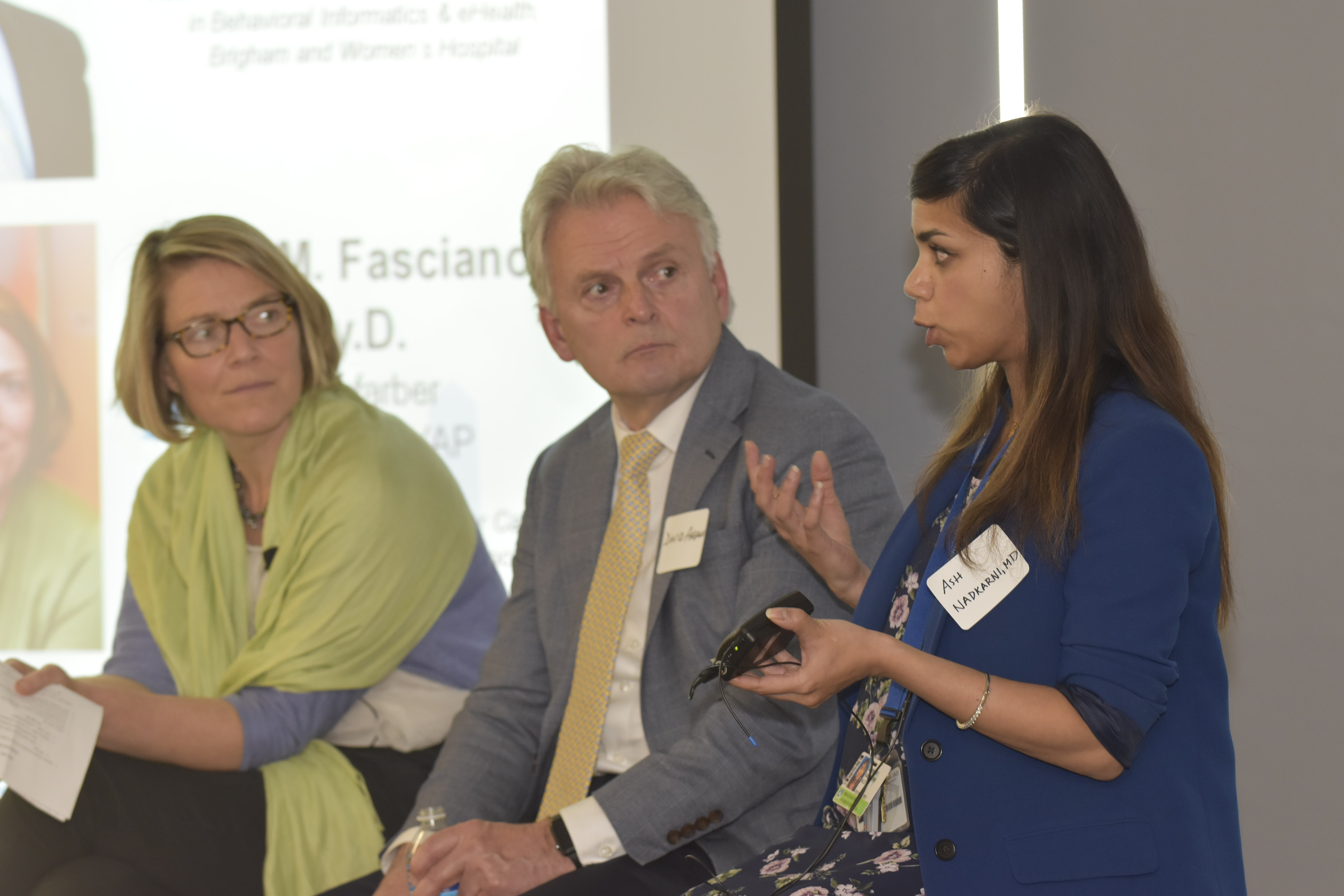
From left: Karen Fasciano, David Ahern and Ash Nadkarni participate in a panel discussion about innovation in behavioral health.

Apple famously coined a phrase that has come to define our relationship with technology: “There’s an app for that.” The sentiment behind the 2009 slogan continues to resonate today in health care, as seen in the cutting-edge apps and gadgets showcased at a recent symposium hosted by the Brigham Digital Innovation Hub (iHub).

More than 250 clinicians, scientists, entrepreneurs and other digital health enthusiasts learned about the latest advancements in technology during the “Digital Health and the Transformation of Care” event on May 17. The half-day symposium, held in the Building for Transformative Medicine, was filled with standing-room-only speaking events and a bustling expo.

“I look out at all of you here today and know that you are our opportunity,” said Brigham Health President Betsy Nabel, MD, speaking to a packed room during the event’s keynote address. “It’s our investment in you, your talents, your skills and your ideas that is going to take us forward. At the end of the day, our greatest resource is all of you.”

Meeting Patients Where They Are

Kicking off the half-day symposium was a panel about digital innovation in behavioral health. Ash Nadkarni, MD, of the Department of Psychiatry, shared her efforts to develop a cognitive behavioral therapy app for Amazon’s Echo – a small speaker embedded with a digital assistant, “Alexa,” that responds to voice commands to play music, make calls, provide information and more.

Nadkarni works closely with BWH’s Crohn’s and Colitis Center to care for patients who cope with depression, anxiety and other mood disorders in addition to – or as a result of – the challenges of their gastrointestinal disease. Their condition makes it difficult to come into Boston for frequent therapy appointments, Nadkarni said. The Echo app, on the other hand, can bring treatment to them.

Karen Fasciano, PsyD, also of Psychiatry, helps young cancer patients navigate the emotional challenges of their illness. She is in the process of working with iHub to develop a mobile app, with input from patients, that will provide resources on coping skills, ways for patients to share their narrative via social networking and a place for peer support.

“Technology not only can be used by patients independently but also in the context of clinical care,” Fasciano said. “For example, we facilitate Twitter chats to help young patients tweet about emotional coping, and I review these in my clinical sessions to stimulate conversation and reinforce skills that peers find helpful – thus integrating peer connection and skill-based learning.”

Looking Ahead

To fulfill the promise of digital health, it is essential to ensure it is used in the right ways, explained iHub Executive Director Lesley Solomon, MBA.

“In addition to us working with the community, both internally and externally, we are working closely with leadership to understand the challenges of the hospital so that we can find the solutions that make the most sense for us,” she said.

During a session called “The Future Is Now,” BWH innovators discussed novel projects they’re working on to improve care both in and out of the hospital.

When patients don’t take medication correctly, an issue known as non-adherence, the results are poorer health outcomes and increased health care costs. To help solve the problem, Giovanni Traverso, MD, BChir, PhD, of the Division of Gastroenterology, is developing a capsule that can stay in a person’s stomach for several weeks and be programmed to release the medication at the correct dosage and intervals.

Jayender Jagadeesan, PhD, of the Department of Radiology, sees opportunity for innovation inside the operating room. During the event, he showcased his efforts to develop surgical navigation systems that use mixed and augmented reality, technologies that merge real-world objects with a virtual world. Using head-mounted displays, Jagadeesan is working on ways to display diagnostic and intraprocedural images in a surgeon’s field of vision – with virtual images of a tumor, for example, overlaid on the patient while they are on the operating table.

The Path to Success

Brigham entrepreneurs also shared their thoughts on launching a digital health startup company.

Omar Badri, MD, a resident in Internal Medicine and the Harvard Combined Dermatology Residency Program, Brad Diephuis, MD, MBA, of the Internal Medicine Residency Program, and Peter Najjar, MD, MBA, a resident in Surgery, discussed the process of establishing a startup while balancing the demands of residency.

Although they cautioned that starting a company can be time-consuming and expensive, especially during residency, they highlighted several benefits. Forming a relationship with a hospital has allowed their startups to perform pilots and long-term studies. In certain circumstances, hospitals can also provide resources for product development.

Panelists also talked about the challenges associated with selling a new technology to a hospital and the benefits of knowing the right people to work with to push an implementation forward.

“You want to find an internal champion,” Badri said. “That’s really critical when you’re an early startup that doesn’t have a lot of validated data or big reputation.”

Brigham Health’s Strategy in Action: Scalable Innovation
Learn more about our strategic priorities at BWHPikeNotes.org.

Physician-scientist Barry Paw (second from left) with members of his lab.

Iron is an essential element for life. Red blood cells rely on it to create the protein required to transport oxygen in our body. Iron is shuttled to the right places in the body through an elaborate series of reactions and processes, but when that system fails, it can cause diseases.

Drawing from a natural substance found in the wood of certain species of trees, BWH researchers recently identified a compound that can correct iron-delivery defects in preclinical models. The compound, known as hinokitiol, is described in a paper published this month in Science.

The study, done in collaboration with scientists at University of Illinois Champaign-Urbana, lays the groundwork for investigating hinokitiol’s full potential beyond cellular and model organisms, possibly one day in humans. If successful, these findings may lead to novel therapies for diseases such as iron deficiency anemia (too little iron), hemochromatosis (too much) or sideroblastic anemia (too much in the wrong part of a cell).

“The long-term therapeutic implications of our work with hinokitiol points to potentially using this chemical to correct anemias caused by genetic deficiencies of iron transporters required for normal red cell formation,” said co-corresponding author Barry Paw, MD, PhD, of the Division of Hematology. “More extensive clinical trials are necessary to work out the full potential of hinokitiol and to identify potential toxicities that we have not identified using preclinical models.”

Hinokitiol is a natural product found in the wood of trees. Originally isolated from the Taiwanese hinoki tree, this small molecule is also found in cedar wood.

The research team studied the properties of hinokitiol in yeast, mouse red blood cells and zebrafish models, all of which lacked the ability to transport iron. When the team administered hinokitiol in these preclinical models, they found that it corrected the anemia at the cellular level.

“We found that hinokitiol can restore iron transport within cells, out of cells or both,” said Paw. “It can also promote iron gut absorption and the creation of hemoglobin in some of our models. These findings suggest that small molecules like hinokitiol that can mimic the biological function of a missing protein may have potential for treating human diseases.

Brigham Health’s Strategy in Action: Discovery and Innovation
Learn more about our strategic priorities at BWHPikeNotes.org.

From left: Joseph Loscalzo, chair of the Department of Medicine, moderates a fireside chat with former FDA Commissioner Robert Califf.

More than 1,000 attendees gathered for Partners HealthCare’s World Medical Innovation Forum (WMIF) from May 1 to May 3, featuring senior experts and rising stars from BWH and beyond. This year’s forum focused on advances in cardiovascular medicine, including powerful new technologies and discoveries that are helping to shape the future of cardiovascular care.

“This year’s forum highlights the convergence and cooperation occurring between academia and industry to redesign cardiovascular care and improve the lives of millions of patients around the world,” said Calum MacRae, MD, PhD, chief of the Division of Cardiovascular Medicine and co-chair of this year’s WMIF. “New technologies are emerging – not just traditional medical devices, but also wearables, online apps and more. We need to think through how these advances can work together seamlessly to help change medicine for the better.”

Among this year’s BWH speakers were 10 early-career investigators who presented as part of the First Look session on the forum’s first day. Topics ranged from improving cardiovascular outcomes for cancer survivors (presented by cardiologist John Groarke, MD, MPH) to using zebrafish for modeling cardiovascular disease (presented by research fellow Manu Beerens, PhD).

Benjamin Olenchock, MD, PhD, who presented his work in developing mouse models of remote cardioprotection, won a $10,000 Austen-Braunwald Award to support his research.

Other Brigham highlights of this year’s forum included a panel about global clinical trials, moderated by Marc Sabatine, MD, chair of the Thrombolysis in Myocardial Infarction (TIMI) Study Group. Brigham Health President Betsy Nabel, MD, moderated a fireside chat with National Heart, Lung and Blood Institute Director Gary Gibbons, MD.

Paul Ridker, MD, director of the Center for Cardiovascular Disease Prevention, participated in a panel about new targets in coronary artery disease. Ben Scirica, MD, spoke about drug pricing during another panel discussion.

The forum concluded with its annual Disruptive Dozen session, highlighting concepts, advances and technologies anticipated to transform cardiovascular medicine over the next decade. Among the topics selected was “Harnessing Big Data and Deep Learning for Clinical Decision Support,” foreshadowing the theme of next year’s WMIF: artificial intelligence.

“We’ve heard about so many innovative projects and advancements that leverage or generate vast amounts of data. At the end of the day, we are all projecting toward the topic for next year’s forum and how to put all of the data together,” said MacRae.

Read more coverage of this year’s event at ConnectWithPartners.org.

Brigham Health’s Strategy in Action: Discovery & Innovation
Learn more about our strategic priorities at BWHPikeNotes.org.

Researcher Pamela Ghosh, first author of the paper, with physician-scientist Jose Halperin

A single blood test developed by BWH researchers may be able to identify, with a high level of precision, gestational diabetes in pregnant women nearing the end of their second trimester. If proven as a reliable diagnostic tool, it would reduce the need for many women to undergo the multiple, time-consuming tests that are the current standard of care.

Investigators found that a single measurement of a novel biomarker for diabetes known as plasma glycated CD59 (GCD59), performed at weeks 24-28 of gestation, was able to identify women who had failed the standard of care screening test as well as women with confirmed gestational diabetes. The findings were published in a recent issue of Diabetes Care.

Gestational diabetes is a type of diabetes that occurs during a woman’s pregnancy. It increases the mother’s risk of delivering an infant whose birth weight is greater than the 90th percentile for their gestational age, which can lead to preterm birth, fetal injury, stillbirth, early neonatal death and cesarean delivery. Gestational diabetes is also a risk factor for two complications in pregnancy related to blood pressure: preeclampsia and gestational hypertension. Since treatment of gestational diabetes can lessen the risk of adverse pregnancy outcomes, practice guidelines recommend screening all non-diabetic pregnant women for the disease.

The current standard of care to both screen and diagnose gestational diabetes involves a two-step approach that can be time-consuming, cumbersome and uncomfortable for patients – driving the need for a more patient-friendly alternative, say BWH researchers.

In the standard approach, called the glucose challenge test, a patient consumes a sugary drink and undergoes blood sugar measurement in the lab one hour later. Women who fail this screening must take a longer test that requires fasting overnight, drinking a more concentrated sugar solution and undergoing baseline and hourly blood draws for three hours. Glucose tests like these are currently the only methods used to diagnose gestational diabetes.

“Ours is the first study to demonstrate that a single measurement of plasma GCD59 can be used as a simplified method to identify women who are at risk for failing the glucose challenge test and are at higher risk for developing gestational diabetes,” says Jose Halperin, MD, director of the Hematology Laboratory for Translational Research and senior author of the publication.

Findings at a Glance

The team studied 1,000 pregnant women who were receiving standard prenatal care at BWH. Half had normal results in the glucose challenge test; half had failed the first screening and required the follow-up test. Researchers found that the median amount of GCD59 in the second group’s blood was 8.5 times higher than that of  women with a normal glucose challenge test result.

The researchers also found that higher plasma GCD59 levels at gestational weeks 24-28 were associated with a greater prevalence of babies whose birth weight was high for their gestational age. Increased levels of the biomarkers indicated a higher risk.

“Our studies opened an avenue for larger multicenter studies to further assess the clinical utility of plasma GCD59 for screening and diagnosis of gestational diabetes among the general population of the United States,” Halperin said. “If our results are confirmed, we’re hopeful that the GCD59 test could be available in clinical practices within the next few years.”

Brigham Health’s Strategy in Action: Scalable Innovation
Learn more about our strategic priorities at BWHPikeNotes.org.

Meryl Galaid Sokolski sings the final note during her World Voice Day performance.

The Division of Otolaryngology held a concert for staff, patients and visitors in Cabot Atrium for World Voice Day on April 14.

“Voices are really what allow us to make impressions. They’re the first thing we notice when we meet people,” said Thomas Carroll, MD, director of BWH’s Voice Program. The practice provides care and therapies for patients with voice or airway conditions.

On World Voice Day, voice health professionals worldwide hold concerts and other events to celebrate voices and raise awareness of vocal health. Among those who performed at BWH this year was Meryl Galaid Sokolski, an Otolaryngology patient and Boston-area professional singer and actor. Whether she is afflicted with a cold or laryngitis, Galaid Sokolski has found her BWH care team to be accessible, comforting and responsive to her needs as a patient and performer.

“Any actor will tell you that it’s devastating when you’ve got a 28-show run and realize you’re getting sick,” she said. “The team in the Voice Program is always available, and they never minimize any issues that I have. That’s really key as a performer – to have a care team take you seriously and want to help the best they can.”

During the concert, Galaid Sokolski sang Judy Garland’s “The Trolley Song” and Fats Waller’s “Keepin’ Out of Mischief Now.”

Also performing that day was the female barbershop quartet Intuition, whose members are Susan Kapur, Dianne Nitzschke, Kelly Winnick and Jennifer Winston, MS, CCC-SLP, a speech language pathologist in the Voice Program. They sang The Chiffons’ “One Fine Day,” followed by Garland’s “Zing Went the Strings of My Heart” and “Somewhere over the Rainbow.”

The show concluded with a group performance by four BWHers from the Voice Program: Carroll and Winston, along with Jessica Taylor, a program coordinator, and Chandler Thompson, DMA, MS, CCC-SLP, coordinator of Voice Services. Together they sang “Dona Nobis Pacem,” which translates from Latin to “Give Us Peace.”

Brigham Health’s Strategy in Action: Exceptional Experience
Learn more about our strategic priorities at BWHPikeNotes.org.

This slideshow requires JavaScript.

Inside the newest wing of BWH’s neonatal intensive care unit (NICU), Emily Chang began to decorate her son Bennett’s space so it felt more like home. She taped a small poster on the wall above his crib that included photos of Bennett over the course of his almost 90-day stay in the NICU.

Chang said moving into the new NICU on April 11 felt like a “breath of fresh air.” She thanked her son’s care team for all they’ve done to care for Bennett and for making his transition a smooth one.

“Our care team in the NICU has treated Bennett like he’s one of their own children,” Chang said. “The care Bennett has received at the Brigham has been top-notch. This hospital is very invested in ensuring patients get the best care possible.”

Bennett was among the 19 infants and their families who moved into the newly expanded NICU as their beds were relocated during the second phase of the unit’s transformation earlier this month.

The NICU is being renovated and expanded in three phases to provide state-of-the-art care for premature and sick infants who are admitted to BWH. The project began in July and is expected to conclude in December.

During the second phase, two areas were expanded. Nine beds in the intensive care unit (ICU) opened, as well as 13 beds in the Growth and Development Unit (GDU), with one being an overnight room for parents. The design of the Brigham’s NICU is suited to babies’ changing developmental needs as they grow; the GDU provides the most therapeutic environment for infants who are beyond the acute medical stage.

Construction for the project’s final phase began this month; it will result in seven more GDU beds and 10 additional ICU beds.

During last week’s move, babies were transported one at a time, with teams of staffers guiding each crib or isolette to the new unit, located across the hall on the sixth floor of the Connors Center for Women and Newborns.

Carmina Erdei, MD, medical director of the GDU and a neonatologist in the Department of Pediatric Newborn Medicine, commended the multidisciplinary team involved in ensuring a smooth and efficient move-in day.

“The families and the staff were overjoyed, as this wonderful, new space offers rich opportunities for family-centered developmental care,” Erdei said. “The new GDU will help staff provide the best care not only to infants, but also to their families.”


Brigham Health’s Strategy in Action: Highest-Quality, Safe Care
Learn more about our strategic priorities at BWHPikeNotes.org.

1 Comment

From left: Frannie Carr Toth and her son, Michael, reunite with obstetrician Daniela Carusi, who delivered Michael at BWH.

Following an ultrasound appointment 24 weeks into her second pregnancy, Frannie Carr Toth tried to process the information she just received: a diagnosis of placenta accreta, a rare but serious condition that occurs when the placenta embeds too deeply in the uterine wall. The complication carries a high risk of severe bleeding during delivery.

Carr Toth was closely monitored throughout the rest of her pregnancy by her obstetrician, Daniela Carusi, MD, MSc, of the Department of Obstetrics and Gynecology, and a multidisciplinary care team at the Brigham. However, the severity of the accreta – that is, how deeply embedded the placenta was – would not be known until the baby was born.

“It was really scary. I was worried about my life and my baby’s life,” Carr Toth said.

After experiencing several episodes of bleeding shortly before her scheduled caesarean section, she lost half of her body’s blood volume during delivery. But thanks to a lifesaving surgery, expert care and the well-stocked blood bank at BWH, Carr Toth and baby Michael are now healthy and at home with their loved ones.

Hoping to encourage more people to donate blood and platelets, Carr Toth shared their story during the Brigham’s third annual Accreta Awareness Blood Drive, hosted by the Kraft Family Blood Donor Center at Stoneman Centennial Park on April 7.

“I put so much of the credit on Dr. Carusi and the team’s shoulders, but also among the big heroes in this story are the nameless donors who took it upon themselves to give blood, and I wish I could personally thank them,” Carr Toth said.

Placenta accreta affects about one in 500 pregnancies in the U.S., and it is more likely to occur in women who have had a prior C-section or uterine surgery, said Carusi, who specializes in treating mothers with the condition. During childbirth, the placenta typically separates from the uterus. In patients with placenta accreta, there is a high risk of severe bleeding when the placenta cannot detach. A C-section is required to deliver the baby safely; even so, mothers can still experience life-threatening blood loss.

“Pregnancy and delivery, which is usually such a normal and exciting time, can be very dangerous for some women,” Carusi said. “Having providers who are trained to take care of this – and having blood banks that are ready to respond – are really essential to keeping mothers safe.”

Blood banks nationwide have faced a blood shortage since last May, said Malissa Lichtenwalter, supervisor for donor recruitment at the Kraft Center. Drives like the one held for accreta awareness and individual donations are vital to keeping BWH’s blood bank stocked, she said.

Carr Toth noted another reason she feels grateful to receive care at BWH. Although placenta accreta results in a hysterectomy for most women, Carr Toth’s C-section was performed using a novel technique called “hybrid surgery” that enables some patients, including her, to avoid a hysterectomy. In this collaborative procedure, interventional radiologists embolize – that is, temporarily block – blood flow to the uterus as soon as the baby is delivered.

“I knew that it might not work out, but I wanted to try,” Carr Toth said. “I put my trust in the team, and we emerged from this worst-case scenario with best-case outcomes.”

Carr Toth said her overall experience as a Brigham patient has reinforced that she and her family came to the safest, most compassionate place to receive care.

“I felt like I was given all the information I needed and empathetic, wonderful care,” she said. “When I needed to be admitted, everybody from triage to labor and delivery to the antepartum floor just made me feel so well taken care of.”

Brigham Health’s Strategy in Action: Advanced, Expert Care
Learn more about our strategic priorities at BWHPikeNotes.org.

Assistant Nurse Director Laurie Rotondo takes notes during a call in the Brigham Health Access Center.

The new Brigham Health Access Center, launched at midnight on April 1, centrally manages referrals to the Brigham’s Emergency Department (ED) and inpatient units. Its goal is to facilitate timely, high-quality and safe patient transfers in just one phone call.

A team of nurses and transfer access coordinators triage transfer requests from area hospitals. The center’s staff ensures patients are sent to the most appropriate location for care, whether that is the ED or an inpatient unit at BWH or BWFH.

“Our goal is to provide a seamless process for our referring facilities and physicians to get easy access to Brigham Health. A centralized approach really simplifies the process for our care partners in the community,” said Sheila Harris, executive director of the Brigham Health Access Center and Patient Access Services.

The Access Center was formed to make the transfer process more efficient, in light of growing transfer volume at BWH in recent years.

Previously, personnel in the ED and Admitting operated independently from each other. For example, ED flow managers handled requests for transfers, but that model posed challenges. Primarily, flow managers had limited insight into bed availability across the institution, Harris explained.

“Based in Admitting, the Access Center team uses a centralized approach to review real-time information about inpatient bed availability,” she said.

In addition, handling transfer requests was just one of many duties for the flow manager on a given shift. If he or she was on another call or had stepped away, the delay might prompt the outside hospital to hang up and try another facility.

“By having a knowledgeable, experienced and caring staff dedicated solely to transfers 24 hours a day, seven days a week, we are enabling more patients to access the high-quality care that Brigham Health is known for,” said Eric Goralnick, MD, MS, medical director of the Brigham Health Access Center and Emergency Preparedness.

All calls to the Access Center are recorded, and surveys are sent to referring providers to gather feedback, with the aim of identifying ways the center can continually improve the transfer experience. In the future, the team hopes to incorporate telemedicine as another tool for receiving transfers.

Ali Salim, MD, chief of the Division of Trauma, Burns and Critical Care, said he looks forward working with the center.

“This is a phenomenal opportunity to ensure that patients are transferred to us efficiently and smoothly,” Salim said. “It will undoubtedly benefit our patients and our community care partners.”

Brigham Health’s Strategy in Action: Timely Access
Learn more about our strategic priorities at BWHPikeNotes.org.

The Brigham and Massachusetts General Hospital have teamed up to form the MGH & BWH Center for Clinical Data Sciences (CCDS) to create, promote and commercialize artificial intelligence in health care.

If you’re not sure what artificial intelligence is, you’re not alone. For many outside the tech world, it brings to mind science-fiction movies with sentient cyborgs or IBM’s Watson, the supercomputer that competed in Jeopardy! and beat two prior champions in 2011. The term, also known as AI, refers to a branch of computer science in which machines are trained to perform or simulate human tasks and behaviors.

In health care, this technology is being used for everything from improving the accuracy of diagnostic readings to recognizing patterns of diseases to identifying new candidates for clinical trials. At the CCDS, scientists from BWH and MGH are working on more than 20 projects, including ways to use artificial intelligence to identify cancer cells in pathology images, classify bone age based on X-rays and recognize brain tumor mutations from MRI scans. These projects require providing powerful computers with massive amounts of data that can be organized and analyzed.

The more data available, the more likely computers will be able to, for example, identify patterns and make predictions. This is a type of artificial intelligence known as machine learning, an area where the CCDS is currently focusing its efforts. These applications are overseen and validated by a human expert.

“The combined power of both the Brigham and Mass General will allow the CCDS unprecedented access to the data and clinical expertise required to create real-world applications that empower clinicians and enhance outcomes,” said Giles Boland, MD, chair of the Department of Radiology. “We’re harnessing the power of data so we can put it to work to develop smarter, more efficient ways to care for patients and run our systems.”

The CCDS was founded at MGH last year, but it soon became apparent that making the Brigham an equal partner would benefit all involved, said Mark Michalski, MD, the CCDS’ director. As a result of the collaboration, BWH clinicians and researchers will have greater access to the CCDS’ resources when needed.

“We’re in the golden age of this technology,” Michalski said. “There are great investigators at the Brigham already doing work in this space, and we’re happy to be able to facilitate that so we can start to look at all our data comprehensively. It’s a tremendous opportunity to take two of the best hospitals in the world and make machine learning part of both.”

Before the collaboration was formalized this month, some BWHers were working informally with the CCDS on various projects. Ziad Obermeyer, MD, MPhil, of the BWH Department of Emergency Medicine, has worked with the CCDS on several studies, including one to develop an algorithm to identify signs of a pulmonary embolism too subtle for the human eye to detect.

“Overall, I think we are benefiting enormously from their expertise as well as the data and computing resources, and it’s a real privilege to be working with them,” Obermeyer said.

Learn more about the CCDS.

Brigham Health’s Strategy in Action: Scalable Innovation
Learn more about our strategic priorities at BWHPikeNotes.org.

1 Comment

From left: Goretti Hategekimana, Servent Izabayo, Jill Lanahan and Saidia Angelique

Last summer, Jill Lanahan, MD, of the BWH Department of Anesthesiology, Perioperative and Pain Medicine, departed for Rwanda to train residents at King Faisal Hospital in the country’s capital, Kigali, for one year. The outreach is part of the Human Resources for Health Program, a collaborative, seven-year project between the Rwandan government, BWH, Harvard Medical School and more than 20 other academic institutions in the U.S.

BWH Bulletin recently interviewed Lanahan to hear about her experiences abroad.

How would you describe your time in Rwanda so far?

JL: I could not have anticipated how well-received I would be in Rwanda’s medical community. We have formed a multidisciplinary team of medical students, resident physicians, surgeons and anesthesiologists, with the goals of improving pain control for women in labor and for patients undergoing orthopaedic procedures. Pain is often undertreated in these settings, and by maximizing what we can do preoperatively and intraoperatively, I believe we can have a significant impact on postoperative pain control and patient satisfaction.

What are some of the challenges around providing anesthesia care in a setting with limited resources?

JL: Now more than ever, I realize how much I take for granted back home. For example, I never have to worry about not having a medicine that I need to safely provide anesthesia.

Treatment of pain with intravenous opioids never occurs on the wards here due to safety concerns caused by the lack of sufficient monitoring equipment. The use of local anesthetics, especially one called bupivacaine, has been essential to our project. We have developed protocols for injection of this drug by surgeons and anesthesiologists for select procedures. Recently, however, we had a month-long bupivacaine shortage. During that time, we were unable to offer regional anesthesia because any small amount we had left had to be saved for mothers undergoing cesarean sections.

In addition, many patients do not have the proper nutrition to heal. In Rwanda, food is not part of medical care, and patients’ families are required to supply it. For various reasons, families are often unable to do so. A project at the Centre Hospitalier Universitaire de Butare called “Growing Health” is trying to tackle this problem by cultivating a small farm on hospital land to grow food for patients. The crops they grow provide patients with two nutritious meals a day. Unfortunately, though, the farm can only produce enough food for about a third of the patients.

What kind of training have you helped provide?

JL: Last month, the hospital had a visit from Team Heart, a multidisciplinary team from the U.S. that promotes sustainability and excellence in cardiac care. It was an amazing experience for two second-year anesthesia residents, Servent Izabayo, MD, and Gerald Kirenga, MD, and me. BWH anesthesiologists Danny Muehlschlegel, MD, MMSc, and Martin Zammert, MD, along with BWH residents Jeffrey McLaren, MD, and Matt Swisher, MD, welcomed Servent and Gerald to their team.

The week consisted of complex heart surgeries, mostly valve operations in children and adults with rheumatic heart disease, which is rare in the U.S. The team truly went above and beyond by teaching our residents skills and imparting knowledge that will be used to provide anesthesia for complex cases throughout their careers.

Is there a need for training in others areas?

JL: Patient safety and communication are two areas where significant improvement is needed. At least two, if not three, languages are spoken during every procedure: Kinyarwanda, French and English. Also, the culture tends to be hierarchical, and there is a reluctance to question anyone higher in the chain of command, even if there may be an error.

Specific to anesthesiology, the vast majority of anesthesia care in the country is provided by technicians whose highest degree is a high school diploma, with minimal or no physician oversight. This is quite a different model from BWH, where every case is closely supervised.

Another struggle in anesthesia has been physician recruitment and retention. In recent years, some of the most promising doctors have gone to work for nongovernmental organizations, which are able to offer higher salaries.

Although I am looking forward to rejoining my colleagues at the BWH in August, it will be hard to leave Rwanda. It has been a privilege to teach the residents and care for patients. Hopefully, I’ll have an opportunity to return soon.


StrategyIcon_WordpressBrigham Health’s Strategy in Action: Improve Health
Learn more about our strategic priorities at BWHPikeNotes.org.

Melody Duvall

About 10 percent of people with asthma have severe asthma, a form of the disease that is not controlled by current medications. Many of these patients are prescribed increased dosages of corticosteroids – a medication intended to reduce inflammation in the airways – but continue to experience daily symptoms and recurrent infections. New research led by a team of BWH investigators suggests a reason why corticosteroids may actually aggravate severe asthma. Their insights appear online this month in Science Immunology.

“Our findings point to an interesting and pivotal role for a certain type of white blood cells, known as natural killer cells, in the asthmatic airway and suggest that continually giving high doses of corticosteroids may actually be making things worse for patients with severe asthma,” said Bruce Levy, MD, chief of the Division of Pulmonary and Critical Care Medicine at BWH.

Elliot Israel

Asthma affects an average of one out of every eight Americans at some point in their lives, but severe asthma is relatively rare. In order to better understand severe asthma, seven U.S. asthma research centers joined forces to collect and share patient samples as part of the Severe Asthma Research Program-3 (SARP-3) Study funded by the National Heart, Lung and Blood Institute of the National Institutes of Health.

Levy and Elliot Israel, MD, the division’s director of Clinical Research and director of BWH’s Asthma Research Center, are the co-principal investigators of the Boston-based site of the study. Study participants, recruited from the Asthma Research Center, gave blood, sputum and exhaled breath samples as well as tissue samples from deep in the lungs.

By examining specimens that originate in close proximity to the source of severe asthma from a relatively large number of patients, researchers were able to gain insights that had not been possible before.

Bruce Levy

Lead author Melody Duvall, MD, PhD, a postdoctoral research fellow in the Levy lab, joined by Levy, Israel and other colleagues, examined immune cells in samples from patients with severe asthma, patients with nonsevere asthma and healthy control subjects.

They focused on a prominent type of white blood cells: lymphocytes. One important family of innate lymphocytes in the lung are known as natural killer cells, which are pivotal for both mounting an immune response and helping to resolve inflammation. In patients with severe asthma, however, natural killer cells are disabled from resolving inflammation, and become outnumbered by other types of immune cells that provoke it. Treatment with corticosteroids for severe asthma appeared to further suppress the ability of these cells to help clear inflammation.

The team found evidence that molecules called lipoxins may help NK cells resolve inflammation. Further studies of their therapeutic potential are ongoing. On the clinical side, Israel and Christopher Fanta, MD, of Pulmonary and Critical Care Medicine and director of the Partners Asthma Center, will lead a new, multidisciplinary clinical center for patients with severe asthma, opening this May.

StrategyIcon_WordpressBrigham Health’s Strategy in Action: Discovery and Innovation
Learn more about our strategic priorities at BWHPikeNotes.org.

Xiaolei Yin

The cells in our ears that enable us to hear are delicate, easily destroyed by exposure to loud sounds and some medications. The body is unable to regenerate them, so when these cells die, our hearing is permanently damaged.

BWH researchers recently developed a new technique for growing large amounts of these specialized cells in a lab, pioneering the way toward a possible treatment for hearing loss.

Inner ear sensory cells, also known as hair cells, are responsible for detecting sound and helping to signal it to the brain. They can be produced artificially, but scientists have struggled historically to produce them in quantities large enough to recover a person’s hearing. Humans are born with 15,000 sensory hair cells in each cochlea, a region of the inner ear.

To figure out how to grow these cells en masse, researchers looked to the animal kingdom for answers.

“Amazingly, birds and amphibians are capable of regenerating hair cells throughout their life, suggesting that the biology exists and should be possible for humans. Intrigued, we decided to explore whether these hair cells could be regenerated,” said Jeff Karp, PhD, biomedical engineer at BWH and co-corresponding author of a recent paper in Cell Reports about the findings.

Jeff Karp

In their paper, scientists from the Brigham, Massachusetts Institute of Technology and Massachusetts Eye & Ear describe a technique to grow large quantities of inner ear progenitor cells, which can be programmed to turn into specific types of cells. In this case, researchers converted them into hair cells. The same techniques show the ability to regenerate hair cells in the cochlea.

To accomplish this, researchers took cells expressing a particular biomarker, known as Lgr5, and treated them with a drug cocktail that stimulated critical pathways, says Xiaolei Yin, PhD, co-lead author on the paper, of the Department of Medicine.

This technique produced more than 2,000 times the number of progenitor cells than what had been achieved in prior studies. The next step was to turn them into hair cells. Large quantities of those progenitor cells were successfully converted, resulting in approximately 60 times more hair cells from a single isolated cochlea than previously reported. The team also demonstrated this approach could work with cells from preclinical models and human tissue.

The drug cocktail “generates new sensory hair cells in intact cochlear tissue, which shows promise for a therapy to treat patients with hearing loss,” Karp said.

Frequency Therapeutics, a bioengineering company based in Woburn, is advancing this work from the lab to patient care settings. The company, for which Karp and Yin are scientific advisory board members, is using these new techniques to develop a therapy to treat chronic hearing loss. The treatment is expected to be in clinical settings within the next 18 months.

StrategyIcon_WordpressBrigham Health’s Strategy in Action: Scalable Innovation
Learn more about our strategic priorities at BWHPikeNotes.org.

Michael Cho (foreground) and Brian Hobbs examine their data on COPD.

Michael Cho (foreground) and Brian Hobbs examine their data on COPD.

BWH researchers have identified new genetic markers associated with chronic obstructive pulmonary disease (COPD), the third leading cause of death in the United States. The discovery sheds new light on the genetic basis for this deadly lung disease – along with hope that the finding may one day lead to new therapies.

Among individuals with COPD, symptoms develop slowly and worsen over time. There is no known cure, and no medications are available to reduce mortality in COPD. Existing treatments focus on easing the disease’s symptoms, which include difficulty breathing and frequent coughing.

Smoking remains the most important risk factor for COPD, but genetics also play a role. With this in mind, a consortium of researchers led by investigators at the Brigham examined the DNA of more than 60,000 people.

Their research uncovered 13 new genetic regions associated with COPD, including four that have not previously been associated with any type of lung function. The findings were released on Nature Genetics’ website last month and will be published in a forthcoming print edition of the journal.

“This is the first step in a process in which we hope to better understand the genetic basis for COPD or what may be several different diseases that present as COPD,” said lead author Brian Hobbs, MD, MMSc, a physician-scientist in the Channing Division of Network Medicine and the Division of Pulmonary and Critical Care Medicine. “Now that we know there are new regions of the genome associated with COPD, we can build on this research by probing new biological pathways, with the ultimate goal of improving therapies for patients with this disease.”

Some of the genetic regions associated with COPD have also been noted in the results of studies of other lung diseases, such as asthma and pulmonary fibrosis. All analyses accounted for the effects of age, gender and cigarette smoking on disease risk.

“While it is extremely important that patients not smoke for many health reasons – including the prevention of COPD – we know that smoking cessation may not be enough to stave off the disease,” said Michael Cho, MD, MPH, one of the senior authors and also a physician-scientist in the Channing Division of Network Medicine and Pulmonary and Critical Care Medicine. “Many patients with COPD experience self-blame, but they may be comforted to know that genetics does play a role in who ultimately develops the disease.”

StrategyIcon_WordpressBrigham Health’s Strategy in Action: Scalable Innovation
Learn more about our strategic priorities at BWHPikeNotes.org.

Tears began to fall from Pat Lopes’ eyes as she gently placed a stethoscope on Brian Wade’s chest.

“I can hear it,” exclaimed Lopes, as she leaned in closer to Wade. “That’s Manny’s heartbeat. I can hear my son’s heart beat.”

Lopes, of Hyannis, met Wade, the recipient of her son’s heart, for the first time at the Brigham last month. It was an emotional gathering that both had hoped would someday come to fruition.

After suffering from advanced heart failure for several years, Wade got the call last Valentine’s Day that a donor heart was available.

“I wanted to meet Manny’s mother and his family so I could personally thank them for this extraordinary gift of life,” said Wade, of Portland, Maine. “While I feel so fortunate that I was able to receive a new heart, I’m also sad that it means someone had to die. I’ll never forget that my heart beats because of Manny. I’m forever grateful that I am here today, thanks to one person’s decision to become an organ donor.”

Pat Lopes embraces Brian Wade, the recipient of a donor heart from her late son, Manuel Lopes III.

Pat Lopes embraces Brian Wade, the recipient of a donor heart from her late son, Manuel Lopes III.

For more than an hour, Lopes and Wade, along with their families, talked in a private meeting space in the Shapiro Cardiovascular Center. Lopes, her husband, Manuel, and stepdaughter, Kimberly Lopes-Costa, shared stories about Manny. Wade, who came with his wife, Celeste, son, Travis, and close friend, Lisa Alexander, spoke about what his life has been like post-transplant.

Manuel (Manny) Lopes III died at age 42 due to medical complications stemming from a drug addiction he battled for many years. His mother described her son as the type of man who was always willing to help others. His decision to become an organ donor was an extension of his generous spirit, she said.

“He had a profound love for his family and friends,” Lopes said. “His sense of humor and smile could light up a room. He was genuinely a kind-hearted person who would give you the shirt off his back.”

During the meeting at BWH, Lopes shared photos of Manny with Wade. Manny’s stepsister showed the Wade family a tattoo on her arm, which depicts an electrocardiograph showing a snapshot of Manny’s heartbeat.

“I am happy to know that my brother’s heart still beats,” Lopes-Costa said.
The families also chatted with Michael Givertz, MD, medical director of the Heart Transplant and Mechanical Circulatory Support Program, who was part of Wade’s care team.

Givertz said while all transplants are special, Wade’s case was especially memorable because he received his heart on a day that symbolizes love.
“Notifying someone that a donor heart is available is one of the most amazing calls we get to make to patients,” Givertz said. “It’s wonderful that these two families could meet so close to the first anniversary of Brian’s transplant.”

“I’m just glad to be here and to be doing well. Every day is a good day for me,” Wade said. “My entire perspective on life has changed since I received my new heart. I wake up every day thankful that I am still here. I want Manny’s family to know that I think about them and Manny often.”

StrategyIcon_WordpressBrigham Health’s Strategy in Action: Exceptional Experience
Learn more about our strategic priorities at BWHPikeNotes.org.

Nawal Nour shares her personal and professional reflections as a Sudanese-American physician.

Nawal Nour shares her personal and professional reflections as a Sudanese-American physician.

Mustapha Khiyaty is grateful to be part of BWH’s diverse community, knowing that everyone here – regardless of race, religion or ethnic origin – is valued for who they are as a person and for their role at the Brigham. A supervisor in Materials Management and a Muslim, Khiyaty said it hurts knowing that many colleagues and their loved ones who have been affected by the recent executive order do not feel as secure.

On Feb. 3, Khiyaty spoke at a gathering convened by hospital senior leaders and hosted by Spiritual Care Services and the Office for Multicultural Careers in Bornstein Amphitheater. The gathering reinforced the values embedded at Brigham and Women’s Hospital: BWH welcomes patients, family members, employees and visitors from all backgrounds, ethnicities and religions, regardless of age, gender, sexual orientation or country of origin.

“It does my heart good and brings me joy to see so many of you here today,” said Kathleen Gallivan, PhD, director of Spiritual Care Services. “We know this is a very difficult time for our community, for our country and for the world. We want to emphasize that the Brigham’s doors are always open to everyone.”

During the gathering, BWHers listened to brief readings from several religious traditions and heard from colleagues, including Khiyaty, who offered messages of hope and unity.

“I was born in and grew up in a Muslim country,” said Khiyaty, who is originally from Morocco. “I’m glad to be Muslim and Moroccan-American, but I’m a human first. I’m so grateful that I can sit among all of you today and know that I am not alone. Thank you for all of the support for humanity.”

Nawal Nour, MD, MPH, director of the BWH Ambulatory Obstetrics Practice, founder of the African Women’s Health Center and faculty director of the Office for Multicultural Careers, shared reflections as a Sudanese-American on what it has been like to care for immigrant women who are feeling the effects of the executive order.

Nour said many of her pregnant Muslim patients have struggled with the idea of removing their headscarves and veils, also known as the hijab, when they are out in public because they feel as though they are treated differently or at risk of violence. She encouraged her colleagues to take the time to explicitly reassure patients that the Brigham’s commitment to their health and to them, as individuals, is our top priority.

“The Brigham, and in particular the African Women’s Health Center, has worked hard to achieve the current level of culturally competent care that we offer to our patients,” Nour said. “I tell people, ‘Let’s just smile. Smile at everyone you see. Smile even more when you see a woman with a hijab; she needs it. She wants and needs to feel safe and secure.’”

At the conclusion of the gathering, Ron M. Walls, MD, executive vice president and chief operating officer of Brigham Health, emphasized how important it is to support one another and welcome everyone who walks through our doors.

“This ban may affect how we are seen as a country, but it doesn’t change how we should see our country or how we should see each other,” Walls said. “Remember in your heart that we are what we are. We have believed what we believe at the Brigham since the day of our founding. We have never wavered on that, and we will never waver. Welcome everyone. Love one another. That’s the Brigham Way.”

From left: A young patient at Southern Jamaica Plain Health Center is cared for by Regina Harvey and Erica Santiago.

From left: A young patient at Southern Jamaica Plain Health Center is cared for by Regina Harvey and Erica Santiago.

High-quality care encompasses a broad range of priorities: meeting and exceeding clinical standards, maintaining excellence, providing an exceptional patient experience and helping achieve better outcomes. To reaffirm the Brigham’s commitment to these areas, BWH is seeking Magnet designation, which honors an institution for quality patient care, clinical excellence and interprofessional collaboration.

“Magnet designation has become a trusted symbol of excellence in patient care nationally and internationally,” said Betsy Nabel, MD, president of Brigham Health. “It’s meaningful to patients and family members who are deciding where to receive care, as well as to prospective employees who are looking for a hospital that stands out among its peers.”

While the Magnet Recognition Program’s roots are in nursing – the program is run by the American Nurses Credentialing Center (ANCC) – it honors the work and culture of an entire institution. BWH’s next step in the process occurs April 1, when a team from Nursing and Patient Care Services will submit an application package consisting of 75 examples that illustrate how the hospital meets or exceeds each of the 49 standards in the Magnet model.

Examples of the evidence BWH is submitting include the development and implementation of a falls prevention toolkit, a program at the Southern Jamaica Plain Health Center designed to educate patients about diabetes self-management and improve health outcomes, and “Goals for the Day, Goals for the Stay” cards used on Tower 14 ABCD to document the patient’s goals and ensure all staff are aware of them.

“The evidence for Magnet has become increasingly powerful. The quality of patient care, nursing excellence, innovations in professional practice and interprofessional collaboration are all much stronger in Magnet-designated hospitals,” said Mary Lou Etheredge, MS, RN, PMHCNS-BC, executive director of Nursing Practice Development, interim associate chief nurse for medical nursing and BWH co-program director for Magnet.

Only 8 percent of hospitals in the U.S. are Magnet-designated, with three in Boston (Massachusetts General Hospital, Dana-Farber Cancer Institute and Boston Children’s Hospital). The Joint Commission considers Magnet as a way to provide consumers with benchmarks to measure quality of care, and U.S. News & World Report uses the designation as a primary competence indicator to rank the best medical centers.

“We’re excited about continuing the journey toward obtaining Magnet designation, as it will help us demonstrate and confirm what we know to be true here at BWH: that our care and quality are unsurpassed,” said Chief Quality Officer Allen Kachalia, MD, JD.

At the core of the Magnet model is a focus on outcomes: evidence illustrating the impact of structures and processes on patients, families, staff, the organization and the community.

“It’s not just that you have good structures and systems in place, but that you also have the outcomes to prove that you have a low fall rate or that you have a low rate of hospital-acquired pressure ulcers, for example,” said Rosemary O’Malley, MSN, MBA, RN, associate chief nurse for the Emergency Department, Neurosciences, Orthopaedics, Gynecology, Central Resources and Strategic Practice Initiatives, and BWH co-program director for Magnet.

Following submission of the evidence this spring, BWH will be notified three to six months after acceptance whether the hospital has been selected for a site visit. If selected, BWH will receive dates for a site visit. During the visit, appraisers from the ANCC will speak with employees, patients and families about the quality of care provided at the Brigham. One to two months after the site visit, the ANCC Commission on Magnet will decide whether BWH has achieved Magnet designation.

StrategyIcon_WordpressBrigham Health’s Strategy in Action: Highest-Quality, Safe Care
Learn more about our strategic priorities at BWHPikeNotes.org.

bh_bwh_pms_293Brigham Health was unveiled earlier this week as the new name for the parent organization that includes Brigham and Women’s Hospital, Brigham and Women’s Faulkner Hospital and the Brigham and Women’s Physicians Organization. All three entities will retain their individual names and identities. Brigham Health replaces Brigham and Women’s Health Care (BWHC). 

Brigham Health President Betsy Nabel, MD, discusses with BWH Bulletin what this change means for us. 

Why did we change from BWHC to Brigham Health?

Nabel: Those who know the Brigham think of it as a top-tier New England hospital – a place to go for care when needed, especially complex procedures. But according to market research, many outside of New England assume we are solely a women’s hospital. And while we are certainly a leader in women’s health care, we want to be sure it’s clear that our excellence and expertise extend to so many other areas. Brigham Health reinforces that we are not just one point on a map, or even a single point of discovery.

The new name eliminates some of the confusion we have found among those outside of New England. Talking about the services of BWH, BWFH and the BWPO as simply Brigham Health will enable us to more effectively reach people who are seeking health information, referrals and care.

How does this change fit into our strategy?

Nabel: This change is a vital component of our institutional strategy. For example, one of our strategic priorities is to improve health. In addition to providing highly specialized care in the hospital and ambulatory settings, we also must engage people around the world as we promote health and wellness and concentrate on preventing disease in populations.

Another example is twofold. By building national and international lines of business, we reinforce our financial strength and advance our work in business development – two areas essential to guaranteeing we continue delivering on our mission.

Why was the name Brigham Health selected?

Nabel: Brigham Health reflects our role as a leader in maintaining and restoring health around the world, encompassing all that we do in delivering care, advancing scientific discovery and educating the next generation of health care professionals. It broadly defines everything we do today and provides a new platform for amplifying our commitment to what everybody desires: health.

For more Brigham Health information and resources – including an FAQ, downloadable logos and presentation templates – visit BWHPikeNotes.org

StrategyIcon_WordpressBrigham Health’s Strategy in Action
Learn more about our strategic priorities at BWHPikeNotes.org.

Ash Nadkarni demonstrates a virtual visit in her office at 850 Boylston St.

Ash Nadkarni demonstrates a virtual visit in her office at 850 Boylston St.

When Ash Nadkarni, MD, of the Department of Psychiatry, was offered the opportunity to start seeing some patients through virtual visits, she jumped at the chance.

For patients with medically complex conditions, getting to a behavioral health appointment can be physically challenging. As one part of her practice, Nadkarni provides psychiatric care for patients with inflammatory bowel disease through BWH’s Crohn’s and Colitis Center. The ability to follow up with select patients in this group through the use of technology such as video conferencing on a computer or mobile device wasn’t just a matter of convenience – it was also about having compassion for patients’ physical limitations.

“A lot of times, these patients are medically ill, and appointments in person can be uncomfortable for them,” said Nadkarni, one of about 200 clinicians participating in the Brigham’s telehealth initiative. “Virtual visits really give them improved access to care.”

The telehealth program at BWH, launched in early 2015, uses web-based and video technologies to connect patients and providers in virtual visits. Now in the process of wrapping up its pilot stage, the initiative has facilitated about 600 virtual visits among outpatient clinicians in various specialties. Today, BWH clinicians collectively see approximately 10 to 20 patients per week through virtual care. That is expected to climb to 100 per week over the next year as the program expands.

The program has several goals, according to Adam Licurse, MD, MHS, Telehealth medical director.

Telehealth provides more timely access for appointments, as providers don’t need exam room space and can fill a last-minute cancellation slot with a virtual visit on short notice. And because there is no need to drive, park or sit in a waiting room to see a provider, patients may find virtual visits to be more convenient and therefore are more likely to keep their appointment. The expected result of all this: improved patient outcomes and reduced costs of care.

“Virtual care is becoming a vital clinical service, and the initial successes of our pilots have empowered us to expand these efforts across the Brigham in the coming years,” Licurse said. “By offering several telehealth tools across the clinical spectrum, we hope patients can access care in whatever way works best for them – whether they’re at home, work or a clinical setting. Combined with the right level of in-person care, virtual care can be a better option for many patients, and we look forward to delivering this type of care to more patients locally, nationally and internationally, and meeting the needs of new populations as our programs grow.”

For the Right Patients, at the Right Time

The program initially engaged departments whose providers saw patients with conditions that required frequent follow-up visits and infrequent physical exams, and who lived in Massachusetts but had difficulty coming to their provider’s office, Licurse said. Candidates for the pilot were further narrowed down to patients with inflammatory bowel disease, diabetes during pregnancy, mood disorders, hypertension, ischemic heart disease, prostate disease and airway disorders.

BWH’s telehealth initiative has since expanded to include e-visits to provide urgent care for patients with common, acute symptoms. Patients can submit text-based inquiries through a patient portal, and if their symptoms match the covered conditions, a clinician will typically respond within a day.

“For certain common and irritating symptoms, seeing one’s provider in the office is often less important than obtaining a speedy and reliable answer,” Licurse said. “From early experiences, we know that a 15-minute office visit for urinary symptoms or a cough can be done in less than five minutes through this program.”

For Nadkarni, virtual visits are like other tools available to clinicians—such as the Patient Gateway online portal—to help provide greater access for patients. Since initially piloting the technology with patients referred from the Crohn’s and Colitis Center, she has expanded her use of virtual visits to other patients in her practice.

“One of the things I realized was that virtual visits are useful not exclusively for some patients, but for all patients at certain times,” she said. “For some patients, it takes so much time to come in—some have to take a half-day off of work, which can be a huge inconvenience. It can also be challenging for patients with young children to find child care so they can come to an appointment.”

Although the conversations a patient has with a psychiatrist can be sensitive and sometimes difficult, the trust and intimacy such discussions require isn’t diminished when they take place through a webcam, Nadkarni says.

“Patients tell me they feel heard because I’m looking directly at the screen for the whole appointment,” she said. “There’s no question that when the doctor is beside you and treating you there, that’s a human element that cannot be replicated by virtual visits. But when we use virtual visits appropriately, for the right patients at the right time, that experience isn’t lost.”

StrategyIcon_WordpressBWHC’s Strategy in Action: Timely Access
Learn more about our strategic priorities at BWHPikeNotes.org.

From left: Nurse practitioner Lara Coakley listens to patient Amy Prince’s heart during a recent appointment.

From left: Nurse practitioner Lara Coakley listens to patient Amy Prince’s heart during a recent appointment.

On an almost weekly basis, Mandeep R. Mehra, MD, medical director of BWH’s Heart and Vascular Center, can count on receiving a certain type of email in his inbox. It contains a photo shared by a smiling patient who is now enjoying life after receiving a ventricular assist device (VAD) at BWH to treat end-stage heart failure.

Celebrating the success of these patients, some of whom previously relied on support for mobility due to a weak heart, is just one example of the commitment to patient-centered care in BWH’s VAD Program. That culture, as well as excellence in safety and quality of care, earned the program a recertification of accreditation from The Joint Commission (TJC) last month – the 30th successful review since 2009.

“What I’m most proud of is the absolute diligence to patient-centered care by our team,” Mehra said.

From left: Patient Amy Prince practices hooking up a backup VAD device, with help from BWH nurse Krysten Montoya and Amy’s father, Don Prince.

From left: Patient Amy Prince practices hooking up a backup VAD device, with help from BWH nurse Krysten Montoya and Amy’s father, Don Prince.

During its most recent review, TJC surveyors referred to BWH’s VAD Program as “a poster child” in the field. Surveyors applauded the program’s comprehensive clinical and nonclinical services, supported by the highest-quality specialists for each role.

“It is obvious this is very much a vested team whose actions speak louder than words,” according to one TJC surveyor. “Your patients and families speak very highly of you all.”

While Amy Prince, 42, of Maine, was recently recovering from surgery after receiving a VAD implant, the seamless coordination among her providers and their compassionate care left a lasting impression on her and her parents, Don and Jeanne Prince. Seeing Amy’s nurses stay after their shift ended to ensure a safe handoff as the next nurse came on duty was one of many acts that made the family feel more at ease during a stressful time, Don said.

“The way they orchestrated each team was amazing to see,” Jeanne said. “There was a willingness of everyone to help no matter what the task was, and people just stepped up. I didn’t perceive it as them just doing their job.”

Amy agreed, recalling that her care providers made her feel empowered to ask questions or address concerns.

“That was huge. They were always happy, friendly and knowledgeable,” Amy said. “Everyone here genuinely cares.”

Multidisciplinary teamwork among the program’s clinical and nonclinical staff – the latter of which includes roles such as financial counselors and equipment managers – is vital to improving the lives of VAD patients, said Michael M. Givertz, MD, medical director of BWH’s Heart Transplant and Mechanical Circulatory Support Program.

“Patients with end-stage heart failure have different challenges, so their care is often highly individualized,” Givertz said. “That requires a team with the capability of providing a high level of care while also being able to focus on a patient’s specific needs – whether those are medical, surgical, psycho-social, nursing-related or nutritional.”

Taking a holistic approach to caring for VAD patients is essential, agreed Lara Coakley, FNP, an outpatient nurse practitioner. That means not only monitoring a patient’s recovery from surgery, but also providing education on self-care and checking in on their home life, sleeping habits and exercise routines.

“We look for ways we can make improvements in their total care – not just their cardiac care,” said Coakley, who sees patients at BWH’s Watkins Cardiovascular Clinic, as well as at Spaulding Rehabilitation Hospital and remotely via video conferencing.

Looking ahead, the program aims to reduce morbidity, shorten patients’ length of stay and serve more patients, Givertz said. Improved quality of life and functional capacity are also key to optimizing VAD care, he added.

“With our new surgical director, Dr. Steve Singh, there’s growing excitement about the outcomes we’ve been able to achieve and, given the size of this team, the bandwidth we have to offer this type of therapy to greater numbers of patients,” Givertz said. “In addition, the Brigham remains at the forefront of innovation in VAD technology, which will continue to drive the field forward.”


StrategyIcon_WordpressBWHC’s Strategy in Action: Highest-Quality Safe Care
Learn more about our strategic priorities at BWHPikeNotes.org.

Giovanni Traverso

Giovanni Traverso

Imagine swallowing a pill today that continues releasing the daily dose of a medicine you need for the next week, month or even longer. Researchers from the Brigham, in collaboration with investigators at the Massachusetts Institute of Technology, have developed a long-acting drug delivery capsule that may help to do just that in the future.

Upon testing the capsule in preclinical models, researchers discovered it safely stayed in the stomach and slowly released a medication for up to 14 days. The results were published in Science Translational Medicine last month.

“We want to make it as easy as possible for people to take their medications over a sustained period of time. When patients have to remember to take a drug every day or multiple times a day, we start to see less and less adherence to the regimen,” said co-corresponding author C. Giovanni Traverso, MB, BChir, PhD, a gastroenterologist and biomedical engineer in BWH’s Division of Gastroenterology. “Being able to swallow a capsule once a week or once a month could change the way we think about delivering medications.”

Traverso and his colleagues developed a capsule that is about the size of a fish oil capsule when swallowed. Once inside the stomach, the capsule unfolds into a star-shaped structure too large to exit the stomach immediately, but designed to allow food to continue passing through the digestive system.

“The gastrointestinal tract is a strong, durable passageway through the body. We designed the capsule to pause its transit in the stomach to allow for more controlled drug delivery and absorption, before passing through the GI tract without any harm,” said Traverso.

If successful in humans, the benefits of the capsule extend far beyond convenience. Early findings suggest it may also provide a new way to combat malaria and other infectious diseases.

As part of the study, the multidisciplinary research team – which included experts in biomechanical engineering, pharmaceutical sciences, infectious disease modeling, polymer chemistry and health care innovation – tested the capsule’s efficacy in diffusing a medication called ivermectin. The drug is used to combat several kinds of parasites, including the parasitic worms that cause river blindness, an eye and skin disease found mostly in Africa and transmitted by a fly that breeds near fast-flowing rivers and streams.

Ivermectin has also been shown to reduce malaria transmission, as the drug is toxic to the mosquito species that spread malaria. The concentrations of ivermectin in the blood of humans taking the drug are high enough to kill mosquitoes that bite them. Being able to keep the drug in the body for longer periods – something the capsule aims to enable – could offer greater protection, researchers found.

Traverso and his colleagues envision potential applications for the capsule beyond infectious disease, including chronic diseases such as psychiatric disease, heart disease, renal disease and more. The team is also interested in continuing to develop the system so that it can provide the drug for one month or longer.

StrategyIcon_WordpressBWHC’s Strategy in Action: Scalable Innovation
Learn more about our strategic priorities at BWHPikeNotes.org.

As a young postdoctoral fellow at Stanford University, Stephen J. Elledge, PhD, believed he was close to identifying the genetic component to unlock gene editing. Ultimately, however, the gene he was studying didn’t have the answer. Elledge was heartbroken – until something else about the findings piqued his interest.

“At first, I was really depressed and wanted to throw it all away, but it turned out there was one thing interesting about this gene: It became activated in response to DNA damage,” said Elledge, now of BWH’s Division of Genetics.

That groundbreaking discovery – one that he would spend the next three decades unraveling – was the first of Elledge’s many wide-ranging contributions across multiple fields of biology. His work has since revealed critical mechanisms in cell division, cell aging, cancer growth, and protein breakdown and recycling.

In honor of his many scientific contributions, Elledge was recently named one of five recipients of the 2017 Breakthrough Prize, which recognizes achievements in fundamental physics, life sciences and mathematics. The $3 million prize – said to be the largest in the world for science – was founded by several entrepreneurs and philanthropists, including Google co-founder Sergey Brin and Facebook founder and CEO Mark Zuckerberg.

The awards were presented during a televised gala – attended by celebrities such as Vin Diesel, Morgan Freeman and Jeremy Irons – at the NASA Ames Research Center in Silicon Valley on Dec. 4.

“This magnificent award is a fitting recognition and acknowledgement of Stephen’s outstanding ingenuity, tenacity and vision,” said BWHC President Betsy Nabel, MD. “We are extremely fortunate to count him among our colleagues here at the Brigham, and congratulate him and this year’s other winners on their remarkable achievements.”

Stephen Elledge

Stephen Elledge

One of Elledge’s most pivotal discoveries was unraveling the process by which cells sense DNA damage and initiate self-repair. This critical fail-safe mechanism safeguards both individual cells and the integrity and health of the entire organism.

DNA, which forms the basis of life, fends off constant damage from various sources, including normal metabolic byproducts, environmental toxins, sunlight and normal aging. Such assaults can alter DNA’s chemical structure, leaving behind mutations in the cell’s genetic code. If left unrepaired, these alterations can disrupt key biological processes, leading to serious diseases, including cancer.

Elledge’s work revealed that a protein-enzyme pair sniffs out damaged DNA and notifies the cell’s internal repair machinery to fix the problem. If and when the cell fails to mend broken DNA, it issues a command to self-destroy. This process is the body’s way of stemming the proliferation of abnormal cells and preventing cancer. Elledge’s discoveries explained how and why this mechanism sometimes fails.

“This prize is not just a recognition of my laboratory. It’s also a celebration of science itself,” he said during his acceptance speech. “It’s very important for a society to promote the culture of science.”

Elledge – who won the 2015 Albert Lasker Basic Medical Research Award – plans to apply a significant portion of the Breakthrough Prize toward philanthropic causes, including those promoting secondary and higher education, with an emphasis on science.

Jim Ewing is a trailblazer – in every sense of the word.

A devoted rock climber, Ewing, 52, of Maine, is listed in guidebooks as the man behind several “first ascents,” a climbing term referring to the first time a route is completed and mapped out. He recently charted new territory yet again – this time as the first patient to undergo an experimental surgical procedure to amputate his lower left leg and replace it with a robotic prosthetic.

Two years ago, while rock climbing with his family in the Cayman Islands, Ewing suffered a devastating fall that sent him plummeting 50 feet, resulting in numerous injuries. Although his initial wounds eventually healed, he was left with chronic pain in his foot and ankle. Every step was excruciating.

When it became clear that no further surgeries or therapies would make the pain stop, Ewing began doing his own research. None of the physicians he met with would consider amputation – until he met Matthew J. Carty, MD, director of BWH’s Lower Extremity Transplant Program in the Division of Plastic Surgery.

“Within just a few minutes of meeting Dr. Carty, I was deeply impressed by his bedside manner,” said Ewing, who shared his story during a Nov. 21 press conference alongside Carty, who led the surgical team that performed the amputation at BWFH in July. “He was incredibly thorough and compassionate in a way I hadn’t seen in most other surgeons. He was listening to me.”

Carty has collaborated with the Massachusetts Institute of Technology (MIT) Media Lab Center for Extreme Bionics to develop a pioneering approach to amputation that would allow a patient’s brain to interact with a robotic prosthetic, resulting in increased mobility and sensation. The project was the inaugural winner of the 2014 BWH Stepping Strong Innovator Award.

Tyler Clites, representing MIT, and Audrey Epstein Reny, whose family founded The Gillian Reny Stepping Strong Center for Trauma Innovation, also spoke at the press conference. The center funds the Innovator Award, as well as other clinical and research efforts to advance trauma care.

“Our family understands profoundly what it is like to have life as you know it change in an instant,” said Epstein Reny, whose daughter, Gillian, was injured in the 2013 Boston Marathon bombing. “When we heard Jim’s story, we desperately wanted to help him get back to enjoying his life’s passions, including climbing. We are so proud he is the first patient beneficiary of a Stepping Strong innovation. It’s almost beyond words to see our family’s vision turn into hope for Jim.”

While other areas of medicine have experienced extraordinary breakthroughs, amputations have not evolved in 2,000 years, Carty said. If successful, this new procedure – which has been named the Ewing Amputation – will represent a major innovation in the field.

“We believe Jim’s progress will allow us to reframe the way we think about limb loss,” Carty said. “Traditionally, amputation has often been seen as a failure – the surgical equivalent of throwing in the towel to the ravages of trauma, disease or bad luck. By reinventing the way amputations are performed, we hope to elevate them to the status of another form of limb salvage, one designed to restore as much function as possible.”

When the foot flexes under normal conditions, muscles on the front and back of the leg work in concert – one muscle stretches as the other contracts. These muscles communicate such movements to the brain, allowing us to walk, run and move in other ways without much thought. Traditional lower-limb amputations sever this connection.

The Ewing Amputation preserves these relationships via a pulley system to maintain the link between the muscles. As a result, sensors implanted in the muscles will send signals to the brain when the leg moves. The aim is for the brain to power the robotic prosthetic Ewing will use as part of a clinical trial. This new approach to amputation is expected to restore more natural movement, control and sensation to amputees.

Jim Ewing scales an indoor climbing wall after his amputation.

Jim Ewing scales an indoor climbing wall after his amputation.

Although Ewing is still early in his recovery, “he has demonstrated movement abilities and perceptions far beyond what we typically witness in patients with standard amputations,” Carty said. If successful, the same procedure could be applied to an amputation of an arm or hand, as well.

As for Ewing’s climbing career, he is scaling the walls of indoor climbing gyms with less pain and renewed confidence – even without a prosthetic – thanks to the first-of-its-kind procedure.

“Climbing is what I’ve been doing for most of my life, so I feel like I have my life back,” he said.

flu-cover

Ayesca Machado displays the flu shot sticker on her ID badge.

Surrounded by toddlers all day at the child care center where she once worked, Ayesca Machado thought she ought to get the flu shot so that she wouldn’t be sick around the children.

A week after getting the vaccine, though, she got sick. It didn’t feel like the flu, but it was a lot worse than the sniffles, she recalls. Machado, like many people, came to believe the myth that the flu vaccine caused the flu.

“I was like, ‘Nope, I’m done. I’m not doing that again,’” Machado said.

But when she started an internship with BWH’s Department of Quality of Safety this past January – and saw how important the flu vaccination program was at the Brigham – she opened her mind to revisiting her position on the flu shot. Machado sat down with a nurse practitioner in Occupational Health Services and shared why she was reluctant to get vaccinated against the influenza virus. Learning the facts about the flu vaccine compelled Machado to reconsider.

“She explained to me that a couple different scenarios could have happened. For example, I could have already had the flu virus,” said Machado, now a practice assistant at BWH’s Orthopaedic and Arthritis Center. “She just put my mind at ease.”

Machado got her flu shot in January, and she just got vaccinated again in September for this flu season. The result: “Other than a sore arm for a couple of days, I’m fine,” she said.

flu-inside

Mayra Guerrero de Rosario, of Environmental Services, gets ready to receive her flu shot from nurse practitioner Coleen Caster.

The flu vaccine contains no live viruses, making it impossible to transmit the flu. In fact, the Centers for Disease Control and Prevention say that getting the flu shot may make your illness milder if you do get sick.

In addition, the protective effects of the flu shot don’t kick in until about two weeks after being vaccinated. This gap means it’s possible to get the flu before the vaccine has had enough time to provide protection. For this reason, the sooner you receive a flu shot, the more likely you’ll be protected from the virus.

Still, 25 percent of BWHers who declined to get vaccinated last flu season made that decision based on their belief that the flu vaccine can cause the flu or made them sick in the past.

Flu vaccination rates at the Brigham hit their highest levels ever last year, with 90 percent of BWHC staff receiving the vaccine. BWH is aiming for an even higher rate for the 2016-2017 flu season to further improve patient safety and protect all members of the BWH community from the spread of disease.

Among those who declined to receive the vaccine for the 2015-2016 flu season, the most common reason given during the attestation process was grounded in another myth: that they didn’t need a flu shot or never get the flu (37 percent). However, no one is immune to the influenza virus. Infectious disease experts say that not having had the flu previously doesn’t mean you have an innate resistance to the virus.

Mark MacMillan, grants administrator in the Center for Excellence in Vascular Biology, acknowledged he used to be one of those people who thought he could never get the flu. Eventually, he did – and has been getting an annual flu shot ever since.

“After enduring a fever that got to 104 degrees and symptoms that had me flat out for a few days, I came to understand two things,” he said. “One, at the risk of sounding hyperbolic, I understood that people have died and still can die of influenza, and two, if possible, I never want to go through that again and will do anything to prevent it.”

Similarly, Machado decided that getting vaccinated each year was something she could do to help ensure patients receive care in the safest environment possible.

“Working in a hospital, you should be aware not only of yourself but also the patients you come in contact with. Even if you’ve never gotten the flu or if you believe that it wouldn’t be so bad if you did, it could be much worse for a patient,” Machado said.

Learn more about how you can get your flu shot and about BWH’s flu vaccination policy at BWHPikeNotes.org.

StrategyIcon_WordpressBWHC’s Strategy in Action: Highest-Quality, Safe Care
Learn more about our strategic priorities at BWHPikeNotes.org.

What convinced you to get a flu shot? Share your story in the comment section below.

BWH patient Katie Paquette poses for a photo underneath her portrait.

BWH patient Katie Paquette poses for a photo underneath her portrait.

Cheryl Sclar was sitting in a meeting when a coughing fit struck.

As someone living with primary ciliary dyskinesia – a genetic disorder that causes chronic, recurrent infections in the lungs and sinuses – Sclar dreads such moments. She tries her best to remain “invisible,” as she puts it, but it’s nearly impossible to keep the coughing at bay once it starts.

Sclar, who works at a local college, started composing a message to her pulmonologist, Bruce Levy, MD, chief of BWH’s Division of Pulmonary and Critical Care Medicine, while she sat in the meeting and struggled to suppress her coughs.

“Hi, Dr. Levy. I’m at an all-campus meeting with about 100 of my colleagues, who are painfully aware of my existence,” she wrote. Levy quickly responded with words of reassurance.

The interaction, although brief, illustrated the empathy and warmth patients regularly experience at BWH, Sclar said in recounting the story at a recent event honoring patients of BWH’s Lung Center.

“I want to thank you, Dr. Levy, for your compassion and kindness, for always rescuing me and for never minimizing how I feel,” said Sclar, addressing him from the podium before describing her experience living with a lung disease.

The event marked the debut of a photo exhibition, “Positive Exposure: Beyond Diagnosis to Innovation,” by New York-based fashion photographer Rick Guidotti. The exhibit, unveiled at the Lung Center event on Nov. 7, comprises portraits of about a dozen of the center’s patients.

More than 100 patients, families and BWH staffers attended the evening event in Cabot Atrium, and nearly 50 viewers tuned in to the live stream via webcast.

This slideshow requires JavaScript.

The Lung Center is a medical and surgical collaboration between the Division of Thoracic Surgery and the Division of Pulmonary and Critical Care Medicine, as well as other divisions and departments at BWH, including Anesthesiology, Perioperative and Pain Medicine and, at the Dana-Farber/Brigham and Women’s Cancer Center, Pathology, Radiation Oncology and Medical Oncology.

Raphael Bueno, MD, chief of the Division of Thoracic Surgery and surgical director of the Lung Center, welcomed attendees to “a celebration of life, patients, health care providers and the promise of a bright future for lung health.”

As the photos were unveiled, emotions swept over the crowd – tears of joy and sadness for those pictured. Ahmet Uluer, DO, director of the Adult Cystic Fibrosis Program and a pulmonary specialist at Boston Children’s Hospital, gave a tribute to two young patients included in the exhibit who had died shortly after being photographed: Antwaughn Moore, 28, and Jay Bernardini, 36.

The photo exhibit will remain in Cabot for several months and then move to the Lung Center’s clinic as its permanent home.

“Medicine is an art and a science,” Levy said. “Tonight, it’s about the art. Tonight, it’s about the humanism in medicine.”

StrategyIcon_WordpressBWHC’s Strategy in Action: Exceptional Experience
Learn more about our strategic priorities at BWHPikeNotes.org.

A sample evidence kit used in the Sexual Assault Simulation Course for Healthcare Providers (SASH) at the STRATUS Center

A sample evidence kit used in the Sexual Assault Simulation Course for Healthcare Providers (SASH) at the STRATUS Center

More than one-third of women and more than one-fourth of men in the U.S. experience rape, physical violence or stalking by an intimate partner during their lifetimes.

To help lessen the health consequences associated with violence, trauma and abuse, a group of BWHers developed a training program for care providers, the Sexual Assault Simulation Course for Healthcare Providers (SASH).

SASH, which is the first nurse-led simulation at BWH, allows providers to gain hands-on experience in a safe environment and understand their roles as members of an interprofessional sexual assault response team.

Meredith Scannell, RN, MPH, of the Department of Emergency Medicine and the Center for Clinical Investigation; Annie Lewis-O’Connor, PhD, NP-BC, MPH, FAAN, a nurse scientist and founder and director of the Coordinated Approach to Recovery and Empowerment (C.A.R.E.) Clinic at BWH; Amanda Berger, MSN, SANE-A, and Andrea MacDonald, BSN, both forensic liasons in Emergency Medicine; and Ashley Barash, a former medical simulation specialist at BWH, began offering the course at the Neil and Elise Wallace STRATUS Center for Medical Simulation in 2013.

Scannell identified a need to improve care for sexually assaulted patients who arrive in the Emergency Department (ED). Her first priority became developing an enhanced, comprehensive education for ED nurses. After seeking out the expertise of fellow forensic nurses and nurse scientists, Scannell and others ultimately developed SASH for nurses, physicians and physician assistants. The team received BWH’s Mary Fay Enrichment Award in 2012, which funded the course’s development.

The four-house course, offered to clinical teams working in the ED, focuses on the medical, psychological and forensic needs of patients who have been sexually assaulted. It is divided into four sections: didactic teaching, evidence-collection skills acquisition, simulation (with a standardized patient actor) and debriefing. Participants learn how to collect components of the sexual assault evidence collection kit, perform a forensic examination and provide effective care for patients who have experienced intentional violence.

The course uses a trauma-informed framework, which helps providers understand how a patient’s exposure to intentional violence and trauma may influence care.

“Historically, this patient population has experienced disproportionate gaps in the delivery of their care in emergency departments and once they leave,” Lewis-O’Connor said. “This kind of intentional violence – sexual assault, domestic violence or human trafficking – is a serious public health epidemic in the U.S. and worldwide.”

Scannell, Lewis-O’Connor and Barash published a paper on SASH in the Journal of Forensic Nursing, “Sexual Assault Simulation Course for Healthcare Providers: Enhancing Sexual Assault Education Using Simulation,” which received the journal’s Article of the Year award this fall and now serves as a blueprint for other institutions to follow.

“Our goal is for every ED nurse to go through SASH,” said Scannell. “Each year at BWH, we see about 60 to 70 patients treated for an acute sexual assault – meaning the assault occurred up to five days prior – in the Emergency Department. It’s critical at least one member of a care team, and hopefully more, is trained in a comprehensive, quality care approach for this particular patient population.”

In the future, Scannell and her colleagues hope to offer training to participants from other disciplines, such as social workers and pharmacists, who may interact with patients who have been sexually assaulted.

“I am so proud of the program we’ve created,” said Scannell, who credits the course’s success to the passionate support it received from clinical staff across the hospital. Those supporters include Dorothy Bradley RN, MSN, program director in BWH’s Center for Nursing Excellence; and Patti Dykes RN, PhD, MA, a senior nurse scientist in the Center for Nursing Excellence; Janet Gorman, RN, BWN, MM, nurse director for Emergency Medicine; Nancy Hickey, MS, RN, former associate chief nurse, who passed away last year; and Charles Pozner, MD, medical director at the STRATUS Center.

In addition to the gaps in care that SASH is addressing in the ED, Lewis-O’Connor’s C.A.R.E. Clinic provides post-ED support to men and women who have experienced intentional violence. Through a trauma-informed care model, the C.A.R.E. Clinic helps patients create an individualized plan of care that is based on their unique needs.

Lewis-O’Connor said she also appreciates the partnership between the C.A.R.E. Clinic and BWH clinicians such as Hanni Stoklosa, MD, MPH, an emergency physician in Emergency Medicine and an internationally recognized expert in human trafficking.

“Partnerships are so important to ensuring that patients who present with intentional violence in the ED receive the highest-quality and safest care possible, both while they are here and after they leave,” Lewis-O’Connor said. “My work is dependent on others. It’s all about collaboration and doing what’s best for the patient.”

StrategyIcon_WordpressBWHC’s Strategy in Action: Highest-Quality, Safe Care
Learn more about our strategic priorities at BWHPikeNotes.org.

Calum MacRae

Calum MacRae

Is it possible to predict whether a teenager will develop heart disease several decades from now – based on data from their smartphone? One BWH researcher has been awarded a $75 million grant to find out.

Calum MacRae, MD, PhD, chief of BWH’s Division of Cardiovascular Medicine, and an international team of collaborators have been selected from among hundreds of applicants to receive the One Brave Idea research award. The five-year, $75 million award from the American Heart Association, Verily Life Sciences (formerly Google Life Sciences) and AstraZeneca will support joint initiatives that seek to cure coronary heart disease.

Under MacRae’s leadership, the team will work to determine the earliest signs of heart disease or new risk factors for developing it later in life, such as someone’s genetic makeup or whether they live somewhere with a higher incidence of coronary disease. The team’s ultimate goal is to prevent onset of the disease.

“We want to look where people haven’t looked before,” said MacRae, speaking at a press conference live streamed on YouTube earlier this month. “The tendency in heart disease is to look at the heart. But we know – and have known for decades – that people with heart disease have abnormalities in their skin. Why can’t we measure that when they’re 5 or 6 years old?”

Tracking trends like that has been difficult to do at a large scale, MacRae said. But technology is helping lower some of those hurdles – a shift MacRae and his team want to tap into. Wearable technologies, such as fitness trackers and smart watches, track biometrics like heart rate and sleep quality, while smartphones also collect other data that may provide additional clues about someone’s risk of heart disease. The team will not only use existing technologies; it also plans to develop new ones.

“Our goal is to leverage all of the tools of modern technology, build on existing science and engage patients and their families in much more holistic ways to build a picture of coronary disease in its earliest stages,” MacRae said.

MacRae will work with investigators from Massachusetts Institute of Technology, Stanford University, Northeastern University, the Million Veteran Program, University of Toronto and Boston University School of Medicine.

“Alone, each of our organizations has helped to transform our understanding of coronary artery disease. Yet, for all the success we have had, there is still a need for resources upon which to continue building,” said MacRae. “Our project will create a global consortium to support programs from idea conception to clinical realization and establish a lasting resource for future research endeavors.”

The work extends the Brigham’s legacy as a leader in cardiology, innovative research and patient care, says BWHC President Betsy Nabel, MD.

“Calum’s vision of how we approach coronary heart disease from both a research perspective and diagnostic perspective is inspiring,” she said. “It embodies our commitment to scalable innovation and to discoveries that can transform patient care.”

StrategyIcon_WordpressBWHC’s Strategy in Action: Scalable Innovation
Learn more about our strategic priorities at BWHPikeNotes.org.

From left: Saima Aftab, Raghu Seethala, Rita Patnode, Michael Prendergast, Karen Griswold, Robert Fine, Janet Gorman, Peter Stone and Claire McGowan

From left: Saima Aftab, Raghu Seethala, Rita Patnode, Michael Prendergast, Karen Griswold, Robert Fine, Janet Gorman, Peter Stone and Claire McGowan

A young child has an allergic reaction while visiting a grandparent who is a patient in the Shapiro building. A new mother in the Connors Center for Women and Newborns cries for help when she sees her baby has a blocked airway. These are some of the medical emergencies that would trigger a Code Blue and, until recently, prompt several different code teams made up of physicians, nurses and other staff to respond—not all of whom specialize in pediatrics or have experience working together.

Although BWH is not a pediatric hospital, some of its visitors and patients are children and infants. And none of them are immune to experiencing a medical emergency within the hospital’s walls.

Recognizing this, the Brigham launched two new code teams on Sept. 1: one dedicated to Code Blue emergencies involving newborns, with the other specializing in children under 15 who are visitors or receiving outpatient care on the Brigham’s main campus. These teams, available 24/7, join the existing Code Blue teams that respond to adult patients and the Code Blue Obstetrics team.

“Even though the likelihood of a pediatric emergency happening is very low, we want to be prepared because we care for everyone who walks through our doors—regardless of their age or whether they are a patient or visitor,” said Saima Aftab, MD, a neonatologist in BWH’s Neonatal Intensive Care Unit (NICU), who worked on the multidisciplinary task force that helped develop the new code teams.

Prior to this, several teams would respond when a Code Blue was called: the adult code teams, a specialized Code Blue Obstetrics team and an internal NICU code team for newborn emergencies in the Connors Center’s inpatient areas.

“We worked with these existing teams to establish tailored responses for younger patients and visitors that will enhance the safety of all of our patients, visitors and staff,” said Karen Griswold, RN, MBA, CPPS, lead program manager for Patient Safety.

Code Blue Pediatrics Response

The ED Code Team and the NICU Code Team are combining their expertise to respond to medical emergencies for children under the age of 15 who are visitors or receiving outpatient care at BWH. The two teams trained together in the BWH’s Neil and Elise Wallace STRATUS Center for Medical Simulation for several months to get comfortable with responding to emergency situations together before being called to a real-life emergency involving a child.

“The teams worked through multiple scenarios that were posed to them in the simulation center, and some great learning came out of it,” said Griswold. “Everyone is focused on doing the best thing for the patient, and that really shined through as they worked through the various scenarios.”

The STRATUS Center offered a safe but realistic environment that helped the two teams identify the best roles for various members of the code teams, said Raghu Seethala, MD, of Emergency Medicine, who was also part of the task force.

“These are two teams that function well, but didn’t have any prior experience functioning together, so we wanted to avoid  having ‘too many cooks in the kitchen’ and figure out the best way to integrate everyone,” Seethala said. “We have the infrastructure to care for every event here, but we had to get the right people in the room to formulate a plan to deal with these rare events.”

Calling a Code Blue: what’s Changing?

The only change to the process of calling a Code Blue will be a question from the operator about whether the patient is an adult, child or newborn so that the correct team is paged.  Call a Code Blue from anywhere on the main campus by dialing 617-732-6555.

Code Blue Newborn

When a mother requires care in the Shapiro Center or the Tower after delivery, her baby is usually brought to her unit to be with her.

If the baby had an emergency, staff on these units would previously call a Code Blue Obstetrics, bringing three code teams to the location: the NICU team, the Obstetrics team and the adult Medical code team.  “You may have 30 people show up, which sometimes made it difficult to coordinate,” Griswold said.

When a Code Blue Newborn is now called, only the six specialized members of that code team will respond. This ensures the other two code teams are available for emergencies elsewhere in the hospital and the right expertise is brought to care for the baby.

Although medical emergencies for children and infants are an uncommon occurrence in the Brigham—only a handful of events occur over a year—having a defined protocol will greatly reduce the risk of human error or logistical issues.

“We created this very highly specialized team that has a very clear-cut protocol,” Aftab said. “Instead of having to figure it out in an emergency situation, we now know exactly what to do.”

StrategyIcon_WordpressBWHC’s Strategy in Action: Highest-Quality, Safe Care
Learn more about our strategic priorities at BWHPikeNotes.org.

While on a second tour of duty in Afghanistan in 2010, now-retired Marine Sgt. John Peck’s life changed in an instant when he stepped on an improvised explosive device (IED), triggering an explosion. He lost both of his legs and a large part of each arm. Later, he developed an infection, which required a further amputation of his left arm to save his life.

For two months after the blast, Peck remained at Walter Reed Army Medical Center in Washington, D.C. He has since undergone more than two dozen surgeries to address his injuries.

Ready to move forward, Peck, of Fredericksburg, Virginia, completed an evaluation at BWH in August 2014 to receive a double-arm transplant. Two years later, life was about to transform again—this time, for the better. He received a call this summer from Simon G. Talbot, MD, BWH director Upper Extremity Transplantation, with news that the bilateral arm transplant would take place at the Brigham.

“My life had been on a timeout for a while,” said Peck, now 31, a recipient of two Purple Hearts. “When I got the call, I broke down and cried. I quickly had to pull it together because I had to get to Boston. I was ready to face the challenges with patience and perseverance.”

At an Oct. 5 press conference in BWH’s Zinner Breakout Room, Peck joined Talbot and David Crandell, MD, medical director of the Amputee Program at Spaulding Rehabilitation Network, where Peck has been undergoing outpatient rehabilitation, to share his story with the world.

Peck recounted the moment he saw his new hands for the first time.

“It was pure love at first sight,” Peck said. “When I look down at my hands, they seem so natural. It was just a perfect match.”

In August, a multidisciplinary team—including 12 surgeons—worked nearly 14 hours to transplant the arms, one below the elbow and one above. Peck’s case was the fourth bilateral arm transplant performed at the Brigham.

Peck’s surgery went seamlessly, Talbot said. Although Peck experienced a brief episode of rejection about two weeks after surgery, which is common among transplant recipients, he’s now doing well and meeting all of his milestones, he added. Peck is expected to regain function and sensation in his new limbs over the next several months.

“While every patient is special to us, having the opportunity to care for a patient who has given so much in service to this country was especially meaningful to our team, particularly to those who have served,” Talbot said.

During the press conference, Alexandra Glazier, president and chief executive officer of the New England Organ Bank, thanked the donor family and talked about the life-changing benefits of organ donation.

“We are continually humbled and inspired by the willingness of donor families to give to others while they deal with the profound and sudden loss of a loved one,” Glazier said.

Peck is relearning how to perform basic tasks with his hands—picking things up, eating, brushing his teeth, getting in and out of a wheelchair and, perhaps most important to him, holding the hand of his fiancée, Jessica Paker.

His new arms serve another special purpose—he’s able to wear a memorial bracelet on his wrist that honors the memory of a friend killed in action.

“It means a lot to me that I can actually wear it now,” said Peck. “Military members wear these bracelets to celebrate the lives and successes of our fallen brothers. I’m just happy that I could finally put it on.”

Looking ahead, he would like to one day attend culinary school and audition to be a star on the Food Network channel—a dream of his since he was a child.

Peck commended his medical team for giving him a new chance at life.

“Their expertise is world class,” he said. “I am grateful to the entire team—including the surgeons, nurses, anesthesiologists, residents and specialists—who worked together to perform the surgery and provide my follow-up care.”

In addition, Peck gave special thanks to his anonymous donor and the donor’s family for making the transplant possible. Because of them, he’s been given a new chance at life.

“Every day when I look down at my new arms, I will drive on through the pain and I will never give up,” Peck said. “I will remember my donor’s selflessness and his gift until the day I die. I want the family to know that I appreciate their bravery and courage in making the decision to donate their loved one’s organs. I assure them that I will not let this gift go to waste.”

StrategyIcon_WordpressBWHC’s Strategy in Action: Advanced, Expert Care
Learn more about our strategic priorities at BWHPikeNotes.org.


BWH Vets Grateful to Give Back

Several members of retired U.S. Marine Sgt. John Peck’s surgical team are also military veterans. They shared their thoughts on caring for a brother-in-arms.

BRIGHAM AND WOMEN'S HOSPITAL PLASTIC SURGERY FOURTH DOUBLE HAND AND FOREARM TRANSPLANTArnold Alqueza, MD, Orthopaedic Surgery, U.S. Navy. “I completed my five years of active duty in the Navy as a submarine officer 17 years ago. It is an honor for me to be able to serve the veterans who laid it all on the line for our country every day when they served.  I hope John Peck finds joy and use from the gifts given to him by another gracious family.”

BRIGHAM AND WOMEN'S HOSPITAL PLASTIC SURGERY FOURTH DOUBLE HAND AND FOREARM TRANSPLANTPaul Burgart, CST, Operating Rooms, U.S. Army: “I was at Letterman General Hospital, Operating Room, Sixth U.S. Army, San Francisco, from 1971 to 1973, helping care for vets returning from Vietnam. Life feels full circle now, being able to be part of the team helping to take care of this next generation of vets, who have given so much in the service to their country. I feel honored to serve in this capacity.”

RELEASE DATE: 20160901, September 1, 2016, Boston, MA, USA; Brigham and Women's Hospital Plastic Surgery Transplantation Program, in coordination with the hospital's entire transplant team, and the New England Organ Bank, worked throughout an entire day to replace both forearms of USMC Sgt. John Peck (Ret.) in a bilateral mid-forearm transplant procedure, the fourth of it's kind for the Brigham and Women's Hospital in Boston MA. The hand and forearm transplant team, led by plastic surgeon Dr. Simon Talbot, MD, began the pair of surgical procedures shortly after 12 noon and the doubly transformed John Peck was transported to the tower ICU floor for recovery before 3 a.m. the following day. ( lightchaser photography © 2016 ) DATE EMBARGOED ARCHIVES OUT

George S.M. Dyer, MD, Orthopaedic Surgery, U.S. Air Force: “It was a particular honor to participate in the care of an injured Marine. Nearly 20 years ago, I finished seven years of active duty service to go to medical school. Then, after 9/11, I regretted that I was no longer on active duty to serve my country, but not yet fully trained as a surgeon. So I am especially grateful for this chance to use my new profession to give something back to a man like John Peck, who gave so much as part of his own service.”

From left: Sean Jackson, Clare Tempany, Angela Kanan and Alexandra Golby celebrate the AMIGO suite’s fifth anniversary.

From left: Sean Jackson, Clare Tempany, Angela Kanan and Alexandra Golby celebrate the AMIGO suite’s fifth anniversary.

In the five years since the Advanced Multimodality Image Guided Operating (AMIGO) suite opened at BWH, more than 1,200 procedures have been performed there—a figure Clare Tempany, MD, medical director of AMIGO, says wouldn’t have been possible without BWH’s commitment to expanding the boundaries of medicine.

“We’ve seen amazing results in many fields of medicine and surgery within AMIGO,” she said. “We’re honored so many people have supported the suite, and we hope they continue to do so for years to come.”

A joint endeavor between BWH and the National Institutes of Health, the AMIGO suite spans 5,700 square feet of operating and imaging technologies. Multidisciplinary teams of specialists—including radiologists, surgeons, anesthesiologists, nurses, technologists, engineers and researchers—use its equipment and novel design to efficiently and precisely guide treatment before, during and after a procedure, without the patient or clinical team having to leave the operating room.

It is the first operating suite in the world to house a complete array of advanced imaging equipment and interventional surgical systems, along with advanced navigational technologies for use during procedures, enabling less-invasive, more-effective therapies.

Clinicians have used the AMIGO suite to perform surgeries and procedures in several areas, including Neurosurgery, Interventional Radiology, Endocrine Surgery, Radiation Oncology and Surgical Oncology. Case volume in AMIGO has continued to rise, with about 296 cases performed in 2015 and 385 projected for 2016.

Neurosurgeon Alexandra Golby, MD, AMIGO co-director and director of Image-Guided Neurosurgery, recalls performing the first procedure in the suite in 2011. Looking back, she’s proud of how AMIGO’s scope has expanded.

“Even before AMIGO launched, we had a vision to make it a multispecialty and multi-organ suite,” Golby said. “In AMIGO, patients have access to state-of-the-art, first-in-human approaches, and everything we do is built on that as the guiding principle: Perform the best possible interventions for patients, which are really personalized to their needs.”

Golby said this includes patients who come to AMIGO with particularly complex cases that other treatments were unable to resolve.

During a recent event celebrating AMIGO’s five-year anniversary, Tina Kapur, PhD, co-director of AMIGO and executive director of Image-Guided Therapy in the Department of Radiology, who also provides research oversight in AMIGO, said she was happy that AMIGO continues to be a vibrant place for research. Over the last two years, several papers about research performed in the suite have been published in peer-reviewed journals.

“To know that we have performed more than 1,200 procedures has been amazing,” Kapur said. “We have been able to survive and thrive, and now our mission is to plan for the next 1,200 cases.”

AMIGO has played a pivotal role in pioneering discoveries, agreed Mehra Golshan, MD, distinguished chair in Surgical Oncology at BWH, who has tapped the center’s resources for a clinical trial studying women diagnosed with early-stage breast cancer.

“Groundbreaking research in AMIGO has translated to treatment-changing approaches for breast MRIs, which potentially affects tens of thousands of women who undergo breast-conserving therapy,” Golshan said. “In addition, AMIGO has been instrumental in BWH receiving its first grant from the Breast Cancer Research Foundation.”

Since AMIGO opened, about 900 interventional radiology cases have been performed there, including tumor ablations—minimally invasive destruction of cancer tissue—and MR-guided biopsies, which are performed when cancer is visible in MRI images but cannot be confirmed by traditional biopsies. More than 200 Neurosurgery procedures have been performed, including brain tumor resections and deep brain stimulations, which treat various disabling neurological symptoms.

Looking forward, Kapur hopes teams in AMIGO will be able to partner even more closely with technology companies to help develop and test new devices, software and imaging. “We’re a unique test bed to do that because we have an unusual mix, where researchers and clinicians work closely every day,” she said.

During the event, speakers acknowledged the late Ferenc A. Jolesz, MD, who was the driving force behind AMIGO.

“Ferenc was like a second father to me,” said Golby. “He was a true visionary. I hope we can do him proud as we take our work into the next five years of image-guided therapy.”

StrategyIcon_WordpressBWHC’s Strategy in Action: Expert Care
Learn more about our strategic priorities at BWHPikeNotes.org.

3 Comments
From left: Gloria Oppen, NP, demonstrates the Peer-to-Peer flu vaccine program with her Occupational Health Services colleague, Dennisse Rivera.

From left: Gloria Oppen, NP, demonstrates the Peer-to-Peer flu vaccination program with her Occupational Health Services colleague, Dennisse Rivera.

Flu vaccination rates at the Brigham hit their highest levels ever last year, with 90 percent of BWHC staff receiving the vaccine. And as the hospital aims for an even higher rate for the 2016–2017 flu season to further improve patient safety, a task force of clinical and administrative leadership is trying to better understand what prevented the remaining 10 percent of staff from getting their flu shot.

Among those who declined to receive the vaccine for the 2015–2016 flu season, the most common reasons given during the attestation process were “don’t want/need, never get the flu” (37 percent) and that the “influenza vaccine can cause flu/made me sick in the past” (25 percent).

But both of these beliefs are common misconceptions, notes Deborah Yokoe, MD, an infectious disease expert, medical director of BWH Infection Prevention and Control, and member of the BWHC Flu Vaccination Task Force.

“A flu shot can’t give you the flu—it doesn’t contain any live viruses,” Yokoe said. “Even if you are generally super healthy, you can become miserably sick from the flu. In addition, even before you notice that you’re sick, you can pass the flu virus on to your co-workers, friends, family and our patients. Especially for people with chronic health conditions, influenza can be life-threatening. If for no other reason, you should be getting a flu shot every year so that you’re not spreading the flu unknowingly to others.”

This season’s flu vaccination policy remains the same as last year: Staff members who do not get a flu shot by Dec. 1 for any reason, including medical and religious reasons, must wear a surgical or procedure mask in patient areas for the duration of the flu season. Patient areas include not only clinical spaces, but also waiting rooms and family rooms.

‘The Flu Can Be Devastating’

Last season, physicians led with the highest rate of flu vaccination at 97 percent, followed closely by nurses at 94 percent. The research community came in below the overall average, with one in four—amounting to 740 BWHers—declining to receive a flu shot last year. But with the upcoming opening of the Brigham’s newest building at 60 Fenwood Road, research and clinical spaces will come into closer proximity, making it even more important for all members of the BWHC research community to get vaccinated.

Tanya Laidlaw, MD, director of Translational Research in the Division of Rheumatology, Immunology and Allergy, is both a researcher and clinician. As a pediatrician and immunologist, Laidlaw treats patients whose compromised immune systems leave them vulnerable to the flu, and she knows exactly how dangerous it can be if they come in contact with a person who has the virus.

“When a non-clinician pictures someone getting the flu, they might think of a bad head cold that can last for a day or two, but for some patients I see, the flu can be devastating,” said Laidlaw.

Elena Losina, PhD, MSC, co-director of BWH’s Orthopaedics and Arthritis Center for Outcomes Research (OrACORe) and her colleagues will move in the new building this fall. She says getting the flu shot is an annual routine, and that her group’s administrator also sends helpful reminders to the team about flu clinic dates and how to attest to receiving the flu shot.

“We’ll be working in the same building where patients are being seen and will be close to the flu clinics being held on campus—there really are no excuses,” said Losina.

For more details about this year’s flu vaccination policy, as well as dates of upcoming flu clinics, visit BWHPikeNotes.org.

StrategyIcon_WordpressBWHC’s Strategy in Action: Highest-quality, Safe Care
Learn more about our strategic priorities at BWHPikeNotes.org.

This year’s Stepping Strong Innovator Awards finalists are addressing complex challenges related to trauma research. Each of the three finalists hopes to receive the $100,000 Stepping Strong Innovator Awards, which will be announced online on Monday, Oct. 17. Read about their work below, and vote for your choice.


Jay Zampini, MD

Jay Zampini, MD

Detecting Early Neurological Decline to Prevent Paralysis – Jay Zampini, MD

What challenge does your project address?

Spinal cord injury represents one of the most devastating and long-reaching effects of trauma. Injuries can range from a subtle loss of sensation and muscle function to complete paralysis. More than 273,000 people in the U.S. are living with spinal cord injury, the ranks of which grow by over new 12,000 cases each year.

Typically, patients sustain a spinal cord injury due to a car accident, fall, sports injury or violence. They are transported to a trauma center, where spine surgeons provide treatment designed to optimize the restoration of neurologic function. In other instances, a hospital patient with normal neurologic function may experience a loss of sensation or muscle function for various reasons. Ideally, caregivers can identify these changes rapidly enough to initiate treatment to reverse the symptoms or prevent their progression. Today, a neurologic exam is the only method of detecting changes.

The most challenging group of patients to treat for neurologic decline are those whose mental status and ability to cooperate are compromised. They may be unconscious, confused, agitated or delirious. For these patients, a neurologic exam alone cannot rapidly detect a potentially devastating change in neurologic function.

We plan to develop a device that automatically detects changes in neurologic function, alerting clinicians to start life- or function-saving treatment.

What is a compelling aspect of your project?

Assessing active muscle function is the most critical aspect of a neurologic exam, requiring patients to move their hands, feet and muscles. Several methods of measuring muscle activity are available. For instance, electromyography uses needles and skin-surface electrodes to stimulate and monitor muscle activity in patients to assess nerve injury. Similar techniques are available for patients under anesthesia, and accelerometers in the iPhone, FitBit and other athletic monitors can differentiate between activities like running, golf, and elliptical training.

The device we propose will adapt available technology for an application that has never been considered before. Our device also takes a time-consuming task of a neurologic examination and automates it, allowing clinicians to better serve their patients.

How will your project benefit future patients who suffer from trauma-related injuries?

Our device has the potential to not only benefit patients who are injured and neurologically intact, but also those whose potential neurologic decline is difficult to detect. We hope it will become the standard of care for neurologic monitoring in hospitalized, at-risk patients.

CAST YOUR VOTE
or read more about the other Stepping Strong Innovator Awards finalists:

mikeweaver_ortho21st Century Tools to Measure
the Progress of Bone Healing
0000016-g-giastadisStimulating Muscles to
Accelerate Rehabilitation

This year’s Stepping Strong Innovator Awards finalists are addressing complex challenges related to trauma research. Each of the three finalists hopes to receive the $100,000 Stepping Strong Innovator Awards, which will be announced online on Monday, Oct. 17. Read about their work below, and vote for your choice.


mikeweaver_ortho

Michael J. Weaver, MD

21st Century Tools to Measure the Progress of Bone Healing – Michael J. Weaver, MD

What challenge does your project address?

Fractures are an extremely common result of trauma—whether they result from a car accident, an injury on the battlefield or a bad fall. While huge advances have been made in the surgical treatment of fractures, there are currently no medications available to help speed bone healing. The primary reason for this deficit is that, based on current technology, it is challenging to accurately measure bone healing, which makes drug trials exceedingly difficult to perform.

The goal of our project is to develop a reliable method of accurately measuring bone healing. This will enable us to collaborate with pharmaceutical companies to develop medications to improve and accelerate the often lengthy bone healing process.

What is a compelling aspect of your project?

Our project involves combining our understanding of bone healing with advances in CT scan technology that will allow us to measure microscopic changes in bone. We will develop a tool that allows us to measure how much motion occurs between the bone ends at a fracture site, such as a wrist fracture, during the healing process. The device will apply a small load, at a level that produces minimal discomfort, to the broken bone. A high-resolution CT scan will then be used to measure how much motion occurs. Knowing that fractures become stiffer as the healing process progresses, the device will measure the bone knitting together, with less motion over time.

This combination of technologies will allow us to more precisely measure bone healing than previously possible, as well as help to spur the development of medications that can expedite it.

How will your project benefit future patients who suffer from trauma-related injuries?

Over 7 million people break a bone every year. While there are numerous drugs to treat other common medical problems like high blood pressure or asthma, there are no medications to help heal broken bones. The goal of this project is to develop a tool to better measure bone healing, thus spurring drug development companies to discover medications that will both improve the speed of recovery and decrease the challenge of healing problems. Anyone who has had a broken bone, or knows someone who has, knows how difficult the recovery process is. Innovations such as the one we are proposing that speed the healing process will result in less pain, a quicker recovery and the hope that patients can quickly resume their everyday routines.

CAST YOUR VOTE
or read more about the other Stepping Strong Innovator Awards finalists:

jay-zampiniDetecting Early Neurological Decline
to Prevent Paralysis
0000016-g-giastadisStimulating Muscles to
Accelerate Rehabilitation

This year’s Stepping Strong Innovator Awards finalists are addressing complex challenges related to trauma research. Each of the three finalists hopes to receive the $100,000 Stepping Strong Innovator Awards, which will be announced online on Monday, Oct. 17. Read about their work below, and vote for your choice.


Giorgio Giatsidis, MD

Giorgio Giatsidis, MD

Stimulating Muscles to Accelerate Rehabilitation – Giorgio Giatsidis, MD

What challenge does your project address?

Injuries to the legs and arms often destroy muscle, reducing both mass and strength. Today, there are almost no approved therapies or strategies—for use in conjunction with standard physical therapy—to induce muscle regeneration or accelerate recovery following trauma. Unfortunately, current interventions remain rudimentary, and prolonged hospitalization incurs further tissue damage.

Once home, trauma patients face a steep path of rehabilitation. I call this “the trauma iceberg.” That is, what we see—and treat—is only the tip of what our patients actually experience. This project aims to break the trauma iceberg by developing novel therapies to initiate muscle recovery immediately following the trauma, prevent the onset of further inactivity-induced damage and accelerate the rehabilitation path toward a normal life.

What is a compelling aspect of your project?

Our cells regenerate in response to mechanical stimulation. For example, when we go to the gym, we stimulate muscles by stretching and contracting them, and this activity makes them grow. These principles can also be used to design novel, safe, non-invasive and patient-friendly therapies.

This project seeks to address the burden of prolonged trauma rehabilitation by passively stimulating injured muscles to regenerate and accelerate their recovery directly at the bedside. To realize our goals, our team will determine the exact conditions to effectively promote mechanically induced regeneration of injured muscle and, in collaboration with engineers, integrate these findings into the development of a portable device that can be easily applied to trauma patients inside the hospital and at home.

How will your project benefit future patients who suffer from trauma-related injuries?

Traumatic muscle injuries to legs and arms are a very common and dramatic occurrence. Trauma care for these patients does not end with the treatment of acute, life-threatening conditions and wounds. It continues through the long, challenging path of rehabilitation.

Our proposed therapy and device will help to facilitate muscle regeneration in a hospital setting, prevent the onset of further damage and accelerate the path of rehabilitation.

CAST YOUR VOTE
or read more about the other Stepping Strong Innovator Awards finalists:


mikeweaver_ortho21st Century Tools to Measure
the Progress of Bone Healing

jay-zampiniDetecting Early Neurological Decline
to Prevent Paralysis

This year’s BRIght Futures Prize finalists are pursuing forward-thinking and inventive research to improve patient care. Each of the three finalists hopes to receive the $100,000 BRIght Futures Prize, which will be awarded at Discover Brigham on Nov. 10. Read about their work below, and vote for your choice.


Giovanni Traverso, MD, PhD

Giovanni Traverso, MD, PhD

Ultrasound Device for Ulcerative Colitis – Giovanni Traverso, MD, PhD

What problem are you trying to solve and why?

Ulcerative colitis is a lifelong, debilitating disease that causes severe inflammation of the gastrointestinal tract—specifically, the colon. It affects almost 800,000 people in the U.S., with an additional 60,000 new cases diagnosed every year. Symptoms include abdominal pain, rectal bleeding and chronic diarrhea. More than 20 percent of patients eventually undergo surgery to remove part or all of the colon. The disease also carries a social stigma and can significantly diminish quality of life. Better treatment options are urgently needed.

Today, patients are often prescribed medicated enemas that require them to retain the medication overnight to maximize its absorption in the colon. It is an uncomfortable experience that a patient may have to endure nightly for weeks. While some drugs are highly effective at quelling the inflammation that causes UC’s symptoms, they are too large and delicate to be delivered directly into the colon. They must be injected, which has many drawbacks.

What is your solution?

We have developed a device that uses ultrasound to deliver therapies directly to the site of disease with a brief enema, stopping inflammation without the need for an injection or overnight enema. Patients can use this device themselves in their homes, enabling them to take back control and live happier, healthier lives.

By using ultrasound to gently propel medication into the tissue, significantly greater amounts of the drugs can be delivered. And it only takes one minute—as opposed to several hours—for this device to administer medication. We also anticipate that we will be able to use our method to deliver a wide variety of drugs and new treatments as they become available—not just for treating ulcerative colitis, but also for other diseases.

How will your research project benefit people?

This device will be easier and more convenient for patients to use, with better clinical outcomes for those who suffer from ulcerative colitis. Not only will our device reduce the burden of enema administration, but it will also enable patients to receive highly effective medications that currently may only be injected. This will reduce patients’ medical expenses, improve their outcomes and prevent the worsening of symptoms or the development of related diseases. Finally, the technology this device runs on has the potential to be used in treating a wide range of other diseases, and due to its simplicity, our device can be used continuously for days, like an IV infusion. Many apheresis treatments for hospitalized patients are staggered three times a week because of the staffing complexity and large blood volumes involved. With this device, patients won’t have to wait between treatments, and we can remove more disease-causing antibodies and blood cells than is currently feasible.

CAST YOUR VOTE
or read more about the other BRIght Futures finalists:

tracyyoungpearse_headshot2Predicting Alzheimer’s

davidlevine_headshot1Home Hospital

This year’s BRIght Futures Prize finalists are pursuing forward-thinking and inventive research to improve patient care. Each of the three finalists hopes to receive the $100,000 BRIght Futures Prize, which will be awarded at Discover Brigham on Nov. 10. Read about their work below, and vote for your choice.


Tracy Young-Pearse, PhD

Tracy Young-Pearse, PhD

Predicting Alzheimer’s – Tracy Young-Pearse, PhD

What problem are you trying to solve and why?

Alzheimer’s disease is devastating for patients and their families. Unfortunately, it’s also incredibly common: More than 5 million Americans are living with Alzheimer’s. One of the reasons why we have not been able to successfully treat it is that by the time patients enter the clinic and are diagnosed, many of their brain cells have already died. Many doctors and scientists agree that early intervention, prior to the onset of memory loss and cognitive decline, may be the key. But in order to intervene early, we must be able to predict who will develop the disease. Further complicating our efforts today is that Alzheimer’s disease can come in different forms, and some patients may respond to a given therapy while others may need a different kind of intervention. If we could predict who would respond to particular therapies, this could transform how we treat Alzheimer’s disease.

What is your solution?

We want to understand why some people develop Alzheimer’s disease when others don’t so that we can intervene early to prevent disease progression in those who are at risk. Our idea is to take blood cells from individual people, turn these into brain cells in a dish and use measurements from these cells to predict Alzheimer’s.

For this project, we first are making stem cells from blood samples from three groups of people: 1) those who lived to be in their 90s and 100s with excellent cognitive abilities and no signs of disease in their brain, 2) those with Alzheimer’s disease who had plaques or tangles in their brain and 3) those who had plaques and tangles in their brain but had excellent cognition.

Through a series of manipulations, we can efficiently turn these stem cells into brain cells in just a few weeks. From these living brain cells, we will acquire measurements of the proteins that accumulate and cause the disease, and develop predictive tools that will help us assess who is at risk of developing Alzheimer’s. In addition, we will examine which cells respond to a new therapy in clinical development.

How will your research project benefit people?

If successful, our project could transform how we test new therapies for Alzheimer’s disease, allowing us to treat the disease before brain cells die. Importantly, it could also help us identify which treatment will be the most effective for which patients, and if no treatment exists for a given patient, test for new interventions that would work for them. Together, this could potentially mean reducing the suffering of the millions of families affected by this devastating disease. 

CAST YOUR VOTE
or read more about the other BRIght Futures finalists:

giotraverso_headshot2Ultrasound Device for Ulcerative Colitis

davidlevine_headshot1Home Hospital

This year’s BRIght Futures Prize finalists are pursuing forward-thinking and inventive research to improve patient care. Each of the three finalists hopes to receive the $100,000 BRIght Futures Prize, which will be awarded at Discover Brigham on Nov. 10. Read about their work below, and vote for your choice.


The Home Hospital – David Levine, MD, MA

David Levine, MD, MA

David Levine, MD, MA

What problem are you trying to solve and why?

When an older adult has to be hospitalized, it can be uncomfortable. They may not sleep well, there can be a lack of privacy, they may not like the food and it can be hard for family to visit. And sometimes, it can be more than just uncomfortable. They may fall in the hospital, catch an infection, become confused or lose strength that is never regained, keeping them from returning home. Hospitalization can also be very expensive: Medical bills and time away from work put many Americans into debt.

We think there is a better option: “hospitalization” at home, where visits from doctors and nurses, treatment with medications, blood tests and monitoring all occur at home. For over a decade, the home hospital model has been practiced in Europe and Australia, where these patients have experienced the same level of safety and quality as traditional hospital stays, in addition to improved patient satisfaction and reduced costs. But this model has rarely been tried or rigorously tested in the U.S.

What is your solution?

We plan to bring the hospital to the home for patients in the United States. We will ask carefully selected patients to participate in a randomized, controlled study, which is the best way to evaluate this model. Patients will benefit from state-of-the-art technology in their own home, including a remote vital-sign monitoring device that enables their doctor and nurse to check their heart rate, among other metrics, with a skin patch. Another technology will monitor patient activity and sleep tracking, which will allow us to test our hypothesis that patients move and sleep more at home. Patients will be able to video conference with health care providers and, best of all, doctors and nurses will visit patients in their homes. They won’t need to come to a hospital setting to receive world-class care. Lastly, patients will be in the ideal setting to receive the education and coaching from community health workers so that they’ll be able to take care of themselves once the acute illness is over.

How will your research project benefit people?

We want to build a better model of care for ill adults in need of hospitalization. Some procedures will always need to be done in a hospital setting, but in certain cases, home may be the best place for a patient to receive care, monitoring and treatment. We believe receiving care at home puts the patient first, improves patient satisfaction, and reduces cost. Patients can sleep in their own bed, eat their own food and spend more time with friends and family. For many conditions, home hospital will transform our concept of safe, high-quality, cost-effective care.

CAST YOUR VOTE
or read more about the other BRIght Futures finalists:

giotraverso_headshot2Ultrasound Device for Ulcerative Colitis

tracyyoungpearse_headshot2Predicting Alzheimer’s

Two compelling competitions to advance innovation—the BRIght Futures Prize and Stepping Strong Innovator Awards—are currently underway at BWH, and voters from the Brigham and beyond will determine the winners. Both competitions feature inventive ideas from across the hospital community, and each competition’s winner will receive a $100,000 prize.

Both competitions embody the Brigham’s ongoing focus on scalable innovation—research discoveries that can rapidly translate into clinical therapies for patients here and around the world.

The BRIght Futures Prize supports BWH investigators as they work to answer provocative questions or solve vexing problems in medicine. The fifth annual BRIght Futures Prize competition features three projects that have the potential to make dramatic improvements in patients’ lives.

Learn more about the finalists—Giovanni Traverso, MD, PhD, of the Division of Gastroenterology, Tracy Young-Pearse, PhD, of the Department of Neurology, and David Levine, MD, MA, of the division of Internal Medicine and Primary Care—in this issue of BWH Bulletin. The BRIght Futures prize will be presented at Discover Brigham on Thursday, Nov. 10.

The Stepping Strong Innovator Awards program is part of The Gillian Reny Stepping Strong Center for Trauma Innovation, established by the Reny family following the 2013 Boston Marathon bombings. The attack left Gillian Reny, a student and aspiring dancer, with severe injuries to both of her legs. The center seeks to mobilize the full potential of interdisciplinary innovation for the benefit of citizens and military personnel worldwide who have suffered from the devastation of traumatic injuries and events. The Stepping Strong Innovator Awards program, one of three funded areas in the center, supports multidisciplinary, groundbreaking projects to inspire innovative research in trauma treatment and recovery.

Learn more about the three Stepping Strong Innovator Awards finalists—Giorgio Giatsidis, MD, of the Department of Surgery, Michael J. Weaver, MD, of the Department of Orthopaedic Surgery, and Jay Zampini, MD, of Orthopaedic Surgery—and their projects in this issue, as well. The Stepping Strong Innovator Awards winner will be announced online on Monday, Oct. 17.


StrategyIcon_WordpressBWHC’s Strategy in Action: Scalable Innovation
Learn more about our strategic priorities at BWHPikeNotes.org.

Environments that foster exceptional patient experiences, as depicted in this rendering of the new Infusion Suite, are a key element of the building.

Environments that foster exceptional patient experiences, as depicted in this rendering of the new Infusion Suite, are a key element of the building.

Jeff Taylor, MPH, has a big circle drawn around Oct. 3 on his calendar. The date marks when the first patients will be seen in the new building at 60 Fenwood Road, and Taylor says he can’t wait for them to experience the world-class facility and start benefitting from all it has to offer.

“From the lighting and layout of clinics to the artwork that hangs on the walls, every aspect of this building has been designed with the patient in mind,” said Taylor, executive director of Ambulatory Operations and Management for the building. “I’m very much looking forward to having these doors open to our Brigham community in just a few weeks.”

Taylor, who assumed his new role in July after serving as director of Operations and Network Development in Orthopaedics and the Brigham Orthopaedic and Arthritis Center, explained that the building was constructed to be a “one-stop shop.” Several amenities for patients, including underground parking, clinics, clinical trial exam rooms, state-of-the-art imaging technologies and even a new cafe will be available under one roof.

“We’ll have larger and more private check-in areas, which will improve patient flow,” Taylor said. “What’s also very exciting is that research will be conducted right in the building. The purpose is to get that research down into the clinics as soon as possible.”

One example of this one-stop-shop approach to care is how the BWH Neurosciences Center, which will be housed on the first floor of the new building, will provide patient care. Physicians from the center recently participated in a retreat organized by Angela O’Neal, MD, clinical director for the Neurosciences in the new building, to brainstorm ways they can improve communication, facilitate research and teaching, as well as make patient visits as convenient as possible. This may mean booking multiple related appointments for the same day—with, for instance, a neurosurgeon, neurologist and neuropsychiatrist—without long gaps of time in the waiting room.

“For many of our Neurosciences patients, they need input into a diagnosis or treatment from many sources,” said Rich Fernandez, MBA, senior vice president of Ambulatory Services. “The appointments will be scheduled in one central location so that the providers are coming to the patient versus the patient having to travel to different locations for these appointments.”

An Environment for Healing

This approach represents a big change, as it marks the first time the three core Neurosciences departments—Neurology, Neurosurgery and Psychiatry—are in the same building. Clinicians are currently scattered across BWH, sometimes making collaboration and communication difficult.

Karen Costenbader, MD, MPH, of Rheumatology, Immunology and Allergy and director of the Lupus Program, also anticipates patient satisfaction with the new setup will be very high.

By having Rheumatology, Immunology and Allergy research housed just a couple of floors up from the clinical space, Costenbader said there will be more opportunities for interaction and collaboration.

“We will have many more private areas for patient recruitment and enrollment in clinical trials, study visits, filling out questionnaires and more,” Costenbader said. “Study patients will no longer have to travel around to other parts of the hospital and research can be conducted much more seamlessly with clinical care.”

In addition, some departments moving into the new building will have more exam rooms to see patients, which translates into greater appointment availability and the opportunity to recruit new providers, Taylor said. Orthopaedics will have 24 exam rooms, compared to 15 now on the main campus. Rheumatology will have 21 exam rooms, up from 15. Musculoskeletal Radiology will have eight X-ray rooms in the new building, adding to the six X-ray rooms at the hospital currently shared by all of Ambulatory Radiology.

“Right now, Orthopaedics tells their patients to come an hour before an X-ray,” Taylor said. “But they will be reducing this time due to improved Radiology capacity so patients can arrive closer to their appointment time.”

Aida Faria, chief technologist in Radiology, says she’s excited to see the department’s imaging services expand and improve.

“Our MRI and CT scanners have the newest imaging technology,” she said. “We will also have ‘wide bore’ scanners, which allow more room and comfort inside the machine for patients.”

Another way the building will enhance the patient experience is the eventual implementation of a new technology that can monitor a patient’s activity in the building, using a small device that stores no identifying information. If a patient chooses to wear the device during a visit, it can monitor the times spent waiting for and seeing a provider. Operations teams can see real-time information about if and where patients are waiting and retrospectively analyze the aggregated data to identify areas for cycle time improvement.

Steve Dempsey, director of Planning and Construction, believes patients will also appreciate the new Infusion Suite on the building’s ground level.

Patients there will receive care in larger, more private rooms bathed in natural sunlight and with views of a garden right outside. The outdoor garden provides more than pleasing aesthetics; plantings are situated to provide privacy by obstructing pedestrians’ view into the suite.

The garden is one of many examples of the patient-first approach in the new building, said Dempsey. While giving a tour to a group of visitors recently, Dempsey said they were impressed by all of the deliberate touches that went into building a facility that will soon help clinicians and scientists change the future of medicine.

“We know that a lot of patients and families will be spending considerable time in our new building,” Dempsey said. “As the group made its way through several parts of the new space, they said the building was a joy to be in—they’ve never seen anything like it before. That’s the kind of reaction we are hoping for from the Brigham community.”


StrategyIcon_WordpressBWHC’s Strategy in Action: Exceptional Experience
Learn more about our strategic priorities at BWHPikeNotes.org.

From left: Pharmacists Jayme Boutilier and Amrita Chabria review naxolone inventory in the Outpatient Pharmacy.

From left: Pharmacists Jayme Boutilier and Amrita Chabria review naxolone inventory in the Outpatient Pharmacy.

Scott Weiner, MD, MPH, began to notice two trends emerge over the past decade in emergency departments around Boston: The number of opioid prescriptions was increasing and, more troubling, so was the frequency of patients who had overdosed on prescribed or illegally obtained opioids.

“It got to the point that on nearly every shift I was working, someone would come in with an overdose. It started to just seem normal, which is unacceptable,” said Weiner, who joined BWH’s Department of Emergency Medicine in 2014.

The observation wasn’t merely anecdotal. Opioid addiction has escalated into a public health crisis across the state—and the country—with the Massachusetts Department of Public Health reporting an estimated 1,659 unintentional and undetermined opioid-related deaths in 2015, the highest-ever number recorded by the state.

At BWH, small projects began popping up in various departments in response to the crisis. But a comprehensive, hospital-wide approach was necessary, Weiner said. As a result, he worked with champions from various departments and disciplines across BWHC to form the Brigham Comprehensive Opioid Response and Education (B-CORE) program earlier this year.

bcore_group1

Members of BCORE’s Addiction Task Force, from left: Kristen Wendth, Elizabeth Harry, Scott Weiner, Lina Matta, Juan Jaime de Zengotita, Erika Pabo, Stuart Pollack and Joji Suzuki

The group is made up of pain specialists, surgeons, hospitalists, nurses, primary care providers, pharmacists, Partners eCare representatives and others. Supported by an executive steering committee consisting of BWHC leadership, B-CORE members work in task forces focused on issues around opioid prescribing and treating opioid addiction.

Their goal for this year is to develop BWHC-wide guidelines for opioid addiction prevention and management, opioid prescribing and chronic pain management. Technology, data, outreach, clinical support and training all play vital roles in achieving that.

“B-CORE is an umbrella,” Weiner said. “It belongs to the whole hospital—not just a handful of departments—as a way to support all opioid-related projects.”

Responding to the crisis requires not only the development of best practices—such as standardizing opioid dosage recommendations—but also a cultural shift in how addiction is treated, says Joji Suzuki, MD, director of the BWH Division of Addiction Psychiatry and the head of B-CORE’s addiction task force.

“The reality is that most hospital systems in this country have not incorporated addiction treatment into their programs,” he said. “The opioid crisis has forced us to rethink how we bring treatment for addiction into the mainstream.”

Taking the First Steps

Since its inception earlier this year, B-CORE has implemented several initiatives. Naloxone, a fast-acting treatment for opioid overdoses, is now available to at-risk patients in the Emergency Department at no cost and without a prescription. In addition, the Outpatient Pharmacy recently launched a drug take-back program, providing a secure bin to deposit leftover pills so they can be disposed of safely.

Looking ahead, B-CORE’s members also hope to launch a “bridge clinic,” a temporary care clinic for patients who need treatment for a substance use disorder after overdose or hospitalization but cannot immediately get into a long-term program.

Technology will be pivotal for other initiatives. BWH hospitalists Elizabeth Harry, MD, and Raj Patel, MD, are working with B-CORE to implement a framework developed by the Society of Hospital Medicine called RADEO (Reducing Adverse Drug Events Related to Opioids), which provides guidelines for safer opioid prescribing and symptom management.

As part of the project, they are collaborating with BWH’s Patient Safety Learning Labs to develop a dashboard within Epic that will automatically flag an opioid prescription if the dose is too high or if another medication is needed to manage its side effects. The system also recommends that non-opioid medications are prescribed first. Additionally, Harry and Patel are working on a mobile app that allows patients to notify their providers if they have concerns regarding their pain levels or treatment.

“The more barriers we can remove to getting clinicians what they need to make these decisions, the better care we’re going to provide,” Harry said.

Meanwhile, Pharmacy is collaborating with the PeC team to provide clinicians with a high-level view of their opioid prescribing habits. The teams are meeting with prescribers to learn what data would be most helpful, such as how many prescriptions they write each month and for what doses.

Providers sometimes struggle to find time to reflect on those trends amid daily demands of the job, said BWHC Chief Pharmacy Officer William Churchill, MS, RPh, FMSHP, a member of BCORE’s steering committee. Giving prescribers that data in an easy-to-digest format can help them make more informed care decisions, he said.

“There might have been three patients with the same condition, but three different quantities of medication were given,” Churchill said. “Seeing that may be an ‘ah-ha’ moment.”

The goal is not to eliminate the use of opioids but to prevent abuse, said Jessica Dudley, MD, BWPO chief medical officer, BWHC vice president of care redesign and part of BCORE’s steering committee.

“We now have the ability to treat pain so well, and you wouldn’t want to withhold that from patients where the treatment is clearly indicated,” she said. “These interventions should enable us to continue to prescribe those medications in a more sophisticated way so that we can reduce the amount of abuse seen now.”

Security Officers Carry Naloxone
Every second counts during an overdose, and fast access to naloxone can be the difference between life and death.

Since Aug. 15, select BWH Security officers began carrying the life-saving therapy after completing training to safely administer it to someone overdosing on opioids.

Security launched the initiative with help from the Emergency Response Committee and the STRATUS Center for Medical Simulation.

“Security is usually the first on the scene during a medical emergency and we call the code, so there can be a gap between when we find the person and when the code team arrives,” said Robert Chicarello, director of BWH Security and Parking. “It became clear that if our officers carry naloxone, they may be able to save a life.”


StrategyIcon_WordpressBWHC’s Strategy in Action: Improve Health
Learn more about our strategic priorities at BWHPikeNotes.org.