Posts from the ‘Uncategorized’ category

This slideshow requires JavaScript.

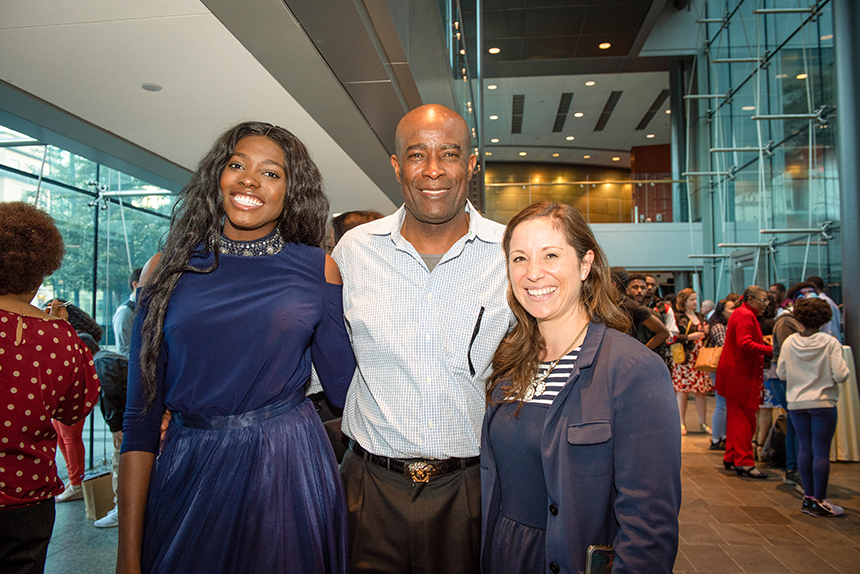
On June 5, the Brigham community honored hundreds of faculty and staff members during the 39th annual Employee Service Awards ceremony. Colleagues and loved ones gathered in the Joseph B. Martin Conference Center at Harvard Medical School to celebrate the dedication and achievements of those who have worked at the Brigham in increments of five years, from five to 45 years.
 

Home

In honor of Father’s Day on Sunday, June 16, Brigham Bulletin is highlighting several Brigham dads with children who work here.

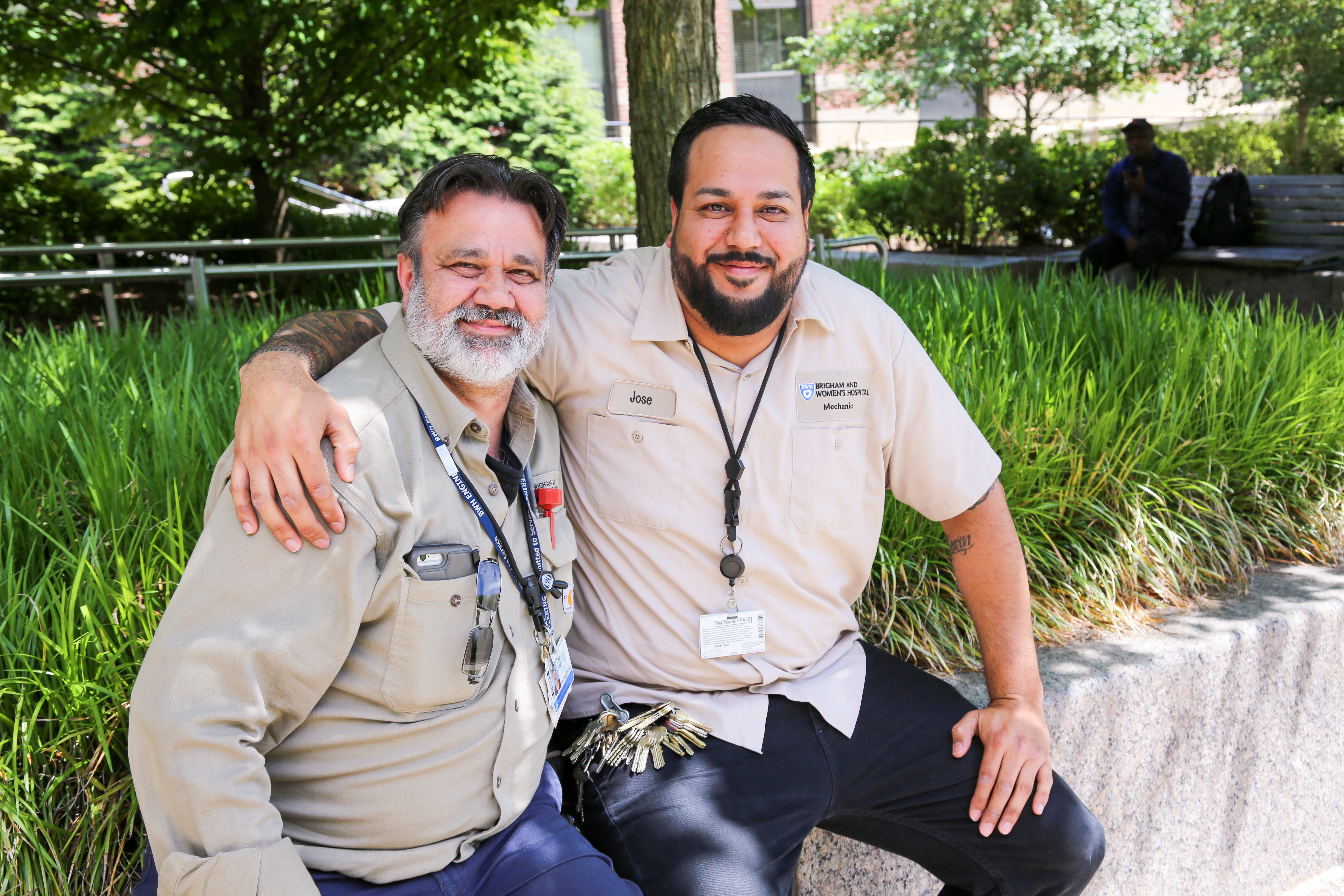
From left: Jose Diaz Sr. and Jose Diaz Jr.

From left: Jose Diaz Sr. and Jose Diaz Jr.

Two years ago, Jose Diaz Jr. found himself in an unexpected, difficult position. Shortly after purchasing his first home and learning he would soon welcome a daughter to the world, he was out of work. He turned to his father, Jose Diaz Sr., for guidance.

A member of the Brigham’s Engineering team, Jose Sr. alerted his son about a job opening in his department. At the time, Jose Jr. had already developed a diverse range of engineering skills and was in the midst of completing a training program to work on heating, ventilation and air conditioning systems.

After a competitive application and interview process, Jose Jr. was thrilled when he received the news that he would become a mechanic in the department.

“I just led him to the door; he opened it up,” said Jose Sr., an engineer supporting the Hale Building for Transformative Medicine. “I’ve really enjoyed working at the Brigham, and it feels great to have him here as well. At the same time, I’ve always encouraged him to be his own person here. We’re family, of course, but at work we’re two professionals.”

For Jose Jr., the story is a prime example of his father’s supportive, caring approach as a dad.

“He’s very wise, very knowledgeable and extremely, extremely reliable. He’s given me a sense of confidence to do things that I might not otherwise try to tackle on my own,” Jose Jr. said.

Jose Jr. said he’s learned a lot from his father over the years, but among the most important lessons has been to take his time when completing a task.

“Growing up, I used to rush things — whether it was because I wanted to be independent or just wanted to get ahead — and it didn’t always go well,” Jose Jr. said. “My dad came to the rescue every single time, but he’s also taught me how to avoid placing myself in situations like that in the future.”

Working together at the Brigham has also given Jose Jr. the opportunity to witness some of his dad’s expertise firsthand.

“It’s fascinating to see him do what he does, and he really practices what he preaches,” Jose Jr. said. “Growing up, I always heard his work stories at dinnertime, and now I’m part of those stories, which is pretty great.”


‘He’s My Role Model’

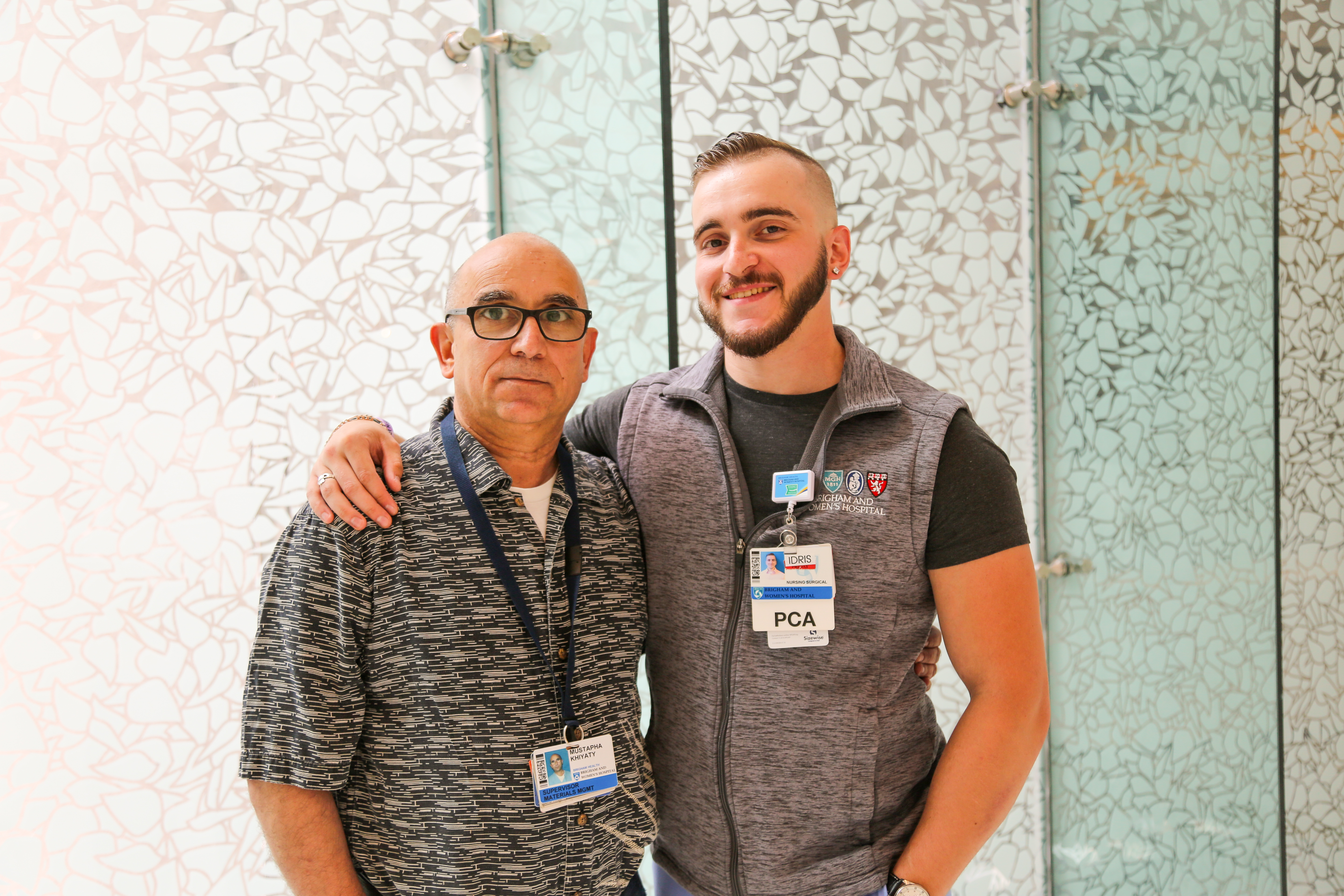
From left: Mustapha and Idris Khiyaty

From left: Mustapha and Idris Khiyaty

Idris Khiyaty, BSN, looks up to his father, Mustapha, every day.

“He’s my role model,” said Idris, a patient care assistant on Braunwald Tower 8, who earned his bachelor’s degree in nursing from Curry College last month. “For his entire life, he’s worked hard to support our family and is always there for us. I hope to be like him one day.”

For nearly 10 years, Mustapha has worked at the Brigham as a member of the Materials Management team. Currently, he’s an inventory control supervisor. He said he’s proud of his son — and was especially overjoyed to learn Idris graduated from nursing school with high honors (magna cum laude) — and loves that he has been a part of the Brigham family for two years now as an employee.

“When I think about the future, I think about Idris and all the wonderful things that are in store for him. No one can replace him — he’s perfect to me,” said Mustapha.

Throughout his life, Idris said his dad has taught him many things, including the importance of hard work and handling responsibilities while also taking time to appreciate life’s small pleasures.

“Whether it’s completing a project at work or watching a sunset at the beach, I’ve taught Idris to never take a day for granted,” Mustapha said.

Outside of work, Idris and Mustapha enjoy watching sports together. As an early Father’s Day gift, Idris surprised his dad with tickets to an upcoming Liverpool Football Club soccer game at Fenway Park.


Always Part of the Brigham Family

From left: Xavier and Raul Rodriguez

From left: Xavier and Raul Rodriguez

Since joining the Brigham a year ago as part of the Materials Management team, Xavier Rodriguez quickly became accustomed to hearing the same question whenever he bumped into someone at the hospital: “Hey, aren’t you Raul’s son?”

For Xavier, the question never gets old and continues to fill him with pride. His father, Raul, serves as senior manager of Central Transport and Equipment and has been with the Brigham for nearly 30 years.

“He’s so well-respected throughout the whole hospital,” said Xavier. “He’s a great leader.”

While the two enjoy spending time together, it’s rare they run into each other on the job. Raul works during the daytime, and his job often positions him behind the scenes as he manages and optimizes the transport of patients and equipment. Xavier typically works evenings, delivering materials and supplies to inpatient units.

In addition to having an appreciation for his dad’s professional accomplishments, Xavier — a father of two himself — said he hopes to live up to his example as a parent.

“The way my father raised me is the same way I want to raise my kids,” Xavier said. “Throughout my life, my dad pushed me to be better. I used to be a hard-headed kid, and he would still push me to be good because he knew what I was capable of doing. He never gave up on me, even when I thought about giving up on myself.”

Raul said he’s so proud to see his son become such a caring, hardworking father and employee.

“It’s funny how the circle works. He was born here. When he was little, he always came and visited me while I was working. And now he’s working for the Brigham himself,” Raul said. “It just goes to show: Once you’re in the Brigham family, you’re always family.”


Home

B.A.A. 10K Medical Volunteers Needed

Brigham and Women’s Hospital is the presenting sponsor for the Boston Athletic Association (B.A.A.) 10K on Sunday, June 23. Medical volunteers are needed to staff the finish line tent and other key locations along the course. Licensed medical professionals and unlicensed volunteers welcome. If you are interested in volunteering, email Chris Troyanos, medical coordinator, at troyanos@comcast.net.

Join the Young Professionals Board

Are you looking for a fun professional development opportunity? The Brigham Young Professionals group is looking to fill two open positions: Community Service Member and Communications and Engagement Member. No professional experience is required. For more information on these volunteer positions and to apply, email BWHYP@partners.org.

Register for Discover Brigham

On Thursday, Nov. 7, 11 a.m.–6 p.m., the Brigham Research Institute will host Discover Brigham, an annual event to educate and inspire collaboration around innovative science, technology and medicine at the Brigham. This free event takes place throughout the main campus and is open to the public. For more information and to register, visit DiscoverBrigham.org.

Annual Education Cycle Change

Every year, the Brigham assigns mandatory education that covers topics ranging from fire safety to information privacy. This year’s rollout will shift from March 1 to Oct. 1; the deadline for mandatory education will shift from Sept. 30 to the end of December. This will align the Brigham with other Partners institutions and allow the Brigham to evaluate and update its program portfolio to deliver the most relevant, useful content to all faculty and staff. For more information, visit BWHPikeNotes.org.


Home

The benefits of face transplants are more than skin deep, according to Brigham investigators who report that patients who have undergone the surgery can feel and move their face five years after transplant.

Since 2009, Brigham surgical teams have performed face transplants for people who have suffered from traumatic facial injuries. The surgery holds the promise of improving physical and mental health for patients who have been severely disfigured and have no other treatment options. In a recent New England Journal of Medicine publication, a Brigham team presented the longer-term outcomes for six patients whose cases had been followed for up to five years after surgery. Overall, patients had a robust return of motor and sensory function of their face, and all but one patient reported improvements in quality of life.

Leonardo Riella

Leonardo Riella

Bohdan Pomahac

Bohdan Pomahac

“From the data, you can see the clear benefits that our patients have obtained. It is important to keep in mind that there are no alternative functional prosthetic options for the face,” said co-senior author Bohdan Pomahac, MD, the Roberta and Stephen R. Weiner Distinguished Chair in Surgery and director of Plastic Surgery Transplantation, who led teams that performed partial- and full-face transplants.

“In our previous studies, we reported that patients can speak, eat and breathe better. These aspects are important as well,” Pomahac continued. “Here, we report that the return of motor function is in line with what you would see if you reconnected a severed nerve, and that sensory function appears to improve to near normal. Face transplants have given these patients enough functionality to be able to socially reintegrate in a way that would not have been possible before.”

The team reports that motor function improved significantly both during and after the first post-transplant year, reaching an average of 60 percent of maximal motor function at five years of follow-up. The team also found improvements in the patients’ ability to distinguish between hot and cold stimuli on their skin and respond to pressure testing in the first year after surgery.

An Evolving Field

Pomahac noted that the immunosuppressant medications prescribed after face transplantation and related complications can place a physical, emotional and quality-of-life burden on patients. Investigators are pursuing new ways to improve the patients’ experience and address these challenges.  

“The world’s first partial face transplant occurred in 2005 in France, almost 50 years after the first kidney transplant was performed here at the Brigham,” said co-senior author Leonardo Riella, MD, PhD, medical director of the Vascularized Composite Tissue Transplant Program. “Therefore, it is important to realize how young the field of face transplantation really is. While we had used knowledge gained from other solid organ transplants, the face transplant is a complex structure that includes one of the most immunologically challenging tissues of all: the skin. While we have witnessed great success so far, the challenges to minimize immunosuppression toxicity and reduce rejection rates continue.”

Each of the six patients experienced between two and seven acute rejection episodes — in which the patient’s immune system attacked the transplanted tissue — that required treatment. Immunosuppressive drugs can increase risk of diabetes, hypertension or lipid disorders post-transplant, but the team found no new cases of any of these conditions, except for one patient who was diagnosed with hypertension two and a half years after transplantation.

“We are moving beyond the point of asking whether a patient in need will survive receiving a face transplant — we have seen that we can do this safely. We are now asking, ‘Can we quantify how much our patients benefit, and what challenges do we need to work on?’” said Pomahac. “This is the next phase of evolution for this work. Like any new transplantation procedure, we first ask how we can make this safe, and next we ask how we can make this better.”


Home

From left: SSJP Student President Thenicha Bruny celebrates with her father, Paul Bruny, and her Brigham mentor, Caitlyn DeCastro.

From left: SSJP Student President Thenicha Bruny celebrates with her father, Paul Bruny, and her Brigham mentor, Caitlyn DeCastro.

For Thenicha Bruny, the Student Success Jobs Program (SSJP) was much more than an after-school job — it has changed her life. As she prepares to graduate from Boston Latin Academy this month and attend the Massachusetts College of Pharmacy and Health Sciences in the fall, she reflected on how much she has grown, thanks in part to SSJP and her mentors.

“SSJP has been an opportunity to work in a professional environment, be mentored by caring, dedicated health and science professionals and take advantage of the academic supports,” Bruny said. “Because of my involvement with SSJP, I was able to have new experiences, grow personally and professionally, and build long-lasting friendships and support networks.”

A program of the Brigham’s Center for Community Health and Health Equity (CCHHE), SSJP partners with select Boston-area public high schools to match students with mentors and paid internships across the institution. The program is focused on fostering the next generation of talented, diverse health care workers.

Joined by their families, colleagues and SSJP underclassmen, this year’s seniors were honored during a graduation ceremony held at the Joseph B. Martin Conference Center on June 3. The 30 graduates all received four-year scholarships from the Brigham.

During the ceremony, attendees heard from several people, including fellow students; SSJP alumnus Max Clermont, MPH, co-founder and head of policy at Data for Black Lives; keynote speaker Gezzer Ortega, MD, MPH, a research scientist and instructor in the Center for Surgery and Public Health; and Ron M. Walls, MD, FAAEM, FRCPC, executive vice president and chief operating officer of Brigham Health.

Walls said SSJP serves as a powerful engine for transformational change, not only in the lives of the graduates but also those of their families and local communities. There’s no shortage of evidence showing this, he added, noting that since 2004, 96 percent of SSJP alumni have enrolled in or graduated from college. Of those, 75 percent are majoring or have majored in health, science or medicine.

“You are our future leaders,” Walls said. “We are so proud of you and honored to have played a small role in your success.”

Thankful for the knowledge and skills that she gained during her time working in several departments at the Brigham, Bruny also acknowledged her SSJP and Brigham mentors for always guiding her toward “the bigger picture” in so many aspects of her life.

“My SAT scores have phenomenally increased, and applying to college was a breeze,” Bruny said. “I am so thankful for this network of people dedicated to helping my SSJP peers and me, and those who have invested their time into our futures. You have all inspired and motivated me throughout my time here, and I can’t wait to flourish in my career and give back to this amazing community.”

A Springboard for Success

More than 60 departments at the Brigham host SSJP interns. In a survey of SSJP alumni, more than 70 percent of program participants are first-generation college students, and more than 90 percent felt that working in a professional environment while in high school greatly assisted them in their college and career pursuits.

SSJP student Bamidele Osinubi, a senior at New Mission High School in Hyde Park, appreciated the opportunity to work at the Brigham in a lab within the Division of Endocrinology, Diabetes and Hypertension. An aspiring medical researcher, he said what he learned in the lab will be useful to him for years to come.

“The two years I spent with SSJP have been a blessing,” Osinubi said. “The opportunity to meet adults and network with people who have been in the same position as me, as well as make friendships, will not be taken for granted.”
As Bruny looks forward to her next chapter, she’s glad to walk into the world as a different person than when she joined SSJP. During the ceremony, she declared to her fellow classmates: “We are the future.”

“Words can’t express the feeling I get looking back at how far we’ve come and how far we’re going,” Bruny said. “This room contains future doctors, engineers, lawyers, nurses, pharmacists, teachers and more. So, yes, SSJP is far more than just a job.”

SSJP is actively seeking departments and enthusiastic staff members to support its efforts. To learn more about how to become a mentor and host an SSJP intern, contact Pamela Audeh at 617-264-8740 or paudeh@bwh.harvard.edu.


Home

Run the Falmouth Road Race with the Brigham

Were you one of the lucky ones who secured a bib for the iconic Falmouth Road Race on Sunday, Aug. 18? If so, join the Brigham team and run with purpose in support of an area at Brigham Health that is meaningful to you. If you missed out on a bib, don’t worry — you can still run by joining the Brigham team. Email bwhteam@partners.org for more information or go to bwhevents.org/Falmouth to learn more.

Patient Safety Culture Survey

If you are in a patient-facing role, you have received an email from Pascal Metrics Support with a link to our Brigham Patient Safety Culture survey. Please take 10 minutes to complete this confidential survey if you have not done so already. Your feedback will help leadership better understand the current culture of safety at the Brigham, identify areas for improvement and assess the effectiveness of our improvement efforts. Visit BWHPikeNotes.org to learn more.

Free Melanoma/Skin Cancer Screenings

The Brigham is teaming up with Dana-Farber Cancer Institute’s Blum Van, which offers sun safety resources, skin cancer-related information and full-body screenings by a Brigham dermatologist. No appointment is needed. Upcoming screenings include Monday, June 24, 10 a.m.–2 p.m., at Carson Beach in South Boston; Thursday, July 11, 10 a.m.–2 p.m., at Revere Beach; and Friday, July 19, 10:30 a.m.–2:30 p.m., at Nahant Beach. View the full schedule.

HMS Clinical Bioethics Course, June 12–14

The Harvard Medical School Center for Bioethics is offering continuing education credits to physicians and nurses for participating in the Clinical Bioethics Course. The course prepares physicians, ethics consultants, nurses and risk managers to serve on clinical ethics committees, perform clinical ethics consultations and better address ethics questions in medical care. Harvard affiliates are eligible to receive a substantial discount. June 12–14 at Harvard Medical School’s Tosteson Medical Education Center, 260 Longwood Ave. To register, call 617-432-2570 or email bioethics@hms.harvard.edu.

Brigham Veterans Luncheon, June 25

Brigham Health faculty and staff who have served in the U.S. military are invited to a luncheon to listen, share and build our veteran community. Hosted by Tim Ewing, PhD, vice president of Employee Diversity, Inclusion and Experience; Eric Goralnick, MD, MS, medical director of Emergency Preparedness and the Access Center; and David Johnson, project analyst in the Department of Medicine. Tuesday, June 25, noon–1 p.m., in the Thorn 13 conference room. Registration is required. RSVP here.


Home

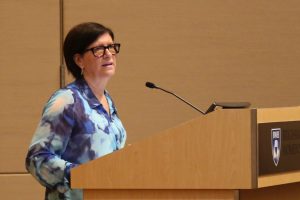
Betsy Nabel speaks at Brigham Town Meeting on May 23, 2019

Betsy Nabel addresses the Brigham community during Town Meeting.

On May 23, Brigham Health President Betsy Nabel, MD, introduced spring 2019 Town Meeting on a celebratory note, announcing that Becker’s Hospital Review recently named Brigham Health one of its Top 150 Places to Work in Healthcare.

“As a community, it’s really important for us to share and celebrate our successes together,” Nabel said.

Another tremendous success has been the Brigham’s hand hygiene initiative, increasing institutional compliance from 62 percent to 92 percent in just one year. “Kudos to everyone throughout the organization because the only way you create a safe and healthy environment for our patients is if we’re all working on this together,” said Nabel, who led a round of applause.

Sustaining Momentum

Tim Ewing, PhD, vice president of Employee Diversity, Inclusion & Experience, discussed the hospital’s ongoing Brigham Experience work — emphasizing the importance of collaboration across Brigham Health with diversity of thought and unified commitment. During his presentation, Ewing shared an animation illustrating sources of institutional pride, opportunities for improvement and goals for empowering faculty and staff at all levels of the organization.

As part of a series of campus facilities updates, Julia Sinclair, MBA, senior vice president of Inpatient and Clinical Services, provided an update on the Emergency Department (ED) expansion project, which will double the size of the ED to 51,000 square feet, add 30 beds and create dedicated areas for behavioral health patients and oncology patients. The renovation began last month and is expected to be completed by December 2021, she said.

George Player, CPE, FMA, vice president of Facilities and Operations, discussed the Brigham’s sustainability efforts, including kicking off a new green team at the hospital. Player encouraged any faculty or staff interested in getting involved in the project to contact him directly.

To close the meeting, Nabel shared a heartwarming NBC News video clip highlighting the compassionate care of Denise DePina Dubuisson, RN, of the Neonatal Intensive Care Unit, and the celebration of her patient’s “miracle” baby. “This is who we are; this is what it’s about,” Nabel said.

View a recording of the webcast.


Home

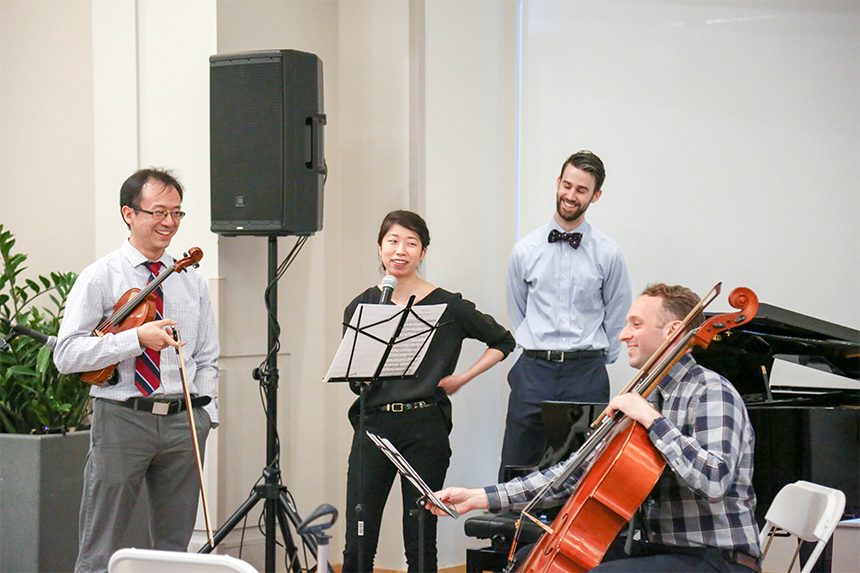
Residents Jack Qian, MD, of the Department of Radiation Oncology, Priscilla Wang, MD, of the Department of Medicine, Mike Foote, MD, of Department of Medicine, and Fritz Stabenau, MD, PhD, of the Department of Medicine, perform Piano Trio No. 2 in C major, second movement, by Johannes Brahms.

From left: Residents Jack Qian, MD, of the Department of Radiation Oncology, Priscilla Wang, MD, of the Department of Medicine, Mike Foote, MD, of Department of Medicine, and Fritz Stabenau, MD, PhD, of the Department of Medicine, perform Piano Trio No. 2 in C major, second movement, by Johannes Brahms.

On May 13, faculty and staff gathered in the Cabot Atrium for the Department of Medicine and Internal Medicine Residency Program’s 18th annual Medicine and the Muse event. From classical pianists and painters to Beatles aficionados and a thought-provoking poet, the event drew some of the Brigham’s most creative and artistic minds. Attendees mingled during a visual arts exhibition before the evening’s live musical performances kicked off. This year’s event included a raffle and silent auction to benefit City Life/Vida Urbana, a community organization that promotes tenant rights and prevents housing displacement.

Home

From left: Joel Katz, Betsy Nabel, Jack Connors, Marshall Wolf and Eugene Braunwald

From left: Joel Katz, Betsy Nabel, Jack Connors, Marshall Wolf and Eugene Braunwald

When Joel T. Katz, MD, learned in 1991 that he had matched to the Brigham’s Internal Medicine Residency Program, he knew it would be an important professional milestone. But it wasn’t until he trained under the program’s then-director, Marshall Wolf, MD, MACP, that he realized just how profoundly his life and career would be shaped by the lasting example his mentor set.

“Marshall was renowned for bringing the best out in people by thoughtfully demonstrating what a great doctor is,” said Katz, who now serves as director of the same program. “He turned over — and insisted we as interns turn over — every stone that could potentially help a patient. He taught us to question dogma, seek out feedback and ways to improve, and advocate for our patients and our colleagues.”

Wolf, who trained 1,200 physicians in his 28-year tenure as head of the residency program and who continues to mentor the next generation of practitioners, was honored during a celebration on May 16 for his innumerable contributions to medical education and tenacious pursuit of excellence. The event marked the dedication of the Marshall A. Wolf Conference Center on the third floor of the Hale Building for Transformative Medicine.

“Marshall talks about medicine being a team sport, not a competitive activity,” said Katz, one of several colleagues and former trainees who offered heartfelt reflections about Wolf’s influence on their personal and professional lives. “He taught us to define our own success by the accomplishments of those around us, and I still look up to that as my North Star.”

Eugene Braunwald, MD, who served as chair of the Department of Medicine when he hired Wolf as the residency program’s director in 1972, applauded him for creating a learning environment that became a nationwide model.
“Becoming a Marshall Wolf-trained internist became a badge of honor,” said Braunwald, founding chair of the Thrombolysis in Myocardial Infarction (TIMI) Study Group. “You brought dazzling intelligence, a deep knowledge of internal medicine and an uncanny ability to apply that knowledge to the benefit of your patients.”

Setting the Standard

A graduate of Harvard College and Harvard Medical School, Wolf completed his training in medicine and cardiology at the Peter Bent Brigham Hospital between 1963 and 1972. In practice for a half century at the Brigham, he became one of Boston’s most sought-after cardiologists and primary care physicians. He retired from clinical practice in 2015, transitioning to the role of emeritus vice chairman for Medical Education.

As a clinician and educator, Wolf instilled in his residents that humanity and compassion are every bit as essential in medicine as academic rigor and technical skills. He also created innovative pathways to train physician-scientists, primary care providers and every type of medical specialist.

“Your program became the standard by which other medical residency programs are measured,” said Brigham Health President Betsy Nabel, MD, who trained under Wolf as a resident. “This center will stand in your honor — letting every patient, physician, researcher and trainee who walks through our doors know how your work has improved and will continue to improve the lives of people today and generations to come.”

Wolf thanked his patients, trainees and his own teachers for keeping his practice anchored in kindness and the continual pursuit of knowledge.

He noted that among his proudest achievements was working with Braunwald to open the residency program to more women and underrepresented minority physicians. Before Wolf assumed the role of residency director in 1972, the hospital had only accepted one female applicant in the previous 15 years. Since then, the two physician leaders have trained more than 400 female residents, and today all four of the Brigham’s chief medical residents are women.

Over the years, Wolf also placed high importance on creating a nurturing environment for trainees — hosting dinners with his wife, Katie, at their home each year to welcome the newest class of interns — and expressed genuine concern for his students’ professional and personal success.

“He always puts the needs of others above his own, whether they be patients, interns, professors or friends. In doing so, he sets a standard of behavior that the rest of us can only hope to mirror,” said Joseph Loscalzo, MD, PhD, Brigham physician-in-chief and current chair of the Department of Medicine.


Home

‘Aligning Our Mission, Defining Our Future,’ May 29

To advance our commitment to health equity, quality and justice in patient care, research, education and our community, the Brigham will host “Aligning our Mission, Defining our Future,” on Wednesday, May 29, noon–4:30 p.m., in Bornstein Amphitheater and other breakout spaces at the main campus. The day will feature lunch roundtables, a keynote address by Mary T. Bassett, MD, MPH, and panel discussion. Click here to learn more and register.

Karsh nursing Scholars Day, May 30

Celebrate nurses’ contributions to science and innovations that improve patient care and the health of people around the world. The inaugural Karsh Nursing Scholars Day events include a session on building research skills, poster presentation, innovations in nursing practice session and a pitch fest. Thursday, May 30, 11 a.m.–5 p.m., at the main campus. View a schedule of events.

Blood Drive at 15 Francis St., June 5

The Kraft Family Blood Donor Center will host a blood drive at 15 Francis St. on Wednesday, June 5, 8 a.m.–3 p.m. Donate blood aboard the Dana-Farber Cancer Institute/Brigham and Women’s Hospital Blood Mobile. All donations benefit patients at the Brigham and Dana-Farber Cancer Institute. Donors will receive a Kraft Family Blood Donor Center cooler bag. To schedule an appointment, visit tinyurl.com/15FrancisJune2019. For eligibility questions, email blooddonor@partners.org or call 617-632-3206.

Save the Date: Walk from Obesity, June 8

Join members of the Brigham and Women’s Center for Metabolic and Bariatric Surgery as they participate in the “Walk from Obesity” on Saturday, June 8, at Brigham and Women’s Faulkner Hospital. Funds raised will support the American Society for Metabolic and Bariatric Surgery. Visit WalkfromObesity.com for more information.


Home

Ron Blankstein

Ron Blankstein

Heart attacks among adults younger than 50 are on the rise. In fact, the proportion of very young people has been rising by 2 percent each year for the last decade, according to a team of Brigham investigators studying this alarming trend to help prevent heart attacks in the first place.

In a paper published this month in the Journal of the American College of Cardiology, the team reports on the prevalence of familial hypercholesterolemia (FH), a genetic disorder that results in high cholesterol, and outcomes for patients affected by it. Investigators found that nearly one in 10 patients who suffer a first heart attack before age 50 had FH, and many still had elevated cholesterol levels a year later. Meanwhile, many were not previously on a statin therapy, highlighting opportunities for prevention and more aggressive treatment for those at risk.

“One of the challenges of familial hypercholesterolemia is that it is under-recognized and undertreated,” said corresponding author Ron Blankstein, MD, a preventative cardiology specialist and associate director of the Cardiovascular Imaging Program. “Only about half of the FH patients in our study were on a statin therapy before their first heart attack, and many were not treated aggressively following their event. Intervening to lower cholesterol could mean preventing not only subsequent heart attacks but first heart attacks, too.”

Examining the Data

Blankstein and colleagues collected data on all patients at the Brigham and Massachusetts General Hospital who had suffered a heart attack before age 50 between 2000 and 2016. Using the Dutch Lipid Clinic (DLC) Criteria — one of most commonly used ways to screen for FH — the team identified those patients with the disorder and used electronic medical records to determine cardiovascular risk factors as well as what medications the patients had been taking prior to their heart attack and what medications were prescribed at discharge.

Blankstein and colleagues found that nearly one in 10 young adults who had suffered a heart attack met the clinical definition for FH. Of those who had elevated LDL cholesterol (greater than or equal to 160 mg/dL), that proportion increased to four out of every 10. And among those who had both family history of premature coronary artery disease and high cholesterol, the proportion was six in 10. On average, FH patients had LDL cholesterol levels of 180 mg/dL at the time of their heart attack, and 43 percent were not on a statin therapy. An LDL level of less than 100 mg/dL is considered desirable for most adults.

Following their first heart attack, only 49 percent of FH patients were prescribed a high-density statin therapy. One year after their heart attack, most of the overall patient population had elevated cholesterol levels, with 43 percent having cholesterol levels greater than 100 mg/dl and 82 percent having cholesterol levels above 70 mg/dl.

Over 11 years of follow-up, 10 percent of FH patients died.

The team notes that the underutilization of high-intensity statin therapy after a first heart attack was not unique to FH patients, and that there are opportunities for more aggressive lipid-lowering therapy for young patients with or without the disorder.

“It’s important for both providers and patients to be aware of the significant benefit associated with reducing cholesterol. It’s important to do so after a heart attack, but even before, if a patient has risk factors. We know that more aggressive treatment of cholesterol and other risk factors can be very effective for avoiding a heart attack in the first place,” said Blankstein. “There is also an enormous need to improve other risk factors. In this study, we find clinically defined FH in only one in 10 young patients who have had a heart attack. Other factors beyond FH seem to play a much larger role in explaining why individuals in our study cohort experienced a myocardial infarction at a young age.”


Home

Town Meeting, May 23

Join Brigham Health President Betsy Nabel, MD, for the next Town Meeting on Thursday, May 23, noon–1 p.m., in Bornstein Amphitheater. All members of the Brigham community are encouraged to attend the meeting either in person or by webcast. For additional information, visit BWHPikeNotes.org.

National Stop the Bleed Day, May 23

The Brigham is hosting a Stop the Bleed training event for faculty and staff during National Stop the Bleed Day on Thursday, May 23. Visit the 45 Francis St. lobby between 11 a.m. and 1 p.m. to learn about basic techniques in bleeding control. For more information about the Stop the Bleed campaign, visit BleedingControl.org.

AMMP Mix and Mingle, May 29

The Association of Multicultural Members of Partners (AMMP) will host a Meet and Mingle event on Wednesday, May 29, 4–7 p.m., in the Linda Joy Pollin Wellness Lounge (Shapiro third-floor porch). AMMP is committed to the advancement, retention, recruitment and development of multicultural professionals into leadership roles across Partners HealthCare. To RSVP, email BWHAMMP@partners.org by Monday, May 27.

Save the Date: Service Awards, June 5

The Brigham community is invited to attend the 39th annual Employee Service Awards ceremony on Wednesday, June 5, at 2 p.m., in the Joseph B. Martin Conference Center at Harvard Medical School. Each year, the ceremony honors faculty and staff who have worked at the hospital in increments of five years. Join colleagues, friends and family members, along with Brigham leadership, in celebrating colleagues with five through 45 years of service with music, festivities and a reception after the ceremony. View a list of this year’s Service Awards honorees.


Home

On Sunday, May 19, Brigham Health will begin replacing its large-volume infusion pumps with a new model called the Baxter Spectrum IQ pump. Each day, nurses, anesthesiologists and respiratory therapists use large-volume infusion pumps to deliver nutrients, blood and medications to patients in inpatient units, procedural settings, ambulatory clinics and the Emergency Department.

Here are five things to know about the new system:

The transition is part of a system-wide goal of wireless, auto-pump programming and auto-documentation in Partners eCare. These efforts will help to enhance the safety of IV pump programming. Brigham Health is the first institution to “go live” with the Baxter Spectrum IQ pump, and other Partners institutions will follow in a phased approach.

More than 3,800 large-volume infusion pumps will be replaced. Project teams comprising Baxter representatives and Brigham nurses and pharmacists, as well as staff from Materials Management, Central Transport and the equipment pool, will swap out every Alaris large-volume infusion pump throughout Brigham and Women’s Hospital, Brigham and Women’s Faulkner Hospital and Dana-Farber Cancer Institute.

The main campus will go live on Sunday, May 19. At 6 a.m., multiple project teams will begin visiting each unit and practice area to replace pumps and tubing. They anticipate completing all areas by 8 p.m. Brigham and Women’s Ambulatory Care Center at 850 Boylston St. and the Brigham and Women’s/Mass General Health Center at Patriot Place will go live on Tuesday, May 21.

Support will be available during go-live and beyond. To ensure that staff have the assistance they need to safely operate the new pumps, the following resources will be available:

  • Super-users and professional development managers on each unit will provide “at-the-elbow” support and serve as the first contact for questions.
  • Baxter leadership and Brigham project leaders will set up a command center in the Shapiro Cardiovascular Center during go-live on May 19 to ensure that the transition is safe and efficient.
  • Baxter educators will round on site and respond to calls for assistance around the clock, from Sunday, May 19, at 6 a.m., to Saturday, May 25, at 7 a.m.

The impact to patients will be minimal. The transition of each pump is expected to take only a few minutes. Patients’ IV access will remain uninterrupted, and a member of the project team will disconnect the primary line from the current pump and plug it into the Baxter pump. If the patient’s care providers feel that it is not an appropriate time for the transition, the project team will return later.

Learn more at BWHPikeNotes.org.

Brigham nurses are world-renowned for leading the way in patient care, research, education and community outreach. In celebration of National Nurses Week 2019, Brigham Health honored the extraordinary contributions of nurses through a video series, social media campaign, digital signage, lobby display featuring the Essence of Nursing recipient and honorees, the publication of the 2017–18 Department of Nursing report, Spiritual Care Services’ “Blessing of the Hands” events, internal promotions, a special “wrap” in The Boston Globe on Sunday, May 12, and more.

Inside this edition of Brigham Bulletin, hear from Brigham nurses about what inspires their practice and how they make a difference in the lives of patients, their loved ones and colleagues.

Roger Blanza, BSN, RN, CCRN, CSC
Shapiro 6 West, Cardiac Surgery Intensive Care Unit

What does it mean to make a meaningful difference as a nurse?
RB: Even with all this technology and all these advanced tools we have, the personal part of nursing should always be there — the compassion, the caring. People appreciate the personal aspect of it more than anything else. I have patients who have been in the hospital for months or even years. What they remember most sometimes — more than the care that I give — is that I gave them a haircut and, for the guys, a shave. That dedication means a lot to them and their families.

You’ve been a nurse for more than 40 years. How has the field evolved?
RB: There’s more collaboration and a recognition that everyone plays a role in helping patients get better, from the doctors to nurses to educators to housekeeping — anybody who gets in contact with a patient.


Karen FoleyKaren Foley, RN
Post-Anesthesia Care Unit

What inspired you to pursue this field?
KF: My father was a medic in the Air Force, and he had chatted with me over the years about becoming a nurse. At 16, I went to work as a nurse’s aide. I absolutely loved it and never wanted to leave. I decided that nursing was definitely what I wanted to do for my career.

What do you enjoy most about nursing?
KF: My favorite part of my job is being with people and taking care of those who need care. I enjoy watching them feel better and heal.


Consuela MoleusConsuela Moleus, BSN, RN
Braunwald Tower 10BA, Medical Intermediate Care Unit

What qualities make a good nurse?
CM: You need to be sympathetic, compassionate, understanding, patient and thoughtful. When I’m caring for someone, I always try to think about what I would want done for me if I were in their situation. That helps me every day throughout my practice.

What made you want to become a nurse?
CM: I just realized I had so much empathy and compassion for other people, and I wanted to share that happiness and joy.


jack-nallyJack Nally, BSN, RN
Braunwald Tower 11ABD, Thoracic Surgery

What drew you to nursing?
JN: I thought I wanted to be an occupational therapist, but that didn’t work out. I shadowed a nurse one day, and after about an hour I thought, “This is what I want to do.” I immediately applied to school, and here I am now as a nurse, three years later.

What’s one the most important aspects of nursing?
JN: Creating a relationship with the patient is extremely important. I work with surgical patients who just received transplanted lungs and are learning new ways to breathe. They’re scared — I would be scared, too, in their shoes. Sometimes, even just a smile on our faces makes them happier. I always try to make my patients laugh, and I’ve found they really enjoy that. If we can be a light in the darkness, then that’s really important.

Iftar Prayer Service and Dinner, May 20

Spiritual Care Services and the International Patient Center will host an Iftar dinner and prayers in celebration of the Holy Month of Ramadan on Monday, May 20, 7:30–10 p.m., in the Zinner Breakout Room and Hale Atrium Lobby. All chicken is certified Halal. Space is limited. For more information and to RSVP, email BWHChaplaincy@partners.org.


Fitness Reimbursement Eligibility

Faculty and staff enrolled in the Partners Select or Partners Plus employee health plans and who have been registered with AllWays Health Partners and a gym/health club for at least four months are eligible to submit for a yearly fitness reimbursement. Reimbursements are available for memberships at health clubs, gyms, or studios offering cardiovascular, strength-training equipment, aerobic, Pilates, yoga, Zumba or Jazzercise fitness programs. Those who qualify may use the reimbursement for themselves or one covered dependent. Learn more.


Town Meeting, May 23

Join Brigham Health President Betsy Nabel, MD, for the next Town Meeting on Thursday, May 23, noon–1 p.m., in Bornstein Amphitheater. All members of the Brigham community are encouraged to attend the meeting either in person or by webcast. Faculty and staff may submit questions and topics for discussion prior to Town Meeting. For additional information, visit BWHPikeNotes.org.

‘Aligning our Mission, Defining Our Future,’ May 29

To advance our commitment to health equity, quality and justice in patient care, research, education and our community, the Brigham will host “Aligning our Mission, Defining our Future,” on Wednesday, May 29, noon–4:30 p.m., in Bornstein Amphitheater and other breakout spaces at the main campus. The day will feature interactive lunch roundtables, a keynote address by Mary T. Bassett, MD, MPH, and a dynamic panel probing how we can live our values and promote equity individually and as an organization. For more information and to register, visit BWHPikeNotes.org.


Home

From left: Amy Davenport, Caroline Galligan, Cory Gallant, Kimberly Madarati and Brian Monahan

From left: Amy Davenport, Caroline Galligan, Cory Gallant, Kimberly Madarati and Brian Monahan

Health care providers work tirelessly to care for patients, but sometimes it can be a challenge to find time in between their work to care for themselves. 

Cory Gallant, RN, assistant nurse director in the Division of Thoracic Surgery, recently charged 100 of his colleagues to a 15-week step challenge. The challenge began the second week in April and will go through mid-July. Each of the 10 participating teams will take 10.5 million steps — roughly equivalent to the distance between Boston and Hawaii. 

“People were feeling like they just don’t have the time or resources to get out and be healthy with their hectic work schedules,” Gallant said. “It’s important to realize that there is a mind-body connection in health care where we need to take care of ourselves so that we can care for others.” 

Gallant wanted to propose something that would be rigorous enough to provide significant health benefits without being too intimidating. 

“Walking is a super easy way to exercise,” he said. “The challenge component makes it motivational, and the teams build each other up and add a level of collaboration.”

The step challenge includes 10 teams, each team made up of 10 participants. The teams are led by “accountability coaches” selected by Gallant to encourage everyone to meet their step goals. 

Kelly Laws, BSN, RN, of the Medical Intensive Care Unit, serves as the accountability coach for her team and was excited when Gallant asked her to participate and be a leader in this challenge. Laws said she motivates her team through a virtual group chat she created for the members to share inspiration.

“As a bedside nurse, I realize how important it is for me to set a positive example of a healthy lifestyle,” said Laws. “I encourage my teammates to find something interesting, funny or inspirational on each walk to share with the group.” 

Participants log their steps by syncing their fitness trackers to a mobile app called MoveSpring. Each coach can see their teammates’ individual progress. The app also measures the average number of steps taken by each team and shares them on a leaderboard for all participants to view.

Even in the early stages of the challenge, Gallant noticed how access to this information inspires participants to meet their step goals. 

“It’s been good to see people recognize that they’re not moving as much as they thought they were,” he said. “That’s the whole point of it.”

Gallant obtained support for the project in September through the Brigham Care Redesign Incubator and Startup Program, which provided funding to set up the platform on MoveSpring, provide fitness trackers and other resources to participants and even offer a cash prize for the winning team. 

Amar Dhand headshot

Amar Dhand

Approximately 70 percent of U.S. stroke patients each year will arrive at the hospital more than six hours after the onset of symptoms. While in many cases novel treatment strategies can prevent the worst consequences of a stroke, delays in seeking care can put these therapies out of reach. 

Brigham investigators recently examined how social circles, or “networks,” may influence delays in arrival times for patients experiencing stroke symptoms. The team found that patients with closer-knit social circles, including family members and spouses, were more likely to delay seeking hospital care, whereas those with a more dispersed network of acquaintances were more likely to seek care faster. The analysis was published in Nature Communications.

“Closed networks are like echo chambers in which there is a tendency for everyone to agree to watch and wait,” said corresponding author Amar Dhand, MD, DPhil, of the Department of Neurology. “A major problem in stroke care is patients’ delayed arrival to the hospital, and we show that this problem is related to the influence of patients’ social networks.”

Dhand and colleagues surveyed 175 patients within five days of suffering from a stroke. They collected details from each participant and used this information to create maps of personal relationships. The team focused on patients with milder symptoms because this population is at higher risk for delay and could engage in the survey during hospitalization.

The research team discovered that the networks of slow arrivers were smaller and more close-knit than those of fast arrivers, confirming a paradoxical role for a person’s social environment in a medical emergency. The authors concluded that a shift from mass education about stroke symptoms to a more targeted approach may help reduce delays. Identifying at-risk patients with small and close-knit networks before a stroke and teaching them about symptoms, communication pitfalls and how to develop an action plan, which might include calling a designated friend, could improve stroke preparedness and outcomes.

The current study was limited mainly to patients who had experienced a mild stroke and spoke English. The survey did not include those with moderate or severe strokes or aphasia. The study also relied on self-reporting of social networks. The authors note that additional study in more diverse populations is warranted.

Eugene Braunwald and Betsy Nabel

Eugene Braunwald and Betsy Nabel

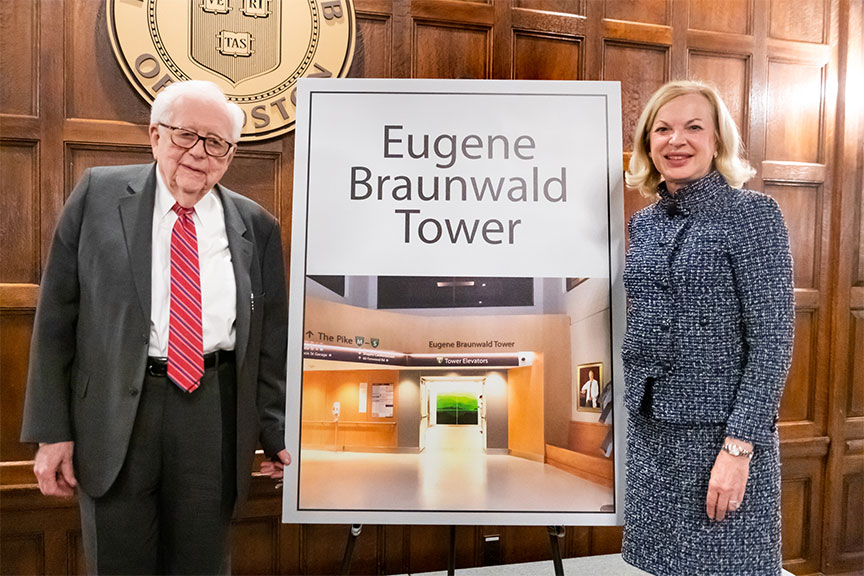
Describing his colleague and mentor’s career and legacy at the Brigham as “towering,” Victor Dzau, MD, president of the National Academy of Medicine and former chair of the Brigham’s Department of Medicine, said it’s only fitting that the hospital’s Tower building be named in honor of world-renowned cardiologist Eugene Braunwald, MD.

“Dr. Braunwald is a living legend,” Dzau said. “We recognize the Tower as a symbol of Brigham and Women’s Hospital. It is where patients are cared for and lives are saved, and, of course, it’s where generations of physicians, nurses and providers are trained. If the Tower is a symbol of the Brigham, Dr. Braunwald is the heart and soul of the institution.”

On April 29, family, friends and colleagues, including Dzau, joined Braunwald at the Harvard Club in Boston for a celebration of his distinguished career and the dedication of the Eugene Braunwald Tower.

Speaking to guests, Brigham Health President Betsy Nabel, MD, said since Braunwald joined the Brigham in 1972 as chair of the Department of Medicine, he’s set the highest standards of excellence in clinical care, research and education. Nabel also applauded his achievements in “recruiting outstanding faculty and reinvigorating groundbreaking programs,” including partnering with Marshall Wolf, MD, emeritus vice chair of medical education, to co-establish one of the most sought-after medical residency programs in the nation.

“The Brigham will stand in your honor, letting every person who walks through our doors know how your work has and will continue to save lives for generations of patients to come,” Nabel said.

A cardiovascular medicine specialist at the Brigham and the Distinguished Hersey Professor of Medicine at Harvard Medical School (HMS), Braunwald was chair of the Department of Medicine for 24 years. He was instrumental in the creation of the Tower — a 16-story inpatient building for medical and surgical patients. 
“The bed Tower has played a critically important role in the history of the Brigham, and it has played an important role in my life as well,” said Braunwald, who expressed his gratitude and appreciation for this new honor.

In 1984, he was named the founding chair of the Thrombolysis in Myocardial Infarction (TIMI) Study Group, which to date has completed 62 clinical trials in cardiology. In 1996, he became a founding trustee and then chief academic officer of Partners HealthCare, as well as faculty dean for academic programs at HMS.

Braunwald was born in Vienna, Austria, from which he and his family escaped after the Nazi annexation and emigrated to New York. He earned his undergraduate and medical degrees from New York University, followed by a medical residency at John Hopkins Hospital. He began his career at the National Heart, Lung and Blood Institute, where he became the first chief of its Cardiovascular Branch and later clinical director of the institute.

Brigham Values Personified

During the event, guests heard heartwarming remarks from two other people who’ve worked closely with Braunwald throughout the years: Joseph Loscalzo, MD, PhD, Brigham physician-in-chief and current chair of the Department of Medicine, and Thomas H. Lee, MD, chief medical officer at Press Ganey and a physician in the Phyllis Jen Center for Primary Care. The night concluded with a proclamation and toast and words from Braunwald himself. 

Lee, a resident when he first met Braunwald, reflected on the moment that amazed him the most about his mentor and friend. It was when Braunwald surprised him by granting Lee permission to write a biography about him. After spending a year interviewing Braunwald periodically, the biography, Eugene Braunwald and the Rise of Modern Medicine, was published in 2013.

“I wanted to write it for my children and for his children and grandchildren,” Lee said. “I wanted to write it for the people here. I wanted to write it for the students and trainees at the Brigham so that everyone would understand that life has uncertainty and that if you hang in there and work hard, things might work out better than you had hoped.”

Describing Braunwald as the “personification of the Brigham,” Loscalzo thanked his friend, colleague, teacher and role model for his contributions to medicine and the Brigham.

“His values are our values. His values are the Brigham’s values,” Loscalzo said. “With the designation of the Tower in his name, we provide institutional recognition of his central role in the modern history of Brigham and Women’s Hospital.” 

4 Comments

2018–19 Flu Mask Requirement Ends May 6

The Brigham’s Department of Infection Control has been closely monitoring influenza activity in our hospital and in the broader community. While we are still seeing some sporadic cases, overall influenza activity is down, and this year’s influenza season appears to be concluding. As of Monday, May 6, personnel who were exempted from the vaccination requirement for the 2018–19 flu season will no longer need to wear a mask for all clinical encounters.

Call for Beta-Testers: Help iHub Test New Wayfinding App

Brigham’s Digital Innovation Hub (iHub) is preparing to launch a new mobile wayfinding app, which will take advantage of iOS and Android devices’ native capabilities to track your location in real-time and guide you to your chosen destination on the main campus. To ensure we’re providing the best mobile experience for patients and families, iHub needs your help to test the app and let us know what works well and what could be improved. If you would like to be a beta-tester, learn more at BWHPikeNotes.org or stop by an information table on Thursday, May 9, 10 a.m.–1 p.m., on the Tower 2 mezzanine.


2019 Patient Safety Culture Survey

A Patient Safety Culture Survey was sent out on May 1 to Brigham Health faculty and staff whose work directly affects patient care. The survey is being administered by a third party, Pascal Metrics, and can be completed on a computer or mobile device. Individual responses will be kept confidential. Supervisors and managers will not have access to responses. For more information, visit BWHPikeNotes.org.


Celebrating Bike Week, May 11–19

The Massachusetts Academic and Scientific Community Organization will host Bike Week, May 11–19, throughout the Longwood Medical Area (LMA). There will be free events, which will include food and bike checkups at the Brigham and other LMA institutions. Attendees may also sign up for the MassCommute Bike Challenge, which allows cyclists to log miles and become eligible to win prizes throughout the week. Visit masco.org/directions/bike-week-2019 to learn more.

ED Prepares for Multi-Phase Renovation

The 45 Francis St. lower lobby will be closed, beginning Saturday, April 27, to prepare for upcoming construction to expand the Brigham’s Emergency Department. All patients, visitors, faculty and staff are encouraged to use the G, K or L elevators to access the Pike and main lobby, and the K elevators for lower levels. Access to and from the parking garage will be available in the main lobby. Access at the lower lobby will be taken out of service. Updates will be shared as available. For additional information or questions, email Lani Kuzia DeBonis at lkdebonis@bwh.harvard.edu.


Center for Diversity and Inclusion Gathering, May 1

Join the Center for Diversity and Inclusion for its May gathering. Attendees will have the opportunity to network and learn how to create community at the Brigham. The featured guest will be Ron M. Walls, MD, executive vice president and chief operating officer of Brigham Health. Wednesday, May 1, 5:30–6:30 p.m., in the Shapiro first-floor atrium, near the Fenwood Road entrance to Shapiro.


Device-Charging Stations Available

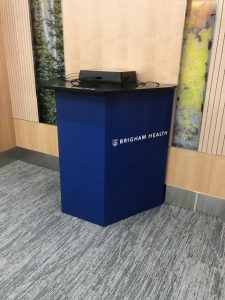
Five portable charging stations are available for use in public areas throughout the Brigham’s main campus. Each station is equipped with six charging cords that are compatible with a variety of devices, including mobile phones and tablets. They can be accessed 24 hours a day, seven days a week, and at no cost. Simply find the right cord for your device, plug it in and wait for your device to charge. Do not leave your device(s) unattended. For questions and to submit feedback about the stations, email BWHCellPhoneCharging@bwh.harvard.edu.


Whole Blood and Platelet Donors Needed at the Kraft Family Blood Donor Center

The Kraft Family Blood Donor Center is in need of whole blood and platelet donors. Note that donors are eligible to give whole blood every 56 days. All donations benefit patients at the Brigham and Dana-Farber Cancer Institute. To schedule an appointment, email blooddonor@partners.org or call 617-632-3206.


Kicking off the Brigham’s celebration of Medical Laboratory Professionals Week, faculty and staff across the hospital’s Pathology labs hosted a lighthearted lab-coat decorating contest and “fashion show” on April 22. The Autopsy Lab, whose entry was modeled by Autopsy Medical Director Robert Padera, MD, PhD, was crowned the winner for its fan-favorite Game of Thrones-themed coat and props. While the win doesn’t earn anyone a seat on the Iron Throne, the team was awarded bragging rights and an upcoming celebratory lunch.

This slideshow requires JavaScript.

New England is known for its unpredictable weather, inspiring that adage that you can experience all four seasons in a single day here. This was truer than ever for the 33,000 runners participating in this year’s Boston Marathon on April 15. The 143 members of the Stepping Strong Marathon Team were among those powering through a mix of heavy rain, biting cold winds, steamy humidity and a much-welcomed glimpse of sunshine after raising $1.3 million to advance trauma research and care. Inside this week’s Brigham Bulletin, a few Stepping Strong runners share their memorable moments from this year’s race.


Rachel Burstin and Theresa Latona“This was my fourth marathon and my second with Stepping Strong. It’s the best team I’ve been part of — it’s like a family. We train together. We have these big dinners together. There are movie nights and a New Year’s party. The most memorable part of this marathon was running with teammates who became great friends. Being able to take the bus with them, start with them and run with Rachel the whole way was special. My mom also texted me at every mile: ‘You got this.’ ‘You’re so close.’ ‘You’re going so fast.’ With this year’s weather being all over the place, having both their support really helped me. I would’ve stopped more without them.” — Theresa Latona (left)

“The crowds were amazing. Hearing people on the sidelines scream my name from Hopkinton to Boston was huge. I knew that would get me through, and running the race with Theresa made it an especially incredible experience.”
— Rachel Burstein (right)


Edgard Vera“In completing the Boston Marathon — my longtime dream — I earned the Abbott World Marathon Majors’ Six Star Finishers medal. I already did marathons in Tokyo, London, Berlin, Chicago and New York. I was just missing Boston, so today I became one of about 100 people who got this medal out of today’s 30,000-plus runners. I’m still processing it.

But just as importantly, I was thrilled to run for Stepping Strong and support its mission to give people a chance to literally get back on their feet and make the impossible possible. I’m a physician, so this is very close to my heart.” — Edgard Vera, MD, FACP


Adam Devlin and Aftab Husain“This was a very tough race for me. I had a lot of cramping and had to stop at the medical tent twice. I really did want to quit, but I reflected on the wonderful atmosphere created by 100,000 people on the sidelines cheering us on. The crowds are incredible. The best moment of all, though, was seeing my family cheering for me at mile 26. I just started crying. It was amazing to see them.”
— Adam Devlin (left)

“I’ve actually done 39 marathons, but this is my first one after having open-heart surgery, so, in a way, it’s like my first marathon all over again. I also made a lot of friends such as Adam and my other Stepping Strong teammates. Adam and I met when we both came into town for the team’s final training run, and we instantly clicked. Having done so many marathons, you’d think I’d be used to the whole experience, but this one was very special. Even though it kicked my butt, it was really the most fun I’ve ever had at a race.” — Aftab Husain (right)

Applications for the 2020 Boston Marathon will be available on Sept. 9, 2019. Explore runner perks, learn what we support, and register at bwhmarathonteam.org.


Stepping Strong Celebrates Five-Year Milestone

Founded with a vision to turn tragedy into hope, the Brigham’s Gillian Reny Stepping Strong for Trauma Innovation marks its fifth anniversary this year and continues to advance its goal of transforming trauma research and care for civilians and military trauma survivors.

Audrey Epstein Reny and Steven Reny established the center to honor the Brigham medical team that saved their daughter’s life and limbs in the aftermath of the 2013 Boston Marathon bombings.

“It is remarkable to reflect on how far we have come,” said Audrey Epstein Reny, the center’s co-founder and advisory board chair. “In just five years, a fund has given rise to a physical center, seed money has been leveraged into larger federal funding, and a small group of family and friends dedicated to changing outcomes for trauma patients has grown into a global community of physician-scientists, runners and philanthropists.”

Mark Davis (far left), Jeffrey Golden (third from left) and Giles Boland (fifth from left) at the C3 Summit in Beijing

Mark Davis (far left), Jeffrey Golden (third from left) and Giles Boland (fifth from left) at the C3 Summit in Beijing

Brigham Health physician leaders shared their perspectives on building a healthier world through international partnerships during the C3 China-U.S. Healthcare Summit in Beijing, held March 29–30. Bringing together hundreds of international experts in health care and academia, the inaugural summit advanced the transfer of knowledge and best practices in health care to China as the country undergoes significant changes in health care delivery.

Invited to lead a keynote panel, Mark Davis, MD, MS, vice president of Brigham Health International and executive director of the Brigham’s Business Development and Strategic Initiatives group, discussed the deepening collaboration in international health care and the China-U.S. partnership, and moderated a panel discussion on this topic. Jeffrey Golden, MD, chair of the Department of Pathology, spoke about the role of artificial intelligence in cancer diagnosis, and Giles Boland, MD, chair of the Department of Radiology, addressed the promise of digital radiology and telemedicine in improving patient care globally. Telemedicine uses the internet and other technologies to transmit digital images to a physician who can provide a diagnosis or second opinion from a different location.

Through their participation in meetings and summit panels, including those centered on improving cancer care in China and implementing telemedicine, the Brigham cohort shared their expertise on how academic medical centers can partner with China’s growing health care system around clinical care, education and research. According to Davis, telemedicine is an increasingly important aspect of current collaborations between the Brigham and Chinese institutions.

“Through international collaboration and innovation, we can fulfill the Brigham’s mission to serve the needs of our global as well as our local community and address complex health care challenges in China and beyond,” said Davis, whose presentation covered the Brigham’s experiences over the last few years in establishing relationships with both private and public partners in China.

Diane Shader Smith shares her daughter Mallory Smith’s story.

Diane Shader Smith shares her daughter Mallory Smith’s story.

Throughout her life, Mallory Smith followed a simple yet powerful mantra: Live happy.

At the age of 3, the California native was diagnosed with cystic fibrosis (CF), a genetic lung disease that deteriorates the lungs, digestive system and other organs. In addition to this, a rare and pervasive superbug infected her lungs at age 15. Up until her death at age 25, Mallory endured countless doctors’ appointments and hospitalizations, agonizing symptoms, round-the-clock intravenous (IV) antibiotic therapy and a double-lung transplant.

Her poignant story was the focus of Quality Rounds on April 11.

“When we talk about quality and safety, sometimes we define it very narrowly in terms of the quality of care we deliver in our hospital and how we create a safe environment for our patients,” said Brigham Health President Betsy Nabel, MD, president, who introduced the presentation. “More broadly, we can think about quality and safety in terms of our lives lived and how individuals with illnesses carry out their life.”

Mallory’s mother, Diane Shader Smith, who discussed their family’s experience during Quality Rounds, said her daughter lived life to the fullest despite her complex health challenges. A three-sport varsity athlete, free-spirited surfer and Stanford University Phi Beta Kappa graduate, Mallory was determined to “live happy” against all odds.

An avid writer, Mallory kept a digital journal for more than 10 years and asked her mother to edit and publish it posthumously to help patients with CF and their loved ones, and to spread awareness about the disease.

Advocating for the Patient

Quality Rounds was an opportunity for Shader Smith to reflect on the result of that work, the book Salt In My Soul: An Unfinished Life, whose title references the imbalance of salt in Mallory’s cells due to CF. Shader Smith also shed light on the challenges of caring for someone with CF, from always keeping vital enzymes next to the bedside to letting a patient sleep through routine tasks after a taxing night of IV treatments.

“Sometimes when you advocate, it puts you at odds with the system and makes you unpopular,” Shader Smith said. “Mallory’s tears came when the doctors and I were at conflict. I would say, ‘Let her sleep,’ or, ‘She doesn’t need to do this now.’ That upset her because she knew I had her back, but she loved her doctors and didn’t want to have any sense of conflict.”

Mallory became a well-known CF advocate in her community and a freelance writer and editor specializing in environmental issues, social justice and health care-related communications before her passing in 2017. She wrote: “My hope is that my writing will offer insight for people living with, or loving someone with, chronic disease.”

To watch Quality Rounds and learn more about Mallory’s story, click here.

Jonathan Leong headshot

Jonathan Leong

The Brigham Health community and the Internal Medicine Residency Program mourn the loss of Jonathan Leong, MD, PhD, a preliminary intern and aspiring radiologist, who died of cancer on April 10. He was 36.

Remembered for his kindness, humility, passion and clever wit, Dr. Leong had a deep commitment to helping others and pursuing his dream of becoming a physician-scientist.

In 2017, Dr. Leong and his family learned of his devastating diagnosis of glioblastoma during an otherwise joyful time for medical students: Match Day. Rather than take time off to travel or relax at home, Dr. Leong became determined to use the time he had to help others heal.

“Despite his illness and the demands of treatment, Jonathan came to work every day overflowing with enthusiasm, dedication and kindness,” said Joel Katz, MD, director of the Internal Medicine Residency Program and vice chair for Medical Education in the Department of Medicine. “Even after he was too ill to manage work, Jonathan relayed his eagerness to return to patient care, every day. We are grateful for all of his contributions and deeply saddened by his passing.”

One month after learning about his brain tumor, Dr. Leong successfully defended his doctorate thesis by teleconference from his living room in Lincoln, Mass., while recovering from surgery. That fall, he embarked on his physician training at the Brigham while managing chemotherapy and other treatments.

His family shared that during one of Jonathan’s chemotherapy appointment, another patient recognized him in the waiting room as an intern who had cared for his father. The man thanked Dr. Leong for saving his father’s life.

“Jonathan taught us more than he will ever know about the true privilege we have as physicians of practicing the art of medicine,” said Dani Crousillat, MD, chief medical resident in the Department of Medicine. “We have big shoes to fill as we work to carry on his legacy and embody his selflessness and passion in the care of our patients.”

Daniel Pipilas, MD, a third-year Internal Medicine resident, remembered his beloved colleague as a patient, thoughtful and compassionate physician whose extraordinary resilience and altruism was an inspiration to everyone.

“Even in the face of this terrible diagnosis, he wanted nothing more than to be at the hospital taking care of patients,” Pipilas said. “He would say, ‘How could I go off and enjoy life while these people are suffering? I want to take care of them.’ He loved being a doctor, and he really taught me what a privilege it is to do the work that we do.”

After his illness worsened, Dr. Leong reluctantly took a leave of absence from the Brigham in December. He had planned to begin his specialty training in radiology at Massachusetts General Hospital this year.

In addition to his talents as a physician, Dr. Leong was a gifted musician. A virtuoso violinist, he performed locally, nationally (including at Carnegie Hall) and internationally.

After completing his undergraduate degree at Harvard University, Dr. Leong was named a Fulbright Scholar and worked at the Max Planck Institute of Neurobiology in Germany, where he studied the visual cortex. Following that, he was accepted into the Medical Scientist Training Program at Stanford University School of Medicine, where he earned his medical and doctorate degrees. At Stanford, Dr. Leong distinguished himself as an exceptional physician-scientist, completing his thesis in neuroscience and making fundamental contributions to our understanding of how the brain detects visual motion.

Dr. Leong is survived by his parents, Susanna Szeto and Joseph Leong; his maternal grandmother, Lily Tang Szeto; and many aunts, uncles, cousins and loved ones.

YWCA Stand Against Racism Event, April 25

Brigham Health will join the YWCA’s Stand Against Racism campaign with an event on Thursday, April 25, 8:45–10 a.m., on the Tower 2 mezzanine. Attendees will have an opportunity to sign a pledge to denounce racism and learn how to help advance racial justice. Co-sponsored by the Association of Multicultural Members of Partners, the Center for Diversity and Inclusion, the Center for Community Health and Health Equity, and the Office of Mediation, Coaching, Ombuds and Support Services. Learn more.

Prescription Drug Take-Back Days, April 25–26

The Brigham will host prescription drug take-back events on Thursday, April 25, and Friday, April 26, noon–4 p.m., on the Tower 2 mezzanine, between the Garden Café and Shapiro Bridge. Attendees can anonymously return unused pain pills, expired medications and any other unused medication not containing needles. Giveaways will be handed out to the first 100 participants. Learn more.

Unconscious Bias Workshop, April 30

Human Resources invites faculty and staff of all levels to attend a workshop about unconscious bias on Tuesday, April 30, 9–11 a.m., at One Brigham Circle in the Ledge Room. The program will explore unconscious bias and how it can be eliminated. Participants may register in HealthStream. For more information, email fdiaz2@partners.org.

‘Aligning our Mission, Defining Our Future,’ May 29

To advance our commitment to health equity, quality and justice in patient care, research, education and our community, the Brigham will host “Aligning our Mission, Defining our Future,” on Wednesday, May 29, noon–4:30 p.m., in Bornstein Amphitheater and other breakout spaces at the main campus. The day will feature interactive lunch roundtables, a keynote address by Mary T. Bassett, MD, MPH, and a dynamic panel probing how we can live our values and promote equity individually and as an organization. For more information and to register, visit BWHPikeNotes.org.

Jack Kelly

Jack Kelly shares his personal experiences with opioid use disorder and his path to recovery.

For Jack Kelly, ice hockey was always the end game.

As a teenager on a highly competitive high school team in the late 1990s, the Boston native was a standout player. During a particularly contentious faceoff, 13-year-old Kelly was checked by an opponent and dislocated his shoulder. Despite rest and physical therapy, his penchant for fast, energetic play exacerbated the injury. After two years of pain, he underwent rotator cuff surgery and was prescribed an unfamiliar medication — Percocet — as part of his care plan.

“I was very naïve to opioid pain medicine,” Kelly shared during a Brigham Digital Innovation Hub (iHub) event, “Solving the Crisis with Opioid and Pain Innovations,” on April 2. “When people in my community saw my arm in a sling, they began to ask me what I had been given for pain medication and offered me money in exchange for it. It was fascinating — I remember asking myself, ‘Why do they care this much?’”

The iHub event, hosted in partnership with MassChallenge HealthTech, welcomed experts from across Brigham Health and the Boston digital health community to discuss current innovative initiatives and opportunities for future innovation in caring for and managing pain. Kelly was its keynote speaker.

The interest that others had in Kelly’s prescribed painkillers planted a seed of curiosity in the young boy’s mind. Cooped up at home after school due to his injury, he realized that, for as far as he could remember, he had nothing to do until his shoulder healed.

‘I Felt Whole’

One day during this period of his life, Kelly went upstairs to his bathroom and took a few of his prescribed pills to satisfy his curiosity.

“For the first time ever, I felt like I was home; I felt whole,” he said, explaining that the drug’s effects helped him feel comfortable in his own skin. “I thought to myself, ‘This is where I want to be for the rest of my life.’”

Kelly describes what happened next as a quick downward spiral that included convincing his doctor that he needed more medication. When he ran out, he started misusing prescribed OxyContin and then heroin.

“At the time, I was captain of the fourth-best hockey team in America and I was being recruited, but I didn’t care about any of that; all I cared about was getting high,” he said.

He began to steal money from his parents and sleep in Boston Common.

Turning Points

Following a harrowing stretch, Kelly credits the Boston Rescue Mission, a nonprofit supporting people who are homeless or at risk for homelessness, with welcoming him into their shelter and treating him with compassion and humanity. It was there that he began to interact with others faced with substance use disorder and found his calling: “No matter what I do in life, I’m going to try to uplift people,” he said.

As he embarked on the path to recovery, Kelly also took several local jobs and was grateful for an opportunity to become an ironworker, which he said gave him self-esteem and a sense of belonging among his union colleagues.

Through resilience and a desire to help others, he ran for Boston City Council in 2013 at the age of 32, garnering 24,000 votes and a Boston Globe endorsement. He has also worked for former Mayor Menino and was elected as a delegate to the 2008 Democratic National Convention. Today, he is a published author and a startup founder who worked with developers to launch an app, iRecover, to help those in recovery find support groups and other services.

2 Comments

Holy Week Services at the Chapel

Holy Week Services will take place in the Chapel on Tower 1: Palm Sunday, April 14, at noon; Holy Thursday, April 18, at noon; Good Friday Service, April 19, at noon; and Easter Sunday Catholic Mass, April 21, at 11:45 a.m. Call Spiritual Care Services at 617-732-7480 with questions.

Your Feedback Needed: Brigham @ Its Best

Recently, the Brigham Digital Innovation Hub announced the availability of Brigham @ Its Best, an online tool for faculty and staff that takes the guesswork out of requesting services with a comprehensive, centralized menu of resources. Your feedback is essential to ensuring Brigham @ Its Best continues to be a helpful tool. To share your feedback and suggestions, complete a brief and confidential survey on BWHPikeNotes.org.

New Option for Secure Login

There’s a new way to verify your identity when logging in to Partners’ web-based applications when you are not connected to the Partners network. Okta Verify allows you to verify your identity by a mobile app instead of SMS text message or voice call. To view instructions, visit BWHPikeNotes.org.

Wiese Lecture in Medical Humanities, May 2

The Brigham Office of Clinical Ethics presents the 2019 Wiese Lecture in Ethics and Medical Humanities: “Responsible Science Amidst Civic Discord: Can Bioethics Help?” The lecture will be presented by Mildred Z. Solomon, EdD, president of The Hastings Center and professor at Harvard Medical School. Thursday, May 2, 4:30–5:30 p.m., in Bornstein Amphitheater. A reception will follow in the Shapiro first-floor lobby. Email mgreenwald@bwh.harvard.edu with questions.

Mel McFayden with her fiancé, Spencer Thomas, and their daughter, Harper

Mel McFayden with her fiancé, Spencer Thomas, and their daughter, Harper

As long as she can keep putting one foot in front of the other, Mel McFayden is not going to let anything slow her down. Diagnosed in 2017 with an autoimmune disease that is known to cause muscle fatigue, the lifelong runner said she’s never let her diagnosis get in the way of achieving her goals.

Among them is completing the Boston Marathon, which she’ll set out to do on Monday with her teammates on the Stepping Strong Marathon Team to honor and pay tribute to those who aren’t able to run.

“I cannot imagine anything more inspiring than running in my first Boston Marathon with the Brigham team,” said McFayden, an Ipswich resident. “Since I was little, I’ve always gone into Boston on Marathon Monday to cheer on all of the runners. It’s surreal that I’ll be running the 26.2 miles in just a few days.”

Two years ago, McFayden began to experience issues with her eyes. One of her eyelids started to droop, her vision became blurry and she was seeing double. Referred to the Brigham, she saw specialists in the Division of Neuro-Ophthalmology. Soon after, she was diagnosed with myasthenia gravis, a chronic autoimmune disorder in which the body attacks its own neuromuscular connections. The disorder causes problems with communication between nerves and muscle, resulting in weakness and often affects the voluntary muscles of the body, especially the eyes, mouth, throat and limbs.

McFayden had surgery at the Brigham in 2018 to remove her thymus gland, a butterfly-shaped organ that sits in front of the heart and makes immune cells. While the role of the thymus gland in myasthenia gravis is not fully understood, people who have their thymus removed often don’t need as many medications to manage their symptoms and tend to have fewer problems related to the disorder within three years of surgery.

‘A Story Like Mine is Possible’

Since having the procedure and another surgery to help repair her vision, McFayden says she’s feeling great. Her eye problems have been corrected and she hasn’t had further issues. But that isn’t her only source of joy lately — she and her fiancé, Spencer Thomas, are welcoming their second child, due this summer.

McFayden said in addition to running for those who no longer can, she’s participating in the marathon to raise awareness of Stepping Strong’s mission and to thank the hospital that helped her regain control of her life.

“The Brigham cared for me from the moment I became a patient here,” she said. “My care team has always believed in me and listens to what I have to say. That means everything to me.”

Comprising 143 runners, the Stepping Strong team raises funds to support The Gillian Reny Stepping Strong Center for Trauma Innovation, which brings together multidisciplinary experts to transform trauma research, care and outcomes.

Since learning she was selected for the Brigham team, McFayden has been counting down the days until the big race. She’s eager to join her teammates in crossing the finish line and hopes her story inspires others to never give up.

“I can confidently say that I am ready to run Boston because of the care I received at the Brigham,” McFayden said. “I am happy to raise money for the hospital and show people that by staying hopeful and optimistic, a story like mine is possible.”


About Stepping Strong

Established five years ago, The Gillian Reny Stepping Strong Center for Trauma Innovation has evolved from one family’s bold response to a personal tragedy to a thriving, multi-institutional, multidisciplinary hub that is transforming trauma research and care for civilians and military heroes who endure traumatic injuries and events. You can advance this critical work by supporting the Stepping Strong Marathon Team. Click here to meet members of the team or make a gift. Learn more about the center at BWHSteppingStrong.org.

Dan Loriaux

Dan Loriaux

Whether he’s completing an Ironman triathlon or a long shift on clinical service, Internal Medicine resident Dan Loriaux, MD, is no stranger to marathons. Even so, this year’s Boston Marathon holds a special place in his heart.

What inspired you to run?
DL: There are so many incredibly dedicated people working to make life better for our patients: those delivering compassionate care in our inpatient units and outpatient clinics, translational researchers searching for innovative solutions to previously unanswerable questions, and fundraising teams working tirelessly to make it all possible. It’s never a matter of what needs to be done to check a box, but rather what can be done to know that we have truly given our best effort. This attitude defines not only the Reny family and the Stepping Strong team but also the larger Brigham community. It is contagious.

In short, I am inspired by the Reny family, those whom I am privileged to work with at the Brigham, the Stepping Strong team — especially our fundraising leaders, Caroline Duncan and Ali Luthman — and, above all, our many patients.

Have your experiences as a resident shaped your perspective on stepping strong’s mission?
DL: I am fortunate to have witnessed firsthand the importance of advancing trauma care and research. Working directly with many patients and families affected by traumatic injuries has allowed me to appreciate the importance of this mission in a way that numbers or words cannot.

How has training been going?
DL: I ran one marathon on a track just to be sure I could do it. This was far more boring than I had anticipated, but I am quite confident in my left turns now. I ran another marathon as part of the final leg of Ironman Canada for a separate fundraising effort that I organized for my younger brother during medical school. Since this came after a 2.4-mile swim and 112-mile bike ride, my brother has not missed any opportunities to remind me that I should swim in the Charles and spend a few hours on the bike before starting the Boston Marathon so that I can “stay sharp” and avoid looking like a total rookie in my first actual marathon. If I am late to the starting line, check the Charles.

What’s been the most rewarding part of this experience?
DL: While training for the marathon, I was fortunate to have several medicine rotations at the VA Boston Healthcare System. I have tremendous respect for our veterans, and I am thankful to have had many opportunities to listen to their stories. Hearing how trauma innovation has impacted the lives of so many veterans has been the most rewarding part of this experience for me. Trauma research has come incredibly far in the past decade, and I am very excited to see what will become possible for our patients and their families in years to come.

Anything else to add?
DL: Please let me take a few sentences to thank my mom! She is perhaps the most inspirational person I know, and she worked tirelessly to help me with my fundraising efforts. As is true of so many things, I would not have been able to do this without her.


About Stepping Strong

Established five years ago, The Gillian Reny Stepping Strong Center for Trauma Innovation has evolved from one family’s bold response to a personal tragedy to a thriving, multi-institutional, multidisciplinary hub that is transforming trauma research and care for civilians and military heroes who endure traumatic injuries and events. You can advance this critical work by supporting the Stepping Strong Marathon Team. Click here to meet members of the team or make a gift. Learn more about the center at BWHSteppingStrong.org.

From left: Laurie Braun, Peter Ho, Harry Orf, Seema Basu, Nathalie Agar, Paul Anderson, David Feygin and David Chiang

From left: Laurie Braun, Peter Ho, Harry Orf, Seema Basu, Nathalie Agar, Paul Anderson, David Feygin and David Chiang

The path from laboratory discovery to a commercially viable therapy can be complex — riddled with winding paths, sudden acceleration, hard stops and unexpected detours.

It often starts in academic medical centers like the Brigham, where researchers apply their scientific and clinical expertise to solve vexing problems in health care. The process typically ends in the private sector, where experts specialize in the business of bringing new therapies, devices and technologies to market.

Despite their shared goal, there’s a longstanding invisible barrier between the two parties. Breaking down those walls — and bridging the gap — is the objective of the Partners HealthCare Innovation Fellows Program. Launched in 2017, the program matches faculty and trainees at Partners’ hospitals with participating host companies in pharmaceuticals, digital health and related fields for an immersive, educational personnel exchange.

The Brigham is one of three Partners institutions, alongside Massachusetts General Hospital and McLean Hospital, to participate in the novel collaboration, which was highlighted during a panel discussion at the World Medical Innovation Forum on April 9.

“There used to be a time when industry was described as ‘the dark side,’ and we didn’t want to go there. We know now there are very smart people on both sides doing amazing things,” said panelist Paul Anderson, MD, PhD, chief academic officer and senior vice president of Research and Education. “The more we can work together, the more we realize we can develop next-generation therapies in a very effective, collaborative and cooperative way.”

Also featuring Nathalie Agar, PhD, a principal investigator in the Department of Neurosurgery, and David Chiang, MD, PhD, a research fellow in the Division of Cardiovascular Medicine, the panel was one of the many presentations and discussions at the forum.

The annual event, hosted by Partners, brought together international health care leaders, innovators and experts this year to explore the intersection of clinical care and artificial intelligence.

‘The Best of Both Worlds’

Designed to provide career development for future health care leaders, the Innovation Fellows Program allows fellows and hosts to learn from each other as they collaborate on projects.

The program’s primary model pairs fellows — supported by a faculty mentor — with participating companies to gain behind-the-scenes experience in drug and device development, regulatory affairs, corporate financing and more. Fellows are on-site at their host organization on a full- or part-time basis for one year, during which time they also contribute their own clinical and scientific expertise to various projects in team-based settings.

To date, the program has shepherded 25 fellows, 10 of whom are currently active. Chiang, an Innovation Fellow with Boston Scientific, said it has been a “rare and wonderful opportunity” to get a firsthand understanding of product cycles and entrepreneurship while continuing to pursue his love of research.

“I get the best of both worlds, and it’s been a tremendously rewarding experience,” he said.

David Feygin, PhD, chief digital health officer at Boston Scientific, emphasized that the partnership is mutually beneficial, adding that Chiang’s perspective has been invaluable on several projects.

“Understanding the modern context of care is so critically important when you’re trying to develop applications for use in the clinical setting,” Feygin said. “Having somebody who lives that every day and understands that world is incredibly enabling. Those critical insights can save us weeks or even months of development.”

Learn more about the Innovation Fellows Program. For questions, email innovationfellows@partners.org.

New Policy: Accessing Protected Health Information

A newly established policy and workflow at Brigham Health now allows workforce members to access electronic health records of family members with a specific written authorization from the patient for the purpose of assisting in their care. For more information and to view the policy, visit BWHPikeNotes.org.

Arts in the Atrium

The Office for Sponsored Staff and Volunteer Services invites musically inclined faculty and staff to showcase their talents at the upcoming edition of Arts in the Atrium, a bimonthly lunchtime concert series in Cabot Atrium, 45 Francis St. To learn more or be featured, contact Kelsey Craig at kcraig5@bwh.harvard.edu.

Step Up for Stepping Strong

Join the Greater Boston community and more than 40 local companies in a month-long challenge to take 300 million steps together during National Trauma Awareness Month in May. When the community reaches the steps goal, presenting sponsor Cigna will make a $100,000 donation to The Gillian Reny Stepping Strong Center for Trauma Innovation at the Brigham. All participants will receive health, wellness and nutrition information from Brigham Health and Cigna and be eligible for weekly drawings for prizes. Registration is open now through Tuesday, April 30. For more information and to register, visit BWHStepUp.org.

ED Prepares for Multi-Phase Renovation

The 45 Francis St. lower lobby will be closed, beginning April 27, to prepare for upcoming construction to expand the Brigham’s Emergency Department. All patients, visitors, faculty and staff are encouraged to use the G, K or L elevators to access the Pike and main lobby, and the K elevators for lower levels. Access to and from the parking garage will be available in the main lobby. Access at the lower lobby will be taken out of service. Updates will be shared as available. For additional information or questions, email Lania Kuzia DeBonis at lkdebonis@bwh.harvard.edu.

This is the second article in a weekly series in Brigham Bulletin profiling runners participating in the 2019 Boston Marathon with the Stepping Strong Marathon Team on Monday, April 15.

Michael McKernan headshot

Michael McKernan

Michael McKernan fondly remembers cheering on Boston Marathon runners as they’d pass by his school, Boston College, at Mile 21. It was during those four years when he discovered his desire to undertake those 26.2 miles himself one day.

“I got to see all the runners come up over Heartbreak Hill, and it was just the coolest, most inspiring day of the school year,” he said.

McKernan, a data coordinator in the Division of Trauma, Burn and Surgical Critical Care, will join those marathoners this year for the first time in support of The Gillian Reny Stepping Strong Center for Trauma Innovation. Working at the Brigham introduced him to the Stepping Strong Marathon Team, and his work in the division gave him a deeper appreciation of the center’s mission.

“It’s amazing how the Reny family put together this idea and turned it into this successful and inspiring center,” he said. “It’s been inspiring to be part of a team and know that we’re trying to raise over $1.2 million together to fund research and innovation in such an important field.”

In his work at the Brigham, McKernan extracts and organizes patient data, which has taught him more about anatomy and procedures than he expected. An aspiring physician, he’s grateful for the opportunity to contribute to patient care by fundraising for Stepping Strong.

“The majority of the work I do takes place behind a monitor,” he said. “It would be the greatest honor to have a direct impact on the future of trauma care by raising money for a program that dedicates itself to efforts in trauma research and recovery.”

Since joining the division in 2017, McKernan’s been most inspired by the expertise, compassion and dedication of his co-workers on the trauma team.

The Stepping Strong team has allowed McKernan to strengthen his connection with the Brigham community. Training with his teammates has given him the opportunity to meet colleagues, patients and families whose paths he wouldn’t otherwise cross.

“I’m around surgeons, nurses and radiologists every day, which means I get a hundred examples of what a good health care provider looks like in my work here,” he said. “I love being at the Brigham.”


About Stepping Strong

Established five years ago, The Gillian Reny Stepping Strong Center for Trauma Innovation has evolved from one family’s bold response to a personal tragedy to a thriving, multi-institutional, multidisciplinary hub that is transforming trauma research and care for civilians and military heroes who endure traumatic injuries and events. You can advance this critical work by supporting the Stepping Strong Marathon Team. Click here to meet members of the team or make a gift. Learn more about the center at BWHSteppingStrong.org.

Sameera Mathan

Sameera Mathan

This is the first article in a weekly series in Brigham Bulletin profiling runners participating in the 2019 Boston Marathon with the Stepping Strong Marathon Team on Monday, April 15.

As a medical assistant in the Division of Plastic and Reconstructive Surgery outpatient clinic, Sameera Mathan is continually amazed by the innovative therapies being pioneered by Brigham experts to help trauma patients heal faster and live fuller lives.

She has been equally moved by how unexpected and life-changing a traumatic injury can be and the long, often difficult path to healing patients undertake with resilience and grace.

“A lot of them have been through something immense, yet they remain optimistic and are willing to work so hard to move forward with their lives,” said Mathan, who joined the Brigham last year. “It’s very inspiring to witness.”

Wanting to do more to advance innovation in trauma research and care at the Brigham and beyond, Mathan was overjoyed last fall to learn she had been selected for the hospital’s 2019 Stepping Strong Marathon Team.

Comprising 143 runners, the team raises funds to support The Gillian Reny Stepping Strong Center for Trauma Innovation, which brings together multidisciplinary experts to transform trauma research, care and outcomes.

‘Trauma Has No Demographic’

Having the opportunity to work in the clinic alongside several Stepping Strong innovators — including E.J. Caterson, MD, PhD, Bodhan Pomahac, MD, and Indranil Sinha, MD — and learn more about their groundbreaking work has been deeply rewarding, Mathan said.

Caterson, medical director of Craniofacial Surgery, is collaborating with fellow Stepping Strong innovator Eric Goralnick, MD, MS, on a series of emergency preparedness initiatives, including a program to train bystanders on how to apply tourniquets and stop uncontrolled bleeding in the immediate wake of an attack or accident. Pomahac, director of Plastic Surgery Transplantation, has developed a portable machine that can keep detached arms and legs alive up to three times longer than what is currently possible after a traumatic amputation. Sinha, a leader in skeleton-muscle generation, has teamed up with Stepping Strong innovator Su-Ryon Shin, PhD, to regrow lost or damaged muscle using 3-D bioprinting.

“It is a privilege to see how far they are willing to go to provide even greater care to their patients,” Mathan said. “I really appreciate having the opportunity to help in any way I can, and it means a lot to me to be part of the marathon team and see its impact in the clinic firsthand.”

Mathan, who is pursuing a nursing degree and hopes to become a Brigham nurse, says her experiences have reinforced how widely and urgently novel trauma therapies are needed.

“Trauma has no demographic — it can happen to anyone — and it’s one of the leading causes of death globally,” she said. “While there are a lot of other worthy causes out there, I feel this is one that doesn’t get the attention it deserves.”

‘Our Little Family’

As race day approaches, Mathan said that while she is nervous about completing her first Boston Marathon, she is looking forward to enjoying the day alongside her Stepping Strong teammates.

“I remember sitting down at the very first meeting in October and thinking I didn’t know a single person, and now I have this new group of friends,” she said. “As much as I’m excited to run myself, I’m more excited to celebrate our little family finishing the marathon together.”

This will be Mathan’s second marathon, having completed one in Providence last year, but it will be her first as part of an organized team. “I struggled a lot training for Providence because I trained on my own, and my experience this time around has been so different,” she said.

“With Stepping Strong, there’s such a support system and this whole family really comes behind you to get you through training and give you all the tools you need to be prepared. If you’re willing to embrace the full experience when you do it, you can’t go wrong.”


About Stepping Strong

Established five years ago, The Gillian Reny Stepping Strong Center for Trauma Innovation has evolved from one family’s bold response to a personal tragedy to a thriving, multi-institutional, multidisciplinary hub that is transforming trauma research and care for civilians and military heroes who endure traumatic injuries and events. You can advance this critical work by supporting the Stepping Strong Marathon Team. Click here to meet members of the team or make a gift. Learn more about the center at BWHSteppingStrong.org.

Members of the Nutrition and Metabolic Research Core, from left: Demsina Babazadeh, Kristina Metzler, Karen Yee and Kelly Fallon

Members of the Nutrition and Metabolic Research Core, from left: Demsina Babazadeh, Kristina Metzler, Karen Yee and Kelly Fallon

It’s no secret that the Brigham is a research powerhouse. But what some faculty and staff might be less familiar with is the hospital’s robust, in-house support structure for clinical research — an offering designed to aid Brigham investigators during each stage of their work.

As part of its many support services — including Investigational Drug Services, Clinical Skills Training and Phlebotomy — the Center of Clinical Investigation (CCI) is home to the Brigham’s Nutrition and Metabolic Research Core, which aims to advance nutrition research as an integral component of its overall research studies.

“The Nutrition Core was, is and will remain critical for the success of intensive and long-term, in-laboratory metabolic, sleep and circadian studies like ours,” said Frank Scheer, PhD, of the Division of Sleep Medicine, who has worked with the team on trials for more than 15 years. “These studies require the know-how, experience and
dedication of a nutrition team to provide calculated meals before and during these in-laboratory protocols that last days, weeks and sometimes months, as well as support for energy expenditure assessments, meal-pattern tracking and nutritional analysis.”

The Nutrition Core collaborates with investigators like Scheer to provide research diets, collection and analysis of nutrition-intake data and patient nutrition-assessment services, working closely with the CCI inpatient, outpatient and distributed campus facilities. The team also translates nutrition research findings for health professionals and public health policy and application, and makes equipment previously reserved only for research — such as indirect calorimeters, which assess a person’s resting metabolic rate — available to outpatients through the CCI Nutrition Clinic.

The Secret Sauce

Situated on the ninth floor of the Tower is a diet office and state-of- the-art metabolic test kitchen used to prepare controlled-nutrient diets for research participants, inpatients and outpatients. Advanced infrastructure and streamlined operations like these are just a few of the features that help differentiate the Brigham’s Nutrition Core from other research centers.

“We have an extra level of intricacy in our processes to precisely monitor and control food intake among participants,” said Demsina Babazadeh, MPH, RD, LDN, CNSC, director of Nutrition and Metabolic Research, noting that her team provides all services in accordance with research study and design, protocol order and participant requirements.

Combined, the team — which comprises registered dietitian nutritionists and metabolic technicians — has more than 80 years of experience in nutrient-controlled diet production and more than 40 years’ worth of nutrition research, design and implementation experience.

Flagship Studies

The Nutrition and Metabolic Research Core has played a key role in several large-scale feeding trials, such as the Dietary Approaches to Stop Hypertension (DASH) study, a landmark trial that established the wide-ranging health benefits of a diet high in whole grains, fruits and vegetables and low in saturated fat, sodium and sugar. During the study, which took place in the mid-1990s, the Nutrition Core helped develop menus for a seven-day cycle consisting of 21 meals at four calorie levels. The team also provided similar support for the Optimal Macronutrient Intake Trial for Heart Health (OmniHeart) trial, which compared the original DASH diet against two variations of it to see which yielded the greatest benefits.

“Working on these DASH follow-up studies has been very rewarding from a health-professional standpoint,” said Karen Yee, MS, RDN, LDN, senior research dietitian. “These findings continue to be the basis of our nutritional recommendations and helping expand upon and evolve that work is one of the main reasons I enjoy working in research; it allows me to play a pivotal role in what my colleagues will recommend to their patients.”

Your donation of blood or platelets at the Kraft Family Blood Donor Center directly benefits patients across the Brigham and Dana-Farber Cancer Institute.

Volunteer donors help save lives by ensuring we have an adequate supply of blood and platelets for patients in need.

Interested in donating? The Kraft Center will host a blood drive on Thursday, April 1, 8 a.m.–3 p.m. Stop by the Dana-Farber Cancer Institute/Brigham and Women’s Hospital Blood Mobile outside 15 Francis St. Donors will receive a free portable phone charger. To schedule an appointment, visit tinyurl.com/15FrancisApril2019.

For eligibility questions or to book a separate appointment at the Kraft Center, call 617-632-3206 or email blooddonor@partners.org.

kraft blood center call out box

Source: Brigham Blood Bank


Mental Health Care For LGBTQ and Gender-Diverse Youth, April 2

How do LGBTQ and gender-diverse youth differ from adults in the way they think about and engage in mental health care? Learn about this and more at “Mental Health Care for LGBTQ and Gender-Diverse Youth,” a discussion aimed at helping clinicians best engage LGBTQ and gender-diverse patients, Tuesday, April 2, 12:30–2 p.m., in the Zinner Breakout Room. Lunch will be served. Sponsored by the Brigham Health LGBTQ & Friends Employee Resource Group and the Social Work service.

Update On Windows 10 Upgrade

Brigham Health has begun rolling out Windows 10 to all eligible Partners standard desktops and laptops, with an expected completion date of December 2019. Department leaders will receive advance notice of their upgrade timing and have the opportunity to ask questions. To prepare for the upgrade, ensure all files are stored on the network or your home (H:) drive or a shared file area (i.e., not a local drive, such as your Windows desktop or C: drive). Be sure to also have valid licensing for any self-installed software so that you can reinstall it after the upgrade. Learn more.

Quality Rounds: ‘Salt In My Soul: An Unfinished Life,’ April 11

Salt in My Soul: An Unfinished Life is a posthumous memoir based on the diaries of Mallory Smith, a remarkable young woman who was determined to live a meaningful and happy life despite her struggle with cystic fibrosis and a rare superbug from age 15 to her death at 25. Her parents, Diane Shader Smith and Mark Smith, who assembled her diaries into the book, will discuss their family’s experience during Quality Rounds on Thursday, April 11, noon–1 p.m., in Bornstein Amphitheater, with introductions by Brigham Health President Betsy Nabel, MD. Presented by the Department of Quality and Safety.

Meet Your Match Carpool Event, April 18

Do you drive to work? Would you like to meet others with a similar commute? Do you want to decrease your parking and gas expenses? Join the Medical Academic and Scientific Community Organization (MASCO) for its “Meet Your Match” carpool event. Learn more at an information table on Thursday, April 18, 11 a.m.–3 p.m., on the Tower 2 mezzanine, near the Shop on the Pike. For questions, email commuteworks@masco.harvard.edu.

Brigham Health has begun rolling out Windows 10 to all eligible Partners standard desktops and laptops. The upgrade is expected to be completed by the end of 2019.

Department leaders will be notified in advance of their expected upgrade date and will have the opportunity to discuss department requirements with IS. Upgrades will not happen without a department’s approval. The IS team is working to certify all applications used by Brigham Health users for Windows 10.

The Windows 10 Private build is now available; this version of Windows 10 is used for faculty and staff who have a dedicated computer or laptop. Clinical and Kiosk builds of Windows 10 — which are used for shared, clinical workstations — are scheduled to roll out in the coming months.

Select departments that do not require the Clinical build may be candidates for early adoption.

Preparation

To prepare for the Windows 10 upgrade, all Brigham faculty and staff should:

  • Ensure all files are stored on the network or your home (H:) drive or a shared file area (i.e., not a local drive, such as your Windows desktop or C: drive). Review this tip sheet to learn more about how to back up local files to your home drive.
  • Be sure to have valid licensing for any self-installed software so that you can reinstall it after the upgrade. If you aren’t sure if you have self-installed software or need additional guidance, please email Brigham Health Windows 10 Support.
  • Contact your department PAS key-giver to have access removed for applications no longer needed for your job. If you are unaware of who your department PAS key-giver is, please consult your manager.

More Information

To learn more about new features and functionality with Windows 10, visit the Partners HealthCare Windows 10 Resource Center. For information specific to the Windows 10 rollout at Brigham Health, visit the Brigham Health IS Portal.

Additional details will be communicated to faculty and staff throughout the upgrade. For questions or concerns, contact the Brigham Health Windows 10 team at bhwindows10support@partners.org.

Educator of the Year Nominations Due March 29

The Neil and Elise Wallace STRATUS Center for Medical Simulation will award a Simulation Educator of the Year Award to one Brigham faculty member and one resident/fellow who have demonstrated outstanding simulation-based teaching during the 2018–19 academic year. Brigham physicians, nurses, physician assistants and other professionals who have conducted courses at STRATUS may be nominated. All nominations are due by Friday, March 29, at 5 p.m. For more information, visit tinyurl.com/SimEduAwards2019.

‘Solving the Crisis with Opioid and Pain Innovations,’ April 2

he Brigham Digital Innovation Hub and MassChallenge HealthTech will host a discussion, “Solving the Crisis with Opioid and Pain Innovations: An iHub Speaker Series and HealthCheck Collaboration,” on Tuesday, April 2, 11:30 a.m.–1:30 p.m., in the Hale Building for Transformative Medicine, first-floor café. The event will highlight current innovative initiatives and opportunities for innovation in the future of care and pain management. Learn more and register.

‘Let’s Get Cooing’ Series Begins April 11

The departments of Food Services and Nutrition invite the Brigham community to attend a cooking series. The program will help support healthy eating at home through cooking demonstrations, recipe tasting and nutrition education. Learn how to create delicious and nutritious meals from experts at the Garden Café, 75 Francis St., on Thursdays from 4:30 to 5:30 p.m., April 11–May 9. There is no cost to attend. Email kmcmanus@bwh.harvard.edu or call 617-732-5577 to register.

Quality Rounds: ‘Salt In My Soul: An Unfinished Life,’ April 11

Salt in My Soul: An Unfinished Life is a posthumous memoir based on the diaries of Mallory Smith, a remarkable young woman who was determined to live a meaningful and happy life despite her struggle with cystic fibrosis and a rare superbug from age 15 to her death at 25. Her parents, Diane Shader Smith and Mark Smith, who assembled her diaries into the book, will discuss their family’s experience during Quality Rounds on Thursday, April 11, noon–1 p.m., in Bornstein Amphitheater. Presented by the Department of Quality and Safety. Learn more.

From left: Arianna Rossetti, Amanda Lustig and Kelsey Donovan

From left: Arianna Rossetti, Amanda Lustig and Kelsey Donovan

It was an unforgettable moment when Kelsey Donovan, PA-C, and her colleagues stood by their patient as she saw her unborn baby for the first time via ultrasound during a clinic visit in Nicaragua.

“We were all moved to tears,” said Donovan, a physician assistant in the Brigham’s Emergency Department (ED).

Before meeting Donovan and her colleagues in her hometown of Chacraseca, a small town near the Pacific coast of Nicaragua, the patient didn’t have access to basic prenatal care, including ultrasound scans. As a result, she had been nervous about her baby’s health.

“For this mother to have the reassurance that her baby was OK meant everything to her,” Donovan said.

During a recent five-day service trip, Donovan, along with Brigham colleagues Amanda Lustig, a Development Office associate, and Arianna Rossetti, PA-C, also an ED physician assistant, traveled to Nicaragua with a team from the nonprofit FNE International (FNEI) to care for patients there. The group worked alongside Nicaraguan providers at traveling clinics around Chacraseca to care for about 500 patients with various medical needs.

Establishing Global Partnerships

FNEI — whose first three letters stand for facilitate, network and empower — partners with communities in developing nations to improve housing, health and education. On their recent trip with the group, Donovan and Rossetti volunteered as care providers, and Lustig, a trained medical interpreter, served as an interpreter for Spanish-speaking patients and the FNEI team.

In addition to caring for patients with acute illnesses and chronic conditions, the group performed cervical cancer screenings, treated sexually transmitted diseases and educated patients about reproductive health.

Having been to Nicaragua before with FNEI, Rossetti said it was heartwarming to see familiar faces in the clinic, including a mother and her toddler. During Rossetti’s previous trip there, she had performed an ultrasound on this mother before she gave birth.

“It’s things like this that happen on these trips that I will never forget,” Rossetti said.

An Eye-Opening Experience

Rossetti said the experience of delivering care with limited resources in Chacraseca has taught her how to be a better clinician.

“Sometimes, it can be very easy to jump to perform diagnostic tests on patients back in the U.S., but in Nicaragua you can’t do that,” Rossetti said. “You have to rely on a patient’s verbal history and the physical exam to make a diagnosis.”

Rossetti and Donovan said some patients came to the clinics to talk to someone about their broader physical and emotional well being. Understanding that patients in this rural community have very limited access to psychiatric care, Rossetti and her colleagues advised patients about depression symptoms, stress management and potential coping mechanisms they could practice at home.

“Many patients didn’t want to be alone and wanted a few minutes to talk with us,” Rossetti said. “A lot of times, we can be quick to give patients referrals to specialists, but caring for patients abroad has taught me to sit down and take more time to listen to patients and just be there for them.”

The trio said it was amazing to bond with other volunteers and Nicaraguan medical staff. They encourage anyone who is interested to participate in a service trip at least once.

“This was one of the most rewarding experiences for me,” Lustig said. “I can’t wait to go back.”

1 Comment
From left: Newly matched interns Sanjay Kishore, Margaret Hayden and Vishal Arora

From left: Newly matched interns Sanjay Kishore, Margaret Hayden and Vishal Arora

When Dalia Larios opened the envelope revealing that she had been accepted into the Brigham’s Internal Medicine Residency Program, one feeling came to mind: home.

Having completed her third-year clinical training at the Brigham as a student at Harvard Medical School (HMS), Larios was elated to learn on Match Day, March 15, that she would rejoin the Brigham Internal Medicine community later this year as one of the program’s 77 newly matched interns.

“For a long time, the Brigham has been a sort of home for me,” Larios said. “It has seen me grow up as a medical student, and now I get the opportunity to grow up as a doctor within this same family. I feel so very lucky and humbled to be coming back.”

She, along with several other newly matched interns and their loved ones, celebrated their acceptance into the program with Brigham faculty, residents and staff during a reception later that evening in the Zinner Breakout Room.

During the Match Day celebration, Joel Katz, MD, director of the Internal Medicine Residency Program and vice chair for Medical Education in the Department of Medicine, extended a warm welcome to the next generation of Brigham physicians.

“You’re now part of an incredible community, and you have an amazing group of people you’re going to get to know — some of whom you already know and all of whom will become your very best friends over the next many, many decades,” Katz said. “We congratulate you on this next big, important step of your careers.”

‘I Fell in Love with This Place’

Admitted into the program’s Preliminary Medicine residency, Larios will complete one year of general medicine followed by a specialized residency in radiation oncology also at the Brigham and Harvard. She hopes to reduce the inequities affecting patients from underserved communities, particularly in terms of access to specialty care — a dream inspired by her experiences growing up in the U.S. as an undocumented Mexican immigrant and then gaining protections under the Deferred Action for Childhood Arrivals (DACA) policy. From her time as a medical student, Larios said she has come to see the Brigham as place that recognizes the importance of this work and values the people who carry it out.

From left: Newly matched interns Dalia Larios and Alicia Smart

From left: Newly matched interns Dalia Larios and Alicia Smart

“It’s not just a place where you work with each other — you know each other, and I think that’s really important. It can make all the difference if you’re having a hard day or need a little extra support,” she said.

Vishal Arora, also of HMS, said he too found a welcoming environment at the Brigham while completing a rotation here in cardiology.

“I fell in love with this place and the Brigham family. They really care a lot about their residents,” Arora said. “The transition from medical student to intern is always going to be intimidating, but I feel very fortunate to be in such a supportive, collegial environment.”

Like Larios, he was also motivated to enter medicine based on his life experiences. Once considering a research-oriented career, Arora said his direction shifted when his sister was diagnosed with bone cancer, which led to her death at age 23. Throughout his time at medical school, he further honed his interests and became passionate about ensuring health equity through policy work.

“That blend has really kept me grounded,” he said. “I want to ensure that patients — regardless of gender, socioeconomic status or other factors — have access to affordable, high-quality health care.”


Video: Words of Advice from First-Year Interns

On Friday, March 15, medical students across the country opened envelopes that revealed the name of the residency program they’ll attend as resident physicians. In this video, listen to some words of advice from those who know it best — our current first-year interns.


Cybersecurity threats are on the rise, especially within health care organizations. Successful attacks can jeopardize patient care and protected health information. While many hospitals have taken steps to educate, inform and forewarn their faculty and staff about these events, few studies have quantified how susceptible hospital workers are to phishing attacks.

In response, Brigham investigators are leading new research that addresses this question through a multicenter study — aggregating data from six health care institutions that ran phishing simulations over seven years. Researchers reported a high click rate for simulated phishing, but they also saw a reduction in click rates with campaigns to increase awareness about recognizing phishing and similar concerns. The team’s findings were published this month in JAMA Network Open.

William Gordon

William Gordon

“Information security is increasingly important for health care organizations, and cybersecurity attacks are a major risk to a hospital’s ability to operate and deliver care,” said corresponding author William Gordon, MD, MBI, of the Division of General Internal Medicine and Primary Care. “Our study suggests that while the risk is high, there is an opportunity to mitigate it through training.”

Phishing attacks sent through email can lure individuals into disclosing sensitive personal information, such as hospital credentials, and clicking on links that download malicious software. Many organizations, including the Brigham, have made efforts to educate their faculty and staff to recognize and report these attacks by sending simulated phishing emails and subsequently retraining those who fall for them.

Brigham investigators collected data from the anonymized U.S. health care institutions that represented a broad spectrum of care and geography. In total, they analyzed click rates for more than 2.9 million simulated emails. The team reported that users clicked a simulated phishing link in 14 percent of these emails — roughly one in every seven messages. However, the odds of clicking on a phishing link decreased with frequent educational campaigns about phishing. After institutions had run 10 or more campaigns, the odds that faculty and staff would click the links in these emails decreased by more than a third.

The authors noted that many factors play into why an individual clicks on an email and that their study, which did not drill down to the level of looking at individual users, could not take all these complexities into account. In addition, the study could not answer whether the improvements may be sustainable, and for how long, after an educational campaign concludes.

“The rates that we report here are consistent with findings across other industries, where click rates can range from 13 to 49 percent, depending on the industry,” said Gordon. “But we know that in health care, the stakes are high. Patient data, patient care, patient trust and financial stability may be on the line. Understanding susceptibility, but also what steps can be taken to mitigate it, are critical as cyberattacks continue to rise.”

Phishing 101: 5 Tips for Protecting Your Email

Phishing is the fraudulent practice of sending emails that are crafted to trick you into giving up sensitive information or performing an action, such as clicking a link or opening an attachment. It may even look like it comes from a trusted, familiar source like Partners HealthCare, Human Resources or a bank.

Here are five things you can do identify and fight phishing:

  • Be skeptical of emails from suspicious senders that are labeled “urgent” or rush you to take action.
  • If you receive a message that says you have a package being delivered when you aren’t expecting anything, it may be a phishing attempt.
  • Look out for spelling errors, odd formatting or being addressed as “dear sir or madam” in emails.
  • In the preview pane of Outlook, hover your mouse over the sender’s name to view their email address. Take note of whether it looks incorrect or unusual. For example, if the sender’s address comes from partners.com instead of partners.org or contains long strings of numbers and letters, then it is most likely a phishing attempt.
  • If you believe you’ve received a phishing email, highlight the message and click the “Report Phishing” button in the Outlook toolbar. You can also forward the message as an attachment to nospam@partners.org.
From left: Egide Abahuje and Robert Riviello stop for a photo in Butaro, Rwanda, after teaching courses in Kigali.

From left: Egide Abahuje and Robert Riviello stop for a photo in Butaro, Rwanda, after teaching courses in Kigali.

Scalpels and forceps aren’t the only vital instruments in the operating room. Situation awareness, communication and teamwork, decision-making and leadership skills are equally indispensable tools for safe, successful surgeries — a principle that Brigham experts are helping advance here and abroad.

Those four concepts are the pillars of a behavior-rating system known as non-technical skills for surgeons (NOTSS). Inspired by safety and training programs used in other fields, including the aviation and offshore-drilling industries, NOTSS trains operating room teams on a suite of social and cognitive skills designed to improve patient safety and surgical outcomes.

We care. Period. logoMost recently, two Brigham surgeons were part of a team that traveled to Rwanda last month to expand access to NOTSS training there. Egide Abahuje, MD, a Simulation Education fellow in the Neil and Elise Wallace STRATUS Center for Medical Simulation, and Robert Riviello, MD, MPH, director of Global Surgery Programs in the Center for Surgery and Public Health (CSPH), along with University of Rwanda faculty, taught a series of NOTSS courses in the country’s capital, Kigali. The team also included Rachel Koch, MD, a fellow in the Program of Global Surgery and Social Change at Harvard Medical School.
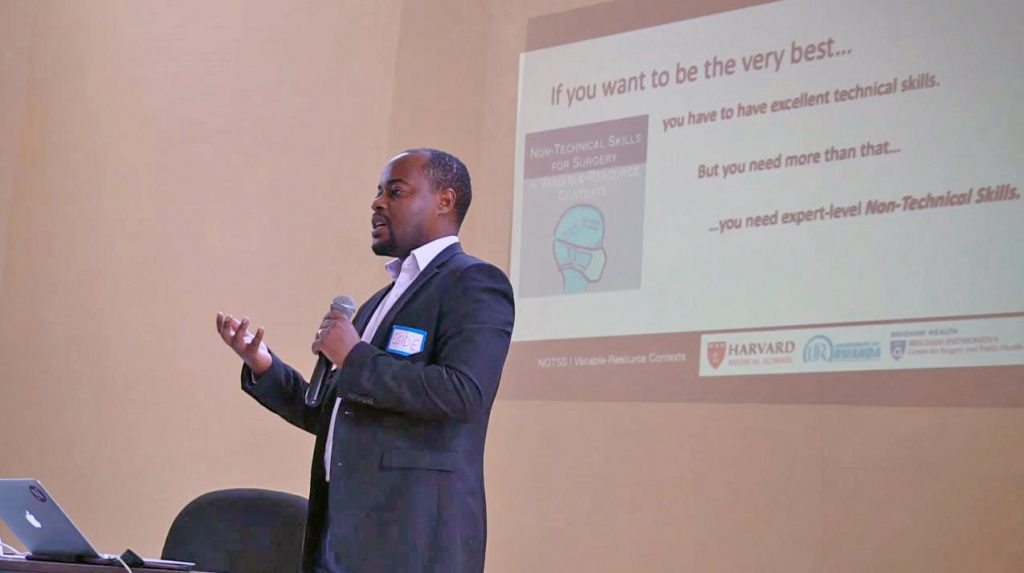
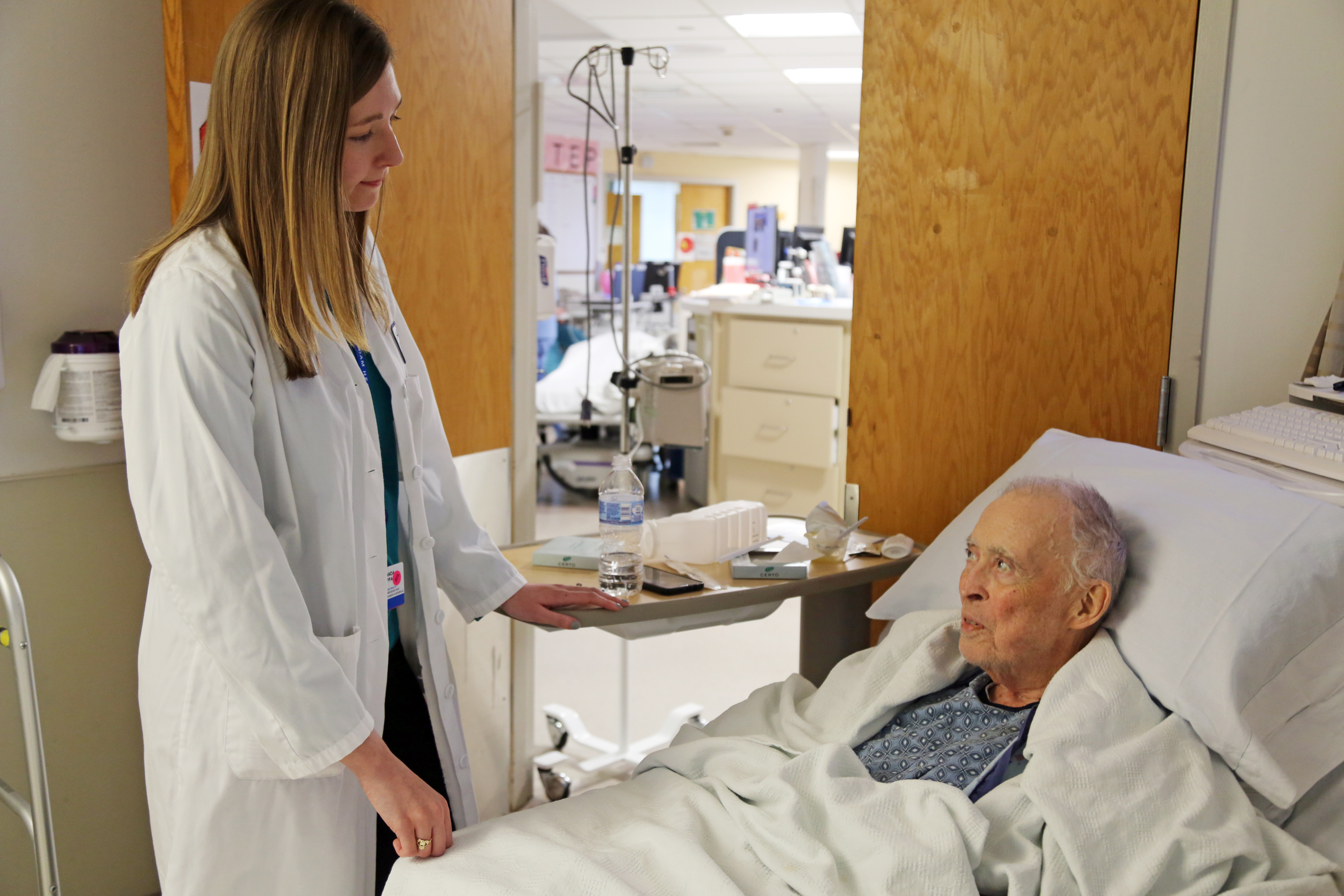
“Research shows that at least 50 percent of adverse events in the operating room come from a deficiency in non-technical skills, stemming from misperceptions of a situation, lack of communication or incomplete communication,” said Riviello, also an associate surgeon in the Division of Trauma, Burns and Surgical Critical Care.

Cultivating Sustainability

The journey to implementing NOTSS training started in 2013, when Georges Ntakiyiruta, MD, former chief of Surgery at University of Rwanda, took part in a simulation course in Scotland.

After completing the course, what impressed him most was not the cutting-edge technology but the concept of non-technical skills and their potential to improve intraoperative behavior and patient outcomes. Ntakiyiruta turned to partners at CSPH to help adapt NOTSS to the Rwandan setting. Using a curriculum based on feedback from dozens of Rwandan surgeons, anesthetists and perioperative nurses, the course has been offered annually at the University of Rwanda the past three years — reaching an ever-expanding and engaged audience.

When the Rwanda NOTSS course first launched in 2016, participants consisted solely of surgical residents. On the team’s second trip in 2018, university faculty opened the course to anesthesiologists, general practitioners, gynecologists, nurses and obstetricians — a move directly inspired by feedback from attendees about which other types of providers are most commonly involved in surgical care in Rwandan hospitals.

The initiative is just one of many collaborative efforts the Brigham has pursued in Rwanda, partnering with Rwanda’s efforts to rebuild and innovate in the health care sector as part of its remarkable recovery from a devastating civil war.

The most recent two-week trip marked a new milestone for the NOTSS training program. Organizers debuted their first course for 16 local instructors, with the goal of creating a multiplier effect as these instructors disseminate their new skills across Rwanda’s 44 district and provincial hospitals (akin to community hospitals in the U.S.), an initiative driven by Rwanda Surgical Society leadership.

“We thought training instructors would help the NOTSS course scale up and become more sustainable — putting it in the hands of local people, rather than having instructors fly in from the U.S. or Europe,” said Abahuje, who was introduced to the course as a resident in Rwanda three years ago before joining the Brigham.

Egide Abahuje leads NOTSS training at the University of Rwanda.

Egide Abahuje leads NOTSS training at the University of Rwanda.

After undergoing their own training, the new instructor cohort led NOTSS courses for perioperative nurses, non-physician anesthetists and residents in the University of Rwanda’s surgical, anesthesiology, and obstetrics and gynecology programs.

“It was great for me to see people from different professional backgrounds taking the course,” Abahuje said. “They said that during their medical training they had never been exposed to the concepts in this course, yet they found it just as important as learning technical skills.”

Riviello said it’s been exciting to see the program grow these past few years. Based on the team’s initial successes, they are working with the College of Surgery of East, Central, and Southern Africa — the region’s independent body for postgraduate surgical education and training — to implement NOTSS training across Africa.

“Sustainability comes with sustained effort, and training more instructors is essential,” Riviello said. “We want to create more in-country expertise and enthusiasm around non-technical skills for surgery, and part of that is identifying champions and leaders, such as Egide, who will continue to promote this effort.”

Incorporating Feedback

Customizing some components of the course based on input from Rwandan participants has been essential to its success, he added.

For instance, the U.S. version of the course is mostly taught through videos of simulated operating room scenarios filmed at the STRATUS Center. During the curriculum development phase, Riviello and his team heard from Rwandan surgical providers that the scenes didn’t feel relevant to what they see most days; even though the NOTSS course doesn’t teach technical surgical skills, depictions of unfamiliar settings and uncommon procedures inadvertently became a distraction.

The team used this feedback to improve the curriculum, working with a local film school and Rwandan faculty, medical trainees and operating room personnel to refilm the videos in a more authentic setting. In addition, they also selected different simulations to depict and redesigned them to reflect a resource-variable setting.

One of the original videos, for example, showed a minimally invasive operation to treat acid reflux, but participants said they had trouble relating because they rarely perform minimally invasive surgeries and the country has a low incidence of acid reflux; the condition is more common in the U.S. due to the prevalence of obesity, Riviello explained.

“The content of what we teach is the same, but the context is different,” he said. “You need something that feels familiar to pull people toward the desired outcome: engagement with the videos, course facilitators and the small-group discussions.”


Did You Know…?

Steven Yule, PhD, who oversees the Non-Technical Skills Lab at the Brigham, was the principal investigator of the team that first developed the non-technical skills for surgeons (NOTSS) framework at the University of Aberdeen in Scotland in 2006. This month, Yule and Riviello will lead a colloquium at the Royal College of Surgeons of Edinburgh’s International Conference on Surgical Education and Training, bringing together surgical education leaders from Africa, Europe and North America to consider how best to scale NOTSS for the region.

Amanda Scippa visits Robert McAuley on Tower 8A to discuss his nutrition plan.

Amanda Scippa visits Robert McAuley on Tower 8A to discuss his nutrition plan.

If you’re a patient of the Brigham’s clinical dietitian team, you won’t necessarily find yourself instructed to eat celery and broccoli all day.

“We find a lot of misconception about what ‘nutrition’ means and what dietitians do,” said Amanda Scippa, RDN, a clinical dietitian in the Department of Nutrition. “It’s important to know we aren’t here to judge what someone eats or automatically recommend low-calorie meals; we work closely with our patients to create personalized nutrition plans to help their bodies strengthen and heal,” said clinical dietitian Caitlin Blakeley, RDN.

It’s all part of the Brigham’s evidence-based, patient-centered nutrition program.

On any given day, the Brigham’s clinical dietitians manage patients requiring nutrition support, complete nutrition consults, work with multidisciplinary teams and participate in patient rounds. These responsibilities coincide with caring for some of the most nutritionally complex patients, including those with severe burns or cystic fibrosis, who require prescriptions for intravenous nutrition therapy and tube feeds.

“Within 24 to 48 hours of when a nutrition consult is placed, we work with care teams to assess patients for malnutrition, collect diet information and develop a nutrition plan,” explained Blakeley, who works closely with the Lung Transplant team. “It’s our job to ensure our patients’ dietary needs are met as part of their overall care plan.”

To do so effectively, the duo underwent a rigorous training process, including an 11-month internship, which included more than 1,200 practice hours in acute-care clinical nutrition, outpatient nutrition services, community nutrition, food service management and nutrition research. Upon passing their registered dietitian nutritionist (RDN) exam, Blakeley and Scippa joined the Brigham as entry-level dietitians in 2016 on the same day.

Caitlin Blakeley meets with patient Matthew Smith on Tower 14B.

“I feel like an expert on how to feed complicated nutrition patients, which is professionally validating,” Scippa said. “Oftentimes, nutrition is a significant barrier to a patient’s well-being, which is really motivating to us as clinical dietitians; we want to do everything we can to remove that barrier.”

It’s motivational to the newest class of dietetic interns as well, whom Scippa and Blakeley now supervise, teaching them how to interview patients, track clinical progress and provide the best possible care.

“Nutrition is so valued here at the Brigham,” Blakeley emphasized, adding that she enjoys working with her team and interacting with her patients each day. “It’s really rewarding to see patients improve and to know that the right nutrition care can help them get better.”

“Behind the Scenes at the Brigham” is a monthly series in Brigham Bulletin that provides a glimpse of the people whose everyday contributions help make the Brigham a world-class institution. Is there an individual or team you’d like to see featured? Send your ideas to bulletin@bwh.harvard.edu.

Richard Duclos displays a meal featuring locally sourced kale pesto and squash.

Richard Duclos displays a meal featuring locally sourced kale pesto and squash.

Whether it’s lunch at the Garden Café or an inpatient meal, chances are one of the ingredients comes from a local source.

With the goal of continuing to serve locally grown produce to the Brigham community, the Food Services team is building relationships every day with New England farmers and businesses that supply such items. Most recently, Food Services began collaborating with Dorchester-based CommonWealth Kitchen to bring more of these products to the Brigham.

CommonWealth Kitchen is a nonprofit that provides access to commercial-grade kitchens and business assistance to help aspiring entrepreneurs build food companies, create jobs, improve healthy food access and strengthen the regional food economy. A self-described “incubator” of up-and-coming food wholesalers, food trucks and caterers, CommonWealth Kitchen is beginning to manufacture food for some of Boston’s biggest institutions.

Thanks to this partnership, Food Services has introduced new items to the inpatient and Garden Café dining menus, such as eggplant meatballs, made with eggplant from the Joe Czajkowski Farm in Hadley. Other new menu items include falafel, kale pesto and butternut squash.

Howard Hiatt, MD, a physician, scientist, educator and mentor whose career spans seven decades, continues to heed the call to service. At 93, the co-founder and associate chief of the Division of Global Health Equity eagerly seeks to elevate the next generation of health care professionals and push the boundaries of health equity locally and globally.

Among his long roster of mentees was the late H. Richard Nesson, MD, former president of the Brigham and first CEO of Partners HealthCare. Nesson had trained under Hiatt as a resident at Beth Israel Hospital, where Hiatt was chairman of its Department of Medicine before accepting an appointment as dean of the Harvard School of Public Health.

Howard Hiatt

Howard Hiatt

Nesson eventually followed his mentor to the School of Public Health — where Hiatt served a 12-year tenure defined by his transformation of the school’s approach to teaching public health — before coming to the Peter Bent Brigham Hospital. Shortly after Hiatt stepped down from his deanship, his former mentee, by then serving as president of the hospital, invited Hiatt to join the Brigham family.

Hiatt said it quickly became clear how he could make a difference here.

“Two of the residents whom I knew said to me, ‘We’re interested in global health. Would you work with us?’” Hiatt said. Those two residents were Paul Farmer, MD, PhD, and Jim Yong Kim, MD, PhD, co-founders of Partners In Health.

Along with Hiatt and Victor Dzau, MD, then the chair of the Brigham Department of Medicine, they consolidated and confirmed their global efforts with the launching of the Division of Global Health Equity at the Brigham in 2001. In recounting the story, Hiatt points out a framed photo on the wall of his office in One Brigham Circle today: a jubilant group shot of the team taken the day the Division was born.

Gaining Traction

Nearly two decades later, the Division of Global Health Equity has made innumerable contributions in reducing disparities in disease burden and improving outcomes here and abroad. It also boasts a novel residency program in global health equity, launched in 2004, that combines rigorous training in internal medicine with the advanced study of public health.

“We knew that the creation of a residency in global health equity for young physicians was the most important step to be taken by the new division,” Hiatt said in a recently published biography, Howard Hiatt: How This Extraordinary Mentor Transformed Health with Science and Compassion. (The biography is authored by Mark Rosenberg, MD, who is, perhaps unsurprisingly, one of Hiatt’s former students and mentees.)

While the concept had enthusiastic backing from hospital leaders, there were challenges — notably, funding.

“The Brigham residency program, like those in every American teaching hospital, is supported by federal funding from Medicare, but this funding is restricted to programs that train physicians for medical care in the U.S.,” Hiatt noted in the book. “A residency in global health, directed at patients in other countries, must find its funding elsewhere. Therefore, we were going to have to do some serious fundraising.”

Hiatt turned to the best financial advisor he knew: his brother, Arnold, who recommended he reach out to a close friend, Francis Hatch Jr., a businessman, philanthropist and former state politician. After a series of meetings, Hatch extended financial support for the division’s faculty and trainees. To acknowledge his contributions, Hiatt suggested the faculty-funding program be named after Hatch, but Hatch declined.

“He would not welcome such an arrangement. Only after rather extensive discussions did he agree to permit his name to be used for the faculty endowment — with a condition,” Hiatt said in the book. “I would [have to] agree to have my name on the future residency program. I was no more eager than he to have my name used, though for a different reason. I saw the naming rights as an enticement for a serious donor who might endow the residency, and I was reluctant to give it away for free, as it were.”

Ultimately, Hiatt agreed to the condition, and the program continues to bear his name and that of his late wife, Doris.

In the book, Rosenberg closes this story with an important clarification: “What Howard left out was that Frank Hatch wanted to have Doris and Howard Hiatt’s name on the residency program because Doris and Howard had, in their push for global health equity, done so much for so many for so long.”

Shaped by Mentorship

It is difficult to overstate the scope of Hiatt’s influence of public health, which continued after his departure from the deanship. With Harvard Law professor Paul Weiler, LLM, he spearhead the landmark 1991 Harvard Medical Practice Study, described as the largest and most comprehensive investigation ever of the medical malpractice system’s performance. Closer to home, he collaborated with then-Brigham colleague Lee Goldman, MD, MPH, to establish the Program in Clinical Effectiveness, a joint program between the Brigham’s Department of Medicine and the Harvard School of Public Health to bring quantitative sciences into physician training. This program continues, so sought after that the School of Public Health eventually enlarged its biggest auditorium to accommodate the demand.

But for his many accomplishments, Hiatt is most at ease talking not about himself but rather his effusive admiration for his mentees and his appreciation for those who nurtured his own growth. There is another framed photo in his office — a black-and-white portrait of a smiling scientist examining a specimen — that serves as a subtle but meaningful homage to the advisor who had such a profound effect on him.

Hiatt was just a few years out of medical school when he met the man who altered the course of his life and career. It was the early 1950s, and Hiatt, then in his mid-20s, had been invited to join a new endocrinology unit at the new National Institutes of Health (NIH) Clinical Center in Bethesda, Md. Construction of the unit had been delayed due to a labor strike, however, and Hiatt arrived to find that his position was on hold. Not wanting to be idle, as he later put it, he found his way to the research lab of an NIH biochemist whom he had never met before: Bernard Horecker, PhD.

Horecker happily took Hiatt under his wing and served as a caring, supportive mentor for the young physician who, until that point, had little experience in the lab. Working under Horecker, Hiatt found a passion for science and flourished as an investigator. After two years, Hiatt accepted a clinical position at Beth Israel Hospital back in Boston, but Horecker continued to serve as a dedicated mentor.

“At one point, Horecker said to me, ‘If you want to really do serious science, you ought to learn something in this new field of molecular biology,’” Hiatt recalled. One hub of molecular biology then was the Pasteur Institute in Paris. Horecker urged him to go, and, to Hiatt’s surprise, his department chair at Beth Israel agreed. Once accepted to the institute, Hiatt joined the research team that went on to prove the existence and function of messenger RNA — a tremendous breakthrough.

Described in the biography, the story is among the first to illustrate how much mentorship has shaped Hiatt’s prolific career.

“When you consider how crucial mentoring has been in my life, you get a sense of why I feel mentoring is not just an obligation but also a privilege,” Hiatt said. “I’ve been very lucky to be involved with so many marvelous young people. Mentoring really has been a wonderful privilege.”

Sonya Shin, MD, MPH, an associate physician in the Division of Global Health Equity who founded, with Hiatt’s encouragement and backing, the Community Outreach and Patient Empowerment (COPE), a PIH-affiliated program in the Navajo Nation, said she has always been touched by the genuine admiration Hiatt shows for mentees like her and her colleagues.

“I’ve often been surprised when he’s provided me with encouragement and admiration. Here is a great man who has stood alongside so many other great leaders. How can I compare?” said Shin, who now serves as a consulting physician at Gallup Indian Medical Center in New Mexico. “Yet Howard genuinely sees greatness in everyone, and his encouragement brings out that talent in those he mentors. It’s not only an amazing gift, but it also means that mentoring is a source of joy and discovery for Howard as well.”

2019 Safety Matters Award Nominations Due March 31

Have you or a colleague gone above and beyond to promote patient safety or implement new and innovative ideas in your department? Do you have a patient safety story to tell? Nominate a colleague, a team or yourself for the sixth annual Safety Matters: Patient Safety Award. Submit a nomination at surveymonkey.com/r/safetymatters2019 by Sunday, March 31.

Joint Commission Survey Update

The Joint Commission (TJC) held the Brigham’s triennial hospital survey the first week of December. During the visit, surveyors found opportunities for improvement that required written evidence of standard compliance to be submitted to TJC within 60 days. The Brigham has been notified that TJC accepted the hospital’s evidence of standard compliance, meaning that the Brigham remains fully accredited and the survey activity is now complete. Faculty and staff must continue to monitor our compliance of TJC survey observations. Learn more.

Introducing Brigham @ Its Best

Do you know how to report a spill? Track a shuttle? Check the Garden Café menu? You can easily do all that and more with the web-based tool Brigham @ Its Best, which takes the guesswork out of requesting services or assistance with a comprehensive, centralized menu of resources for faculty and staff. If you’ve used the Brigham’s FixIt tool before, you’ll be right at home using Brigham @ Its Best. In addition to a new look and feel, Brigham @ Its Best offers several new features, including a search function and simplified directory. Visit best.brighamandwomens.org.

Brigham Experience Focus Groups: Sign Up Today

The Brigham is conducting focus groups for all levels of faculty and staff to facilitate discussion and input about the cultural pillars that our culture squad has drafted. These one-hour focus groups will be held through March 27 with sessions scheduled at locations across our campuses and at times that will accommodate all shifts. To view the schedule and sign up, visit BWHPikeNotes.org.

A charging station on the Pike, located between the Garden Café and the Mary Horrigan Connors Center for Women and Newborns

A charging station on the Pike, located between the Garden Café and the Mary Horrigan Connors Center for Women and Newborns

For those who rely on smartphones and other electronic devices throughout the day, nothing strikes fear in one’s heart quite like the low-battery icon — especially when you’re on the go, with no charger on hand. At the Brigham, a new pilot project is helping to alleviate some of that battery-life anxiety.

The Materials Management team recently installed five portable charging stations in public areas throughout the Brigham’s main campus. Each station is equipped with six charging cords that are compatible with a variety of devices, including mobile phones and tablets. They can be accessed 24 hours a day, seven days a week, and at no cost.

Using each station is simple: Find the right cord for your device, plug it in and wait for your device to charge (do not leave your device unattended). There is a counter-like platform on the top of the charging station where you can rest your device while the battery charges.Pete Linck, manager of Office Services, who helped get this pilot off the ground with his Materials Management colleagues, hopes many people find the stations useful.

Map of charging station locations

Click to enlarge.

“Whether you’re coming to the Brigham for a planned visit or you find yourself at the hospital unexpectedly, we want to do everything we can to make sure you stay connected — at all times — while you’re here,” Linck said.

Patrick Lally, retail manager at the Brigham’s Shop on the Pike, who also helped launch the pilot, said many customers who’ve visited the shop over the years had recommended that the hospital install charging stations. He’s thrilled the stations are ready for use and looks forward to receiving feedback.Jonathan Santiago, director of Materials Management, said it has been fulfilling to witness the collaboration among his colleagues to get this pilot started. He said his team members are passionate about it because they understand that it’s about more than just keeping devices charged; it’s about ensuring that patients and their loved ones never have to worry about not being able to stay in touch.

“It’s one less stress they have to worry about,” Santiago said. “By providing these charging stations at high-traffic areas throughout the hospital, it adds to the exceptional care that patients and their loved ones experience at the Brigham.”

For questions and to submit feedback about the pilot, email BWHCellPhoneCharging@bwh.harvard.edu.


Stronger Together Brigham Values LogoShaking up an otherwise uneventful winter, a fast-moving storm delivered 13 inches of snow to Boston on March 4. The Facilities team was hard at work throughout the day to clear snow around the main campus to ensure patients, visitors, faculty and staff could safely access the Brigham during and after the storm.

Tamara Barber (second from left) with her family on her final day of chemotherapy last December.

Six years ago, Tamara Barber couldn’t fathom being at risk for colon cancer. It wasn’t just that she had no family history of the disease. Barber was 34 years old.

Yet that was the age when she began noticing persistent abdominal discomfort and rectal bleeding. She initially chalked up the symptoms to something less serious, such as hemorrhoids, and pushed aside any concerns for the next 18 months. “I was thinking, ‘Maybe it’s just my body changing,’” recalled Barber, a mother of three and consumer-market researcher from Sudbury.

As her symptoms continued and then worsened, Barber’s husband prodded her to make an appointment with her doctor. Her primary care physician referred her to Kunal Jajoo, MD, clinical director of the Brigham’s Division of Gastroenterology, Hepatology and Endoscopy, who recommended Barber undergo a flexible sigmoidoscopy exam, a procedure used to evaluate the colon. The mass was quickly evident and soon confirmed as cancerous. Two weeks later, after being diagnosed with stage 3 colon cancer at age 35, she was in surgery.

“It surprised everybody. It had never really occurred to me that it could be anything more than hemorrhoids,” Barber said. “Had it not been for Dr. Jajoo’s intuition to do that first procedure, I am sure I would have ended up in a more critical situation.”

While primarily known as a disease that affects older adults, colorectal cancer is increasingly affecting people under 50. To better support the unique needs of this patient population, Dana-Farber/Brigham and Women’s Cancer Center (DF/BWCC) announced the launch of the Young-Onset Colorectal Cancer Center on March 5.

The center will provide expert, compassionate and cutting-edge care to young-adult colon and rectal cancer patients. Research is also at the heart of the center, which is committed to understanding the growing incidence of colorectal cancer in young adults and developing new ways to prevent, detect and treat it.

Comprehensive Care

Colorectal cancer patients are considered young-onset if they are diagnosed before they turn 50 years old. Since 1994, cases of young-onset colorectal cancer have increased by 51 percent, according to the National Cancer Institute. This rising incidence recently led the American Cancer Society to revise its colorectal screening guidelines to start earlier — at age 45 instead of 50 — for individuals at average risk.

“By the year 2030, colon cancer is estimated to rise 90 percent and rectal cancer to rise by a staggering 124 percent in these young patients,” said Kimmie Ng, MD, MPH, director of the Young-Onset Colorectal Cancer Center and a member of Barber’s care team. “This highlights the urgency of trying to identify new ways to prevent, treat and catch these cancers earlier at a curable stage.”

One of the first of its kind nationally, the new center is supported by a multidisciplinary team that includes surgeons, radiation and medical oncologists, in addition to radiologists with specific expertise in colorectal cancers. In addition, each patient is paired with a program coordinator dedicated to young-adult patients who focuses on the patient’s needs, oversees appointment scheduling and referrals, and serves as a direct point of contact with the treatment team for care coordination.

“The center will address the unique issues faced by these young patients, including therapies that affect fertility,” said Ron Bleday, MD, co-director of the Brigham’s Colon and Rectal Cancer Center, chief of the Division of Colorectal Surgery and a member of Barber’s multidisciplinary surgical team. “We will offer molecular testing to determine the best course of treatment for our patients and, if genetically related, screening for family members is available.”

While Barber became a patient before the center was formally developed, she said she has benefited tremendously from DF/BWCC’s comprehensive, coordinated and compassionate model of care.

“A really good example of this is when I had my surgery. Not only did Dr. Bleday come to visit me and follow up, but also my medical oncologist, radiation oncologist and my gastroenterologist — whom I hadn’t seen in nine months — all stopped by to say hello and check in,” Barber said. “That in and of itself was super touching.”

Last year, Barber’s care team at DF/BWCC spotted a small recurrence of cancer, necessitating radiation therapy, chemotherapy and a temporary ileostomy. As she recovers from that most recent round of treatment, Barber said she is feeling stronger each day and optimistic about the future.

“If the team hadn’t been so comprehensive in their surveillance, I don’t think this recurrence would have been caught as early as it was,” she said. “I feel I’m in good hands with my team — that they’re not going to let me out of their sight for many years to come.”