Posts from the ‘Uncategorized’ category

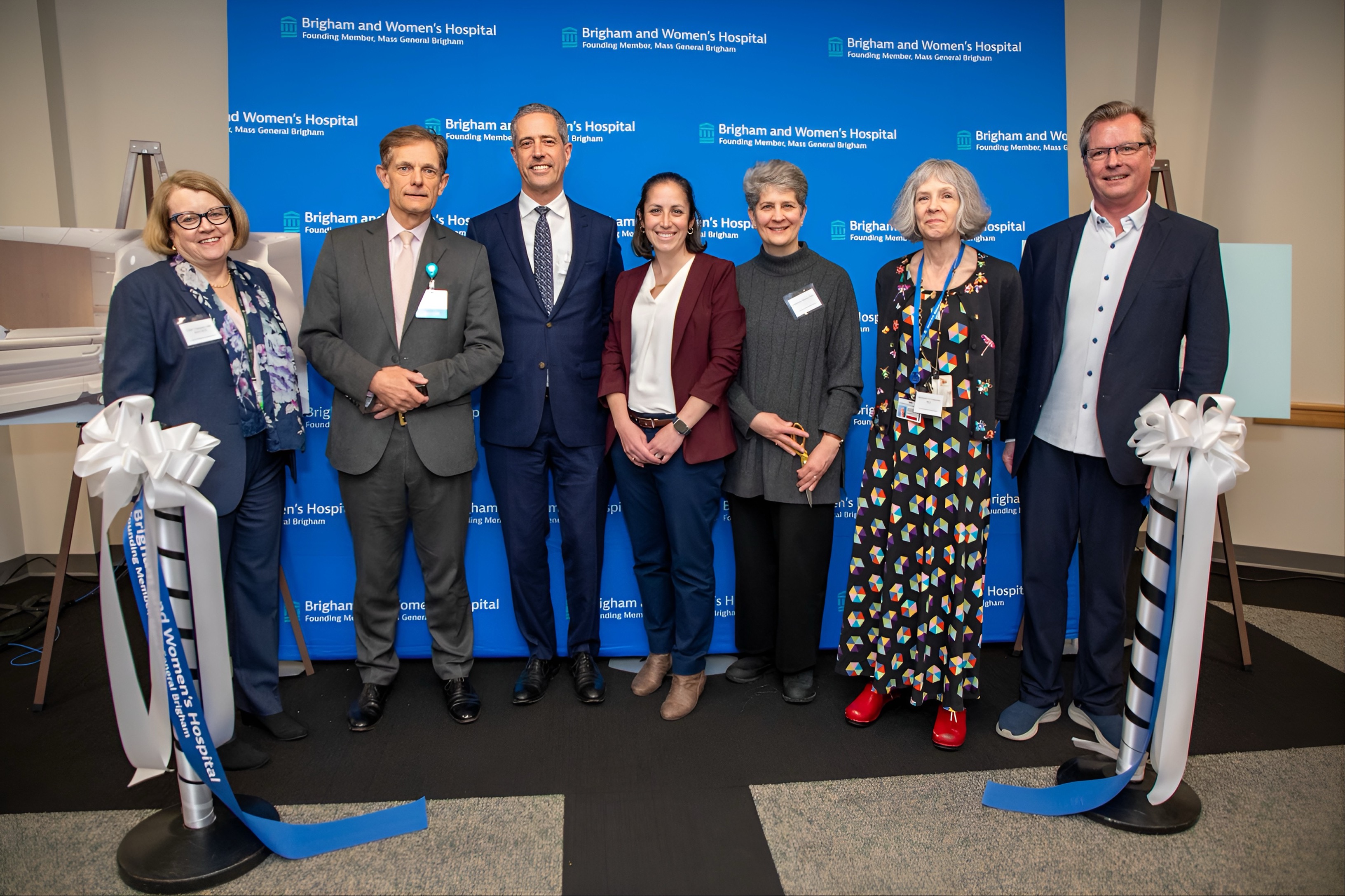
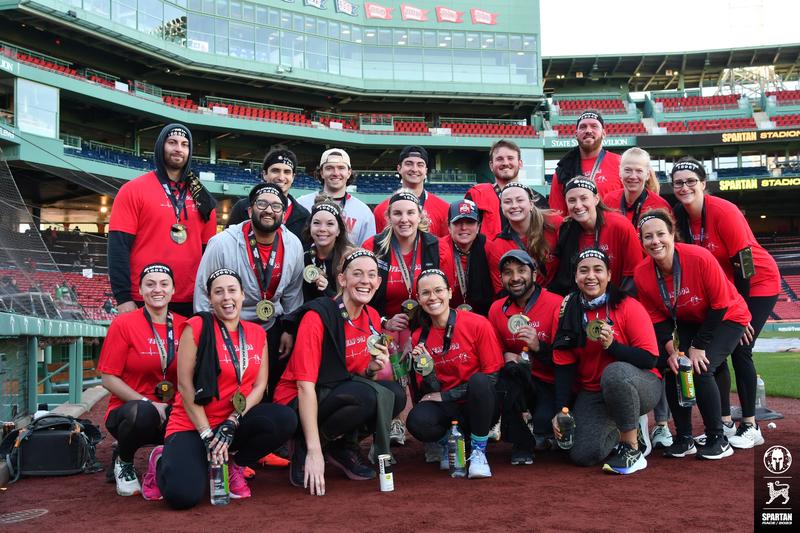
Nursing leaders and staff celebrate the opening day of a new inpatient unit on Shapiro 3 on Sept. 30.

With the opening of 10 beds on Sept. 30, Shapiro 3 officially became a new inpatient unit — capping off the first phase of a two-part project to transform the floor from outpatient clinics to inpatient units. Upon the project’s completion in spring 2025, it will feature a total of 21 patient beds.

The project marks the first new inpatient floor in the Shapiro Cardiovascular Center since the building opened in 2008. It is one of several efforts underway to increase bed capacity across BWH and BWFH to meet continued high demand for hospital care. By next August, when construction is completed across multiple projects at both sites, the Brigham family will collectively gain 121 new inpatient beds. New beds will open for clinical use incrementally during and after this period.

Hospitals across the country have continued to see demand for patient care outstrip capacity since the COVID-19 pandemic. The complex, multifaceted crisis has created a ripple effect across every aspect of clinical operations, from emergency department overcrowding to long delays in ambulatory access.

“We’re excited to have more beds to help meet the Brigham’s unprecedented high demand for inpatient care. This is what our patients need, and it’s been remarkable watching the team come together to make this happen,” said Kevin Giordano, chief operating officer of BWH and the BWPO and president of BWFH. “We know, however, that beds are just one piece of the puzzle. Addressing this crisis means we need to continue working on local initiatives and collaborating across Mass General Brigham to best use our collective resources.”

‘Enablers’ make it all possible

What is striking about the Shapiro 3 project is not just its outcome but also the intense coordination and collaboration that made it possible.

Through a series of nine finely orchestrated, interdependent “enabling projects,” each led by a separate project manager, teams across BWH planned and executed the many relocations and renovations. Additionally, project teams collaborated closely with affected departments not only to ensure a smooth process but also to find opportunities to enhance their working areas.

“It was a terrific team effort not just by Real Estate but also every department involved in these projects,” said Sonal Gandhi, MUP, vice president of Real Estate, Planning and Construction. “For each impacted space, staff were part of this process. We asked what they needed while leveraging the opportunity to optimize our limited space, and we incorporated that into the planning. And that’s one of the most exciting aspects of this endeavor. It really is more than the sum of its parts.”

One example of this is a new outpatient clinic at 1285 Beacon St. in Brookline that houses Orthopaedics, Rehabilitation Services and Imaging — bringing together three key clinical services in a convenient, community-based location. The clinic’s February 2024 opening depended on, and enabled, a series of other moves. To help make it possible, about half of Orthopaedics’ ambulatory operations moved out of the Hale building, which in turn allowed Brigham Circle Medical Associates to move from Shapiro 3 to Hale.

James Kang, MD, chair of the Department of Orthopaedic Surgery, said his initial skepticism about the impact of such a big move was quickly put to rest upon seeing the new space.

“At first, I was concerned about the potential challenges this move would create. However, after the new clinic at 1285 Beacon St. was completed, it was clear that it would deliver the same outstanding care and experience we provide at the main campus, with the added bonus of a more intimate atmosphere and convenient location within the local community,” Kang said. “As chair, I am happy that our department was able to help the Brigham make room for the much-needed additional inpatient beds. This well-organized move could not have been orchestrated any better.”

Although Patient Family Relations (PFR) had a much shorter move — across the hall on Braunwald Tower 1 to the Sharf Admitting Center — the relocation also brought unexpected benefits. The team previously shared a space with Admitting staff in the Bretholtz Center, which now houses both surgical and obstetrical admitting.

“Our new, dedicated space has given us the opportunity to connect directly with patients and families in a quiet and supportive space,” said Lynne Blech, MBA, senior manager of Patient Family Relations. “Our conference room allows us to meet directly with patients and families who walk in requesting to speak with us. Additionally, we have been able to conduct in-person family meetings and Patient Family Advisory Council meetings.”

The Admitting and PFR moves set the stage for the Shapiro 2 Family Center to relocate half of its operations to Bretholtz, which in turn enabled the Watkins Cardiovascular Clinic to consolidate its three clinics into a single, combined physical space on Shapiro 2. Previously, Watkins occupied three separate suites across Shapiro 2 and 3.

“Transitioning from three separate clinics — with three separate waiting rooms — to one large clinic with one waiting room helps improve patient, provider and staff experience,” said Greg Bloom, MHA, director of Ambulatory Operations for Watkins. “Having one check-in space has improved wayfinding and reduced patient confusion about the location of their visit. More subspecialties in one area increases real-time provider-to-provider communication to discuss complex patients. And having all staff on one floor makes it easier to handle last-minute call outs, lunch coverage and other coverage needs that occur during the day.”

Julia Mason, DNP, MBA, RN, CENP, chief nursing officer and senior vice president of Patient Care Services, expressed gratitude for the many teams involved in the planning process, execution of moves and opening of Shapiro 3 as an inpatient unit.

“Providing the best care for our patients is at the heart of these efforts,” she said. “Thank you to the many teams involved for your incredible collaboration, dedication and patience throughout this process.   We remain committed to addressing capacity challenges from every angle, both as a hospital and across the system.”
1 Comment

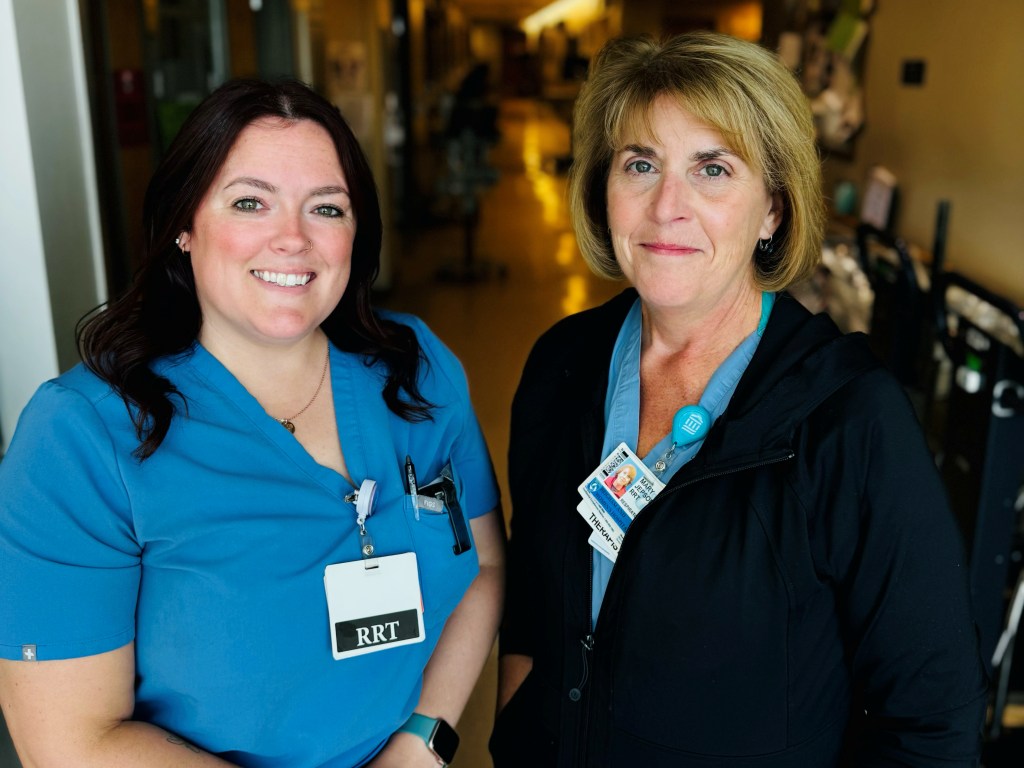
From left: Founding members of the Tracheostomy Team, respiratory therapists Ashley Grace and Mary Jepson

Respiratory therapists Ashley Grace, RRT, and Mary Jepson, RRT, recently reflected on one of the many patients who left an indelible impression on them.

Grace remembers the moment she placed a cap on the patient’s tracheostomy or “trach” tube — a surgical opening in the lower throat that provides an alternative airway for breathing — allowing them to use their upper airway again and restoring their ability to speak.

Jepson called the patient’s sisters, who cried tears of joy because they had not heard their sibling’s voice in months.

Two days later, Grace told the patient, “You look amazing.”

“I look amazing because of you,” the patient responded.

Moments like these have affirmed for Grace, Jepson and their colleagues the need to provide more intensive, dedicated support for patients with tracheostomies. To support this goal, Pulmonary Services recently launched an interprofessional Tracheostomy Team, aimed at delivering specialized care to support this patient population.

Respiratory therapist and educator Susan Sullivan, RRT, has been a driving force in bringing the team to fruition. The program’s goals include providing safe and high-quality trach care, standardizing order sets, optimizing communication between services, and quickly identifying patients who will benefit from a speaking valve, capping trial and decannulation (removal of the trach tube) when safe. Decannulation is an important milestone for trach patients because it means they will progress to rehabilitation or return home.

The team is also structured to enhance family and patient education, improving discharge safety as well as patient satisfaction.

“I am so proud of the hard work and care provided by the Trach Team,” Sullivan says.

Thanks to the establishment of the new team, Grace and Jepson say they can dedicate more time with tracheostomy patients to help them achieve their goals of care and provide extended patient education. In addition to enhancing quality and safety, the effort has enabled Grace and Jepson to establish closer connections with both patients and their families.

“In the past couple of months that Ashley and I have been working with these patients, we’ve had some great successes,” Jepson says. “I feel really good about the work we’ve done just in this brief period of time.”

‘Making a huge difference’

An important function of the team is enhanced communication. Respiratory therapists, nurses, physicians, care coordination staff and speech therapists meet weekly to discuss the care and progression of each patient. Biweekly meetings are held to discuss what is or is not working well within the team. A larger group of multidisciplinary clinical leaders meet with the team monthly to exchange feedback as well.

Prior to the team’s launch, Pulmonary Services performed an estimated two decannulations per month. Now, they perform about four per month, for a total of 35 decannulations since April. The Tracheostomy Team has also seen more patients discharge directly home, rather than to a rehabilitation facility, says Jill Robinson, MHA, RRT-NPS, director of Pulmonary Services.

“Even though it’s not an enormous number of patients, you’re making a huge difference in the lives of those who need this specialized care,” she says.

Another change the team implemented was to create consistent expectations for when patients should reach milestones like capping a trach tube, inserting a speaking valve or decannulation.

Brian Yorko, MBA, BSN, executive director of Inpatient and Clinical Services, describes how these changes have enhanced patient satisfaction and overall quality of life.

“The team pulled together standardized orders and documentation to create a process for consistent care across the Brigham,” he says. “Patients can return as quickly as possible to their normal lifestyle.”

The key to the success of the program, Yorko emphasizes, is collaboration.

“A hub-and-spoke model, with the patient in the middle, creates better teamwork and better patient outcomes,” he says.

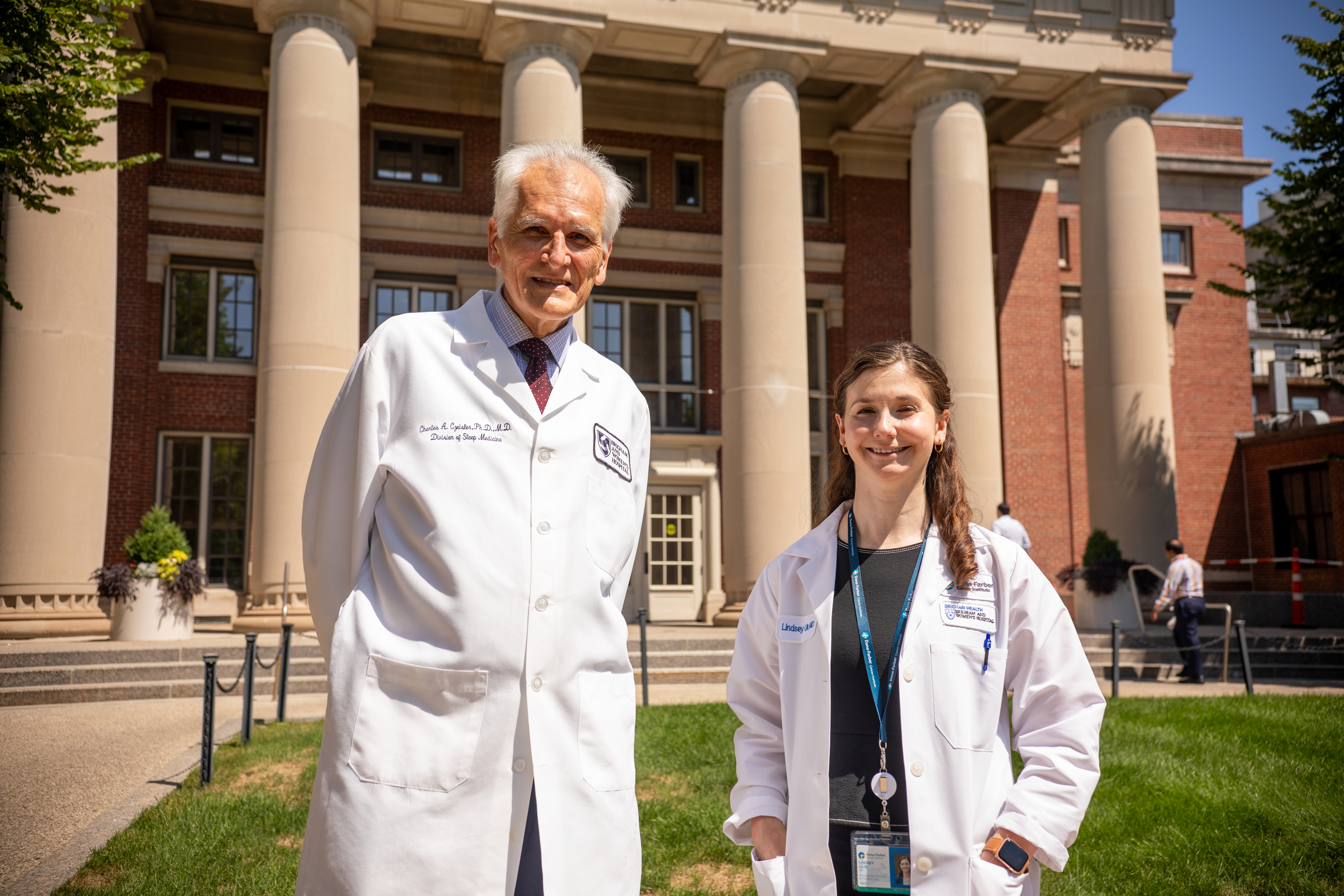
From left: Charles Czeisler and Lindsey Ulin

Brigham resident Lindsey Ulin, MD, was on a Southwest Airlines flight in 2023 when her face and chest began to feel hot and itchy. Her sister, sitting beside her on the plane, noticed Ulin was breaking out in hives. A few moments later, she began to have trouble breathing.

As a physician, Ulin immediately recognized the terrifying symptoms of anaphylaxis, a life-threatening allergic reaction. Through her panic and confusion — to her knowledge, she had no food or medication allergies — she knew the one thing she needed was epinephrine. But when Ulin and her sister flagged down a flight attendant to get help, they couldn’t believe what they heard next: The airline’s on-flight emergency medical kits didn’t contain epinephrine auto-injectors, known more commonly by the brand name EpiPen.

Their only option was epinephrine in a vial, which would need to be dosed appropriately, drawn into a syringe and injected into muscle — actions that take time, precision and medical expertise. Ulin survived the ordeal only because there was another physician on the flight who assisted.

“Once I was stable and getting close to being able to leave the hospital, I started looking into this because I really could not fathom how this was legal, and I was horrified to find out it wasn’t just Southwest,” said Ulin, now a Palliative Care fellow at the Brigham, who wrote about her experience in a Boston Globe op-ed that attracted the attention of key lawmakers. “It was every airline, and the FAA hasn’t required them to update their kits since 2006.”

Exactly 40 years prior, a different revelation about flight safety had come to light — not quite as acute, but no less impactful.

Charles Czeisler, MD, PhD, then just starting out his career as a sleep medicine physician and researcher, testified before Congress in 1983 about how air traffic controllers’ grueling work schedules contributed to fatigue and exhaustion — endangering not only their health and safety but also the public at large. It was an open secret that they dozed off on the job or napped at work. During their commutes home, one in three reportedly fell asleep behind the wheel. After hearing testimony about this from Czeisler and other experts, then-Rep. Al Gore of Tennessee challenged Federal Aviation Agency (FAA) officials to explain these work schedules, demanding to know how they could be safe.

And yet, little has changed since then. So, when Czeisler was tapped for his expertise again last December — this time, to serve on scientific panel advising the FAA on how to address fatigue among air traffic controllers — he felt he had a duty to participate. Then again, the solution hadn’t changed in four decades: Air traffic controllers needed more rest between shifts. Would policymakers listen this time?

“If air traffic controllers are so tired they can no longer focus, it can have horrible consequences,” said Czeisler, who serves as chief of the Brigham’s Division of Sleep and Circadian Disorders. “It’s like being an alcohol researcher and seeing people drink and drive. You would feel an obligation to champion efforts to change public policy. It’s no different with sleep deprivation. That’s why I have continued this work for the past 40 years.”

Although Ulin and Czeisler have traveled different paths, they share the same destination: making the skies safer for travelers nationwide. Using their time, talents and platforms, both BWHers’ tireless advocacy succeeded in helping enact new FAA policies designed to enhance the health and safety of people in the air and on the ground.

‘The power of community’

To help get her message out, Ulin worked closely with Mass General Brigham’s External Communications and Government Affairs teams on writing an op-ed and bringing it to the attention of lawmakers, including Sen. Ed Markey of Massachusetts and Sen. Tammy Duckworth of Illinois. She also drew on the experiences of her co-residents and mentors, many of whom had participated in advocacy and policy work before.

“Anybody can tell their story, but it takes knowledge and skill to do it in a way that reaches the right person at the right time,” Ulin said. “Government Affairs helped me get meetings with staffers for Sen. Markey’s office a year ago and taught me how to pitch my message effectively, since they have such limited time. I was very excited to see him team up with Sen. Elizabeth Warren. It was great to leverage the power of community we have here at MGB.”

Through her efforts, Ulin also discovered many others had been championing this issue for years already, including the Asthma and Allergy Foundation of America, and she was humbled to add her voice to the chorus demanding change.

This May, Congress passed legislation that will require the FAA to update its on-flight emergency medical kits to include, among other things, an epinephrine auto-injector. The law also requires the FAA to reevaluate kits’ required contents every five years, ensuring they contain supplies that are aligned with the latest medical advances.

“I think it speaks to the long game with advocacy. Change takes a long time, but it can happen,” she said. “My main message for other trainees is to lean on the network you have here and get involved with things you haven’t tried before. You don’t know the impact you can have. A lot of us are attracted to places like the Brigham to learn how to be good doctors, but there is so much more we can do with this platform.”

‘A once-in-a-generation opportunity’

After being tapped for a three-person scientific panel last December, Czeisler and colleagues spent the next 10 weeks reviewing scheduling data for more than 10,000 air traffic controllers, conducting 25 meetings and interviews, and visiting four air traffic controller facilities around the country. In all, their 114-page report contained more than 50 recommendations to reduce fatigue risks. To Czeisler’s amazement, the report had immediate policy impact, leading FAA Administrator Michael Whittaker to issue a directive to increase time off between shifts within 90 days.

The nature of air traffic controllers’ work requires intense, continuous vigilance for sustained periods of time. They often work what is described as a “counterclockwise” rotating schedule, meaning shifts start earlier and earlier as the week goes on — working against humans’ natural circadian rhythms.

And the riskiest aspect of scheduling, panelists argued, is the widespread use of a “rattler” shift, in which a controller works both a day shift and an overnight shift in a single 24-hour period, with only nine hours off in between, allowing insufficient time to commute home and get enough sleep before returning to work.

This July, the FAA and the union representing air traffic controllers announced an agreement to implement several key recommendations from the panel, which also included former Brigham researcher Erin Flynn-Evans, PhD, MPH, who now serves as director of the Fatigue Countermeasures Laboratory at NASA, and Mark Rosekind, PhD, a former Executive Council member of Harvard Medical School’s Division of Sleep Medicine who served as a member of the National Transportation Safety Board and administrator of the National Highway Transportation Safety Administration.

Starting next year, air traffic controllers must receive at least 10 hours off between shifts, and at least 12 hours off before and after an overnight shift. Controllers will also have new limitations on the number of consecutive overtime assignments they can accept.

For Czeisler, who has been studying this population since he was a medical student, the swift and decisive response was nothing short of joyous.

“It’s a once-in-a-generation opportunity to have someone at the very highest level taking this important safety issue into consideration, and we were very pleased to see such action,” he said.

Czeisler hopes that public officials will continue to be receptive to the input of medical experts, whose knowledge of biology and physiology can make systems safer for everyone, he added.

“As physicians, we often have a special perspective — having either done the research or treated patients with a particular condition,” Czeisler said. “If health care providers and scientists don’t have a seat at the table, these decisions are often hashed out between labor and management, who might not focus on solutions that also improve health and safety. I think we have an obligation to be that voice.”

Jaclyn Lerner (lower right photo) leads a recent grocery store tour with Brookside patients and families.

Jaclyn Lerner, RDN, a community nutritionist at Brookside Community Health Center, is passionate about teaching patients and families how to make nutritious, tasty and budget-friendly choices when meal planning.

Usually, it is a conversation she has during their appointments at Brookside. These days, however, that is not the only setting. Somewhere between the produce section and frozen-food aisle of a Jamaica Plain Stop & Shop, Lerner can be found teaching patients how to interpret ingredient lists, nutrition labels and front-of-package information on common food items.

Since March, she has collaborated with the store to host educational grocery store tours for patients and families, with the goal of helping them make informed decisions about their food purchases. During the hour-long sessions, offered in both English and Spanish, Lerner maneuvers a small group through the supermarket while sharing her expertise and offering practical tips for shopping on a budget, including comparing unit prices, opting for store brands, and selecting frozen and canned produce.

“Having these discussions directly in the grocery store has advantages over the office,” Lerner said. “Patients will go down the aisles with me and say, ‘Oh, this is the product I usually get.’ We can pick it up right there and talk about prices and what keywords to look for on the packaging.”

That was the case for Brookside patient, Dorchester resident and mom of four Luz Mederos-Dorleans, who recently attended one of the family-oriented sessions with her 8-year-old daughter, Sophie.

“Just learning to look for whole grains or whole fruit in the ingredients — those were great conversations to have with my daughter, and she had great questions too. She said, ‘We see all these words, but what do they really mean?’” Mederos-Dorleans said. “It was also so helpful to learn about the advantages of buying frozen veggies. I was so tied to just getting fresh, but frozen can be just as good while being more affordable and lasting longer.”

Thanks to a $5,000 grant from food and beverage company Danone North America, participants receive a $75 grocery store gift card after completing the tour. While the incentive undoubtedly sparked strong interest initially, Lerner said the program’s continued success has been fueled by the engaging and personalized program.

“I’ve had a lot of feedback on unit price. People will say, ‘I never paid attention to that little number in the corner,’ and they really appreciate understanding how to interpret it,” Lerner said. “Another important benefit is about half of our patients speak Spanish as their primary or only language, so this is an opportunity to highlight useful terms on the packaging they might not recognize in English such as ‘whole wheat’ or ‘lean.’”

Mederos-Dorleans said she and her family were excited to apply what they learned during their next shopping trip.

“We had a blast. My daughter was really invested in learning more about different fruits like dragonfruit, which we wound up buying the other day,” Mederos-Dorleans said. “Chocolate hummus and veggies are also now a ‘cool’ thing in our home.”

While the tours will conclude after the grant funds are depleted, it is just one of the many ways the Brookside team works to dismantle health inequities and help patients achieve good health.

That commitment is part of what keeps Mederos-Dorleans and her family coming back to Brookside.

“It’s a community. It feels welcoming,” she said. “People there know our girls. I’m often looking to see what other programming is offered. It’s just been a really great experience in regard to my kids’ health and teaching them to take it seriously from an early age.”

Brigham and Women’s Hospital mourns the loss of Christopher Fletcher, MD, FRCPath, professor emeritus at Harvard Medical School and senior pathologist at the Brigham. Dr. Fletcher died on July 28 at the age of 66.

A member of the Brigham community for nearly 30 years, Dr. Fletcher was recruited from the University of London by Ramzi Cotran, MD, then chair of the Brigham’s Department of Pathology. Dr. Fletcher served as the director of Surgical Pathology for nearly two decades before becoming vice chair of Anatomic Pathology. Since 2000, Dr. Fletcher also served as chief of Onco-Pathology at Dana-Farber Cancer Institute. In 2023, he retired to the position of professor emeritus to devote more time and energy to his family.

“Chris was the finest surgical pathologist of his generation and an even better person,” said longtime colleague Jon Aster, MD, PhD, deputy chair of Pathology. “No one worked harder for the good of patients, clinicians and trainees, and yet he also made the work great fun, partly through his frequently irreverent sense of humor. People were attracted to him because a few minutes with Dr. Fletcher always seemed to brighten one’s spirits. He was an inspiring leader.”

Widely recognized as one of the world’s foremost surgical pathologists, Dr. Fletcher revolutionized the classification of soft tissue tumors. His groundbreaking research and clinical innovations set new standards and advanced tumor classification, allowing for more effective treatment of patients with cancer. His extensive body of work includes nearly 600 original journal articles and more than 150 books, book chapters and review articles. In 1995, Dr. Fletcher published the first edition of his award-winning textbook, Diagnostic Histopathology of Tumours, which is still considered the definitive resource for tumor pathology.

Equally as important to his research was his commitment to education and mentoring. Colleagues and trainees emphasized that one of Dr. Fletcher’s most enduring contributions is the generations of pathologists and other clinicians who benefited from his teaching, mentorship and ample generosity.

“Some of my fondest memories of Chris include watching him hold forth at teaching conferences,” said Aster. “Beyond his encyclopedic knowledge and remarkable talent as a diagnostician, he loved to teach, and he did so with vigor and humor in equal measure.”

Throughout his career, Dr. Fletcher recognized the vital role of pathologists-in-training and support staff in the shared mission of exceptional patient care. He was deeply admired by residents and fellows for his unwavering support and advice, as well as his memorable and engaging teaching style. His entertaining, biannual “Director’s Rounds” were well-known among residents.

“During the Director’s Rounds, he’d pull impossible cases from his files and then, literally, throw groceries at people as rewards for trying to solve the case, describing the findings, coming up with a differential and proposing stains — the biggest prize being a coveted pineapple,” said Mariko Peterson, MD, PhD, chief resident in Pathology.

Dr. Fletcher also cared deeply for the patients he served, using his extensive skill as a pathologist to provide diagnoses for patients from around the world, including those in resource-limited areas. “Dr. Fletcher dedicated himself to teaching the next generation of pathologists and rendering diagnoses to those patients across the globe with rare soft tissue tumors,” said Delia Liepins, director of Operations for Anatomic Pathology.

His passions for pathology, teaching and patient care came together during “sign-outs,” when he was surrounded by junior and senior pathology trainees and faculty. During these afternoon sessions, Dr. Fletcher would examine stacks of challenging pathology cases from around the world, often pro-bono, providing his expert diagnoses and personalized and detailed explanations of his findings. These cases provided a unique educational opportunity for junior colleagues, as they often included rare or previously undiscovered and unreported soft tissue tumors that led to pioneering discoveries.

Throughout his career, Dr. Fletcher received numerous awards recognizing his clinical excellence, research contributions and commitment to education. These included the Clinical Leadership Award from Brigham and Women’s Physicians Organization (2005), the USCAP Board’s Distinguished Pathologist Award (2017) and the American Association for Cancer Research’s James S. Ewing-Thelma B. Dunn Award for Outstanding Achievement in Pathology in Cancer Research (2024). He was also an honorary fellow and member at renowned institutions throughout the world.

Colleagues remember Dr. Fletcher not only as a brilliant researcher and pathologist, but also as a genuinely thoughtful and kind person who made everyone feel important and heard.

“Even as a brand-new resident, I was struck by his deep capacity to care about his patients and everyone in the department — fellow faculty, residents, and lab and administrative staff,” said Peterson. “He used his position to open doors for his colleagues and trainees, and he cared so deeply for all of us. He was an example of what a physician and all-around good person should be, and he’ll always be a presence in our department as we learn how to be doctors.”

“Just before the holidays, Dr. Fletcher would bring boxes of cookies for the staff and hand deliver them and wish everyone a ‘Happy Christmas,’” recalled Liepins. “He would personally wrap bottles of champagne for the managers and again hand deliver the gifts. He always made it a point to connect with all of us — lab staff, administrative staff, managers and trainees. He was a brilliant, world-renowned pathologist with a truly kind soul.”

Born and raised in England, Dr. Fletcher earned his bachelor’s degree in medicine and surgery from St. Thomas’s Hospital Medical School in London in 1981. He completed residency training in histopathology at St. Thomas’s Hospital and earned a doctorate in medicine from the University of London in 1991.

Dr. Fletcher is survived by his beloved partner, Janina Longtine, MD; his three daughters, Amy, Alexandra and Fenella; his son-in-law, Joshua; his two stepchildren, Amelia and Jared; and five grandchildren.

Joan DeFeis, whose entire right lung was removed as part of cancer treatment, pauses during a May 2023 hike through Bryce Canyon National Park in Utah, where she hiked at elevations above 9,000 feet.

Joan DeFeis’ life as a mother, teacher and world traveler took an unexpected turn in 2017 when a seemingly routine gardening incident led to a life-changing diagnosis. While attempting to pull out a large, deeply rooted weed, she felt a pop in her side. Thinking she had broken a rib, she rushed to her local health care center. An X-ray determined there was not a broken rib; she had most likely torn a ligament. However, the X-ray also revealed a shadow on her lung.

The doctor told her not to worry, as shadows are common on X-rays, and recommended a follow-up chest X-ray in one month. Based on that conversation, and a similar one with a physician friend, DeFeis did not perceive the situation as urgent and delayed scheduling her follow-up exam until several months later. By then, not only was the original shadow still there, but further inspection revealed another one in a different lobe. Further tests, including a CT scan and a biopsy, confirmed lung cancer.

DeFeis was shocked. She never smoked and always maintained a healthy lifestyle.

She sought a second opinion at Dana-Farber Brigham Cancer Center, where she was diagnosed with stage III lung adenocarcinoma, a slow-growing cancer that usually starts in the outer areas of the lung, specifically in the mucus-producing cells lining the small airways known as bronchioles.

Trusting Dana-Farber Brigham’s world-renowned expertise, DeFeis began her treatment with a multidisciplinary team, including Daniel Wiener, MD, a thoracic surgeon at Brigham and Women’s Hospital, who specializes in lung cancer surgery.

“Why go somewhere else when you have the best cancer center at your fingertips?” she said.

Soon after, in February 2018, DeFeis underwent a pneumonectomy to remove her entire right lung. This was necessary because the lung contained tumors in the upper and lower lobes that were connected by a string of cancerous cells through the middle lobe.

In a traditional pneumonectomy, surgeons access the lung by making a large incision above the ribcage and spreading open the ribs. Wiener offered DeFeis a minimally invasive alternative called video-assisted thoracoscopic surgery (VATS) to accomplish the same goal. This approach involved three small incisions and avoided the need to spread the ribs, resulting in a quicker and easier recovery.

“Minimally invasive pneumonectomies are rare due to the size and spread of most tumors that require removing the entire right or left lung, but there are exceptions,” said Wiener. “For instance, in Joan’s case, her tumor involved all three lobes but was not particularly large, allowing for a minimally invasive procedure.”

From novel to standard

“I had cancer, but cancer never had me,” says DeFeis, pictured above kayaking through the waters around Antarctica in February 2024.

When DeFeis’ VATS surgery took place in 2018, this method was considered pioneering for a pneumonectomy.  While minimally invasive pneumonectomies are still rare, this approach has become common for more standard resections. Today, for example, approximately 60 percent to 80 percent of lung resections are performed using either VATS or robotic methods.

“Since the time of her surgery years ago, I have primarily replaced VATS with robotic surgery, but both are now standard minimally invasive approaches,” said Wiener. “We continuously innovate and refine our surgical methods to ease the patient experience while making sure we are still treating the cancer optimally. We collaborate with colleagues in medical and radiation oncology and provide the best possible surgery as part of a comprehensive treatment plan that often involves multiple specialties.  Minimally invasive approaches are always considered for patients with lung cancer, though there might be some cases when this is not possible.”

One day after her surgery, DeFeis was already up and walking around the recovery unit. She ultimately underwent four rounds of chemotherapy to ensure total removal of any lingering cancer cells. She recalls the chemo as the most challenging part of her recovery, leaving her exhausted and barely able to walk. Yet, this rigorous treatment regimen, combined with the successful surgery, has left her cancer-free more than six years later.

Despite losing her right lung, DeFeis has not let it hinder her zest for life and adventure.

“I had cancer, but cancer never had me,” DeFeis said. “I do my best to apply a positive attitude to my life. I truly believe a positive frame of mind helped immensely with my recovery. It encourages me to undertake new challenges with a ‘can-do’ attitude every day.”

DeFeis continues to travel extensively, having recently explored Patagonia, Antarctica, Zion National Park and Bryce Canyon, where she hiked at elevations above 9,000 feet. She has also walked the historic Camino de Santiago in Spain twice, starting from France, a 500-mile journey, and Portugal, a 385-mile pilgrimage.

This fall she plans to embark on the Camino Inglés, a shorter — although still impressive — 75-mile route, and travel to New Zealand this winter, a trip she originally postponed due to her diagnosis.

Amidst travel adventures and volunteer projects, DeFeis is currently working on a children’s book detailing her experience with cancer, aiming to provide hope and understanding to young readers facing similar challenges. She continues to follow up annually with her thoracic surgeon at Brigham and Women’s Hospital for surveillance, where she and Wiener exchange images: reassuring CT scans and photos of her life’s adventures.

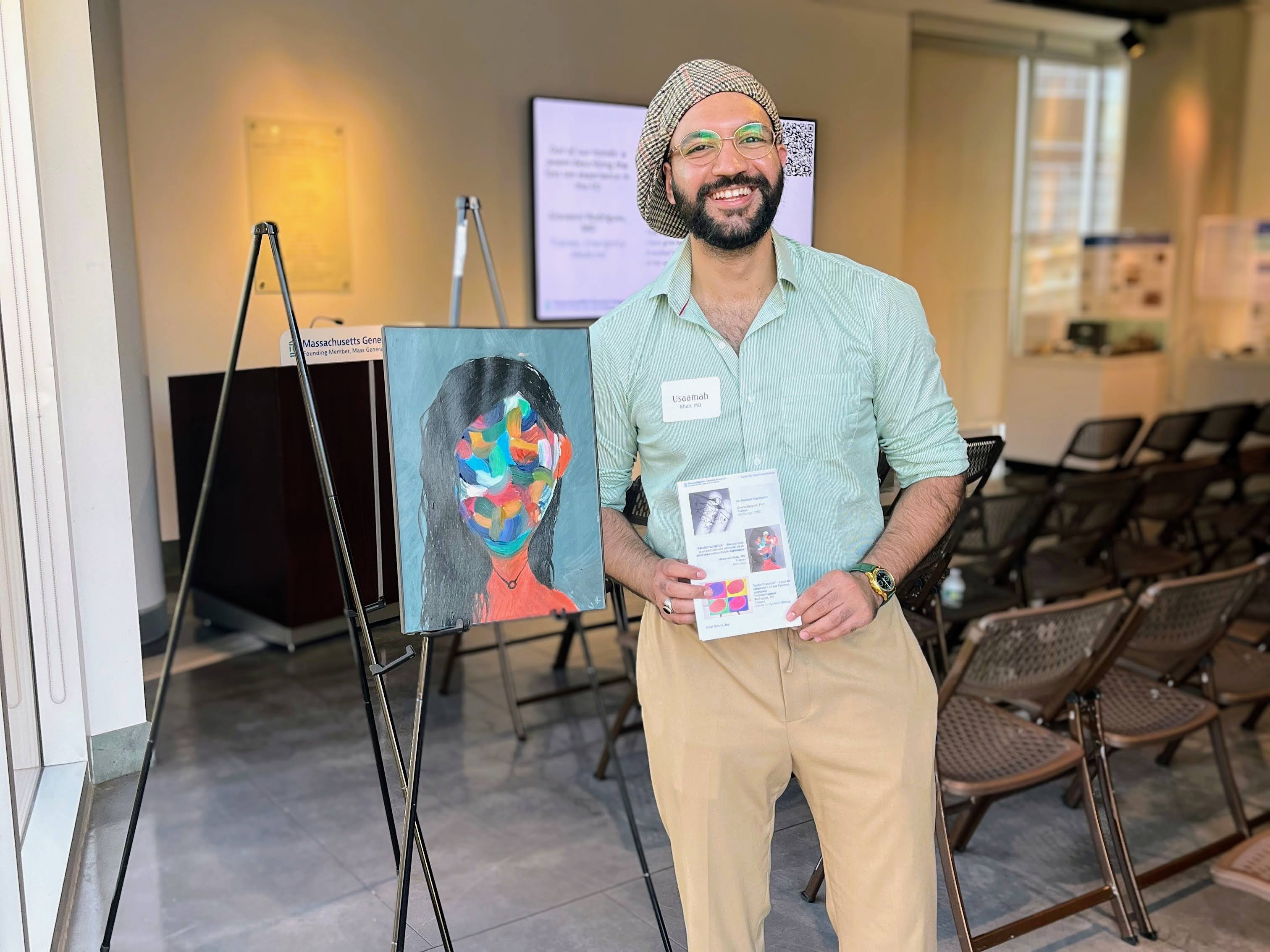
Usaamah Khan showcases one of his paintings selected for the cover of Neurology Clinical Practice, “Prosopagnosia,” an abstract interpretation of the cognitive disorder more commonly known as face blindness.

During his time as a Neurocritical Care fellow at the Brigham, Usaamah Khan, MD, performed many brain death assessments, a process by which a physician determines that all meaningful neurological activity has ceased. While each encounter is poignant and meaningful in its own way, one experience with a dying patient and her family left a profound impression on Khan.

Touched by this particular moment, he channeled his emotions into paint on canvas. Sweeping brushstrokes of navy blue, slate grey and white evoke the painting’s title, Stillness amidst a Storm. In an artist statement for the painting, he wrote that while this type of neurological exam is not uncommon, “something about this specific encounter, with the presence of her entire family during the examination felt particularly powerful, almost spiritual.”

“I could sense her warmth even through the coldness of her extremities,” he wrote. “As a complete stranger, I was present in the most defining moment of her life as she transitioned to the beyond.” It was a profound experience, he wrote, “To be the last person to have touched her, to have paid intensely deep attention to the most subtle elements of her sense of being, and then share a moment of silence, solitude and calmness with her family as the storm of her passing swept silently across the room.”

Khan, who recently began his Epilepsy fellowship at Massachusetts General Hospital (MGH) and continues to be involved with neurology training at BWH’s STRATUS Center for Medical Simulation, started oil painting about five years ago, during his residency. Much of his art, inspired by neurological diseases and his patients, conveys complex emotional experiences but remains open to the interpretation of the viewer.

Khan works on a piece that depicts the use of various colors and their meaning in perfusion scans for stroke patients.

Two of his paintings, Dystonia and Prosopagnosia, were recently chosen as cover art for Neurology Clinical Practice.

Learning more about the brain was what originally prompted Khan to try his hand at painting. “I became fascinated with this whole idea of left brain versus right brain,” he said. “When you understand the brain a little bit better, you realize and appreciate that it’s a lot more complex and it’s a lot more fluid than those broad categories.”

This understanding mirrors and influences Khan’s abstract style.

“You think of some of the Renaissance arts that are very fine and sharp and detailed, and that’s never really been my style of art,” said Khan.

When you look at a realistic portrait or scenery, he explained, “You know what you’re seeing, and you appreciate how perfectly that’s been captured by the artist. And then there’s forms of art where you’re looking at it and you’re not entirely sure what you’re seeing, but it inspires you to think a little about what exactly is trying to be captured.”

In his case, Khan seeks to portray an abstract interpretation of neurological disease and the patient experience. To capture these layers of meaning, oil is often his medium of choice because it lends itself well to the blending of shapes and colors. But Khan’s approach to painting in this style requires adaptability, because the end product might not end up looking like what he initially had in mind.

There’s a parallel to be drawn there, he said, with clinical work. “When you’re dealing with complex cases and complex patients, a provider has to always be willing to reset biases, reset their frame of thinking and go back to the drawing board.”

Khan’s paintings have been featured in the Paul S. Russell, MD, Museum of Medical History and Innovation at MGH, but mostly, they are a personal collection of his. Some are displayed on a gallery wall in his apartment.

“I definitely don’t identify myself as a painter. I think artistic skills are built over many, many years,” said Khan. “I truly consider myself an absolute novice in this area.”

Khan’s advice to those interested in painting or trying something new is simple: Don’t pressure yourself to be perfect. “I don’t think anyone picks up a paintbrush and creates a masterpiece the first time they give it a shot,” he said. “If the process brings you happiness, the end result shouldn’t deter you from doing it.”

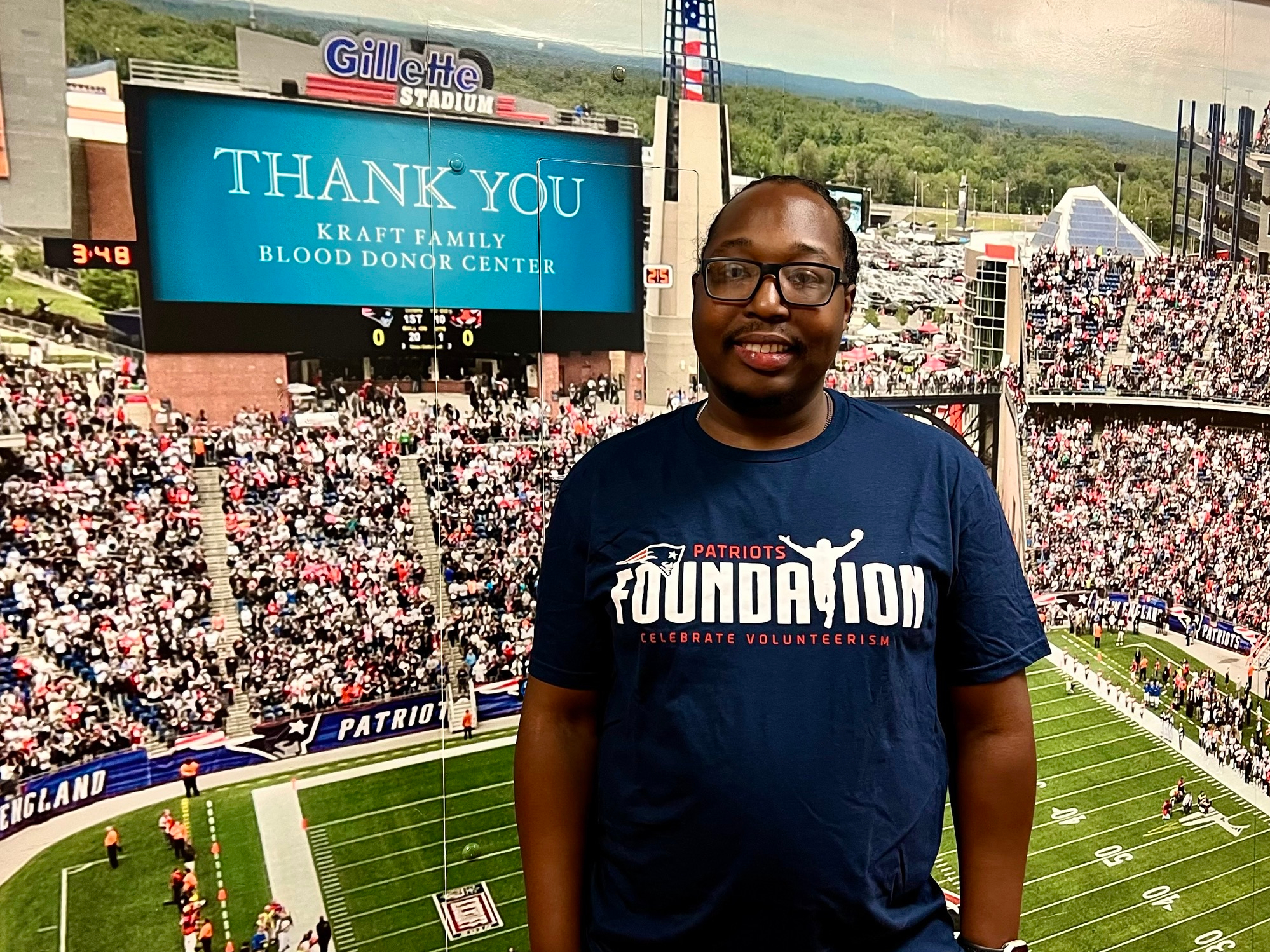
Brunel Etienne Jr. at the Kraft Family Blood Donor Center, where he receives regular blood transfusions to treat symptoms of sickle cell disease

For as long as Brunel Etienne Jr. can remember, he has lived in pain due to sickle cell disease.

“When I was younger, the pain would be more prominent,” said Etienne, 31, who regularly receives blood transfusions at the Kraft Family Blood Donor Center to help manage his symptoms. “As I got older and went through transfusions, the care I got from Brigham and Women’s helped me with my pain.”

Etienne is one of over 100,000 people in the United States living with sickle cell disease (SCD), a condition resulting from a mutation in the hemoglobin molecule, the protein in red blood cells responsible for carrying oxygen throughout the body. Rather than healthy, disc-shaped red blood cells, the mutation causes elongated “sickle” shaped cells that can easily get stuck in blood vessels — limiting circulation of blood and oxygen to different parts of the body.

When this happens, it can cause a number of serious complications and severe pain. “Like little heart attacks all around the body,” said Sean Stowell, MD, PhD, medical director of the Kraft Family Blood Donor Center and Transfusion Medicine at Brigham and Women’s.

Since the 1960s, the life expectancy of those with the disease has risen from 10 years to about 40 or 50 years, Stowell explained, in part due to increased awareness that led to the development of new therapies. However, SCD is lifelong, and the only known cures — bone marrow transplantation or gene therapy — can be expensive and not widely available.

Because of this, many patients rely on regular blood transfusions to improve their quality of life and mitigate the harshest symptoms. Although transfusions do carry some risk of an adverse reaction, they can lower the likelihood of SCD complications like strokes and acute chest syndrome, which occurs when blood flow to the lungs is limited.

“It’s really difficult to manage pain,” said Stowell. While transfusions are “not typically used to manage pain specifically,” he explained, they can help, along with medication.

Sometimes, Etienne said, the pain is worsened by certain conditions, such as when he is outside in cold weather. “I can’t be out in the cold for 15 minutes,” he said. “If I am, pain in my extremities will be an issue.”

“I do take medications, but it doesn’t necessarily help with the pain,” he added. “The thing that helps me through my pain is the chronic blood transfusions I go through every eight weeks.”

Each transfusion Etienne and other sickle cell patients of the Kraft Center undergo uses up to 14 units of blood, all from donors, and all of which must be an appropriate match for the patient to avoid causing a serious, sometimes life-threatening, reaction.

Genetic differences between donors and recipients can lead to transfusion complications. “One of the challenges and the reasons that the reactions occur more frequently in patients with sickle cell disease is that blood donors on average tend to be Caucasian, and the recipients are generally of African descent,” said Stowell. “Science is still working to understand why this occurs. It’s likely the answer lies in genetics, but until we know for sure, increasing the pool of donors from diverse backgrounds can only be a beneficial thing for those who need a transfusion.”

Historically, sickle cell disease more often affects Black individuals, who are more likely to carry the gene that causes it. Racial inequity in health care, along with the lack of sickle cell awareness and research, has created barriers to receiving treatment for many debilitated by the condition.

Noticing the need for further advancements in treatment was one of the reasons Stowell first became interested in sickle cell disease while in medical school. “It was clear that these patients had a horrible disease, and there was really not a lot we could offer,” he said.

Today, much of his focus is on measures that will increase the safety and efficacy of blood transfusions, a treatment that would be impossible without blood donors. The number of Black blood donors is disproportionately low.

To those who choose to donate blood, Etienne said, “You’re not only helping me, but you’re helping other patients who have sickle cell. Your donations help me and other patients tremendously.”

All blood and platelet donations made at the Kraft Family Blood Donor Center directly benefit patients at Brigham and Women’s Hospital and Dana-Farber Cancer Center. Donors can make an appointment to give blood or platelets at the Kraft Family Blood Donor Center (open Tuesday through Sunday) by calling 617-632-3206 or emailing BloodDonor@partners.org. Walk-ins are welcome at the center, which is located at 35 Binney St. To donate closer to home, view a list of upcoming mobile blood drives.

3 Comments

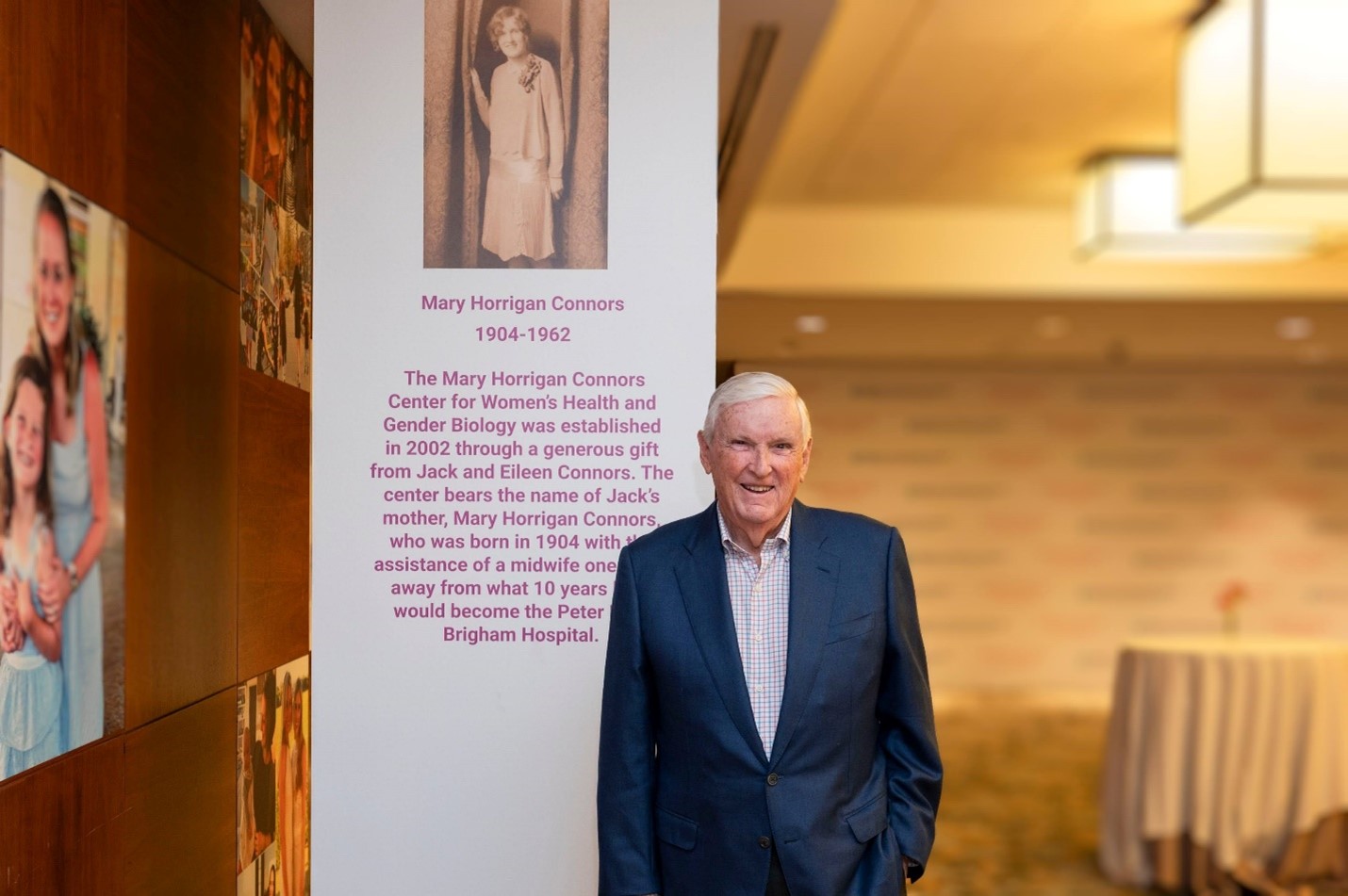
Jack Connors Jr. stands in front of a banner honoring his mother at the 2024 Women’s Health Luncheon.

A legendary leader, philanthropist, advisor, mentor, role model and friend, Jack Connors Jr. was an inspiring champion of the Brigham for more than 30 years. He died this morning, July 23, at the age of 82.

Mr. Connors’ relationship and contributions to the Brigham community ran wide and deep. He served as chair of the Brigham Board of Trustees from 1992 to 1996, when he was invited to serve as the chair of the Mass General Brigham board — a role he held for 16 years before becoming chair emeritus in 2012. Widely known for his generosity and bold vision, Mr. Connors served as co-chair of the Brigham’s Life.Giving.Breakthroughs. campaign, which raised more than $1.7 billion and was the largest hospital-fundraising campaign in Boston when it concluded in 2020. Most recently, Mr. Connors served as an honorary trustee and member of the Brigham Resources Committee.

“Jack’s level of commitment, care and influence was simply unmatched,” said David F. M. Brown, MD, president of Academic Medical Centers at Mass General Brigham. “He had that indefatigable spirit that left a positive and lasting impression on everything he touched and everyone he met. I was fortunate to have him as my trusted confidante, mentor and friend.”

“It would be impossible to measure Jack’s impact on the Brigham,” added John Fish, chair of the Brigham Board of Trustees and a close friend of Mr. Connors. “He was an astute business leader but also a man of deep integrity and principles who always guided us to find our ‘true north.’ He knew instinctively how to connect with people, how to problem-solve and how to lead effectively. And he was generous and good to his core.”

Indeed, Mr. Connors was generous and thoughtful with his time, talents and resources. In the late 1990s and early 2000s, he and his wife, Eileen, made significant gifts to the Brigham to establish the Mary Horrigan Connors Center for Women’s Health and Gender Biology and the Mary Horrigan Connors Center for Women and Newborns. They made these gifts in honor of Mr. Connors’ late mother, Mary Horrigan Connors — who grew up in tenement housing near the Peter Bent Brigham Hospital — as a way to honor her life with a simple but profound mission: to improve the health of women and transform their care. In gratitude for the Connors’ generosity, the Brigham named the building at 45 Francis Street the Mary Horrigan Connors Center for Women’s Health. Today, the name of Mr. Connors’ mother still adorns the building and can be seen by all who walk down Francis Street.

“Jack was all about honoring the people he loved and being a force for good in this world,” said Hadine Joffe, MD, MSc, executive director of the Mary Horrigan Connors Center for Women’s Health and Gender Biology and interim chair of the Department of Psychiatry. “As smart and savvy as he was as a business leader, his greatest gift was his ability to raise people’s sights in imagining a healthier, better future.”

In addition to women’s health, the Connors family supported a number of Brigham programs, including medical education, cardiovascular care, neurosciences and global health. Mr. Connors was one of the lead donors for the Caregivers Fund, which was founded in 2020 to provide support and resources to Brigham staff during the COVID-19 crisis. He was also an active supporter of the chaplaincy, generously supporting this vital care area and participating as a volunteer. Known for his trademark wit, charm and charisma, Mr. Connors was frequently invited to speak at signature Brigham events, including multiple launch celebrations and the Women’s Health Luncheon, an annual event benefiting the Mary Horrigan Connors Center for Women’s Health and Gender Biology.

“Jack had a huge heart and capacity to inspire others because you could see how deeply he cared,” said Sue Rapple, senior vice president and chief development officer of the Brigham. “He was enormously generous to the Brigham, and words could never adequately convey our gratitude to him or how much we will miss him. He was one in a million and represented the best of everything we do at the Brigham.”

Mr. Connors was born in Roslindale, grew up in Dedham and often shared the story of how he drove a taxi to pay his way through Boston College, his cherished alma mater. In 1968, he founded Hill, Holliday, Connors, Cosmopulos, Inc., which became one of the top 20 advertising firms in the U.S. and propelled him to become one of the most trusted advisors and influential voices in Boston. Always a civic-minded and altruistic leader, Mr. Connors served on the boards of several organizations and initiatives, including the Campaign for Catholic Schools, Boston College, The Edward M. Kennedy Institute and Harvard Medical School. Notably, and at the request of the late Mayor Thomas Menino, Mr. Connors also founded Camp Harbor View, a summer camp for underprivileged youth in Boston Harbor.

In addition to his wife, Eileen, Mr. Connors is survived by his four children, John Connors, Timothy Connors, Susanne Joyce and Kevin Connors, 13 grandchildren, all of whom were born at the Brigham, and countless friends and colleagues.

His legacy and example of generosity, kindness, and community will be carried on by all who knew and admired him.

2 Comments

Once again, Brigham and Women’s Hospital (BWH) was named one of the nation’s top hospitals by U.S. News & World Report in its 2024–25 Best Hospitals Honor Roll and ranked first nationwide for Obstetrics and Gynecology for the third consecutive year. In all, five eligible specialties earned a spot in the national top 10 this year, with four of those making the top five.
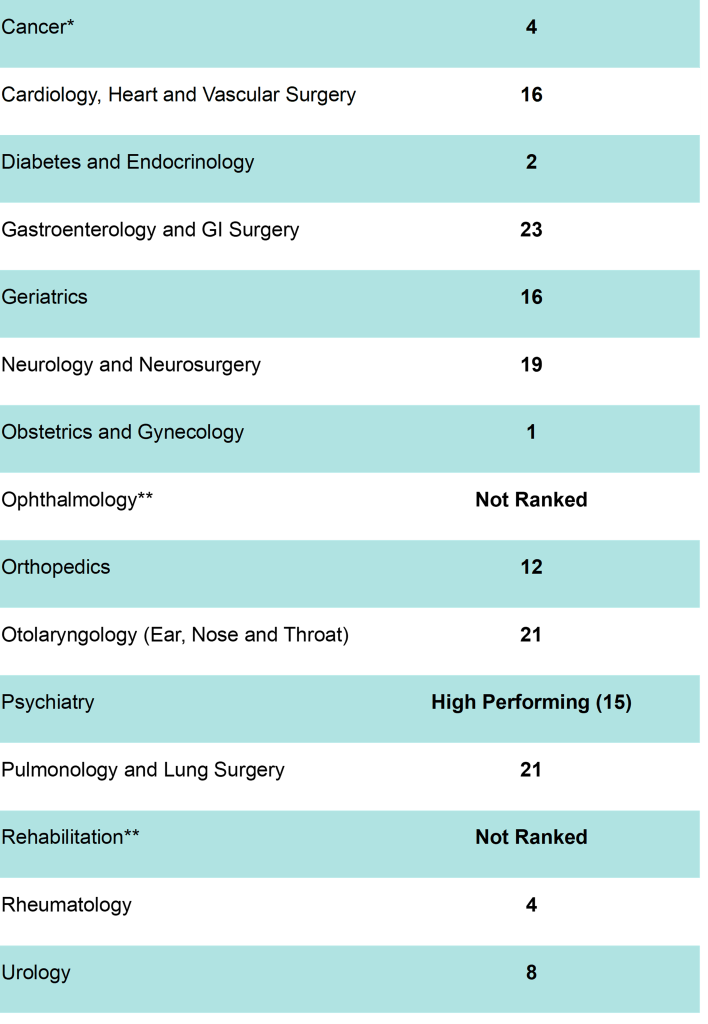
Nationally, the Brigham tied for second in Diabetes and Endocrinology this year, up from 11th place in 2023. The hospital also ranked fourth in the country for Rheumatology, up from fifth place, and eighth for Urology, up from No. 20 last year. Dana-Farber Brigham Cancer Center ranked fourth in Cancer, up from fifth place in 2023.

Overall, the Brigham ranked in 13 of the 15 specialties rated by U.S. News, with nine specialties climbing the ranks from last year. It also earned the publication’s highest distinction in 18 of the 20 most serious and complicated medical conditions and procedures. Additionally, BWH and Massachusetts General Hospital (MGH) co-ranked as No. 1 in Massachusetts and New England again this year.

The annual Best Hospitals rankings are broken into two components: specialty rankings and procedure and condition rankings. The annual ratings were developed to help consumers determine which hospitals provide the best care for life-threatening or rare conditions and for common elective procedures. They are based on a point system derived from a comprehensive nationwide evaluation of 5,000 medical centers in 15 adult specialties and 20 procedures and conditions.

“These rankings reflect the incredible dedication, talent and breadth of experience at Brigham and Women’s Hospital. We are proud that our high-quality patient care and innovative approach and treatments have been recognized yet again this year,” said Giles W.L. Boland, MD, president of Brigham and Women’s Hospital and the Brigham and Women’s Physicians Organization. “I am especially proud of our Obstetrics and Gynecology department, led with distinction by Dr. Nawal Nour, for maintaining their first-in-the-nation ranking for the third year in a row.”

Nawal Nour, MD, MPH, MBA, chair of the Department of Obstetrics and Gynecology, expressed her immense pride in the multidisciplinary teams whose care, compassion and commitment earned this recognition.

“As we face sobering statistics nationally regarding women’s reproductive health and maternal mortality, these rankings not only show the sustained excellence of our staff, faculty and programs, but also our focus on providing excellent patient care and working every day to protect the health of some of our most vulnerable patients,” she said.

Several other Mass General Brigham hospitals were also honored by U.S. News & World Report. MGH once again earned a spot on the Honor Roll among the top hospitals in the country and ranked first in the nation for Psychiatry.

Three Mass General Brigham specialty hospitals — McLean Hospital, Spaulding Rehabilitation and Mass Eye and Ear — were recognized for national excellence. McLean Hospital was ranked No. 2 in the nation in Psychiatry, Spaulding Rehabilitation is ranked No. 2 in Rehabilitation, and Mass Eye and Ear is No. 4 for Ophthalmology and No. 6 for Otolaryngology (Ear, Nose and Throat).

The complete listing of America’s Best Hospitals can be found here.

By the numbers: 2024 rankings by specialty

*Dana-Farber Brigham Cancer Center
**BWH is not ranked in Ophthalmology or Rehabilitation. Mass Eye and Ear, which is tied to MGH for Honor Roll Purposes, ranked No. 4 for Ophthalmology. Spaulding, which is tied to MGH for Honor Roll purposes, ranked No. 2 for rehabilitation.

Members of the multidisciplinary TRAIL Clinic team huddle in the Brigham Medical Specialties Clinic earlier this month.

Traditionally, trauma care means saving lives in real time. Whether the trauma has occurred from a car accident, fall, stabbing or gunshot wound, the trauma team does everything possible to keep patients alive. But what happens after the acute care, when patients need to put back together the pieces of their lives and move on? What if patients don’t have the resources or support to return to work or school, or to move forward from their injuries?

These are the questions that prompted a group of clinicians from Brigham and Women’s and Spaulding Rehabilitation to create the pilot Transforming Recovery After Injury for the Long- Term (TRAIL) Clinic. Spearheaded by trauma surgeon Geoffrey Anderson, MD, MPH, and physician-scientist Juan Herrera-Escobar, MD, MPH, both of the Brigham’s Center for Surgery and Public Health, and Spaulding occupational therapist Shonali Gaudino, OT, BCG, the TRAIL Clinic identifies trauma patients at higher risk for poor outcomes due to social determinants of health and provides them with holistic follow-up care.

Patients are referred from the Brigham’s Trauma, Burn and Surgical Critical Care Unit and identified based on their eligibility for being at increased risk for poor long-term outcomes. These risks include having an injury that has resulted from interpersonal violence, limited English proficiency, a weak social support network or low perceived socioeconomic status.

“These patients are often left to their own devices because they’ve been labeled as non-compliant. This clinic changes that mentality and gives them the resources to be successful and have better health outcomes,” said Brigham physician assistant Jessica “Morgan” Jones, PA-C. “I think that starts to create a positive, self-fulfilling cycle, instead of the negative one that they’re often stuck in.”

The one-year pilot program — supported by a 2023 Innovator Award from The Gillian Reny Stepping Strong Center for Trauma Innovation and the Mass General Brigham Springboard Studio’s SheSolves Award — launched in April 2024. At twice-monthly clinic sessions, patients meet with a multidisciplinary team of providers including a surgeon, physician assistant, patient navigator, community health worker, occupational therapist (OT), physiatrist, social worker and other providers as needed. During each clinic, the providers come together to listen to patients’ needs and create the best plan of care for the patient from a team-based perspective.

“Transportation is a big issue for a lot of our patients,” said Katie Foley, MSc, the patient navigator in the TRAIL Clinic who works in the Division of Trauma, Burns, and Surgical Critical Care at the Brigham. “So, the fact that our clinic allows patients to get holistic medical and social support in one appointment is huge. They don’t have to rearrange their whole life to get care from 10 different providers. And we do whatever it takes to get them a ride here.”

Blazing the TRAIL

Gaudino, who is an OT at Spaulding, says the clinic hopes to better understand and fulfill patients’ medical, social and mental health needs after traumatic injury.

“Historically, the medical system is set up to treat traumatic injuries in the traditional medical model,” said Gaudino, who also serves as administrative director of the Rehabilitation Outcomes Center at Spaulding. “Our patients come in with significant traumas, like spinal cord injuries, brain injuries and burn injuries. Some have injuries from domestic violence. We treat their wounds, and then maybe they go to rehab or get some outpatient care, and that’s it. But these are conditions patients are going to live with for the rest of their lives, and we’re looking for ways to be better equipped to treat them in the long term.”

Foley says the idea for the program started a few years ago, after she and her colleagues noticed some of their trauma patients were doing worse when they came in for follow-up care.

“Our research team noticed it was specific groups who tended to do worse, including those with lower socioeconomic status, non-English speakers and people with weak social supports,” Foley said. “After seeing this data, we started looking at ways we could make a difference. Dr. Anderson and Dr. Herrera Escobar got a grant, and that was the birth of the TRAIL Clinic.”

Creating a safe space

Foley reviews all BWH trauma patients to identify those who meet the criteria for the clinic. Then, she and two other clinic coordinators are assigned to specific patients. Jones is the main clinical contact for all patients at the clinic.

“I meet with each patient and their clinical coordinator, and then work with OT or social work to determine what else they need and create a plan from there,” Jones said. “We do everything we can to get them the care and support they need, from specialist referrals and finding a primary care provider to nutrition and transportation needs.”

Ana Hoffman, a community health worker, is the clinic coordinator. In this role, she focuses on removing any obstacles that might prevent patients from engaging in care. A former member of the Brigham’s Interpreter Services team, Hoffman works especially closely with patients whose first language is not English. She says these patients are among the most vulnerable.

“They don’t know the language, and they are afraid,” Hoffman said. “Many of my patients have problems with food insecurity or transportation, or they’re in pain because they have trouble getting their prescriptions filled. We can help them with whatever they need — insurance, medications or just calling the doctor — things that can make a big difference. We also connect them with violence recovery programs or other resources they may not know about.”

Gaudino says that many of their patients have substance use issues, which they also try to address. “The Substance Use Disorder Bridge Clinic takes walk-ins on Friday mornings, which is the same day as our clinic. So, we can just take them right down to the Bridge Clinic if they need help.”

It will be some time before the TRAIL Clinic has enough data to measure outcomes, but clinic staff say they already see a positive effect on patients.

“Our patients have a lot of complex needs that affect their lives pretty significantly, and they are so grateful to have a place where they can share everything,” Foley said. “We’ve had patients tell us, ‘There’s never been someone who would listen to all my issues and be so receptive to how much I’m dealing with.’ And that’s exactly the vision we had for the clinic — to create a safe place where people can come after a traumatic injury and be heard on all levels, and then be confident in their care moving forward.”

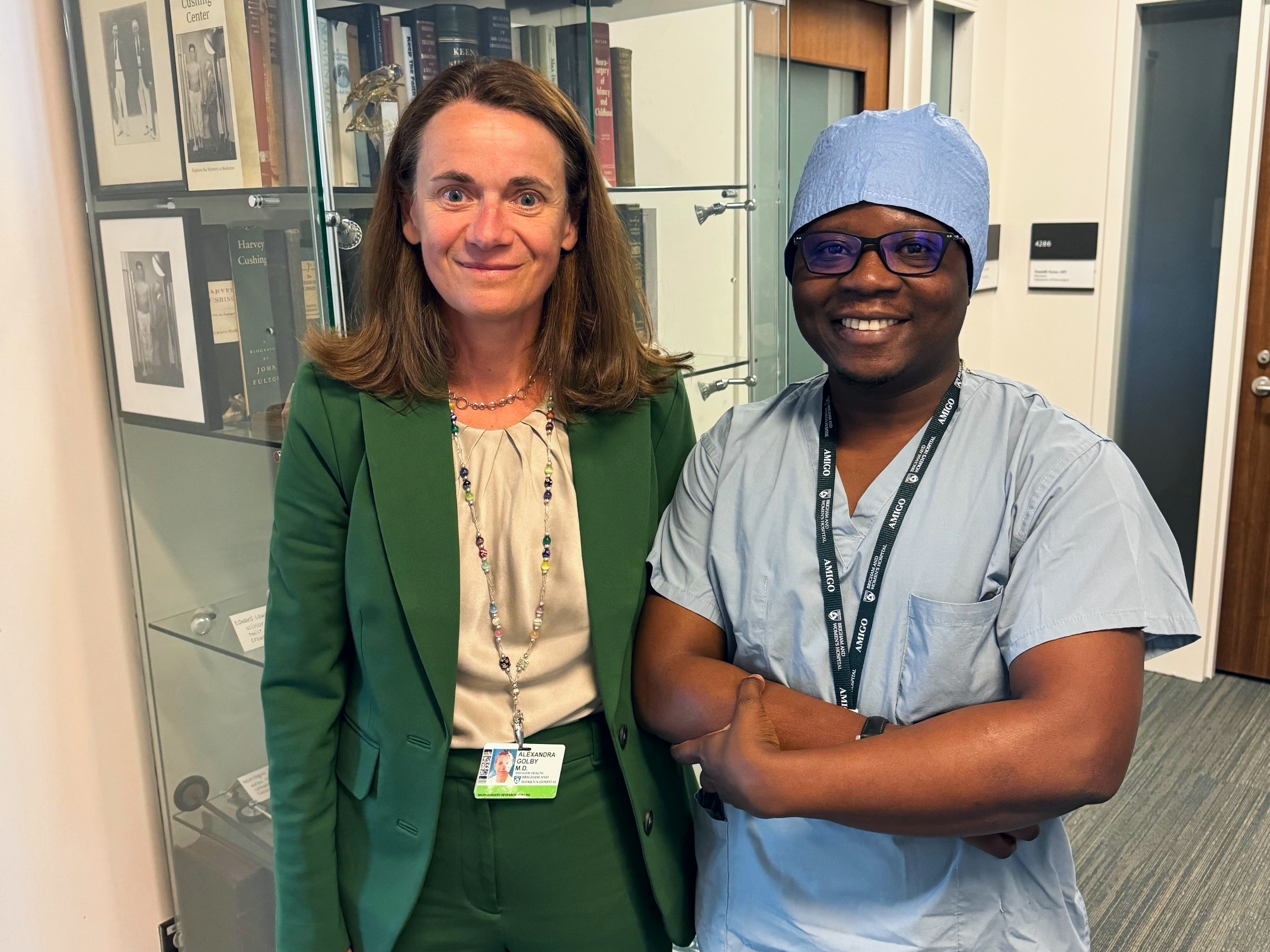
From left: Neurosurgeons Alexandra Golby and Fortuné Gankpé

Benin is a French-speaking country in West Africa of 13 million people, roughly as populous as the city of Tokyo. Yet the entire nation has only 10 neurosurgeons.

One of them is Fortuné Gankpé, MD, FWFNS, who is completing a three-month observership at the Brigham under the guidance of Alexandra Golby, MD, director of Image-Guided Neurosurgery and co-director of the Advanced Multimodality Image-Guided Operating (AMIGO) suite.

Gankpé — an attending neurosurgeon in Benin’s largest hospital, CNHU Hubert Maga of Cotonou — came to the Brigham to enhance his skills in treating brain cancer and using image-guided techniques in surgery. His endeavor is supported by the Foundation for International Education in Neurological Surgery’s Bassett Fellowship program, a traveling international fellowship for neurosurgeons from low- to middle-income countries. After recently concluding his BWH observership at the end of June, he now embarks on a six-month fellowship at Massachusetts General Hospital.

“In my country, we don’t have a neurosurgical training program, so all of us Beninese neurosurgeons have to go abroad, usually to Morocco, which is where I did my residency,” Gankpé said. “To be the first Beninese neurosurgeon at the Brigham — one of the best neurosurgery departments in the world and where neurosurgery itself was born — has been truly amazing.”

When Gankpé initially contacted Golby to inquire about an observership, he was familiar with only her reputation — as a world leader in neurosurgery. Despite having no prior personal connection, he decided to take a chance and see if she would be willing to host him. To his delight, she warmly accepted.

“I have hosted neurosurgeons from developing and middle-income countries for many years, and I consider it a key part of my mission,” Golby said. “Building neurosurgical manpower is a big challenge because it takes a lot of time, experience and expertise to make a neurosurgeon.”

Gankpé, who completed a neurosurgery fellowship in Guadeloupe and a neuro-oncology fellowship in France, is especially interested in improving care for patients with brain cancer. Given the extreme lack of specialists, he explained, patients with brain tumors have few options for treatment in Benin.

He recalled how last year he cared for a pregnant patient with a meningioma — a tumor that compresses the brain, causing severe neurologic problems and possibly death — who had been turned away by other surgeons in Benin due to the complexity of her case. The woman had weakness on one side and was unable to walk.

“I reached out to colleagues in obstetrics and anesthesiology, and we did a lot of planning. We decided to perform the surgery, and it was very successful,” Gankpé said. “She recovered completely and gave birth three months later to a healthy baby.”

In addition to shadowing Golby and her colleagues — including Ossama Al-Mefty, MD, Omar Arnaout, MD, Linda Bi, MD, PhD, and Nirav Patel, MD — Gankpé spent a few weeks of clinical rotations in the Neurosciences Intensive Care Unit at BWH and the Department of Pediatric Neurosurgery at Boston Children’s Hospital. Reflecting on his experiences here, Gankpé said he is excited to incorporate what he’s learned in Boston into his practice at home, where he plans to launch Benin’s first multidisciplinary neuro-oncology department.

“We need to move neurosurgery to the next level in my country because these patients are already facing many challenges. I’d like to thank my mentors in Benin, Kisito Quenum, MD, and Thierry Alihonou, MD, who believe in me and are always pushing me to achieve this goal,” he said. “One important thing I learned here is how to operate without a brain retractor, which can cause contusions and other complications. By observing procedures here, I learned how we can avoid that and improve outcomes for our patients back home.”

Lasting impact

In addition to gaining new insights into surgical technique, Gankpé said he’s grateful for the opportunity to learn directly from U.S. colleagues and establish new professional relationships, especially Golby.

“I have really appreciated how open and helpful everyone here has been,” he said. “They have been happy to answer all of my questions, which has led to many interesting discussions.”

Longstanding programs in Morocco and South Africa have markedly grown neurosurgical capacity on the African continent, Golby said. But once these newly minted neurosurgeons return to their home countries, they are often working alone and without mentors. By hosting visiting colleagues from these parts of the world, the Brigham is building an international network of mentorship that benefits patients worldwide, she explained.

“One of my mentees is a neurosurgeon from Rwanda who had an opportunity to spend three months at the Brigham about seven or eight years ago,” Golby said. “I just heard from her recently when she sent me one of her cases and asked for some feedback.”

For Golby, these moments and her experience mentoring up-and-coming neurosurgeons like Gankpé underscore the importance and power of mentorship.

“I think there comes a time in your career where what you can leave behind is having influenced people for the better, and it seems to me that is my legacy,” she said. “I’ve written a lot of papers, attained professorship and all sorts of other stuff, but in terms of having an impact on the world — it’s to leave the next generation with new ideas, connections and mentorship. I feel it’s the most important thing I do after patient care.”

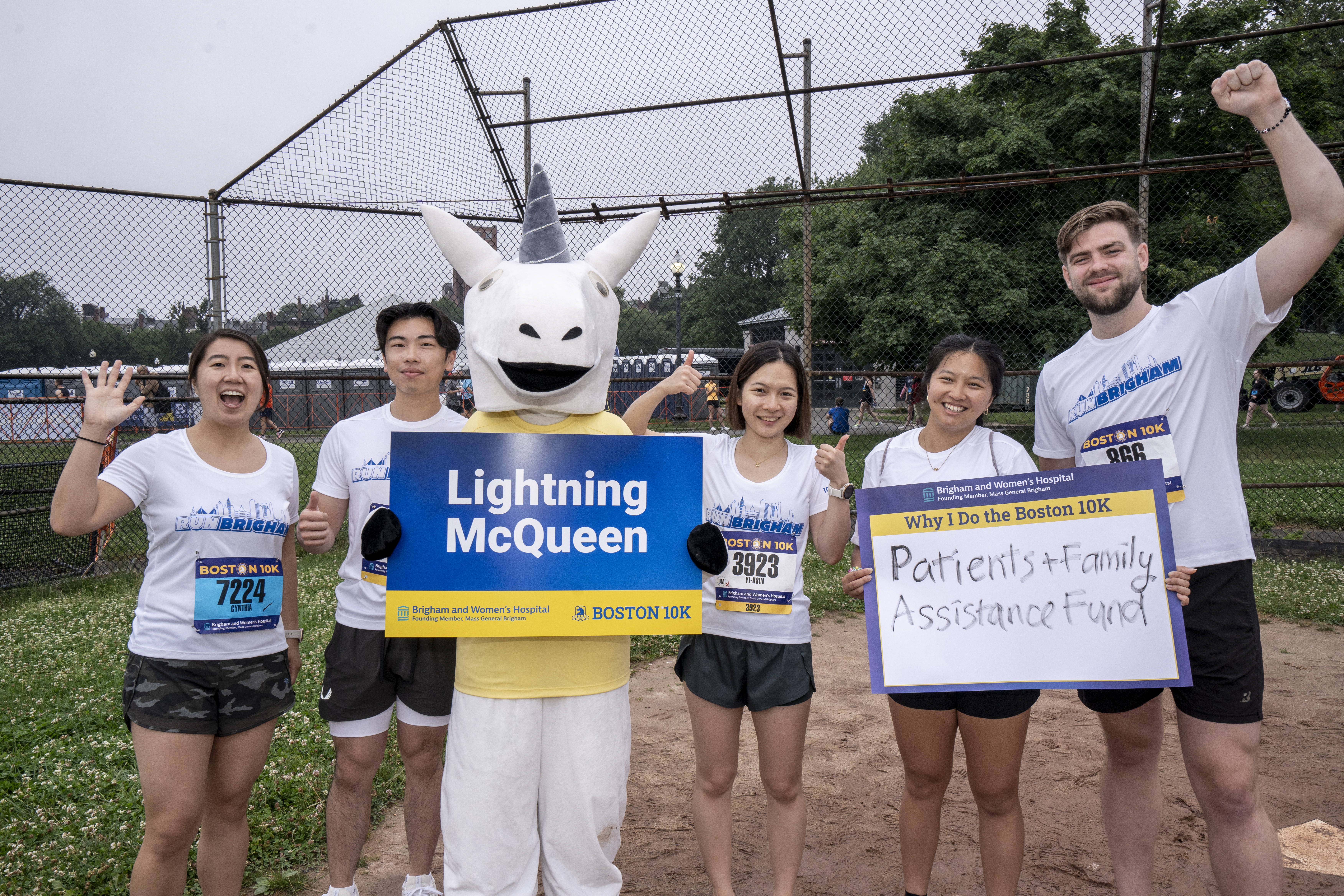
Dialysis social worker Yan Chi Yeung (second from right), captain of the Lightning McQueen Team, gathers with her teammates before the Boston 10K.

Nearly 600 people participated in the Boston 10K for Brigham and Women’s Hospital, raising more than $300,000 for areas of the Brigham that hold special meaning for them. The sold-out event­ — which attracted thousands of athletes from around the world to Boston on June 23 — is presented by the Brigham, the exclusive fundraising partner of the Boston Athletic Association’s annual race.

Athletes supporting the Brigham had the opportunity to participate in person or virtually and could run as individuals or as part of a team. Altogether, the Brigham cohort of runners included 192 employees and 47 teams supporting more than 70 areas, including cancer, cardiology, health equity, neurology, women’s health and the Richard and Susan Smith Family Foundation Newborn Intensive Care Unit.

Giles W.L. Boland, MD, president of Brigham and Women’s Hospital and executive vice president of Mass General Brigham, welcomed runners and thanked them for their support. Having run the Boston 10K in the past, Boland wished the runners luck and a day of fun while raising money for various areas across the Brigham.

Returning for this year’s Boston 10K was Andrea Baxter, a breast cancer survivor who sought treatment at the Brigham. Her team, Andrea Baxter’s Runners for Life, once again raised money for the Thea Stoneman Breast Imaging and Diagnostic Center at Brigham and Women’s Faulkner Hospital. Baxter’s gratitude for the compassionate care she received motivated her to continue supporting the screenings provided by the center.

“Last year was the most difficult time of my life, but I made it through,” Baxter said. “If I can survive surgery, chemo and radiation, all while being a mom to my now 3-year-old son, JJ, I can run 6.2 miles and give back to the team of incredible people who saved my life.”

Another runner, Heather Bliss, recalled the worry and fear she and her family experienced while they awaited a heart transplant for her brother, Peter Lynch. Following Lynch’s lifesaving heart transplant at the Brigham, Bliss and her twin sister, Sammie McLaughlin, ran with gratitude for his second chance at life as part of the PJL3 team.

“We owe his life not only to his donor for their selflessness, but to the meticulous surgeon who spent 10-plus hours renewing his life,” Bliss said. “There are not enough ‘thank-yous’ for the care he received at the Brigham.”

Lightning McQueen team captain Yan Chi Yeung, MSW, LCSW, works as the dialysis social worker at the Brigham, supporting patients with chronic kidney disease. Many of Yeung’s patients face socioeconomic barriers to adequate care. As a leader in health equity, the Brigham created the Patients and Families Assistance Fund to make care more accessible, with vouchers for expenses like transportation costs.

“The fund was developed with the purpose of facilitating medical care by providing monetary support to patients experiencing financial hardship,” said Yeung. “Given that my patients have personally benefited from this fund, I felt compelled to direct my fundraising efforts towards this cause, as it could quite literally help save a life!”

For Brian Pedersen, a clinical research assistant in the Division of Endocrinology, Hypertension and Diabetes, running in the Boston 10K as part of the Long Strides for Longer Lives team was a way to honor his mother, Sarah Pedersen, who died of ovarian cancer in 2022. Brian is deeply grateful for the Brigham’s work in early detection and treatment, as well as to the dedicated team who oversaw his mother’s care.

“Participating in this event allows us to give back to the community that has given us so much and to contribute to ongoing efforts to improve patient care and outcomes,” he said. “As someone who works in research at the Brigham, I can attest to the critical need for funding and the ongoing demand for additional resources to support groundbreaking studies and improve patient care. Together, we can make a difference.”

Interested in getting involved in next year’s race? Email team@bwh.harvard.edu to learn more.

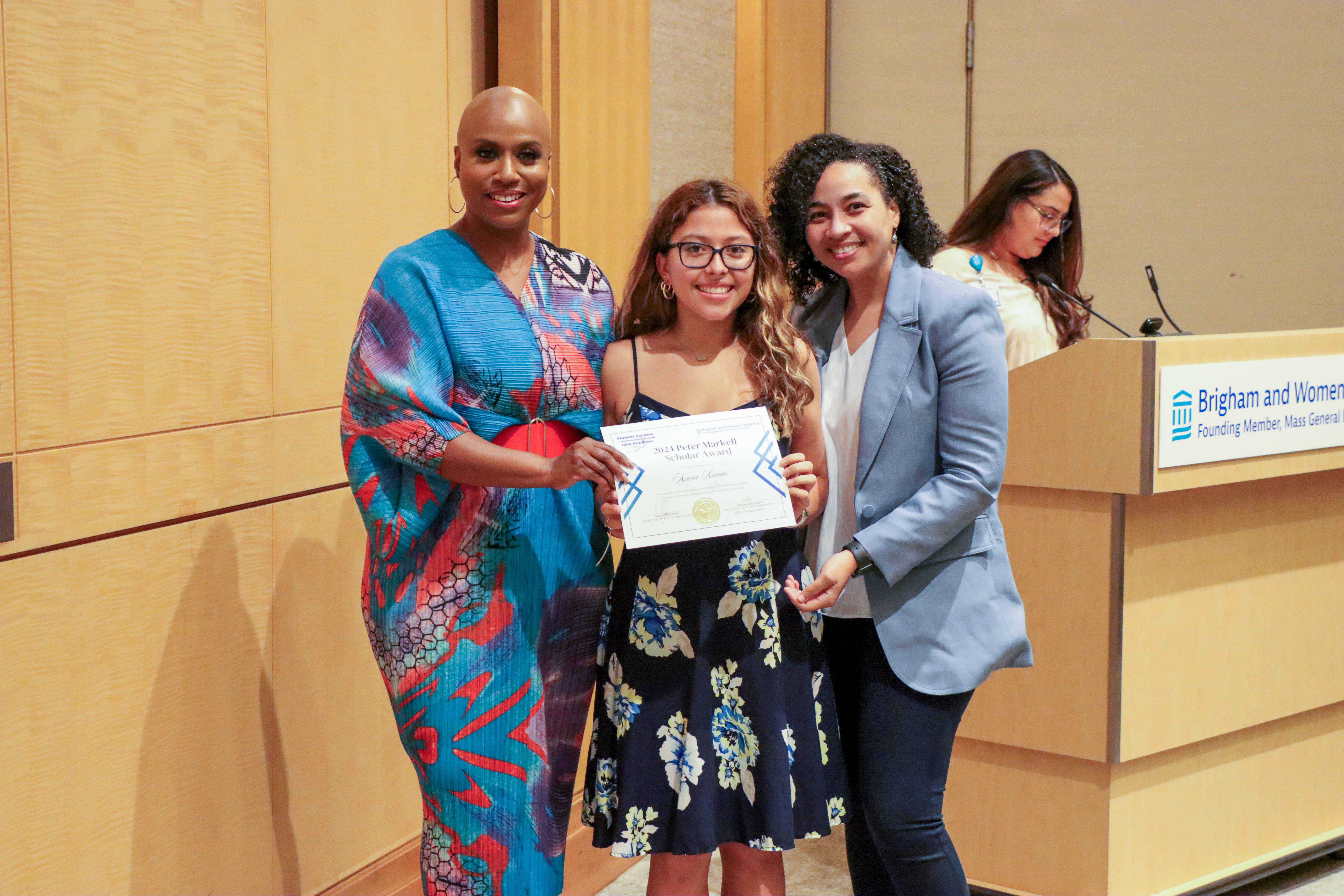
Graduating senior Kiara Ramos (center), president of the SSJP Student Committee, celebrates with U.S. Rep. Ayanna Pressley (left) and Claire-Cecile Pierre, MD, vice president of Community Health Programs for Mass General Brigham.

During her time as a student intern in Perioperative Services, Lixandra Arias Gonzalez was waiting for her next assignment when a surgeon approached her and introduced himself. As they chatted about her experience with the Brigham’s Student Success Jobs Program (SSJP) thus far and her future plans, she shared that she wanted to become a surgeon.

“That’s great. It takes a lot of dedication, commitment and passion,” she remembered him telling her.

“How do I know what’s the right fit for me — working as a surgeon or being a doctor?” she asked him.

“You will know what your passion is when no matter the money, the time it takes or how hard it may be, you are willing to do it,” he responded.

This wisdom and encouragement stuck with Gonzalez throughout her time in SSJP, a year-round paid internship program designed to introduce Boston high school students — largely from communities that have experienced historical disinvestment and structural racism — to medical, health and science professions. Participating students work part-time after school at BWH and are paired with mentors who provide guidance and support. One hundred percent of students in the program graduate high school or complete their GED, and nearly all attend college, with nine out of 10 pursuing a major in health care, science, technology, engineering or medicine.

Although internships are probably the most visible component of SSJP, it is a comprehensive program that helps students embark on the college application and selection process, develop relationships with peers with similar goals, take on leadership positions in student groups, engage in educational and engaging monthly seminars, access tutoring in science and math, and apply for financial scholarships for college.

Gonzalez, a rising senior at the Community Academy of Science and Health, reflected on how her experience in SSJP has helped shaped her future during a ceremony honoring this year’s 23 graduating seniors on June 18 in Bornstein Amphitheater.

“SSJP has provided me with invaluable opportunities to shadow the various medical professionals in the hospital, surrounded by people who pick at our brains and push us to discover what we love,” she said. “These experiences were extremely transformative and allowed me to witness firsthand the dedication, skill and compassion that define the medical profession. Working alongside these exceptional individuals not only provided me with a better understanding of medicine, but also encouraged me to pursue my passion for the same field because this is something I would do for free.”

U.S. Rep. Ayanna Pressley delivered the event’s keynote address. Drawing parallels to her own journey as the first Black woman elected to represent Massachusetts in Congress, Pressley encouraged students to find their purpose, remain authentic to themselves and never forget that they belong in every space, even if it doesn’t look or feel like it in the moment.

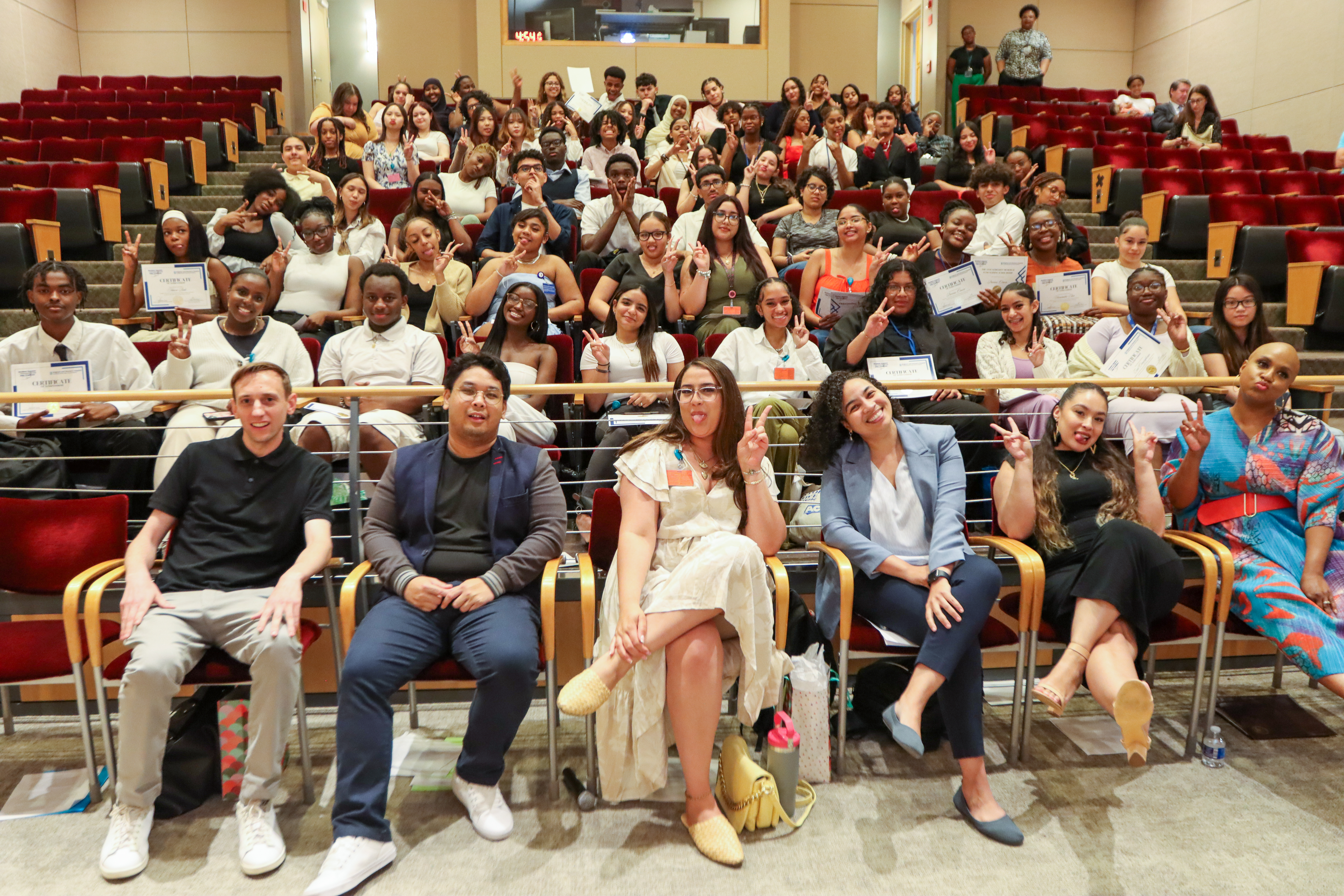
Members of the class of 2024, pictured with SSJP program leaders and Pressley in the foreground, display certificates commemorating their completion of the program.

From the halls of Congress to those of hospitals, a diverse and inclusive environment elevates outcomes for everyone, she added. To illustrate her point, Pressley talked about her own family’s experience when a loved one was cared for at the Brigham. Having members of their care team who were also Black not only brought a sense of comfort and familiarity to an uncertain time, but these staff also attended to the patient’s personal care in ways that added dignity.

“Personnel is policy, and programs like Student Success Jobs Program help bring a diversity of lived experiences, perspectives and thoughts to the table,” Pressley told Brigham Bulletin after the event. “The mentorship and hands-on learning opportunities provided are invaluable, and I commend the students that took a chance and pursued a passion that will encourage a career that invests right back into their communities. I am honored to have delivered the keynote address, and I look forward to seeing where you all go next. Congratulations to the class of 2024!”

Meaningful mentorship

Mentorship was another resonant theme throughout the ceremony. Claire-Cecile Pierre, MD, vice president of Community Health Programs for Mass General Brigham, spoke about those who had impacted her life and career. Her mother, who was born in a small town in Haiti in 1940, worked on economic development and social rights for farmers before immigrating to the U.S., where she became an international development professional, “but never forgot where she came from,” Pierre said. She also spoke of one of her earliest professional mentors, physician-scientist and informaticist Hilary Worthen, MD, who supported her during residency after the loss of her father and exposed her to new paths in health care.

“They were in my corner no matter what. The importance of having a mentor, whether it be a family member, a boss or a teacher, cannot be overstated,” Pierre said. “You are each leaving this program with someone in your corner — someone who took time to plan meaningful experiences for you. Someone we are all very grateful to.”

Each student speaker credited the SSJP staff for the vital role they played in their personal journey and professional success. The SSJP team connected them with mentors, facilitated student groups, provided social and emotional support and fostered career readiness. Pierre noted that the impact is evident in the program’s leadership today: Jesenia Cortes, interim director of Youth Programs, marks her 17th year at Brigham, having started here in the eighth grade as a youth program participant.

“Their genuine care and support made a difference in not only my academic life but my personal life as well,” Gonzalez said. “I’ve always felt like no matter what I was facing I had a support team I can rely on. They have created a nurturing environment where we students can feel empowered to strive for greatness, knowing we have a dedicated team cheering us on every step of the way.”

Recipients of the Outstanding Student Award share a moment with Pressley (center right) and SSJP staff Ashley Felix (second from right) and Darren Nguyen (far right).

Kiara Ramos, president of the SSJP Student Committee, described how her internship mentors helped her develop confidence, recalling the nervousness she felt starting out in SSJP.

The first department Ramos worked in, she said, was in the Nurses’ Health Study with Tanya Palmer and Frances Davoren, research assistants in the Channing Division of Network Medicine.

“As I approached those doors, I was filled with anxiety and nerves,” Ramos said. “After the first 10 minutes of meeting Tanya, her bubbly energy and excitement to have me there reassured me that this place was right for me.”

As president of the SSJP Student Committee, Ramos said she “encountered moments of uncertainty and self-doubt, grappling with the weight of responsibility that came with leadership.” These challenges, however, gave her a “newfound sense of confidence and resilience.” Ramos recently graduated from Boston Latin Academy and will head to Northeastern University this fall.

This was a common theme between students’ experiences, all of whom mentioned the benefits of mentorship, asking questions and accessing the support and resources the program offers.

Efesson Meyer, vice president of the SSJP Student Committee, credits his internship in the Office of the President for revealing “a crucial truth: Intentional relationships are the cornerstone of success.”

“In the fast-paced world we live in, stepping outside our comfort zones to build these connections is not an option but very much a necessity,” said Meyer, who graduated from Edward M. Kennedy Academy for Health Careers this month and will attend Rutgers University this fall. “Never underestimate the power of asking for help. Lucky for you, there are people around you who want to support you. They possess wisdom and guidance waiting to be shared, but it requires a degree of vulnerability on our part.”

Students from across SSJP cheer on their classmates as attendees strike fun poses in a moment of joyful celebration.

From left: Emergency Department nurses Rich Henlotter, Rachael Randall and Kate D’Innocenzo were among those who responded to a mother in labor outside the ED.

As soon as Kate D’Innocenzo, MSN, BSN, FNP, began her shift in the Brigham Emergency Department (ED) on a recent spring morning, she knew it was going to be another action-packed day.

To help accommodate high patient volume that day, D’Innocenzo and her colleagues were reassigned to the Arlington pod near the front of the ED, a detail that would soon become crucial.

“The day started off very overwhelming,” she recalled. “The feeling was that this was going to be a tough day, but we were working with a great group of people.”

Then, as she and her colleagues were getting organized for their shift, something unexpected occurred: Triage nurse Rich Henlotter, BSN, RN, poked his head out of his office and called out, “Someone is having a baby out front!”

Everyone nearby — including ED nurses, technicians, physician assistants and physicians — immediately sprang into action.

“It was lucky that everyone was in that one area. Normally, no one would be, but it worked out with us getting moved over there,” D’Innocenzo said. “As I’m running, I’m thinking to myself, ‘Oh gosh, what do I need to get?’ I ran by a cart and grabbed a handful of towels and gloves, and I tried to get out there as fast as possible.”

Rachael Randall, MSN, BSN, RN, Alex Tonkonogy, MPAS, PA-C, Adam Raphael, MPAS, PA-C, and Cara Buchanan, MD, were also among those who initially responded. The team arrived in the plaza to find that the mother had delivered the baby in the car already.

“Everyone worked together, knew their roles, stayed calm and got the family where they needed to be,” Tonkonogy said. “It just proves that when these situations come about, we have good systems and processes in place, and people are ready to jump into action whenever the time comes.”

A former postpartum nurse, D’Innocenzo wrapped the baby in a towel and asked a colleague to get a suction bulb to help clear the baby’s airways. A few moments later, the Code OB Team arrived to care for and transport the mother and baby.

“All of a sudden, there were cheers and clapping,” D’Innocenzo said. “The mom was in utter shock, but she did such a great job.”

Valet Supervisor Khadda El Bouazzaoui and Plaza Manager Geylor Espinal rushed to the scene to help the family gather their belongings and park their car, while also managing other traffic in the plaza.

The event, though lasting just five minutes, provided a heartwarming counterweight to the day’s capacity challenges, D’Innocenzo said.

“You always have to be ready for anything here, which is what I love about the ER,” she said. “It was a tough day but also a special one. It brightened everyone’s day that we were able to help this family. It also reaffirmed for me that no matter what is happening in the ER, we always come together. Everyone here wants to help.”

From left: Siani Antoine with event volunteers Izzy Mellor, Alisa Da Silva and Elle Hagan

Despite being called a “yard sale,” every item was given away — for free.

On April 27, staff and volunteers gathered at BCYF Curtis Hall in Jamaica Plain for the second annual free yard sale event organized by the Stronger Generations Initiative (SGI), the maternal and child health wing of the Center for Community Health and Health Equity (CCHHE) at Brigham and Women’s Hospital. Over 900 books, 528 packs of diapers and pull-ups, 467 clothing packs, 360 hygiene kits and 318 grocery gift cards were distributed to families, among other resources.

“There are so many community events, but there is not that many community events for pregnant women or low-income moms,” said Erika Leon, lead family partner at SGI. Leon helped organize the event with other SGI staff, including Madison Louis, MPH, interim director, Siani Antoine, MPH, IBCLC, program manager, and Yadelyn Acevedo, family partner.

Even one pack of diapers is enough to make a difference for new moms struggling to make ends meet, Leon added. Alleviating that financial stress, she said, contributes to “healthy pregnancies and better birth outcomes.”

For 30 years, Stronger Generations has worked to eliminate racial inequities in maternal and child health by providing expectant and current parents with quality health care and community resources to strengthen their own health, support parenting and give babies the healthiest start possible. Its Young Parent programs support families under the age of 25 with economic mobility, workforce development, leadership exploration and life skills to support their personal, professional and educational goals.

From left: Volunteers Carmen Peña of BWH and Lyv Norris of MGB

“Having a healthy family life is what really sets you up for success in the future,” Antoine said. “I’m a person of color, and most of the people we support out of Stronger Generations are people of color. Being able to see folks who look like me and being able to support them is something that really matters to me.”

Antoine was part of the team responsible for coordinating with community partners and volunteers, sorting donations, setting up, running the event and more.

In addition to CCHHE staff, the event received support from volunteers across BWH, Brigham and Women’s Faulkner Hospital, Massachusetts General Hospital and Mass General Brigham (MGB).

While organized by SGI, the event was open to all. Some of the 500 people registered to attend — doubled from last year — included recent refugees from Haiti, Venezuela, Colombia and the Dominican Republic, as well as many individuals from local shelters. “There were people who spoke English, Spanish, Haitian Creole and French,” said Antoine.

Leon was the one who had originally brought up the idea. “I actually did a small yard sale for the clients that we serve,” she said. “It was the middle of the pandemic, but we saw other faces instead of seeing our families at home. We were masked up, but people were communicating, moms were sharing stories, kids were playing. My goal is always to serve the community and to serve it bigger.”

Part of what prompted expanding the yard sale was the conclusion of SGI STEPS, an annual event where young families attended workshops and resource fair, in addition to meeting with representatives from over 30 local organizations and agencies. It was adapted into the free yard sale event to expand support for more local families.

This year, organizers reached out to more local businesses to expand the offerings to include more culturally diverse options. In addition to giving away gift cards to Stop & Shop, the team also obtained gift cards for Market Basket, America’s Food Basket and Tropical Foods.

Additionally, hundreds more books were given away this year, thanks to donations from the Boston Public Library and Cradles to Crayons, one of the partner organizations that also provided much of the clothing and other supplies. The MGB Community Care Van was on site to offer blood pressure checks, blood sugar testing and Social Determinant of Health (SDoH) questionnaires. Organizers facilitated connections with community partners where those in need could go to for help with furthering their education, financial planning, breastfeeding and new parent support, employment opportunities and career readiness, food security and more.

By the end of the yard sale, every item had been given away. “We definitely touched a lot of people,” said Antoine. “It was a great day in Jamaica Plain to see so many show up for this event.”

To Leon, one of the most rewarding aspects of her work is seeing how parents build their confidence and learn how to advocate for themselves.

“I have always tried to help the moms I work with on their self-esteem, learning how to love themselves and their mental health,” she said. “You build a relationship with somebody.”

The best part? “The smiles of the moms,” she said.

Nursing administrator Charlene Hollins displays some of the new haircare and grooming items available for patients with curly and coily hair.

Charlene Hollins, DNP, APRN, FNP-C, remembers the day she responded to a patient’s request for a comb. Hollins, a nursing administrator and off-shift nursing director, went to the floor’s supply cabinet to retrieve the only such item available: a thin, plastic, fine-tooth comb.

“The patient literally laughed at me when she saw it,” Hollins recalled. “She said, ‘I can’t use that. Is there anything else I can put through my hair?’”

The patient was a woman of color with tightly coiled hair. Hollins, who is Black, was not surprised by the patient’s reaction. She understood it, and it galvanized her.

“That experience stayed with me,” Hollins said. “Why don’t we have products to be inclusive of everyone’s hair?”

Grooming and haircare products found in most hospital supply cabinets throughout the country are not suitable for very curly or coily hair, which has unique needs due to the shape and the texture of the strands. Curls and coils are more porous and fragile than straight or wavy hair. As a result, people with these hair textures need thick, moisturizing styling products and other protective items to prevent hair from breaking, tangling or matting. Similarly, mainstream combs or hairbrushes are either ineffective on curly and coily hair or can damage it.

So, when Hollins later learned from colleagues in the Department of Quality and Safety about an Iowa hospital that had begun stocking grooming supplies for textured hair, she immediately thought back to that patient interaction.

“I said, ‘Let’s get started,’” she said. “The Brigham is United Against Racism, right? This is one way we can demonstrate that we are following through on our statement.”

That conversation sparked a collaboration between Nursing, Quality and Safety, Materials Management and Infection Control to launch the “Inclusive Grooming Products Pilot” earlier this spring. Inpatient units participating in the pilot have been supplied with sulfate-free shampoo, conditioner, leave-in styling cream, satin bonnets, plastic shower caps and wide-tooth wet combs.

“Supplying culturally appropriate haircare and grooming products is a simple but powerful way of prioritizing the dignity, respect and experience of people from historically marginalized populations,” said hospitalist Esteban Gershanik, MD, MPH, MMSc, who co-chairs the Equity Domain Team, a forum for Quality and Safety leaders to collaborate with clinical units and service lines to advance racial justice and equity in care delivery. “These are little things we can do that go a long way in making patients feel centered and seen.”

Already, the program has sparked positive feedback from patients. “I applaud the effort for the inclusion of all people and ethnicities,” one patient wrote in a feedback survey. Another noted, “Works very well on my curly hair. It is extremely pleasant to see these hair products in the hospital.”

Thoughtfully designed

From left: Charlene Hollins and Brittany Frederick lead a workshop on the pilot.

In addition to Hollins and Gershanik, the project is led by Regan Marsh, MD, MPH, Celene Wong, MHA, and Brittany Frederick, MA, with significant collaboration with Materials Management.

The pilot is active in the General Medicine Service units in the Braunwald Tower — 12AB, 14ABCD, 15BCD and 16AB — and in the Antepartum and Postpartum units in the Connors Center for Women and Newborns. During the pilot phase, the project team is administering surveys to patients to receive their feedback, as well as working closely with nurses to ensure an optimal workflow, with hopes to spread to other services and throughout the hospital.

Prior to this effort, Hollins said she often saw patients of color bringing their own haircare supplies from home or asking a loved one to purchase them — something most white patients would not need to do. It’s not a matter of vanity, but basic hygiene needs due to differences in hair types.

“We all need to groom ourselves every day, and it’s part of patient care,” Hollins said. “There’s hope that people will start to understand that there are differences in this world — whether they be medical, cultural or racial — and we need to respect them.”

From idea to implementation

A flyer details available products in participating units. (Click to enlarge.)

Bringing the project from idea to implementation was no small feat, however. After obtaining support from senior nursing leaders, the team worked closely with the New Product Approval Committee, Materials Management and Brigham Dermatology to identify products that would be high quality, safe and cost effective.

From there, the team met with colleagues at other institutions, including Massachusetts General Hospital and Boston Children’s Hospital, who have undertaken similar initiatives to learn from their experiences. Then, the team conducted training sessions for nurses in participating units. In all, it took about a year to come to fruition, partly due to product backorders.

“Systems don’t change easily, but it felt like everywhere we went, everyone said, ‘Yes, yes, yes,’” Gershanik said.

As part of the project’s equity-informed approach, the team wanted to avoid putting nurses in a position where they would have to use their personal judgment when deciding whether to offer the new supplies to a given patient — a recipe for implicit bias.

Instead, participating units have flyers available listing the haircare and grooming products for curly, coily, dry or chemically treated hair. Upon admission, every patient is asked what they need for their bedside basin in terms of hygiene and grooming, and their nurse or patient care associate stocks it accordingly.

While providing education to nurse colleagues, Hollins said there was visible enthusiasm among staff in the pilot units.

“We explained that this isn’t ‘in addition to.’ They already do this for patients. It’s just a different approach,” she said. “All the nurses were excited to get started and felt it was best for our patients. So many said to me, ‘Our patients have been asking for these products.’”

5 Comments

Nawal Nour warmly greets longtime patient, colleague and friend Layla Guled at the African Women’s Health Center.

Nawal Nour, MD, MPH, MBA, chair of the Department of Obstetrics and Gynecology, was completing her OB-GYN residency at the Brigham in the late 1990s when she started to notice a trend. More and more, patients in her clinic came from countries such as Ethiopia, Nigeria, Somalia and her own homeland, Sudan.

They arrived because they had heard — from their peers or doctors — that there was a Sudanese OB-GYN who understood how to care for women like them. That is, women who have undergone female genital cutting. A cultural practice in parts of Africa, Asia and the Middle East, female genital cutting involves partial or total removal of external female genitalia, usually at a young age. It is also referred to as female genital mutilation and female circumcision.

“By word of mouth, I created this panel of patients who came from that region of the world,” Nour said.

One of those patients was Layla Guled, who had fled civil war in Somalia in 1995. At the time, she was a young mother of three. During her first OB-GYN visit in the United States, Guled informed her doctor prior to the exam that she had been circumcised.

“She didn’t understand what I was talking about. She just had me go up on the table and opened my legs. It felt like a violation,” Guled said. “When she saw me, she was like, ‘Oh my God, what happened to you?’”

The tone was not one of concern. It was judgment. Questions about her health that Guled raised during the appointment were never addressed.

Guled was reluctant to repeat the experience, but she needed care. By then, she was working as a Somali and Arabic interpreter at the Brigham, and she had an opportunity to work with an OB-GYN resident on several cases. She seemed kind, Guled thought. She took a leap of faith and made an appointment with Nour, not even realizing she was African, too.

The visit was completely uneventful. “Dr. Nour said to me, ‘OK, everything looks good,’” Guled recalled. And just like that, it was over. Guled was in disbelief. “I was like, what is she talking about? I was worried she was going to treat me like the other doctor,” she said.

Left photo: Guled and Nour celebrate the launch of the African Women’s Health Center in 1999. Right photo: Today, they remain close friends and colleagues with a shared passion for ending the practice of female genital cutting.

Around the same time that Nour started seeing an influx of patients like Guled, she took a trip to visit her mother in London. With these patient interactions fresh in her mind, Nour sought out an opportunity to shadow a midwife at Northwick Park Hospital, which had established the African Well Women’s Clinic to provide specialized care to women who have undergone female genital cutting.

“It was so inspirational to me to know that there was a model that worked, and, in fact, I was already doing it,” Nour said. “I just hadn’t given it a name.”

That would soon change. After making her case to hospital leaders, Nour, a newly minted attending OB-GYN by then, founded the African Women’s Health Center at Brigham and Women’s Hospital in July 1999. It was the first clinic of its kind in the United States.

The center marks its 25th anniversary this year. Over its quarter-century of existence, it has delivered high-quality, compassionate and culturally sensitive care to thousands of women and trained approximately 250 physicians to carry out that same mission.

Nour, who has made it her life’s work to end female genital cutting, feels torn about reaching this milestone.

“I have mixed feelings. I had built this center with the goal that it would no longer be necessary in time. The fact that we are still in existence and patients are coming means there is still work to be done,” she said. “At the same time, I’m proud that we have educated so many people, which means our patients don’t have just one place to go. I have former trainees from all over the country who contact me to say, ‘If it had not been for you, I wouldn’t have known how to take care of this patient.’”

‘I want that word to disappear’

From left: Grisel Cartagena and Setenur Adem are among the staff who greet patients visiting the center.

Female genital cutting has no medical basis and no health benefits. It has a long list of associated risks, including physical complications related to urination, menstruation, fertility and childbirth, as well as harmful effects on psychological health and sexual function. It is performed on young girls from infancy to age 15. It is widely regarded as a human rights violation and has been criminalized in most countries.

The practice is not rooted in religion, but rather custom. Among cultures that still perform female genital cutting, it is regarded as a rite of chastity needed for social acceptance and marriageability.

“I don’t want any girl to go through what I’ve been through,” said Guled, who continues to receive her care at the center, in addition to serving as a Somali interpreter for other patients there. “I can say our mothers didn’t know better, but I hope we have a generation that doesn’t talk about circumcision anymore. I want that word to disappear.”

Although the practice is declining, it is far from eradicated. According to the World Health Organization, an estimated 230 million girls and women alive today have undergone female genital cutting.

“Even early on in our work, many of my patients were relieved that there was a law in the U.S. that made female genital cutting illegal,” Nour said. “In certain parts of Africa — including the last time I went to Khartoum, where I was born — I can hear that there is a change in the narrative. Countries such as Senegal are doing a great job of trying to stop the practice. However, there are other places where it is still so deeply ingrained in the culture that it almost seems unfathomable to not cut your daughter.”

Providing a haven

Housed in the Connors Center for Women and Newborns, the African Women’s Health Center holds a weekly clinic for routine obstetric and gynecological care — everything from pap smears and prenatal visits to surgical reconstruction — as well as medical needs more directly related to female genital cutting.

More than just a clinic, however, the center is also a community closely bonded by shared experiences and cultural understanding.

“When patients walk into the clinic, they feel like family. Dr. Nour says, ‘How are you? Salam alaykum,’ and the patient relaxes right away. The trust starts with that greeting and respecting the culture,” Guled said. “The room shines when Dr. Nour walks in because she’s not shaming her patients. She doesn’t see them as ‘there is something wrong with you.’ She’s there to help — that’s it.”

Although Nour continues to hope that the day will soon come when the center is no longer needed, she maintains an abiding commitment to its mission and her patients.

“When I became chair, I knew there were things I could no longer do. This was the only thing I would not give up,” she said. “It’s what grounds me and gives me joy in the midst of really tough weeks. I always look forward to talking to my patients. I learn so much from them, and they inspire me.”

From left: Robert Barbieri, Betty Fenton-Diggins, Nawal Nour and Layla Guled reunite at a celebration commemorating the center’s 25th anniversary. Barbieri was OB-GYN chair at the time of the center’s founding and an enthusiastic supporter; Fenton-Diggins, now retired, was a longtime nurse there.

Tim and Allison Rafferty with their twins, Louie and Ben

In October 2019, 36-year-old Tim Rafferty was in the middle of a workout at the gym when he suddenly became dizzy and disoriented. “I could feel my face sagging, and soon after I became paralyzed on the left side of my body,” he recalled.

Rafferty would later find out he was experiencing a hemorrhagic stroke, which occurs when a blood vessel in the brain bursts and causes uncontrolled bleeding. Hemorrhagic strokes require immediate medical attention to avoid permanent brain damage or death.

Rafferty was rushed to BWH, where he spent several days under the expert care of the Stroke and Cerebrovascular Center team.

“Those initial 48 hours in the intensive care unit were scary. I thought about what my life might look like, and I didn’t see a very pretty picture,” he acknowledged. “But the Brigham doctors, nurses and staff gave me the lift I needed to tackle the uphill battle of regaining my independence. It’s hard to imagine where I’d be today without the love of such an incredible institution.”

Within days, Rafferty regained some movement on his left side and eventually could walk with a cane. But there was much more work to do. His journey to recovery would continue at Spaulding Rehabilitation, where he received both inpatient and outpatient treatment.

Life after a successful rehab at Spaulding

Rafferty’s hard work and positive attitude in rehab paid off. After a full year of treatment at Spaulding, he resumed the active lifestyle he had enjoyed before the stroke.

“My life was not only restored to where it was before my stroke, but it exceeded that place,” he said. “I had more compassion and more desire to help others on their journeys of recovery.”

Within a year, Rafferty had married his wife, Allison, the woman who was with him through the stroke and his recovery and ran the 2021 Boston Marathon for Spaulding’s Race for Rehab team.

When Allison became pregnant in 2022, Rafferty found himself back at the Brigham under happier circumstances. However, the couple had a moment of panic when, during their first obstetrics appointment, the ultrasound technician got very quiet. “Do you see a baby?” Allison asked nervously. The tech responded, “No, I see two!”

For most couples, the news that they’re expecting twins is soon followed by a mix of excitement and worry. But for the Raffertys, the Brigham had offered hope and healing during a terrifying experience just a few years earlier. They knew they were in good hands.

“After everything we had been through, we felt very confident in the Brigham,” Rafferty said. “It was our home, in a sense.”

From stroke survivor to dad of twin boys

“I am overcome with a feeling of love for my boys and my wife that just gets better and better every day,” Rafferty says.

Throughout her twin pregnancy, Allison was carefully followed by Carolina Bibbo, MD, director of the Comprehensive Care Center for Multiples, and they were aware there was a chance their babies would arrive prematurely.

“Even though we knew the twins may come quite a bit early, we felt prepared and comfortable with however that was going to play out,” Rafferty said.

In her second trimester, Allison underwent a cervical cerclage — a temporary stitch in the uterus to prevent preterm birth — to keep her babies safe inside her body as long as possible. And as soon as the twins reached 37 weeks, she was induced. “By that point, I wasn’t comfortable sitting, lying down or standing,” she remembered. “I was ready to go!”

Almost three years to the day after Rafferty’s stroke, the twins were born in November 2022. Louie arrived first at 6 pounds, 5 ounces, followed by Ben, at 7 pounds, 1 ounce. “To be there for the birth of our boys was an experience that I’ll never forget,” Rafferty said.

When Ben began having difficulty breathing, he was transported to the Brigham’s Neonatal Intensive Care Unit for specialized, multidisciplinary care and support.

“I was bouncing from Louie to Ben to Allison,” Rafferty recalled. “For such a high-stress situation, I felt so much peace of mind knowing how knowledgeable all the teams were. I could feel their confidence, which was very soothing. I remember thinking, ‘OK, no matter what we’re facing here, they’re going to take care of it.’”

Within a week of the twins’ birth, the family was all healthy and back home, ready to start their adventure as a family of four. Louie and Ben, now 19 months, have been growing and delighting their parents ever since. “Their personalities are so different,” said Allison. “Ben is our cuddly little teddy bear who loves books, and Louie is more of an extrovert who loves to climb on everything and be flipped upside down.”

Rafferty, who acknowledged he was originally unsure about parenthood, now says that being a father is the best job he’s ever had. “I am overcome with a feeling of love for my boys and my wife that just gets better and better every day,” he said. “Our twins are the best thing that ever happened to us, and they continue to light our life.”

For Allison, Louie and Ben’s birth has been healing. “As great of an outcome as Tim had after his stroke, I was still harboring a lot of really scary memories,” she said. “Being back at the Brigham to celebrate something so beautiful as the birth of our sons was an opportunity to rewrite those memories.”

5 Comments

Phlebotomist Ursula Stevens-Charles (left) receives a 2024 Medicine Care Team Award from Primary Care chief resident Beret Amundson.

Residents on rotation at the Phyllis Jen Center for Primary Care say working with medical assistant Sherwin Williams is a masterclass in how to deliver patient-centered care.

“He goes out of his way to make patients comfortable,” said a resident colleague. “My office is next to where he sits, and I hear how quickly he puts people at ease while he’s taking blood pressures. One time, he sensed that one of my male patients wasn’t comfortable taking his shirt off for an EKG in front of a female medical assistant and, without making a scene at all, he quietly stepped in, took over and completely put my patient at ease. I’m pretty sure my patient would have just left without the EKG if wasn’t for Sherwin.”

Such empathy, teamwork and dedication inspired residents to nominate Williams for a 2024 Medicine Care Team Award. Established in 2001 by the Brigham’s Internal Medicine residents, the annual awards program was created for residents to recognize interprofessional colleagues — including nurses, medical assistants, unit coordinators, social workers, housekeepers and more — for their outstanding service and commitment to patient care. This year, residents honored 25 colleagues across the main campus, ambulatory locations and Brigham and Women’s Faulkner Hospital.

The Medicine Care Team Award grew out of trainees’ recognition that “the patient care we provide is made possible by countless individuals who often don’t get the appreciation they deserve,” according to the award description. For nearly 25 years, it has become a cherished tradition of interprofessional respect and collaboration.

“This tradition is an incredibly special one that allows us as resident trainees to recognize critical members our medical teams who contribute significantly to the care of our patients,” said Maya Sayarath, MD, a third-year resident in the Internal Medicine Residency Program. “It is a wonderful celebration that allows us to thank individuals whom we recognize as not only colleagues but also valuable contributors to our education. For me, this ceremony highlights one of the most special and unique parts of training here, which is the sense of community amongst all teams that make patient care possible.”

Staff nurse Cailee Green displays her Medicine Care Team Award.

Also among those recognized this year was staff nurse Cailee Green, BSN, RN, of the Integrated Teaching Unit on Braunwald Tower 16AB, whose compassionate care left a lasting impression on her resident colleagues.

“Cailee goes above and beyond as a nurse,” wrote her nominator. “She provides excellent medical care and sees her patients’ humanity. I was so impressed by the way that she attended to the quality of life for a patient who had been hospitalized for a long time with a terminal illness by advocating for the patient to go outside in a wheelchair, styling her hair and engaging in conversations around her goals of care.”

Chantal Mirambeau, a patient care associate (PCA) on 6 South at BWFH, was recognized by residents for her exceptional advocacy for patients.

“I would often run into her on my pre-rounds, talking patiently with a patient with dementia and poor oral intake — encouraging the patient to take sips and providing a bit of companionship during the long inpatient stay,” her nominator wrote. “As a new face on the wards, I also appreciated the time she took to help me orient to the unit and the nursing/PCA staff.”

Described as “a true spark of joy,” phlebotomist Ursula Stevens-Charles was celebrated for her empathetic care and heartfelt camaraderie.

“When we are trying to get labs from an infant with tiny veins or an adult who is a difficult stick, we are always relieved to know that Ursula is there because we know she is up to the task,” wrote her nominator. “When we run into her, it is always so nice to see her friendly face! Ursula has been working at our clinic for our whole four years in residency, and we don’t know what we would do without her.”

In addition to her exceptional dedication, Environmental Services aide Alma Hernandez touched the hearts of her colleagues with her warmth and kindness.

“Alma comes in to clean after I finish clinic, and she always has a beautiful smile when she sees me. We talk about how things are going on in our lives, and she often has kind and reassuring words for me,” wrote her nominator. “She works very hard to keep the Jen Center clean, and it always brightens my day to see her.”

Noritza Ramos, a medical assistant at the Jen Center, is congratulated by Amundson.

Nadege Michaud, a medical assistant at Brigham Circle Medical Associates, was recognized for the many ways she nurtures trusting relationships with patients and her unwavering commitment to caring for the most vulnerable.

“She is an integral part of the team, and always there to welcome patients with a smile. She easily and quickly forms a rapport with patients,” wrote her nominator. “She goes above and beyond to bring patients from her community into clinic when they are not able to make it in themselves — all while going to school herself. We are all so lucky to work with her.”

For Rohan Khazanchi, MD, MPH, a second-year resident in the Harvard Medicine-Pediatrics Residency Program and member of the Care Team Awards planning committee, helping organize such a joyful tradition was deeply fulfilling.

“Our residents love this opportunity to recognize the many people who make excellent medical care possible for our sickest and most vulnerable patients, all the while also supporting our growth as trainees and bringing joy to our workplaces,” he said. “On a personal level, I especially love this ceremony for two reasons: because I don’t think we get to genuinely say ‘thank you’ enough in the hustle and bustle of our everyday work, and because offering gratitude to others helps mitigate our own burnout and fatigue by reminding us about the broader ecosystem of supportive colleagues that make us (and our patients!) feel valued.”

2024 Medicine Care Team Award winners

  • Linda Abreu, RN, BWH Cardiovascular Care Unit
  • Amanda Aborn, RN, BWH Oncology
  • Eleanor Bernstein, Speech-Language Pathologist, BWH General Medicine Service
  • Orlando Cabrera, Respiratory Therapy, BWH Medical Intensive Care Unit
  • Alev Cansever, Social Worker, BWH Integrated Teaching Unit
  • Rachel Colby, RN, BWH Cardiology
  • Jon Debach, RN, BWFH 6 South
  • Julie Enos, RN, BWH General Medicine Service
  • Cailee Green, RN, BWH Integrated Teaching Unit
  • Alma Hernandez, Environmental Services, BWH
  • Ramsey Malieswski, RN, STAT Nurse Pool
  • Laura Mateo, Lead Practice Assistant, Brigham and Women’s Family Care Associates
  • Nadege Michaud, Medical Assistant, Brigham Circle Medical Associates
  • Chantal Mirambeau, Patient Care Associate, BWFH 6 South
  • Vincent Ng, Interpreter, BWH
  • Kate Reiber, Medical Assistant, Brigham and Women’s Primary Care Associates at 800 Huntington Ave.
  • Noritza (Nori) Ramos, Medical Assistant, Phyllis Jen Center for Primary Care
  • Karen Rooney, Care Transition Specialist, BWH Integrated Teaching Unit
  • Gerardo Sequen Rivera, Unit Coordinator, BWH General Medicine Service
  • Stephanie Sibicky, Pharmacist, BWH Integrated Teaching Unit
  • Ursula Stevens-Charles, Phlebotomist, Brigham and Women’s Family Care Associates
  • Johanna Vega, Medical Assistant, Brigham Circle Medical Associates
  • Roberta Viens, RN, STAT Nurse Pool
  • Sherwin Williams, Medical Assistant, Phyllis Jen Center for Primary Care
  • Rosemary Zawia, Case Management Nurse, BWH

From left: Renata Zelenchuk and her triplets — Isabella, Gabriella and David — return to the Brigham NICU for the first time since their discharge over 18 years ago.

When Renata Zelenchuk, BSN, RN, learned she was pregnant with triplets in 2005, she knew it would be a high-risk pregnancy. What she didn’t expect, however, was to have that fact become the focus of every prenatal appointment.

“Whenever I went to see my OB-GYN, he always talked about all the bad outcomes that could occur,” she remembered. “Every time I left the doctor’s office, I was crying.”

During her pregnancy, she found a local group for mothers of triplets and talked about her experiences. Several members urged her to transfer her care to the Brigham and see David Acker, MD, the then-chief of Obstetrics and a leading expert in caring for families expecting twins, triplets and multiples.

“I remember my first appointment with Dr. Acker. He told me, ‘Our focus is on a healthy pregnancy and three healthy babies,’” Zelenchuk said. “From that moment, I knew I was going to deliver three healthy babies. I trusted my medical team.”

That trust was well-placed. The compassionate and expert care she experienced throughout the rest of her pregnancy carried over into the birth of her triplets — David, Gabriella and Isabella — after an elective C-section at 32 weeks due to growth restriction in one of the babies.

The triplets were healthy, but due to their premature arrival and low birth weights, they were immediately transported to the Brigham’s Neonatal Intensive Care Unit (NICU) for additional support and close monitoring.

The eldest, Gabriella — who weighed 3 pounds, 4 ounces at birth — was discharged soonest, after four weeks. David, who was 3 pounds, 12 ounces, was cared for in the NICU for six weeks. And Isabella — the smallest, weighing just 2 pounds, 4 ounces — was there for seven weeks after experiencing some complications.

More than 18 years have passed since then, and a lot has changed. Zelenchuk is now an apheresis nurse in the Division of Transfusion Medicine and at the Kraft Family Blood Donor Center. And, most notably, the triplets are all grown up: They are on the brink of graduating from high school and heading off to college. All three plan to pursue careers in the medical field, inspired by their mother’s commitment to caring for others.

In all these years, however, one detail of their lives hasn’t changed: the gratitude the Zelenchuk family feels for the extraordinary care they received at the Brigham.

“It’s been over 18 years, but that time is still fresh in my mind,” Zelenchuk said. “All of the nurses, doctors, respiratory therapists — everyone took such great care of my babies. I will never forget it, and I’m very, very grateful for it.”

To mark their most recent milestone, the family recently returned to the NICU for a reunion, where they toured the unit, thanked staff for their contributions and spoke about their plans for the future.

“This experience meant a lot to me,” David said. “It was incredible to see where I was born, where all those baby stories my mom would tell me happened, and finally put a face to the names of the nurses who took care of me, made sure I received the best care, while simultaneously taking great care of my mother. This reunion is an event I will forever treasure.”

This slideshow requires JavaScript.

During their visit, the triplets also had an opportunity to reconnect with their primary nurse, Jennifer Kirby-Cencarik, BSN, RN, who has continued to stay in touch with the family after caring for the triplets 18 years ago.

“I had butterflies in my stomach before they arrived. I’m so used to handling babies and not having actual conversations with my patients, but then I met them again and they were so engaging, kind and intelligent,” Kirby-Cencarik said. “When I went back to work after their visit, I felt like a proud primary nurse. I was just so proud of them.”

Despite having cared for hundreds of babies and families over her nearly 20 years as a Brigham NICU nurse, Kirby-Cencarik said she remembers each and every one.

“Each family touches me in a different way. The relationships we develop leave an impact,” she said. “I always tell families, ‘I’m never going to forget you.’ They’re not just a number here. They’re someone important to me.”

Zelenchuk remembered how Kirby-Cencarik and other NICU nurses, whose main charge was caring for her babies, also cared for her as a mom.

“I was still healing from my C-section. Every time I had to stand up, the nurses would hold me and help me. It was such a nice, supportive atmosphere. They always talked to me, reassured me and even helped me make a scrapbook, which I still have,” Zelenchuk remembered. “I want to say a special thank you to the wonderful NICU nurses. They take care not only of the most vulnerable and tiniest patients but also their parents. Being a parent of premature babies is a very frightening and emotional journey, so I want to thank them for providing a compassionate hand and a warm hug when we needed it the most.”

‘Just keep looking forward’

The triplets have grown and thrived since the short-lived uncertainty of their earliest days. This fall, David will attend Rochester Institute of Technology to study biomedical engineering, with aspirations to apply to dental school. Gabriella was accepted into Northeastern University and plans to become a physician assistant. Isabella will start the fall at The George Washington University on a pre-med track.

NICU nurse Jennifer Kirby-Cencarik (far left), who cared for the triplets while they were in the unit, says she was overjoyed to reunite with the family.

“They not only have achieved so much academically, but they are also very humble and care about others,” their mother said. “They are just really good human beings. For me, that’s the most important thing. As a mom, I’m really proud of them and will always be by their side, no matter what.”

From the perspective of her children, they had an outstanding role model to follow.

“My mom is incredibly hardworking, and she puts immense passion into everything she does. She strives to help others achieve their best, fighting for anyone,” Isabella said. “I’m proud of the fact that not only does she deeply care for her family, but she also cares for and forms positive connections with her patients and even strangers on the street. I’m also inspired by her ability to keep on going, pushing through even the most difficult of times and staying motivated.”

Zelenchuk drew on that resilience throughout her pregnancy and encouraged other families of multiples to “just keep looking forward.”

“The first doctor told me the outcome could be really bad, in terms of long-term medical needs, but I had a different result. They are graduating high school with honors, speak four languages, play on sports teams and do many after-school activities,” she said. “Being a preemie does not mean you cannot achieve or grow up to be a healthy kid.”

It’s a message that resonated with her eldest triplet, Gabriella, who reassured current NICU families that the love and support they provide their babies make an immeasurable difference in their lives.

“At the moment, the families in the NICU may feel stressed out and anxious, but they should know that everyone, including the hospital staff and themselves, are doing the best they can,” she said. “The scariest moments in life always feel like they last forever, but once they are over, you know that the happiest ones are about to begin.”

2 Comments

From left: Bharti Khurana, Giles Boland, David F. M. Brown, Chelsea Clinton, Hadine Joffe and Catherine Giess

The Brigham’s work to correct long-standing health inequities for women took center stage at the annual Women’s Health Luncheon on May 10, where keynote speaker Chelsea Clinton, DPhil, MPH, urged the audience to never give up fighting for a world where every woman, everywhere, has access to high-quality care.

“It’s so clear that when we invest in women, it’s not only women ourselves who flourish,” she said. “It’s also our communities and our countries that flourish, as well as our families.”

In conversation with journalist Lisa Hughes of WBZ-TV News, Clinton — a longtime public health advocate who serves as vice chair of the Clinton Foundation — lauded the Brigham’s focus on health equity and its dedication to eliminating barriers to care for patients locally and globally.

“I’m thankful there are people who are defining these challenges and architecting hypotheses about how best to solve them — and going about and doing the work of solving them,” she told the audience of more than 400 philanthropists, business leaders and women’s health advocates.

But while it’s important to celebrate progress, Clinton cautioned we should never mistake progress for success — or accept the status quo.

“The people who never give up in the pursuit of what they know is right, good, true, just and equitable are the ones I find most inspiring,” she said.

A record-breaking year

Now in its 18th year, the Women’s Health Luncheon supports and showcases the work of the Mary Horrigan Connors Center for Women’s Health and Gender Biology, which strives to ignite change in women’s health by catalyzing research, advancing public policy and training the next generation of women’s health leaders. Held at the Westin Boston Seaport District, this year’s fundraiser was the most successful yet, raising more than $1 million — the highest fundraising total ever — to support the center’s mission.

“The Connors Center is a crown jewel of the Brigham and, really, of the whole Mass General Brigham system,” said David F. M. Brown, MD, president of Academic Medical Centers for Mass General Brigham. “The center plays a pivotal role — not only by shining a light on inequities but also by doing something about them.”

Hadine Joffe, MD, MSc, executive director of the Connors Center, reflected on the strides the center has made in correcting long-standing inequities in women’s health while acknowledging its work is far from over.

“We’ve pushed for policy changes that ensure women from all backgrounds are now represented in medical research,” she said. “We’ve worked to ensure that biological sex and the full spectrum of gender identity are studied in medical school. And we continue to pave the way for women to receive equitable care at the bedside and in the community.”

Breaking down barriers

These efforts were underscored by the luncheon’s featured faculty speakers: Brigham radiologists Catherine Giess, MD, deputy chair of Radiology, and Bharti Khurana, MD, MBA, founder and director of the Trauma Imaging Research and Innovation Center.

“What’s one of the most significant predictors of a women’s health?” Giess asked the audience. “Is it her family history? Her race or ethnicity? Her age? Or whether she has insurance? You may be surprised to learn that, in many cases, it comes down to her ZIP code.”

From left: Clinton in conversation with Lisa Hughes of WBZ-TV News at the 2024 Women’s Health Luncheon

Giess described how she uses a tool called the Area Deprivation Index (ADI) — which uses social determinants of health to measure where deprivation and affluence exist within communities — to help improve access to breast cancer screening.

“We know that women living in the highest ADI neighborhoods don’t have the same access to breast cancer screening and treatment than those in living in wealthier ZIP codes,” Giess said. “Because of that, they have worse survival rates — just because of where they live.”

Giess shared some of the ways in which she and her colleagues are removing the barriers these women face, such as providing mobile mammography and transportation vouchers to help patients who lack reliable transportation to the Brigham, and offering evening and Saturday breast imaging appointments for those with inflexible work schedules.

“All of this work is united by our common goal: to create health care systems where the supports and services patients need are built into the care,” Giess said.

Continuing the theme of breaking down barriers to care, Khurana shared her work to better detect and prevent intimate partner violence (IPV), defined as physical, sexual or emotional violence between current or former partners.

“One of the biggest misconceptions about IPV is that it only affects a small part of the population,” Khurana said. “The truth is that one in four women report experiencing physical violence by an intimate partner during her lifetime.”

And for every woman who reports IPV, there are countless others whose experiences go undetected and unreported, Khurana said, noting there are many reasons why patients are hesitant to report IPV to their healthcare providers — and many reasons providers are hesitant to ask.

“What can we do to change that?” Khurana asked. “And what can I, as a radiologist, do to help?”

The desire to help led Khurana to develop an innovative new tool called Automated IPV Risk Support, or AIRS. Using artificial intelligence, AIRS combines historical imaging and clinical data to create a model that automatically assesses the risk of IPV for every patient at their point of care. Khurana and her team have shown that AIRS can detect IPV four years before a patient would self-report with 85 percent sensitivity, its efficacy is expected to improve as they integrate more data.

“While this tool is completely unique to the Brigham, we plan to share it with health care settings around the country and across the globe,” Khurana said.

Playing with your food is highly encouraged during Brookside Community Health Center’s “Taste the Rainbow” event, organized by the center’s Growing Healthy with Equity program in March.

For some families, isolating indoors for so long during the COVID-19 pandemic had lasting effects, including decreased physical activity, unwanted weight gain and related health problems. It was a trend that Brookside Community Health Center pediatrician Natalia Jaimes, MD, MSc, observed in nearly half of her young patients in early 2021.

To support the patient population she and her colleagues care for at Brookside — mostly Spanish-speaking families experiencing various socioeconomic barriers — the team came together to develop a stigma-free and culturally sensitive fitness and nutrition program for families. Launched in 2022, Growing Healthy with Equity is a multipronged, multidisciplinary program that seeks to address excessive weight, promote healthy habits and improve mental health among children and teens using trauma-informed strategies.

“We are trying to address not just the medical points but also the social determinants of health and family situations that accompany obesity because it’s not just one person’s problem,” Jaimes said. “It is a systemic issue, and we want to address it as such.”

Families in historically disadvantaged communities face many barriers to good health. Chief among them are food insecurity, time, money and transportation.

“Many of our families have a single parent, and when both parents are present, they both have to work,” Jaimes said. “With what time are they going to bring their kids to any physical activity? With what money are they going to pay for classes or afterschool programs?”

Growing Healthy with Equity was designed to acknowledge and address these challenges in different ways. Knowing that it is not realistic for many working families to attend multiple appointments with different specialists, the program provides stacked consultations so that families can meet with a pediatrician, dietitian and fitness coordinator all in one visit to the clinic.

The program is among the many ways Mass General Brigham organizations are working to address systemic racism as a public health issue in support of United Against Racism, Mass General Brigham’s diversity, equity and inclusion strategy to address the impact of racism on patients, staff and communities.

Registered dietitian Jaclyn Lerner, RD, a community nutritionist at Brookside, explained some of the challenges that families experience around food insecurity. For instance, parents of picky eaters know all too well that when an unfamiliar food is placed on their child’s plate, it will often wind up in the trash.

“Getting more nutrient-dense foods can often be more expensive, and a lot of our families don’t have the budget to explore new fruits and vegetables that they worry will go to waste,” she said.

Lerner noted that while food pantries can help fill that gap, most have limited hours — usually during the workday — and families are unable to utilize them. Additionally, not every family qualifies for food assistance programs. The Brookside team recently partnered with the YMCA of Greater Boston’s Mobile Market, a van that provides free produce and shelf-stable items to community residents. It now stops twice a month at Brookside, right before Growing Healthy with Equity holds its weekly clinic.

“We will screen for food insecurity, make referrals and then are also working on some food security initiatives that can be tied into the program and for the community at large to help have more access,” Lerner said.

‘Just the beginning’

The Growing Healthy with Equity team has even made changes to the language they use with patients about weight gain, emphasizing the use of phrases such as “growing healthy” and reducing the use of terms such as “obesity.”

A highlight of the initiative is its free programming, which incorporates physical activity, nutrition and mental health. From dance classes to teen yoga, the team is constantly looking for ways to make staying healthy fun for kids.

“Recently Jaclyn and I put on a kids’ food-tasting class where we brought in all colors of the rainbow —through fruits and vegetables — and the kids were able to cut them with kid-safe knives and make basic recipes,” said Alaina Duchin, case manager for Fitness in the City at Brookside. “We got feedback from the parents that it was nice to have that opportunity where they didn’t have to go out and buy these things themselves because it is a big barrier to our patients who are low income.”

Through her role, Duchin also helps identify resources for families to attend free physical activity programs at other local organizations, such as the YMCA.

In the two years since the initiative’s launch, Growing Healthy with Equity is starting to have a measurable effect. In October 2021, 48 percent of Brookside pediatric patients were classified as overweight, a rate that has since dropped to 44.6 percent as of February 2024. Children with severe obesity went from 10.5 percent in October 2021 to 7.7 percent in February 2024.

Energized by their progress thus far, the interprofessional team hopes to continue building on their momentum.

“I feel like this is just the beginning of something that needs to be a lot bigger,” Jaimes said. “We are trying to address as much as we can with the resources we have and respond to a bigger issue that is not so easy to address, but little by little we are making progress.”

1 Comment

Bob Lambert and his wife, Annette, enjoy a recent hike together.

Bob Lambert, a 63-year-old aerospace production manager from Tewksbury, has faced a series of health challenges since 2016, when he was diagnosed with chronic lymphocytic leukemia (CLL), a type of cancer affecting the blood and bone marrow. CCL tends to grow slowly, so patients in early stages of the disease may not undergo treatment right away. This was the case for Lambert, whose doctors initially adopted a watch-and-wait approach due to the manageable nature of his condition. As the years went by, however, his cancer progressed, and his health concerns grew more complex.

In 2019, Lambert noticed spots on his face, prompting a referral to Dana-Farber Brigham Cancer Center’s High-Risk Skin Cancer Clinic. The clinic’s team offers specialized care for patients at increased risk for all types of skin cancers. This includes people with certain types of conditions, including other forms of cancer, or those who are immunocompromised, such as organ transplant recipients, who are at higher risk of certain types of cancers due to long-term use of immunosuppressants.

Through its multidisciplinary approach to care, the clinic provides long-term prevention and surveillance for those with multiple or high-risk skin cancers, aiming to reduce the occurrence of new cancers.

Shortly after Lambert’s visit to the clinic, he was diagnosed with cutaneous squamous cell carcinoma, a common form of skin cancer. While typically not life-threatening, these lesions can cause complications if left untreated. His experience highlights the intricate relationship between CLL and cutaneous squamous cell carcinoma, underscoring the importance of vigilant monitoring and early intervention.

“Patients with CLL not only are prone to getting more cutaneous squamous cell carcinomas but are also at risk of higher-stage or more aggressive tumors,” explained Emily S. Ruiz, MD, director of the High-Risk Skin Cancer Clinic and academic director of the Mohs and Dermatologic Surgery Center. Ruiz led Lambert’s treatment team and crafted a comprehensive plan to address his evolving health care needs.

Over the years, Lambert underwent multiple Mohs surgeries, a type of surgical procedure to remove cancerous skin layer by layer. On Christmas Eve 2020, a concerning spot on his nose led to an extensive Moh’s surgery lasting over seven hours. This procedure, complicated by nerve involvement, marked a turning point for Lambert, who needed radiation therapy and chemotherapy for the first time following the procedure. Then, in early 2022, Lambert underwent extensive surgery, including reconstructive procedures, for a persistent and aggressive tumor on his head that invaded a large nerve.

Despite all that he’s been through, Lambert’s resilience shines through. “I was lucky to have a team of doctors who were incredibly helpful in explaining why and how it happens,” he said. “The team has been exemplary in helping me understand what’s going on and how to mitigate some of these problems.”

Fondly known as “Uncle Bob” by some, Lambert has become a familiar face at the clinic, forming connections with staff and fellow patients.  Reflecting on his experience, Lambert is determined to pay it forward. He has taken on the role of guiding and supporting others facing similar challenges, often accompanying friends to their appointments and offering them reassurance.

Looking ahead, Lambert sees a potential role in volunteering at the hospital post-retirement, inspired by the supportive atmosphere he encountered during his own treatment. “It helps the patient a lot, boosting their morale while going through a difficult time,” he remarked.

Lambert remains optimistic about enjoying life’s milestones with his loved ones. “Two years ago, when my wife and I were celebrating our 40th anniversary, it was postponed because of my treatments, but we’re going this summer to Europe,” he said. “I’m ready to enjoy the golden years with my wife, Annette.”

Boston Globe columnist Dan Shaughnessy, pictured above at the National Baseball Hall of Fame in 2016, underwent emergency quadruple-bypass surgery at the Brigham in February. (Photo: Milo Stewart Jr./National Baseball Hall of Fame)

Feb. 6 started out like any other day for Boston Globe sports columnist Dan Shaughnessy. It ended in a way he never anticipated.

That Tuesday morning, Shaughnessy, 70, stepped out of his Newton home to complete a one-mile jog around his neighborhood, a practice he has maintained with monk-like discipline for the past 40 years. Later that day, he and his wife, Marilou, planned to drive into Boston for an elective cardiac catheterization at Brigham and Women’s Hospital to investigate the cause of some recent symptoms.

“I figured maybe I would leave with just some medicine and a stent. It’d be a brief day,” he said. “I remember talking to the valet, Jimmy, when we got there. He said, ‘How long are you going to be?’ I said, ‘I don’t know, three or four hours.’”

Shaughnessy was discharged from the Brigham 11 days later, following emergency quadruple-bypass surgery.

“What we discovered on the cath was extremely surprising: He had a near-total occlusion of the artery that feeds the left side of the heart,” said George Tolis Jr., MD, section chief of Coronary Surgery and General Cardiac Surgery at the Brigham, who led the multidisciplinary surgical team that performed the bypass. “When I saw him, I didn’t want to scare him, but I wanted to make 100 percent sure he stayed in the hospital. I was not planning to do any surgeries the next day, but I cleared the schedule to get him in because he really needed it.”

***

Also known as a coronary angiogram, the exam Shaughnessy initially underwent at the Brigham had been the latest in a series of doctor’s visits that were occupying his time with increased urgency over the past few months.

Back in October, during one of his daily jogs, Shaughnessy noticed some unusual symptoms: numbing in his elbows and tightness in his chest. That’s new, he thought.

Knowing he had an annual physical exam coming up in December with his primary care provider, Michael Levin, MD, of Newton-Wellesley Hospital, Shaughnessy made a mental note to mention it then. In the back of his mind, though, he had a hunch something was amiss. He had a family history of cardiovascular disease — his father died of a heart attack at 64 — and, by his own admission, he often found himself following “the sportswriter diet,” which rarely includes a kale salad.

During the appointment with his PCP, Shaughnessy shared his recent symptoms with Levin, who recommended a stress echocardiogram — a test that monitors how well a person’s heart and blood vessels function during exercise.

He returned to Newton-Wellesley in January for the stress echo. Cardiologist Giulia Sheftel, MD, didn’t like what she saw in the results. After discussing them with Shaughnessy, she ordered an angiogram at the Brigham’s Cardiac Catheterization Lab for a more detailed look at his coronary arteries.

The procedure was scheduled for Feb. 6. His bypass surgery took place the next morning.

“It was so fast,” Shaughnessy said. “I wasn’t in any position to argue, but there was just no warning for how life-changing this was going to be.”

Despite the uncertainty, Shaughnessy said he always felt that he was in the most capable hands during his time at the Brigham.

“I see team execution all the time in my job, and I know you’ve got to have a ‘team above self’ concept. I had a sense of that the whole time I was at the Brigham. Everybody knew what was going on with my care,” he said. “The professionalism and skill level — I notice stuff like that. It’s one of the blessings of living where we live. That’s why people come from all over the world to be at the Brigham.”

***

During a coronary artery bypass grafting, or CABG, surgeons create a new path for blood to flow into the heart. To form this detour around the blockage, they repurpose healthy blood vessels from other parts of the body, usually the chest or arm.

For Shaughnessy’s procedure, Tolis opted to use the internal thoracic arteries, also known as internal mammary arteries, from each side of his chest. It is a more complex procedure with higher risk of complications but has considerably improved outcomes. As a result, it is typically used in younger patients.

“A bilateral mammary adds years of life post-bypass, but it’s a more complicated operation. We don’t often use them in older patients, but I thought he would do very well with it because he’s otherwise in such good shape and very active,” Tolis said. “I told him he would miss the Red Sox’s spring training, but he would be there for the season opener.”

Nationally, bilateral mammary arteries are used in about 6 to 7 percent of coronary cases, Tolis said. In his practice, he uses them for about 50 percent of eligible surgeries.

“It’s something I’ve worked on for a long time over the past 15 years, and I think it is the only thing that makes a great operation — a coronary bypass — even better in terms of longevity,” he said.

Tolis emphasized that so many interprofessional colleagues are essential to achieving such outcomes.

“While using the bilateral mammary arteries can be associated with more complications, we have such a good track record at the Brigham because of the team approach that I don’t fear using this technique in older patients,” he said. “It’s not just about the surgeon at the table. It’s the operating room staff who maintain a sterile field. It’s the Environmental Services staff who clean the operating room. It’s the quality of wound care our nurses deliver post-operatively and much more beyond that.”

In collaboration with cardiac anesthesiologist Dirk Varelmann, MD, the team opted to use an intra-aortic balloon pump during Shaughnessy’s procedure to maximize safety. Inserted into the body’s largest artery through a small catheter in the leg, the mechanical device helps a weakened heart pump more blood with less effort.

“His blockage was so severe that I didn’t think his heart could tolerate the stress of anesthesia without further support,” Tolis explained.

The picture today looks very different, he added. “From my perspective, he has a clean bill of health. He’ll never need another bypass operation, and I’d be very surprised if he ever needs stents,” Tolis said. “You have someone who was basically running on borrowed time to someone who should never hear from his heart again.”

***

Reflecting on his care at the Brigham, Shaughnessy said the attentiveness and compassion he and his family experienced left a lasting impression.

“I grew up in a small town, and my mom was a nurse, and this felt like that. It did not feel like ‘the big city.’ I saw Dr. Tolis every day, and I thought everybody had a gentle touch,” he said. “People were patient with me. Even knowing how hard their jobs are, I was struck by the fact that they never let it down for a second. I felt very comfortable, safe and secure the whole time.”

When asked what message he would like to convey to his care team, Shaughnessy said it was one of extraordinary gratitude.

“Thank you for your caring, professionalism and skill level. I know it took years of study and practice, and they’re still bringing it every day,” he said. “In the time you’re being cared for, you are the most important person to them in that moment.”

Now, about four months out from surgery, Shaughnessy continues to regain his strength and feels a little better every day — even well enough to write an occasional column.

“I think of this as a gift,” he said. “I dodged a bullet and didn’t have a catastrophic event, so now it’s on me to run with that and stay on the right side of healthy living.”

1 Comment

Jennifer Murff and her husband, Justin, before her first neurosurgery at the Brigham in August 2022.

After speaking at a conference in Sweden in May 2022, Jennifer Murff, PhD, MA, was stepping off the stage when she was struck by what felt like the worst headache of her life.

It must be the adrenaline, she thought to herself.

But the tremendous pressure, like a vice around her skull, refused to stop. Even after her long flight home to Virginia, she was still in agony. Her mother-in-law pleaded with her to go to the emergency room.

Murff tried to brush her off. “I figured it was a migraine. You don’t need to go to the hospital for a migraine,” she said.

Eventually, she relented. That was when Murff heard two words — arteriovenous malformation — that would upend her life as a busy mom of four and president and CEO of an international Christian ministries organization.

Also known by its acronym, AVM, the condition causes capillaries — tiny blood vessels that connect veins and arteries — in the brain to form incorrectly. In a healthy person, brain capillaries are like speed bumps on a busy road, preventing blood from flowing too quickly across these connections. In someone with an AVM, blood rushes from the artery into the vein, causing it to expand like a balloon.

At any time, the pressure buildup from an AVM can cause the vein to burst without warning. If that happens, there is a 20 percent chance of death. Among those who survive, the risk of permanent injury to the brain is greater than 40 percent.

AVMs are rare, affecting one in 100,000 people, and congenital, meaning they are present from birth. They are the leading cause of hemorrhagic stroke in young people.

For Murff, the news got more discouraging from there. AVMs are categorized from grade 1 to grade 5 according to their size and complexity, with grade 5 being the most difficult and dangerous to remove. Hers was a grade 5 — large and located deep in her brain, perilously close to the neurons that control sensory-motor functions, vision and language. She saw several prominent neurosurgeons around the country. All declined to operate. It was just too risky, they told her.

“I thought, I’m a mom. I have four daughters. I have something to live for. I have a wonderful husband. I have a great career and feel like I’m on a mission,” she said. “I have so much to offer and so much more to do. I can’t die.”

‘Her spirit seemed unbreakable’

In the ensuing weeks, during one of her many journeys into the depths of Google search results, Murff came across a Brigham Bulletin article that bore striking similarities to her own story. It was about another mother of four with an AVM, Nicole Haight, who had been told repeatedly that her case was inoperable — but this story had a different ending. Haight was eventually treated and cured, thanks to the expert care she received at Brigham and Women’s Hospital.

Murff wasted no time connecting with Haight on social media to learn more about her experience. Encouraged by their conversation, she contacted Haight’s neurosurgeon, Nirav Patel, MD, director of the Brigham’s AVM program and a global expert in treating the most complex AVMs. Their first Zoom meeting a few days later would mark the start of a long but hopeful new chapter — one filled with triumphs, setbacks and, ultimately, healing.

“What I love about Dr. Patel is he was very honest. He didn’t sugarcoat anything. Although you can’t always foresee complications, I knew what I was getting into and that Dr. Patel was the right surgeon for me,” Murff said. “I had such peace that I was going to be OK at the end of this.”

Murff and her husband share a moment with members of their care team on Braunwald Tower 9CD.

In all, Murff underwent 10 surgeries with Patel and his team. She had to relearn how to talk and walk, milestones she achieved with the support of her interprofessional care team at Spaulding Rehabilitation, where she completed inpatient rehabilitation after her first three surgeries in August 2022.

Today, Murff is free of her AVM. Her mind and body have largely recovered, with few visible traces of the trauma both underwent over the past two years.

“The hardest thing was realizing that I was going to have to regain some cognitive functions. My brain is the fabric of my personality, my career — everything,” Murff said. “I remember after surgery wanting to call my husband, but I couldn’t figure how to put my password into my phone. I started weeping. ‘Is this what I signed up for? I signed up to be healed.’ I decided right then to pull myself together, and my faith played a huge role in that because I believe God was in the operating room with Dr. Patel.”

Last July, just three and a half months after her last surgery, she traveled to California to present an academic paper on a topic that bore new meaning in her life: resiliency. There, she met a couple from Switzerland who invited Murff and her family to hike the Swiss Alps with them. In November, they did just that. At one point during their hike, Murff turned around to see that her husband was crying. They were tears of joy upon witnessing how far she’d come.

Eight months after her last surgery, Murff hikes the Swiss Alps.

Her strength, courage and extraordinary recovery have left a lasting impression on her care team, too.

“Whenever I see an AVM, the first question I ask myself is, can I do this? Am I physically capable? If the answer is yes, the second question I ask myself is, should I do this? And the ‘should’ is wrapped up in the other person — the patient,” Patel said. “I told Jennifer this was going to be a very difficult operation with a high risk for lasting complications.  Her spirit was emboldened by concern a mother has for her children and her faith in God. After understanding the risks on both sides, she made the best decision for her situation and went forward confidently.”

Spaulding physical therapist Rebecca Phelan, DPT, was also moved by her experience caring for Murff and helping restore her mobility.

“Even now, almost two years later, I can still remember the feeling of walking into Jenn’s room for her treatment sessions because of how good the energy always was. She exuded such positivity and remained so motivated for our therapy sessions, even when I knew she was exhausted,” Phelan said. “You always wish for the best outcomes for your patients, but there’s nothing like experiencing their successes alongside them in the journey of their recovery.”

Precision and determination

Imaging illustrates the AVM’s intertwined blood vessels prior to Murff’s first surgery.

Surgical removal of an AVM is a slow, delicate process. The entire surgery is performed under a microscope as a multidisciplinary team works to untangle and remove the malformed blood vessels, millimeter by millimeter.

In the Operating Room, the surgical team first closes arteries that feed the AVM and then begins to remove it. To confirm the removal is complete, the team performs an angiogram in the Interventional Suite.

For Murff’s procedure, the highly specialized, multidisciplinary team included neurophysiologist Mitali Bose, MS, CNIM, who continuously monitored Murff’s brain activity during the surgery to maximize safety and preserve function.

“Neuromonitoring doesn’t take away all risk, but it gives the surgeon a lot more confidence,” Patel explained. “For example, Mitali would let me know when I was 3 millimeters away from her motor fibers.”

For moderately sized AVMs, the removal process can take up to 12 hours. For Murff, it took double that time — performed as three separate surgeries over seven days. What made a complete removal especially difficult, beyond it being a high-grade AVM, was that her AVM was diffuse, Patel explained. In other words, instead of being a single, compact mass, it was spread out in the brain with long tendrils.

“Each time I’d finish, I’d think, ‘OK, I got it,’ and then I’d go into the angio suite and see there was still some left,” Patel said.

Sharing a victory lap

Given the enormous physical toll of the multiple brain surgeries, Murff remained sedated in the Neurosciences Intensive Care Unit (ICU) with one-to-one nursing care between operations. Neuro ICU nurses vigilantly monitored her blood pressure and adjusted IV drips around the clock to keep it at a safe level.

After her third surgery, the team breathed a sigh of relief. The AVM was finally gone. Now, Murff would face a difficult road to recovery, one that included complications from surgery, additional procedures to treat them and inpatient rehabilitation. In all, she and her family spent more than three months in Boston, followed by more inpatient rehabilitation back in Virginia.

Murff participates in a physical therapy session with Rebecca Phelan at Spaulding.

No matter the setback, Murff was determined to get better. Reflecting on the day she was discharged from the Brigham to Spaulding, Murff recalled taking “a victory walk” with Patel around the ICU.

“I didn’t know any of the nurses because I was very sick when I was with them. But when they saw me, they would just cry. They said, ‘You were our hardest case, and now you’re walking and flourishing,’” Murff recalled. “I thought that victory walk was just for me, but it was for everyone.”

As a physical therapist, Phelan explained that helping patients achieve their mobility goals is about more than moving the body. It’s also helping them find their own strength within.

“When I see individuals for therapy, they’re often experiencing one of the most trying times of their lives,” she said. “In my experience, patients can have a hard time seeing the progress they are making because they are constantly comparing their current level of function to the level they were at prior to their medical event or condition. It’s always been important to me to encourage my patients by highlighting even the smallest amount of progress because of the resultant confidence it gives them to continue working hard in therapy and courage to navigate their new normal.”

Now, almost two years out from the circumstances that brought her to the Brigham and Spaulding, Murff said she will never forget the exceptional and compassionate care she and her family received.

“The people at these hospitals weren’t just providing a service to me. I love them, and I hope they felt seen just like they made me feel seen and cared for,” she said. “When you’re dealing with issues of the brain, you just need your dignity. And I felt like I maintained my dignity at every stage, whether I was at Brigham or Spaulding. That was really special.”

6 Comments

Boston EMS personnel participate in an ECPR simulation at the STRATUS Center.

When someone’s heart suddenly stops beating, also known as cardiac arrest, every second counts.  Invented in the 1960s, conventional CPR techniques using chest compressions have been the default treatment for cardiac arrest for nearly 60 years. While CPR can be a lifesaving intervention when performed by early bystanders, studies have found its overall success rate is still low. One of the newest therapies seeking to improve cardiac arrest survival combines early CPR with another technique: extracorporeal membrane oxygenation (ECMO). This new method of cardiac arrest care is called extracorporeal cardiopulmonary resuscitation (ECPR).

Brigham physicians recently teamed up with Boston first responders to help the city’s paramedics and emergency medical technicians (EMTs) enhance their approach to treating cardiac arrest by implementing a new ECPR protocol. The protocol is now in use at the Brigham.

ECPR can be used to combat some of CPR’s shortcomings. While traditional CPR utilizes artificial breaths and external chest compressions to circulate the body’s blood to vital organs, the overall efficacy is still not optimal. ECPR, on the other hand, can do the work of oxygenating and circulating the blood using an advanced machine. To perform ECPR, the patient’s blood is passed through an ECMO device, which reoxygenates the patient’s blood before pumping it back into their body.

“If you don’t get your pulse back after three rounds of chest compressions and shocking, or defibrillating, the likelihood of survival is much lower, so that’s where we can introduce putting certain patients on ECMO,” said Raghu Seethala, MD, medical director of the Brigham’s ECMO Service and section chief of Critical Care in the Division of Thoracic Surgery. “ECPR is not replacing CPR, but rather it’s an added, newer therapy for a certain subgroup of patients who have not gotten their pulse back after initial interventions.”

However, ECPR can be challenging to implement. The procedure is highly time-sensitive and requires seamless and efficient coordination from all parties involved, which is why Boston Emergency Medical Services (EMS), the Neil and Elise Wallace STRATUS Center for Medical Simulation, the Department of Emergency Medicine and the Division of Thoracic and Cardiac Surgery all came together on April 8 to simulate an ECPR resuscitation from start to finish.

Far right, foreground: ECMO team members Arzoo Patel, PA-C, and Rasha Al-Nadabi, MD, simulate a resuscitation as colleagues observe.

The effort builds on the Brigham’s continued work to expand ECMO access. In 2020, the hospital launched its ECMO Transport Program — one of the first of its kind in Boston — to provide the lifesaving treatment to critically ill patients during transport from hospitals throughout New England to the Brigham.

The simulation gave physicians and first responders the opportunity to evaluate the quality and efficiency of their ECPR care without any risk to a live patient. The simulation started with a high-fidelity manikin in the STRATUS Center experiencing a mock cardiac arrest. Boston EMS was activated and responded to the scene to initiate both CPR and the new ECPR protocol. Boston EMS then transported the manikin to the Emergency Department (ED) at the Brigham, where the ED and ECMO teams were awaiting their arrival to start the life-saving steps of ECPR.

“The goal of it was not so much to focus on the medicine,” said Andrew Eyre, MD, MS, medical director for the STRATUS Center. “It wasn’t to say, ‘This wasn’t the right dose of medication’ or ‘Your CPR wasn’t good enough.’ It was to test the systems. Does everyone know where the equipment is? Do all the pagers work? Can people get down in time?”

The simulation identified several opportunities to improve the ECPR program including equipment storage and labeling, improvements in the activation of the ECPR response via the paging system and methods to improve the workflow of the teams involved. However, one of the most important takeaways from the simulation was how to improve the complex communication that is necessary between a large, interdisciplinary team when faced with a critically ill patient.

“In medicine we are very good at training in our silos,” said Paul Jansson, MD, MS, lead for quality and safety programs at the STRATUS Center. “The physicians may train with other physicians, but this program is particularly valuable because it brings together people who don’t normally work together for high-stakes scenarios that really need to be right the first time.”

Because the simulation included Boston EMS, the team was able make sure that every person involved in caring for a patient suffering from cardiac arrest followed a common protocol. Organizers of the April 8 simulation say the event marked a big step toward wider adoption of ECPR and enhanced cardiac arrest care.

“ECPR is a big team effort,” Seethala said. “In these scenarios, this is where high-fidelity simulation is the best because we were able to simulate almost exactly what a real patient would be like from start to finish. It was extremely important to have Boston EMS involved in this exercise because they’re the first part of the process.”

1 Comment

Brigham and Women’s Hospital (BWH) mourns the loss of Scott B. Lovitch, MD, PhD, attending pathologist on the Hematopathology and Molecular Diagnostic Pathology services, who died suddenly on April 13. He was 45.

Remembered as much for his kindness as for his clinical expertise and gift for teaching, Dr. Lovitch had been a member of the Brigham and Harvard Medical School (HMS) communities since 2007.

“Scott was an outstanding diagnostician who went well beyond the call of duty to make sure our cancer patients got the right therapies,” said Jon Aster, MD, PhD, chief of Hematopathology. “He was also a remarkably effective, passionate teacher and a serious immunology researcher. He was the classic Brigham triple threat.”

As a clinician, Dr. Lovitch specialized in the diagnostic interpretation of blood, bone marrow and lymph nodes, flow cytometry, hemoglobin electrophoresis and molecular diagnostics.

“We’ve lost an enormous talent in both hematopathology and molecular pathology,” said hematopathologist Elizabeth Morgan, MD, who attended Washington University School of Medicine in St. Louis with Dr. Lovitch and bonded over matching into the Brigham’s Pathology Residency Program in the same year. “Scott and I counted our first bone marrow aspirate together on a double-headed microscope. He was a brilliant and wonderful colleague for 22 years.”

After finishing his pathology residency and hematopathology fellowship at the Brigham, Dr. Lovitch became a postdoctoral fellow in the lab of Arlene Sharpe, MD, PhD, from 2010 to 2015, studying the role of coinhibitory receptors in regulating T cell metabolism.

Dr. Lovitch first began to dabble in teaching at HMS and the Harvard-MIT Program in Health Sciences and Technology (HST) as a resident, and “it became clear that he had found his true calling,” said Richard Mitchell, MD, PhD, vice chair for Education of Pathology at BWH and director of Education for Enterprise Pathology at Mass General Brigham. Once he became an attending physician in 2015, Dr. Lovitch decided to devote a significant portion of his professional career to teaching.

Dr. Lovitch won many teaching awards over the years, the most recent and prominent being the 2023 Bernard Lown Award for Excellence in Teaching. At the time of his death, he was an assistant professor of Pathology at HMS, with a major role in the pathology education of the HMS Pathways medical students, as well as in the training of residents and fellows at BWH. He continued to give lectures in hematology at HST and was a premedical advisor to undergraduate students at Harvard College. More recently, Dr. Lovitch served on the admissions committee for the Pathways program, acting as vice chair this past year.

“Scott was the person we pointed to when anyone was looking to learn how to teach,” said Mitchell. “For a lot of medical students, pathology is a necessary evil. Scott’s love and enthusiasm for inspiring that ‘a-ha’ moment in students enabled them to change their mindset about pathology.” Morgan echoed this sentiment, referring to Dr. Lovitch as “our emissary for pathology to medical students.”

A lasting memory for Aster will be of Dr. Lovitch “bustling around,” surrounded by students. “Whenever I’d see him in the department, there were always two or three medical students around him,” he recalled. “Scott really loved students, and students really loved Scott. He was like the Pied Piper of students.”

For Mitchell, Dr. Lovitch will be fondly remembered as a “dynamo,” always with an armful of materials he was carrying from one place to another. “I could tell just from the rapidity of his steps that it was Scott walking down the corridor,” he said. “He was a man always in motion.”

In the past several years, Dr. Lovitch was working closely with medical students from around the country who were participating in the BWH post-sophomore fellowship to develop pathology education projects. “Scott was very dedicated to promoting pathways into pathology,” said Mitchell. “He was thinking about how we teach pathology and engage medical students who don’t get that much exposure to pathology as a career. In this way, Scott was making his mark on the national stage.”

Dr. Lovitch was also recently collaborating with Brigham residents along with his wife and fellow HMS scientist, Ashwini Jambhekar, PhD, on research to understand the role of p53 proteins within hematologic malignancies. Many members of the department know her, as she was often at events with her husband.

“I remember when Scott met Ashwini while we were residents,” shared Morgan. “She was the love of his life, and we all feel very deeply for her.”

When asked how others can honor Dr. Lovitch’s life, Aster said, “Be kind, caring and empathetic. Scott was all those things in spades.”

Morgan agreed: “Scott very much cared about other human beings, and he thought deeply about the impact his diagnoses had on patients. The world would be a better place if everyone had his level of compassion towards others.”

In addition to his wife, Dr. Lovitch is survived by his sister, Gina, his parents, Joan and Jeffrey, and parents-in-law, Mangal and Rajaram Jambhekar. A memorial event for Dr. Lovitch on May 15, 4-5 p.m., in Bornstein Amphitheater, will feature keynote speaker Bernard S. Chang, MD, dean for Medical Education at HMS.

Nastaren Abad (left) and Seung-Kyun Lee (right) of GE HealthCare watch as the first human subject, a research volunteer, is scanned on the new MAGNUS MRI system at Brigham and Women’s Hospital.

One of the world’s most advanced neuroimaging devices — able to reveal the fine structure of the brain with an unprecedented level of detail — has been installed at Brigham and Women’s Hospital.

The Brigham is the fourth site in the world and the first in New England to acquire a MAGNUS scanner, an ultra-high-resolution MRI system that promises to reveal brain changes related to traumatic brain injury, Alzheimer’s disease, multiple sclerosis, brain tumors and many other neurological and psychiatric disorders. The Brigham system was delivered in late December and became operational in April. It was supported by a grant from the Massachusetts Life Sciences Center, with additional funding from Harvard Medical School and the hospital itself.

“With this system, we will be able to measure things that weren’t possible with conventional MRI,” said Carl-Fredrik Westin, PhD, the project’s principal investigator, who is also founding director of the Laboratory of Mathematics in Imaging and director of the Neuroimaging Analysis Center in the Department of Radiology. “We can ask questions we couldn’t ask before.”

MAGNUS is an acronym that stands for “Microstructure Anatomy Gradient for Neuroimaging with Ultrafast Scanning.” The head-only imaging system, which is installed in the MRI center at 221 Longwood Ave., is open to researchers across Mass General Brigham and the wider Boston area.

A research volunteer’s brain scan on the MAGNUS shows high-resolution images (0.7mm in all three axes) using three different protocols that are designed to reveal different aspects of brain structure.

While the MAGNUS is currently a research instrument, it nevertheless has great potential to advance future patient care.

“One of our near-term goals is to use it to study Alzheimer’s disease to try to find new biomarkers for the progression of disease,” explained Charles Jennings, PhD, executive director of the Program for Interdisciplinary Neuroscience and the Ann Romney Center for Neurologic Diseases. “Experts in the field believe Alzheimer’s starts to develop 10 or 20 years before patients are diagnosed, and we want to see those early changes to develop more effective treatments.”

According to radiology researchers, the MAGNUS will have a broad range of applications across neurology, neurosurgery and psychiatry. For instance, it can be used to study brain tumors, including the progression of gliomas, which researchers hope will improve clinical decision-making. Researchers also hope to visualize previously imperceptible differences in gray matter and white matter among people with schizophrenia and other psychiatric disorders.

“Also, because of its very high resolution, it can be used to map the white matter connections of the brain in ways that will be useful for surgical planning,” Westin said. “For example, when surgeons are planning to remove tumors or epileptic tissue, they try to avoid damaging healthy brain tissue. So, the more accurately you can map those boundaries, the better we can expect a patient’s quality of life to be after surgery.”

Leaders celebrate the arrival of MAGNUS with a ribbon-cutting ceremony at BWH on March 28. From left: Clare Tempany (vice chair for Radiology Research), Giles Boland (president of BWH and the Brigham and Women’s Physicians Organization), Paul Anderson (chief academic officer), Carla Reimold (Massachusetts Life Sciences Center), Caroline Shamu (associate dean, Harvard Medical School), Margaret Livingstone (HMS Neurobiology) and Carl-Fredrik Westin (BWH Radiology and PI for the MAGNUS project).

Another direction that researchers are excited to explore is measuring the flow of cerebrospinal fluid within the brain. This flow has been studied in animals, and it is believed to be important for clearing toxic waste products from brain tissue, but it was not possible to measure this in the living human brain using previous technologies. Researchers hope that the MAGNUS system, which is manufactured by GE HealthCare, will now make this possible.

“This is an exciting time for radiology research at the Brigham,” said Clare Tempany, MD, vice chair for Radiology Research. “We are looking forward to working with the GE team to explore the clinical potential of this powerful new instrument, and eventually bringing new treatments to our patients.”

Researchers interested in learning more about the MAGNUS system should contact Carl-Fredrik Westin, PhD, or Charles Jennings, PhD.

Kevin Flynn (second from right), pictured with his wife and three children, hopes his story will inspire others with a family history of heart disease to undergo proactive screening.

Kevin Flynn, 52, of Natick, had none of the classic warning signs of heart trouble — no chest pain, no shortness of breath, no racing heartrate. But he does have family history of heart disease, a detail that became an essential piece of information to share during a routine appointment with his primary care provider.

Flynn would later learn he had an immense blockage in the main artery supplying blood to his heart. Its location was deadly: right at the opening of the lower-left chamber. This type of blockage precedes what is known as a “widow-maker” heart attack, named for its dire outcomes.

“When you’re 50, you think you’re too young for a problem with your heart,” said Flynn, a father of three, high school teacher and youth sports coach. “But you don’t know what’s going on inside you.”

Today, he has a clean bill of health and more energy than ever — an outcome he attributes to the vigilance, expertise and seamless collaboration of his multidisciplinary care team at Newton-Wellesley Hospital (NWH) and Brigham and Women’s Hospital (BWH), where he successfully underwent coronary bypass surgery in April 2023.

“They were the A Team,” Flynn said. “I felt like the left hand and right hand were working together. They all seemed very invested in me, which I’m thankful for, and they were all talking to and bouncing ideas off each other.”

Members of Flynn’s care team weren’t surprised to hear that feedback, citing longstanding partnerships between clinicians at the two institutions and a shared commitment for delivering patient-centered care. Their close collaboration is just one example of the teamwork that is increasingly taking place across Mass General Brigham, where cardiovascular care teams at different institutions are using their collective expertise to address and improve patients’ heart health.

“I feel incredibly privileged to work at a place that consistently puts patients at the forefront and centers all of our decisions around them, and I’m very blessed to work with colleagues who do the same,” said Brigham interventional cardiologist Ajar Kochar, MD, MHS, who was among those involved in Flynn’s care. “A lot of times, the decision on how to intervene with heart disease is quite nuanced, with multiple medical factors to consider along with patient preference. You need a team approach. It’s absolutely essential for patient-centered care, and there’s a lot of data supporting that patients experience better outcomes when it’s a team-based decision.”

Flynn’s experience left him with another powerful takeaway: If you have a family history of heart problems, be proactive about screening — even, or especially, if you feel fine today.

“Don’t be afraid to get checked out. If you have a family history, go to your primary care provider and start having that conversation,” Flynn said. “If I didn’t do that, who knows if I’d be here today?”

***

In January 2023, Flynn had a routine checkup with his Newton-Wellesley primary care provider, Jen Snider, MSN, BSN, FNP-C, a family nurse practitioner at Wellesley Family Care Associates.

“She started asking questions and noticed that, despite being on medication since my mid-20s for high cholesterol, my numbers weren’t great,” Flynn said.

Health visits like this typically made Flynn a little nervous, he said, for fear of receiving bad news. But Snider’s genuine interest and warmth instantly made him feel at ease. It’s an approach she says she brings to every patient encounter.

“A basic of nursing is you’re considering all the components of what makes up a person: Where do you live, and who do you live with? What kind of job do you have, and how stressful is that? What do you do for fun?” Snider said. “Asking patients about these factors not only is important for building trust, but it also gives us better insight into their overall picture of health.”

During their conversation, Flynn shared that his father needed heart surgery at a relatively early age after a close call.

“When I heard he had been on a statin since his 20s and his father’s history, it got my Spidey sense tingling,” Snider said. “My concern was that we had an indolent disaster pending.”

Snider ordered a coronary calcium scan — a standard, dye-free CT scan that looks for deposits of calcium plaque in coronary arteries — and scheduled Flynn for a nuclear stress test, which evaluates heart function and blood flow at rest and during exercise.

The calcium results prompted Snider to make an urgent call to Flynn: The scan showed significant plaque buildup in one of his coronary arteries, very close to his heart. She advised him to see a cardiologist as soon as possible.

***

The timing was all a little uncanny. About a week prior, Snider had listened to a presentation by Stefanos Parpos, MD, assistant chief of Cardiology at Newton-Wellesley, about imaging technology newly available at NWH known as coronary computed tomography angiography, or coronary CTA. It uses powerful X-rays and contrast dye to provide a more detailed visualization of blockages in the heart and surrounding blood vessels. While common at larger academic medical centers, few community hospitals like Newton-Wellesley offer such innovation.

That presentation was fresh in Snider’s mind when she reached out to Parpos, who reviewed the calcium score.

“It was off the charts — and not in a good way,” Parpos said.

He agreed that the results warranted a closer look with the coronary CTA, which he used in conjunction with another technology called CT fractional flow reserve, or CT-FFR. This approach produces a personalized, 3D digital model of the coronary arteries and illustrates how severely any blockages are affecting blood flow.

For Flynn, however, the imaging and the computer analysis told two different stories.

“When I looked at the pictures myself, the area didn’t look that bad on visual inspection,” Parpos said. “But then you look at that computer simulation and think, ‘Boy, that looks really bad.’ And then you look at Kevin and think, ‘Boy, he looks really good.’”

For reasons science is still working to fully understand, a person’s genetic makeup can affect their risk of developing coronary artery disease, high blood pressure and related conditions — even if they don’t smoke, remain active and maintain a healthy diet.

“There is an important group of young people who look like the picture of health but are sitting on a lot of risk,” Parpos said.

Parpos reached out to the Brigham’s Cardiac Catheterization Lab so they could get a better understanding of how Flynn’s heart was functioning. He sent a message about the case to a trusted colleague who would be doing the procedure: Ajar Kochar, MD, MHS, an interventional cardiologist at BWH.

That very evening, just as Parpos was putting his children to bed, his phone rang. It was Kochar.

***

The two cardiologists agreed the case was puzzling and made a plan: The Brigham’s Cath Lab team would snake a catheter through Flynn’s wrist artery, toward the heart, to better assess his condition. Through the catheter, they could take X-ray images of the heart’s arteries to get more precise visual. And using special pressure-sensing wires, they would measure how severely the blockage was restricting blood flow — clues that would help determine the best treatment plan.

If the blockage was moderate, Kochar would treat Flynn directly in the Cath Lab by inserting stents to open the blood vessels. If it was severe, they would end the procedure and refer him for open-heart surgery.

“The blood flow was quite profoundly reduced,” Kochar recalled. “It would have been very reasonable to treat that in the Cath Lab, but one important consideration for Mr. Flynn was that he was 51 at the time.”

After a stent is placed, cells in the body will eventually start to develop inside it, causing the blood vessel to ultimately narrow again, Kochar explained. For an older patient, that may be less cause for concern. But for someone in their 50s with no other major health problems, it would not eliminate their future risk of a heart attack, and they would almost certainly need another procedure in the near future.

Flynn remembered the mixed emotions that news brought.

“I knew I had a great team of people really caring for me and wanting the best result, but it was hard walking out of the Brigham knowing I had to have open-heart surgery,” he said.

His unease dissolved the next week after he met his cardiac surgeon: George Tolis Jr., MD, section chief of Coronary Surgery and General Cardiac Surgery at the Brigham.

“When I walked out of his office, I was really confident. Dr. Tolis was amazing — an absolute genius — and answered all my questions,” Flynn said. “Not that I have ever been in a huddle with Tom Brady, but if I was, with less than a minute left and we needed to get a touchdown, that’s how I felt.”

Tolis recommended a single-bypass surgery, which would create a new path for blood to flow.

“Mr. Flynn had a unique problem: He had a critically occluded single artery, but it was located in the most important artery in his heart,” Tolis said. “A single bypass might not be as ‘dramatic’ as a triple or quadruple bypass, but in his case, it was the only intervention that would both restore blood supply and add to his longevity.”

A few days later — a little more than two months after his primary care provider first flagged the concern — Flynn successfully underwent surgery at the Brigham. That was followed by eight weeks of cardiac rehabilitation at NWH, where he helped regain his strength, endurance and confidence through exercise and education.

“There are patients like Mr. Flynn who feel duped by the fact that they’ve done all the right things but still need open-heart surgery — like nothing they did matters,” Tolis said. “This is a normal reaction, but it very much does matter. All the hard work you’ve done to stay healthy works to your advantage going into surgery because you can restore your lifespan to a normal, or possibly even better one, than the average person walking down the street.”

Sure enough, Flynn soon returned to his busy life at work and home. This spring, as he marks the first anniversary of his surgery, he looks forward to hitting the golf course again and enjoying time with his wife, Amy, and their children.

“After listening to all these amazing and smart people, I was like, ‘I’ve got to get this procedure.’ And I’m very grateful I did,” he said. “I’ve still got so much living to do.”

This January, Rose Landry (pictured with her husband, Walter) became the first person in New England to undergo a fully endoscopic aortic valve replacement.

When Rose Landry, 66, of North Attleborough, learned she would need an aortic valve replacement, she thought she knew what to expect — and did not look forward to it.

“My mother-in-law had an aortic valve replaced in 2003, and I was her support person, so I was not totally in the dark about what this would be,” Landry said. “The recovery was tough.”

Then, during an appointment at the Brigham’s Structural Heart Disease clinic last November to explore her options, Landry met with cardiac surgeon Tommaso Hinna Danesi, MD, section chief of Valve Surgery and director of the Endoscopic Valvular Surgery Program.

That meeting would change everything for Landry, while also marking a medical milestone.

This January, Landry became the first person in New England to undergo a fully endoscopic aortic valve replacement surgery — completed entirely through a single half-inch incision in her chest. Danesi, who joined the Brigham last fall to establish the program here, is one of the few cardiac surgeons in the world skilled in the procedure.

“Seeing how quickly patients recover post-operatively from this procedure is the most satisfying thing for me,” Danesi said. “The first two days feel like a bad flu. You start feeling better by the third day. Then you’re just bored and waiting to go home, which usually happens on day four or five. Because we minimize the surgical trauma, you don’t have any of the normal restrictions after heart surgery. You can lift things, shower, drive and go back to work whenever you’re ready. These may seem like small activities, but they are huge goals for someone who went through open heart surgery.”
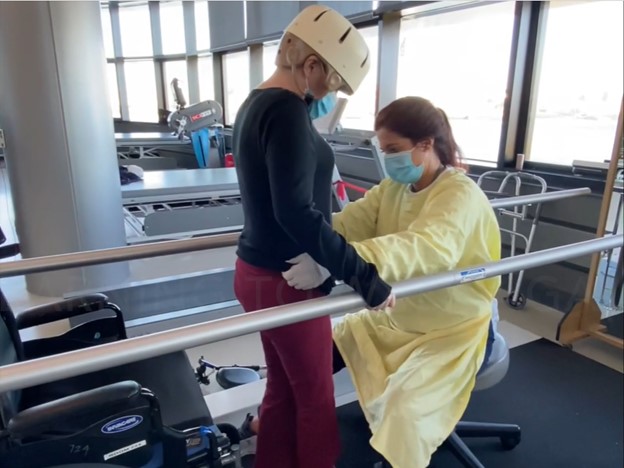
Landry, an accountant and grandmother of two, was thrilled to see this reflected in her own experience.

“By the time I left the ICU, I was off all pain meds, including Tylenol,” she said. “Three weeks after the surgery, I couldn’t believe how good I felt. Was I completely back to myself? No, but I was able to take short walks, cook and do laundry on my own. I’ve heard it takes most people three or four months to get to where I was at six to eight weeks after this procedure. Now I am walking 30 minutes a day, going to the gym and working part-time.”

‘He inspired our utmost confidence’

Landry underwent the procedure because she was born with a bicuspid aortic valve, an anatomical defect in the valve that controls blood flow from the body’s largest artery to the heart. In healthy individuals, the aortic valve has three flaps, also known as cusps. A bicuspid valve only has two flaps, which can lead to complications. For Landry, it caused the valve to thicken and narrow over her lifetime, eventually leading to irregular heartbeats and shortness of breath.

Valve disorders like this can be treated in various ways. Classic open heart surgery, where the breastbone is cut open completely (sternotomy) or partially (mini-sternotomy), allows cardiac surgeons direct access to the heart to repair or replace a valve. While long considered the “gold standard” approach, it has a lengthy recovery time — around 12 weeks. Another method known as mini-thoracotomy involves incisions between the ribs, avoiding the need to open the chest. It is less invasive and has a faster recovery, but still comes with some physical restrictions after surgery.

“I can hardly believe and cannot adequately express how well my recovery has progressed and how good I feel,” Landry says.

Transcatheter aortic valve replacement, also known by the acronym TAVR, uses advanced imaging to help specialists guide a catheter into the heart — through a small incision in the leg, groin or chest — and insert a replacement aortic valve. TAVR can be done without general anesthesia or the need for cardiopulmonary bypass, and patients experience a quicker recovery than they would from surgery, usually returning home in a day or two. However, not every patient is a good candidate for TAVR, depending on their anatomy.

That was the case for Landry, who was evaluated for surgery and a TAVR procedure during her appointment last fall.

Any disappointment she experienced about her ineligibility for TAVR quickly dissipated after she met with Danesi.

“I have never met a more compassionate surgeon, doctor or medical professional. From the first meeting that my husband and I had with Dr. Danesi, he inspired our utmost confidence,” she said. “He completely explained what my procedure would entail, how I would feel and what recovery would be — stopping many times during our meeting to be certain that we understood and to ask what questions we had.”

Advanced care with compassion

Through the tiny incisions, Danesi and team would insert surgical instruments and cameras to replace the valve. Like traditional heart surgery, it requires a specialized, multidisciplinary team — including a cardiac anesthesiologist, cardiovascular perfusionist, cardiovascular operating room nurses and other highly trained staff.

“I told her, ‘The operation you’re going to have is exactly the same, from a technical perspective, as open heart surgery. The difference is the way I get into the heart,’” he said.

The prospect of a quicker, easier recovery made the decision to move forward an easy one, Landry said.

“From that meeting until the actual procedure, I was actually looking forward to and hoping that I would qualify for the totally endoscopic procedure,” she said. “Now, I can hardly believe and cannot adequately express how well my recovery has progressed and how good I feel.”

Landry said she had no concerns about being the first in New England to undergo the novel procedure, thanks to her care team’s expertise and compassionate, patient-centered care.

“Dr. Danesi takes a complete patient approach, expressing concern and understanding of not only the physical but also the mental and emotional aspects of how I felt. He met with me at least once, but typically twice each day that I was in the hospital.  He followed up with me after I was home, via both telephone and email,” she said. “The entire team — the PAs who came in on rounds, the fabulous ICU nurses and so many others — all made me feel like they cared, like it was more than just the job.”

For Danesi, witnessing outcomes like this illustrates why he is so passionate about making fully endoscopic cardiac surgery available to more patients, including those with other conditions, and training the next generation of cardiac surgeons on the technique.

“I saw Mrs. Rose four weeks after surgery, and she looked great. I couldn’t tell she had open heart surgery just looking her smiling face,” he said. “I was pleased to have restored her quality of life and not have her feel like ‘a heart patient’ for the rest of her life. This is a true minimally invasive experience from admission to discharge.”

Brigham and Women’s Hospital mourns the loss of Michael Besly, a medical assistant in the Urgent Care Center in Foxborough, who died suddenly on March 6. He was 61.

Before joining the Foxborough Urgent Care team three years ago, Mr. Besly served as a patient care associate in Newton-Wellesley Hospital’s Emergency Department for approximately 20 years. Across both institutions, colleagues remembered his sunny personality, profound kindness and extraordinary commitment to his patients, their loved ones and his colleagues.

“Mike was extremely dedicated to his job and team. He arrived early for every shift, enjoying his coffee and quiet time. We would joke about taking in the quiet before the storm. He lived in the present each day — remaining calm and fully committed to being an exemplary role model,” said Laura Graham, practice manager for the Urgent Care Center. “Continuously positive no matter what the situation may be, Mike had an admirable heart full of compassion. I am grateful for the many opportunities I have had observing and experiencing his kindness. His presence will tremendously be missed.”

Urgent care nurse Lori Porazinski, LPN, worked closely with Mr. Besly during their many shifts together. Through warmth and wit, he was skilled at quickly establishing a rapport with patients and understanding what they needed in that moment, she said.

“No matter how busy we were, he gave every patient his full attention when he was with them, while being efficient with his work,” Porazinski said. “All the patients loved him. He would go as slowly as he needed with the seniors and crouch down to play with the kids.”

His tenderness and compassion also stood out to Urgent Care Center nurse Kathleen DiIeso, LPN. “Mike was a gentle giant — kind and gracious to all,” she said. “He loved to escort the ‘older’ ladies to X-ray as if they were attending prom.”

Mr. Besly was seemingly immune to the pressures of working in a fast-paced environment like urgent care, said Jill Simpson, MBA, RN, NEA-BC, nurse manager for the Urgent Care Center.

“He never had a complaint, always had a smile and was consistently upbeat even on the most stressful of days,” she said. “It really was incredible to work alongside someone with his attitude; it’s so rare, and every interaction with him just made your day better. He had a special joke or a funny story for everyone he passed throughout the day, as if his job was to bring a smile to others — and he did, always.”

Medical assistant Julie Eliasson fondly remembered the bond she had with Mr. Besly, sharing what she described as a “mutual sassiness” and love of laughter.

“I will never forget during one particularly difficult shift how we decided that we would try to ‘out silly’ each other, and we ended up singing to each other every time we passed by,” she said. “Mike was my work dad. He always had great advice, and he was kind to and supportive of everyone. He was truly one of a kind.”

Mr. Besly’s unwavering positivity and strong work ethic left a lasting impression on Porazinski as well.

“He was just such a constant positive light in our department — always, not just sometimes. If someone was down that day, he was the guy who was going to pull them up. He was the shining star of our department,” she said. “He was one of the hardest workers I’ve ever met in my life. He was so dedicated and held so much pride in the work that he did. He made everybody else better around him.”

Donna Collins, PA-C, assistant medical director for the Urgent Care Center, agreed. “It was such a sad loss for us,” she said. “Mike was such a diligent worker — never complained, always calm and kind.”

A proud veteran of the U.S. Marines Corps, Mr. Besly continued to pursue a life of service through volunteer work in his community. Colleagues also fondly remembered him as a man of many talents and interests outside of work, including a fervent love of Boston sports, an encyclopedic knowledge of history and a gift for gardening.

Mr. Besly is survived by his sons, Derek Besly and his fiancée, Amber Hoisington, of Dennisport, and Tyler Besly of South Yarmouth; his two sisters, Robin Johnson and Cindy Fanning; brothers-in-law Bob Fanning and Timothy Duffy; and many more loved ones. He was predeceased by his parents, Christine and Zenas Besly, and sister Kate Duffy.

This slideshow requires JavaScript.

On April 8, staff celebrated the completion of the 1,000th neurosurgery procedure performed in the Brigham’s Advanced Multimodality Image Guided Operating (AMIGO) suite.

Spanning 5,700 square feet, the AMIGO suite consists of three interconnected rooms — an operating room, an MRI room and a PET/CT room — so that multidisciplinary teams can move effortlessly throughout to access any of the advanced imaging and surgical technologies available. The Brigham is also home to the National Center for Image-Guided Therapy, which is the National Institutes of Health’s central resource for all aspects of research into image-guided procedures.

Brigham patient Alan Herscott had the distinction of being the 1,000th neurosurgery patient to receive care in the suite. Herscott underwent deep brain stimulation treatment, led by Rees Cosgrove, MD, FRCSC, FACS, for Parkinson’s disease.

“This milestone, achieved in April, which is Parkinson’s Awareness Month, underscores our relentless dedication to advancing Parkinson’s care and research,” said neurosurgeon Alexandra Golby, MD, co-director of AMIGO and director of Image-Guided Neurosurgery. “Here’s to many more strides forward.”

With its opening in 2011, the AMIGO suite became the first operating suite in the world to house a complete array of advanced imaging equipment and interventional surgical systems, along with advanced navigational technologies for use during procedures, enabling less-invasive, more-effective therapies. Clinicians use the AMIGO suite to perform surgeries and procedures in several areas, including Neurosurgery, Interventional Radiology, Endocrine Surgery, Radiation Oncology and Surgical Oncology.

1 Comment

Peter Quagge with his two dogs, Luna (left) and Millie (right)

CrossFit athlete and coach Peter Quagge, 61, from Bridgewater, Mass., says he owes much of his health and happiness to his love of the fitness regimen. Little did he know just how true that statement would become one day.

While training at his local CrossFit gym two years ago, Quagge could sense something was off.

“I’m super aware of what goes on with my body, and all of a sudden I ended up having a weird sensation along my ribcage in my abdomen,” he said. “That was the first sign. I had no idea what it was. It was something I hadn’t felt before.”

At the urging of his trainer, Sonia Cormier, Quagge made an appointment with his primary care provider in April 2022. However, the doctor couldn’t find anything wrong with him. Yet he continued to get sicker and sicker. That July, he sought a second opinion and underwent an imaging test known as endoscopic retrograde cholangiopancreatography, which uses a combination of endoscopy and fluoroscopy to examine the pancreatic and bile ducts.

It was then that Quagge discovered he had a tumor on a tiny part of the body called the ampulla of Vater, which serves as a connection point between the pancreatic and bile ducts.

Ampullary cancer is rare, amounting to fewer than 1 percent of new gastrointestinal (GI) cancers diagnosed each year. Even so, Quagge was intimately familiar with it. The mother of his longtime business partner received the very same diagnosis 15 years prior.

“I remember that moment clearly,” Quagge said. “It was 3 in the morning, and I was sitting in the hospital watching the rain fall outside when I called him. He’s the type of person you could call any time, and he said, ‘You’ve got to go talk to this surgeon. He’s fantastic. He worked on my mom.’”

That surgeon was Thomas Clancy, MD, director of Pancreas Surgery in the Brigham’s Division of Surgical Oncology and co-director of the Pancreatic and Biliary Tumor Center at Dana-Farber Brigham Cancer Center. The next day, Quagge reached out to Clancy to schedule an appointment and was seen within 24 hours.

Quagge performs a 265-pound deadlift in March 2024.

After a consultation, Clancy offered Quagge the option of robotic Whipple surgery, a minimally invasive version of the standard Whipple procedure used to treat pancreatic and ampullary cancers. It involves removing the head of the pancreas, the gall bladder, the duodenum, part of the stomach and surrounding lymph nodes.

While not every patient is eligible for a robotic-assisted Whipple procedure, those who do typically enjoy a faster and smoother recovery than the traditional Whipple, which is performed through a large abdominal incision. A traditional Whipple is usually followed by a 7- to 10-day hospitalization.

“It’s one of the bigger operations we do in GI surgery — one that historically is associated with a long hospital stay and possible complications,” said Clancy, whose interprofessional team recently performed their 100th robotic Whipple. “With Peter, we knew we wanted to do this robotically, essentially doing the same operation but through tinier incisions to enable a quicker recovery.”

Four days after undergoing the procedure in August 2023, Quagge was discharged home. And 25 days after his surgery, he was back in the gym.

“I’ll never forget that first day going back into the gym after my surgery — walking in and picking up that first weight, even though I was on weight restrictions, and doing something that was physically challenging, something that my body allowed me to do,” he said. “The fact that I was able to survive this disease, and not everyone is lucky enough to do so, makes me so grateful.”

Following surgery, Quagge underwent chemotherapy at Dana-Farber Cancer Institute to treat any lingering cancer cells. Today, he is doing well with no evidence of cancer.

Last month, Quagge competed in the CrossFit Open a global athletic competition where thousands of people participate in various elements of fitness and strength.

“Last year at this time, competing during chemo, I was pretty much near the bottom. In the U.S., I’m now ranked 118th for my age group,” he said. “I never thought I’d have the opportunity to get to this level after treatment, my operation and everything that happened to me in the last 22 months. It was made possible through the efforts of Dr. Clancy and my nurses at Brigham, as well as my team at Dana-Farber, including Dr. Thomas Abrams, Karen Sommer and others.”

From left: Occupational therapist Jocelyn Lydon and nurse Sara Manjikian are among the 149 runners competing in this year’s Boston Marathon in support of Stepping Strong.

In celebration of the 128th Boston Marathon and the 10th anniversary of The Gillian Reny Stepping Strong Center for Trauma InnovationBrigham Bulletin is highlighting the stories of three members of the Brigham’s Stepping Strong Marathon Team. Comprising 149 runners, the team will follow the historic Boston Marathon route on April 15 — all in support of the Stepping Strong Center.

Established in the aftermath of the 2013 Boston Marathon bombings, The Gillian Reny Stepping Strong Center for Trauma Innovation has evolved from one family’s bold response to a personal tragedy to a thriving, multi-institutional, multidisciplinary hub tackling the continuum of trauma care. From prevention to treatment and recovery, the center’s mission is to transform care that will change outcomes for trauma survivors and their loved ones.

You can advance this critical work by supporting the Stepping Strong Marathon Team. Click here to meet members of the team or make a gift.

To commemorate its 10th anniversary, the Stepping Strong Center is also partnering with the Kraft Family Blood Donor Center to host a mobile blood drive during the marathon in Kenmore Square, 10 a.m.–3:30 p.m., at the corner of Commonwealth Avenue and Deerfield Street. Make an appointment to donate. As a special thank you, donors will receive a stainless-steel tumbler. For questions, email blooddonor@partners.org or call 617-632-3206.

Sean Gouvin

Sean Gouvin (center) with his children at the 2013 Boston Marathon

Like so many people near the Boston Marathon finish line in 2013, Sean Gouvin didn’t fully process what he was hearing when the first bomb went off. Having worked on construction sites for much of his career, he mistook the blast for a large rock clattering into a dumpster or a power transformer exploding.

But a few moments later, there was no mistaking it: Something awful had occurred.

Gouvin and his wife, who had both participated in the race that day, finished about 15 minutes before the first explosion. Their two youngest children, then 7 and 9 years old, had cheered for their parents at the finish line. They were all a few blocks away in a family meeting area when the bombings occurred.

For the past 11 years, that memory has haunted Gouvin, who, up until that point, had run the Boston Marathon annually since 1999. In the wake of the bombings, he couldn’t imagine doing so again — until he joined the Brigham as director of Engineering in 2022.

Seeing the life-changing care and transformative research that occurs at the Brigham every day, and learning about Stepping Strong’s contributions to that work, inspired Gouvin to return to the iconic race once again.

“The Boston Marathon has been such an important part of my life, and I don’t want to remember it only in that way,” Gouvin said. “When the opportunity came up to run for Stepping Strong, it felt like I was in the right place at the right time with the right charity to change the narrative.”

His enthusiasm for this year’s race is matched only by his excitement about supporting the Brigham’s mission in a different way from his usual work, which involves leading the team of electricians, plumbers, HVAC technicians, locksmiths and other skilled professionals who operate and maintain the Brigham’s facilities and building systems.

“The easy part of working in health care is the mission: There is always more that you can do to support someone, and we’re all in this together,” Gouvin said. “There are so many people here doing incredible things every single day. Running the marathon is a small way and new opportunity for me to support that.”

Acknowledging that his own family was extremely fortunate to be unharmed by the 2013 bombings, Gouvin said he looks forward to reclaiming Marathon Monday as a treasured memory.

“The Boston Marathon is one of the best displays of human emotion and, really, just the best of what Boston is,” he said. “I’m thrilled to have an opportunity to rewrite a little bit of my own story — to do it one more time and not let the joy of this event be taken away.”

Sara Manjikian, BSN, RN

Sara Manjikian, BSN, RN, never imagined she would become a trauma nurse. A former daycare teacher who always loved working with children, she planned to pursue a career in pediatric nursing.

But after applying to a wide range of patient care associate (PCA) positions while in nursing school, she received just one offer: It was in the Burn, Trauma and Surgery Unit on Braunwald Tower 8.

At first, she was completely overwhelmed by what she saw. Soon, however, Manjikian fell in love with critical care nursing, as well as the unit’s strong culture of multidisciplinary care and the difference she saw she could make in the lives of patients and families.

And now, as a staff nurse on the unit, she wouldn’t have it any other way.

“My friends always ask me, ‘Why are you so drawn to that patient population?’” Manjikian said. “There are a lot of emotional components that come into it. Nobody expects to wind up in the hospital, and certainly nobody truly ever expects to be there due to a traumatic injury. What I find most rewarding in that sense are the interpersonal connections you get to make with patients and families.”

One example of this is when visitors first encounter their loved one in an intensive care setting, where the patient may be sedated and connected to multiple medical devices, she said.

“The first thing they always say to me is, ‘Can I touch them? Can I talk to them?’” Manjikian said. “I tell them I like to think, at least, that your loved one can hear you, and physical touch is very important. My patients have gone from walking, talking and living in the outside world to being suddenly very sick in a hospital bed. They are likely scared and anxious, and comforting words or a gentle touch on the head can be very healing.”

As April 15 approaches, she is humbled and overjoyed to support her patients and colleagues in a new way as a member of the Stepping Strong Marathon Team.

“I feel so lucky that I get to work side by side with Stepping Strong doctors — the people who are using the funds we raise to innovate and develop new techniques to improve care for trauma patients not only here but everywhere,” Manjikian said. “Aside from feeling so connected to the center through my work, over the years I have also heard so many stories from my colleagues who worked on April 15, 2013, and who relive it every time they talk about it. That has always resonated with me, and I try to invoke the strength they had in those moments on my tougher days.”

While building her physical endurance as she trains for her first marathon, Manjikian said she has also drawn inspiration from the incredible resilience her patients and their loved ones demonstrate each day.

“During long or difficult training runs, I always try to reflect on my patients and think, ‘You are doing this for them. The hardest thing they’re going to do today is fight to stay alive. You can run for a few hours,’” she said. “I’m grateful to be able to physically move my body in the way that I know many people can’t.”

Jocelyn Lydon, OT, OTR

For Jocelyn Lydon, OT, OTR, not much can compare to witnessing patients get ready for discharge from the Burn, Trauma and Surgery Unit on Braunwald Tower 8.

“It’s really rewarding when you see these patients go from being intubated in the ICU to walking out of the hospital,” she said. “Seeing the progress they make is pretty amazing.”

As a senior inpatient occupational therapist (OT), Lydon supports multiple clinical units throughout the hospital. But she has long felt a special connection to caring for patients who are recovering from traumatic injuries and burns.

“If you’re caring for someone who has a burn injury on their hand, OT is so important from day one because our hands give us so much function and ability to do daily activities,” Lydon said. “Even if that person is intubated, we’re going in and assessing positioning, doing passive range-of-motion exercises and giving splints so that when they’re awake and able to participate, they can begin to increase their independence with self-care activities.”

The inherently multidisciplinary and interprofessional nature of trauma care at the Brigham has also been an immensely rewarding part of her work, she added.

“Say you have a patient who was in a car accident. You’ll have everybody from the trauma, neuro, orthopaedics, ENT, plastic surgery, psychiatry, social work, nursing, OT, physical therapy and speech-language pathology teams involved in the patient’s care,” Lydon said. “You really are collaborating with so many people, and everyone plays an integral role on that team.”

When the opportunity arose to fulfill her lifelong dream of running the Boston Marathon while supporting Stepping Strong — an organization she says aligns so closely with her own goals — Lydon said it was an easy decision to apply for the team.

“We both have the same mission,” she said. “My patients inspire me to be the best clinician I can be. I have seen firsthand the incredible resilience and determination that patients have. I have learned so much about resilience from the patients at BWH, and I am honored to be able to help patients achieve their goals after a traumatic injury.”

Although she had long hoped to one day participate in the Boston Marathon, Lydon said she didn’t seriously start to consider it until volunteering last spring with a Spaulding Rehabilitation Hospital program that helps people with neurological injuries, such as a stroke, return to running.

“It made me see that running is a sport for everyone. For some people, their goal is to run one lap on the track, whereas my goal is to run 26.2 miles, and both are equally as meaningful and important,” she said. “Running sometimes seems like an individual sport, but it can bring us all together.”

From left: Brigham patient care associates Aysia Levy and Ashley Figueroa, pictured at their undergraduate commencement ceremonies last year, are on the path to becoming physician assistants, thanks to a new program designed and launched by Brigham PAs.

Between the application fees, long list of prerequisites and cost of tuition, the road to attending physician’s assistant (PA) school can be a long, often inaccessible one. Those barriers are even more pronounced for would-be PAs from historically disadvantaged communities, which continue to experience the consequences of systemic racism — diminished educational and economic prospects for people of color across generations. This is reflected in who becomes a PA: As of 2022, just 2 percent of PAs in Massachusetts identified as Black and 3.6 percent as Hispanic, according to a recent survey by the National Commission on Certification of PAs (NCCPA).

This inequity inspired a group of Brigham PAs to launch a yearlong, intensive mentorship and scholarship program in 2022 for patient care associates (PCAs) who come from backgrounds underrepresented in medicine and wish to become PAs. Now in its second year, the BWH PA Mentorship Program is open to a broader set of roles involved in direct patient care, due to increased interest.

The program also recently marked a significant milestone: Its first two graduates — Ashley Figueroa, of the Post-Anesthesia Care Unit, and Aysia Levy, of the Neurosciences Intermediate Unit — will soon enter PA school.

“I’m the first person in my family to go into medicine, and as I’ve learned about this process, they’re also learning because they weren’t aware of how much training is involved and how expensive everything is,” said Levy, who was awarded a full tuition scholarship for the MGH Institute of Health Professions’ master’s program in PA studies.

“The support system this program has given me made it so much easier to get to where I want to be. I am now recommending it to my co-workers and peers who are interested in the PA profession. It changed my life. I don’t really think I would have been able to get to where I am without this program.”

Levy and Figueroa were delighted to encounter each other at an interview for the same PA school one day.

The program, spearheaded by Jessica McCarthy, PA-C, of the PACE Hospitalist Service, was created with the goal of having the PA profession better reflect the diverse patient population the hospital serves. Numerous studies have shown that a more diverse health care workforce results in improved access to care, better patient outcomes and a more positive patient experience.

“I’ve been here for eight years or so,” McCarthy said. “It was wildly apparent to me the inequities that I was seeing within health care, and in thinking about a mentorship program, we really wanted to focus on encouraging candidates of diverse backgrounds who are interested in becoming PAs to apply to our mentorship program.”

McCarthy applied for a NCCPA Health Foundation Step Up grant in 2022, and her proposal was accepted the same year. With the grant, she and several PA colleagues designed the program to offer a wide range of resources and mentorship opportunities to support participants as they embark on the path to PA school. For example, mentees had the opportunity to hear directly from Brigham PAs about their career paths in personalized panel discussions.

“I had panels created specifically for me, full of practicing PAs who talked about their experience navigating through PA school,” said Figueroa.

In addition, Levy and Figueroa had the opportunity to shadow PAs in various departments and received assistance with their applications, letters of recommendation, educational opportunities and $1,000 each to offset costs associated with PA school application.

“The scholarship aspect of the program gave me the opportunity to branch out,” Levy said. “Before I was only applying to a few schools because that’s what I could afford at the time. In the back of my mind, I felt like I was limiting myself, but this opportunity allowed me to apply to as many schools as I wanted.”

For McCarthy, seeing the program already have such a substantial impact has been profoundly rewarding.

“I think when we started the program, like most new things, I had no idea what to expect,” McCarthy said. “But it was such an absolute pleasure to work with them. I remember getting the texts when they each got their first acceptances into PA school and just how exciting that was. I learned so much from them, and getting to work with people who are interested in becoming PAs reminded me of how lucky I am to do my job and to have this role.”

The BWH PA Mentorship Program is open to BWH employees who are underrepresented in medicine and working in direct patient care roles. Learn more about the program and eligibility requirements here. Applications for the next cohort are due April 30, 2024. To apply, complete this form. For questions, contact jmccarthy@bwh.harvard.edu.  

Physician assistant Sarah Kinsley teaches suturing techniques to students from Brooke Charter School.

When young people imagine a career in the medical field, they don’t often think beyond the roles of doctor or nurse. Many students may not realize there’s a whole world of options to choose from. A new initiative at the Brigham is attempting to bridge that gap with local students from backgrounds that are traditionally underrepresented in medicine, starting with a day spent doing hands-on activities at the Neil and Elise Wallace STRATUS Center for Medical Simulation.

Physician assistants (PAs) Jessica McCarthy, PA-C, and Tiffany Andrade German, PA-C, spearheaded the initiative as part of their work on the Advanced Practice Provider (APP) Diversity, Equity and Inclusion Committee at Brigham and Women’s Hospital, Massachusetts General Hospital and Brigham and Women’s Faulkner Hospital.

“The goal of the group is to increase diversity within the PA and advanced APP professions more broadly,” said McCarthy. “The majority of PAs at the Brigham are white females, and that really doesn’t match the profile of the patients we care for. We wanted to find fun and engaging ways to introduce PA and APP careers to students who are exploring STEM careers, so they could learn a little bit about what these careers look like.”

Advanced practice provider is a category of licensed health care professionals who receive the necessary education and training to perform some of the same duties as physicians, such as prescribing medications, diagnosing conditions and performing exams. APPs include PAs, nurse practitioners (NPs), certified nurse midwives and certified nurse anesthetists.

Hosted at the STRATUS Center, the initiative’s day-long kickoff event welcomed about 30 high school students from Mattapan’s Brooke Charter School, where 93 percent of students identify as Black or Latine. Visiting students participated in various hands-on activities, including a suturing station, an ultrasound station, a laparoscopic surgery game station and an advanced cardiovascular life support CPR station.

“We chose four areas we thought would be fun for high school students, and we had them break up into small groups to rotate through all four stations,” said McCarthy. “We had two to four PAs or NPs at each station, teaching the skills and talking with the students individually about their careers.”

Students gather for a photo with their Brigham instructors: Wilton Curiel, Jennifer Beatty, Aline Snietka, Audrey Fritzinger, Sarah Kinsley, Tiffany Andrade, Mary-Christine Sullivan, Trisha Auduong, Christina Shah, Iman Rashed and Jessica McCarthy.

Mary-Christine Sullivan, NP, MPH, a family nurse practitioner at Brookside Community Health Center, was among the staff who volunteered to help facilitate the day.

“It feels great to bring the profession into the community, and to show the students how much variation and flexibility there is within medical careers,” she said. “The Brigham is a world-class institution, and it’s amazing to share our resources with the youth of Boston and bring them out of the classroom to see what we do day to day. It’s a wonderful opportunity to grow the next generation of APPs right here in Boston.”

The interactive nature of the event allowed the students to get a better understanding of different career paths, Andrade German said.

“I’m not sure how many of the students have seen PAs and other clinicians in a real work setting,” she said. “This event gave them an opportunity to see how clinicians practice daily and to practice some of these skills on their own in a safe way.”

Bringing the classroom to life

Supported by a grant from the National Commission on Certification of Physician Assistants, the initiative represents a collaboration with different teams at the Brigham and with the local community.

McCarthy said the team wanted to host the event at the STRATUS lab because they thought it would offer a realistic and engaging venue for the students.

“It’s where we do a lot of the skill training for providers and clinicians within Brigham, and it’s really hands-on and interactive,” she said. “When we approached Maggie Ryan, RN, MS, CHSE, the director of education at STRATUS, she was really supportive of the initiative, and the whole team at the lab were just fantastic to work with.”

Andrade German (front center) and McCarthy (back center) lead a station teaching CPR to students.

McCarthy and Andrade German also built on an existing partnership with Brooke School science teacher Adaline King, who teaches a medical interventions class, which she describes as “an applied biology class with a focus on lab techniques and medicine” that is meant for students who are interested in going into the medical field.

McCarthy and Andrade German had previously visited King’s class to do a “day-in-the-life” presentation earlier in the year and thought the Brooke School would be a great fit to kick off their initiative.

“The students were really into it and wanted to come to the Brigham,” said McCarthy. “We worked with Adaline to recruit students and organize the logistics to make the STRATUS event happen.”

For the students, it was a chance to bring their learnings from the classroom into real life.

“Part of my goal with this class is to allow students the opportunity to see what it’s really like outside of the classroom and interact with different medical professionals,” said King. “I work in a school with predominantly Black and brown students, and representation really does matter. When they attended this program and saw people like themselves at every single station, that was really important. It showed them that doctors and other medical professionals don’t just look like white men. And I also like that it showed them that there’s so many more opportunities in the medical field beyond doctor or nurse.”

Andrade German notes that initiatives like this aren’t just fun for the students, but also help build the next generation of providers.

“These students live in Boston, and we’re hoping they’ll stay in Boston,” she said. “It’s a great pipeline to get these students who work at local hospitals, serving the people in their community.”

The team already has two more STRATUS events planned for the spring with Excel Academy and Revere High School, and they hope to continue to offer the program in the fall.

“My students are definitely interested in going back to learn more,” said King.

From left: Chidinma “Chi-Chi” Osuagwu, LaShyra “Lash” Nolen, James Hocker and Bethany Fixsen are among the 245-plus medical students who learned on March 15 that they matched at the Brigham.

Across the 18 Brigham residency programs participating in Match Day on March 15, 2024 — when more than 44,000 medical school students across the country discovered where they will continue their medical training — over 245 aspiring physicians matched at the Brigham this year.

Among those incoming interns are 77 medical students who matched into the Brigham’s Internal Medicine Residency Program, the hospital’s largest residency program.

“We are thrilled by our Match Day results and to welcome such a talented group of interns,” said Maria A. Yialamas, MD, director of the Brigham’s Internal Medicine Residency Program. “We look forward to working with them and learning from them.”

Of this year’s class of internal medicine interns, 52 percent who matched are women and 21 percent are underrepresented in medicine (URIM). Across all Brigham residency programs, 51 percent who matched are women and 26 percent are URIM.

In celebration of Match Day, Brigham Bulletin spoke with four newly matched interns to hear what inspired their paths into medicine.

A heartfelt homecoming

Growing up in Roxbury, Chidinma “Chi-Chi” Osuagwu had long been inspired by health care leaders at the Brigham.

“Seeing the influence and the benefits that the Brigham brings to the community,” as she described it, spurred her to work as a research assistant here for two years with the Heart Failure Equity Project before beginning medical school.

Additionally, while studying public health as an undergraduate, she read the work of Paul Farmer, MD, PhD, co-founder of Partners In Health and chief of the Brigham’s Division of Global Health Equity until his sudden death in 2022. His work and ethos further inspired her to be part of long-term, sustainable change in medicine.

“I wanted to be somewhere where I thought I could really realize my potential and value,” said Osuagwu, who will receive her medical degree from Temple University’s Lewis Katz School of Medicine this spring.

Upon learning that she had matched at the Brigham, she shared a simple message on social media: “I’M COMING HOME.”

As she embarks on a career in medicine, Osuagwu hopes her local roots will help her earn the trust of her patients. She is also excited that this homecoming provides an opportunity to continue improving access and affordability to community-based movement and fitness in Boston through the dance company she started in 2017, Afrobeats Dance Boston.

“Knowing we come from those same communities is so important for making community bonds, so patients know we are truly there for them,” she said. “I’m excited to be that representative at the Brigham.”

Her drive to create lasting change comes from witnessing and experiencing firsthand disparities in access to health care that affected her community, family and friends.

“I want to give back to the communities that raised me and gave me my name,” Osuagwu said. “Because I had seen how people did not have access, there was an opportunity to do something and be a part of something bigger for others.”

Osuagwu (center) celebrates her match with loved ones in Philadelphia.

Her parents were also major sources of inspiration to study medicine. “They came here from Nigeria. Their perseverance and selflessness really planted seeds in me,” she said. “They really taught me adaptability and resourcefulness.”

Her father wanted to practice medicine in Nigeria, “but the turmoil in our country made it impossible for him,” she explained. Once their family settled in Roxbury, he started working as a nurse, which gave Osuagwu the opportunity to shadow him at work.

“I fell in love with it,” she said. “I knew I could help people this way. I could work with communities this way.”

During medical school, she had the opportunity to learn about various specialties through her clerkships, but she remained most drawn to internal medicine.

“I learned I wanted to be a patient’s primary clinician, that first point of contact, and build that therapeutic alliance,” she said. Internal medicine felt like the best way to treat patients holistically and advocate on their behalf.

In time, she wants to take that advocacy global: She plans to apply for the Brigham’s Doris and Howard Hiatt Residency in Global Health Equity and Internal Medicine, a four-year program that leads to eligibility to become a board-certified physician and the completion of a master’s in public health via the Harvard T.H. Chan School of Public Health. In addition to rigorous clinical training, Hiatt residents participate in 11 months of field work and research. The program stood out to Osuagwu during the residency application process.

“It’s a beautiful combination of both working in the field and the research. Looking at other programs, they just didn’t hold a candle to the work at the Brigham,” she said. “I want work to alleviate the colonial barriers that are pervasive and still affect health care negatively by building sustainable, independent and empowered care.”

With so many bright opportunities on the horizon, Osuagwu said she is overjoyed to have matched here: “I love the fact that at a place like the Brigham you can really do it all.”

Creating a platform for change

Nolen (center) celebrates with her future Primary Care residency program director, Sonja Solomon (left), MD, and Valerie Stone (right), MD, MPH, vice chair of Diversity, Equity and Inclusion for the Department of Medicine, during the Brigham’s Match Day reception.

LaShyra “Lash” Nolen first discovered her love of science when she won her third-grade science fair.

“I had this epiphany: I like science, and I think I’m pretty good at it,” she recalled.

Ever since, when people asked her what she wanted to be when she grew up, she always said a doctor. She even started dressing as one for Halloween.

As she got older, that dream held steady but took on a more harrowing lens as Nolen started to notice some of her family members were dying at young ages from preventable illnesses. Her curiosity and determination made her start asking questions.

“Why is it that my aunt, my grandmother — they’re getting these illnesses so young and they’re always sick? This isn’t right,” she remembered thinking.

She took her first public health class in college, where she learned about social determinants of health — a term for non-medical factors in a person’s life, such as their racial identity or even their zip code, which correlate to different health outcomes.

“It was at that point that I knew I didn’t just want to become a doctor and heal the individual. I really wanted to heal society by understanding the systemic inequities that lead to the individual challenges I saw my family facing,” Nolen said.

This realization inspired her life’s calling: to advocate for health equity and social justice on behalf of vulnerable people everywhere as a physician activist.

“I just cried tears of happiness and embraced my mom,” says Nolen, pictured with her mother, Ty Harps, on Match Day.

She will take another step forward in that journey this spring, when she completes a dual-degree program at Harvard Medical School (HMS) and Harvard Kennedy School of Government to earn her medical degree and a master’s in public policy. During her time at HMS, Nolen has served as the university’s student council president for her class — the first documented Black woman to hold that position in the school’s 242-year history. Prior to med school, she completed a Fulbright fellowship in Spain and a year of service with AmeriCorps as a health educator in Chicago.

She has also emerged as a national voice in health equity and antiracism in medicine, earning numerous accolades for her activism. In 2021, she founded the grassroots nonprofit We Got Us, a student-led coalition that works to combat racism in Boston by increasing access to equitable health care, community-centered health education and holistic healing.

As she began the residency application process, Nolen realized many of the medical professionals she looked up to the most had trained at the Brigham, including U.S. Surgeon General Vivek Murthy, MD, MBA; internist and health equity leader Michelle Morse, MD, MPH, the first chief medical officer of the New York City Department of Health and Mental Hygiene; and physician and racial justice advocate Lachelle Dawn Weeks, MD, a hematologist and scientist at Dana-Farber Cancer Institute.

“But what further interested me as a student is the way the residents were pushing the institution to live up to their values of equity,” Nolen said. “Those folks have a voice and an opportunity to make change.”

As an incoming intern, she looks forward to building a lifelong community with her fellow residents, training to become an excellent clinician and continuing to work in antiracism. Over time, she plans to examine “racism in clinical algorithms and decision-making and biases toward patients of underserved and marginalized identities to combat that in the clinical setting.”

From those early science fairs to Match Day, Nolen has found her drive and purpose from another important and constant source of inspiration: her mother.

“She’s an incredible role model. She had me when she was 18, raised me as a single parent and still went on to get both her bachelor’s and her master’s degrees,” Nolen said.

So, it was only fitting that her mom was by her side when Nolen found out she had matched with her top choice.

“It took me a few seconds to really let it sink in, and then I just cried tears of happiness and embraced my mom,” Nolen said. “It was a culmination of us working together to achieve this dream. It’s an absolute natural fit. It felt like I’m coming home.”

Tissue culture for two, please

From very early in their residency application process, James Hocker and Bethany Fixsen had a good feeling about the Brigham. The couple met in medical school at the University of California San Diego (UCSD), where Fixsen worked with Chris Glass, MD, PhD, who had also studied at the Brigham.

“He came back to start his scientific fellowship at UCSD, and he is such a presence — a really amazing researcher and a great mentor to both of us,” Hocker said.

Fixsen also had a close friend who was thrilled with her own experience as an intern at the Brigham. “It was really important for us to see just how happy someone really close to me was feeling at that program,” she said.

So, by December 2023, while discussing their future plans, Fixsen told Hocker, “I think we’re going to Boston. I just feel it in my bones.”

Discovering that premonition came true was unlike any other moment they’ve experienced.

Hocker and Fixsen embrace upon learning they both matched at the Brigham.

“I don’t think I’ll ever be able to recreate it. I immediately jumped up and down and screamed,” Fixsen said of opening her envelope. “We’re so thrilled that it worked out, because it was absolutely our first choice,” Hocker added.

Although the couple met in medical school, their paths could have crossed earlier. They both grew up in the Midwest — Hocker in Wisconsin, Fixsen in Minnesota — and they both spent two years doing research at the National Institutes of Health (NIH).

Together, they’ll be pursuing the Science in Residency Pathway to become physician-scientists, but with different inspirations and goals.

After spending time in the Clinical Center at the NIH and “seeing people get better, right in front of my eyes,” Hocker decided he wanted to do clinical work. But he’s also interested in genomic sequence and, specifically, noncoding variation in the genome.

“I’m interested in how we can use information about patients’ DNA to improve their health care and do better for them,” he said. “I know there are leaders at the Brigham who are doing cutting-edge research in this field, and I hope that I have a little bit of extra interfacing with leaders in that area.”

Fixsen’s research interest has been in macrophages and gene regulation. She looks forward to residency training for the opportunity to focus on “becoming a really excellently trained internist,” with a goal to ultimately have a career in hematology oncology. Her road into medicine started a little closer to home, when she needed surgery for a collapsed lung.

“It was my first interaction with the health care system, and being in that environment seemed really fascinating,” she said. “So, when I went to the University of Chicago, I really homed in on the medical side of things as I was prepping my studies for the next step.”

Both will become the first doctors in their families. “Our families are so excited for us,” Hocker said. “I think they didn’t really know, coming into Match Day, how big of a deal it was until everyone was crying and jumping up and down. They’re over the moon right now.”

Doctor and patient stand together

From left: Brigham neurologist Vikram Khurana shares a moment with one of his patients, Lin Schott, at an event hosted by The MSA Coalition. Schott, who has multiple system atrophy (MSA), is one of 23 participants in a Brigham-led cohort study of people with this rare neurodegenerative disease and similar disorders.

In 2017, at age 68, Lin Schott’s active lifestyle was cut short. A former U.S. Navy nurse who organizes activities and athletic events for disabled veterans and their families, Schott was walking with a group of friends when she suddenly felt like she couldn’t stop moving, despite being exhausted. From there, she started having falls she couldn’t account for.

“I’d get out of bed and just fall,” she recalled. “My balance was really off.”

She was also experiencing nausea and constipation. She saw her primary care physician, who referred her to a neurologist at Massachusetts General Hospital (MGH).

Anne-Marie Wills, MD, Schott’s primary neurologist at MGH, diagnosed her with multiple system atrophy, or MSA. MSA belongs to a group of rare neurological diseases known as atypical parkinsonisms, a term for a group of conditions that affect movement and are named for their similarity to Parkinson’s disease. MSA is a progressive neurodegenerative disorder that causes loss of function along with a multitude of other symptoms, including impairments to balance, blood pressure issues and sleep disturbances, among other issues.

Wills, who specializes in neurodegenerative diseases, referred Schott to the Brigham to obtain a second opinion from neurologist and autonomic specialist Peter Novak, MD, PhD, who is part of the multidisciplinary team that makes up the Brigham’s Parkinson’s+Ataxia+Multiple System Atrophy (PAMSA) Clinic. The referral is just one example of not only the two departments’ longstanding collaboration but also Mass General Brigham’s vision for a fully integrated and unified system of care.

Novak not only confirmed Schott’s MSA, but also identified another diagnosis: autoimmune autonomic ganglionopathy (AAG), a very rare disease that causes the body to attack parts of the nervous system that control involuntary (also known as autonomic) functions like heart rate, blood pressure and digestion. Only about 100 people in the U.S. are diagnosed with AAG each year.

First established in 2017, the PAMSA Clinic combines neurology with other clinical specialties and services to care for patients with complex, degenerative movement disorders. Held twice per month, the clinic provides patients the opportunity to be evaluated by three different specialists — including a movement disorders specialist, a neuro-physical therapist and social worker — in consecutive appointments.

‘Beyond Neurology’

Recognizing that patients with these complex disorders need more than neurological care, the PAMSA Clinic brings together a wide range of experts in related areas. The team also includes speech and occupational therapists, a genetics counselor, neuroradiologist, neuropathologist, neuro-nuclear medicine physician, pulmonologist and urologist.

On the first Friday of each month, the clinic’s core team meets to discuss cases and develop a cohesive plan for diagnosis and treatment.

“For some of our patients, the problem goes beyond neurology. They can sometimes seem like they have Parkinson’s disease, but it turns out they don’t respond to conventional treatments, and they tend to progress more quickly,” said Vikram Khurana, MD, PhD, chief of the Division of Movement Disorders in the Department of Neurology and co-director of the PAMSA Clinic.

Khurana said early falls like what Schott experienced are a common sign of MSA. Patients may also have early autonomic dysfunction, such as bowel and bladder issues, making the clinic’s collaborative and multidisciplinary approach an essential component of its care model.

“If we need an expert urology consult or cardiologist, they’re there,” said Khurana.

Barbara (Kelly) Changizi, MD, clinical director of the Division of Movement Disorders and co-director of the PAMSA Clinic, said social work is another key area for patients adjusting to life with a degenerative movement disorder.

“Some of our patients might be younger and thought they could work for another 20 years. If they can’t anymore, we can navigate those resources,” Changizi said. “If they need help paying for medication or need a wheelchair or stretcher to get them to their appointment, we can help.”

Advancing the Future of Care 

The PAMSA clinic, which was recently named an MSA Center of Excellence by the MSA Coalition, is not the only center of its kind in Boston but stands apart for its leading work in research. The very nature of rare diseases — that they affect so few people — makes them unlikely targets for research funding and clinical trials. The Brigham’s PAMSA Clinic is one of the few of its kind to offer patients with these disorders the opportunity to participate in studies that seek to discover better treatments for movement disorders.

Schott receives most of her clinical care from her primary neurologist at MGH, and she also plays a key role in helping Brigham researchers uncover future treatment options for other patients diagnosed with MSA.

Three children and their grandmother at a lemonade stand

Schott (center) with her granddaughters, who organized a lemonade stand to support people with MSA.

She’s one of 23 participants involved in the Brigham’s MyTrial study, which follows people with MSA, Parkinson’s disease and/or spinal cerebellum ataxia over a two-year period as researchers monitor different ways in which their disease progresses.

“We’re looking to see if the patients are slowing down or if there’s a tremor,” said Diego Rodriguez, MD, a clinical research fellow in the Department of Neurology. “We’re also measuring their eye movements because impairment patterns are different between ataxia and parkinsonism.”

Researchers use the data to predict if their condition is worsening over the two-year period and if it’s responding to different medications.

Another study offered through the PAMSA Clinic, the Harvard Biomarker Study 2.0, performs brain scans and runs lab tests on skin biopsies in hopes of identifying better ways to diagnose and treat Parkinson’s disease. Schott will be enrolled in the study in August.

Researchers have already learned how to distinguish MSA from Parkinson’s by comparing proteins found in participants’ skin samples.

“That differentiation can help with an early, accurate diagnosis,” Rodriguez said.

Those skin biopsies can also be combined with stem cell models to create a replica of an individual patient’s disease.

“Now that we have those models, we can treat the cells with compounds to see if they work, ultimately leading to the development of new drugs,” Rodriguez said.

Defying the Odds

To treat her AAG, Schott receives intravenous immunoglobulin infusions (IVIG), a therapy for patients with weakened immune systems, something Rodriguez said could also be helping her MSA by targeting inflammation in her brain.

“There’s a good chance, but more research is needed,” he said.

Novak noted that other patients with MSA who have elevated inflammatory markers similar to Schott have also been treated with IVIG or other immunomodulators.

“The combination of autoimmunity and MSA is intriguing and worthy of being studied,” said Novak.

Schott also gets Botox injections in her legs, bladder and esophagus to help treat her symptoms, sees a speech therapist, and does tongue exercises to control swallowing issues. As her disease progressed, she moved to a one-story home and now uses a walker. Despite the need for lifestyle changes, she has defied the odds.

“They told me I’d likely be in an electronic chair in five years. I said, ‘Not me. I’m going to fight this,’” Schott said.

Schott said she eats well, enjoys going on walks, visits with her five children and grandchildren, and volunteers as much as she can.

“Taking care of myself and all these doctors meeting my needs are keeping my condition from progressing as quickly,” she said.

Brigham and Women’s Hospital mourns the loss of Howard H. Hiatt, MD, co-founder and former associate chief of the Division of Global Health Equity, who reshaped the fields of public health and health equity through his prolific mentorship and passion for social justice over a seven-decade career. He died on March 2 at the age of 98.

Despite having multiple seminal achievements, Dr. Hiatt was least comfortable talking about his own record, which included contributing to the Nobel Prize-winning discovery of messenger RNA, a 12-year deanship of one of the world’s top public health schools and helping influence President Ronald Reagan to limit the country’s nuclear armament. Guiding, supporting and advocating for the next generation of physicians, scientists and public health leaders brought him far greater joy.

“Howard was one of the rare mentors who not only could offer wise advice on your career but who also genuinely cared about who you were as a person,” said Joseph Rhatigan, MD, chief of the Division of Global Health Equity.

From a young age, Dr. Hiatt experienced firsthand how transformative a caring mentor can be. After graduating from Harvard Medical School in 1948, he was taken under the wing of National Institutes of Health (NIH) biochemist Bernard Horecker, PhD. Dr. Hiatt never forgot the kindness of his first mentor — a framed, black-and-white photo of Horecker adorned his office at One Brigham Circle — and he made it his life’s work to repay the favor.

“Howard Hiatt was the mentor we all aspired to be,” said longtime friend and colleague Marshall A. Wolf, MD, MACP, emeritus vice chairman for Medical Education.

That commitment was immortalized in 2004 with the establishment of the Doris and Howard Hiatt Residency in Global Health Equity at the Brigham, named in honor of Dr. Hiatt and his wife. The four-year program, which has graduated approximately 70 physicians since its founding, combines rigorous training in internal medicine with the advanced study of public health to equip physicians with the skills necessary to improve the health of the world’s most impoverished people.

Among those who experienced Dr. Hiatt’s devotion to mentorship is Bram Wispelwey, MD, MS, MPH, a physician in Global Health Equity, co-director of The Palestine Program for Health and Human Rights at Harvard’s FXB Center for Health and Human Rights, and 2018 graduate of the Hiatt Residency in Global Health Equity.

“Howard’s gift as a mentor was to be even more committed than you to your own success,” Wispelwey said. “He was always curious, asking the most thoughtful questions and remembering the important personal details. Without my realizing it, he would locate challenging barriers to a professional goal and then remove them, sometimes secretly and invariably without taking credit.”

One example of that generosity and humility remains etched in memory for Wispelwey.

“When I was discussing a program we were hoping to establish at the Harvard FXB Center, I only found out from someone later that Howard was actively helping make it a reality behind the scenes,” he said. “Once I found out, I brought it up with him to say thank you, and he gave this quick boyish smile and looked away, immediately changing the subject to focus on me and my family. That was Howard.”

Similarly, longtime mentee and colleague Sonya Shin, MD, MPH, an associate physician in the Division of Global Health Equity and consulting physician at Gallup Indian Medical Center in Gallup, N.M., fondly recalled how Dr. Hiatt “expected more from me than I did from myself.”

“I suspect his biggest skill was seeing the full, unrealized potential of every person and helping us see it within ourselves,” she said. “He was genuinely boundless in his caring for others. At each of our meetings, Howard would inquire about my family, with encyclopedic memory of each of my children. He would ask about my husband, my parents. He would skillfully deflect any attempt I made to ask about his own well-being, saying something like, ‘Howard is fine, but more importantly, how is Sonya?’”

With Dr. Hiatt’s encouragement and backing, Shin founded the Community Outreach and Patient Empowerment (COPE) Program to improve the health of people in Navajo Nation. Since the program’s 2009 launch to today, Dr. Hiatt remained an enthusiastic champion of COPE, which Shin says was built on earlier work he did with the late Phyllis Jen, MD, who together built trust with Indigenous populations and laid the foundation for a long-term partnership.

For nearly two decades, Dr. Hiatt continued to travel to New Mexico to support clinicians and patients in Navajo Nation — a reflection of his unrelenting commitment to building a more just world for marginalized populations, Shin noted.

“Alongside his limitless generosity and humanity, Howard also had a steel core: He was unyielding when it came to doing the right thing. He did not tolerate questionable behavior, and he showed astounding perseverance in his mission to advance health equity,” she said. “Despite his longevity or perhaps because of it, Howard — more than almost any other person I know — lived with the urgency and presence that each day deserves.”

Soon after starting his medical and research career, Dr. Hiatt followed his interest in molecular biology to the Pasteur Institute in Paris, joining the team that would prove the existence and function of messenger RNA. In 1963, he returned to Boston to become physician-in-chief at Beth Israel Hospital, where he helped to start its oncology program, and in 1972 was appointed dean of the Harvard School of Public Health. As dean, Dr. Hiatt led an era of transformation in the school’s curricula to broaden its work into more interdisciplinary studies.

“When Dr. Hiatt completed his term as dean of the Harvard School of Public Health, I recruited him to join the Department of Medicine at BWH,” remembered Eugene Braunwald, MD, former chair of the Department of Medicine and founding chair of the Thrombolysis in Myocardial Infarction (TIMI) Study Group. “Among his many contributions to the institution, together with Dr. Lee Goldman, he developed a unique Research Training Program in Clinical Effectiveness, one of the first and most important programs that prepared post-residency trainees for a career in the conduct of rigorous clinical trials.”

In 2001, Dr. Hiatt helped launch the Division of Social Medicine and Health Inequalities (later renamed Global Health Equity) with his most promising mentees: Paul Farmer, MD, PhD, and Jim Yong Kim, MD, PhD, co-founders of Partners In Health. Kim became the division’s founding chief, and Dr. Farmer later led the division for over a decade until his sudden death in 2022.

The three of them, along with Wolf, then serving as director of the Internal Medicine Residency Program, and Joel Katz, MD, later the successor to that program, developed and launched the Global Health Equity residency three years later. The program was among the first of its kind in the nation.

“Both of these programs — the Research Training Program in Clinical Effectiveness and the Global Health Residency — were enthusiastically received by our trainees, many of whom became leaders in their respective fields,” Braunwald added. “These programs have spread to other institutions, where they also enjoyed success.”

Dr. Hiatt is predeceased by his wife, Doris, and son Fred Hiatt. He is survived by his son Jonathan; his daughter, Deborah; his brother Arnold Hiatt; eight grandchildren; four great-grandchildren; and his longtime companion, Penny Janeway.

Brigham emergency physician Catalina González Marqués (seated at table, foreground), who served as curriculum director for a humanitarian response training program in Jordan, listens to student presentations.

For more than 15 years, Brigham emergency physicians on faculty with the Harvard Humanitarian Initiative (HHI) have welcomed colleagues from around the world to Cambridge for an intensive, two-week course on delivering humanitarian aid amid war, displacement and disaster.

Last year, organizers excitedly began planning to host the December 2023 course abroad for the first time — in Amman, Jordan – in partnership with the World Health Organization.

However, as the war in Gaza escalated and fear of a wider regional conflict grew, concerns emerged about whether the trip to Amman still could or should occur.

“Given the location, our team had some talks about ‘Can we even do this? Do we need to cancel?’” said Brigham emergency physician Sean Kivlehan, MD, MPH, director of the Global Emergency Medicine Fellowship, who spearheaded the trip. “We quickly decided we had to move forward with the course because the training was now more important than ever.”

In late November, five Brigham colleagues boarded a plane to Jordan to teach HHI’s Humanitarian Response Intensive Course. In addition to Kivlehan, the Brigham cohort consisted of Catalina González Marqués, MD, MPH, Katie Murray, LLM, Lea Sinno, RD, MPH and Jonathan Strong, MD, MPH. They were joined by Massachusetts General Hospital nurse Catherine (Skeeter) Welder, BSN, RN, along with a team from Boston Children’s Hospital and HHI staff.

The curriculum seeks to equip future humanitarian leaders from around the world with the skills needed to prepare for and respond effectively to complex humanitarian emergencies. It culminates into a three-day, immersive simulation that replicates a complex emergency scenario. The HHI team collaborated with the WHO’s Eastern Mediterranean and African Regional Offices to bring the course to Jordan with a specific focus on training students from those regions.

Active and evolving humanitarian crises affecting this year’s registered attendees, including the Gaza war, required the team to adapt on the fly. After several students withdrew from the course after being deployed to Gaza and other emergencies, Kivlehan and his team provided local partners, including the International Organization for Migration and the Jordanian Ministry of Health, the opportunity to invite additional staff to participate. The team also reached out to the Palestinian Red Crescent Society, which sent five members to the training.

Ultimately, the HHI and WHO team trained 65 students from 52 countries, all of whom currently work in the humanitarian sector.

Adapting and Learning 

González Marqués, who served as the curriculum director, said the four humanitarian principles — humanity, impartiality, neutrality and operational independence — took on added importance during the course.

“Humanitarian organizations must be neutral and impartial,” González Marqués said. “When you work on a humanitarian assignment, no matter your feelings on a conflict, you’re there to meet a need. So, there was a need for training in the region, anticipating that it’s going to be a really difficult time there.”

From left: Jonathan Strong, Catalina González Marqués and Sean Kivlehan of the Brigham, along with Hama Othman of the Harvard Humanitarian Initiative and Michelle Niescierenko of Boston Children’s Hospital, prepare for the next day’s simulation exercise.

While the instructional curriculum was straightforward to adapt over the team’s timetable, the simulation portion of the course was more challenging. It traditionally requires over 150 volunteers to properly run.

“We needed to go to medical schools across Jordan and recruit students who would be willing to participate,” Strong said. “Not a lot of them have experience with humanitarian issues, and none of them had ever participated in anything like this before.”

While they were the instructors, the team emphasized they also became students themselves during these trainings, as there is always much to learn from health professionals in other parts of the world.

“I always learn from my colleagues,” González Marqués said. “They have more expertise in the region, so I think letting them guide how our response should be is always the most important part. I learned so much from them because you can never expect to do things in another part of the world in the same way that they are done here.”

Strong, like many of the other physicians on the trip, has completed several humanitarian assignments before, including a recent trip to Ukraine with Kivlehan. He reflected on the complex emotions that this work can bring up.

“The intervention itself — teaching and seeing students learn and grow not only as health care providers but also as humanitarians — is really important to me. I think there’s a sense of pride and a sense of hope,” he said. “However, I do think it’s, in a way, sad that we have to do these trainings and that the trainings are so important because the world seems to be in a tough place right now.”

1 Comment

After an older, unhoused patient missed several appointments and couldn’t be reached by phone, some people might have given up on what appeared to be a habitual “no-show” — but not two members of the Brookside Community Health Center team.

Recognizing that this vulnerable patient had several challenges, including cognitive impairment, Brookside nurse practitioner Victoria Hill-DiLando, CNP, followed a hunch that resulted in lifesaving care. During one of his appointments, she ordered a brain imaging scan. After completing the exam, the patient left the clinic before his care team could relay the finding: He had suffered a small but acute stroke.

The lengths to which Hill-DiLando and Solanlly Montero, population health program coordinator at Brookside, went to follow up inspired their colleagues to nominate them for a 2023 Pillars of Excellence Award, which celebrates employees who go above and beyond in their day-to-day responsibilities and show immense dedication to their work.

“The patient did not answer his phone, and Tory also couldn’t get a hold of his emergency contact. At least a day went by without her being able to contact him. Tory would not give up and was relentless,” wrote their nominator. “Solanlly did several home visits, including writing a note in Spanish on the door and discovering where he worked. He eventually got the message, came to Brookside to see Tory, and she was able to deliver the diagnosis and call EMS to safely transport him to the Emergency Department for further treatment and workup. This patient was saved from falling through the cracks because of their relentless, persistent efforts.”

The two were among 77 individual honorees and 29 teams from Brigham and Women’s Hospital and Dana-Farber Brigham Cancer Center recognized during this year’s ceremony on Feb. 28.

“This year’s honorees — like so many in our Brigham community — exemplify incredible resiliency, going above and beyond and championing our culture here at the Brigham, no matter the challenges we face,” said Giles W.L. Boland, MD, incoming interim president of Brigham and Women’s Hospital and president of the Brigham and Women’s Physicians Organization.

Also among this year’s honorees was Stephen Chang of the Department of Radiation Oncology. As the department’s financial manager, Chang is known for his collaborative and inclusive approach to work.

“He is always willing to help others resolve an issue. One example of this is when our research program was lacking a grant administrator. The program had grown significantly, and there were many research trials that needed fiscal oversight,” his nominator wrote. “Stephen stepped up and performed these responsibilities (in addition to his own) to allow the trials to continue. He understood the importance of research and what it means to the people we serve.”

Rayven Frierson was also honored this year for her care and attention to patients in her role as a research assistant in the Division of Infectious Diseases.

“Rayven has developed great relationships with our study participants,” Rayven’s nominator wrote. “She created a weekly check-in email in which patients feel free to report any new concerns or events they have had with the study drugs, so they don’t feel like they have to wait until the next study visit to get clarification. Her capacity to build good relationships benefited the team as patients are excited to participate in new upcoming trials with our team.”

In addition to individuals, the Pillars of Excellence Awards also recognize teams throughout the Brigham. One such team was the Emergency Department (ED) Supplies Team which works to organize and distribute ED supplies. The ED Supplies Team has worked to improve several aspects of the department’s environment of care.

“They ensure we have not only steady PAR [periodic automatic replacement] levels of needed supplies but also a process to obtain more special-order supplies,” the nominator wrote. “This is something that many folks don’t necessarily think about when running a clinical care unit, but having steady access to the supplies you need is huge, and this team has made this possible for us and our patients.”

Another team that was highlighted was the Braunwald Tower 10A Nursing and Patient Care Associates (PCAs) Team for demonstrating “unwavering professionalism, compassion and patient-centered care” in caring for a complex patient with a prolonged and challenging hospitalization.

“The Tower 10A Team exhibited not only compassionate care but also a multidisciplinary approach of collaboration,” their nominator wrote. “The ongoing collaboration provided this patient a safe plan of care, ensuring the patient was always treated with dignity and respect. The staff’s unwavering dedication was evident day in and day out. From coloring with the patient, to helping the patient make phone calls or ordering the patient’s favorite food items, the staff have used their creativity to help support the patient throughout their stay.”

Chanel Fischetti assists a nurse colleague at a remote clinic in Lebakeng, Lesotho, in using point-of-care ultrasound for fetal scanning.

Brigham emergency physician Chanel Fischetti, MD, has been passionate about point-of-care ultrasound (POCUS) since she was introduced to the practice in medical school. Inexpensive and portable, the versatile technology enables patients to undergo an ultrasound wherever they are being treated — whether that is in a hospital bed or a rural village.

In the U.S., the technology is common — often found in emergency rooms and obstetrical clinics — because training opportunities are plentiful. But in resource-poor areas of the world, where POCUS has the potential to make an even broader impact, its use is far less prevalent. That is partly because training programs are far less accessible.

This inequity has motivated Fischetti to bring POCUS training to areas of the world with some of the greatest need — most recently in Lesotho, a small, land-locked country in Southern Africa where the disease burden is high and average life expectancy is just 52 years for men and women.

“CT scanners and MRIs are incredibly uncommon and also very expensive,” Fischetti said. “But ultrasound is one of the most affordable and ubiquitous imaging modalities, both therapeutically and diagnostically, and it forwards no radiation. I deeply believe in the power of ultrasound to transform, start to democratize and even the playing field for health care.”

Supported by a Fulbright Specialist Scholarship, which pairs academics and professionals with a host institution for a two to six-week experience abroad to share their expertise, Fischetti traveled to Lesotho from Jan. 16 to Jan. 31 in collaboration with Partners In Health, a global health and social justice organization that provides quality health care to the world’s most impoverished and marginalized people. Together, they conducted a needs assessment on the country and developed a curated POCUS curriculum for providers there.

The project was ambitious. Supporting 10 sites throughout the country over just two weeks, Fischetti would sometimes find herself teaching three lectures in a day.

“Some of the sites are so rural that it takes five to seven hours just to drive to them,” Fischetti said. “We worked with the Lesotho Defense Force, which flew us out on their military helicopters just to go to these sites, which was terrifying but amazing.”

Despite the demands of her work, Fischetti found her time in Lesotho as an educator humbling and took away several lessons herself. She reflected on how rewarding it was to work alongside colleagues from all over the continent. Lesotho is one of the 11 countries in Africa without any medical schools.

“I never take my education for granted,” Fischetti said. “This kind of experience certainly makes you aware of the system that you work in and the opportunities that you have even just to have a ‘normal’ family unit or a job in the country you want to be in.”

As someone who has previously done global health work, Fischetti said was very conscious about making sure the work she was doing in Lesotho wasn’t a “Band-Aid” but a lasting solution to the lack of training programs in country.

“You never want to leave a country and be like, ‘OK, well, they have to wait until next year for me to come back,’” Fischetti said, “The goal is long-term sustainability and accountability, and Partners In Health is an organization that really does what they say. They have long-term roots and relationships in these countries.”

While her time in Lesotho was short, Fischetti was able to accomplish her goal of enabling long-term proficiency with POCUS.

“The doctors’ confidence grew so much in the two weeks I was there with things like how to hold the probe, where to find the kidney and how to look at the heart,” she said. “I even have a few colleagues who have reached out to me after my trip who want to go and continue to build on the work that I’ve started, which is amazing.”

Top row, from left: BWH Bulletin covers the completion of CWN in 1994; Robert Barbieri, MD, speaks at the dedication ceremony in the building’s lobby area. Bottom row, from left: Staff nurse Patti Fitzgerald, RN, gives a tour of “a cesarean/complicated birth room”; H. Richard Nesson, MD, speaks at the podium as Boston Mayor Tom Menino listens; Icilda Chambers, patient care assistant, “uses a patient bed to give delicate equipment a cushioned ride to its new home,” the Bulletin wrote.

Exactly 30 years ago today, on Feb. 27, 1994, the Brigham celebrated the completion of its new Center for Women and Newborns building, marking the first addition of inpatient space since the Tower’s construction in 1981.

Patient care activity in the building was rolled out gradually in the weeks and months following the ceremony, with floors L2 through 6 starting to open in mid-March, followed by the rest of the building in June of that year.

Even then, the Brigham delivered more babies than any other hospital in Massachusetts, and its obstetric program was considered one of the largest in the country. Those facts remain true today, along with one more crowning achievement: For the past two years, the Brigham’s has ranked first in the nation for obstetrics and gynecology by U.S. News & World Report.

Another point of pride for the Brigham was being New England’s largest center for critically ill newborns, a status that also remains true today, with the new building boasting a 46-bed Neonatal Intensive Care Unit (NICU). Following the unit’s expansion in 2016, the NICU now has 66 beds and cares for nearly 3,000 premature and seriously ill babies and their families each year.

Perhaps no one is more acutely aware of the importance of these milestones than Anif McDonald, the first baby to be admitted to CWN’s NICU after the unit opened in March 1994.

“My parents always called me the miracle baby,” said McDonald, now 29 years old, who was born two months premature.

Although his family often recounted the story of his big “first,” McDonald said he regarded it as more of a tall tale.

“I’m overwhelmed not only that the story was true but also to better know the story of my birth,” he said.

After Brigham Bulletin reached out to McDonald to reconnect, he shared the message with his mother.

“She started bawling. She said, ‘I remember it like it was yesterday,’” McDonald recalled. “Most of all, my parents remember how helpful everyone was — the supervision, care and kindness. They really trusted you all — so much so that my dad was like, ‘OK, we can go home and get some sleep.’”

Left: Anif McDonald, then a newborn, is featured in the April 1, 1994, edition of BWH Bulletin with his mother, Denise, and NICU nurse Kathryn Healy-Thomson. Right: Thirty years later, McDonald and his parents (Denise and Anthony) say they remain deeply grateful for the exceptional care they received.

Looking at his life now, it is difficult to imagine it had such an uncertain start. Today, McDonald serves as the director of Community, Culture and Equity at Xaverian Brothers High School, his alma matter, in Westwood. He also coaches rugby at the school and plays the sport with a men’s league in Boston.

For families with a baby currently in the NICU, McDonald offered words of hope and reassurance.

“Your child will be OK. They are loved, and they will give back to you at some point in their lives,” he said. “It’ll all work out, and it’ll be a beautiful process. It might be tough right now, but it only gets more beautiful and brighter from here.”

That sentiment rang just as true three decades ago, when patient Eileen Sullivan, RN, the first known lung-transplant patient to subsequently give birth, spoke at a February 1994 ceremony celebrating CWN’s completion.

“I know that most of the expectant mothers who come to the center will not face the same situation that I faced, but my experience speaks to the high-tech, high-touch care that is provided to every new mother who comes here,” Sullivan said at the time. “I’m very glad that this hospital is here for regular people like me who just happen to have unusual problems. The way I see it, miracles happen at Brigham and Women’s every day.”

“The Brigham was the birthplace and the catalyst of IADA,” says Sylvia Kehlenbrink (fifth from left), pictured with her colleagues at the International Alliance for Diabetes Action, a global nonprofit she founded and leads.

When Sylvia Kehlenbrink, MD, interviewed for the research track of the Brigham’s Endocrinology Fellowship Program in 2015, she was transparent about her unconventional ambitions.

“I already knew I wanted to work on improving diabetes care in humanitarian settings,” said Kehlenbrink. “I told them I wouldn’t be following a traditional NIH-funded research path, but that I loved this work, the Brigham’s program and its people.”

To Kehlenbrink’s delight, she was accepted into the program with open arms and, over the years that followed, received continued support for her dream to ensure vulnerable people have access to diabetes care during a humanitarian crisis, such as war, famine, environmental catastrophe or civil unrest.

Today, in addition to being a practicing endocrinologist and director of Global Endocrinology at the Brigham, Kehlenbrink is also the founder and chair of the International Alliance for Diabetes Action (IADA).

Born out of work she started as a fellow, this global partnership of over 100 humanitarian organizations, intergovernmental and United Nations agencies, academic institutions, philanthropic organizations and the private sector work together to enhance care for people living with diabetes in humanitarian crises.

“The Brigham was the birthplace and the catalyst of IADA, and the support of the Division of Endocrinology and the Department of Medicine is not something I take for granted,” said Kehlenbrink, who is also founding director of the Diabetes in Humanitarian Crises Program at Harvard Humanitarian Initiative. “They gave me the platform and supported me throughout my fellowship. Without that, none of this would have ever happened.”

Targeting Four Key Areas in Diabetes Care

IADA focuses its work in four key target areas, as outlined in the Boston Declaration: advocacy, access to medicines and diagnostics, clinical and operational guidance, and data and surveillance.

Recent achievements include driving and facilitating the 2021 resolution by the World Health Organization (WHO) to improve diabetes care and access to insulin, and conducting the HumAn-1 Trial in Bangladesh and Tanzania, with the goal of improving clinical outcomes among children and young adults living with type 1 diabetes in low-resourced settings. A number of IADA members are also separately working with the WHO on much-needed guidelines for type 1 diabetes.

Kehlenbrink is proud that IADA “has accomplished quite a bit with very few resources,” and was thrilled this past December when the alliance received a three-year, $2.6 million seed funding grant from The Leona M. and Harry B. Helmsley Charitable Trust. The new grant will not only allow IADA to sustain its ongoing efforts but also expand on them.

“It’s been a big boost to get the support of a committed multiyear donor that really sees what we’re trying to do and is willing to help,” said Kehlenbrink. “We’re extremely grateful.”

Endless Possibilities

That fateful fellowship interview in 2015 also left a lasting impression on Ursula Kaiser, MD, chief of Endocrinology, Diabetes and Hypertension, who was the one conducting it.

“I was highly impressed by Sylvia’s commitment to serving vulnerable populations globally. I was delighted that, together, we were able to forge a unique fellowship training program for her,” Kaiser said. “Sylvia’s firm commitment and clear vision enabled her to develop a highly successful career path to provide diabetes care for vulnerable and marginalized global populations.”

Kehlenbrink tears up when thinking about that moment and all the time and space since then that she’s been given to pursue her passion. She’s also grateful for the continued support of her colleagues — including mentor Marie McDonnell, MD, director of the Brigham’s Diabetes Program and her biggest cheerleader — and that she is in the best place to make an even bigger impact.

In particular, she draws inspiration from the Brigham’s long commitment to advancing global health equity — a legacy that is perhaps most palpable in the hospital’s connection to, and continued collaboration with, Partners In Health. The global humanitarian nonprofit, which provides health care to millions of people in the poorest areas of the world, counts two former Brigham residents among its co-founders: the late Paul Farmer, MD, PhD, and Jim Yong Kim, MD, PhD.

“Partners In Health grew out of the Brigham and is now a standalone nonprofit that closely collaborates with the Brigham,” Kehlenbrink said. “The clinical, research and teaching expertise here are all off the charts. The possibilities for IADA are endless. I’m excited to see how this next phase evolves. With time, might we expand? I think the answer to that is yes.”

Today, Kehlenbrink is busy preparing for IADA’s fourth annual symposium in May 2024 in Athens, Greece, and is inching closer to IADA’s vision of a world where people affected by humanitarian crises will have access to affordable medications, diagnostics and quality care for diabetes.

She is also thinking about how their work can be a model for other non-communicable diseases (NCDs).

“Diabetes affects over half a billion people globally and is one of the more complex NCDs to manage,” she explained. “It requires an uninterrupted supply of essential medicines and diagnostics, continuity of care, maintenance of a cold chain, monitoring and management of comorbidities – including cardiovascular risks – and comprehensive education and support for individuals with diabetes. I believe that if we can effectively provide diabetes care, we can arguably manage just about any other NCD in humanitarian settings.”

Hal Etkin (right), who received a heart transplant at the Brigham in 2016, and his donor’s father, Richard Teehan (left), share a special bond and shared commitment to raising awareness about organ and tissue donation. Above, each wears an item honoring the memory of Jack Teehan II, whose heart Etkin received eight years ago.

Hal Etkin always had a lot of love in his heart.

But the heart itself — well, that’s kind of a new thing.

Etkin, 66, of Longmeadow, Mass., was 38 years old and working as a police academy director in Western Massachusetts when he first realized something was wrong with his health.

“We would exercise with the young recruits, and I started to notice I had difficulty keeping up,” he remembered. “I went for a 10-mile run with a State Police sergeant one day, and when we finished, he said to me, ‘Hal, if we were going any slower, we’d be walking.’”

Shortly afterward, Etkin saw a cardiologist and received shocking news: He had heart failure and would ultimately need a heart transplant. The cause was unexpected, too. It was due to myocarditis — inflammation of the heart muscle — possibly from a past infection. Through a stroke of terrible luck, a virus, possibly something as common as the flu, had reached his heart and triggered permanent, life-threatening damage.

In the years that followed, Etkin’s health continued to decline. At 49, he was hospitalized for a week with significant fluid retention. He began to experience irregular heartbeats and eventually opted to have a device known as an implantable cardioverter-defibrillator, or ICD, surgically placed in his chest to regulate his heartbeats.

In addition to the physical challenges, his waning health made life difficult in other ways. A former attorney who describes himself as “one of those guys who just loved work,” Etkin was dismayed to see he could no longer keep pace with his old lifestyle. At 57, complications stemming from acute cholecystitis — a painful inflammation of the gallbladder— sent him into end-stage heart failure.

His care team in Springfield referred him to the Brigham.

“When I heard the news — jeez, when you have to go to Boston, that’s usually not a good thing. I thought I wouldn’t come back,” Etkin said. “But as much as I feared going there, it turned out to be the place that saved my life.”

It was also where Etkin would start a new chapter, with a new heart, and learn he had so much more love to give.

‘A New Way to Create Family’

After reviewing Etkin’s cardiac imaging in February 2015, Michael Givertz, MD, medical director of the Brigham’s Heart Transplant and Mechanical Circulatory Support Program, quickly understood how serious this case was.

One metric used to assess heart function is ejection fraction, which indicates the percentage of blood that is pumped from the heart with every heartbeat. In a healthy individual, this ranges from about 50 to 70 percent. Anything below 40 percent is considered a sign of heart failure. Etkin’s heart had an ejection fraction of just 10 percent.

“When Mr. Etkin came to us, he was very sick — to the point that he required surgical implantation of both an LVAD and an RVAD, which are mechanical pumps that took over pumping function of the left and right sides of his heart,” Givertz said, referring to left and right ventricular assist devices (VADs).

“Everyone in the world wants to do something special — something heroic. Becoming an organ donor is one way,” says Etkin, pictured above visiting the gravesite of his personal hero, his donor Jack Teehan II.

Etkin was determined to be at urgent need for a heart transplant and placed on the waiting list for a donor heart in partnership with New England Donor Services.

Almost exactly one year later, he received the call, and on Feb. 15, 2016, underwent a heart transplant at the Brigham. Now, eight years later, Etkin regards the date as his second birthday.

“I’ve never been sicker and more helpless in my life than I was with heart failure. It still scares me to this day,” he said. “Every morning that I get up now, I feel like I’ve won the Mega Millions. But I have something more valuable than money — the health that I need.”

Ultimately, Etkin says he gained much more than the gift of life.

A year after his procedure, he wrote a letter to his organ donor’s family to express his gratitude for this precious gift. Correspondence between transplant recipients and donor families is coordinated by hospitals and organ procurement organizations, and Etkin’s care team cautioned him that he might never receive a reply. He tried not to get his hopes up.

About four years later, during a routine follow-up visit at the Brigham, Etkin’s nurse shared some news: They received a response back from the donor’s father, Richard Teehan of Plymouth, whose second youngest of four sons, John (Jack) Teehan II, died on Feb. 13, 2016, at age 26.

“This is exactly what Jack was all about, helping those in need. Jack now carries onward in you,” Teehan wrote in the letter. “Jack’s number one love in his life was his family. He would greet you with open arms and give you a great warm hug. He would bring joy and brighten any day with just a smile.”

Etkin, a father himself, started crying as he read it.

That moment sparked what would turn into a close bond between two families brought together by grief and hope. Over the years, they have visited each other, enjoyed outings together and redefined the meaning of family.

“My sons and I are all organ donors and very proud to be. Our life choices will prolong the lives of many so that they can live longer and love longer, together, with their families,” Teehan said. “Jack’s story does not end with death. His story carries on with life, light, truth, hope and love.”

Brought together by grief and hope, the two families come together often to celebrate Jack’s legacy and promote organ and tissue donation.

That selfless act is one that Etkin says he never takes for granted.

“The highest compliment Richard gave me was if they had to pick somebody to take Jack’s heart, he’d want it to be me,” said Etkin, holding back tears as he recounted the story. “This heart transplant has been a new way to create family.”

The two families often come together to jointly raise awareness about the impact of organ and tissue donation.

“Everyone in the world wants to do something special — something heroic. Becoming an organ donor is one way,” Etkin said. “It is the easiest thing to do, and you’ll never know you did it.”

Exceptional Care

“Jack’s story does not end with death. His story carries on with life, light, truth, hope and love,” says Richard Teehan of his son Jack, pictured above enjoying one of his great loves, hiking.

While a transplant can be lifesaving, the short- and long-term recovery can be complex and difficult for some patients, Givertz noted. For Etkin, a significant surgical-site infection after his transplant required extensive plastic surgery to help his chest wall heal, followed by cardiac rehab.

Over the ensuing years, he experienced a series of complications common among transplant recipients, Givertz added, including an elevated cancer risk due to the use of immunosuppressants. After being diagnosed with lymphoma last year, Etkin received radiation treatment at Dana-Farber Brigham Cancer Center.

Through it all, Etkin said he remains extremely grateful, optimistic and in awe of the care he has received at the Brigham.

“The people there really care — the doctors and nurses, who are outstanding in their expertise and compassion, as well as the people who arrange for your aftercare, cook and bring your food, take your blood and clean your room,” he said. “I almost felt like the president of the United States. That’s how they make you feel when you show up for your appointments, from the first person who takes your information.”

For Givertz, outcomes like this are a powerful reminder of what makes the program so special.

“I never cease to be amazed by what patients do after they become well again,” he said. “One of the reasons why I chose to go into this field and love what I do is the fact that I work closely with professionals in so many different areas — transplant cardiology, surgeons, nursing, psychiatry, social work, financial counselors, physical and occupational therapists, research coordinators and ambulatory staff. All of these people work together seamlessly to evaluate patients, get them through surgery and recovery, and help them achieve an excellent quality of life.”

A September 2022 trip to Jackson, Miss., to hear from the founders of the community health center movement inspired Brigham researchers to launch Our Health Stories, a project dedicated to chronicling accounts of efforts to eliminate structural racism in health care. Civil Rights leaders and community activists (front row, from left: Hezekiah Watkins, Linda Willis, Flonzie Brown Wright, Dr. Robert Smith, Brinda Willis and Frank Figgers) spoke with Brigham residents and staff about their experiences challenging segregation in Mississippi.

Since their inception in the 1960s, community health centers have played an integral part in advancing health equity throughout the country by embedding high-quality, affordable care into historically underserved communities. However, despite the wide reach and importance of community health centers, many clinicians are unaware of their history and impact — a fact that Brigham health equity researcher and hospitalist Cheryl Clark, MD, ScD, is eager to change.

In partnership with civil rights and community health center leaders, Clark and colleagues developed the Our Health Stories project, which seeks to chronicle experiences of resistance to structural racism in health care by disseminating the stories of community health center leaders to members of the public and medical professionals across the U.S.

“This is a critical time to center stories of courage and activism and to build more resources so that clinicians can envision what is possible,” said Clark, associate chief of the Division of General Internal Medicine and Primary Care and executive director of the Massachusetts League of Community Health Centers’ Institute for Health Equity Research, Evaluation and Policy. “So, in many ways, Our Health Stories is a platform for exchanging knowledge about our history and the current movements around health equity, as well as the experience of patients and regular people who have encountered barriers to equitable care.”

The history of community health centers, also known as federally qualified health centers, is at the heart of the project.

The nation’s first two community health centers emerged in 1965 to address unjust gaps in health care within poor communities, predominantly occupied by people of color, in Boston’s Dorchester neighborhood and a rural Mississippi town, Mound Bayou. One of the founding principles of the movement is that all patients deserve access to high-quality and comprehensive care, regardless of their ability to pay. Today, there are over 1,400 community health centers across the country— including the Brigham’s Southern Jamaica Plain Health Center and Brookside Community Health Center — and these centers remain at the forefront of efforts to reduce barriers to care, focus on social determinants of health and champion social justice issues.

For Clark, there is a direct line between understanding this heritage and achieving health equity today.

“Community health centers really have been the light that have shown us how to address social determinants of health,” she said. “What we now call community health workers were embedded in the model. What grew out of a movement to demand health care and human rights for African Americans has wound up being helpful for everybody. They created the infrastructure for how you take care of a population.”

A Meaningful Meeting

The idea for Our Health Stories came from a September 2022 trip to Jackson, Miss., for faculty, residents and staff in the Department of Medicine’s Leadership for Health Equity Pathway to learn about the origins of the community health center movement. Clark, who attended the trip, found herself seated at a lecture from Robert Smith, MD,  a principal founder of the community health center model, as he shared his experiences with the group.

“He had to push through being arrested and put in the back of a police car just because he wanted to provide care to African Americans,” Clark said, “As I talked to colleagues, it was apparent that many clinicians had not heard that story, even though he’s written about it and has published journal articles about what he’s experienced. This is a critical part of medical education that is missing.”

After their initial meeting, Smith and Clark collaborated to re-document his story together and to make it a broader resource for other clinicians. From there, Our Health Stories flourished.

While the project has been a rewarding to work on, Clark acknowledged it has also brought up many emotions.

“There was a mix of inspiration and pain in hearing the stories,” she said. “The pain was all the harassment and danger that people had to go through just to advocate for others to even see a physician. But for me, what has been so inspiring is what they were able to accomplish: Now, community health centers serve more than 30 million people across the country.”

Callie Gu, a health equity research assistant in General Internal Medicine and Primary Care, shared similar takeaways after conducting several of the interviews for Our Health Stories.

“It was really inspiring to interview these Civil Rights leaders and hear about their work,” Gu said. “It brings a lot of hope for the next generation of physicians to reimagine health care.”

Expanding the Reach

A central part of Our Health Stories was not only documenting the stories of Civil Rights health leaders but also seeing how these accounts can help inform the work doctors do at the Brigham and beyond.

“It has been so important, I think, as internal medicine physicians, to make sure that the care we provide has equity at the center,” said Clark, who expressed her gratitude to the Brigham’s Department of Medicine Internal Medicine Residency Program for recognizing this must be a priority in medicine.

In the future, Clark wants to build on the momentum of Our Health Stories by partnering with medical education organizations and incorporating these resources in their curriculum.

“All physicians, we hope, will avail themselves of this resource and understand what it takes to provide the foundation for health equity in the U.S.,” Clark said. “We want everybody to have access to these stories.”

To learn more about Our Health Stories and read the narratives of Civil Rights health leaders, visit www.ourhealthstories.net.

Employees from across the Brigham take a moment to unwind with video games during Press Start events on the Pike.

A hospital is probably the last place where you would expect to battle monsters and magic, speed through exotic racetracks or see heroes and villains face off in the arena. And that is precisely why the creators of Press Start — a pop-up event series that invites staff to take a break and play video games — believe it has resonated so strongly with their Brigham colleagues.

“We work in what can be a stressful environment, and gaming is a fun activity that can help you to relax and decompress from work,” said Franco Lichauco, an Office Services technician. “It’s a great way to escape from reality a little bit.”

That sentiment resonated with James Wiggins, an American Sign Language interpreter in Interpreter Services, who stopped by the inaugural Press Start event last August to play an old childhood favorite, the arcade game Galaga.

“Just in the five or 10 minutes that I played the game — once I was done, I felt so much better,” said Wiggins, who has since rediscovered an old video game system to enjoy at home. “It was exhilarating and felt amazing.”

Launched last year by the Office Services team, Press Start events bring a variety of video game systems to the Pike for employees and passersby to enjoy. From classic titles on Super Nintendo and Sega Genesis to games on newer platforms such as the Nintendo Switch and Meta Quest virtual reality (VR) headset, there is something for everyone.

Researcher Ganna Palagina, PhD, of the Department of Neurology, had fun playing Mass Effect in addition to trying out VR gaming at the first event.

“I’m interested in using virtual reality in my research, which is on eye movements in various neurological disorders,” she said.

Based on the reception so far, the Office Services team is excited to bring Press Start back to the Pike on Friday, Feb. 9.

“You’d be surprised how many gamers are in this hospital,” said Angel Ayala, manager in Office Services “It’s a great way to deter employee burnout, help with relaxation and bring out the joy in people.”

The Office Services team got the idea to expand gaming to the wider employee audience after seeing how it helped their own team bond.

“We’re all gamers, and we were very interested in learning how to play Dungeons and Dragons,” Ayala said. “I thought it would be great for us to play for team building, and everybody loved it. We realized it would be great to expand gaming to more people.”

Press Start is a spinoff of the team’s media carts service for patients. The mobile, custom-made carts — which any staff member can request on behalf of a patient or family — can be equipped with a smart TV, video game systems and a mini-computer.

As gaming is often a social event, Office Services staff are also available to play multiplayer games with patients to enhance their experience — acts that have left a lasting impression on the team.

“I remember bringing up one of the media carts to a patient. He had actually brought his own Xbox from home, and after I hooked everything up, their caretaker invited me to play a match of soccer with the patient on his Xbox,” Lichauco said. “You could see how happy that interaction made him.”

Press Start returns to the Braunwald Tower 2 mezzanine on Friday, Feb. 9, 11 a.m.–2 p.m.

Cath Lab Director Pinak Shah (front) is all smiles as he and colleagues MaryKate Nelligan (middle) and Olivia Swiatek (back) ascend the stairs in Shapiro while wearing heavy lead aprons to train for an endurance event.

If you were in one of the Shapiro Cardiovascular Center’s stairwells last year, you might have encountered an unusual sight: dozens of people wearing 10-pound lead aprons and cheering each other on as they made their way up and down 10 flights of stairs. The dedicated group was actually the Brigham’s tightknit Cardiac Catheterization Laboratory (Cath Lab) team preparing for an endurance-testing obstacle course this past fall.

The 25-person team of Cath Lab technologists, physician assistants, nurses and interventional cardiology fellows put their mettle to the test in a Spartan Race at Fenway Park in November. The fast and intense “Stadion” race — designed to mimic ancient Olympic games — involved a 5K run and 20 obstacles, which challenged participants with activities such as climbing five- to seven-foot walls, performing burpees and lifting heavy objects.

“One of the things that I love about our team is that we have to work really closely together,” said radiologic technologist Catalina Tamayo, who served as the team’s co-captain. “I thought, why not bring that out into an outing? We can do something outside the hospital where we can enjoy each other’s company and just bring the best out of each other.”

The race allowed each team member to tackle the obstacles at their own pace and involved enough variety in activities where everyone had the potential to discover their own strengths and talents.

“Everyone has varying athletic abilities, and this race was great for people to be able to participate at every level without going too far out of their comfort zone,” said physician assistant and co-captain Holly Rand, PA-C.

Some members of the Cath Lab team already used the Shapiro stairs occasionally to exercise during their breaks. But for the Spartan Race, the team trained with the 10-pound –– and sometimes even heavier –– lead protective equipment they wear during procedures to protect themselves from radiation. (Staff worked closely with Infection Control colleagues to ensure the equipment was cleaned appropriately before and after use.)

The Cath Lab team celebrates their completion of the event.

“That was not easy,” Tamayo said. “You can think 10 flights of stairs are nothing, but when you’re wearing 15-pound leads and you’re going up and down stairs, it really does take a toll.”

Despite the challenge, the team fervently supported and encouraged each other during training. On the day of the race, all 25 members who committed to the event arrived to participate. That included two interventional cardiology fellows who came straight from the airport to the race after arriving home from a training conference and a physician assistant who came to the event after working 12 hours in the Cath Lab.

“We work in an extremely high-stress, fast-paced environment, so it’s nice to get together outside of work where everyone can be relaxed and have fun,” said nurse Taylor Risotti, BSN, RN. “It helps us at work because we are now bonded with our group experience, and we are going to continue to do group outings and strengthen our work bond, since we are basically family here.”

Throughout the race, the team stayed together and cheered each other on during the difficult obstacles. At one point, a team member was struggling to lift a heavy set of weights. Instead of going ahead of him, the team stopped to provide encouragement.

This kind of peer support and motivation is embedded in the Cath Lab’s culture, staff said.

“It made me to think about how we’re not only cheering each other on at this race, but when we’re at work and things are stressful, we’re also cheering each other on here,” Tamayo said.

Volunteer Program and Training Coordinator Amy Depina Almeida (front right) with volunteers (front left) Robin Treptow, (back row from left) Petra Dujmic, Katelyn Logan, Safanah Jalal and Bella Albano

Emma Thiebault, an 11th-grade student at Beaver Country Day School in Newton, was a frequent visitor at the Brigham while her mother was a patient. Inspired to give back, Thiebault applied for and received a local grant to purchase art supplies for patients at local hospitals, including the Brigham.

“The Brigham has a special place in my heart because it was a part of my life for so long, and I wanted to give back to the place that is so important to me and my family,” said Thiebault.

Thiebault’s project, called Art for Care, aims to support people undergoing hospitalization through art and creativity.

“Art is a powerful healing tool and can be beneficial for patients,” said Thiebault. “I hope these art kits not only brighten up the days and rooms of hospital patients but also give them a way to express themselves, cope and get out their energy in a creative way.”

In November, Thiebault created and delivered approximately 150 bags of art supplies for any interested Brigham inpatient. Each bag includes a brochure of information on art, a notebook, colored pencils, watercolor and origami paper.

“The Art for Care project is an amazing addition to the holistic care we provide for our patients every day,” said Amy Bulger, MPH, RN, GERO-BC, CPHQ, director of Geriatrics Operations in the Center for Geriatric Surgery.

The project has been well received by patients.

“Patients were delighted by the friendly faces of the visitors, and they were thankful for the simple act of kindness,” said Jillian Osborne, MSN, RN, PCCN, professional development manager, Department of Medicine.

Cathleen Rowland, MSN, RN, MPH, OCN, BMTCN, professional development manager for Oncology and Medicine, agreed: “Many patients commented on how thoughtful Emma and the volunteers are for putting this together. One patient made thank you cards for the nursing staff, and another patient painted a picture for their children at home.”

Many individuals were involved in identifying interested patients and delivering the bags, including the Office of Volunteer Services, the Medical Career Exploration Volunteer Program, professional development managers, nurse directors, assistant nurse directors, clinical nurse educators, clinical nurses, patient care assistants and unit coordinators.

Volunteers delivered the bags to patients throughout the hospital, including Shapiro 10 East/West and Braunwald Tower 7ABCD, 10BCD, 12A, 12BC, 14AB and 15A.

“The volunteers were enthusiastic and thoughtful when approaching each patient, with the hope of brightening their day,” said Bulger. “Patients responded with surprised smiles and heartfelt words of thanks.”

The project was funded by Beaver Country Day School’s Alex Cohn Grant, which helps students explore their interests in a meaningful way.

“I was inspired to create Art for Care for my mom, who would’ve really loved to have this opportunity during the many times she was in the hospital,” said Thiebault.

She hopes to also inspire others to give back and share their own passions with others.

“If you can put a smile on someone’s face, do it because you can never know exactly what someone is going through, and the smallest act sometimes has the biggest impact,” said Thiebault.

Learn more about Emma Thiebault’s Art for Care project.