
Heartfelt Gratitude: Heart Transplant Patient Gets Second Chance at Life, Forms Cherished Bond with Donor Family

Hal Etkin (right), who received a heart transplant at the Brigham in 2016, and his donor’s father, Richard Teehan (left), share a special bond and shared commitment to raising awareness about organ and tissue donation. Above, each wears an item honoring the memory of Jack Teehan II, whose heart Etkin received eight years ago.
Hal Etkin always had a lot of love in his heart.
But the heart itself — well, that’s kind of a new thing.
Etkin, 66, of Longmeadow, Mass., was 38 years old and working as a police academy director in Western Massachusetts when he first realized something was wrong with his health.
“We would exercise with the young recruits, and I started to notice I had difficulty keeping up,” he remembered. “I went for a 10-mile run with a State Police sergeant one day, and when we finished, he said to me, ‘Hal, if we were going any slower, we’d be walking.’”
Shortly afterward, Etkin saw a cardiologist and received shocking news: He had heart failure and would ultimately need a heart transplant. The cause was unexpected, too. It was due to myocarditis — inflammation of the heart muscle — possibly from a past infection. Through a stroke of terrible luck, a virus, possibly something as common as the flu, had reached his heart and triggered permanent, life-threatening damage.
In the years that followed, Etkin’s health continued to decline. At 49, he was hospitalized for a week with significant fluid retention. He began to experience irregular heartbeats and eventually opted to have a device known as an implantable cardioverter-defibrillator, or ICD, surgically placed in his chest to regulate his heartbeats.
In addition to the physical challenges, his waning health made life difficult in other ways. A former attorney who describes himself as “one of those guys who just loved work,” Etkin was dismayed to see he could no longer keep pace with his old lifestyle. At 57, complications stemming from acute cholecystitis — a painful inflammation of the gallbladder— sent him into end-stage heart failure.
His care team in Springfield referred him to the Brigham.
“When I heard the news — jeez, when you have to go to Boston, that’s usually not a good thing. I thought I wouldn’t come back,” Etkin said. “But as much as I feared going there, it turned out to be the place that saved my life.”
It was also where Etkin would start a new chapter, with a new heart, and learn he had so much more love to give.
‘A New Way to Create Family’
After reviewing Etkin’s cardiac imaging in February 2015, Michael Givertz, MD, medical director of the Brigham’s Heart Transplant and Mechanical Circulatory Support Program, quickly understood how serious this case was.
One metric used to assess heart function is ejection fraction, which indicates the percentage of blood that is pumped from the heart with every heartbeat. In a healthy individual, this ranges from about 50 to 70 percent. Anything below 40 percent is considered a sign of heart failure. Etkin’s heart had an ejection fraction of just 10 percent.
“When Mr. Etkin came to us, he was very sick — to the point that he required surgical implantation of both an LVAD and an RVAD, which are mechanical pumps that took over pumping function of the left and right sides of his heart,” Givertz said, referring to left and right ventricular assist devices (VADs).

“Everyone in the world wants to do something special — something heroic. Becoming an organ donor is one way,” says Etkin, pictured above visiting the gravesite of his personal hero, his donor Jack Teehan II.
Etkin was determined to be at urgent need for a heart transplant and placed on the waiting list for a donor heart in partnership with New England Donor Services.
Almost exactly one year later, he received the call, and on Feb. 15, 2016, underwent a heart transplant at the Brigham. Now, eight years later, Etkin regards the date as his second birthday.
“I’ve never been sicker and more helpless in my life than I was with heart failure. It still scares me to this day,” he said. “Every morning that I get up now, I feel like I’ve won the Mega Millions. But I have something more valuable than money — the health that I need.”
Ultimately, Etkin says he gained much more than the gift of life.
A year after his procedure, he wrote a letter to his organ donor’s family to express his gratitude for this precious gift. Correspondence between transplant recipients and donor families is coordinated by hospitals and organ procurement organizations, and Etkin’s care team cautioned him that he might never receive a reply. He tried not to get his hopes up.
About four years later, during a routine follow-up visit at the Brigham, Etkin’s nurse shared some news: They received a response back from the donor’s father, Richard Teehan of Plymouth, whose second youngest of four sons, John (Jack) Teehan II, died on Feb. 13, 2016, at age 26.
“This is exactly what Jack was all about, helping those in need. Jack now carries onward in you,” Teehan wrote in the letter. “Jack’s number one love in his life was his family. He would greet you with open arms and give you a great warm hug. He would bring joy and brighten any day with just a smile.”
Etkin, a father himself, started crying as he read it.
That moment sparked what would turn into a close bond between two families brought together by grief and hope. Over the years, they have visited each other, enjoyed outings together and redefined the meaning of family.
“My sons and I are all organ donors and very proud to be. Our life choices will prolong the lives of many so that they can live longer and love longer, together, with their families,” Teehan said. “Jack’s story does not end with death. His story carries on with life, light, truth, hope and love.”
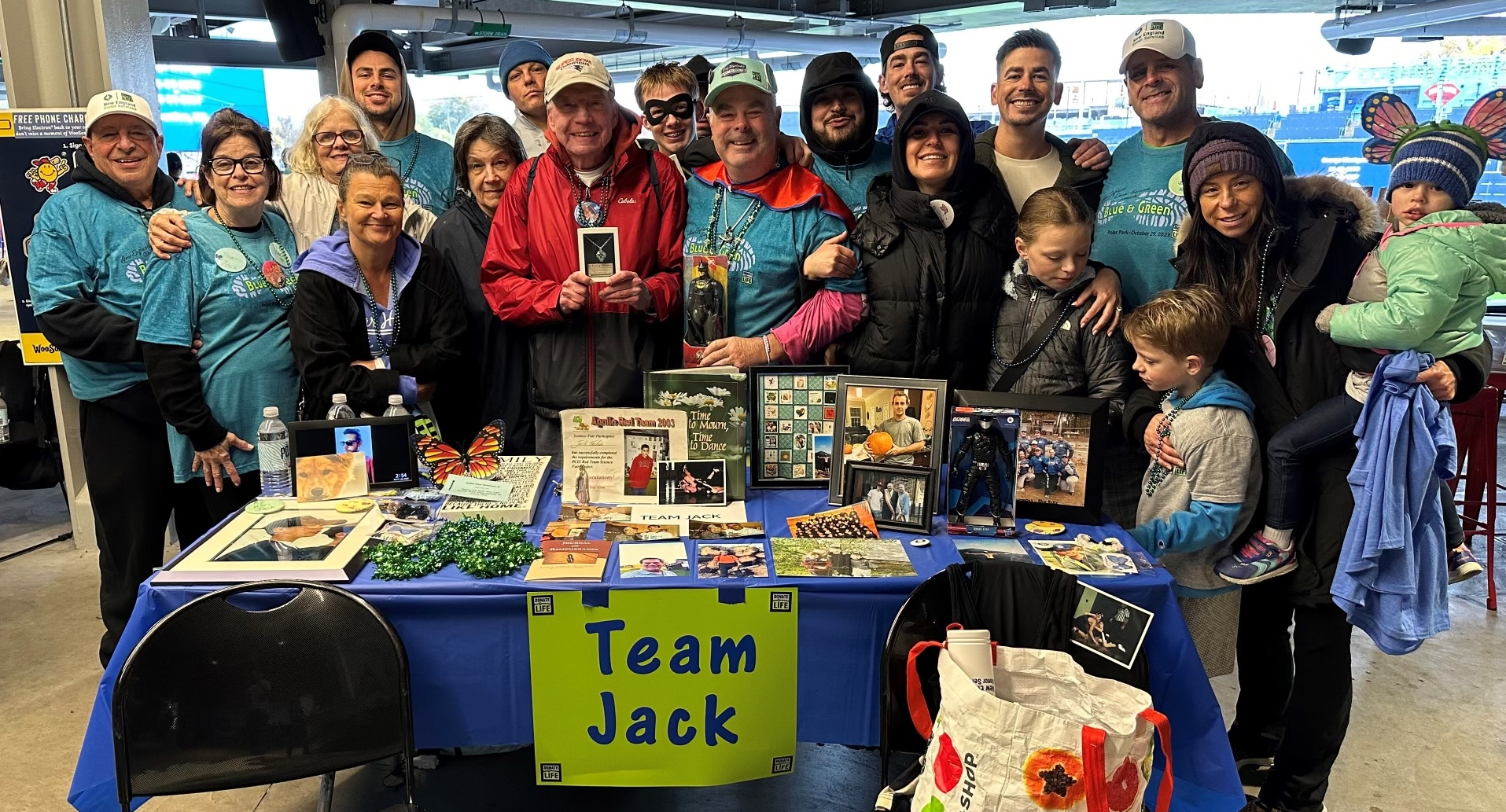
Brought together by grief and hope, the two families come together often to celebrate Jack’s legacy and promote organ and tissue donation.
That selfless act is one that Etkin says he never takes for granted.
“The highest compliment Richard gave me was if they had to pick somebody to take Jack’s heart, he’d want it to be me,” said Etkin, holding back tears as he recounted the story. “This heart transplant has been a new way to create family.”
The two families often come together to jointly raise awareness about the impact of organ and tissue donation.
“Everyone in the world wants to do something special — something heroic. Becoming an organ donor is one way,” Etkin said. “It is the easiest thing to do, and you’ll never know you did it.”
Exceptional Care
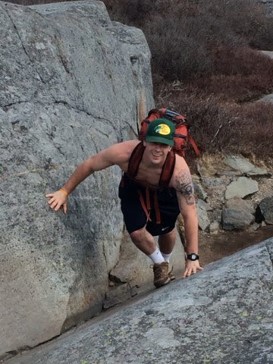
“Jack’s story does not end with death. His story carries on with life, light, truth, hope and love,” says Richard Teehan of his son Jack, pictured above enjoying one of his great loves, hiking.
While a transplant can be lifesaving, the short- and long-term recovery can be complex and difficult for some patients, Givertz noted. For Etkin, a significant surgical-site infection after his transplant required extensive plastic surgery to help his chest wall heal, followed by cardiac rehab.
Over the ensuing years, he experienced a series of complications common among transplant recipients, Givertz added, including an elevated cancer risk due to the use of immunosuppressants. After being diagnosed with lymphoma last year, Etkin received radiation treatment at Dana-Farber Brigham Cancer Center.
Through it all, Etkin said he remains extremely grateful, optimistic and in awe of the care he has received at the Brigham.
“The people there really care — the doctors and nurses, who are outstanding in their expertise and compassion, as well as the people who arrange for your aftercare, cook and bring your food, take your blood and clean your room,” he said. “I almost felt like the president of the United States. That’s how they make you feel when you show up for your appointments, from the first person who takes your information.”
For Givertz, outcomes like this are a powerful reminder of what makes the program so special.
“I never cease to be amazed by what patients do after they become well again,” he said. “One of the reasons why I chose to go into this field and love what I do is the fact that I work closely with professionals in so many different areas — transplant cardiology, surgeons, nursing, psychiatry, social work, financial counselors, physical and occupational therapists, research coordinators and ambulatory staff. All of these people work together seamlessly to evaluate patients, get them through surgery and recovery, and help them achieve an excellent quality of life.”